Indoor athletic facility design represents one of the most impactful capital investments schools and recreation centers can make. A well-designed facility serves multiple generations of athletes, supports diverse programming needs, creates community gathering spaces, and becomes a visible expression of institutional commitment to health, wellness, and competitive excellence.
Facilities managers, athletic directors, and school administrators face complex decisions when planning indoor athletic spaces. How do you balance immediate program needs against future growth? What safety standards and accessibility requirements must you integrate from day one? Where should you invest in premium features versus foundational infrastructure? How can you create spaces that simultaneously inspire athletes and welcome broader community use?
This comprehensive planning guide addresses these critical questions, providing actionable frameworks for designing indoor athletic facilities that serve your institution’s mission for decades to come.
Space Planning Fundamentals for Multi-Use Indoor Facilities
Successful indoor athletic facility design begins with understanding your program requirements, user populations, and operational priorities. Start with a comprehensive needs assessment that documents:
Current Program Inventory
- Existing athletic teams and participation numbers
- Physical education class sizes and scheduling patterns
- Community programs utilizing athletic spaces
- Peak usage times and seasonal variations
- Current space deficiencies causing program limitations
Growth Projections
- Anticipated enrollment changes over 10-20 years
- Planned program additions (new sports, expanded offerings)
- Community partnership opportunities
- Tournament hosting capabilities
- Multi-generational user needs
The foundation of effective space planning involves determining your primary activity zones and their dimensional requirements. A regulation high school basketball court requires 84 feet by 50 feet, but the actual space allocation should include:
- 10-foot minimum safety clearances on all sides
- Spectator seating or viewing areas
- Team bench zones with accessible routes
- Equipment storage with convenient court access
- Officials’ areas and scoring table placement
For multi-use facilities serving schools and recreation centers, flexibility becomes paramount. Consider:
Convertible Court Configurations
- Retractable divider curtains creating multiple practice spaces
- Adjustable basketball goals accommodating various age groups
- Volleyball standards with floor sleeves for quick setup
- Multipurpose flooring supporting basketball, volleyball, badminton, and pickleball
- Portable equipment storage systems
Vertical Space Utilization
- Ceiling height requirements for volleyball (minimum 23 feet clear)
- Basketball requirements (minimum 22 feet, preferably 25+ feet)
- Suspended divider curtain storage
- Overhead lighting and equipment clearances
- Acoustic considerations for multi-use programming
Most successful facilities incorporate these core zones:
- Primary competition courts (with spectator accommodation)
- Practice/auxiliary gym spaces (supporting simultaneous programming)
- Strength and conditioning areas (separate from court activities)
- Team rooms and locker facilities (gender-inclusive, accessible)
- Athletic training/medical spaces (centrally located for all users)
- Equipment storage (secure, organized, accessible)
- Officials’ areas (locker rooms, meeting spaces)
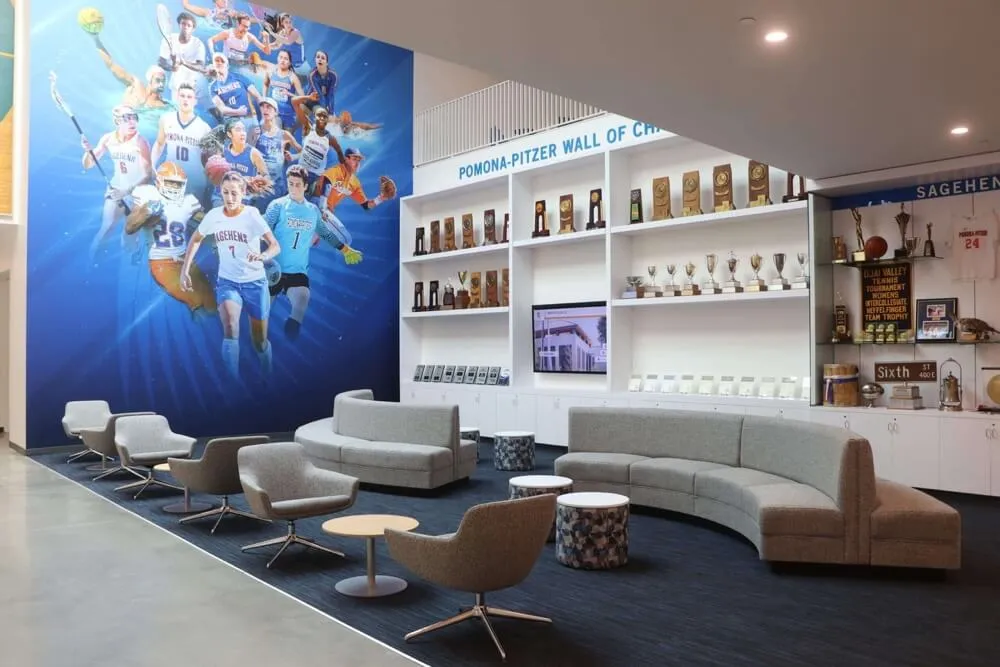
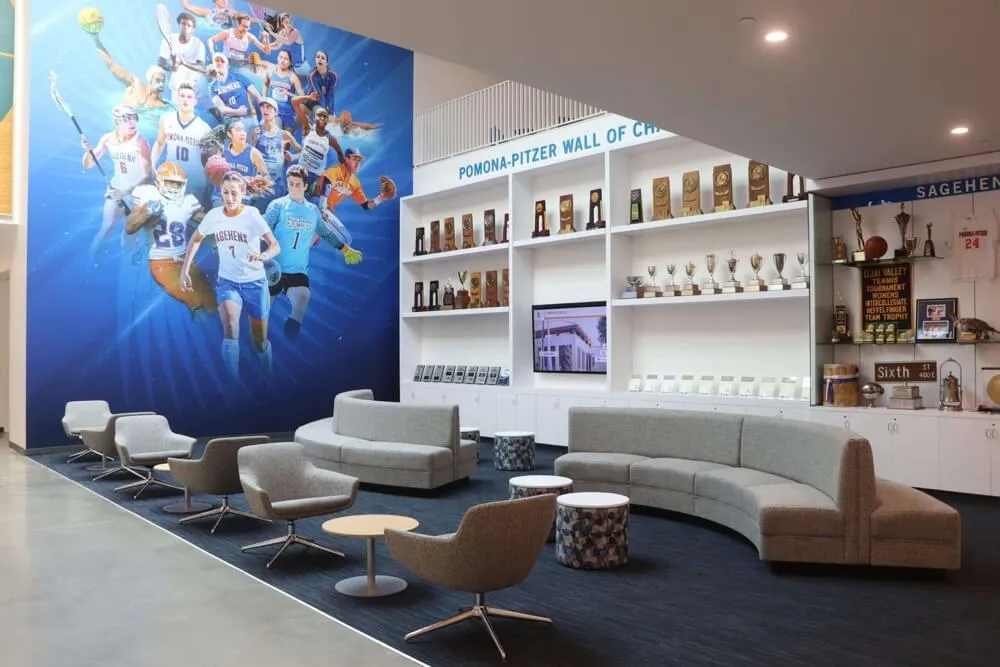
- Recognition and gathering spaces (trophy displays, heritage walls, team lounges)
Safety Standards and Accessibility Requirements
Indoor athletic facility design must prioritize user safety and ADA compliance from initial concept through construction. These aren’t optional considerations—they’re foundational requirements that impact every design decision.
Floor Surface Specifications The playing surface represents your most critical safety investment. Consider:
- Shock absorption properties protecting joints and reducing injury risk
- Traction coefficients preventing slips while allowing proper movement
- Consistent ball bounce characteristics for basketball
- Maintenance requirements and long-term durability
- Multi-sport compatibility when facilities serve diverse programs
Hardwood maple flooring remains the gold standard for basketball but requires significant maintenance investment. Synthetic sports flooring offers advantages for multi-use facilities with lower maintenance demands and excellent performance characteristics across multiple sports.
Impact Protection and Safety Clearances Wall padding becomes mandatory in basketball facilities, particularly:
- Behind baskets (extending 4 feet beyond each side, 6 feet high minimum)
- High-traffic collision zones along sidelines
- Doorways and structural columns within safety clearance areas
- Spectator protection barriers where seating approaches playing surfaces
Lighting Design Standards Proper illumination serves both safety and performance functions:
- Minimum 50 foot-candles for recreational play
- 75-100+ foot-candles for competitive basketball
- Uniform distribution preventing shadows and glare
- LED systems offering energy efficiency and reduced maintenance
- Emergency lighting and exit illumination meeting code requirements
ADA Compliance Integration Accessibility must extend throughout your facility:
- Accessible routes connecting all program areas
- Spectator seating with required accessible locations and companion seating
- Team bench areas accommodating wheelchair users
- Locker rooms with accessible lockers, showers, and toilet facilities
- Drinking fountains at multiple heights
- Signage with tactile characters and Braille where required
- Assistive listening systems in spaces hosting spectators
Planning accessible facilities from the beginning costs significantly less than retrofitting. Work with accessibility consultants early in the design process to ensure compliance while creating welcoming environments for all users.
Ventilation and Air Quality Indoor air quality directly impacts athlete performance and health:
- HVAC systems sized for high-occupancy athletic activities
- Air changes per hour meeting or exceeding code minimums
- Temperature control managing both comfort and energy efficiency
- Humidity control preventing condensation and mold growth
- Filtration systems addressing particulates and allergens
Recognition and Branding Integration in Athletic Spaces
Indoor athletic facilities serve functional needs while simultaneously creating emotional connections, celebrating achievements, and building institutional pride. Recognition elements transform utilitarian spaces into inspiring environments that honor athletic heritage and motivate current participants.
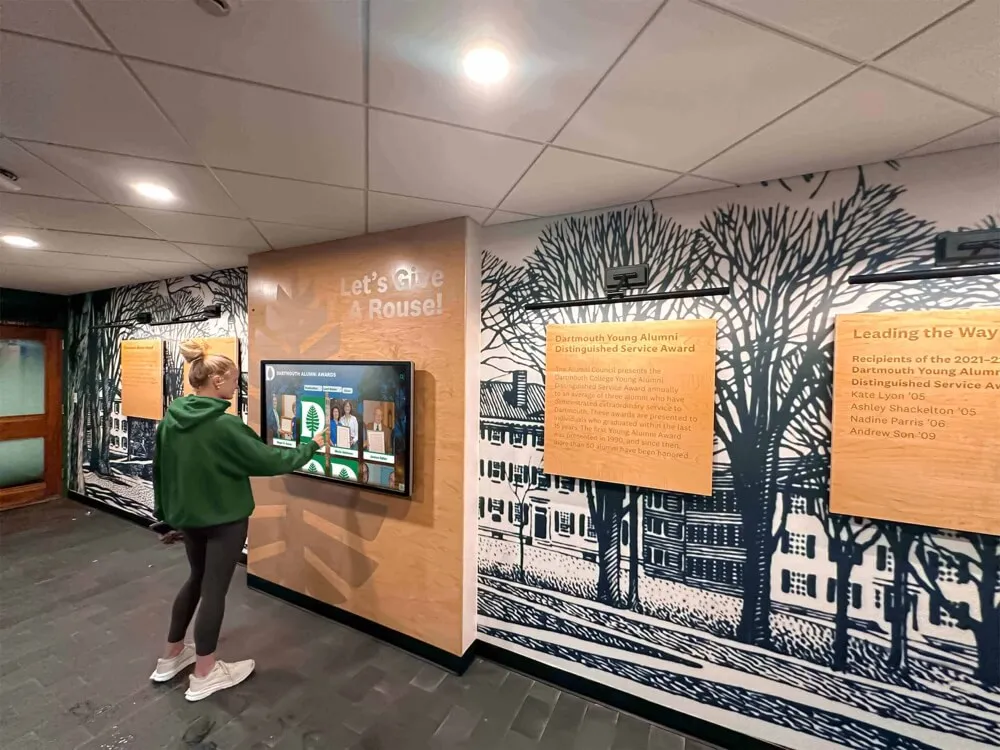
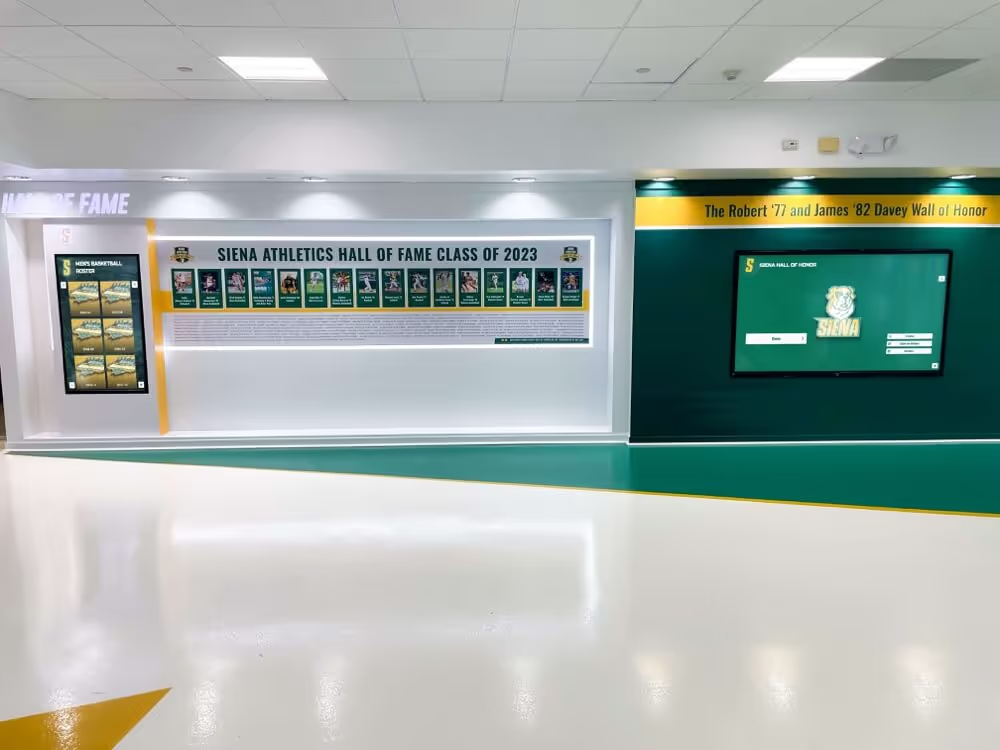
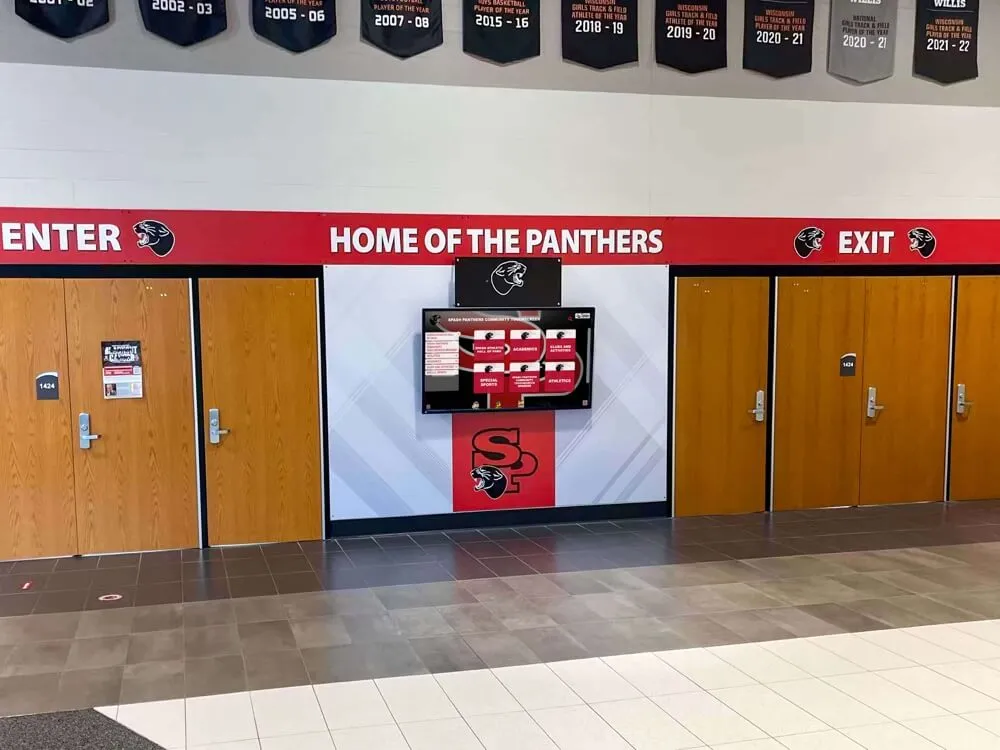
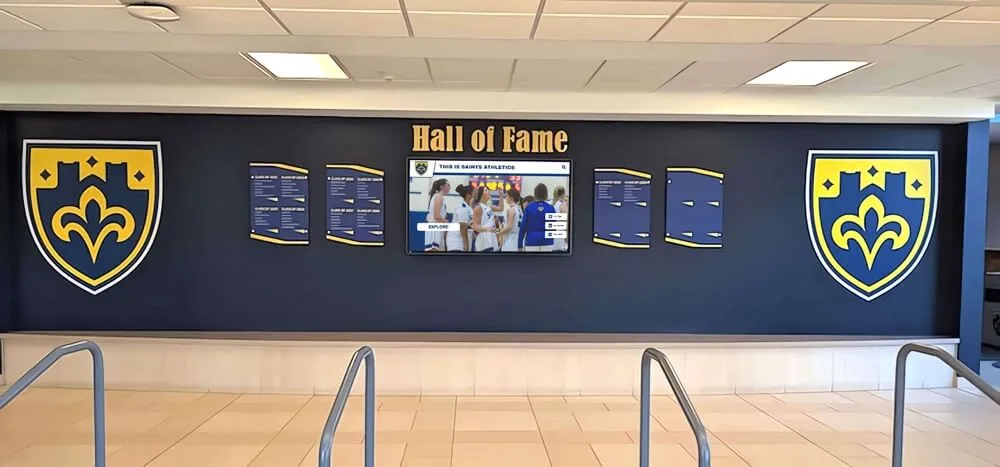
Strategic Recognition Zones The most effective facilities incorporate recognition displays in high-visibility, natural gathering locations:
- Main entrance lobbies where athletes, families, and visitors first experience your facility
- Hallways connecting locker rooms to competition courts (where teams pass before and after events)
- Team lounge areas providing informal gathering spaces
- Spectator concourses where families wait before events
Traditional approaches relied on physical trophy cases, championship banners, and static plaques. These methods face inherent limitations:
- Physical space constraints limiting how many achievements you can display
- Static content becoming outdated as new accomplishments accumulate
- Maintenance challenges (dusty trophies, faded banners, missing letters on plaques)
- Inability to share detailed stories behind the achievements
- Limited engagement—viewers can only look, not interact
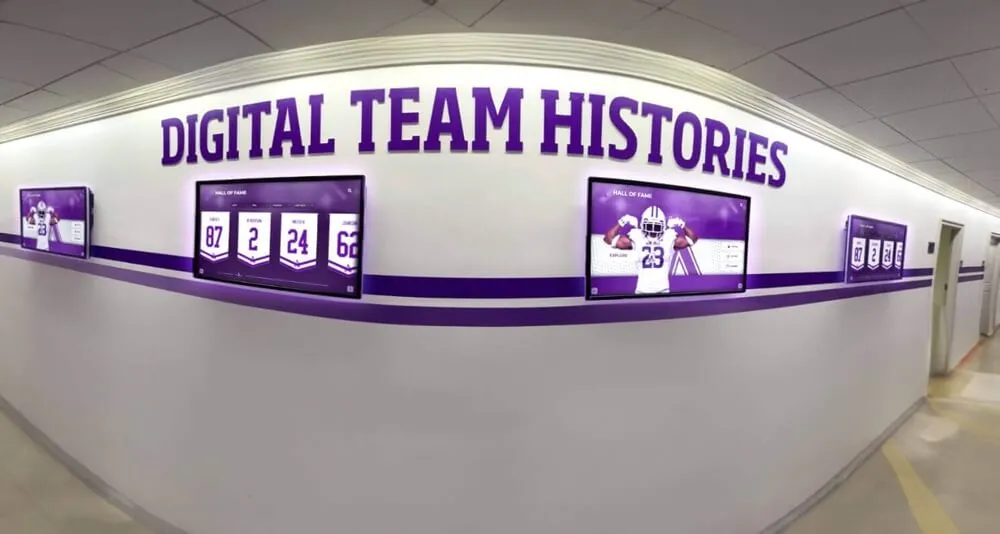
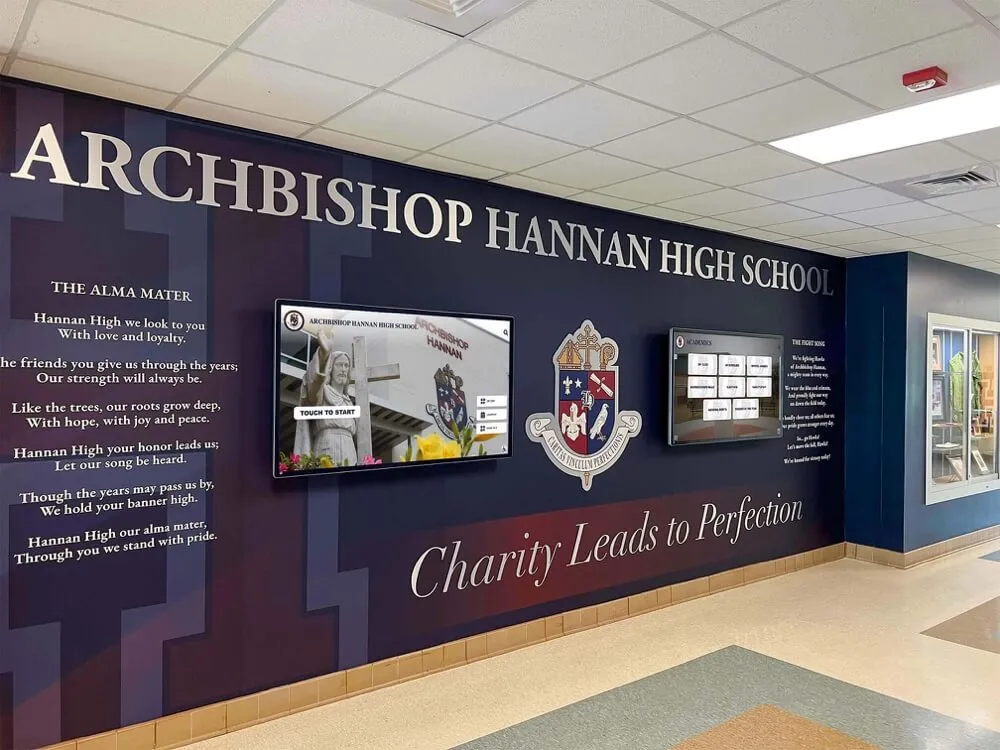
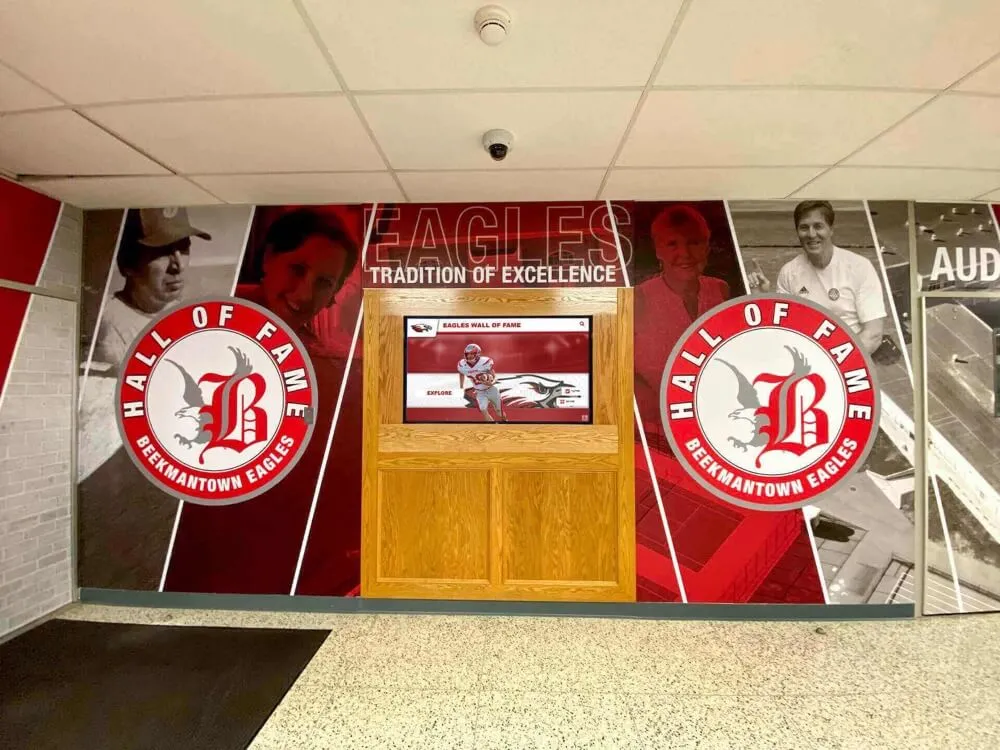
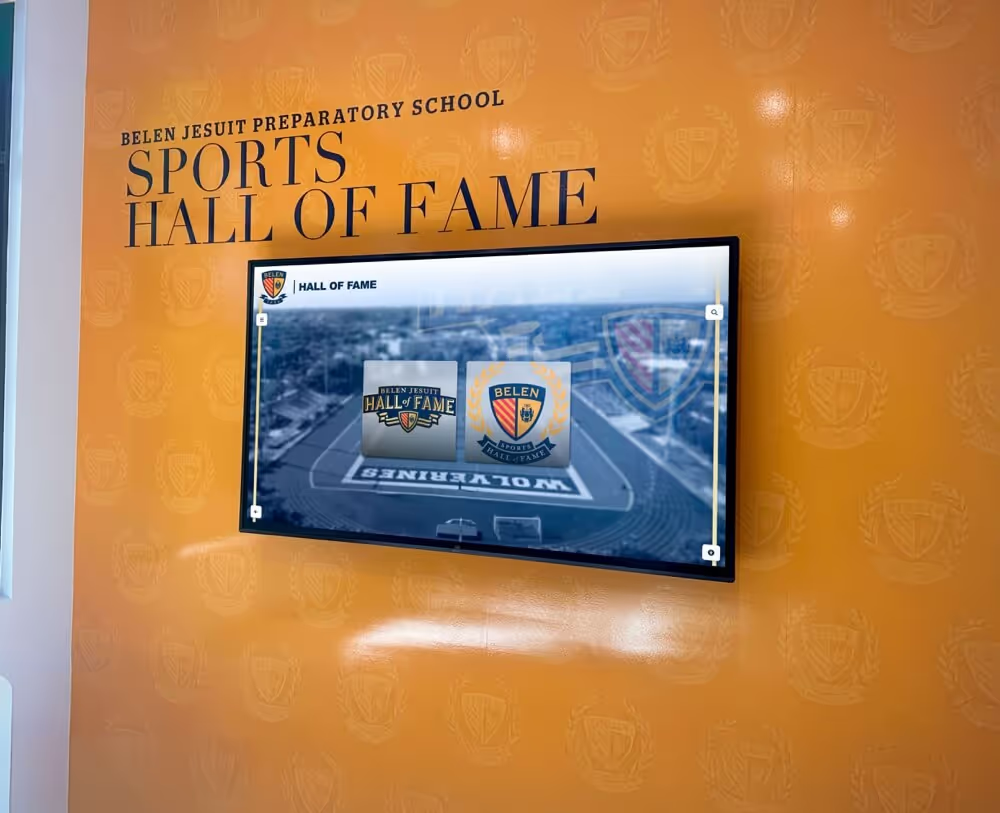
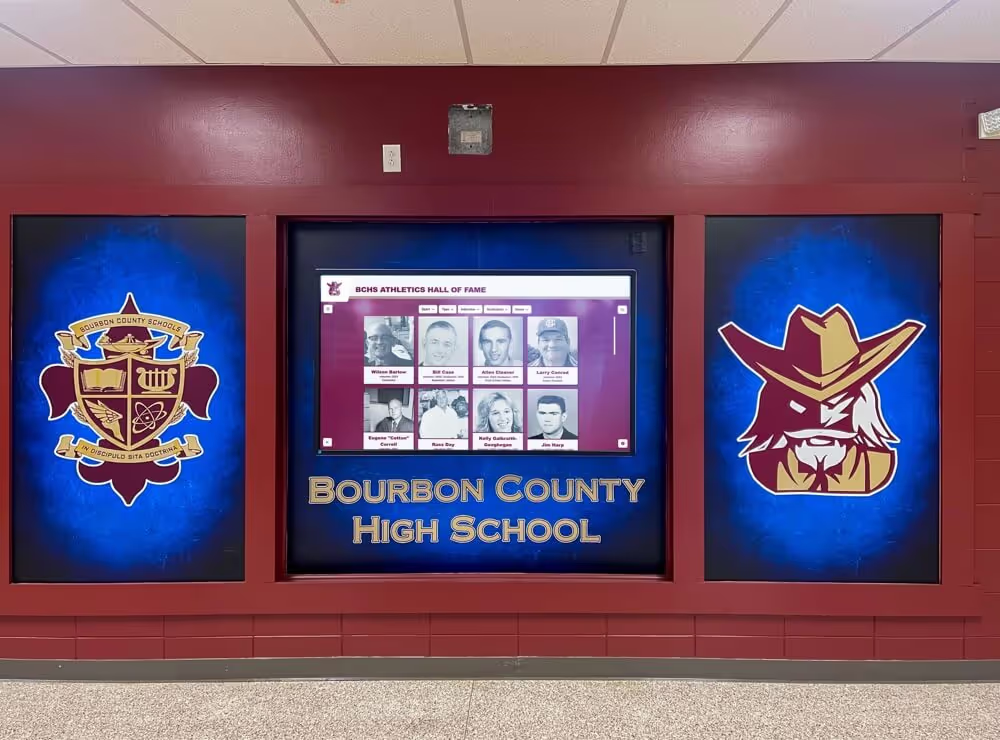
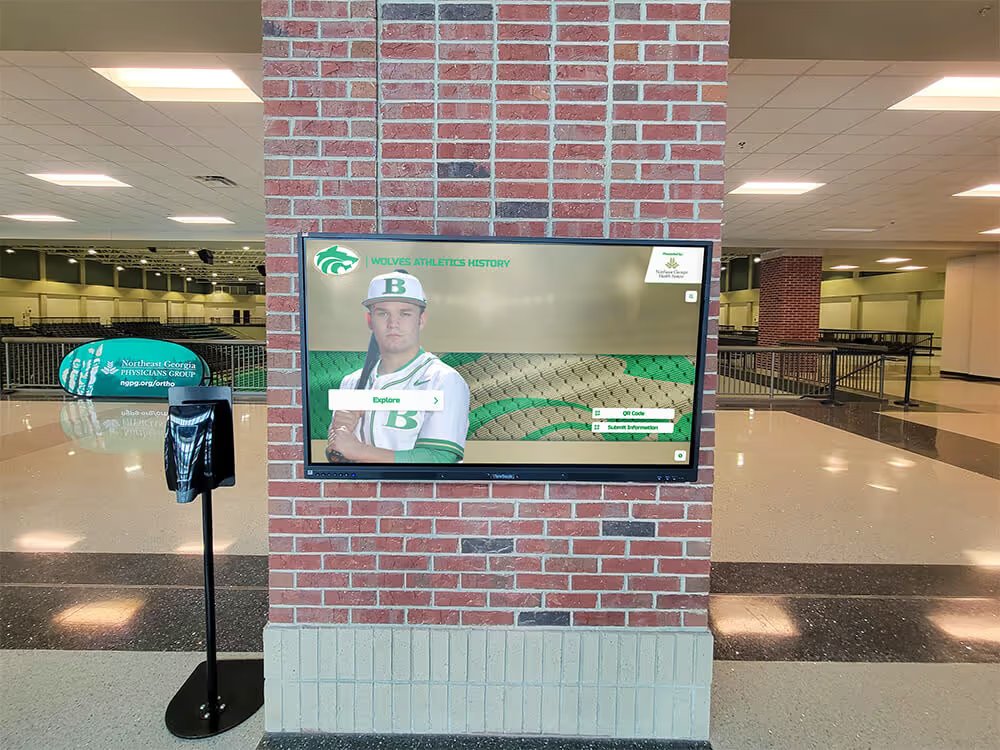
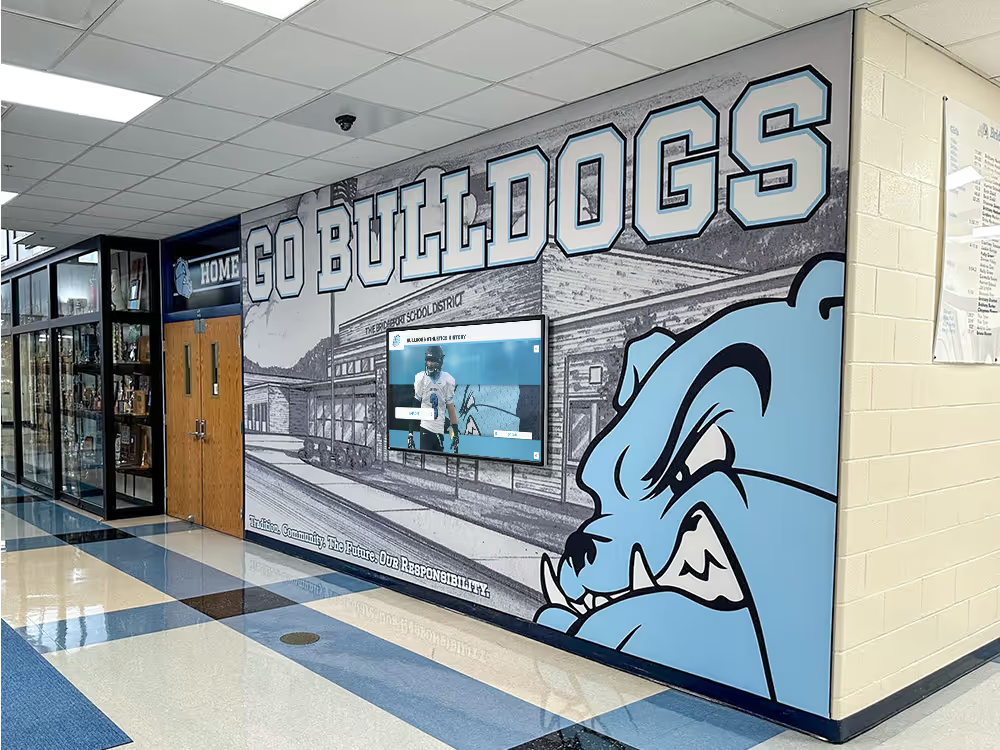
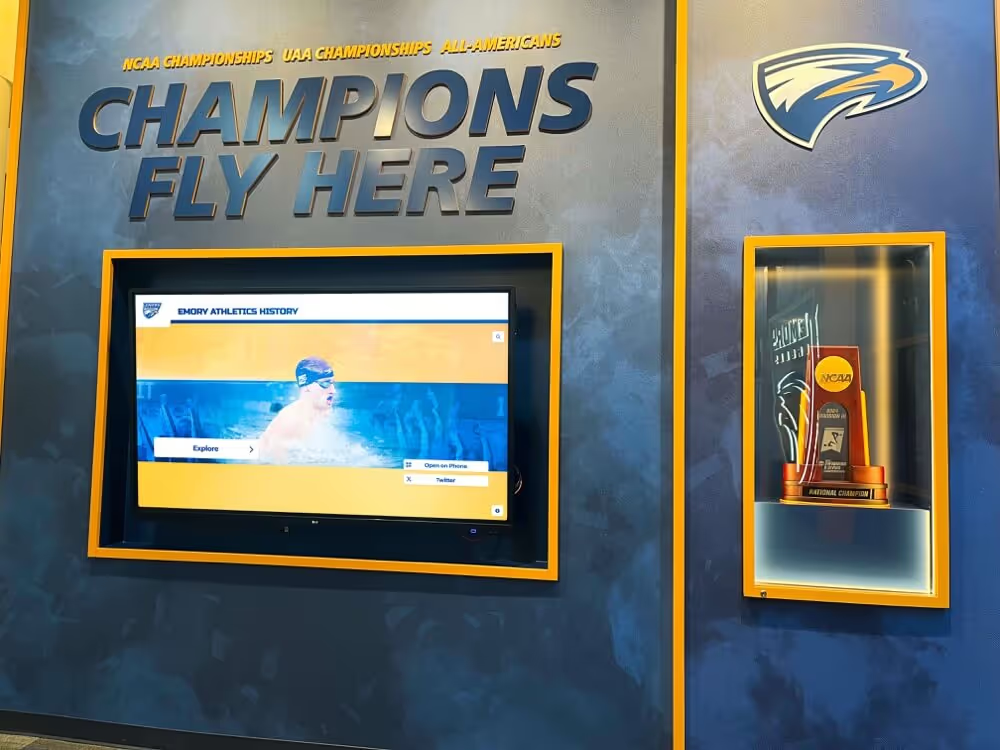
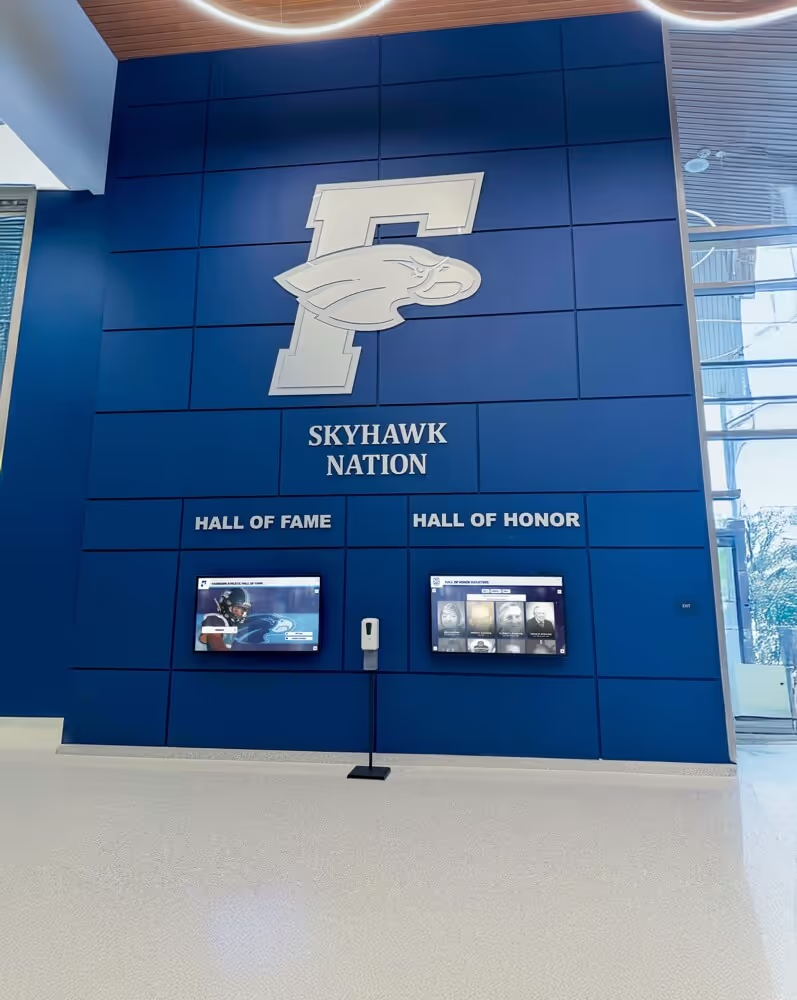
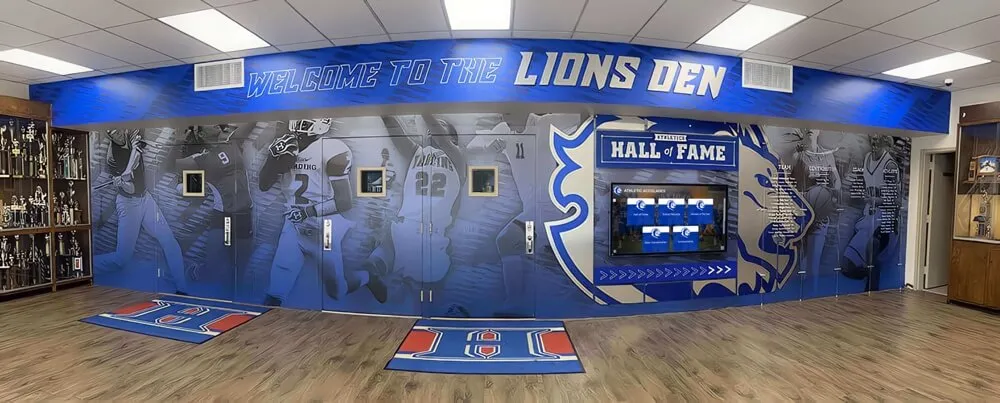
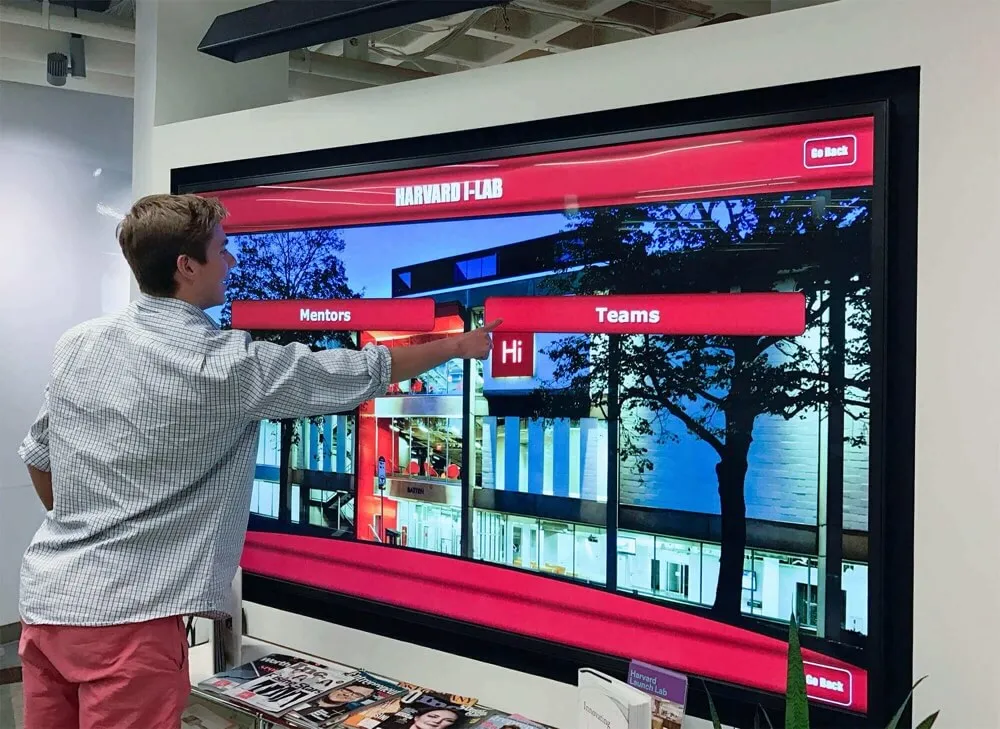
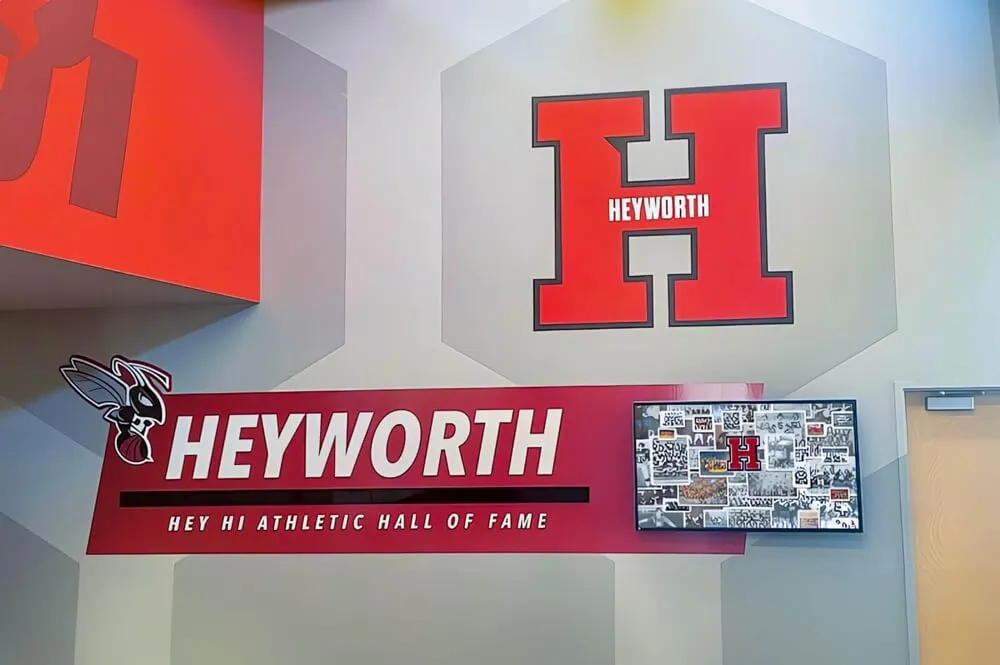
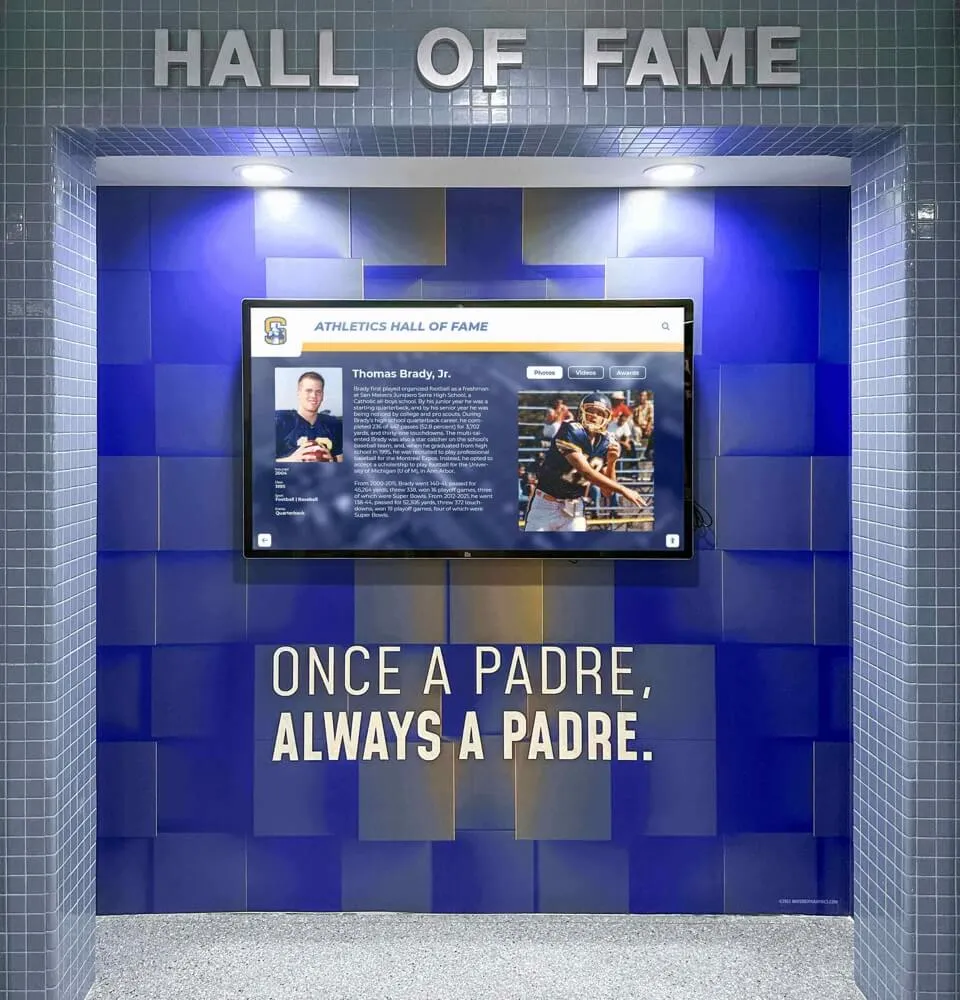
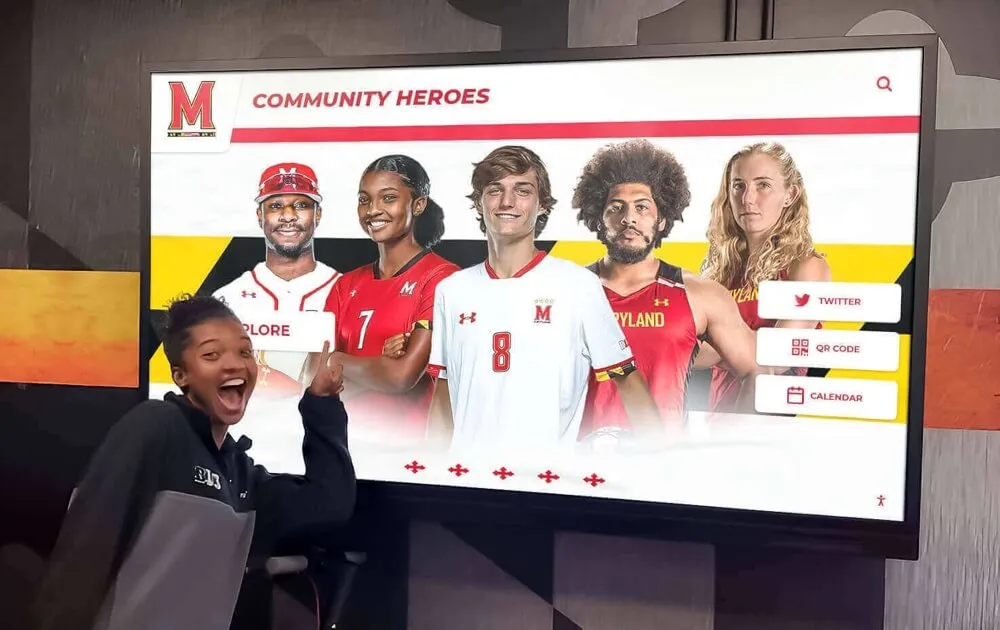
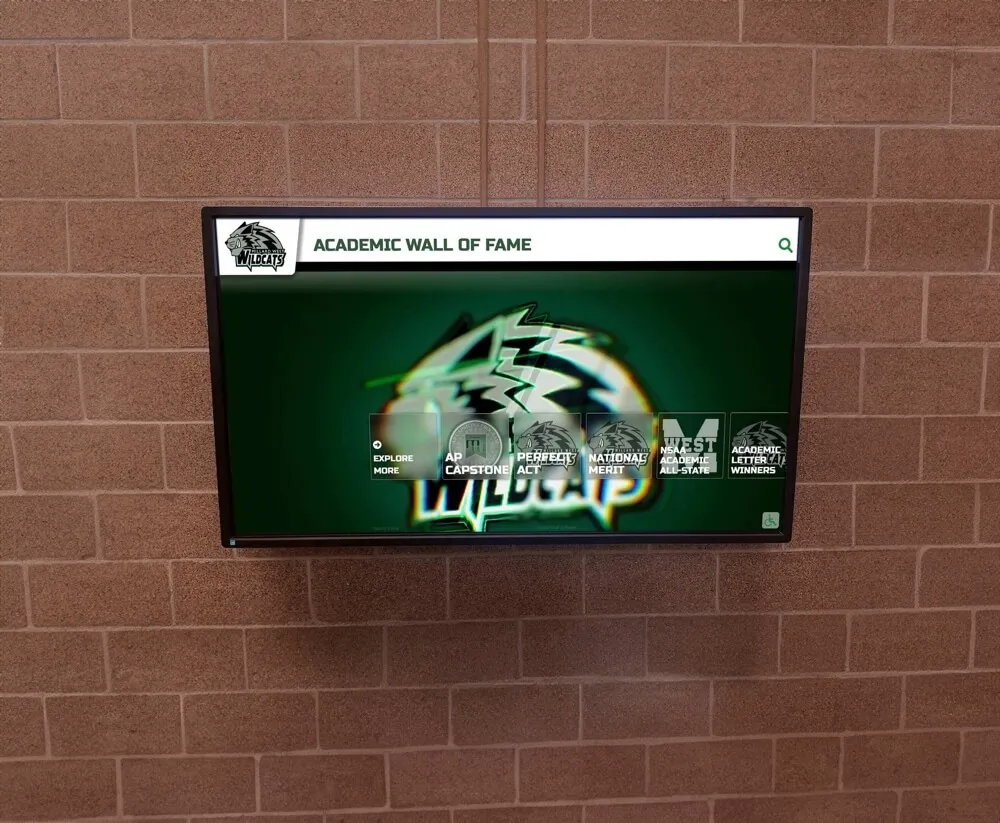
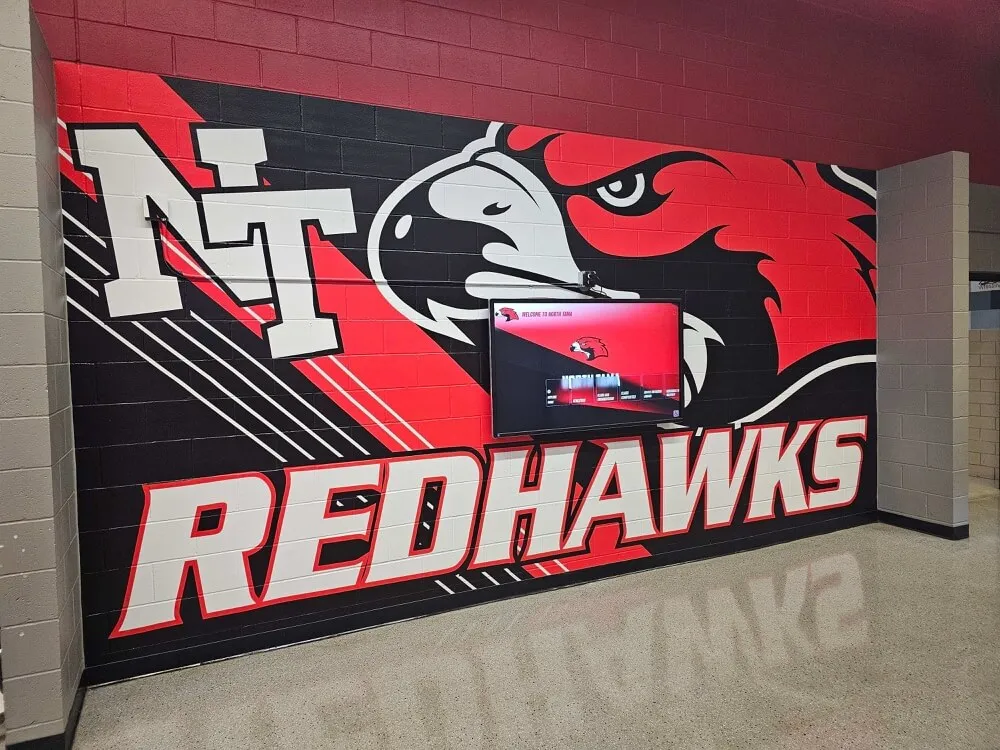
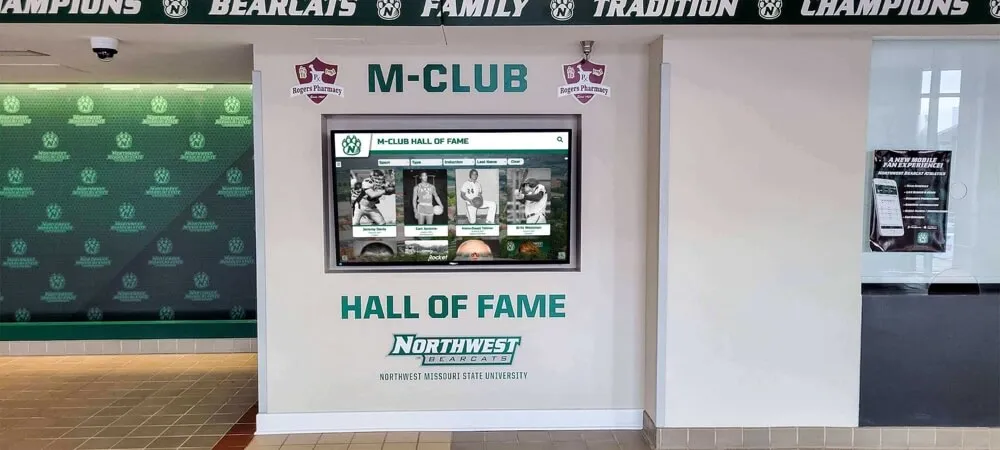
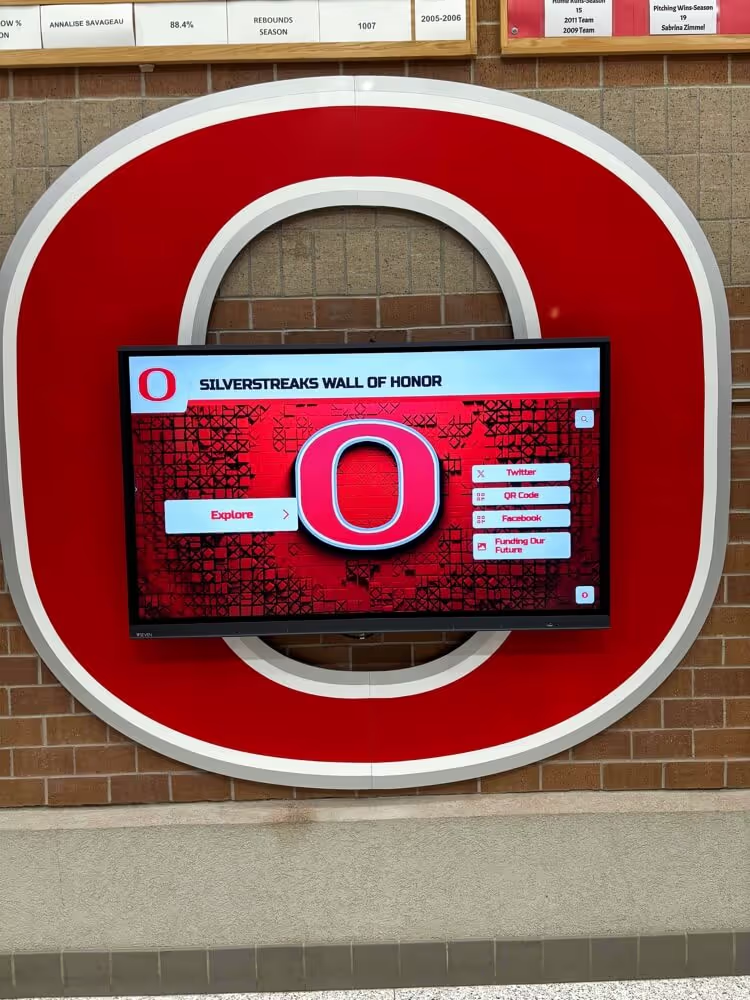
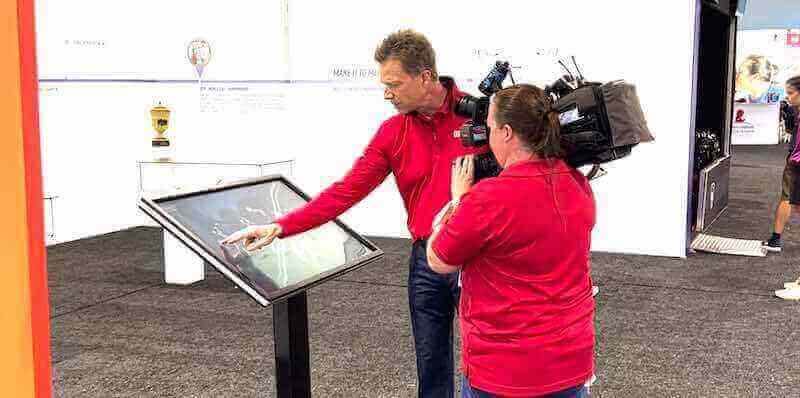
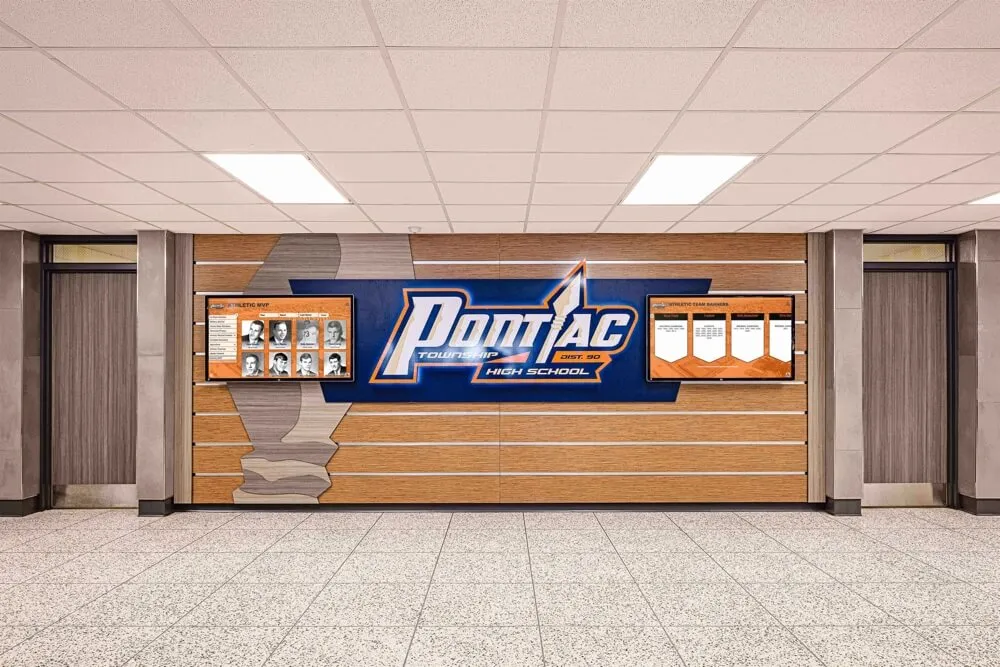
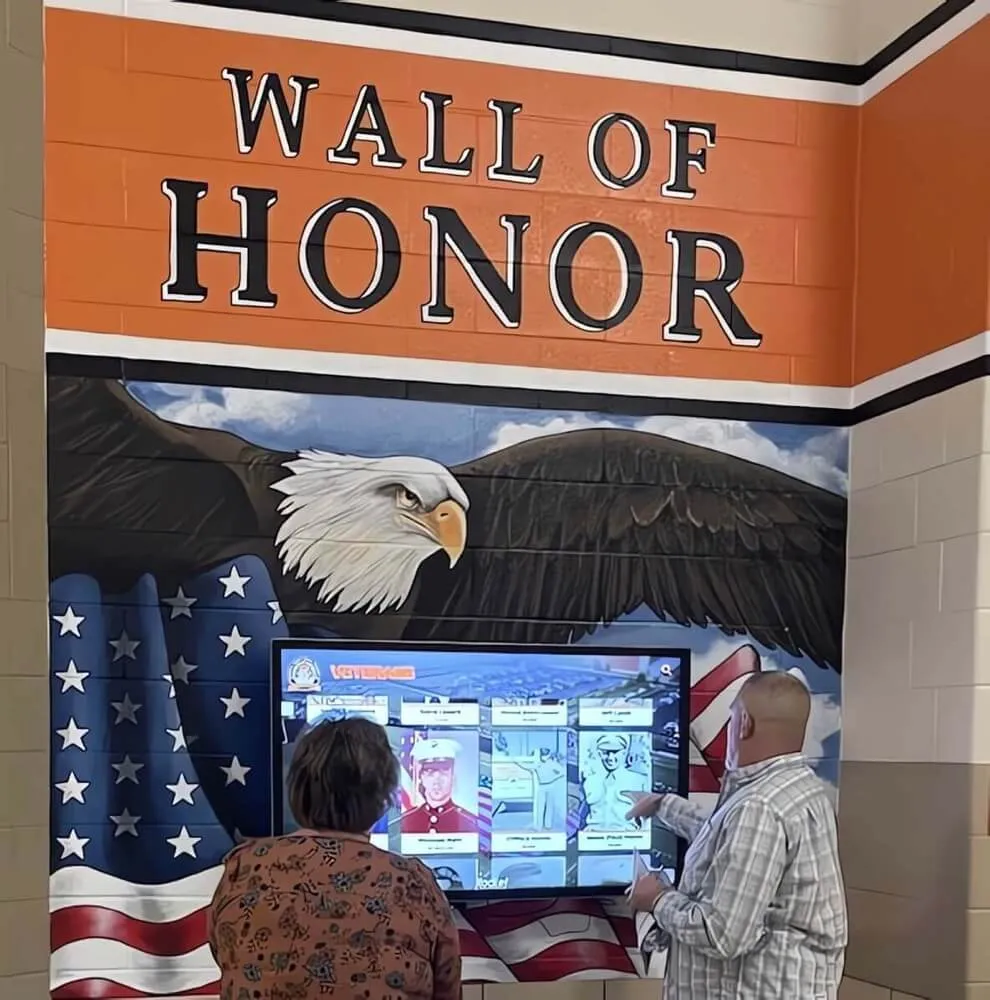
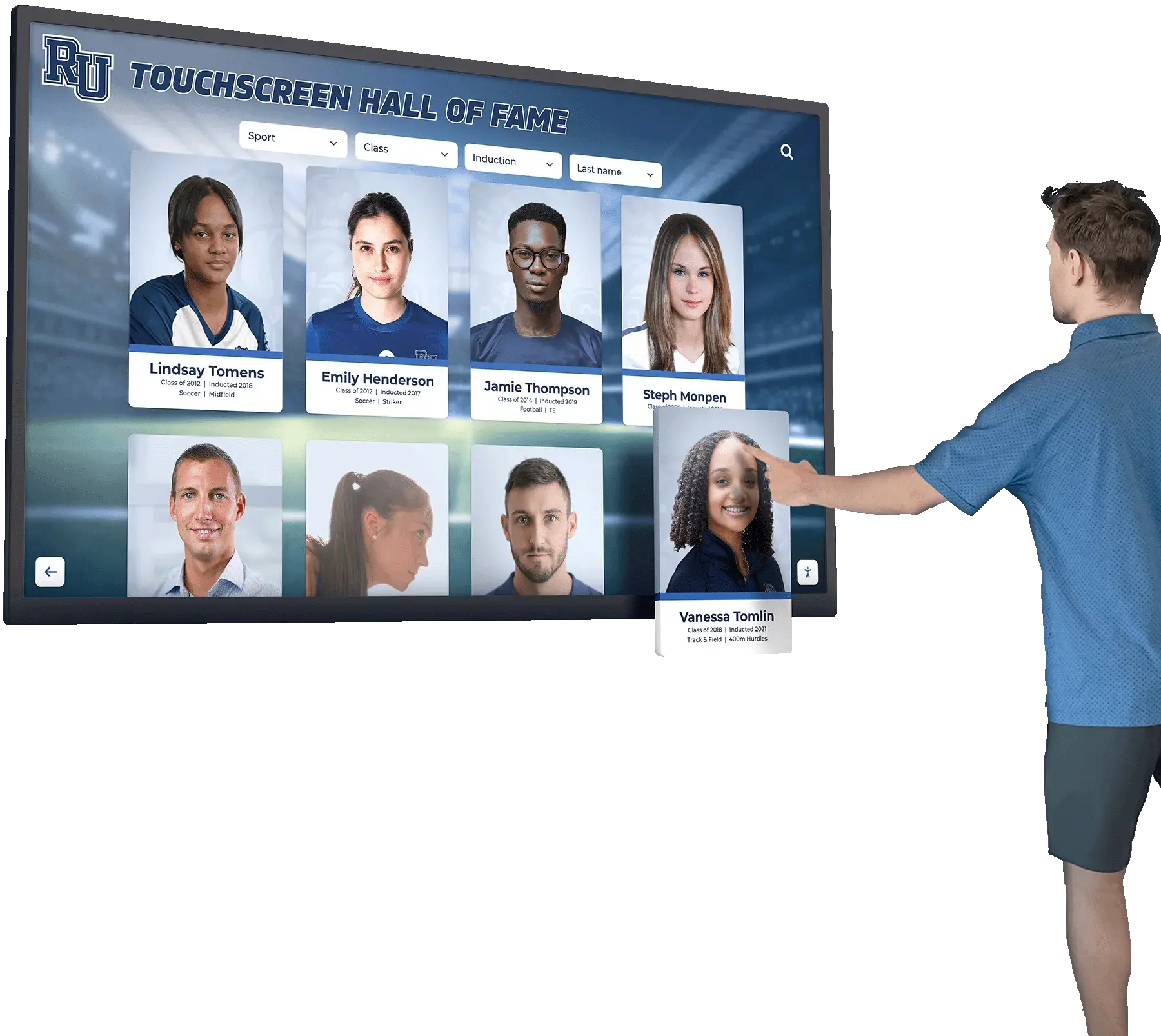
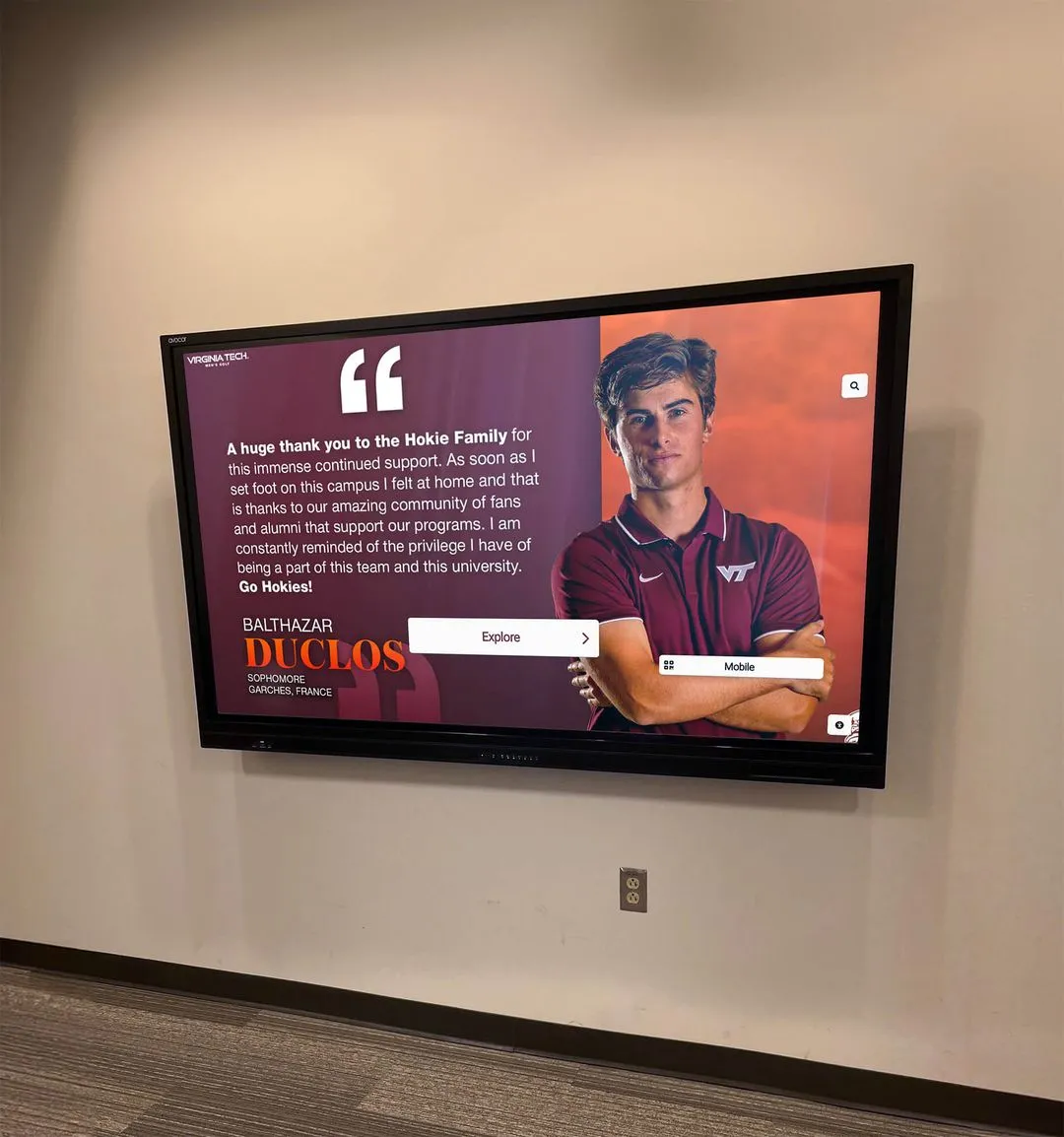
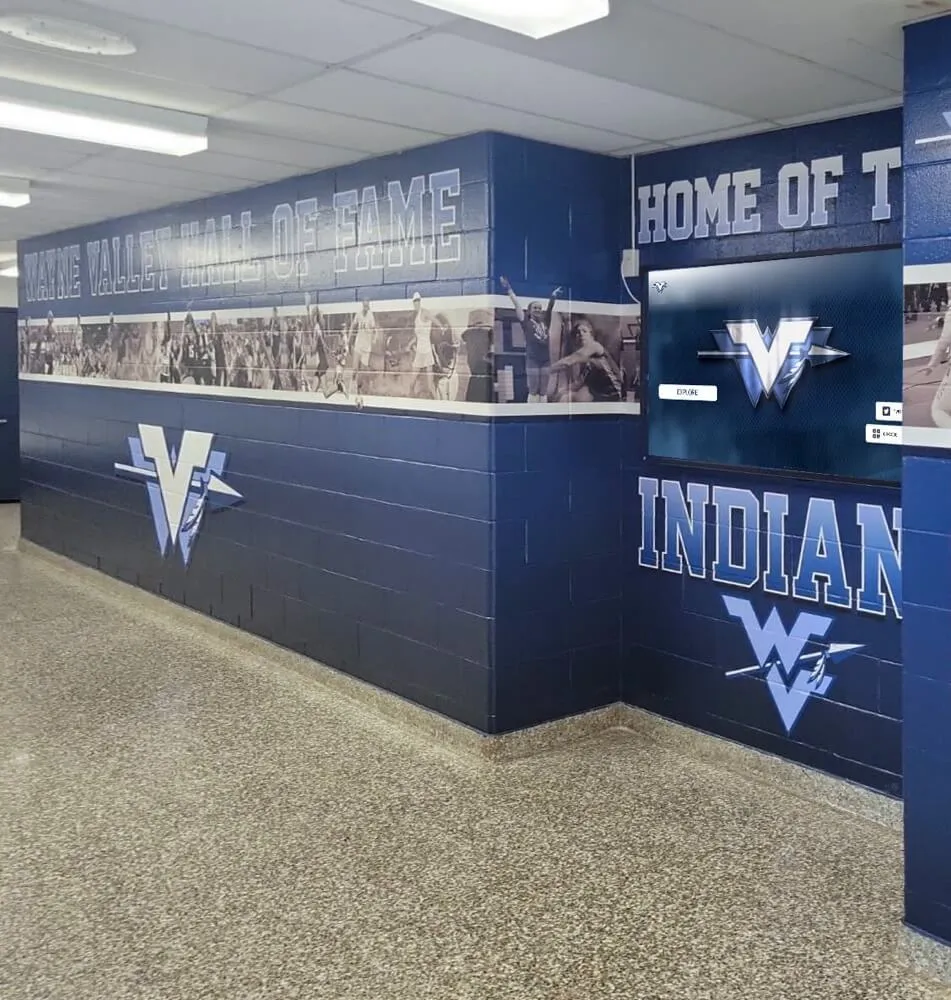
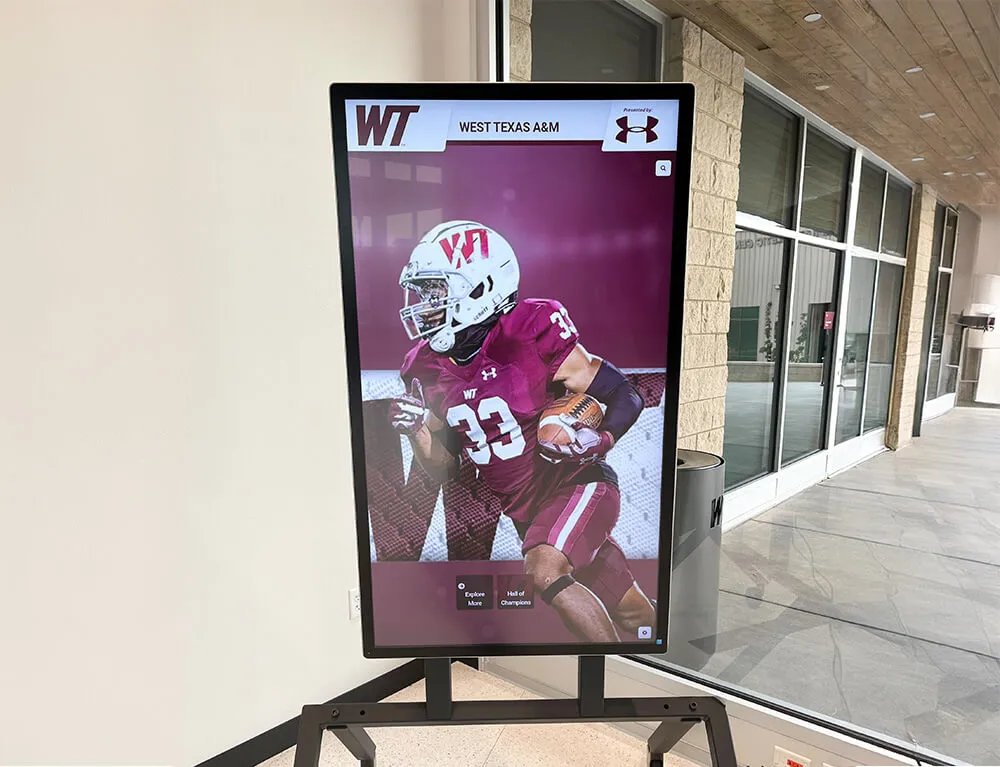
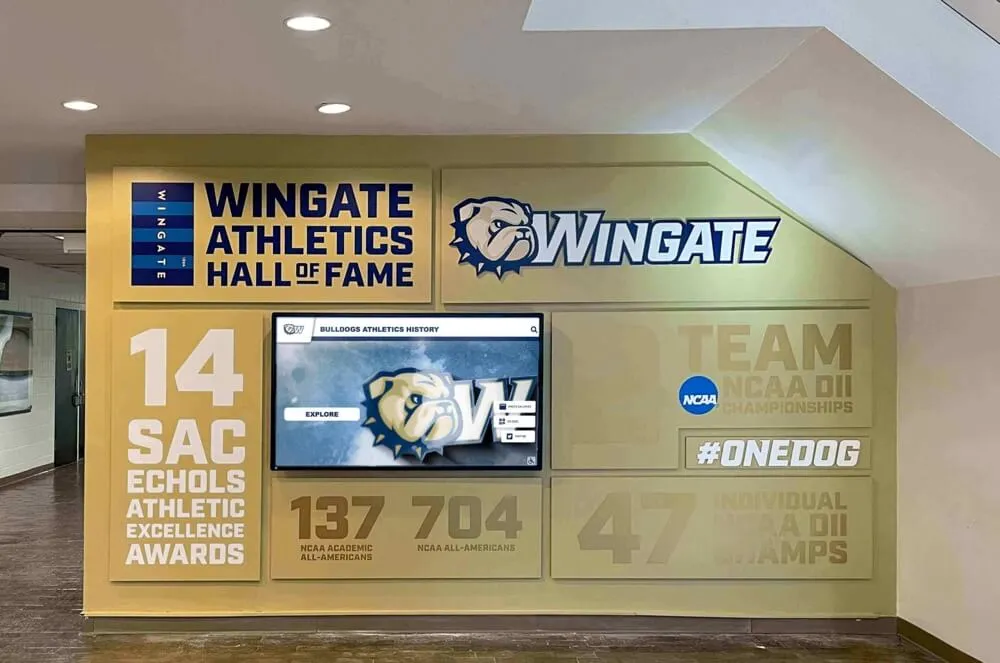
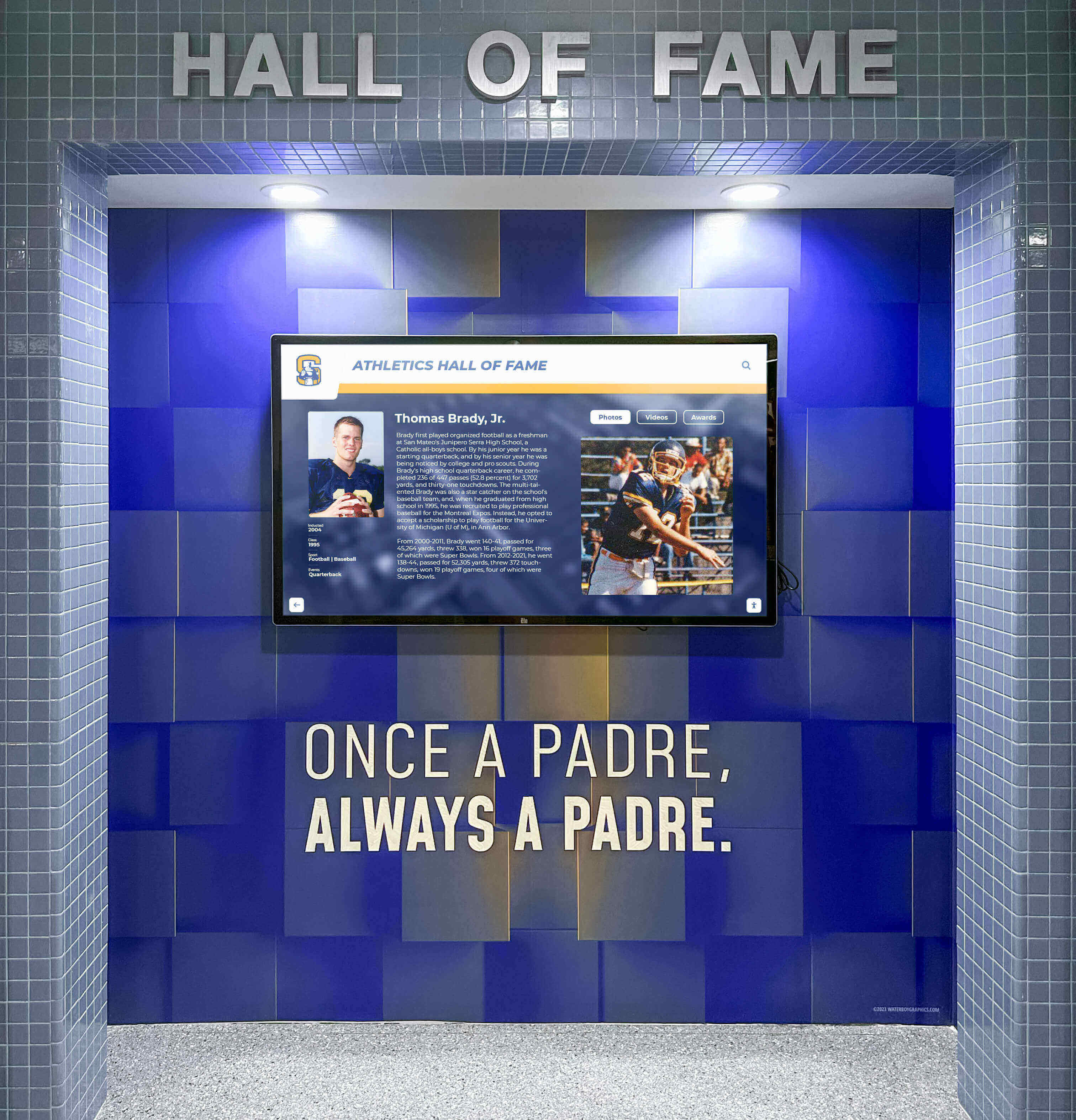
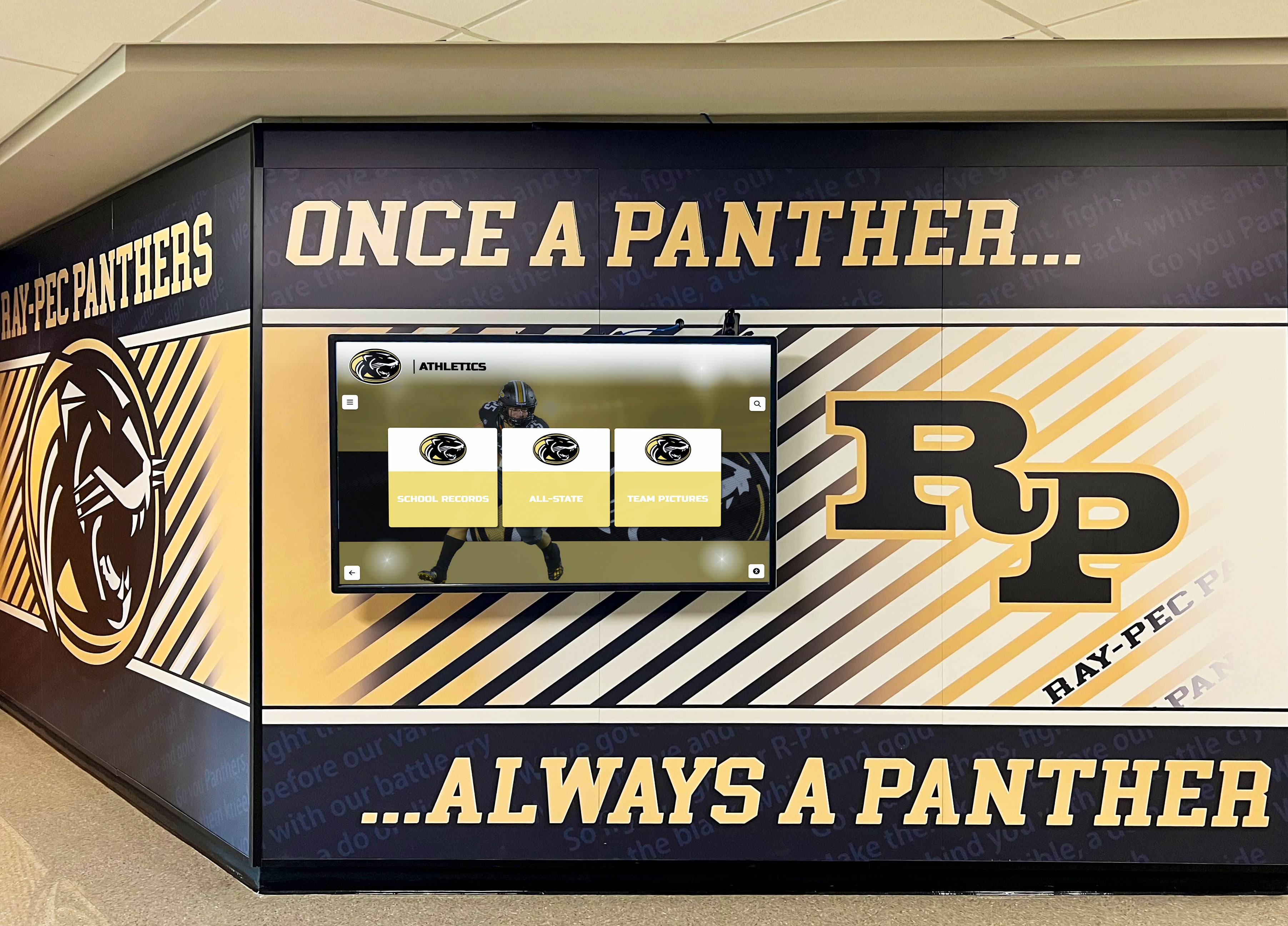
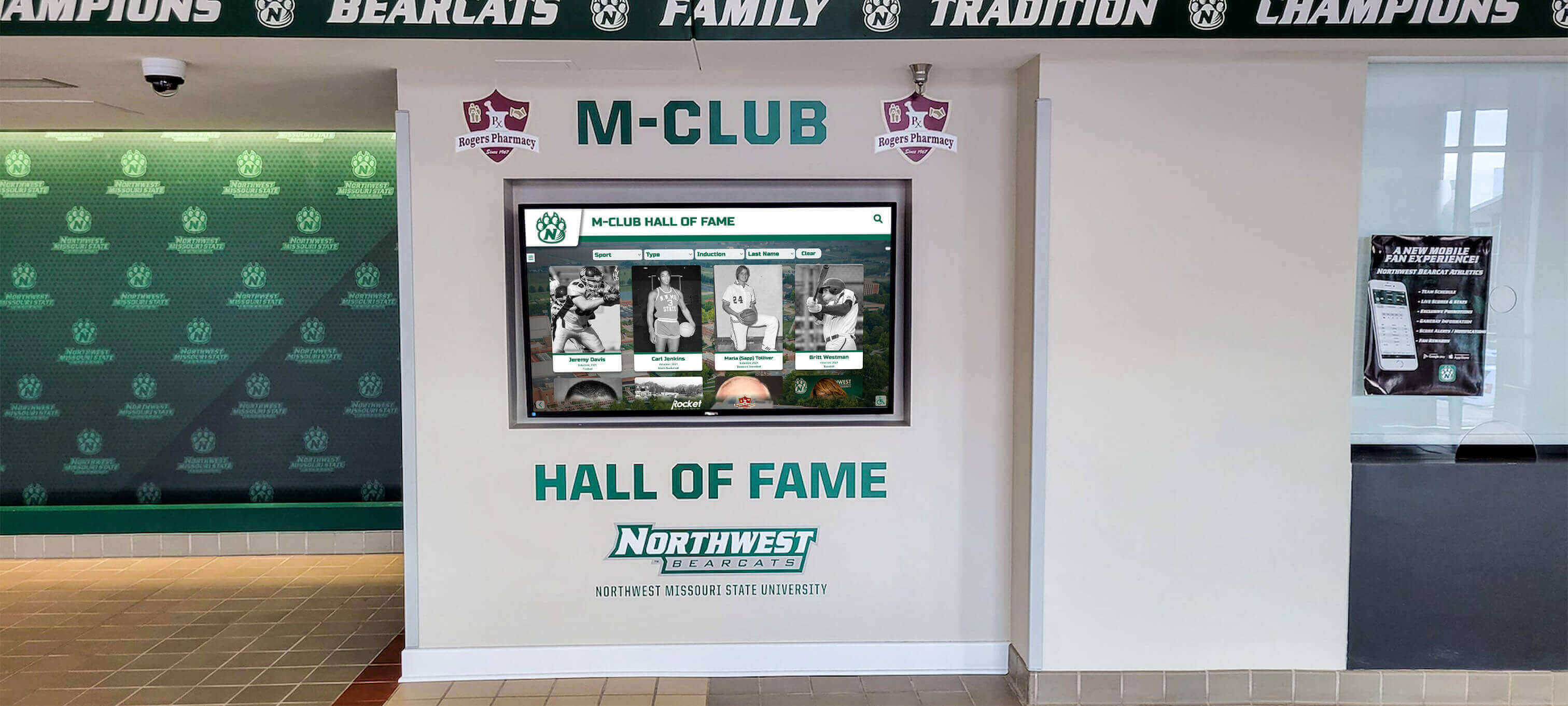
Solutions like Rocket Alumni Solutions address these limitations through digital recognition displays that offer unlimited capacity for celebrating achievements, dynamic content updates from anywhere, interactive storytelling features, and ADA-compliant accessibility. Many athletic directors appreciate that digital systems can simultaneously showcase current season highlights, historical championships, individual record-holders, and donor recognition without the physical space constraints of traditional displays.
Championship Banner Strategies Gymnasium ceiling space traditionally hosts championship banners, but this approach requires careful planning:
- Hanging systems that don’t interfere with competition play
- Consistent sizing and design standards for visual coherence
- Protection from dust accumulation and fading
- Eventual space limitations as programs succeed
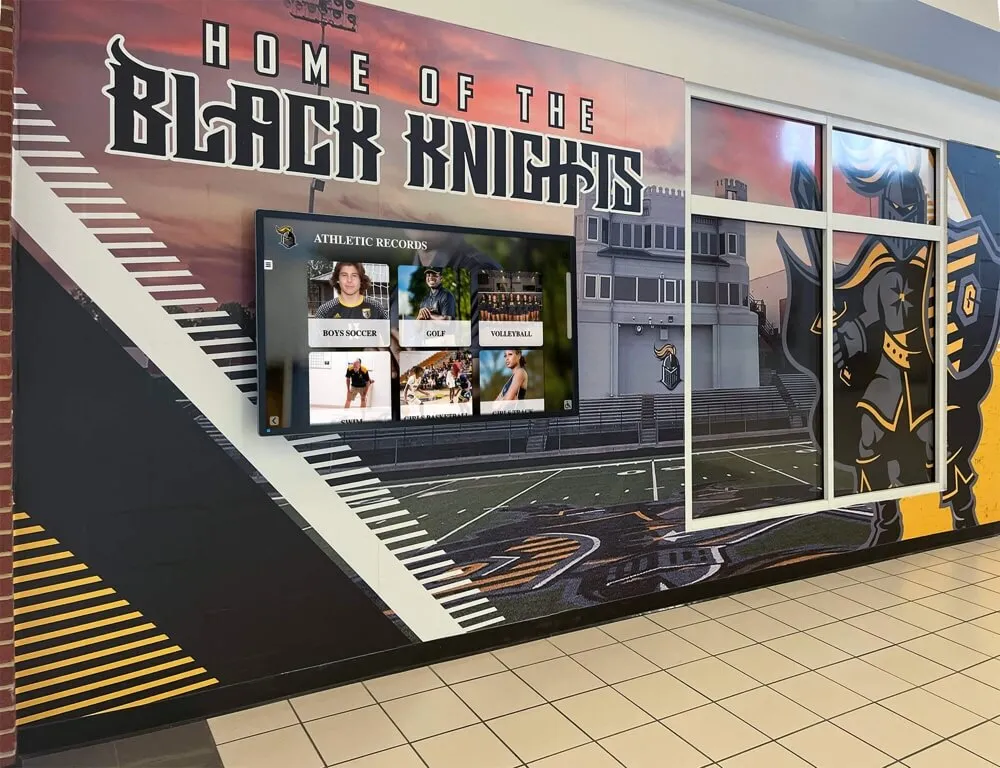
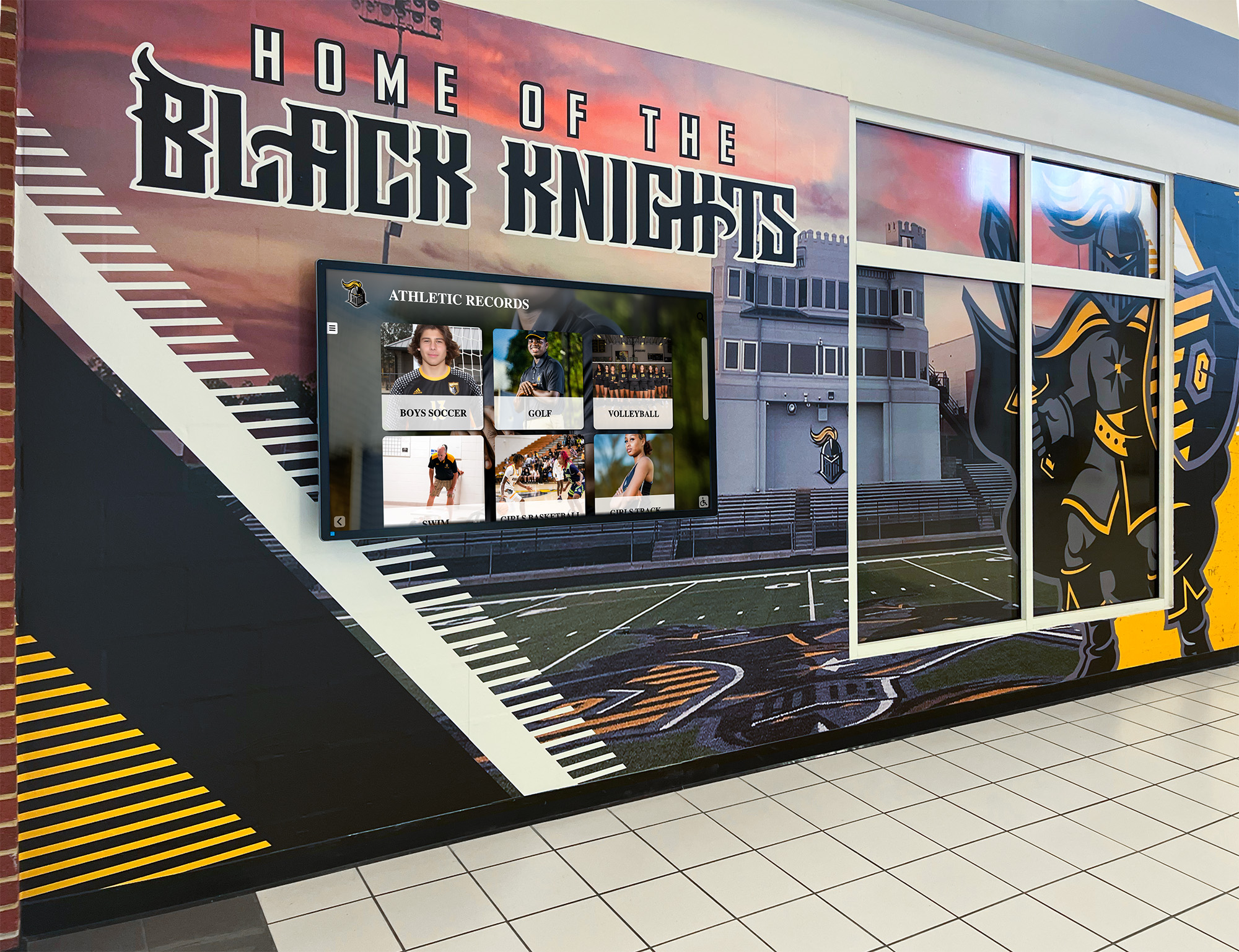
Many facilities now complement or replace physical banners with digital alternatives. Athletic record boards can display championship years, tournament results, and program milestones while maintaining the visual impact of traditional banners without the maintenance burden or space constraints.
Record Board Design Record boards documenting individual and team achievements serve both recognition and motivational functions. Consider:
- Sport-specific record categories (basketball scoring, track times, swimming records)
- All-time records versus seasonal/single-game achievements
- Equal recognition across men’s and women’s programs
- Historical records alongside current season leaders
- Digital solutions allowing easy updates as new records are set
Donor Recognition in Athletic Facilities Capital campaigns funding facility construction or renovations require thoughtful donor recognition strategies. Donor recognition displays in athletic facilities often include:
- Giving level tiers clearly articulated in campaign materials
- Naming opportunities for specific spaces (courts, training rooms, locker rooms)
- Donor walls or digital displays in prominent facility locations
- Recognition that remains current as additional donors contribute
- Stewardship communications showing donors the impact of their gifts
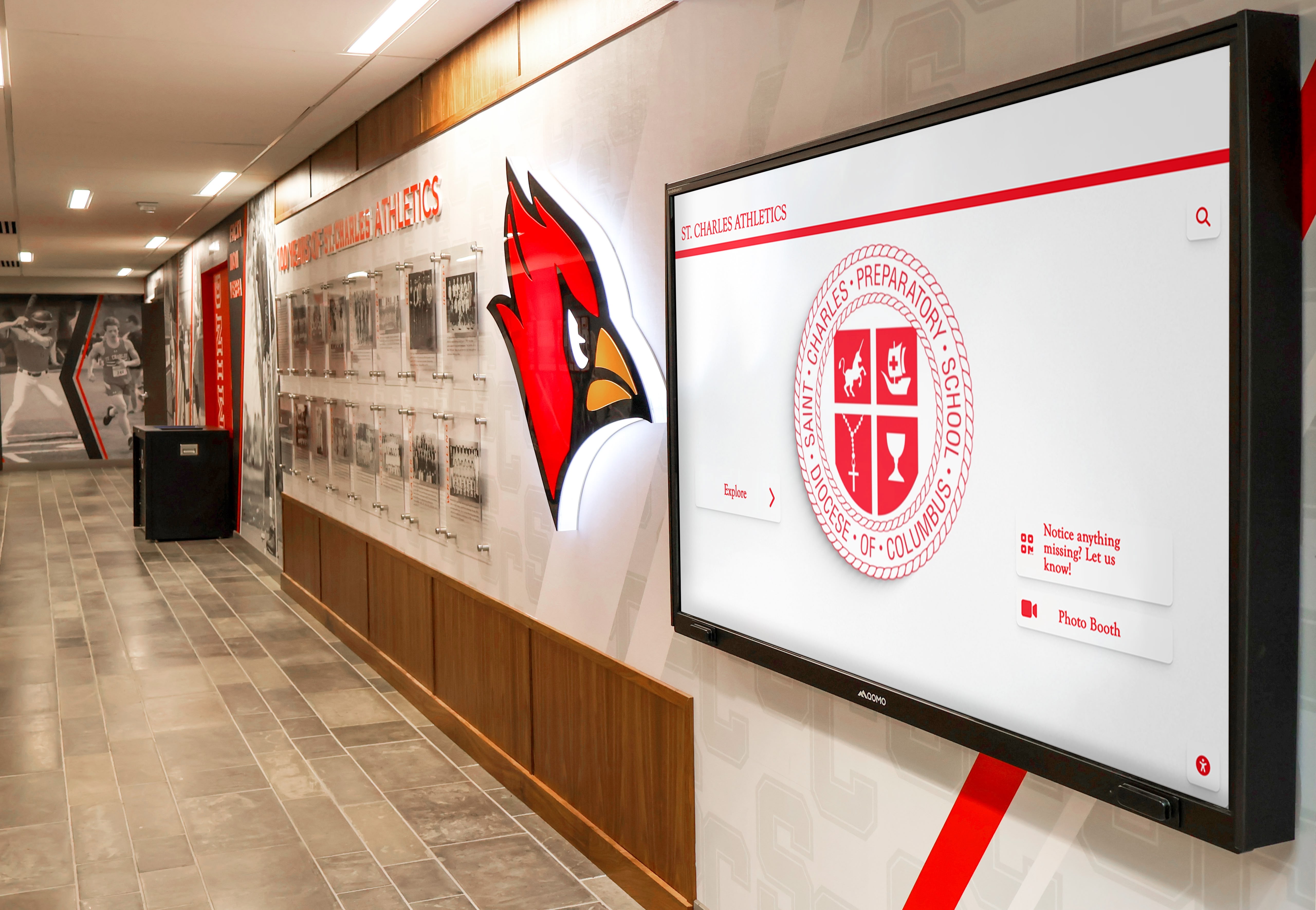
Team Culture and Motivation Elements Beyond formal recognition, incorporate design elements that build team culture:
- Inspirational coach quotes in locker rooms and training areas
- Visual reminders of program values and expectations
- Historical photos documenting program evolution
- Team traditions and rituals acknowledged through environmental graphics
- Color schemes and branding reinforcing institutional identity
Technology Integration and Building Systems
Modern indoor athletic facility design requires sophisticated technology integration supporting operational efficiency, enhanced user experiences, and sustainable management practices.
Scoreboard and Display Systems Athletic facilities need clear, reliable scoring and timing displays:
- LED scoreboards visible from all spectator locations
- Shot clocks for basketball competition
- Wireless control systems for efficient operation
- Video display capabilities for replays, announcements, and recognition
- Integration with facility sound systems
- Scoreboard sponsorship opportunities offsetting costs
Sound System Design Audio systems serve multiple functions in athletic facilities:
- Clear announcements during competitions
- Background music during warm-ups and between events
- Emergency notification capabilities
- Microphone locations for announcers and officials
- Volume zoning for multi-court facilities
- Acoustic treatments managing reverberation in large spaces
Facility Management Technology Behind-the-scenes systems supporting efficient facility operation include:
- Scheduling software managing court reservations and program conflicts
- Access control systems securing spaces when not supervised
- Lighting controls with scheduling and motion sensing capabilities
- HVAC systems with occupancy-based operation
- Security cameras in public areas and building perimeters
- Equipment checkout systems tracking athletic gear
Connectivity and Network Infrastructure Modern athletic facilities require robust network infrastructure:
- Wi-Fi coverage for administrative functions, scoring systems, and user connectivity
- Wired network drops for scoreboards, security systems, and administrative areas
- Sufficient bandwidth supporting multiple simultaneous users
- Network security protecting institutional data
- Future capacity allowing technology expansion without infrastructure replacement

Sustainable Design and Operational Efficiency
Athletic facilities consume significant energy and resources. Sustainable design strategies reduce long-term operating costs while supporting institutional environmental commitments.
Energy-Efficient Building Systems
- LED lighting throughout facility spaces
- High-efficiency HVAC equipment with variable-speed drives
- Programmable controls reducing energy use during unoccupied periods
- Natural daylighting where feasible without creating glare issues
- Insulation and air sealing exceeding code minimums
- Energy recovery ventilation systems
Water Conservation Strategies
- Low-flow plumbing fixtures in all restrooms and locker rooms
- Water-efficient landscape irrigation if facility includes exterior grounds
- Rainwater collection for non-potable uses where feasible
- Leak detection systems preventing water waste
Durable Material Selection
- Impact-resistant wall surfaces in high-traffic areas
- Flooring selections balancing performance with maintenance requirements
- Cleanable surfaces throughout facility
- Maintenance-friendly finishes reducing long-term labor costs
Operational Cost Considerations Beyond initial construction budgets, evaluate long-term operational costs:
- Utility expenses for heating, cooling, and lighting
- Custodial and maintenance labor requirements
- Equipment replacement cycles and life-cycle costs
- Supplies and consumables (cleaning products, paper goods)
- Technology refresh requirements
- Planned maintenance for building systems and surfaces
Many facilities discover that premium investments in energy-efficient systems, durable materials, and quality initial construction pay for themselves within 5-10 years through reduced operating and maintenance costs. Schools planning athletic facility investments should conduct life-cycle cost analyses comparing initial expenditures against projected operating expenses.
Locker Rooms and Support Spaces
Athletic facility design extends well beyond competition and practice courts. Support spaces directly impact user experience, safety, and program effectiveness.
Locker Room Planning Modern locker facilities must accommodate diverse users while meeting safety and accessibility requirements:
- Gender-inclusive facilities respecting all users
- Day-use lockers for physical education classes
- Team lockers for competitive athletes with secure storage
- Accessible lockers, benches, and maneuvering space
- Adequate shower facilities with privacy considerations
- Family/companion restrooms for young children with adult supervision needs
Athletic Training Facilities Quality athletic training spaces protect athlete health and support injury prevention:
- Treatment tables and rehabilitation equipment
- Ice machines, refrigeration for cold therapy
- Taping and bracing areas
- Secure storage for medical supplies and equipment
- Documentation areas for injury tracking and communication
- Privacy for sensitive medical consultations
- Proximity to competition and practice areas for emergency response
Strength and Conditioning Areas Dedicated training spaces support athlete development:
- Free weights and Olympic lifting platforms
- Cardio equipment (treadmills, bikes, rowers)
- Resistance training machines
- Functional training space for dynamic exercises
- Proper flooring protecting equipment and building structure
- Ventilation managing heat and air quality during intense training
- Supervision sightlines supporting safety
Equipment Storage Solutions Organized storage systems improve operations and protect equipment investments:
- Ball carts and storage racks
- Volleyball standards and net systems
- Portable goals and training equipment
- Seasonal storage for equipment not currently needed
- Security systems preventing theft
- Inventory management systems tracking equipment
- Convenient access from primary activity spaces
Community Engagement and Revenue Generation
Indoor athletic facilities represent significant capital investments. Strategic planning can create revenue streams and community connections that offset operational costs while advancing institutional missions.
Facility Rental Programs When not serving primary program needs, athletic facilities can generate revenue through:
- Youth sports league rentals (basketball, volleyball, futsal)
- Adult recreation leagues and pickup games
- Sports camps during school breaks
- Birthday parties and private events
- Corporate team-building activities
- Physical therapy and rehabilitation programs
- Community fitness programming
Successful rental programs require:
- Clear policies governing facility use, supervision, and liability
- Scheduling systems preventing conflicts with priority programs
- Pricing structures covering incremental costs (staffing, utilities, cleaning)
- Insurance requirements protecting institutional interests
- Maintenance standards ensuring rental users preserve facility conditions
Tournament Hosting Quality facilities can host tournaments generating both revenue and community visibility:
- Basketball and volleyball tournaments attracting regional participation
- Wrestling, cheer, and gymnastics competitions
- Spectator amenities (concessions, seating, parking, restrooms)
- Lodging partnerships with local hotels
- Economic impact on surrounding businesses
- Exposure for your athletic programs and institution
Community Partnerships Strategic partnerships extend facility impact:
- Recreation department agreements sharing facility access and costs
- Youth sports organizations receiving priority scheduling
- Senior fitness programs serving aging populations
- Adaptive sports programs for athletes with disabilities
- Health and wellness initiatives addressing community needs
Showcasing community partnerships through recognition displays acknowledges these relationships while demonstrating institutional commitment to community service.
Project Planning and Implementation Timeline
Successful indoor athletic facility projects require careful planning, stakeholder engagement, and realistic timelines. Most school and recreation center facility projects follow this general sequence:
Phase 1: Needs Assessment and Feasibility (3-6 months)
- Document current facility deficiencies and program needs
- Conduct user surveys and stakeholder interviews
- Develop preliminary program requirements
- Assess site options and constraints
- Establish preliminary budget parameters
- Determine project feasibility and scope
Phase 2: Funding and Approval (6-18 months)
- Refine project scope and budget
- Develop fundraising or bond referendum strategy
- Secure board or municipal approvals
- Launch capital campaigns when applicable
- Finalize funding commitments
- Establish project governance structure
Phase 3: Design Development (6-9 months)
- Select architect and design team
- Develop schematic design concepts
- Refine design based on user feedback
- Complete design development documentation
- Finalize construction documents
- Secure building permits and approvals
Phase 4: Construction (12-18 months)
- Bid and award construction contracts
- Regular construction meetings and inspections
- Address design adjustments during construction
- Plan technology installations and equipment procurement
- Coordinate recognition displays and branding elements
- Develop operational procedures and staffing plans
Phase 5: Opening and Activation (2-3 months)
- Staff training on building systems and procedures
- Equipment installation and testing
- Occupancy approvals and inspections
- Grand opening events and community tours
- Program transition to new facility
- Initial operational adjustments
The entire process from initial planning through facility opening typically spans 3-4 years for major new construction. Renovation projects may move faster, while complex projects involving referendum approvals or challenging sites may require additional time.
Conclusion: Creating Facilities That Serve Generations
Thoughtfully designed indoor athletic facilities become institutional anchors serving multiple generations of athletes, students, and community members. They represent visible commitments to health, wellness, competitive excellence, and community building that extend far beyond their functional purposes.
The most successful facilities balance practical operational needs with inspiring environments that celebrate achievement and motivate continued excellence. They incorporate safety and accessibility from the beginning, not as afterthoughts. They plan for sustainable operations reducing long-term costs. They create flexible spaces adapting to changing program needs over decades of use.
Throughout the planning process, remember that facilities ultimately serve people—student athletes developing skills and character, physical education students building healthy habits, community members pursuing wellness and connection, and supporters whose contributions make these spaces possible.
Whether you’re planning a new facility or renovating existing spaces, prioritize thoughtful planning over rushed decisions. Engage diverse stakeholders representing all user groups. Invest in quality design and construction that will serve your institution well for decades. And create recognition systems that honor past achievements while inspiring future excellence.
Ready to explore how modern recognition technology can enhance your athletic facility planning? Rocket Alumni Solutions offers digital displays specifically designed for athletic facilities, combining championship celebrations, individual record recognition, donor acknowledgment, and historical storytelling in systems that grow with your programs. Schedule a consultation to discuss how interactive recognition displays can transform your facility from functional space into inspiring environment.