Marching band uniforms represent far more than functional performance attire—they embody program tradition, communicate institutional identity, and create visual impact that transforms musical performances into complete theatrical experiences. The distinctive jacket, the carefully coordinated accessories, the school colors proudly displayed across the field—these elements combine to create instant recognition and lasting memories that define band programs for generations of students, families, and communities.
Yet as band directors plan uniform purchases, navigate budget constraints, and balance tradition with modern design trends, they face challenging decisions about style selections, quality investments, and how to honor the legacy these uniforms represent in their programs. A well-chosen uniform serves programs for 10-15 years or more, making these decisions among the most consequential directors make regarding program identity and student experience.
This comprehensive guide explores the rich history of marching band uniforms, examines contemporary styles and design elements, provides practical guidance for uniform selection and maintenance, and discusses how schools preserve and celebrate uniform traditions as essential components of program heritage worth documenting and displaying alongside other institutional achievements.

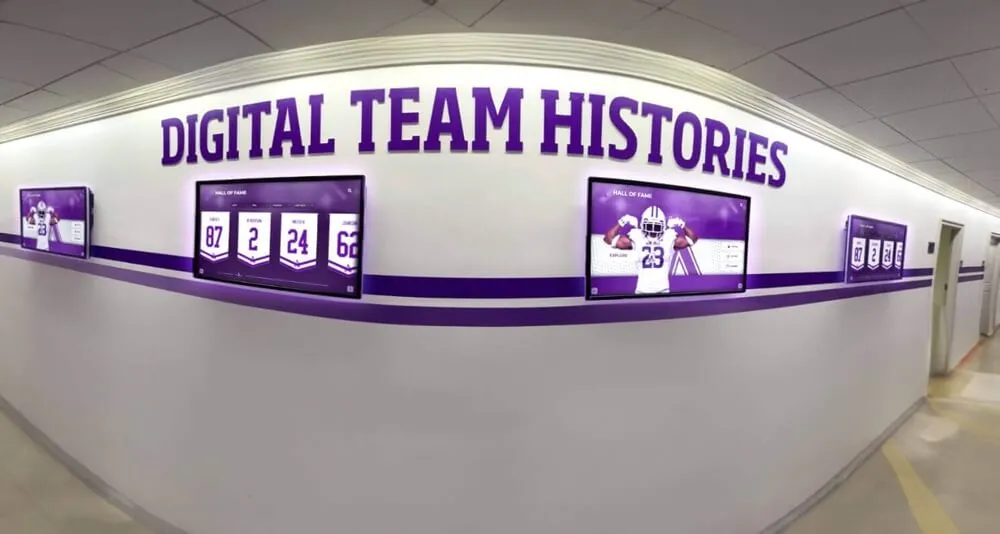
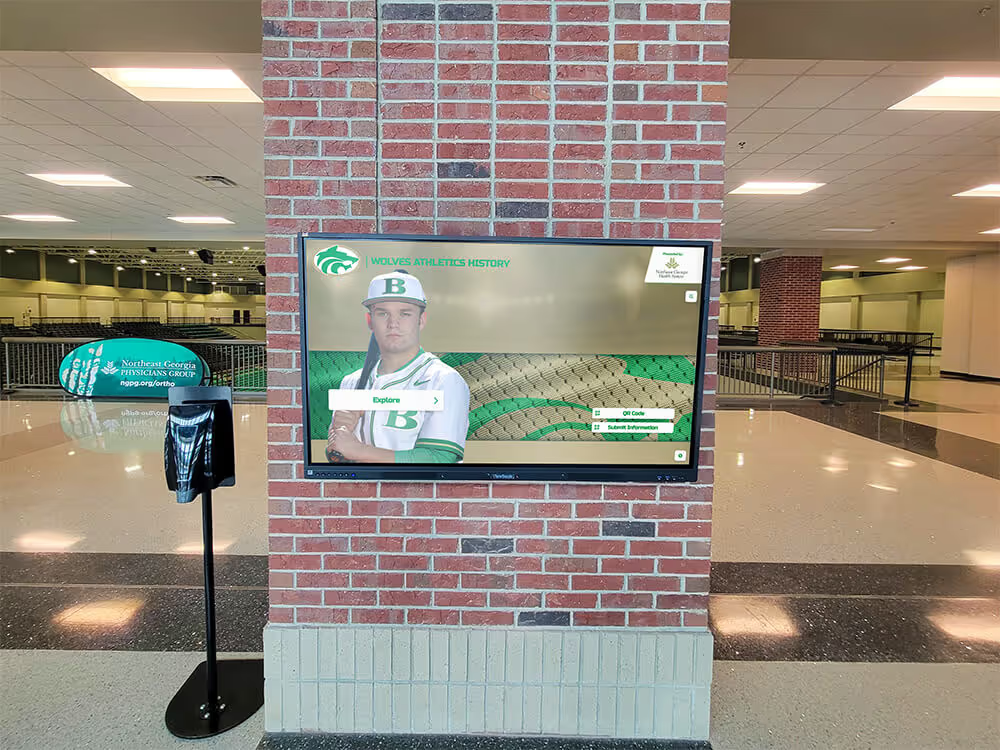
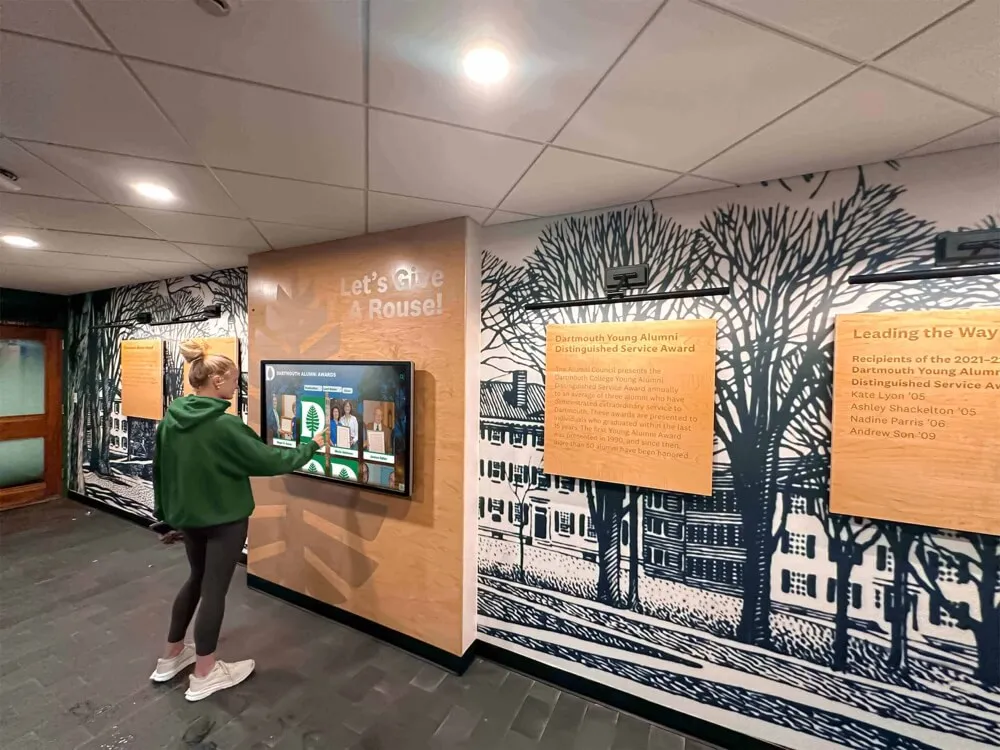
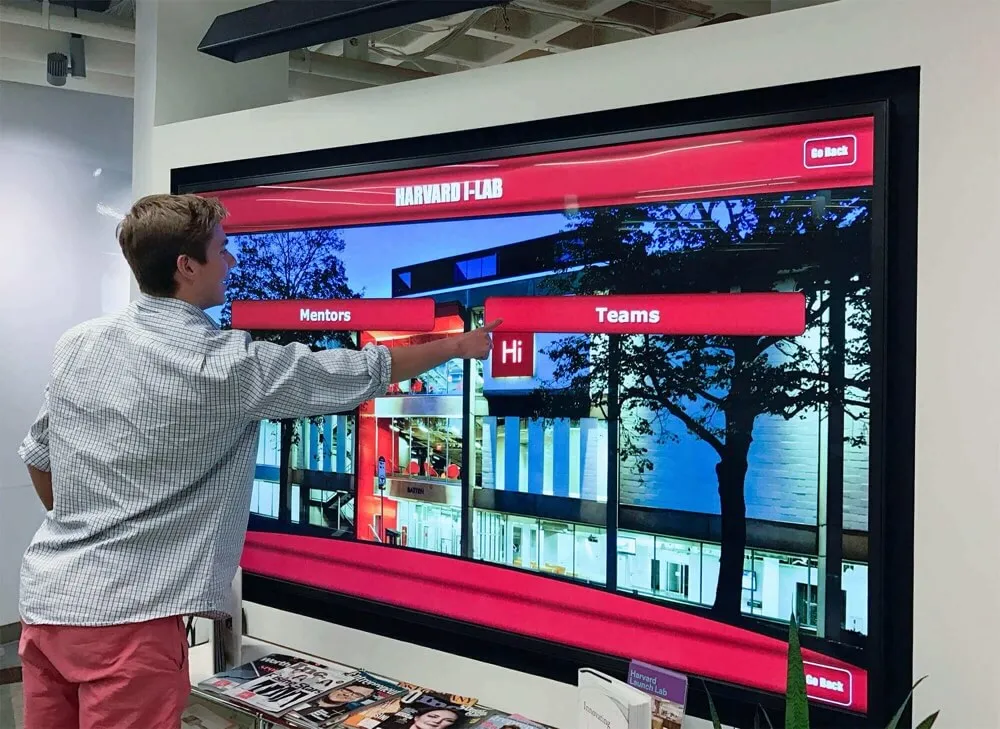
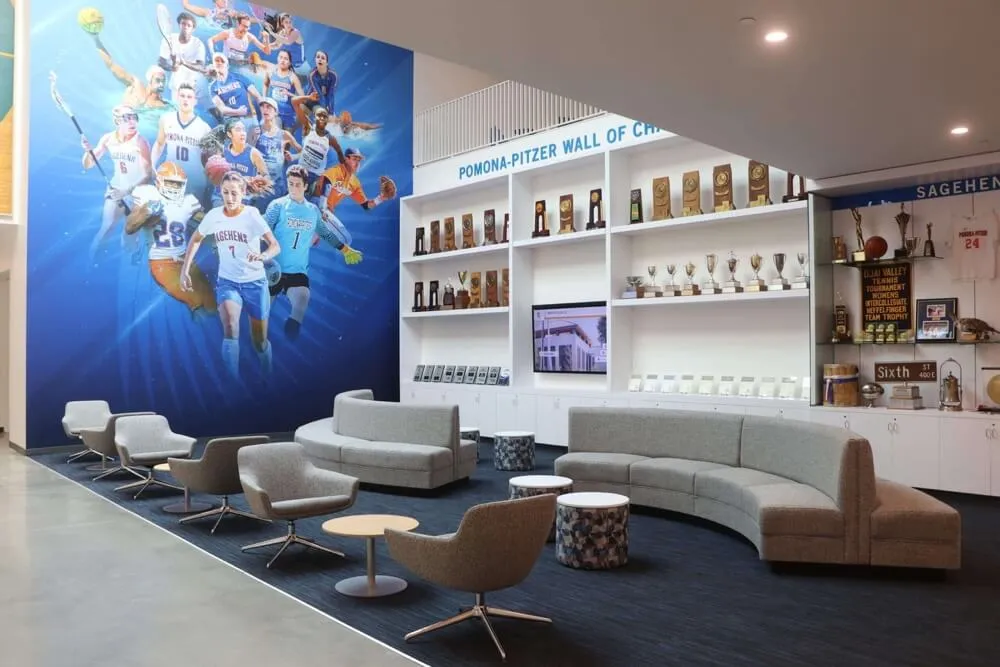
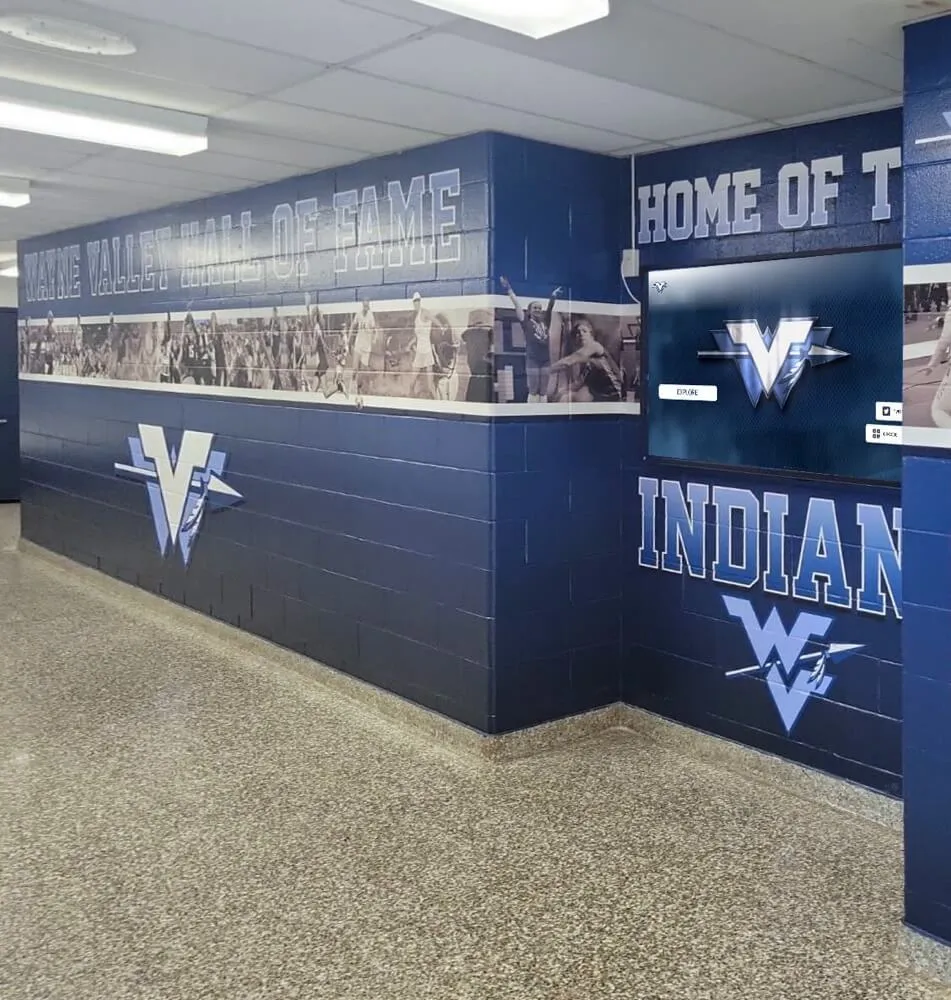
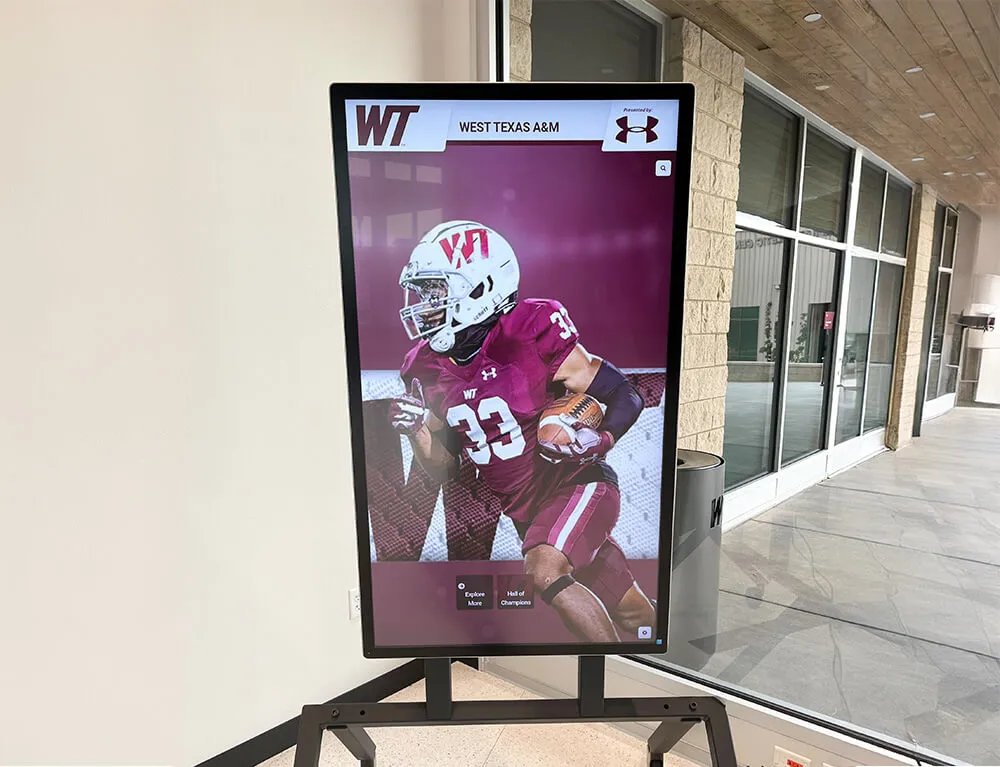
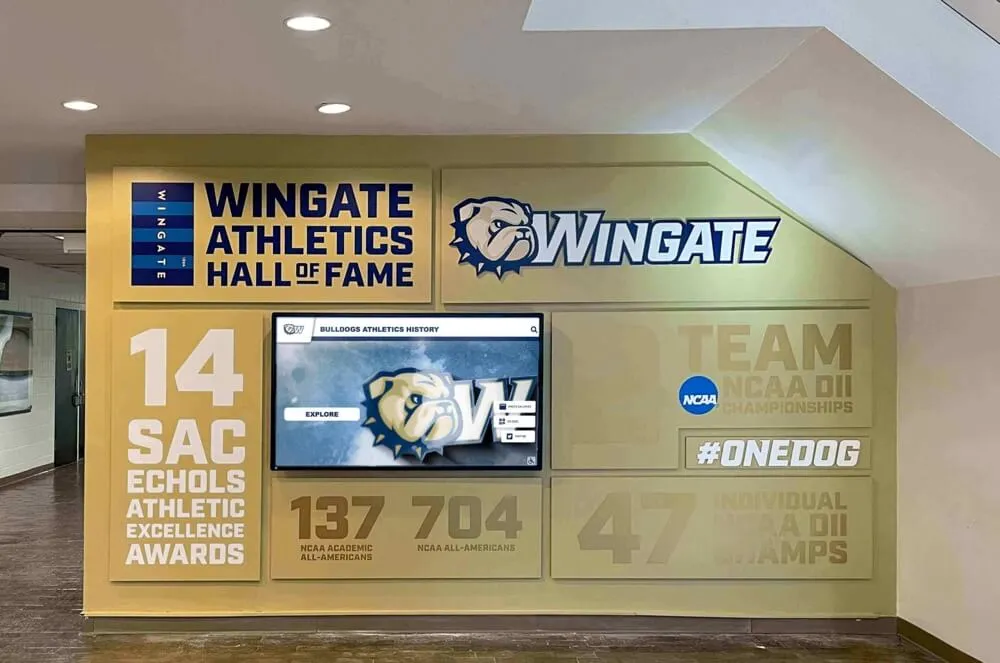
Modern recognition displays preserve band uniform history and program traditions alongside other school achievements
The Historical Evolution of Marching Band Uniforms
Understanding how marching band uniforms evolved from military origins to contemporary designs provides context for today’s style choices and helps programs appreciate the traditions they inherit.
Military Origins and Early Influences (1800s-1920s)
Marching band uniforms trace direct lineage to military dress uniforms of the 18th and 19th centuries, when military bands accompanied armies and performed ceremonial functions requiring distinctive attire.
European Military Tradition
Military bands in European armies wore elaborate dress uniforms featuring high-collared jackets with extensive braiding and trim work (often called frogging or soutache), brass buttons arranged in decorative patterns, fitted military-style trousers with stripes, tall hats including shakos and busbies, and contrasting colors highlighting unit distinctions and regimental pride.
These military ensembles communicated authority, precision, and ceremony—qualities civilian marching bands sought to emulate as they emerged in American communities throughout the 1800s.
Early American School Bands
When high schools began forming marching bands in the early 20th century, they naturally adopted military-inspired styling including modified military jackets with simplified trim, standardized dark colors (typically black, navy, or dark green), basic shakos or military-style caps, and minimal variation from established military patterns.
Budget constraints limited elaborate decoration, but even basic military-inspired uniforms elevated band programs by creating unified, professional appearances for public performances. This connection to military tradition also aligned with the patriotic sentiments of early 20th-century America, particularly surrounding World War I when military bands gained heightened visibility and respect.
The John Philip Sousa Influence
The legendary composer and bandmaster John Philip Sousa, who led the United States Marine Band and later his own commercial touring band, significantly influenced American expectations for band appearance. Sousa’s ensembles wore impeccably tailored military-style uniforms with high standards for fit, maintenance, and presentation. His visibility in American culture from the 1880s through 1930s established military-inspired uniforms as the standard for serious musical ensembles.
Schools modeling their programs after Sousa’s example adopted similar military styling, creating a nationwide aesthetic that persisted for decades. This military connection also reinforced discipline, precision, and excellence—values band directors sought to instill in student musicians.
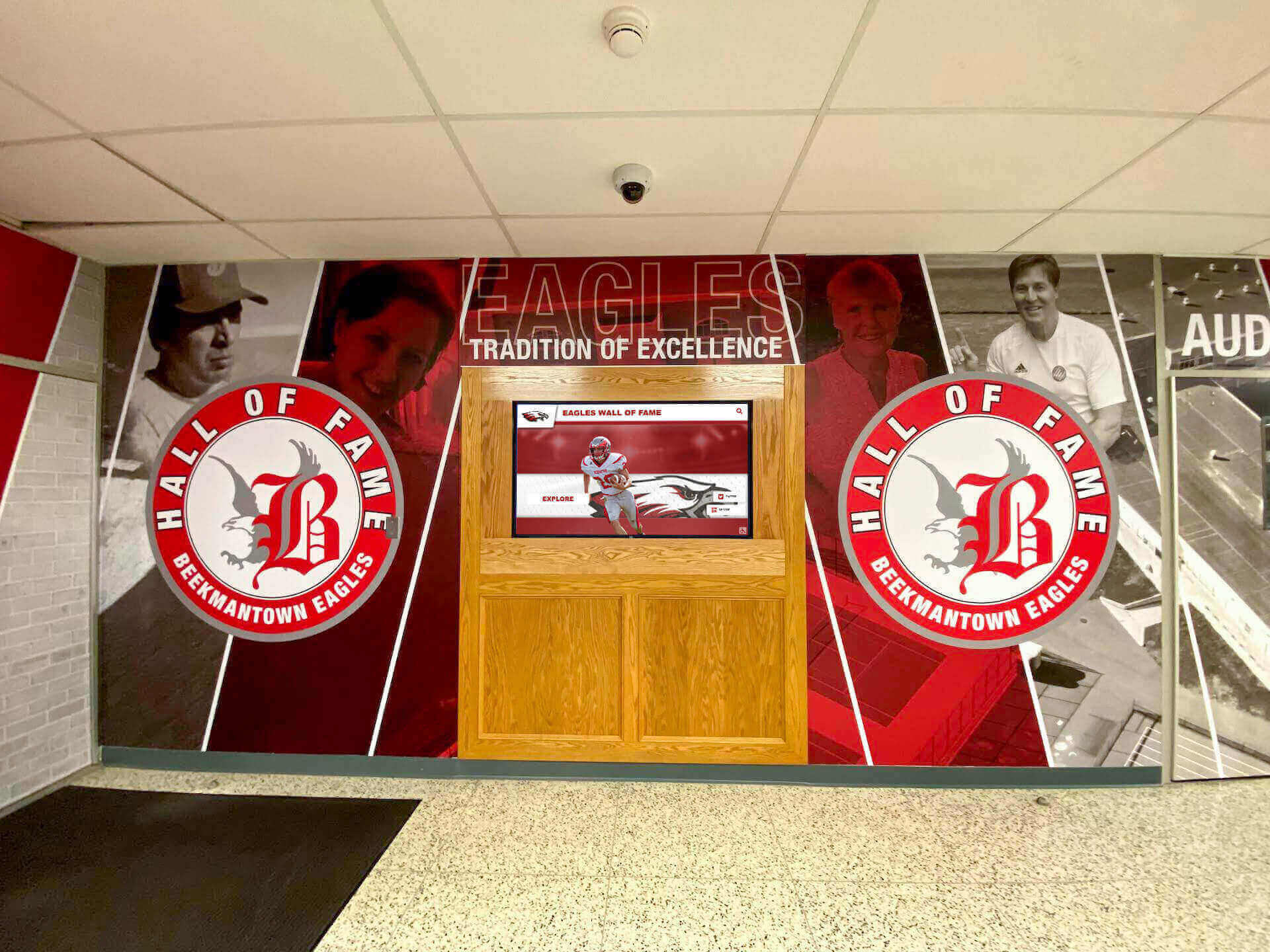
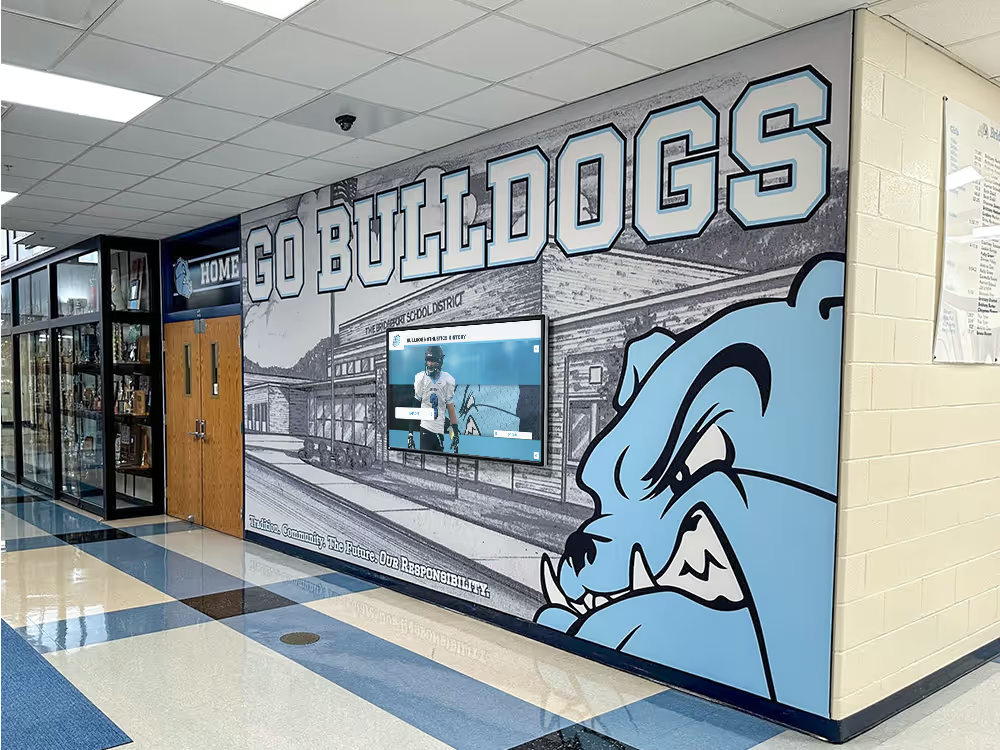
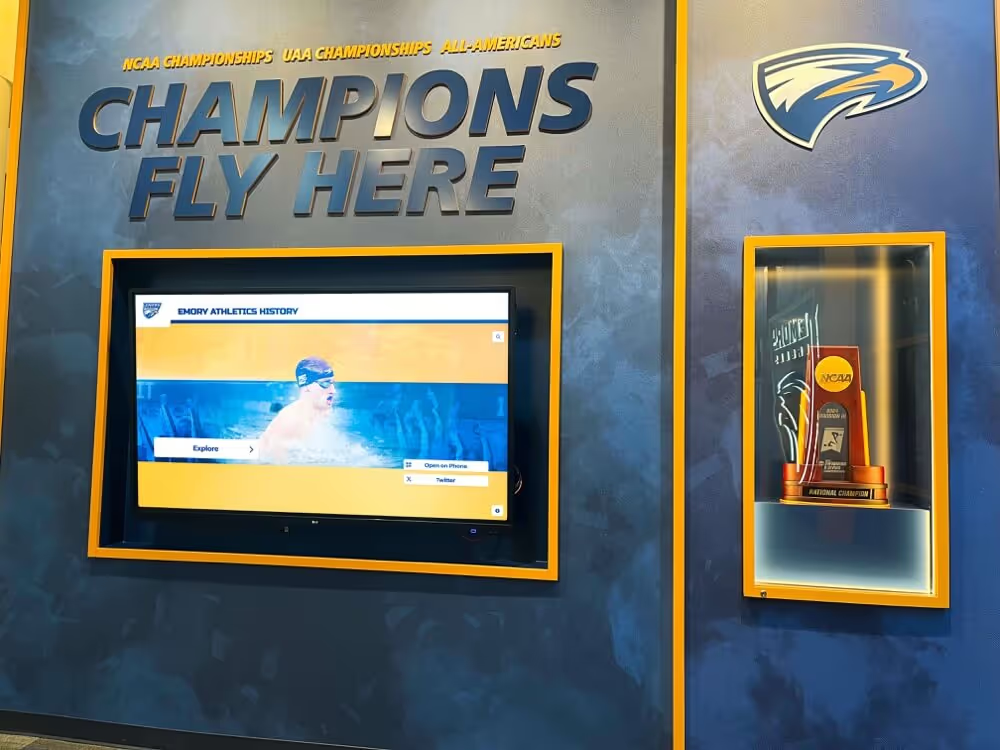
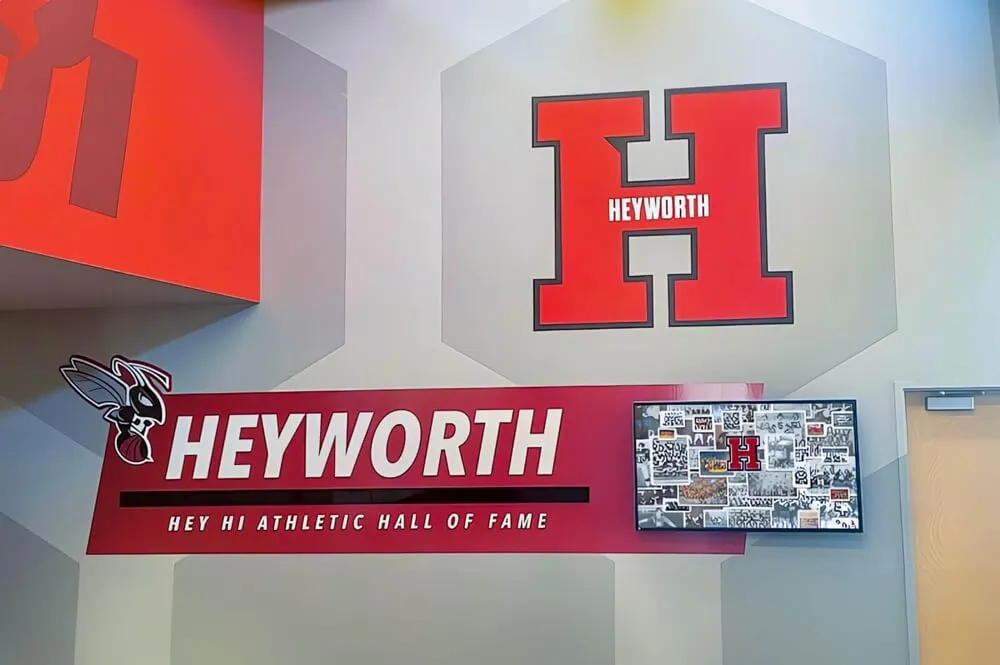
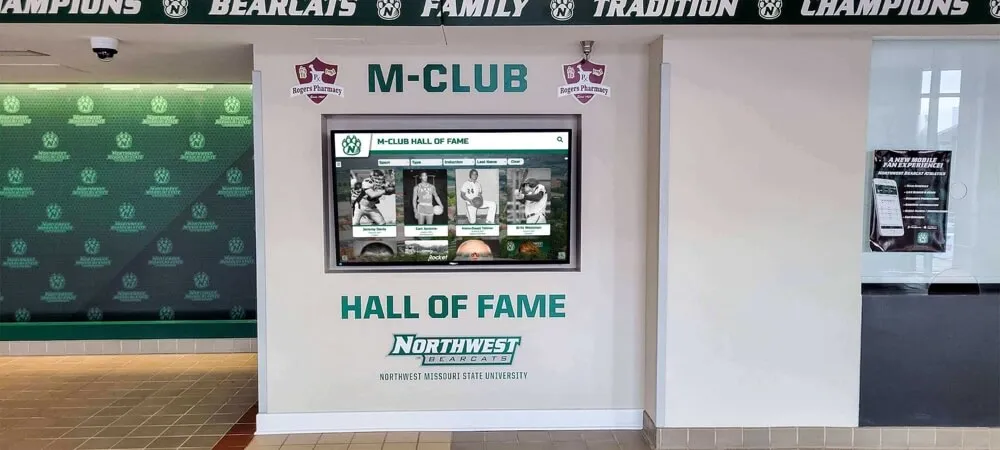
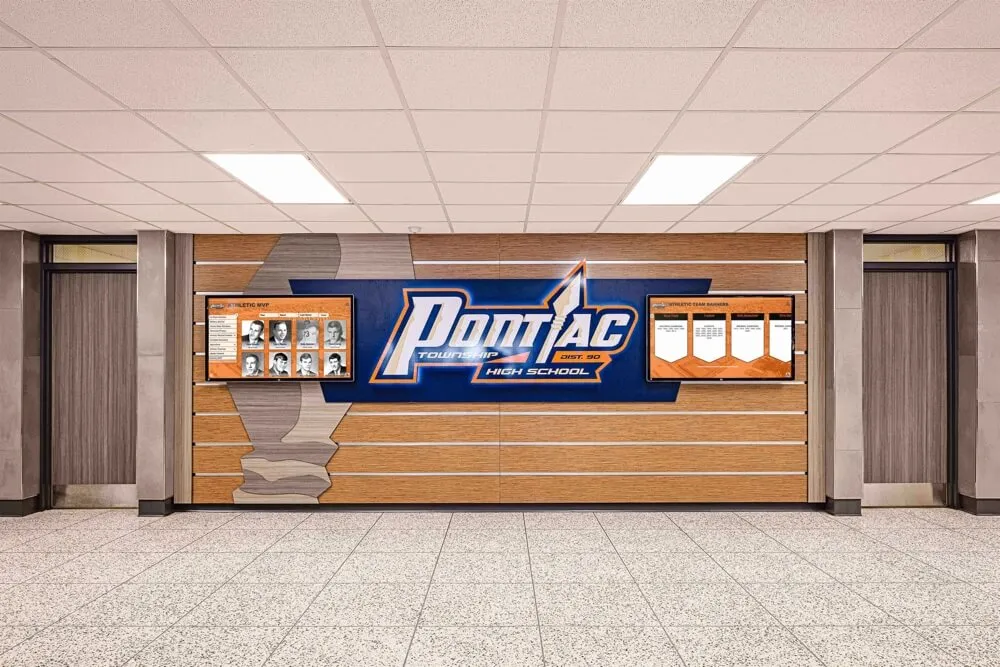
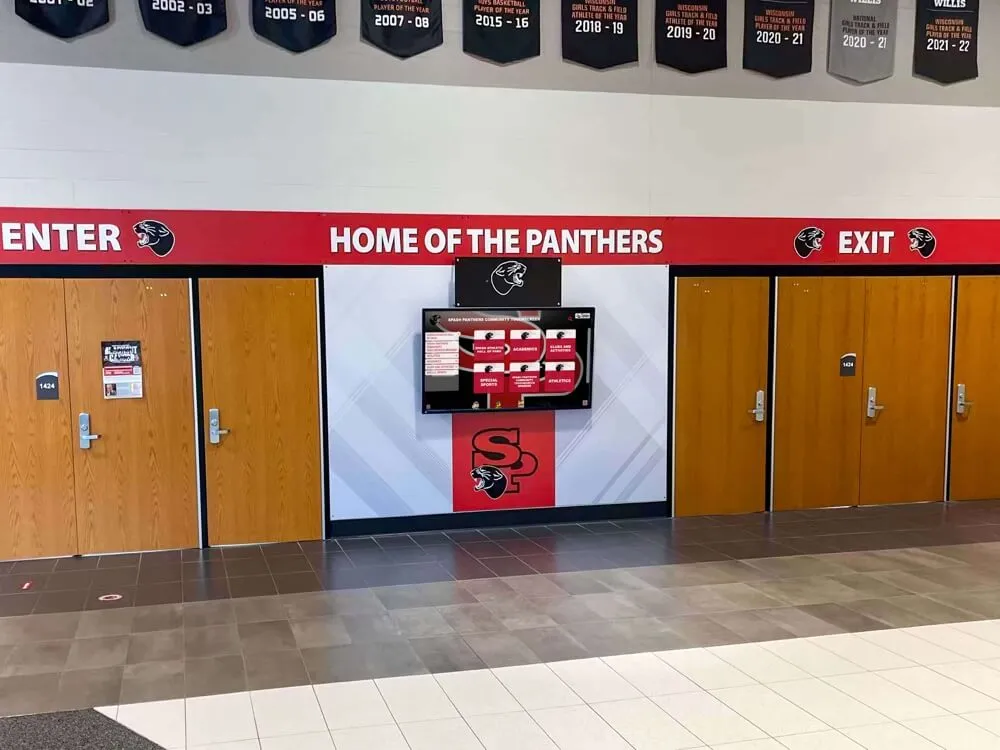
School entrance displays featuring program history celebrate uniform traditions and band heritage
The Golden Age of Marching Bands (1930s-1970s)
The mid-20th century saw marching band programs flourish as distinctive American institutions with evolving uniform styles reflecting this growth.
Post-War Expansion
Following World War II, high school and college marching band programs expanded dramatically as education funding increased and communities invested in school activities. This expansion coincided with uniform design evolution including more elaborate braiding and trim patterns, introduction of colored uniforms beyond basic black and navy, shakos with distinctive plumes becoming standard, and increased customization reflecting school colors and mascots.
The 1950s and 1960s represented the height of traditional marching band styling, with full military-inspired uniforms including high-collared jackets with extensive brass buttons and chain trim, fitted bibber pants with stripes, tall shakos with plumes, white gloves, and military-style capes for drum majors and honor guard.
Drum Corps International Influence
The formation of Drum Corps International (DCI) in 1972 revolutionized marching arts aesthetics and influenced school band uniform design. Drum corps introduced athletic-style uniforms emphasizing movement and modern visual design, bold color combinations beyond traditional school colors, contemporary styling departing from strict military traditions, and theatrical elements supporting visual programs.
While most school bands retained traditional styling longer than drum corps, DCI’s influence gradually encouraged more contemporary approaches to uniform design, particularly at competitive programs seeking to incorporate modern visual elements into their shows.
Regional Style Variations
Different regions of the United States developed somewhat distinct marching band traditions affecting uniform choices including Texas bands favoring military precision and traditional styling, Midwestern corps-style bands adopting more contemporary designs, Southern university bands maintaining elaborate traditional uniforms, and West Coast programs experimenting with varied styling approaches.
These regional differences continue influencing contemporary uniform decisions as programs balance local tradition with national trends.
Exploring how programs document and celebrate performance traditions connects to broader school history preservation initiatives that honor all aspects of institutional heritage.
Contemporary Trends and Modern Innovations (1980s-Present)
Recent decades have seen continued evolution in marching band uniform design influenced by changing performance styles, practical considerations, and aesthetic preferences.
Performance-Driven Design Changes
As marching band shows became increasingly athletic and visually complex, uniform designs adapted to support these demands including lighter-weight fabrics replacing heavy wool, improved breathability and moisture management, increased flexibility enabling greater range of motion, and heat management for warm-weather performance conditions.
Modern uniforms balance traditional aesthetic appeal with functional requirements enabling contemporary drill choreography requiring greater physical demands than traditional straight-line marching formations.
The Shift Toward Contemporary Styling
Many programs—particularly those competing in Bands of America and similar circuits—have adopted more contemporary uniform designs including fitted athletic-style jackets, reduced formality in trim and decoration, modern color blocking and design elements, contemporary headwear alternatives to traditional shakos, and theatrical elements coordinating with specific show themes.
This shift sometimes generates controversy among traditionalists who view military-inspired uniforms as essential to marching band identity, creating ongoing debates within the activity about balancing tradition with innovation.
Cost and Maintenance Considerations
Modern uniform decisions increasingly reflect practical financial realities including rising uniform costs (complete sets often $300-500 per student), longer replacement cycles due to budget constraints, emphasis on durability and longevity, and consideration of cleaning and maintenance requirements.
These financial factors influence design choices as programs seek uniforms that provide excellent appearance while remaining sustainable for their specific circumstances and budgets.
Understanding recognition programs for arts achievements helps schools honor band accomplishments alongside other forms of student excellence.
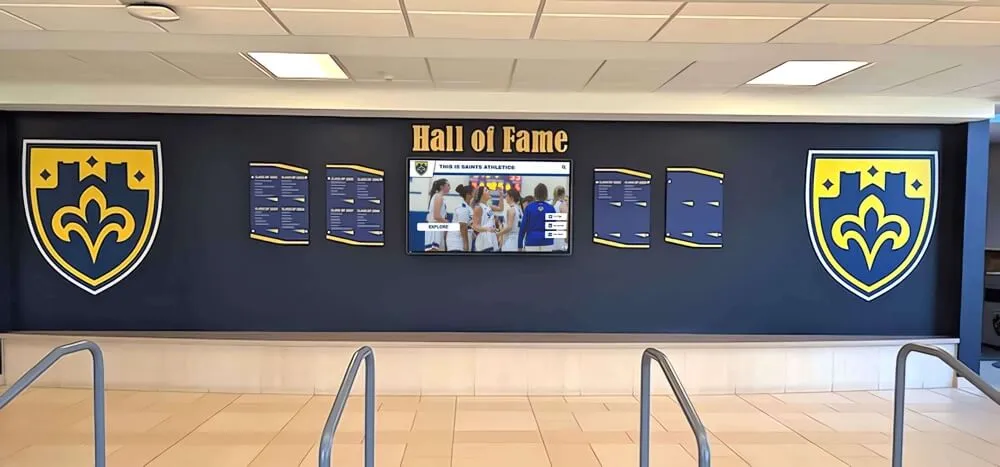
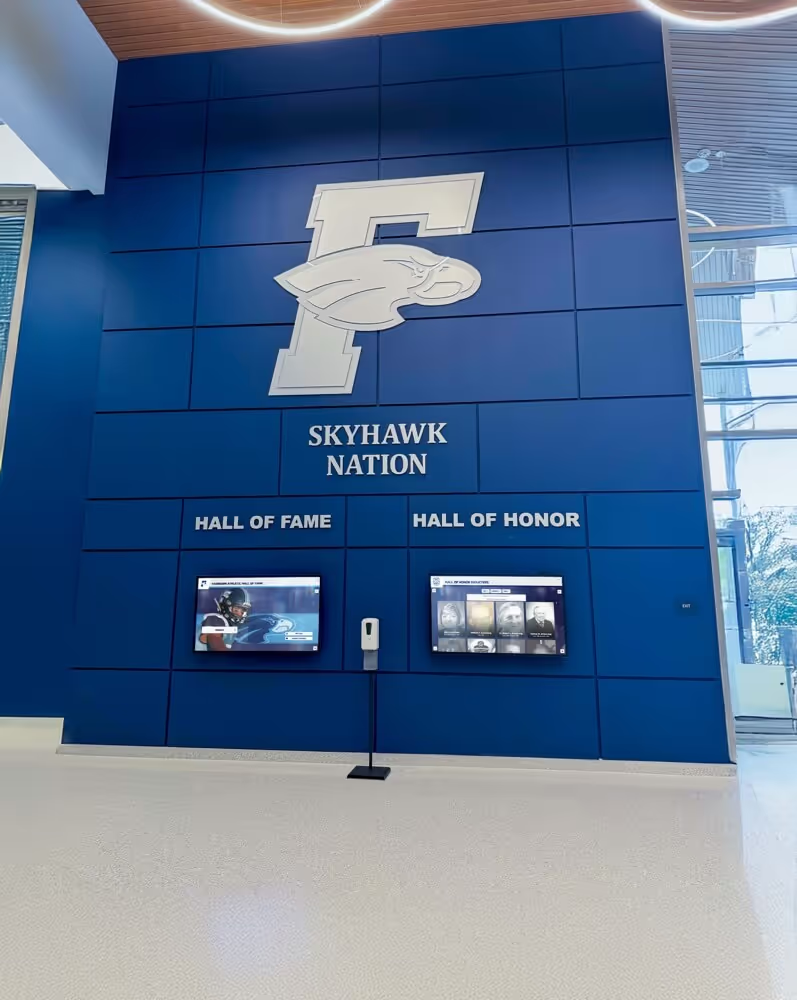
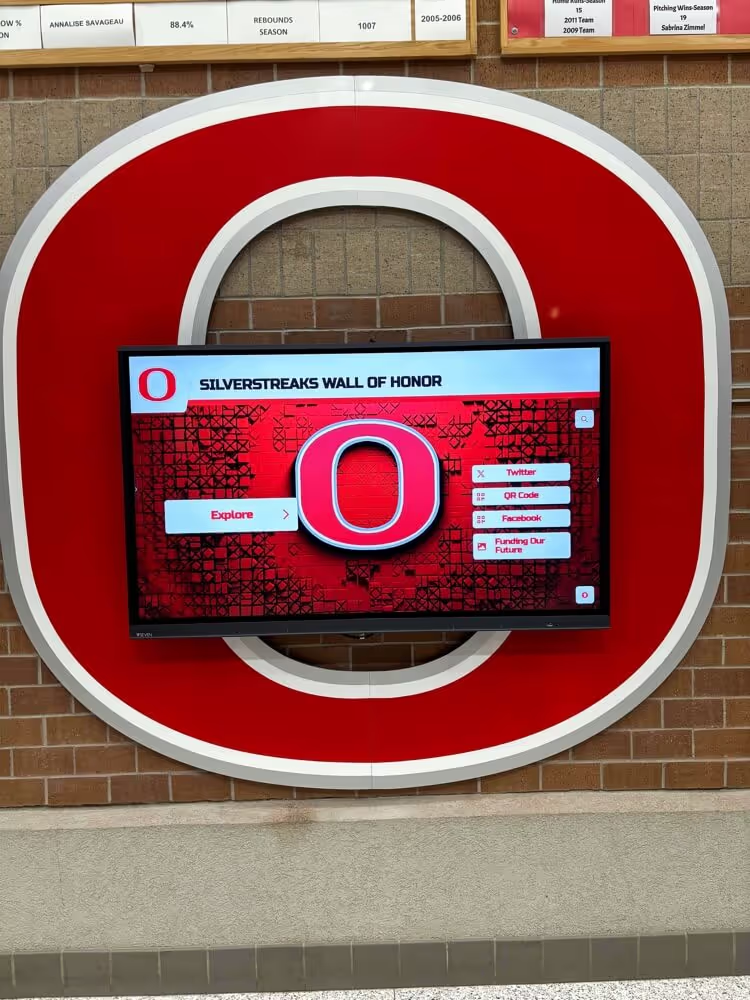
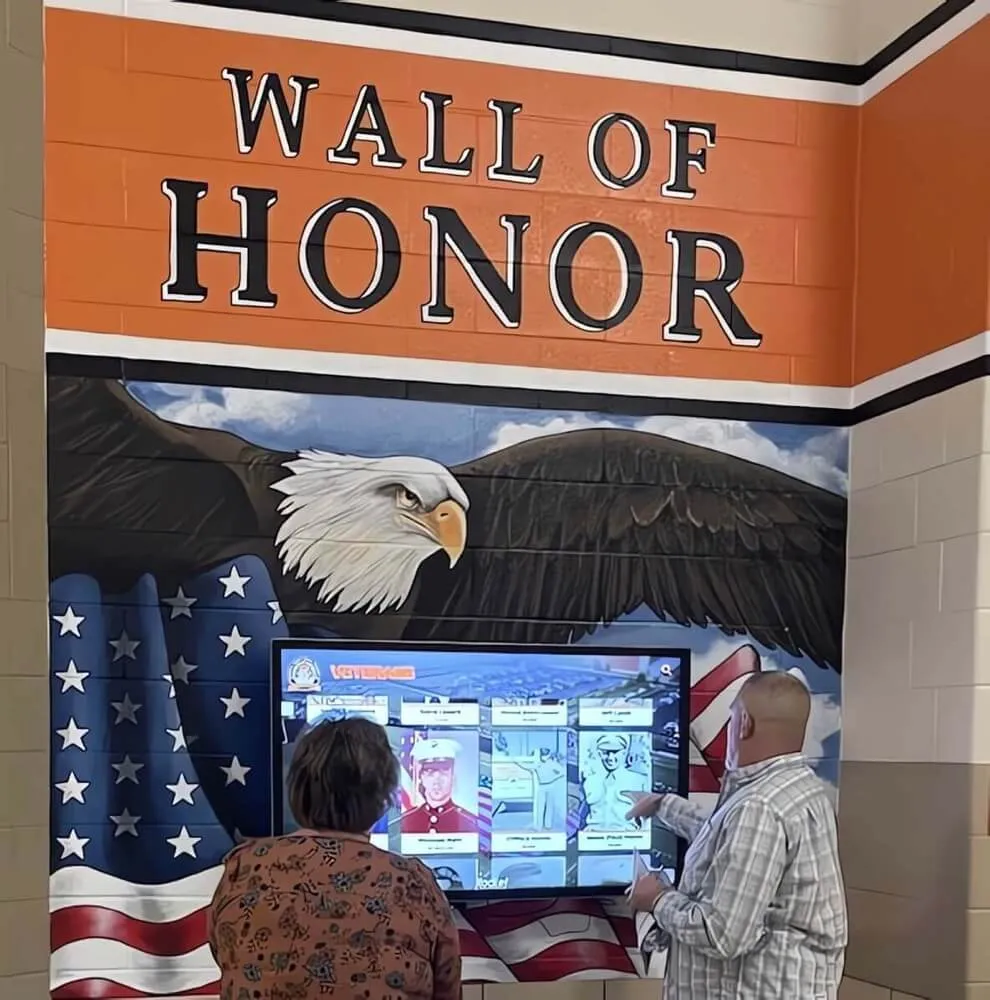
Integrated recognition displays combine traditional elements with digital storytelling capabilities
Marching Band Uniform Components and Design Elements
Marching band uniforms comprise multiple coordinated components, each contributing to overall visual impact and program identity.
The Jacket: Central Visual Element
The jacket represents the most distinctive and visible uniform component, establishing program aesthetic and making the strongest visual impression.
Traditional Military-Style Jackets
Classic band jackets feature characteristic design elements including high collars with hook-and-eye closures, multiple rows of brass or silver buttons (typically 8-12 per row), extensive braiding (frogging) across the chest in geometric patterns, epaulets on shoulders adding military styling, and fitted tailoring creating clean, sharp lines.
These traditional jackets communicate formality, precision, and connection to marching band heritage. They photograph beautifully, create striking visual uniformity in performances, and immediately identify ensembles as serious marching bands to audiences familiar with the tradition.
Traditional jackets typically use wool or wool-blend fabrics providing durability and maintaining sharp appearance. However, wool’s weight and heat retention create comfort challenges, particularly for programs in warm climates or early-season performances.
Contemporary Athletic-Style Jackets
Modern alternatives feature more streamlined designs including lower, less restrictive collars, simplified decoration emphasizing clean design lines, performance fabrics offering better breathability, athletic-style cuts enabling greater movement, and contemporary color blocking and design elements.
Athletic-style jackets particularly suit programs emphasizing highly choreographed drill requiring significant physical demands. The reduced weight and improved breathability enhance student comfort during intense physical performance.
Customization and Program Identity
Regardless of basic style, jackets communicate program identity through school colors as primary or accent shades, mascot or school emblems on sleeves or chest, distinctive button or trim colors (gold vs. silver), unique braiding patterns or designs, and program name or identifier on back panels.
These customization elements ensure uniforms distinctly represent specific schools rather than generic band attire that could belong to any program.
Garment Care and Longevity
Jacket maintenance significantly affects uniform lifespan and appearance including dry cleaning requirements (annually or as needed), proper storage during off-season, spot cleaning procedures for minor issues, button and trim repair protocols, and size adjustment systems accommodating student growth.
Programs investing in proper uniform maintenance extend jacket lifespan substantially, protecting the significant financial investment these garments represent.
Pants: Foundation of Professional Appearance
While often receiving less attention than jackets, pants fundamentally affect overall uniform presentation and student comfort.
Traditional Bibber Pants
Classic band pants feature bib fronts with suspender-style closures, fitted styling with tapered legs, contrasting stripes down outer leg seams, and formal appearance complementing military-style jackets.
Bibber pants create clean, formal lines particularly effective with traditional jacket styling. However, they can present sizing challenges and require proper fitting to achieve ideal appearance.
Contemporary Straight-Leg Styles
Modern alternatives include standard waistband construction, straight-leg cuts without extreme tapering, simplified designs without bibber fronts, and performance-friendly fabrics and construction.
These contemporary pants offer easier sizing, more comfortable extended wear, and better accommodation of diverse body types—practical advantages that lead many programs to select them despite less formal appearance.
Fabric and Color Considerations
Pant selection involves decisions about material durability (polyester blends vs. wool), color coordination with jackets and school colors, cleaning requirements and maintenance needs, and weather appropriateness for program’s performance season.
Coordinating pant color with jackets while ensuring sufficient contrast creates visual interest essential to overall uniform effectiveness.
Headwear: Completing the Visual Profile
Headwear provides finishing element creating silhouette recognition and adding visual height to formations.
Traditional Shakos
The shako—a tall cylindrical hat with decorative elements—represents classic band headwear featuring rigid construction maintaining distinctive shape, plumes in school colors (typically 12-18 inches), decorative fronts with school emblems or initials, chin straps securing shakos during movement, and impressive height adding 8-10 inches to performer stature.
Shakos create immediate visual recognition of marching bands and provide elegant, formal appearance. They photograph dramatically and create impressive visual uniformity in performance.
Modern Alternatives
Contemporary programs sometimes select alternative headwear including military-style service caps, contemporary styled helmets, athletic headbands coordinating with uniforms, or minimal/no headwear for specific show concepts.
These alternatives typically reduce cost, weight, and maintenance compared to traditional shakos while supporting more contemporary aesthetic approaches.
Plume Colors and Symbolism
Plume color selection carries significance including primary school colors establishing identity, section-specific colors identifying instrument groups (brass vs. woodwinds), leadership colors for drum majors and section leaders, and special recognition plumes for seniors or honor students.
These plume variations create visual interest within uniform consistency while communicating program organization and hierarchy.
Exploring school tradition displays shows how programs preserve and showcase historical photographs including uniform evolution over time.
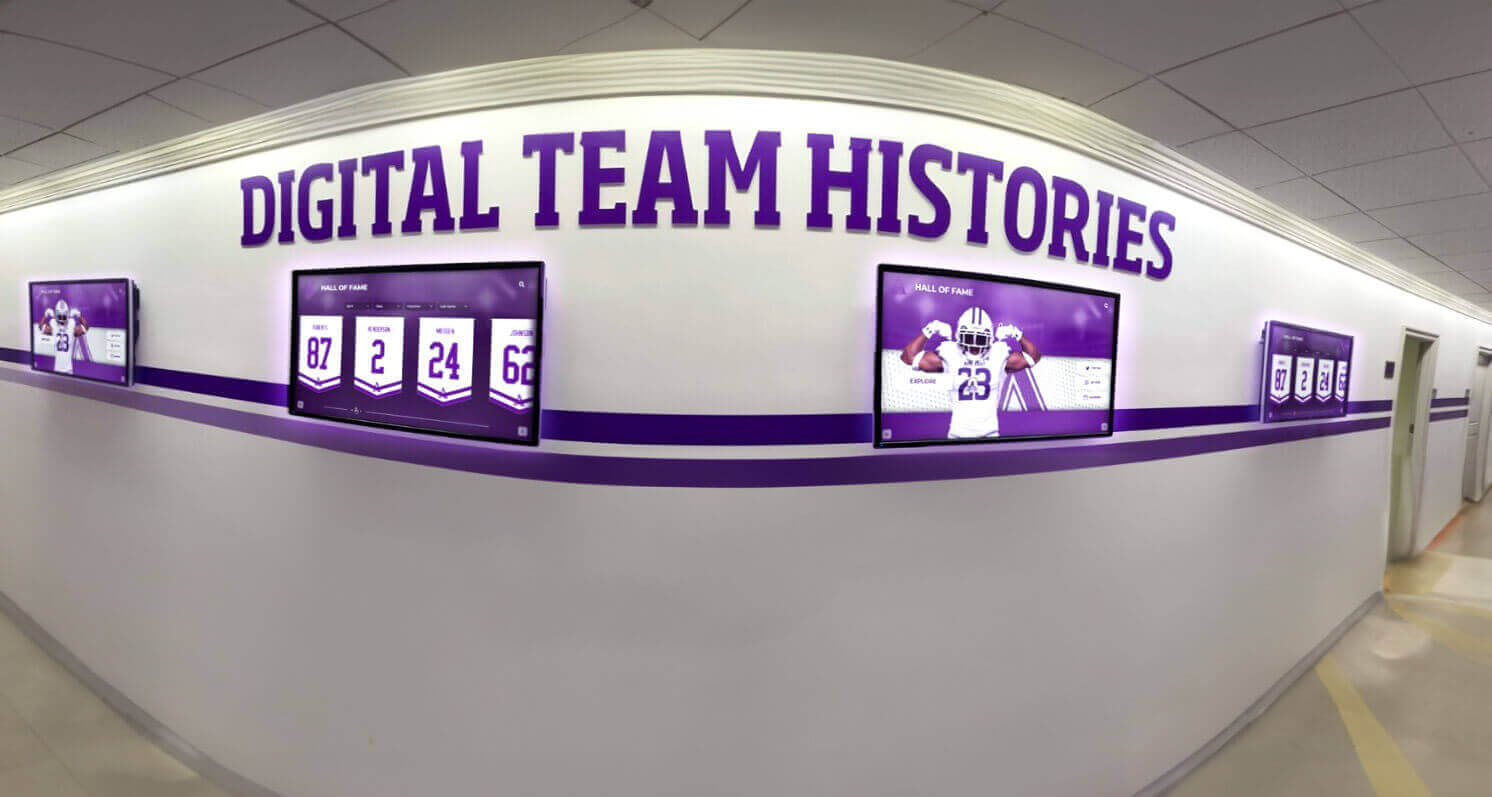
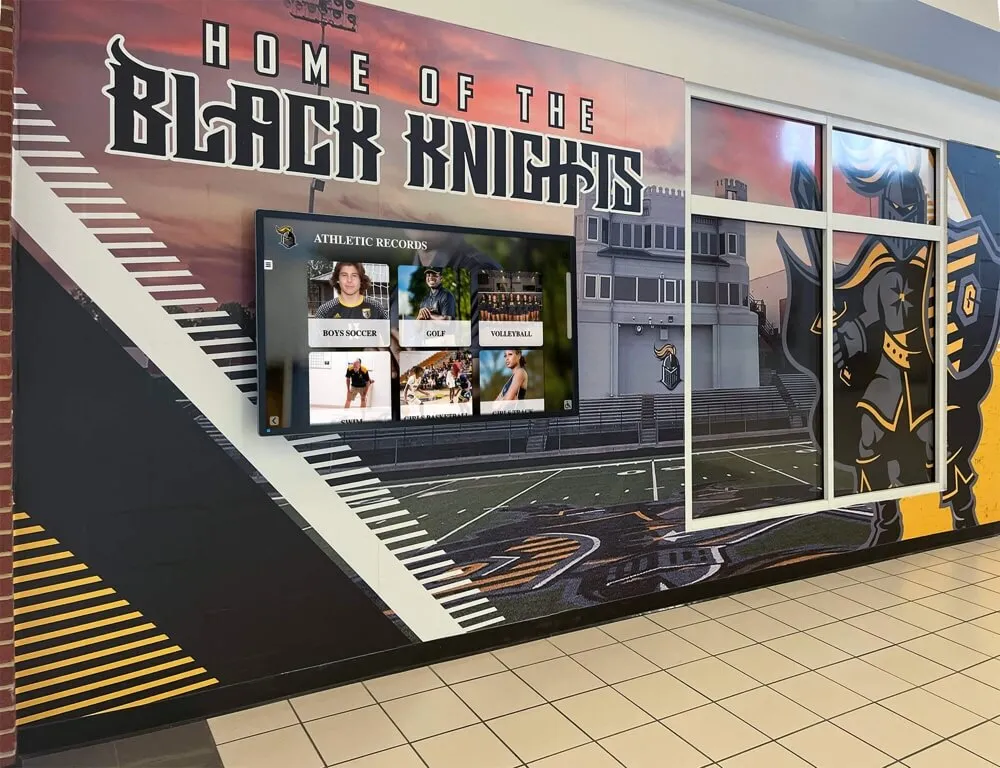
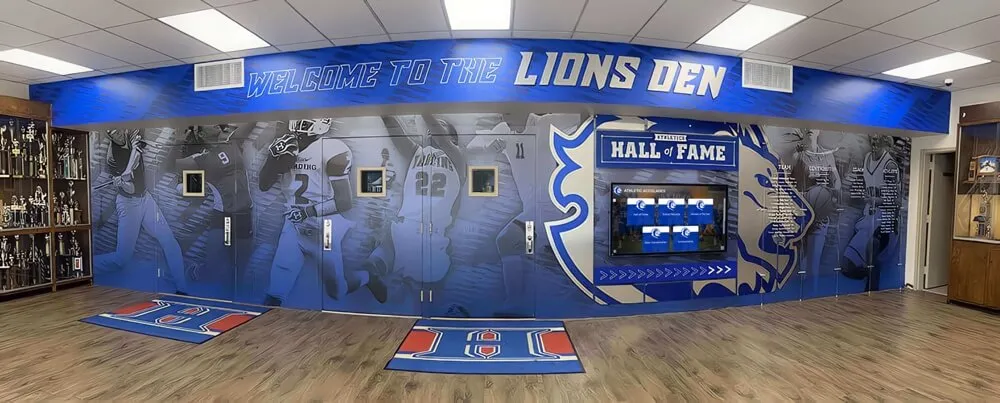
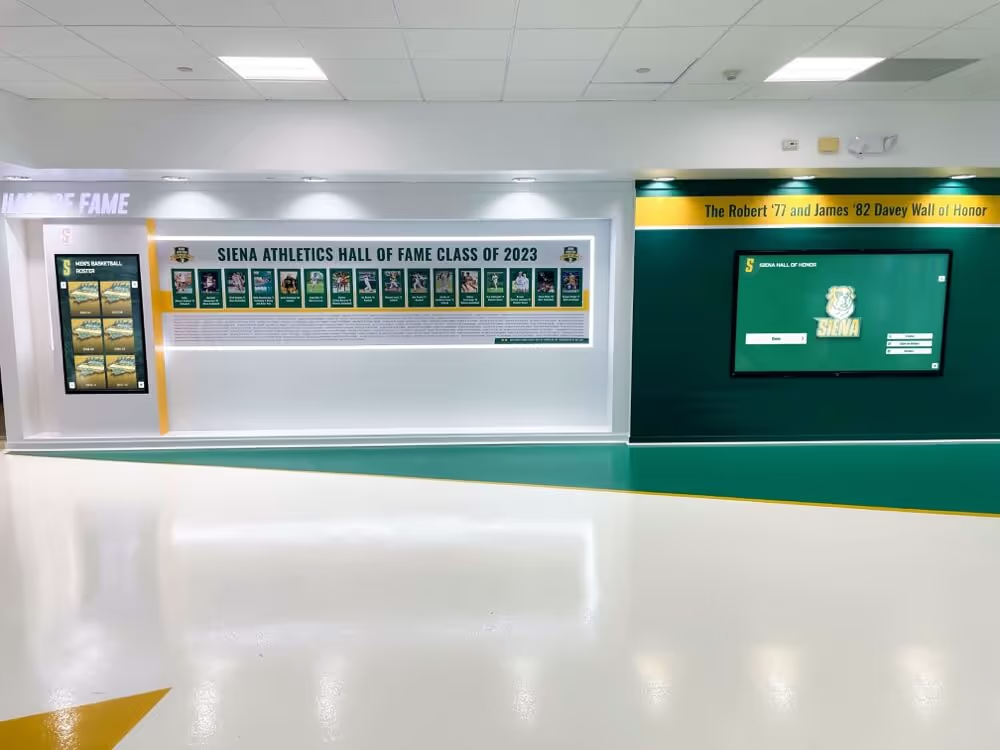
Digital displays in high-traffic areas celebrate program achievements and traditions throughout the school day
Accessories: Details Creating Complete Presentation
Coordinated accessories complete uniform presentation and reinforce program identity.
Gloves
White gloves remain standard accessories for most marching bands, creating visual uniformity emphasizing precise hand movements during performances, photographing beautifully against darker uniforms, adding formality to overall presentation, and providing practical protection for instruments and equipment.
Some contemporary programs omit gloves for more casual aesthetics, though traditional programs universally include them as essential uniform components.
Footwear
Marching band shoes balance appearance with performance functionality including black leather or synthetic construction, minimal branding or decoration, durable soles appropriate for various field surfaces, proper support for extended marching, and consistent appearance across all ensemble members.
Proper footwear affects both visual presentation and student safety, making careful selection important despite shoes’ relatively low visibility compared to other uniform components.
Specialty Accessories
Additional accessories vary by program and include sashes or baldrics for drum majors, distinctive capes for leadership positions, special insignia for section leaders, honor cords or medals for achievement recognition, and gauntlets (ornamental cuffs) adding decoration to jacket sleeves.
These accessories create visual hierarchy within ensembles while providing recognition opportunities for leadership and achievement.
Weather Considerations
Programs performing in varying conditions require additional items including rain jackets protecting uniforms during weather, gloves appropriate for cold-weather performance, uniform covers for travel and protection, and all-weather shoes managing diverse field conditions.
These practical accessories protect uniform investments while ensuring student comfort and safety regardless of performance conditions.
Uniform Selection: Decision-Making Process
Choosing new marching band uniforms represents significant financial investment and long-term commitment requiring systematic evaluation and decision-making.
Assessing Current Uniforms and Program Needs
Effective uniform selection begins with honest evaluation of existing situations and program requirements.
Current Uniform Evaluation
Directors should assess present uniforms across multiple dimensions including overall condition and remaining serviceable life, appearance quality and visual impact, student comfort during extended wear, maintenance requirements and challenges, style appropriateness for program’s competitive level and performance style, and community perception of current uniforms.
This evaluation helps determine whether uniforms need complete replacement, selective component updates (new shakos or jackets while retaining pants), or simply improved maintenance extending current uniforms’ viability.
Program Identity Considerations
Uniform decisions should reflect program’s fundamental character including commitment to traditional vs. contemporary styling, competitive ambitions and circuit expectations, community tradition and alumni expectations, budget realities and long-term affordability, and coordination with overall program branding and visual identity.
Schools with strong traditions may face community resistance to dramatic styling changes, requiring sensitive communication about any significant departures from historical aesthetics.
Practical Performance Requirements
Uniform selection must accommodate program’s specific performance demands including typical performance season (hot early fall vs. cool late fall), drill choreography style (traditional vs. highly athletic), indoor vs. outdoor performance venues, travel requirements and packing considerations, and student body size and diversity accommodating varied body types.
Uniforms that look impressive but prevent effective performance serve neither students nor programs well, making practical functionality essential alongside aesthetic appeal.
Understanding how to celebrate student performance achievements helps programs recognize the students who wear uniforms with distinction.
Budget Planning and Fundraising Strategies
Uniform costs represent major capital investments requiring comprehensive financial planning.
Cost Factors and Budget Development
Complete marching band uniform costs typically range $300-$500 per student for quality ensembles including jacket ($150-$250), pants ($50-$100), shako with plume ($50-$100), accessories including gloves and shoes ($25-$50), and customization and special decoration ($25-$50).
For bands with 100 members, complete uniform replacement costs $30,000-$50,000—substantial investments for most school music programs requiring multi-year planning and fundraising.
Additional budget considerations include replacement inventory for damaged items, sizing stock accommodating new members, storage solutions protecting uniforms, cleaning and maintenance expenses, and gradual component replacement (shakos, plumes) as they wear out.
Phased Implementation Approaches
Schools facing budget constraints might consider phased uniform replacement including purchasing jackets first while retaining current pants temporarily, replacing shakos and visible components creating maximum impact, implementing new uniforms for varsity while JV uses previous generation, or buying for half the band each year completing replacement over two years.
Phased approaches reduce single-year financial burdens while enabling programs to move forward with needed upgrades.
Fundraising and Financial Support
Most uniform replacements require significant fundraising including dedicated fundraising campaigns specifically for uniforms, alumni giving campaigns connecting former band members to tradition, booster club support and fundraising events, grant applications from education foundations, and business sponsorships potentially including uniform ads or patches.
Successful fundraising campaigns communicate uniform needs clearly, demonstrate quality stewardship of previous uniforms, and connect uniform investment to program excellence and student experience.
Financing Options
Uniform companies typically offer financing including payment plans spreading costs over multiple years, lease-to-own programs reducing upfront investment, trade-in credits for current uniforms, and bulk purchase discounts for complete ensembles.
These financing approaches make uniform replacement more manageable for programs without access to substantial immediate capital.
Working with Uniform Companies
Selecting appropriate vendors and managing company relationships affects uniform quality and project success.
Major Uniform Manufacturers
Several companies dominate the marching band uniform market including Stanbury Uniforms, Fruhauf Uniforms, DeMoulin Brothers and Company, Fechheimer Brothers, and regional manufacturers serving specific markets.
Each company offers distinct styling, quality levels, pricing structures, and customer service approaches, making thorough vendor evaluation important.
The Selection Process
Working with uniform companies involves multiple steps including requesting catalogs and initial information, attending uniform shows at state music conventions, reviewing sample garments in person, obtaining detailed price quotes, checking references from other programs, and negotiating terms and customization details.
Most companies provide sales representatives who visit schools, bring samples, take measurements, and guide directors through selection processes. Building positive working relationships with representatives facilitates smoother projects.
Fitting and Sizing Considerations
Proper uniform fitting critically affects appearance and comfort including individual measurement of all students, accommodation of diverse body types, plans for size adjustments as students grow, replacement inventory for graduated seniors, and stock sizing for new members joining after initial order.
Reputable companies provide detailed fitting guidance and measurement instructions ensuring proper fit—essential to achieving professional appearance uniforms are intended to create.
Quality Standards and Guarantees
Uniform contracts should specify construction quality standards, guarantee replacement of defective items, establish delivery timelines with penalties for delays, define customization details precisely, and outline warranty coverage for manufacturing defects.
Clear contracts protect schools’ significant investments and ensure companies deliver agreed-upon products meeting quality expectations.

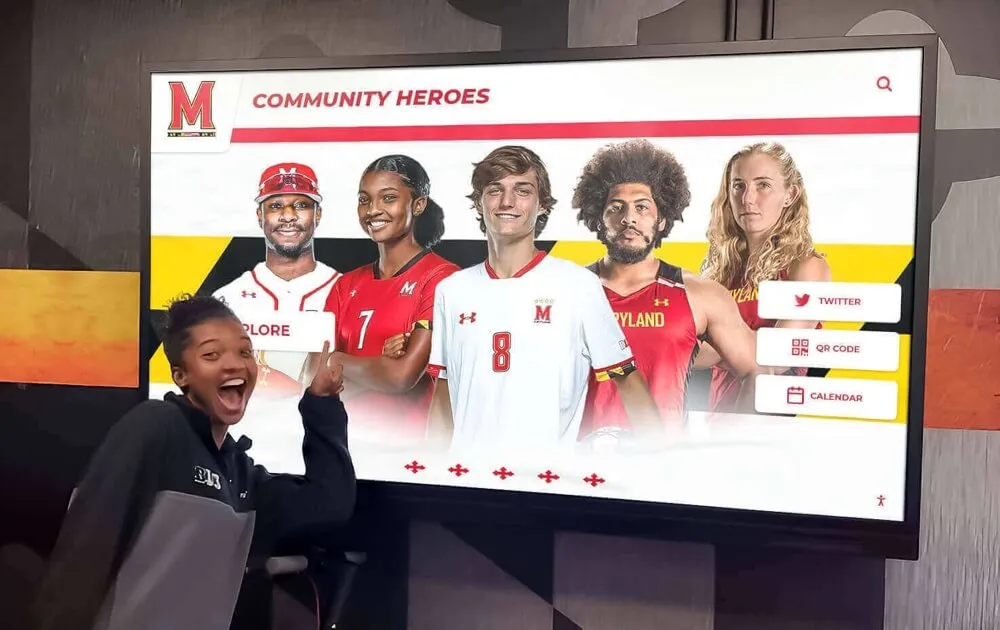
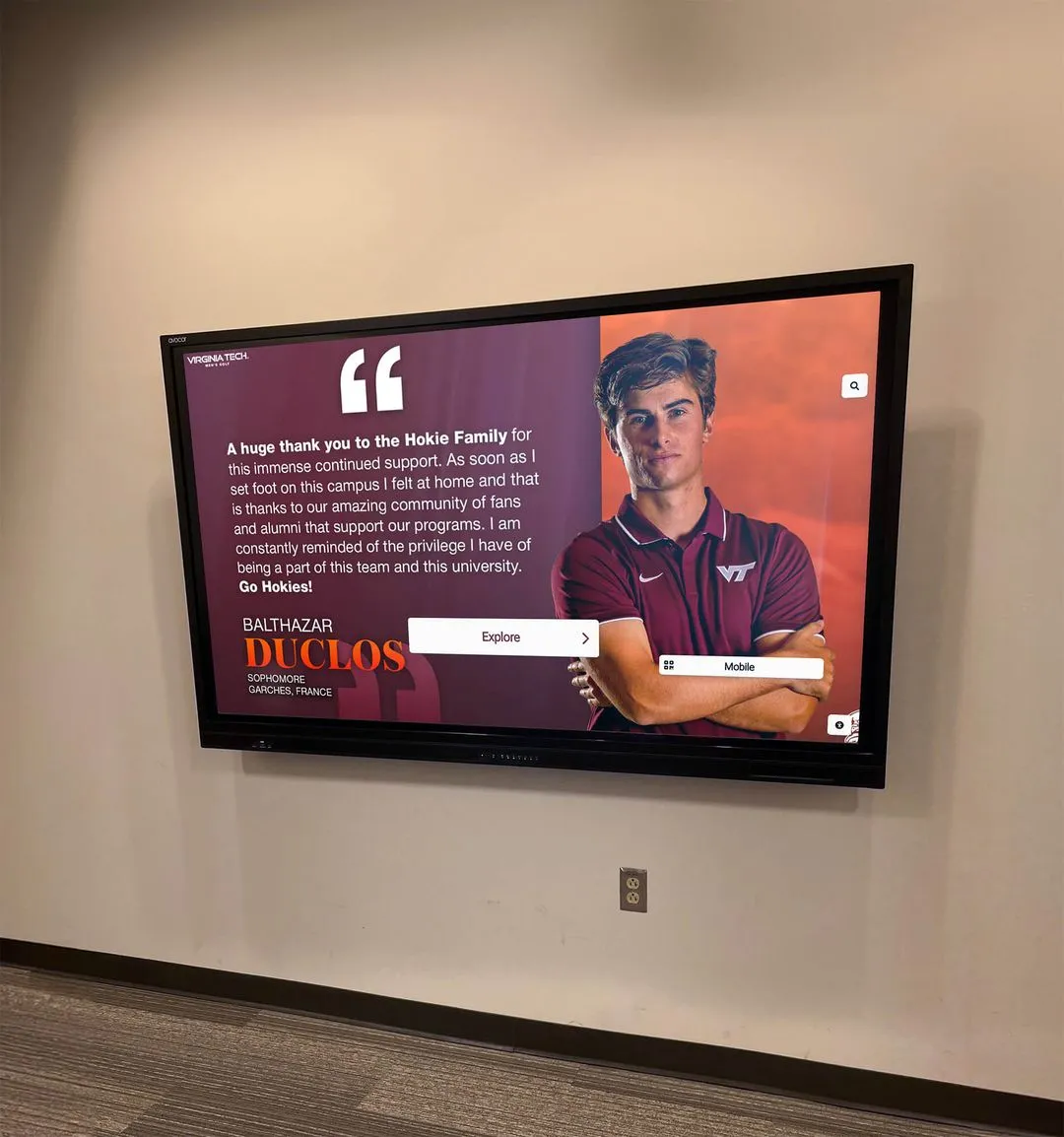
Individual recognition profiles celebrate students' contributions to band programs while documenting their participation in program traditions
Uniform Maintenance and Care
Proper maintenance extends uniform lifespan substantially, protecting schools’ investments while ensuring consistently professional appearance.
Cleaning and Storage Protocols
Systematic care procedures preserve uniform quality across years of use.
Regular Cleaning Procedures
Uniforms require periodic professional cleaning including dry cleaning at least annually (more for heavily used items), spot cleaning for minor stains and soiling, inspection and repair of damage, button and trim maintenance, and proper pressing restoring crisp appearance.
Many programs establish cleaning schedules at season end, ensuring uniforms receive proper care before long-term storage rather than putting soiled garments away where stains and odors set permanently.
Proper Storage Solutions
Off-season storage significantly affects uniform condition including climate-controlled storage preventing mold and deterioration, hanging storage maintaining garment shape, individual garment bags protecting from dust and pests, organized labeling systems tracking sizes, and regular inspection during storage period.
Programs with inadequate storage face accelerated uniform deterioration, shortening replacement cycles and increasing long-term costs.
Student Responsibility and Education
Teaching students proper uniform care reduces damage and extends uniform life including proper hanging after each use, immediate stain treatment procedures, prohibition of eating/drinking while in uniform, careful handling preventing tears and damage, and prompt reporting of needed repairs.
Programs that cultivate uniform care as cultural expectations experience significantly less damage than those treating uniforms carelessly.
Repair and Alteration Management
Systematic repair systems keep uniforms in excellent condition despite regular use.
Common Repair Needs
Typical uniform repairs include button replacement or reattachment, trim and braiding repair, seam repairs from stress or wear, zipper or closure replacement, and minor alterations for size changes.
Programs should maintain relationships with tailors or seamstresses capable of quality uniform repairs, ensuring prompt attention to needs preventing small issues from becoming major problems.
Replacement Part Inventory
Maintaining spare parts facilitates quick repairs including extra buttons matching uniform styles, replacement plumes in school colors, additional trim and braiding materials, spare gloves in various sizes, and backup accessories for emergencies.
This inventory enables immediate replacement of lost or damaged items without waiting for special orders or leaving students without complete uniforms.
Size Adjustment Systems
Students grow during high school years, requiring uniform adjustments including let-out alterations when possible, systematic size exchange among students as they grow, supplementary purchases of larger sizes, and inventory management tracking size distributions.
Programs with effective size management systems accommodate student growth without requiring complete uniform replacement.
Replacement Planning
Even well-maintained uniforms eventually require replacement, requiring long-term planning.
Assessing Uniform Lifespan
Quality marching band uniforms typically last 10-15 years with proper care, though lifespan varies based on initial quality, care quality and consistency, frequency of use, and storage conditions.
Programs should periodically assess uniform condition, projecting replacement timelines and beginning fundraising before uniforms reach critical deterioration.
Component vs. Complete Replacement
Sometimes selective component replacement extends overall uniform viability including new shakos refreshing appearance while jackets remain serviceable, plume replacement providing fresh look, new pants while jackets continue, or accessory updates modernizing presentation.
Strategic partial replacements cost significantly less than complete uniform purchases while substantially improving appearance.
Building Replacement Reserves
Schools serving programs well create dedicated uniform replacement funds including annual budget allocations, fundraising proceeds designated for future uniforms, equipment fee portions dedicated to uniforms, and multi-year accumulation enabling replacement without crisis fundraising.
Systematic financial planning prevents uniform crises while ensuring programs consistently present professional appearances.
Learning about comprehensive recognition solutions shows how schools showcase band achievements including uniform traditions alongside other program accomplishments.
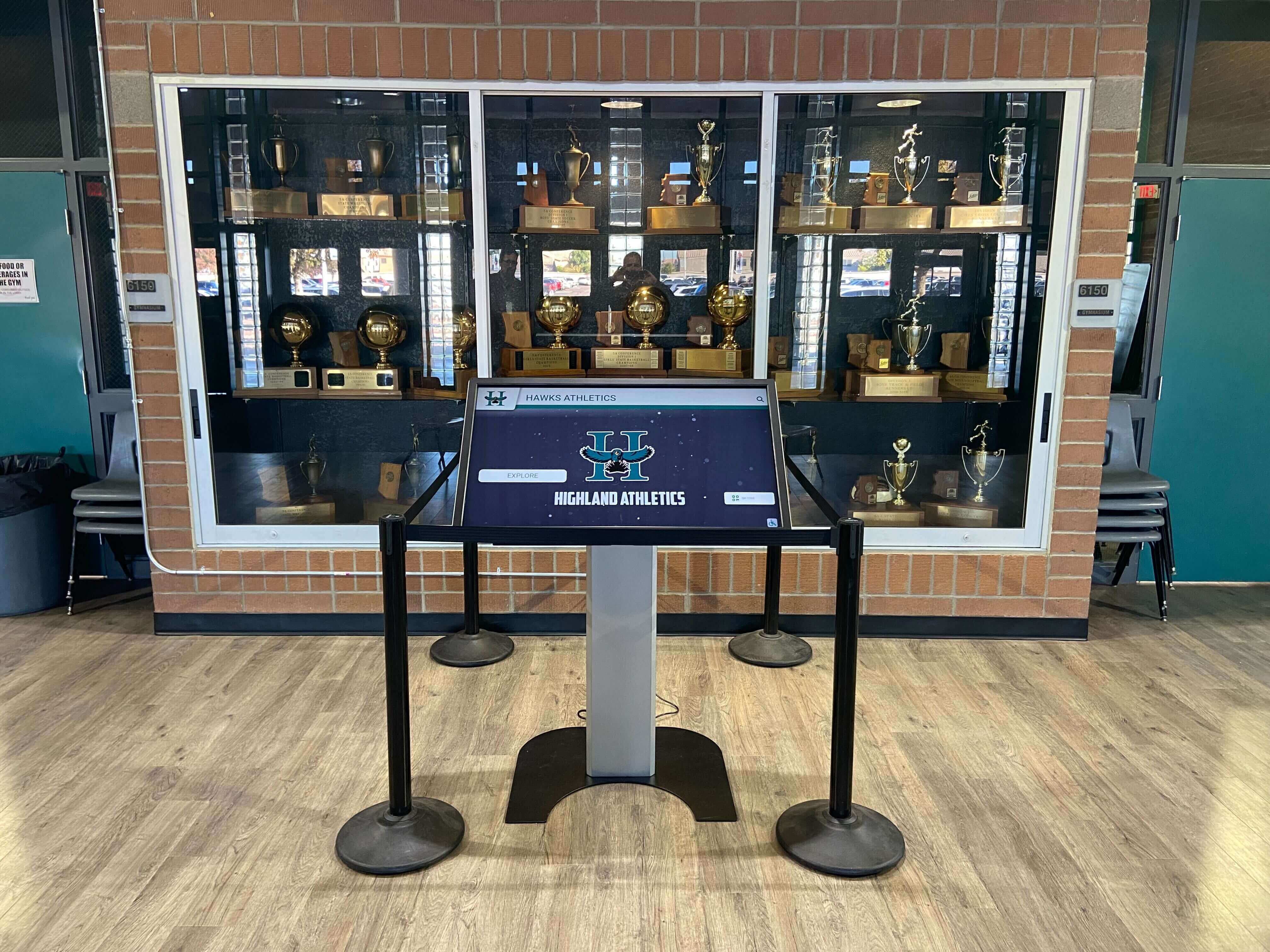
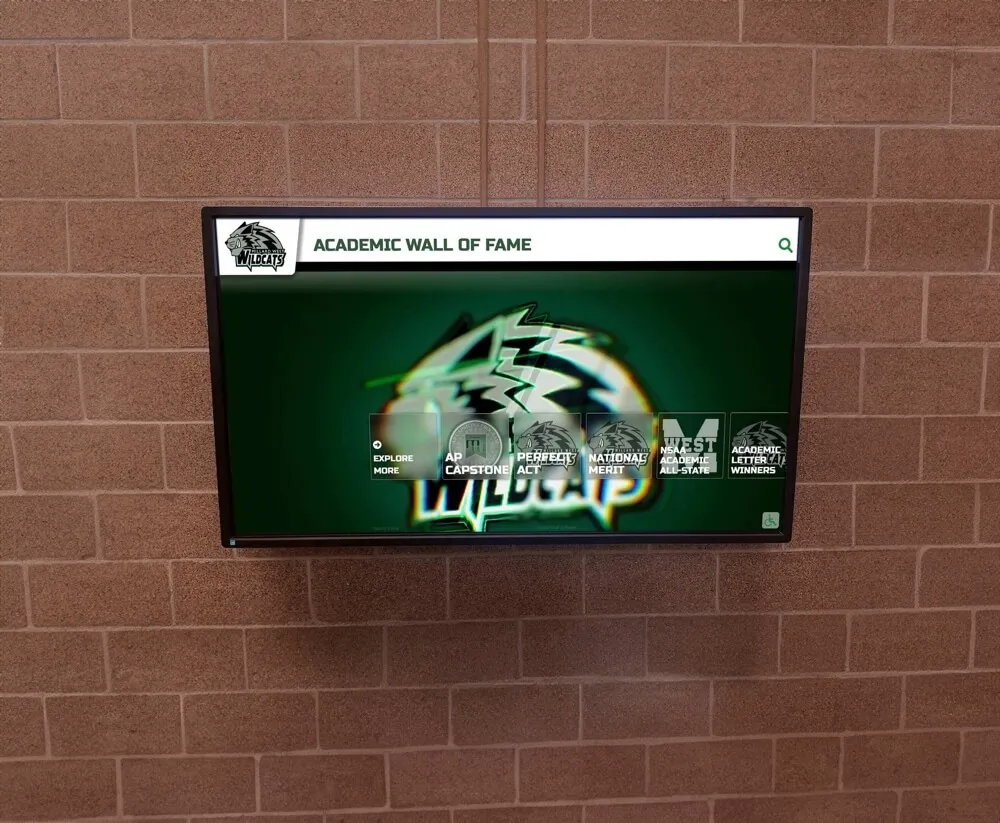
Integrated digital displays within trophy cases celebrate band achievements alongside athletic and academic recognition
Uniforms and Program Identity
Marching band uniforms fundamentally shape how programs perceive themselves and how communities view them, making uniform decisions significant components of identity development.
Visual Branding and Recognition
Uniforms serve as primary visual identifiers creating instant program recognition and community connection.
Creating Distinctive Appearance
Effective uniforms establish visual identity through distinctive color combinations, unique design elements, memorable silhouette and profile, coordination with school’s overall branding, and differentiation from other programs in region.
Programs with distinctive uniform aesthetics gain recognition advantages at competitions and community events where visual distinctiveness helps them stand out in crowds of similar ensembles.
Coordinating with School Identity
Uniform designs should reinforce broader school branding including accurate representation of school colors, incorporation of mascot imagery when appropriate, consistency with athletic uniform aesthetics, reflection of school values and character, and appropriate formality level for institution type.
Uniforms disconnected from school identity miss opportunities to reinforce institutional brand while potentially creating visual confusion about program affiliation.
Regional and Competitive Context
Uniform choices occur within competitive and regional contexts including competitive circuit aesthetic expectations, regional tradition and styling norms, alignment with programs of similar size and resources, and differentiation from primary rival schools.
Understanding competitive context helps programs make choices appropriate for their specific situations rather than selecting uniforms that might disadvantage them in their particular environments.
Tradition and Continuity
For established programs, uniforms connect current students to program history and tradition.
Honoring Historical Styling
Programs with strong traditions often maintain visual continuity including consistent color schemes across generations, preservation of distinctive design elements, gradual evolution rather than revolutionary change, and consultation with alumni about major changes.
This continuity honors program history while maintaining connection between current students and generations of predecessors who built program reputations.
Documenting Uniform Evolution
Preserving uniform history creates valuable institutional memory including photographs of uniforms across decades, retired uniform components displayed in trophy cases, historical documentation explaining design choices, stories connecting uniforms to program achievements, and recognition of long-tenured directors associated with specific uniform eras.
This documentation helps current students appreciate tradition they inherit while maintaining perspective on program evolution.
Balance: Honoring Past While Embracing Future
Programs face tensions between tradition and innovation requiring thoughtful balance including respecting alumni sentiment and community expectations, enabling necessary updates for performance requirements, communicating change rationale clearly, and preserving core identity elements while updating dated aspects.
The most successful uniform transitions honor what programs value most about tradition while making necessary adaptations for contemporary performance demands and aesthetic evolution.
Exploring digital recognition platforms shows how schools preserve and display program history including uniform traditions and evolution.
Student Pride and Ownership
Uniforms profoundly affect student experience and program culture when chosen and managed effectively.
The Psychology of Uniform Pride
Quality uniforms contribute to student morale and performance including enhanced confidence in professional appearance, pride representing program tradition, motivation to earn uniform wearing privilege, respect for program investment in students, and connection to peers through shared identity.
Students who feel proud of their uniforms perform with greater confidence and represent programs more enthusiastically than those embarrassed by worn or unfashionable attire.
Earning the Uniform
Many programs create meaning around uniform wearing including formal uniform distribution ceremonies, requirements students meet before earning uniforms, graduation from JV to varsity uniforms, recognition of seniors’ final season in uniform, and educational components teaching uniform history and care.
When students view uniforms as earned honors rather than simply provided clothing, they treat them with greater respect and appreciation.
Student Voice in Selection
Including student input in uniform decisions builds investment though final decisions remain with directors and administrators. Student involvement might include uniform committee representation reviewing options, surveys gathering student preferences, student modeling and fitting sample uniforms, and communication about how student input influenced decisions.
This involvement helps students understand decision factors while giving them voice in their program’s identity.
Preserving and Celebrating Uniform Traditions
Beyond wearing uniforms for performances, programs can honor uniform traditions as meaningful components of institutional history worth preserving and displaying.
Creating Uniform Displays and Exhibits
Physical displays preserve uniform heritage while inspiring current students and connecting community members to program history.
Traditional Trophy Case Displays
Many schools create uniform displays within existing recognition spaces including retired uniform components representing different eras, historically significant pieces (championship season uniforms), mannequins displaying complete uniform ensembles, accompanying text explaining uniform history and significance, and photographs showing uniforms in performance contexts.
These displays create visual program timelines while protecting historical artifacts for future generations.
Dedicated Band Room Displays
Band facilities often include uniform history presentations including timeline displays showing uniform evolution, shadow boxes with uniform details and accessories, historical photographs of students in various uniforms, documentation of uniform selection rationale, and recognition of directors associated with specific uniform eras.
These internal displays create program culture while educating students about traditions they join.
Special Event Showcases
Programs sometimes create temporary uniform exhibitions including homecoming or band parent night displays, anniversary celebrations featuring historical uniforms, alumni events showcasing uniforms from attendees’ eras, and educational programs for younger students showing band tradition.
These events create community engagement opportunities while honoring program heritage.
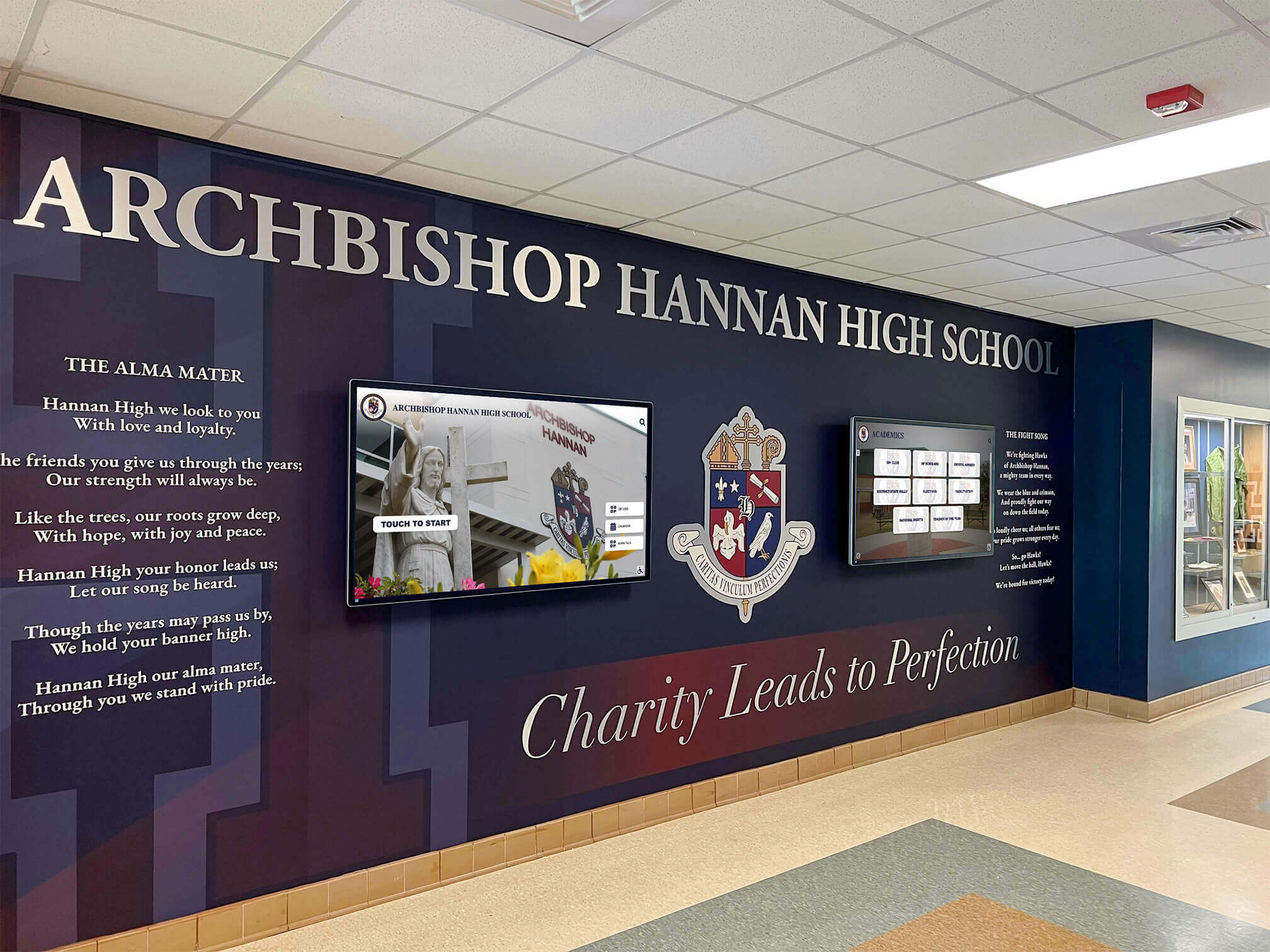
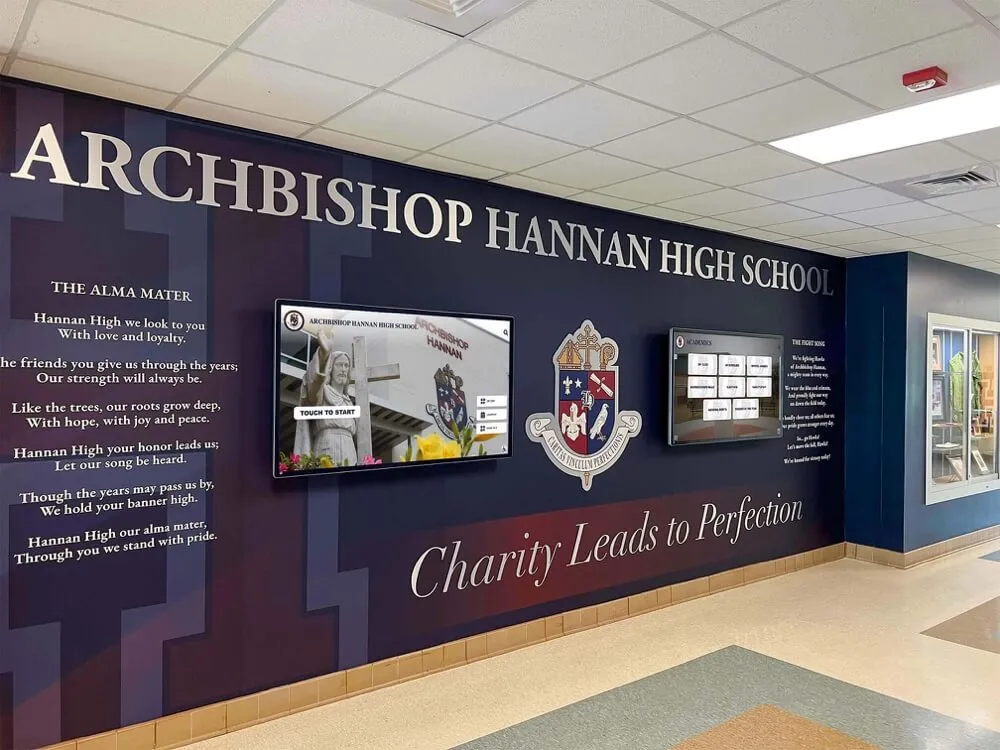
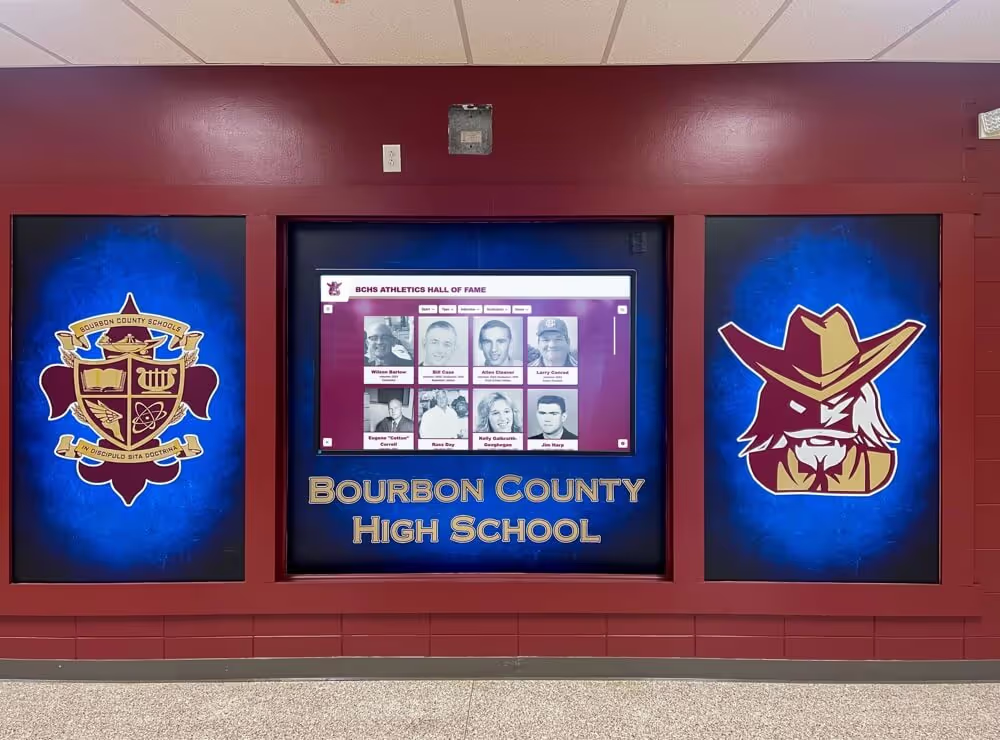
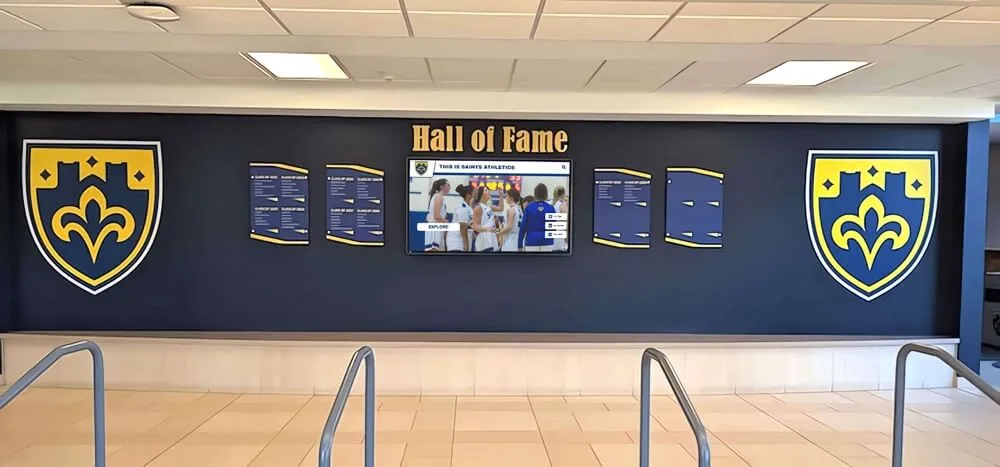
School entrance displays featuring institutional crests and digital recognition screens celebrate comprehensive school heritage including band traditions
Digital Recognition and Documentation
Modern technology enables richer uniform tradition preservation and broader community access to program history.
Comprehensive Digital Archives
Digital systems can document uniform history thoroughly including high-resolution photographs of uniforms across decades, detailed descriptions of design elements and evolution, stories connecting uniforms to significant program moments, video footage showing uniforms in performance, and searchable databases enabling easy historical exploration.
These digital archives preserve information that physical displays cannot accommodate while enabling remote access for alumni and community members unable to visit campus.
Interactive Touchscreen Displays
Schools implementing digital recognition systems can include uniform history as component of broader program celebration including interactive timelines showing uniform evolution, photo galleries from different uniform eras, video performances showcasing historical uniforms, detailed information about design elements and significance, and connections to other program achievements during each uniform era.
Solutions like Rocket Alumni Solutions provide platforms enabling this comprehensive historical documentation within professional presentation systems that integrate with broader school recognition programs.
Virtual Uniform Museums
Some programs create dedicated online uniform history resources including comprehensive photograph collections, oral histories from alumni about uniform memories, technical documentation of construction and materials, comparison views showing uniform evolution, and educational content for music students studying band tradition.
These virtual resources make program history accessible to anyone interested while creating permanent institutional memory transcending physical space limitations.
Social Media and Community Engagement
Digital platforms enable ongoing uniform tradition celebration including “Throwback Thursday” historical uniform photos, anniversary commemorations of uniform adoptions, alumni sharing photographs wearing historical uniforms, current student posts about uniform pride, and comparison content showing uniform evolution.
This social media engagement keeps uniform tradition visible within program culture while building community connection across generations.
Understanding how to implement comprehensive school history displays provides models for presenting uniform traditions alongside other institutional achievements.
Alumni Engagement Through Uniform Traditions
Uniform traditions create powerful connection points for alumni engagement and program support.
Uniform Memory Collection
Programs can gather alumni stories about uniform experiences including favorite memories wearing uniforms, significant performances in particular uniform eras, humorous stories about uniform mishaps, perspectives on uniform changes over time, and emotional reflections on what uniforms meant to band experience.
These stories create rich oral histories while strengthening alumni emotional connections to current programs.
Reunion Uniform Displays
Alumni events can feature uniform nostalgia including displays of uniforms from attendees’ eras, opportunities for alumni to try on old uniforms, photograph booths with historical uniform components, video presentations showing alumni in uniform performances, and ceremonial passing of uniform traditions to current students.
These reunion activities leverage powerful memories while potentially inspiring alumni giving supporting current uniform needs.
Uniform Fundraising Campaigns
When launching uniform replacement campaigns, connecting to alumni who wore previous uniforms creates compelling fundraising narratives including “help provide the next generation what we enjoyed,” recognition of donor contributions on new uniforms, alumni testimonials about uniform meaning, visual comparisons showing uniform evolution, and opportunities to dedicate uniform components in honor of cherished directors or alumni.
Alumni who remember their own pride in quality uniforms often become enthusiastic supporters of ensuring current students enjoy similar experiences.
Legacy Uniform Programs
Some programs create special recognition for alumni connections including patches or insignia for legacy band members whose parents were in band, special events connecting current students to alumni from their family, photo displays showing multiple generations in various uniforms, and stories highlighting family band traditions across decades.
These legacy recognitions honor family traditions while strengthening intergenerational program connections.
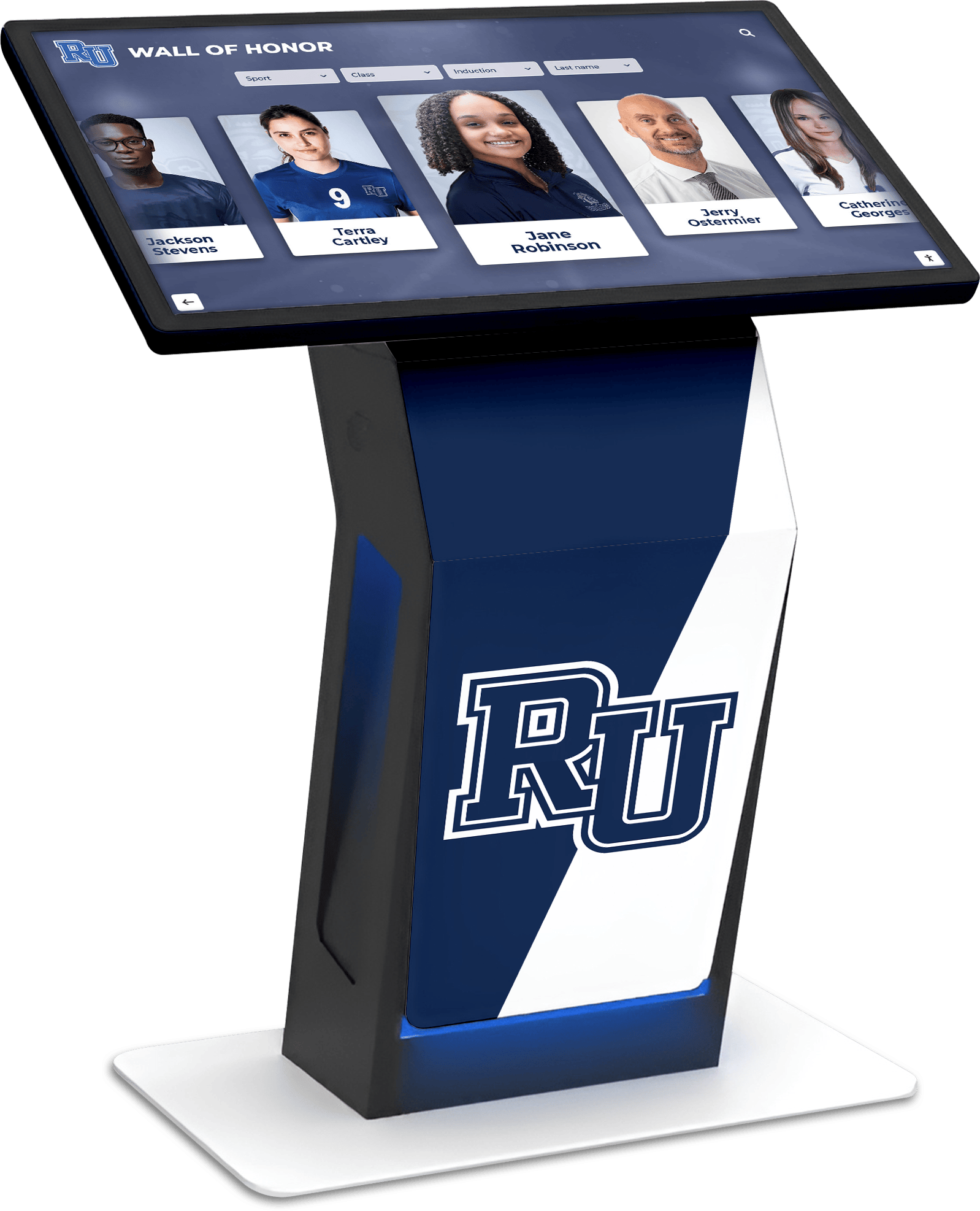
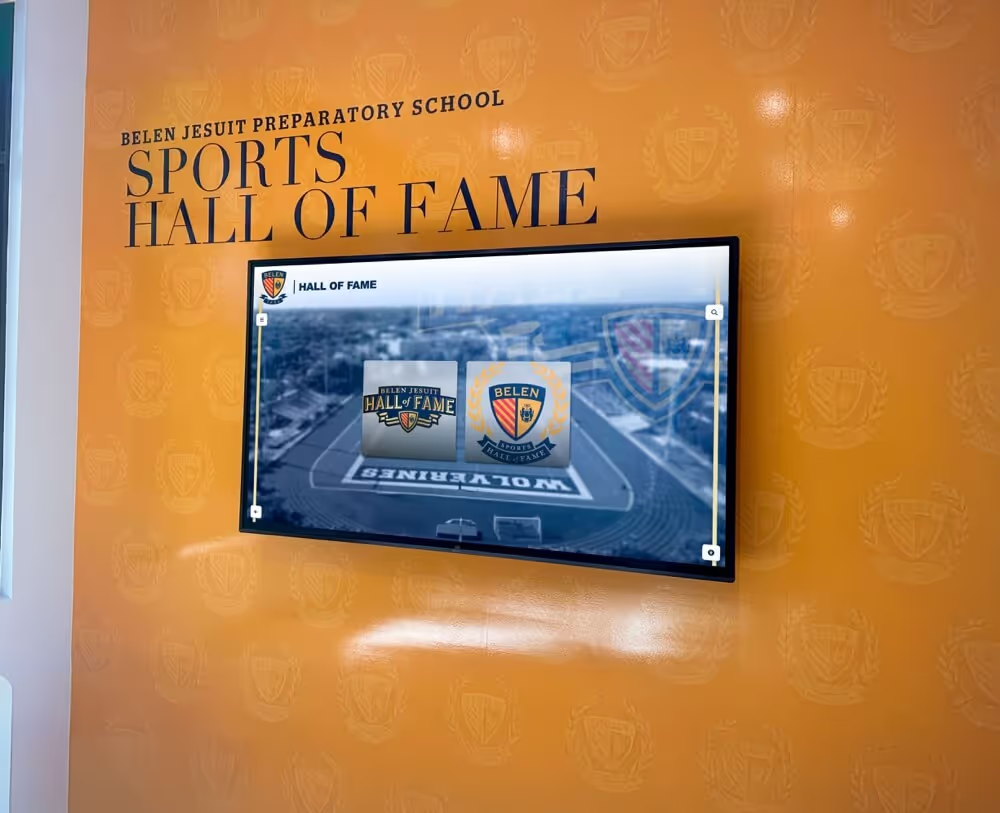
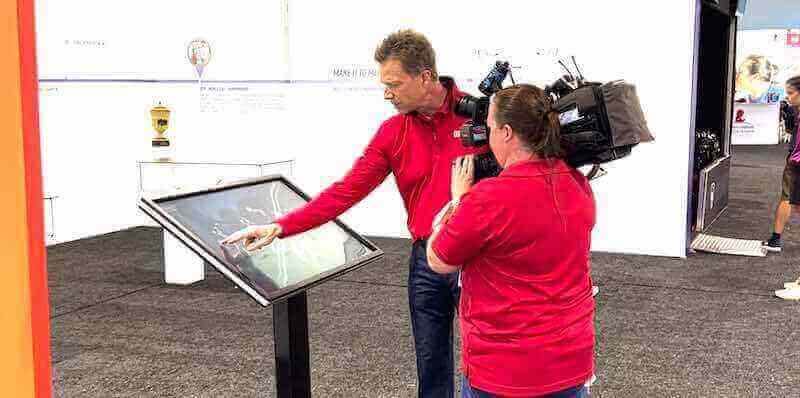
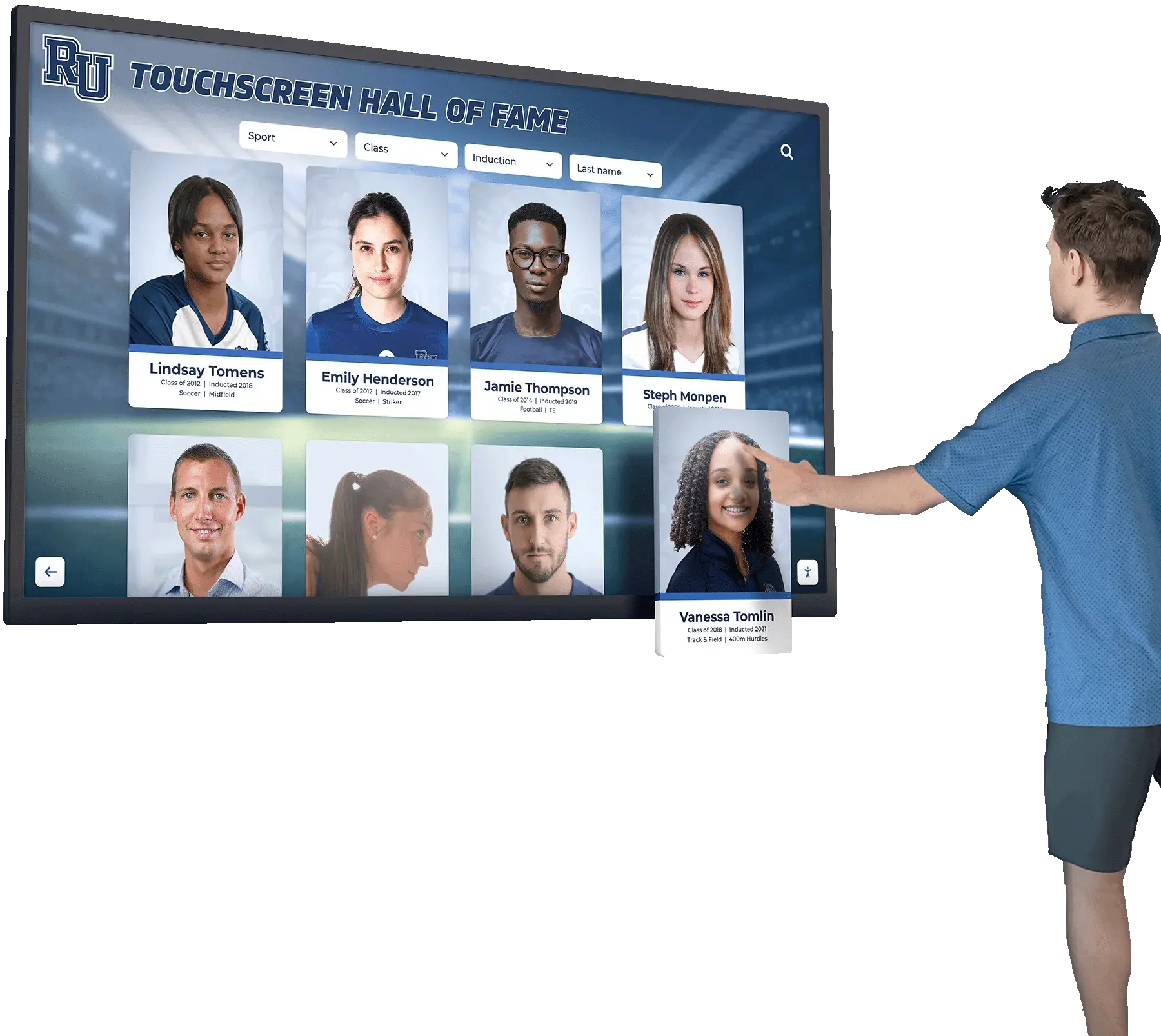
Interactive touchscreen systems enable comprehensive storytelling about band program history including uniform traditions and student achievements
Special Considerations for Different Program Types
Different types of band programs face unique uniform challenges and opportunities requiring tailored approaches.
High School Marching Bands
Traditional high school programs balance multiple considerations in uniform decisions.
Show Band vs. Corps Style
High schools generally follow either traditional show band approaches emphasizing musicality and traditional marching or corps-style programs emphasizing visual performance and contemporary drill. These philosophical orientations significantly influence uniform choices with show bands typically favoring traditional military-inspired uniforms and corps-style programs selecting more contemporary athletic styling.
Competitive vs. Non-Competitive Programs
Schools competing in major circuits face specific uniform expectations including visual design supporting show concepts, contemporary styling competitive judges expect, flexibility for varied show themes, and investment appropriate to competitive ambitions.
Non-competitive programs enjoy greater freedom in uniform selection, potentially maintaining traditional styling longer or choosing designs based purely on community preference and budget without competitive considerations.
Multi-Level Programs
Schools with both varsity and junior varsity or freshman bands face uniform allocation decisions including whether JV receives previous varsity uniforms when varsity upgrades, purchasing separate JV uniforms coordinating with but distinct from varsity, implementing phased varsity uniform adoption allowing gradual student progression, or investing equally in all program levels.
These decisions affect program culture and student motivation regarding advancement through program levels.
College and University Bands
Collegiate programs face distinct uniform considerations shaped by institutional context and program scale.
Tradition-Heavy University Bands
Major university bands often maintain highly traditional styling including historic uniform designs unchanged for decades, extremely formal military-inspired aesthetics, elaborate decoration and ornamentation, significant institutional investment in uniform quality, and intense alumni investment in tradition maintenance.
These programs treat uniform continuity as sacred tradition, with any proposed changes generating passionate alumni response requiring careful navigation.
Contemporary Competitive College Programs
Collegiate programs competing in DCI-style circuits adopt quite different approaches including cutting-edge contemporary styling, frequent uniform updates aligning with show themes, athletic-style construction supporting demanding choreography, significant investment in visual program components, and emphasis on innovation over tradition.
These stylistic differences reflect fundamentally different performance philosophies and institutional contexts.
Marching Band vs. Pep Band Uniforms
Universities often maintain separate uniform inventories including formal marching band uniforms for pregame and halftime, separate pep band attire for basketball and other events, coordinated styling creating visual family across ensembles, and budget allocation across multiple uniform needs.
Managing multiple uniform sets creates additional logistical complexity while ensuring appropriate attire for different performance contexts.
Youth and Middle School Programs
Younger programs require special uniform considerations accommodating developmental needs and budget realities.
Simplified Uniform Approaches
Youth bands often implement scaled-down uniform systems including basic jackets and simpler styling, standardized black pants students provide personally, minimal accessories reducing costs, and focus on color coordination over elaborate decoration.
These simplified approaches remain affordable for younger families while teaching uniform responsibility preparing students for more formal high school programs.
Growth and Sizing Challenges
Youth programs face rapid student growth requiring adaptable approaches including larger size inventories accommodating varied growth rates, adjustable uniform components when possible, planned replacement of outgrown uniforms, and rental or share systems for short-term use.
Acknowledging these realities in budget planning prevents frustration when students outgrow uniforms quickly.
Building Uniform Appreciation
Youth programs can cultivate uniform respect and pride through education about band uniform traditions, gradual progression toward more formal uniforms, ceremonies celebrating uniform distribution, recognition of excellent uniform care, and connection to high school programs students will eventually join.
These experiences prepare young musicians for more formal uniform expectations while building excitement about advancing to high school bands.
Exploring comprehensive performance program recognition demonstrates how schools celebrate diverse student achievements including band accomplishments alongside other activities.
Contemporary Debates and Future Directions
The marching band activity continues evolving, with uniform design participating in broader conversations about tradition, innovation, and program identity.
Tradition vs. Innovation Tensions
The fundamental tension between honoring tradition and embracing contemporary approaches generates ongoing discussion.
The Case for Traditional Styling
Advocates for maintaining military-inspired traditional uniforms argue they communicate important values including respect for marching band heritage, visual differentiation from dance teams and corps, immediate public recognition as marching bands, formal appearance matching music’s seriousness, and connection to decades of program history.
Traditional advocates often believe contemporary styling diminishes marching band identity by making programs visually indistinguishable from other performance groups and abandoning what makes marching bands distinctive.
The Case for Contemporary Evolution
Those supporting uniform modernization counter with practical and artistic arguments including performance-driven needs for lighter, more flexible attire, alignment with modern show concepts and themes, appeal to current student aesthetic preferences, competitive expectations in major circuits, and natural evolution as activities develop and grow.
Contemporary advocates view uniform evolution as healthy adaptation rather than tradition abandonment, arguing that successful activities change over time while maintaining core identity and values.
Finding Appropriate Balance
Most programs occupy middle ground, respecting tradition while acknowledging performance and aesthetic evolution. Effective approaches include maintaining signature elements while updating dated aspects, communicating change rationale to alumni and community, evolving gradually rather than revolutionary overnight change, and focusing on what uniforms communicate about program values beyond just stylistic choices.
This balanced approach honors heritage while enabling necessary adaptation for contemporary performance demands and student experience.
Inclusivity and Accommodation
Modern uniform programs increasingly address diverse student needs requiring thoughtful accommodation.
Body Type Inclusivity
Traditional marching band uniforms were designed for narrow body type ranges, creating challenges for students outside those norms. Progressive programs now prioritize inclusive sizing including extensive size ranges accommodating all body types, custom fitting options for difficult-to-fit students, consideration of gender expression in uniform design, and emphasis on fit quality ensuring all students look sharp regardless of size.
Inclusive approaches communicate that all students belong in band programs regardless of body characteristics, removing barriers to participation and ensuring all students feel proud in uniform.
Religious and Cultural Accommodations
Some students require uniform modifications for religious or cultural reasons including hijab accommodation for Muslim students, consideration of modesty requirements for various traditions, coordination of necessary modifications with overall uniform aesthetic, and proactive policy development preventing accommodation crises.
Programs addressing these needs thoughtfully create inclusive environments welcoming diverse students while maintaining overall uniform cohesion and appearance standards.
Accessibility Considerations
Students with disabilities may need uniform accommodations including wheelchair-accessible uniform modifications, sensory-friendly fabric options for students with sensitivities, adaptive closures for students with limited dexterity, and cooling or heating considerations for students with temperature regulation challenges.
Making these accommodations enables fuller participation while demonstrating programs’ commitment to accessibility and inclusion for all students.
Sustainability and Ethical Considerations
Environmental and ethical awareness increasingly influences uniform decisions.
Uniform Lifespan and Waste Reduction
Programs can reduce environmental impact through maximizing uniform lifespan through proper care, reusing and repurposing retired uniforms, donation programs providing uniforms to underresourced programs, recycling programs for unusable uniform components, and consideration of environmental impact in new uniform selection.
These practices reduce waste while potentially making band participation more accessible through equipment sharing networks.
Ethical Manufacturing Considerations
Some programs investigate uniform manufacturing practices including labor conditions in uniform production facilities, environmental practices of manufacturers, domestic vs. international production considerations, and ethical certifications or transparency in supply chains.
While perfect information and options may be limited, raising awareness of these issues within band community represents progress toward more ethical practices.
Cost Accessibility
Uniform costs create participation barriers for economically disadvantaged students, requiring proactive accommodation including school-provided uniforms eliminating student purchase, fee waiver programs for economically challenged families, fundraising dedicated to accessibility, and used uniform programs enabling affordable access.
Ensuring all students can participate regardless of economic circumstances reflects fundamental educational values while building more diverse, representative programs.

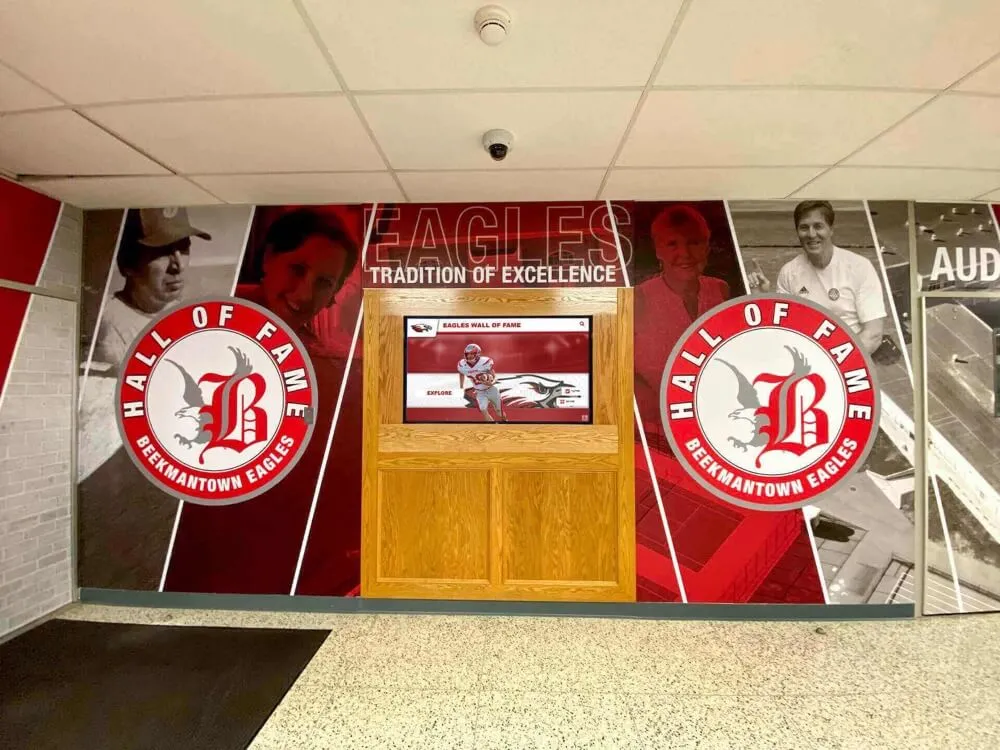
Comprehensive recognition walls honor championship achievements across multiple programs including band accomplishments alongside athletic excellence
Conclusion: Uniforms as Living Program Tradition
Marching band uniforms represent far more than performance costumes—they embody program identity, communicate institutional values, connect generations of students through shared tradition, and create visual impact transforming musical performances into complete artistic experiences. From their military origins through contemporary evolution, uniforms have consistently served as primary identifiers marking marching bands as distinctive American musical institutions.
For band directors navigating uniform selection, the decisions involve balancing competing priorities including honoring tradition while accommodating contemporary needs, investing substantial resources wisely within budget constraints, creating distinctive visual identity while meeting student comfort needs, maintaining program heritage while enabling necessary evolution, and ensuring all students feel proud representing their programs in uniform.
Strategic Uniform Program Success
Successful programs approach uniforms systematically through comprehensive needs assessment before selection, inclusive decision-making considering multiple perspectives, financial planning enabling quality investments, proper maintenance protecting uniform longevity, and thoughtful preservation of uniform traditions as valued program heritage.
Celebrating Uniform Heritage
Beyond wearing uniforms for performances, programs can honor uniform traditions through physical displays preserving historical uniform components, digital documentation creating comprehensive uniform history archives, alumni engagement leveraging uniform memories and traditions, recognition of uniform investment in student achievement celebration, and integration of uniform history into broader program heritage preservation.
Solutions like digital recognition displays provided by Rocket Alumni Solutions enable schools to showcase band program history—including uniform evolution, memorable performances, and student achievements—alongside other institutional accomplishments. These systems create permanent, accessible archives ensuring uniform traditions receive appropriate recognition as meaningful components of educational heritage worth preserving and celebrating.
Looking Forward
As marching band continues evolving, uniforms will adapt to new performance demands, aesthetic preferences, and practical considerations while maintaining their fundamental role in program identity. The most successful programs will balance respect for heritage with openness to necessary change, creating uniforms that honor tradition while serving contemporary student needs and artistic visions.
Your band program’s uniforms represent investments in student experience, visual embodiments of institutional values, and tangible connections to decades of program tradition. Whether maintaining time-honored styling, implementing contemporary designs, or finding balance between tradition and innovation, the uniforms your students wear with pride create lasting memories while building program identity transcending any individual season or generation.
Ready to preserve and celebrate your band program’s uniform traditions alongside other achievements? Explore how Rocket Alumni Solutions can help you create comprehensive digital recognition displays showcasing your complete program history—including uniform evolution, performance excellence, and student achievements—in interactive systems accessible to your entire community while providing unlimited capacity for honoring every aspect of your program’s rich heritage and ongoing tradition.