Every March, the Minnesota State Hockey Tournament transforms St. Paul into the center of the hockey universe. For high school teams across the state, qualifying for “the tourney” represents the pinnacle of athletic achievement—a chance to compete on the same ice where legends were made, in front of packed arenas, with entire communities watching. This isn’t just another championship event. It’s a cultural phenomenon that’s been shaping Minnesota communities for over seven decades.
What makes the MN state hockey tournament so special? How do teams qualify? What traditions define the tournament experience? And after the final buzzer sounds, how do schools preserve these once-in-a-lifetime memories for future generations of players and fans?
This comprehensive guide explores everything that makes Minnesota’s state hockey tournament legendary—from its rich history and qualifying process to championship traditions and the modern ways schools commemorate tournament appearances that define athletic legacies for decades to come.
The Minnesota State Hockey Tournament isn’t merely a sporting event—it’s a rite of passage embedded in the state’s cultural DNA. Unlike championship tournaments in most other states, Minnesota’s hockey tournament draws massive crowds, extensive media coverage, and community engagement that rivals professional sporting events.

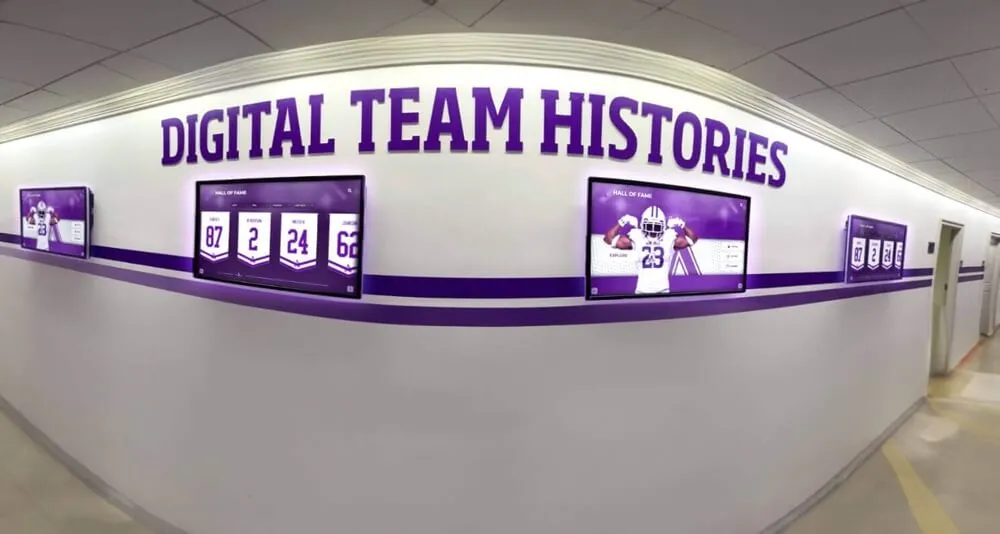
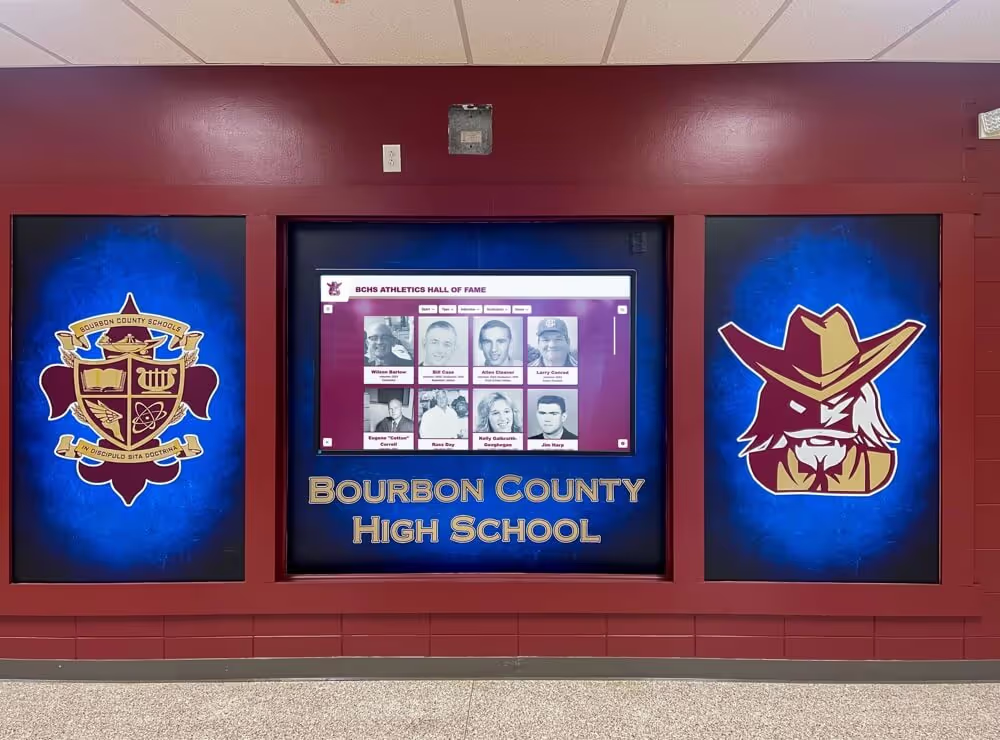
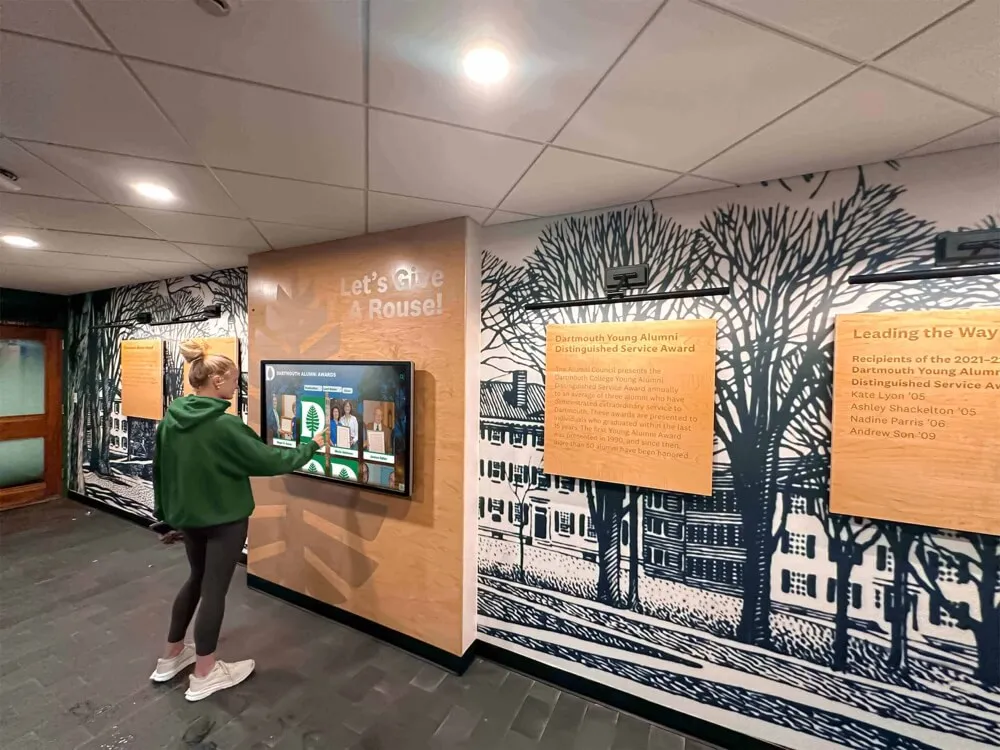
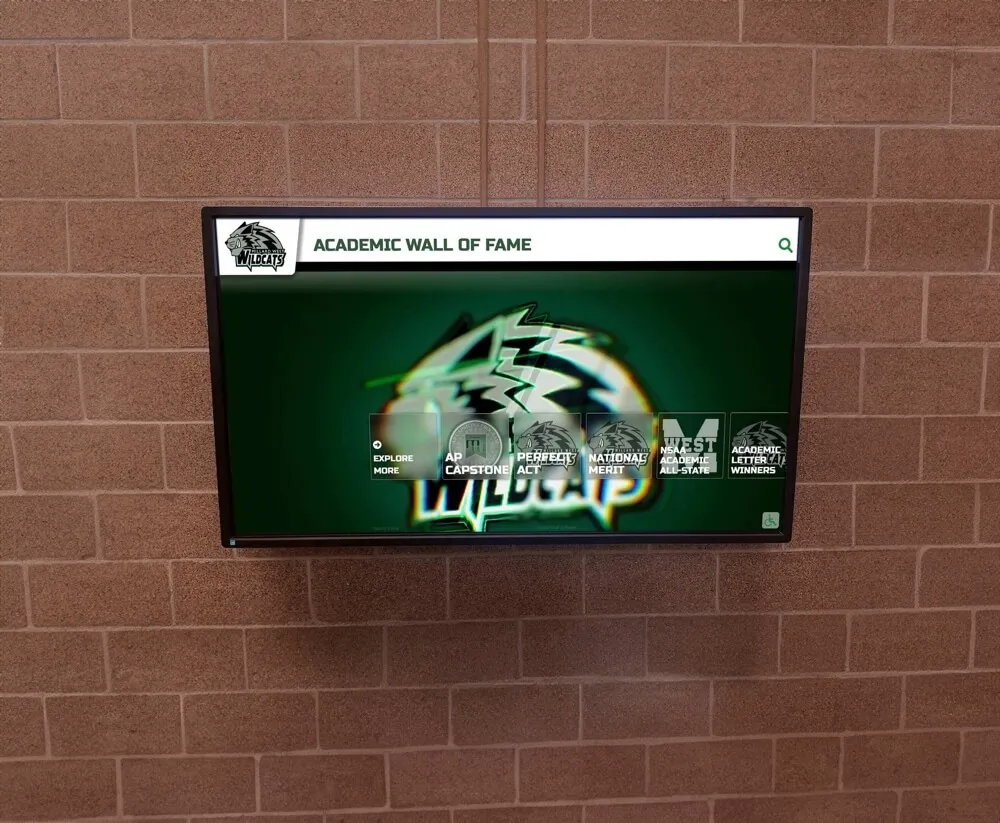
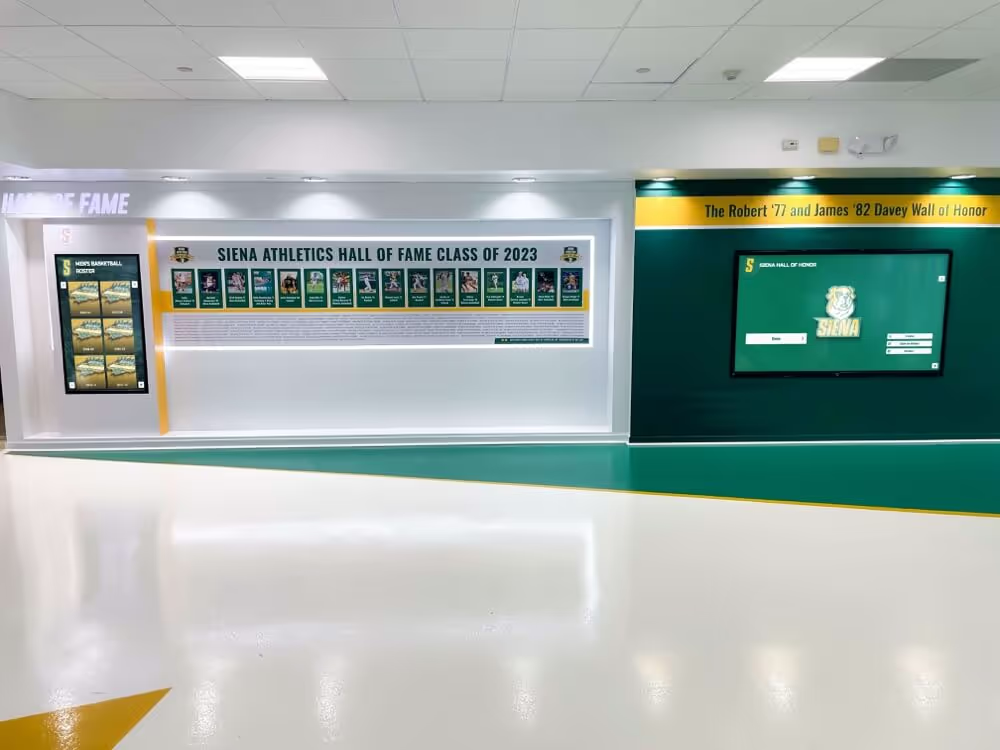
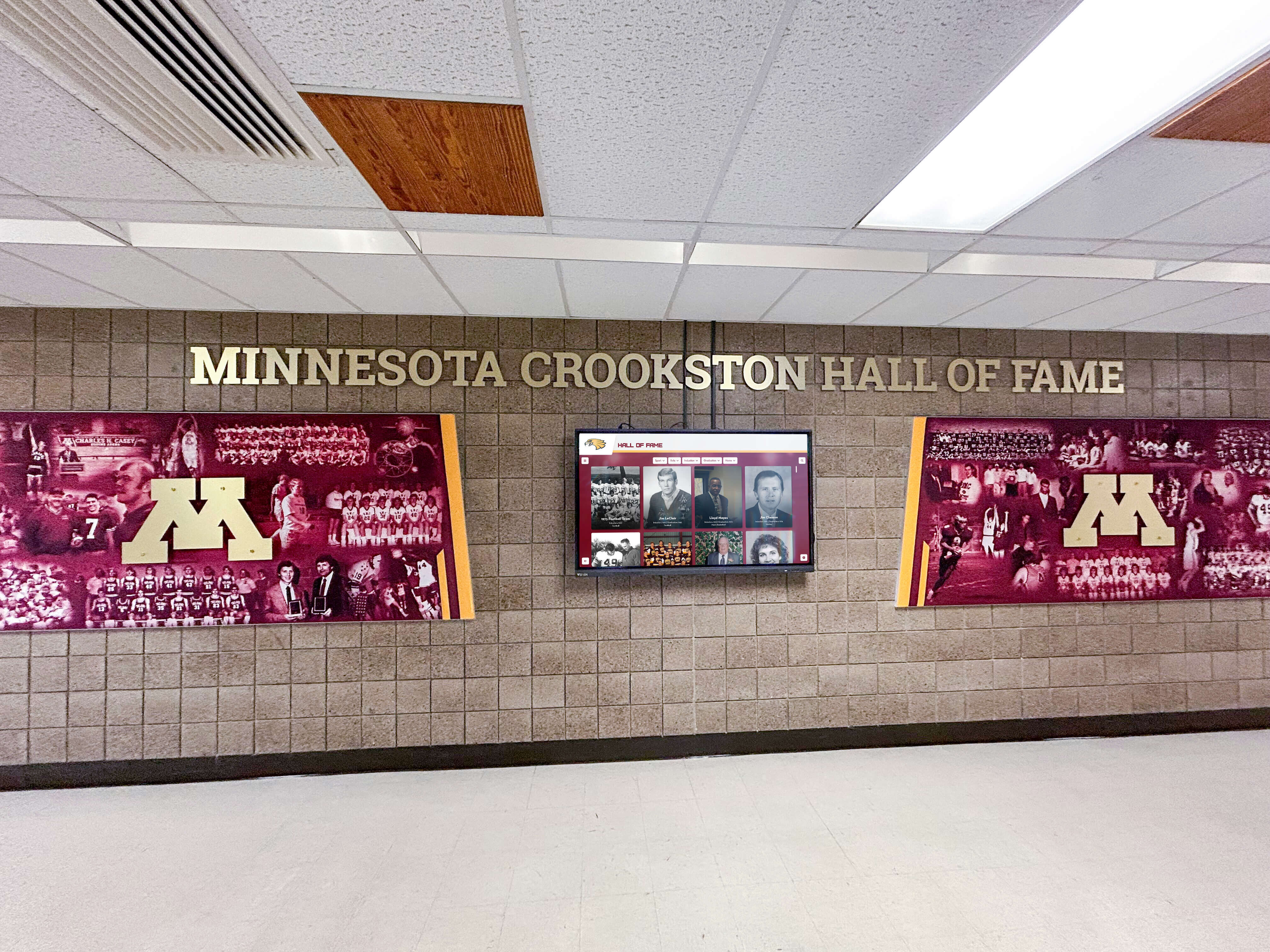
Minnesota schools take immense pride in commemorating hockey excellence, creating permanent recognition displays that celebrate tournament appearances and championship achievements
The History and Significance of Minnesota’s State Hockey Tournament
Before exploring tournament logistics and traditions, understanding the historical context reveals why this event holds such extraordinary meaning across Minnesota communities.
Tournament Origins and Evolution
The Minnesota State High School Hockey Tournament began in 1945, establishing itself as one of the oldest continuous state hockey championships in the United States.
Early Tournament Years (1945-1970s)
The tournament started modestly but quickly captured statewide imagination as participation expanded beyond initial Twin Cities dominance, television coverage brought games into Minnesota homes, St. Paul became the permanent tournament host city, arena venues grew to accommodate increasing attendance, and the tournament established traditions still honored today.
These early decades established hockey as Minnesota’s sport, differentiating the state from others where football or basketball commanded primary athletic attention and community investment.
Modern Tournament Expansion (1990s-Present)
Significant changes modernized the tournament while preserving its essential character through division expansion creating separate Class A and Class AA tournaments, girls’ tournament establishment providing equal recognition opportunities, broadcast expansion including streaming options for displaced communities, international attention as Minnesota hockey gained worldwide recognition, and facility improvements including moves to the Xcel Energy Center.
These evolutions ensured the tournament remained relevant while maintaining the traditions and competitive intensity that originally captured Minnesota’s imagination.
Cultural Significance Beyond Sports
The state hockey tournament transcends typical athletic competition, functioning as a community celebration and cultural touchstone throughout Minnesota.
Community Identity and Pride
For Minnesota towns, tournament qualification generates extraordinary community engagement through businesses closing to attend games or watch broadcasts, entire communities traveling to St. Paul for tournament sessions, local media providing extensive coverage of team preparations, community viewing parties for residents unable to attend in person, and lasting pride in tournament participation regardless of championship outcomes.
Schools report that tournament appearances become permanent parts of community identity, referenced for decades and serving as shared experiences connecting generations of residents.
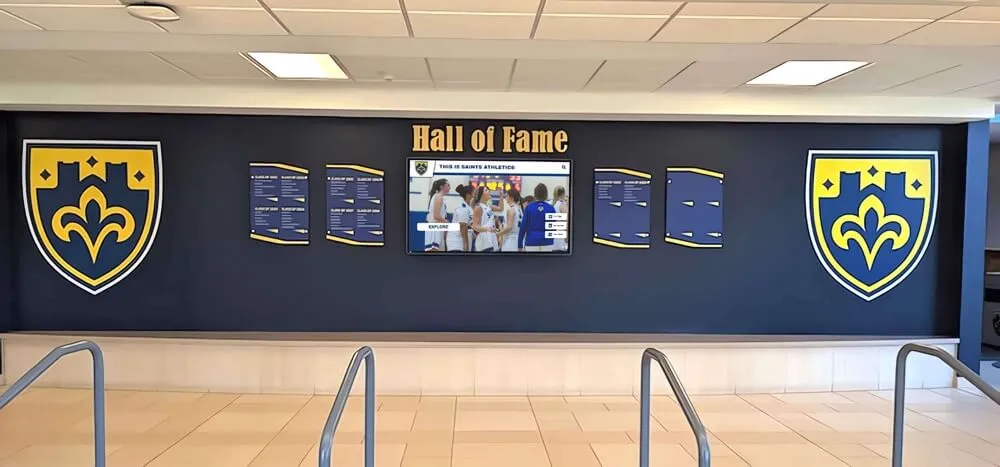
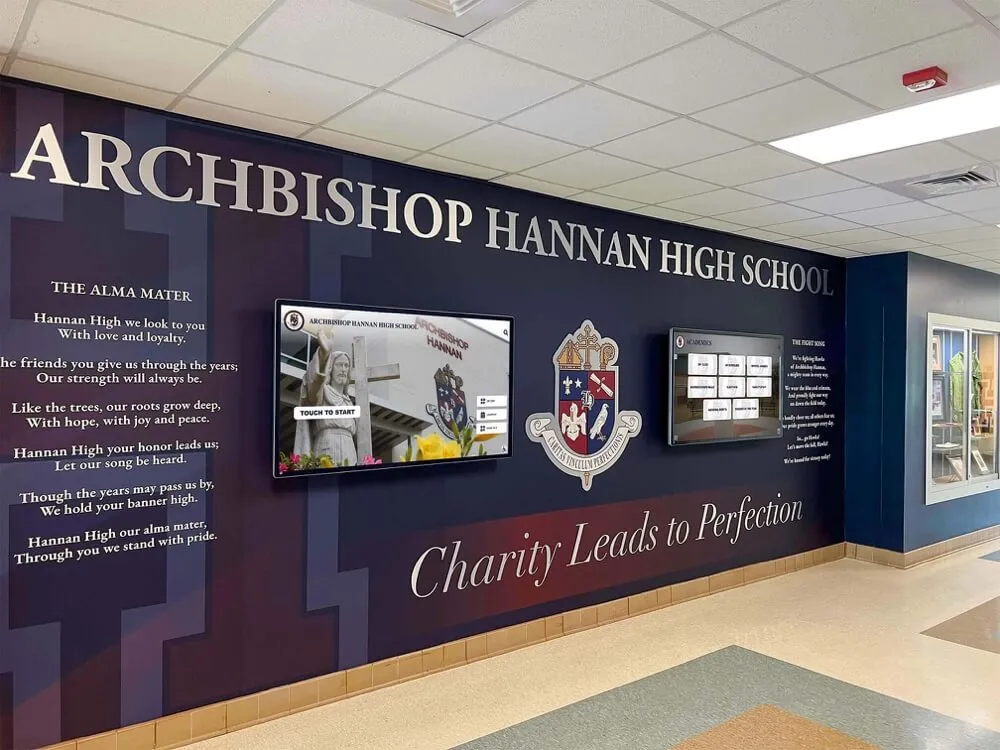
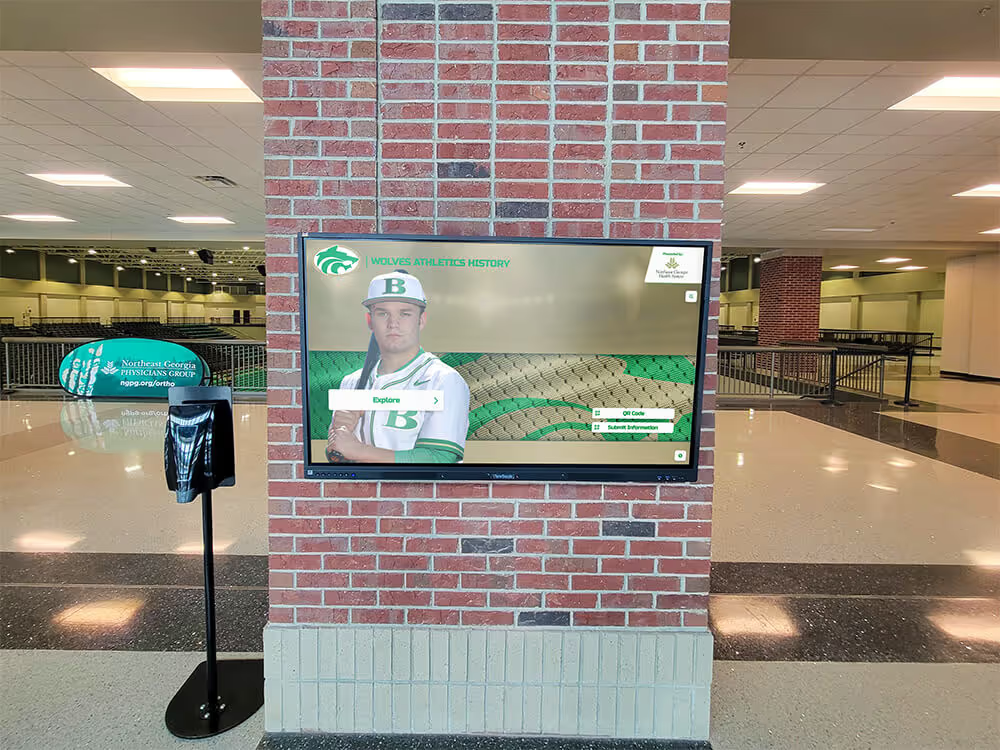
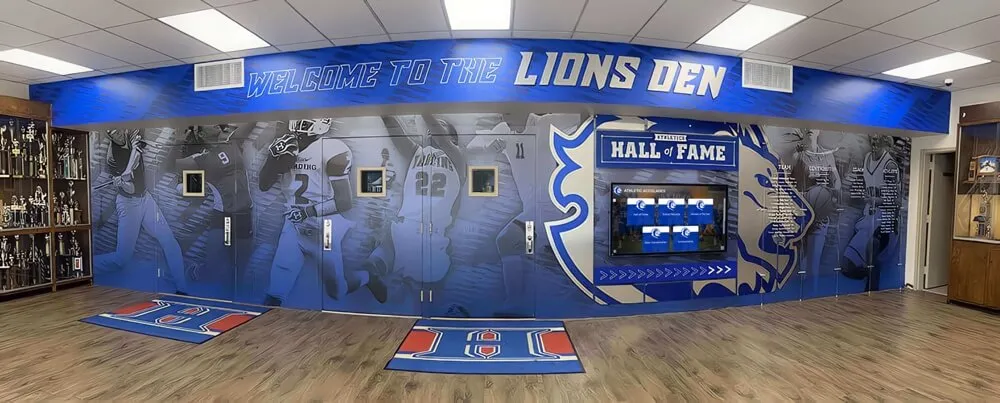
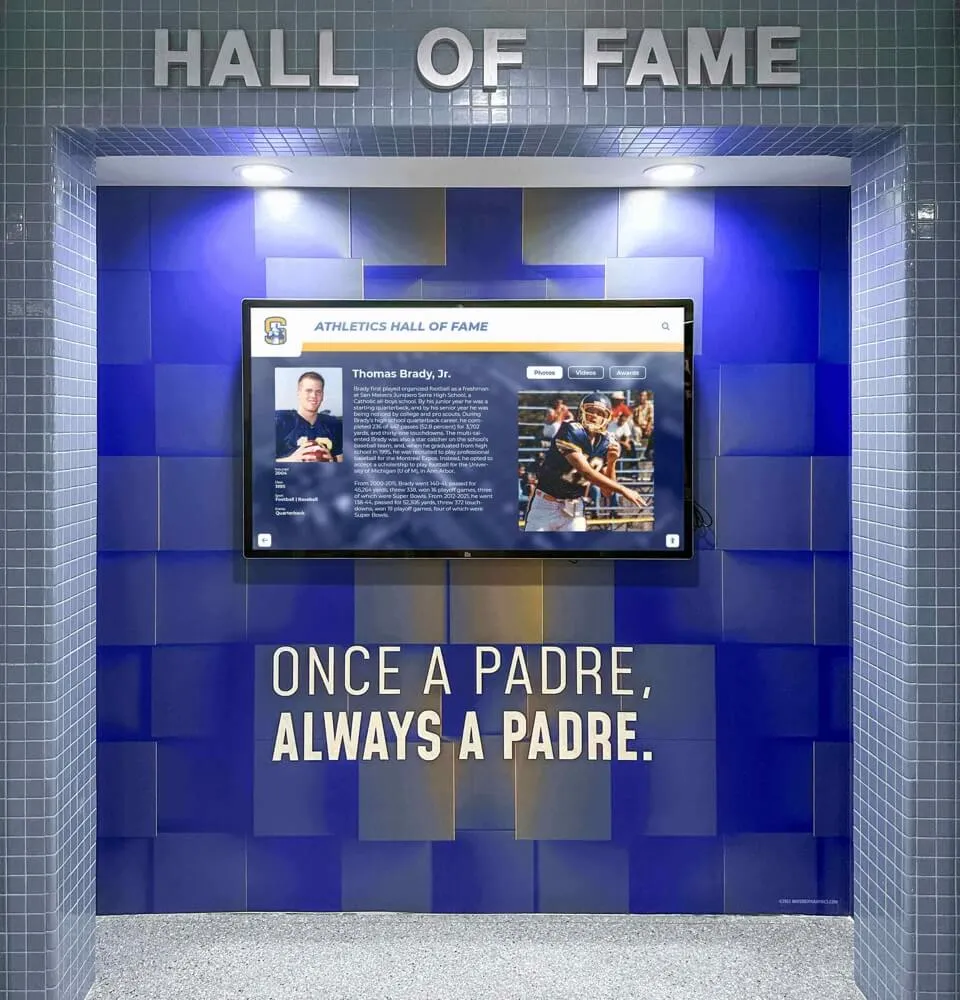
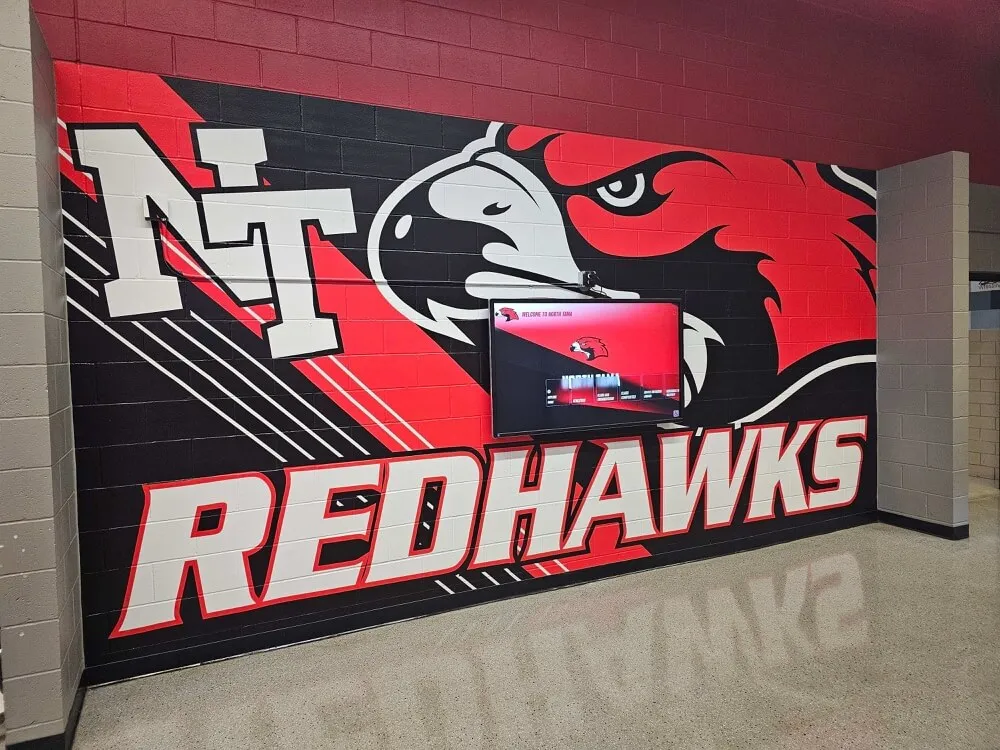
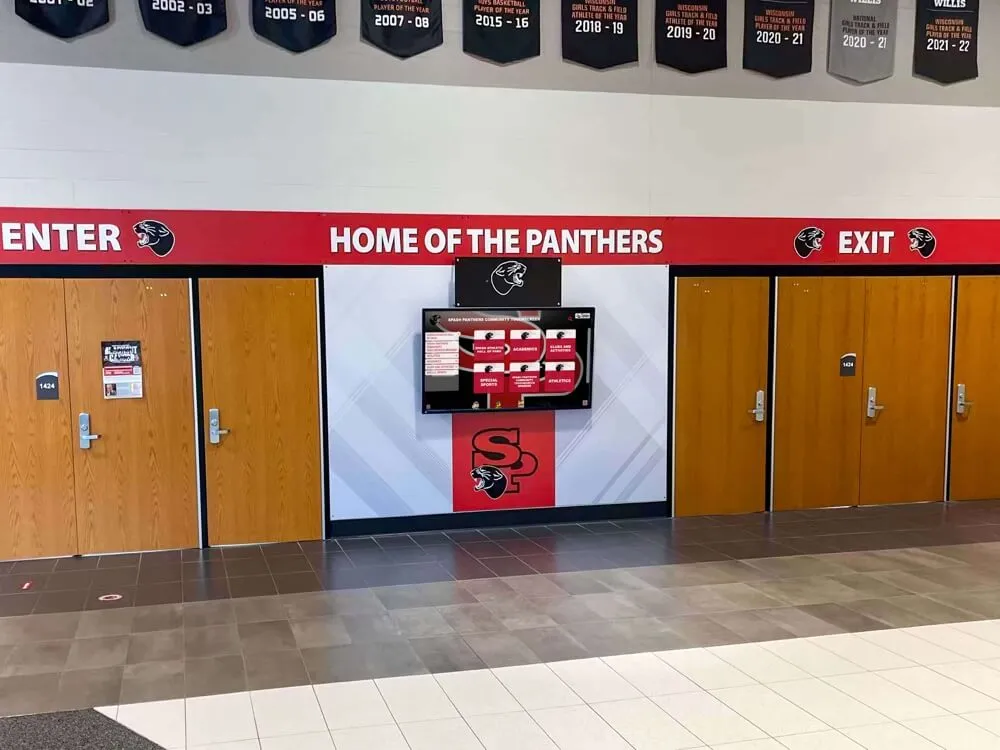
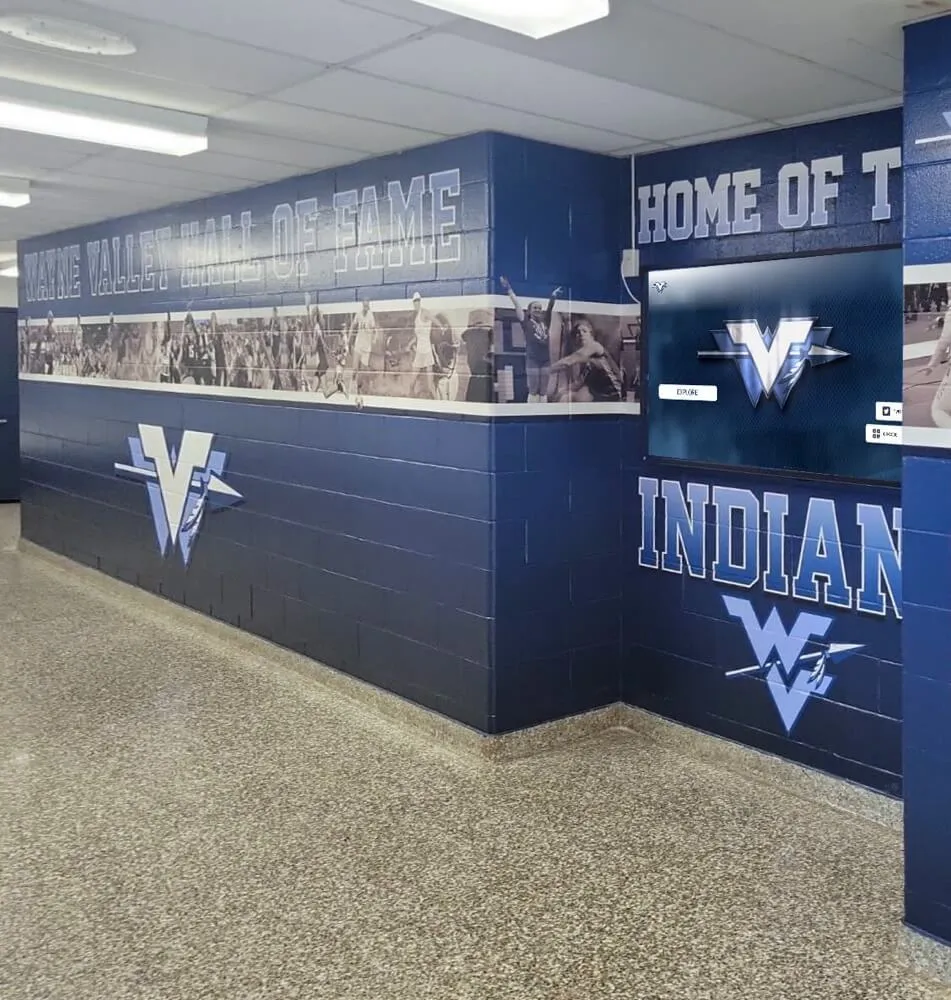
Tournament appearances earn permanent recognition in school athletic displays, creating inspiring reminders of program excellence for current and future generations
Economic and Tourism Impact
The tournament generates significant economic activity through hotel bookings as communities travel to support their teams, restaurant and retail spending concentrated in St. Paul during tournament weeks, extended spring break travel by families combining tournament attendance with vacation, statewide attention boosting team communities’ visibility and pride, and broadcast rights and sponsorships supporting high school athletic programs.
According to Minnesota Department of Employment and Economic Development data, the state hockey tournament generates millions in direct economic impact annually, making it one of the state’s significant winter sporting events.
Media Coverage and Broadcast Tradition
Few high school sporting events receive professional-level media coverage comparable to Minnesota’s hockey tournament through comprehensive television broadcasts of all tournament games, dedicated radio coverage including play-by-play for entire tournament, print media coverage in all major Minnesota publications, digital streaming options enabling worldwide viewership, and social media amplification by schools, families, and hockey enthusiasts.
This extensive coverage elevates tournament participants to celebrity status within their communities while exposing Minnesota hockey traditions to audiences far beyond state borders.
Tournament Structure and Qualification Process
Understanding how teams reach the state tournament reveals the competitive depth and systematic fairness defining Minnesota high school hockey.
Class and Division Structure
Minnesota operates separate tournaments recognizing schools of different sizes while ensuring appropriate competitive balance.
Class AA Tournament
The Class AA tournament features Minnesota’s largest schools competing through single-class state tournament with eight qualifying teams, section tournaments determining state qualifiers, games held at Xcel Energy Center in St. Paul, championship game typically drawing 18,000+ spectators, and television coverage on major broadcast networks.
Class AA represents Minnesota’s most visible high school hockey, featuring suburban powerhouse programs and traditional hockey dynasties competing for the state’s most prestigious championship.
Class A Tournament
The Class A tournament showcases smaller schools and outstate communities through parallel single-class tournament structure, eight-team state tournament field, same Xcel Energy Center venue as Class AA, dedicated fan base celebrating small-town hockey tradition, and equal recognition and celebration of championship achievement.
Class A tournament games often feature inspiring stories of small communities uniting behind their teams, creating David-versus-Goliath narratives when traditional power programs face each other.
Girls’ State Tournament
The girls’ tournament has grown dramatically since establishment, providing equal showcase opportunity through two-class structure (AA and A) mirroring boys’ format, rapid competitive development since tournament inception, increasing attendance and community support, college recruiting visibility for female players, and expanding media coverage recognizing girls’ hockey growth.
The girls’ tournament represents Minnesota’s commitment to equitable athletic opportunities while developing the state’s reputation as the nation’s premier girls’ hockey development environment.
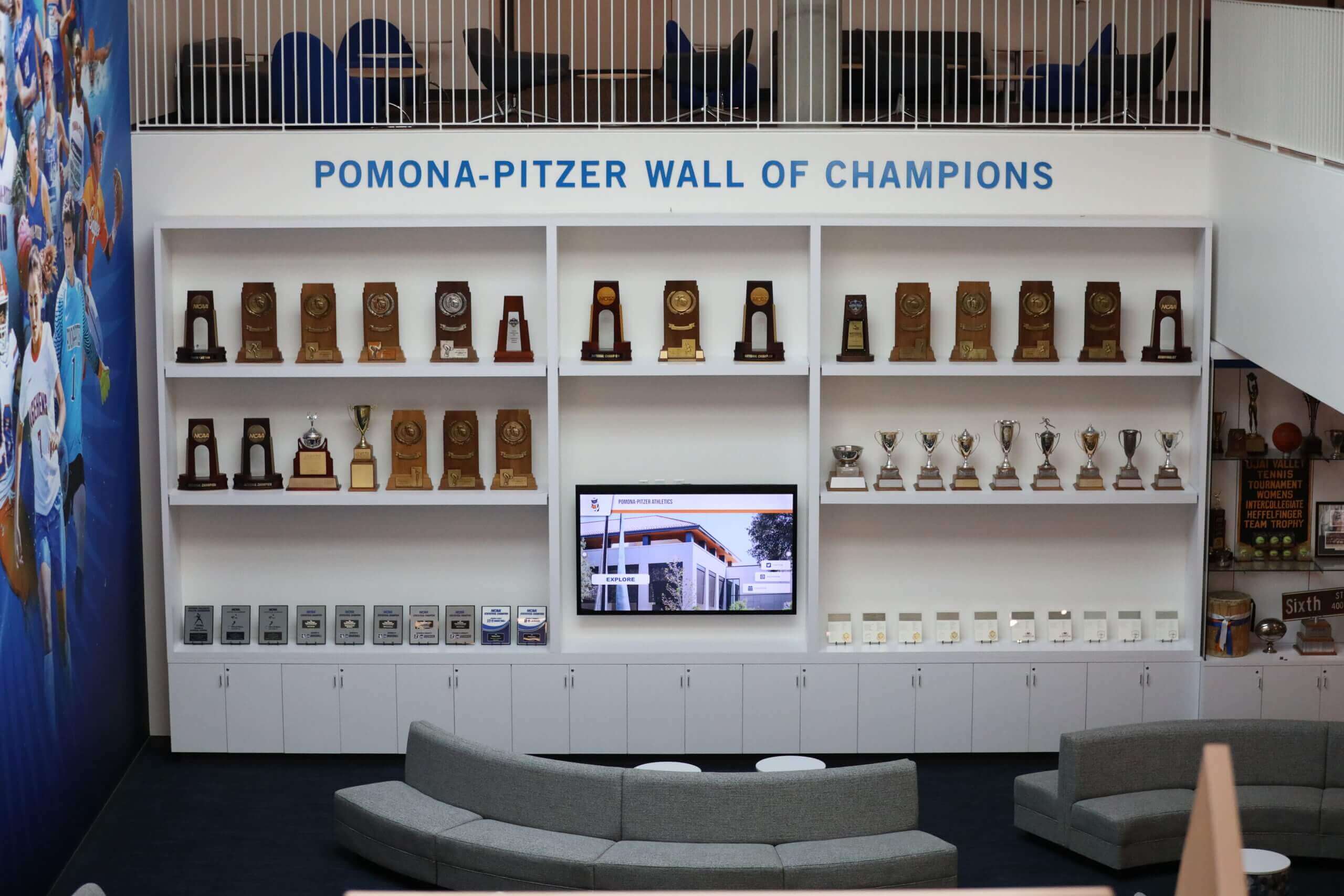
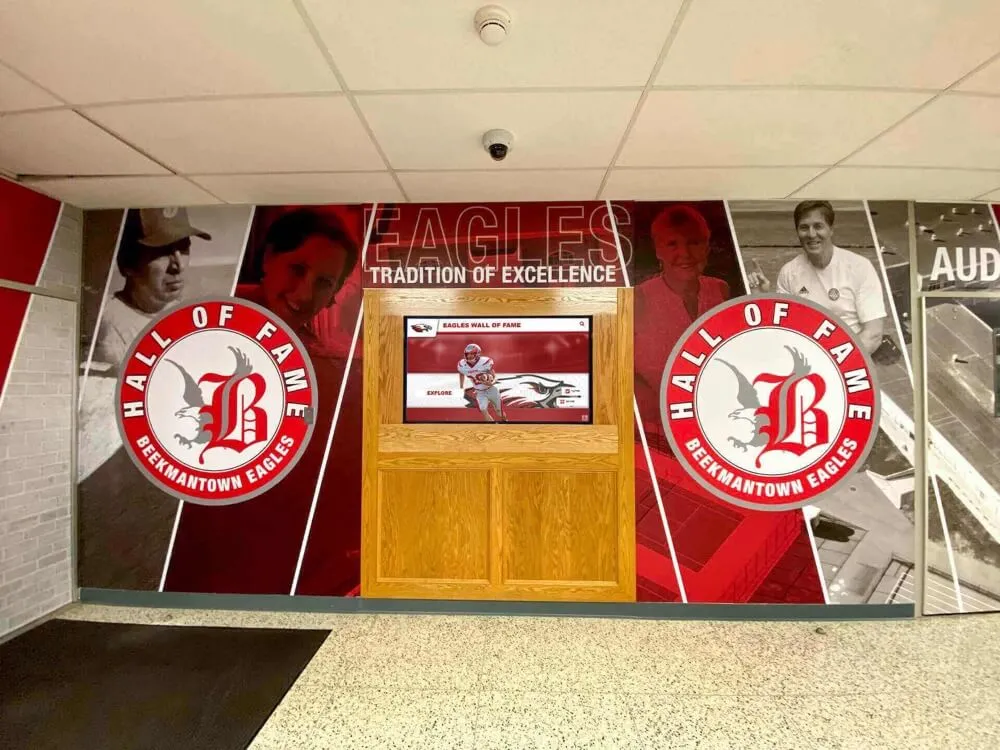
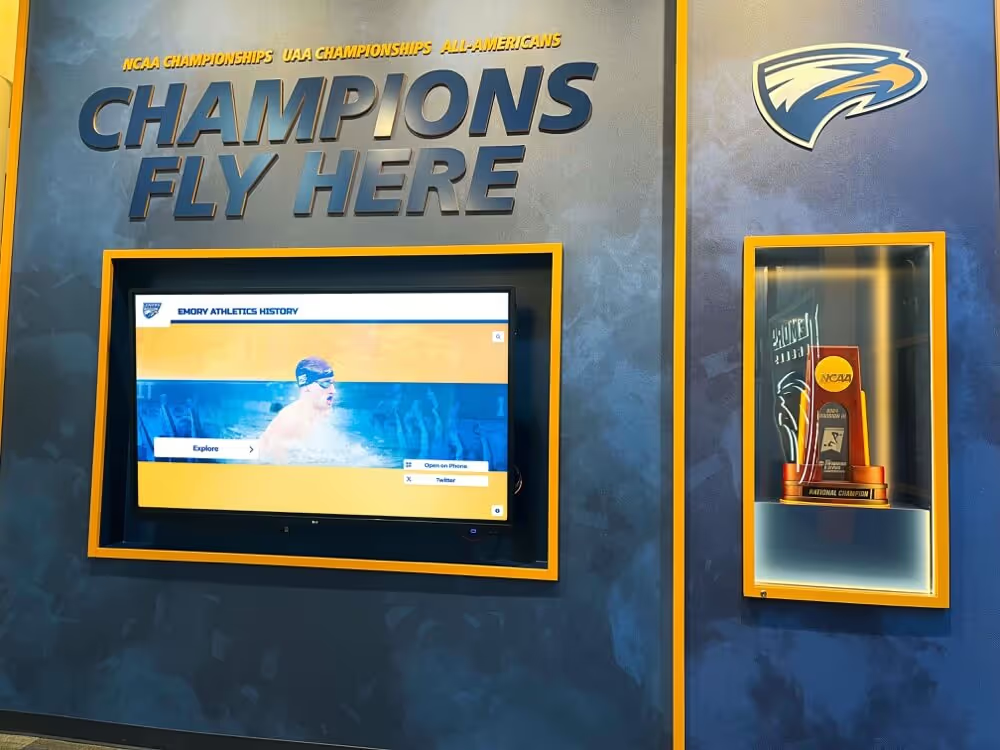
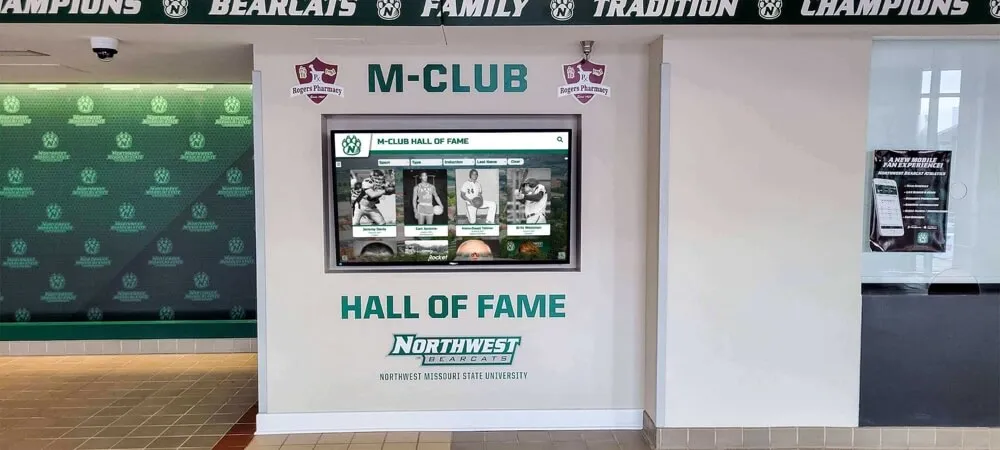
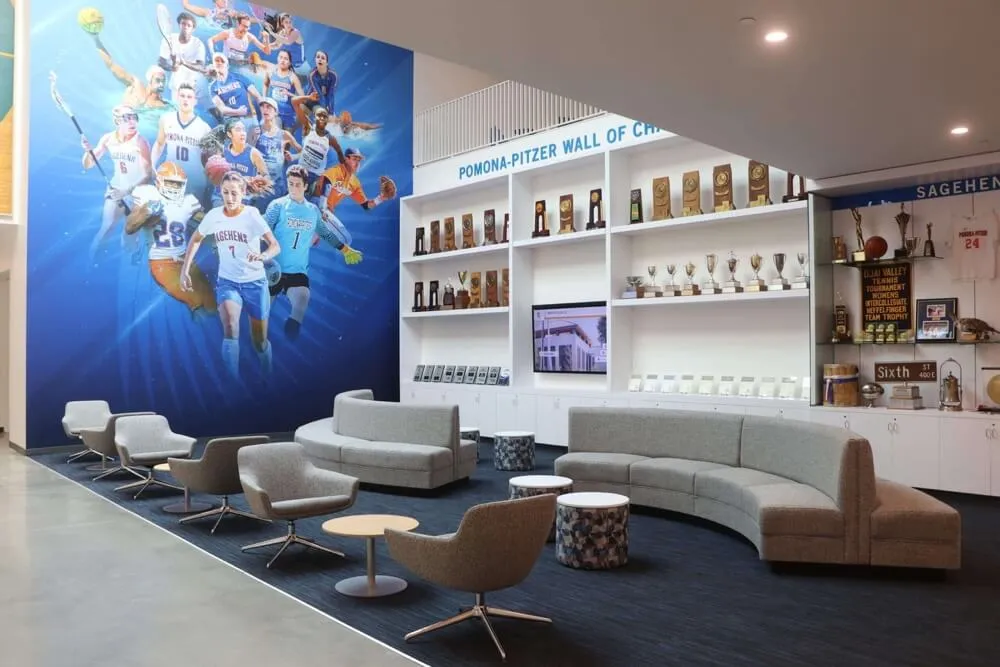
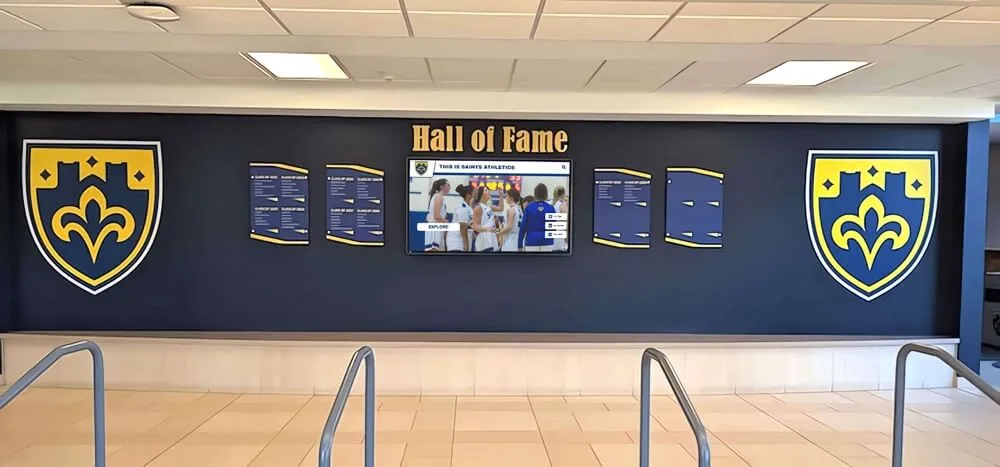
Championship achievements deserve dedicated recognition spaces where students can explore tournament histories and celebrate athletic excellence
Section Tournament Qualification
Teams must navigate highly competitive section tournaments to earn state tournament berths, creating intense local rivalries and memorable qualification moments.
Section Tournament Structure
Minnesota divides teams into geographic sections hosting qualification tournaments through single-elimination section playoffs, section championship games determining state qualifiers, neutral-site section finals creating tournament atmosphere, just one section champion per section earning state berth, and bitter disappointment for section runner-up teams regardless of season quality.
This single-elimination, winner-takes-all structure means season-long excellence can end in heartbreak with one section final loss, creating dramatic tension and emotional investment throughout Minnesota hockey communities.
Seeding and Regular Season Importance
Section playoff seeding depends on regular season performance, making every game consequential through section standings determining playoff position, head-to-head results serving as tiebreakers, strength of schedule considerations in seeding decisions, home ice advantage in early section rounds, and regular season conference championships providing psychological momentum.
Strong regular seasons improve section tournament paths but guarantee nothing, maintaining competitive intensity throughout the entire season while ensuring no team can coast toward qualification.
State Tournament Format and Schedule
The tournament’s structure balances competitive fairness with scheduling practicality while maximizing community engagement and broadcast appeal.
Quarterfinal Round
The tournament begins with quarterfinal games establishing championship bracket through four first-round games in each class, all eight teams competing in single day sessions, double-elimination format (through consolation bracket), regional matchups generating natural rivalries and storylines, and substantial media coverage beginning tournament narratives.
Quarterfinal victories immediately guarantee two more games and extend tournament stays, while losses drop teams to consolation brackets where they compete for third and fifth place honors.
Semifinal and Championship Games
The tournament builds toward championship weekend through Thursday/Friday semifinal games, Saturday consolation finals (third and fifth place), Saturday championship games as tournament culmination, championship sessions drawing maximum attendance and television viewership, and trophy presentations and celebration on ice after finals.
Championship weekend represents the tournament’s emotional peak, with championship games producing moments referenced in Minnesota hockey communities for generations.
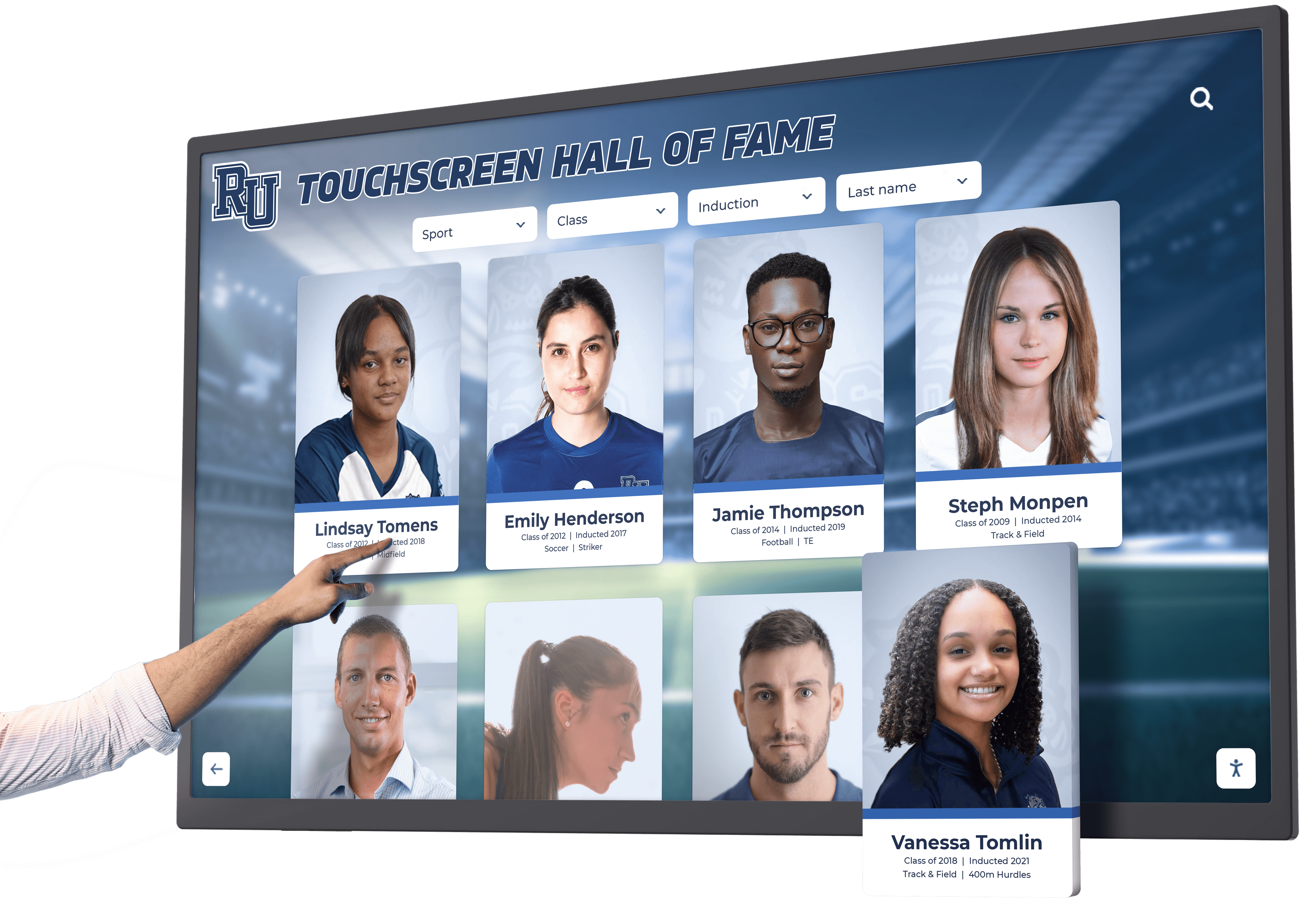
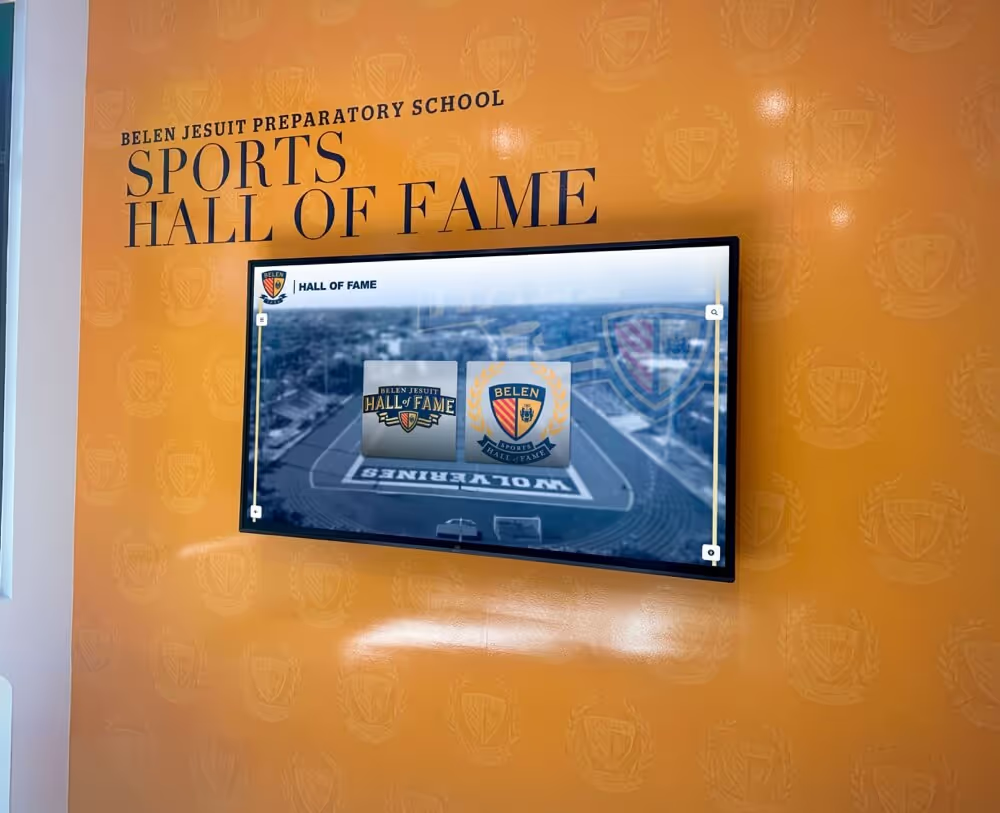
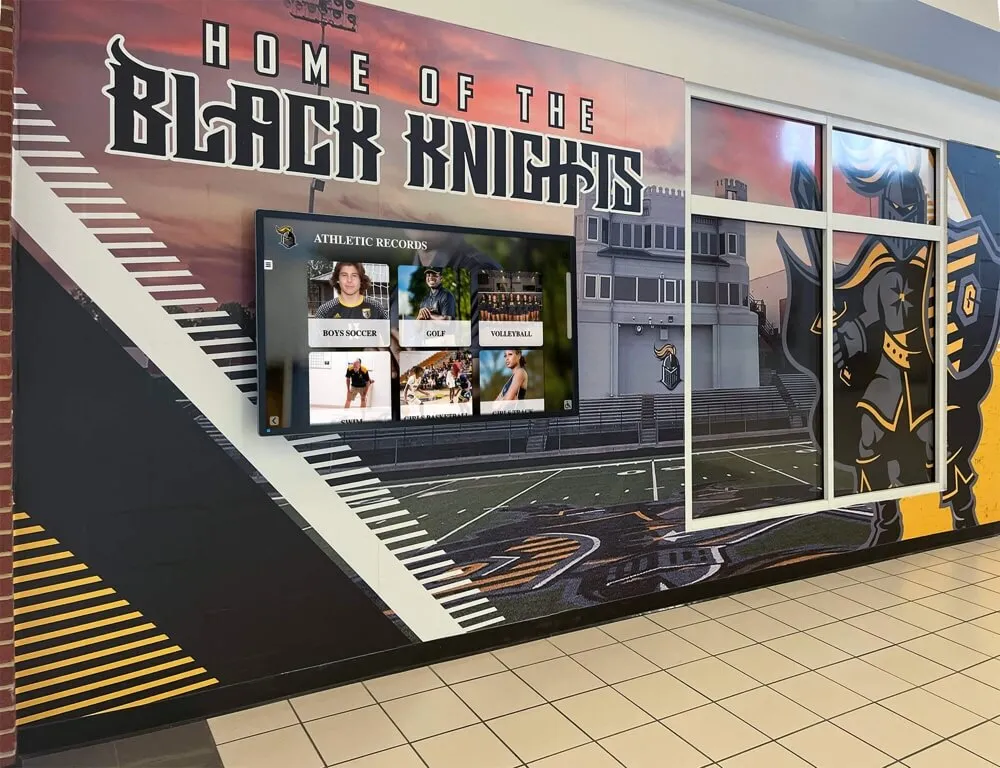
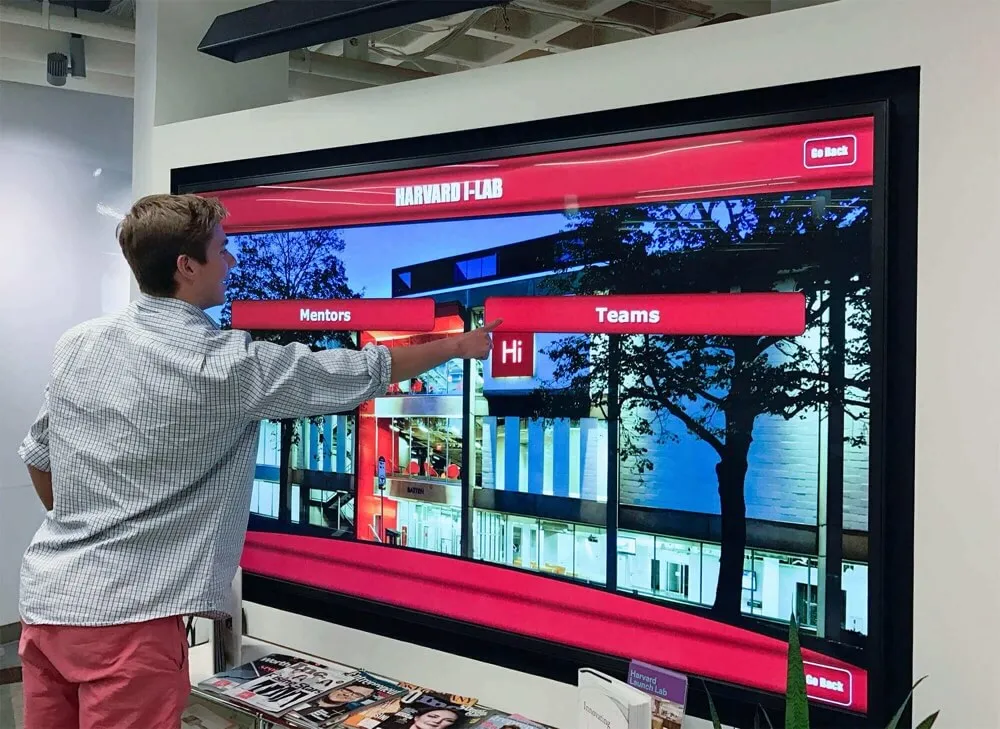
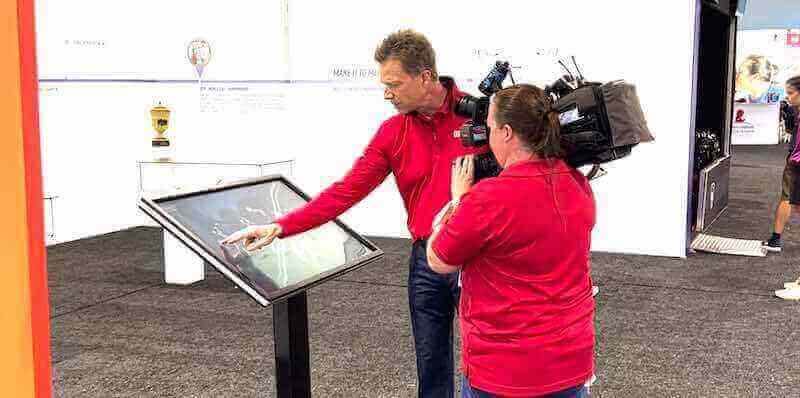
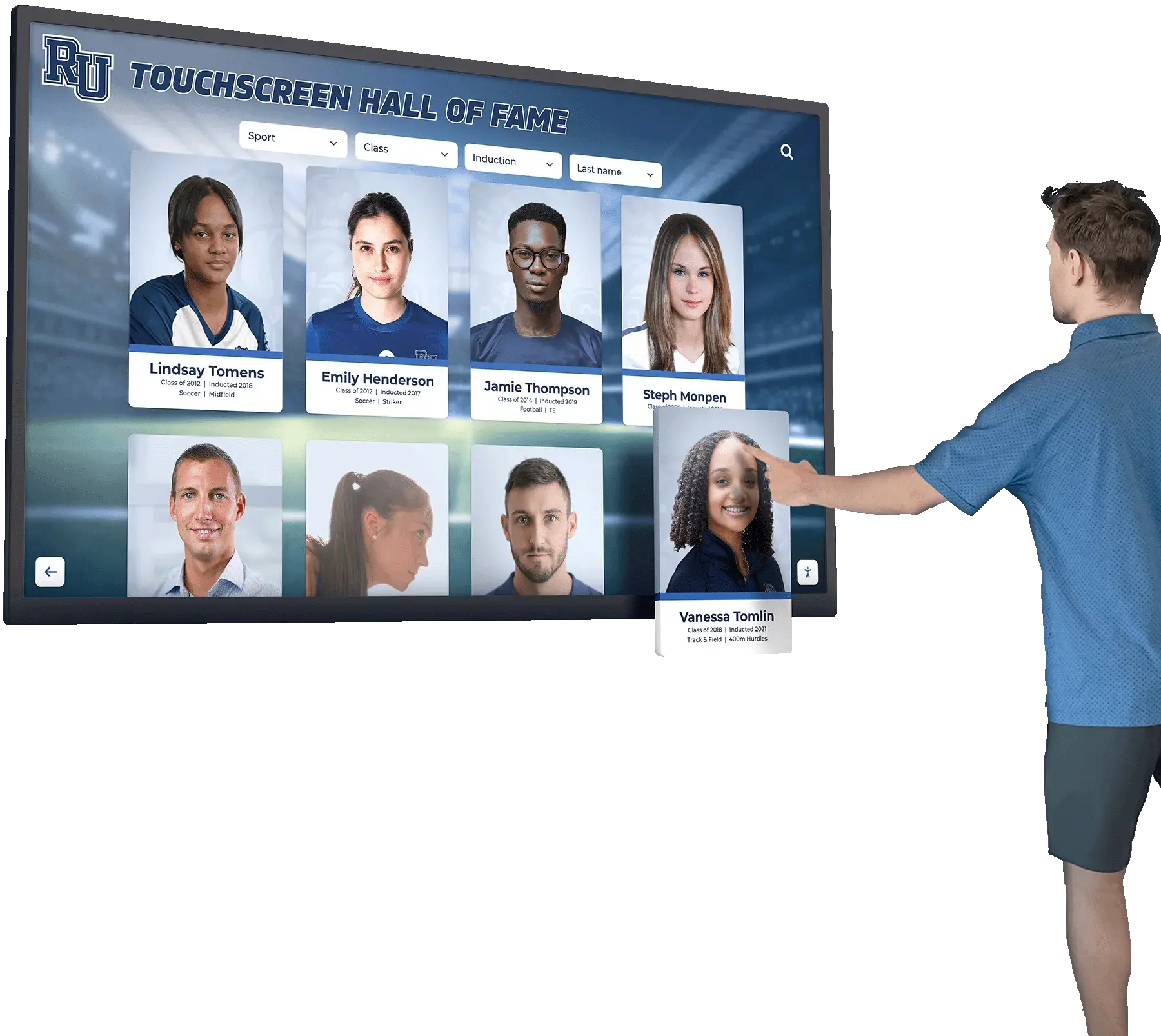
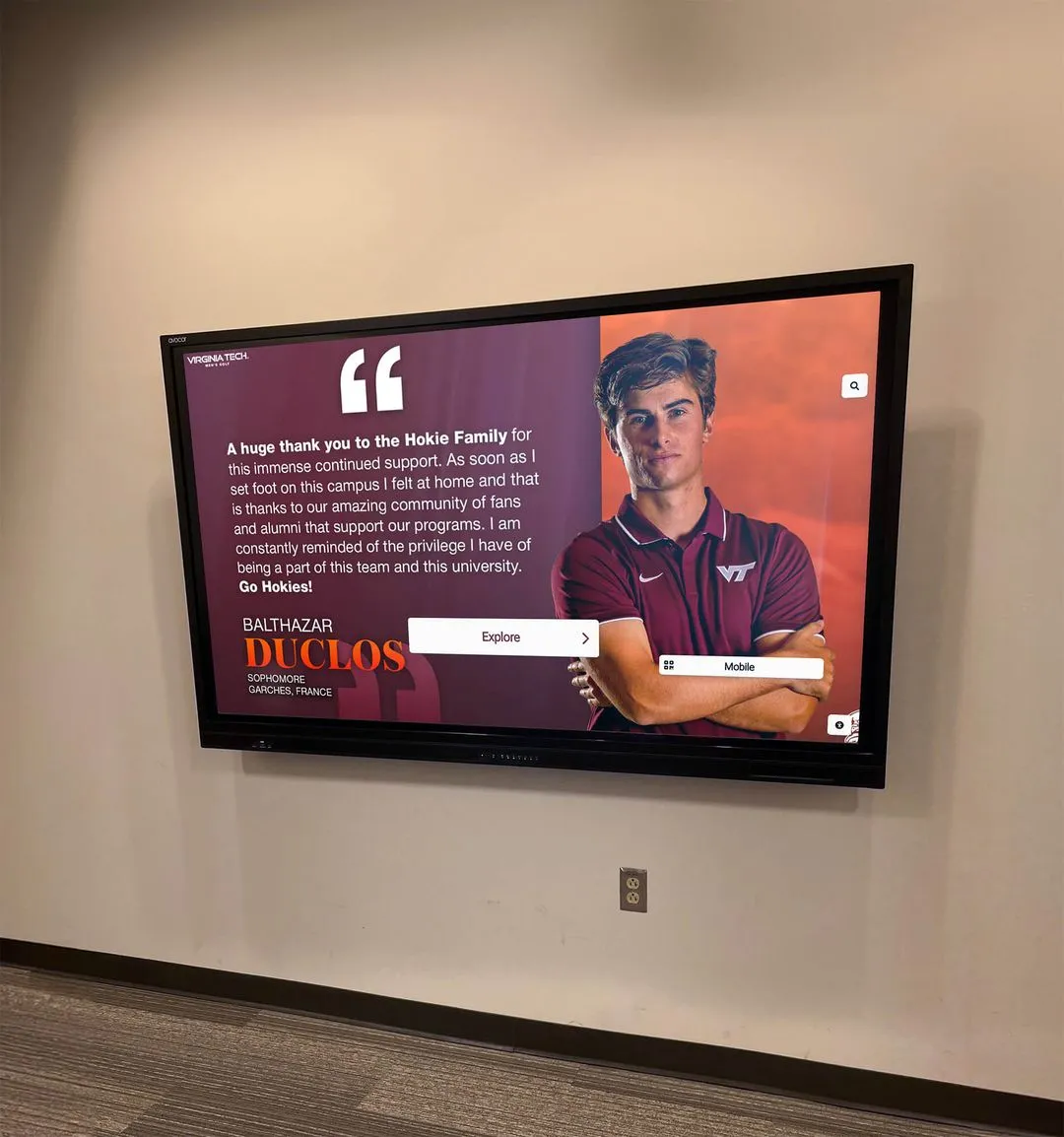
Modern touchscreen displays enable visitors to explore tournament rosters, game highlights, and achievement records through engaging, interactive experiences
Tournament Traditions and Unique Experiences
Specific traditions and experiences distinguish Minnesota’s tournament from typical championship events, creating memories that last lifetimes for participants and communities.
Pep Band and School Spirit Traditions
The tournament’s atmosphere owes much to elaborate school spirit displays and musical traditions unique to Minnesota high school hockey.
Pep Band Performances
School bands create tournament atmosphere through extensive repertoires of school fight songs and popular music, call-and-response traditions with student sections, competing volume and creativity between opposing fan bases, band performances featured during game stoppages, and musicians experiencing tournament atmosphere alongside athletes.
Many musicians and fans recall band performances and student section energy as vividly as game action itself, demonstrating how tournament experience extends far beyond players on ice.
Student Section Creativity and Competition
Student sections develop elaborate themes and displays including coordinated outfits and creative costume themes, synchronized cheers and chants refined throughout the season, creative signs and banners decorating arena sections, respectful but spirited interactions with opposing sections, and traditions recognizing school pride that define community character.
The tournament’s family-friendly atmosphere encourages creative spirit displays while maintaining sportsmanship standards that distinguish Minnesota hockey culture from more hostile sporting environments.
Community Sendoffs and Homecomings
Tournament qualification triggers community celebrations that bookend the competition experience itself.
Pre-Tournament Sendoffs
Communities celebrate qualification before teams depart for St. Paul through school-wide pep rallies announcing tournament rosters and schedules, fire truck escorts from schools to city limits, community gatherings at civic centers or school gymnasiums, local business displays supporting the team with signs and decorations, and media coverage building anticipation for tournament competition.
These sendoffs demonstrate that tournament qualification alone represents extraordinary achievement worthy of celebration regardless of tournament outcomes.
Post-Tournament Welcome Home Celebrations
Communities welcome teams home with celebrations honoring tournament participation through fire truck escorts welcoming buses back to town, community gatherings celebrating tournament experience and achievement, recognition ceremonies at schools honoring players and coaches, permanent commemorations added to school displays, and sustained pride in tournament appearance for years following competition.
For championship teams, these homecomings become legendary community events remembered for generations, with parade routes and celebration locations becoming part of local lore.
Tournament Week Experiences for Participants
For players, coaches, and families, tournament week involves unique experiences beyond the games themselves.
Practice Sessions at Tournament Venues
Teams experience tournament atmosphere through official practice times at Xcel Energy Center, walking through player tunnels and experiencing arena scale, media availability and interview requirements for players and coaches, team meals and bonding experiences in St. Paul hotels, and managing tournament distractions while maintaining competitive focus.
Many former players report that stepping onto championship ice for practice represents an overwhelmingly emotional moment when tournament dreams become tangible reality.
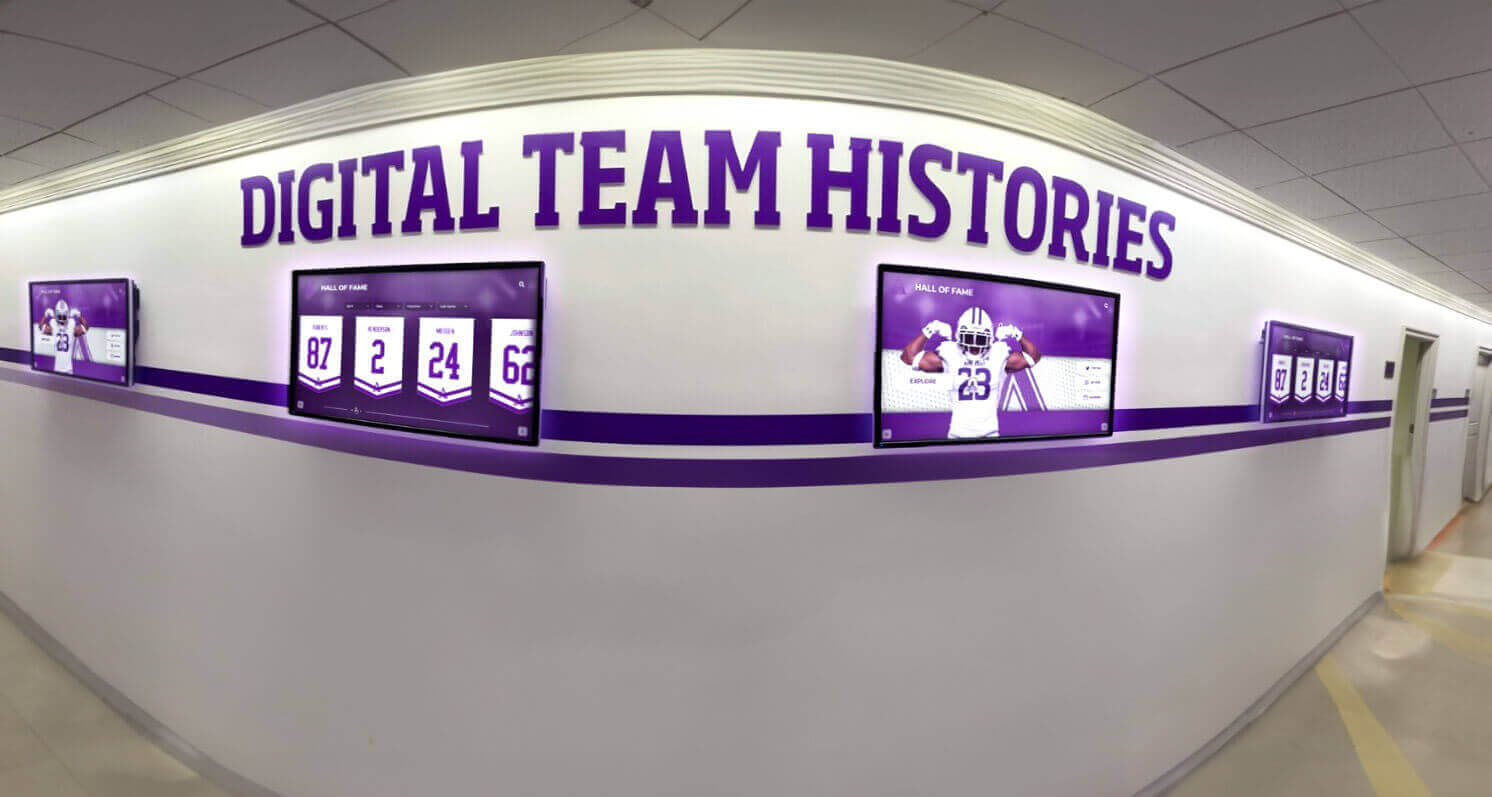
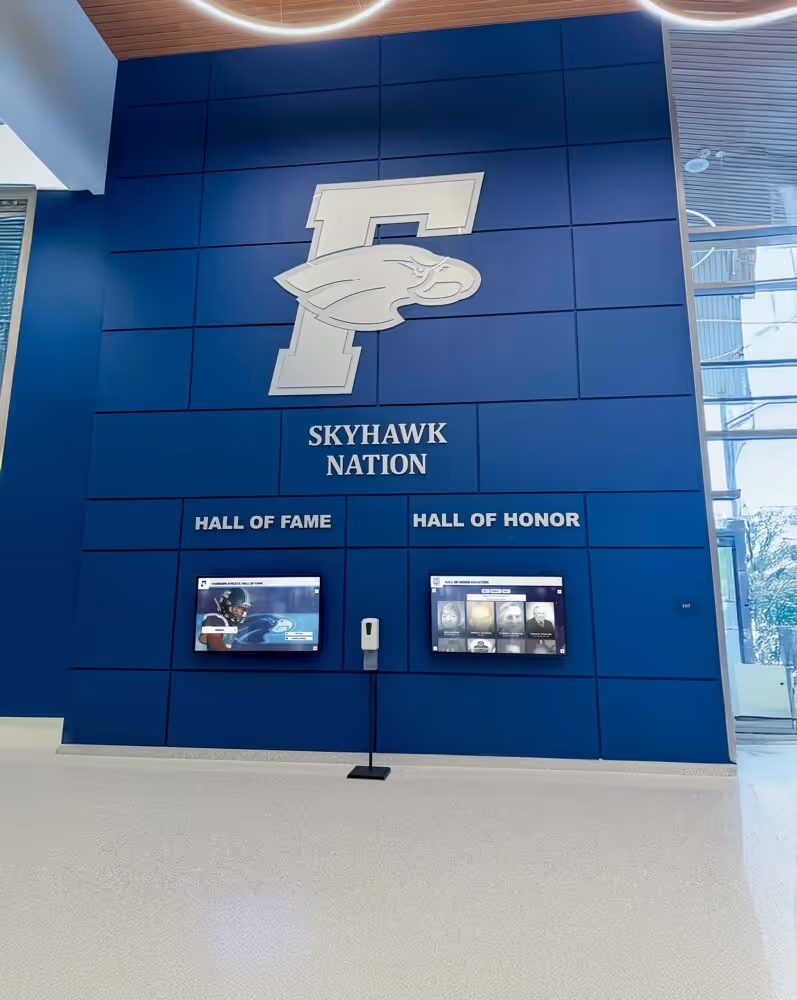
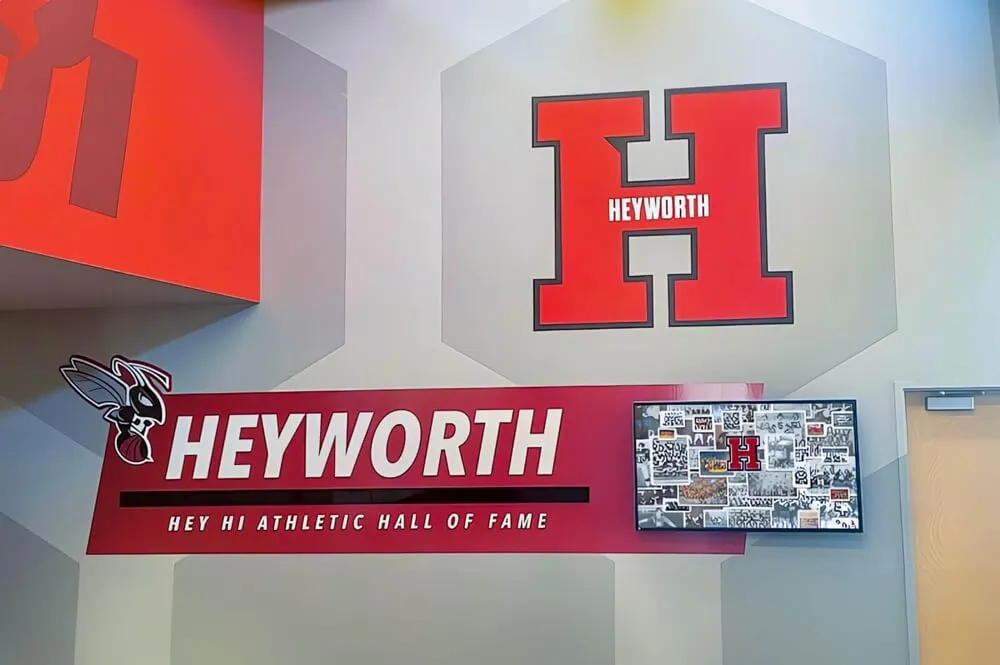
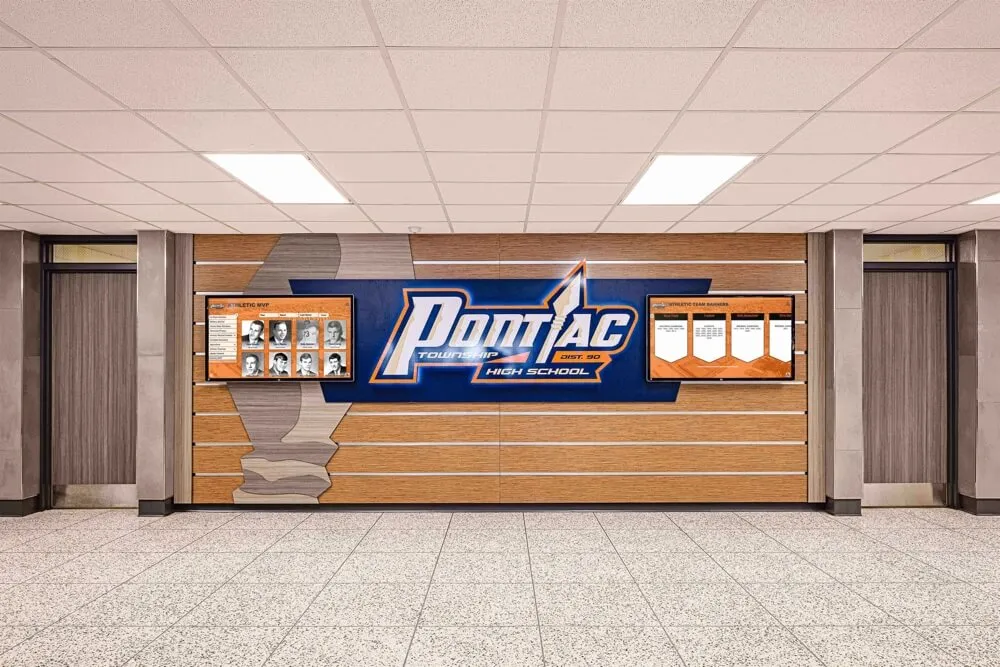
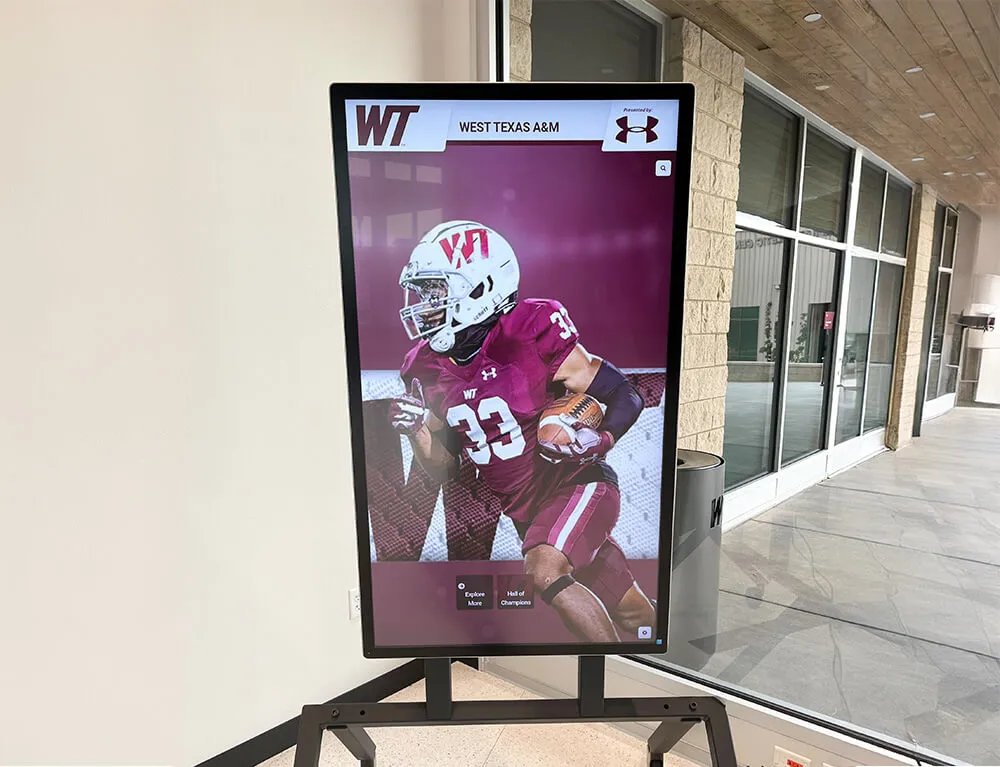
Schools preserve tournament memories through digital displays showcasing complete team rosters, season highlights, and tournament achievements
Media Attention and Player Experience
Tournament participants receive unprecedented media exposure through televised games reaching statewide audiences, post-game interview opportunities with major media outlets, social media attention from hockey fans throughout Minnesota and beyond, college recruiting visibility for uncommitted junior and senior players, and lasting recognition within their communities.
This exposure creates opportunities but also pressure, requiring mental preparation beyond typical high school competition while providing unforgettable experiences regardless of competitive outcomes.
Preserving Tournament Memories: Recognition and Commemoration
After tournament excitement fades, schools face the meaningful challenge of permanently preserving these achievements in ways that inspire future generations while honoring participants.
Traditional Physical Recognition Methods
Schools have long used various physical displays to commemorate tournament appearances and championships.
Championship Banners and Displays
Traditional recognition includes championship banners hung in gymnasiums and ice arenas, tournament participation banners acknowledging all qualifiers, display cases housing championship trophies and medals, photo collages of tournament teams in school hallways, and plaques listing tournament rosters and achievement details.
These time-honored approaches provide visible reminders of historic achievements, though they face practical limitations as programs accumulate more tournament appearances and available display space becomes constrained.
Individual Player Recognition
Schools honor tournament participants through senior recognition boards listing graduating players, letterman jacket patches commemorating tournament appearances, team photo composites in school hallways, printed programs and commemorative yearbook sections, and hall of fame induction for championship contributors.
Individual recognition ensures that decades later, community members can identify tournament participants while current students understand the achievement level required for such honors.
Modern Digital Recognition Solutions
Contemporary schools increasingly adopt digital recognition technologies that solve traditional display limitations while creating more engaging experiences.
Interactive Digital Displays
Modern recognition systems provide capabilities traditional displays cannot match through unlimited digital storage eliminating space constraints, complete tournament roster information with player photos and statistics, video highlights from tournament games preserved permanently, searchable databases enabling visitors to locate specific players or years, and dynamic content updates keeping displays current as programs add achievements.
These interactive systems transform passive trophy cases into engaging experiences where current students explore program history while discovering the achievements they’re striving to match or exceed.
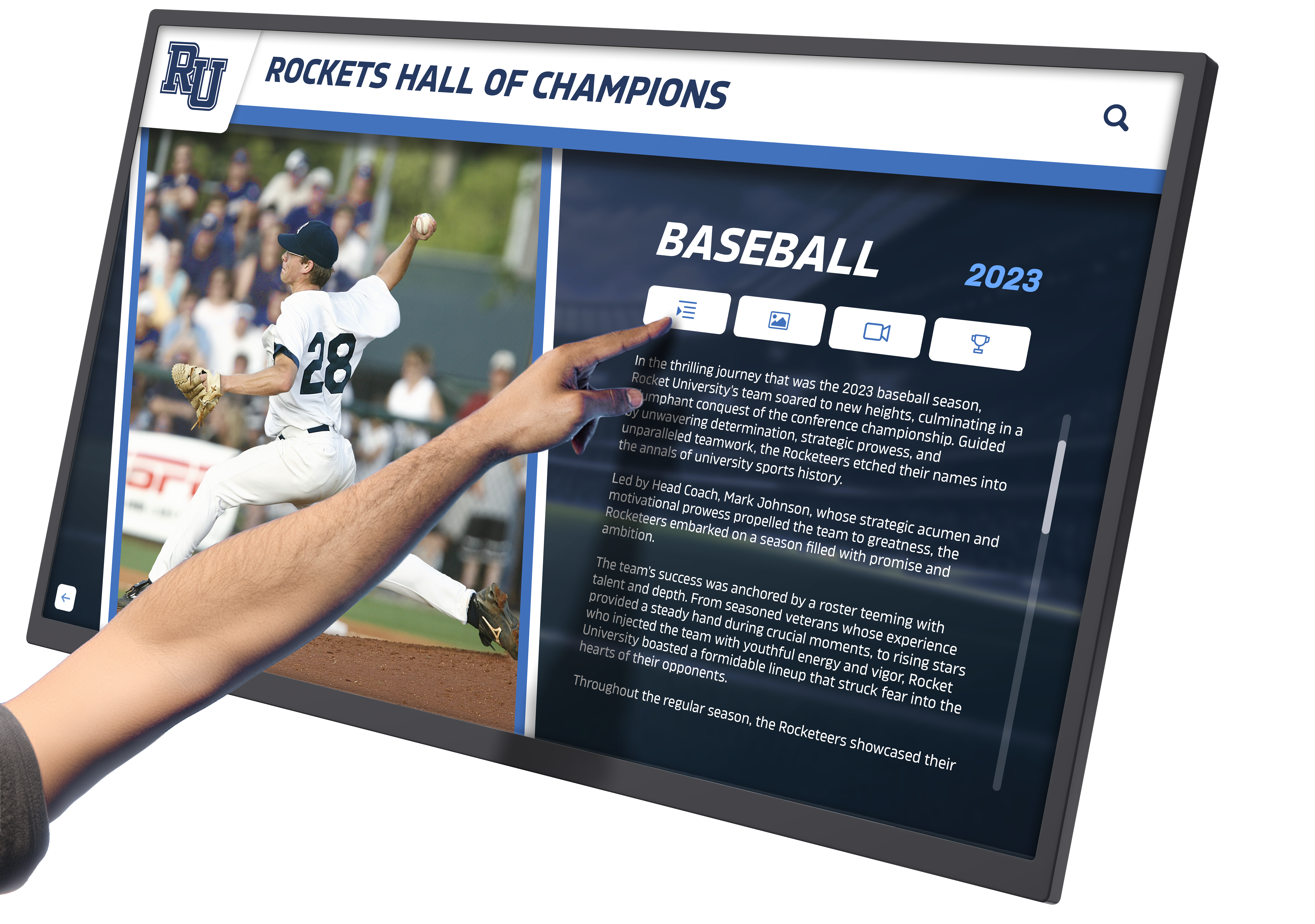
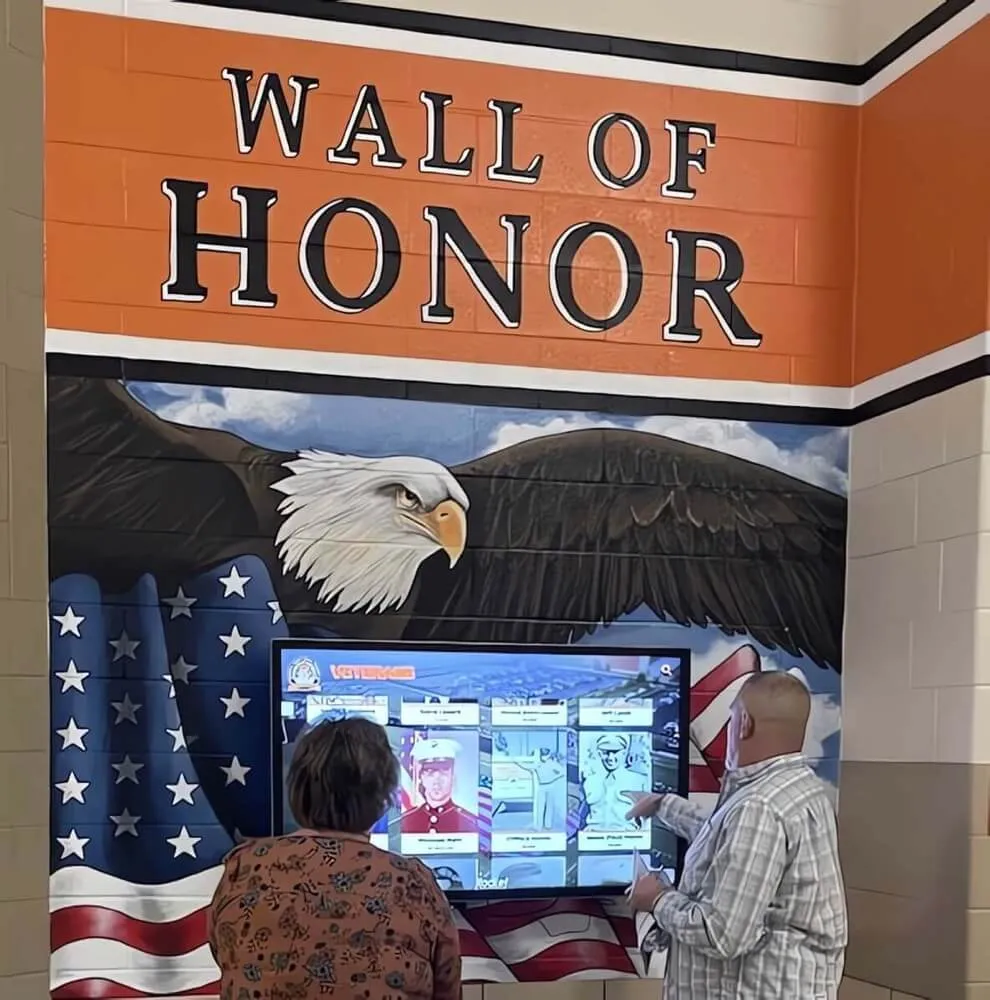
Touchscreen recognition systems bring tournament histories to life with player profiles, statistics, game highlights, and achievement records accessible through simple interactions
Comprehensive Tournament Archives
Digital platforms enable schools to preserve complete tournament documentation including full game broadcasts from tournament appearances, practice footage and behind-the-scenes tournament experiences, player interviews and post-game reactions, community celebration recordings, newspaper articles and media coverage from tournament years, and statistical records from tournament games and seasons.
This comprehensive archival approach ensures nothing is lost to time while creating rich historical resources for future team members, community historians, and documentary projects.
Solutions Like Rocket Alumni Solutions
Schools nationwide use digital recognition platforms specifically designed for athletic achievement commemoration. These systems provide advantages including professional content management enabling remote updates by athletic staff, touchscreen interactivity engaging students exploring program history, unlimited expansion capacity as programs add achievements over time, integration with existing school websites and social media platforms, and professional display quality reflecting positively on institutional pride and commitment.
Digital recognition displays serve dual purposes—preserving historical achievements while inspiring current athletes by demonstrating the excellence standards their program maintains and the lasting recognition awaiting those who reach similar heights.
Creating Tournament Recognition Displays
Schools planning tournament commemoration displays should consider several important factors ensuring effective, lasting recognition.
Content Planning and Organization
Effective displays require thoughtful content organization through chronological organization of tournament appearances, separation of championship and participation recognition, individual player profile requirements including photos and statistics, team achievement summaries with season records and tournament results, and multimedia content integration including video and audio elements.
Advance planning ensures displays provide comprehensive information without overwhelming visitors or creating confusing navigation experiences.
Physical Placement and Accessibility
Recognition effectiveness depends significantly on display location through high-traffic areas ensuring visibility by students, visitors, and community members, proximity to athletic facilities connecting displays to active programs, adequate lighting and viewing space for group engagement, ADA accessibility compliance ensuring all visitors can interact, and weather protection for displays in unconditioned spaces.
Prominent placement in school entry areas or athletic facility lobbies ensures maximum visibility while demonstrating institutional pride in athletic achievement.
Balancing Past and Present Recognition
Successful displays honor history while celebrating current achievements through historical context sections explaining tournament significance, featured spotlights on championship years and legendary teams, current season integration showing present team pursuing tournament qualification, future-oriented messaging inspiring current and prospective athletes, and regular content updates maintaining relevance and current engagement.
This balance ensures displays function as living recognition systems rather than static historical monuments disconnected from current program realities and student experiences.
Tournament Impact on School Culture and Athletic Programs
State tournament appearances create lasting effects extending far beyond the immediate competition, influencing school culture, athletic program development, and community identity for years following tournament participation.
Recruiting and Program Development Benefits
Tournament success and visibility provide tangible athletic program advantages.
Youth Hockey Development Impact
Tournament appearances strengthen youth hockey programs through increased youth registration as young players dream of tournament participation, enhanced volunteer coaching as community members engage with hockey development, improved facility investments justified by program visibility and success, stronger club hockey development preparing players for high school competition, and multi-generational program loyalty as families invest in hockey development.
Schools report that tournament appearances create 5-10 year enrollment and development effects as elementary students who watched tournament runs eventually reach high school.
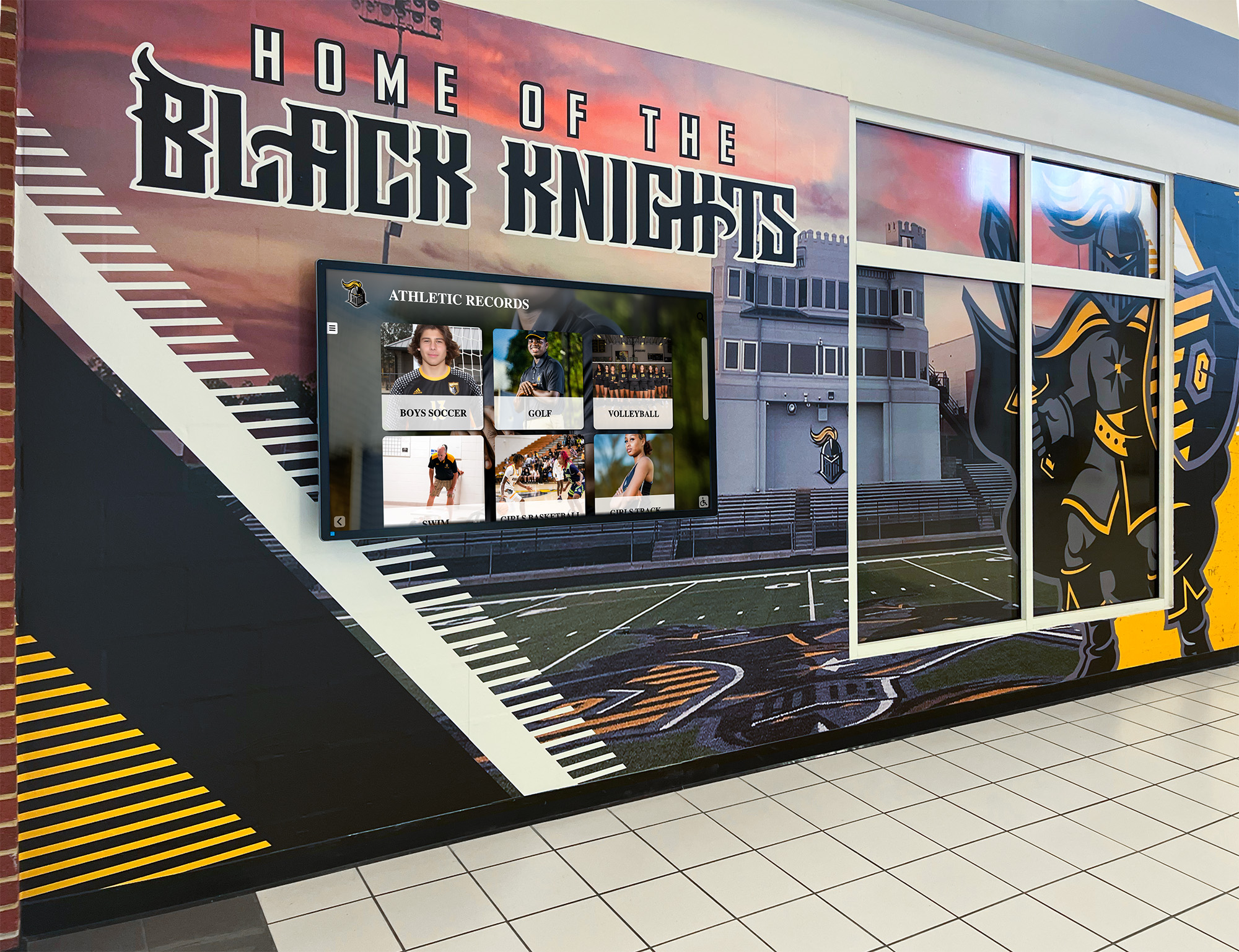
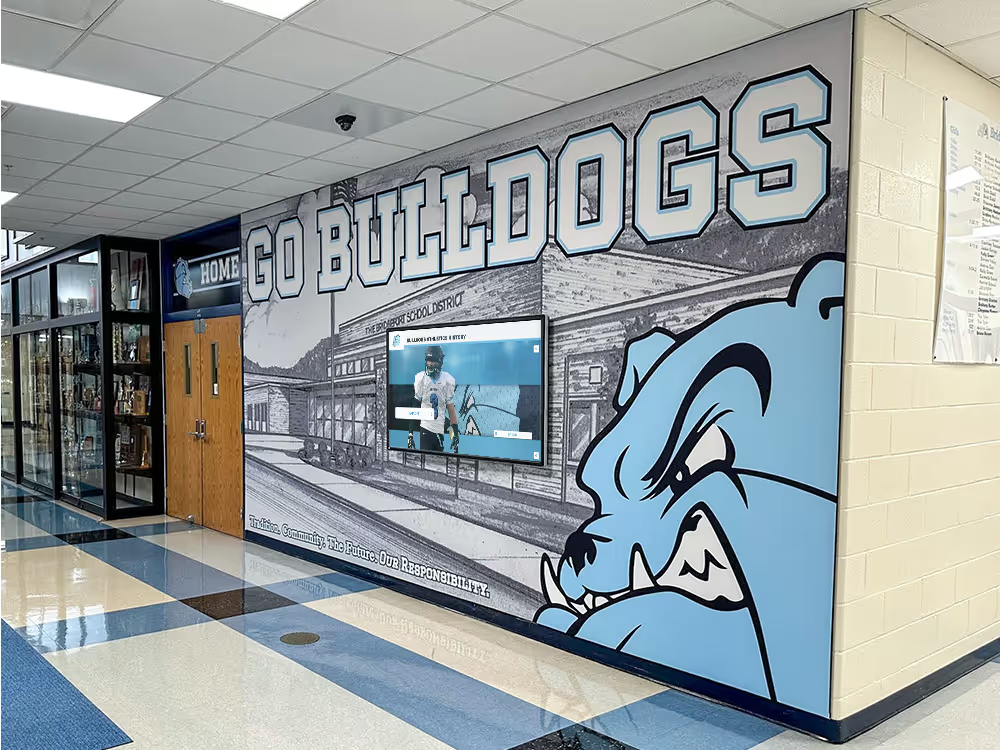
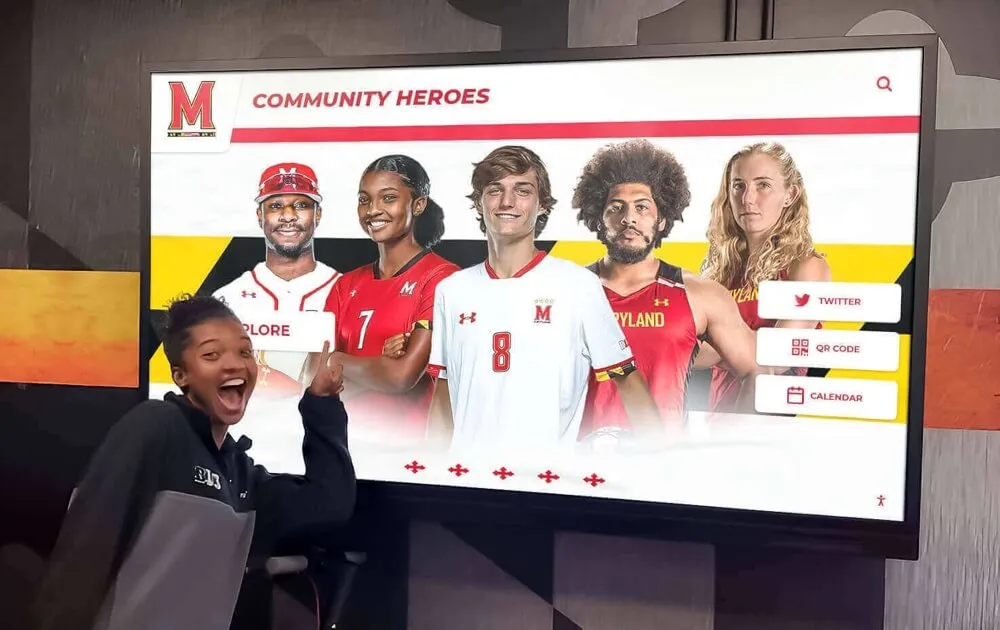
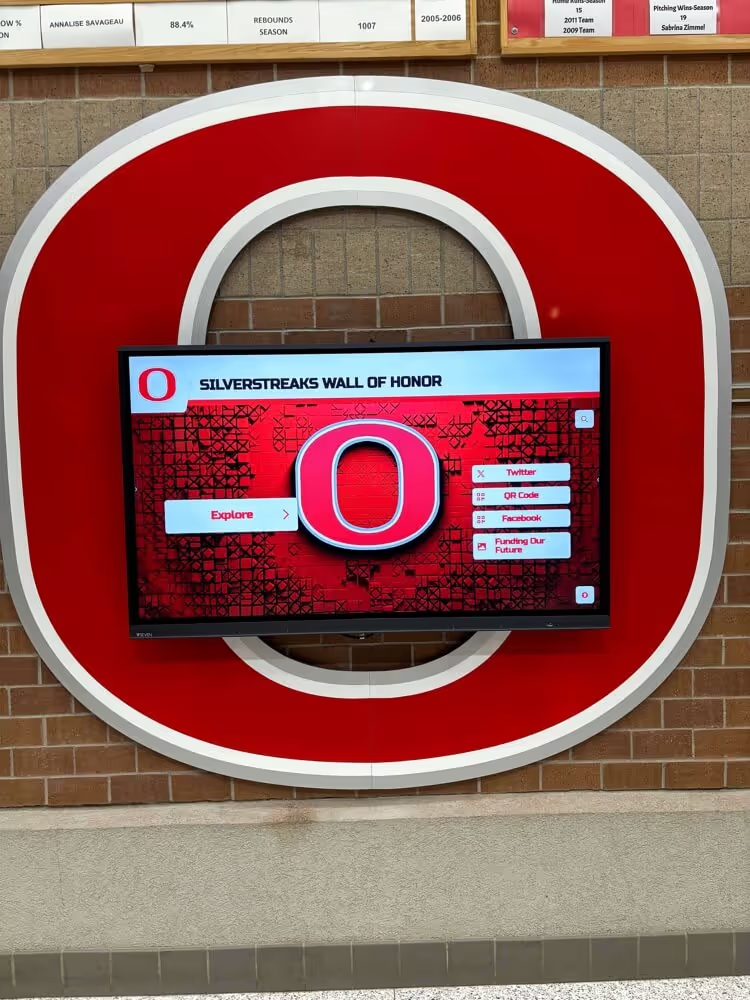
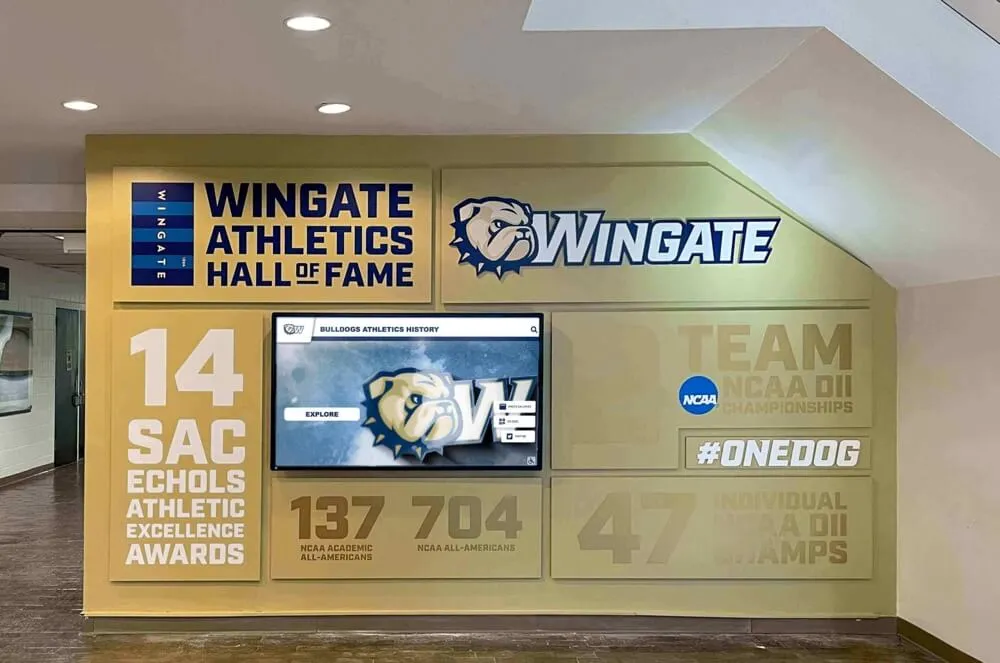
Athletic displays in prominent school locations inspire current students while demonstrating institutional commitment to celebrating competitive excellence
High School Program Recruiting
Successful programs benefit from enhanced recruiting through families choosing school districts based on hockey program quality, open enrollment students selecting schools with tournament traditions, talented youth players planning high school destination decisions early, transfer students seeking competitive opportunities and college exposure, and coaching stability as successful coaches remain with programs rather than seeking opportunities elsewhere.
These competitive advantages help successful programs maintain excellence across multiple generations while other programs struggle to break through competitive barriers.
Academic and Community Benefits
Hockey success creates positive effects extending into academic and community domains beyond athletics.
School Pride and Academic Engagement
Tournament participation strengthens overall school culture through enhanced student body pride and institutional identity, increased engagement in school activities and spirit events, positive academic spillover as achievement culture spreads, improved attendance and reduced disciplinary issues, and stronger alumni engagement and support for school initiatives.
Educators report that major athletic achievements create school-wide positive momentum benefiting academic programs, arts activities, and general school climate in ways that persist for years following tournament runs.
Community Identity and Social Capital
For smaller Minnesota towns, tournament qualification provides extraordinary community benefits through national and state visibility for town and school district, positive attention contrasting with typical rural community narrative decline, community unity and shared experience crossing typical social divisions, economic boost from tournament-related spending and attention, and lasting pride providing community identity anchors for decades.
Many Minnesota towns reference tournament appearances from decades past as defining community moments, demonstrating the lasting cultural significance these achievements hold in community consciousness and identity formation.
Preparing for Tournament Qualification: What Schools Should Know
For schools aspiring to tournament qualification or seeking to return after years away, understanding preparation requirements helps maximize chances while ensuring positive experiences if qualification occurs.
Competitive Program Development
Tournament-caliber programs require systematic development across multiple dimensions.
Coaching and Player Development Infrastructure
Competitive programs invest in quality coaching at all levels, comprehensive skills development programming, off-ice training and conditioning programs, mental preparation and competitive mindset development, and systematic athlete progression from youth through high school.
These infrastructures require multi-year commitment and investment but create sustainable competitive advantages rather than relying on occasional talented generations that create temporary success.
Scheduling and Competition Level
Tournament preparation requires appropriate regular season competition through challenging non-conference scheduling against quality opponents, participation in competitive tournaments and showcases, balanced schedule mixing guaranteed wins with growth challenges, strategic competition timing building toward section tournaments, and playoff intensity simulation in regular season games.
Weak regular season schedules might produce impressive records but leave teams unprepared for section tournament competition intensity and skill level required for advancement.
Community and Administrative Support
Tournament-caliber programs require support extending beyond coaching staff and players.
Facility and Resource Requirements
Competitive programs need adequate facilities and resources including quality practice ice access with sufficient hours, appropriate locker room and team facilities, video analysis technology for game review and preparation, strength and conditioning equipment and space, and transportation and equipment budgets supporting program needs.
Schools should recognize that tournament qualification requires institutional commitment to provide resources enabling players and coaches to compete with programs that benefit from such investments.
Booster Organization and Fundraising
Most competitive programs depend on booster support providing supplemental funding through equipment and uniform funding exceeding base budgets, travel expenses for tournament and showcase participation, facility improvements and locker room enhancements, fundraising initiatives supporting program operations, and post-season celebration and recognition events.
Sustainable booster organizations require cultivation and management ensuring broad community support rather than dependence on few major donors whose circumstances might change.
The Future of Minnesota’s State Hockey Tournament
As Minnesota hockey evolves and new generations embrace the sport, the state tournament continues adapting while preserving traditions that make it culturally significant.
Emerging Trends and Developments
Several trends are shaping the tournament’s future direction.
Expanding Participation and Diversity
Minnesota hockey continues broadening participation through girls’ hockey growth expanding tournament competitive depth, increased diversity in player demographics and participating communities, suburban expansion as hockey spreads beyond traditional urban and Iron Range centers, adapted hockey programs for athletes with disabilities, and youth development initiatives ensuring hockey access across socioeconomic barriers.
These developments ensure the tournament remains relevant and representative as Minnesota’s demographics and hockey culture evolve in coming decades.
Technology and Broadcast Evolution
Media coverage continues evolving through enhanced streaming options enabling worldwide viewership, social media integration providing behind-the-scenes access, statistical tracking and analysis expanding coverage depth, virtual reality experiences potentially enabling immersive viewing, and international attention as Minnesota hockey attracts global interest.
Technology ensures future generations experience tournaments differently than their predecessors while maintaining core competitive elements and traditions defining the event’s essential character.
Recognition and Commemoration Innovation
Schools increasingly adopt innovative approaches to preserving tournament memories through digital platforms providing unlimited archival capacity, interactive displays engaging students with program history, social media integration connecting alumni across generations, mobile apps enabling anywhere access to recognition content, and multimedia storytelling preserving tournament narratives comprehensively.
These innovations ensure that tournament achievements receive recognition commensurate with their significance within school and community culture while creating engagement opportunities impossible with traditional static displays.
Making Tournament Memories Last Forever
The Minnesota State Hockey Tournament represents more than championship competition—it’s a cultural phenomenon creating memories, building communities, and inspiring young athletes across the state. For the fortunate schools that qualify, tournament appearances become defining moments in athletic program history deserving permanent commemoration that honors participants while inspiring future generations.
As your school celebrates tournament qualification, championship victories, or reflects on historic achievements from years past, consider how you’re preserving these precious memories. Are current students aware of tournament traditions their school has experienced? Can community members explore complete rosters and achievement details from championship years? Do your recognition displays adequately honor the significance these achievements hold in school and community identity?
Modern recognition solutions ensure that tournament memories remain vibrant and accessible for generations to come, creating engaging experiences where students discover program history while understanding the excellence standards they’re pursuing.
Whether your program has a rich tournament tradition or dreams of that first qualification, the memories you create deserve recognition that matches their significance in your school’s athletic legacy and community pride.