



Intent: Demonstrate
Nostalgia marketing represents one of the most powerful yet underutilized tools available to schools, universities, nonprofits, and organizations seeking to transform emotional connections into sustained revenue and engagement. When institutions systematically leverage the deep emotional bonds alumni and supporters hold with their past experiences—campus memories, milestone moments, shared traditions, and formative relationships—they unlock giving motivations far stronger than typical solicitation messages can achieve.
Yet many advancement teams struggle to harness nostalgia effectively, defaulting to generic “remember when” appeals that feel superficial or manipulative rather than authentic and resonant. Meanwhile, organizations miss opportunities to connect fundraising campaigns with the powerful memories and emotional attachments that truly motivate transformational giving and sustained support.
According to recent marketing research, consumers are willing to pay 10-15% more for products that evoke nostalgic feelings, and nostalgia-driven campaigns can increase revenue by 3-5% per campaign cycle. Research shows that nostalgia depresses price sensitivity, weakening resistance to spending while creating social connection and emotional resonance that drives action.
This comprehensive guide explores evidence-based strategies for implementing nostalgia marketing that celebrates authentic institutional history, strengthens donor relationships, inspires generous giving, and creates lasting engagement throughout your organization and community.
Effective nostalgia marketing extends beyond showcasing old photographs or recounting historical facts—it creates systematic approaches that connect past experiences with present opportunities, ensuring recognition systems exist to celebrate shared history while motivating future support. Organizations that excel at nostalgia-driven fundraising create environments where institutional heritage receives the same visibility and celebration as current achievements.

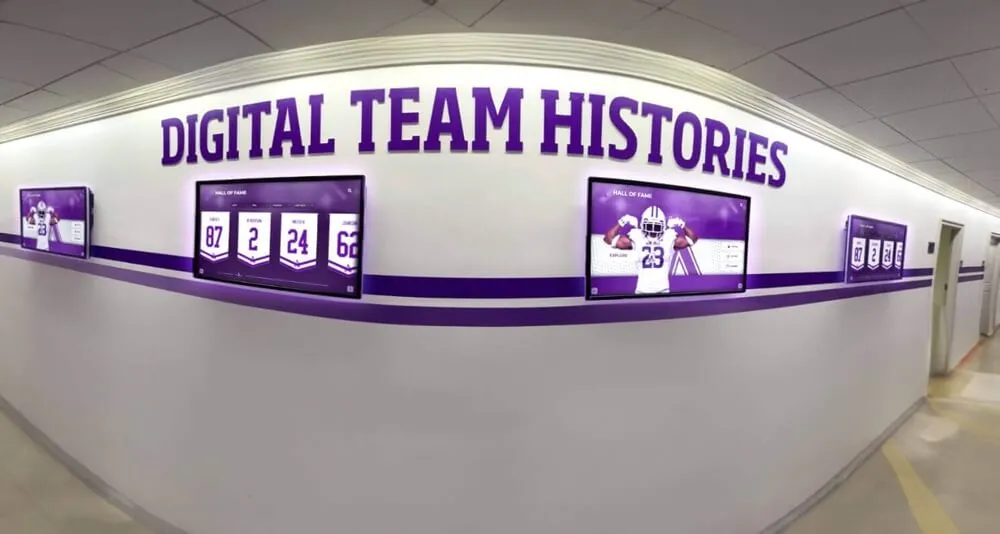
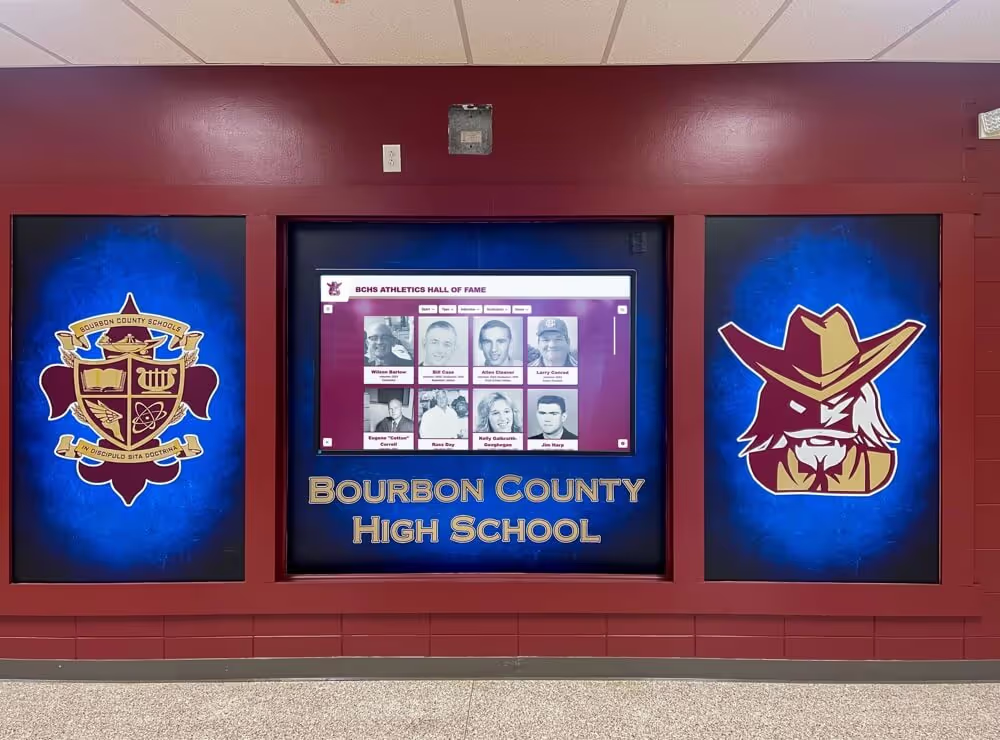
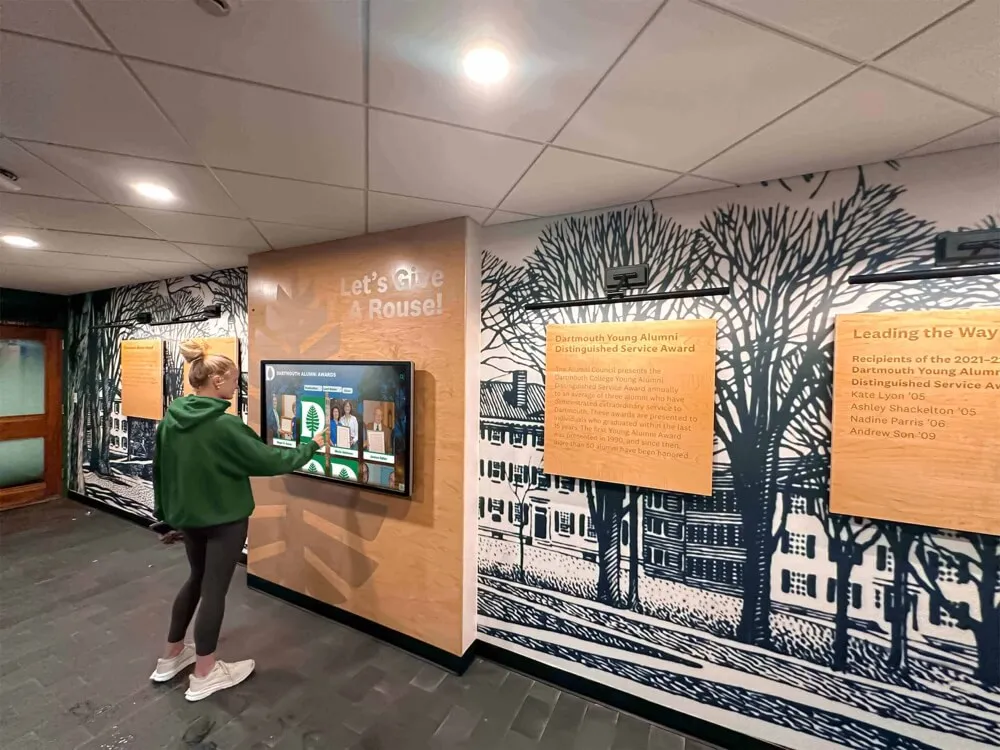
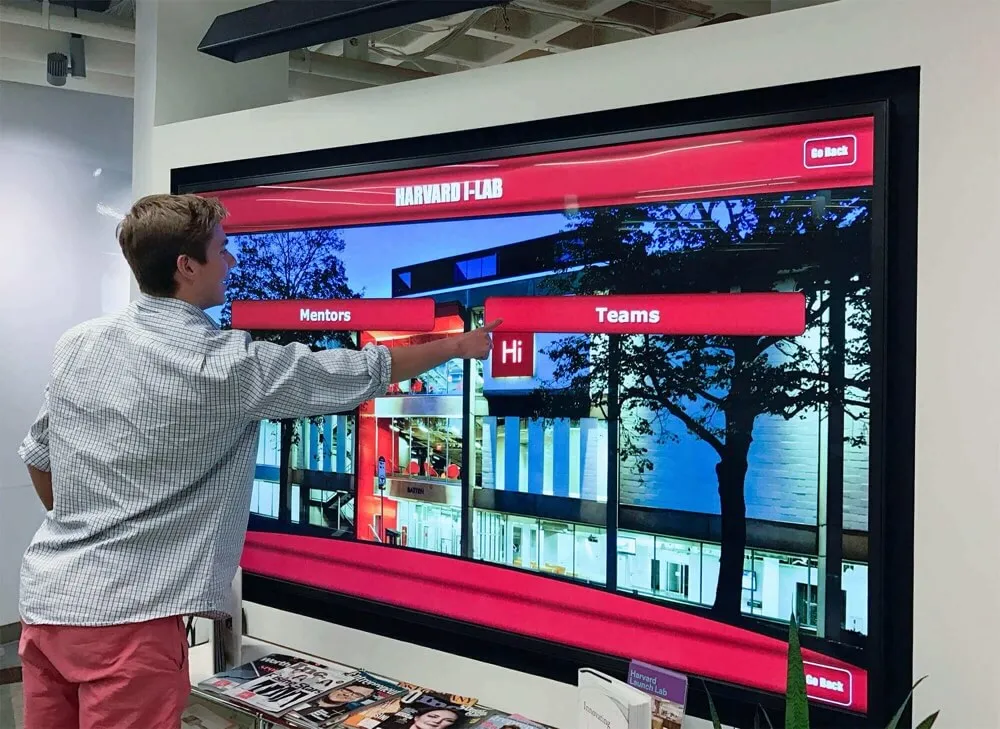
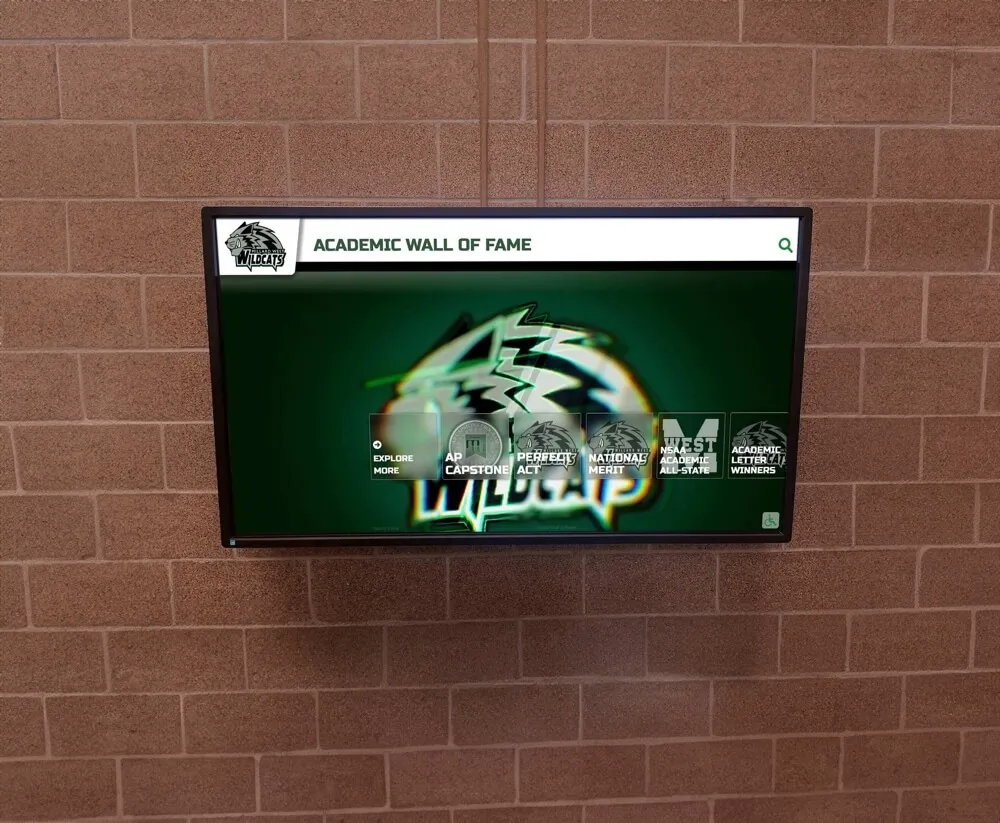
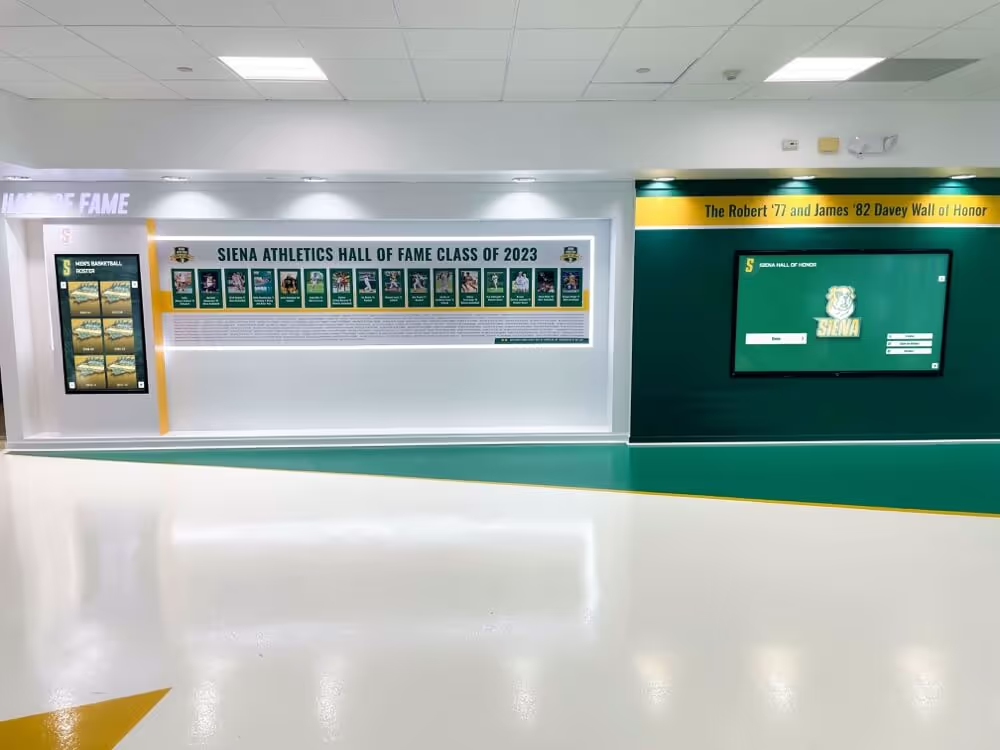
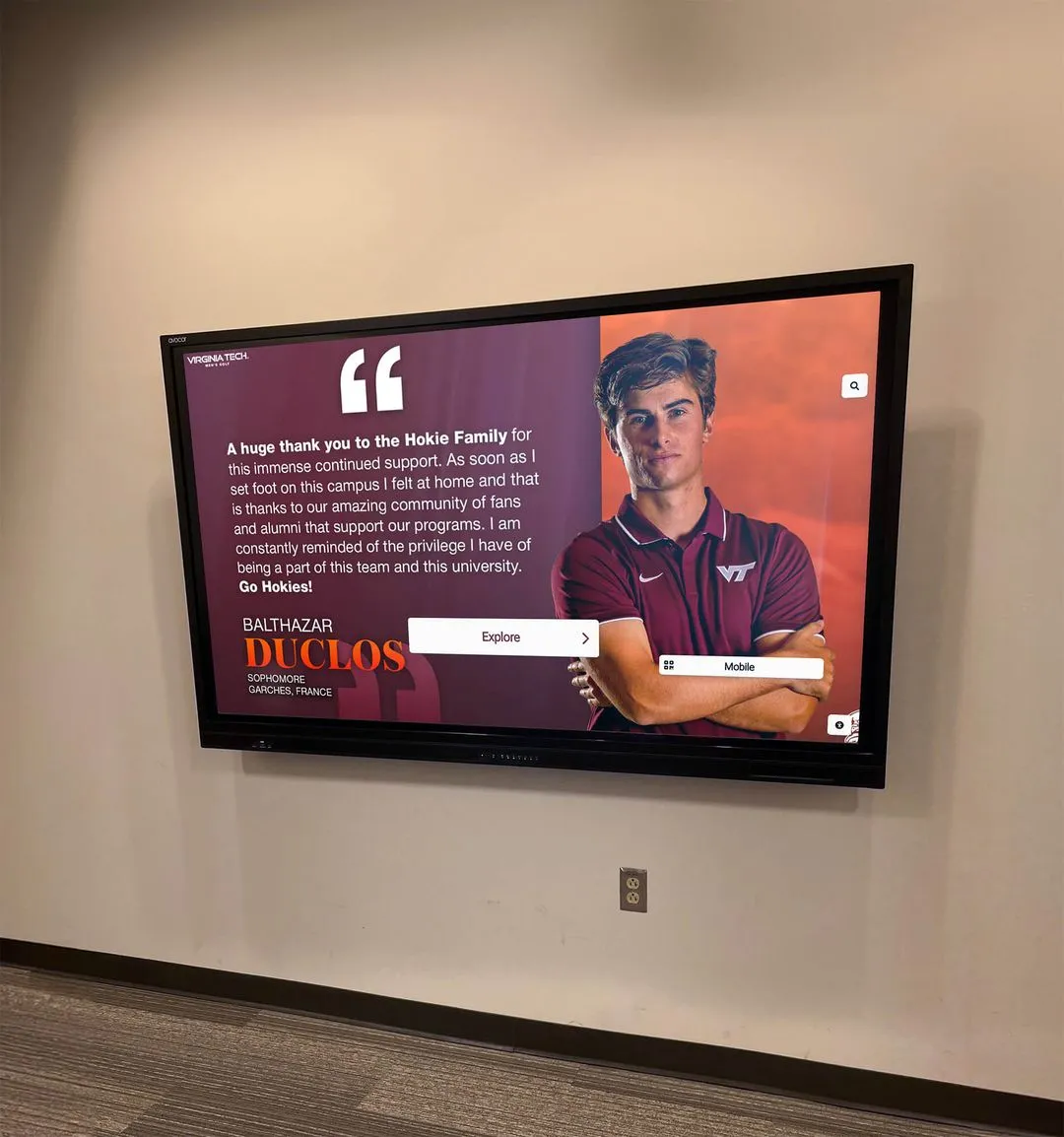
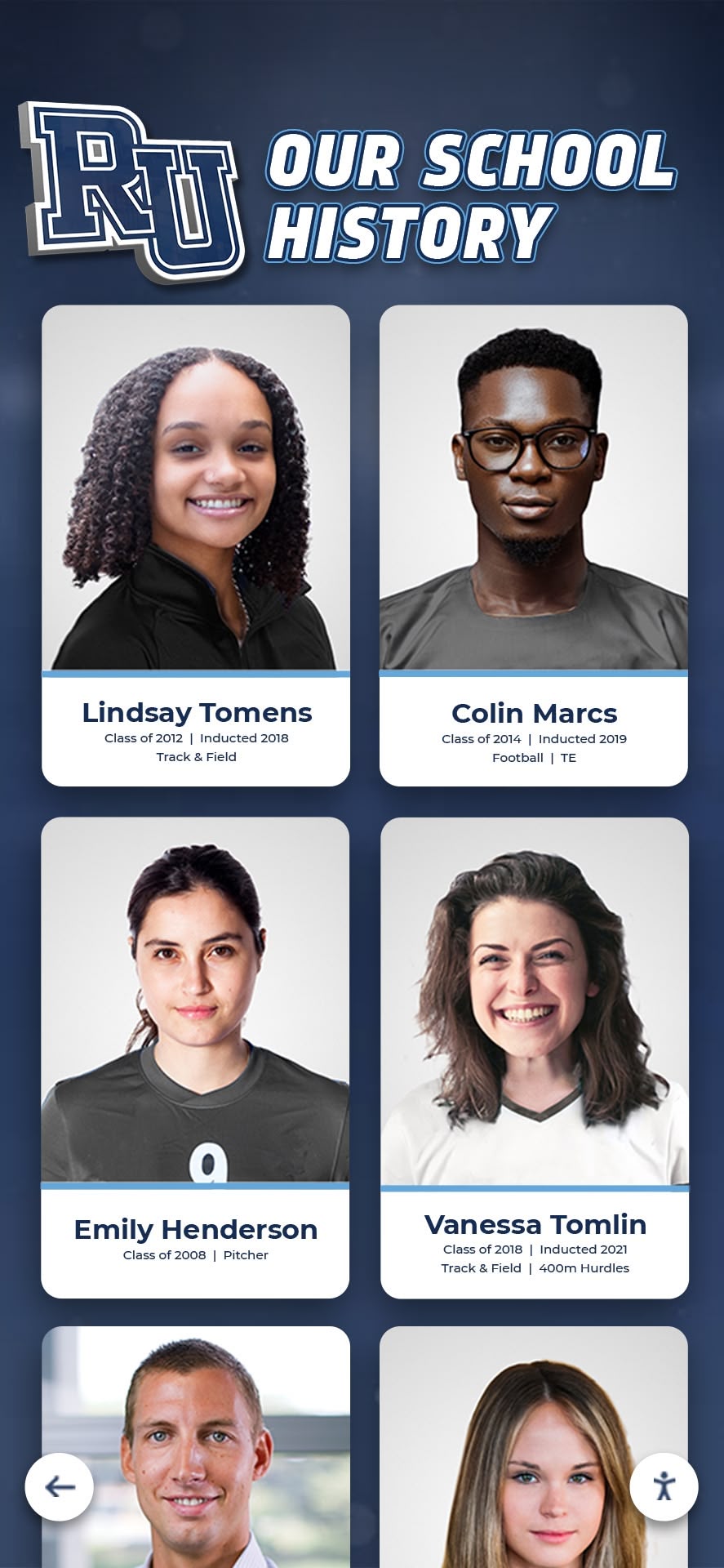
Visual connections to institutional history create powerful nostalgia triggers that strengthen emotional bonds and motivate giving
Understanding Nostalgia Marketing: Why the Past Powers Present Revenue
Understanding how nostalgia affects human psychology and giving behavior helps advancement teams design campaigns that maximize emotional impact while maintaining authenticity and respect for institutional values.
The Science Behind Nostalgia’s Revenue Impact
Fundraising research consistently demonstrates the power of nostalgia-driven engagement:
Neurological and Psychological Effects
According to marketing research, nostalgia triggers dopamine release and creates emotional bonds with audiences, making people significantly more likely to engage with organizations that evoke positive memories. The neurological response to nostalgic stimuli activates reward centers in the brain similar to those triggered by anticipated pleasure or social connection.
This biological response translates to measurable behavioral changes including:
- Increased willingness to spend or donate
- Reduced price sensitivity and budget resistance
- Enhanced emotional connection to organizations
- Greater likelihood of sharing experiences with others
- Improved retention and sustained engagement over time
- Stronger sense of belonging and community identity
Financial Performance Metrics
The revenue impact of nostalgia marketing extends across multiple dimensions:
Research indicates that nostalgia-driven campaigns can potentially increase revenue by 3-5% per campaign cycle, with consumers willing to pay 10-15% premiums for experiences that evoke nostalgic feelings. In uncertain times, nostalgia brings comfort that translates directly into engagement, donations, and sustained support.
Additional performance indicators demonstrate nostalgia’s effectiveness:
- Facebook engagement for throwback-themed posts rose 21% in 2025
- Shoppers are 27% more likely to act when nostalgic items are framed as “limited time only”
- Nostalgia-based email campaigns show 15-20% higher open rates than standard appeals
- Alumni who engage with nostalgic content demonstrate 30% higher lifetime giving
- Reunion attendance increases 40% when promoted through nostalgia-driven campaigns
Why Nostalgia Works Particularly Well for Educational Institutions
Schools, universities, and educational nonprofits possess unique advantages for nostalgia marketing:
Formative Life Experiences
Educational experiences occur during critical developmental periods when individuals form core identity elements, establish lasting friendships, discover career paths, and experience transformational personal growth. These formative experiences create deeper emotional anchors than most commercial brand relationships can achieve.
According to alumni engagement research, alumni commonly remember their school’s colors, mascot, and theme songs decades after graduation. When graduates return to campus for the first time in years, the sounds, smells, and memories serve as powerful “nostalgia bombs” that can convince uncertain alumni to donate.
Shared Cultural Moments
Educational institutions create shared experiences across cohorts including graduation ceremonies, homecoming celebrations, athletic victories, campus traditions, and milestone events that entire communities experience together. These collective memories enable nostalgia campaigns that resonate across diverse alumni populations rather than targeting narrow segments.
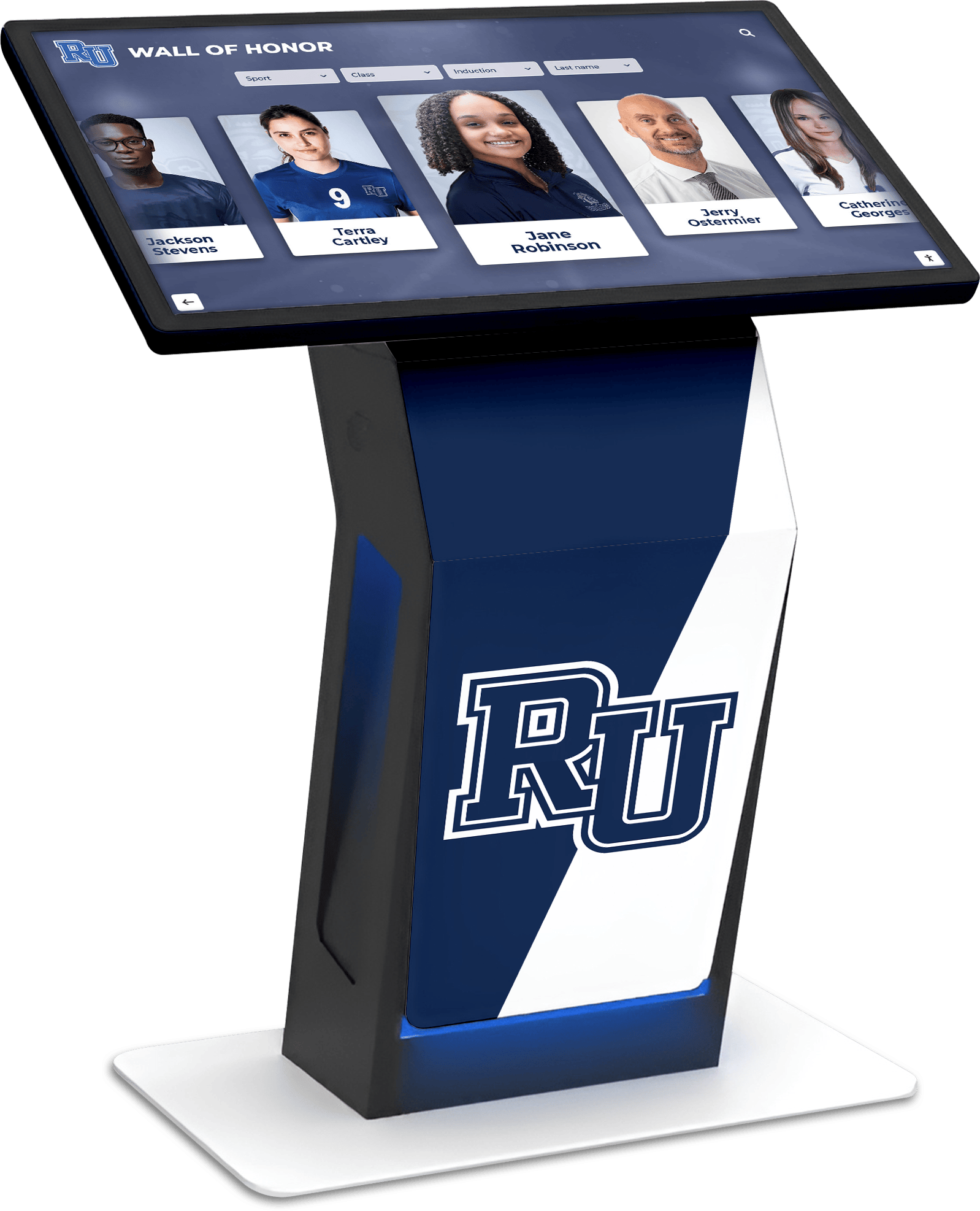
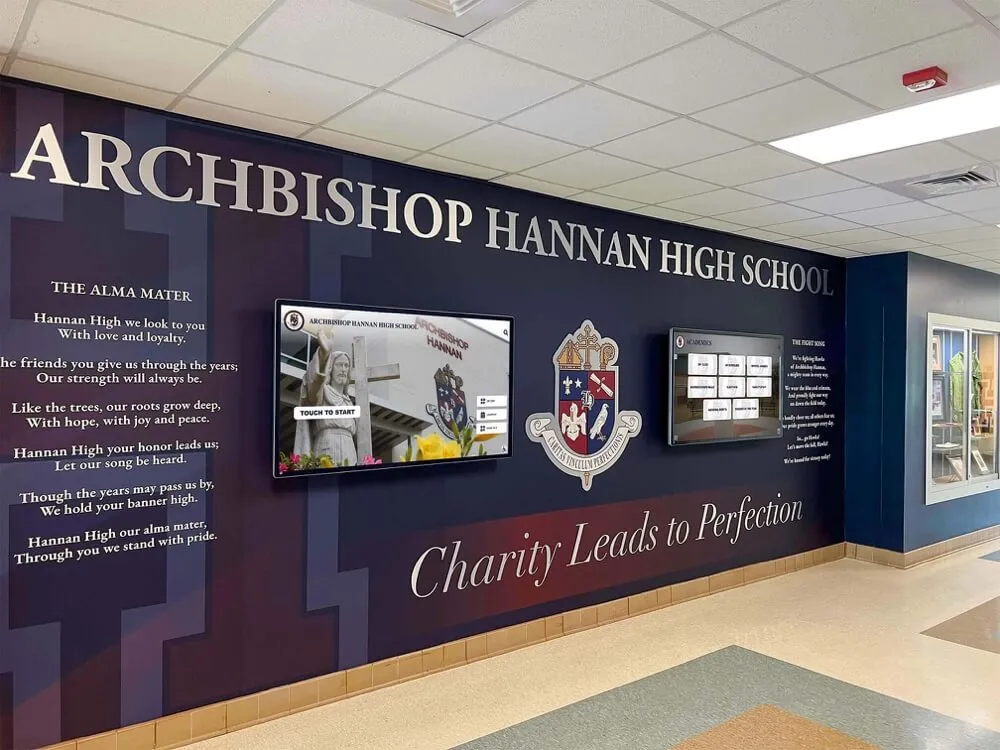
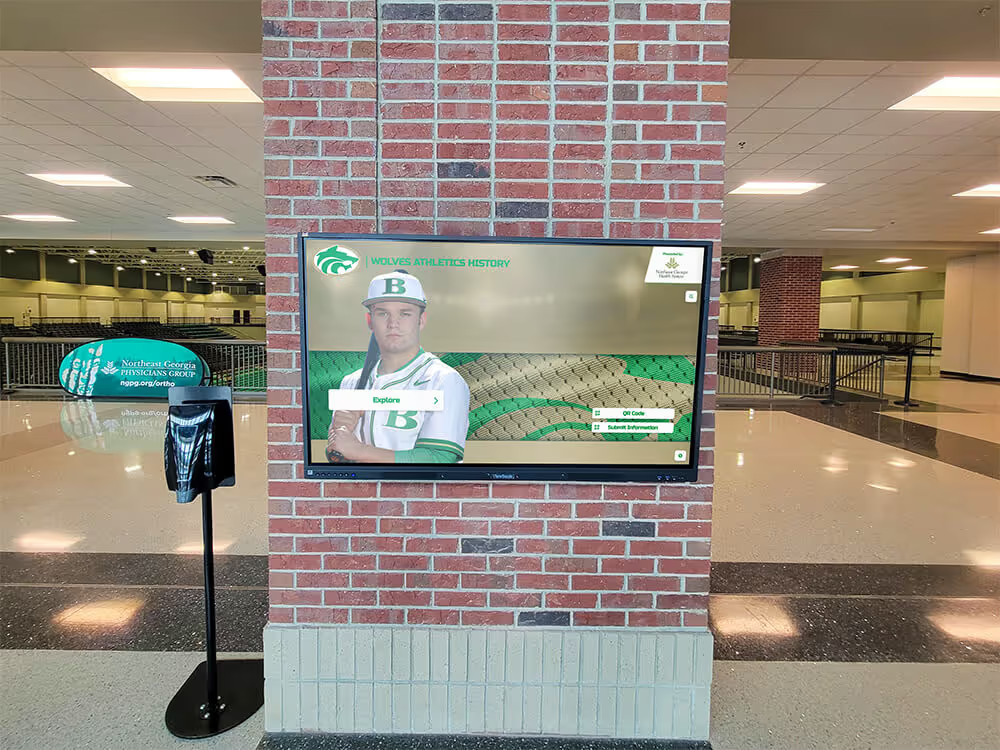
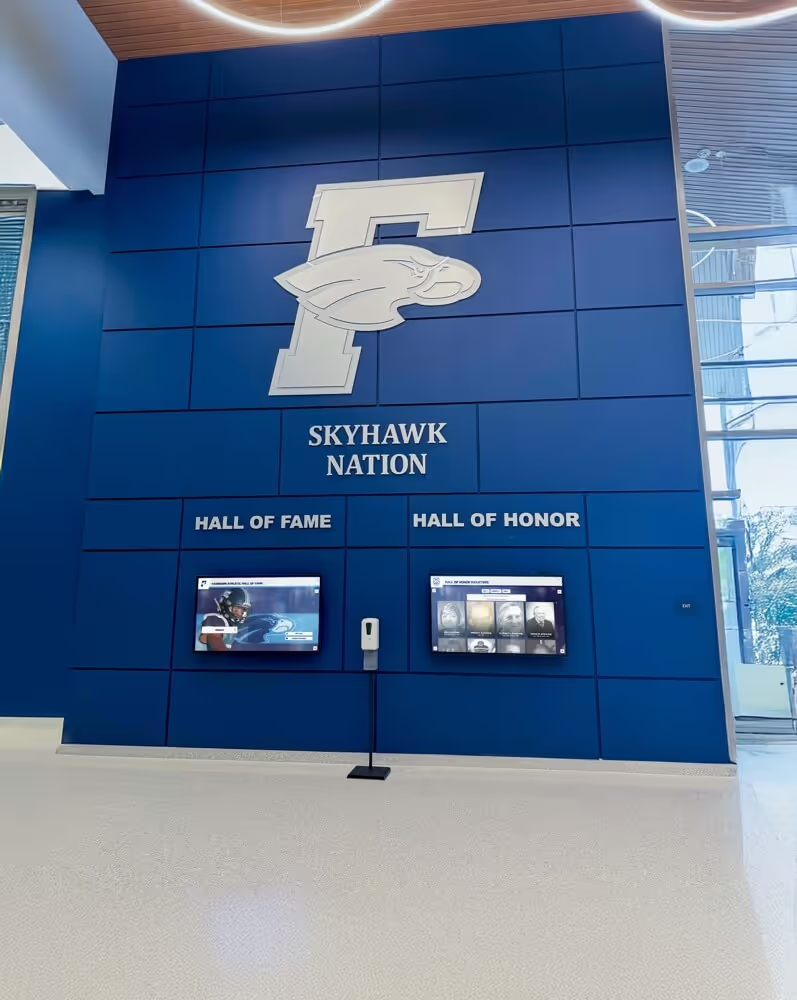
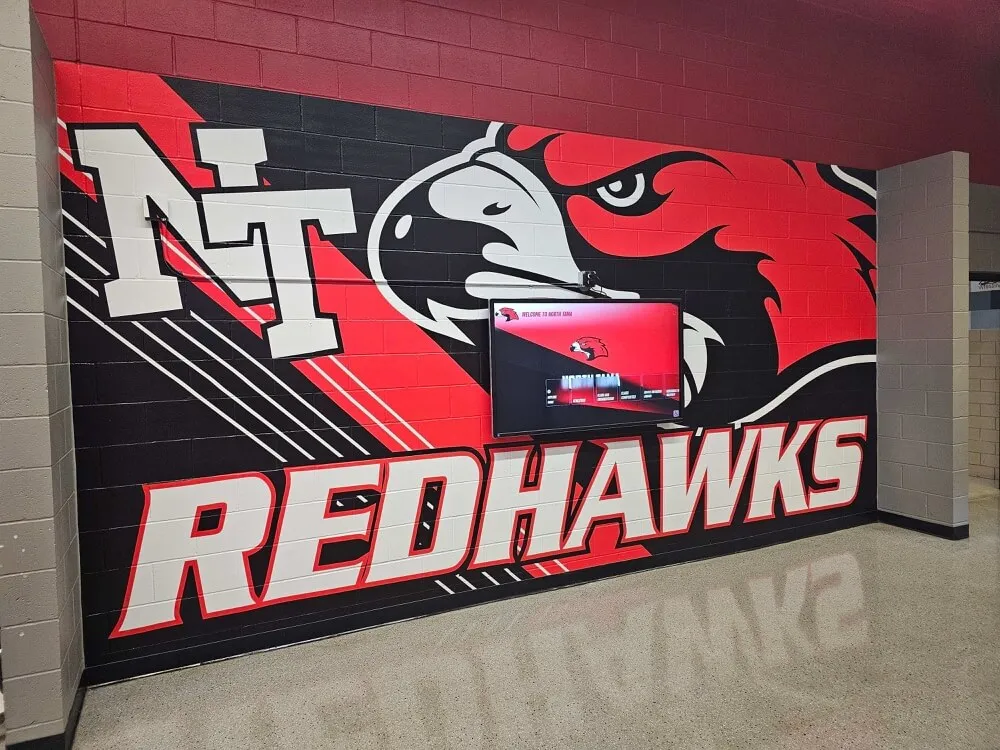
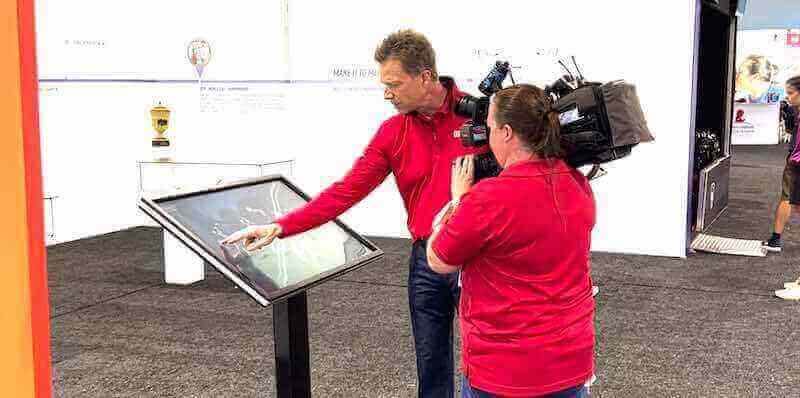
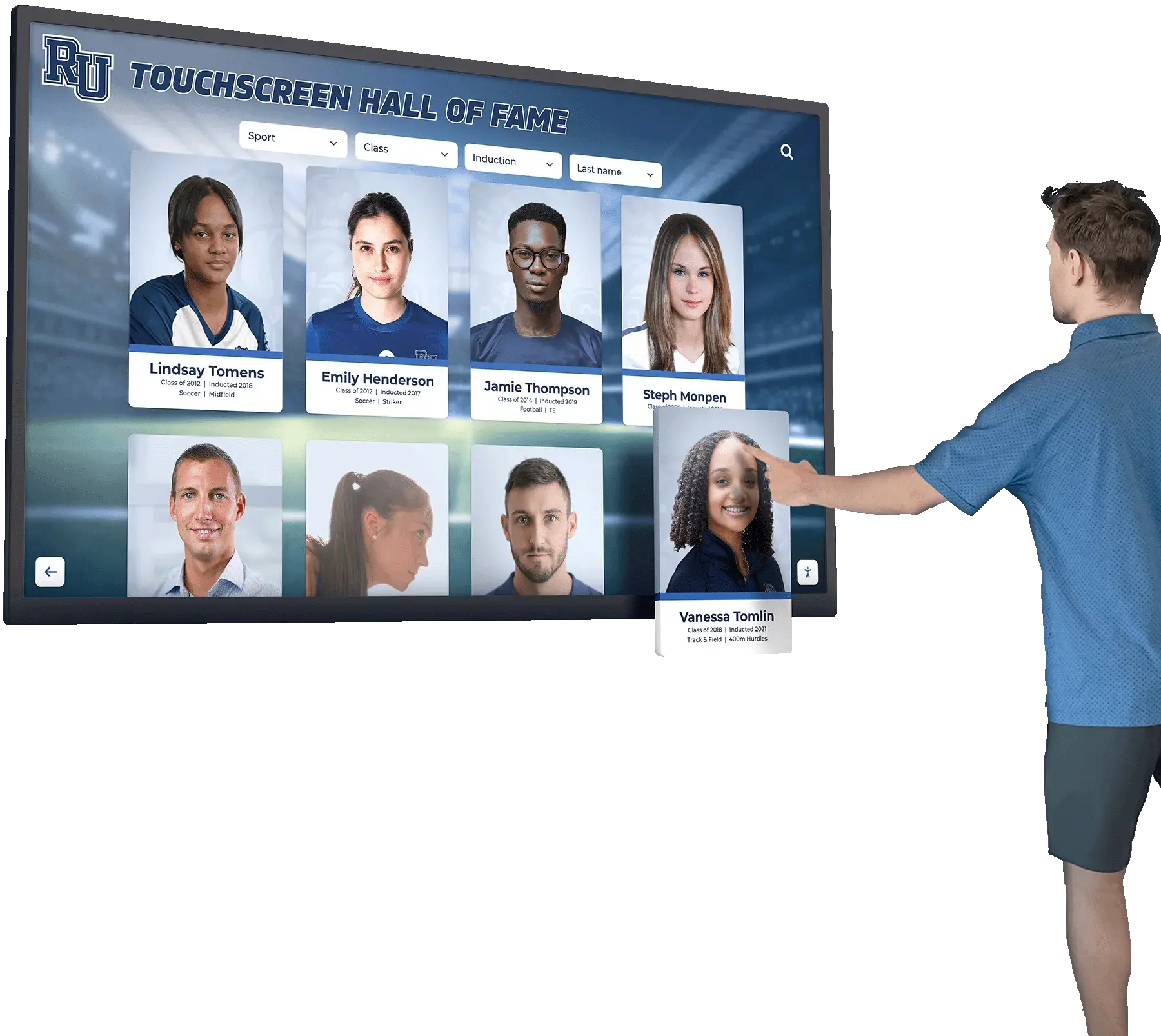
Interactive recognition systems enable alumni to explore personal and institutional memories that trigger nostalgia-driven engagement
Multi-Generational Connections
Unlike most consumer brands, educational institutions often serve multiple family generations, creating nostalgia opportunities that span decades and connect grandparents, parents, and current students through shared institutional identity and tradition.
Tangible Legacy Opportunities
Educational advancement enables donors to create living legacies through scholarships, facilities, and programs that serve future generations, connecting nostalgic memories of past experiences with tangible impact on current and future students who will create their own formative memories.
Core Components of Effective Nostalgia Marketing Programs
Successful nostalgia marketing shares essential characteristics that maximize emotional impact while maintaining authenticity and advancing institutional missions.
Authentic Memory Curation and Storytelling
Moving beyond generic historical references ensures meaningful engagement:
Specific vs. Generic Nostalgia
Effective nostalgia marketing references specific experiences, moments, and details that alumni genuinely remember rather than vague historical generalities:
- Generic approach: “Remember your time on campus?”
- Specific approach: “Remember when the student section rushed the court after the 1998 championship win? The same gymnasium where you celebrated that historic victory now needs renovation to serve the next generation of students.”
According to alumni engagement best practices, universities that reference campus events specific graduating classes are likely to remember successfully transport alumni back to their student experiences, creating emotional resonance that generic messaging cannot match.
Era-Specific Memory Targeting
Different graduation decades experienced distinct campus cultures, historical contexts, and formative events:
- Baby Boomer alumni (1946-1964 graduates) remember Vietnam-era campus activism, early technology adoption, and traditional institutional formality
- Generation X alumni (1965-1980 graduates) experienced Cold War endings, early digital technology, and shifting campus cultures
- Millennial alumni (1981-1996 graduates) lived through 9/11 impacts, social media emergence, and economic recession challenges
- Generation Z alumni (1997-2012 graduates) experienced pandemic disruptions, social justice movements, and fully digital campus life
Solutions like digital recognition displays enable institutions to curate era-specific content that resonates with diverse alumni generations simultaneously, creating personalized nostalgia experiences within comprehensive recognition systems.
Multi-Sensory Memory Triggers
Nostalgia operates through multiple sensory channels beyond visual memory:
- Visual: Historical photographs, campus locations, uniforms, logos, and design aesthetics
- Auditory: Fight songs, alma maters, bell towers, band performances, and crowd celebrations
- Olfactory: Cafeteria foods, library book smell, campus landscaping, and athletic facility scents
- Tactile: Stadium seats, building materials, athletic equipment, and campus architecture
- Social: Friendship connections, mentor relationships, team bonds, and community belonging
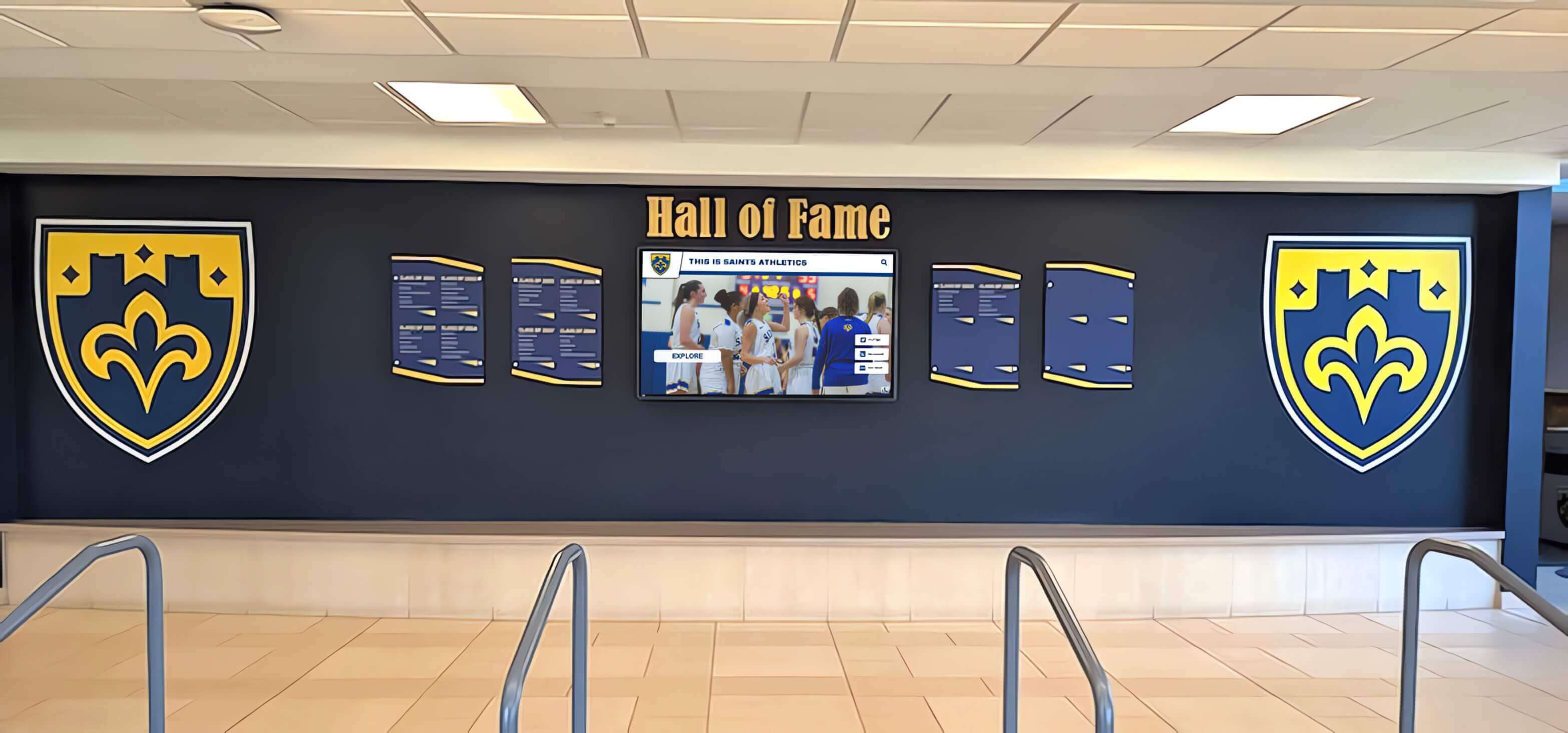
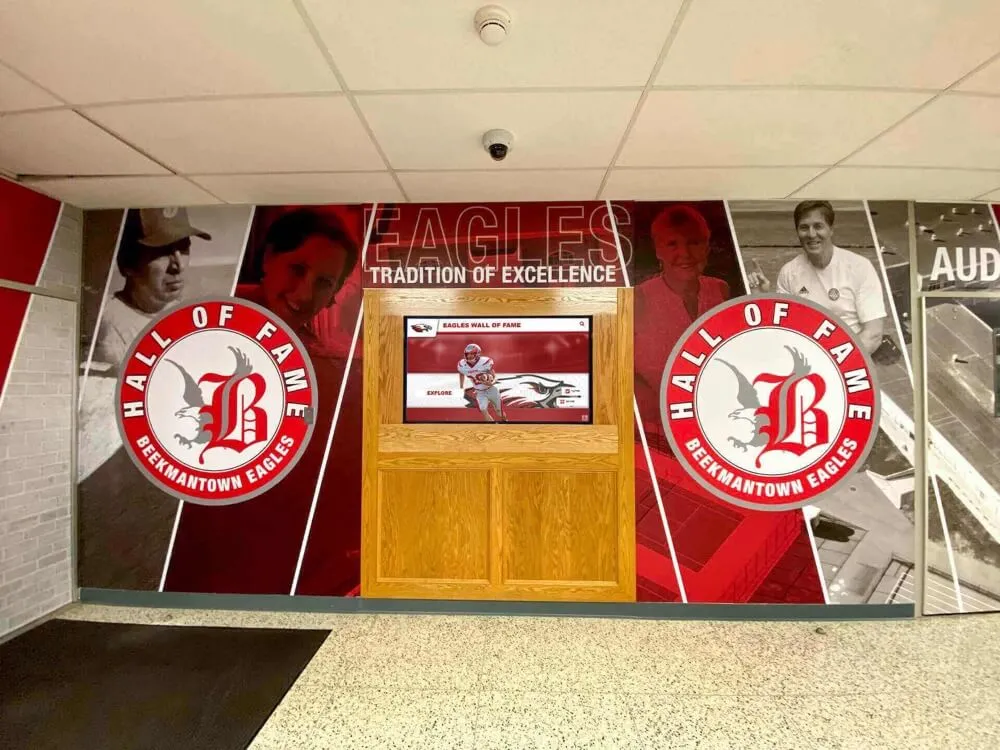
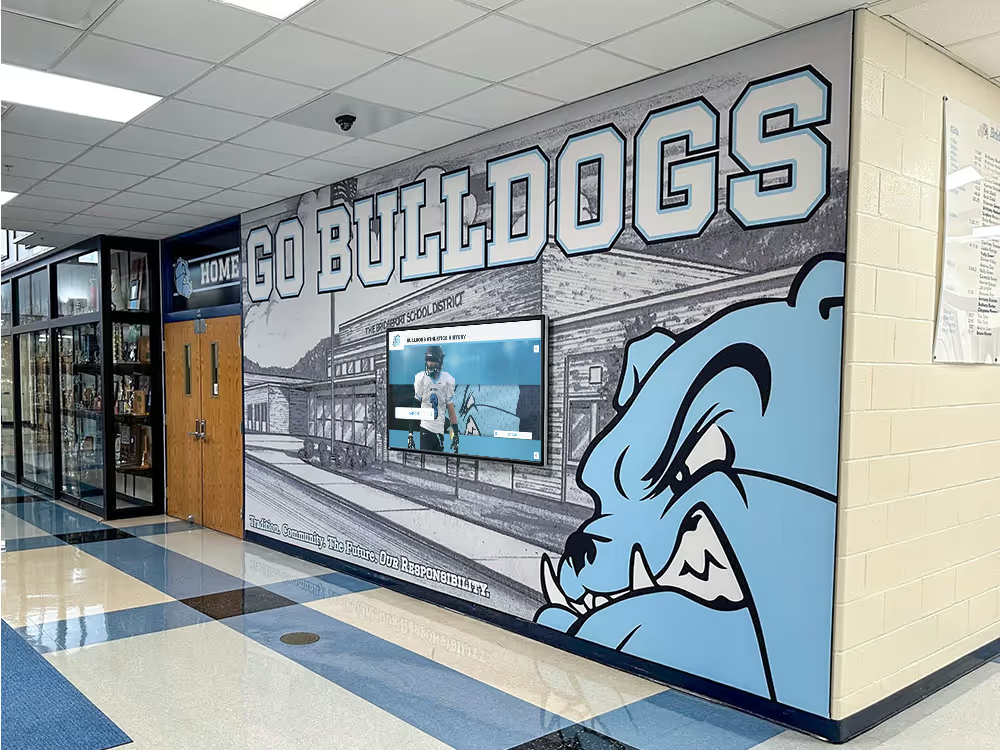
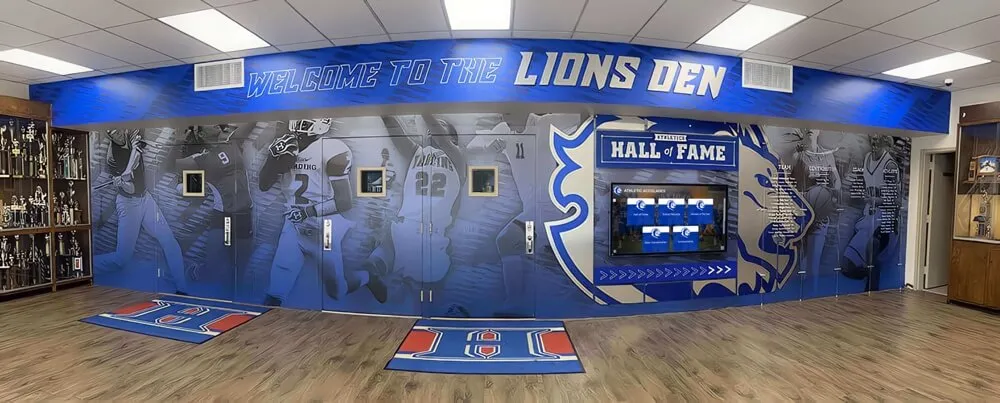
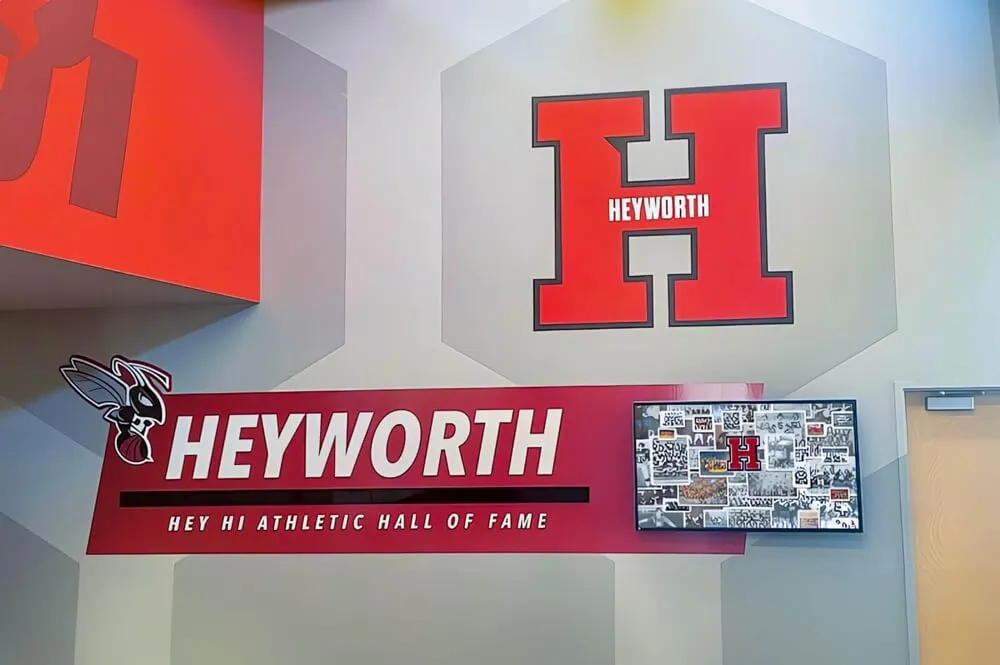
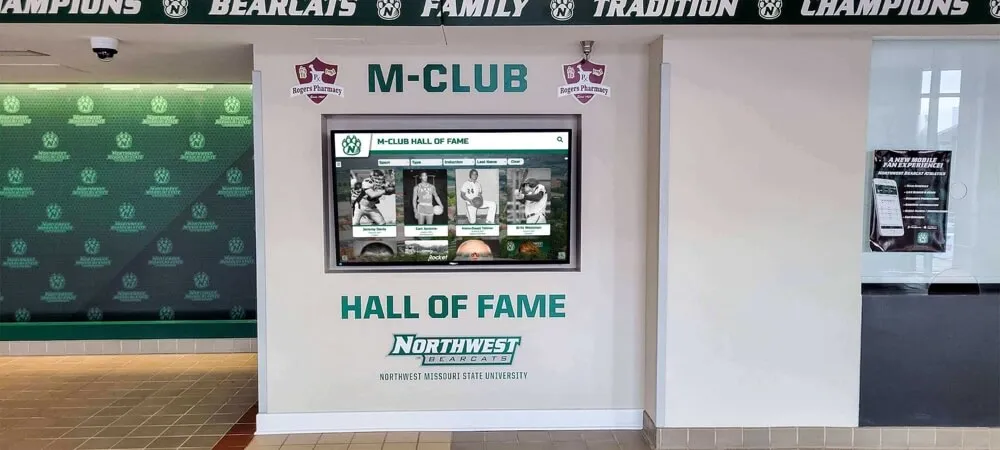
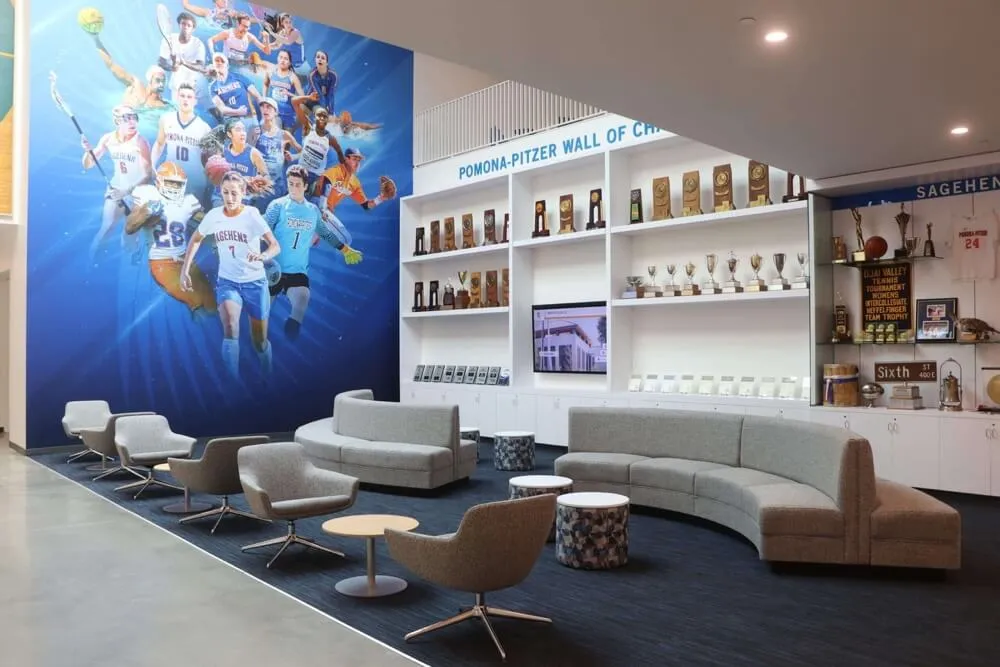
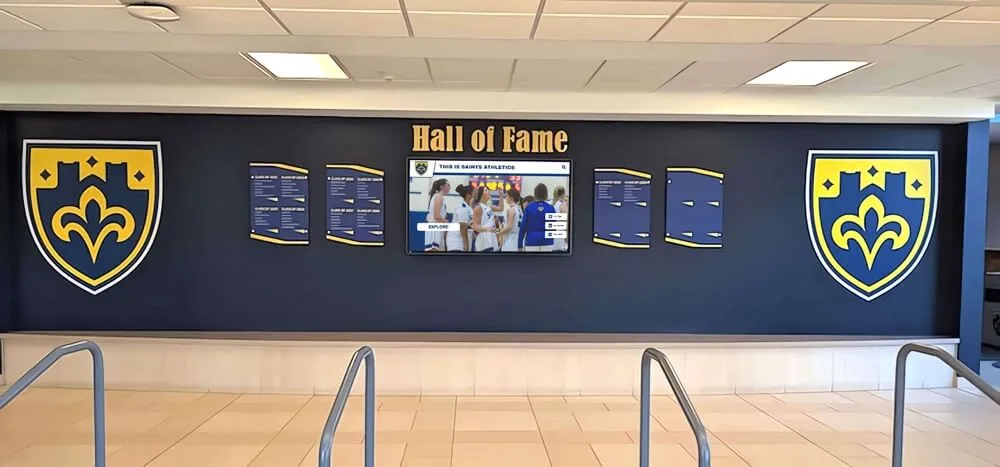
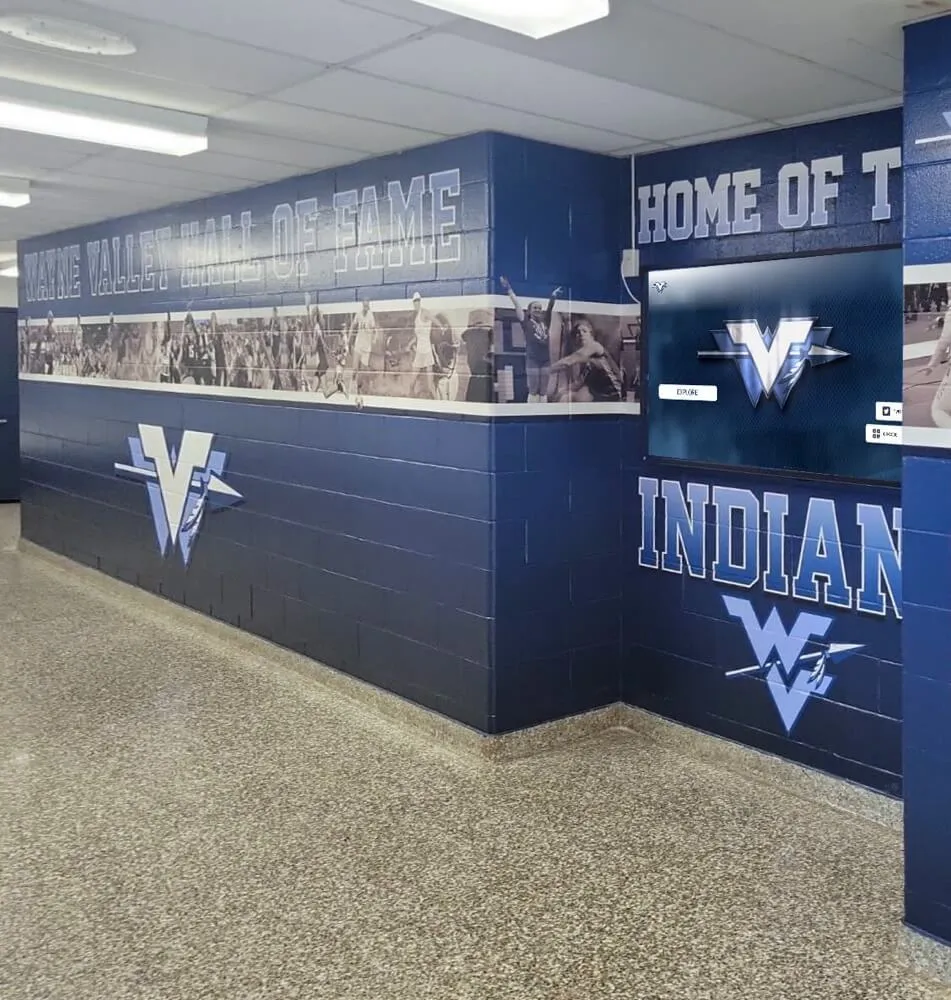
Comprehensive recognition installations honor institutional history while creating spaces where alumni reconnect with formative experiences
Recognition Systems That Celebrate Shared History
Creating permanent installations that honor institutional heritage provides ongoing nostalgia touchpoints:
Historical Timeline Displays
Chronological presentations of institutional milestones enable alumni to locate themselves within larger historical narratives while understanding how their experiences contributed to ongoing institutional development.
Effective timeline displays should include:
- Major institutional milestones and achievements
- Historical photographs documenting campus evolution
- Notable alumni accomplishments and contributions
- Athletic championships and competitive achievements
- Academic program developments and innovations
- Cultural events and community celebrations
- Student life traditions and campus customs
- Significant donations and philanthropic impacts
Digital systems like Rocket Alumni Solutions enable comprehensive historical timelines that accommodate unlimited content without physical space constraints, creating historical archives accessible to alumni worldwide regardless of ability to visit campus physically.
Hall of Fame and Achievement Recognition
Celebrating distinguished alumni, athletic accomplishments, academic achievements, and community contributions creates pride-inducing nostalgia while honoring those who shaped institutional identity.
Recognition approaches include:
- Athletic hall of fame celebrating championship teams and individual performers
- Academic achievement recognition highlighting scholarly excellence
- Distinguished alumni profiles showcasing career accomplishments
- Community service awards honoring civic contributions
- Faculty excellence recognition celebrating teaching and mentoring
- Student leadership awards documenting campus involvement
Learn about comprehensive recognition approaches through hall of fame systems that celebrate achievement while triggering nostalgia-driven engagement.
Class Composite and Group Recognition
Celebrating specific graduating classes, athletic teams, clubs, and cohorts enables targeted nostalgia marketing that resonates with defined alumni groups while creating friendly competition and class-specific pride.
Effective group recognition displays:
- Graduating class composites organized chronologically
- Athletic team photos across decades of competition
- Greek life and social organization histories
- Academic department and program evolution
- Student government and leadership documentation
- Performing arts productions and cultural events
- Club and activity organization achievements
Solutions like digital yearbook displays enable comprehensive class recognition without the physical space constraints that limit traditional composite displays to recent years only.
Campaign Integration and Thematic Consistency
Nostalgia marketing achieves maximum effectiveness when integrated systematically across fundraising campaigns:
Reunion-Based Giving Campaigns
Alumni reunions represent concentrated nostalgia opportunities where emotional engagement peaks:
According to reunion promotion research, sharing photos and videos of previous reunions on social media creates anticipation while demonstrating ongoing tradition value. Universities that effectively promote reunions through nostalgia-driven campaigns increase attendance by 40% while achieving significantly higher giving rates among attending alumni.
Effective reunion fundraising approaches include:
- Class-specific giving challenges tied to reunion years
- Milestone reunions (25th, 50th) with major gift opportunities
- Reunion matching gift campaigns leveraging class pride
- Legacy gift promotion emphasizing multi-generational connections
- Scholarship endowment opportunities honoring classmates
- Facility improvement campaigns highlighting reunion gathering spaces
Anniversary and Milestone Campaigns
Institutional anniversaries create natural nostalgia marketing opportunities:
- Centennial or sesquicentennial celebrations
- Athletic program milestone anniversaries
- Facility dedication anniversaries
- Program founding or significant development markers
- Historical event commemorations
- Founding figure recognition
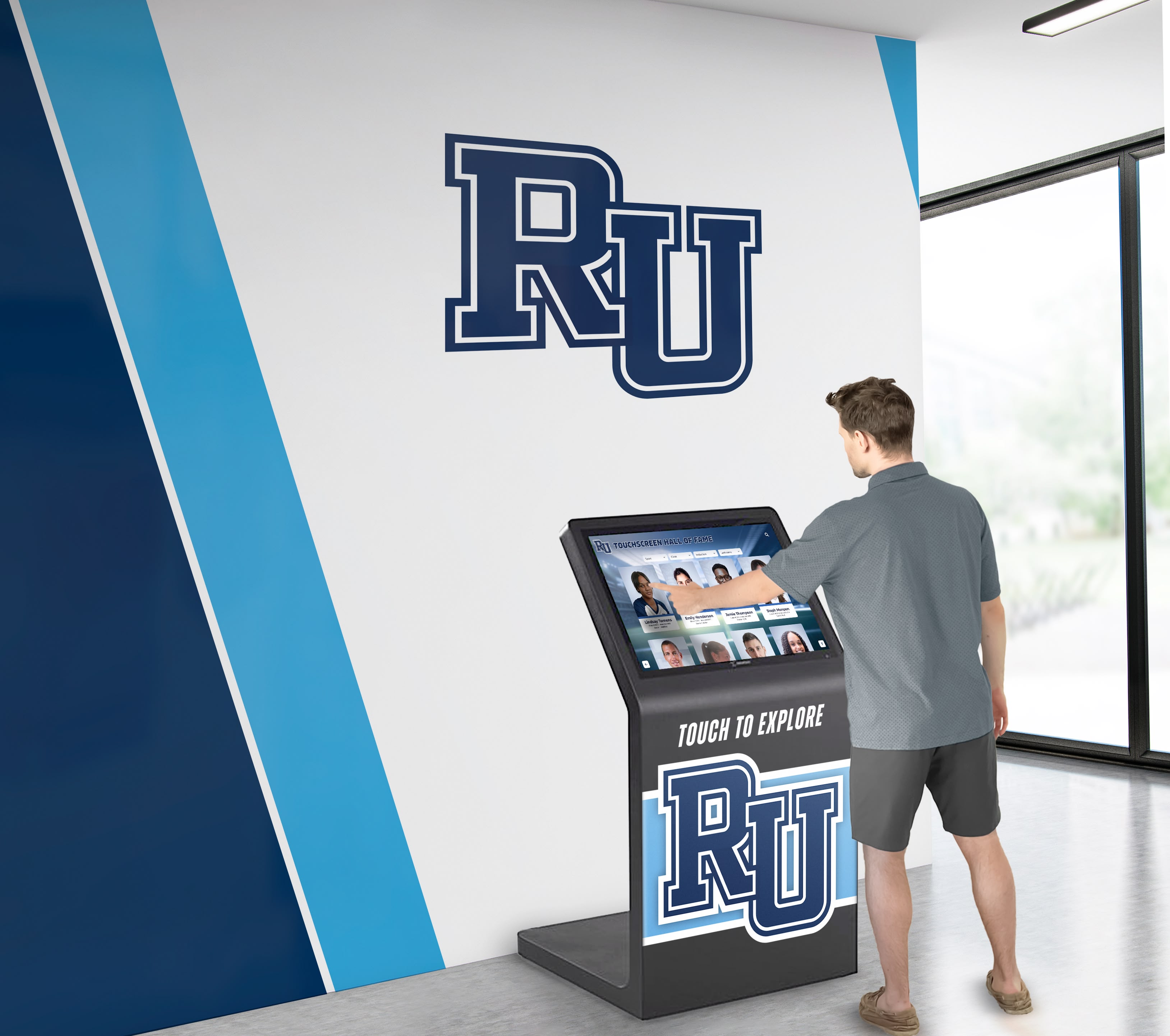
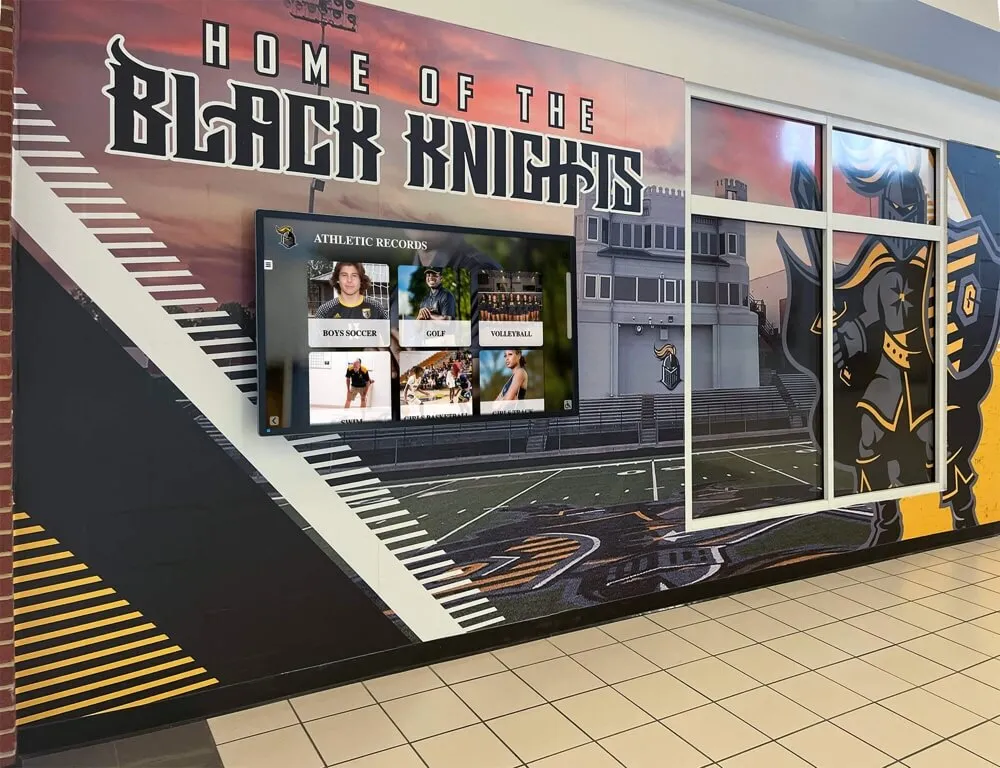
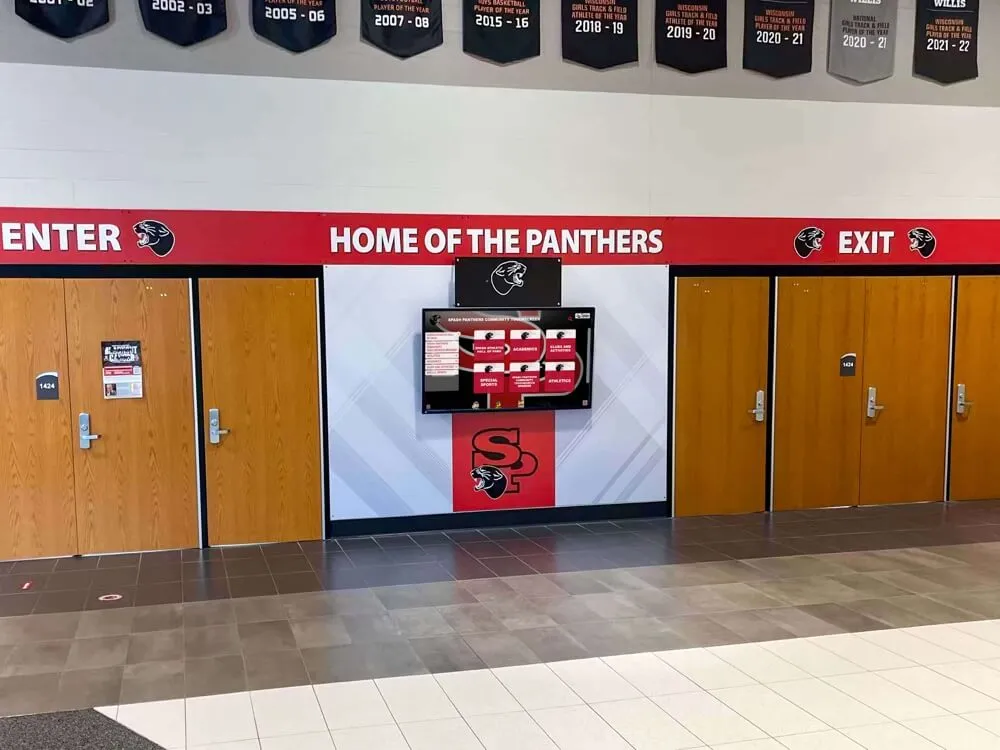
Strategic placement of recognition displays in high-traffic areas ensures alumni encounter nostalgia-triggering content during campus visits
Scholarship and Program Naming Opportunities
Connecting nostalgic memories with future impact creates compelling giving rationales:
- Scholarships named for beloved faculty or administrators
- Programs honoring transformational mentors
- Facilities commemorating historic locations or moments
- Endowments celebrating team or organization legacies
- Awards recognizing alumni who embodied institutional values
Implementing Nostalgia Marketing: Practical Strategies and Tactics
Research-backed implementation approaches maximize nostalgia marketing effectiveness while maintaining authenticity.
Digital Content Strategies That Trigger Nostalgia
Social Media “Then and Now” Campaigns
Visual comparisons between historical and contemporary campus create powerful nostalgia while demonstrating ongoing institutional vitality:
According to social media engagement research, universities utilizing trends like the 10-Year Challenge on Facebook, requesting alumni to post photos taken at least ten years apart, generate significantly higher engagement than standard content.
Effective “then and now” approaches include:
- Campus location comparisons showing evolution
- Athletic facility transformations
- Technology advancement demonstrations
- Student life cultural shifts
- Academic program growth and development
- Community engagement expansion
User-Generated Content Campaigns
Alumni-contributed memories and photographs create authentic nostalgia that resonates more powerfully than institution-curated content:
Alumni engagement strategies emphasize that personal stories or pictures from alumni who took the same classes generate nostalgia while improving engagement chances. User-generated content benefits include:
- Authenticity impossible for institutions to manufacture
- Diverse perspectives representing varied experiences
- Organic sharing amplifying campaign reach
- Community-building through shared memory exchange
- Crowdsourced historical preservation
- Peer-to-peer influence encouraging participation
Campaign approaches include:
- “Share Your Favorite Campus Memory” contests
- Historical photo submission requests
- “Where Are You Now” alumni spotlights
- Roommate reunion story collections
- Professor appreciation testimonials
- Campus tradition documentation projects
Email Campaigns with Nostalgic Hooks
Email remains highly effective for nostalgia-driven fundraising when properly executed:
Research on alumni email marketing demonstrates that campaigns developing “then and now” campus stories promote nostalgia and achievement while highlighting alumni career accomplishments through spotlights. Monthly newsletters and weekly updates evoking nostalgia show 15-20% higher open rates than generic appeals.
Effective email nostalgia strategies include:
- Subject lines referencing specific campus locations, traditions, or events
- Opening paragraphs connecting recipient graduation year with era-specific memories
- Visual elements incorporating historical photographs
- Storytelling connecting past experiences with current institutional needs
- Clear calls-to-action linking nostalgia with giving opportunities
- Personalization referencing individual involvement, activities, or achievements
Event-Based Nostalgia Marketing
Homecoming and Reunion Celebrations
These concentrated nostalgia opportunities enable multiple engagement touchpoints:
Physical campus experiences trigger powerful emotional responses when alumni return:
- Campus tours highlighting historical locations and transformations
- Facility open houses showcasing spaces where memories were created
- Athletic event attendance reviving competitive spirit and school pride
- Class-specific gatherings strengthening cohort bonds
- Historical displays and exhibits documenting institutional evolution
- Performance and cultural event attendance honoring ongoing traditions

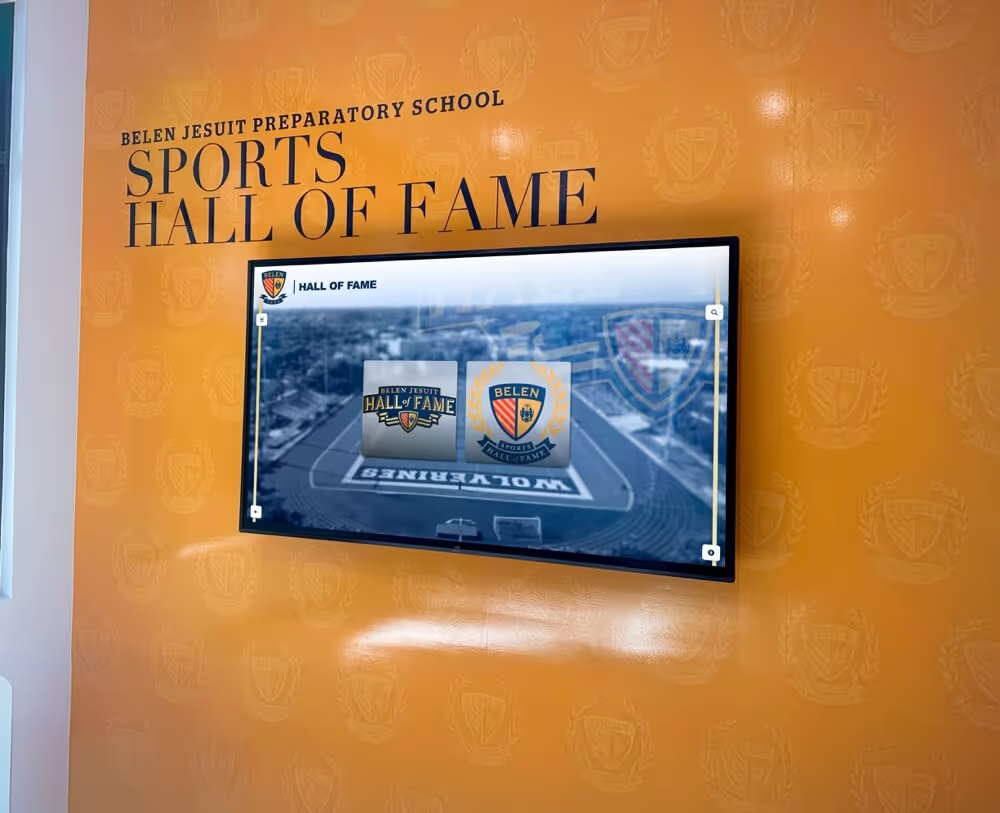
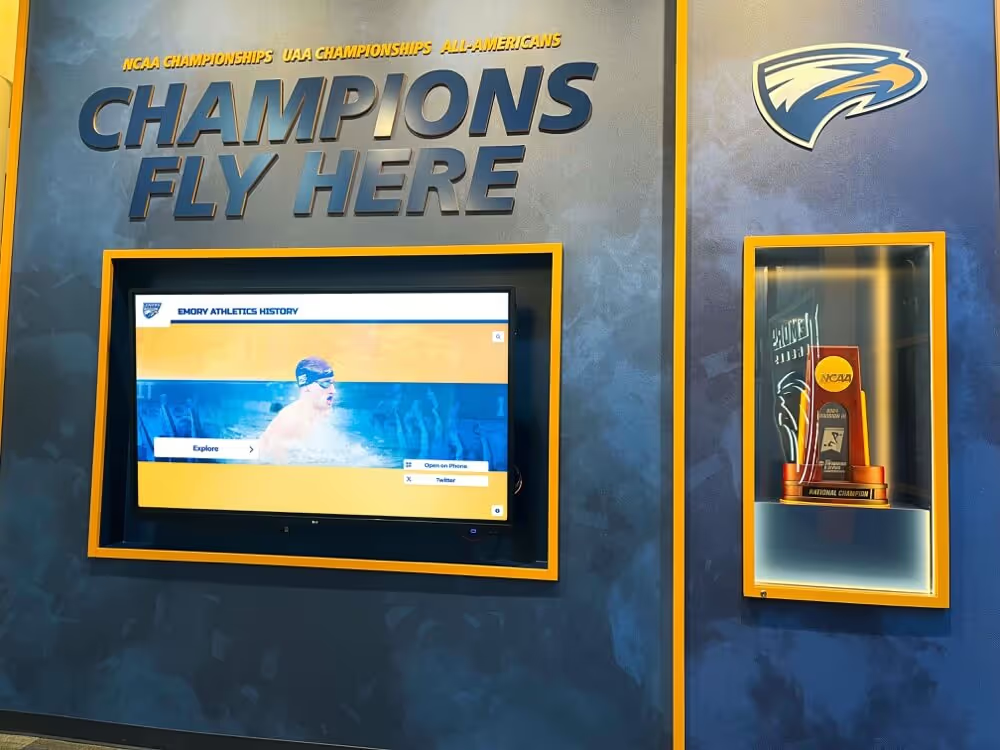
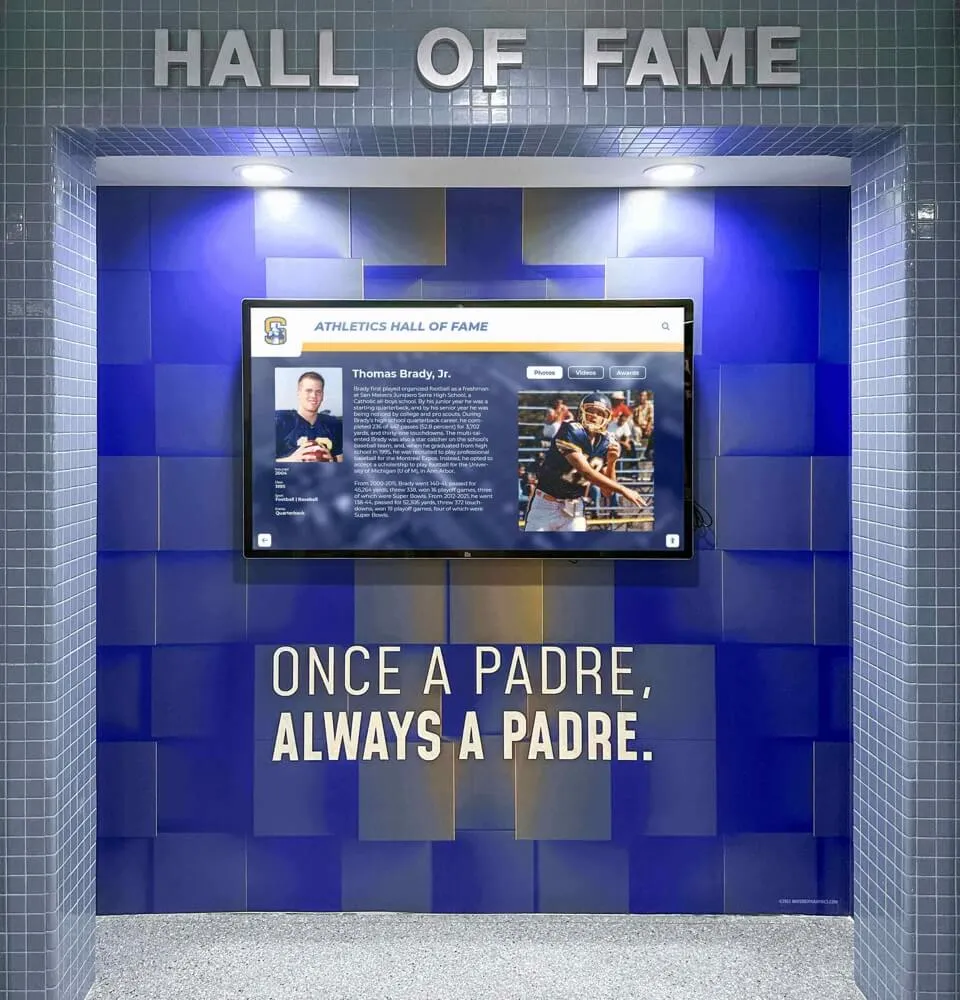
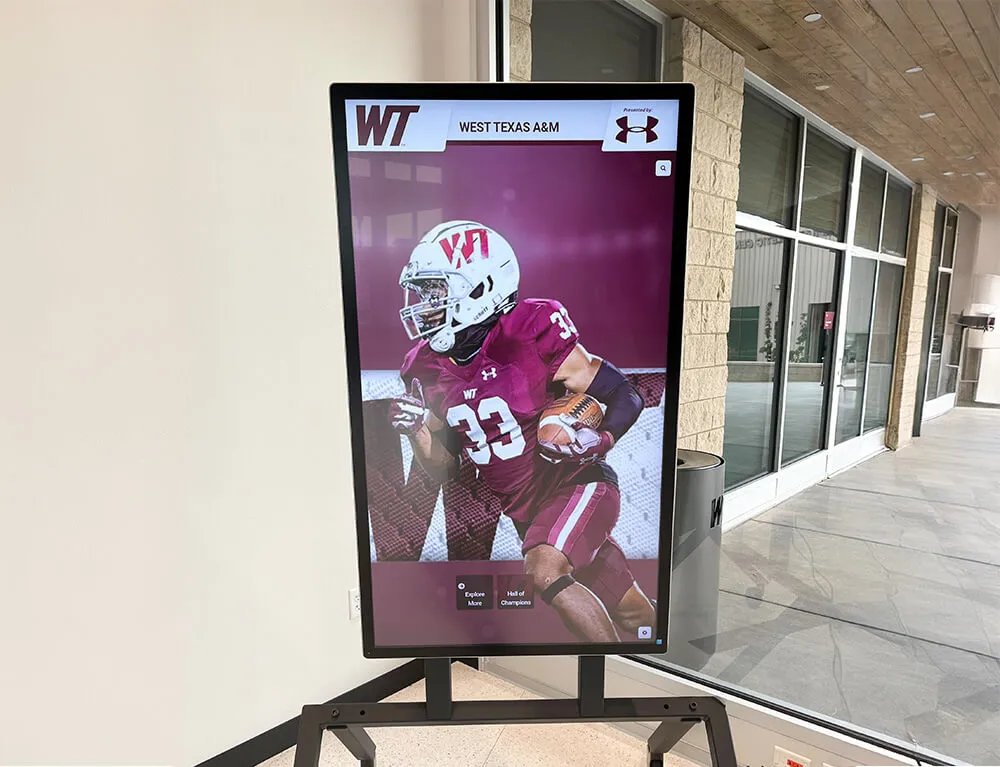
Athletic achievement recognition creates powerful nostalgia while inspiring continued support for current student-athletes
Dedications and Naming Ceremonies
Formal celebrations of donor-funded projects create lasting nostalgia connections:
- Facility dedication events honoring transformational gifts
- Scholarship recipient meetings connecting donors with beneficiaries
- Program milestone celebrations demonstrating gift impact
- Historical marker installations commemorating significant locations
- Hall of fame induction ceremonies celebrating achievement
Virtual Nostalgia Events
Digital programming enables nostalgia marketing reaching geographically dispersed alumni:
- Virtual campus tours highlighting historical locations
- Online panels featuring distinguished alumni
- Livestreamed athletic events with commentary referencing historical games
- Digital historical exhibitions and archives
- Virtual reunions for alumni unable to travel
Explore virtual engagement approaches through digital recognition systems extending campus experience worldwide.
Visual Recognition Displays That Drive Engagement
Interactive Digital Recognition Systems
Modern touchscreen displays overcome traditional recognition limitations while creating engaging nostalgia experiences:
Solutions like Rocket Alumni Solutions transform alumni engagement through interactive displays that enable self-directed exploration of institutional history, personal connections, and community achievements. Digital recognition systems provide capabilities impossible with static installations:
Unlimited Historical Content Digital platforms accommodate comprehensive institutional archives without space constraints:
- Decades of class composites and graduating cohorts
- Complete athletic team histories across all sports
- Comprehensive faculty and staff recognition
- Exhaustive activity and club documentation
- Unlimited achievement and milestone celebration
- Historical photograph and video archives
Search and Personalization Features Interactive systems enable alumni to find personal connections:
- Name search locating friends, teammates, and mentors
- Graduation year filtering connecting class cohorts
- Activity and organization searches finding involvement
- Location-based filtering discovering local alumni
- Career field connections identifying professional networks
Multimedia Storytelling Digital displays support rich content beyond static photographs:
- Video testimonials from distinguished alumni
- Historical footage documenting significant events
- Audio recordings of performances and celebrations
- Interactive timelines contextualizing institutional evolution
- Impact documentation showing philanthropic outcomes
Organizations implementing digital recognition displays report 300% increases in visitor engagement time compared to traditional static installations, with interactive exploration creating emotional connections that translate to giving action.
Strategic Display Placement
Recognition systems achieve maximum impact through thoughtful location selection:
- Main campus entrances ensuring all visitors encounter recognition
- Athletic facilities where competitive memories are strongest
- Student centers and gathering spaces with high traffic
- Development offices supporting fundraising conversations
- Alumni centers creating dedicated engagement spaces
- Libraries and academic buildings honoring scholarly achievement
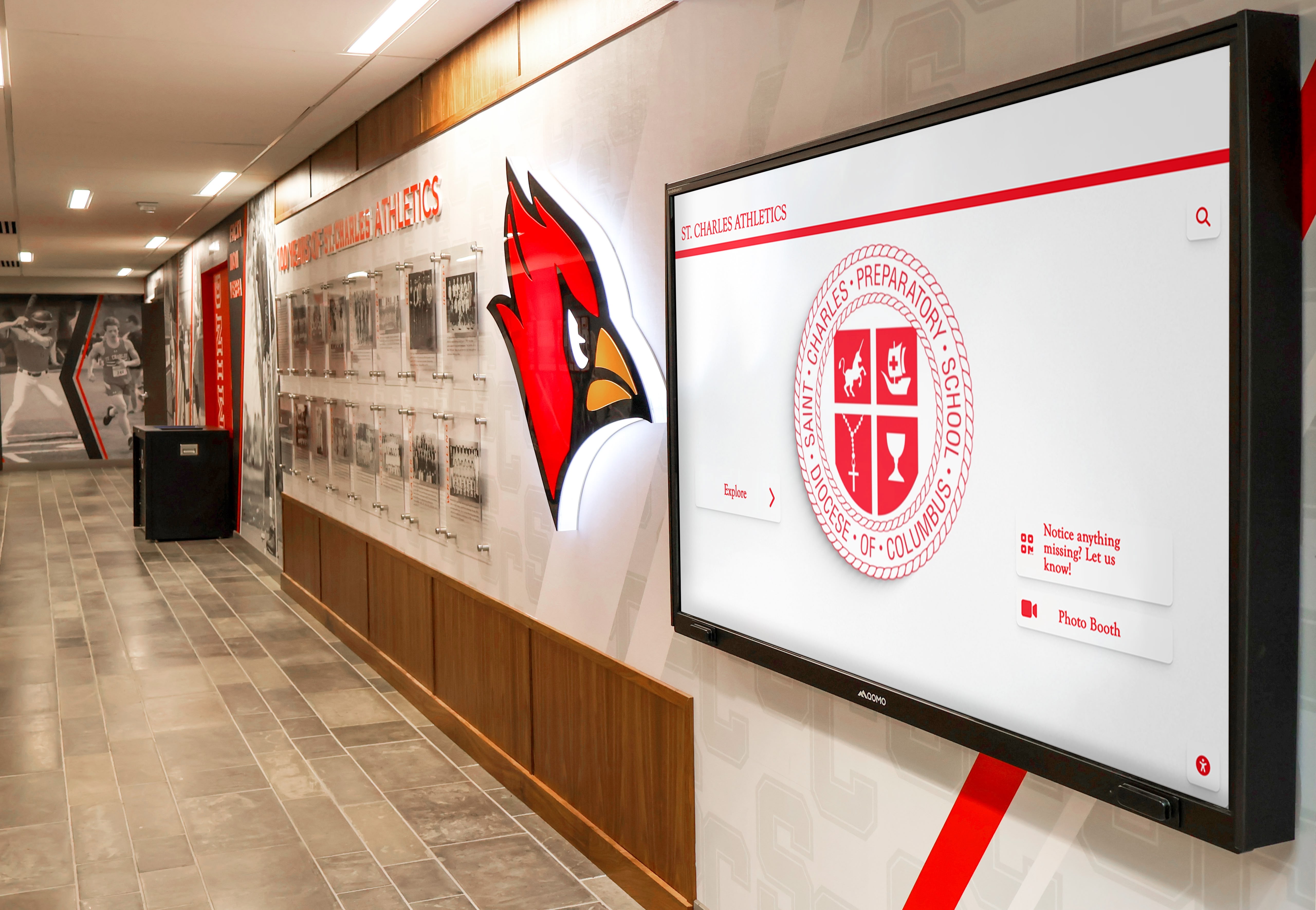
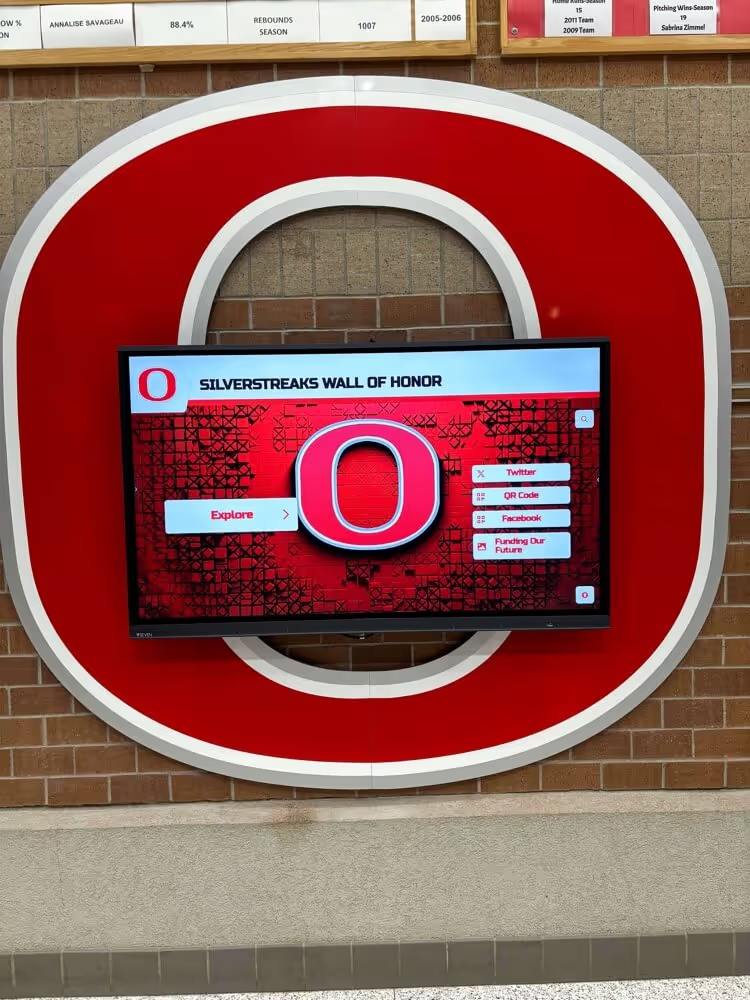
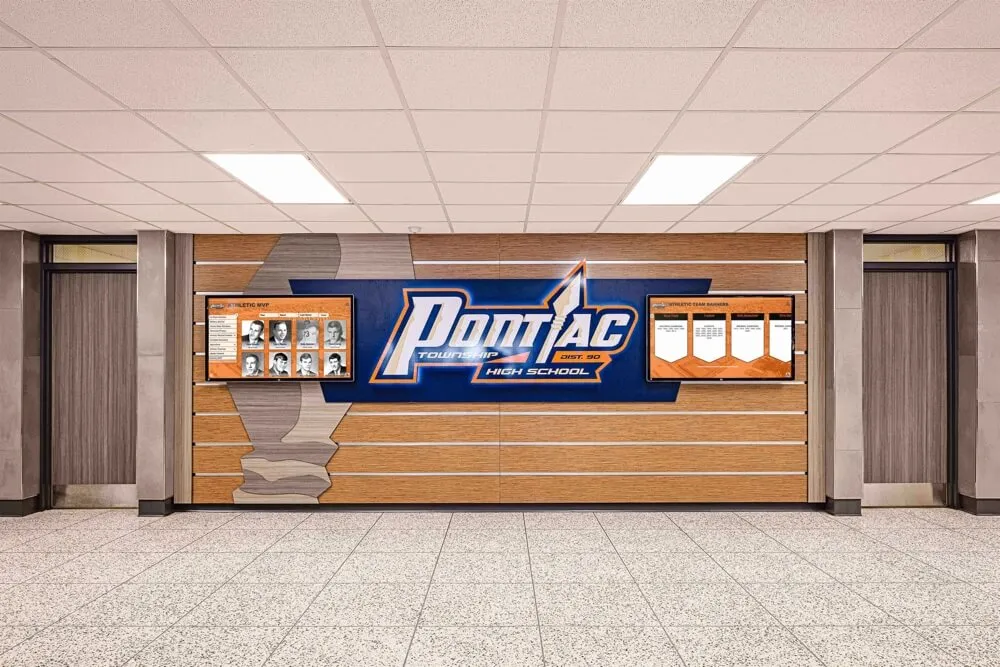
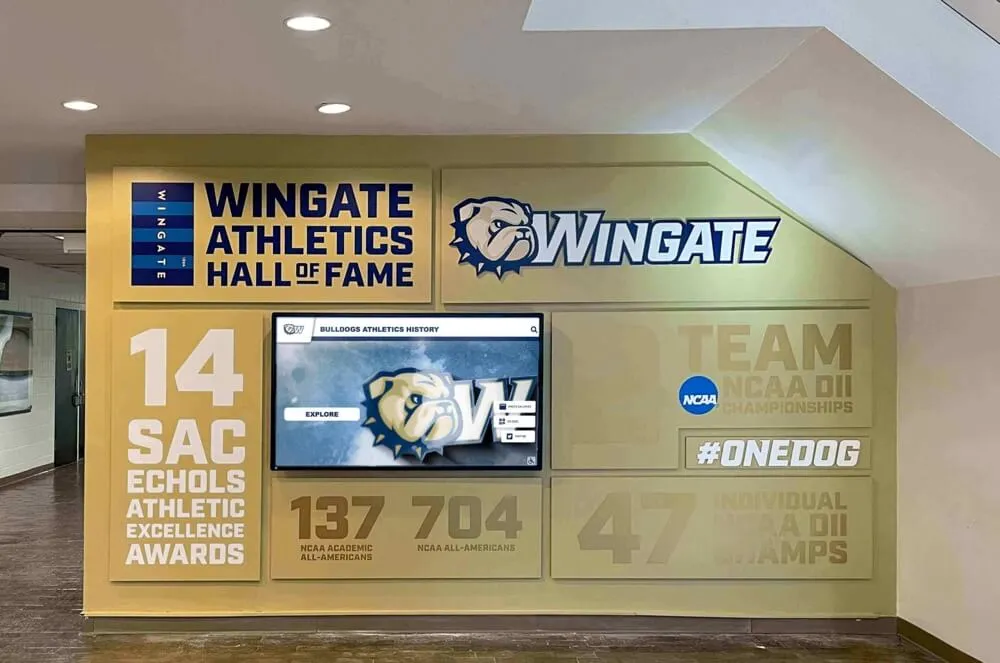
Integrated recognition installations combining traditional elements with digital innovation create compelling nostalgia experiences
Content Development Best Practices
Authentic Voice and Storytelling
Nostalgia marketing succeeds when it feels genuine rather than manipulative:
Effective storytelling approaches include:
- First-person narratives from alumni describing formative experiences
- Faculty reflections on student relationships and mentoring moments
- Student testimonials expressing gratitude for donor-funded opportunities
- Historical context explaining how past challenges shaped current strengths
- Multi-generational stories connecting family alumni experiences
- Honest acknowledgment of institutional evolution including both challenges and triumphs
Visual Content Curation
Historical imagery requires careful selection and presentation:
- High-resolution scanning preserving photograph quality
- Proper dating and context documentation ensuring accuracy
- Diverse representation reflecting complete community history
- Permission and rights management respecting privacy
- Restoration and enhancement maintaining historical authenticity
- Captioning providing context for younger audiences unfamiliar with history
Balancing Nostalgia with Forward Vision
Effective campaigns connect past experiences with future opportunities:
According to nostalgia marketing research, the smartest organizations in 2025 use nostalgia not to look backward, but to build stronger emotional bridges to today’s stakeholders. Brands blend iconic elements from past decades with modern storytelling techniques, offering dual-layered experiences that feel both fresh and comfortingly familiar.
Advancement teams should:
- Frame nostalgia as foundation for future excellence rather than longing for past glory
- Connect donor memories with current student experiences they enable
- Demonstrate how gifts inspired by past experiences create future opportunities
- Show institutional evolution as continuation of enduring values
- Celebrate tradition while embracing innovation and progress
Measuring Nostalgia Marketing Effectiveness
Assessment ensures nostalgia campaigns achieve intended engagement and revenue goals:
Quantitative Performance Metrics
Engagement Indicators
- Email open rates and click-through percentages for nostalgia-themed campaigns
- Social media engagement rates (likes, shares, comments) on historical content
- Website traffic to historical archives and recognition pages
- Digital recognition display interaction rates and session durations
- Event attendance for reunions, homecomings, and nostalgia-themed programs
- User-generated content submission volumes
Revenue Outcomes
- Campaign giving totals compared to non-nostalgia baseline campaigns
- Average gift sizes from nostalgia-targeted solicitations
- Donor participation rates among nostalgia campaign recipients
- Major gift closure rates following nostalgia-based cultivation
- Planned giving inquiry increases attributed to legacy messaging
- Multi-year pledge commitments inspired by nostalgia appeals
Relationship Development
- First-time donor conversion rates from nostalgia campaigns
- Lapsed donor reactivation attributed to nostalgic engagement
- Upgrade rates among donors receiving nostalgia stewardship
- Alumni database enrichment through nostalgia content submission
- Volunteer recruitment for reunion committees and class agents
- Referral rates as engaged alumni encourage peer participation
Qualitative Assessment Approaches
Stakeholder Feedback
- Alumni survey responses about nostalgia campaign resonance
- Focus groups exploring emotional responses to nostalgic messaging
- Testimonials documenting decision factors for major gifts
- Comment analysis on social media nostalgia content
- Email response sentiment assessment
- Reunion attendee feedback about experience quality
Cultural Impact Indicators
- Institutional pride expressions in alumni communications
- Tradition preservation and continuation by current students
- Media coverage highlighting institutional history and achievement
- External reputation regarding alumni engagement quality
- Employee and volunteer satisfaction with advancement programs
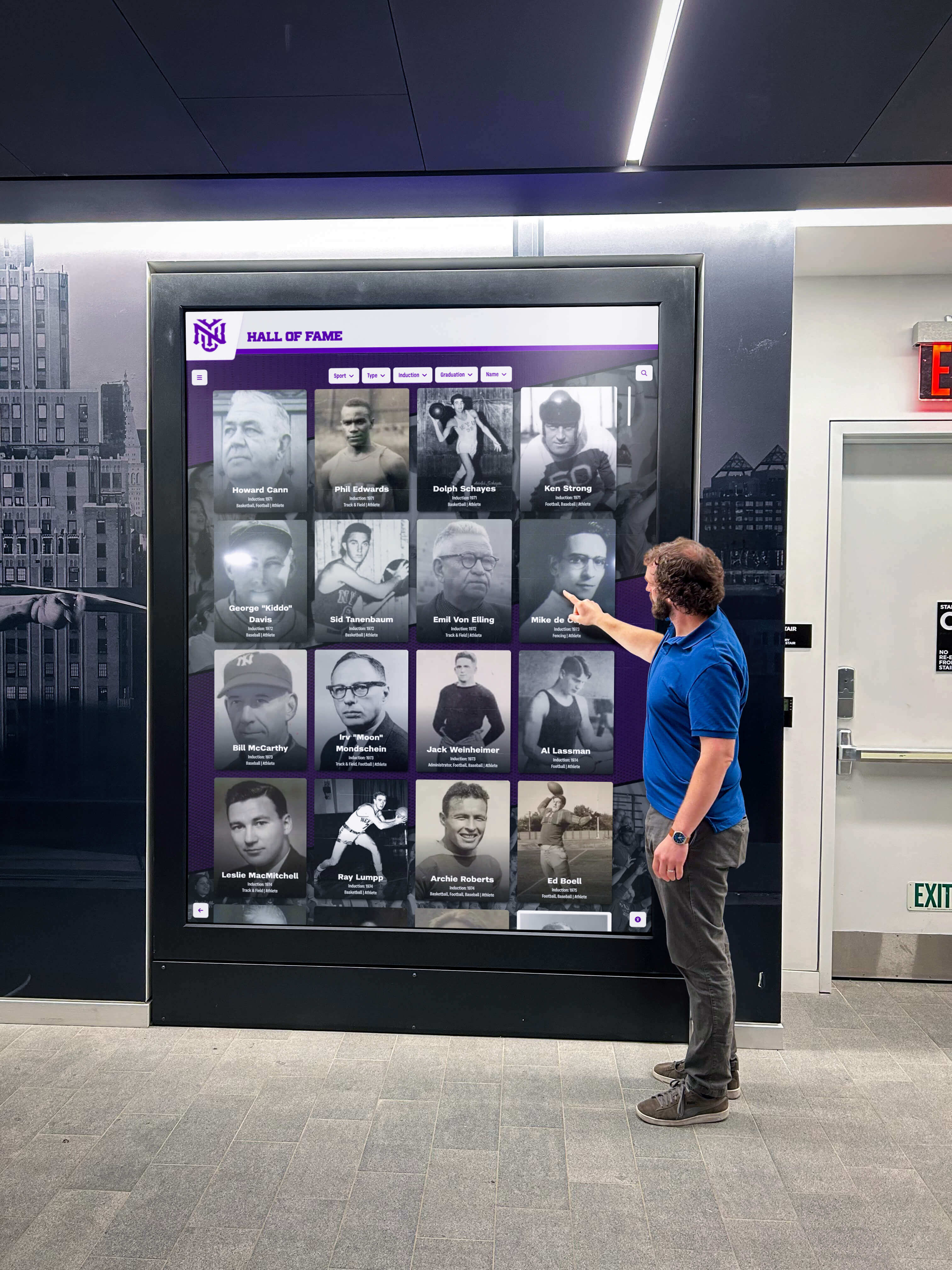
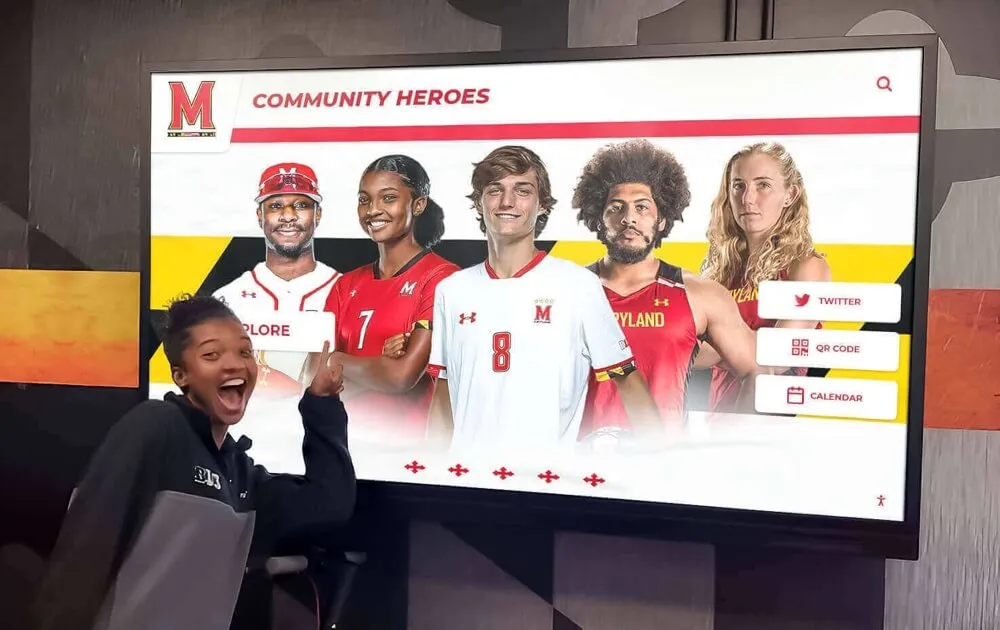
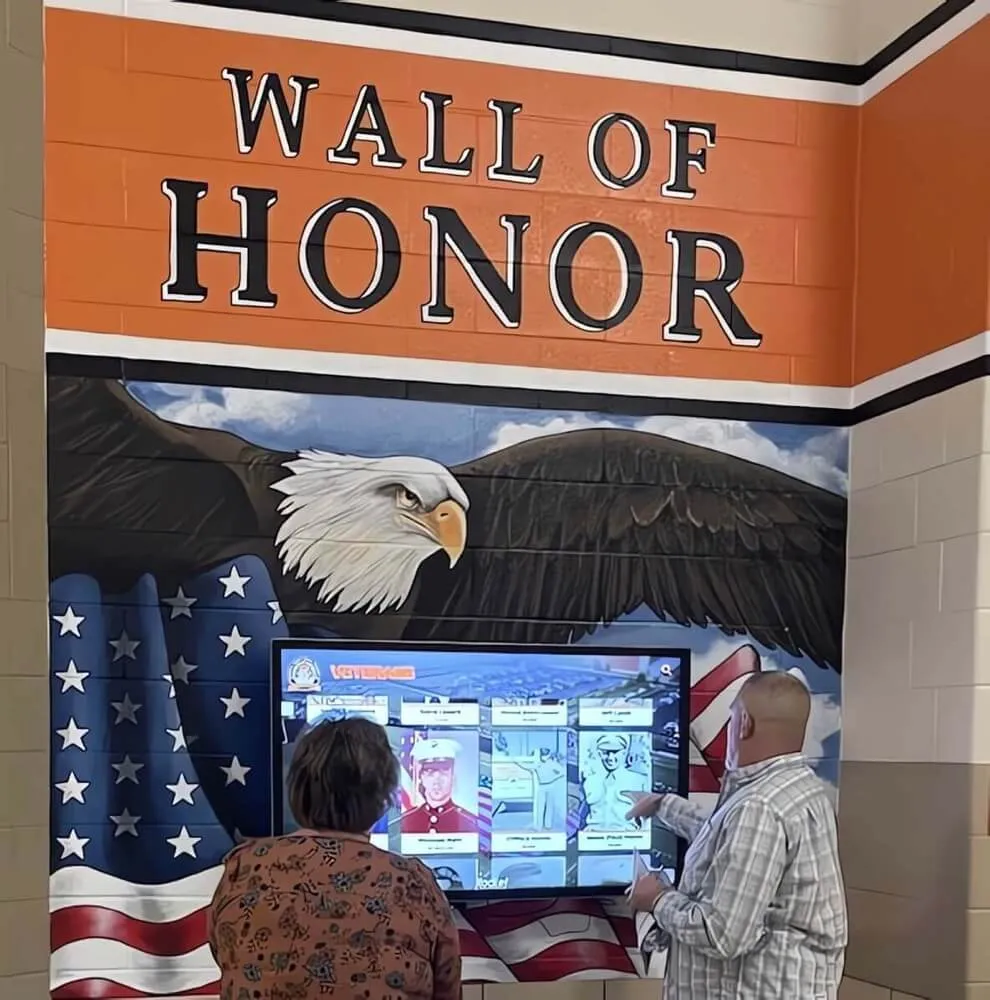
Engaging recognition experiences create memorable interactions that strengthen emotional bonds and inspire philanthropic action
Advanced Nostalgia Marketing Strategies
Sophisticated approaches maximize nostalgia’s revenue-generating potential:
Segmented Nostalgia Targeting
Cohort-Specific Campaigns
Different alumni segments respond to distinct nostalgic appeals:
Recent Graduates (1-10 years out)
- Focus on immediate memories still fresh and relevant
- Emphasize friendships and social connections maintained
- Highlight career services and networking value
- Reference recent campus changes they witnessed
- Engage through digital channels they prefer
- Connect giving to current students facing similar challenges
Mid-Career Alumni (11-25 years out)
- Reference formative experiences shaping career trajectories
- Emphasize mentoring relationships and faculty influences
- Highlight athletic or extracurricular peak experiences
- Connect memories with professional accomplishment
- Focus on scholarship opportunities honoring transformational support
- Leverage growing financial capacity and giving interest
Established Alumni (26-40 years out)
- Celebrate milestone reunions and class cohort bonds
- Reference historical events and cultural moments shared
- Honor faculty and administrators from their era
- Emphasize legacy and multi-generational connections
- Propose major gift opportunities reflecting lifetime success
- Focus on planned giving and estate commitments
Golden Anniversary Alumni (40+ years out)
- Honor lifetime relationships and enduring friendships
- Celebrate continued connection across decades
- Propose legacy society membership and recognition
- Focus on estate planning and planned giving
- Create opportunities for final transformational gifts
- Document their historical experiences preserving institutional memory
Technology-Enhanced Nostalgia Experiences
Virtual Reality Campus Tours
Emerging technology enables immersive nostalgia experiences:
- 360-degree video tours of historical campus locations
- Virtual recreations of demolished or renovated facilities
- Augmented reality overlays showing historical context
- Interactive explorations of archived collections
- Remote participation in campus events and celebrations
AI-Powered Personalization
Advanced systems deliver customized nostalgia content:
- Automated email campaigns referencing individual graduation years
- Social media advertising targeting specific cohort demographics
- Website personalization displaying era-relevant imagery
- Chatbot interactions answering historical questions
- Recommendation engines suggesting relevant nostalgic content
Mobile Applications
Smartphone platforms extend nostalgia engagement:
- Campus navigation with historical location information
- Photo sharing enabling user-generated nostalgia content
- Push notifications about relevant events and opportunities
- Digital scrapbooks combining personal and institutional memories
- Social features connecting alumni with shared experiences
Learn about mobile-integrated approaches through digital recognition platforms extending engagement beyond physical installations.
Partnerships and Collaborative Nostalgia
Alumni Association Integration
Coordinate nostalgia marketing with alumni programming:
- Joint campaigns leveraging association networks
- Shared content development reducing duplication
- Coordinated event planning maximizing attendance
- Unified messaging strengthening brand consistency
- Combined resources expanding campaign reach
Athletic Department Collaboration
Sports provide powerful nostalgia triggers:
- Game day recognition of historical teams
- Halftime ceremonies honoring championship anniversaries
- Digital displays in athletic facilities celebrating achievement
- Athletic hall of fame induction coordination
- Historical game footage and highlight compilations
Explore athletic recognition through sports hall of fame systems that create ongoing nostalgia touchpoints.
Development Office Coordination
Align nostalgia marketing with fundraising priorities:
- Campaign themes incorporating institutional heritage
- Major gift proposals connecting nostalgia with impact
- Planned giving marketing emphasizing legacy creation
- Recognition program design honoring historical donors
- Stewardship approaches celebrating ongoing connection
Common Nostalgia Marketing Mistakes to Avoid
Understanding typical pitfalls helps organizations prevent problems:
Authenticity Failures
Mistake: Manufacturing False or Exaggerated Nostalgia
Organizations sometimes create nostalgia for events or traditions that never actually resonated with alumni, or exaggerate historical significance of minor moments. This inauthenticity undermines trust when alumni recognize manipulation.
Solution: Base nostalgia marketing on genuine research including alumni surveys, focus groups, and historical documentation that identifies what alumni actually remember and value. Test messaging with representative alumni before broad campaigns.
Mistake: One-Size-Fits-All Historical References
Generic nostalgia appeals fail to account for diverse alumni experiences across different eras, demographics, and campus subcultures.
Solution: Segment nostalgia marketing by graduation decade, activity involvement, demographic characteristics, and campus experience type, ensuring references resonate with targeted audiences rather than assuming universal memories.
Execution Problems
Mistake: Nostalgia Without Clear Giving Connection
Reminiscing about the past without connecting memories to current fundraising priorities creates warm feelings that don’t convert to revenue.
Solution: Every nostalgia marketing touchpoint should include clear calls-to-action linking past experiences with present giving opportunities: “Your scholarship transformed your life. Now provide that same opportunity for today’s students facing similar challenges.”
Mistake: Inadequate Historical Accuracy
Factual errors in dates, names, or event descriptions damage credibility when noticed by alumni who lived the experiences being referenced.
Solution: Implement rigorous fact-checking processes for all historical content, consult with alumni from relevant eras, and maintain transparent correction policies when errors occur.
Mistake: Ignoring Difficult History
Whitewashing problematic historical periods or excluding segments of alumni community from nostalgia narratives creates resentment and undermines inclusivity.
Solution: Acknowledge institutional evolution including past mistakes or exclusions, celebrate progress toward inclusion, and ensure nostalgia marketing represents complete community history rather than selective memory.
Technology and Implementation Issues
Mistake: Neglecting Digital Infrastructure
Launching nostalgia campaigns without digital systems to support content sharing, user contributions, or interactive exploration limits effectiveness.
Solution: Implement comprehensive platforms like Rocket Alumni Solutions providing infrastructure for historical content management, interactive displays, web integration, and user-generated contributions before launching major nostalgia campaigns.
Mistake: Poor Visual Quality
Low-resolution historical photographs, poorly scanned materials, or unprofessional presentation diminish rather than enhance nostalgia’s emotional impact.
Solution: Invest in professional historical photograph scanning, restoration, and presentation ensuring visual materials match the quality alumni remember and expect from their institution.
Case Applications: Nostalgia Marketing Across Institutional Types
Different organizations leverage nostalgia through contexts specific to their missions:
K-12 Schools and Preparatory Academies
Secondary schools cultivate nostalgia through:
- Athletic championship celebrations spanning decades
- Graduation tradition continuity connecting generations
- Faculty tenure recognition honoring beloved teachers
- Facility improvements to spaces where memories were created
- Reunions for milestone graduation anniversaries
- Hall of fame recognition celebrating distinguished alumni
Explore school-specific approaches through academic recognition programs that create ongoing nostalgia touchpoints.
Colleges and Universities
Higher education institutions maximize nostalgia through:
- Campus evolution documentation showing facilities transformation
- Historical milestones connecting institutional growth with alumni cohorts
- Greek life and residential community memory preservation
- Academic program development recognizing departmental evolution
- Student organization histories celebrating involvement traditions
- Faculty appreciation honoring transformational mentors
Alumni Associations and Affinity Groups
Organizations serving graduates leverage nostalgia through:
- Class-specific communications and reunion coordination
- Regional chapter events incorporating local historical connections
- Career networking emphasizing shared institutional bonds
- Volunteer recruitment highlighting continued service tradition
- Member directories enabling reconnection with classmates
- Historical publications documenting institutional evolution
Athletic Departments and Booster Organizations
Sports programs harness competitive nostalgia through:
- Championship team recognition and anniversary celebrations
- Athlete hall of fame inductions and milestone achievements
- Facility naming opportunities honoring legendary coaches
- Game day traditions connecting current and historical fans
- Rivalry game historical context and memorable moment recollections
- Record achievement recognition celebrating athletic excellence
Learn about athletic nostalgia through sports recognition systems celebrating competitive achievement.
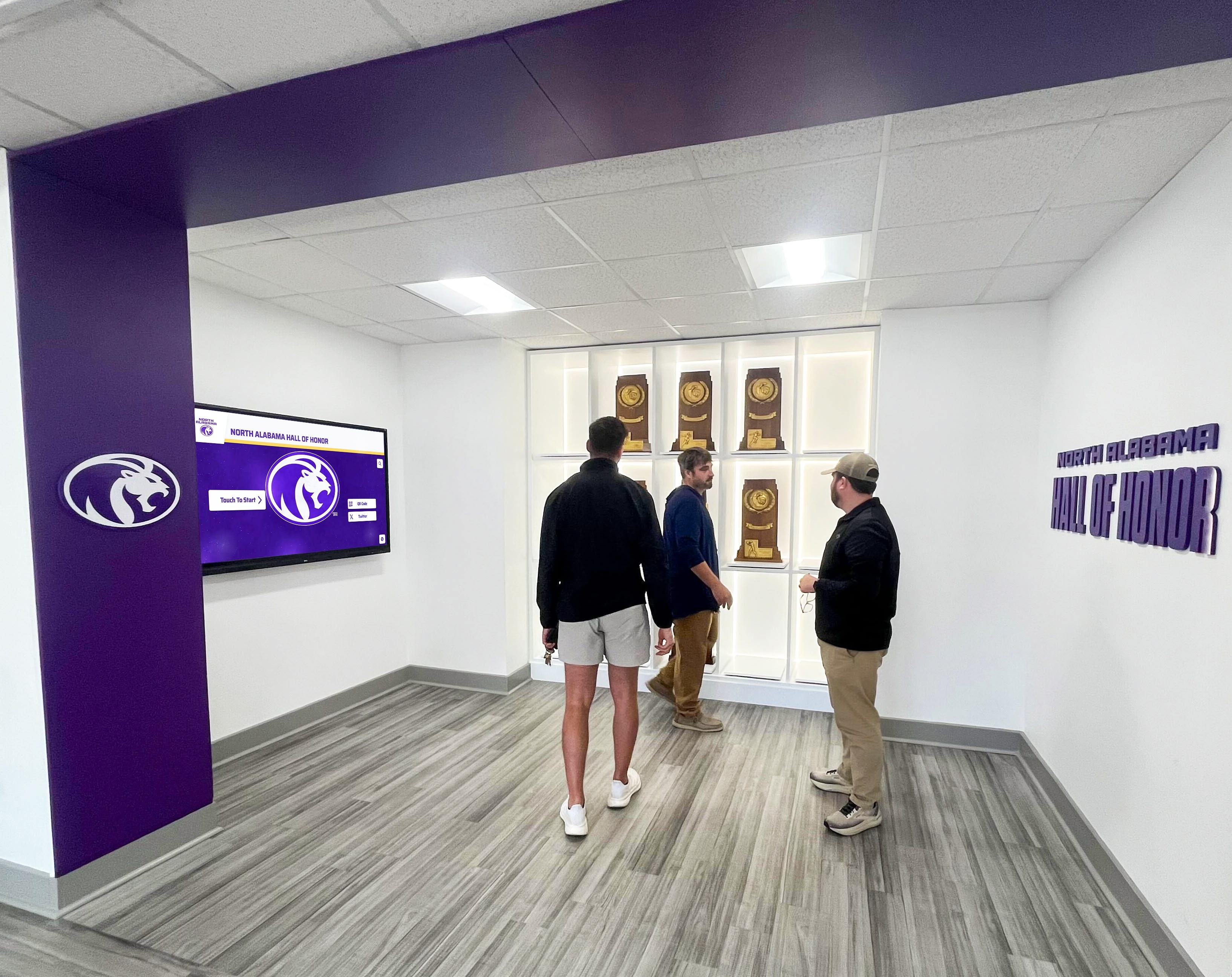
Athletic recognition spaces become destinations where alumni reconnect with competitive memories and school pride that inspire giving
Implementing Your Nostalgia Marketing Program
Systematic planning ensures successful nostalgia marketing implementation:
Phase 1: Research and Foundation (Months 1-3)
Historical Content Audit
- Inventory existing historical photographs, videos, and documents
- Assess archival condition and digitization needs
- Identify gaps requiring additional content sourcing
- Evaluate current recognition systems and capacity
- Review existing nostalgia marketing attempts and outcomes
Alumni Segmentation and Research
- Analyze alumni database for generational demographics
- Survey representative alumni about memorable experiences
- Conduct focus groups exploring nostalgia triggers
- Research peer institutions’ nostalgia marketing approaches
- Benchmark current engagement and giving metrics
Infrastructure Assessment
- Evaluate digital platforms and content management systems
- Assess physical spaces for recognition installations
- Review marketing channels and communication tools
- Identify technology gaps requiring investment
- Plan budget allocation for nostalgia initiatives
Phase 2: Content Development (Months 4-6)
Historical Content Creation
- Digitize priority photographs and archival materials
- Conduct oral history interviews with distinguished alumni
- Develop timeline documentation of institutional milestones
- Create era-specific cohort profiles and messaging
- Produce multimedia content for digital platforms
Recognition System Implementation
- Install or upgrade digital recognition displays
- Design and implement hall of fame installations
- Create searchable online historical archives
- Develop mobile-responsive recognition platforms
- Train staff on content management systems
Campaign Planning
- Design multi-channel nostalgia campaigns
- Develop segmented messaging for different cohorts
- Create content calendars aligning with institutional events
- Plan reunion and homecoming nostalgia programming
- Establish success metrics and assessment approaches
Phase 3: Launch and Execution (Months 7-12)
Soft Launch and Testing
- Pilot nostalgia campaigns with representative segments
- Gather feedback and refine messaging approaches
- Test technical systems and troubleshoot issues
- Train additional staff on implementation
- Document processes and create operation guidelines
Broad Campaign Rollout
- Launch multi-channel nostalgia marketing initiatives
- Coordinate with reunion and homecoming events
- Implement social media and email campaigns
- Activate digital recognition displays campus-wide
- Execute major gift solicitations with nostalgia positioning
Assessment and Refinement
- Monitor engagement and revenue metrics continuously
- Gather qualitative feedback from participants
- Adjust campaigns based on performance data
- Scale successful approaches across additional segments
- Document lessons learned informing future efforts
Phase 4: Sustainability (Ongoing)
Perpetual Content Development
- Continuously add historical content as materials emerge
- Document current experiences becoming future nostalgia
- Maintain recognition systems ensuring accuracy
- Refresh campaigns preventing staleness
- Respond to alumni contributions and submissions
Integration with Advancement Operations
- Incorporate nostalgia throughout stewardship programs
- Align recognition with all fundraising priorities
- Train new staff on nostalgia marketing approaches
- Budget appropriately for ongoing programs
- Assess effectiveness regularly and adjust strategies
Conclusion: Building Revenue Through Authentic Emotional Connection
Nostalgia marketing represents far more than sentimental reminiscence—it embodies strategic use of authentic emotional connections to strengthen donor relationships, inspire transformational giving, and create cultures where institutional history is celebrated while funding future excellence. When organizations invest thoughtful planning, adequate resources, and sustained commitment in nostalgia-driven advancement, they unlock giving motivations more powerful than typical solicitation messages can achieve.
The strategies explored in this guide provide comprehensive frameworks for nostalgia marketing that balances multiple objectives including honoring authentic institutional history without manufacturing false memories, connecting past experiences with present fundraising priorities, ensuring inclusive recognition representing complete community diversity, maintaining authenticity while scaling systematic approaches, and building sustainable programs serving advancement goals for decades.
Transform Alumni Engagement Through Recognition
Discover how modern digital recognition solutions help you celebrate institutional history, honor alumni achievement, and create nostalgia-driven engagement that inspires sustained giving.
Request a DonorsWall Planning CallThe Recognition Investment
According to research, consumers are willing to pay 10-15% more for experiences that evoke nostalgic feelings, and nostalgia-driven campaigns can increase revenue by 3-5% per campaign cycle. When applied to institutional advancement, these percentages translate to substantial fundraising advantages. An organization with $5 million annual giving achieving even a 3% nostalgia-driven increase generates $150,000 additional revenue—returns that dramatically exceed typical nostalgia program investments.
Beyond immediate revenue impact, nostalgia marketing creates compound benefits through improved donor retention, increased lifetime giving, enhanced volunteer engagement, stronger institutional reputation, and multi-generational loyalty that sustains advancement for decades.
Technology as Nostalgia Enabler
Modern digital recognition systems fundamentally transform what’s possible in nostalgia marketing by eliminating space constraints that historically limited historical content display, enabling interactive exploration creating personal connections, facilitating user-generated content submission and sharing, extending recognition reach through web and mobile access, and simplifying content management enabling perpetual updates.
Solutions like Rocket Alumni Solutions provide comprehensive platforms addressing both immediate nostalgia campaign needs and long-term historical preservation requirements, offering organizations sustainable systems that serve advancement goals while honoring institutional heritage.
Implementation Pathway
Organizations ready to harness nostalgia marketing should begin with comprehensive historical content audit and digitization, alumni research identifying genuine nostalgia triggers, infrastructure assessment determining technology needs, phased implementation starting with pilot campaigns, integration across all advancement touchpoints, and commitment to perpetual content development and refinement.
This systematic approach prevents common nostalgia marketing problems while ensuring campaigns achieve intended engagement and revenue goals through authentic emotional connection.
Your alumni and donors possess deep emotional connections to formative experiences at your institution. These connections represent untapped philanthropic motivation more powerful than typical solicitation messages can activate. With strategic planning, authentic execution, appropriate technology, and sustained commitment, you can transform these emotional bonds into sustained engagement and transformational giving that advances your mission for generations.
Ready to begin exploring nostalgia-driven advancement? Learn more about donor recognition approaches celebrating institutional history, or discover how interactive displays create engagement that inspires philanthropic action.
Sources
- How to turn emotion into revenue with nostalgia marketing
- The Power of Nostalgia Marketing: Why the Past Still Sells in 2025
- Best Nostalgia Marketing Statistics 2025
- How Brands Use Nostalgia to Drive Engagement - And What Schools Can Learn From Them
- Lessons in alumni engagement: 9 alumni marketing strategies to boost fundraising
- 7 Alumni Engagement Best Practices for Universities
- Strategic Branding Ideas to Use in Your Alumni Outreach
- How to reach and engage alumni with email marketing
- Nostalgia Marketing in 2025: How Brands Are Innovating the Past to Shape the Future