Outlet mall interactive kiosks are transforming how shoppers navigate complex retail environments, discover stores, and access promotions in real-time. As outlet malls continue to expand—with many properties featuring 100+ stores across sprawling footprints—visitors increasingly struggle to locate specific retailers, understand layout organization, and discover deals without extensive wandering. Interactive touchscreen kiosks address these challenges by providing intuitive digital wayfinding, comprehensive store directories, live promotional information, and personalized shopping assistance that enhances customer satisfaction while driving measurable increases in tenant sales and visitor engagement.
According to industry research, the digital signage market in the United States is expected to reach $6.9 billion by 2026, growing by 6.5% annually. Within this expanding market, interactive kiosks have demonstrated particularly strong impact in retail environments, with studies showing that digital signage kiosks can lead to a 46% increase in customer satisfaction and up to a 31% increase in general sales volume in retail locations. As consumer expectations for seamless, technology-enabled shopping experiences continue to rise, outlet malls that invest in interactive kiosk infrastructure position themselves to meet evolving visitor needs while creating competitive advantages in increasingly challenging retail markets.
The outlet shopping experience has fundamentally changed over the past decade. What once represented simple discount shopping now encompasses entertainment, dining, and experiential retail across massive mixed-use developments. Modern outlet malls like Woodbury Common Premium Outlets in New York (spanning over 800,000 square feet with 220+ stores) or Desert Hills Premium Outlets in California (180+ stores across multiple building clusters) present navigation challenges that rival airport terminals in complexity.
Traditional static directories—whether printed maps or fixed signage—cannot keep pace with the dynamic nature of contemporary outlet retail environments. Stores change locations, new tenants open, seasonal promotions rotate weekly, and special events require real-time communication. Interactive kiosks bridge this gap by providing continuously updated information through engaging touchscreen interfaces that modern consumers instinctively understand how to use.
The Retail Navigation Challenge
Outlet malls face unique operational challenges that distinguish them from traditional enclosed shopping centers. Understanding these challenges helps property managers recognize why interactive kiosks have become essential infrastructure rather than optional amenities.
Complex Physical Layouts
Most outlet centers feature outdoor or mixed indoor-outdoor designs with multiple building clusters, parking lots dispersed throughout the property, and non-linear pathways. Unlike traditional malls with straightforward anchor-to-anchor layouts, outlet properties often organize stores by brand type, price point, or simply available space, creating layouts that defy intuitive navigation.
Visitors arriving at outlet malls typically have specific stores in mind—particular brands they’re seeking or product categories they need. Without clear wayfinding, shoppers waste valuable time wandering, often missing stores entirely or leaving frustrated. Industry surveys consistently show that improved navigation directly correlates with increased dwell time and higher per-visit spending.
Information Overload and Discovery Friction
Outlet properties house dozens or hundreds of retailers, making it impossible for visitors to remember all available options. Shoppers looking for athletic wear may not realize seven different sports brands have locations at opposite ends of the property. Families seeking children’s clothing might miss three relevant stores if they only notice the one closest to their parking area.
Traditional directories list stores alphabetically or by category, but these static lists don’t accommodate real-time searches, filter by specific shopper needs, or highlight currently running promotions. The friction between available options and customer awareness represents lost sales opportunities for both individual tenants and the property overall.
Promotional and Event Communication Gaps
Outlet malls run continuous promotional calendars featuring mall-wide sales events, individual store promotions, seasonal campaigns, and special events like charity fundraisers or live entertainment. Communicating these opportunities to visitors at the right moment—when they’re already on property and ready to shop—creates immediate action.
Static signage, printed flyers, and even mobile apps require active attention from shoppers who may be focused on navigating unfamiliar environments or managing children. Interactive kiosks positioned at high-traffic intersections capture attention through dynamic content while allowing shoppers to explore information at their own pace.
How Interactive Touchscreen Kiosks Transform Outlet Mall Experiences
Modern interactive kiosk systems deliver comprehensive functionality that addresses core customer needs while providing property managers with powerful tools for tenant communication, analytics, and revenue generation.
Intuitive Digital Wayfinding
The foundation of effective interactive kiosks lies in digital wayfinding functionality that helps visitors locate stores, amenities, and parking with minimal effort. Advanced systems feature interactive maps with custom route planning, keyboard search functionality, retailers organized by category, and prominent “You Are Here” location indicators.
Unlike static directories, digital wayfinding adapts to each user’s specific needs. A visitor searching for “Nike” receives turn-by-turn directions from their current location. Someone looking for “women’s shoes” sees all relevant stores highlighted on the map with distances calculated. Parents seeking family restrooms or nursing stations find these amenities instantly without decoding complex property maps.
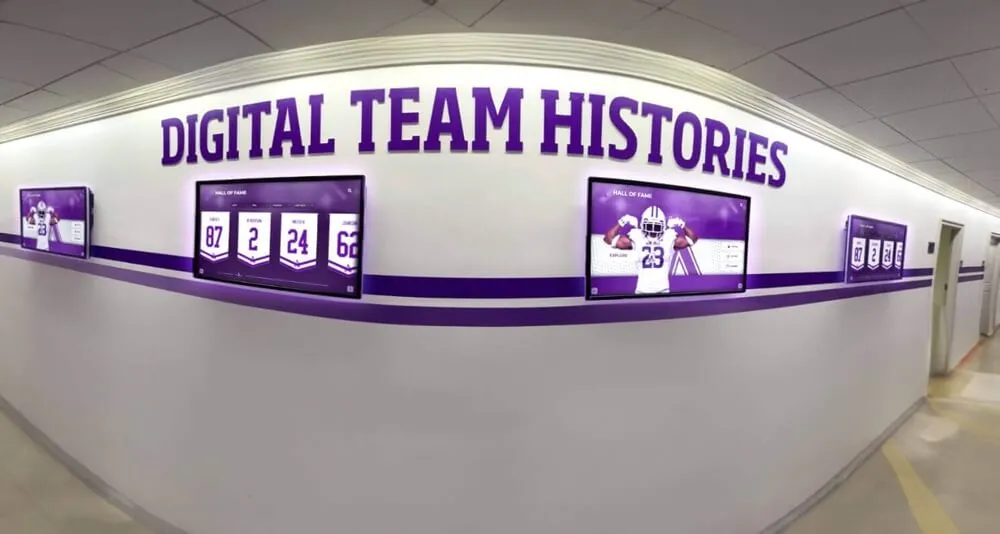
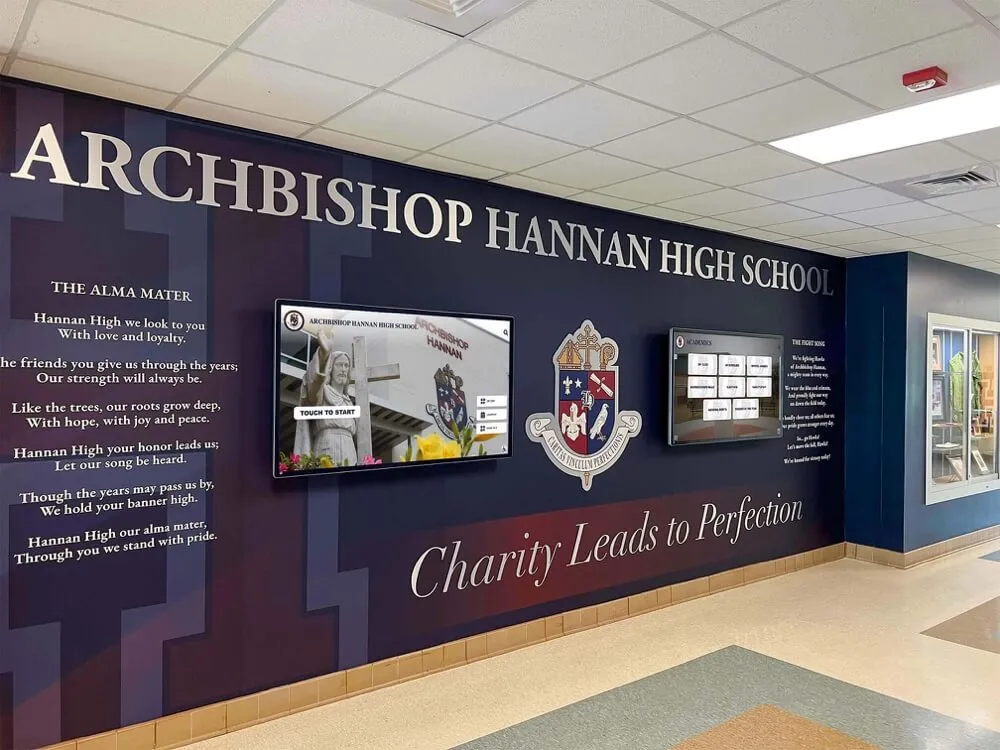
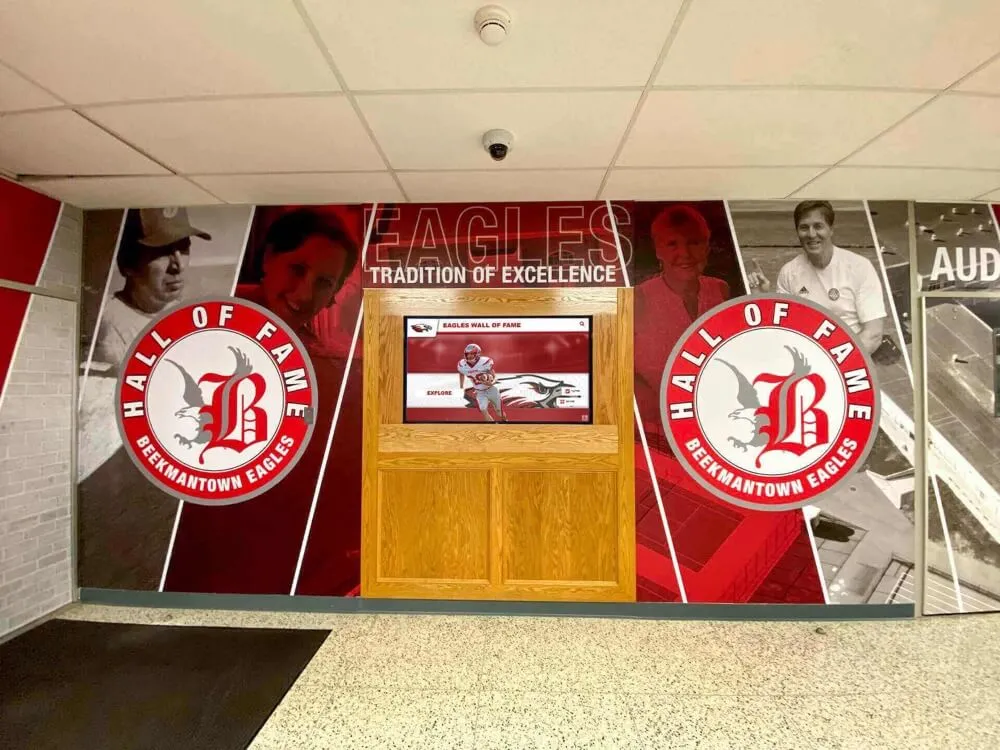
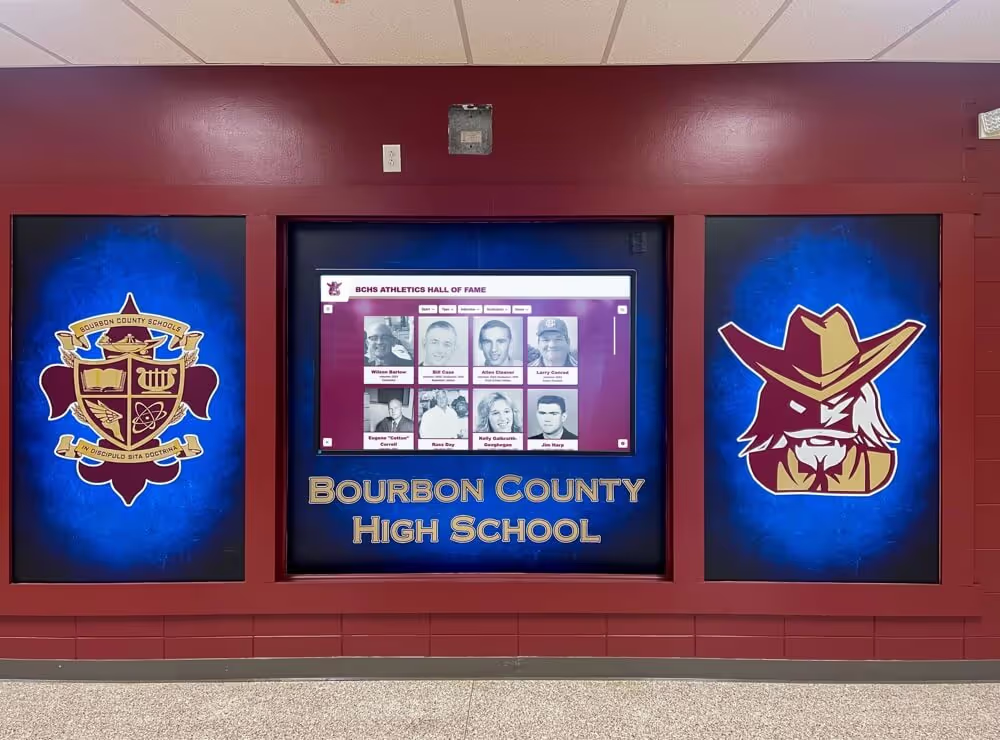
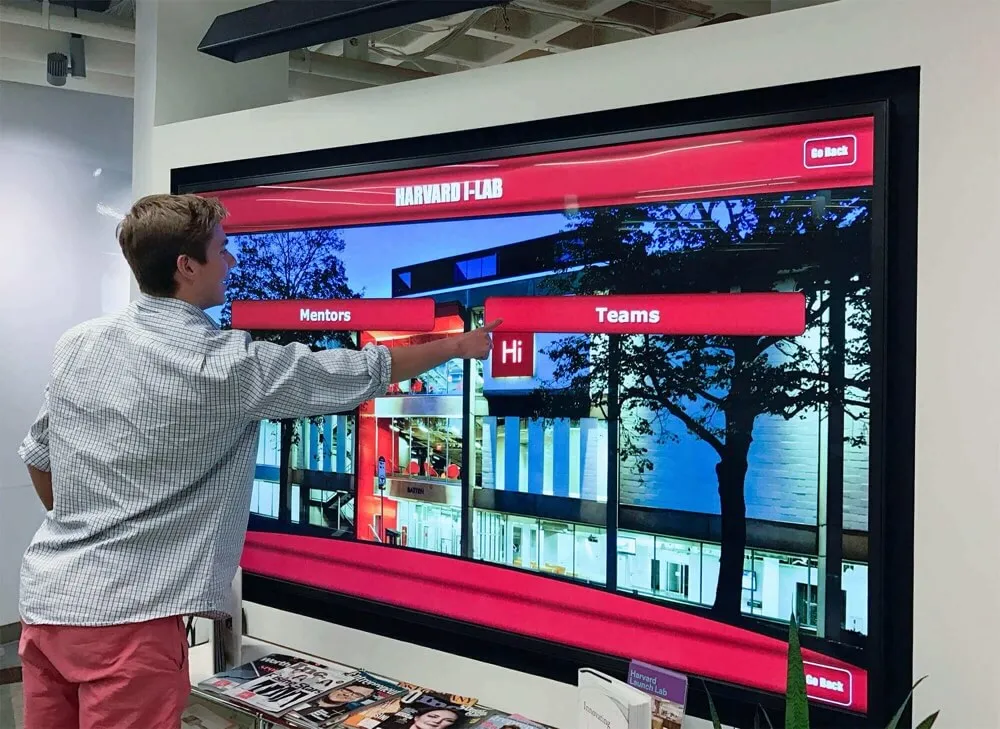
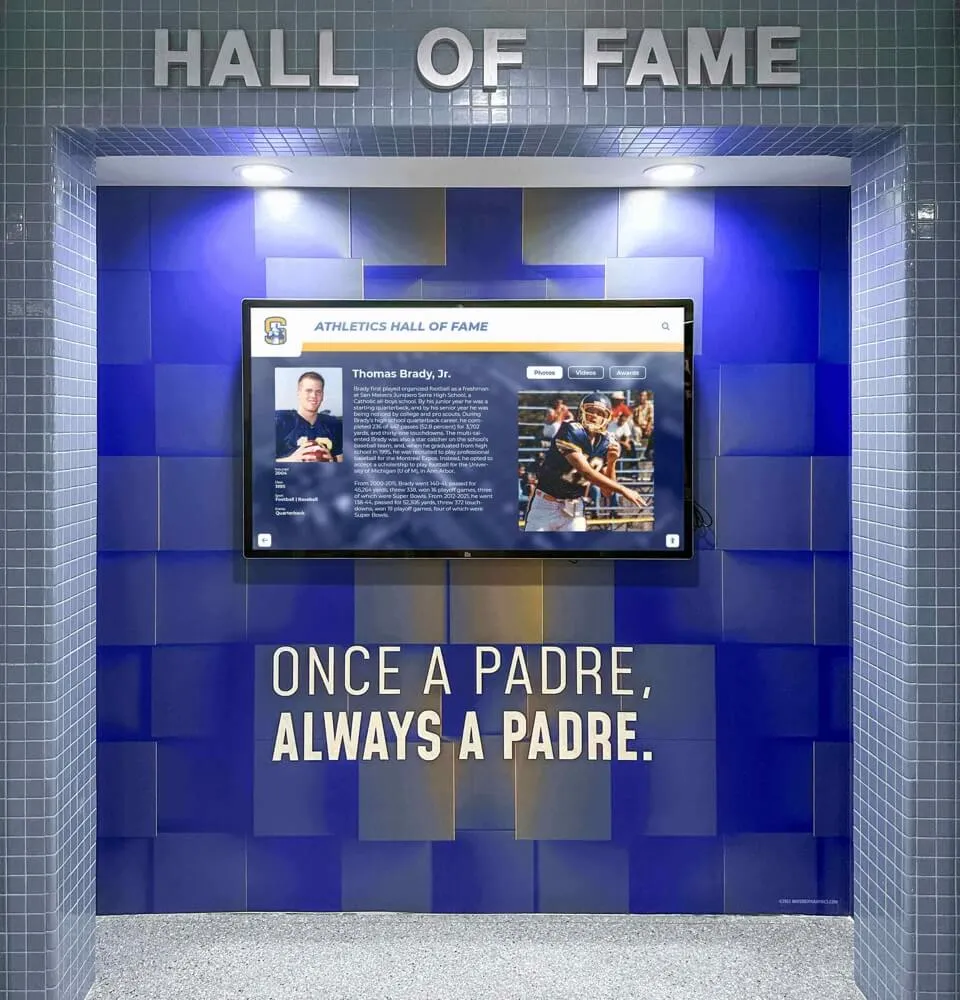
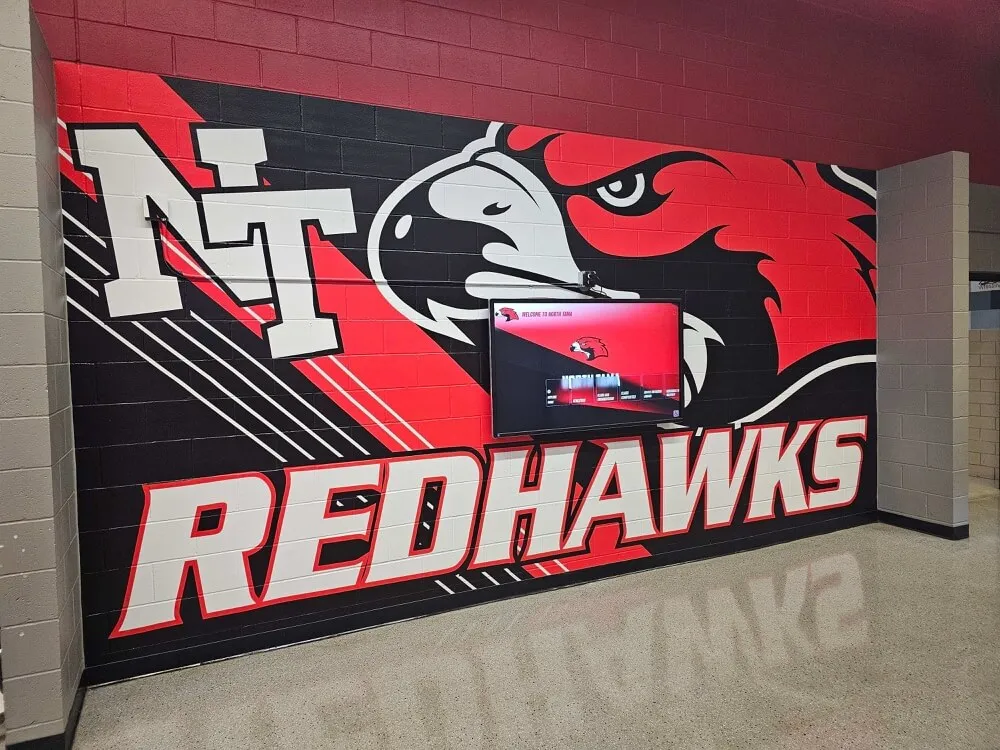
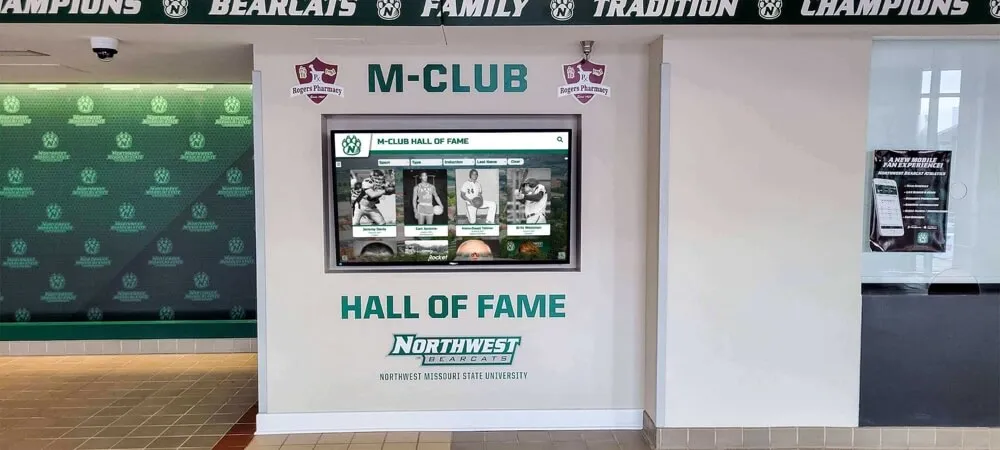
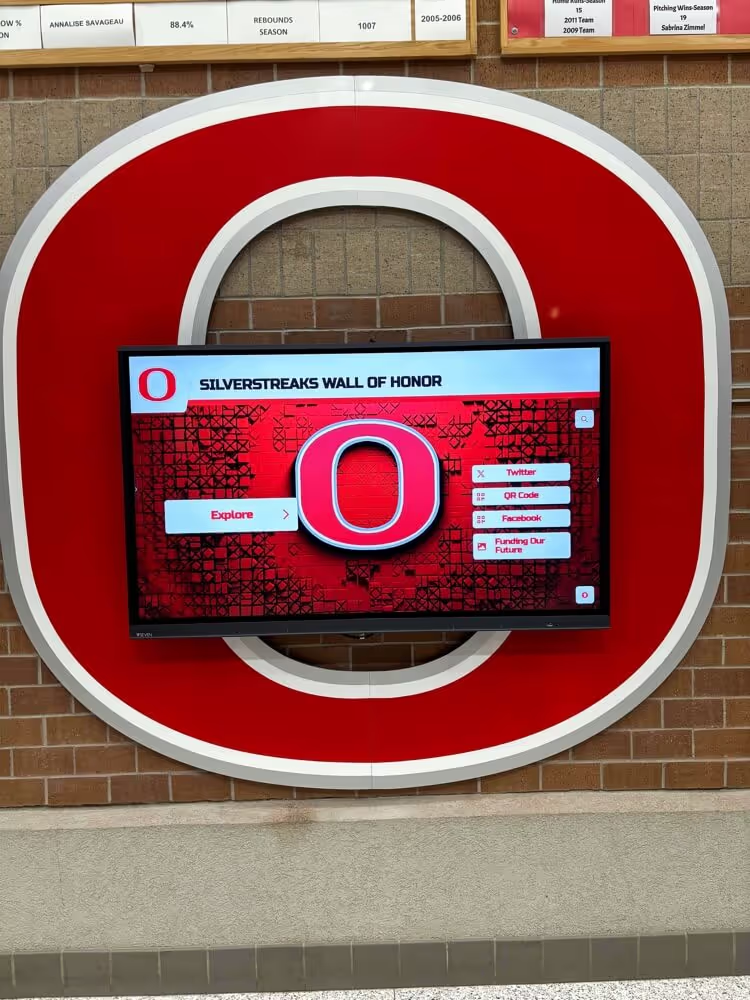
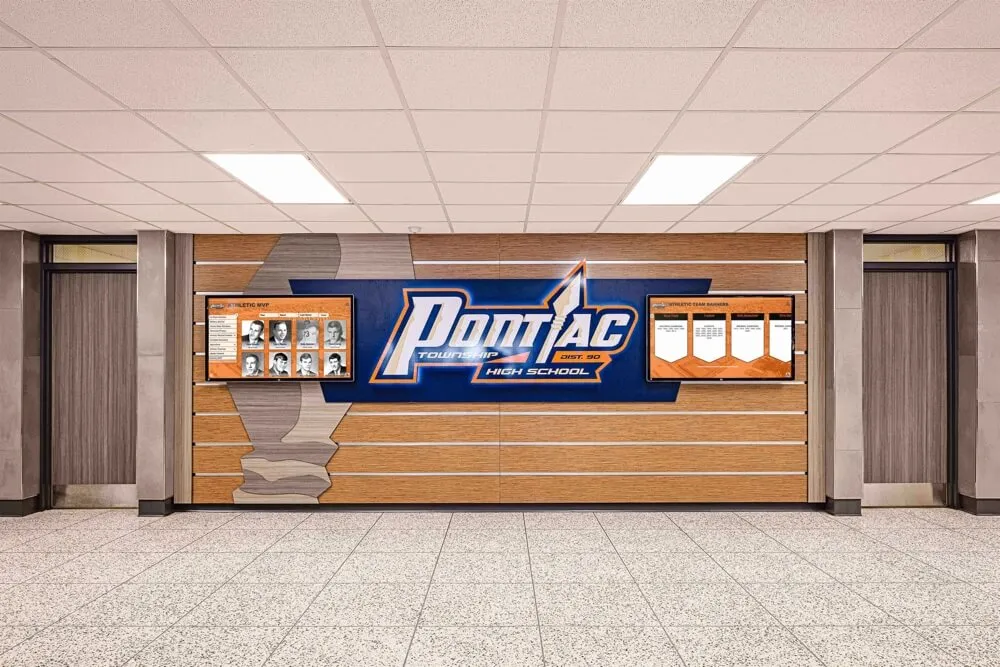
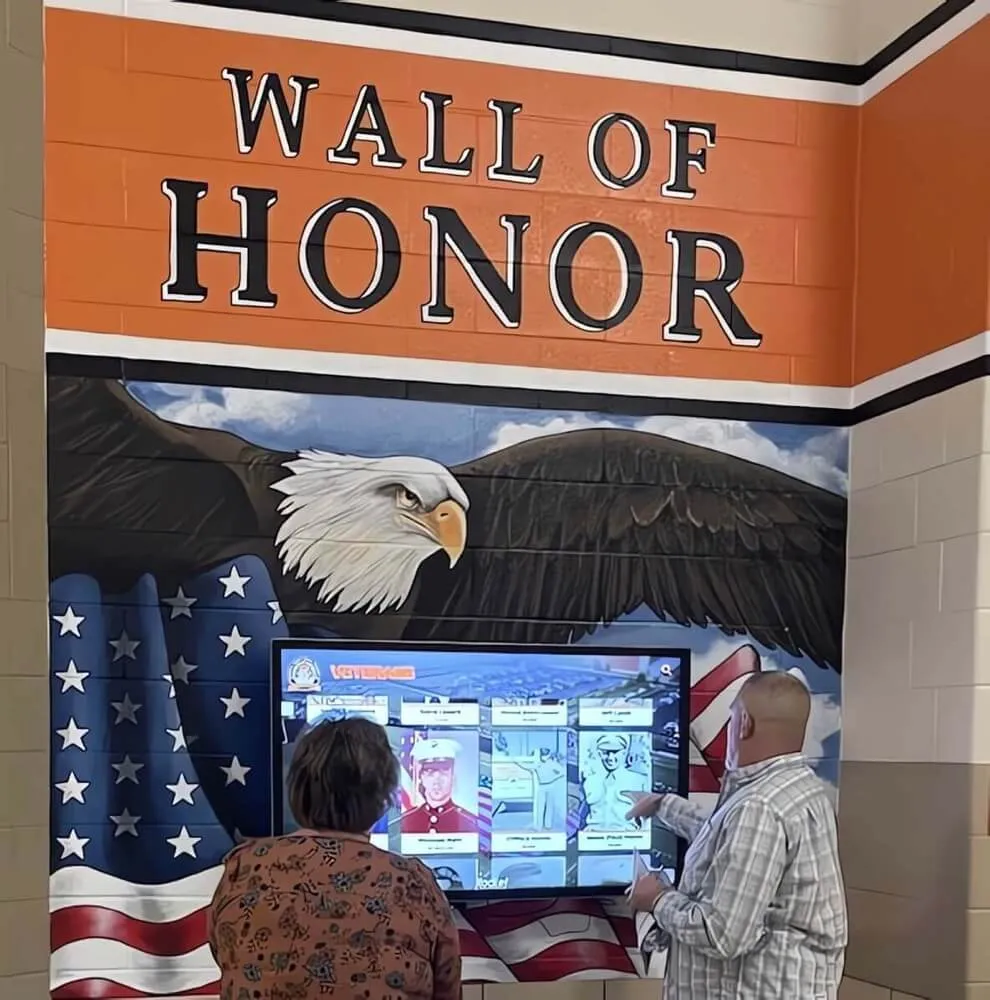
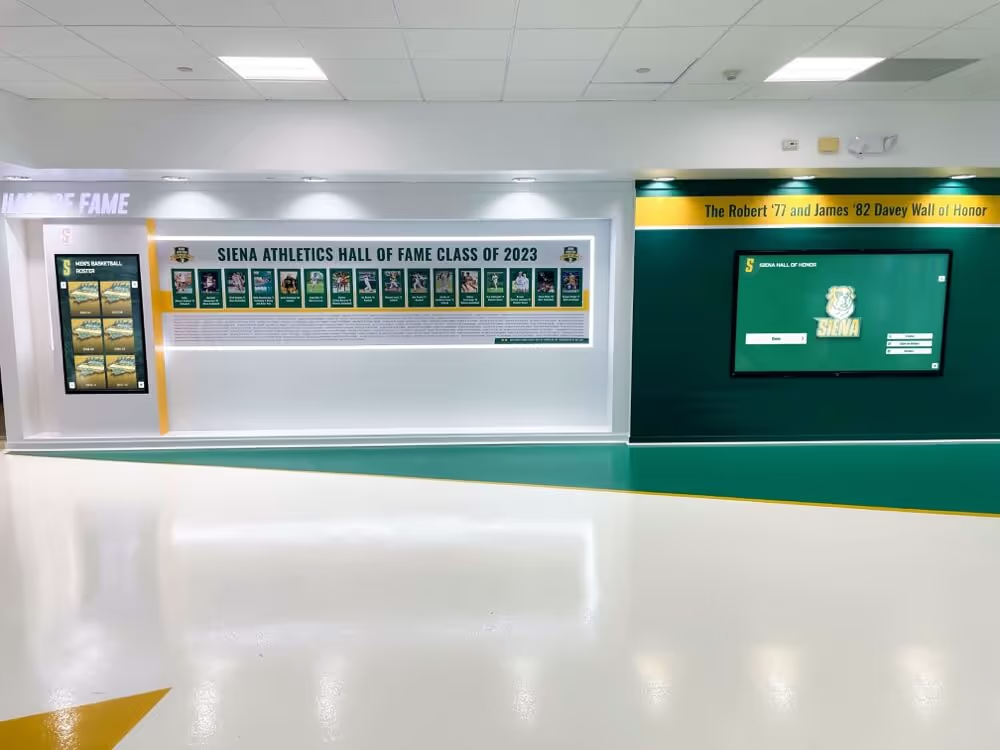
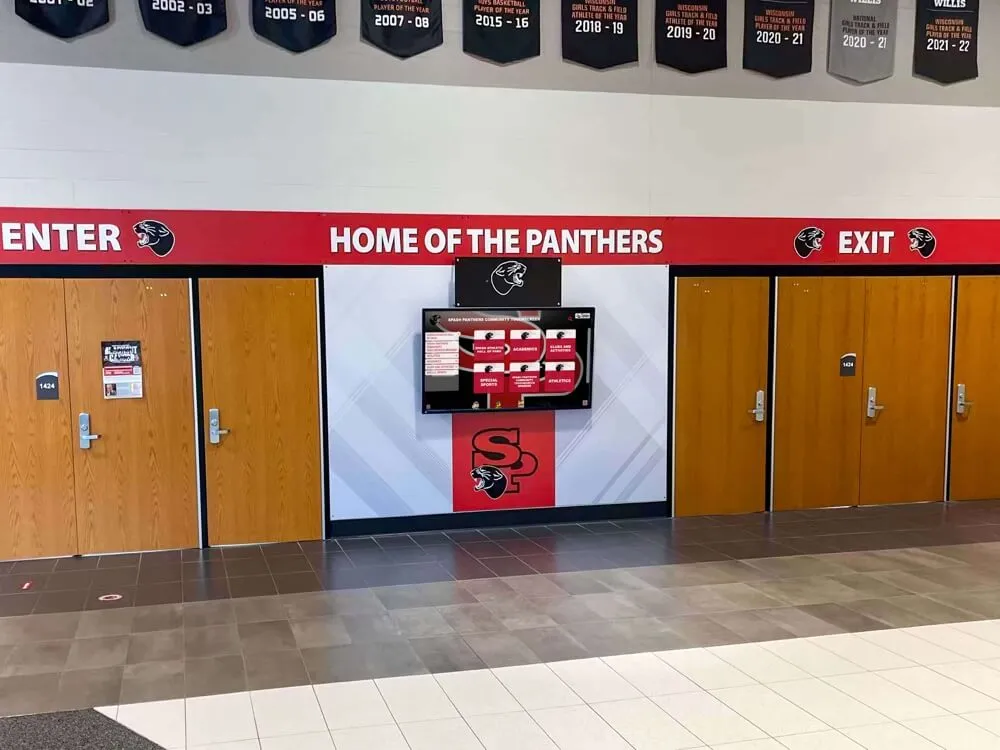
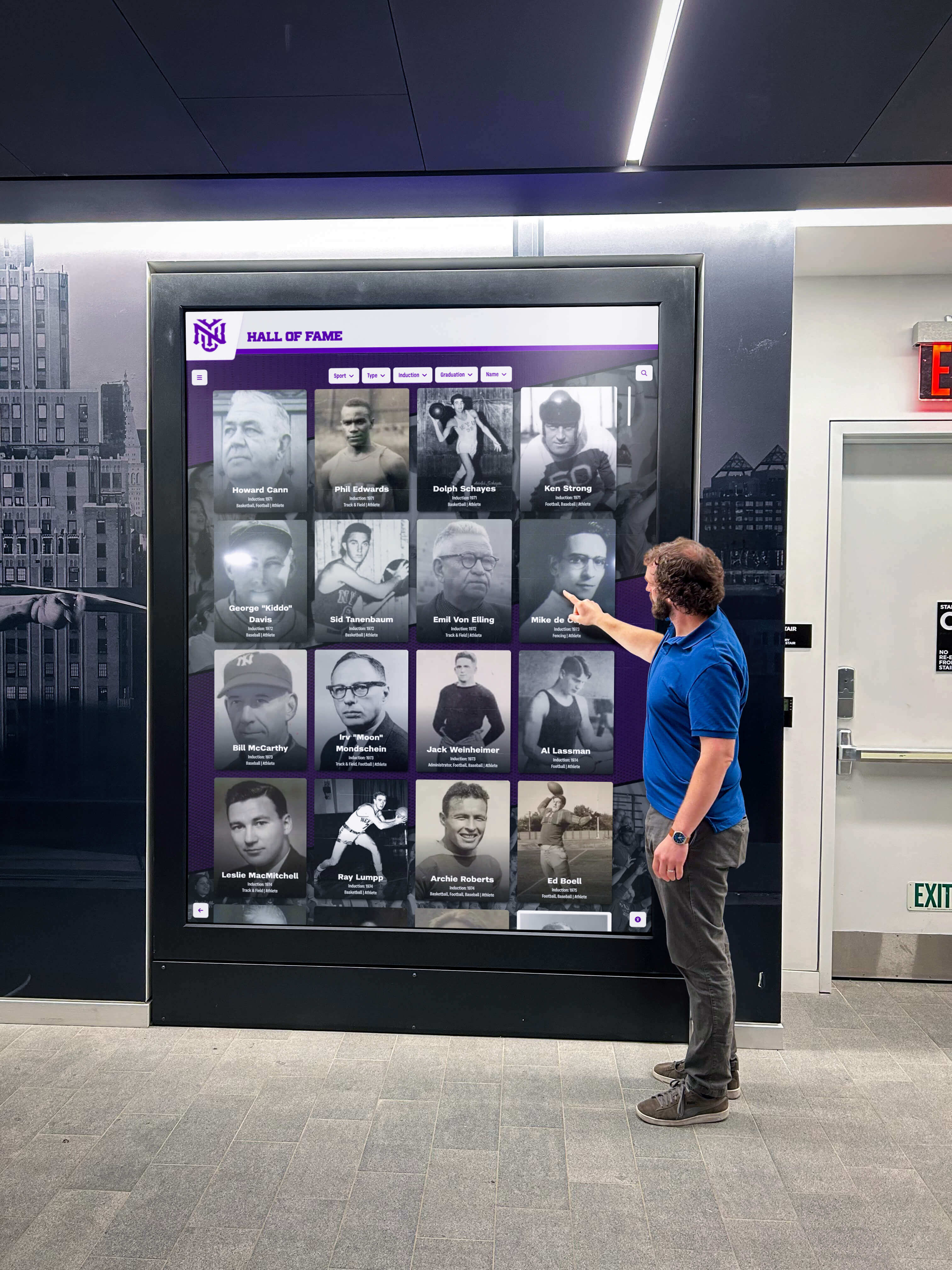
Touchscreen wayfinding systems have proven particularly effective in large, complex environments where visitors need contextual information delivered through interfaces they intuitively understand. The same touchscreen technology that has transformed how schools showcase athletic achievements and how stadiums honor sports legends now brings that intuitive interaction to retail environments.
Implementation considerations for digital wayfinding include map accuracy (updated as tenants change), route optimization (shortest walking paths vs. weather-protected routes), accessibility features (wheelchair-accessible pathways clearly marked), and mobile integration (ability to send directions to smartphones).
Comprehensive Store Discovery and Filtering
Beyond basic wayfinding, sophisticated interactive kiosks enable rich store discovery experiences that help shoppers find retailers matching their specific interests, budgets, and needs. Advanced filtering allows visitors to search by brand name, product category, price range, and current promotions.
For example, a visitor might filter for “athletic apparel” and “currently running sales,” instantly seeing which sports brands have active promotions. Someone looking for children’s toys can view all relevant stores with photos, descriptions, and walking times from their current location. Luxury shoppers seeking high-end brands can filter accordingly, while budget-conscious visitors identify value retailers.
This discovery functionality creates opportunities for impulse shopping and planned purchases that shoppers weren’t initially considering. When a visitor searches for Nike and discovers three other athletic brands located nearby—with one running a 40% off sale—the kiosk has created additional shopping opportunities that benefit multiple tenants.
Store profiles within the discovery interface should include high-quality photos, current hours (especially important for properties where individual stores maintain varying schedules), brand descriptions, product categories carried, and direct integration with current promotional campaigns.
Real-Time Promotional Content and Advertising
Interactive kiosks serve as dynamic advertising platforms that property managers can monetize while providing genuine value to shoppers. The same screens delivering wayfinding assistance can rotate promotional content when idle, highlight mall-wide sales events, showcase individual tenant campaigns, and feature time-sensitive offers.
According to retail industry research, interactive kiosks in malls boost customer engagement by 60%, with a Polish mall study finding visitors interacted with 40% more promotional content after kiosk rollout, translating into higher tenant sales. This engagement stems from the contextual relevance of kiosk-delivered promotions—shoppers actively exploring the property are receptive to information about current deals and special offers.
Property managers can offer premium placements to anchor tenants, rotate co-op advertising campaigns, and provide smaller retailers with affordable digital advertising opportunities that would be cost-prohibitive in traditional media. Kiosks can also promote property-level initiatives like loyalty programs, gift card sales, or seasonal events.
Advanced systems allow promotional content to adapt based on time of day, current mall traffic patterns, upcoming events, and even weather conditions. During rainy weather, kiosks might automatically highlight weather-protected walking routes and indoor retailers. On particularly hot days, promotions for cool beverages at food court locations can appear more frequently.
Event Information and Community Engagement
Modern outlet malls function as community gathering spaces hosting concerts, charity fundraisers, seasonal celebrations, children’s activities, and cultural events. Interactive kiosks provide ideal platforms for communicating event schedules, featuring performer information, displaying real-time updates (“Concert begins in 20 minutes at the South Plaza”), and even offering digital registration for activities.
This community engagement functionality helps properties differentiate themselves as destinations rather than merely shopping centers. Families visiting for a holiday event might extend their stay to shop. Concert attendees arrive early to browse stores. Charity event participants often become regular visitors who associate the property with positive community experiences.
Much like church interactive displays that help congregations stay informed about events and initiatives, outlet mall kiosks can serve as community information hubs that enhance the sense of destination and encourage repeat visits beyond pure shopping motivation.
Accessibility and Multilingual Support
Inclusive design ensures interactive kiosks serve diverse visitor populations effectively. Comprehensive accessibility features include screen positioning at wheelchair-accessible heights, high-contrast display modes for visually impaired users, audio guidance options, and text-to-speech functionality for directions and store information.
Multilingual support has become particularly important in outlet malls that attract international tourists and serve diverse local communities. Leading systems offer content in 10+ languages with instant switching, translated store descriptions, and culturally appropriate interface adaptations. Properties in tourist destinations like Orlando, Las Vegas, or Southern California often find that 30-40% of kiosk interactions occur in languages other than English.
These accessibility and inclusion features aren’t merely compliance checkboxes—they represent genuine service improvements that expand the addressable visitor base and enhance satisfaction across all demographic groups. An elderly shopper who struggles with small print on traditional directories finds large, adjustable text on touchscreens far easier to read. A tourist who speaks limited English navigates confidently when directions appear in their native language.
Core Applications for Outlet Mall Interactive Kiosks
Strategic implementation focuses on specific use cases that deliver immediate value while building foundation for expanded functionality over time.
Interactive Directory and Brand Search
The primary function most visitors seek from mall kiosks is quick brand location. A robust search engine that recognizes common brand names, handles spelling variations (“Calvn Klein” returns Calvin Klein), and understands product categories (“sunglasses” shows all relevant retailers) creates the frictionless experience shoppers expect.
Directory functionality should display alphabetical brand listings, category-based browsing, featured store spotlights, and new tenant announcements. When visitors select a store, they should see location on map, walking directions, current hours, contact information, and active promotions.
Multi-Level Parking and Transportation Integration
Large outlet properties often feature multiple parking areas, garage levels, and shuttle services. Interactive kiosks help visitors remember where they parked, understand shuttle schedules and routes, locate ride-share pickup zones, and find public transportation connections.
Some advanced systems integrate with parking management platforms to display real-time parking availability, directing visitors to areas with open spaces. Others allow guests to input their parking location when they arrive, then retrieve that information later when ready to leave—especially valuable during busy holiday shopping periods when remembering parking locations becomes challenging.
Dining and Amenities Locator
Food courts, restaurants, coffee shops, restrooms, ATMs, customer service desks, and family amenities represent critical infrastructure that visitors need to locate quickly. Interactive kiosks should feature prominent icons for essential amenities, filtering for dietary preferences (vegan options, gluten-free, etc.), child-friendly dining, and sit-down versus quick-service options.
Integrating real-time information—current wait times at popular restaurants, temporarily closed restrooms, or seasonal food options—enhances utility and encourages kiosk use as a trusted information source.
Sales and Deals Aggregation
A “current deals” section that aggregates active promotions across all participating tenants creates enormous value for both shoppers and retailers. Visitors can browse today’s best deals, filter by category, and save favorites to revisit. This aggregation is particularly powerful during major shopping periods like Black Friday, holiday weekends, or back-to-school season when dozens of promotions run simultaneously.
Property managers can incentivize tenant participation by offering premium placement for stores that submit promotion information, creating virtuous cycles where comprehensive promotional data attracts more kiosk users, which drives more traffic to participating stores.
Special Services and Customer Support
Interactive kiosks can streamline customer service by providing instant access to frequently requested information, reducing front-desk bottlenecks. Common applications include gift card balance checking, loyalty program enrollment, lost and found reporting, stroller or wheelchair rental information, and property policy explanations (pet policies, photography rules, etc.).
Some properties integrate building directory functionality that goes beyond retail tenants to include property management offices, security desk locations, and back-office facilities that visitors occasionally need to access.
Benefits for Property Managers and Retail Tenants
While customer experience improvements drive initial kiosk investments, the operational and financial benefits for property managers and tenant retailers justify ongoing commitment and expansion.
Measurable Increases in Dwell Time and Sales
Data from multiple mall implementations demonstrates that improved wayfinding and information access directly correlate with increased visitor dwell time. When shoppers spend less time lost or frustrated and more time actually shopping, per-visit spending increases accordingly.
Research shows that digital signage kiosks lead to up to 31% increases in general sales volume in retail locations. These improvements stem from multiple factors including reduced navigation friction, increased store discovery, promotional awareness, and enhanced overall satisfaction that encourages return visits.
For individual tenants, the impact manifests as increased foot traffic—particularly for stores in less prominent locations that benefit from digital wayfinding directing visitors who might otherwise never discover them. Smaller retailers competing with prominent anchor tenants gain visibility through search functionality and promotional features.
Data Analytics and Visitor Insights
Modern interactive kiosk platforms collect valuable analytics about visitor behavior, preferences, and traffic patterns. Property managers gain insights into most-searched brands (informing leasing strategy), peak usage times (optimizing staffing), common navigation challenges (improving signage), and promotional engagement rates (measuring marketing effectiveness).
Aggregated, anonymized data reveals patterns like which stores visitors frequently search for together, informing strategic tenant placement decisions. If data shows that visitors searching for Nike frequently also search for Adidas, locating these brands near each other creates natural shopping circuits that benefit both tenants.
Analytics also identify information gaps—if hundreds of daily searches occur for “restroom,” property signage for this essential amenity likely needs improvement. If “customer service” ranks among top searches, visitors struggle to locate assistance, suggesting need for clearer desk placement or additional support locations.
Reduced Staffing Pressure and Customer Service Costs
Interactive kiosks reduce repetitive information requests that consume customer service staff time. Instead of answering the same questions about store locations, hours, or restrooms hundreds of times daily, staff can focus on complex issues requiring personal attention.
This efficiency allows properties to maintain quality service levels even during peak periods without proportionally increasing staffing costs. During busy holiday shopping seasons, kiosks essentially scale customer service capacity without adding headcount.
The same technology principles that enable touchscreen displays to reduce staff burden in schools and other institutions apply equally in retail environments, where self-service information access empowers visitors while freeing staff for higher-value interactions.
Revenue Generation Through Advertising
Premium kiosk placements create new revenue streams through advertising sales to tenants, third-party brands, and service providers. Property managers can monetize idle screen time, featured promotions, priority search placements, and seasonal campaigns.
Advertising rates typically tier based on prominence (full-screen idle displays command premium rates versus smaller promotional tiles), duration (monthly campaigns versus daily promotions), and targeting (property-wide versus specific kiosk locations). Anchor tenants often purchase yearly advertising commitments while smaller retailers participate in co-op programs that aggregate multiple brands.
For outlet properties operating on thin margins, advertising revenue from 20-30 strategically placed kiosks can generate substantial annual income that partially or fully offsets implementation and maintenance costs.
Enhanced Brand Image and Competitive Positioning
Properties featuring modern interactive technology communicate investment in visitor experience, creating positive brand associations that influence shopping destination choices. In competitive retail markets where multiple outlet centers compete for the same visitor base, technology amenities become differentiators.
Consumer research consistently shows that shoppers prefer retailers and properties that offer technology-enabled convenience. An NCR report noted that over 70% of shoppers prefer stores with kiosk solutions, indicating strong consumer preference for self-service technology that empowers independent navigation and information access.
Implementation Planning and Best Practices
Successful interactive kiosk deployments require careful planning, stakeholder alignment, and phased rollouts that allow for testing and optimization before full-scale implementation.
Strategic Placement and Density Planning
Kiosk effectiveness depends heavily on strategic placement at high-traffic decision points where visitors naturally pause to orient themselves. Prime locations include main entrances and parking lot connections, central plazas and common areas, intersections between building clusters, food court entries, and restroom corridors.
Density planning balances adequate coverage with budget constraints. Industry best practices suggest one kiosk per 20-30 stores in large outlet centers, with higher density near main entrances and lower density in interior locations where wayfinding becomes easier. Properties should ensure that every visitor encounters at least one kiosk within their first two minutes on property.
Placement considerations also include weather protection for outdoor installations, clear sightlines that allow visibility from multiple approaches, power and network connectivity requirements, and ADA-compliant positioning at accessible heights.
Hardware Selection and Durability Requirements
Outlet mall kiosks must withstand constant use, weather exposure (for outdoor installations), and occasional misuse while maintaining reliable performance. Hardware specifications should include commercial-grade touchscreens (industrial capacitive touch, not consumer-grade), weatherproof enclosures for outdoor units (IP65 rating minimum), anti-glare screens for visibility in varied lighting, and vandal-resistant construction with reinforced mounting.
Screen sizes typically range from 43 inches for secondary locations to 55-65 inches for primary wayfinding kiosks. Double-sided units positioned in open plazas maximize visibility and user capacity while reducing per-screen costs.
Power and connectivity requirements include reliable electrical service (many outdoor locations require trenching for power), network connectivity (hardwired Ethernet preferred over WiFi for reliability), backup power considerations for critical locations, and remote monitoring capabilities that alert maintenance staff to hardware issues.
Software Platform Selection and Integration
The software platform powering interactive kiosks determines functionality, user experience, and long-term flexibility. Key evaluation criteria include intuitive content management systems that allow non-technical staff to update information, integration capabilities with existing property management systems, customization options for branding and interface design, analytics and reporting functionality, and vendor support quality and responsiveness.
Solutions like Rocket Alumni Solutions provide platforms specifically designed for creating engaging touchscreen experiences with intuitive interfaces, comprehensive content management tools, and proven reliability across thousands of installations. While originally developed for educational recognition displays, these purpose-built systems translate effectively to retail environments requiring similar functionality—searchable directories, rich media content, and easy updates by non-technical staff.
Platform selection should also consider scalability (ability to add kiosks and features over time), mobile integration (visitors sending directions to smartphones), API availability for third-party integrations, and compliance with accessibility standards (WCAG 2.1 guidelines minimum).
Content Development and Maintenance Workflows
Even the most advanced hardware and software delivers poor experiences without quality content. Successful implementations establish clear workflows for initial content creation, ongoing updates, promotional content rotation, and quality assurance.
Content responsibilities should be clearly assigned with store directory management (who updates when tenants change), promotional content creation and approval, event information posting, photography and graphic design, and regular accuracy audits. Many properties designate a marketing coordinator as kiosk content manager, with weekly update cycles for promotional content and immediate updates for critical information like hours changes or temporary closures.
Visual content quality particularly impacts user perception—professional store photography, clear wayfinding maps, and polished graphic design communicate professionalism while low-quality content undermines trust in the system.
Phased Rollout and Iterative Optimization
Rather than attempting comprehensive property-wide deployment immediately, successful projects typically follow phased approaches. A pilot phase installs 3-5 kiosks at highest-traffic locations, runs for 60-90 days to gather usage data and identify issues, collects user feedback through brief surveys, and optimizes content and placement based on learnings.
The expansion phase adds kiosks to additional locations using validated hardware and refined content, continues monitoring usage patterns and gathering feedback, and fine-tunes promotional strategies based on engagement metrics. Full deployment completes coverage across the property, establishes steady-state maintenance workflows, and focuses on continuous improvement through regular content refreshes.
This iterative approach reduces risk, allows budget spreading across fiscal years, and ensures final implementation reflects actual usage patterns rather than theoretical assumptions.
Technical Considerations and Integration
Behind user-friendly interfaces lie complex technical systems requiring careful planning for reliability, security, and performance.
Network Infrastructure and Connectivity
Reliable network connectivity forms the foundation for cloud-based kiosk systems that enable centralized content management and real-time updates. Infrastructure requirements include sufficient bandwidth (minimum 10 Mbps per kiosk for video content), network security (segregated VLAN for kiosk traffic), redundancy (backup connectivity for critical locations), and remote management capabilities.
Many outlet properties leverage existing WiFi infrastructure, though hardwired Ethernet connections provide superior reliability for fixed installations. For outdoor locations where trenching for cables is cost-prohibitive, cellular LTE backup provides fallback connectivity.
Content Management and Publishing Workflows
Cloud-based content management systems allow property staff to update kiosk content remotely from any web browser. Best-practice workflows include role-based permissions (limiting editing access to authorized staff), approval processes for promotional content, scheduled publishing (allowing advance preparation of seasonal content), and version control (ability to revert changes if needed).
Integration with property management systems enables automatic synchronization of store directory information, lease terms that control promotional eligibility, and tenant contact information for customer service purposes.
Analytics and Reporting Infrastructure
Comprehensive analytics platforms track user interactions, popular searches, promotional engagement, navigation patterns, and session durations. Reports should be accessible to property management, marketing teams, and potentially participating tenants (aggregated data showing promotional performance).
Privacy considerations require anonymization of individual user data while maintaining useful aggregate insights. Compliance with data protection regulations (CCPA, GDPR for international visitors) mandates clear privacy policies and data handling procedures.
Security and Vandalism Protection
Public-facing technology requires protection against both digital security threats and physical vandalism. Digital security measures include network segmentation isolating kiosk systems from corporate networks, regular software updates and security patches, monitoring for unusual activity patterns, and incident response procedures.
Physical security involves tamper-resistant hardware, surveillance camera coverage of kiosk locations, rapid response protocols for damaged units, and relationships with maintenance vendors for quick repairs.
Future Trends and Emerging Technologies
The interactive kiosk landscape continues to evolve rapidly as new technologies mature and consumer expectations advance.
Artificial Intelligence and Personalization
AI-powered recommendation engines will increasingly suggest stores and products based on user behavior patterns, search history, and even time of day or weather conditions. Natural language interfaces will allow voice-based interaction (“Show me women’s athletic wear with current sales”) rather than requiring manual typing and navigation.
Computer vision could enable virtual try-on experiences, allowing shoppers to see how clothing or accessories look without visiting physical stores, and automatic language detection that switches interface language based on detected user preferences.
Mobile Integration and Omnichannel Experiences
Tighter integration between physical kiosks and mobile apps will allow visitors to continue experiences started on kiosks by sending directions to smartphones, save favorite stores for later reference, and receive notifications when they’re near saved stores or active promotions.
QR code integration enables quick mobile access to store information, promotional details, or loyalty programs discovered on kiosks. Some properties are experimenting with personal shopping assistants where users build shopping lists on mobile apps that generate optimized walking routes displayed on kiosks.
Augmented Reality Wayfinding
AR technology overlaid on smartphone cameras could provide turn-by-turn navigation through complex properties, with visual arrows floating in real-world views directing visitors to destinations. Kiosks would serve as starting points for these AR experiences, allowing users to activate phone-based navigation with a single tap.
Sustainability Tracking and Gamification
Properties focused on sustainability might integrate features showcasing green initiatives, eco-friendly retailers, or allowing visitors to track their walking distance and “carbon savings” versus driving between separate stores. Gamification elements could reward frequent visitors, encourage exploration of new stores, or tie to loyalty programs.
Integration with Digital Recognition Platforms
The same technology infrastructure powering digital recognition walls and interactive displays in schools increasingly finds applications in retail environments. Outlet malls could feature digital recognition boards for top-performing tenants, community sponsor acknowledgment, or local charity partnerships—creating community connections that extend beyond pure commerce.
Measuring Success and ROI
Quantifying interactive kiosk value ensures continued investment support and guides optimization efforts.
Key Performance Indicators
Essential metrics for evaluating kiosk performance include daily interaction counts (total users and sessions per kiosk), search queries (most common searches and search success rates), promotional engagement (clickthrough rates on featured content), session duration (average time spent per interaction), and mobile integration (directional content sent to phones).
Operational metrics track system uptime and reliability, content freshness (time since last update), and maintenance response times.
Visitor Satisfaction Assessment
Periodic visitor surveys capture subjective satisfaction with kiosk functionality, perceived ease of use, content relevance, and overall impact on shopping experience. Simple post-interaction surveys (“Did this help you find what you needed?”) provide immediate feedback on effectiveness.
Mystery shopping exercises where evaluators use kiosks to complete specific tasks reveal usability issues and content gaps that analytics alone might miss.
Financial Impact Analysis
Correlating kiosk implementation with tenant sales data (where available through property management systems) quantifies direct revenue impact. Many properties conduct A/B testing by phasing rollouts and comparing performance between buildings with kiosks versus those without.
Advertising revenue provides direct financial returns, while reduced customer service costs (measured through staff time tracking) deliver ongoing operational savings.
Continuous Improvement Processes
Regular review cycles (quarterly minimum) should examine analytics trends, gather stakeholder feedback from tenants and property staff, identify content gaps or outdated information, evaluate new feature requests, and benchmark against industry best practices.
Successful programs treat interactive kiosks as evolving platforms rather than static installations, continuously refining functionality based on actual usage patterns and changing visitor expectations.
Transform Your Outlet Mall Experience with Interactive Kiosks
Purpose-built interactive touchscreen platforms like Rocket Alumni Solutions provide the intuitive interfaces, comprehensive content management tools, and proven reliability that outlet mall properties need to enhance visitor experiences and drive measurable results. Whether you're planning your first kiosk installation or expanding an existing system, our team brings expertise from thousands of successful interactive display implementations across diverse environments.
Conclusion
Interactive touchscreen kiosks have evolved from experimental technology to essential infrastructure in modern outlet mall environments. As properties expand in size and complexity while visitor expectations for seamless, technology-enabled experiences continue rising, digital wayfinding and information systems deliver measurable benefits to shoppers, property managers, and retail tenants alike.
The most successful implementations recognize that interactive kiosks represent more than digital replacements for static directories—they’re comprehensive platforms for visitor engagement, promotional communication, data collection, and revenue generation. Properties that invest thoughtfully in strategic placement, quality content, and continuous optimization create competitive advantages that translate into increased traffic, higher satisfaction, and improved financial performance.
Solutions like Rocket Alumni Solutions demonstrate how purpose-built interactive platforms originally designed for educational recognition and athletic celebration translate effectively to retail environments requiring similar functionality—intuitive interfaces, rich searchable content, easy updates by non-technical staff, and reliable performance under constant use. These proven systems allow outlet properties to implement sophisticated kiosk programs without the complexity and risk of custom development.
As retail continues evolving toward experiential destinations that blend shopping, entertainment, and community engagement, interactive technology infrastructure becomes increasingly central to property differentiation and success. Outlet malls that recognize this shift and invest accordingly position themselves to thrive in an increasingly competitive and technology-driven retail landscape.
Related Resources
For additional insights on interactive display technology and implementation strategies: