Intent: Demonstrate how interactive kiosk software serves recognition and engagement functions at fundraising events, galas, and public venues.
When organizations host signature fundraising galas, community celebrations, or public recognition events, creating memorable engagement experiences that honor donors, showcase impact stories, and inspire continued generosity becomes paramount. Traditional event elements—printed programs, static displays, brief award presentations—offer limited interaction and disappear when guests depart. Meanwhile, organizations seek innovative approaches that transform passive attendees into active participants while extending event impact beyond single evenings.
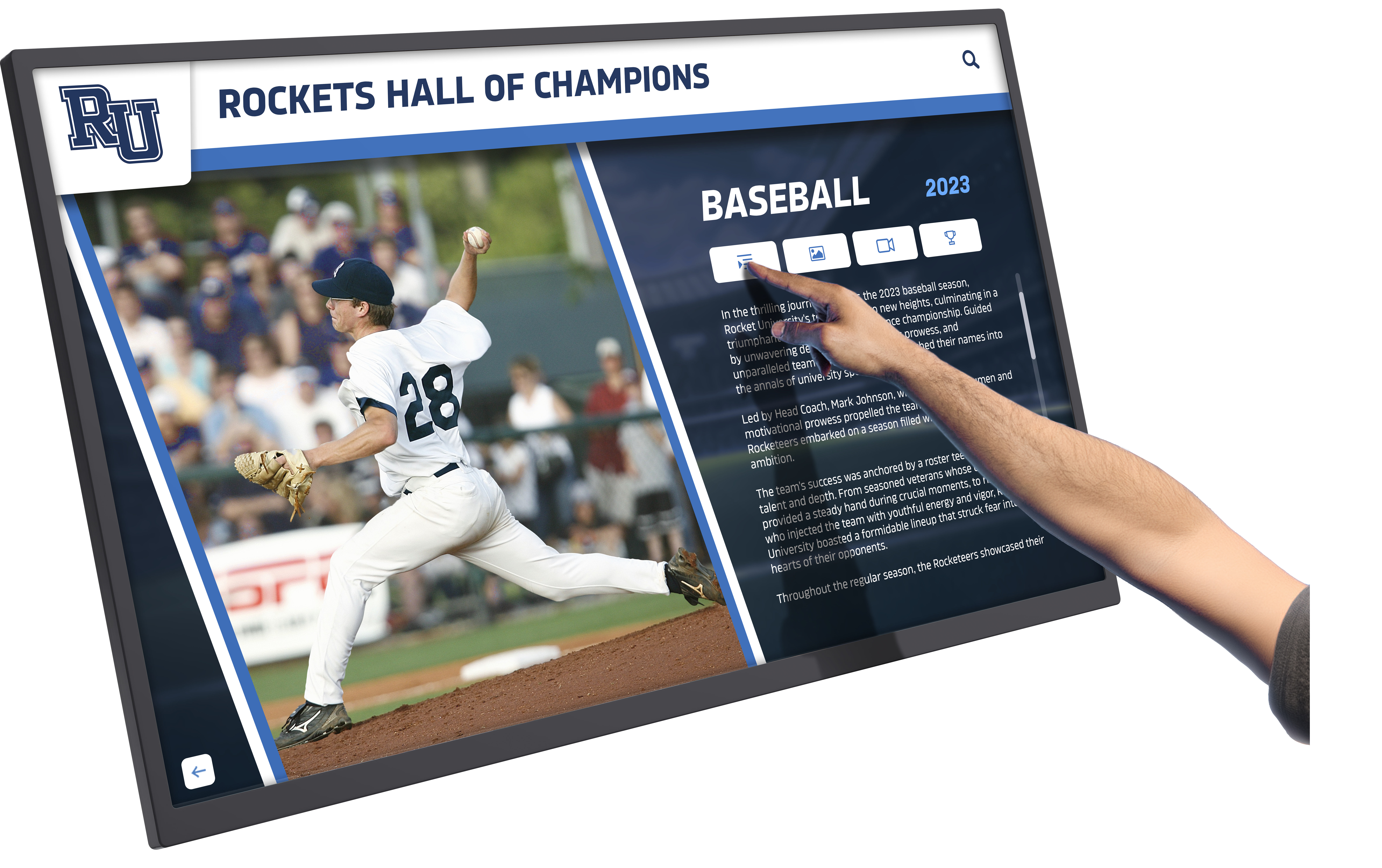
Interactive kiosk software designed for public use and event applications solves these challenges by creating self-service recognition experiences where guests explore donor profiles, browse achievement galleries, search honoree databases, and engage with impact content at their own pace. These touchscreen systems function as dynamic “photo booths” for recognition—not capturing images, but rather displaying curated content that celebrates contributors, documents organizational history, and demonstrates philanthropic impact through engaging visual interfaces.
According to event technology research, interactive displays at fundraising events increase guest engagement duration by 40-60% compared to traditional static recognition approaches, creating more touchpoints for donor stewardship and mission storytelling.
This comprehensive guide explores how organizations implement interactive kiosk software for public event recognition, creating touchscreen experiences that honor donors during galas, preserve event content for ongoing access, and build engagement systems serving communities long after celebrations conclude. Whether planning annual fundraisers, installing permanent lobby recognition, or seeking innovative donor stewardship approaches, these frameworks provide strategies for leveraging kiosk technology effectively.

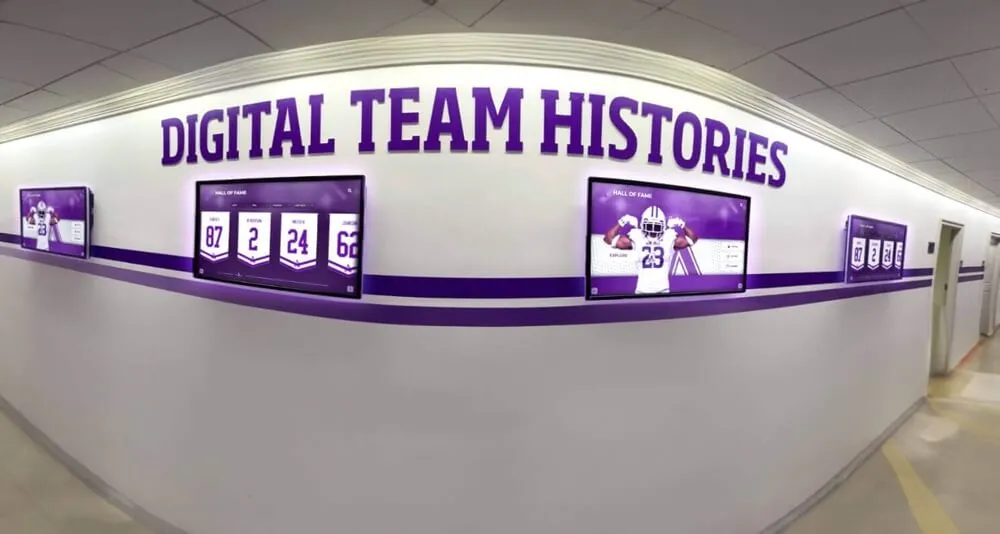
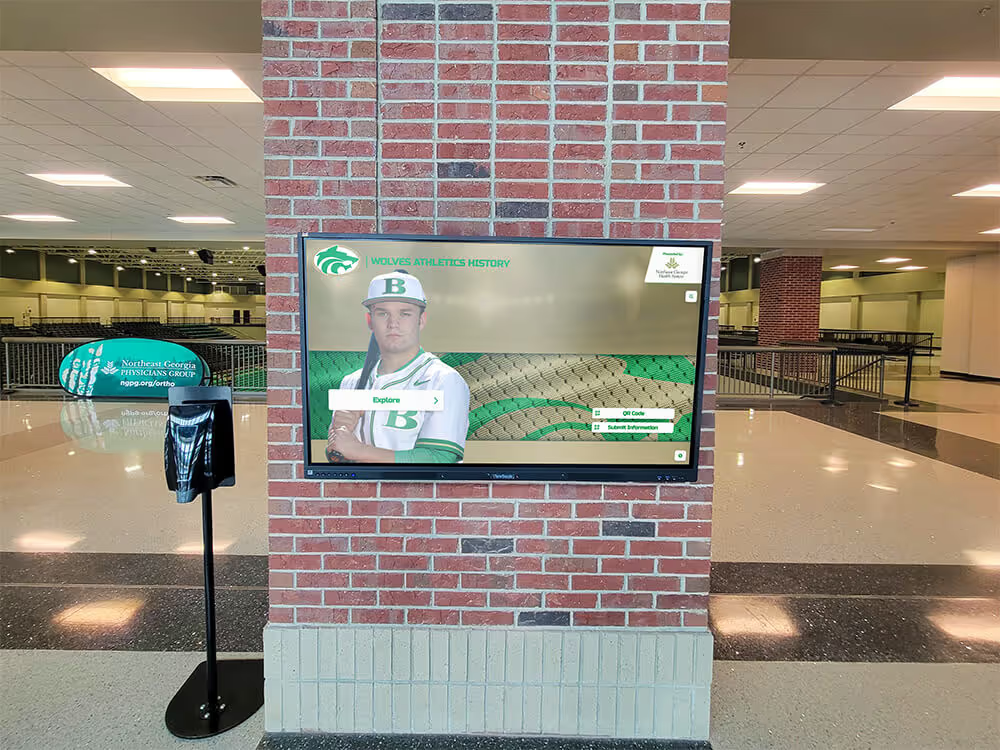
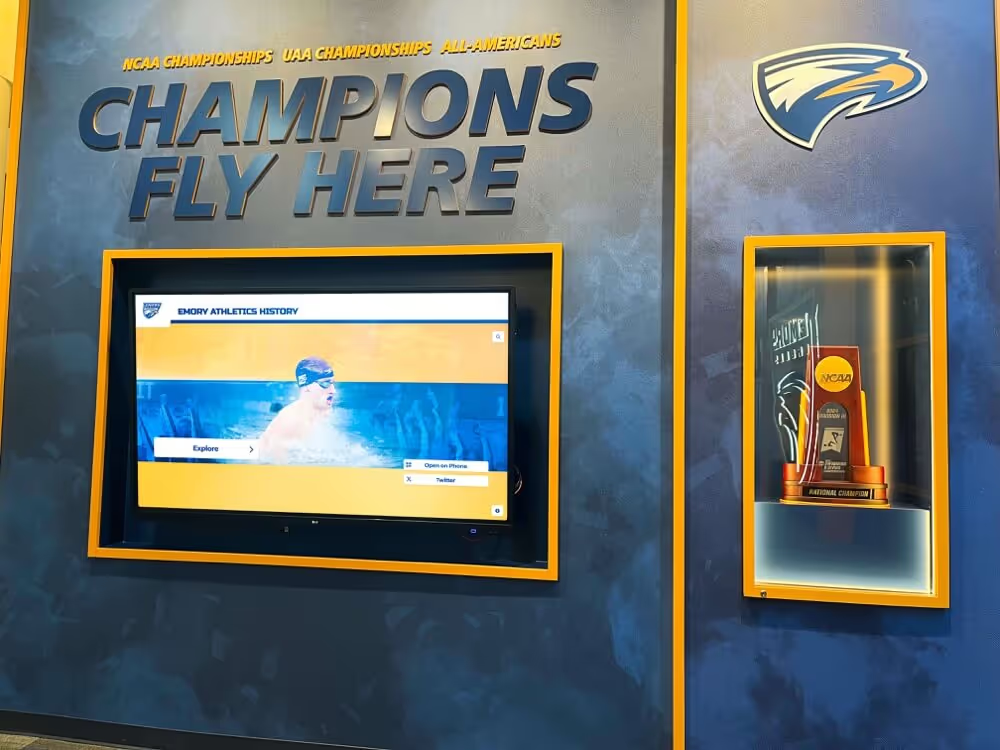
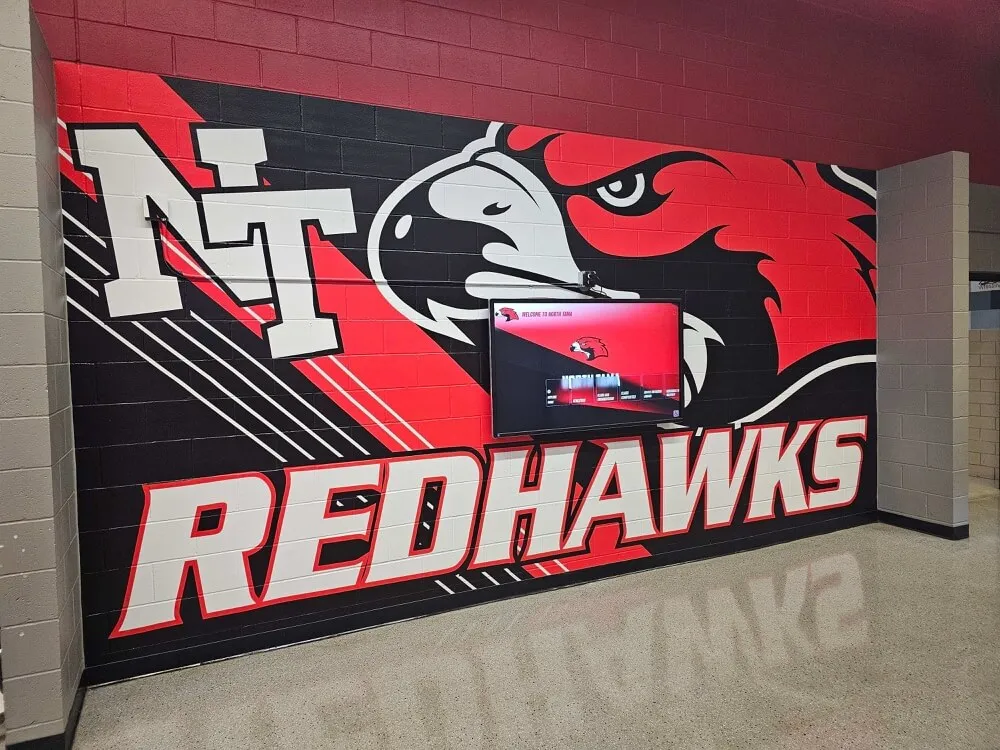
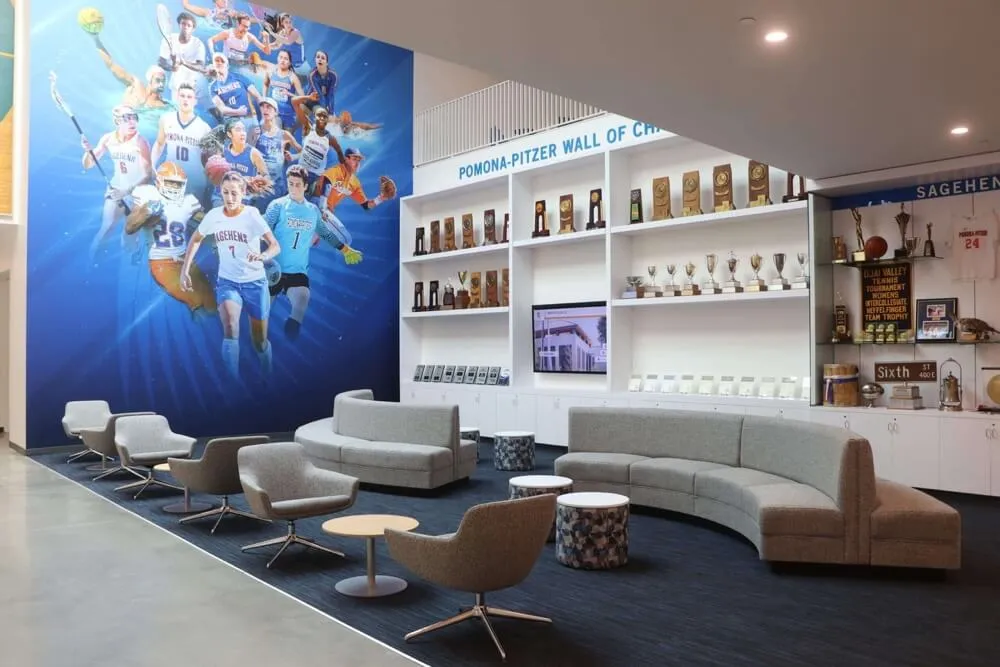
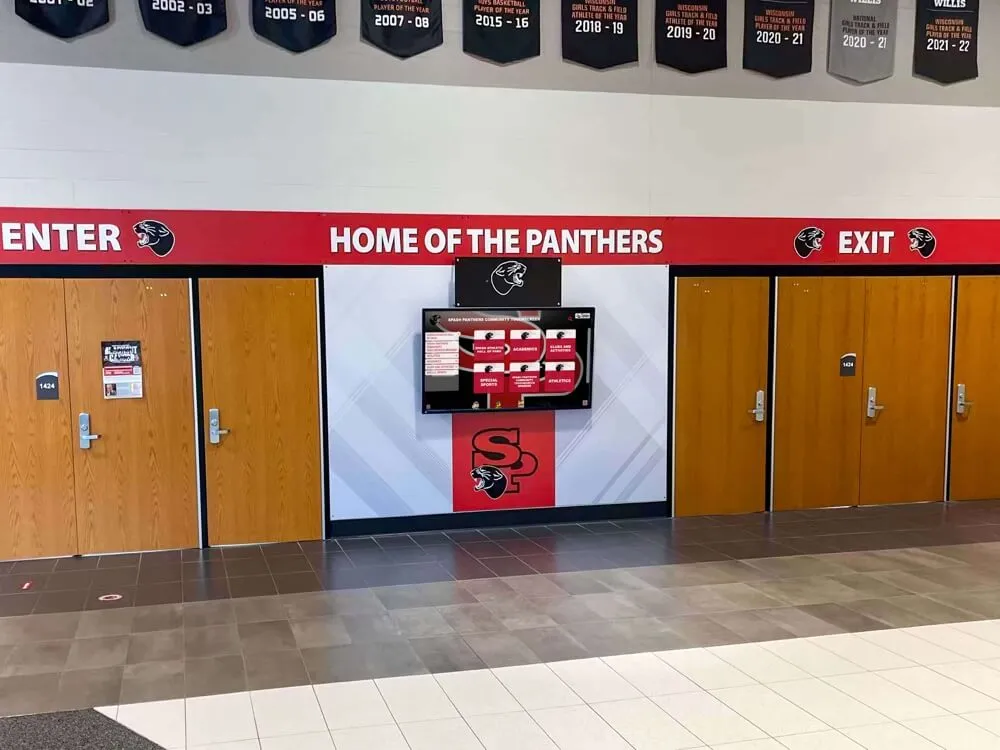
Interactive kiosk software creates engaging self-service recognition experiences at events and in public spaces
Understanding Kiosk Software for Event Recognition Applications
Before exploring implementation strategies, understanding what distinguishes recognition-focused kiosk software from consumer photo booth or generic display applications helps organizations select appropriate solutions.
What Recognition Kiosks Provide Beyond Photo Booths
While consumer photo booths capture and print images for entertainment, recognition kiosks serve fundamentally different purposes:
Content Display and Exploration
Recognition kiosks function as interactive display systems showcasing:
- Donor directories with searchable databases of contributors at all giving levels
- Award recipient galleries featuring honoree biographies, accomplishments, and photos
- Event program archives preserving gala content, sponsor recognition, and participation records
- Impact storytelling through videos, infographics, and testimonial content
- Historical timelines documenting organizational evolution and milestone achievements
- Campaign progress visualization demonstrating community support and fundraising momentum
These content-focused applications transform kiosks into engagement platforms rather than image capture devices, serving stewardship and mission communication objectives.
Self-Service Exploration Enabling Personal Discovery
Unlike scripted event presentations where all attendees receive identical information in fixed sequences, interactive kiosks enable personalized exploration. Guests can:
- Search for their own donor recognition or find family members and friends
- Browse content areas matching personal interests (specific programs, causes, or years)
- Spend as much or as little time as desired exploring available information
- Return multiple times throughout events discovering new content
- Share findings with companions, discussing donors or honorees they recognize
This self-directed exploration creates more meaningful engagement than passive viewing, as guests actively pursue information personally relevant to them. Learn about designing touchscreen experiences that engage users through intuitive navigation and compelling content.
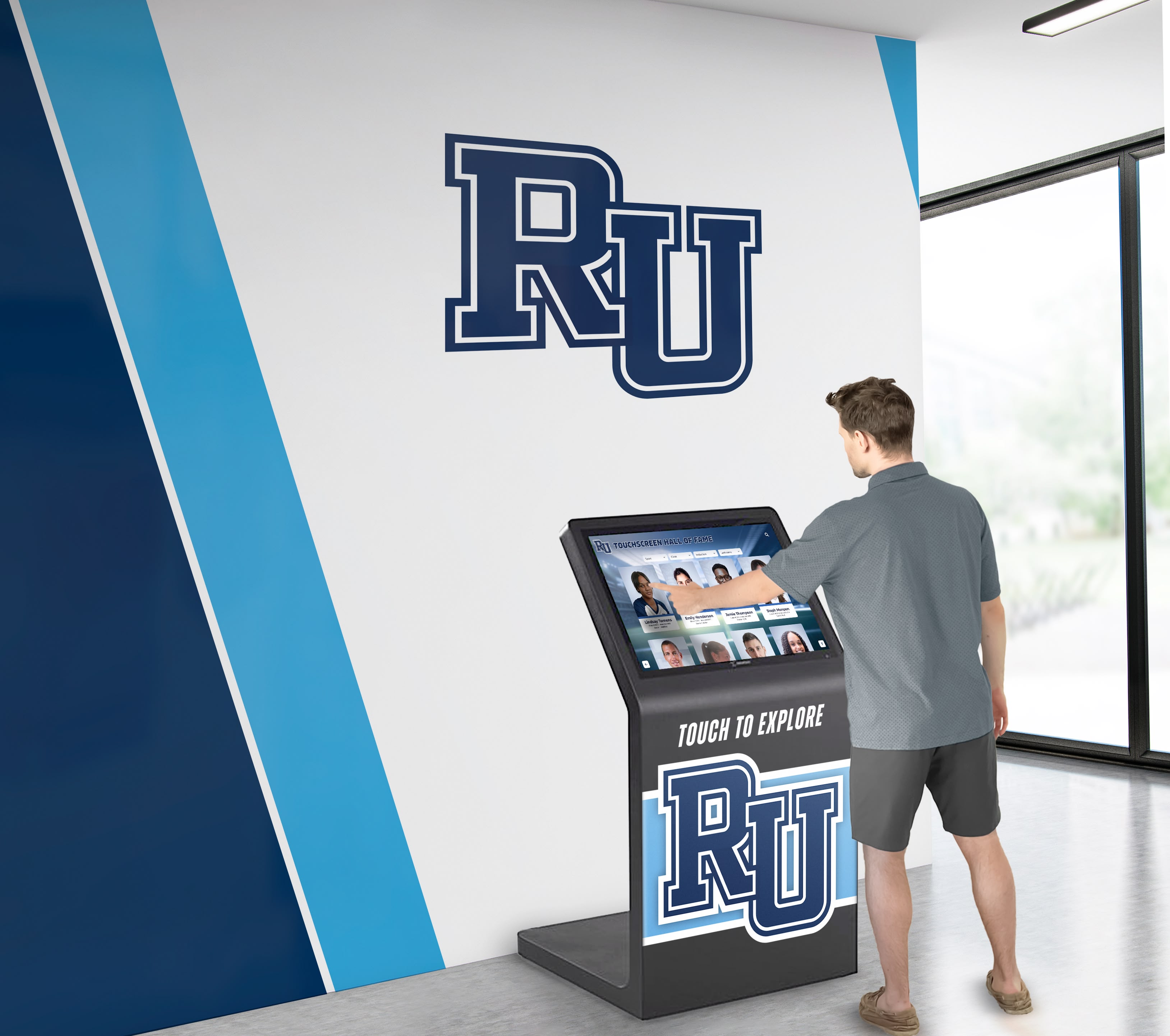
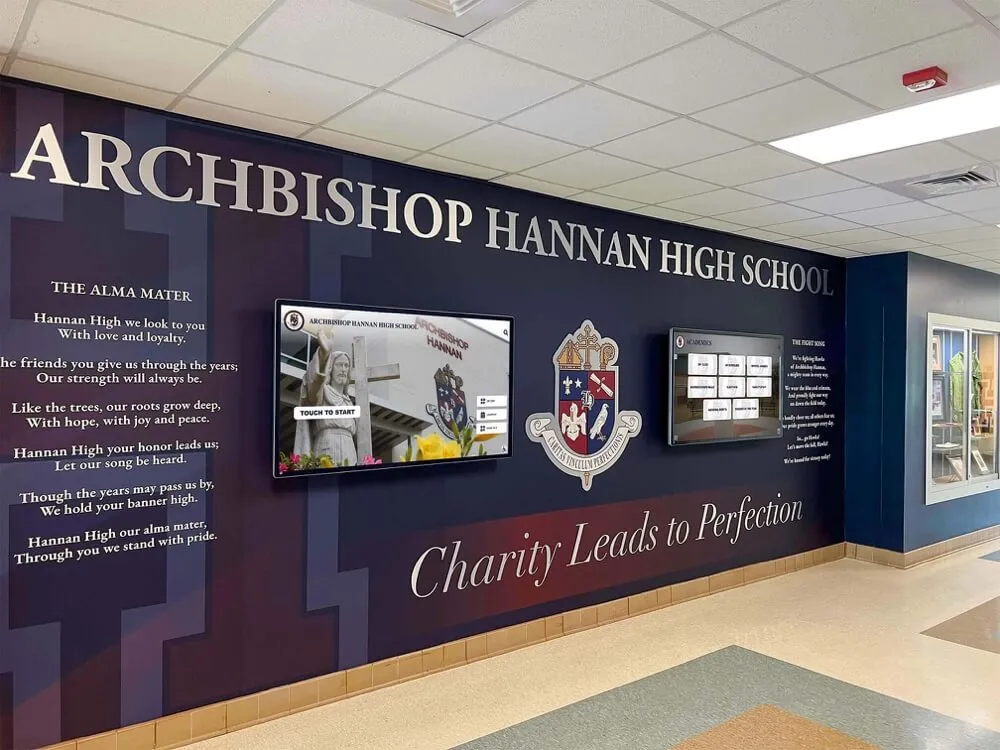
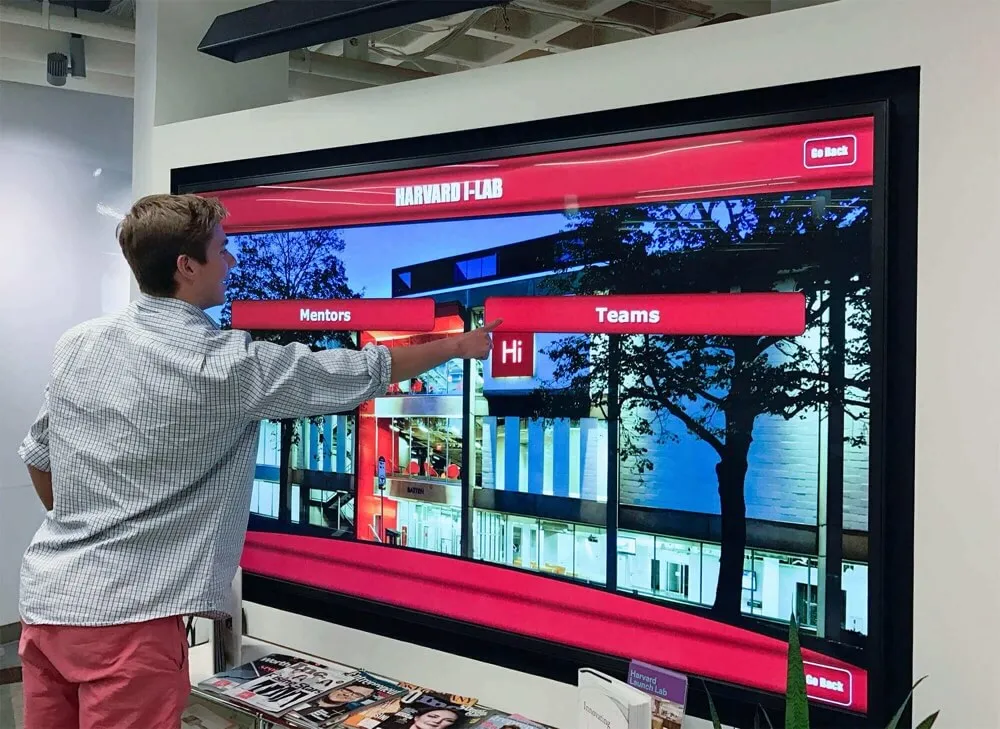
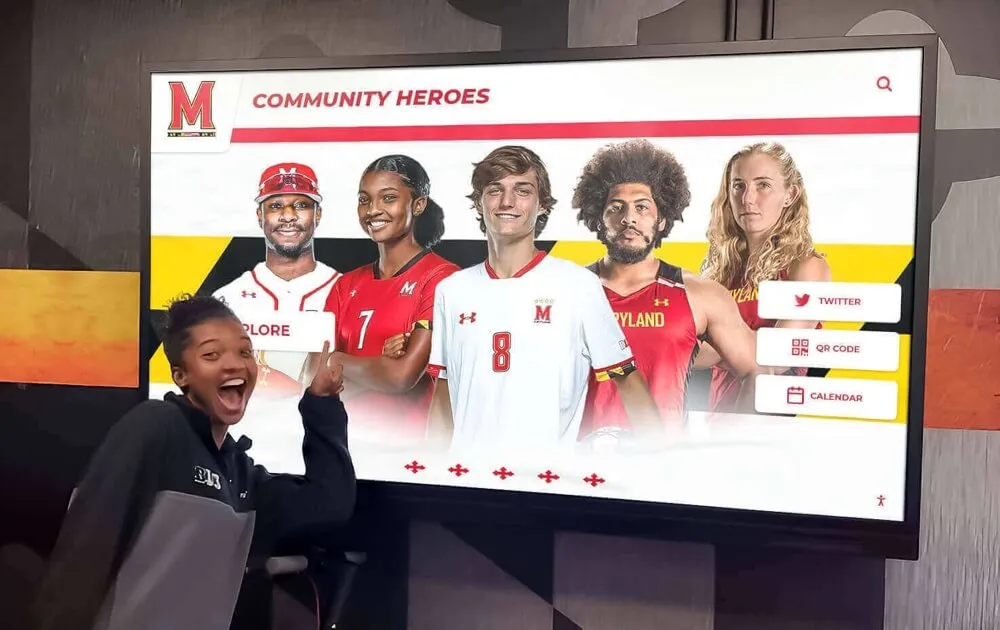
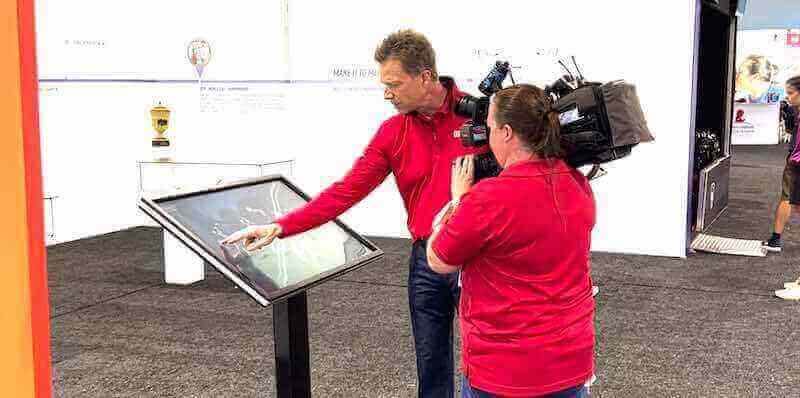
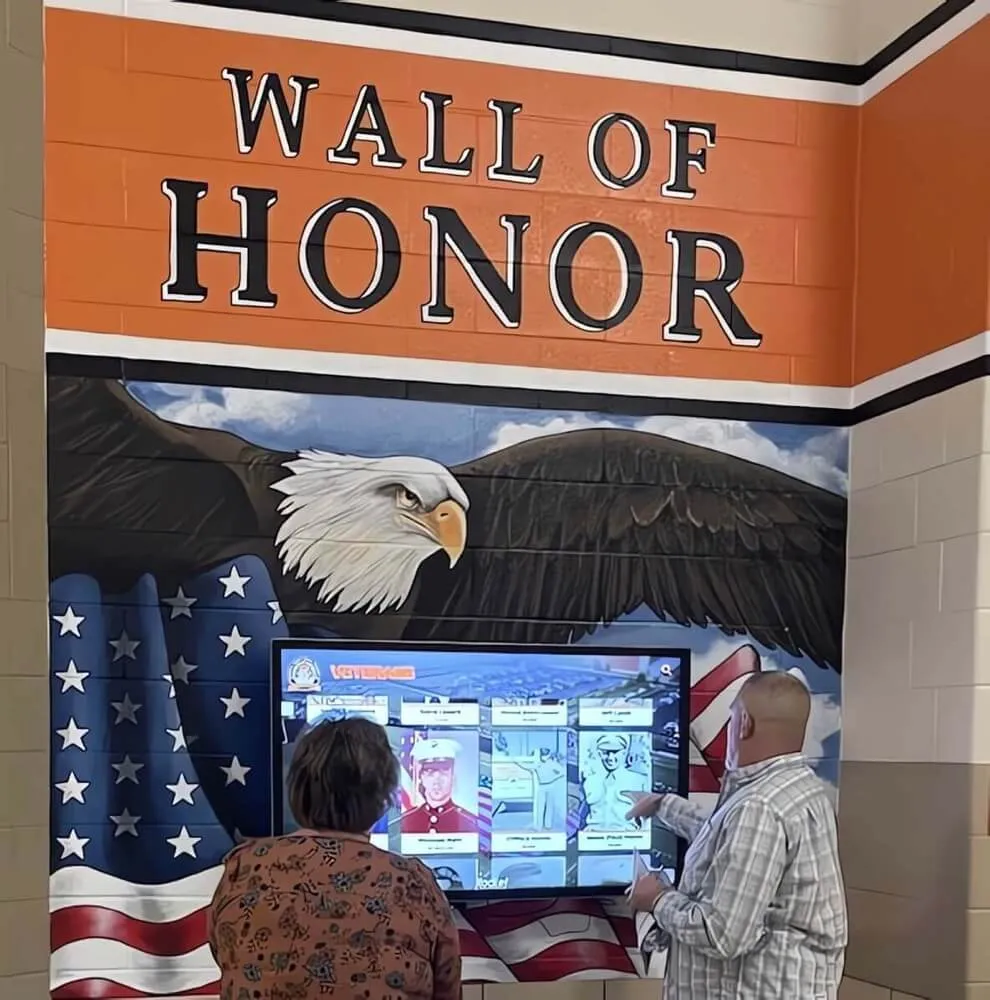
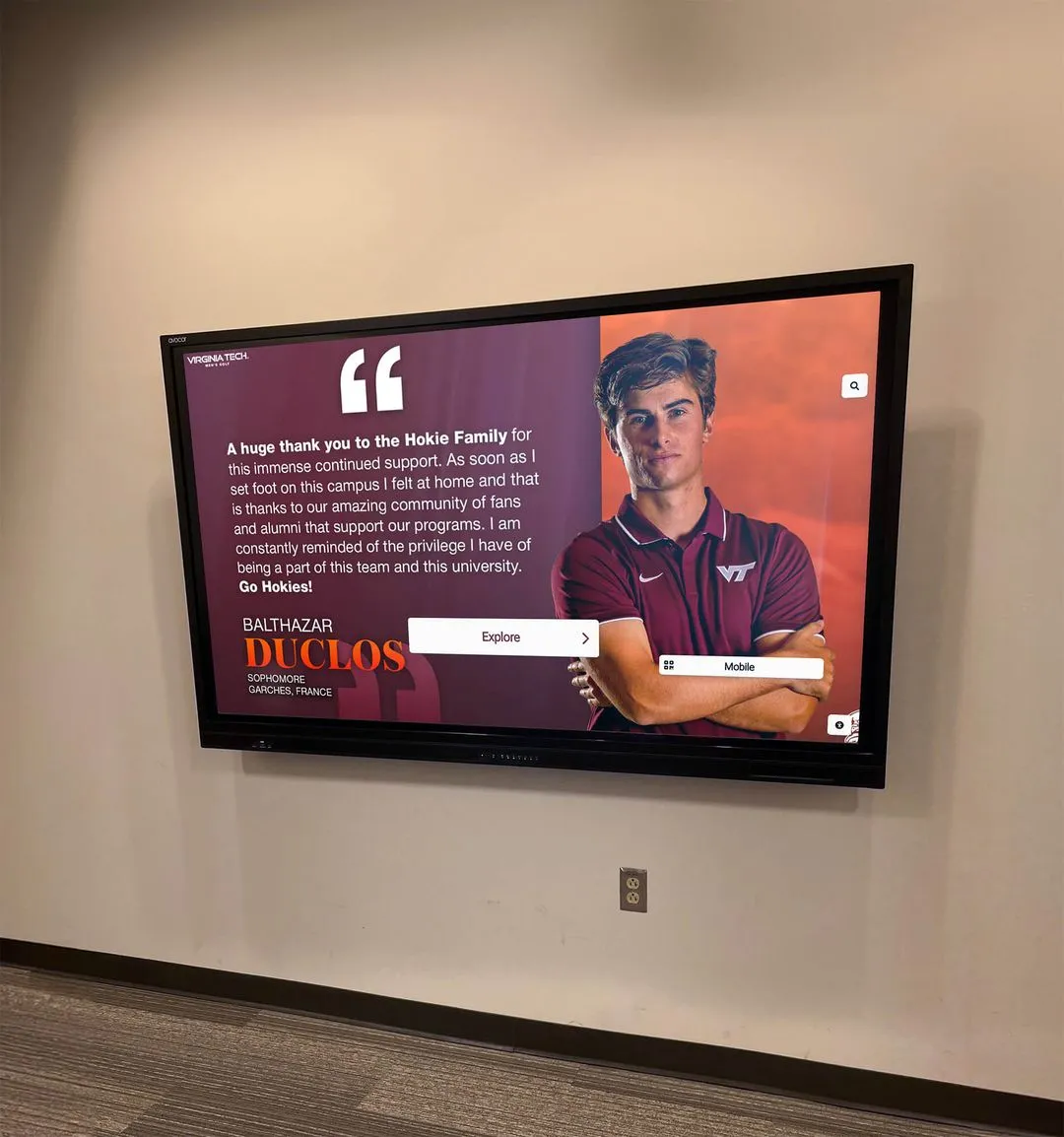
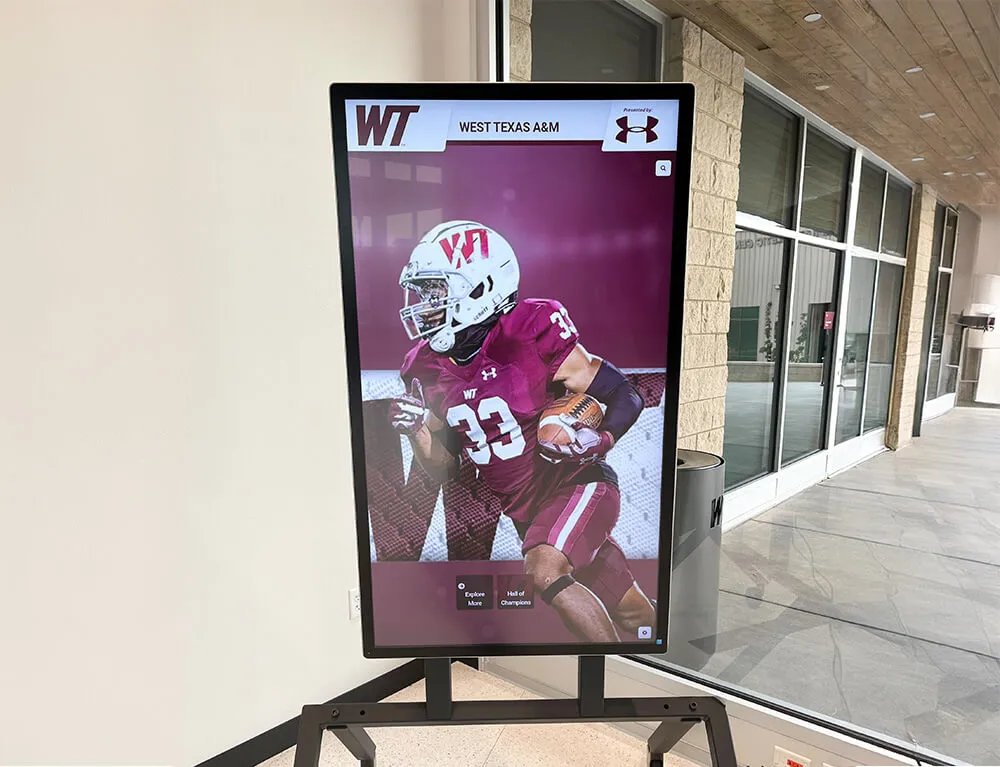
Self-service kiosk interfaces allow event guests to explore recognition content at their own pace
Permanent Installation Versus Temporary Event Deployment
Recognition kiosk software typically supports both temporary event deployment and permanent installation:
Temporary Event Applications: Organizations deploy portable kiosks at annual galas, capital campaign celebrations, donor appreciation events, community gatherings, or milestone anniversary celebrations, then relocate or store equipment between events.
Permanent Public Installations: Kiosks installed in lobby areas, development offices, event spaces, or campus locations provide year-round recognition access for visitors, prospective donors, staff, and community members.
Many organizations implement hybrid approaches, maintaining permanent lobby kiosks while deploying additional temporary units during major events to accommodate higher guest volumes.
Key Capabilities Required for Public Recognition Kiosks
Effective recognition kiosk software must provide specific functionality beyond generic display applications:
Robust Search and Browse Functionality
Users need multiple pathways to discover content:
- Name-based search finding specific donors or honorees quickly
- Filtering by giving level, campaign, fund designation, or recognition tier
- Chronological browsing showing donors or award winners by year
- Category navigation organizing content by program area or achievement type
- Random feature rotation ensuring all recognition receives visibility
- Related content linking connecting donors to impact stories or programs they support
According to user experience research, effective search functionality ranks as the most critical feature for public information kiosks, as visitors quickly abandon systems where finding desired content proves difficult.
Multimedia Content Support
Recognition kiosks should accommodate diverse content types:
- High-resolution photography displaying donors, honorees, facilities, and programs
- Video integration for donor testimonials, impact stories, or event footage
- PDF document viewing for archived gala programs, annual reports, or campaign materials
- Infographic and data visualization displaying giving statistics or outcome metrics
- Audio content when appropriate for accessibility or storytelling enhancement
Rich multimedia capabilities transform recognition from simple name listings to compelling storytelling that communicates mission and demonstrates impact. Explore comprehensive approaches to digital donor walls that integrate multimedia storytelling effectively.
Intuitive Touch Interface Design
Public kiosks serve users with varying technical comfort levels, requiring:
- Large touch targets sized appropriately for finger interaction
- Clear visual hierarchy guiding attention to primary actions
- Minimal learning curve with familiar gestures (tap, swipe, scroll)
- Onscreen instructions clarifying interaction methods
- Consistent navigation patterns throughout the experience
- Home or reset functionality allowing fresh starts
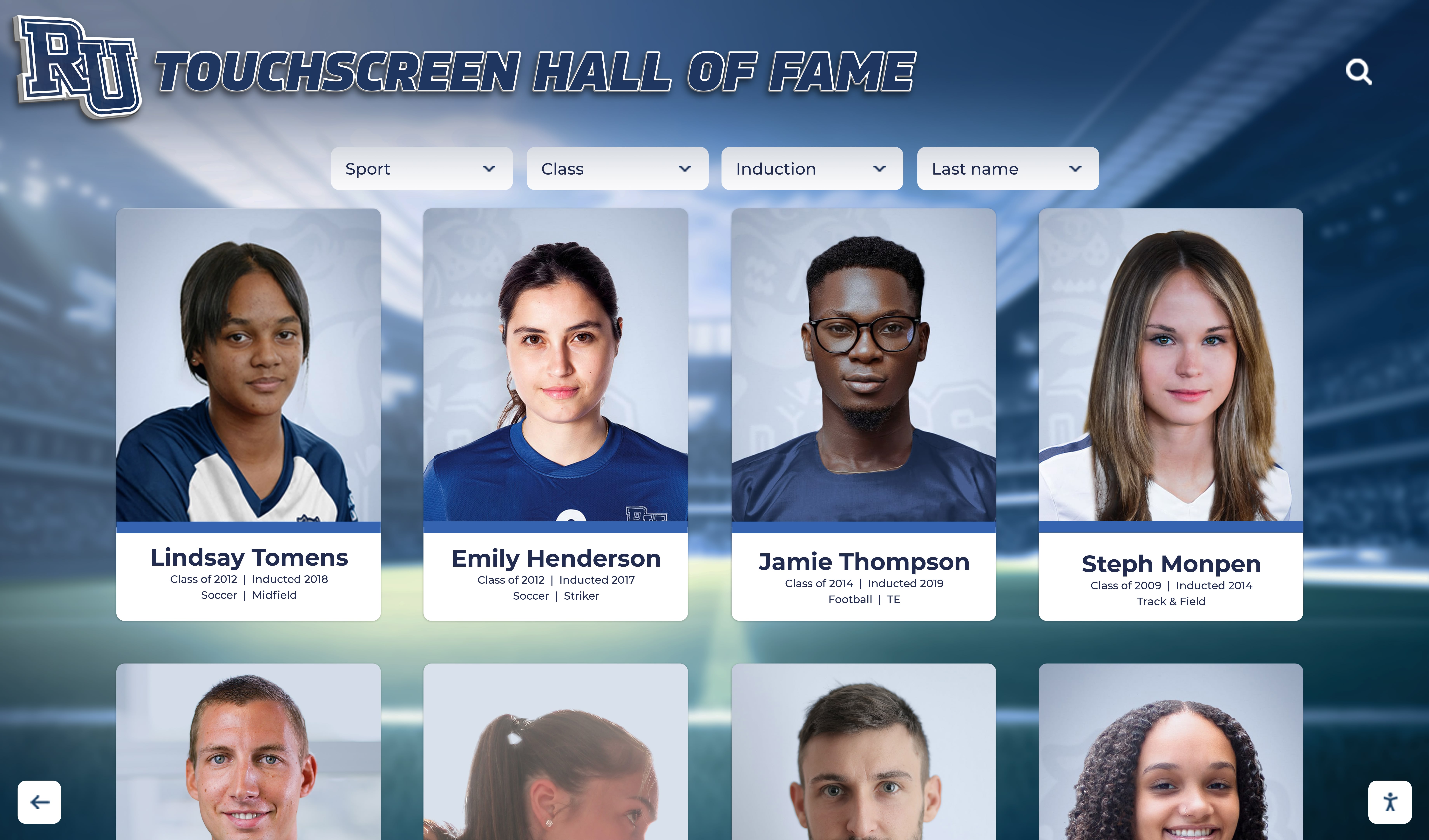
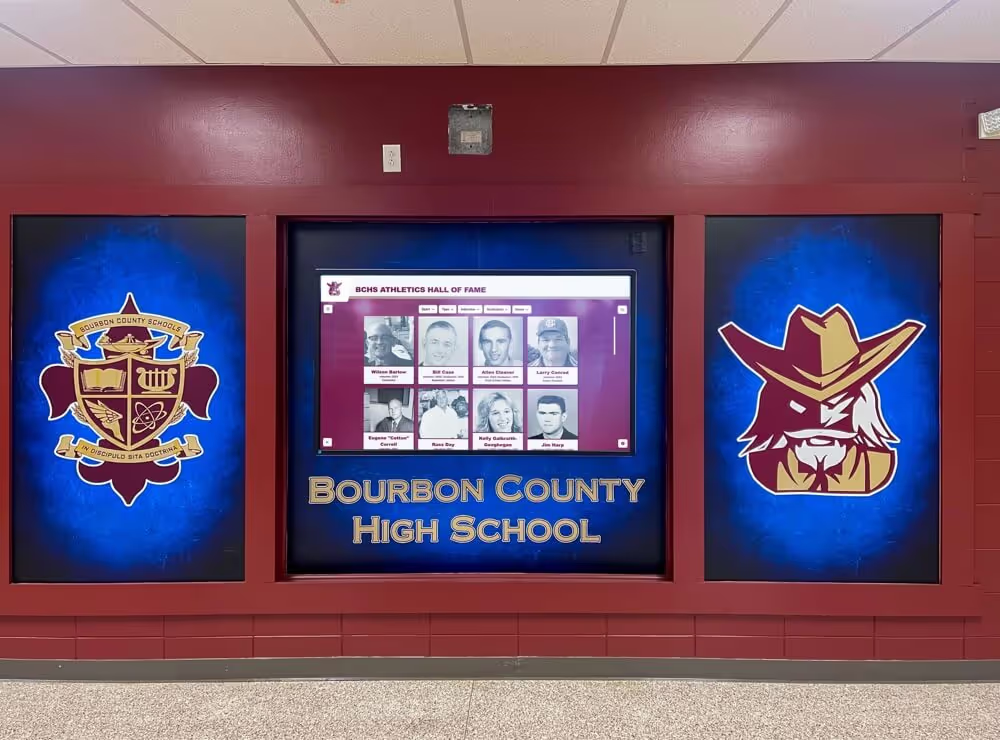
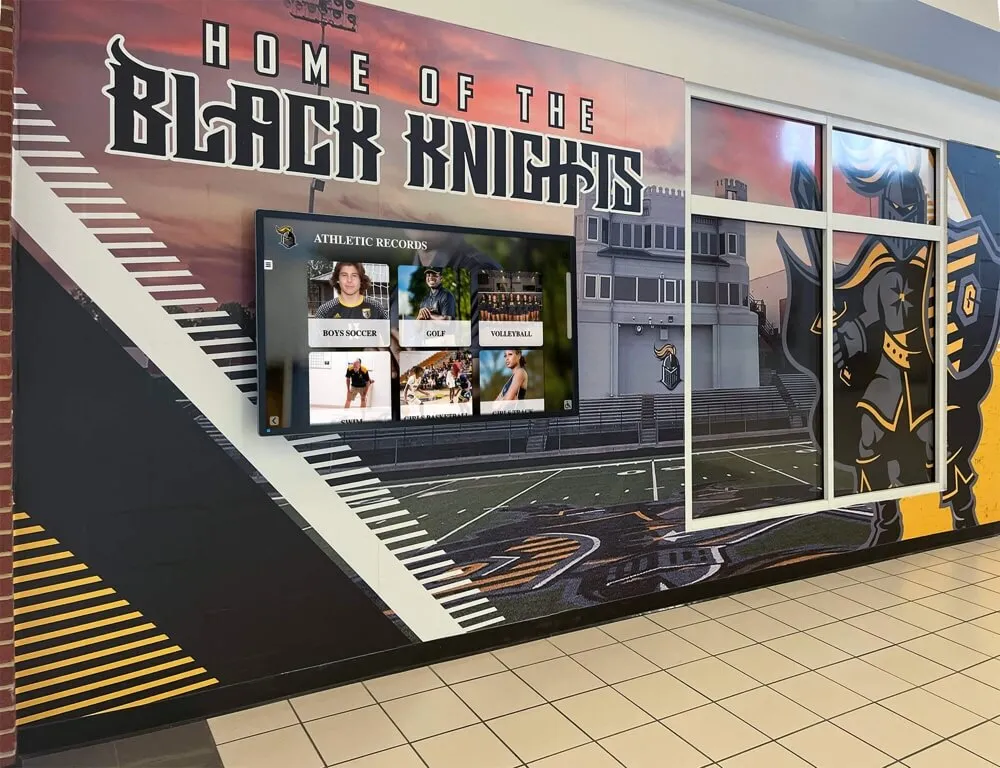
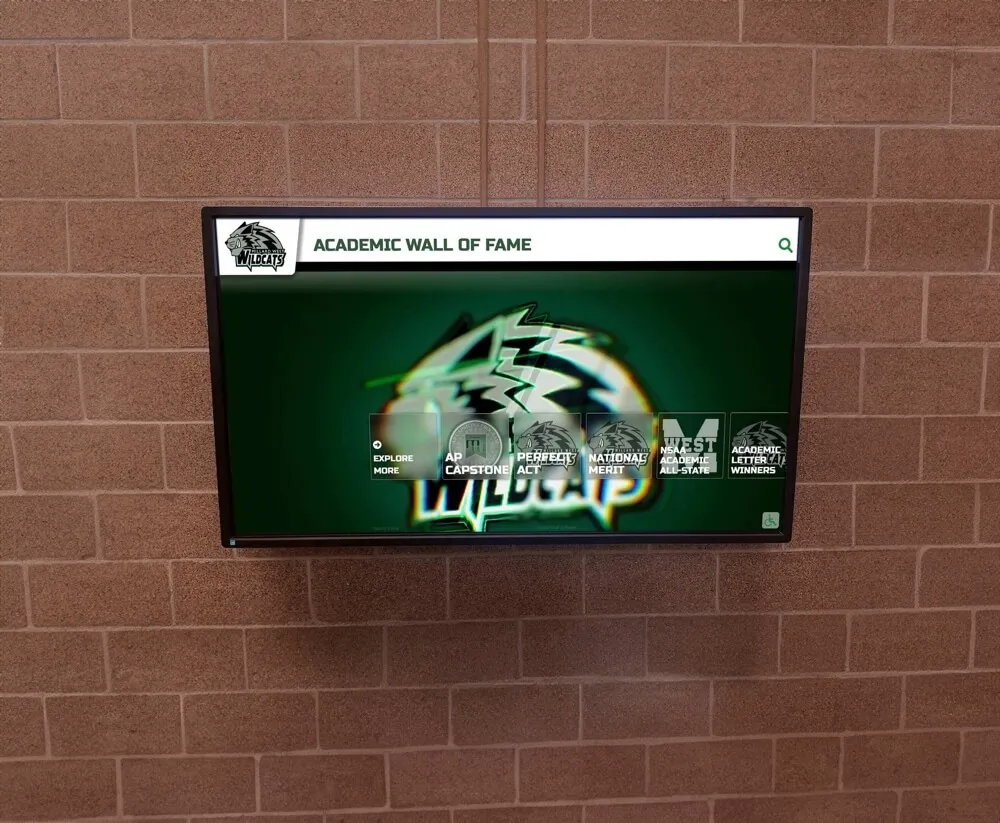
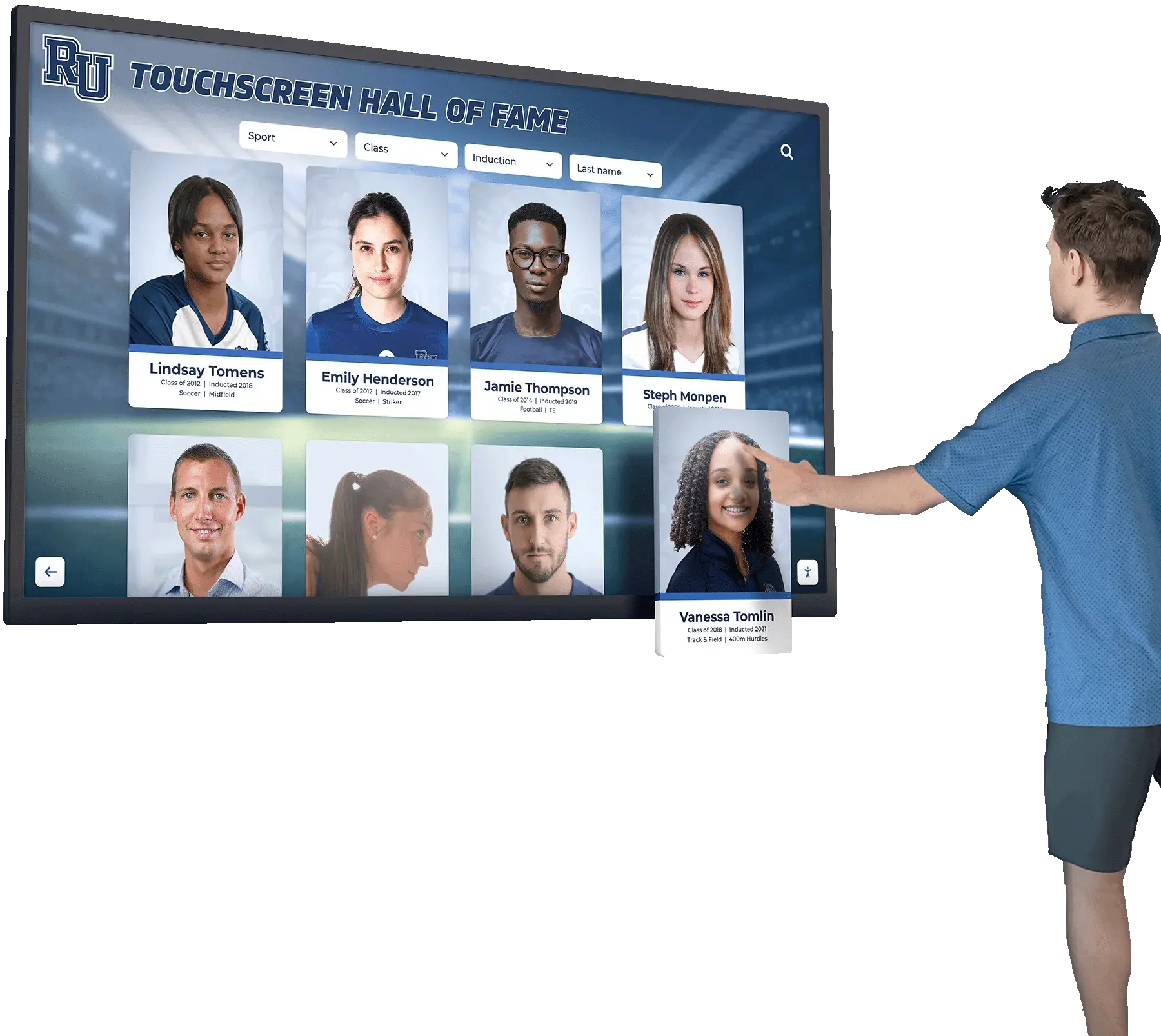
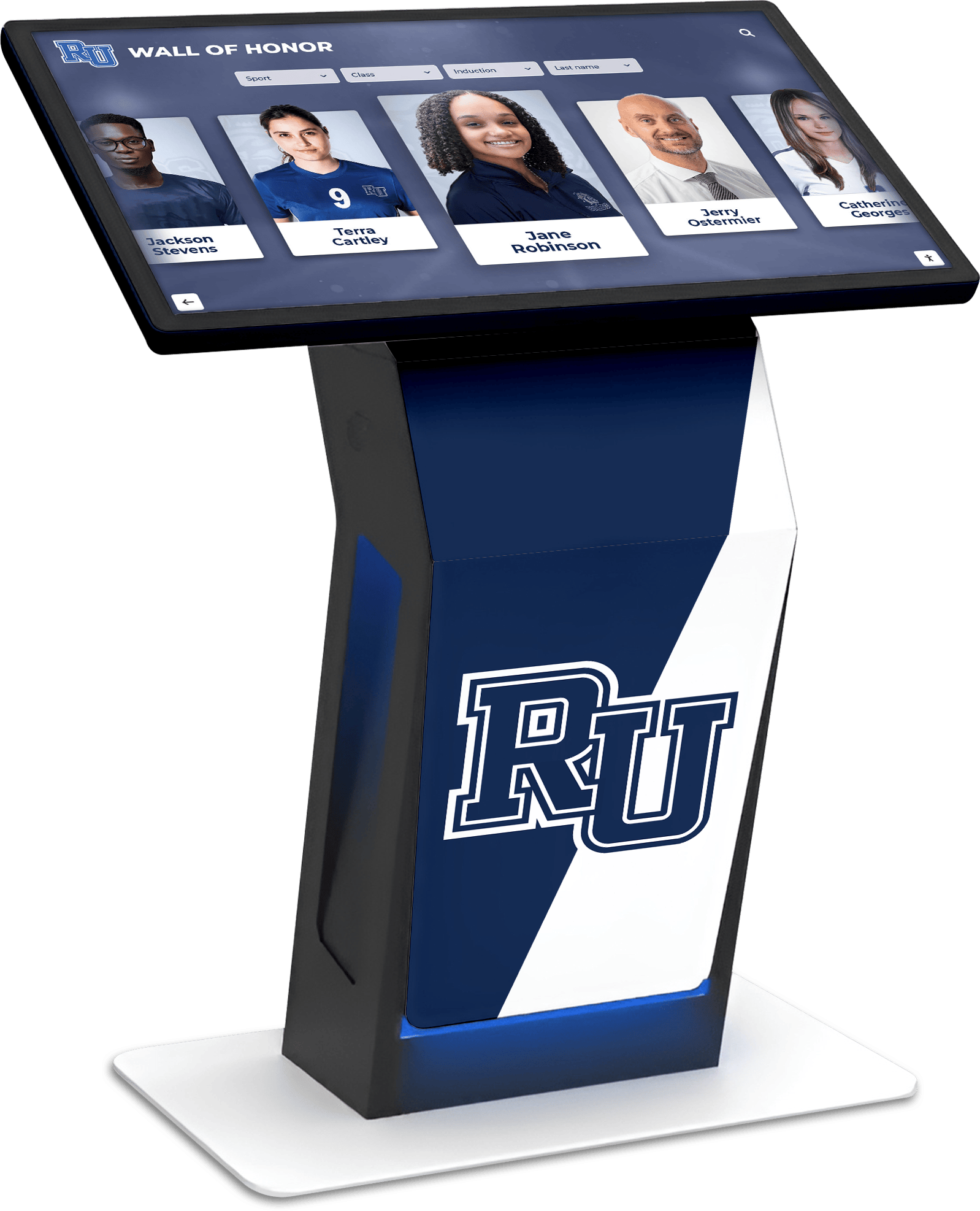
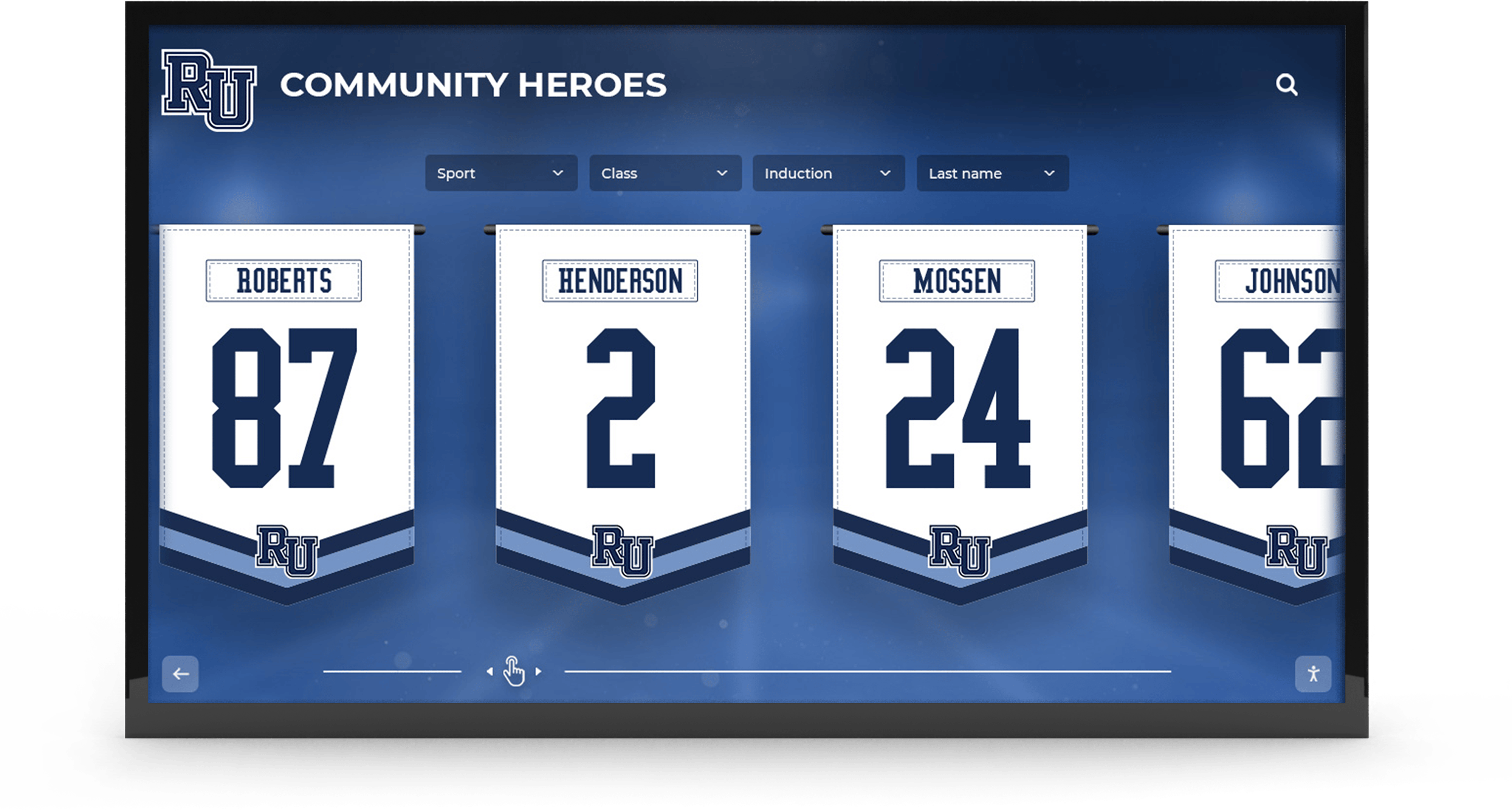
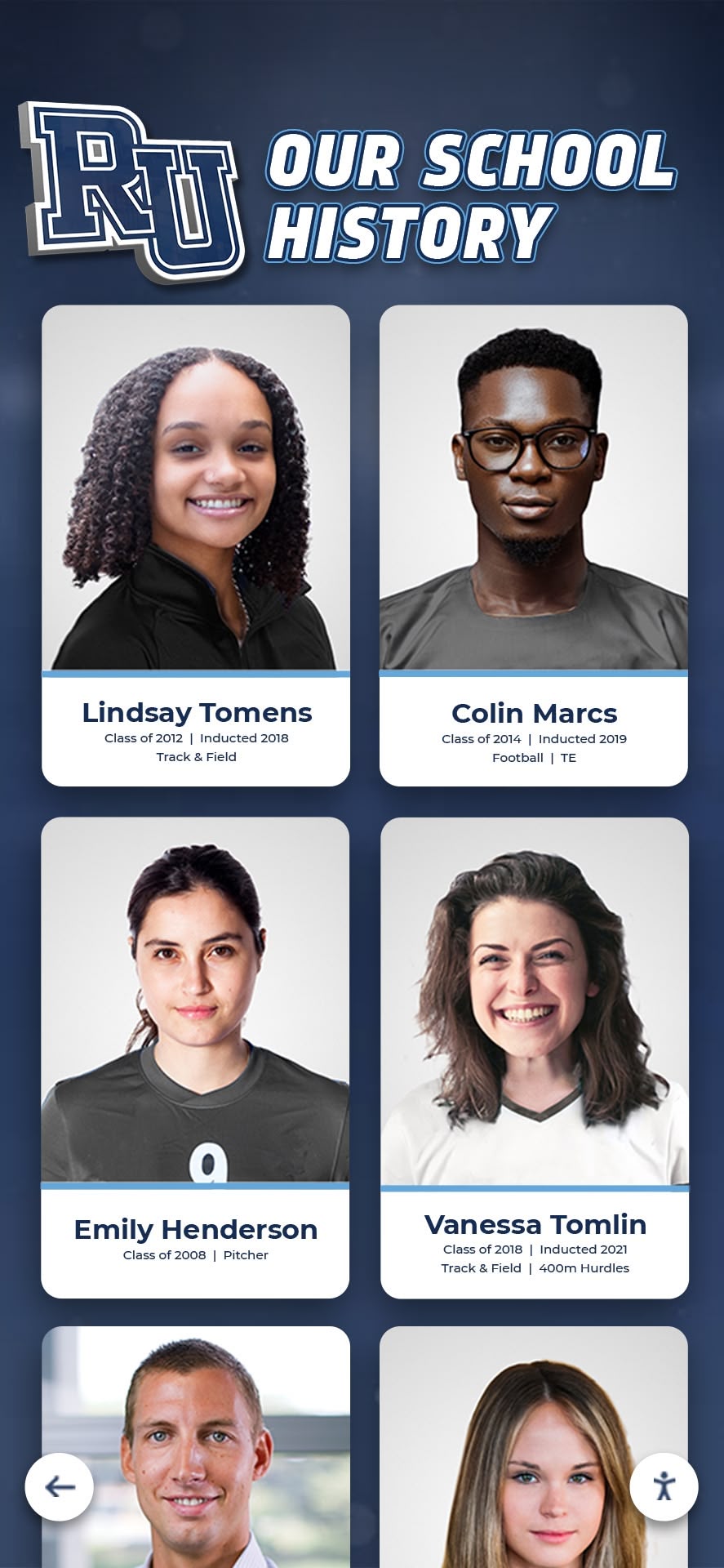
Intuitive card-based interfaces make browsing recognition content natural and engaging
Content Management Flexibility
Administrative systems should enable staff to:
- Update recognition content from any internet-connected device
- Add new donors or honorees within minutes of events concluding
- Schedule content to go live at specific dates coordinating with campaigns
- Preview changes before publishing to public displays
- Manage multiple kiosks from unified dashboards
- Bulk import data from donor databases or spreadsheets
Cloud-based management platforms eliminate technical barriers, allowing development staff to maintain current recognition without involving IT departments for routine updates. Organizations seeking user-friendly systems should explore touchscreen kiosk software designed for non-technical administrators.
Strategic Applications: How Organizations Use Recognition Kiosks
Understanding diverse use cases helps organizations identify opportunities where interactive kiosks create value.
Annual Fundraising Galas and Donor Events
Major fundraising events represent prime opportunities for recognition kiosk deployment:
Pre-Event Engagement During Registration and Reception
As guests arrive at galas, kiosks deployed in registration areas or pre-dinner reception spaces provide engagement during otherwise idle periods:
- Guests search for their own donor recognition, creating personal connection
- Attendees browse previous gala archives, discovering event evolution over time
- First-time attendees explore organizational history and achievement, building context
- Sponsors receive prominent visibility as guests naturally gravitate to displays
- Campaign progress visualization demonstrates community support, building momentum
This pre-event engagement primes guests for giving opportunities later during programs, as they’ve already engaged with recognition and impact content demonstrating how contributions create tangible outcomes.
During Event Program Periods
Throughout gala programs, kiosks continue serving multiple functions:
- Supplement limited verbal recognition with comprehensive searchable donor directories
- Provide entertainment during dinner service or program transitions
- Enable guests to explore award winner profiles beyond brief stage presentations
- Showcase impact stories and beneficiary testimonials in greater depth than program time allows
- Create conversation starters as guests discuss recognition discoveries with tablemates
Research on donor engagement indicates that multi-modal recognition—combining verbal acknowledgment, printed programs, and interactive digital experiences—produces higher donor satisfaction and retention than any single recognition method alone.
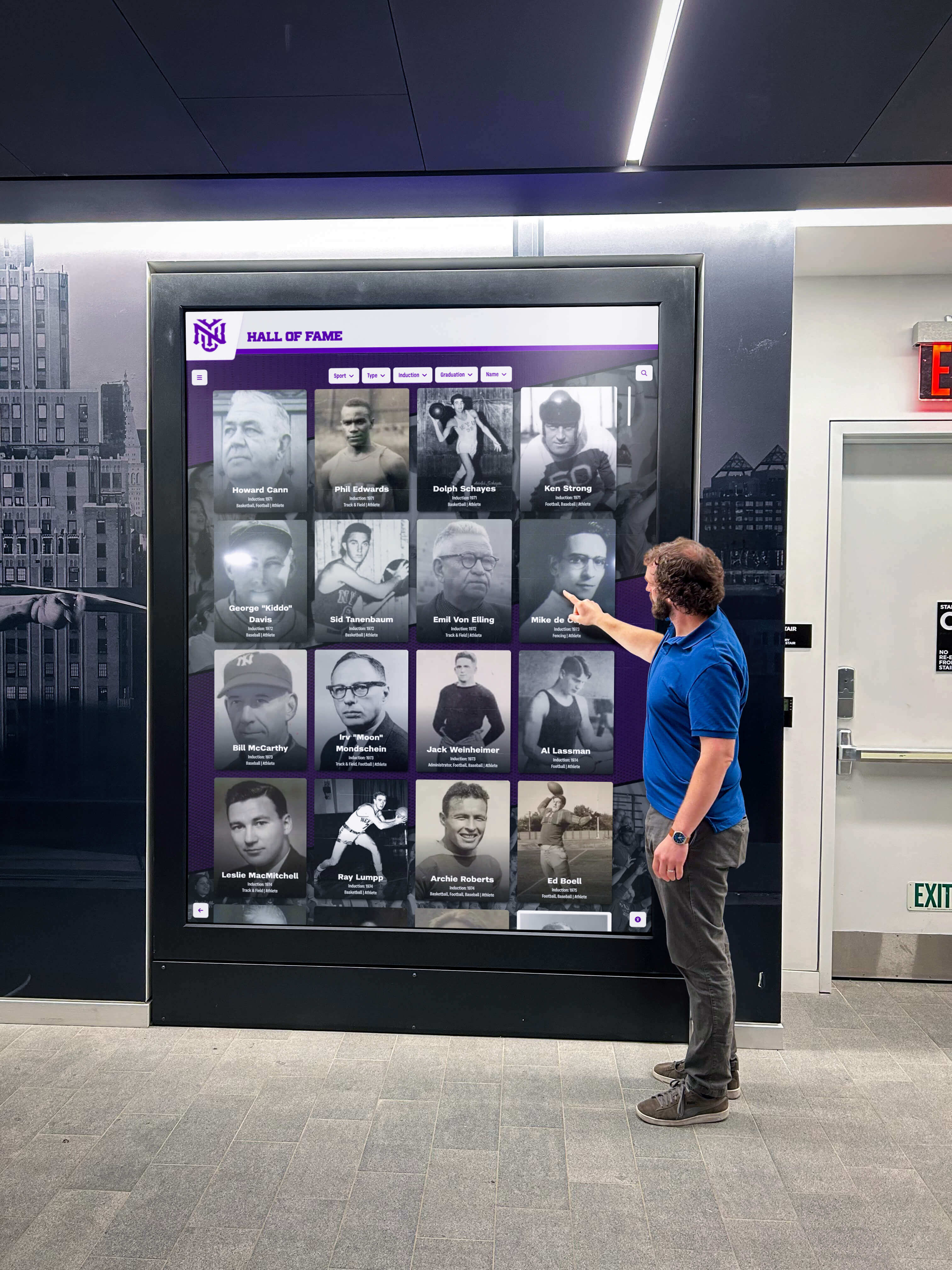
Kiosks at fundraising events enable guests to explore recognition content during reception and program periods
Post-Event Stewardship and Donor Communication
After galas conclude, content from event kiosks becomes valuable stewardship assets:
- Share screenshots of donor recognition displays in thank-you communications
- Post event gallery content to websites and social media
- Create video tours of kiosk content for donors who couldn’t attend
- Reference kiosk features in next year’s event promotion materials
- Archive content in permanent lobby installations honoring past gala contributors
This extended content lifecycle maximizes return on kiosk implementation investment while strengthening ongoing donor relationships. Learn about comprehensive approaches to gala fundraiser recognition that extend impact beyond single events.
Permanent Lobby Recognition Installations
Organizations implementing permanent kiosk installations serve ongoing recognition and engagement objectives:
Visitor Engagement and Organizational Storytelling
Lobby kiosks create first impressions for diverse visitors:
- Prospective donors explore giving opportunities and see current contributor recognition
- Community members discover organizational history, programs, and impact
- Beneficiaries and families browse content related to services or support they receive
- Board members and volunteers show recognition displays to guests during facility tours
- Staff reference kiosk content during conversations with stakeholders
These installations communicate organizational professionalism and mission commitment through tangible technology investments in recognition and transparency. Explore strategies for implementing digital walls of fame effectively in institutional settings.
24/7 Recognition Access
Unlike gala events with limited attendance, permanent installations provide continuous recognition:
- Donors receive year-round visibility rather than acknowledgment limited to event nights
- Recognition remains current as staff update content immediately when new gifts arrive
- Historical donor archives preserve decades of contribution records
- Families visiting campus can always find their recognition regardless of visit timing
- Multiple content layers serve different audience interests and exploration depths
This perpetual availability significantly increases total recognition impressions each donor receives over time.
Integration With Broader Recognition Ecosystems
Lobby kiosks function as physical touchpoints within multi-channel recognition systems:
- Complement website donor recognition pages accessible remotely
- Coordinate with printed annual reports and stewardship communications
- Connect to digital donor recognition displays in other campus locations
- Integrate with social media donor spotlights and storytelling
- Provide tangible recognition supporting personal stewardship conversations
This integrated approach ensures consistent recognition experiences across all donor touchpoints.
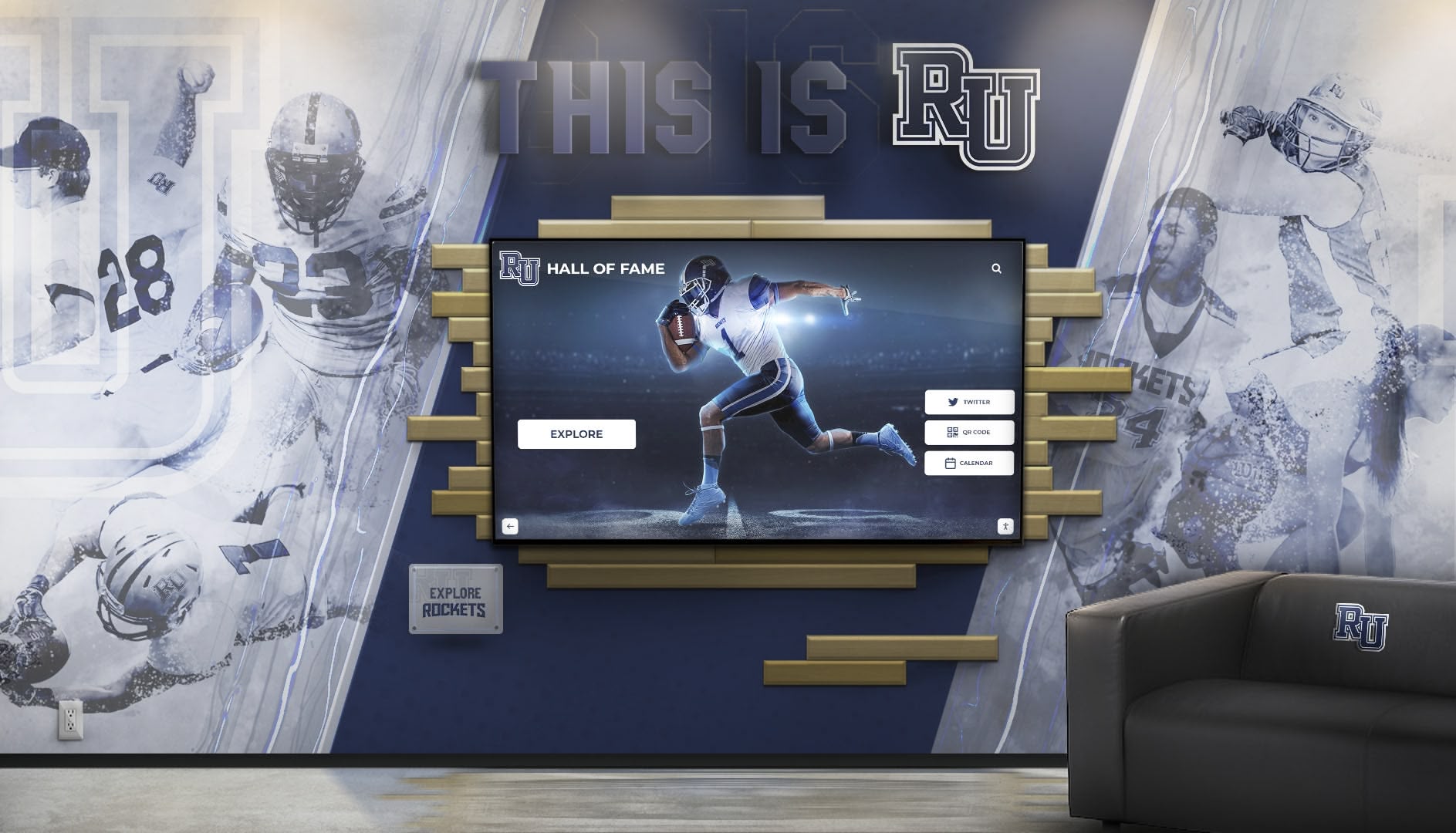
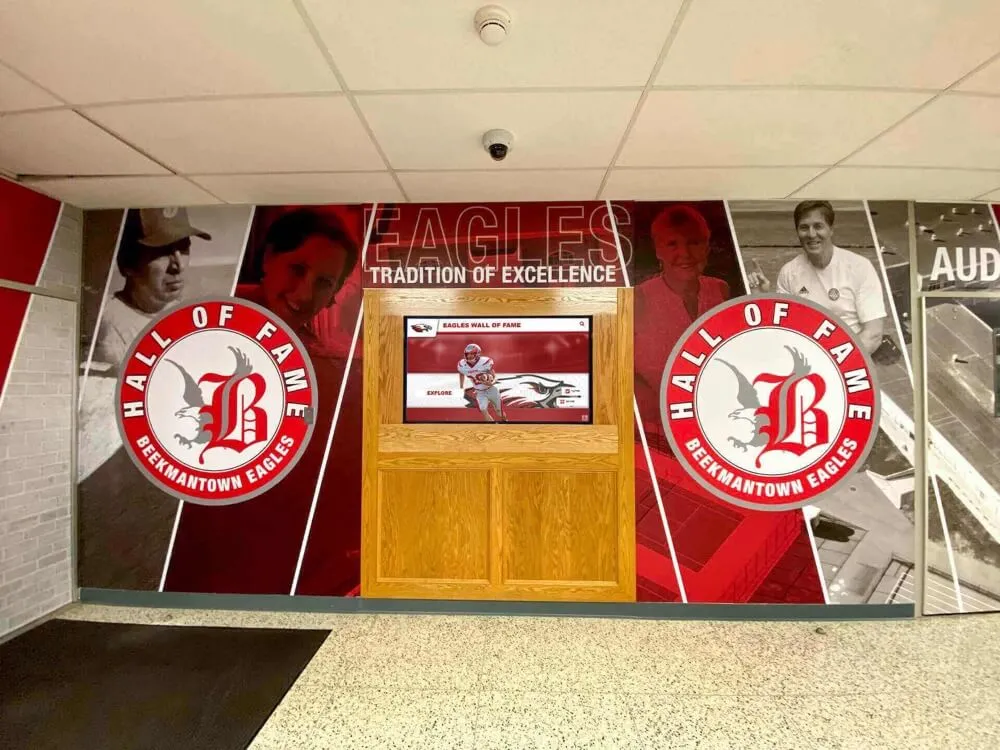
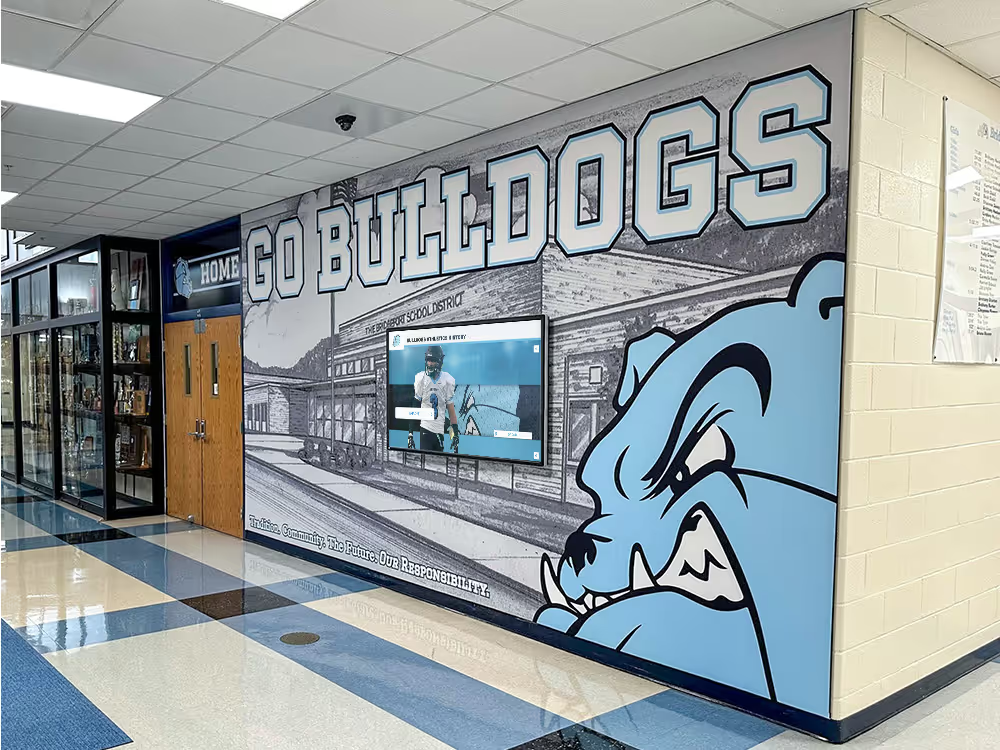
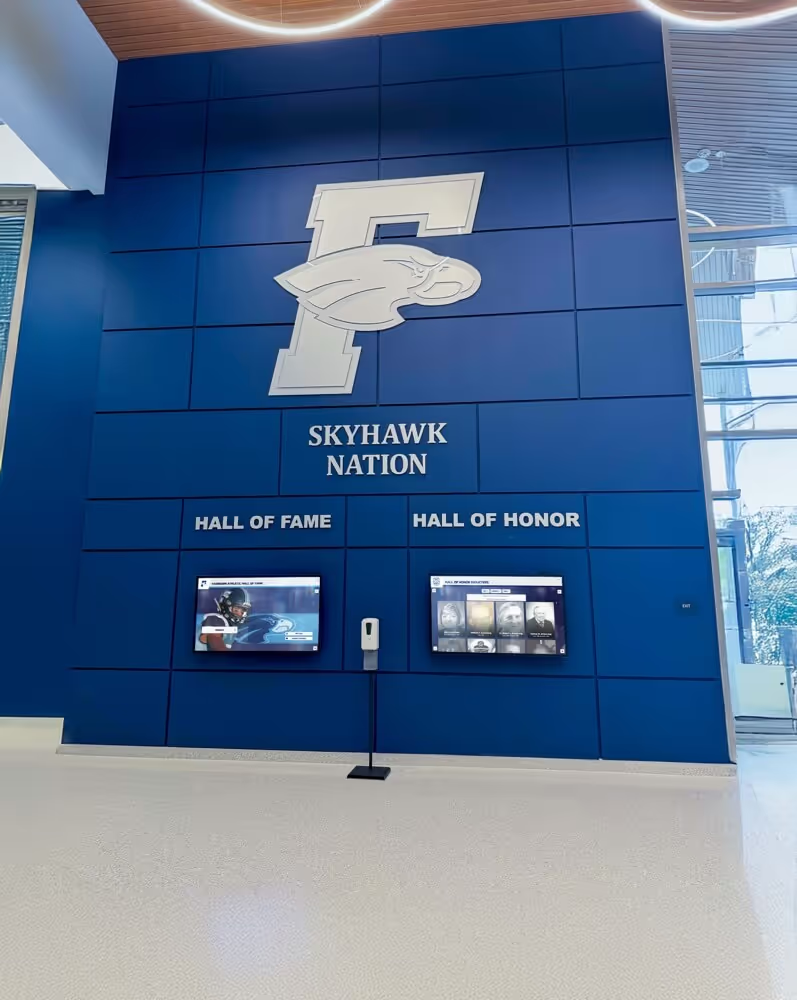
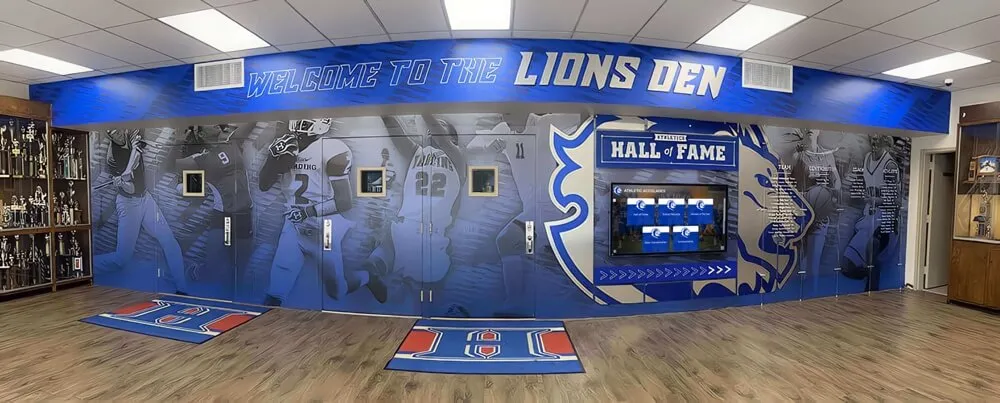
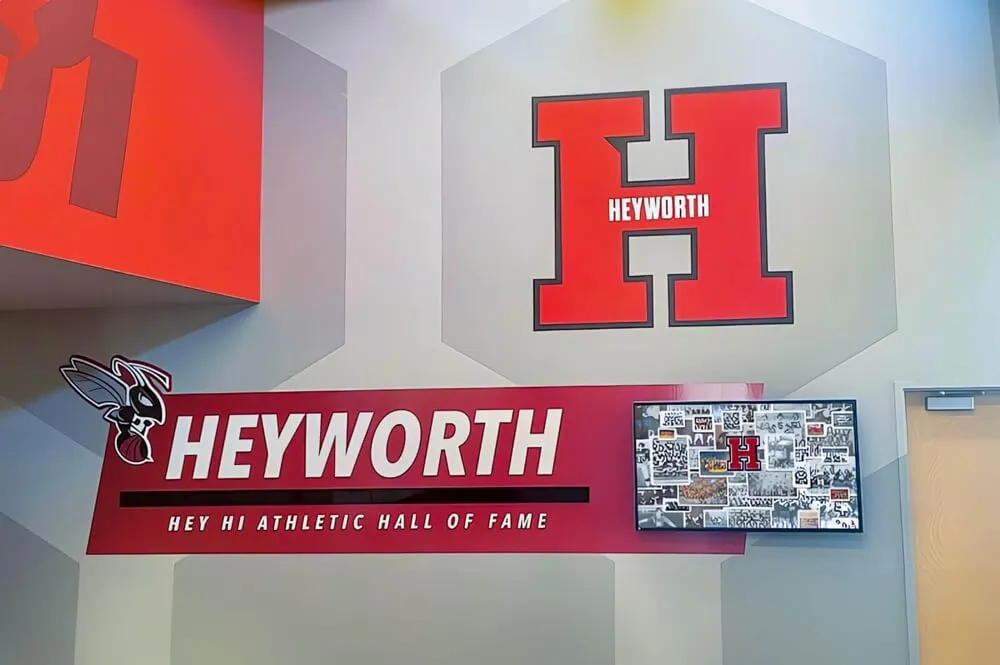
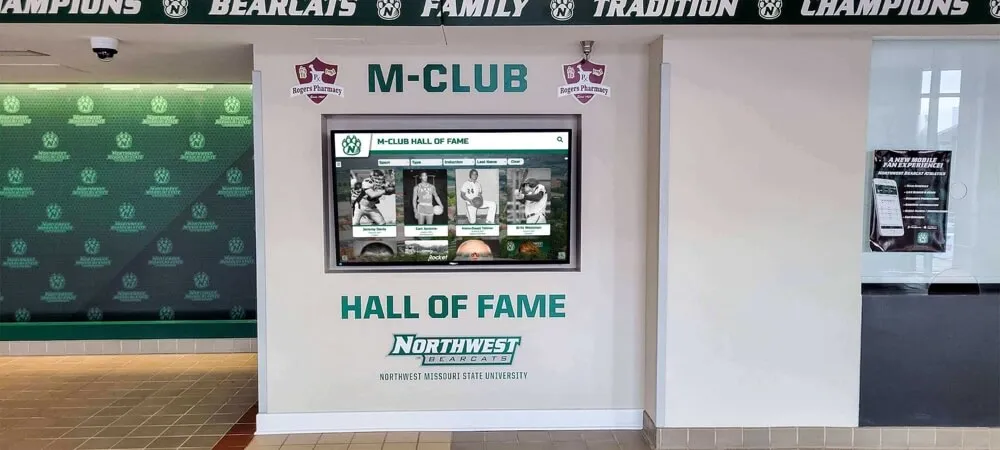
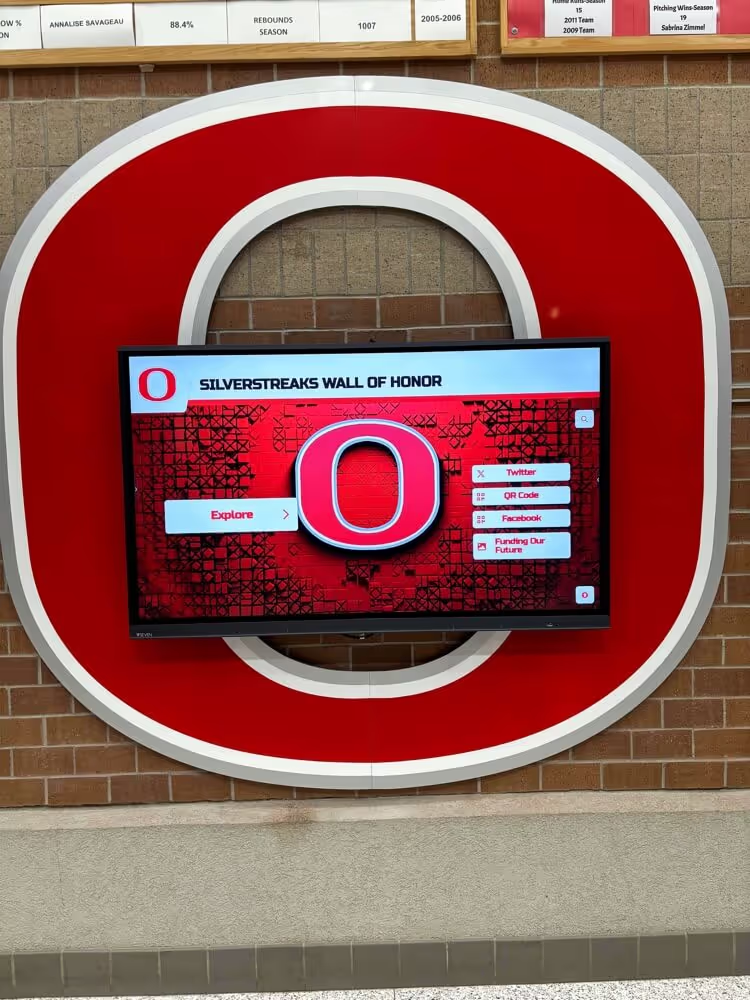
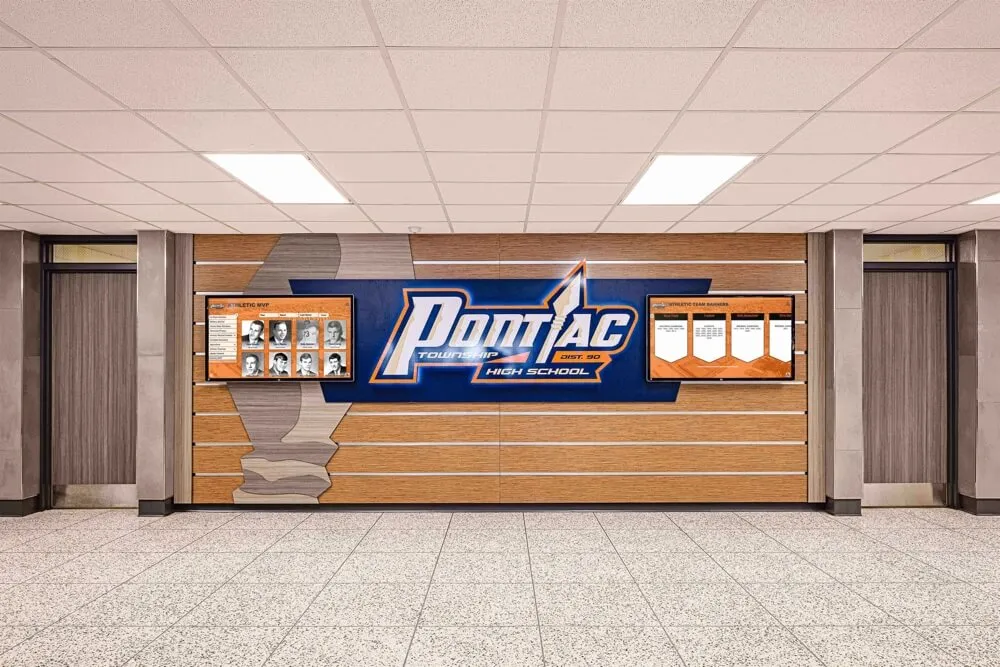
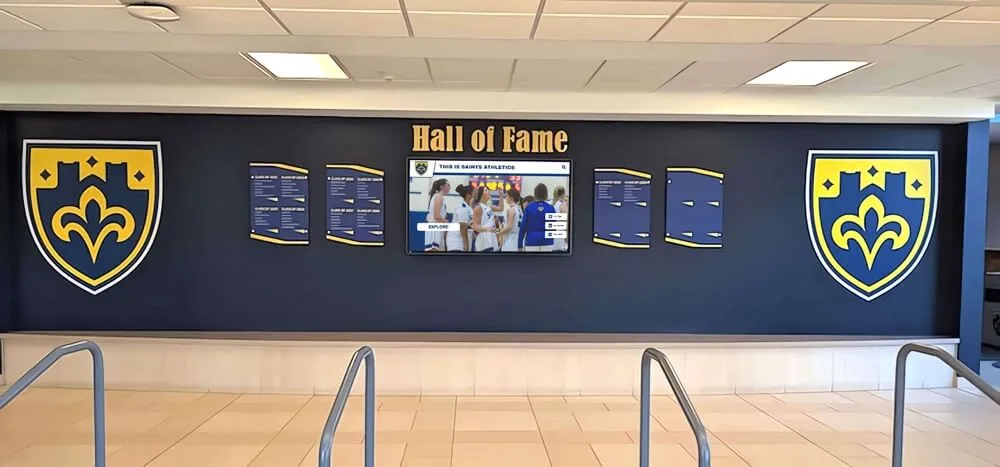
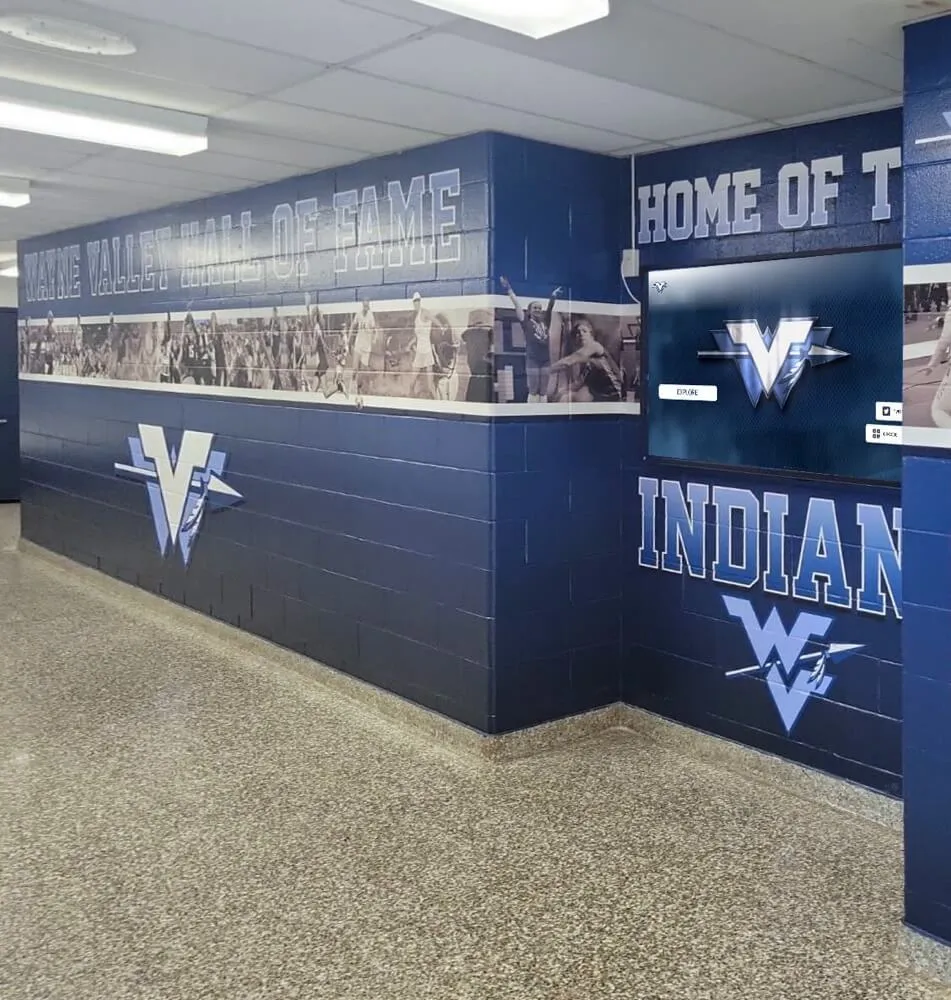
Permanent lobby installations integrate interactive kiosks with visual design elements for comprehensive recognition
Capital Campaigns and Major Initiative Launches
Organizations conducting capital campaigns leverage kiosk technology for campaign-specific recognition:
Campaign Kickoff Events and Community Engagement
During campaign launch celebrations, kiosks provide:
- Project visualization through architectural renderings, floor plans, and design videos
- Giving level information with naming opportunity details and availability status
- Early donor recognition celebrating leadership gifts and campaign momentum
- Impact projections demonstrating outcomes when fundraising goals are achieved
- Historical context connecting current campaigns to organizational legacy
These applications transform abstract fundraising goals into tangible visions visitors can explore and understand.
Real-Time Campaign Progress Tracking
As campaigns advance, kiosks display updated progress:
- Thermometer or progress bar visualizations showing dollars raised toward goals
- Donor recognition updating in real-time as new commitments are secured
- Milestone celebrations highlighting achievement of interim targets
- Countdown timers for campaign completion dates creating urgency
- Social proof elements demonstrating broad community participation
According to fundraising research, visible campaign progress tracking increases both participation rates and average gift sizes, as donors feel motivated to join successful community initiatives and ensure campaigns reach stated goals.
Naming Recognition and Major Donor Stewardship
For campaigns with physical facility components, kiosks showcase naming opportunities:
- Virtual tours of facilities highlighting specific naming opportunities
- Recognition previews showing how donors’ names will appear in completed facilities
- Profiles of major donors whose gifts funded key campaign components
- Before-and-after imagery demonstrating project transformation
- Beneficiary stories explaining how new facilities will improve programs
This forward-looking recognition helps major donors visualize legacy impact before projects are complete.
Technical Requirements: Building Effective Recognition Kiosk Systems
Understanding technical specifications helps organizations make informed implementation decisions.
Hardware Selection for Public Kiosk Deployment
Appropriate hardware ensures reliable operation in public and event environments:
Commercial-Grade Touchscreen Displays
Public kiosks require industrial components versus consumer screens:
- Commercial displays rated for 16-24 hour daily operation versus 6-8 hour consumer ratings
- High-brightness screens (350-700 nits) remaining visible in brightly lit lobbies or event spaces
- Industrial touchscreen overlays withstanding thousands of daily interactions
- Wide viewing angles ensuring content visibility from multiple positions
- Anti-glare treatments reducing reflection in diverse lighting conditions
Display sizes typically range from 43-inch screens for individual interaction to 55-inch or larger installations creating visual impact in large spaces. Learn about selecting appropriate touchscreen display hardware for various deployment scenarios.
Enclosure and Mounting Options
Kiosks require secure mounting and aesthetic enclosures:
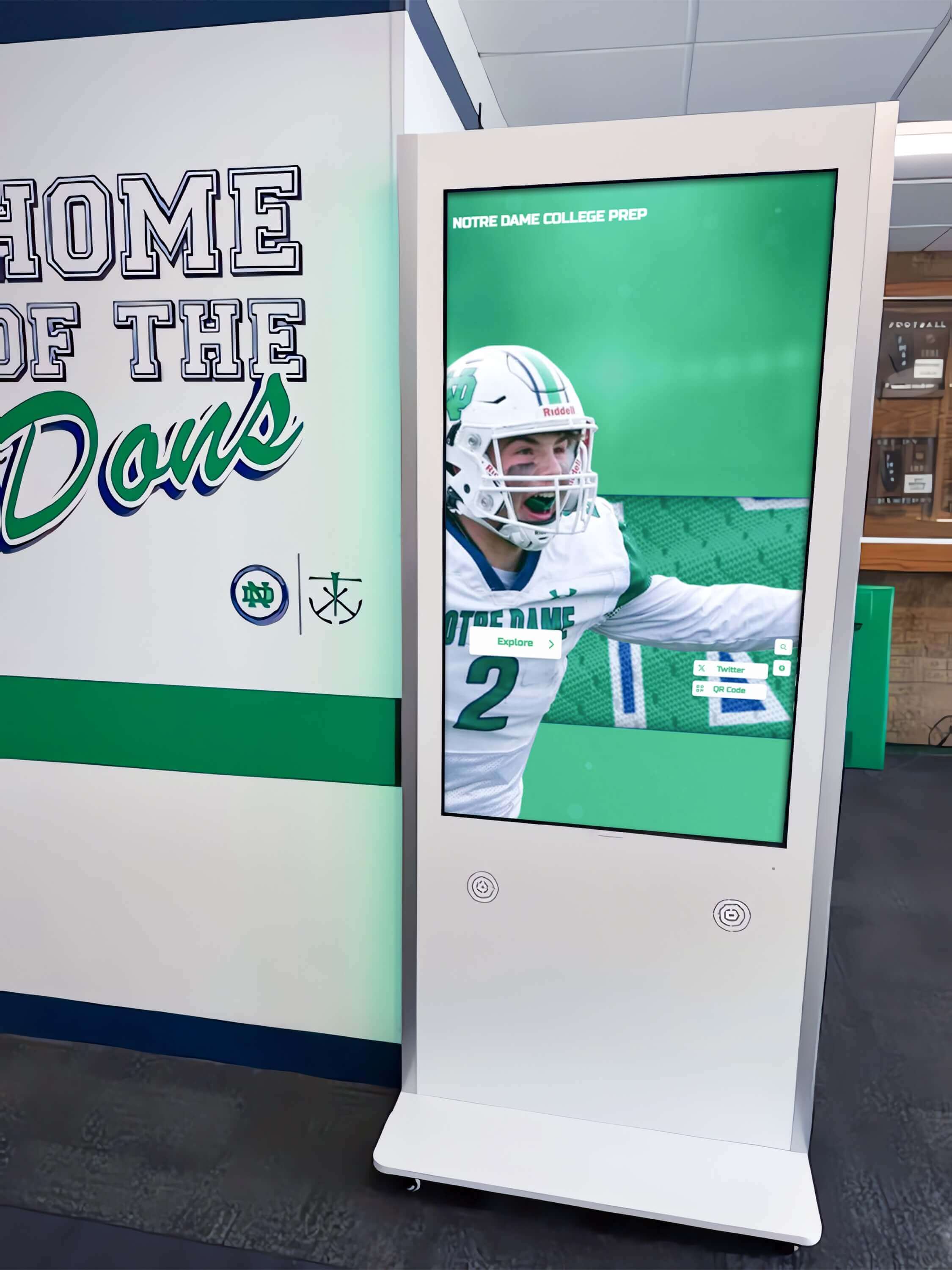
Freestanding Floor Kiosks: Portable units with integrated display, computer, and weighted base, ideal for temporary event deployment and spaces where wall mounting isn’t feasible. Floor kiosks typically include lockable enclosures protecting equipment from tampering.
Wall-Mounted Displays: Permanent installations mounting directly to walls at optimal viewing heights, creating sleek appearances in finished spaces. Wall mounting requires proper electrical and network infrastructure planning.
Countertop Units: Smaller displays suitable for reception desks or tables, providing recognition access in spaces where floor or wall mounting isn’t possible.
ADA Compliance and Accessibility
Public kiosks must accommodate users with diverse abilities:
- Screen height positioning allowing wheelchair user access (18-48 inches per ADA guidelines)
- Touch target sizes meeting minimum dimension requirements (typically 44x44 pixels)
- High-contrast viewing modes for visually impaired users
- Text sizing adjustments for readability
- Audio output capability for screen reader software when required
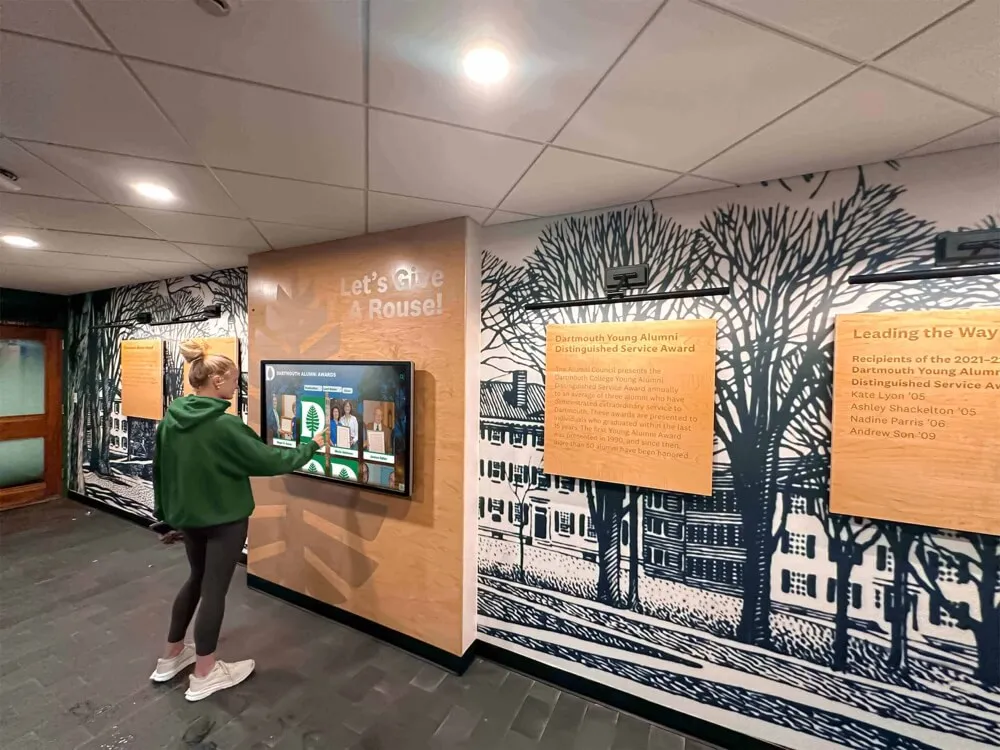
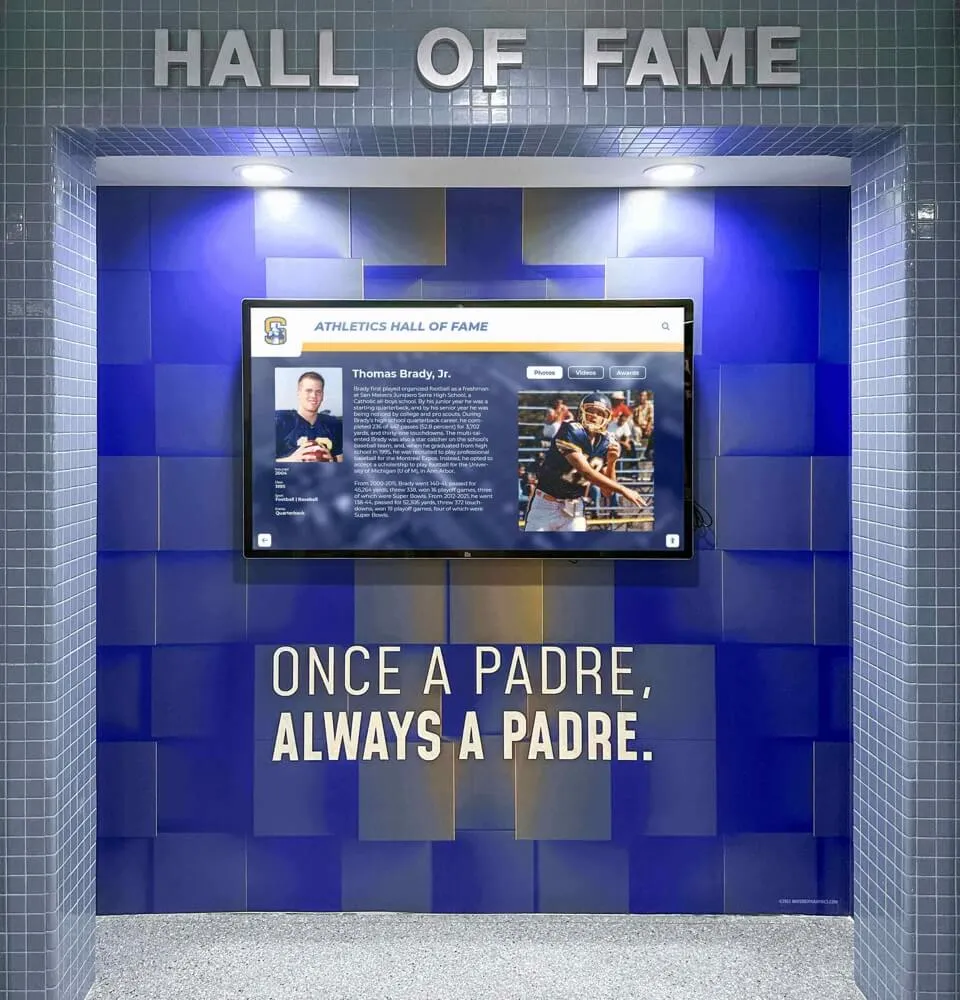
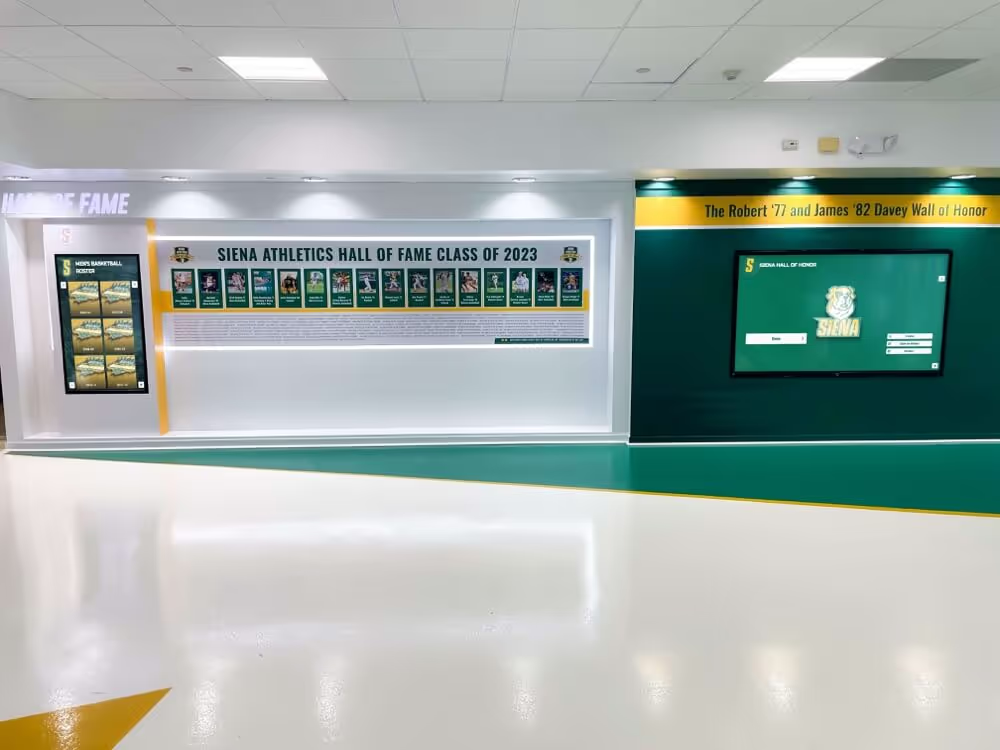
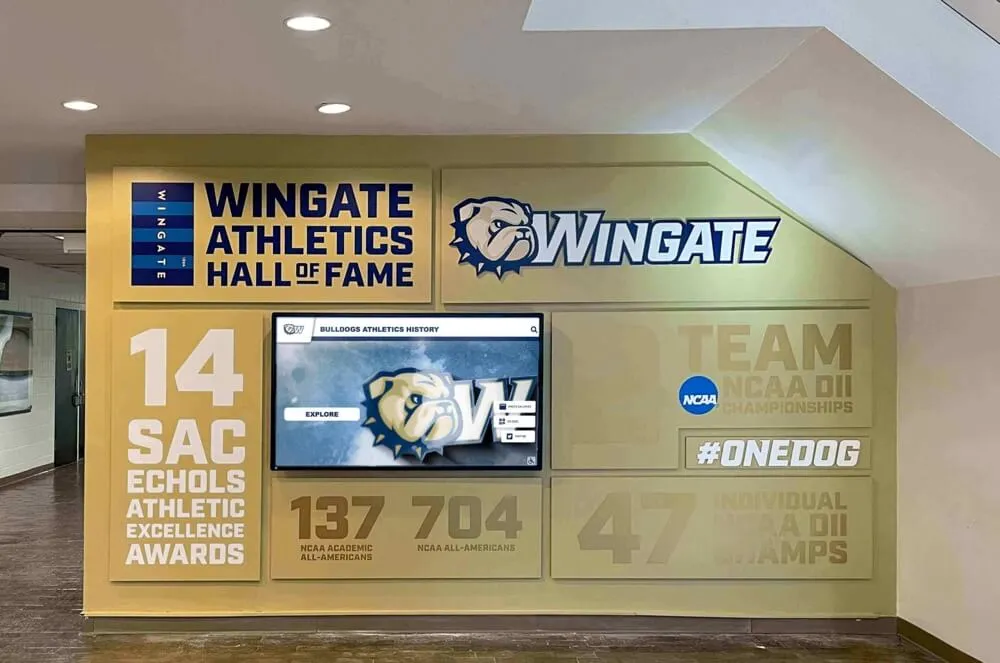
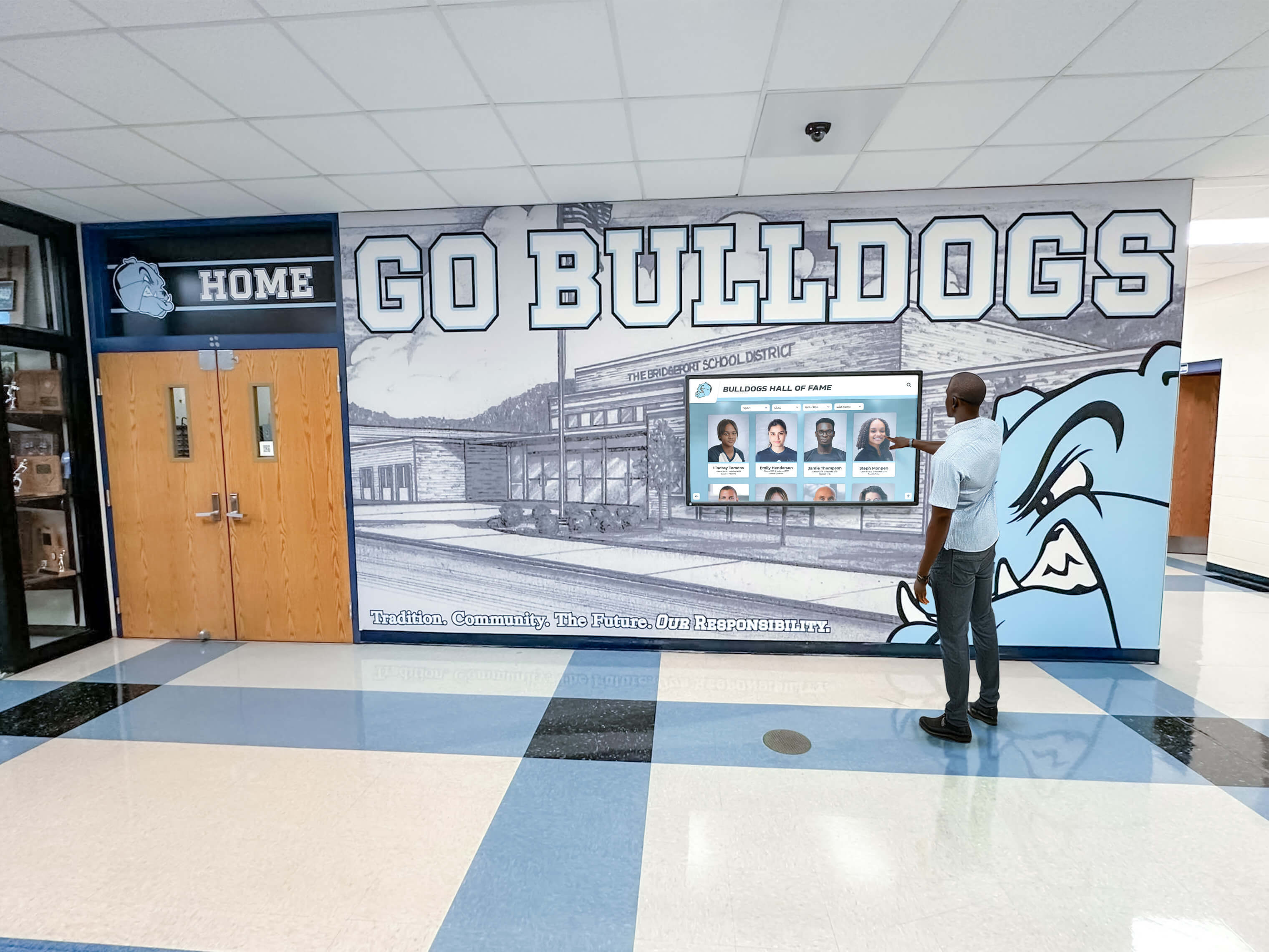
Professional kiosk installations integrate seamlessly with institutional aesthetics while providing accessible interfaces
Network Connectivity and Infrastructure
Kiosks require reliable data connections:
- Hardwired ethernet providing most stable connection for permanent installations
- Enterprise-grade WiFi sufficient for temporary event deployment when properly configured
- Cellular data backup for critical applications requiring guaranteed uptime
- Local content caching ensuring basic functionality during network disruptions
- Bandwidth adequate for multimedia content delivery (minimum 10-25 Mbps)
Software Platform Requirements
Recognition kiosk software must balance functionality with usability:
Content Management System Capabilities
Administrative platforms should provide:
- Browser-based administration requiring no software installation
- Role-based permissions controlling who can update content
- Draft and preview modes allowing review before publishing
- Version history and rollback capability recovering from errors
- Bulk import tools for large donor databases or historical records
- Media asset management organizing photos, videos, and documents
Cloud-based platforms eliminate on-premise server requirements while enabling distributed administration where multiple staff members manage content from different locations.
User Interface Customization
Organizations should be able to customize public-facing interfaces:
- Color schemes and typography matching institutional branding
- Logo placement and organizational identity elements
- Layout templates organizing different content types appropriately
- Home screen configuration highlighting priority content
- Navigation structure matching organizational communication preferences
Customization ensures kiosk experiences feel integrated with broader institutional identity rather than generic off-the-shelf applications. Explore touchscreen software solutions designed specifically for institutional recognition applications.
Data Integration and Synchronization
Sophisticated implementations integrate with existing systems:
- Import donor data from fundraising CRM platforms (Raiser’s Edge, Salesforce, etc.)
- Synchronize giving levels and cumulative totals automatically
- Connect to event registration systems for gala attendee tracking
- Export analytics for reporting and assessment
- API access for custom integrations with unique organizational systems
Integration reduces duplicate data entry while ensuring consistency across recognition touchpoints.
Security and Privacy Protection
Public kiosks must protect sensitive information:
- Secure admin authentication preventing unauthorized content changes
- Donor privacy controls allowing opt-out from public recognition
- Kiosk lockdown preventing access to underlying operating systems
- Automatic session timeouts resetting displays between users
- Network security isolating kiosks from sensitive organizational systems
- GDPR and privacy regulation compliance where applicable
Organizations should carefully evaluate which donor information appears on public displays versus private stewardship communications.
Content Strategy: Creating Engaging Recognition Experiences
Technical infrastructure alone doesn’t create value—thoughtful content determines kiosk effectiveness.
Donor Recognition Content Components
Comprehensive donor recognition extends beyond simple name listings:
Essential Donor Information
Every donor profile should include:
- Full donor name as they prefer recognition
- Giving level designation or society membership
- Years of support or cumulative contribution ranges
- Campaign or fund designation information
- Memorial or honor gift dedications when applicable
Enhanced Donor Profiles
For major donors willing to be featured prominently:
- Professional photographs of donors or families
- Brief biographies or personal connection stories to organization
- Testimonial quotes explaining giving motivations and mission passion
- Information about specific programs, scholarships, or initiatives their gifts support
- Legacy stories about multi-generational family giving patterns
- Video testimonials providing deeper storytelling opportunities
These enhanced profiles transform donor walls from directories into engagement content demonstrating diverse motivations for supporting organizational missions. Learn about creating compelling donor recognition displays that celebrate contributors meaningfully.
Impact Connection and Outcome Demonstration
Link donor recognition to tangible results:
- Profile scholarship recipients funded by donor contributions
- Showcase program enhancements or facility improvements donors made possible
- Share beneficiary testimonials thanking donors for creating opportunities
- Document how contributed funds translated to specific educational experiences, services delivered, or outcomes achieved
- Quantify collective impact metrics (e.g., “Our donors have funded 347 scholarships since 2015”)
Research consistently demonstrates that connecting giving to measurable impact strengthens donor relationships and motivates continued support more effectively than recognition alone.
Recognition content connecting donors to program outcomes and community impact creates more meaningful appreciation
Award Winner and Honoree Recognition
Annual awards and special recognition programs deserve comprehensive presentation:
Core Award Information
- Award category, title, and significance explanation
- Year awarded and event where recognition occurred
- Selection criteria and nomination process description
- Previous recipients showing honorees join prestigious company
- Monetary awards, scholarships, or tangible benefits included
Comprehensive Recipient Profiles
- Professional photographs capturing honorees appropriately
- Detailed biographies highlighting education, career, service, and personal achievements
- Specific accomplishment examples meriting award recognition
- Quotes from recipients about organizational impact on their development
- Family, mentor, or classmate information providing personal context
Multimedia Enhancement
- Video acceptance speeches or ceremony footage
- Photographs from recognition events showing celebration moments
- Extended interview content exploring recipient stories deeply
- Performance clips for artistic or athletic achievement recognition
- Project presentations or work samples for academic awards
Rich multimedia transforms brief gala presentations into comprehensive tributes accessible long after events conclude. Explore effective approaches to highlighting notable individuals that inspire communities and strengthen institutional pride.
Event Program and Historical Archives
Preserving complete event records creates institutional memory:
Gala Program Archives
Digital kiosks should preserve:
- Complete event schedules with timing and activity descriptions
- Speaker and entertainment information with performer biographies
- Venue details with photography of event spaces and decor
- Menu documentation for seated dinners
- Auction highlights (when appropriate to share publicly)
- Attendance figures and fundraising results summaries
Visual Event Documentation
- Professional photography capturing key moments throughout evenings
- Video recordings of program highlights, speeches, or performances
- Decor and design documentation showing themes and creative elements
- Program cover designs and printed material aesthetics
- Table settings and venue transformation imagery
Historical Timeline Content
Connect current recognition to organizational evolution:
- Major milestone achievements and anniversary celebrations
- Facility expansions and campus development over decades
- Program launches and mission evolution
- Leadership transitions and institutional transformation
- Founding donors and early supporters whose gifts built foundations
This historical perspective reinforces institutional stability while honoring those whose past generosity created current excellence. Learn about displaying organizational history effectively through digital platforms.
Historical archives preserve institutional memory while making past recognition accessible to current communities
Implementation Process: Launching Recognition Kiosk Systems
Structured implementation ensures successful deployment and sustained value.
Planning Phase: Defining Objectives and Requirements
Begin with comprehensive planning establishing clear direction:
Use Case Definition
Clarify specific applications for kiosk systems:
- Will kiosks primarily serve temporary event deployment, permanent installation, or both?
- What content types need display capability (donors, awards, programs, history)?
- Who are primary audiences (current donors, prospective supporters, general public, beneficiaries)?
- Where will kiosks be located (lobbies, event venues, development offices, campus buildings)?
- How frequently will content require updating (daily, weekly, after major events)?
Success Metrics Establishment
Define measurable objectives:
- Donor engagement metrics (how many interactions, session duration, most-viewed content)
- Fundraising impact indicators (donor retention, giving increases, new donor acquisition)
- Event satisfaction improvements (guest feedback about recognition experiences)
- Operational efficiency gains (staff time saved versus traditional recognition approaches)
- Content utilization statistics (which recognition receives most visibility)
Clear objectives guide vendor selection, content development priorities, and ongoing optimization decisions.
Stakeholder Engagement
Involve key constituencies in planning:
- Development staff perspectives on donor relationship priorities
- Event planning teams describing gala logistics and venue considerations
- Communications directors ensuring brand alignment and message consistency
- IT departments addressing network infrastructure and security requirements
- Major donors providing feedback on recognition preferences and privacy concerns
Comprehensive stakeholder engagement prevents implementation surprises while ensuring systems meet diverse organizational needs.
Content Development and Migration
Successful kiosks require substantial content preparation:
Content Audit and Compilation
Gather recognition information from dispersed sources:
- Export donor lists from fundraising databases with giving levels and years
- Collect award winner information, biographies, and achievement documentation
- Compile historical gala programs, event materials, and archived records
- Identify available photography, video footage, and multimedia assets
- Document recognition policies, naming conventions, and governance frameworks
Content Creation Priorities
Determine new development requirements:
- Professional photography for major donors willing to be featured prominently
- Written profiles and biographies for enhanced recognition
- Video production for testimonials, impact stories, or organizational overviews
- Graphic design ensuring visual appeal and institutional brand consistency
- Copywriting for descriptions, captions, instructions, and explanatory text
Many organizations partner with full-service providers like Rocket Alumni Solutions that handle content development as part of implementation, significantly reducing internal workload while ensuring professional results.
Data Structuring and Organization
Organize content for intuitive browsing:
- Establish donor recognition tier structure with clear naming
- Create award categories organizing diverse achievement types
- Develop chronological frameworks for historical content
- Design navigation taxonomies enabling multiple discovery pathways
- Structure metadata enabling robust search functionality
Thoughtful organization determines whether users easily find desired content or abandon systems in frustration.
Intuitive content organization ensures guests quickly discover recognition information personally relevant to them
Technical Implementation and Installation
Professional deployment ensures reliable operation:
Site Preparation
- Verify electrical power availability at installation locations
- Confirm network connectivity through ethernet or robust WiFi
- Ensure mounting surfaces support hardware weight and configuration
- Verify ADA compliance for accessibility requirements
- Assess lighting conditions affecting screen visibility
- Plan cable management and concealment for aesthetic presentation
Hardware Installation and Configuration
- Professional mounting at appropriate heights and viewing angles
- Screen calibration and touch functionality testing
- Media player or computer configuration and software installation
- Network connection setup with appropriate security protocols
- Quality assurance testing before launch
- Staff training on basic operation and troubleshooting
Content Population and Testing
- Initial content upload and organization within management platform
- Design customization reflecting institutional branding
- Search and navigation testing ensuring functionality
- User acceptance testing with representative stakeholders
- Refinement based on feedback before public launch
Organizations seeking turnkey solutions should explore comprehensive kiosk implementations that include installation, content development, and training.
Launch and Ongoing Management
Successful launches create excitement while establishing sustainable practices:
Soft Launch and Refinement
Before major announcements:
- Deploy kiosks with limited promotion allowing initial testing
- Gather user feedback about navigation, content, and functionality
- Monitor technical performance identifying and resolving issues
- Verify content accuracy catching errors before broad visibility
- Refine based on real-world usage patterns
Official Launch and Promotion
Formal announcements should include:
- Grand opening events or dedications celebrating new recognition capabilities
- Integration into gala programs introducing kiosks to event attendees
- Digital promotion through websites, social media, and email communications
- Media coverage when appropriate for major installations
- Documentation through photography and video for marketing use
Celebratory launches demonstrate organizational commitment to donor recognition while maximizing awareness.
Ongoing Content Maintenance
Establish sustainable management protocols:
- Assign clear responsibility for content updates to specific staff members
- Create regular update schedules (post-gala, quarterly reviews, annual audits)
- Implement quality assurance processes preventing errors
- Communicate recognition timelines to donors
- Perform technical maintenance ensuring reliable operation
- Refresh content periodically maintaining engagement
Systematic management ensures recognition remains current and effective long after implementation excitement fades. Learn about sustainable management approaches for long-term recognition success.
Best Practices for Public Recognition Kiosks
Learning from successful implementations helps organizations avoid common challenges.
Respect Donor Privacy and Preferences
Not all contributors want public visibility:
Flexible Recognition Options
- Provide donors choice between public recognition and anonymous giving during contribution processes
- Allow specification of recognition name formats (individual names, family names, business names)
- Honor requests to remove or modify recognition at any time
- Create private recognition opportunities for major donors preferring discretion
- Recognize anonymous donor contributions in aggregate without identifying individuals
Respecting preferences builds trust essential for long-term relationships.
Balance Comprehensiveness With Usability
More content doesn’t automatically create better experiences:
Curated Content Presentation
- Feature highest-priority content prominently on home screens
- Create clear information hierarchy guiding users to most relevant content first
- Limit text quantity requiring excessive reading or scrolling
- Use visual elements (photos, videos, infographics) breaking up text
- Provide summary information with “learn more” options for interested users
Effective curation ensures casual browsers discover valuable content quickly while allowing interested users to explore deeply.
Plan for Technical Reliability
Public kiosks must operate dependably:
Redundancy and Contingency Planning
- Select commercial-grade hardware with appropriate duty cycles
- Implement content caching enabling basic functionality during network outages
- Establish vendor support relationships for troubleshooting and repairs
- Cross-train multiple staff members on basic troubleshooting
- Document common issues and resolutions for quick problem-solving
- Maintain backup displays when possible for critical applications
Technical reliability directly affects how donors and guests perceive organizational professionalism.
Measure Performance and Optimize Continuously
Data-driven refinement improves kiosk effectiveness:
Analytics and Assessment
- Track interaction frequency and session duration metrics
- Identify most-viewed content and popular search terms
- Monitor where users abandon experiences indicating friction points
- Gather qualitative feedback through user surveys or interviews
- Assess fundraising correlation with kiosk implementation
- Benchmark performance against organizational objectives
Regular assessment identifies opportunities for content enhancement, navigation improvement, and strategic refinement.
Monitoring which content generates most engagement helps organizations optimize recognition strategies
Cost Considerations: Understanding Investment Requirements
Comprehensive cost understanding enables realistic budgeting and informed decisions.
Initial Implementation Investment
Recognition kiosk costs vary based on scope:
Hardware Components
- Commercial touchscreen display: $2,500-$8,000 depending on size and specifications
- Media player or embedded computer: $500-$2,000
- Kiosk enclosure or mounting system: $1,000-$5,000
- Installation labor and configuration: $500-$2,000
- Network infrastructure upgrades if required: $500-$2,000
Software and Content
- Kiosk management platform setup: $1,000-$5,000
- Design and interface customization: $2,000-$8,000
- Initial content development and migration: $2,000-$10,000 depending on volume and complexity
- Staff training and onboarding: $500-$2,000
Total Initial Investment
Most organizations invest $8,000-$25,000 per kiosk for comprehensive implementations including hardware, software, content development, and installation. Temporary event-only deployments using portable rental equipment range $1,500-$5,000 per event depending on duration and support requirements.
Ongoing Operational Costs
Annual expenses ensure continued effectiveness:
Platform Subscription and Support
- Software licensing and cloud hosting: $600-$3,000 annually per kiosk
- Technical support beyond basic subscription: varies by needs
- Software updates and feature enhancements: typically included
Content Maintenance
- Internal staff time for routine content updates: 2-4 hours monthly
- Professional content development for major refreshes: $1,000-$5,000 annually
- Photography and videography for new content: $500-$3,000 annually
Hardware Maintenance
- Extended warranty or service contracts: $300-$1,000 annually
- Periodic technical servicing and calibration: $200-$500 annually
Total Ongoing Costs
Expect $2,000-$8,000 annually per kiosk depending on content update intensity and maintenance requirements.
Return on Investment Perspective
Recognition kiosks provide value beyond simple cost-benefit calculations:
Donor Retention and Lifetime Value
Research indicates that visible, engaging recognition increases donor retention by 10-25%. For organizations with substantial donor bases, retention improvements offsetting even modest percentages of lapsed givers can produce fundraising gains far exceeding kiosk costs.
Operational Efficiency Gains
Digital recognition systems eliminate recurring costs of traditional approaches including physical plaque engraving ($500-$2,000 per update), printed program reprinting, and manual stewardship communication production, creating cumulative savings compounding annually.
Stewardship Enhancement Value
Improved donor satisfaction through comprehensive recognition creates intangible value difficult to quantify but essential for sustainable advancement programs. When donors feel genuinely appreciated and see tangible evidence that organizations value their contributions, relationships strengthen in ways producing long-term fundraising advantages.
Taking Action: Next Steps for Your Recognition Kiosk Initiative
Organizations ready to implement interactive recognition kiosks can begin with concrete planning actions.
Immediate Planning Steps
Audit Current Recognition Approaches: Document how your organization currently acknowledges donors and award winners at events and in permanent displays, identifying gaps, limitations, and enhancement opportunities.
Define Specific Kiosk Applications: Clarify whether you need temporary event deployment, permanent lobby installation, or both, establishing primary use cases guiding implementation decisions.
Assess Available Content: Inventory existing donor databases, award winner information, event archives, photography, and multimedia assets that could populate kiosk systems.
Establish Project Budget: Determine realistic financial parameters for implementation including hardware, software, content development, and ongoing operational costs.
Identify Key Stakeholders: Engage development staff, event planners, IT personnel, and communications teams in planning ensuring alignment and comprehensive requirement gathering.
Evaluating Recognition Kiosk Providers
When researching vendors, consider:
Essential Vendor Questions
- What hardware options do you offer, and what use cases does each serve?
- How user-friendly is your content management platform for non-technical staff?
- What implementation support do you provide (installation, content migration, training)?
- Do you offer both purchase and rental/lease options for temporary event needs?
- Can you provide references from similar organizations?
- What accessibility features ensure inclusive user experiences?
- How do you structure pricing (upfront costs, subscriptions, per-display)?
- What ongoing support and system maintenance do you provide?
Solution Evaluation Criteria
- Alignment with your specific use cases and content requirements
- Total cost of ownership including all implementation and operational expenses
- Quality and comprehensiveness of vendor support throughout implementation
- Customer satisfaction among existing organizational clients
- Platform scalability supporting future growth and evolution
- Customization flexibility matching your institutional brand and needs
Organizations seeking comprehensive donor recognition kiosk solutions should consider Rocket Alumni Solutions, which specializes in interactive recognition displays for nonprofits, educational institutions, and organizations, offering full-service implementation including hardware selection and installation, content development support, cloud-based management platforms, staff training and ongoing support, and proven experience with fundraising event applications.
Transform Event Recognition With Interactive Kiosks
Discover how interactive kiosk solutions can help you engage donors, celebrate achievement, and create memorable recognition experiences at galas and in permanent installations.
Request a Recognition Kiosk ConsultationImplementation Approach Considerations
Rather than comprehensive immediate deployment, consider phased approaches:
Phase 1: Event Pilot
- Deploy single portable kiosk at next major gala or fundraising event
- Feature current year donors and award winners with focused content
- Gather attendee feedback and engagement metrics
- Assess technical performance and identify improvement opportunities
- Evaluate donor response and satisfaction
Phase 2: Permanent Installation
- Install lobby kiosk based on event pilot learnings
- Expand content to include multiple years of donor recognition
- Add historical archives and organizational storytelling content
- Train staff on ongoing content management
- Integrate with broader recognition communications
Phase 3: Comprehensive Ecosystem
- Deploy additional kiosks in strategic locations (development office, event spaces, campus buildings)
- Create sophisticated search and browse capabilities
- Develop extensive multimedia content libraries
- Implement analytics for continuous optimization
- Integrate with donor management systems for automated updates
Phased approaches create immediate value while building toward comprehensive recognition systems over time without overwhelming implementation teams.
Conclusion: Creating Lasting Recognition Impact Through Interactive Technology
Interactive kiosk software transforms donor recognition and event engagement from passive acknowledgment to active exploration, creating self-service experiences where guests discover personally relevant content, explore organizational impact stories, and connect with mission in meaningful ways. These systems honor the significant effort organizations invest in cultivating donor relationships and planning signature fundraising events by maximizing return on that investment through enhanced engagement, perpetual recognition visibility, and strengthened stewardship.
Organizations implementing recognition kiosks discover multiple benefits including improved donor satisfaction as contributors experience comprehensive, engaging acknowledgment, enhanced event experiences as guests actively participate rather than passively observe, operational efficiency as digital systems eliminate recurring traditional recognition costs, institutional storytelling as kiosks communicate mission and impact compellingly, and sustainable recognition as cloud-based platforms enable ongoing updates without technical barriers.
The strategies explored in this guide provide frameworks for recognition kiosk implementation that balances multiple objectives—honoring donors appropriately, celebrating achievement meaningfully, creating engaging guest experiences, maintaining technical reliability, and building sustainable systems serving organizations for years.
As you plan your next fundraising gala or consider enhancing permanent recognition displays, explore how interactive kiosk technology can amplify stewardship impact, strengthen donor relationships, and create recognition systems that sustain philanthropic cultures essential for mission advancement. The investment in recognition infrastructure demonstrates organizational commitment to valuing supporters appropriately while providing practical tools that make comprehensive acknowledgment achievable and sustainable.
Ready to begin exploring interactive recognition kiosks for your organization? Learn more about modern donor recognition approaches or discover how interactive displays celebrate supporters and inspire continued generosity across diverse organizational settings. For implementation guidance tailored to your specific needs, schedule a consultation to discuss how recognition kiosk solutions can transform your donor stewardship and event engagement initiatives.