Recognizing Planned & Legacy Gifts: How Schools Honor Bequest and Estate Donors
A planned gift is unlike any other form of generosity a school receives. A donor who includes your institution in their estate plan may never see the endowment fund open a scholarship, witness the renovation their bequest made possible, or walk through a building their estate gift helped construct. That invisibility creates one of the most delicate stewardship challenges in advancement work: how do you honor a gift that hasn’t arrived yet, from a donor who may not be alive to feel your gratitude?
Planned giving recognition must work harder than a thank-you letter. It must signal to donors—while they are still living—that their legacy is already celebrated, already woven into the fabric of the institution, and already inspiring others. Schools that get this right build lasting relationships that deepen over decades, secure transformational gifts that arrive decades later, and create recognition cultures where legacy giving becomes a defining part of how alumni express their deepest loyalty.
This guide provides advancement directors, development officers, and foundation staff with frameworks, sample language, and display strategies to honor bequest and estate donors at every stage of the relationship—from the moment they reveal their intent to the day their gift is realized and recognized in perpetuity.

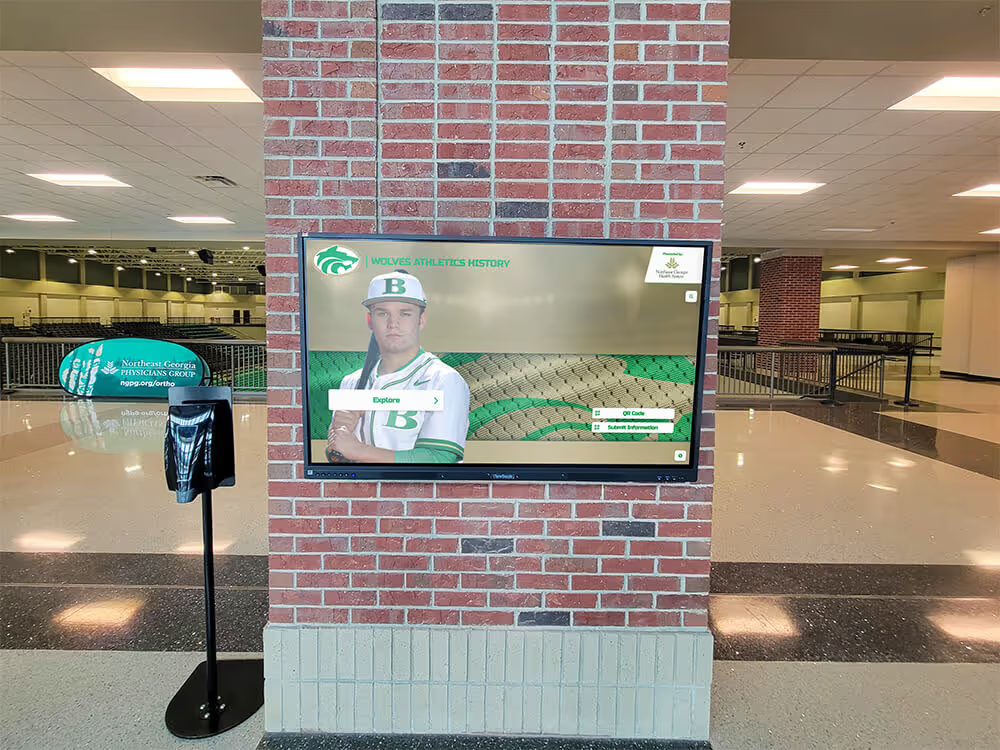
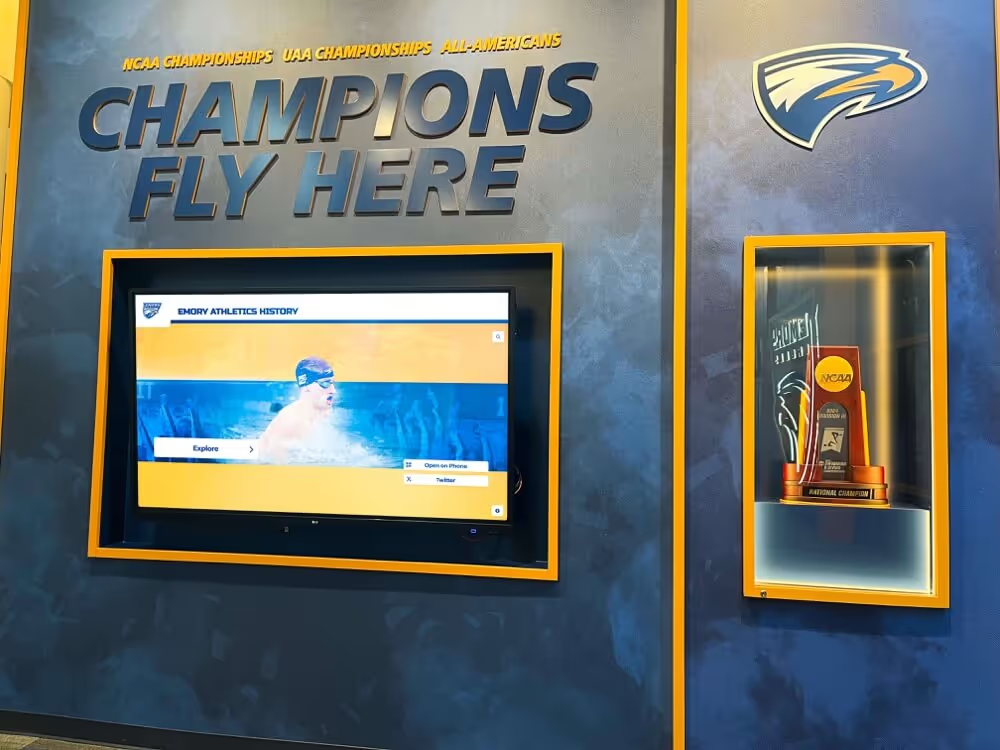
Planned giving recognition honors the long-term relationship between donors and their alma mater, often spanning decades before a gift is realized.
Why Planned Giving Recognition Demands a Different Approach
Annual giving recognition is primarily transactional: a donor gives, the institution acknowledges, and the cycle repeats. Major gift recognition responds to a specific, recent act of generosity—a lead gift, a naming opportunity, a campaign pledge. Planned giving recognition operates on a fundamentally different timeline and psychology.
The Deferred Nature of Legacy Gifts
Bequests, charitable remainder trusts, life insurance designations, and IRA beneficiary designations are irrevocable in spirit but often not yet legally binding at the moment of disclosure. A donor who tells your development officer “I’ve included the school in my will” has made a profound declaration of loyalty—yet the gift may not arrive for 10, 20, or 30 years.
Recognition programs that wait until a gift is realized miss the most critical window. The stewardship relationship built during a donor’s lifetime determines whether the bequest remains in the will, whether the amount grows over time, and whether the donor introduces other potential planned gift prospects to your program.
The Emotional Stakes Are Uniquely High
Legacy donors aren’t optimizing tax benefits or satisfying a pledge schedule. They are making a statement about what mattered most in their lives—often their formative educational experience, a coach or teacher who changed everything, or a deep belief in the institution’s mission and future.
Recognition that honors that emotional dimension creates bonds no annual fund thank-you can replicate. Recognition that treats a legacy pledge like a routine mid-level gift can quietly sever a relationship that took decades to build.
When to Prioritize Planned Giving Recognition
Your program should actively develop and refine planned giving recognition frameworks in three specific scenarios:
Launching or refreshing a legacy society. If your institution is establishing a named legacy society or restructuring an existing one, the recognition framework is the backbone of the program’s value proposition for prospective members.
Following a significant bequest realization. When an estate gift arrives, public recognition of the gift—while honoring appropriate privacy—signals to other donors that your institution treats legacy commitments with extraordinary care.
Preparing for a capital campaign. Planned gifts increasingly function as the quiet tier beneath campaign major gifts. Schools that have robust planned giving recognition programs enter campaigns with a stronger base of loyal donors who are already primed for larger asks.
Building a Legacy Society That Donors Actually Want to Join
The centerpiece of most institutional planned giving recognition programs is a named legacy society—a formal community of donors who have made a documented commitment to include the school in their estate plans. The society serves as both a recognition vehicle and a cultivation tool, creating community around a shared act of generosity.
Choosing a Name That Carries Meaning
Legacy society names should evoke the institution’s history, values, or founding story rather than generic terms like “planned giving circle” or “heritage club.” Schools that connect society names to a meaningful institutional anchor create immediate emotional resonance:
- The name of a founding family, beloved principal, or transformational leader
- A reference to the year of founding or a defining moment in institutional history
- Language drawn from the school’s motto, mascot, or geographic identity
- A term that celebrates the idea of lasting impact (Cornerstone Society, Legacy Circle, Founders Guild)
The name signals permanence and prestige. It should feel worth belonging to.
Structuring Society Membership
Most effective legacy societies offer a single tier of membership—all documented planned gift commitments qualify, regardless of estimated value—rather than sub-tiers that rank members against each other based on estate size. Planned gift values are often unknown, change over time, and depend on factors donors cannot predict. Tiered structures that require disclosure of estate amounts create barriers to program participation and can feel invasive.
Some institutions offer an “aspirational” membership category for donors who express interest but haven’t yet completed estate documents, which allows earlier recognition and strengthens the motivation to formalize the commitment.
Recognition Benefits That Matter to Legacy Donors
Unlike major gift donors who may value naming opportunities on physical spaces, legacy society members typically value:
- Named membership in a distinguished community. The society itself is the recognition; belonging matters more than a plaque in many cases.
- Annual acknowledgment that their commitment is remembered. A thoughtful letter or personalized note each year—not a mass communication—that references their specific intention.
- Connection to institutional leadership. Access to the president or head of school for annual updates on institutional progress and mission fulfillment.
- Recognition during signature events. Public acknowledgment at the graduation ceremony, homecoming weekend, or annual gala.
- A permanent public display that includes their name among fellow legacy society members—visible during their lifetime, not only after their death.
That last element—a permanent, visible public display—is where physical and digital recognition infrastructure becomes strategically critical.
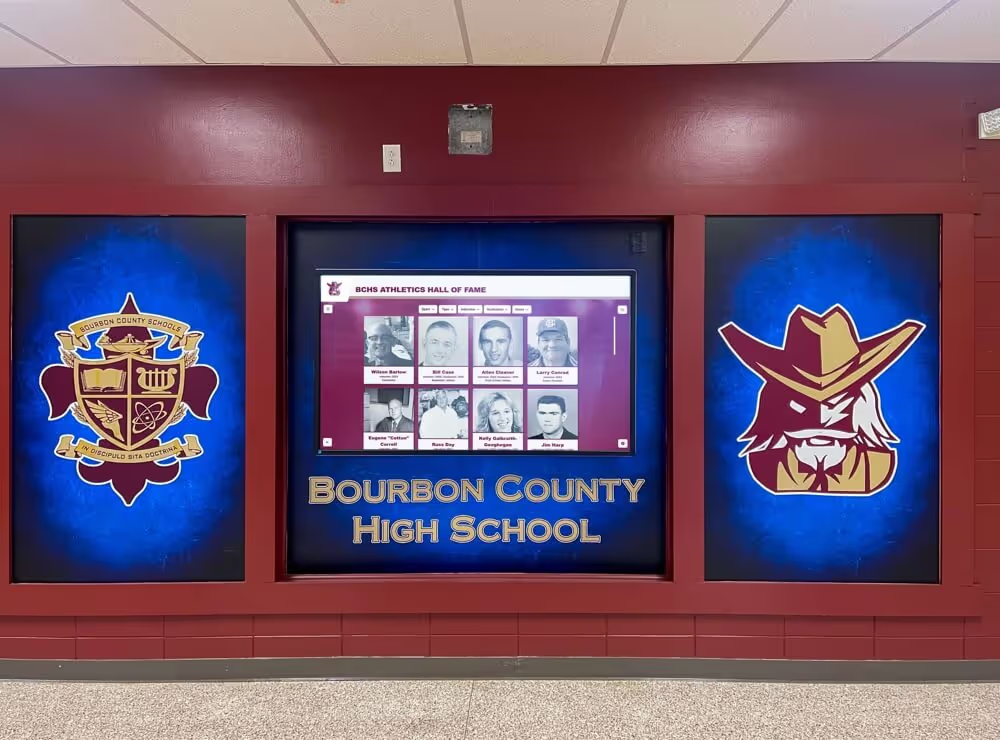
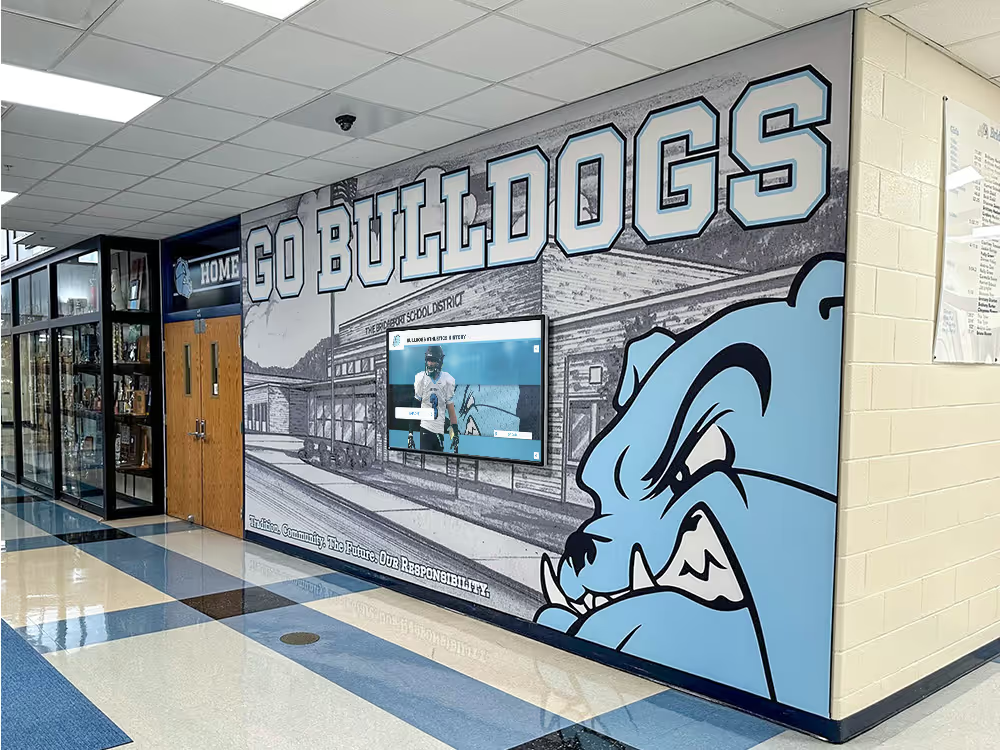
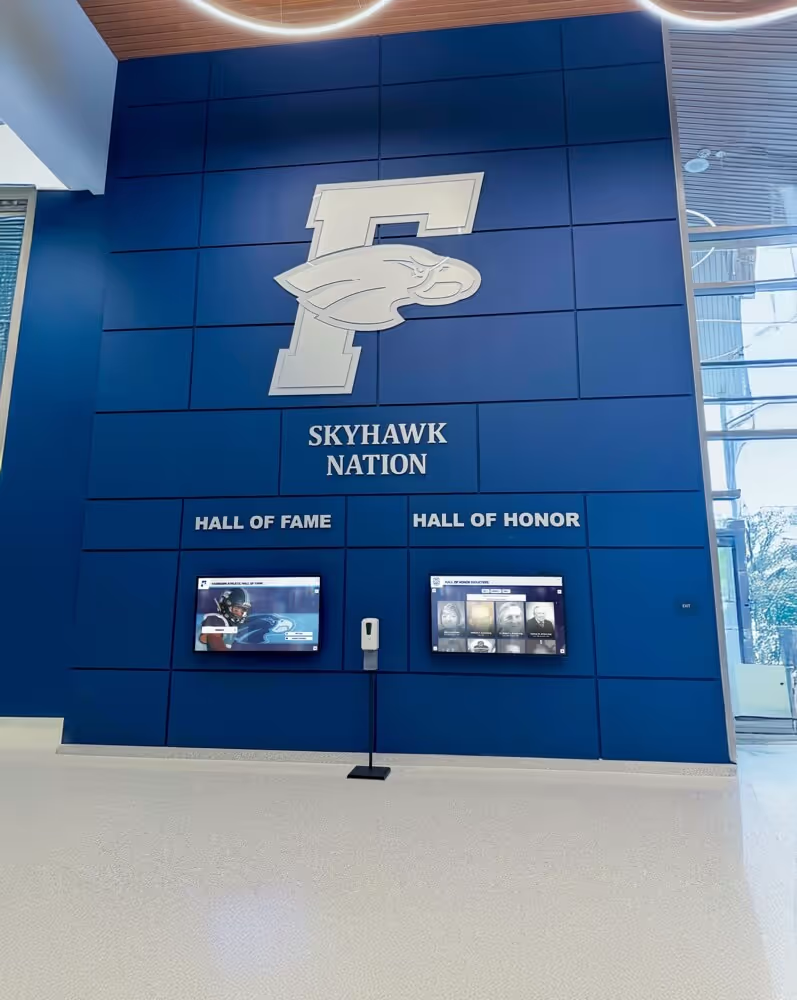
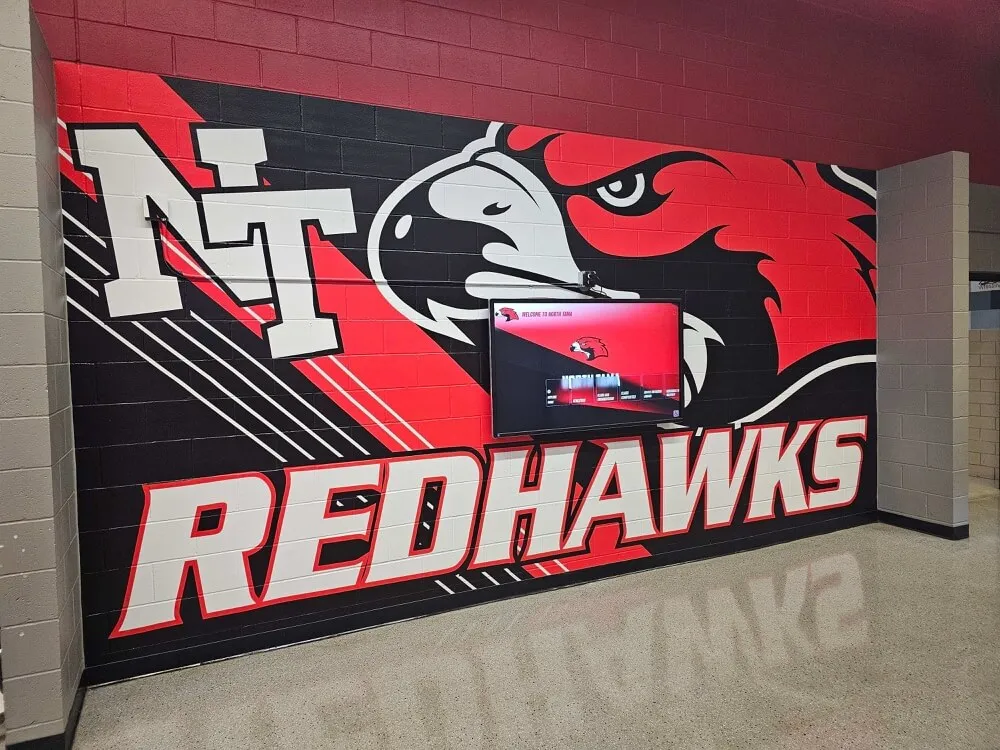
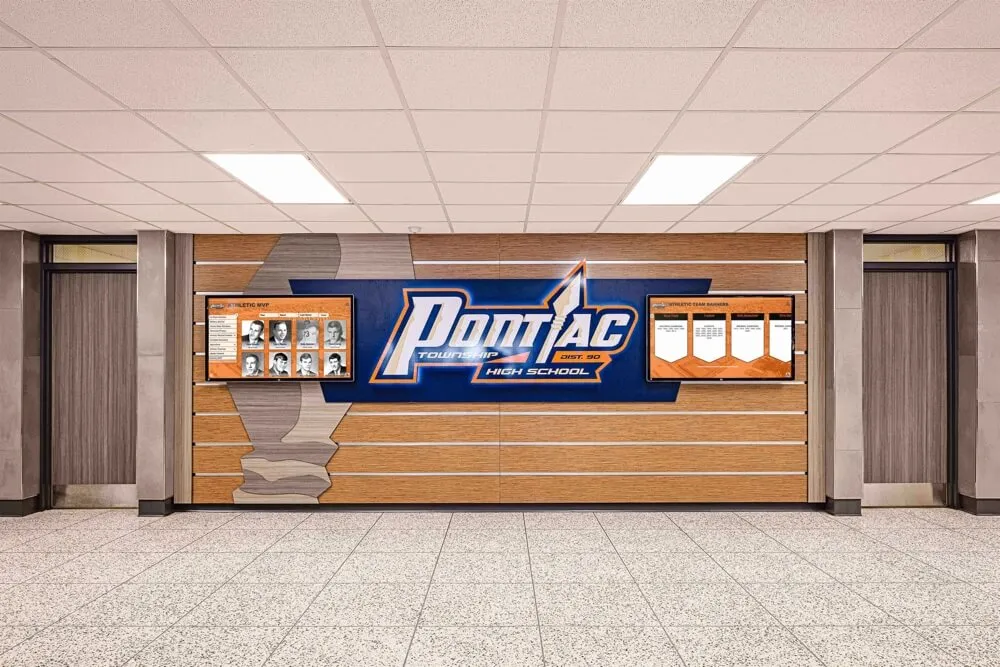
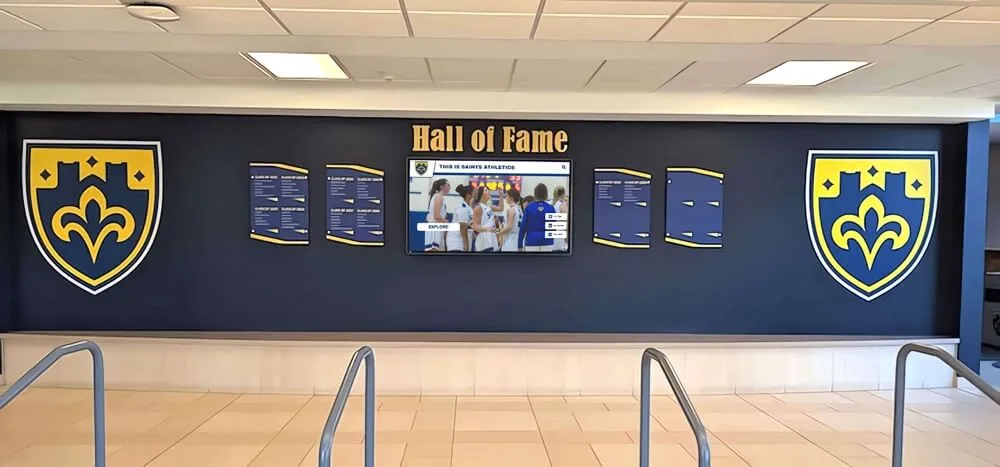
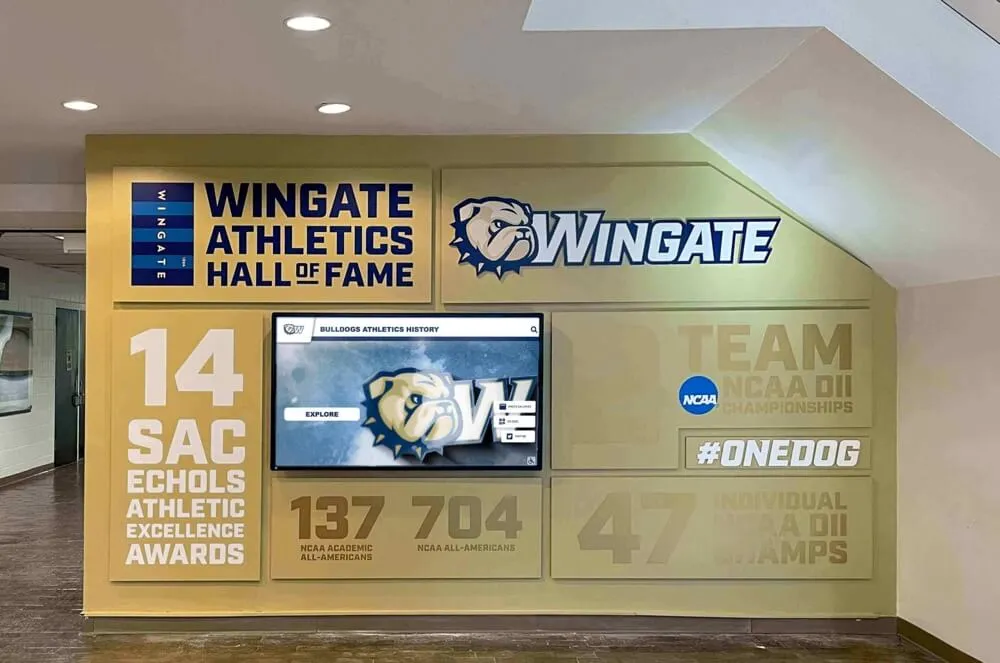
A permanent legacy society wall gives planned gift donors visible recognition during their lifetime—transforming an invisible future gift into a present source of pride.
Sample Planned Giving Recognition Letter Templates
The following templates provide starting points for key recognition touchpoints in the legacy donor relationship. Customize all bracketed fields for each donor relationship.
Template 1: Acknowledgment of Legacy Society Intent
Dear [Donor First Name],

We are deeply honored to learn of your intention to include [School Name] in your estate plans. This commitment—made quietly and from the heart—represents one of the most meaningful expressions of loyalty and love we could ever receive from a member of our community.

Your planned gift will do what only a legacy gift can: it will carry your values forward long into the future, ensuring that students we haven't yet met will benefit from the care and generosity you have shown throughout your relationship with [School Name].

We would be proud to welcome you as a founding member of the [Legacy Society Name], a distinguished community of [School Name] friends whose planned gifts will shape our institution for generations. Your membership entitles you to a permanent place on our Legacy Society display in [Location], annual correspondence about institutional progress, and an invitation to our private [Event Name] for society members each [Month/Season].

Your gift is not just remembered—it is already celebrated.

With profound gratitude,

[Advancement Director Name]
[Title], [School Name]
Template 2: Annual Legacy Society Renewal Letter
Dear [Donor First Name],

Each year, I take time to write personally to every member of our [Legacy Society Name]—not because I have news to share, but because I believe that a commitment as significant as yours deserves acknowledgment that never becomes routine.

You chose to include [School Name] in your estate plans, and that decision continues to mean the world to us. Because of members like you, we know that our mission will be sustained long after the current generation of leaders has passed the torch.

This year at [School Name], [brief institutional update—new building, scholarship recipient story, championship, milestone enrollment figure]. These accomplishments exist in part because of the foundation of loyalty and generosity that you represent.

Your name remains proudly displayed in our [Legacy Society Name] gallery, and your place in our story is secure.

Thank you for the gift of your legacy.

Warmly,

[Advancement Director Name]
Template 3: Legacy Gift Realization Acknowledgment (After Donor Passes)
Dear [Family Member Name],

On behalf of everyone at [School Name], I want to express our deepest condolences on the passing of [Donor Name], and our profound gratitude for the gift that [he/she/they] arranged to benefit our students.

[Donor Name]'s legacy at [School Name] is now permanent in every sense of the word. [His/Her/Their] generosity will fund [specific use—scholarships, program, endowment fund] for years to come, touching students who will never know [his/her/their] name but whose lives will be shaped by [his/her/their] belief in this institution.

We will be adding [Donor Name] to our [specific recognition display or naming element] in the coming weeks, and we would love to include [his/her/their] family in a small ceremony if you would find that meaningful.

Please know that [Donor Name]'s gift—and [his/her/their] life—will never be forgotten here.

With gratitude and sympathy,

[Advancement Director Name]
Designing a Planned Giving Recognition Wall That Lasts
The most powerful physical recognition vehicle for a legacy society is a permanent wall display that includes members’ names during their lifetimes. This is not a memorial—it is a celebration of living commitments, updated regularly as new members join and as realized gifts receive additional recognition.
Why a Static Plaque System Fails Legacy Societies
Traditional engraved plaques present serious structural limitations for planned giving recognition:
New members can’t be added without expensive re-engraving. Legacy society membership grows continuously; a plaque system designed for 50 names becomes obsolete when membership reaches 200 without costly replacement panels.
Realized gifts can’t be differentiated without physical modification. When a legacy gift is realized, you may want to add a visual indicator—a different treatment, an additional honor—that distinguishes donors whose gifts have arrived from those whose commitments are still pending. Static plaques require costly re-engraving to make that distinction.
Stories can’t be told. A plaque shows a name. A digital display can show a portrait, a brief biography, a connection to the institution, and the donor’s own words about why they chose to leave a legacy—turning a list into a community of individual stories.
Institutional evolution creates maintenance problems. Schools merge, rename programs, or evolve over decades. Schools that have gone through consolidations or mergers carry dual institutional identities that static plaques handle poorly. A digital legacy wall accommodates institutional history without physical replacement.
The Digital Legacy Society Wall: Architecture and Content
A purpose-built digital legacy recognition wall provides advancement teams with the flexibility static systems cannot offer:
Unlimited capacity with consistent aesthetics. Add new members without replacing panels, resizing layouts, or redesigning the physical installation. The display scales gracefully from 10 members to 1,000.
Differentiated recognition tiers within a unified display. Donors whose gifts have been realized can receive a gold indicator, a separate “In Memoriam” section, or an enhanced profile—all within the same system, manageable from a content dashboard without physical work.
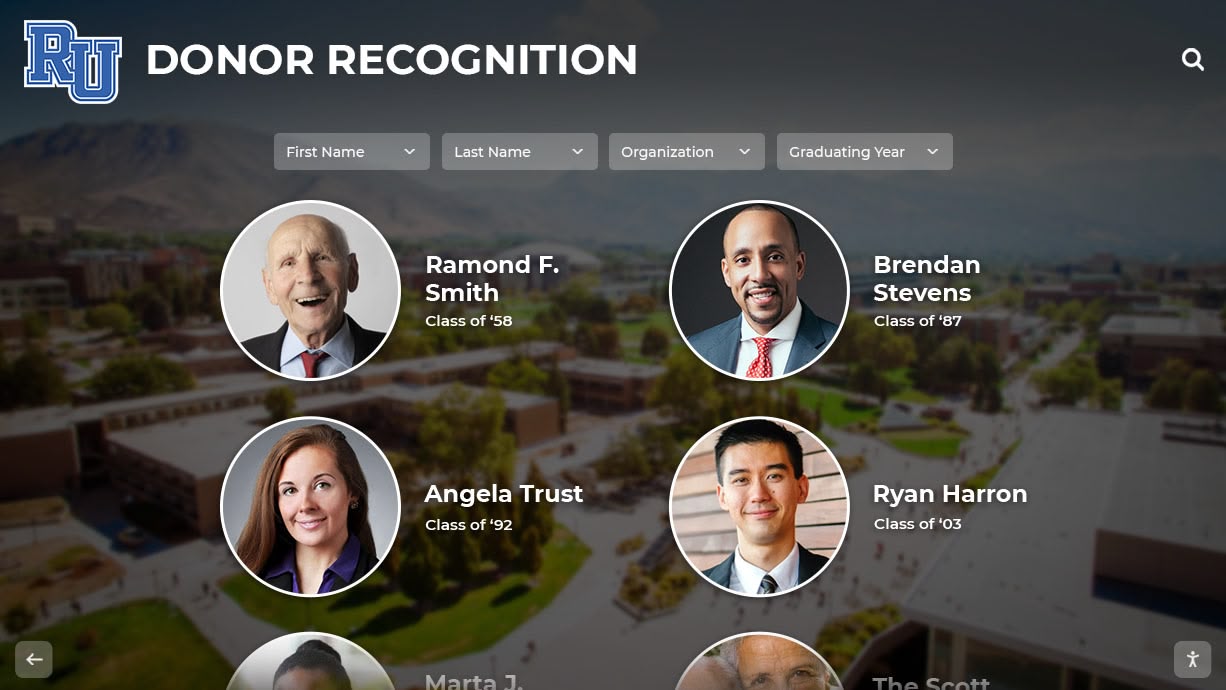
Searchable, browsable experience for visitors. Guests, prospective donors, and current students can explore the legacy community alphabetically, by class year, or by giving interest area—transforming passive viewing into active discovery. The same interactive touchscreen technology that powers athletic halls of fame and alumni recognition walls provides a natural vehicle for legacy society displays.
Multimedia storytelling. A legacy society wall isn’t limited to names. Include a brief donor story—a sentence or two about what motivated the gift—or a portrait photo that personalizes the recognition. These human elements inspire prospective planned gift donors far more effectively than an alphabetical list.
Remote content management. When a new member joins, advancement staff add the name from any internet-connected device without scheduling vendor visits, waiting for engravers, or managing physical installation logistics.
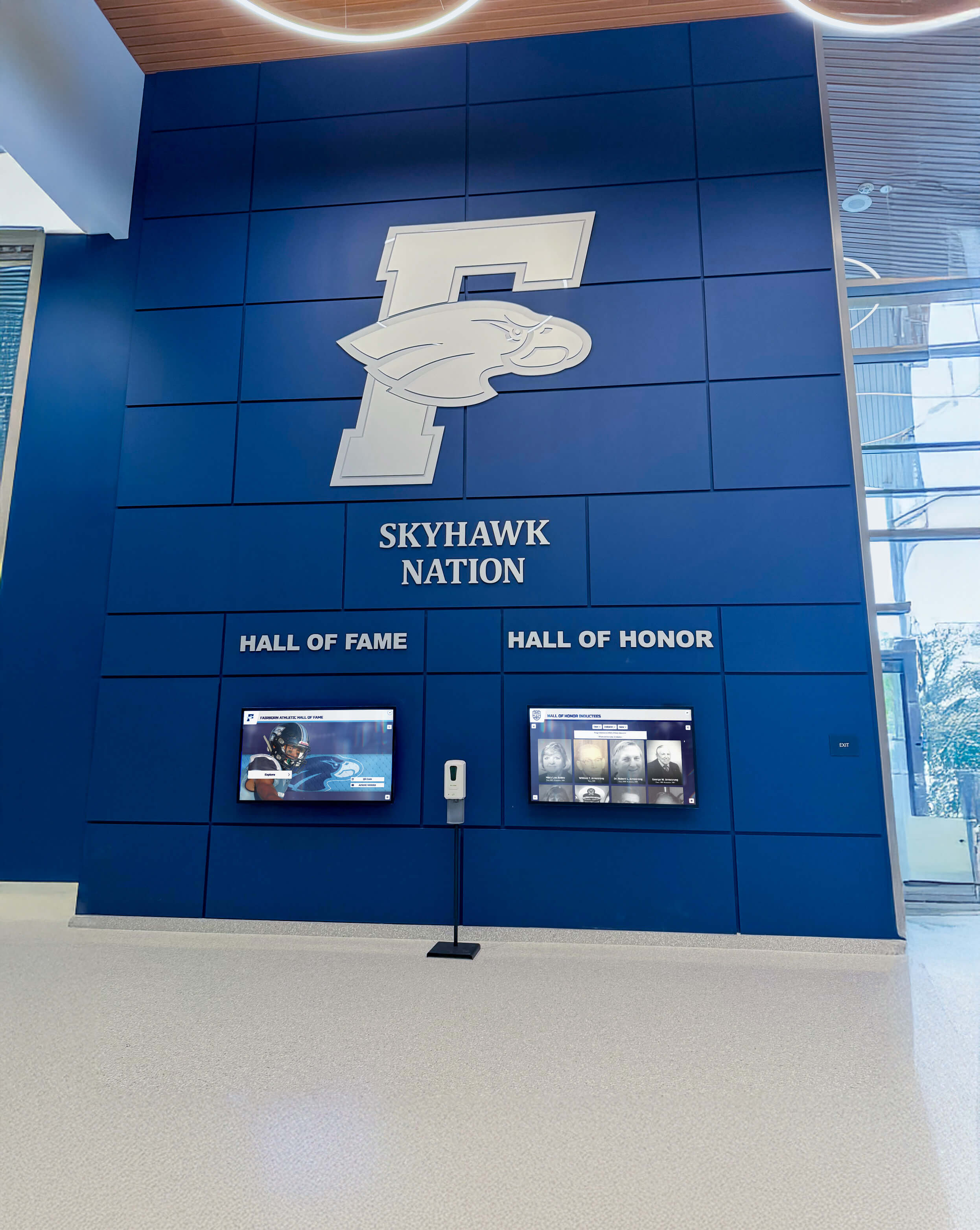
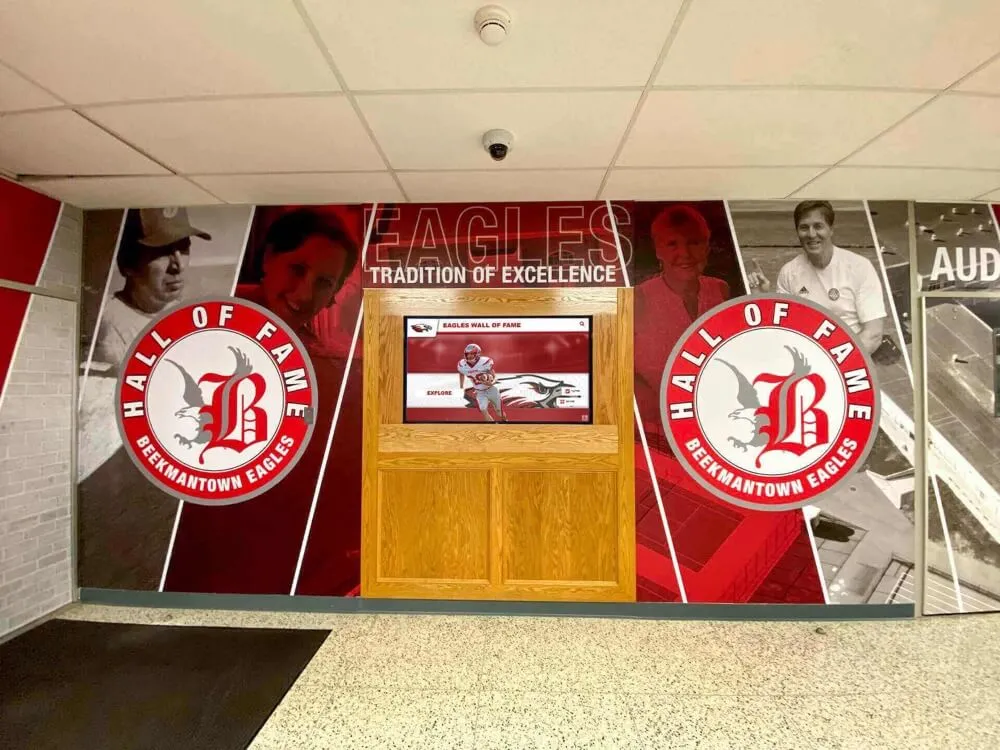
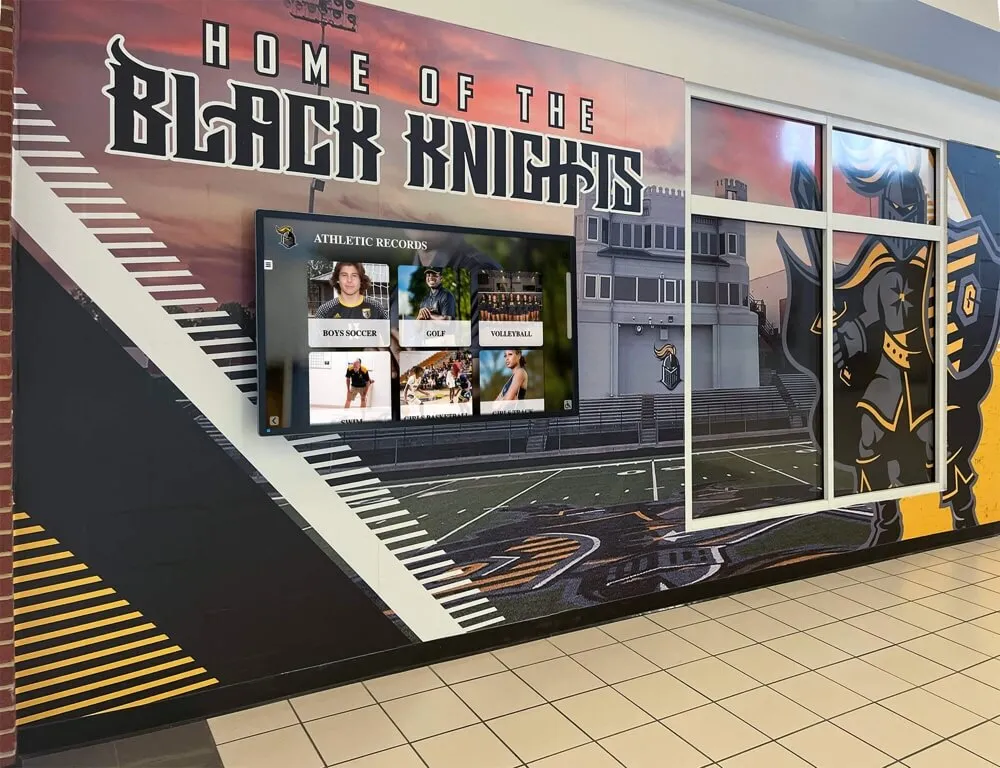
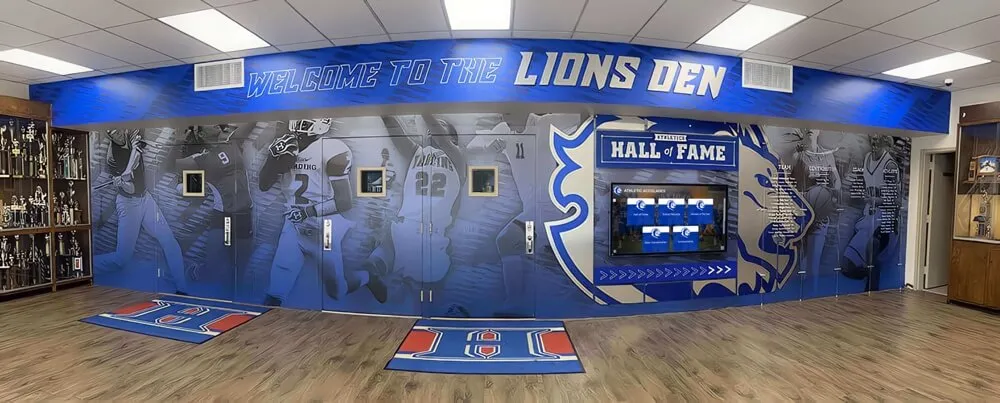
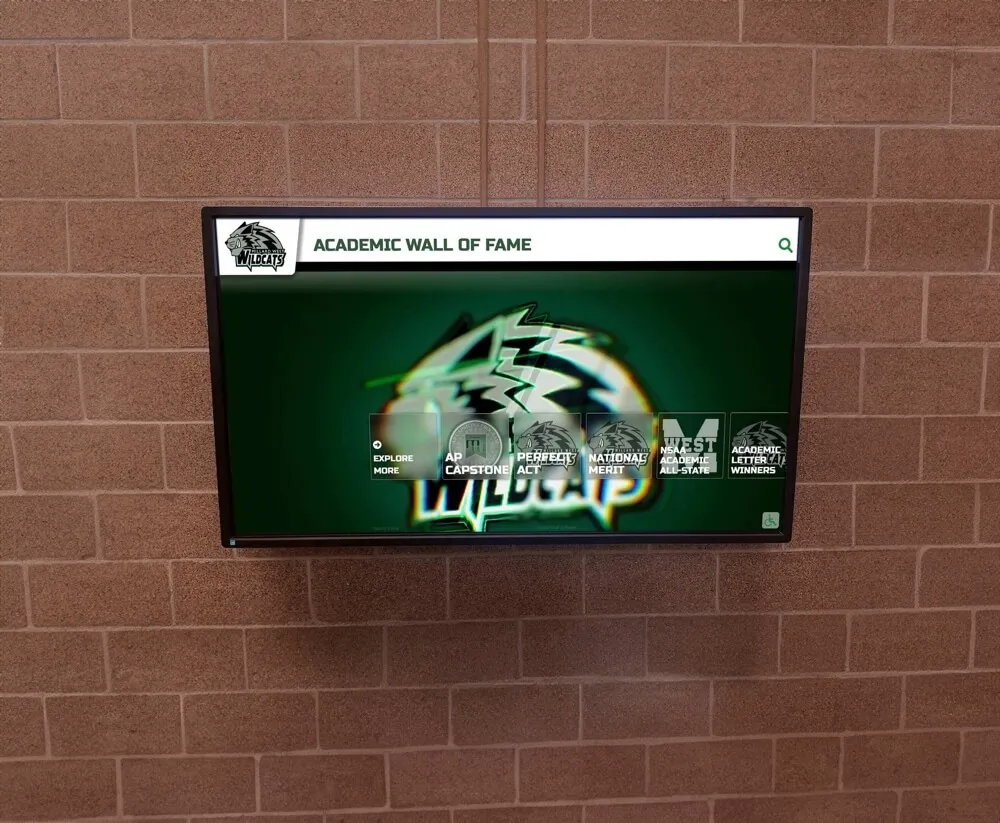
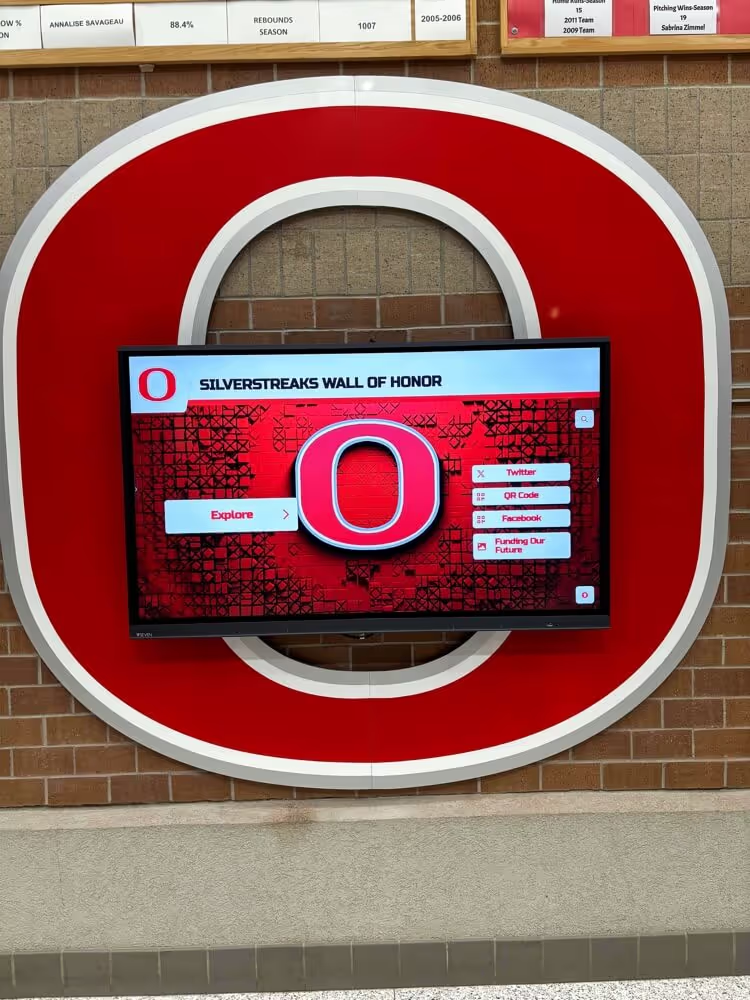
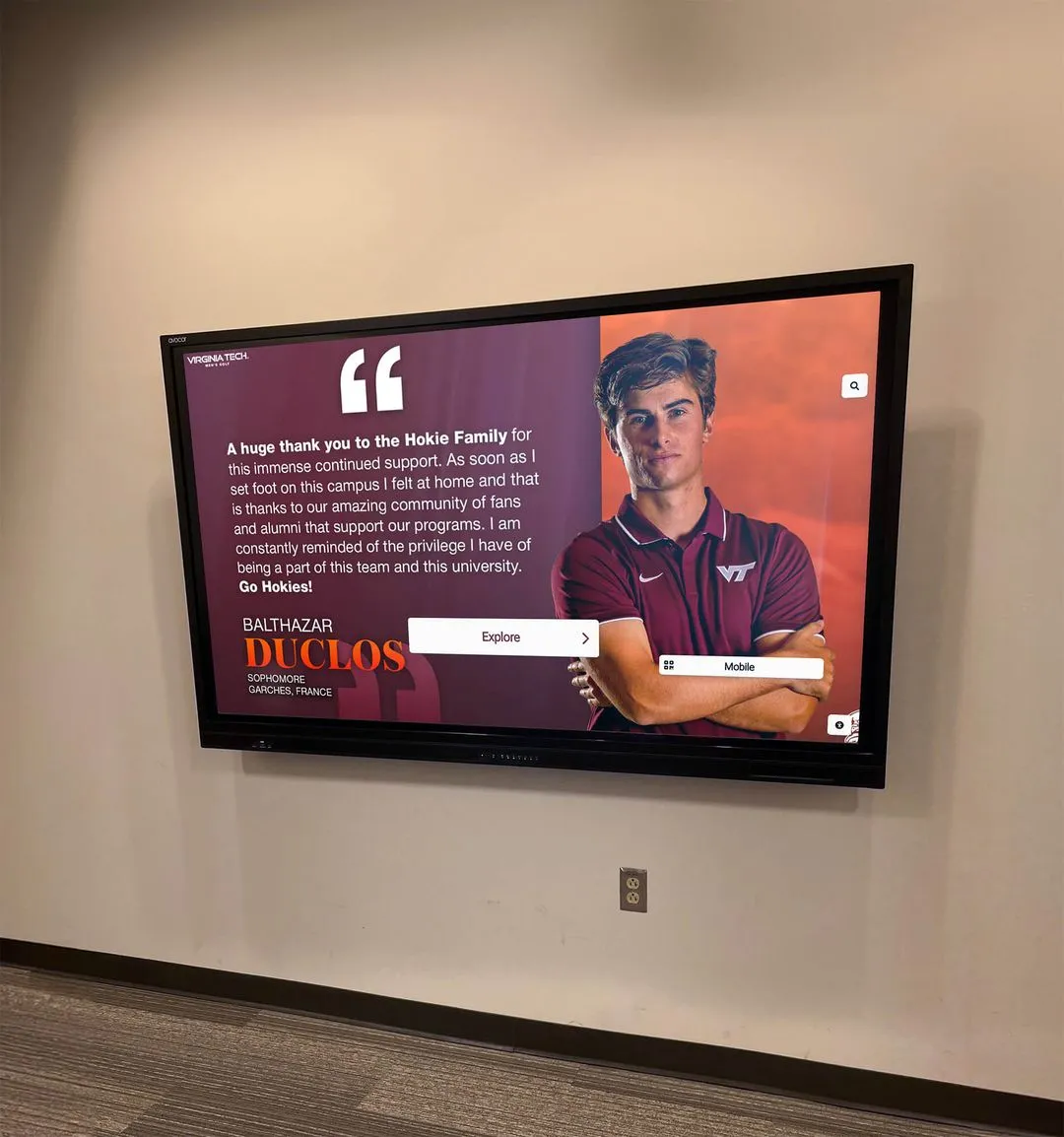
A well-designed recognition wall anchors legacy society identity and gives donors a visible, permanent symbol of their commitment during their lifetime.
Placement and Environment: Where Legacy Walls Create the Most Impact
The physical location of a planned giving recognition display shapes both its visibility and its symbolic weight.
High-Traffic Entry Points
Main school lobbies, entry vestibules, and administrative building corridors see the highest visitor traffic and give legacy society members the broadest possible visibility. Entry placement ensures that donors, prospective members, and students encounter the display regularly—reinforcing the message that planned gifts are foundational, not peripheral.
This placement also creates natural stewardship moments during campus visits: a tour that pauses at the legacy wall communicates institutional values to prospective donors more powerfully than any brochure.
Development Office or Advancement Suite
Placing a legacy society display within or adjacent to the advancement suite creates an intimate, mission-connected environment for stewardship meetings. When a donor visits for a conversation about their estate intentions, seeing an existing legacy wall—especially with names they recognize—provides immediate social proof that the program is active, valued, and permanent.
Alongside Other Recognition Installations
Legacy walls gain symbolic weight when positioned near other institutional recognition displays. Schools that use digital recognition platforms for athletic hall of fame recognition, academic achievement displays, and donor recognition often find that a legacy society installation fits naturally within a broader recognition corridor—signaling that the institution honors excellence and generosity with equal care.
Similarly, schools that have developed school memorabilia display areas or historical archives adjacent to recognition walls create rich contextual environments where legacy gifts feel connected to institutional tradition and history.
Event Venue and Gathering Spaces
For schools with dedicated event spaces used for alumni gatherings, galas, and legacy society receptions, a permanent or portable recognition display can serve as both recognition infrastructure and event focal point. The visual presence of the legacy society during alumni stewardship events reinforces society identity and creates natural conversation starters between members.
Stewardship Calendar: Sustaining Legacy Relationships Year-Round
Planned giving recognition isn’t a one-time event—it’s an ongoing relationship sustained through consistent, thoughtful touchpoints.
Annual Stewardship Cadence Template
The following calendar framework establishes a sustainable rhythm for planned giving stewardship. Adapt frequency and format to your institution’s capacity and donor preferences.
PLANNED GIVING STEWARDSHIP CALENDAR TEMPLATE

JANUARY
- Send personal legacy society acknowledgment letter (see Template 2 above)
- Review society member list for accuracy; update legacy wall display

MARCH/APRIL
- Legacy society member update: share institutional news, outcomes, upcoming milestones
- Invite members to spring campus event

JUNE/JULY
- Include legacy society recognition in graduation program or ceremony acknowledgment
- Annual impact update: connect planned giving commitment to institutional outcomes

SEPTEMBER/OCTOBER
- Legacy society recognition at homecoming or alumni weekend
- Personal outreach to members who haven't engaged in 12+ months

NOVEMBER/DECEMBER
- Year-end gratitude communication (NOT a fundraising ask)
- Holiday card with institutional sentiment from president/head of school
- Internal audit: new members to add to wall, any member passings to note and transition
Handling the Death of a Legacy Society Member
The period following a legacy member’s passing represents one of the most sensitive stewardship moments in advancement work. Key principles:
Respond to the family first, before public recognition. The condolence letter and family acknowledgment (see Template 3 above) precede any public announcement.
Coordinate with the estate attorney or executor early. Gift realization timelines vary; establishing communication with legal representatives ensures smooth processing.
Plan a transition on the legacy wall display. Move the donor from “active member” to “realized gift” status in your recognition system, adding any additional honor or memorial distinction your policy allows.
Honor privacy preferences recorded during the relationship. Some donors request that their planned gift remain private during their lifetime and be disclosed only after death. Others want immediate public recognition. Documented donor preferences, captured in your CRM during the stewardship relationship, govern how recognition unfolds.
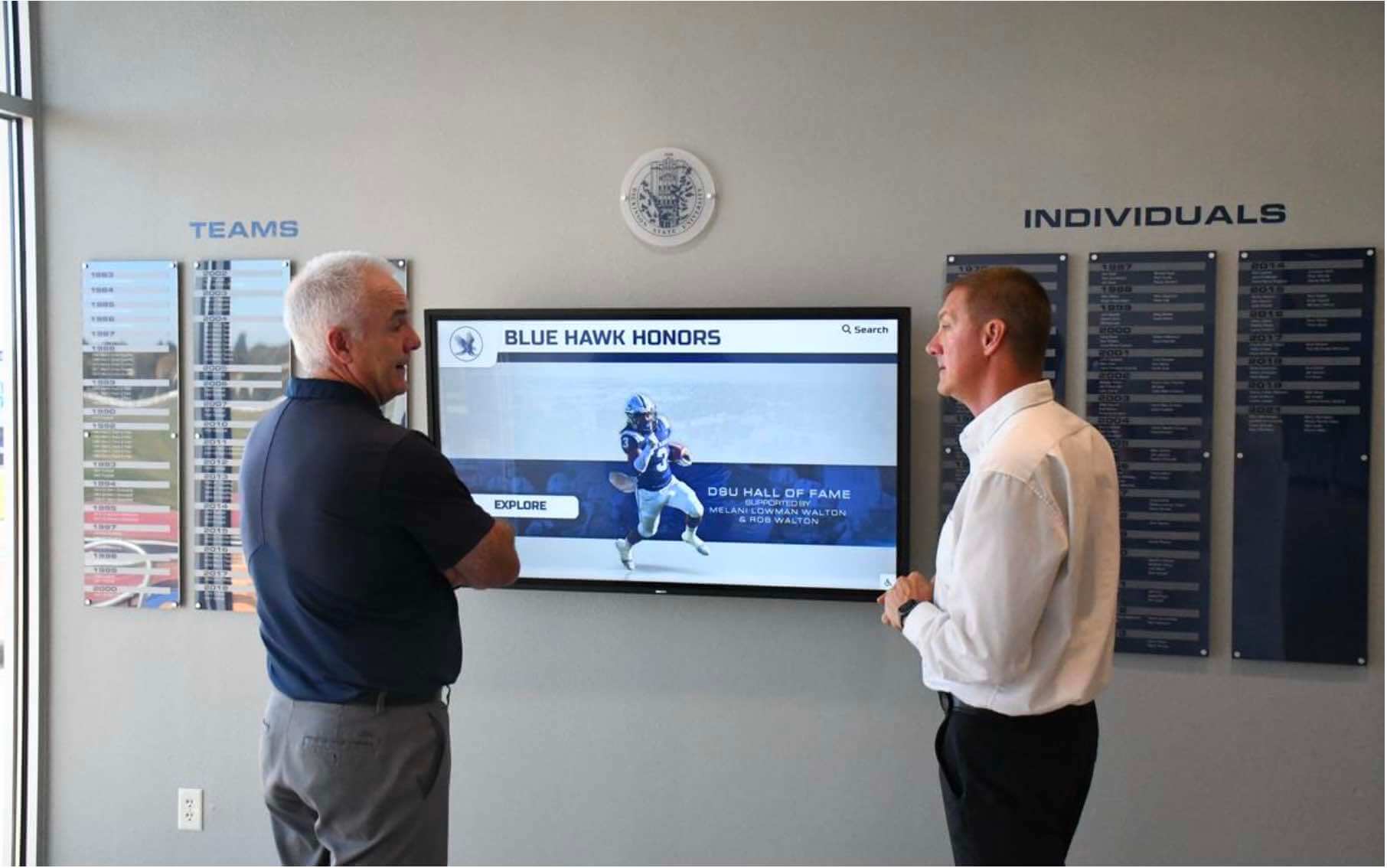
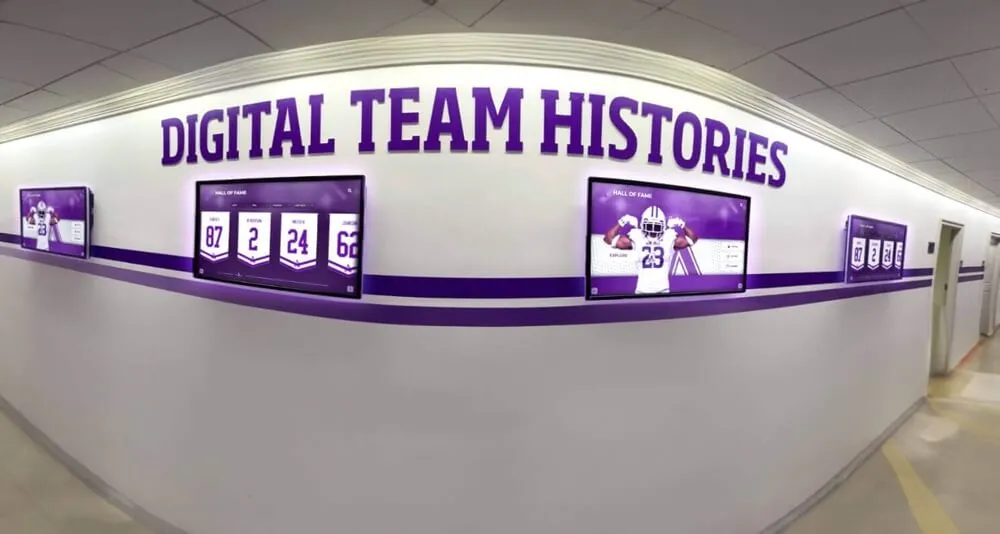
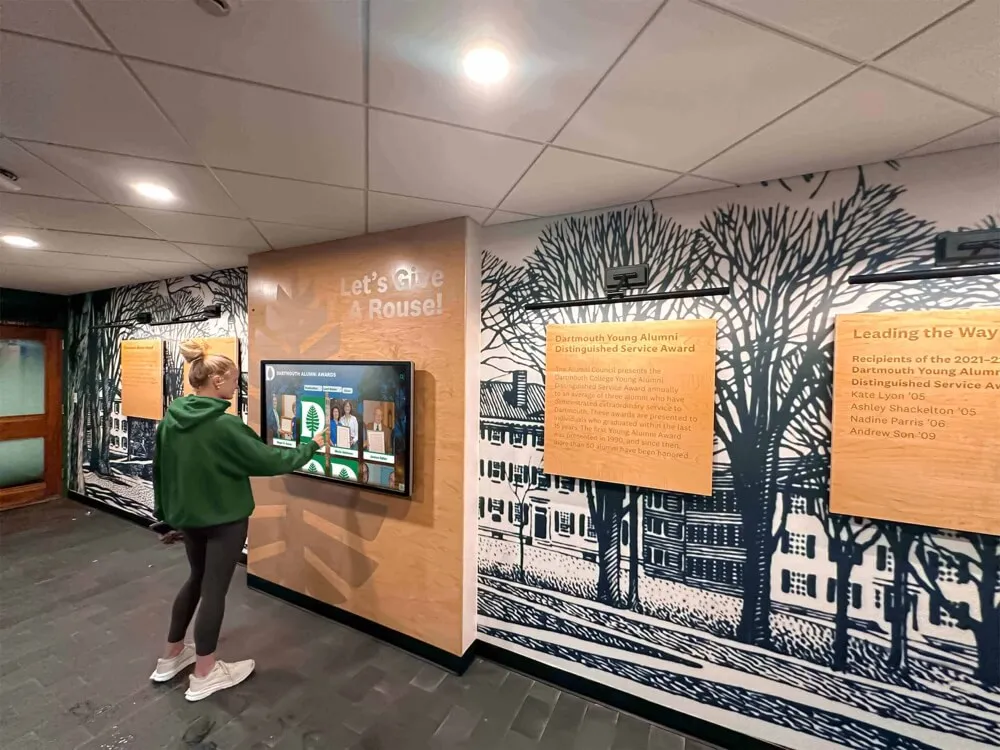
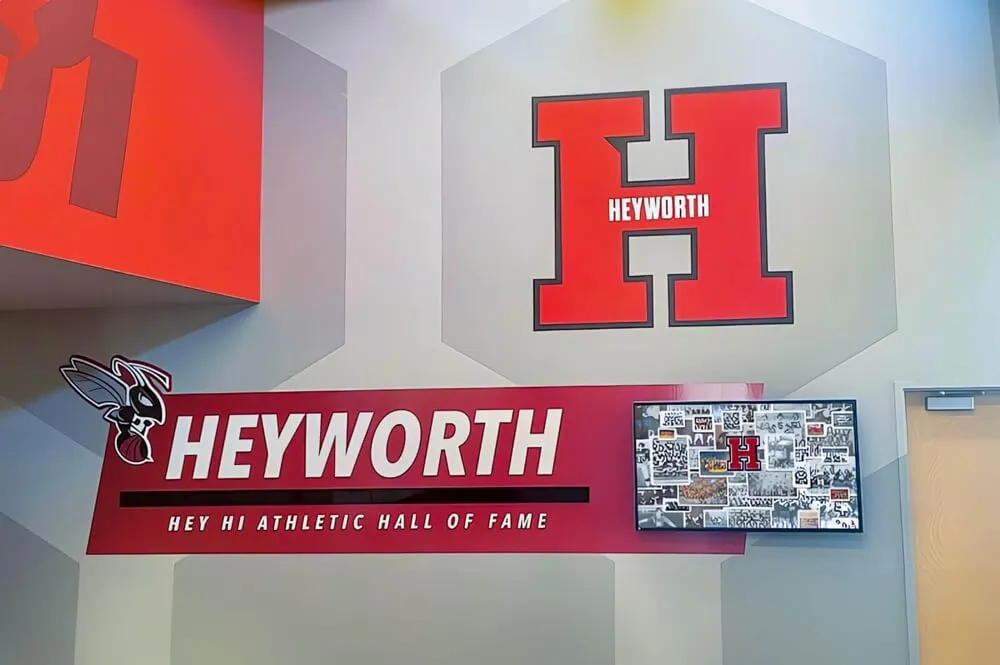
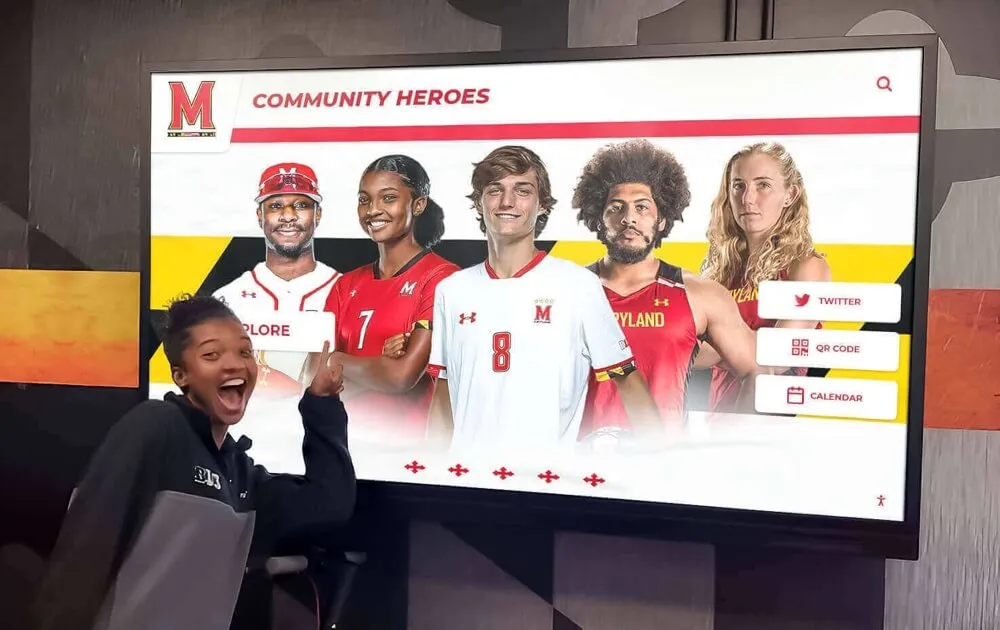
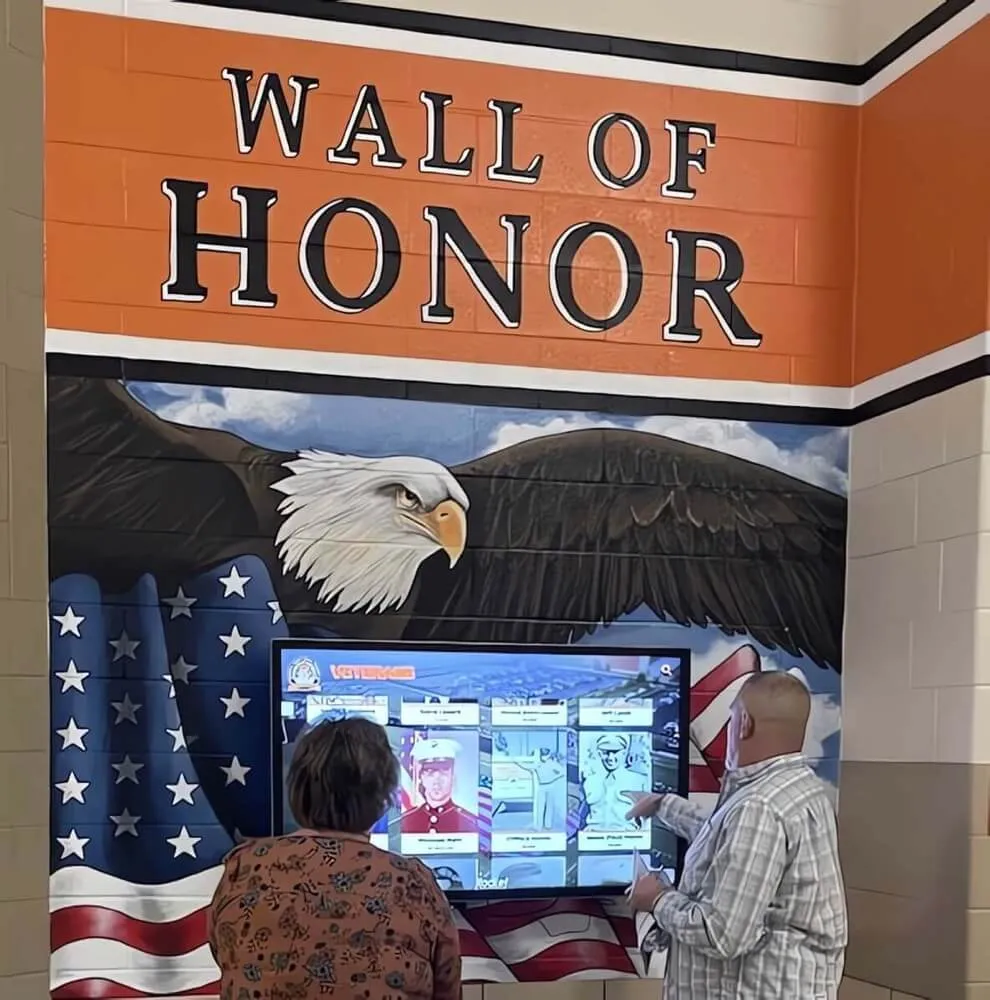
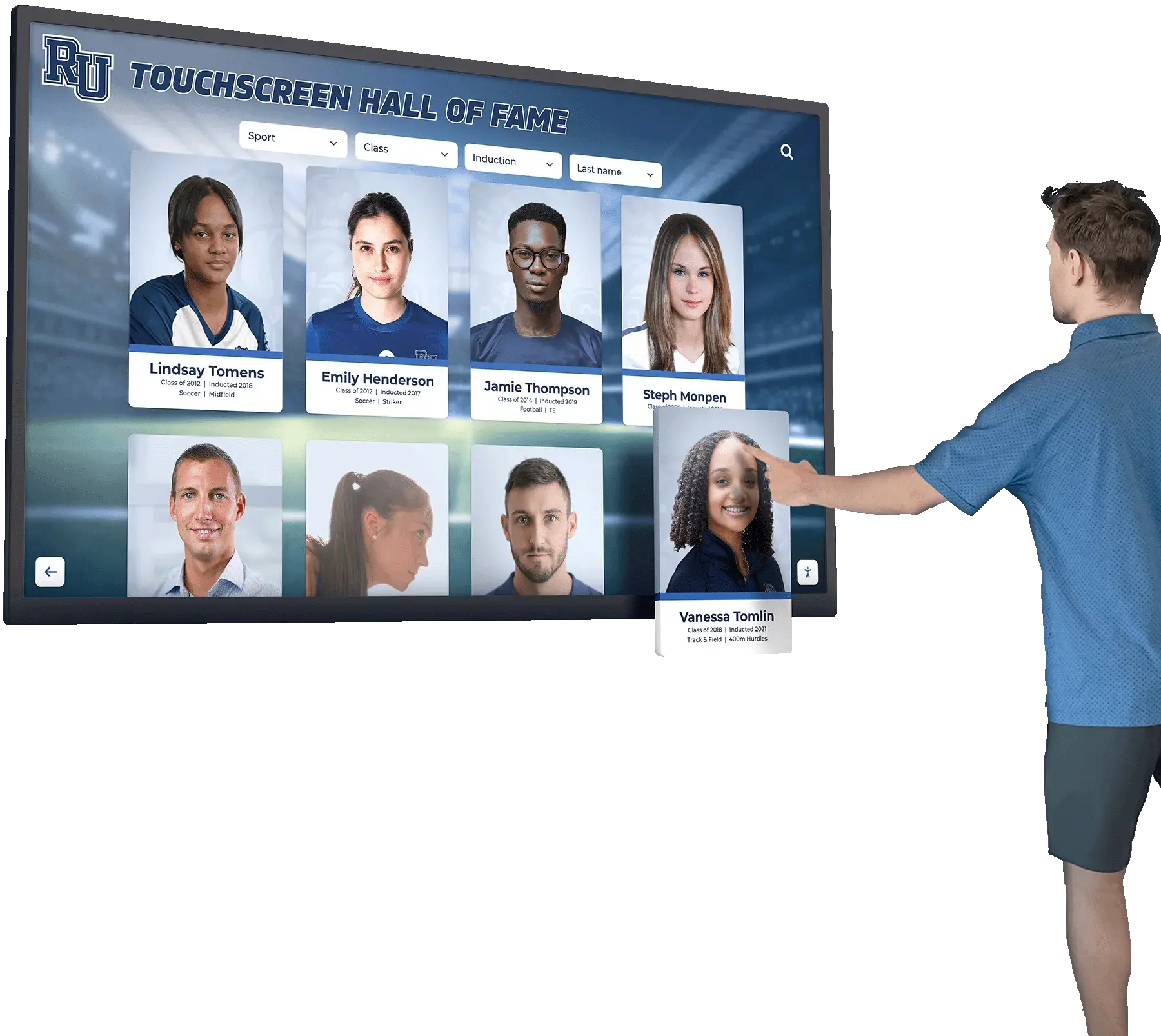
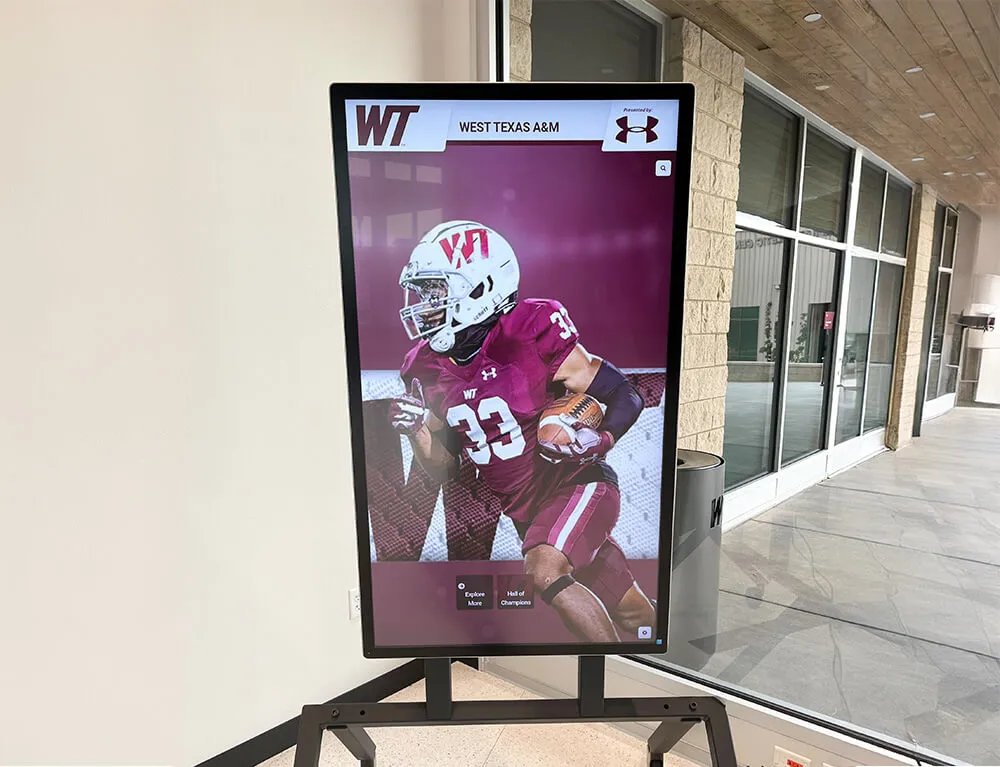
Interactive recognition displays allow visitors and donors to explore institutional legacy in an engaging, self-directed experience.
Recognition Beyond the Legacy Wall: Multi-Channel Strategies
A physical legacy society wall anchors recognition, but the most effective programs extend acknowledgment across multiple channels.
Digital and Web-Based Recognition
Schools with active alumni web portals can include a dedicated legacy society section that mirrors the physical display—giving donors recognition that family members and friends anywhere in the world can access. Web-based legacy recognition also serves as a low-barrier entry point for alumni who encounter the program online before visiting campus.
Print Recognition in Institutional Publications
Annual reports, alumni magazines, and school newsletters provide ongoing opportunities to list legacy society members (with appropriate privacy filters) and tell stories about the program’s impact. Print recognition complements physical displays by reaching audiences who may never visit campus.
Program Recognition at Public Events
Reading legacy society member names at graduation ceremonies, alumni reunions, and annual galas—similar to how memorial tribute displays honor service and sacrifice in school and community contexts—creates meaningful public moments that validate the decision to join the society and inspire others to consider planned giving.
Personal Outreach from Institutional Leadership
For top legacy prospects and long-standing society members, direct outreach from the head of school or board chair carries recognition weight that no printed list or digital display can replace. A personal phone call, handwritten note, or private meeting says that the individual donor’s commitment is known and treasured at the highest levels of the institution.
Planned Giving Recognition Across Institutional Types
Recognition strategies should adapt to the specific culture, scale, and resources of different school environments.
Independent K-12 Schools
Independent schools often have intimate alumni communities where personal relationships between advancement staff and donors are deep. Legacy society programs at these institutions can be smaller and more exclusive, with highly personalized recognition—handwritten notes from the head of school, small recognition dinners, and legacy members featured prominently in alumni communications.
Physical legacy walls at independent schools often anchor in entry foyers or the development office suite, reflecting the personalized stewardship culture. Even modest digital installations—a single touchscreen display that honors legacy society members by name with photos and brief biographies—communicate extraordinary care with relatively limited infrastructure.
Public School Foundations
Public school foundation planned giving programs operate through independent nonprofit structures that support district schools. Recognition programs in these contexts often need to honor donors across multiple schools or district-wide initiatives, creating more complex recognition architectures.
Flexible digital recognition platforms that can display legacy society members organized by school, program area, or giving interest allow foundations to honor the specificity of each donor’s commitment while creating unified recognition infrastructure that spans the foundation’s full community.
Colleges and Universities
Higher education planned giving programs typically operate at greater scale, with legacy societies that may include hundreds or thousands of members across multiple alumni generations. Universities often maintain sophisticated multi-tiered recognition systems that distinguish between different planned giving vehicles (bequests, charitable remainder trusts, life income gifts) and different levels of accumulated realized gifts from planned gift donors.
University legacy walls often appear in advancement buildings, alumni centers, libraries, and signature campus spaces—reflecting the breadth of campus constituencies who should encounter and be inspired by planned giving recognition. Digital systems that can be updated across multiple locations from a single content management platform provide operational efficiency at this scale.
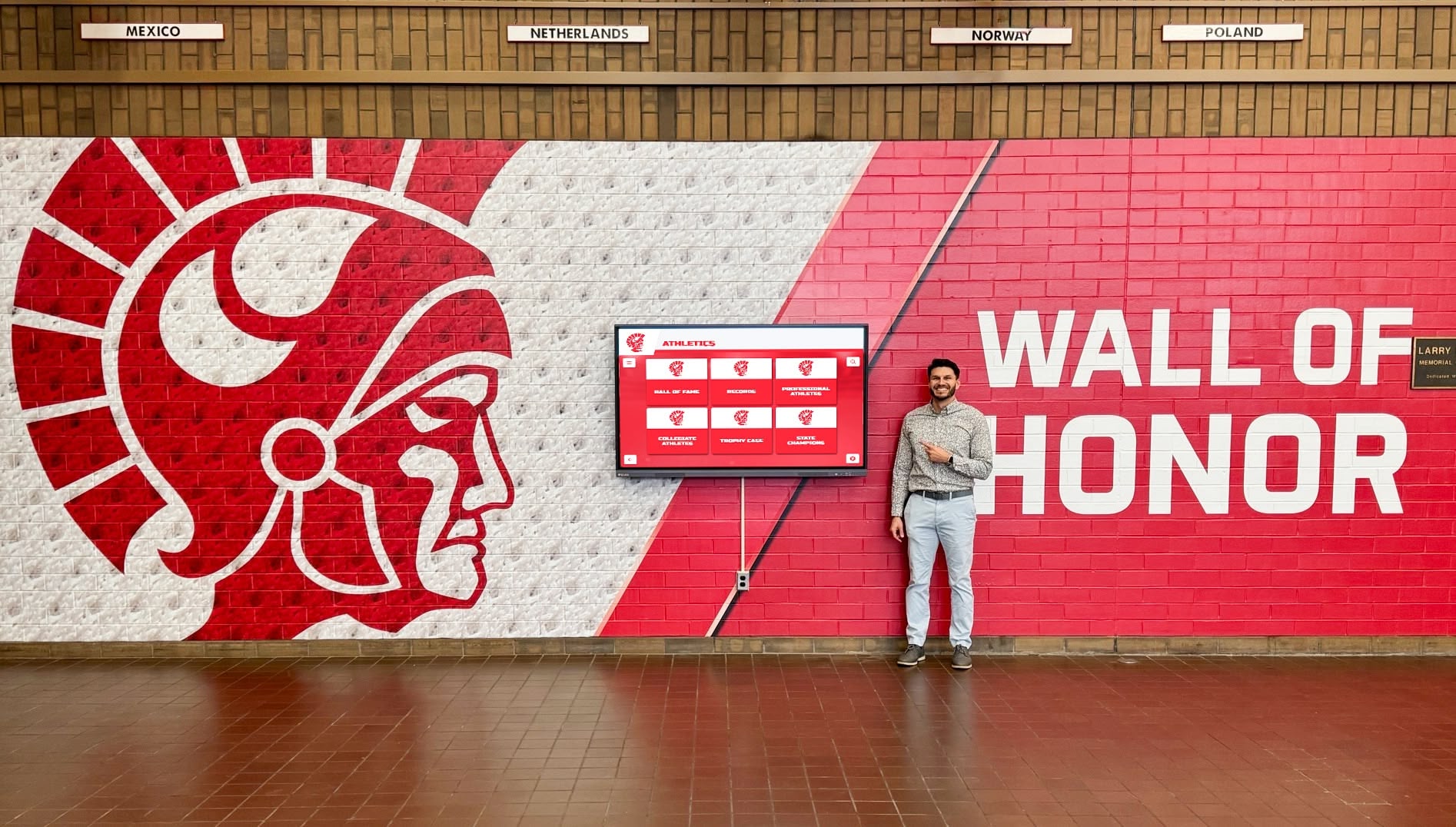
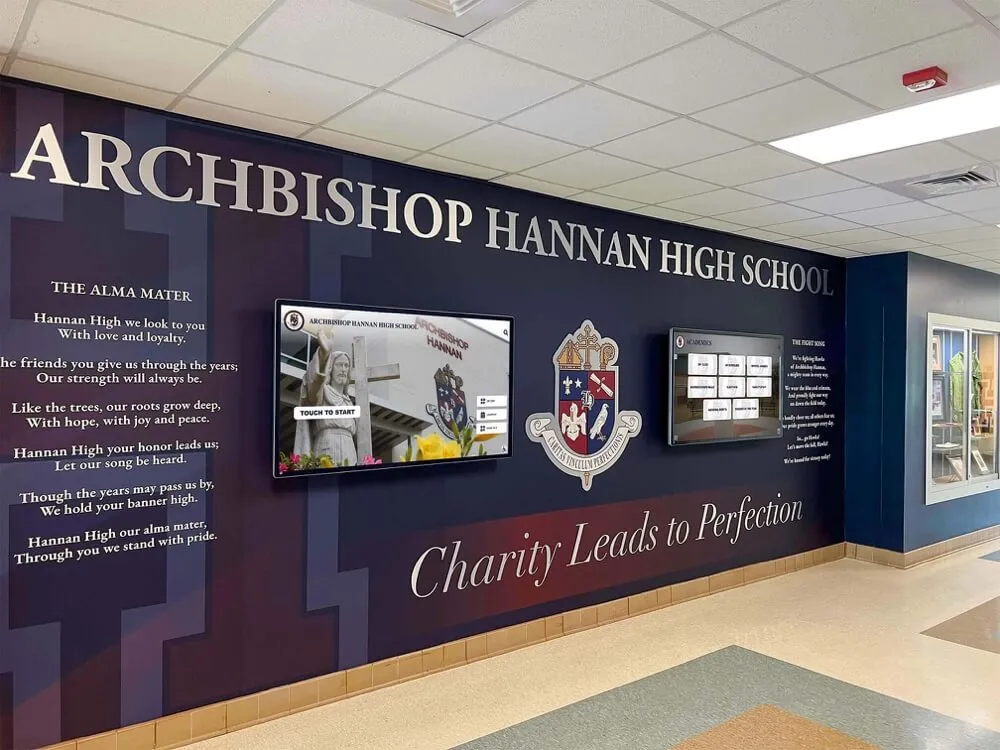
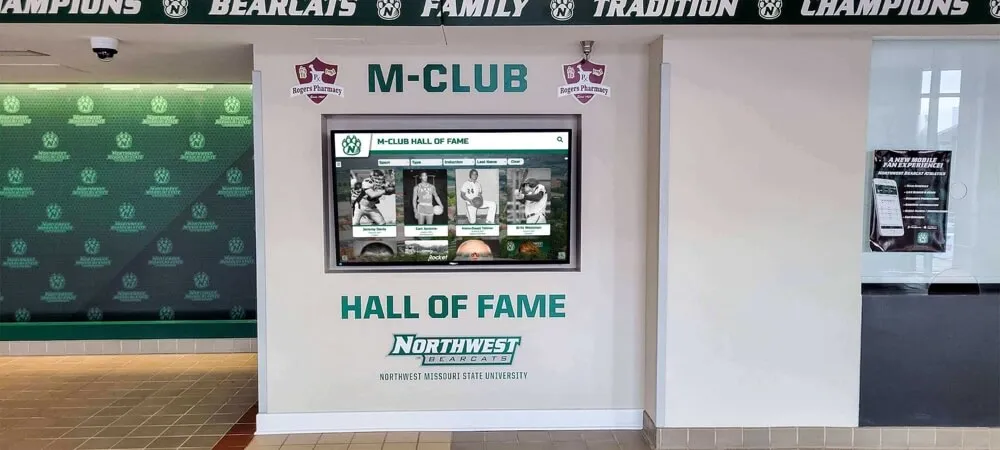
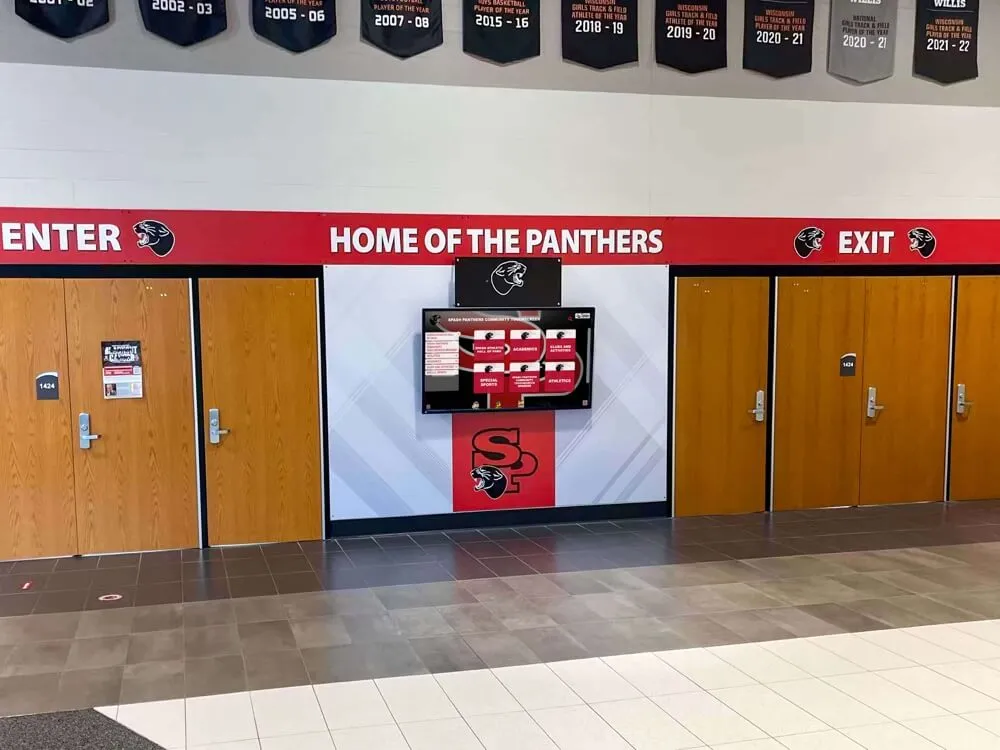
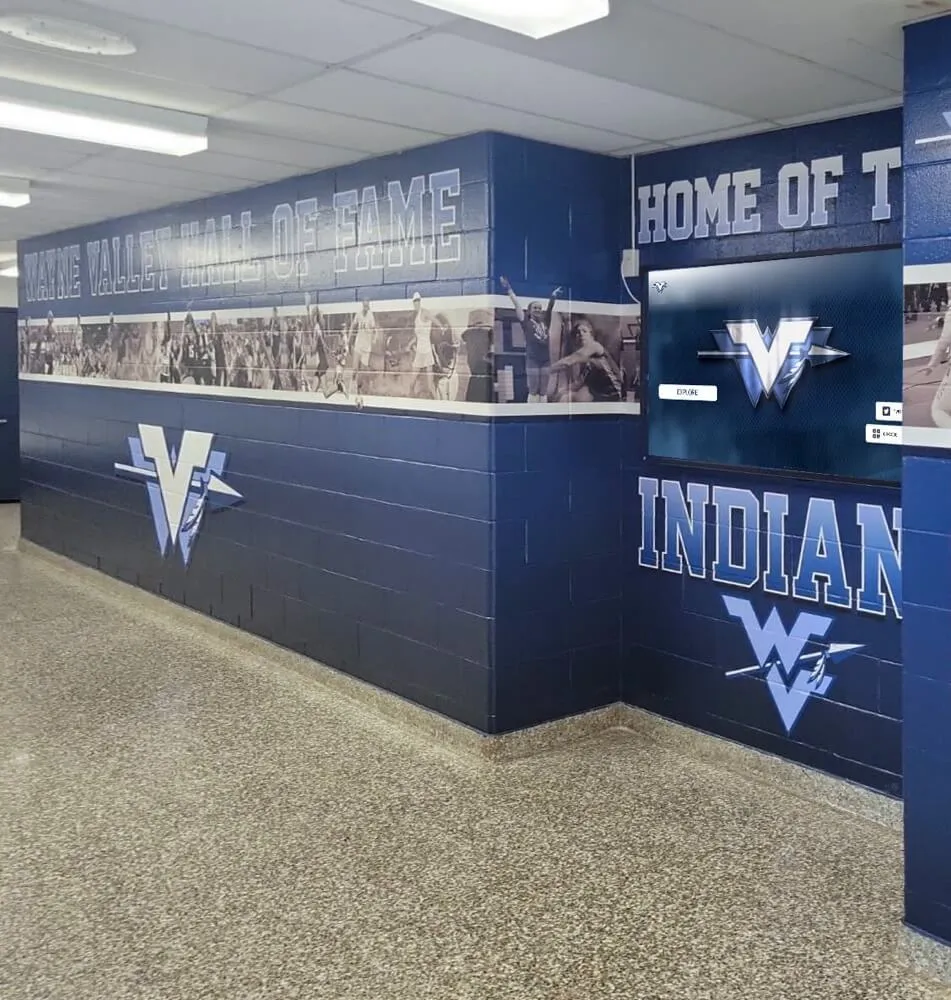
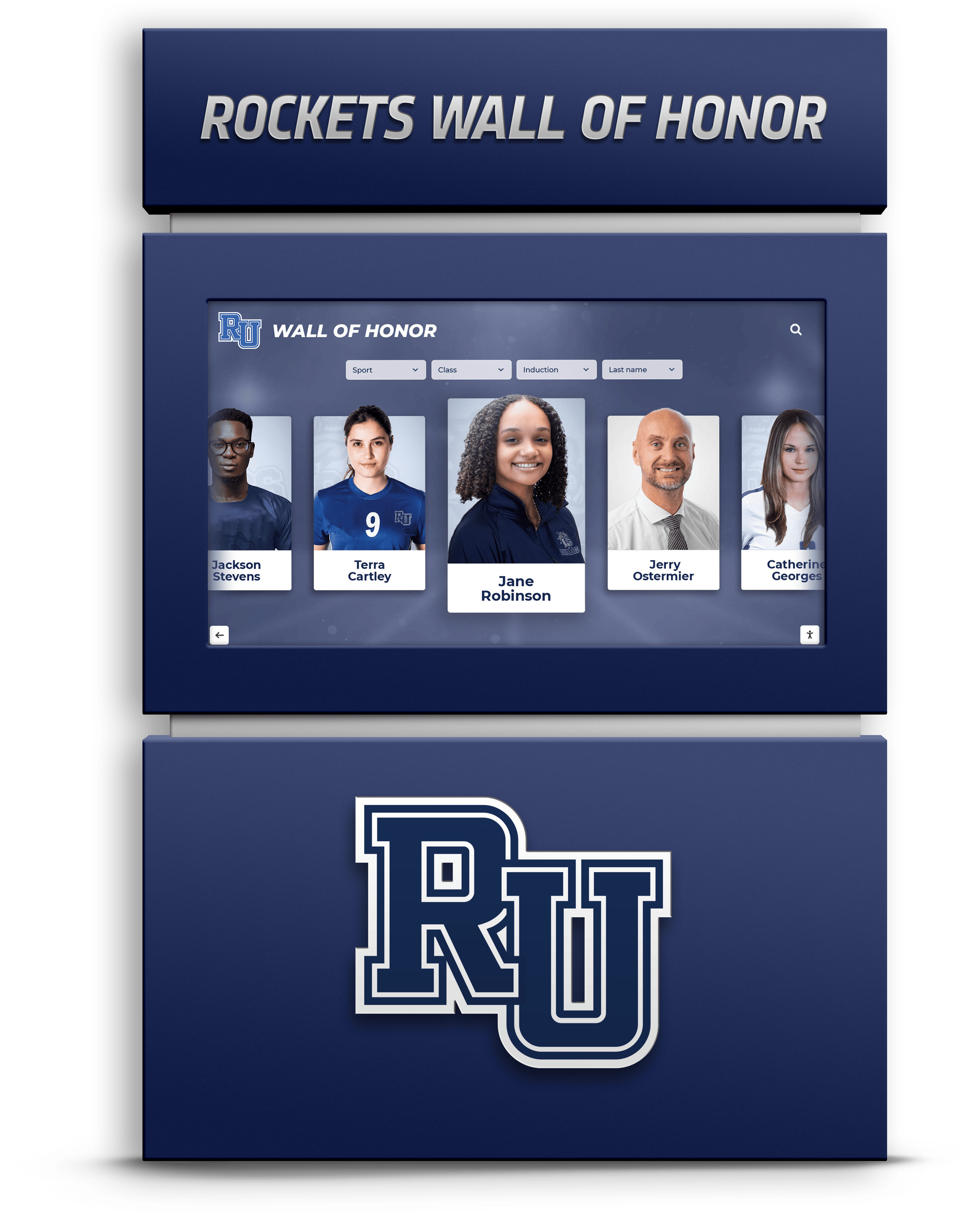
Wall of honor displays that celebrate both donors and community members create rich recognition environments where planned giving feels natural and valued.
Connecting Legacy Recognition to Broader Institutional Recognition Culture
Schools that treat donor recognition as a unified institutional practice—rather than a series of disconnected programs—create environments where generosity, achievement, and community belonging reinforce each other naturally.
When a donor who has been recognized on the annual fund honor roll, celebrated at an alumni event, and seen their child’s athletic accomplishments honored on a school record board considers whether to include the school in their estate plan, the decision feels less like a transaction and more like a natural extension of a relationship that the institution has consistently honored and celebrated.
Recognition infrastructure that spans academic achievement, athletic excellence, community service, annual giving, and legacy commitment creates a through-line of institutional appreciation that turns donors into lifelong stakeholders. Institutions investing in comprehensive digital recognition platforms—including record boards, hall of fame displays, alumni achievement walls, and donor recognition systems—often find that different recognition programs reinforce each other in ways that accelerate planned giving interest organically.
The donor who stops to read the alumni hall of fame during a campus visit and sees a classmate honored for decades of loyal giving is already imagining their own legacy.
Compliance and Policy Considerations
Planned giving recognition programs operate within legal and ethical frameworks that advancement directors must understand.
Gift Agreement Documentation
Every planned gift disclosure—whether a verbal statement of intent or a formal letter—should be followed by a gift agreement or letter of understanding that documents the gift vehicle, intended use, any restrictions, and recognition preferences. These documents protect both the institution and the donor’s family when the gift is eventually realized.
Privacy and Disclosure Policies
Some donors wish their planned gifts to remain confidential during their lifetimes; others actively want their commitment publicized to inspire peers. Institutions should have clear written policies governing recognition default positions (public unless otherwise requested, or private unless permission is granted) and document individual donor preferences formally.
Irrevocability and Conditional Gifts
Not all planned gift disclosures represent irrevocable commitments. Bequests can be changed; beneficiary designations can be updated; charitable trusts have specific legal structures. Advancement staff should understand the distinction between documented planned gift commitments and expressions of intent, ensuring recognition programs appropriately reflect the nature of each relationship without overstating the certainty of specific gift amounts or vehicles.
Measuring Planned Giving Recognition Program Effectiveness
Unlike annual fund metrics, planned giving program success is difficult to measure in real time. The most meaningful indicators develop over years and decades.
Legacy society membership growth — Track total documented planned gift commitments year over year, including new members, lapsed members, and realized gifts.
Member engagement rates — Monitor attendance at legacy society events, response rates to stewardship communications, and frequency of personal outreach from advancement staff.
Realized gift totals — The ultimate outcome measure, though with a long lag from stewardship to realization.
Planned gift pipeline estimates — Based on documented commitments, actuarial estimates, and historical realization rates, track the approximate future value of commitments in your pipeline.
Legacy wall engagement — Digital recognition platforms provide data on how visitors interact with legacy displays: time spent exploring, profiles viewed, and search behaviors that reveal which aspects of the program resonate most.
Build a Legacy Society Wall That Honors Donors for Generations
Rocket Alumni Solutions provides schools and institutions with digital recognition platforms that can power a legacy society display — scalable, updatable, and compelling enough to make donors proud during their lifetimes. Explore how a purpose-built recognition wall can anchor your planned giving program.
Explore Donor Recognition DisplaysFrequently Asked Questions About Planned Giving Recognition
Should we publicly recognize donors who have only expressed intent but not signed a gift agreement?
Most advancement professionals recommend creating a documented letter of understanding before any public recognition to protect both the institution and the donor’s family. A brief exchange confirming the donor’s wishes in writing provides the documentation needed to proceed confidently.
What happens to legacy wall recognition if a donor changes their estate plans?
Clear written policies governing removal from the legacy society display protect advancement teams from awkward situations. Most institutions reserve the right to remove members who formally notify the institution they have changed their plans, and to honor members’ requests for privacy updates. A digital display makes quiet removals and adjustments far easier to manage than physical engraving.
How do we value planned gifts in the context of overall fundraising reporting?
The Council for Advancement and Support of Education (CASE) provides standards for counting planned gifts in campaign totals. Revocable commitments (like revocable bequests) are typically counted at a discounted present value when included in campaign totals; irrevocable planned gifts (like charitable remainder trusts) can be counted at face value. Consult your advancement counsel and review current CASE standards for your specific situation.
How large does our legacy society need to be before investing in a dedicated display?
Even a small legacy society—10 to 20 members—benefits from a permanent, visible display. The display serves as a cultivation tool as much as a recognition vehicle: prospective donors who see a named society with visible members are more likely to join than those who encounter a purely theoretical program. Starting the display before membership is large signals confidence and permanence.
Can a digital recognition platform serve both our legacy society and other recognition programs?
Yes—and this is often the most efficient and architecturally coherent approach. Platforms that power athletic halls of fame, alumni achievement walls, and basketball scoring record boards can typically accommodate a legacy society module within the same system, creating unified recognition infrastructure that honors the full range of institutional relationships.
Planned giving recognition is ultimately about one thing: making donors feel—during their lifetime—that their trust was well placed, that the institution they love will carry their values forward, and that their name will remain part of the story long after they are gone. The schools that achieve this build planned giving programs that compound over generations, receiving transformational gifts from donors who felt genuinely, durably, and publicly honored.
A digital legacy society wall is one of the most powerful tools available for delivering that feeling. It is permanent, visible, scalable, and alive—exactly the qualities that distinguish a legacy from a transaction.