Athletic programs face mounting costs when maintaining traditional championship recognition through physical gym banners. Between initial fabrication expenses of $150-$400 per banner, professional installation costs, ongoing storage requirements, and eventual replacement needs as materials deteriorate, schools and organizations spend thousands of dollars creating recognition that quickly fills available space and becomes outdated as programs accumulate new achievements.
Yet many athletic directors and development professionals don’t realize that cost-effective digital alternatives now eliminate these recurring expenses while providing superior recognition capabilities. Modern digital recognition systems replace expensive physical banners with interactive displays that accommodate unlimited championships, update instantly without additional fabrication costs, preserve complete historical archives, and create engaging experiences that static fabric banners cannot match.
This comprehensive guide explores practical strategies for replacing expensive gym banners with budget-friendly digital solutions that honor athletic excellence more comprehensively while dramatically reducing long-term recognition costs.
Athletic programs seeking to celebrate championships appropriately while managing tight budgets need recognition approaches that eliminate recurring expenses without compromising how thoroughly they honor student athletes and program achievements. Digital recognition platforms like those provided by solutions like Rocket Alumni Solutions make this cost-effective recognition achievable for programs of all sizes.

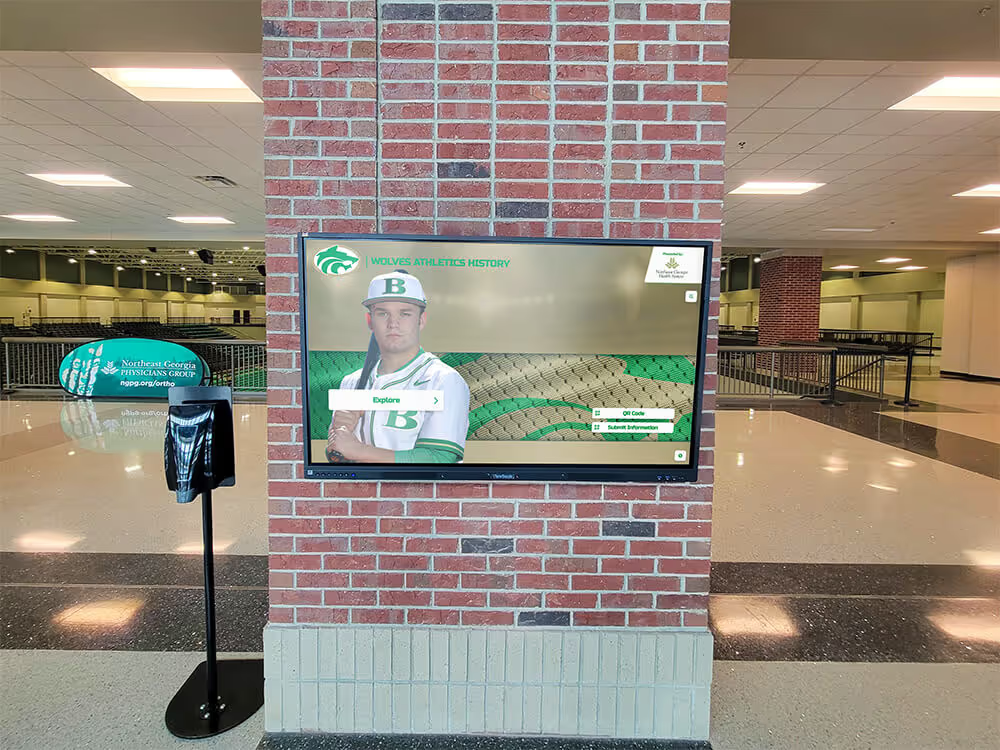
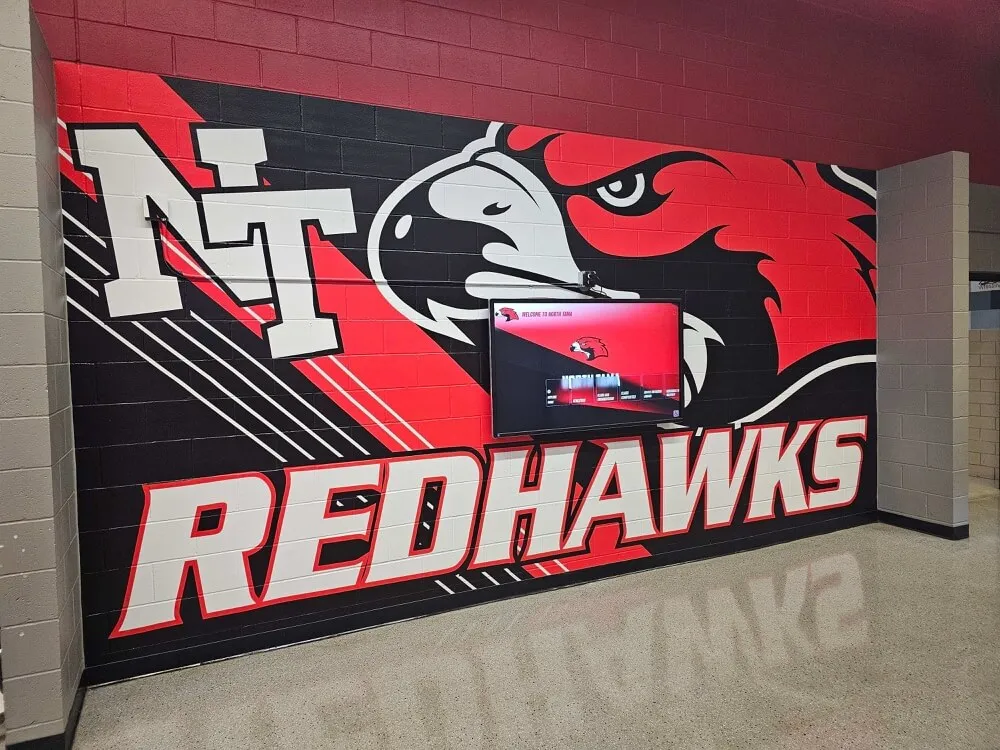
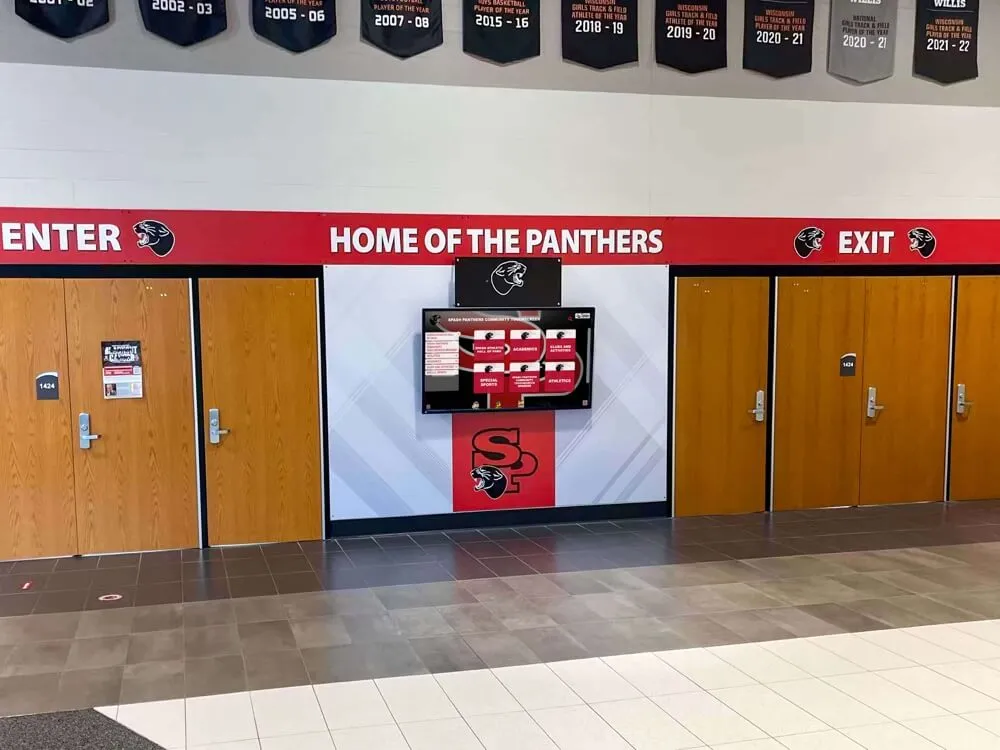
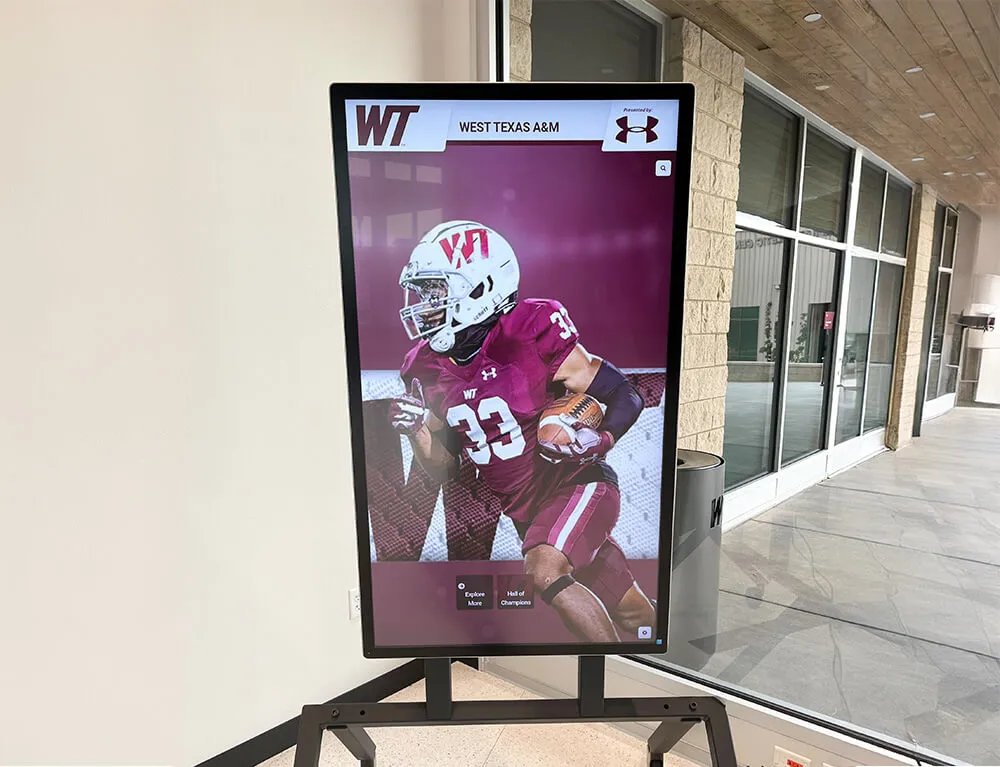
Traditional championship banners create recurring costs as programs add new achievements each season
The True Cost of Traditional Gym Banners
Understanding the complete financial impact of physical championship banners helps programs recognize why digital alternatives provide superior value over time.
Initial Fabrication and Installation Expenses
Banner Production Costs
Traditional championship banners require significant upfront investment:
- Basic vinyl banners: $150-$250 per banner for standard sizes
- Premium fabric banners with sewn lettering: $300-$500 per banner
- Deluxe banners with custom graphics and embroidery: $400-$800 per banner
- Rush production for immediate recognition: additional $50-$150 per banner
- Shipping and handling: $25-$75 per order
According to school purchasing data, most athletic programs opt for mid-range banners at $250-$400 each to balance quality with budget constraints. Programs celebrating multiple championships annually quickly accumulate costs—five new banners per year totals $1,250-$2,000 just for fabrication.
Professional Installation Requirements
Beyond fabrication, banner installation creates additional expenses:
- Professional installer labor: $200-$500 per installation session
- Lift equipment rental for ceiling-height installation: $150-$300 per day
- Mounting hardware and rigging systems: $50-$150 per banner
- Safety equipment and liability insurance: $100-$200 per installation
- Building access coordination during off-hours: staff time costs
Many facilities lack internal expertise for safe gymnasium banner installation, requiring external contractors. When programs add 3-5 banners annually, installation costs compound to $600-$1,500 per year before considering emergency repairs when banners fall or hardware fails.

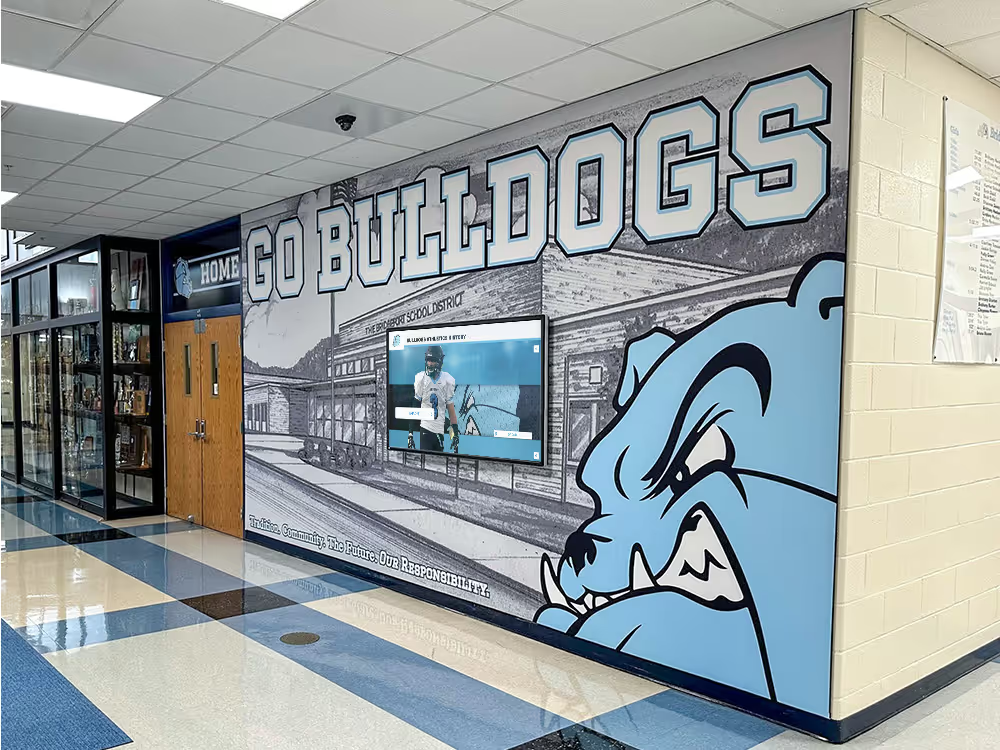
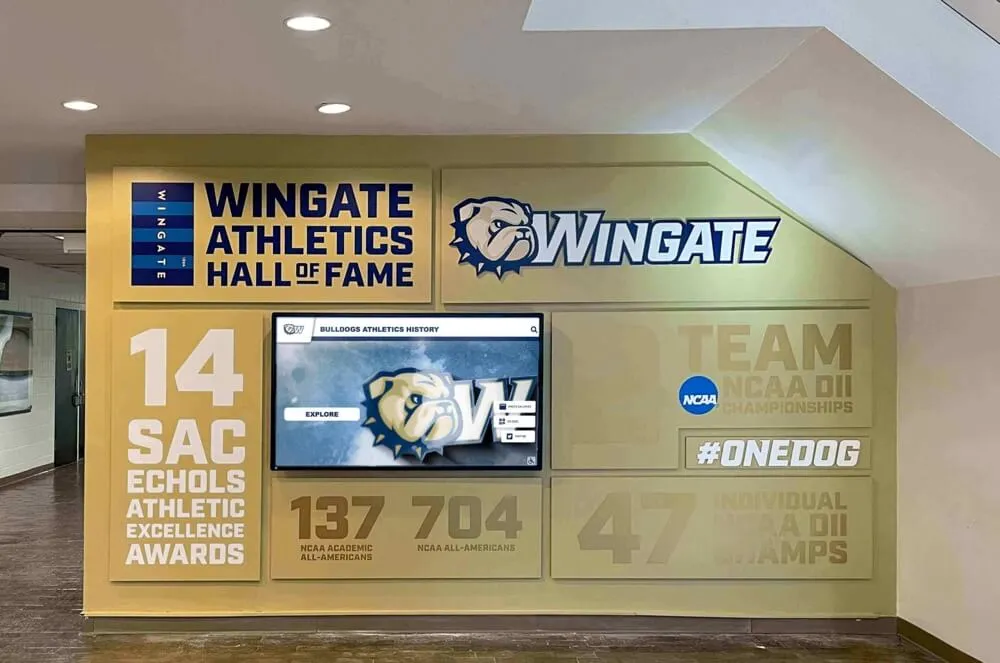
Comprehensive recognition requires ongoing investment when using traditional physical displays
Ongoing Maintenance and Replacement Cycles
Deterioration and Damage
Physical banners deteriorate over time, requiring replacement:
- Fabric fading from sunlight exposure: noticeable within 3-5 years
- Dust and dirt accumulation: visible within 1-2 years
- Seam separation and hem unraveling: common after 5-7 years
- Water damage from roof leaks: immediate replacement required
- Accidental damage during facility events: unpredictable replacement needs
Programs commonly replace banners every 7-10 years due to deterioration, even when championships remain relevant. This replacement cycle creates recurring expenses approaching initial fabrication costs. A program with 40 championship banners faces replacing 4-6 banners annually just for maintenance, costing $1,000-$2,400 per year.
Storage and Space Management
As recognition accumulates, space constraints force difficult decisions:
- Off-site storage rental for excess banners: $50-$200 per month
- Climate-controlled storage preventing deterioration: $100-$300 per month
- Inventory management tracking banner locations: staff time costs
- Physical handling during rotation: staff labor and risk of damage
- Banner rotation logistics coordinating removal and installation: $200-$400 per cycle
Schools developing approaches to manage state championship banners when gym wall space runs out discover that storage and rotation expenses accumulate rapidly, sometimes exceeding original fabrication costs over banner lifespans.
Hidden Opportunity Costs
Recognition Limitations
Expensive physical banners create recognition constraints:
- Space limitations forcing selective recognition of only major achievements
- Inability to recognize individual student athletes beyond team listings
- No capacity for detailed championship stories and context
- Limited information beyond sport, year, and achievement level
- Inaccessibility to alumni and families unable to visit facilities regularly
These limitations mean programs cannot adequately honor all achievements despite significant financial investment. When recognition capacity falls short of program accomplishments, athletic excellence goes uncelebrated even as budgets strain under banner expenses.
Administrative Burden
Physical banner management consumes valuable staff time:
- Vendor coordination and quote collection: 2-4 hours per banner order
- Design approval and revision cycles: 3-6 hours per banner
- Installation scheduling and coordination: 2-3 hours per installation session
- Inventory tracking and condition assessment: 4-8 hours annually
- Damage response and emergency replacements: unpredictable time requirements
Athletic directors and administrators report spending 20-40 hours annually managing championship banner logistics—time better invested in program development, athlete support, and fundraising activities that advance athletic missions directly.
Digital Recognition: Cost-Effective Banner Alternatives
Modern digital systems fundamentally solve the cost challenges of traditional banners while providing superior recognition capabilities.
One-Time Investment, Unlimited Capacity
Initial System Costs
Digital recognition requires upfront investment but eliminates recurring expenses:
- Commercial touchscreen display (55-inch): $2,500-$4,500
- Mounting hardware and installation: $500-$1,000
- Content management platform setup: $1,000-$2,500
- Initial content creation and data entry: $1,500-$3,000
- Staff training and onboarding: $500-$1,000
Total initial investment: $6,000-$12,000 for comprehensive systems
While higher than individual banner costs, this investment provides unlimited recognition capacity. Programs can display 10 championships or 1,000 championships with identical costs—no additional fabrication expenses as achievements accumulate.
Cost Comparison Over Time
Digital systems achieve cost parity with traditional approaches within 3-5 years:
Traditional Banner Costs (10-year period):
- Initial banners (5 per year × 10 years): 50 banners × $300 = $15,000
- Installation costs (10 sessions): $8,000-$12,000
- Replacement for deterioration (15 banners): $4,500
- Storage and rotation: $6,000-$12,000
- Administrative time (40 hours/year): opportunity cost
- Total: $33,500-$43,500
Digital Recognition Costs (10-year period):
- Initial system installation: $6,000-$12,000
- Annual platform subscription ($1,200/year): $12,000
- Content updates (internal staff): minimal incremental cost
- Equipment replacement after 7-8 years: $3,000-$5,000
- Total: $21,000-$29,000
Digital recognition saves 30-40% over 10 years while providing dramatically enhanced capabilities and unlimited capacity that traditional banners cannot match.
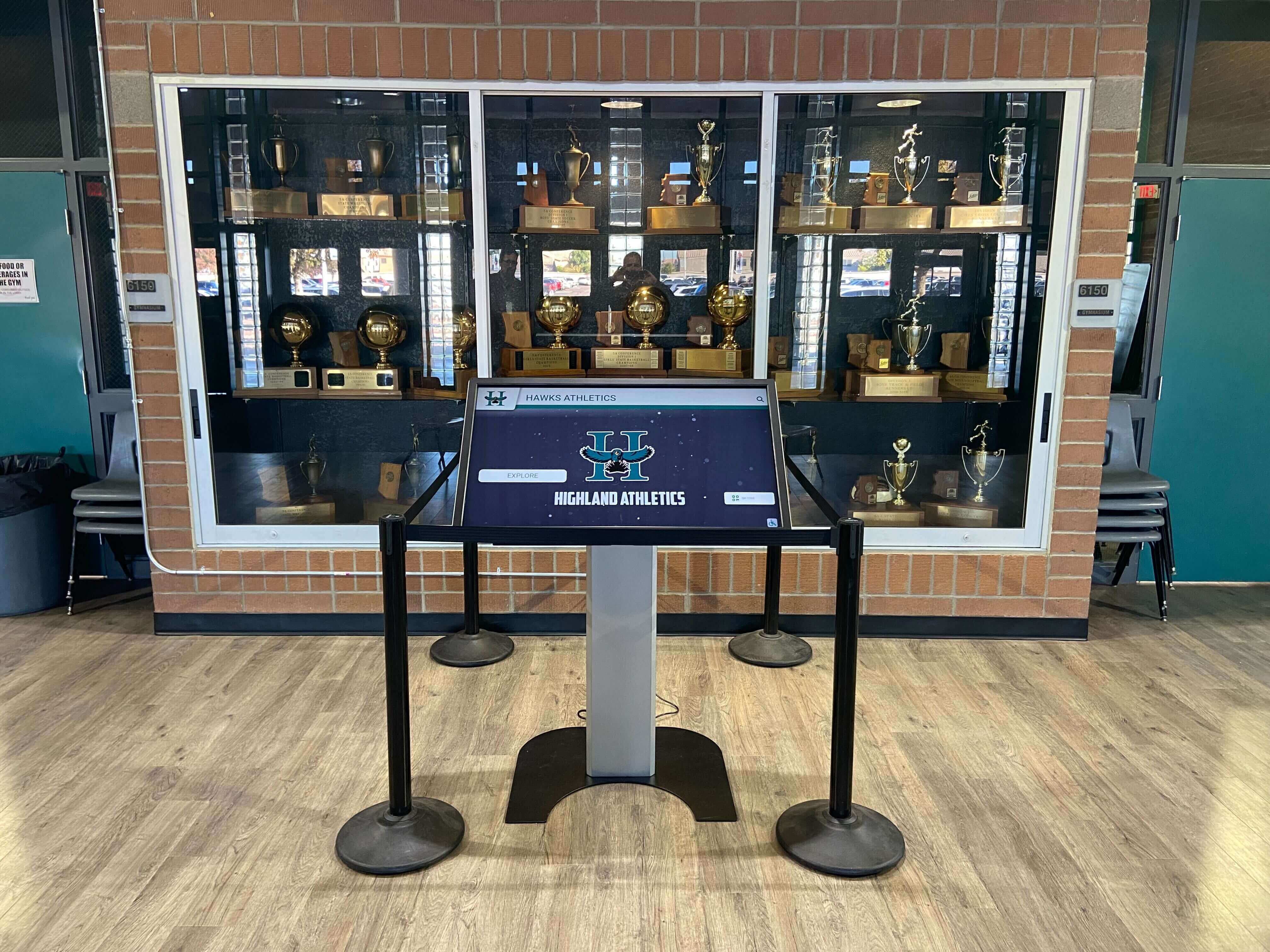
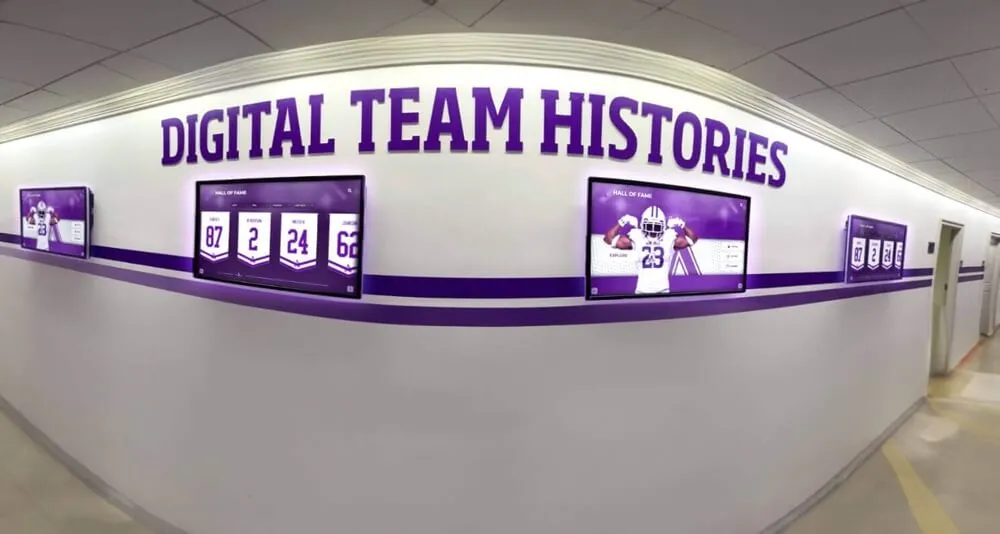
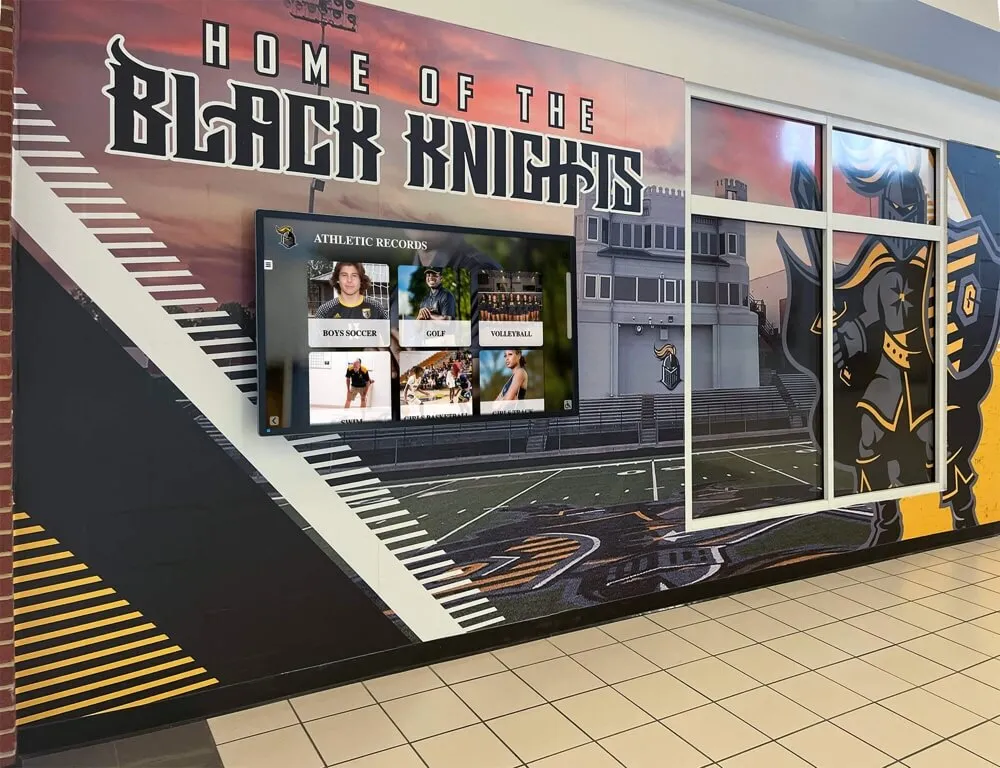
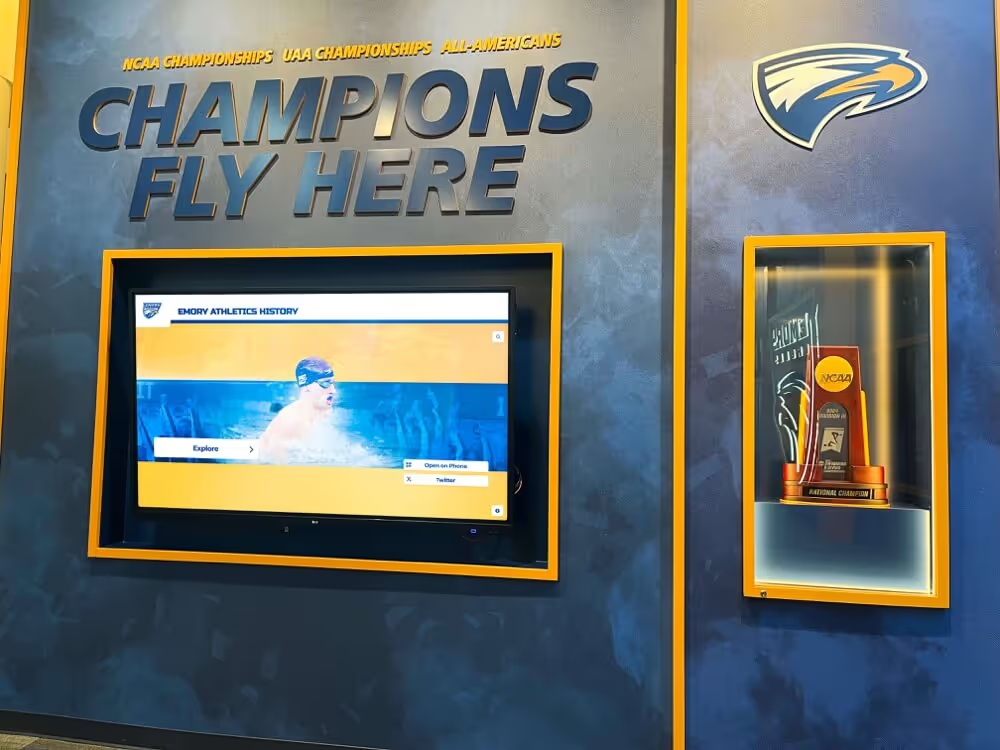
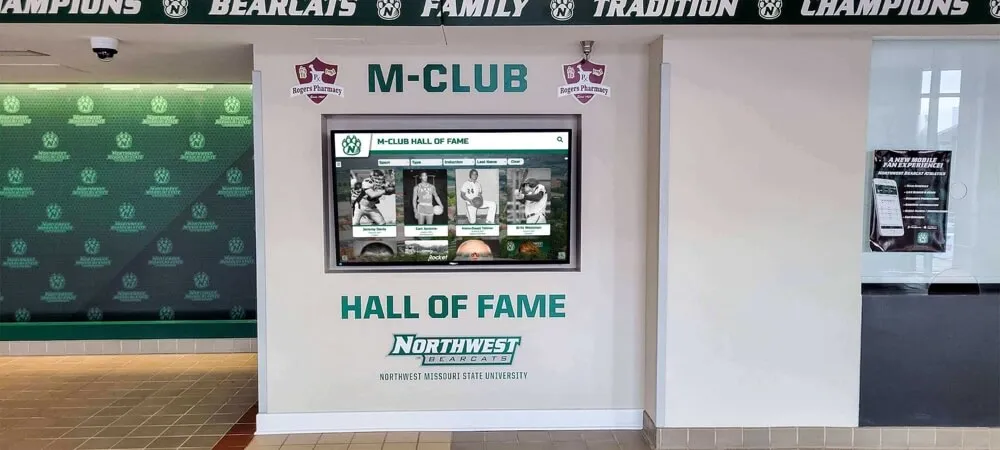
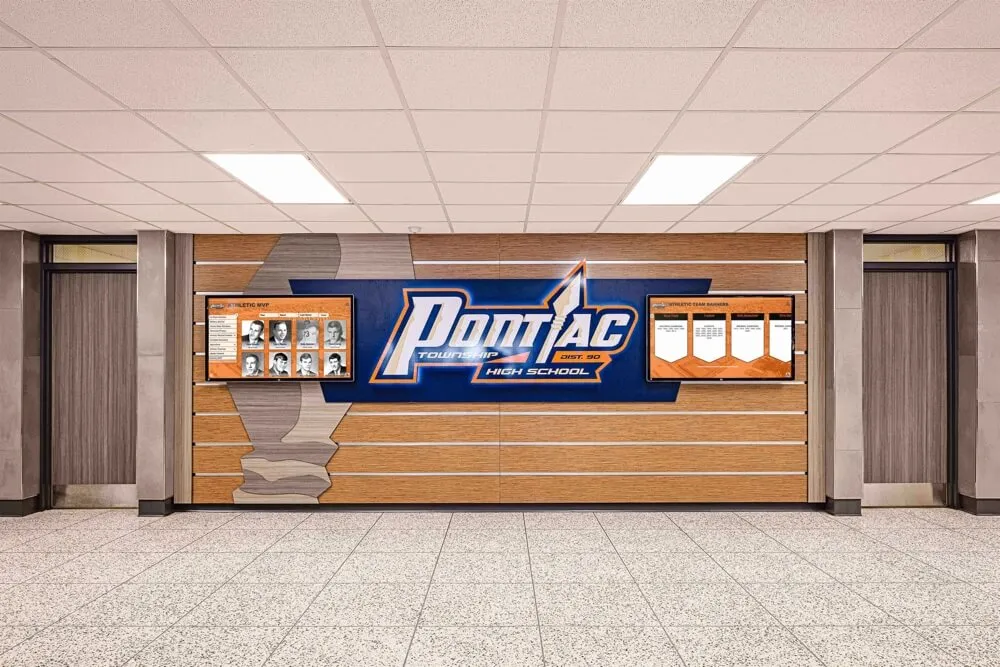
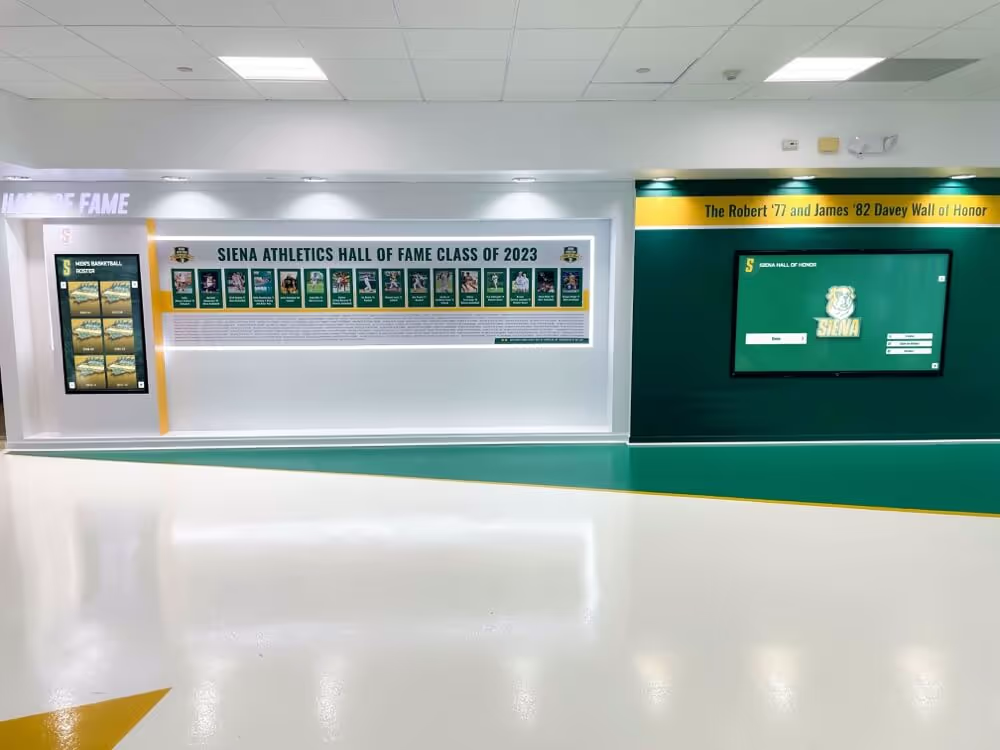
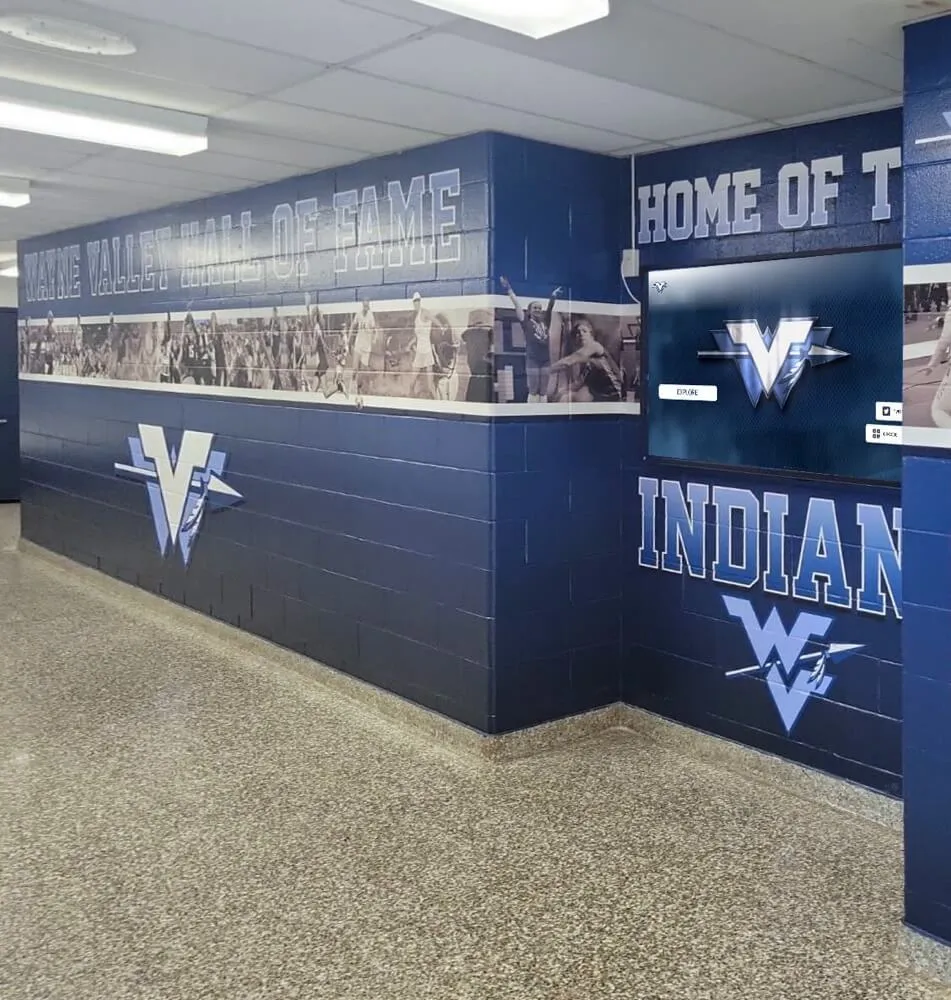
Single digital displays replace dozens of expensive physical banners while enabling unlimited recognition
Zero Marginal Cost for Additional Recognition
Instant Updates Without Fabrication Expenses
Digital platforms eliminate per-item recognition costs:
- Add new championships: no fabrication costs
- Update championship details: no re-engraving fees
- Include unlimited student athlete names: no space constraints
- Add photos, videos, and rich content: no additional hardware required
- Correct errors or update information: instant changes without reinstallation
Traditional approaches require $300-$500 for each new banner plus installation. Digital systems add unlimited recognition through simple content uploads requiring 10-15 minutes per championship—no payment to vendors, no waiting for fabrication, no installation logistics.
Comprehensive Recognition Previously Unaffordable
Budget-friendly digital systems enable recognition impossible with expensive physical banners:
- Individual athlete profiles for every championship participant
- Complete championship season narratives and statistics
- Video highlights and multimedia content
- Historical archives documenting decades of achievements
- Conference championships and runner-up recognitions
- Individual achievement awards and honors
Programs previously recognizing only state championships due to budget constraints can now celebrate all achievements comprehensively. When per-item recognition costs drop to zero, programs recognize excellence at all levels without budget concerns limiting acknowledgment.
Elimination of Maintenance and Replacement Costs
Durable Technology with Extended Lifespans
Commercial-grade digital displays provide reliable long-term service:
- 7-10 year expected lifespan for quality displays
- No fading, deterioration, or damage from environmental factors
- Remote troubleshooting and software updates
- Component replacement more cost-effective than complete banner replacement
- Content remains pristine regardless of display age
While displays eventually require replacement, the 7-10 year lifespan exceeds physical banner durability. When replacement becomes necessary, existing content transfers seamlessly to new hardware—no recreation of historical recognition required.
No Storage or Rotation Expenses
Digital recognition eliminates space management costs:
- All championships remain accessible permanently
- No physical storage facilities required
- No staff time rotating seasonal displays
- No risk of loss or damage during storage
- Instant access to complete historical archives
Programs report saving $600-$3,600 annually eliminating storage rental and rotation labor costs. Over a decade, these savings alone approach half the initial digital system investment.
Organizations exploring athletic recognition programs discover that eliminating ongoing maintenance expenses provides substantial long-term value beyond initial cost comparisons.
Implementing Cost-Effective Digital Recognition
Strategic implementation ensures programs maximize budget efficiency while creating comprehensive recognition systems.
Assessing Current Recognition Expenses
Comprehensive Cost Analysis
Begin by documenting complete traditional banner expenses:
Historical Spending Review:
- Compile banner purchase records past 3-5 years
- Calculate average annual fabrication costs
- Document installation and hardware expenses
- Estimate staff time spent on banner management
- Include storage costs if applicable
- Factor in replacement spending for deteriorated banners
Projected Future Costs:
- Expected championships based on program success rates
- Anticipated banner needs over next 5-10 years
- Installation cost projections accounting for inflation
- Storage expansion requirements as recognition accumulates
- Staff time demands as management complexity increases
This analysis establishes baseline costs for comparison with digital alternatives. Many programs discover total traditional recognition expenses exceed expectations when all factors are considered comprehensively.
Space Capacity Assessment
Evaluate physical recognition limitations:
- Count existing banners and available remaining space
- Estimate years until gymnasium capacity fills
- Identify championships currently not recognized due to space constraints
- Consider whether rotation systems are feasible or desirable
- Assess storage facilities currently housing excess recognition
Space limitations often force programs to make recognition compromises despite budget availability. Digital systems solve both cost and capacity challenges simultaneously.
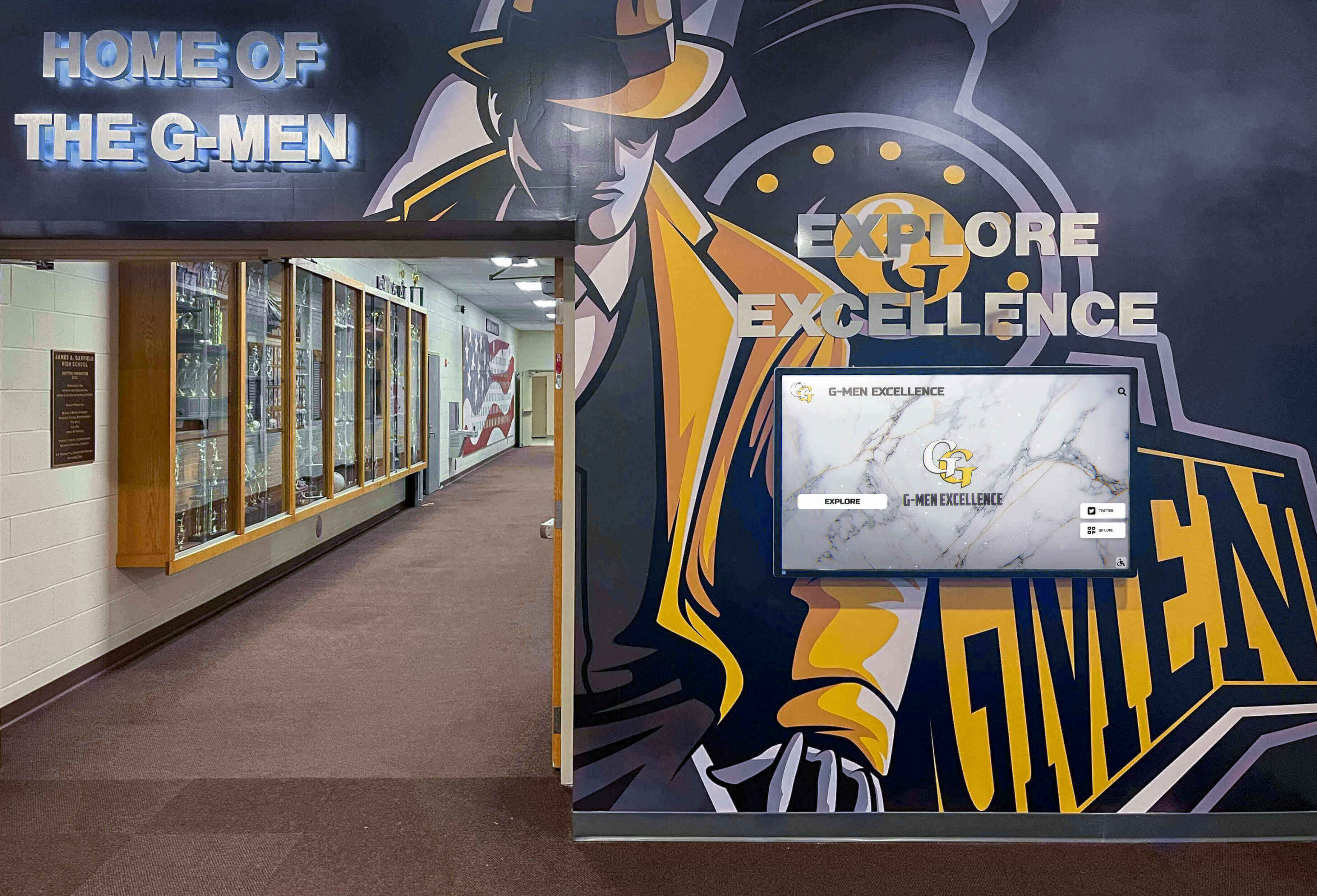
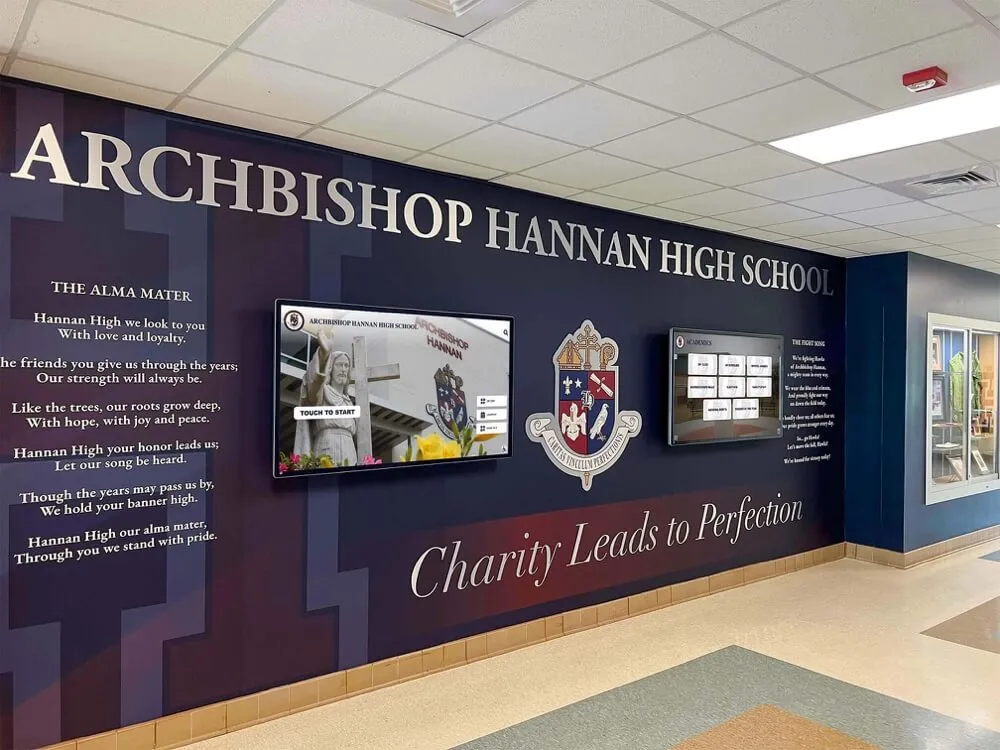
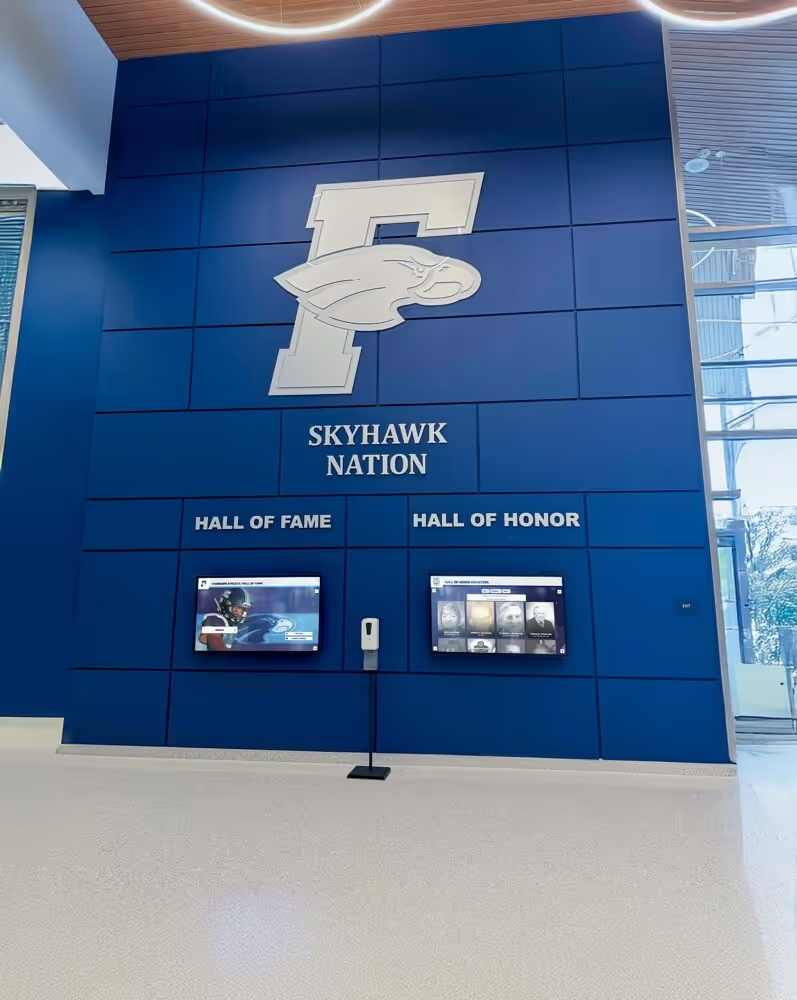
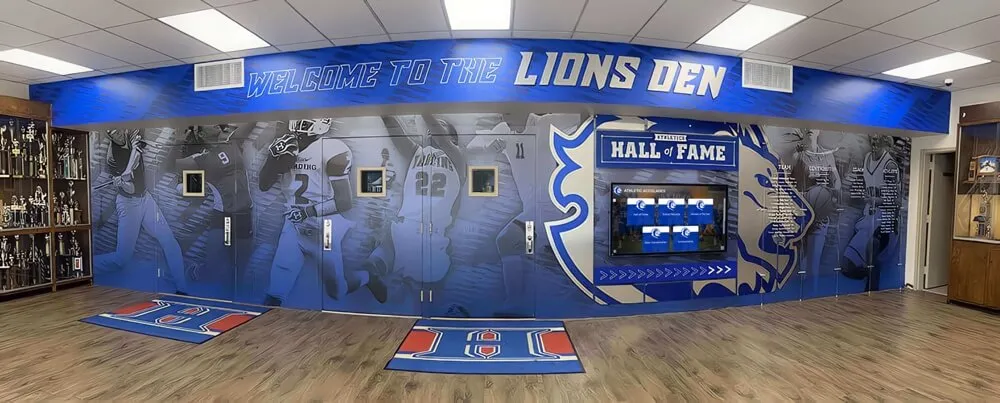
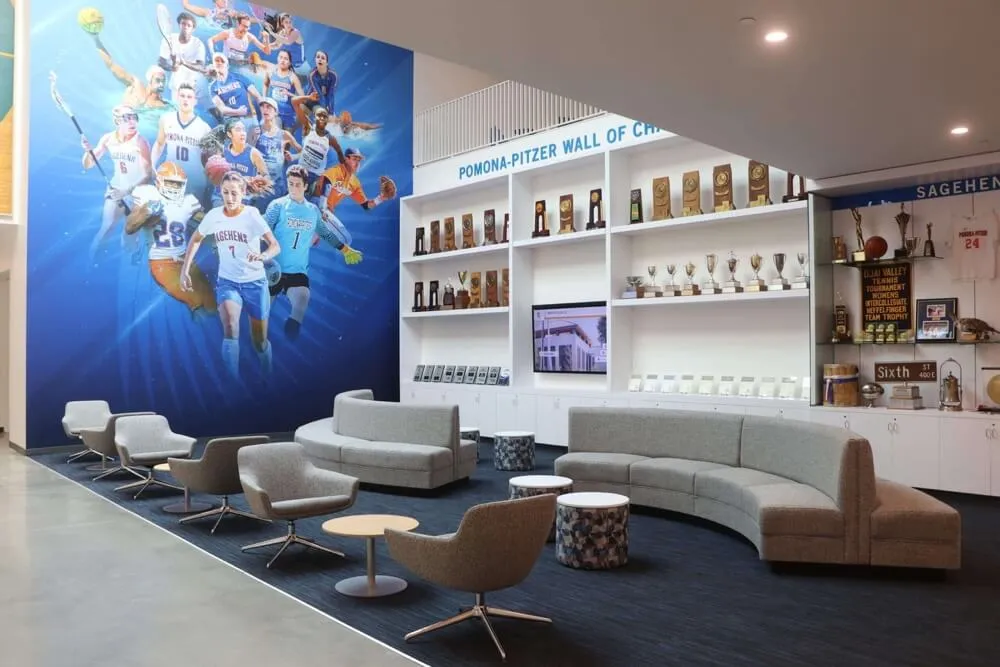
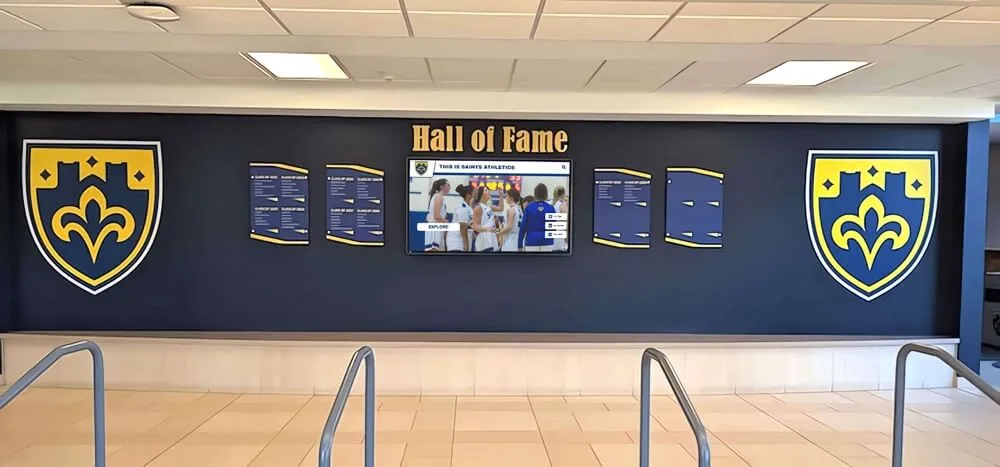
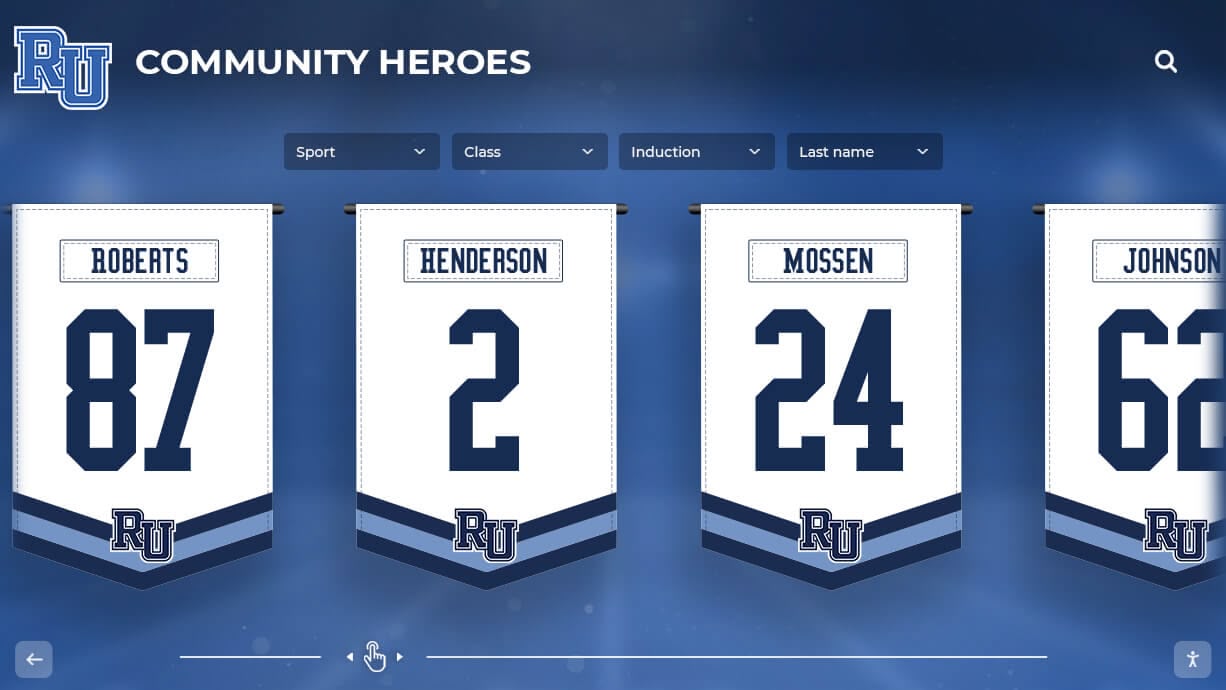
Integrated recognition systems combine traditional elements with digital displays for comprehensive celebration
Phased Implementation Strategies
Hybrid Approaches: Traditional and Digital Coexistence
Programs can transition gradually, maintaining valued physical elements while gaining digital advantages:
Phase 1: Supplemental Digital Recognition
- Install single digital display complementing existing banners
- Showcase individual athlete profiles traditional banners cannot include
- Display historical championships where physical banners no longer hang
- Test digital recognition and build stakeholder confidence
- Gather feedback informing full implementation planning
Phase 2: Strategic Banner Retirement
- Maintain premium physical banners for most recent championships (past 3-5 years)
- Replace aging banners with digital recognition rather than reprinting
- Transfer removed banners to digital displays with enhanced content
- Redirect banner budget savings toward digital system expansion
- Develop sustainable practices for ongoing digital maintenance
Phase 3: Comprehensive Digital Transition
- Implement complete digital recognition as primary system
- Preserve selected signature banners for tradition and aesthetics
- Focus physical recognition on school identity rather than comprehensive achievement listing
- Achieve full budget optimization eliminating recurring banner costs
- Establish long-term digital content enhancement practices
This gradual approach respects tradition while capturing financial benefits progressively. Schools can test digital recognition effectiveness before committing fully, building confidence among stakeholders who value familiar physical banners.
Budget-Conscious System Selection
Choose appropriate technology matching budget constraints:
Entry-Level Systems:
- Single 43-55 inch touchscreen display: $2,500-$4,000 installed
- Basic content management platform: $600-$1,200 annual subscription
- Template-based design reducing customization costs
- Self-installation if technical expertise available
- Internal content creation using provided tools
- Total investment: $3,500-$6,000
Mid-Range Systems:
- 55-65 inch commercial touchscreen: $4,000-$7,000 installed
- Professional content management platform: $1,200-$2,400 annually
- Custom design matching school branding
- Professional installation and training
- Assistance with initial content creation
- Total investment: $7,000-$12,000
Premium Systems:
- Multiple large-format displays: $8,000-$15,000+ installed
- Enterprise content management: $2,400-$4,800 annually
- Comprehensive custom development
- Full-service content creation and ongoing support
- Integration with other school systems
- Total investment: $15,000-$30,000+
Programs can achieve substantial benefits even with entry-level systems. The key value comes from unlimited recognition capacity and eliminated recurring costs, not necessarily premium features requiring larger investments.
Funding Strategies for Digital Recognition
Redirecting Existing Banner Budgets
Use traditional recognition allocations to fund digital transition:
- Freeze new physical banner purchases for 1-2 years
- Redirect saved fabrication costs toward digital system investment
- Allocate installation budget savings to platform subscriptions
- Commit storage cost savings to content development
- Fund system expansion through eliminated replacement expenses
Programs spending $2,000-$4,000 annually on traditional recognition can fund complete digital systems within 2-3 years through budget redirection alone, achieving cost neutrality while gaining superior capabilities.
Donor and Booster Support
Engage supporters in recognition modernization:
- Position digital systems as transformative recognition enhancements
- Demonstrate how donations create permanent comprehensive recognition
- Offer naming opportunities for digital displays
- Show how contributions honor current and future achievements perpetually
- Emphasize budget efficiencies allowing more resources for program support
Athletic boosters and alumni donors often enthusiastically support recognition improvements. When properly positioned, digital system funding campaigns generate significant support from stakeholders valuing visible championship celebration.
Grant Opportunities and Institutional Support
Explore funding sources beyond athletic budgets:
- Technology infrastructure grants supporting digital initiatives
- Educational foundation grants for school improvements
- District capital improvement allocations
- Annual fund campaigns including recognition enhancement
- Athletic facility renovation projects incorporating digital recognition
Comprehensive approaches to donor recognition planning developed for fundraising contexts apply equally to athletic booster engagement, helping programs secure funding for recognition modernization.
Maximizing Value: Enhanced Recognition Capabilities
Digital systems provide recognition enhancements impossible with traditional banners, delivering value beyond cost savings alone.
Individual Student Athlete Recognition
Complete Team Rosters and Athlete Profiles
Honor every championship participant comprehensively:
- Full roster listings with every student athlete name
- Individual photos documenting championship team members
- Position and role information
- Class year and graduation date
- Individual season statistics and achievements
- Post-high school plans and college destinations
Traditional banners typically list team names and years only—no individual athlete recognition due to space constraints. Digital systems finally enable programs to honor the specific students whose dedication created championship success, transforming generic team acknowledgment into meaningful personal recognition.
Multi-Sport Athlete Aggregation
Create unified athlete profiles spanning multiple sports:
- Complete athletic participation history
- All championships earned across different sports
- Comprehensive career statistics
- Timeline showing athletic journey through high school
- Academic achievements and honors
- Alumni updates documenting life success
These aggregated profiles celebrate complete student excellence rather than fragmenting recognition across separate sport-specific displays. Multi-sport athletes receive appropriate acknowledgment for their comprehensive contributions to school athletics.
Programs implementing digital athletic recognition systems discover that individual student celebration creates deeper engagement than team-only recognition approaches.

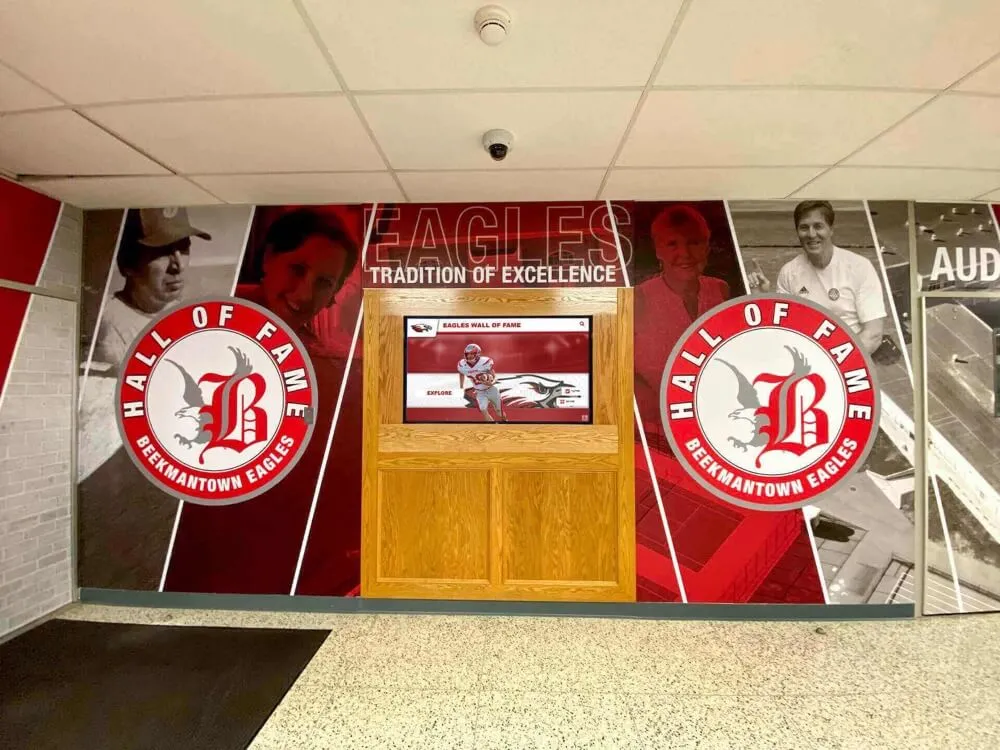
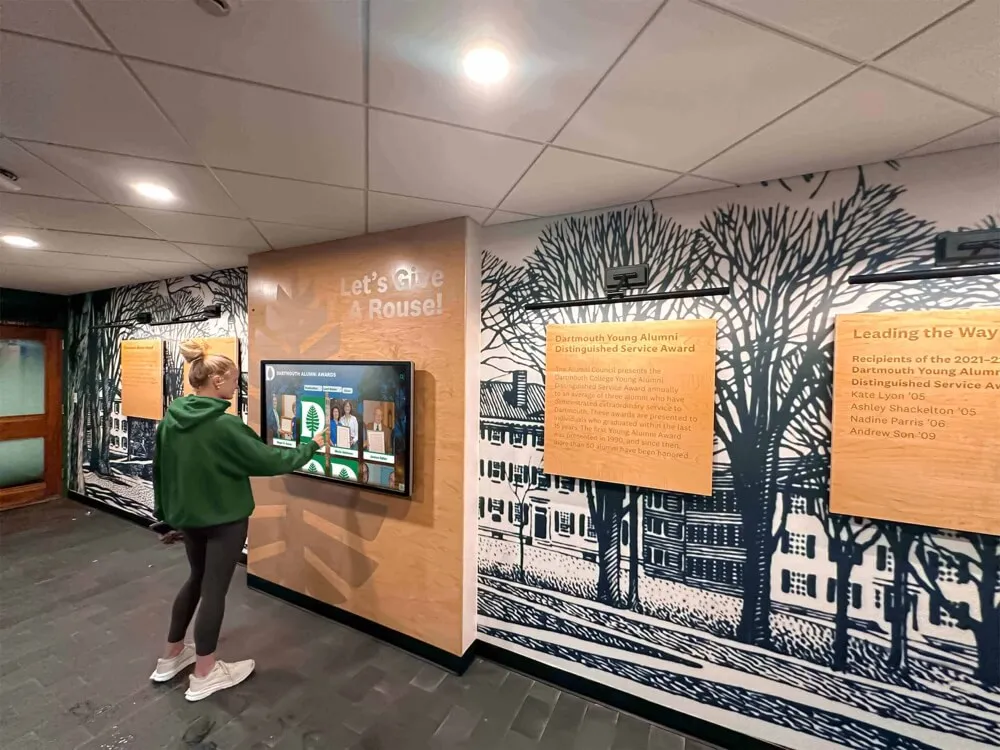
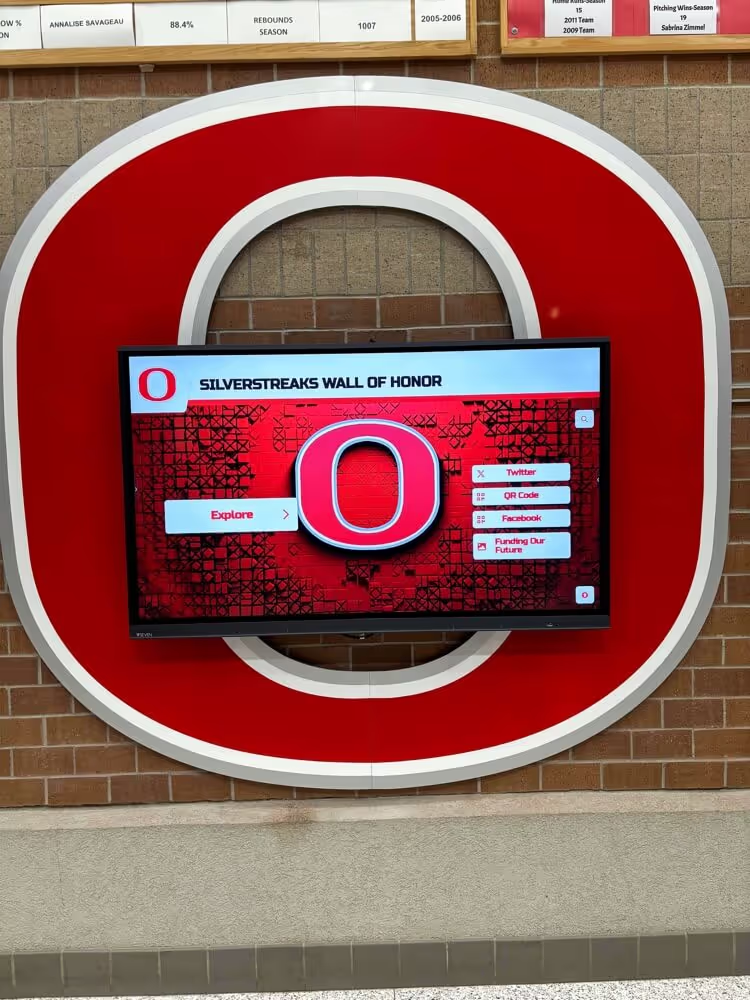
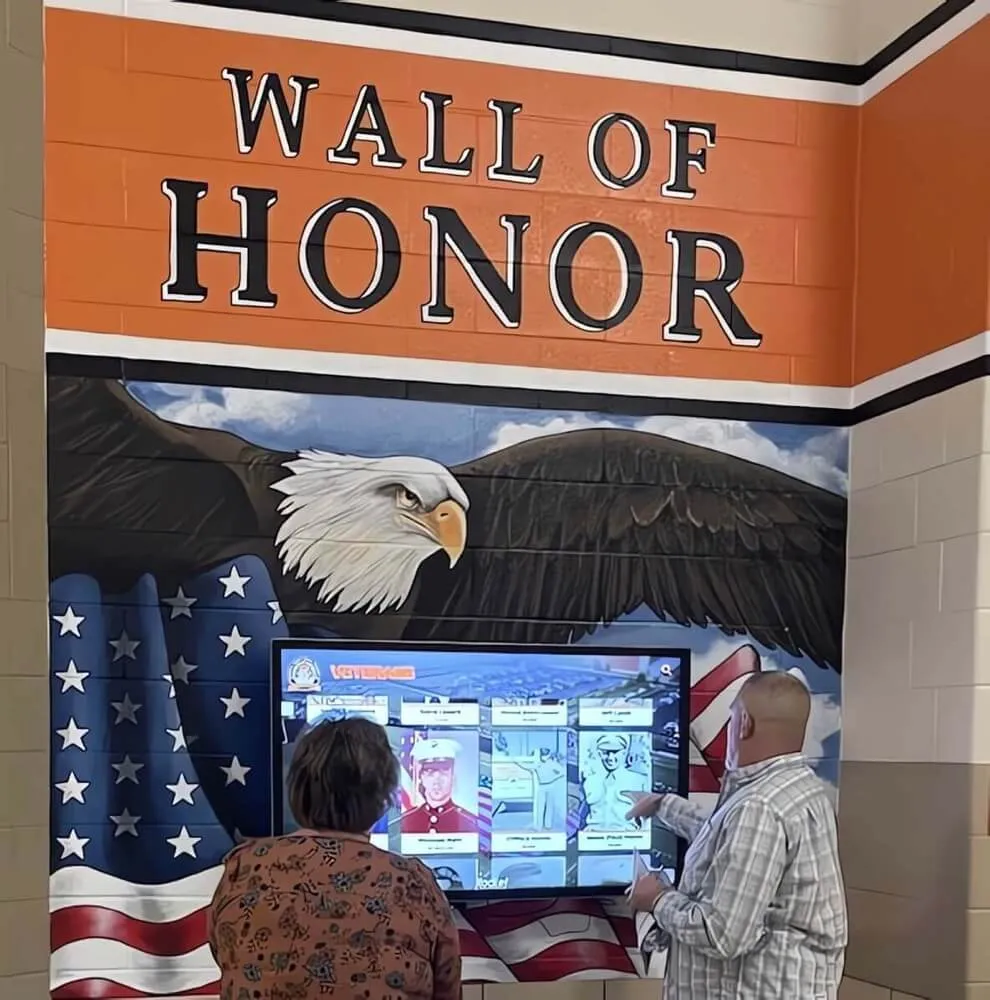
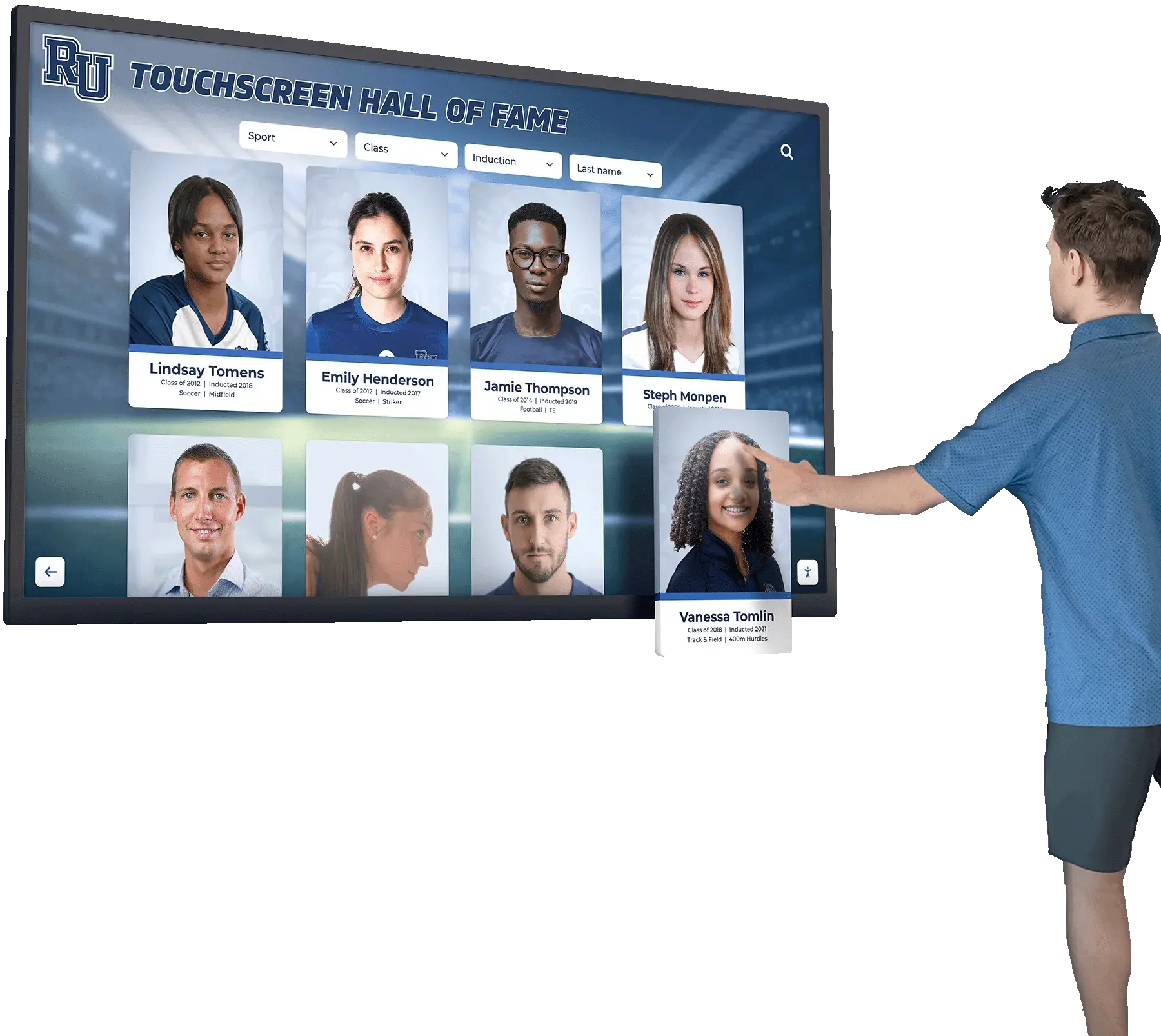
Touchscreen interfaces enable exploration of individual athlete achievements impossible with physical banners
Rich Multimedia Content and Storytelling
Championship Season Narratives
Transform simple achievement listings into compelling stories:
- Season overviews explaining paths to championships
- Key game highlights and turning points
- Tournament bracket progressions
- Statistical achievements and records broken
- Coach reflections on championship seasons
- Newspaper coverage and historical documentation
This storytelling context helps current students understand championship traditions while preserving institutional knowledge. Future athletes learn from past success, seeing specific strategies, preparation approaches, and team dynamics that created excellence.
Video and Photo Galleries
Visual documentation brings championships to life:
- Championship game highlights when available
- Celebration photos documenting achievement moments
- Team photos with complete rosters
- Award ceremony documentation
- Facility improvements enabled by program success
- Alumni reunion events reconnecting championship teams
Multimedia content creates emotional connections impossible with text-only banners. Parents, alumni, and community members engage more deeply when recognition includes visual documentation of cherished moments.
Interactive Exploration and Discovery
Touchscreen interfaces transform passive viewing into active engagement:
- Search functionality finding specific athletes, teams, or years instantly
- Filter options organizing championships by sport, decade, or level
- Related content connections showing program evolution
- Comparison features tracking achievement trends
- Social sharing enabling digital celebration
- Mobile-responsive access extending recognition beyond facilities
This interactivity encourages visitors to spend significant time exploring championship history rather than glancing briefly at static banners. Increased engagement amplifies recognition impact while strengthening connections between current programs and historical traditions.
Accessibility and Reach Beyond Physical Facilities
Web-Based Access for Distributed Audiences
Extend recognition to stakeholders unable to visit facilities regularly:
- Online championship archives accessible from anywhere
- Mobile-optimized interfaces for smartphone browsing
- Search capabilities helping alumni find their teams
- Social media integration enabling sharing and celebration
- Embed options placing recognition on athletic websites
- Virtual tour integration for recruiting families
Traditional banners serve only those physically present in gymnasiums during events. Digital recognition reaches thousands of stakeholders maintaining connections to athletic programs regardless of geographic location or timing.
Recruitment and Program Marketing
Championship recognition supports program growth:
- Prospective families researching athletic program quality
- Recruiting visits highlighting championship tradition
- Online presence differentiating programs from competitors
- Social proof demonstrating consistent excellence
- Historical depth showing sustained program commitment
Athletic directors consistently report that comprehensive championship recognition influences prospective families during school selection. When recognition demonstrates depth of athletic excellence clearly, programs gain competitive advantages attracting talented athletes.
Schools implementing digital recognition strategies discover that accessible championship documentation supports multiple organizational objectives beyond simple acknowledgment.
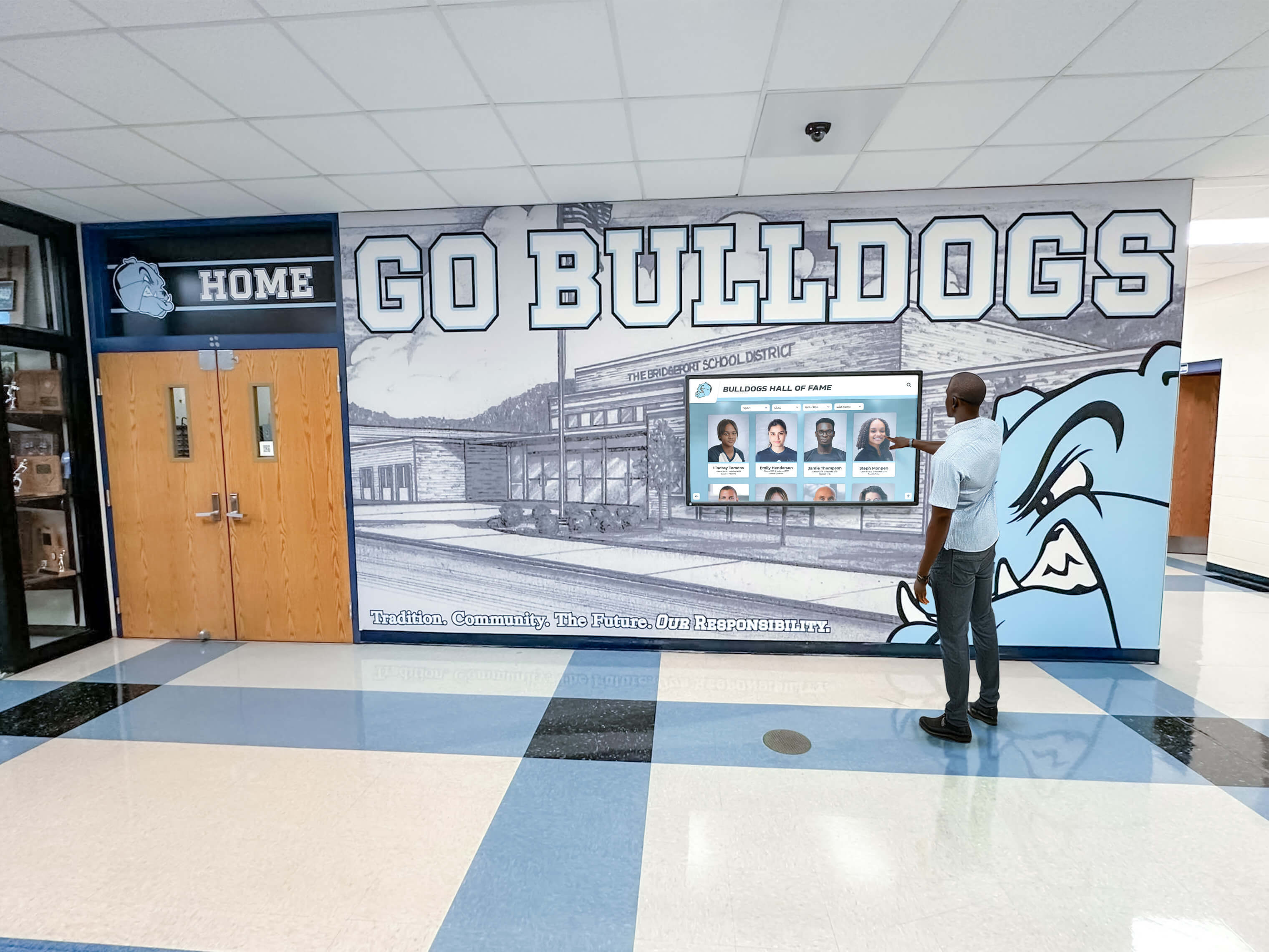
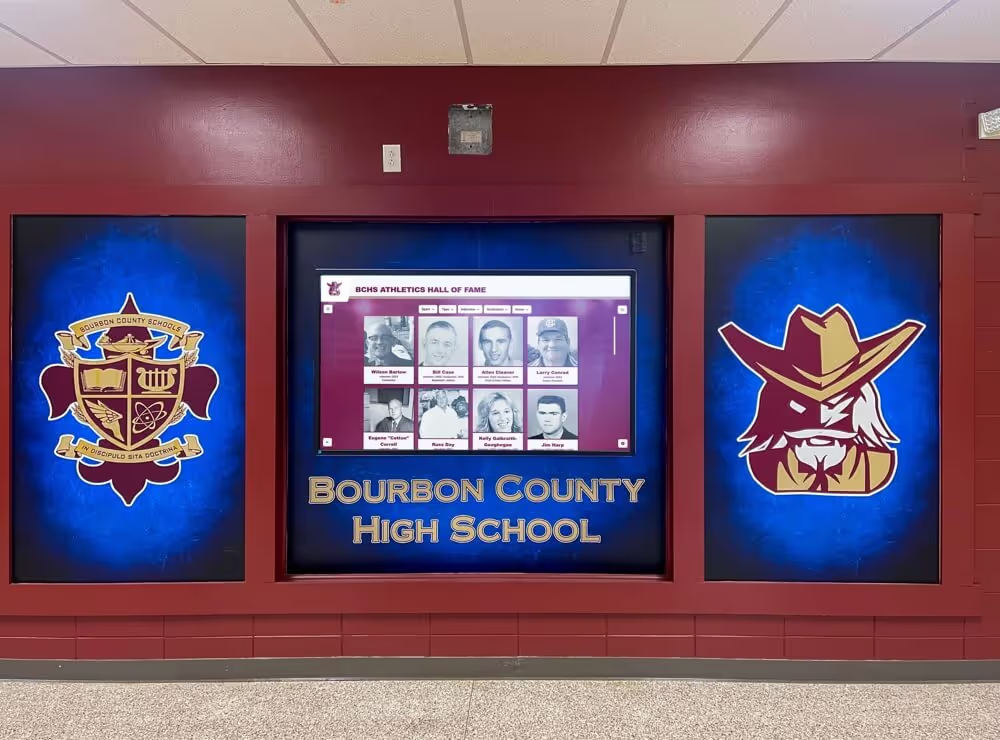
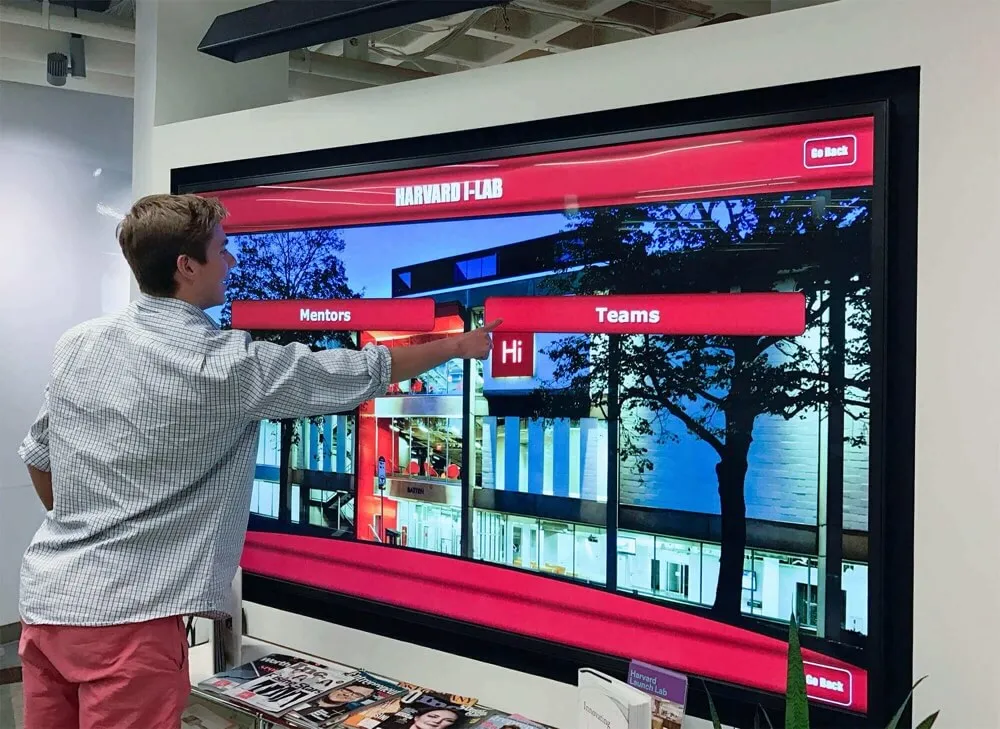
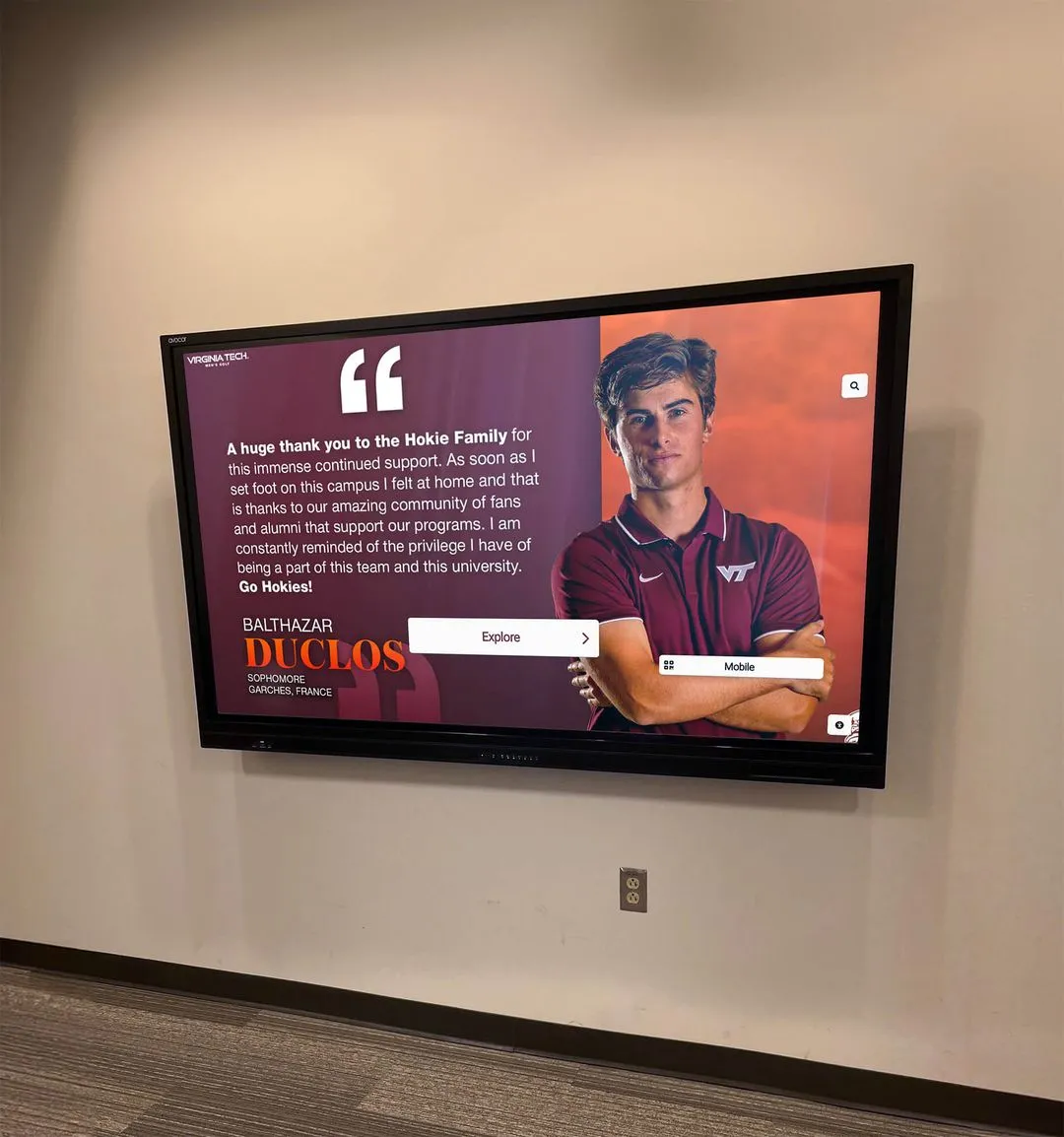
Interactive displays create engaging experiences that static banners cannot provide
Common Concerns and Solutions
Addressing typical objections helps programs confident digital recognition will serve needs effectively.
“We Have Traditional Banners Donors Funded”
Honoring Existing Recognition While Adding Digital Capability
Hybrid approaches preserve valued physical elements:
- Maintain donor-funded banners prominently displayed
- Add digital recognition supplementing physical displays
- Use digital systems to honor donors who funded physical banners
- Create comprehensive recognition including both traditional and digital elements
- Position digital enhancement as expansion rather than replacement
Many programs discover that supplemental digital recognition increases rather than diminishes traditional banner value. When physical banners serve as entry points to rich digital content, both recognition modes complement each other effectively.
Repurposing Retired Banners Respectfully
When physical banners eventually require replacement, preserve their legacy digitally:
- Photograph historical banners before removal
- Include banner images in digital recognition
- Share stories about specific banners and their significance
- Offer retired banners to team members or archives
- Create digital timeline showing banner history
This approach honors the tradition and donor contributions that created physical recognition while transitioning to more sustainable digital alternatives.
“Digital Displays Don’t Have the Same Visual Impact”
Strategic Installation Creating Prominent Visibility
Proper placement ensures digital recognition commands attention:
- Install displays at gymnasium entrances where visitors pass
- Use large-format displays (65+ inches) for high-ceiling spaces
- Incorporate motion and rotating content attracting attention
- Add ambient lighting highlighting displays
- Position displays at appropriate heights for visibility
- Use multiple displays for comprehensive coverage
Many schools report that well-implemented digital recognition actually exceeds physical banner impact because movement and video content naturally draw attention. When static fabric competes with dynamic video highlights, digital recognition wins engagement consistently.
Combining Traditional Aesthetics with Digital Capability
Integrate digital displays with traditional school design:
- Frame displays with school colors and branding
- Surround digital recognition with traditional trophy cases
- Add physical championship trophies near digital displays
- Include school murals and mascot imagery
- Maintain some signature physical banners complementing digital recognition
- Design installations matching architectural character
Programs exploring integrated recognition approaches discover that thoughtful design creates cohesive environments honoring tradition while gaining modern capabilities.
“We Don’t Have Technical Expertise to Manage Digital Systems”
User-Friendly Platforms Requiring Minimal Technical Skills
Modern content management systems are designed for non-technical administrators:
- Intuitive drag-and-drop content organization
- Template-based championship pages requiring simple form completion
- Bulk upload tools for efficient data entry
- WYSIWYG editors working like word processors
- Mobile apps enabling updates from smartphones
- Preview functions showing changes before publication
Athletic directors without technology backgrounds successfully manage digital recognition using platforms designed specifically for their needs. If someone can use basic office software, they can manage digital recognition effectively.
Vendor Support and Training Resources
Comprehensive assistance ensures successful implementation:
- Initial training sessions for administrative staff
- Video tutorials for ongoing reference
- Written documentation covering common tasks
- Responsive technical support for questions
- Optional professional services for content creation
- User communities sharing best practices
Quality vendors provide support ensuring programs succeed with digital recognition. When selecting platforms, evaluate training and support offerings as important factors beyond just technical features.
Conclusion: Achieving Cost-Effective Championship Recognition
Athletic programs face difficult choices when championship recognition expenses strain budgets while physical space limitations force recognition compromises. Traditional gym banners create recurring costs of $2,000-$4,000 annually for ongoing fabrication, installation, maintenance, and replacement—expenses that accumulate to $20,000-$40,000+ over a decade while providing limited recognition capacity that fills quickly as programs accumulate achievements.
Digital recognition fundamentally solves both cost and capacity challenges simultaneously. Initial investments of $6,000-$12,000 for comprehensive systems achieve cost parity with traditional approaches within 3-5 years, then provide 30-40% ongoing savings while offering unlimited recognition capacity never requiring additional fabrication expenses. Programs can honor every championship comprehensively, recognize individual student athletes who create success, share rich multimedia content telling championship stories, and extend recognition accessibility to alumni and supporters worldwide—capabilities impossible with expensive physical banners constrained by space and budget limitations.
Replace Expensive Banners with Budget-Friendly Digital Recognition
Discover how cost-effective digital solutions eliminate recurring banner expenses while creating unlimited recognition capacity celebrating championships and student athletes more comprehensively than traditional approaches ever could.
Explore Digital Recognition SolutionsStrategic Implementation Pathway
Programs considering digital recognition transition should begin with comprehensive cost analysis documenting current traditional banner expenses including all fabrication, installation, maintenance, storage, and administrative costs. This baseline reveals true recognition spending often exceeding budget assumptions. Compare documented costs with digital system investment over 5-10 year periods, factoring platform subscriptions but recognizing zero marginal costs for adding new recognition.
Develop phased implementation strategies beginning with supplemental digital displays complementing existing physical banners, building stakeholder confidence while capturing initial budget savings. As traditional banners require replacement, redirect those expenditures toward digital system expansion rather than reprinting physical recognition. Over 2-4 years, transition to comprehensive digital recognition as primary system while maintaining selected signature physical banners honoring tradition.
Budget Optimization Strategies
Maximize value by redirecting traditional recognition allocations toward digital transition, freezing physical banner purchases during implementation period. Engage athletic boosters and alumni donors in recognition modernization funding, positioning digital systems as transformative enhancements enabling comprehensive championship celebration. Explore institutional technology funding sources beyond athletic budgets where recognition investments serve broader facility improvement objectives.
Choose system sophistication matching budget constraints—even entry-level digital recognition provides dramatic advantages over expensive physical banners. Focus on core capabilities like unlimited capacity, individual athlete recognition, and multimedia content rather than premium features requiring larger investments unless budgets permit comprehensive systems.
Value Beyond Cost Savings
While budget efficiency drives initial interest in digital recognition alternatives, enhanced capabilities provide value exceeding financial considerations alone. When programs finally recognize individual student athletes comprehensively rather than listing only team accomplishments, recognition becomes personally meaningful to participants and families. When championship stories preserve institutional knowledge through detailed narratives and multimedia documentation, current athletes learn from historical excellence. When recognition extends online to alumni and distributed supporters, programs strengthen engagement across geographic boundaries and graduation years.
These enhanced capabilities transform recognition from simple acknowledgment into strategic tools supporting athlete motivation, program marketing, alumni engagement, and community building. The most successful implementations recognize that digital recognition serves multiple purposes simultaneously—honoring achievement while advancing broader program objectives.
Your athletic program’s championships represent countless hours of student dedication, exceptional coaching, and competitive excellence. These achievements deserve recognition matching their significance, not compromise due to budget constraints or space limitations forcing difficult decisions about which successes warrant celebration. Whether your program spends $2,000 or $10,000 annually on traditional banners, comprehensive digital systems provide superior value while reducing long-term costs dramatically.
Ready to explore budget-friendly alternatives to expensive gym banners? Learn more about championship recognition that scales without recurring costs, discover strategies for implementing cost-effective athletic recognition, or explore how digital systems transform championship celebration while honoring fiscal responsibility essential for sustainable athletic programs.