Saratoga Race Course in Saratoga Springs, New York, stands as one of America’s most cherished sporting venues—a thoroughbred racing landmark that has hosted legendary competitions since 1863. From the prestigious Travers Stakes nicknamed the “Midsummer Derby” to the countless champion thoroughbreds who have thundered down its historic track, Saratoga has earned its place as a cornerstone of American horse racing heritage. Known affectionately as both the “August Place to Be” and the “Graveyard of Champions,” this iconic venue embodies the elegance, competition, and tradition that make thoroughbred racing captivating. This extraordinary legacy deserves recognition technology that matches its significance, creating experiences where visitors can explore racing history while connecting personally with the champions and moments that have made Saratoga legendary.
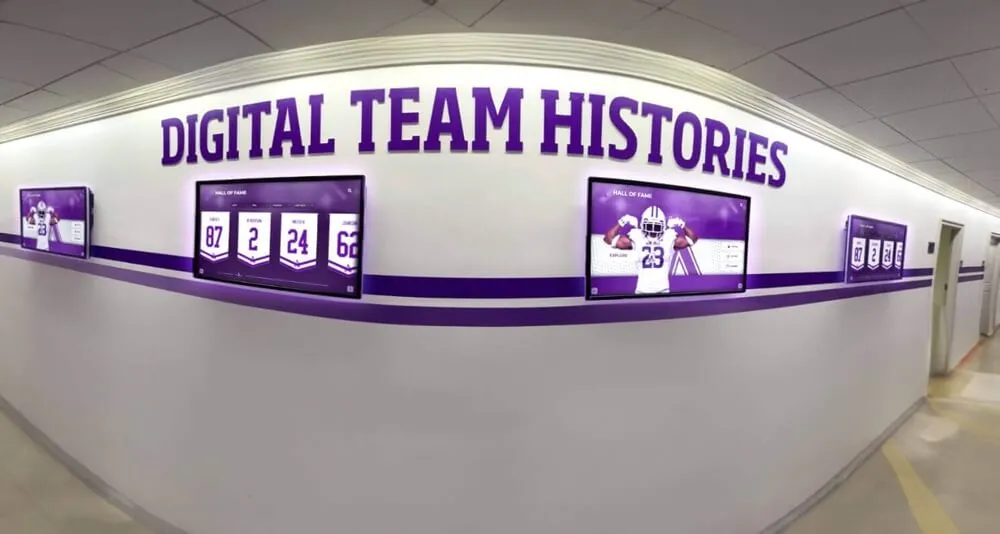
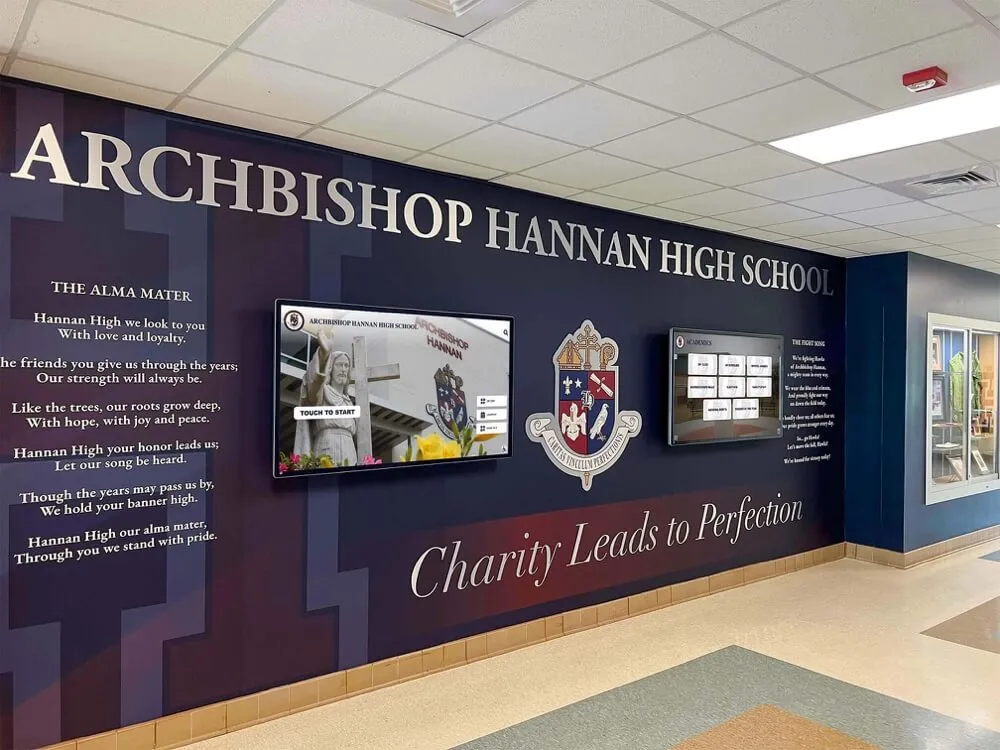
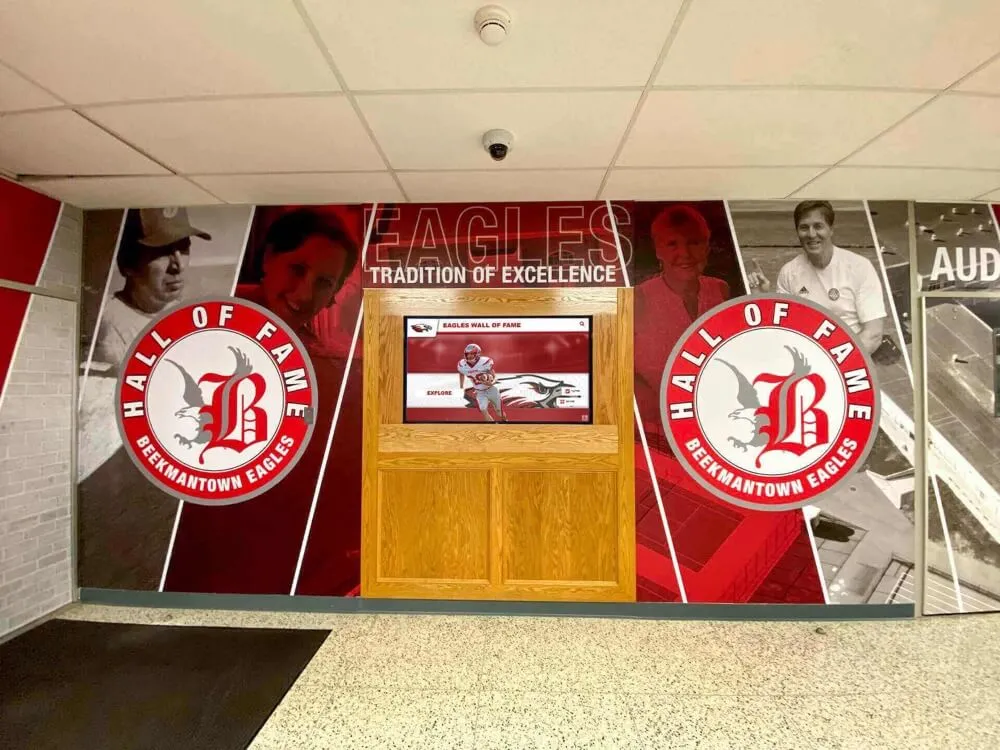
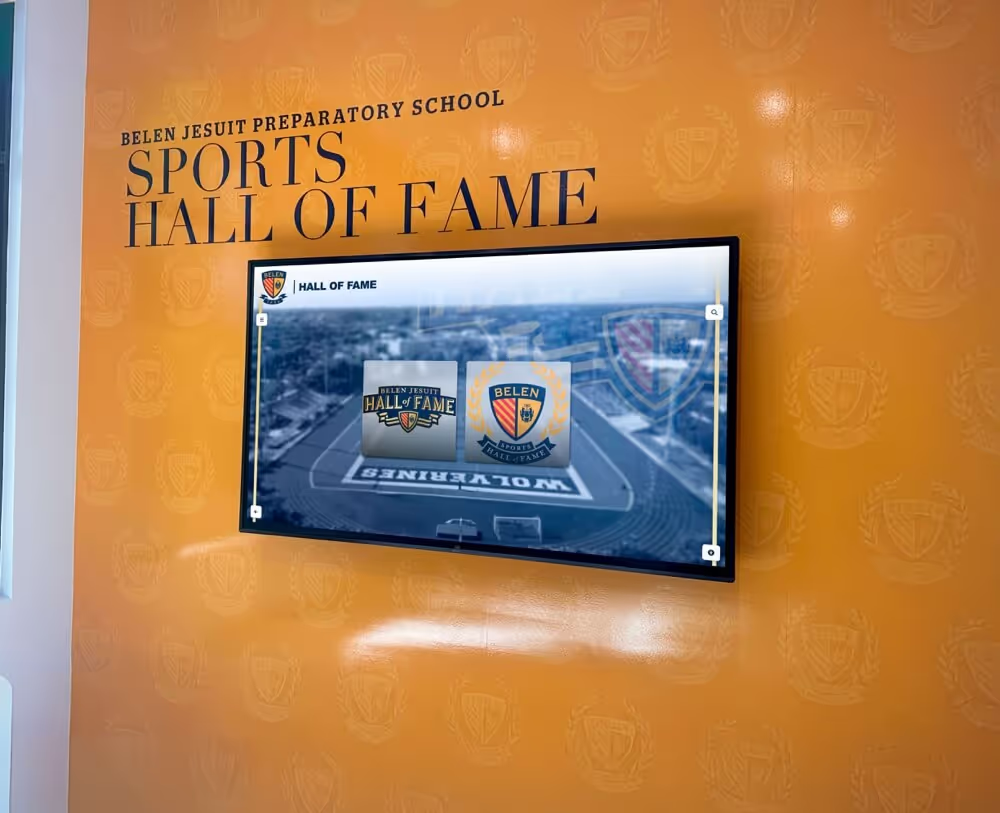
Modern recognition technology transforms how premier sporting venues celebrate their heritage. While traditional trophy displays and static plaques have served racing history well for generations, interactive touchscreen systems create immersive experiences that bring championship moments to life, showcase comprehensive horse and jockey achievements, and enable personalized exploration impossible through conventional recognition methods. These digital platforms honor the past while creating engaging present-day experiences that inspire future generations to appreciate thoroughbred racing’s enduring cultural impact.
Whether honoring Travers Stakes champions, documenting historic upsets, preserving breakthrough racing moments, or celebrating the evolution of American thoroughbred competition, interactive recognition displays create powerful connections between visitors and racing excellence. Solutions like Rocket Alumni Solutions provide the technology, content management capabilities, and expertise that enable venues to create world-class recognition experiences worthy of horse racing’s greatest stories.
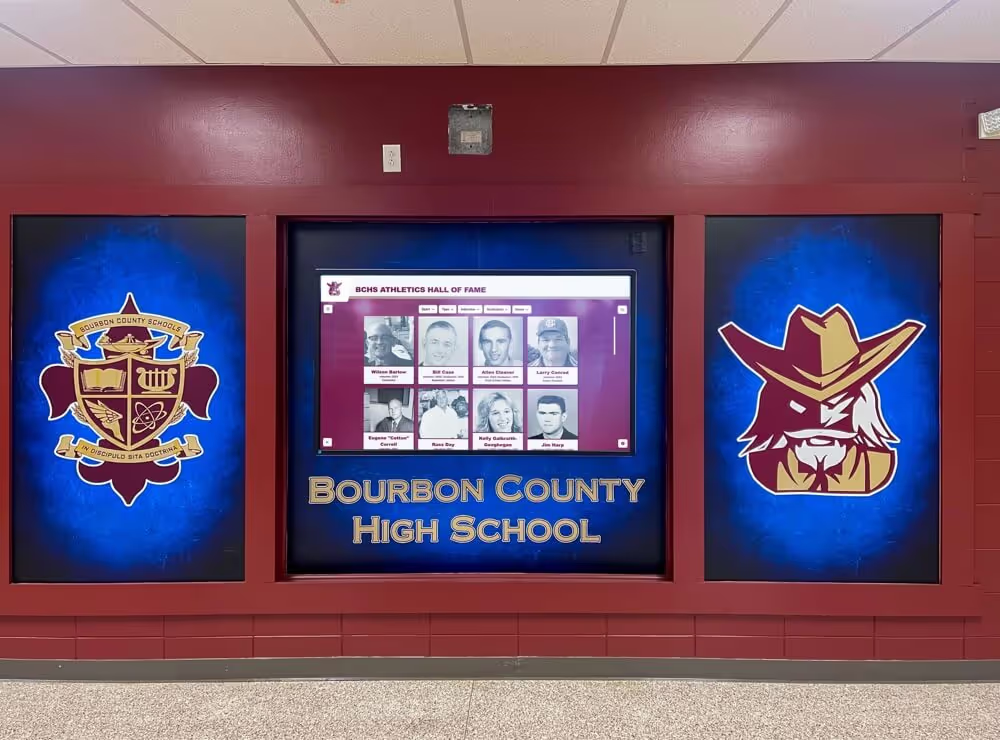
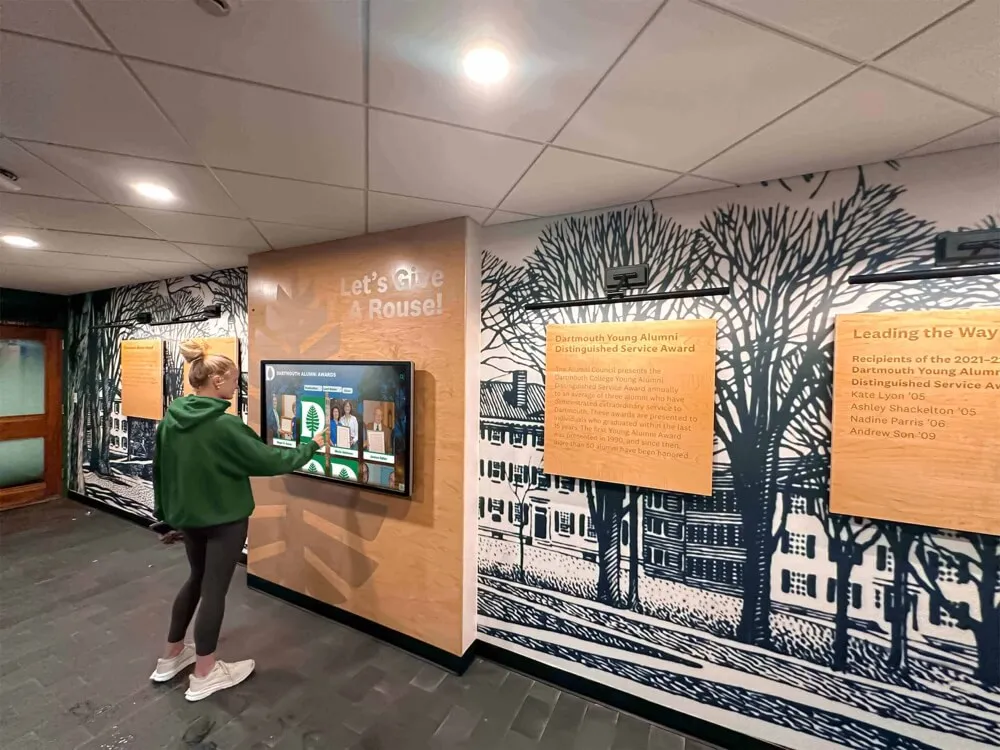
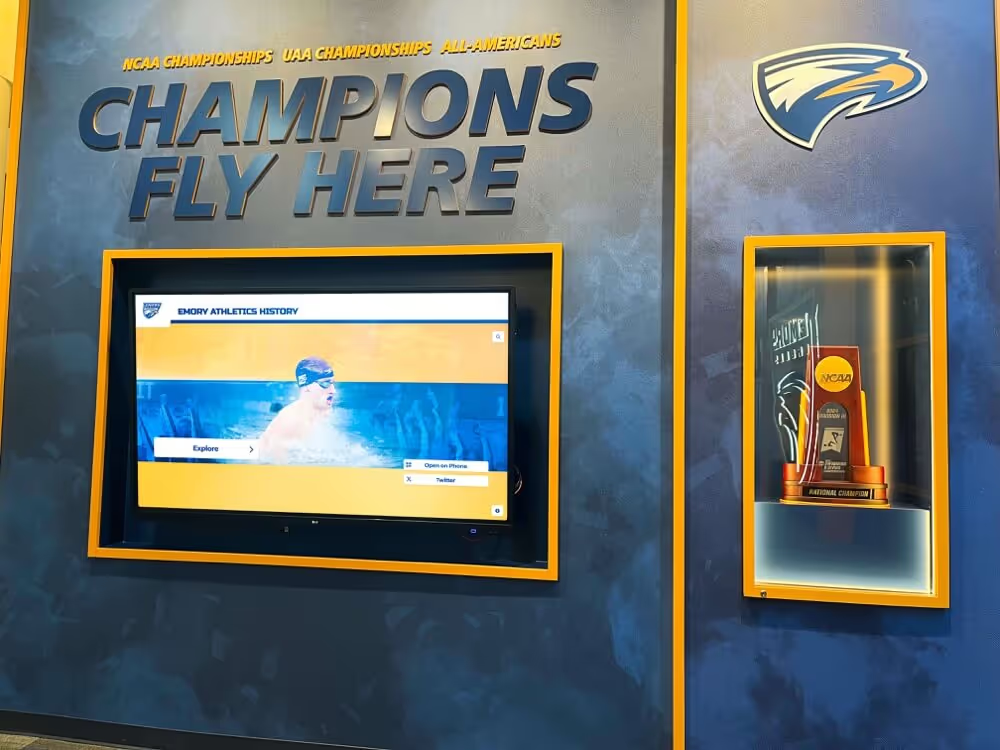
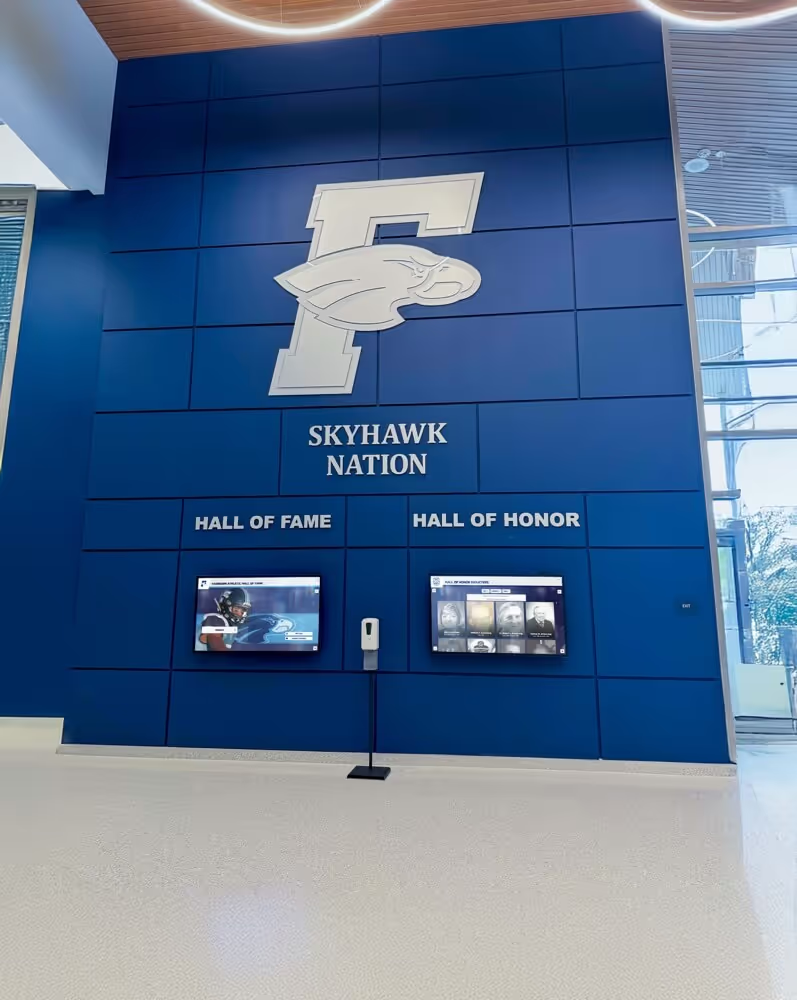
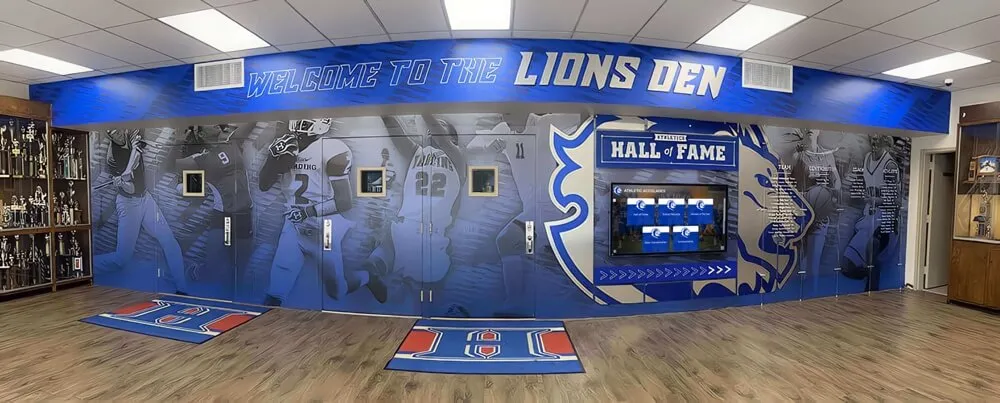
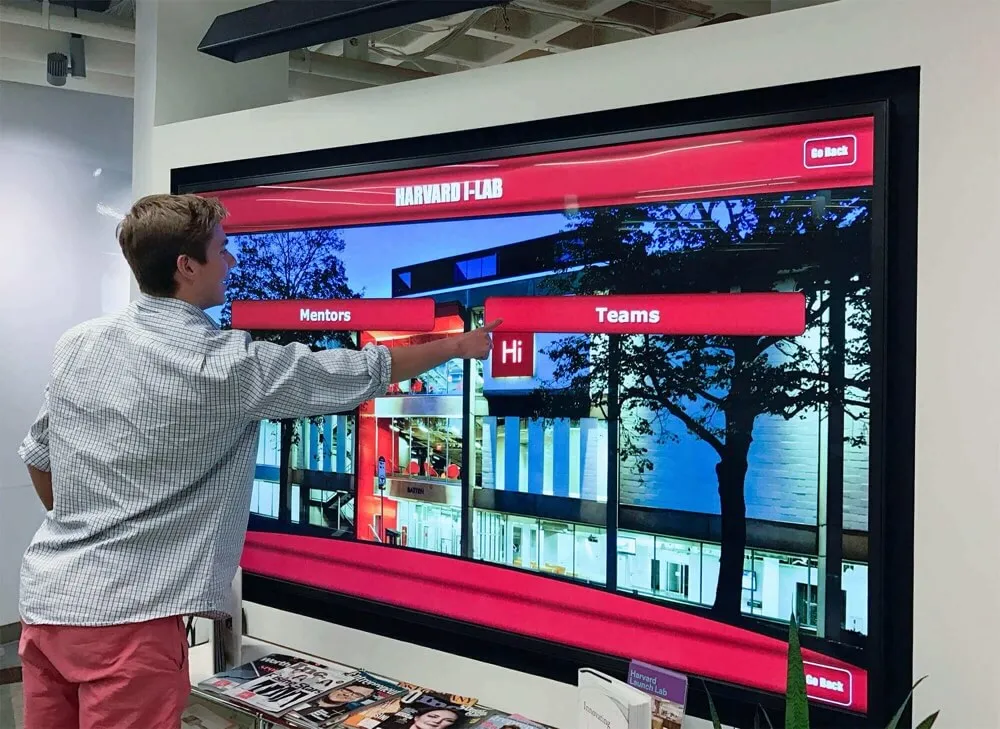
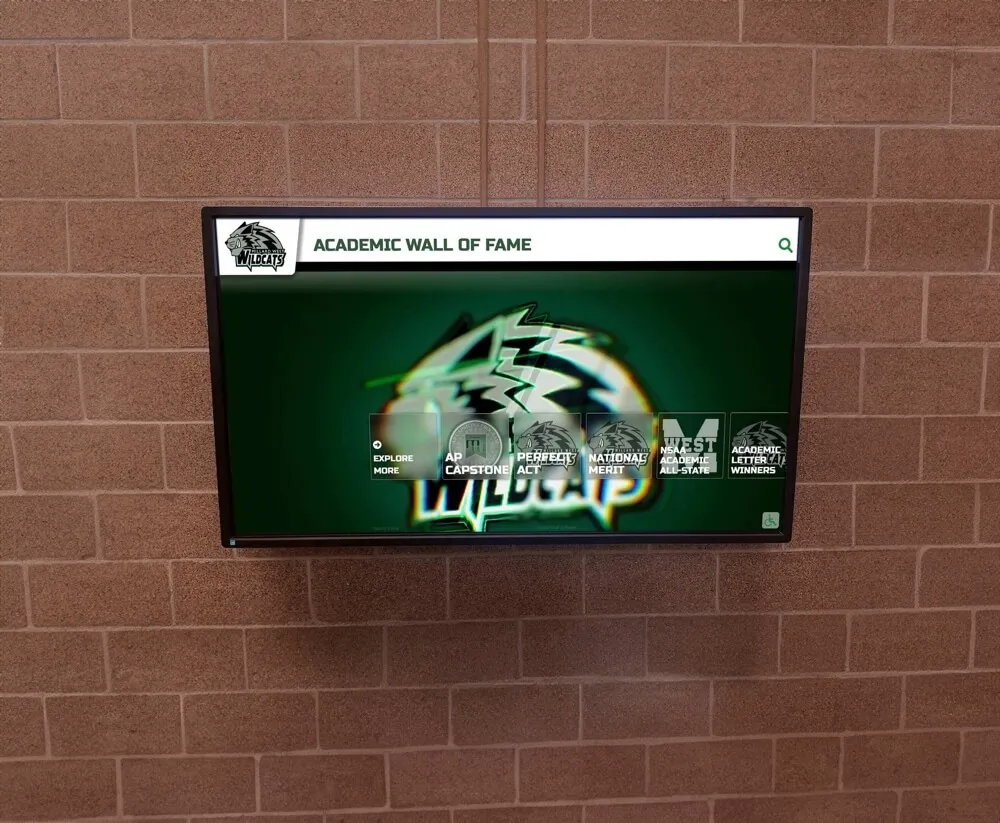
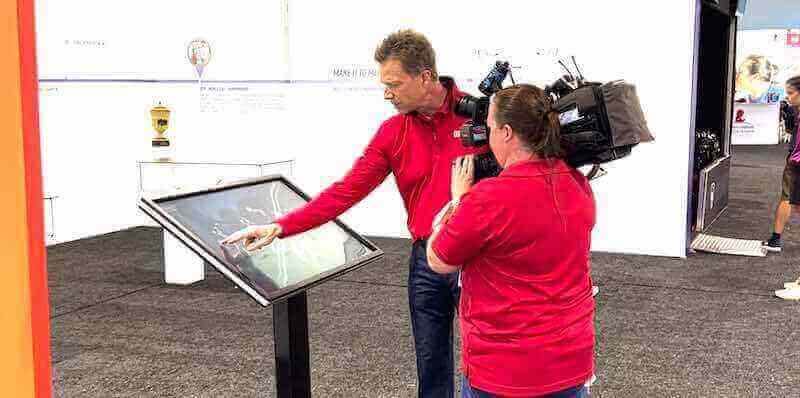
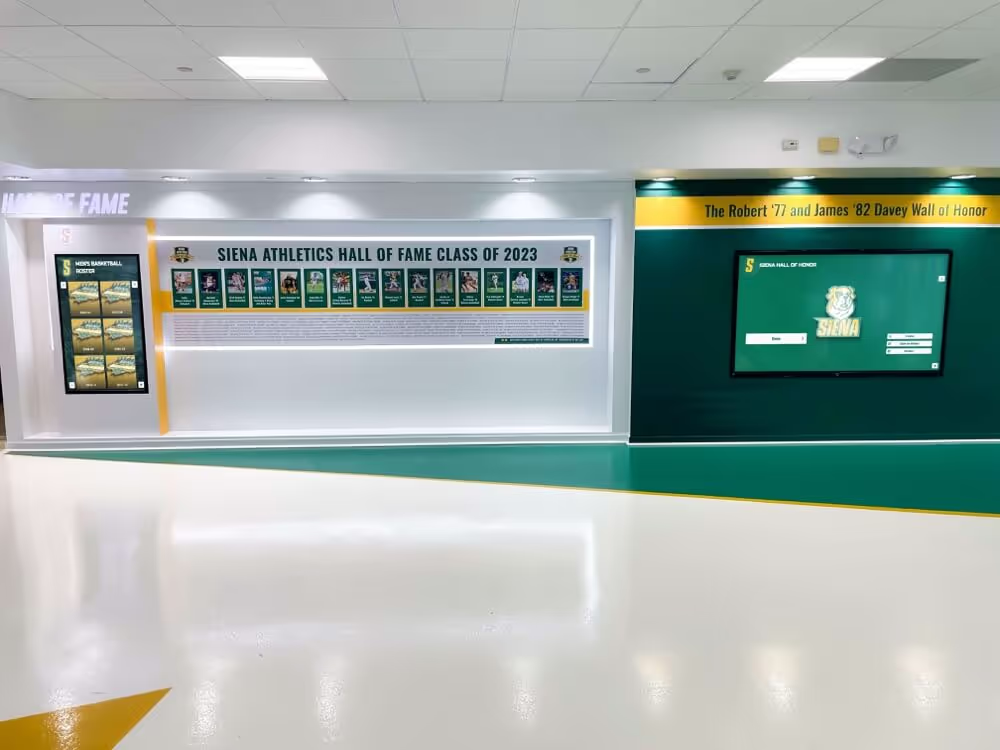
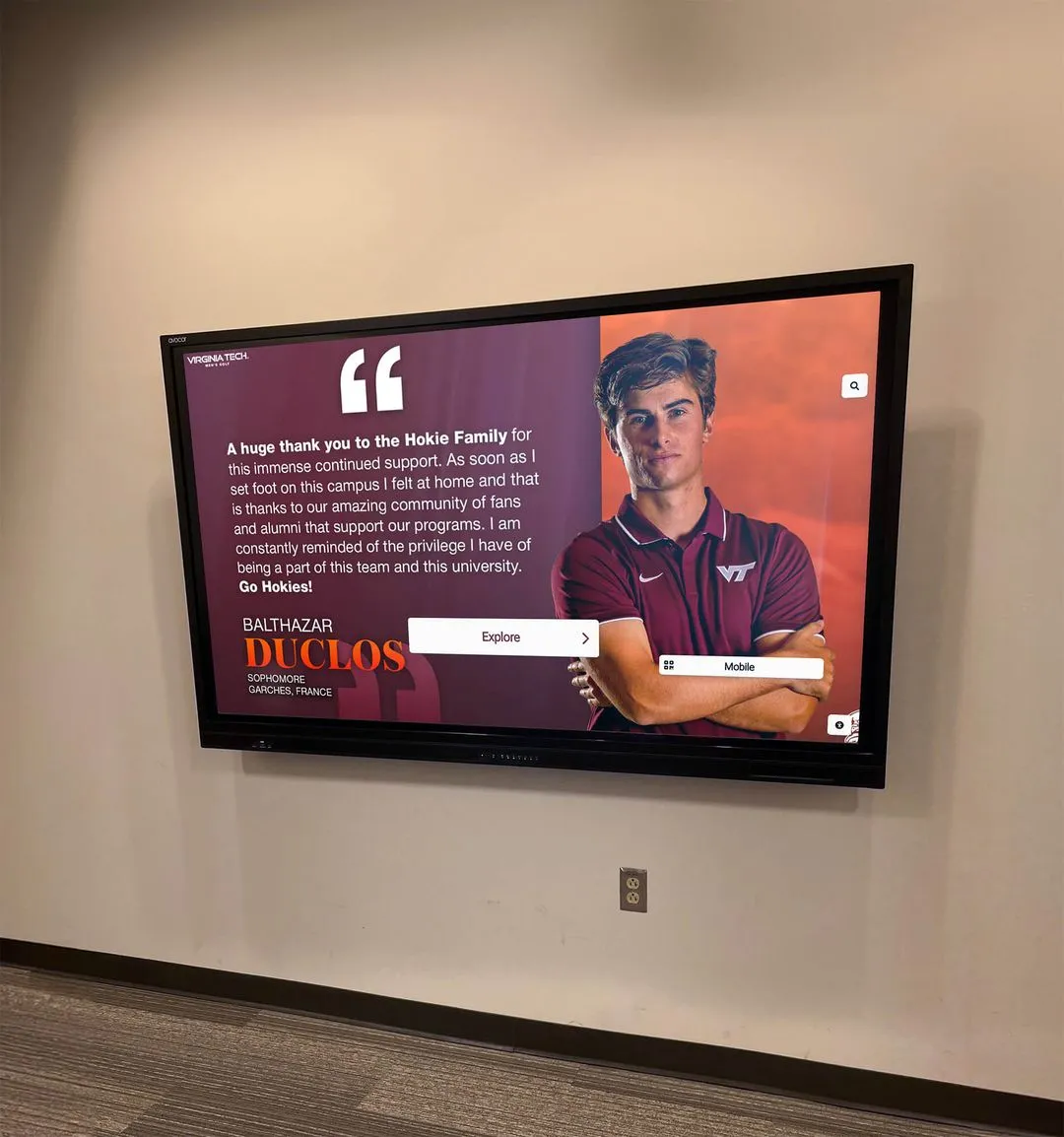
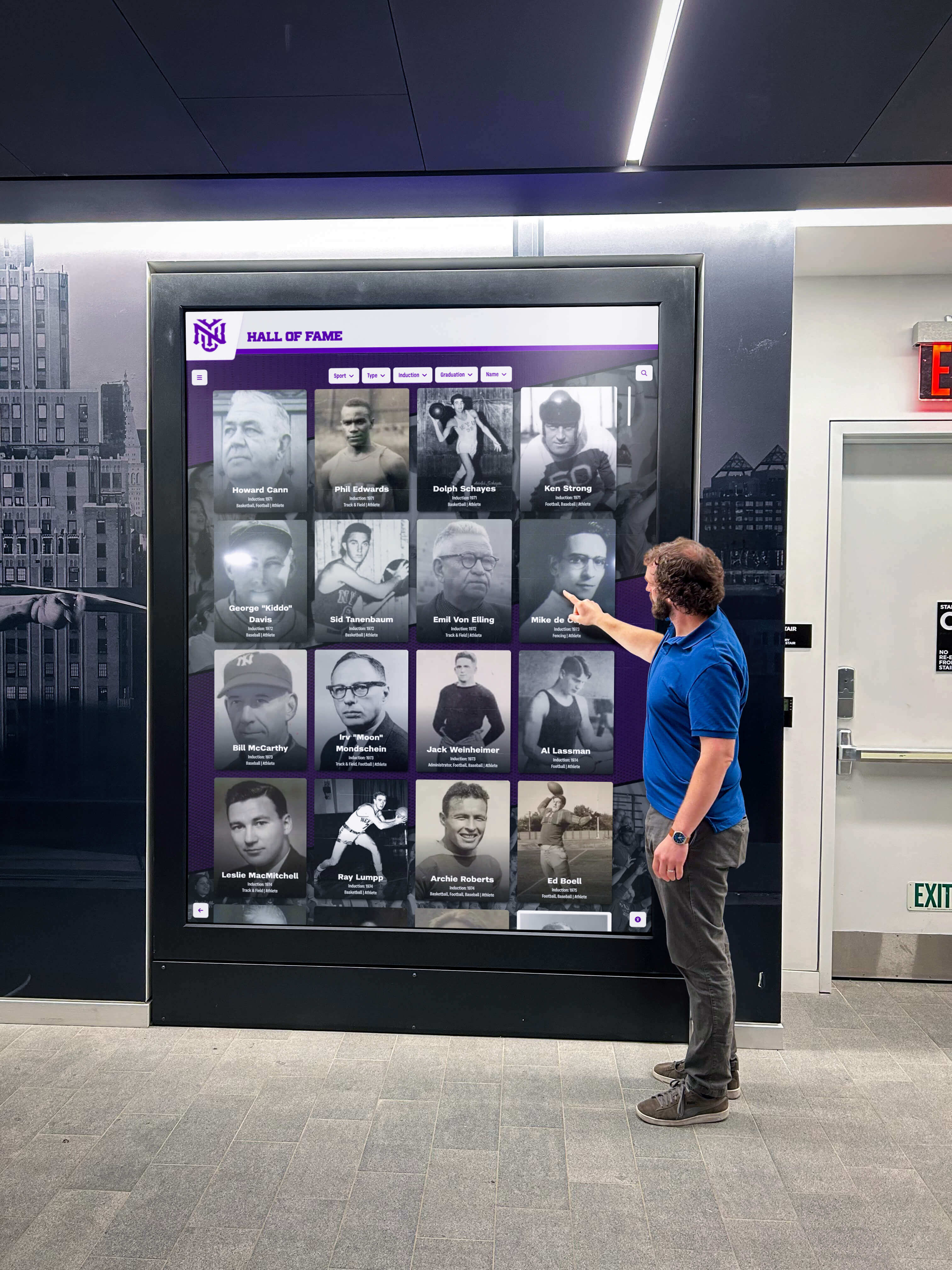
Interactive touchscreen displays create engaging experiences that honor athletic achievement and sports history in premier venues
Saratoga Race Course: America’s Racing Treasure
Understanding Saratoga’s unique significance helps frame why innovative recognition technology serves this historic venue so effectively.
From Civil War Era to Modern Racing Excellence
Saratoga Race Course opened in 1863, making it one of the oldest sporting venues in America. According to Wikipedia, on August 3, 1863, casino operator and future congressman John Morrissey organized the first thoroughbred race card, and after the successful meet ended, Morrissey purchased 125 acres of land and built a new grandstand, dubbing the venue Saratoga Race Course. Those who backed Morrissey included Commodore Cornelius Vanderbilt, Leonard Jerome, John Hunter, and William Travers, the namesake of the prestigious Travers Stakes and Saratoga’s first president.
This extraordinary longevity creates recognition opportunities spanning more than 160 years of racing evolution, from thoroughbred competition’s early American development through modern racing’s technological sophistication and global reach.
Historic Continuity Through Challenges: The course faced significant competitive pressures throughout its history. According to historical records, the track was closed in 1896 due to increasing competition among thoroughbred tracks, making the meet at Saratoga not viable that season. This demonstrates how competitive dynamics within horse racing have always shaped the sport’s landscape.
Additionally, anti-gambling legislation passed in New York resulted in a cessation of all thoroughbred racing in that state during 1911 and 1912. After a 1911 amendment to the law that would limit the liability of owners and directors was defeated in the Legislature, every racetrack in New York State shut down. These challenges make the track’s survival and continued excellence even more remarkable and worthy of comprehensive historical documentation.
The “Graveyard of Champions”: Saratoga earned this legendary nickname through stunning upsets where heavily favored champions fell to underdogs. Most famously, Jim Dandy won the 1930 Travers Stakes over that year’s Triple Crown winner Gallant Fox at the shocking odds of 100-1. The great Secretariat lost the Whitney Stakes to a little-known horse named Onion at Saratoga. American Pharoah was defeated by Keen Ice in 2015. These dramatic moments represent exactly the kind of compelling racing history that interactive recognition technology can bring to life through multimedia storytelling.
The Travers Stakes: Racing’s Midsummer Classic
The Travers Stakes represents one of American racing’s most prestigious competitions, deserving comprehensive recognition celebrating its history and legendary champions.
Historic Foundation: First held in 1864, the Travers Stakes is the oldest stakes race in the United States specifically for 3-year-olds. Named for William R. Travers, the president of the old Saratoga Racing Association, his horse Kentucky won the first running. The race is nicknamed the “Midsummer Derby” and is the third-ranked race for American three-year-olds according to international classifications, behind only the Kentucky Derby and Belmont Stakes.
Legendary Champions: The Travers has crowned numerous racing immortals whose achievements deserve comprehensive recognition. Man o’ War won the 1920 Travers in 2:01⅘, a record time that stood for 42 years. In 1941, Whirlaway became the only horse to ever win both the American Triple Crown and the Travers Stakes—an accomplishment that remains unmatched. Damascus cruised home by 22 lengths in 1967, delivering one of the race’s most dominant performances.
In 1979, General Assembly, a son of Secretariat, set the track record in the Travers of 2:00.00, which still stands today as a testament to an extraordinary performance. Point Given became the first horse to ever win four consecutive $1 million races with his 2001 Travers victory, having previously won the Preakness, Belmont, and Haskell. Arrogate set a new stakes record in 2016, finishing the race in 1:59:36 while winning by 13½ lengths.
Most recently, Sovereignty won the 2026 Travers Stakes, becoming the fifth horse to win the Kentucky Derby, Belmont Stakes, and Travers, joining Twenty Grand (1931), Whirlaway (1941), Shut Out (1942), and Thunder Gulch (1995) in this elite company.
Historic Milestones: Fillies won three of the first five Travers Stakes, with Ruthless winning in 1867 after also winning the inaugural running of the Belmont Stakes earlier that summer. The last filly to win the Travers was Lady Rotha in 1915, making any future filly victory an especially historic achievement worth prominent recognition.
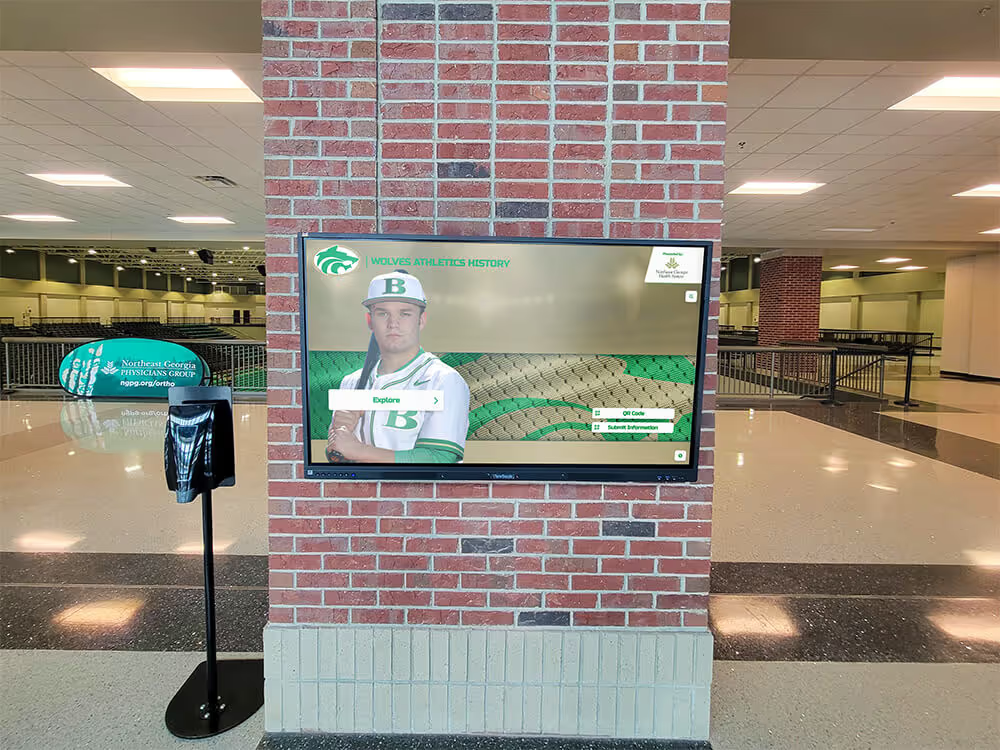
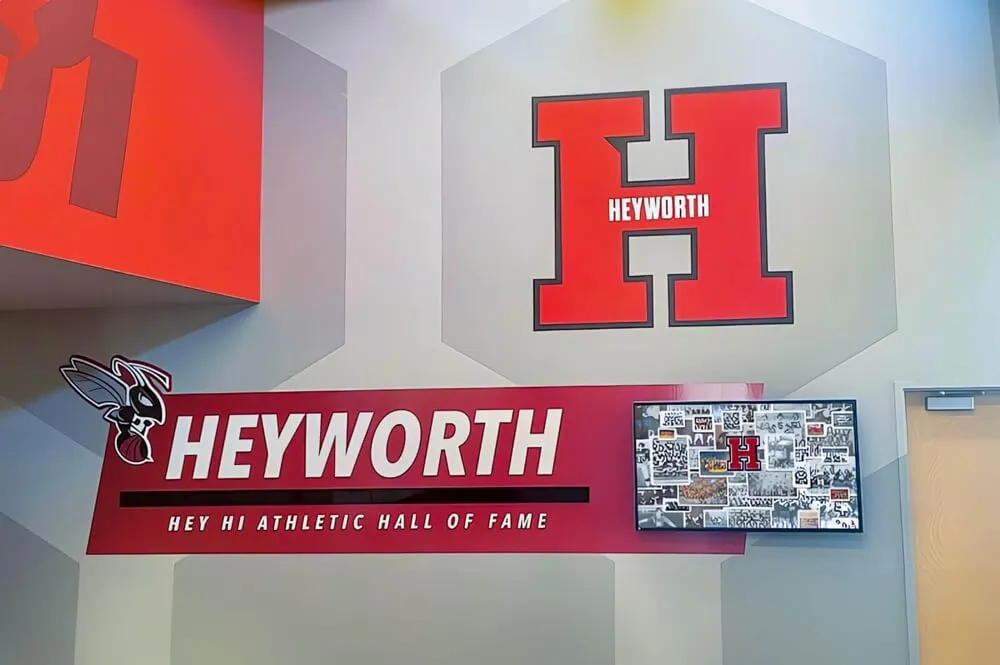
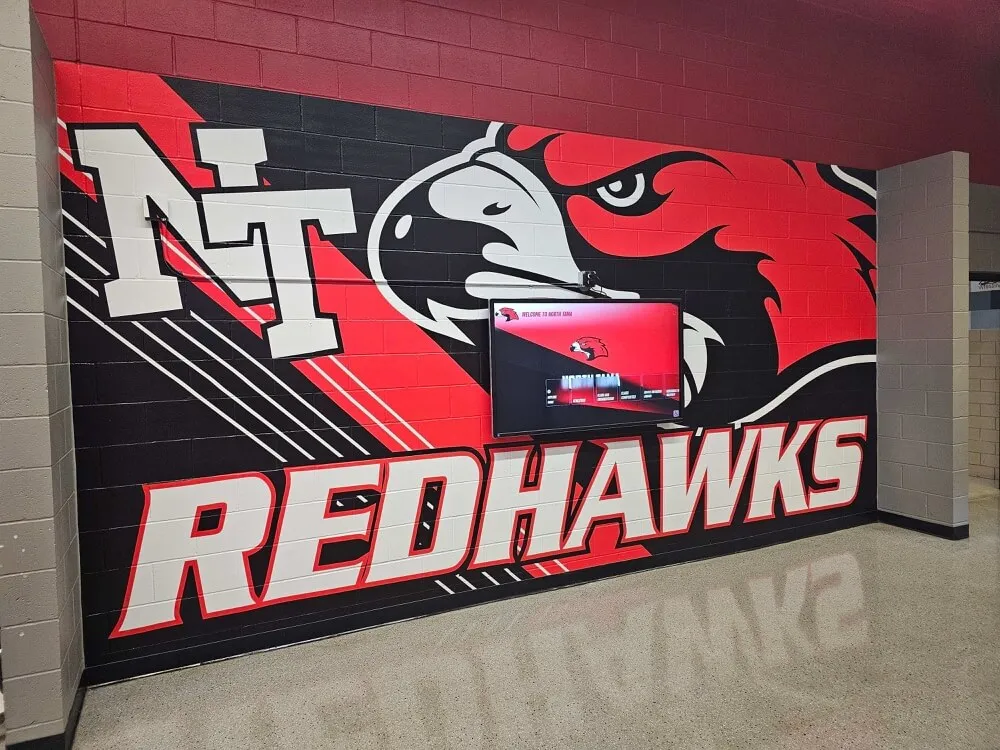
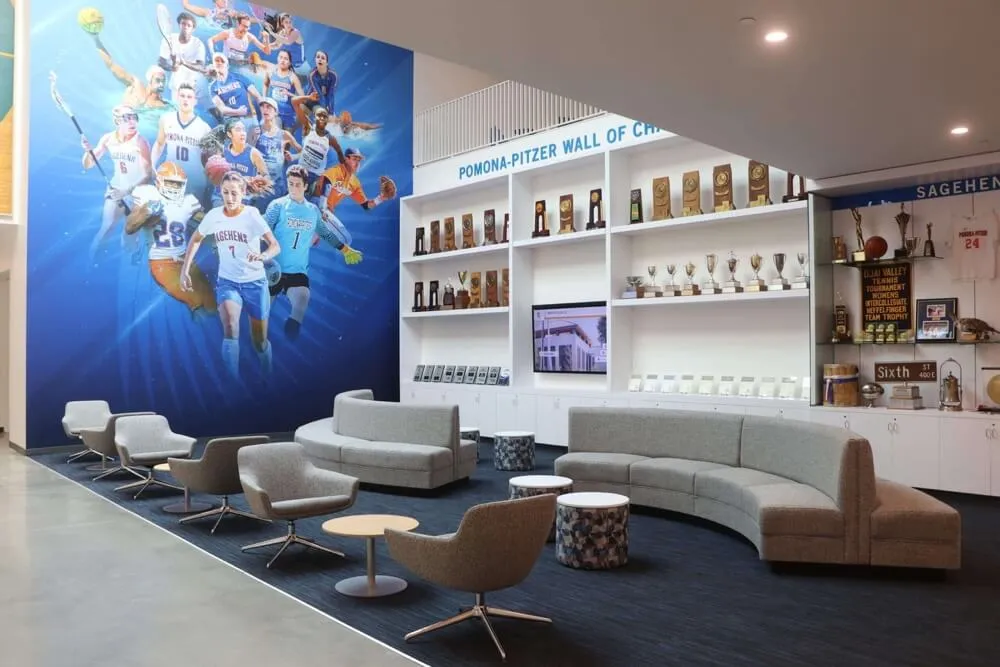
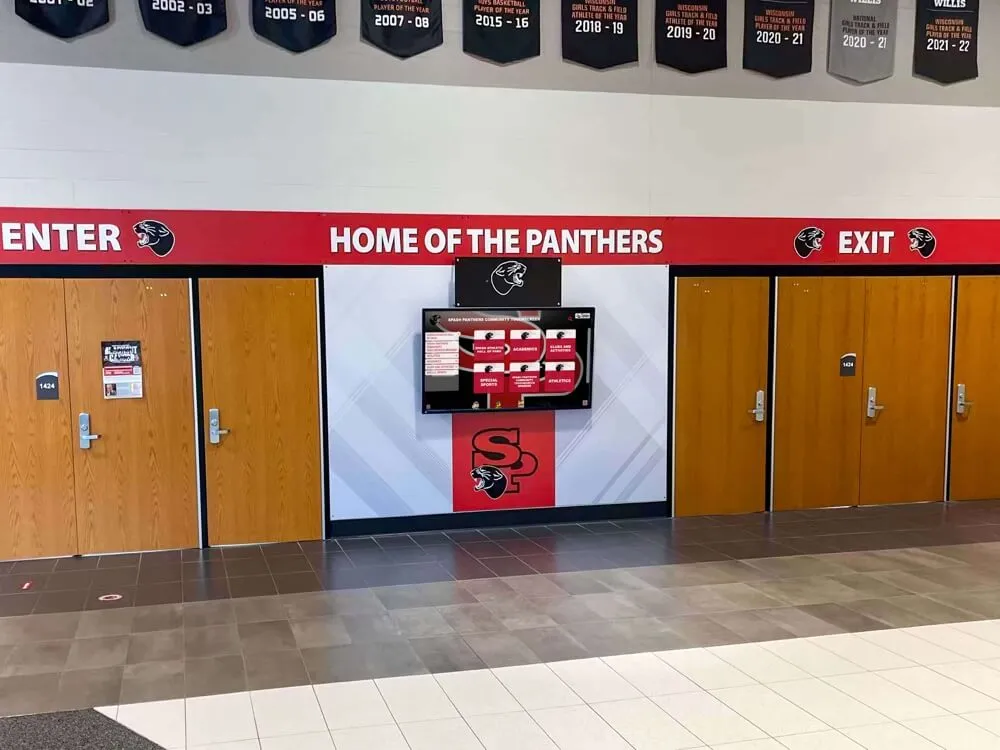
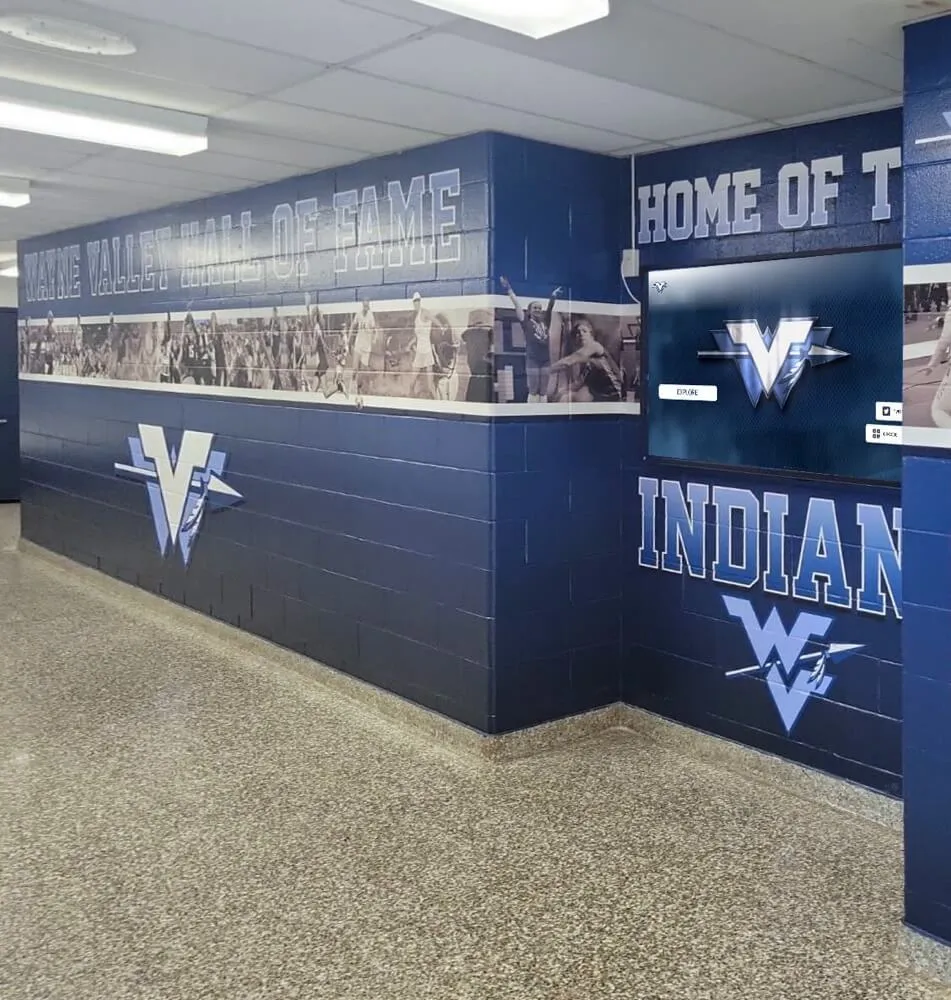
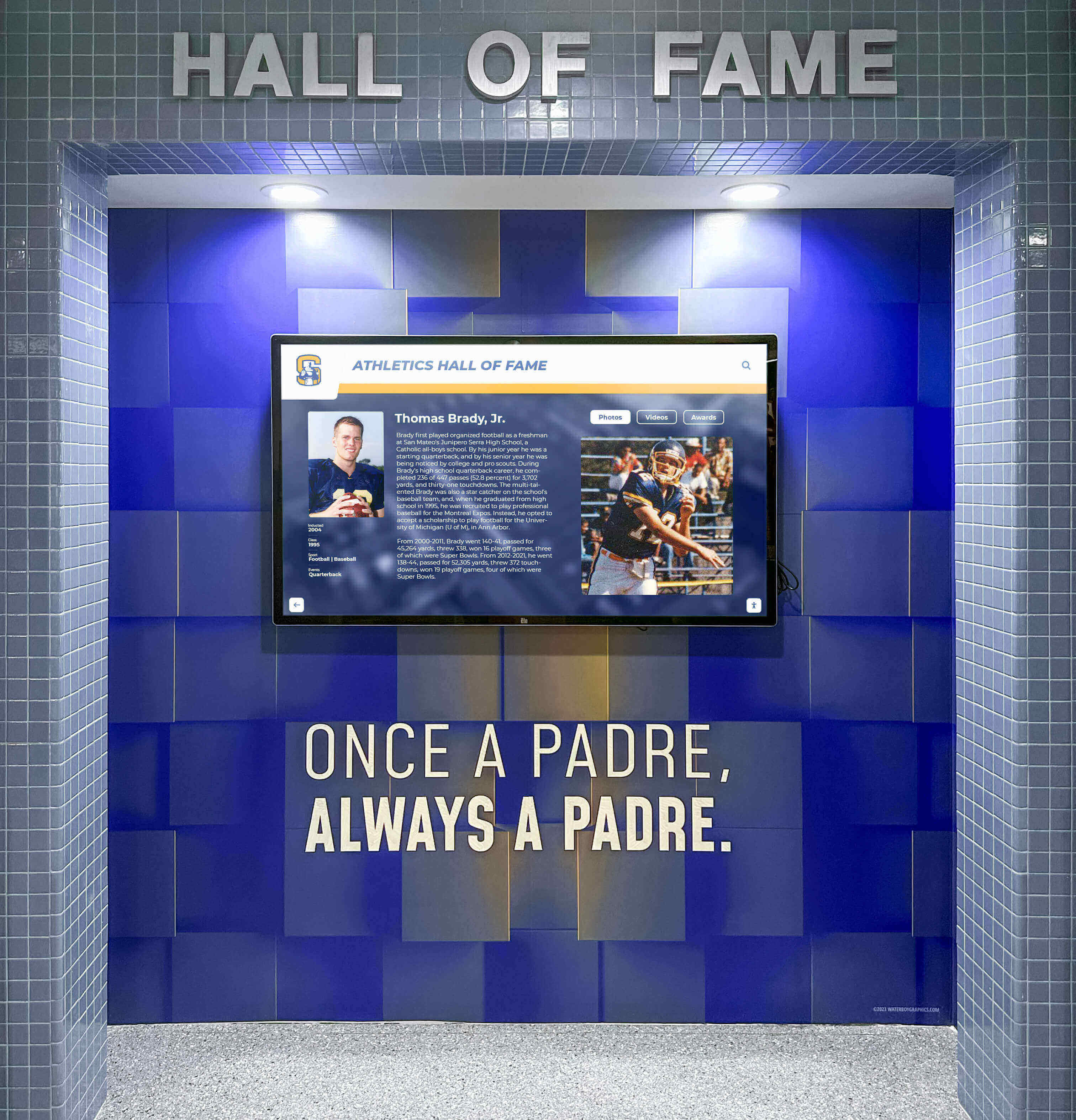
Digital displays in sports venues showcase achievement through comprehensive profiles combining photos, statistics, and career highlights
Why Horse Racing Venues Need Interactive Recognition
Thoroughbred racing venues face unique recognition challenges that interactive touchscreen technology addresses particularly effectively.
Traditional Racing Recognition Limitations
Horse racing heritage encompasses complex relationships between horses, jockeys, trainers, owners, and specific race performances—creating recognition complexity that static displays struggle to accommodate comprehensively.
Space Constraints for Comprehensive Recognition: A single legendary horse might have a career spanning multiple years with dozens of significant race victories, breeding achievements, and historical impact. Thoroughbred racing produces champions across multiple classifications—sprint specialists, distance runners, dirt track performers, turf course experts—each deserving appropriate recognition. Traditional displays quickly become overwhelmed trying to honor complete racing heritage within finite physical space.
Statistical Complexity: Racing generates extensive data including race times, speed figures, earnings totals, breeding records, and comparative performance metrics. Traditional plaques provide limited statistical information, typically just major race victories and perhaps career earnings. This forces exclusion of compelling performance data that helps visitors understand why particular horses achieved legendary status.
Breeding Heritage and Bloodline Documentation: Thoroughbred racing uniquely emphasizes breeding and bloodlines, where champion horses often produce champion offspring, creating multi-generational excellence worth documenting. Interactive displays can show complete pedigrees, connect horses with their offspring, and document breeding excellence impossible to convey through static recognition.
Multi-Dimensional Achievement: Racing excellence involves not just horses but also jockeys who ride them, trainers who prepare them, and owners who campaign them. Recognizing complete stories requires honoring all contributors, creating complexity that traditional approaches struggle to present cohesively.
Interactive Display Advantages for Racing Heritage
Digital touchscreen technology enables recognition experiences appropriate for premier racing venues while celebrating thoroughbred excellence comprehensively.
Unlimited Historical Documentation: Interactive systems accommodate complete racing heritage—every Travers Stakes winner, all significant race results, comprehensive jockey and trainer records, breeding achievements—without consuming additional physical space. A single display provides access to recognition that would require hundreds of square feet through conventional approaches.
Rich Multimedia Storytelling: Racing excitement reveals itself most compellingly through actual race footage. Digital platforms enable video integration showing photo finishes, dramatic stretch runs, and defining moments that text descriptions cannot capture. Visitors can watch Secretariat’s power, experience Jim Dandy’s stunning upset, or see Arrogate’s record-breaking Travers performance, creating emotional connections with racing excellence across generations.
Complex Relationship Visualization: Interactive systems can show how horses, jockeys, trainers, and owners connect—which jockey rode which champions, which trainers prepared multiple Travers winners, which breeding lines produced exceptional competitors. This relationship mapping creates understanding impossible through linear static displays.
Statistical Analysis and Comparison: Racing fans appreciate detailed statistics and comparative analysis. Interactive displays can present performance data through charts, graphs, and visualizations enabling visitors to compare champions across eras, analyze how track records evolved, and understand achievement within historical context.
Organizations implementing recognition at premier sporting venues can explore approaches used in professional sports hall of fame displays that showcase similar comprehensive multimedia recognition applicable to thoroughbred racing contexts.
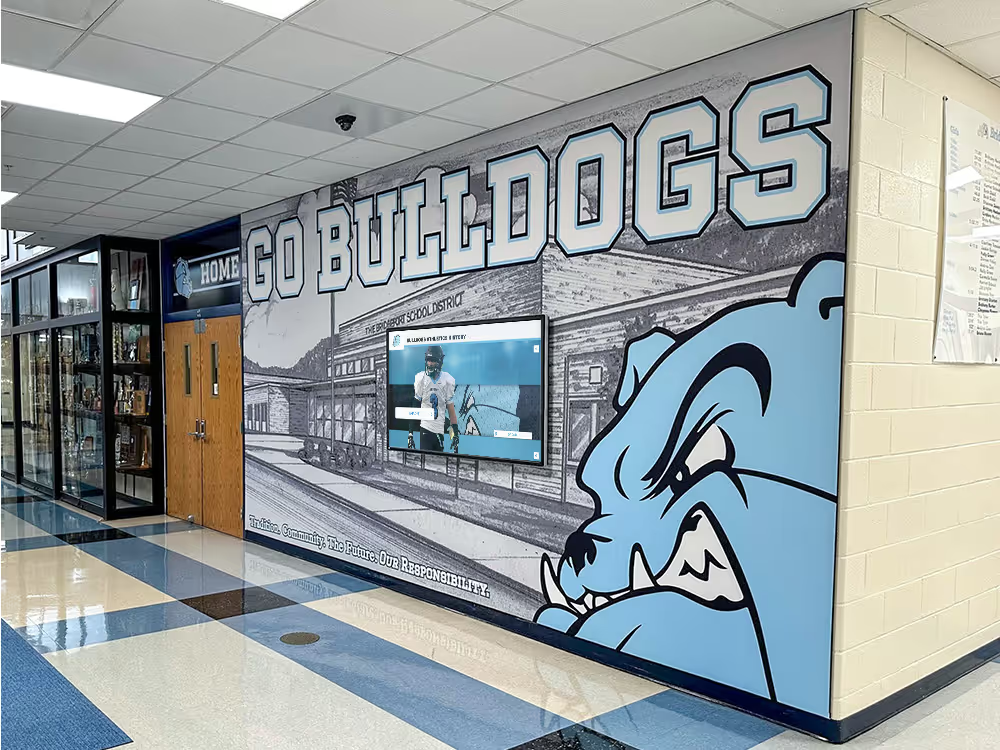
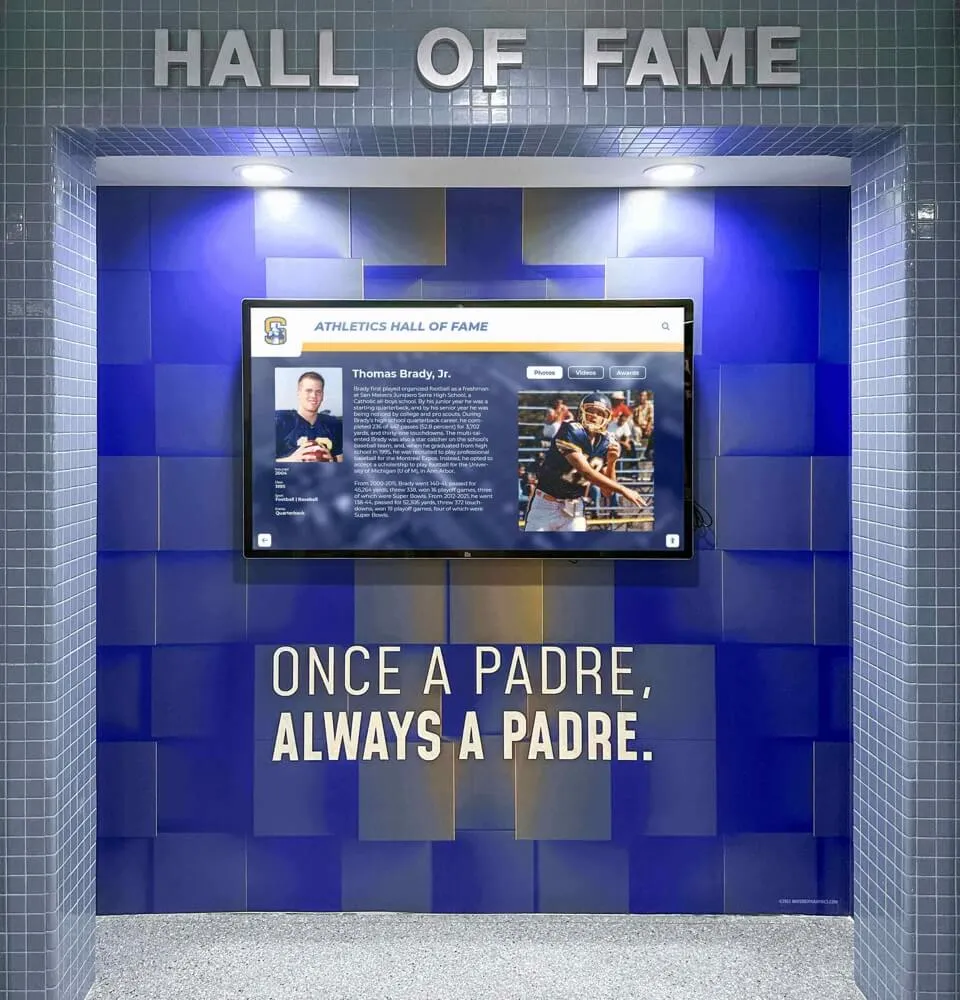
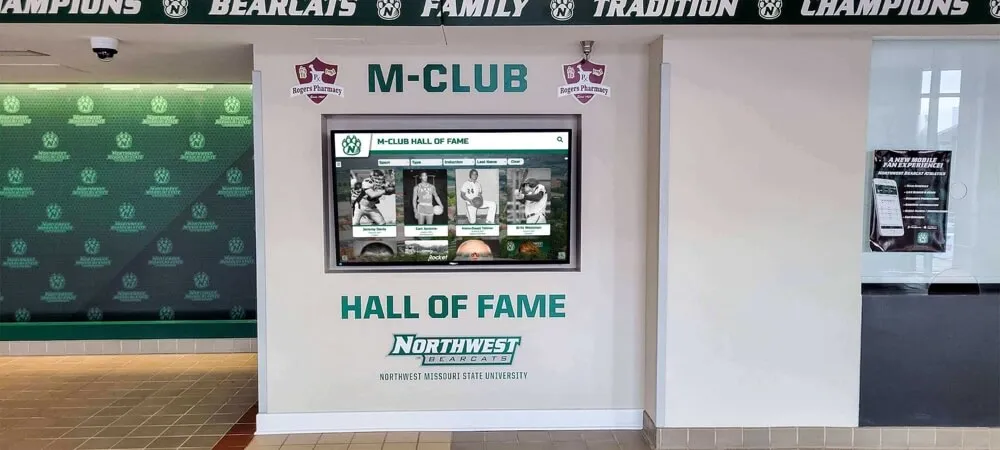
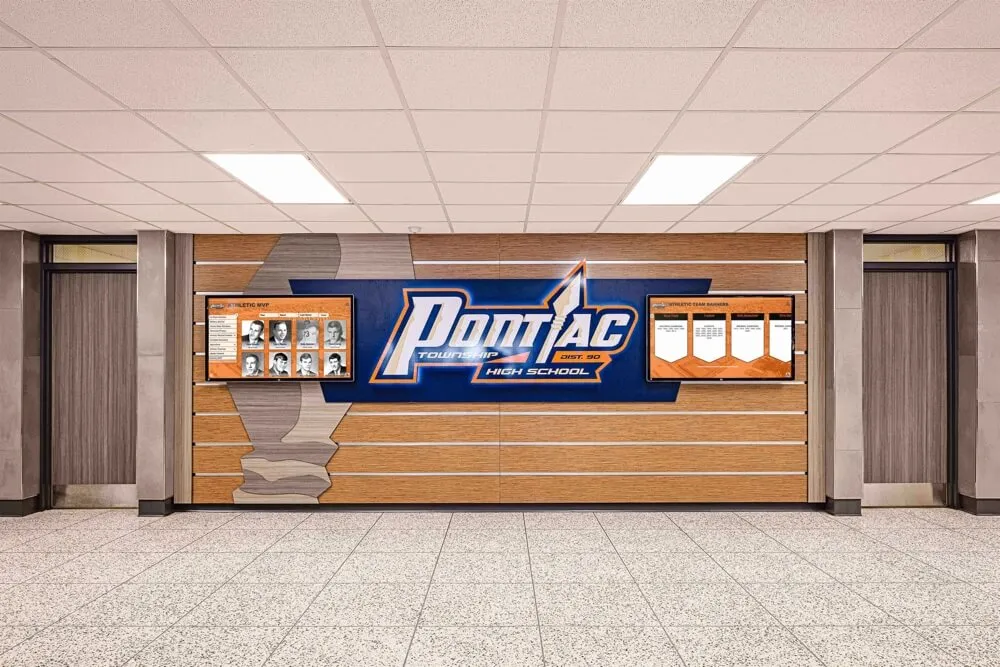
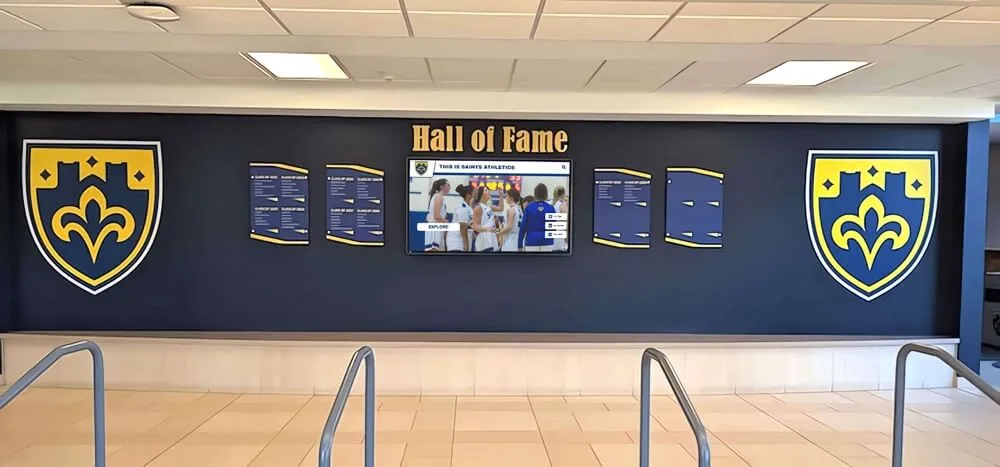
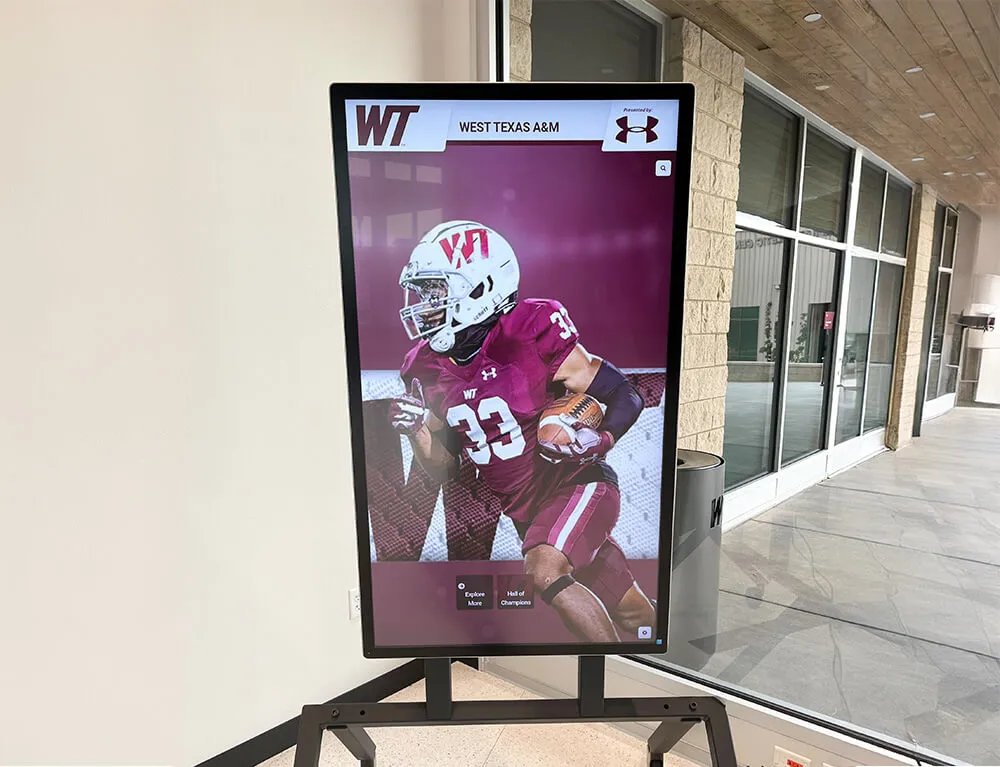
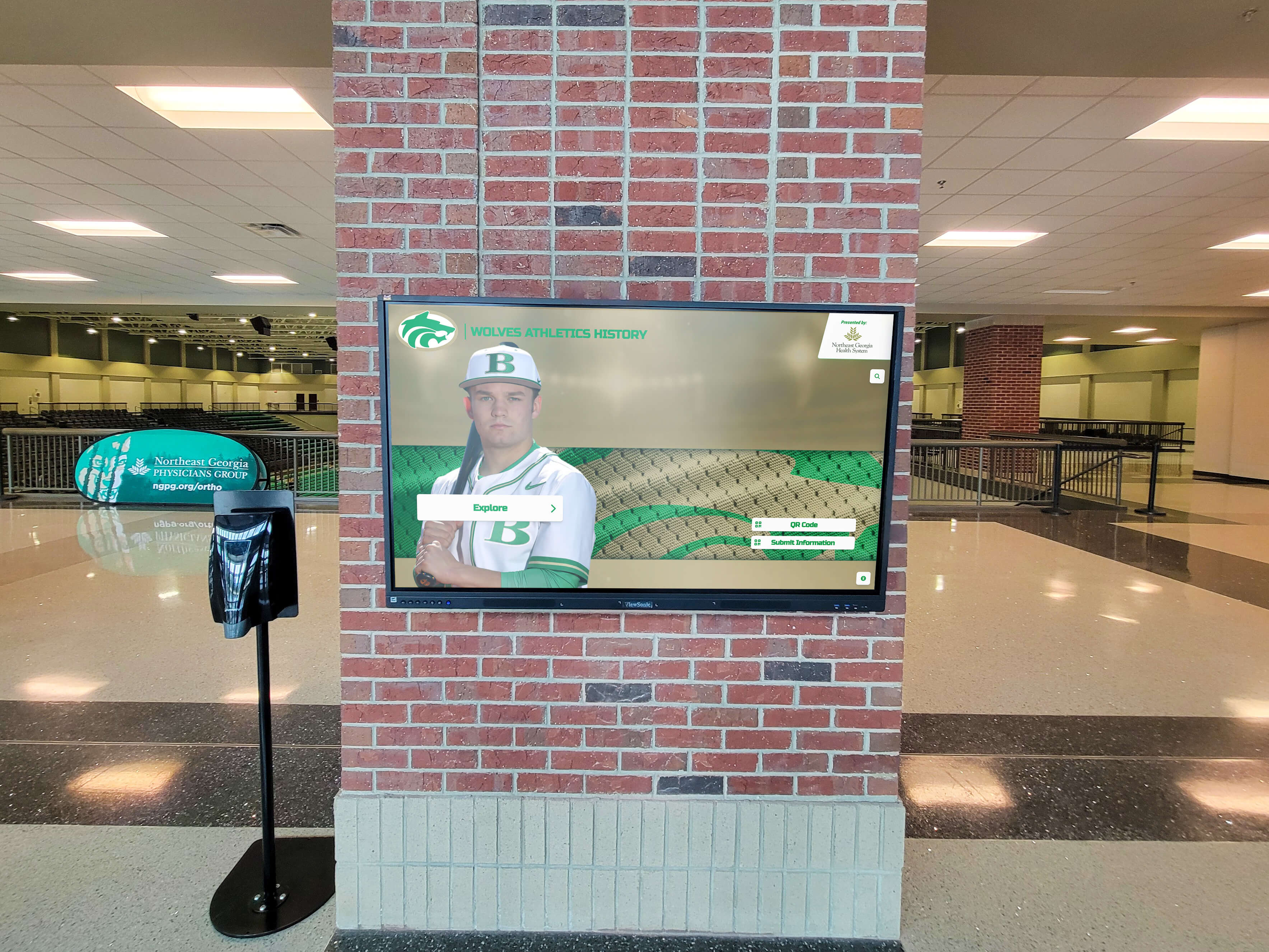
Interactive touchscreens enable visitors to explore achievements and historic moments through engaging digital interfaces
Content Opportunities for Saratoga Racing Recognition
Comprehensive digital recognition systems enable celebrating diverse aspects of Saratoga racing that traditional displays struggle to accommodate fully.
Horse Profile Excellence
Interactive platforms transform basic horse recognition into engaging comprehensive profiles that honor racing careers appropriately.
Complete Career Documentation: Beyond listing major victories, digital systems can present season-by-season race results, progressive time improvements showing development, earnings progression documenting sustained excellence, comparative analysis showing how horses rank in Saratoga history, and breeding achievements for horses that became successful stallions or broodmares after racing careers concluded.
Multimedia Biography: Horse profiles benefit tremendously from video content including signature race victories, distinctive running styles, memorable moments (late comebacks, photo finishes, record-breaking performances), and historical footage showing horses in training or at breeding farms. Combined with high-quality photography from different career stages, these multimedia elements create rich recognition experiences impossible with static plaques.
Pedigree and Breeding Context: Thoroughbred excellence connects across generations through breeding. Effective recognition shows complete pedigrees documenting champion bloodlines, connects horses with their notable offspring, identifies successful breeding patterns, and celebrates stallions and broodmares who produced multiple champions, honoring breeding excellence alongside racing achievement.
Personal Stories and Human Interest: Compelling recognition extends beyond race statistics to celebrate horses as individuals with distinctive personalities. Content might include training quirks and favorite habits, relationships with specific jockeys or grooms, fan favorite moments and popular appeal, injury comebacks demonstrating determination, and post-racing lives when documented.
Jockey and Trainer Recognition
Racing excellence requires exceptional human talent alongside equine ability—jockeys and trainers deserve comprehensive recognition celebrating their contributions.
Jockey Career Documentation: Comprehensive jockey profiles include complete Saratoga race statistics, major stakes victories at the historic track, riding style characteristics and tactical approaches, partnerships with specific horses and trainers, career milestone achievements, and when appropriate, Hall of Fame inductions and other honors.
Trainer Recognition: Trainers who consistently prepare champions at Saratoga deserve prominent acknowledgment including conditioning philosophies and training approaches, stable statistics and win percentages at Saratoga meets, major stakes victories and championship seasons, notable horses trained throughout careers, and breeding and development specialties when applicable.
Venues implementing comprehensive sports recognition can explore strategies for athletic director and coach recognition that celebrate leadership excellence alongside athlete achievement.
Race Documentation and Historic Moments
Beyond individual horse and human excellence, specific races at Saratoga have created defining moments worthy of dedicated recognition celebrating their significance and lasting impact.
Travers Stakes Complete History: As Saratoga’s signature race, the Travers deserves exhaustive documentation including year-by-year results since 1864, detailed race narratives for historically significant runnings, statistical analysis of winning times and margins, records of wire-to-wire winners versus come-from-behind victories, and weather and track condition impacts on race outcomes.
Historic Upset Documentation: Saratoga’s “Graveyard of Champions” reputation deserves comprehensive recognition including complete documentation of Jim Dandy’s 1930 upset at 100-1 odds, Onion’s defeat of Secretariat in the 1973 Whitney Stakes, Keen Ice’s victory over American Pharoah in 2015, and other memorable upsets that shocked racing observers and demonstrated thoroughbred competition’s unpredictability.
Record-Breaking Performances: Exceptional performances that set standards deserve special recognition including General Assembly’s still-standing 1979 Travers record, Arrogate’s 2016 stakes record performance, Man o’ War’s 1920 record that stood for 42 years, and other benchmark achievements demonstrating excellence that subsequent generations strive to match.
Photo Finishes and Controversial Decisions: Racing produces dramatic moments where outcomes remain uncertain until official rulings including historically close photo finishes, disqualification decisions that changed race outcomes, jockey objections and stewards’ inquiries, and other officiating moments that became part of Saratoga lore.
Venues can explore approaches to documenting historic sports moments through digital recognition that brings defining performances to life through multimedia storytelling.
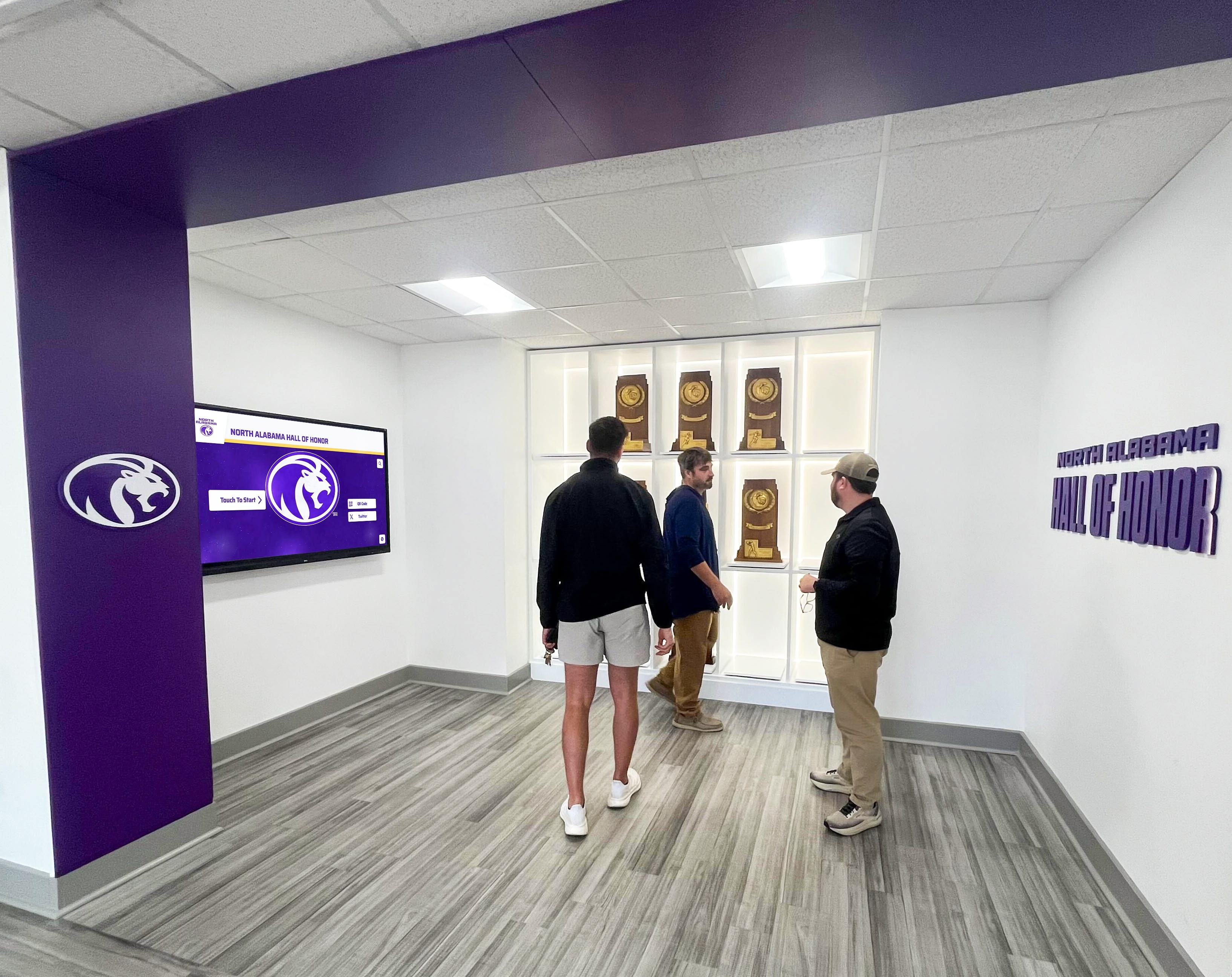
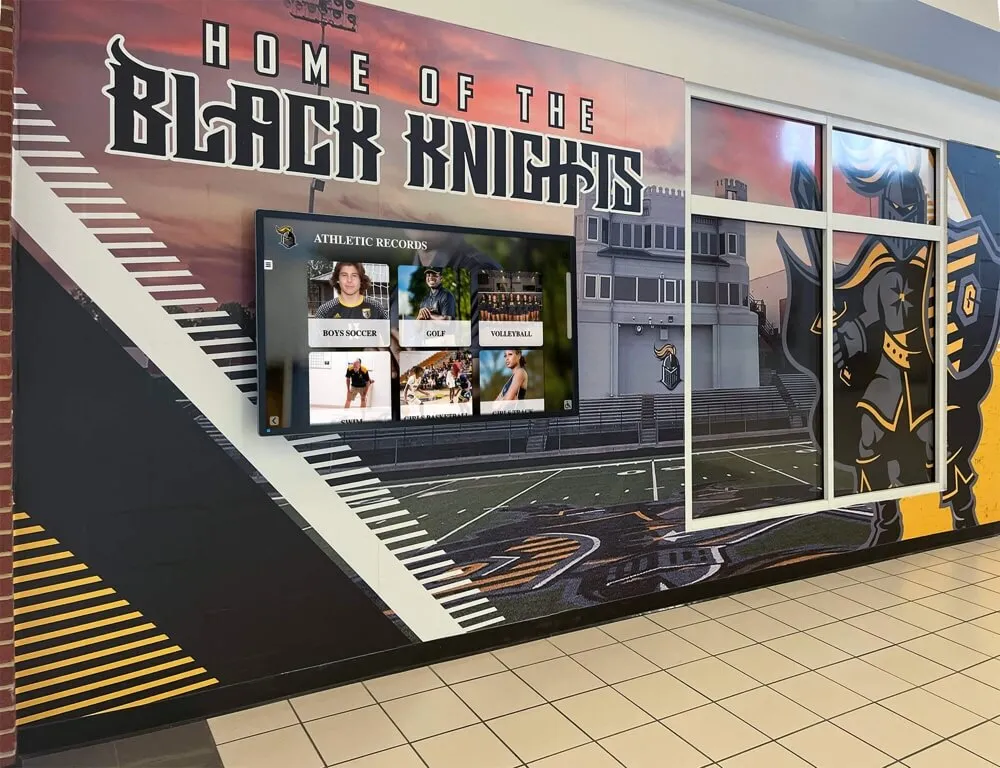
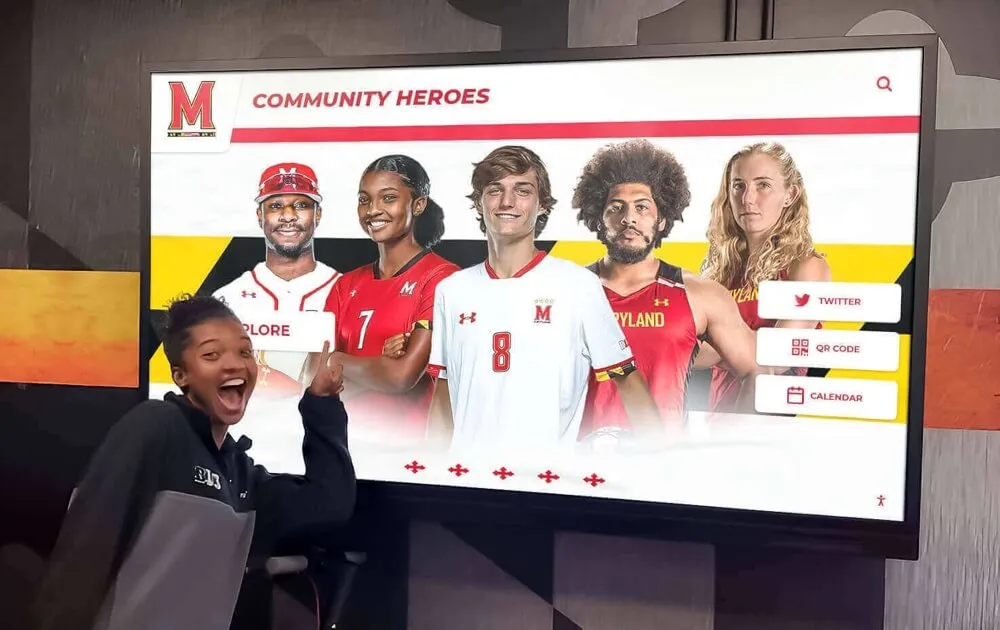
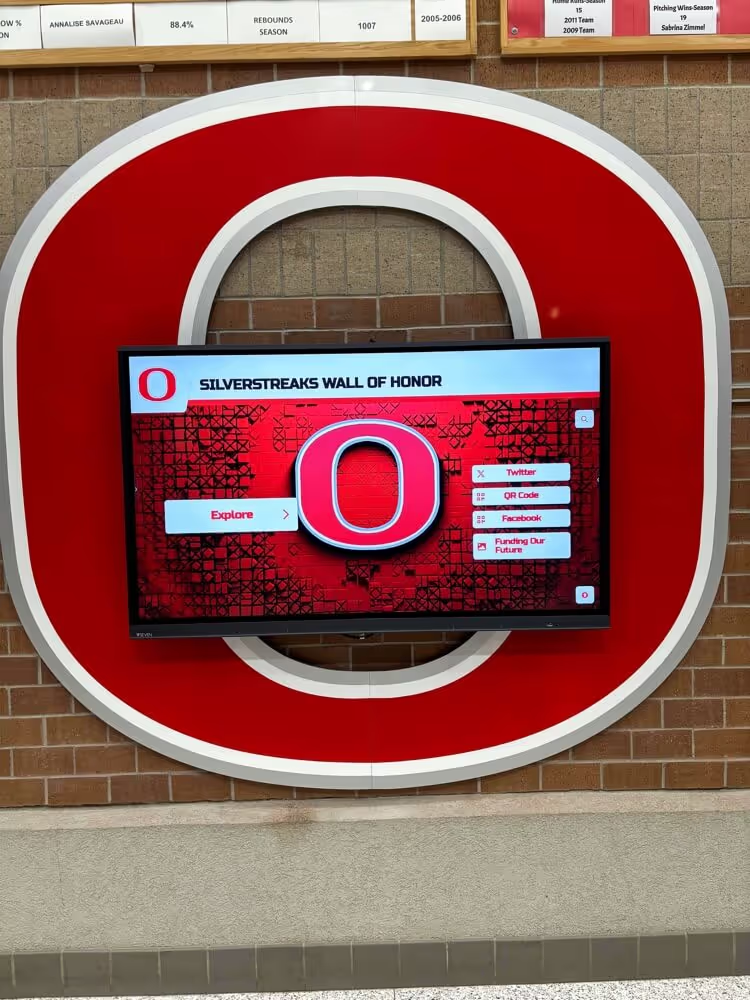
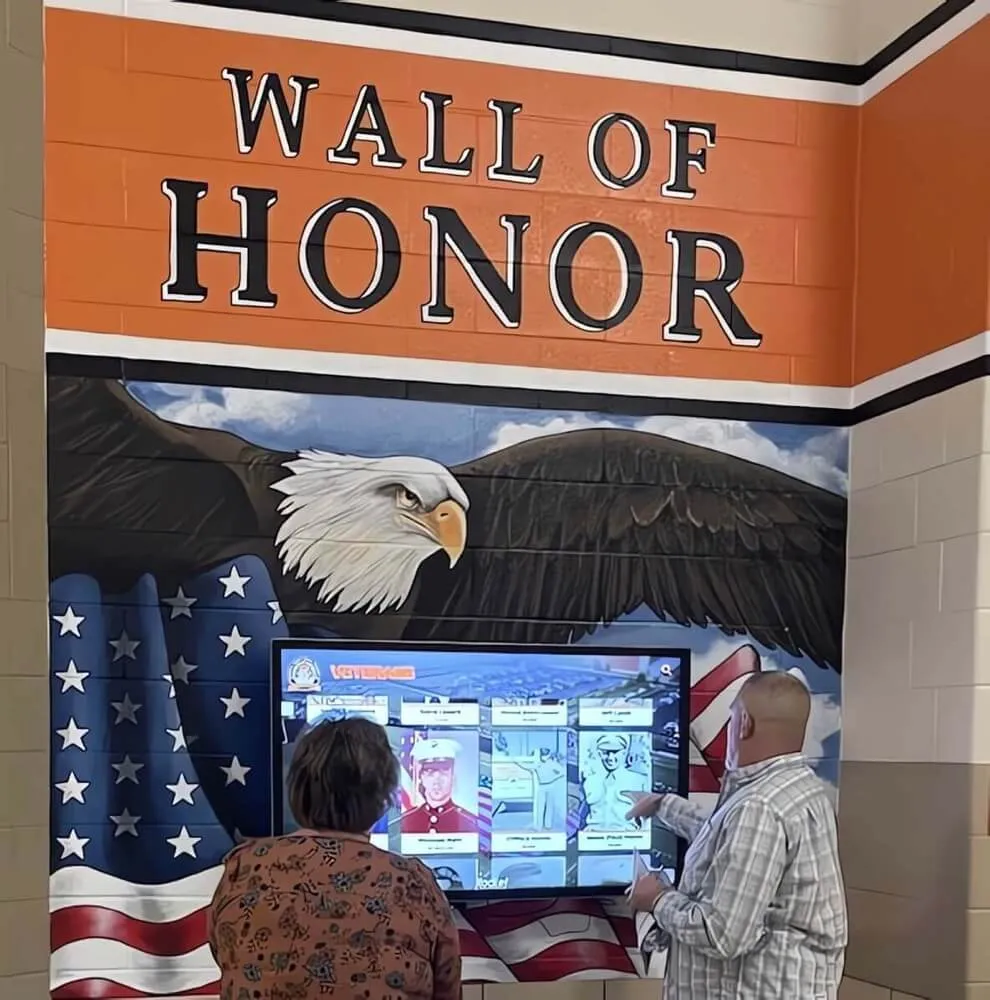
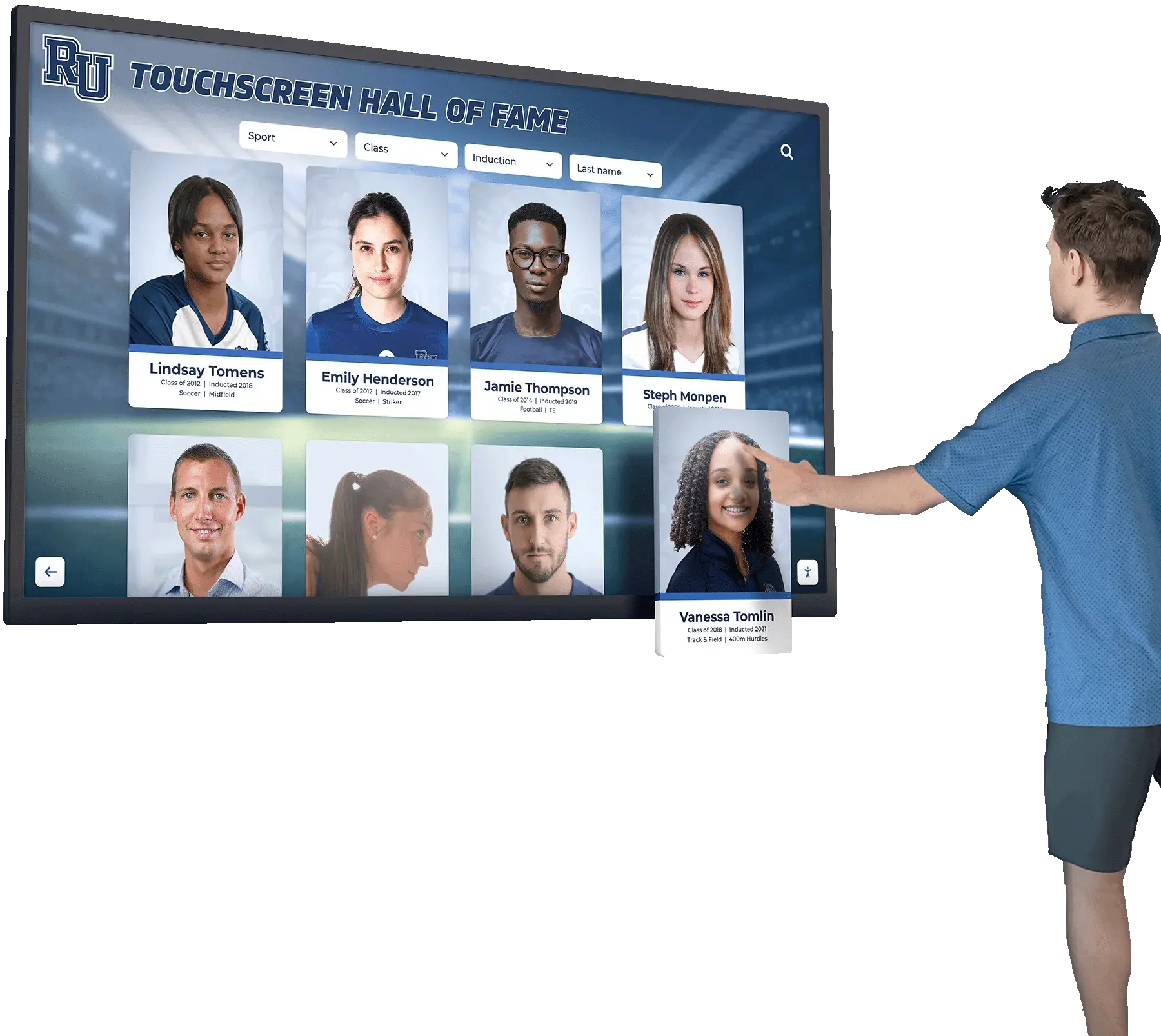
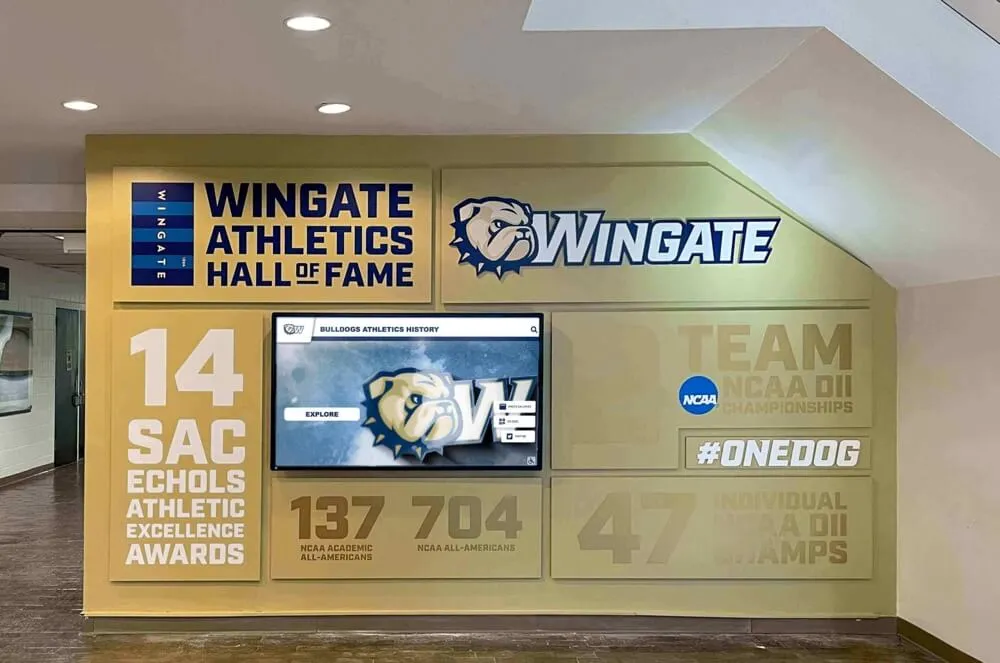
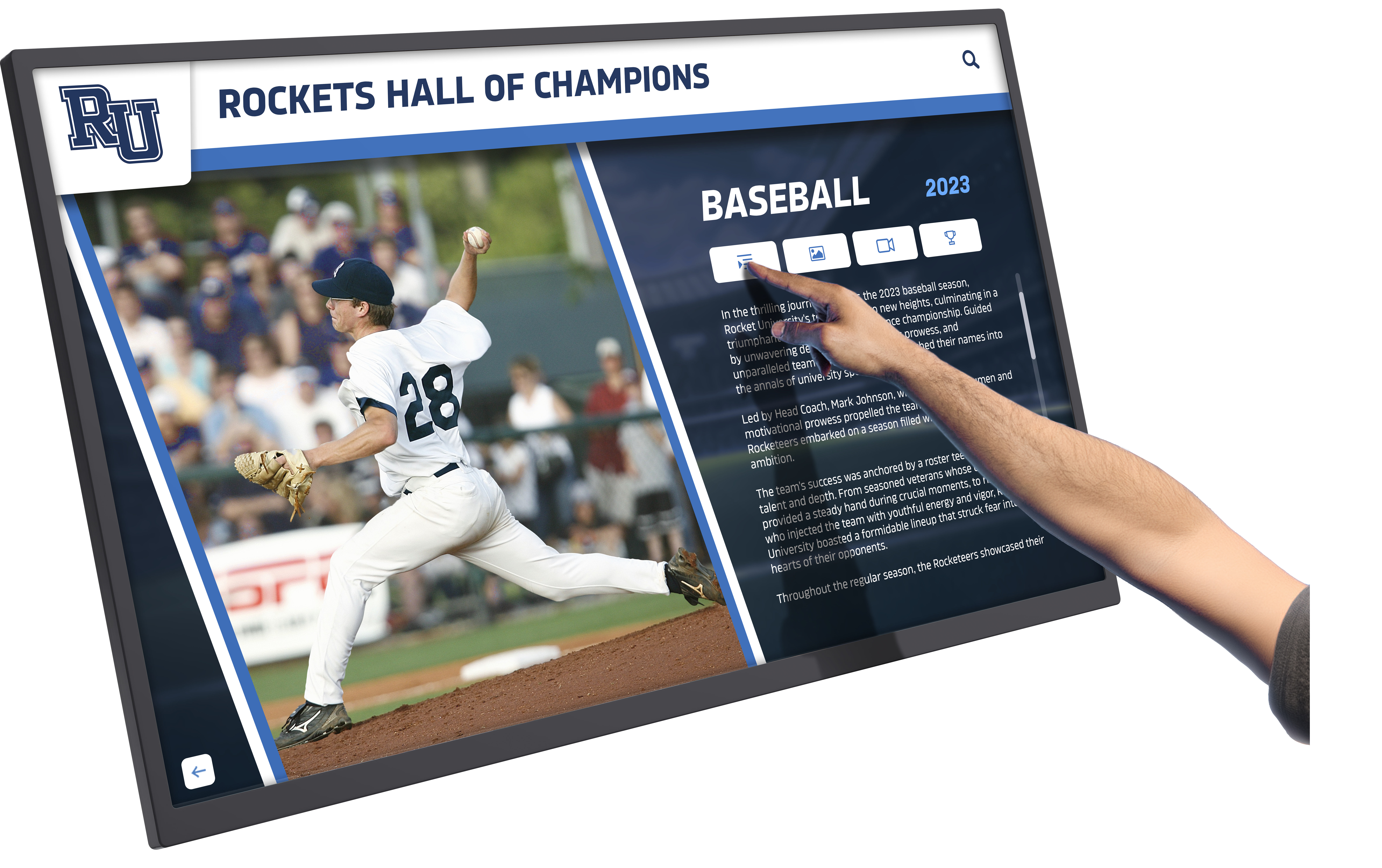
Modern sports facilities integrate interactive recognition celebrating championship heritage and competitive excellence
Interactive Recognition Technology for Racing Venues
Modern touchscreen technology enables recognition experiences appropriate for world-class thoroughbred facilities while creating engaging visitor interactions that celebrate racing excellence.
Digital Display Advantages for Racing Recognition
Interactive recognition systems provide specific benefits for racing venues where championship history, diverse visitor demographics, and educational missions create unique opportunities.
Seasonal Content Flexibility: Saratoga operates on a seasonal meet schedule, with the historic racing season running for 40 days each summer. Interactive displays enable easy content rotation featuring current-season highlights during active racing, historical retrospectives during the offseason, anniversary commemorations of significant races, and special exhibitions tied to specific events or celebrations. This flexibility ensures recognition remains relevant year-round while adapting to seasonal operational patterns.
Integration with Contemporary Racing: Modern racing venues can connect historical recognition with current competition through displaying updated statistics as current horses approach historical records, highlighting when horses competing today connect to legendary bloodlines, featuring comparative analysis between current performers and historical champions, and creating anticipation for whether contemporary horses will achieve legendary status through sustained excellence.
Educational Programming Support: Racing venues often host school groups, youth programs, and community educational initiatives. Interactive displays can provide age-appropriate content interfaces with simplified explanations for younger visitors, educational modules teaching racing fundamentals (how races are conducted, what makes thoroughbreds unique, racing terminology), inspirational stories emphasizing sportsmanship and dedication, and curriculum-aligned content connecting racing to mathematics, biology, and history subjects.
International Visitor Accessibility: Major racing venues like Saratoga attract international visitors with diverse language backgrounds. Interactive displays can provide content in multiple languages including Spanish, French, Japanese, and other languages spoken by significant visitor segments, ensuring racing history remains accessible regardless of primary language and enhancing visitor experiences for tourists exploring American racing traditions.
Solutions like Rocket Alumni Solutions provide purpose-built recognition platforms specifically designed for sports venues, combining appropriate hardware recommendations with software created for honoring athletic achievement rather than generic digital signage adapted for recognition purposes.
Implementation Considerations for Racing Facilities
Installing interactive recognition at major racing venues requires addressing operational realities including seasonal crowds, year-round access, and integration with existing facilities.
High-Traffic Durability: Saratoga welcomes hundreds of thousands of visitors during its summer racing meet, creating intense seasonal usage. Recognition displays require commercial-grade touchscreens rated for continuous operation during meet season, high-brightness screens remaining visible despite outdoor ambient light in covered areas, tempered glass protection withstanding heavy use, secure mounting preventing tampering or vandalism, and weather-resistant construction for semi-outdoor locations.
Strategic Placement Throughout the Facility: Multiple display locations maximize recognition visibility and access including grandstand concourse areas where race attendees gather, clubhouse and hospitality spaces serving premium guests, museum or heritage center locations when available, paddock areas where fans view horses before races, and main entrance plazas introducing visitors to Saratoga heritage upon arrival.
Network Infrastructure and Content Management: Cloud-based content management requires reliable connectivity enabling remote updates from anywhere, adequate bandwidth supporting video content streaming, secure networks protecting any visitor data collected, and redundant systems ensuring displays remain operational during critical racing days even if connectivity temporarily fails.
Integration with Existing Recognition: Saratoga likely features existing physical recognition including trophy displays and traditional plaques. Interactive technology should complement rather than replace these traditional elements, creating hybrid approaches where physical displays provide tangible presence while interactive systems offer depth, context, and multimedia enhancement.
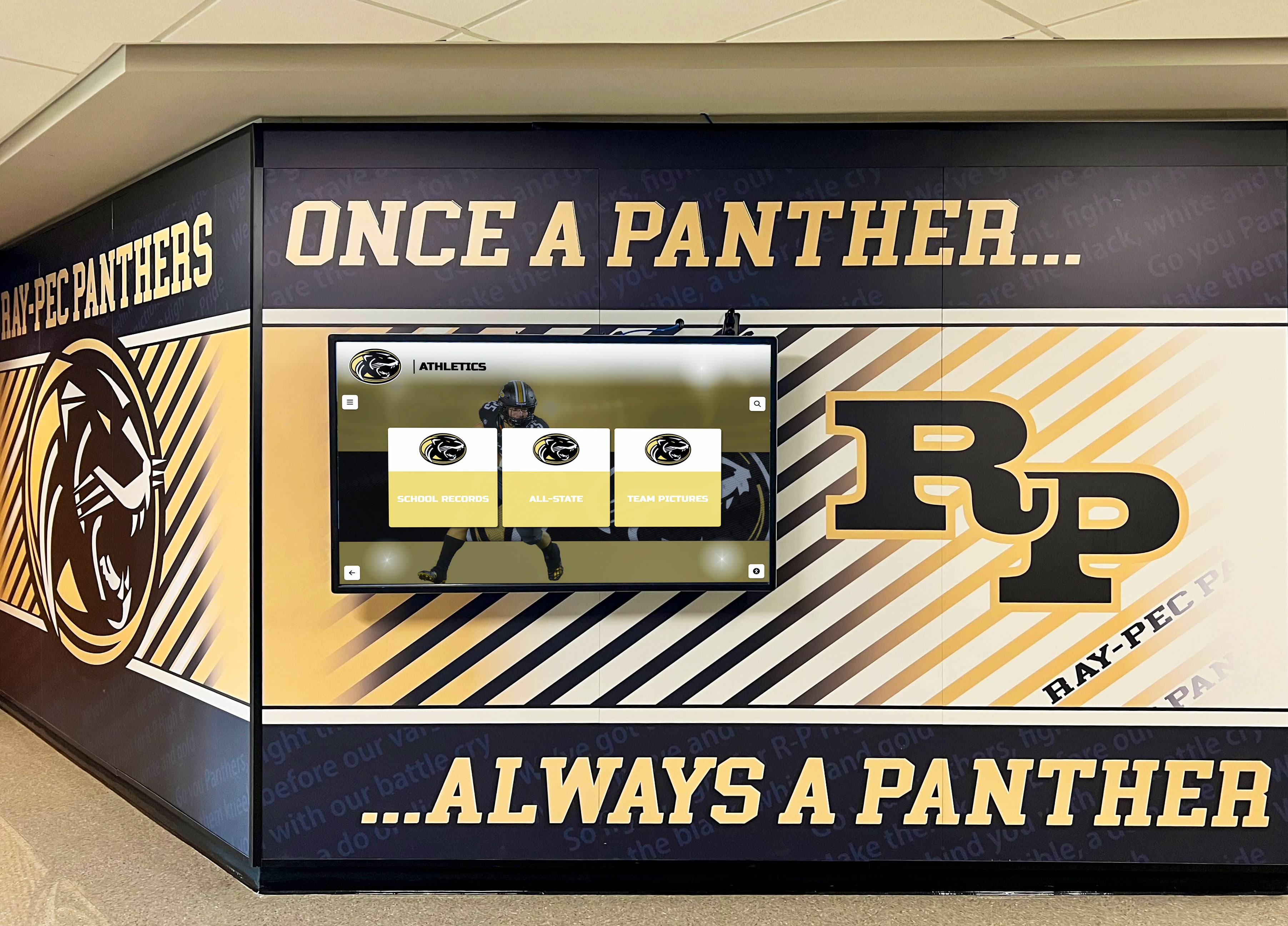
Athletic facilities implement professional-grade recognition technology celebrating sports excellence and inspiring continued achievement
Content Development for Racing Recognition Excellence
Creating engaging racing recognition requires systematic content development that honors championship achievement while telling compelling stories connecting visitors emotionally to thoroughbred history.
Historical Research and Content Gathering
Comprehensive racing recognition begins with thorough historical research assembling complete and accurate information.
Archival Research: Racing venues typically maintain extensive archives including historical race programs, official race results and charts, racing media coverage spanning decades, photographic archives documenting champions, and breeding records for horses connected to the track. Systematic digitization and organization of these materials creates the foundation for comprehensive interactive recognition.
Statistical Compilation: Racing generates detailed statistical records that enhance recognition when compiled systematically including complete race results for all historic meets, comparative time analysis showing record progression, earnings histories adjusted for inflation, jockey and trainer statistical leaders, and breeding performance data connecting racing excellence across generations.
Video and Film Digitization: Historic race footage represents invaluable recognition content when properly preserved and digitized. Many iconic races exist on film or video requiring professional digitization, enhancement to improve visual quality, proper cataloging and metadata application, rights clearance ensuring legal usage permissions, and editing creating engaging highlight packages from longer footage.
Oral History and Contemporary Accounts: When possible, interviews with jockeys, trainers, and racing figures who participated in or witnessed historic moments add personal dimension to recognition including recording memories before they are lost, preserving first-hand perspectives on significant races, capturing stories not documented in official records, and adding human context to statistical achievements.
Profile Structure and Presentation Standards
Consistent profile structures ensure recognition quality while enabling efficient content development across numerous horses, jockeys, and trainers.
Essential Information Components: Effective profiles include biographical basics (birthdate/place for humans, breeding information for horses), complete Saratoga race results and significant victories, career statistics and records, achievement context showing historical significance, contemporary descriptions of racing style or training approach, and post-racing information when relevant and available.
Visual Content Excellence: High-quality images significantly enhance recognition presentation including action photography showing horses running or jockeys riding, winner’s circle photos capturing championship moments, portrait photography of horses and human figures, historical images showing earlier eras of racing, and when available, breeding farm photos of successful stallions and broodmares after racing careers.
Narrative Writing Quality: Recognition writing should balance factual accuracy with engaging storytelling including clear, accessible language avoiding excessive technical jargon, compelling descriptions helping casual fans understand excellence, specific anecdotes and details creating memorable narratives, proper context explaining significance within racing history, and appropriate tone respecting achievement while remaining engaging rather than dry.
Organizations can explore strategies for comprehensive athletic recognition that showcase multimedia approaches bringing champion profiles to life in ways applicable to thoroughbred racing contexts.
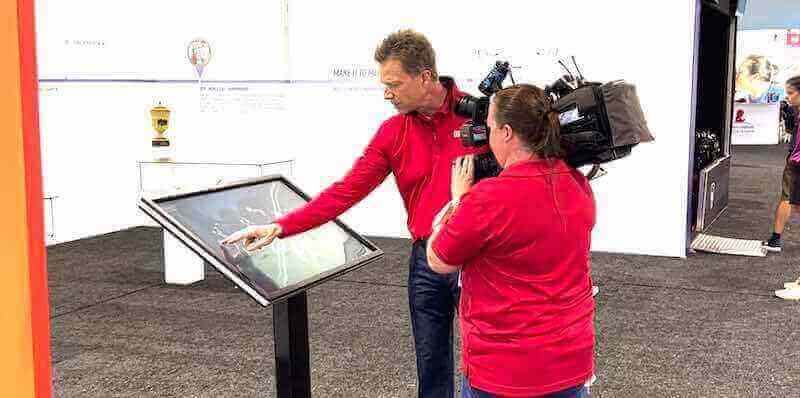
Professional recognition installations create engaging experiences that attract media attention and visitor interest
Fan Engagement Through Interactive Racing Recognition
Effective recognition technology doesn’t simply present information—it creates engaging experiences that keep visitors exploring, learning, and connecting personally with racing history.
Search and Discovery Features
Interactive displays should enable both targeted searching for specific horses or races and exploratory browsing for casual racing history discovery.
Powerful Search Functionality: Visitors should be able to search by horse name finding all related race results, filter by decade or era exploring specific time periods, search by jockey or trainer discovering career achievements, access specific race years and results, browse by race type (stakes races, maiden races, claiming races) finding specialized competitions, and search by ownership or breeding operation when significant.
Intuitive Navigation: Well-designed interfaces feature clear categorization by logical groupings (horses, jockeys, trainers, races, decades), visual browsing through photo galleries and video libraries, timeline presentations showing chronological racing evolution, interactive track maps showing where historic moments occurred, and featured content highlighting current season connections, anniversary commemorations, or seasonal relevance.
Related Content Connections: Smart linking creates discovery pathways where viewing a horse’s profile suggests related content including jockeys who regularly rode that horse, trainers who conditioned the horse, notable competitors from the same era, offspring when the horse became a successful breeding animal, and subsequent champions who carried similar breeding or racing characteristics.
Personalization and Interactive Elements
Creating personal connections between visitors and racing history significantly enhances engagement and satisfaction.
Share and Save Features: Enable visitors to save favorite horse and jockey profiles creating personalized collections, share content to social media extending recognition reach beyond the venue, email content to themselves for later exploration, generate printed summaries of content explored as keepsakes, and create custom comparisons analyzing multiple champions.
Interactive Comparisons: Engage visitors through statistical comparison tools enabling analysis across eras, racing style quizzes identifying which historical champions match visitor preferences, prediction features for current races based on historical patterns, and breeding analysis tools exploring bloodline connections across generations.
Gamification Elements: Interactive recognition can incorporate game-like elements that encourage exploration including achievement badges for viewing certain numbers of profiles, trivia challenges testing racing knowledge, scavenger hunts encouraging comprehensive facility exploration, and leaderboards showing most-viewed content creating social validation for racing knowledge.
Educational Programming Integration
Recognition technology serves educational purposes beyond entertainment, particularly for young visitors learning about thoroughbred racing and sports history.
Youth Racing Education: Create age-appropriate content interfaces with simplified language for younger readers, interactive modules teaching basic racing concepts, inspirational stories emphasizing horsemanship and sportsmanship, and achievement tracking gamifying exploration to encourage comprehensive viewing.
School and Youth Group Programming: Develop specific features supporting educational visits including curriculum-aligned content connecting racing to science (equine biology, physics of speed), mathematics (statistics, handicapping basics, odds calculation), and history (racing’s role in American culture), guided exploration paths designed for specific age groups, group activity suggestions for teachers and program leaders, and educator resources supporting classroom follow-up after visits.
Venues can explore approaches to engaging youth through digital recognition that create memorable learning experiences applicable to racing education contexts.
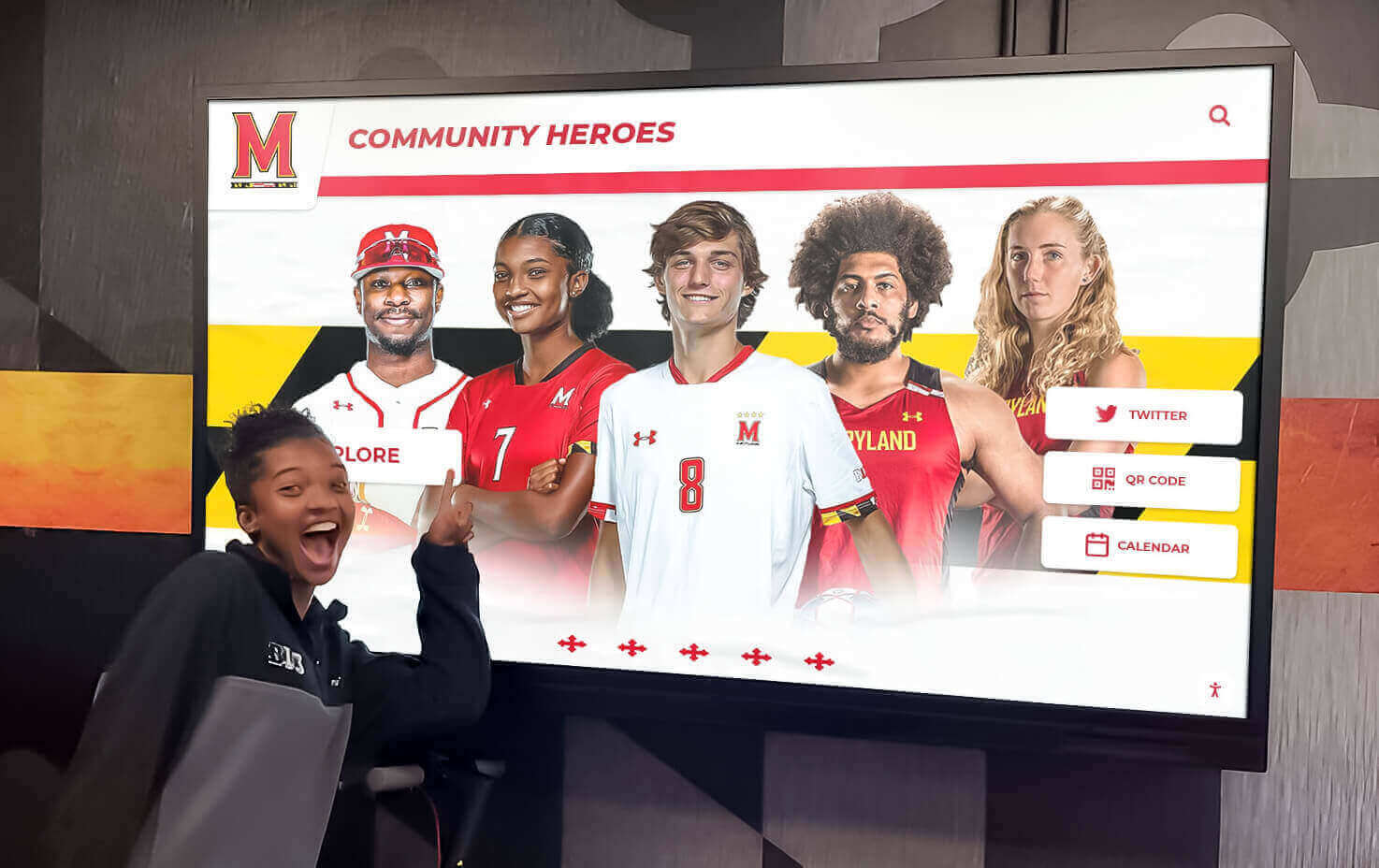
Interactive recognition creates engaging experiences that inspire young visitors and future participants
Beyond Saratoga: Racing Recognition for All Levels
While this guide focuses on Saratoga Race Course as a premier example, interactive recognition technology serves racing organizations at all levels honoring achievement and building racing culture.
Regional Racing Facilities
Numerous regional thoroughbred tracks throughout North America host competitive racing and develop local racing traditions deserving appropriate recognition.
Track-Specific Heritage: Regional tracks can document complete racing histories at their facilities, celebrate local horses that achieved regional or national success, honor jockeys and trainers who competed primarily at regional circuits, recognize owners and breeders from local areas, and preserve racing traditions specific to their geographic regions and racing communities.
Community Connection: Racing recognition at regional facilities strengthens community bonds through visible celebration of local breeding operations and farms, recognition of family racing traditions spanning generations, documentation of economic impact racing provides to local communities, and celebration of local racing culture as distinctive regional heritage.
Development Path Documentation: Many horses competing at premier venues like Saratoga began careers at regional tracks. Recognition can document these development pathways showing how regional racing serves as a training ground for future champions, honoring regional tracks’ roles in developing talent, celebrating local connections to horses that achieved national fame, and inspiring hope that horses currently racing regionally might become tomorrow’s champions.
Harness Racing Recognition
While Saratoga Race Course focuses on thoroughbred racing, harness racing (standardbred horses competing in trotters and pacers races) represents another significant racing discipline with its own rich history deserving comprehensive recognition.
Standardbred Champion Recognition: Harness racing venues can implement similar interactive recognition celebrating legendary standardbred horses, champion drivers (harness racing’s equivalent of jockeys), successful trainers and breeding operations, and historic race results including the Hambletonian and other major stakes competitions.
Technical Distinctions: Recognition content can educate visitors about harness racing’s unique characteristics including differences between trotters and pacers, sulky racing equipment and technique, qualifying standards and time trials, and breeding specialization producing horses suited to harness competition.
International Racing Connections
American racing, and Saratoga specifically, connects to international thoroughbred competition through horses competing across continents, breeding relationships spanning multiple countries, and jockey and trainer mobility across racing jurisdictions.
Global Racing Context: Recognition can document horses that competed both at Saratoga and internationally, international breeding influences on American racing bloodlines, American horses that succeeded in European or Asian racing, foreign-bred horses that achieved success at Saratoga, and jockeys who built careers across multiple countries.
Organizations can explore professional athlete recognition approaches applicable to international contexts where careers span multiple countries and competitive environments.
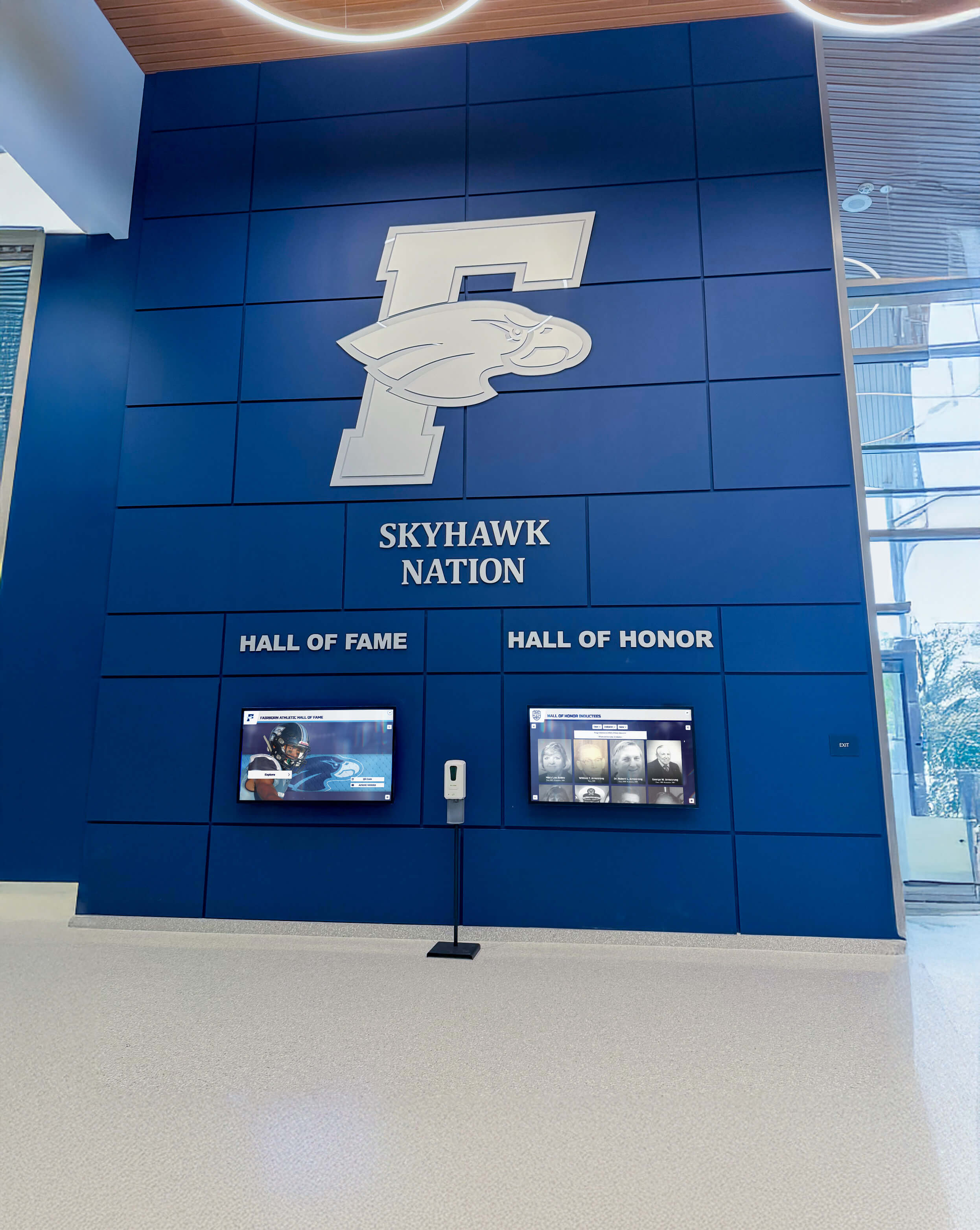
Organizations at all levels implement recognition technology celebrating achievement and building competitive cultures
Implementation Roadmap: Creating Racing Recognition Experiences
Organizations ready to implement interactive racing recognition should follow systematic approaches ensuring successful outcomes that honor achievement appropriately while creating sustainable operations.
Phase 1: Planning and Requirements (Weeks 1-6)
Stakeholder Identification: Determine who should be involved including organizational leadership providing strategic direction and approval, marketing and communications teams ensuring brand alignment, facilities management addressing installation logistics, historical content specialists understanding racing archives and records, museum or heritage center staff if applicable, and technology staff assessing infrastructure requirements.
Scope Definition: Clarify recognition objectives including what time periods will be covered (recent decades versus complete track history), what content depth is desired (basic profiles versus comprehensive multimedia documentation), what locations will feature displays, what interactive features are priorities (search, video, comparison tools), and what budget constraints exist for implementation and ongoing operations.
Vendor Selection: Research recognition platform providers evaluating purpose-built solutions designed for sports recognition versus generic digital signage, cloud-based versus local hosting requirements and trade-offs, content management capabilities and ease of use for non-technical staff, hardware options and specifications matching environmental needs, and implementation support services ensuring successful launch.
Phase 2: Content Development (Weeks 4-16)
Historical Research: Gather racing recognition content systematically through archival research in existing track records and programs, statistical compilation from official racing databases, photo and video digitization from historical media, interviews with racing figures when possible, and third-party research filling information gaps from reputable racing history sources.
Content Creation: Develop comprehensive profiles following template standards establishing consistent quality including biographical writing synthesizing multiple sources, statistical compilation and verification ensuring accuracy, photo editing and optimization for digital display quality, video editing creating engaging race highlight packages, and metadata application enabling search, filtering, and content organization.
Quality Assurance: Review all content systematically ensuring factual accuracy through verification against multiple authoritative sources, completeness meeting established profile standards, consistency in presentation tone and style, appropriateness for diverse audiences including families, and rights clearance for photos and video ensuring legal usage permissions.
Phase 3: Technology Implementation (Weeks 14-20)
Hardware Procurement: Order displays and equipment based on planning specifications including commercial-grade touchscreen displays of appropriate sizes (typically 43" to 65" for racing venues), mounting solutions (wall-mounted, kiosk installations, or custom enclosures), media player computers if needed for content delivery, network equipment ensuring reliable connectivity, and accessories including protective enclosures for semi-outdoor locations.
Installation and Setup: Deploy technology through professional services including physical mounting with appropriate structural anchoring, electrical connection providing reliable power, network configuration enabling secure internet access, software installation and configuration, and integration testing ensuring all systems function properly together.
Content Loading: Populate recognition platform with developed content through systematic upload processes, logical organization and categorization by horses/jockeys/trainers/races, relationship mapping between connected content items, featured content configuration highlighting priority recognition, and final quality review before public launch.
Phase 4: Launch and Sustainment (Week 20+)
Soft Launch: Test with limited audiences before full public opening including internal stakeholder review from track management and staff, focus group feedback from representative racing fans, technical troubleshooting addressing any issues discovered, content refinement based on initial feedback, and staff training completion for display support and visitor assistance.
Public Launch: Introduce recognition broadly through ceremonial unveiling at major race days or special events, media coverage generating awareness among racing fans and general public, promotional campaigns across organizational channels and racing media, guided demonstrations showing features to visitors, and feedback collection enabling continuous improvement.
Ongoing Operations: Sustain recognition quality through regular content updates adding recent racing seasons and new champions, seasonal content rotation featuring relevant themes and anniversary commemorations, technical maintenance addressing hardware and software issues proactively, analytics review revealing usage patterns and popular content, and continuous improvement implementing enhancements based on experience and visitor feedback.
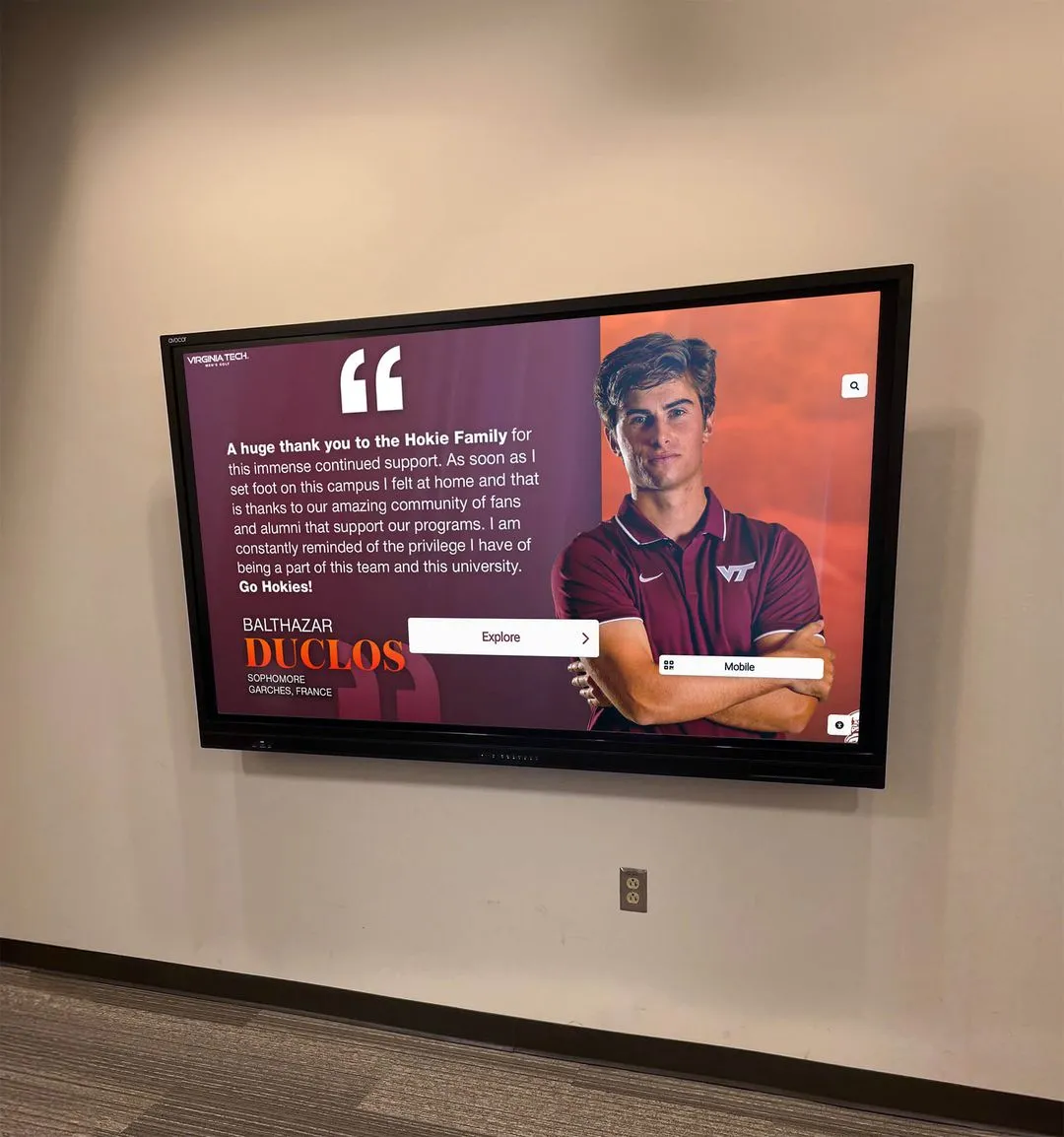
Well-designed recognition installations become signature features celebrating excellence and creating memorable visitor experiences
Measuring Recognition Success and Impact
Comprehensive evaluation demonstrates recognition value while identifying improvement opportunities that enhance visitor experiences and organizational benefits.
Engagement Metrics and Analytics
Digital recognition platforms provide detailed analytics revealing how visitors interact with content including unique visitor counts establishing overall reach, average session duration indicating engagement depth (benchmark: 5-8 minutes for meaningful racing history exploration), content views per session showing exploration breadth, return visitor rates demonstrating sustained interest over multiple visits or racing seasons, popular content analysis revealing what resonates most with visitors, and search pattern examination showing what visitors actively seek.
These quantitative metrics inform content strategy by identifying popular horses or races deserving enhanced coverage, underutilized content requiring promotion or improvement, optimal session lengths guiding content volume and depth decisions, peak usage times informing maintenance scheduling and content update timing, and features generating engagement versus those requiring redesign or enhancement.
Qualitative Feedback and Satisfaction
Beyond analytics, visitor perspectives provide essential improvement insights including comment collection through digital feedback forms integrated into displays, survey administration to representative visitor samples during racing meets, staff observation of visitor behaviors and reactions at displays, social media monitoring tracking mentions and sentiment about recognition, and stakeholder input from racing industry professionals, historians, and community members.
Qualitative assessment reveals whether recognition appropriately honors racing achievement, content accuracy and completeness meet visitor and expert expectations, interface intuitiveness serves diverse users effectively from casual fans to racing experts, technical performance maintains reliability during high-traffic periods, and overall satisfaction justifies continued investment and enhancement.
Organizational Impact Beyond Visitor Experience
Recognition ultimately serves organizational objectives beyond immediate engagement including brand enhancement through association with racing excellence and heritage, educational mission fulfillment supporting racing education and youth engagement, industry relationships demonstrating commitment to racing history and tradition, community engagement strengthening connections with local and regional racing communities, and cultural contribution preserving racing history for future generations before aging media and memories are lost.
Organizations should track relevant metrics demonstrating value beyond visitor engagement numbers, justifying continued recognition investment to organizational leadership, and identifying opportunities to enhance organizational impact through strategic recognition decisions and program evolution.
Learn more about comprehensive sports venue recognition approaches that demonstrate measurement frameworks applicable to racing contexts.
Conclusion: Honoring Racing Excellence While Inspiring Future Generations
Saratoga Race Course represents more than a historic racing venue—it embodies connections between generations of champion thoroughbreds, legendary jockeys and trainers, dramatic competitions that defined eras, and the evolution of American racing into the sophisticated sport celebrated today. Appropriately honoring this 160+ year heritage requires recognition approaches that respect tradition while leveraging modern technology creating engaging experiences impossible through conventional displays alone.
Interactive recognition technology like Rocket Alumni Solutions provides powerful platforms enabling racing venues to showcase complete championship histories across decades of competition, celebrate diverse racing excellence through multimedia storytelling, create personalized exploration experiences matching individual interests and knowledge levels, maintain evergreen content currency through easy updates as new champions emerge, and inspire continued racing participation through visible celebration of achievement at all competitive levels.
Whether implementing recognition at premier venues like Saratoga Race Course, regional racing facilities honoring local heritage, specialized racing museums, or community programs introducing new audiences to thoroughbred racing, interactive touchscreen displays provide flexible, scalable solutions serving diverse needs while maintaining consistent quality and engagement excellence.
The champions, races, and moments that made racing legendary deserve recognition matching their significance. Modern technology enables comprehensive celebration doing justice to racing history while creating experiences that connect current visitors emotionally with excellence they might otherwise observe only from a distance. Every legendary performance, every championship achieved, and every breakthrough moment deserves preservation—interactive recognition displays make comprehensive racing celebration achievable, creating lasting tributes that honor the past while inspiring future generations to appreciate thoroughbred racing’s enduring appeal and cultural significance.
Create World-Class Racing Recognition Experiences
Discover how Rocket Alumni Solutions can help your racing venue celebrate championship excellence through comprehensive interactive recognition displays that honor history while inspiring continued achievement.
Explore Recognition SolutionsReady to transform how your racing organization honors achievement? Whether celebrating legendary champions at iconic racing venues, honoring regional racing heritage at community tracks, or recognizing breeding excellence at specialized facilities, interactive recognition technology provides powerful platforms creating experiences worthy of the excellence they celebrate.
Every championship moment deserves preservation. Every champion merits appropriate acknowledgment. Every visitor should experience personal connection with racing history. Interactive recognition displays from providers like Rocket Alumni Solutions make comprehensive racing celebration achievable, creating lasting tributes that inspire generations while honoring those who made racing excellence possible through dedication, skill, and competitive spirit that defined careers and captivated audiences worldwide.
Explore additional recognition strategies through resources about state championship recognition, athletic program digital storytelling, and comprehensive sports recognition approaches that demonstrate best practices applicable across diverse sports contexts and organizational scales.