Walk through any school hallway and you’ll immediately sense the culture within. Some corridors feel sterile and institutional—blank walls, fluorescent lighting, and an atmosphere that treats transition spaces as mere pathways between destinations. Other school hallway environments feel vibrant and inspiring—walls celebrating student achievement, visual elements reinforcing school values, and design choices that transform every square foot into an opportunity for learning, recognition, and community building.
The difference between these experiences isn’t accidental. Thoughtfully designed school hallways serve as extended classrooms where students encounter inspiration during every transition, see their achievements and those of peers celebrated prominently, absorb school values and traditions through environmental messaging, and develop stronger connections to their educational community through visible representation.
This comprehensive guide explores creative school hallway decor ideas that transform underutilized corridor spaces into dynamic learning environments. From recognition displays to interactive elements, color strategies to flexible design systems, discover practical approaches that build school spirit, celebrate diverse achievements, and create hallways where students genuinely want to spend time.
Effective school hallway decor accomplishes multiple objectives simultaneously: it maximizes educational value from transition spaces, creates environments that reinforce learning and positive behavior, celebrates student achievements across all domains, builds school pride and community identity, and provides flexible systems that evolve with changing needs and priorities.

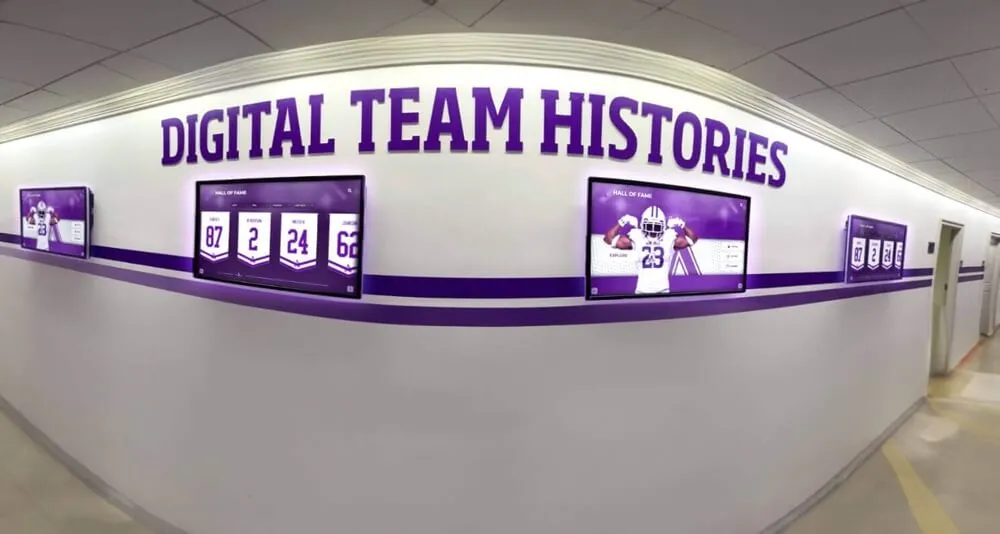
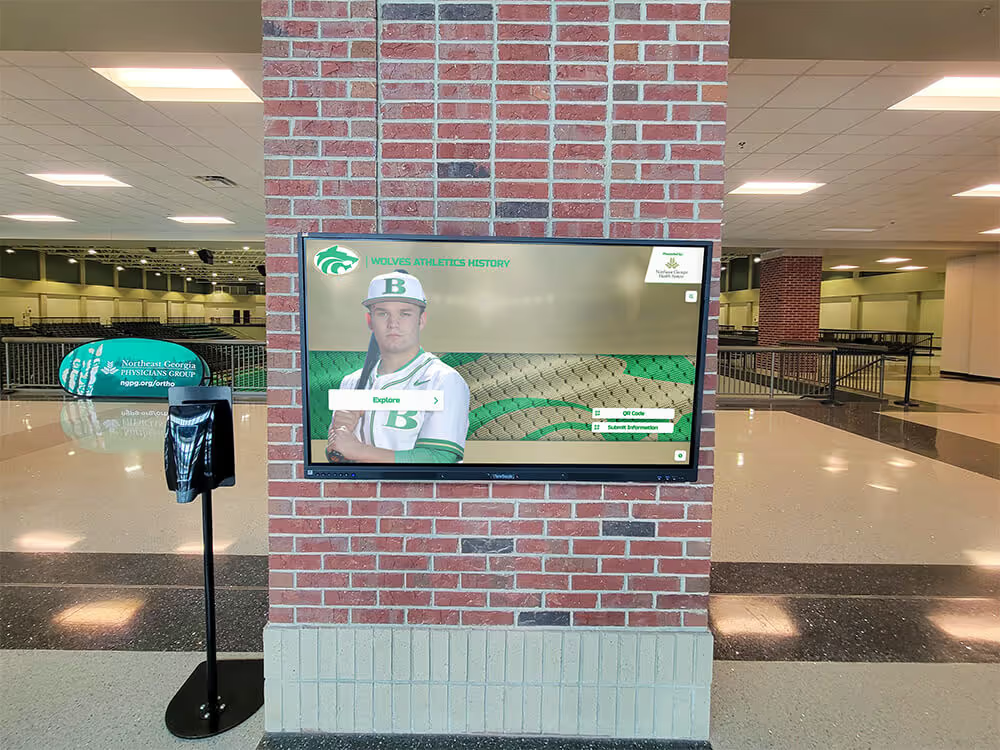
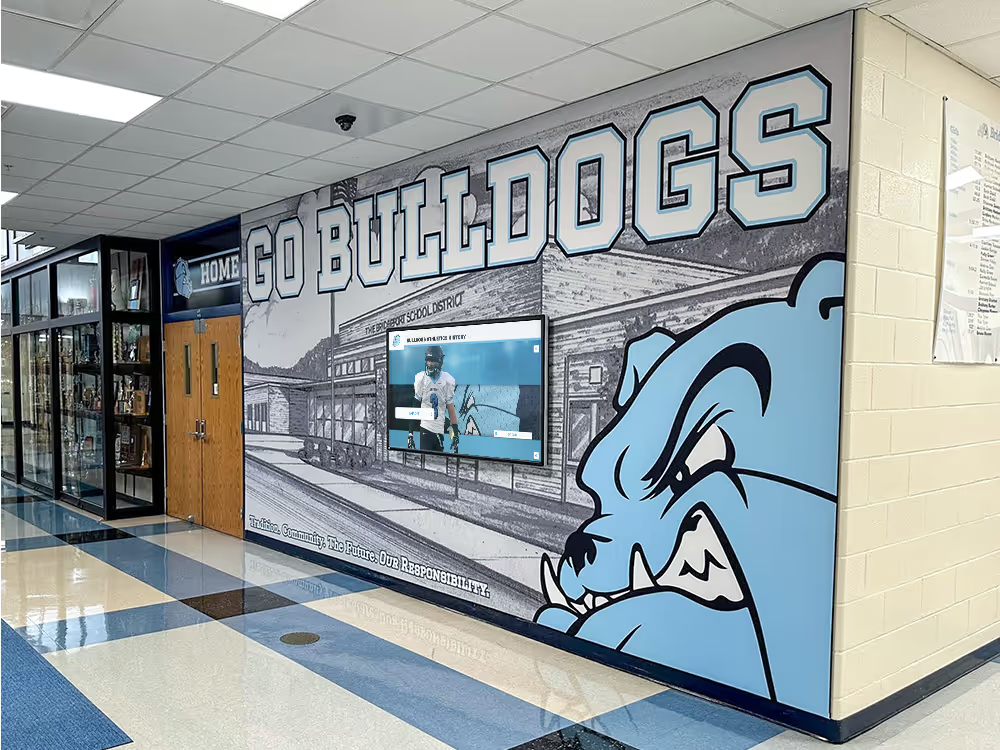
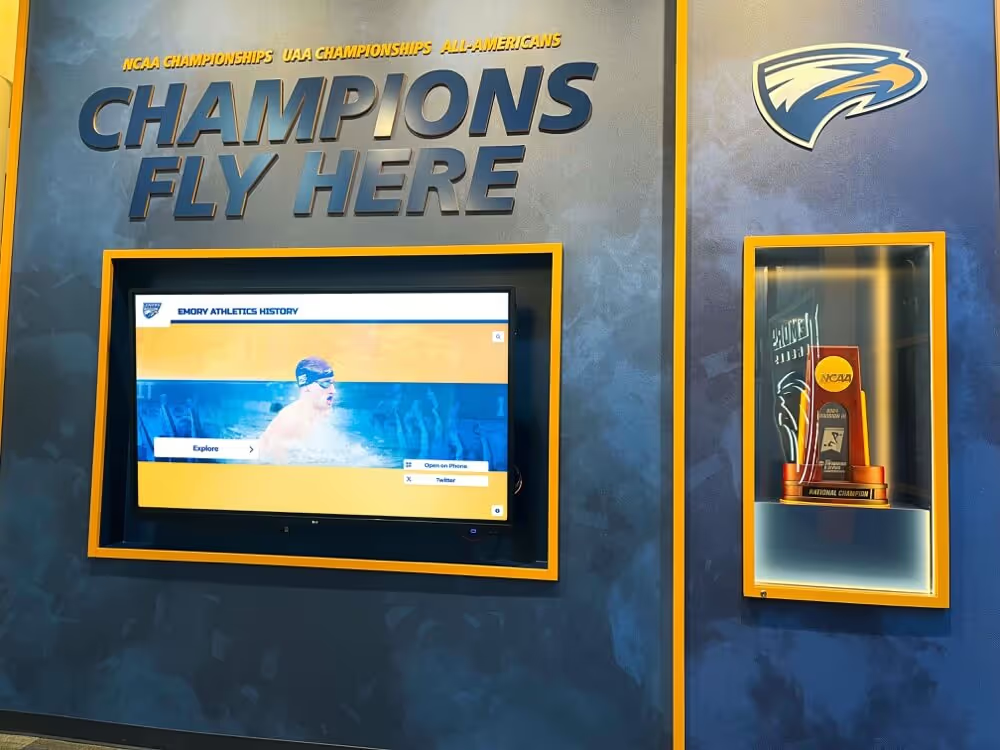
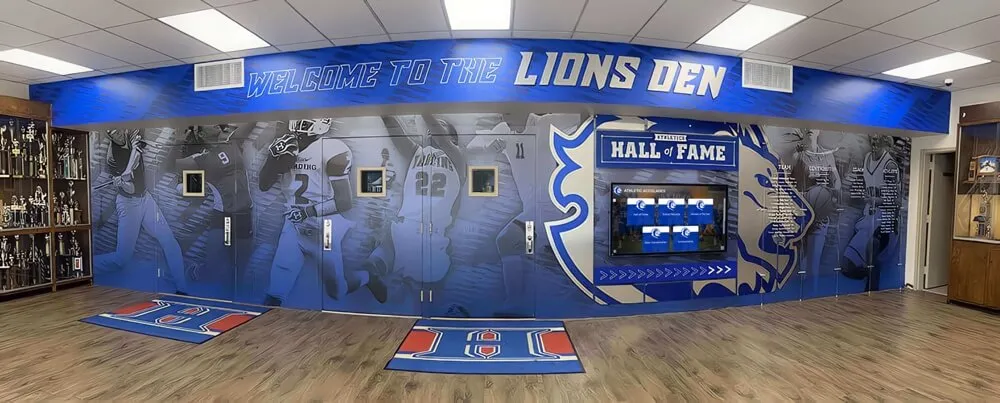
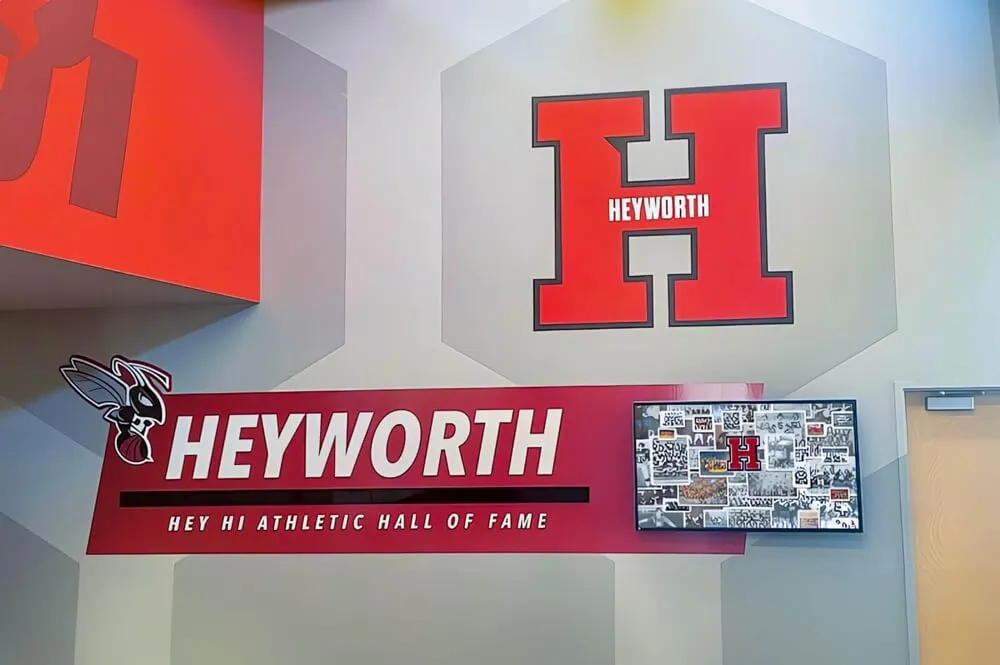
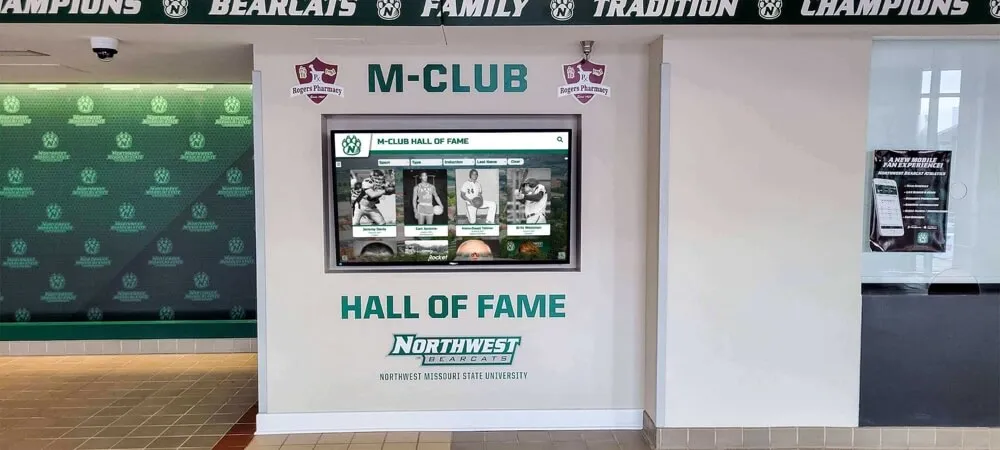
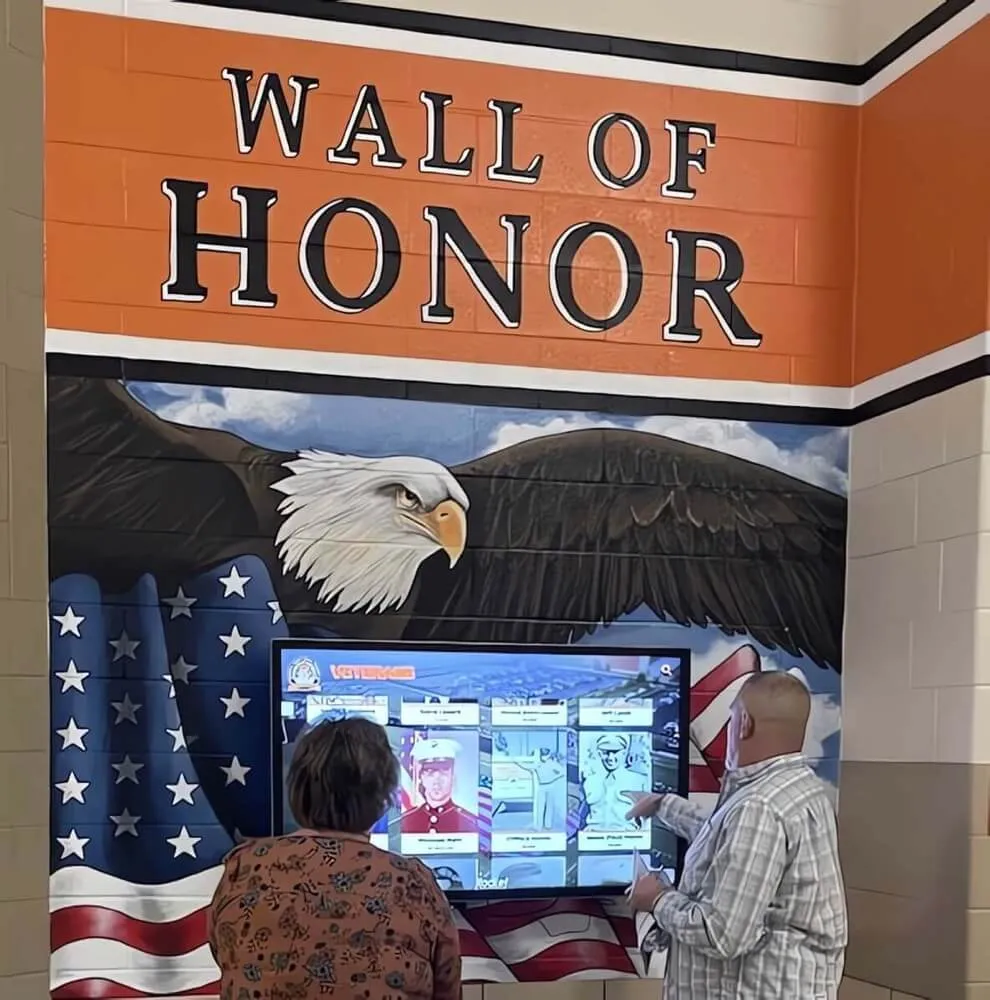
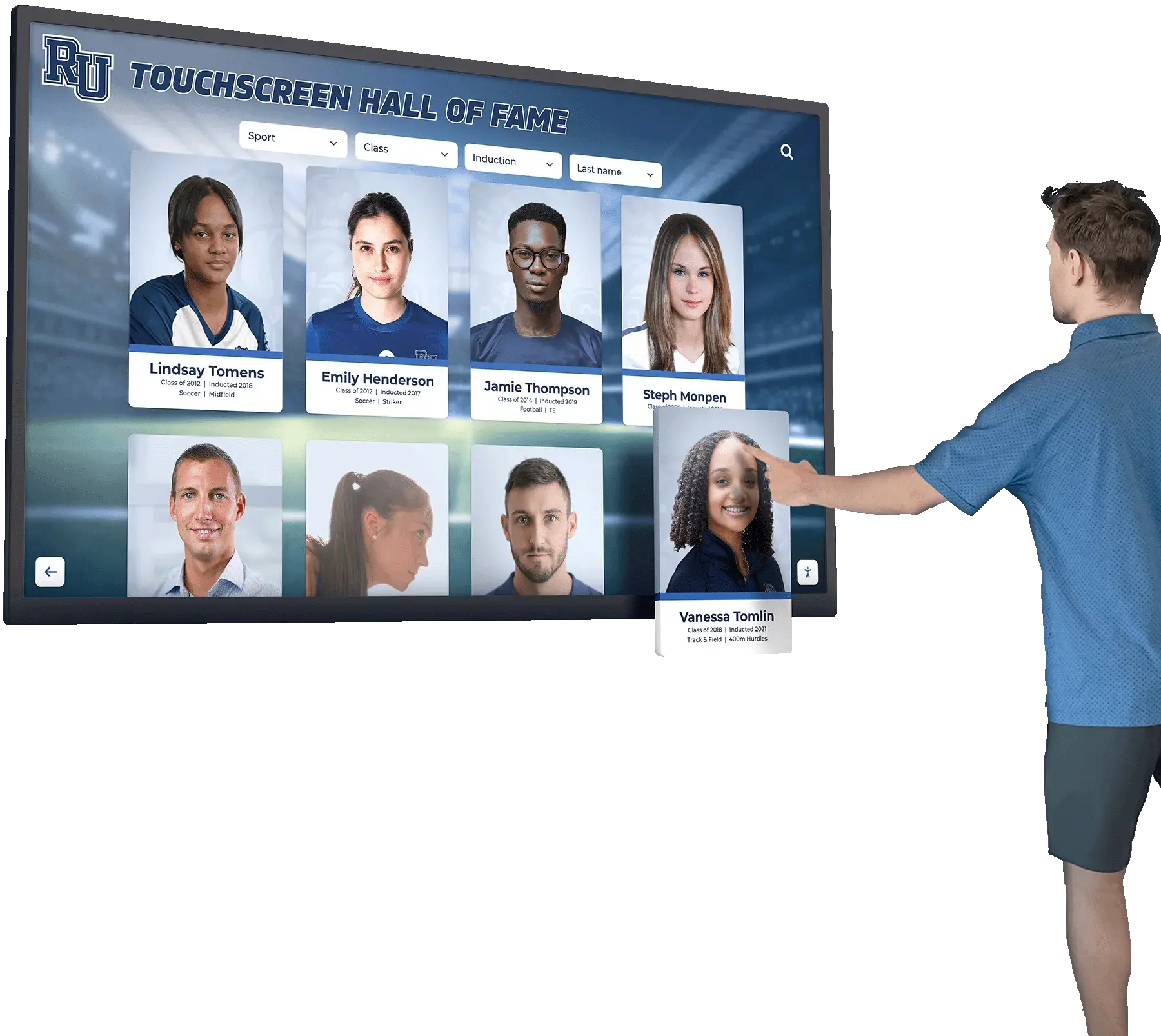
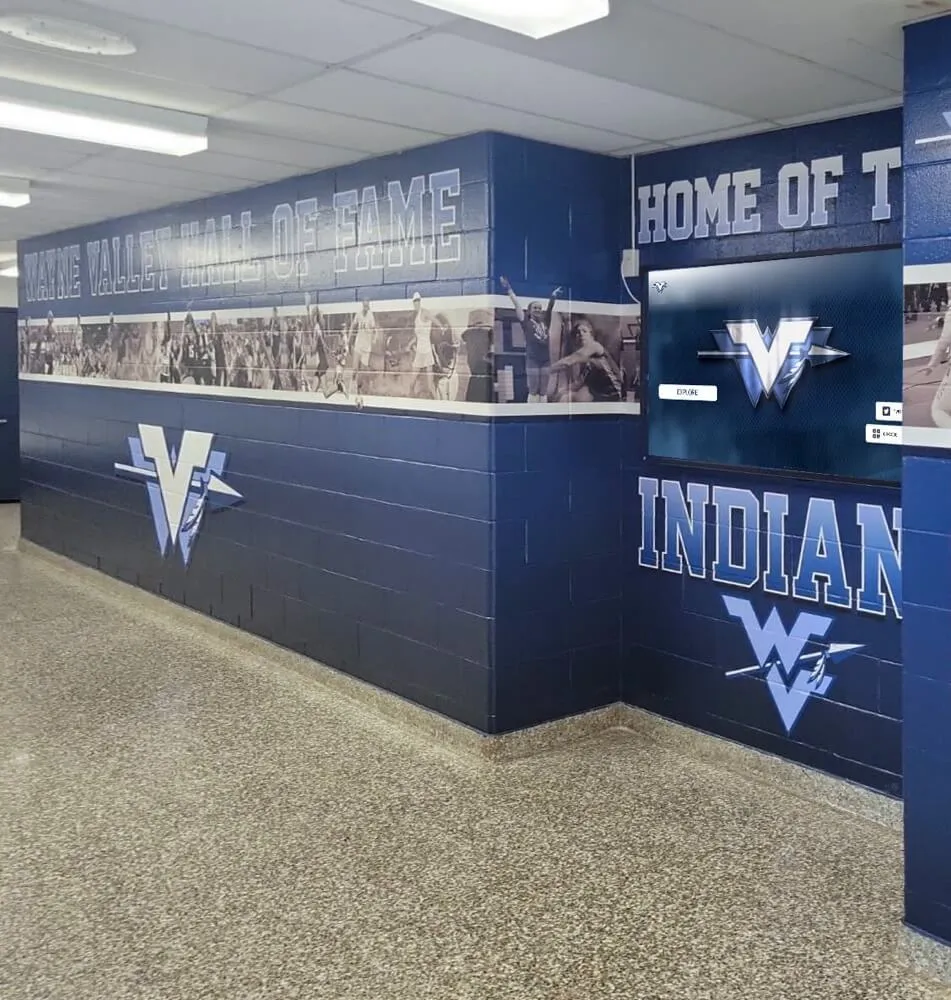
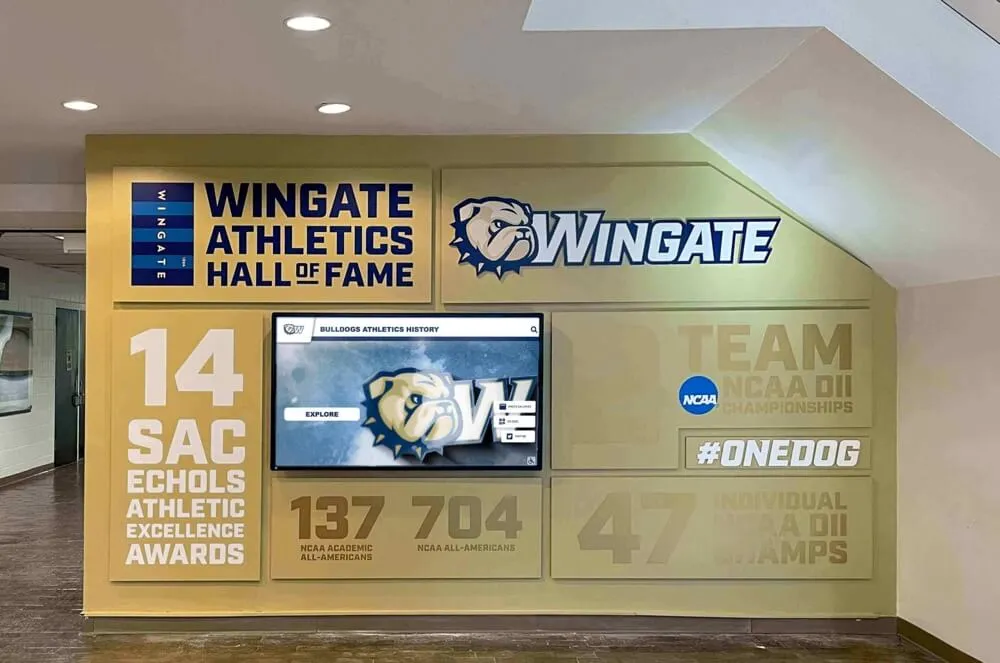
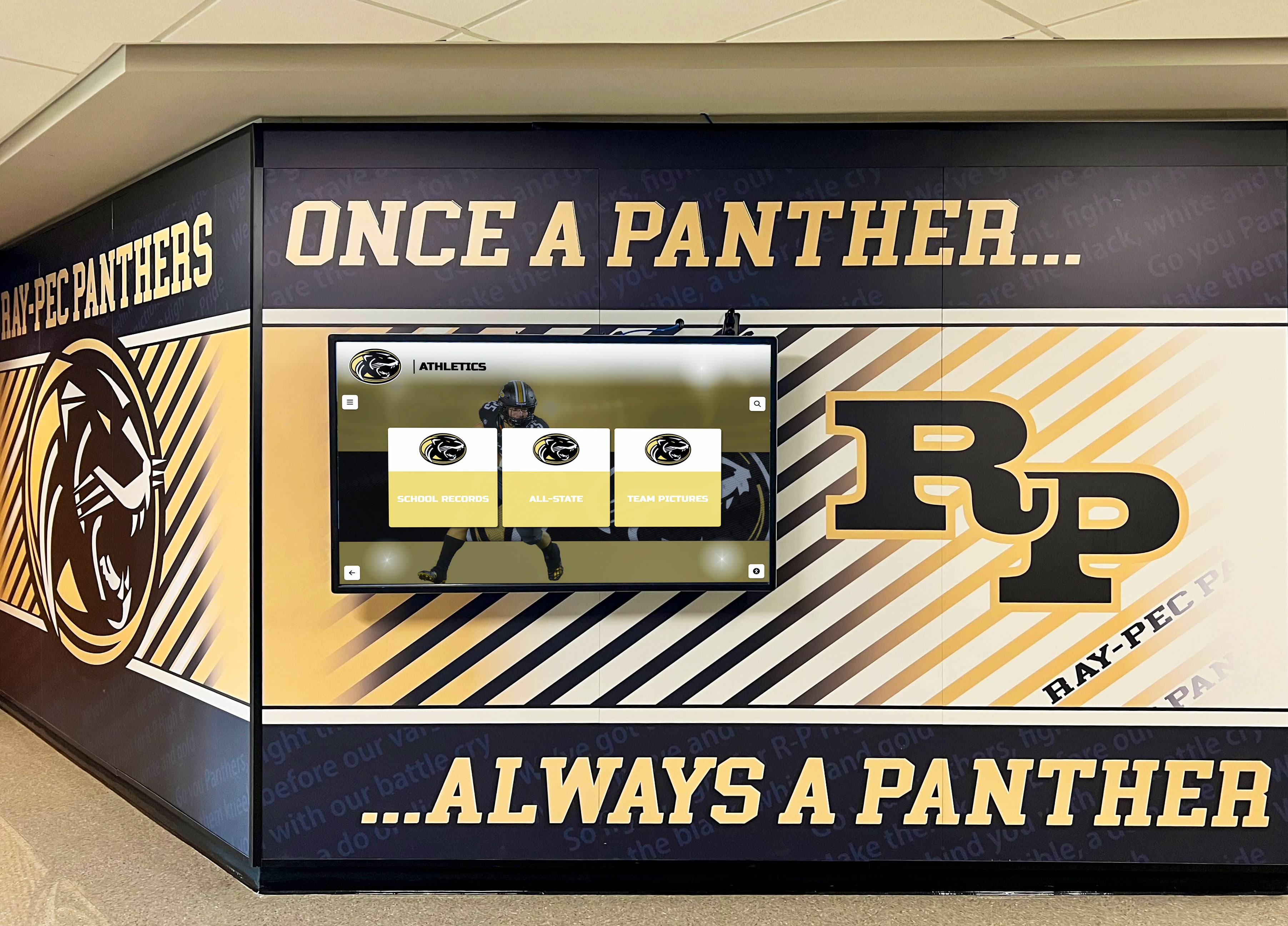
Thoughtfully designed school hallways combine traditional elements like murals with modern technology to create inspiring environments
Why School Hallway Design Matters
Understanding the strategic importance of hallway environments helps schools prioritize design investments and make decisions that maximize positive impact on students and culture.
Hallways as Extended Learning Spaces
Traditional thinking treats hallways as non-educational spaces—merely functional corridors connecting classrooms where actual learning occurs. This perspective wastes significant square footage and countless student contact hours spent in transition.
Progressive educational facilities recognize that school hallway spaces offer unique learning opportunities including informal social learning as students interact with peers, visual literacy development through environmental design elements, school history and tradition education, character development through value-focused messaging, and achievement awareness seeing what accomplishments receive recognition.
Research in educational psychology demonstrates that environmental factors significantly influence student behavior, motivation, and sense of belonging. When hallways actively support educational missions rather than serving purely functional purposes, schools leverage every available space for positive student development.
Building School Identity and Pride
School hallways serve as primary venues for communicating institutional identity to multiple audiences including current students developing school pride, prospective families evaluating school culture, visitors forming impressions about institutional values, and alumni reconnecting with school traditions.
Well-designed hallway environments strengthen school identity through consistent visual branding and color schemes, prominent display of school mission and values, celebration of traditions and historical achievements, showcasing of student accomplishments across diverse domains, and recognition of community members who contribute to school success.
Creating Positive School Climate
Physical environments directly impact school climate—the quality and character of school life as experienced by students and staff. Hallway design influences climate by creating welcoming, inclusive spaces where all students feel represented, providing visual interest that makes time at school more enjoyable, reducing behavioral issues through positive environmental psychology, fostering school spirit and community connection, and communicating that student achievements and contributions matter.
According to research from educational facility designers, schools that invest in thoughtful hallway design report measurable improvements in student behavior, attendance, and overall satisfaction compared to institutions with generic, neglected corridor spaces.
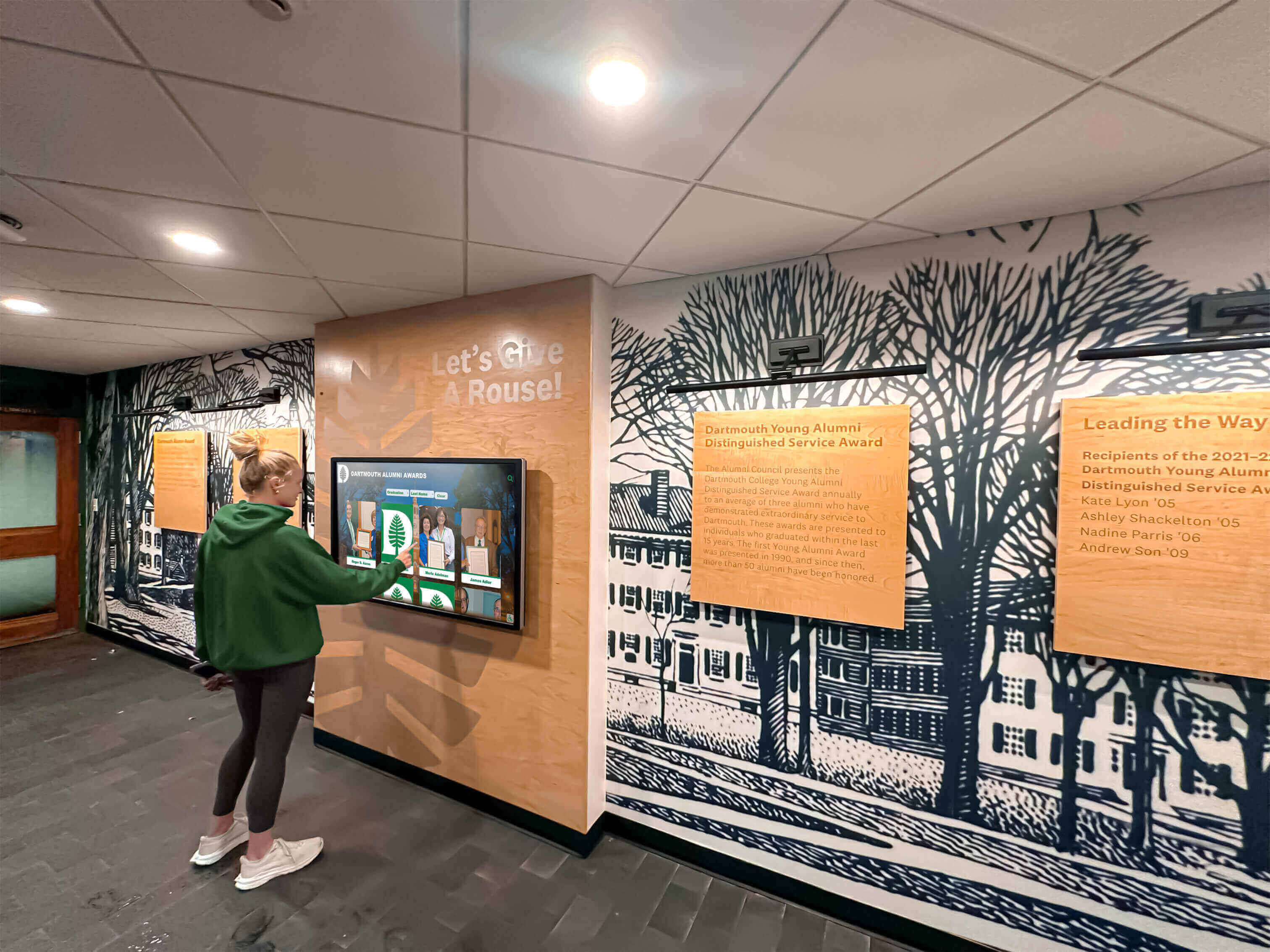
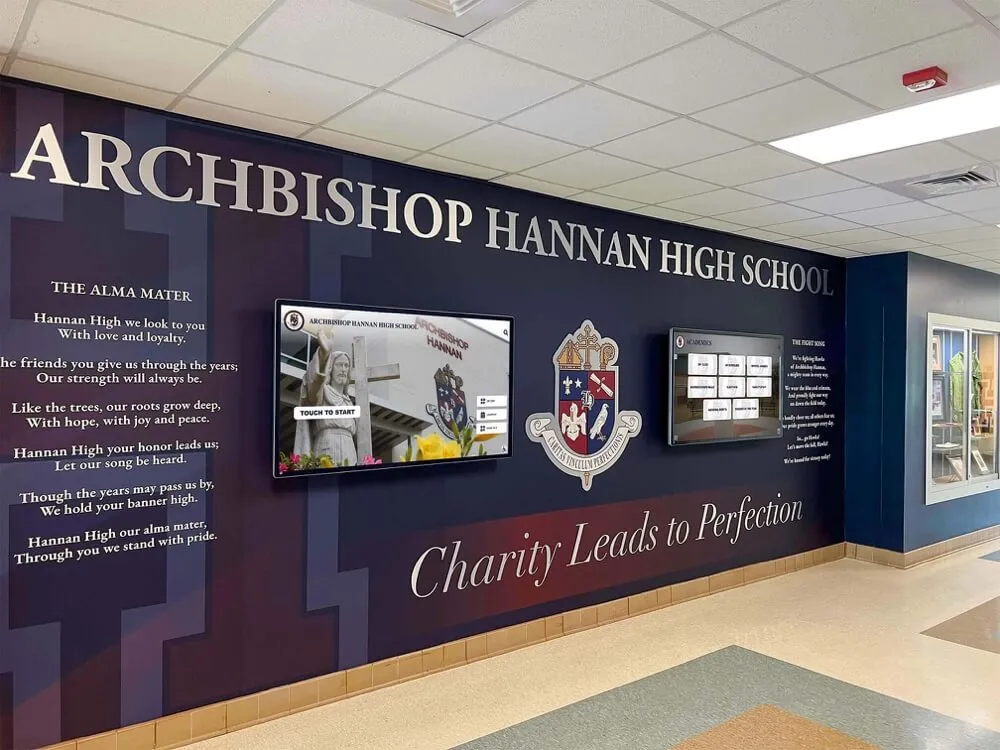
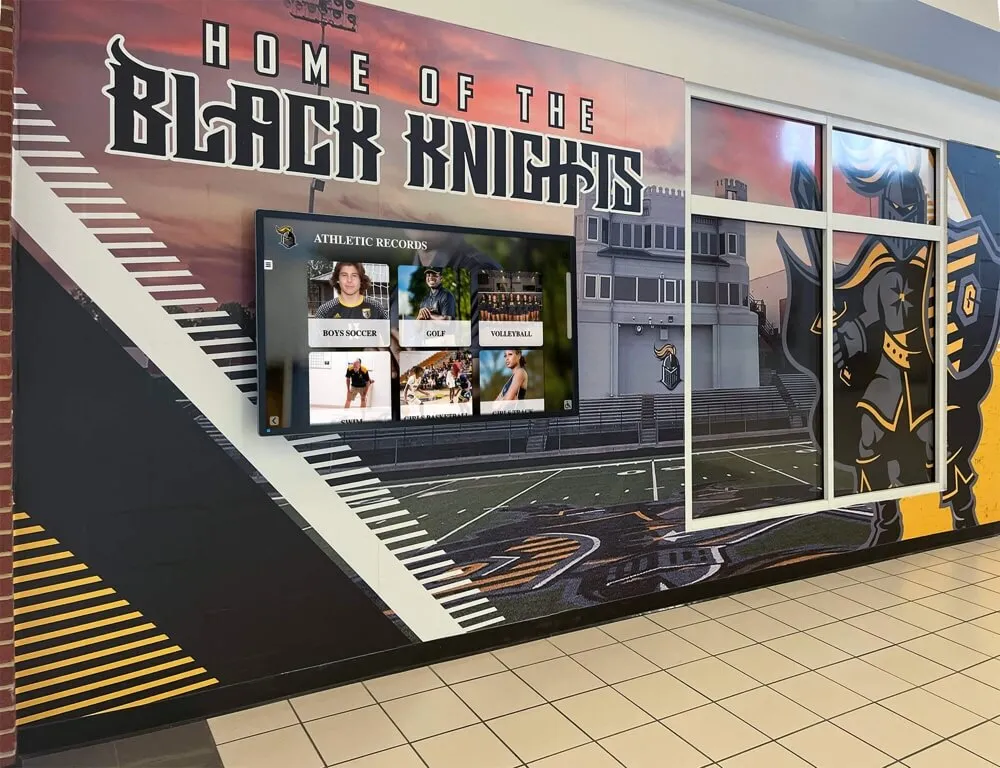
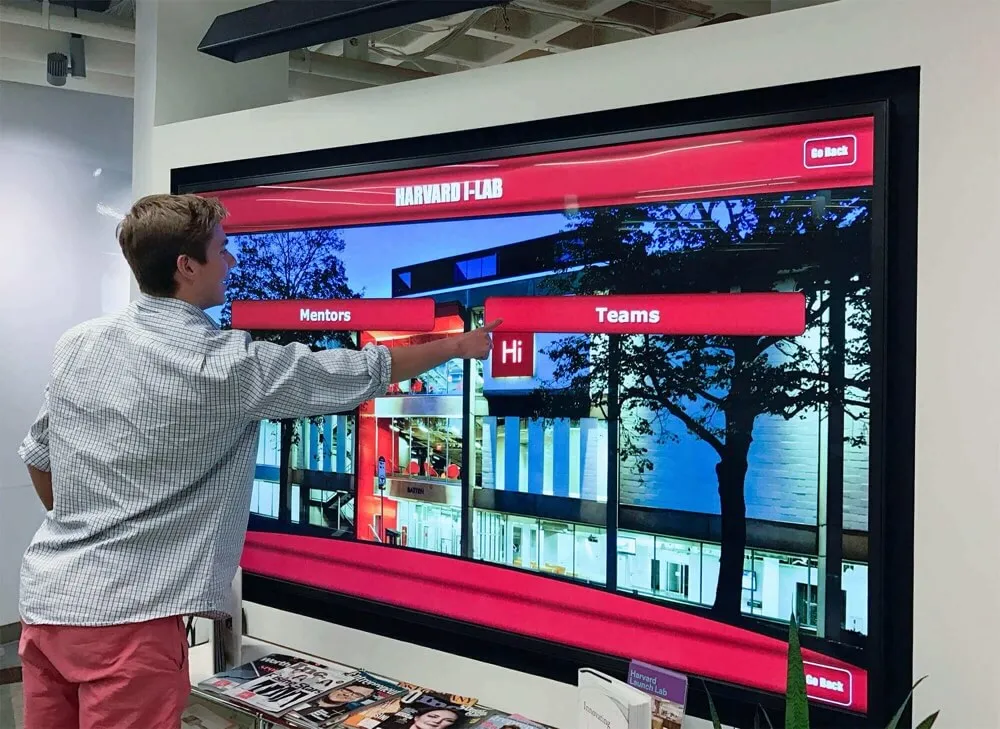
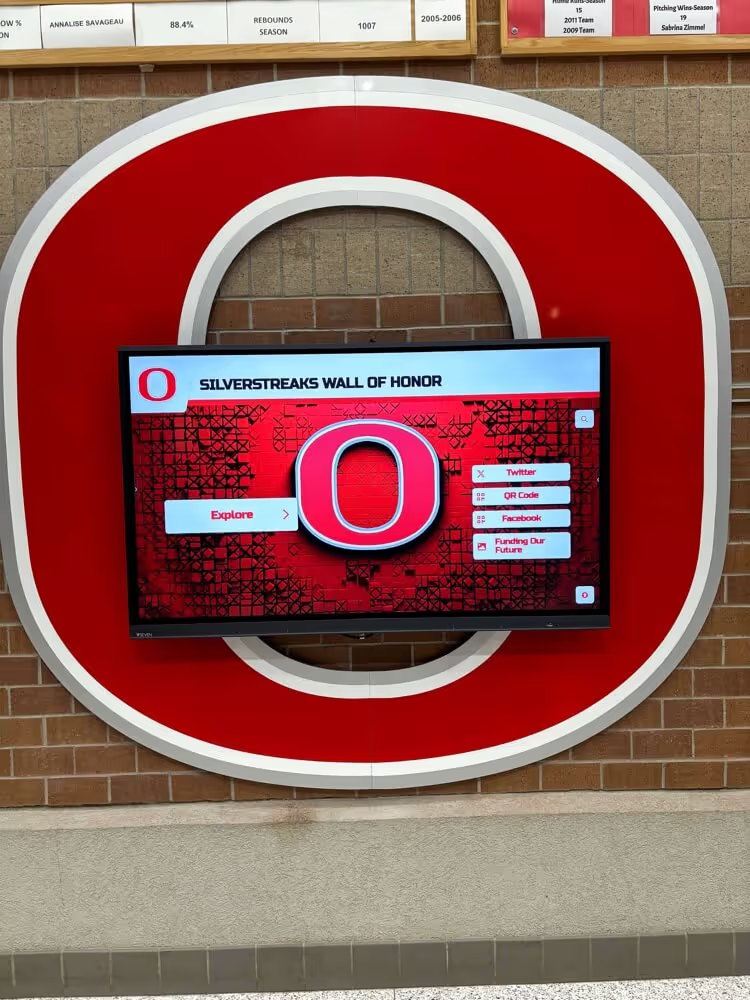
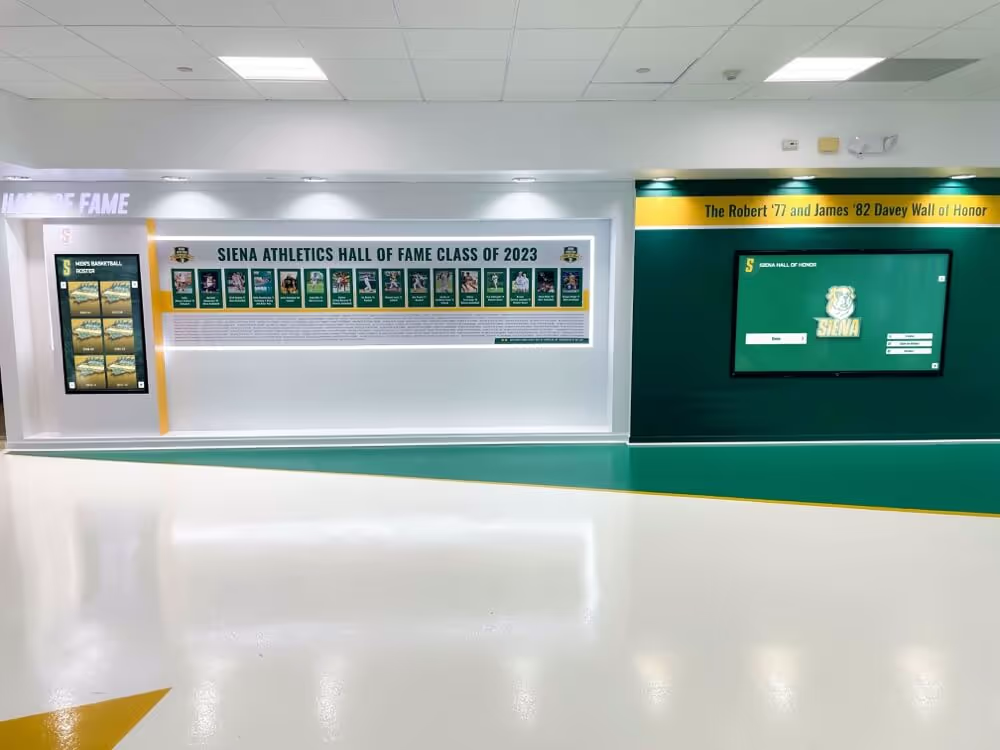
Interactive hallway elements engage students and create memorable experiences
Strategic School Hallway Decor Ideas
Effective hallway design integrates multiple elements working together to create cohesive environments that serve educational purposes while remaining visually appealing and maintainable.
1. Student Achievement Recognition Displays
The most impactful school hallway decor celebrates student accomplishments across all domains—academics, athletics, arts, service, and leadership. Recognition displays transform corridors into galleries of excellence that inspire continued achievement.
Traditional Recognition Approaches:
- Physical trophy cases displaying awards and memorabilia
- Mounted plaques honoring individual and team achievements
- Bulletin boards featuring honor roll lists and recent accomplishments
- Team photographs celebrating athletic and academic competition success
- Award certificates and ribbons from competitions and recognitions
While these traditional methods remain valuable, they face significant limitations including finite display capacity forcing difficult choices, static content requiring physical updates, inability to tell comprehensive achievement stories, and inflexibility as recognition needs evolve.
Digital Recognition Solutions:
Modern schools increasingly incorporate digital displays into hallway recognition systems, overcoming traditional limitations through unlimited capacity for recognizing achievements, instant content updates without physical intervention, rich multimedia storytelling with photos and videos, interactive exploration allowing students to discover achievements, and flexible organization accommodating multiple recognition categories.
Solutions like Rocket Alumni Solutions provide comprehensive platforms combining large-format hallway displays with cloud-based content management, enabling schools to honor every worthwhile achievement regardless of physical space constraints.
Learn more about comprehensive approaches to student achievement recognition displays that maximize hallway impact.
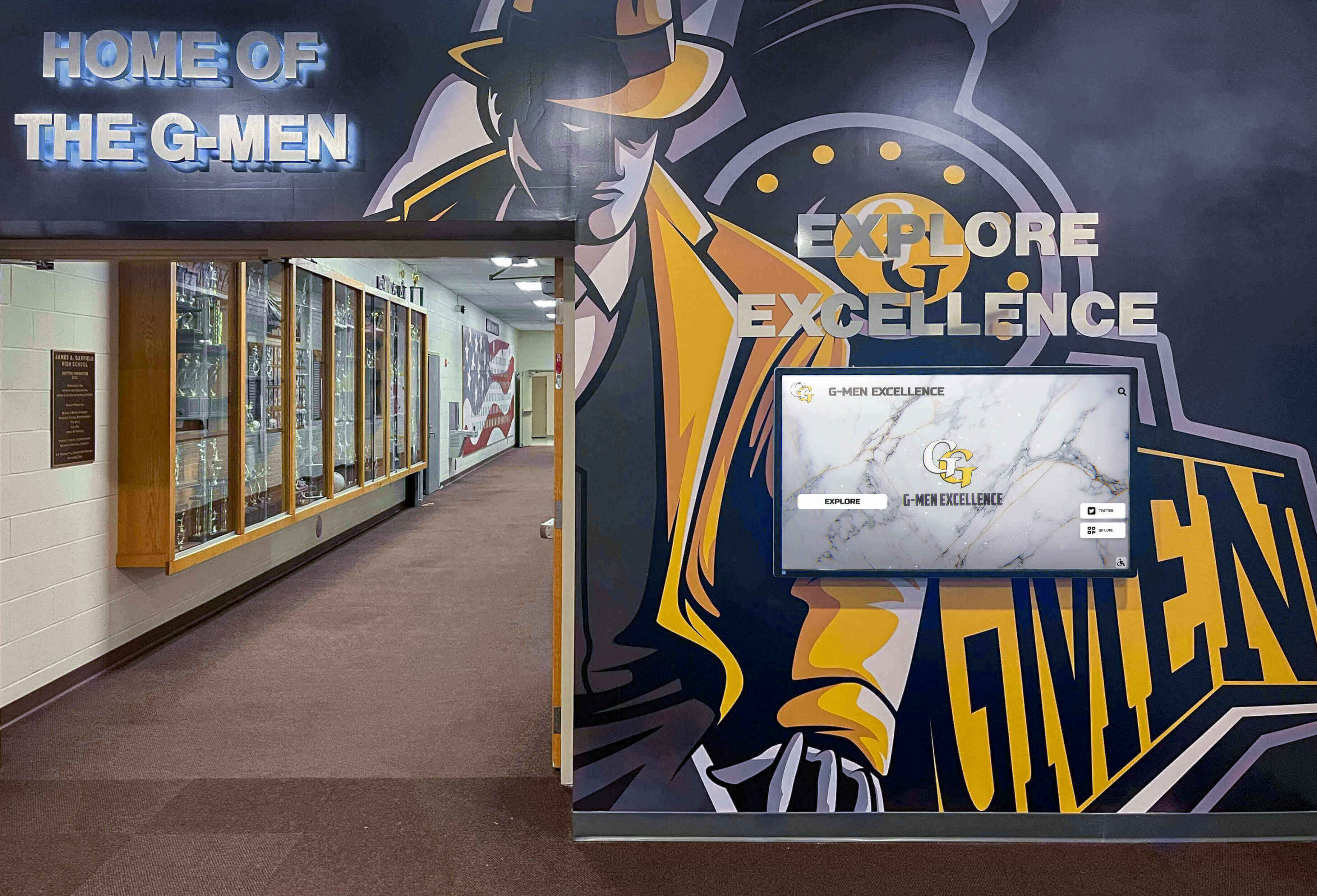
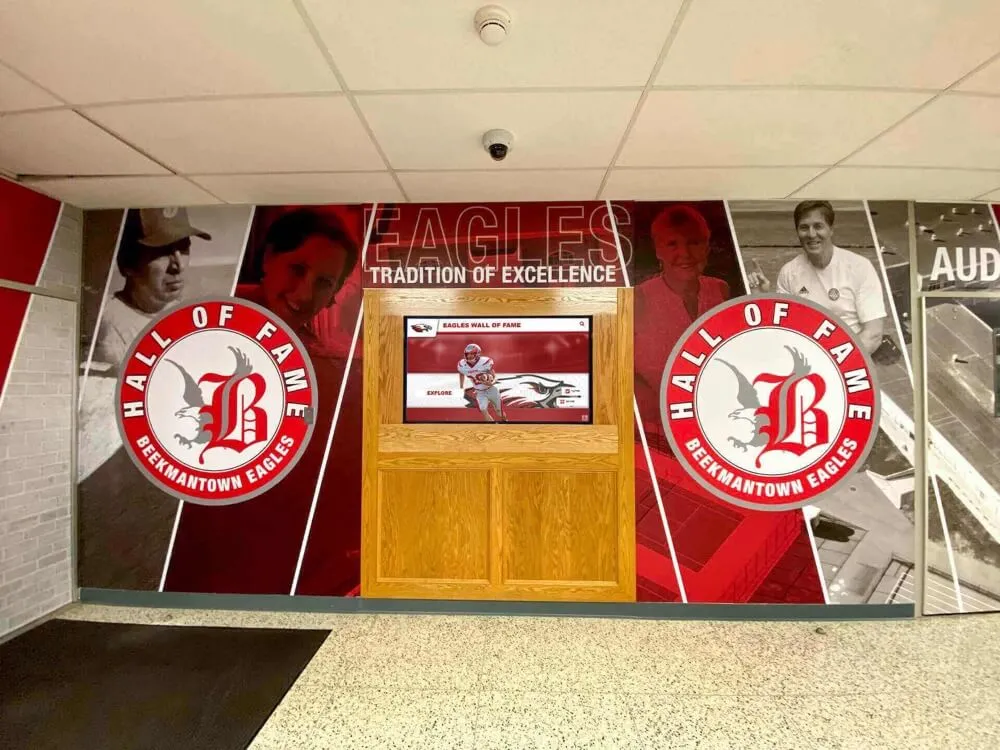
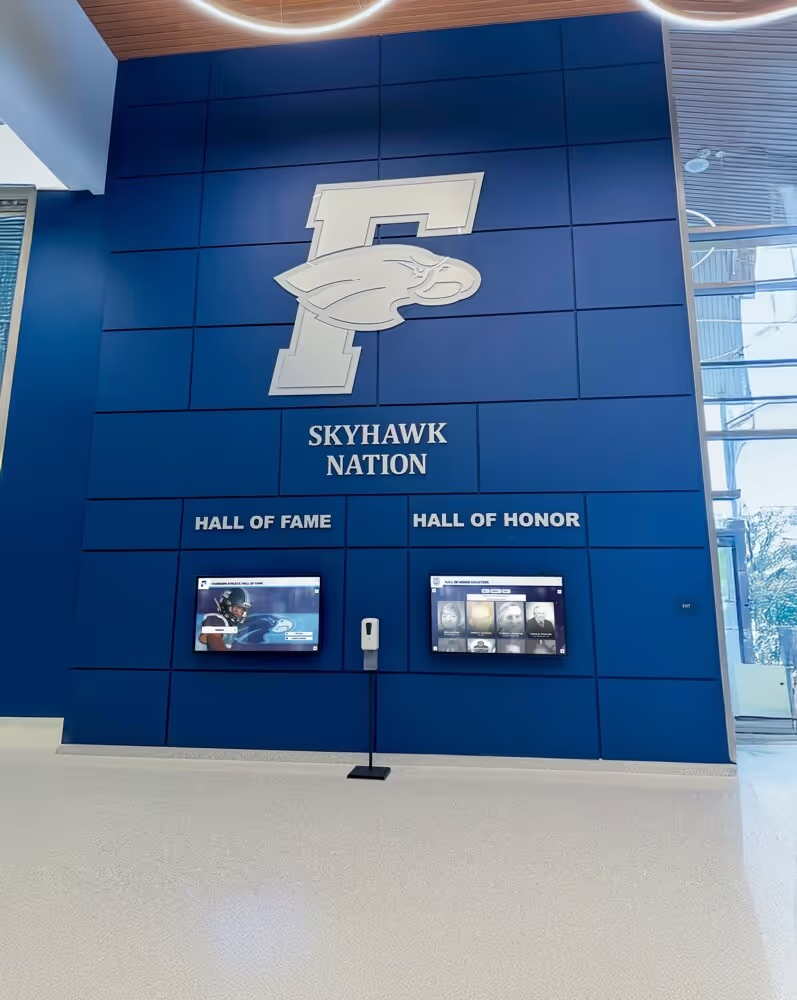
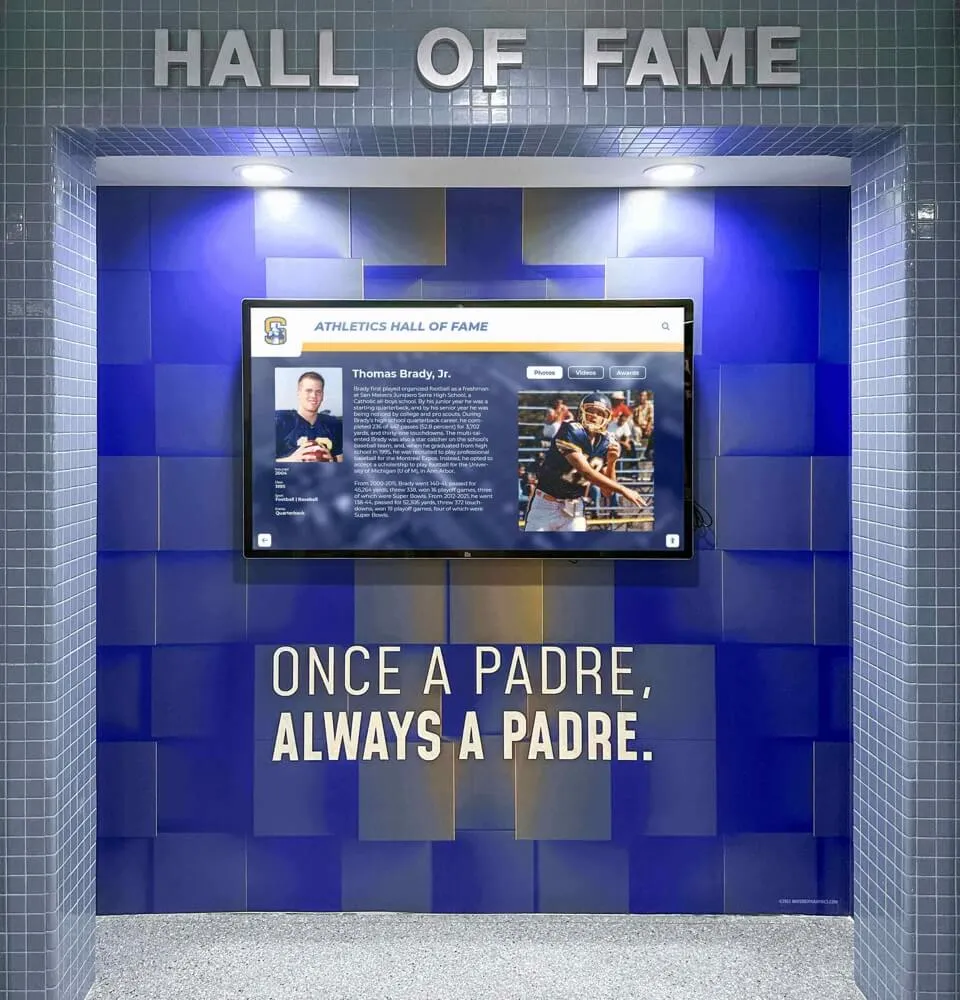
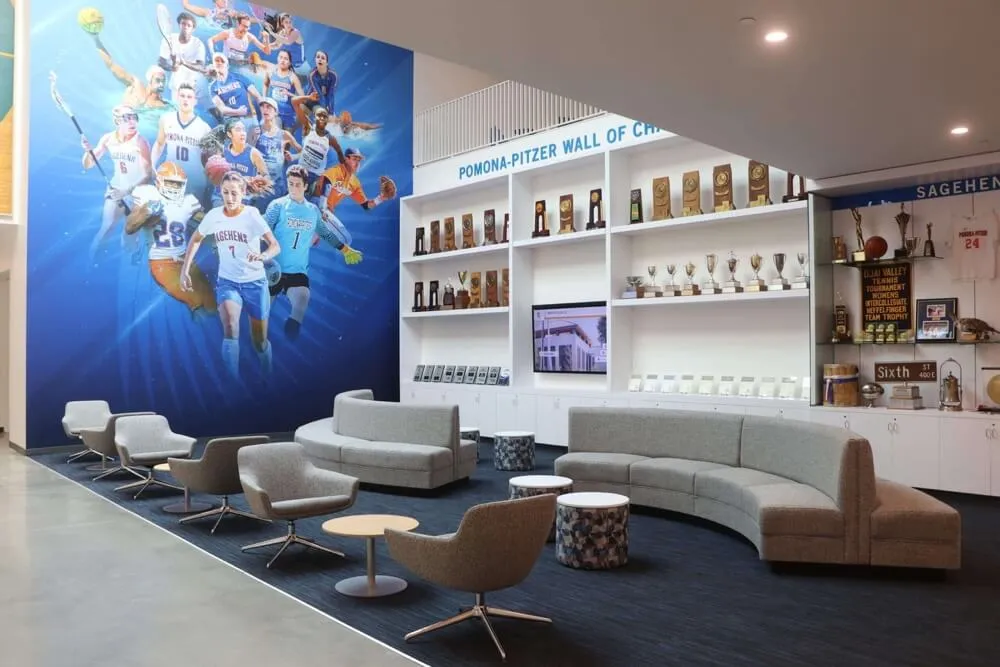
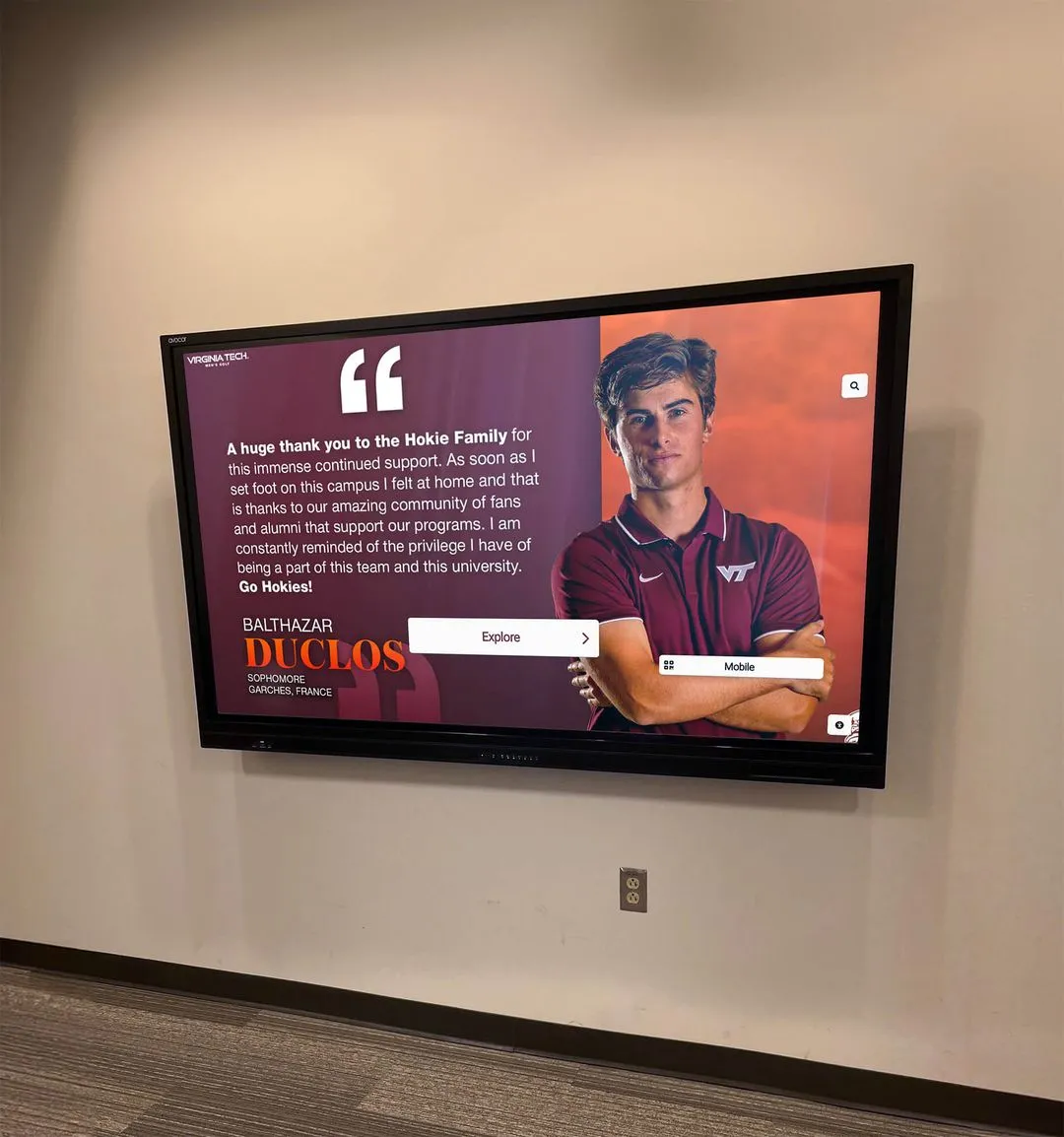
Effective hallway design combines traditional recognition elements with modern digital displays
2. School History and Heritage Displays
Connecting current students to institutional history builds continuity, tradition, and deeper school identity. Hallway history displays create walking timelines that educate while inspiring pride.
Historical Hallway Elements:
- Timeline displays showing school evolution across decades
- Vintage photographs documenting past students, teams, and events
- Historical artifacts preserved in display cases
- Notable alumni profiles highlighting distinguished graduates
- Championship banners and historical achievement recognition
- Architectural history showing facility development over time
- Community partnership acknowledgment celebrating long-term supporters
Creating Engaging Historical Displays:
Static historical displays often fail to engage contemporary students who struggle to connect with unfamiliar names and dated imagery. Enhance historical hallway elements by incorporating QR codes linking to extended digital content, interactive touchscreens enabling exploration of historical archives, connections between past and present achievements, multimedia presentations including video oral histories, and regular rotation of featured historical content maintaining freshness.
Discover strategies for building school pride through creative displays that honor tradition while engaging current students.
3. School Values and Character Education
Hallways provide ideal venues for reinforcing values, character traits, and behavioral expectations that schools want to cultivate in students.
Value-Focused Hallway Decor:
- Mission and vision statements prominently displayed
- Character trait definitions with visual representations
- Inspirational quotes from notable figures
- Student-created artwork illustrating school values
- Behavior expectation reminders presented positively
- Social-emotional learning concepts with age-appropriate explanations
- Cultural diversity celebrations recognizing all communities represented
Effective Implementation Strategies:
Generic motivational posters often become invisible wallpaper that students tune out. Make values-focused hallway decor more effective by connecting directly to current school initiatives and priorities, featuring student voices and perspectives authentically, using visually compelling design rather than text-heavy displays, rotating content regularly to maintain attention and relevance, and linking abstract concepts to concrete examples students understand.
4. School Spirit and Branding Elements
Strong visual identity throughout hallways reinforces school spirit and creates cohesive environments that communicate institutional pride.
School Spirit Hallway Elements:
- School colors used strategically in paint, graphics, and displays
- Mascot imagery and logos integrated throughout spaces
- Athletic team spirit displays and upcoming event promotion
- School motto and fight song lyrics prominently featured
- Student body representation through class and club displays
- Achievement celebrations creating culture of excellence
- Tradition documentation connecting current to historical school identity
Balancing Spirit with Professionalism:
School hallways should feel energetic and spirited without becoming overwhelming or visually chaotic. Maintain balance by establishing consistent color palettes rather than using every possible shade, creating organized display systems versus random placement, varying visual intensity with some quieter spaces, ensuring accessibility and readability of all elements, and coordinating decor across different hallways for institutional cohesion.
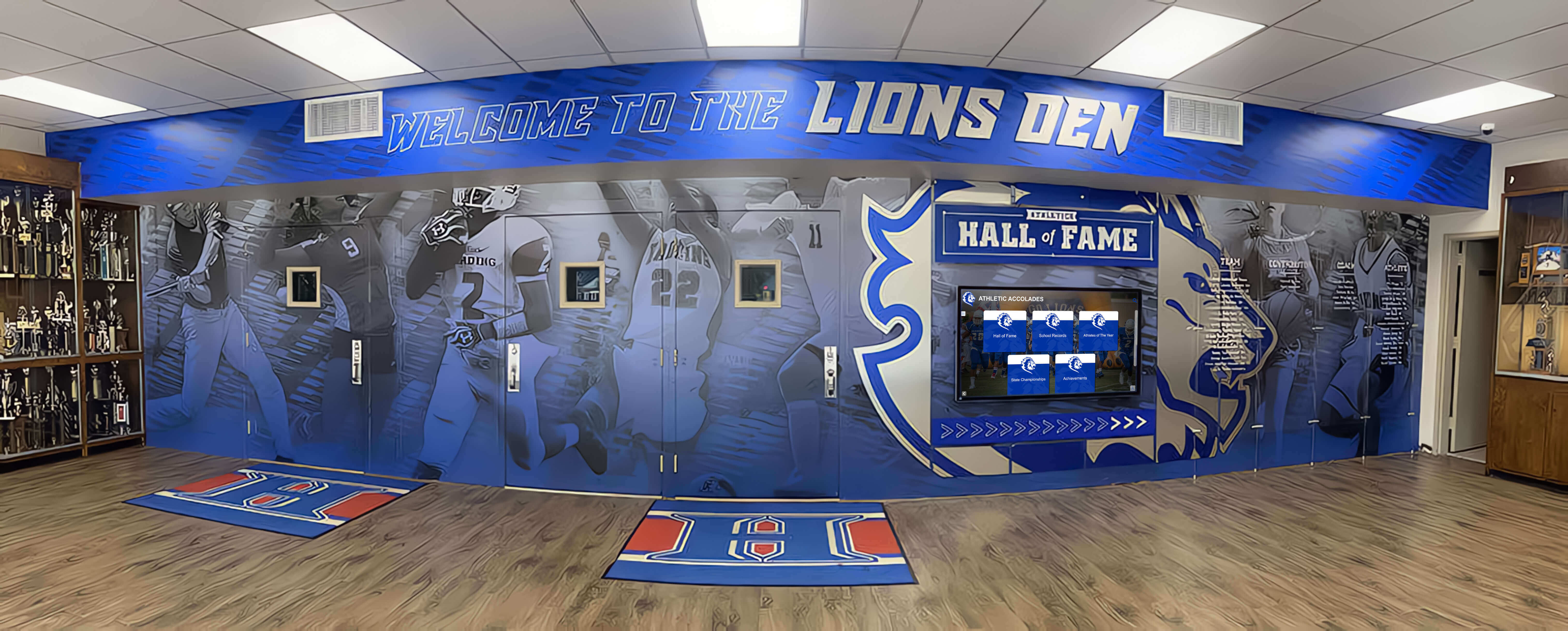
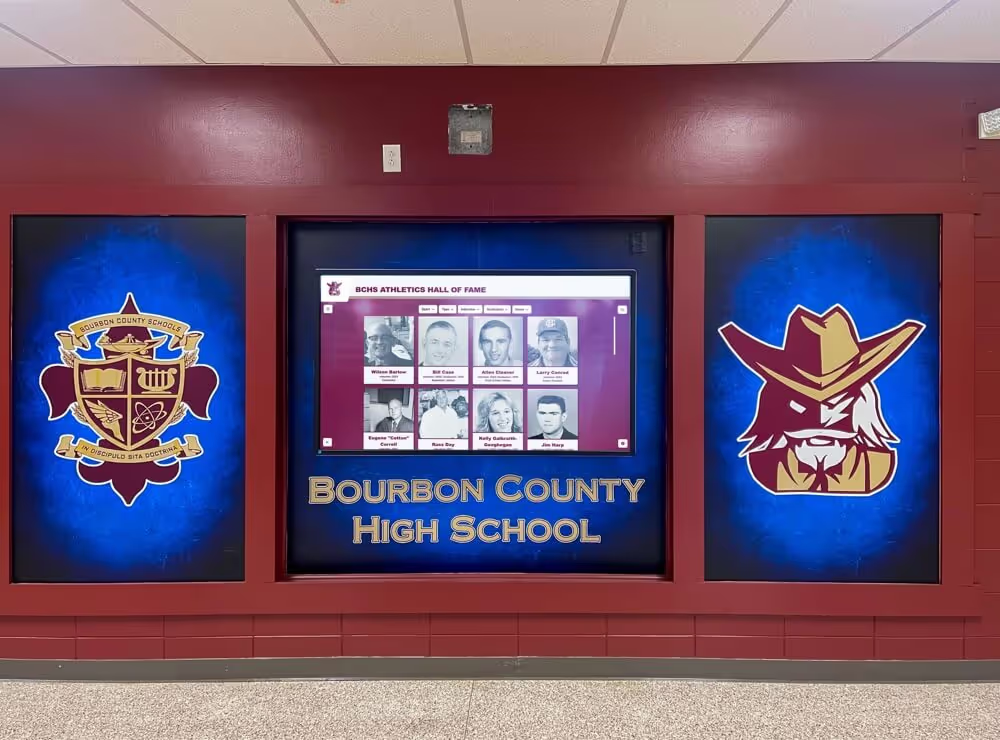
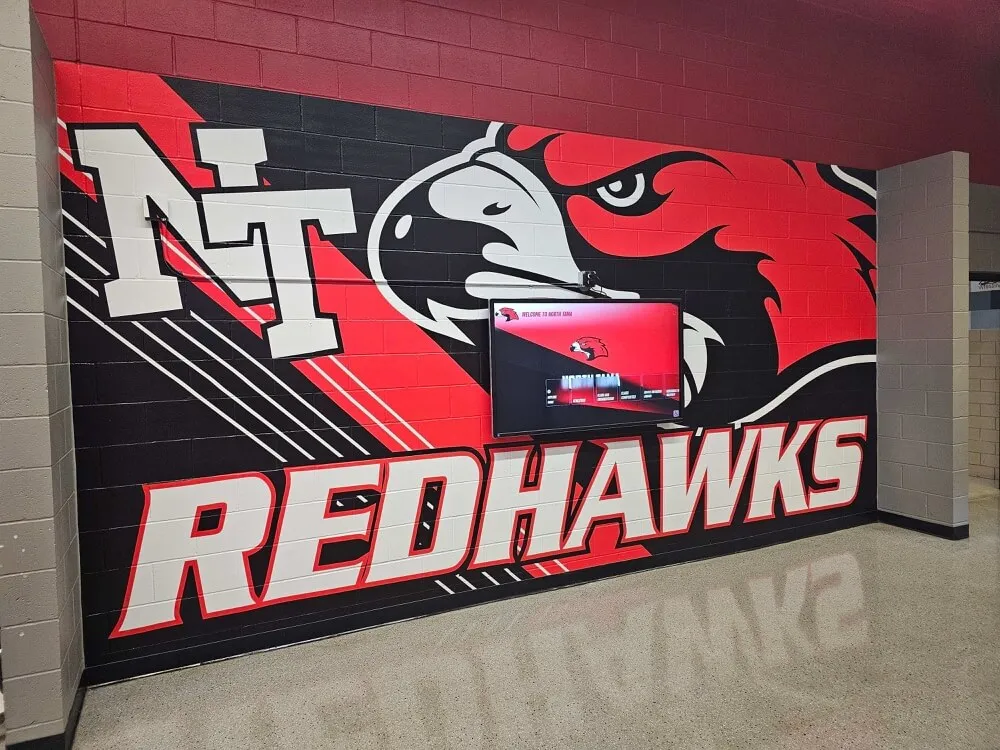
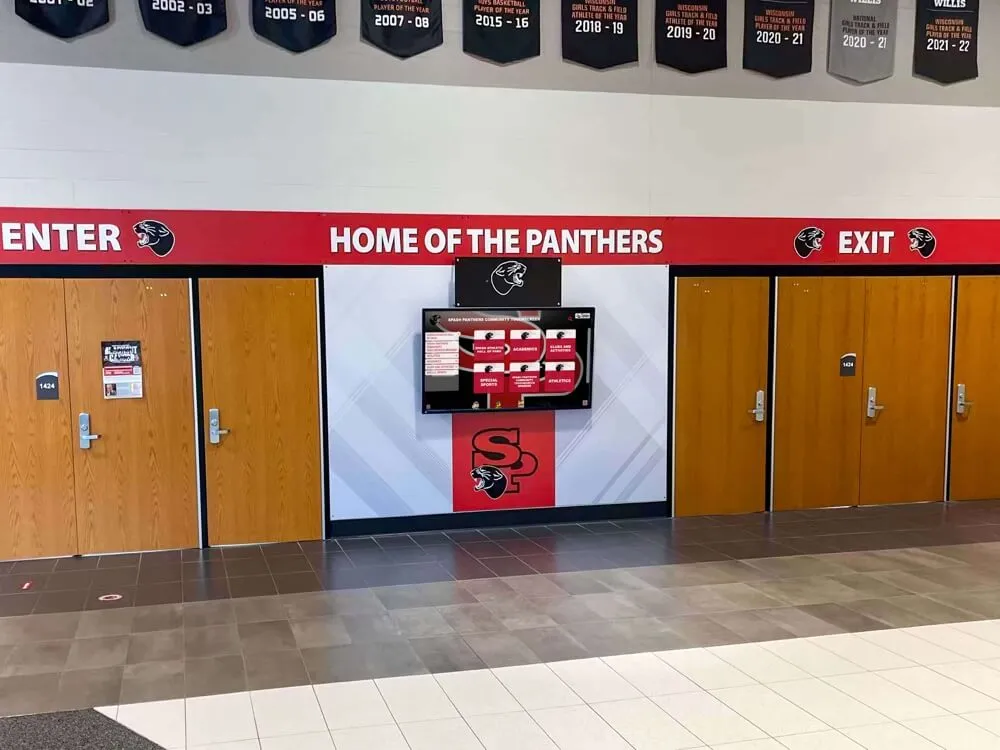
Coordinated hallway design creates professional environments that celebrate school identity
5. Academic Content and Curriculum Connection
Transform hallways into extended classrooms by incorporating educational content aligned with curriculum standards and learning objectives.
Academic Hallway Content:
- Subject-specific hallways featuring relevant educational content (math formulas in math wing, historical timelines near social studies classrooms, scientific concepts in science hallways)
- Student work galleries showcasing exemplary projects and assignments
- Current events displays connecting learning to real-world applications
- STEM challenge boards with rotating problems for student engagement
- Literary quotes and author information in language arts areas
- Multilingual content supporting diverse language learners
- College and career readiness information for secondary students
Student Work Display Best Practices:
Featuring student work in hallways validates achievement while motivating quality performance. Maximize impact by rotating displays regularly ensuring all students receive visibility, providing context explaining what work demonstrates, celebrating diverse types of achievement beyond traditional assessments, maintaining professional presentation standards, obtaining appropriate permissions for displayed work, and connecting displays to current curriculum units and standards.
6. Interactive and Engagement Elements
Static displays, regardless of quality, eventually fade into background. Interactive hallway elements sustain engagement and create memorable experiences.
Interactive Hallway Features:
- Touchscreen displays enabling exploration of school information
- Digital directories helping visitors navigate facilities
- Interactive challenge boards inviting student participation
- Reflection walls where students share thoughts and perspectives
- Puzzle and problem-solving displays encouraging casual learning
- Augmented reality elements activated through smartphone apps
- Sensory exploration areas providing calming spaces
- Community message boards facilitating peer communication
Modern digital recognition displays provide particularly powerful interactive opportunities. Learn about interactive display technology transforming school spaces including hallways and common areas.
7. Wayfinding and Directional Elements
Beyond decoration, effective hallway design includes functional elements helping students, staff, and visitors navigate facilities efficiently.
Wayfinding Hallway Features:
- Clear signage indicating room numbers and department locations
- Color-coding systems distinguishing different building wings or grade levels
- Floor graphics providing directional guidance
- Digital directories with searchable building maps
- Landmark features creating memorable reference points
- ADA-compliant signage ensuring accessibility for all users
- Multilingual wayfinding supporting diverse school communities
Discover comprehensive strategies for wayfinding signage in schools and institutions that improve navigation while enhancing aesthetics.
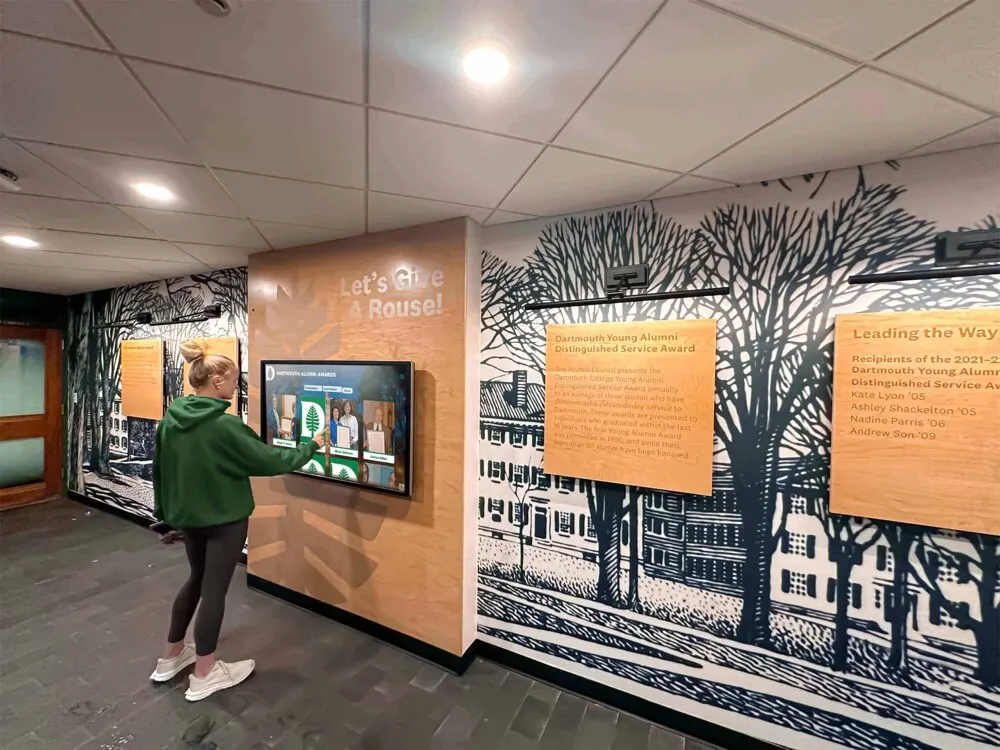
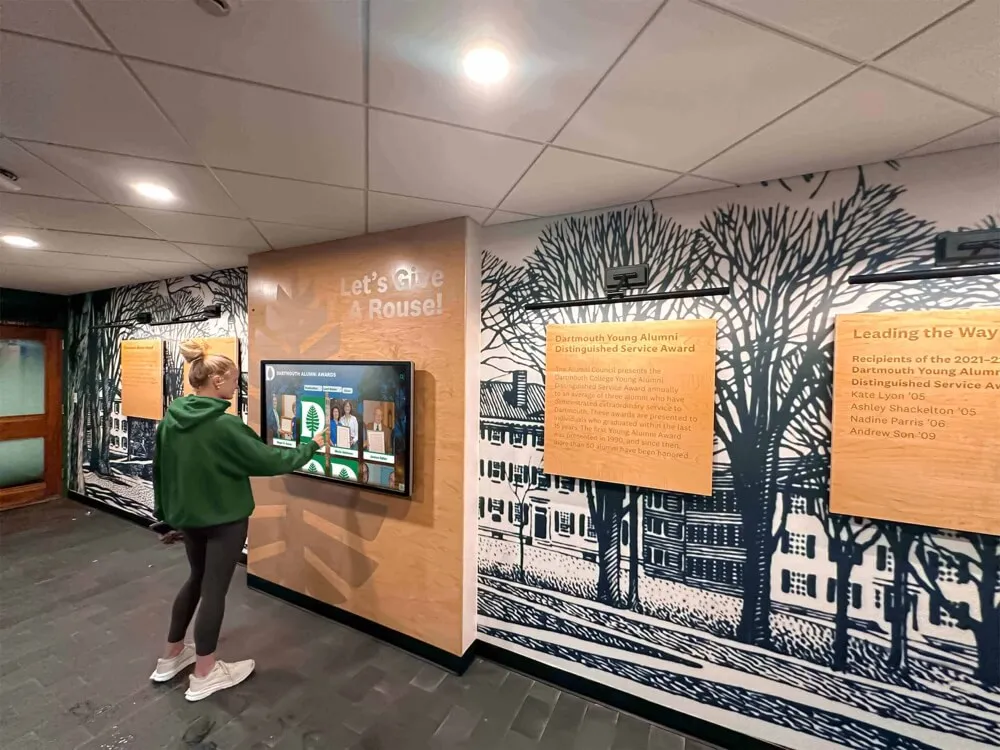
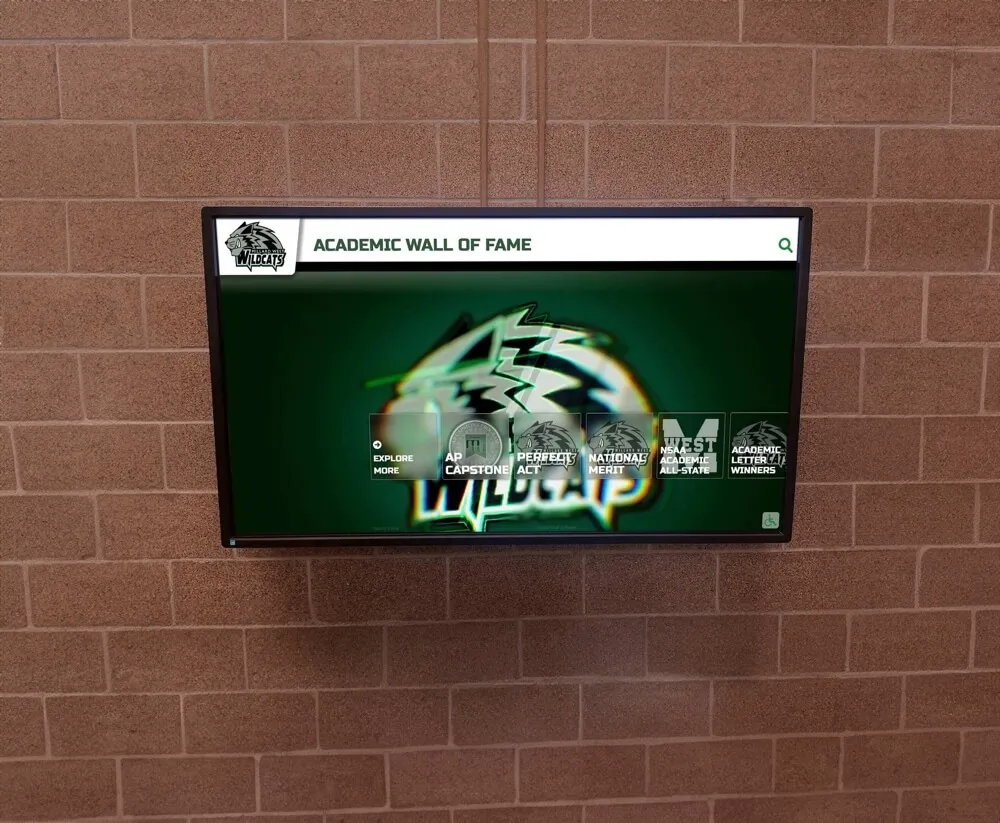
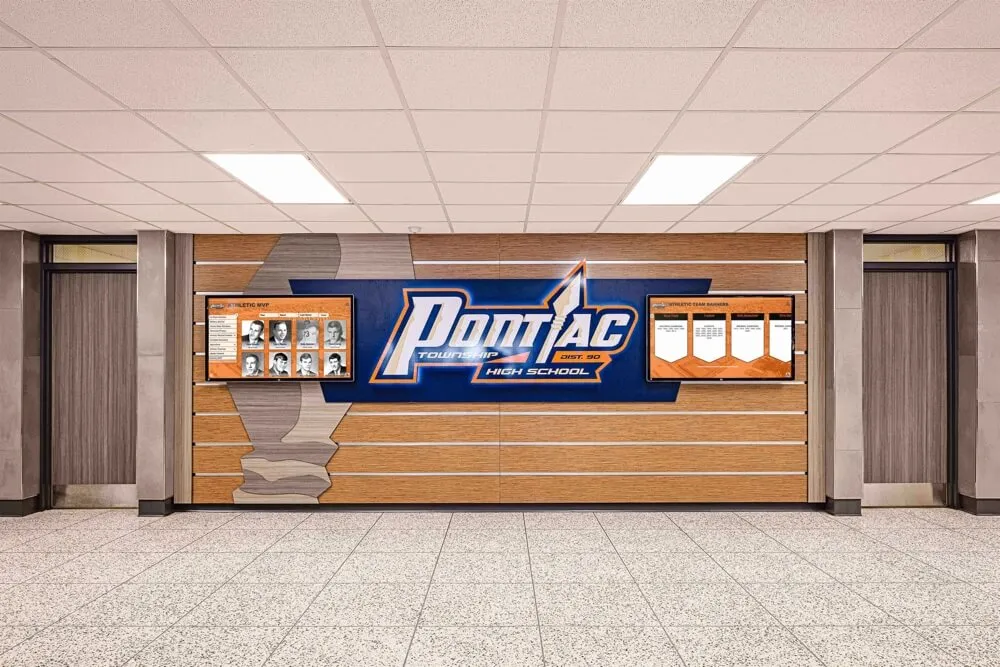
Interactive touchscreen displays create engaging hallway experiences that educate and inspire
8. Themed Hallways by Grade Level or Department
Creating distinct identities for different hallway zones helps students navigate while allowing age-appropriate design approaches.
Elementary School Hallway Themes:
- Grade-level themes with age-appropriate visual elements
- Storybook and literacy-focused designs encouraging reading
- Character education themes teaching social-emotional skills
- Nature and science themes sparking curiosity
- Bright colors and playful graphics appealing to younger students
- Lower-mounted displays accessible to smaller children
Middle School Hallway Themes:
- Department-specific themes reflecting content areas
- Student identity exploration and self-expression spaces
- Growth mindset and goal-setting visual elements
- Peer recognition and positive behavior reinforcement
- College and career awareness introductions
- Age-appropriate design balancing playfulness with maturity
High School Hallway Themes:
- Academic excellence and achievement focus
- College and career readiness prominent messaging
- Senior class legacy areas celebrating graduating students
- Alumni connection highlighting post-graduation success
- Sophisticated design reflecting student maturity
- Student voice and perspective platforms
9. Flexible and Adaptable Display Systems
School priorities, achievements, and needs change constantly. Effective hallway decor incorporates flexibility enabling updates without complete redesign.
Flexible Display Solutions:
- Modular systems with interchangeable components
- Digital displays with easily updatable content
- Magnetic and tackable surfaces enabling simple content changes
- Track lighting highlighting different elements as priorities shift
- Movable partitions creating reconfigurable spaces
- Cloud-based content management for remote display updates
- Template-based design systems maintaining cohesion while allowing variation
Sustainable Update Processes:
Beautiful hallway designs fail when updating becomes burdensome. Create sustainable systems by assigning clear responsibility for different display areas, establishing regular update schedules preventing content from becoming stale, creating content libraries with pre-approved graphics and templates, involving students in content creation and updates, leveraging technology reducing manual update requirements, and planning annual refresh cycles maintaining overall aesthetic quality.
Explore approaches to end-of-year student awards and recognition that can be featured prominently in hallway displays.
10. Lighting and Atmospheric Elements
Often overlooked, lighting dramatically impacts how hallway spaces feel and function.
Lighting Strategies:
- Natural light maximization through windows and skylights where possible
- LED lighting providing energy efficiency and quality illumination
- Accent lighting highlighting specific displays and focal points
- Color temperature selection affecting mood and visibility
- Emergency lighting ensuring safety compliance
- Display case lighting making recognition elements visible
- Motion-sensor lighting in low-traffic areas reducing energy costs
Additional Atmospheric Considerations:
- Acoustic treatments reducing excessive hallway noise
- Seating areas creating gathering spaces for positive social interaction
- Plants and natural elements improving air quality and aesthetics
- Ceiling treatments adding visual interest to often-neglected planes
- Floor treatments using durable materials in school colors or patterns
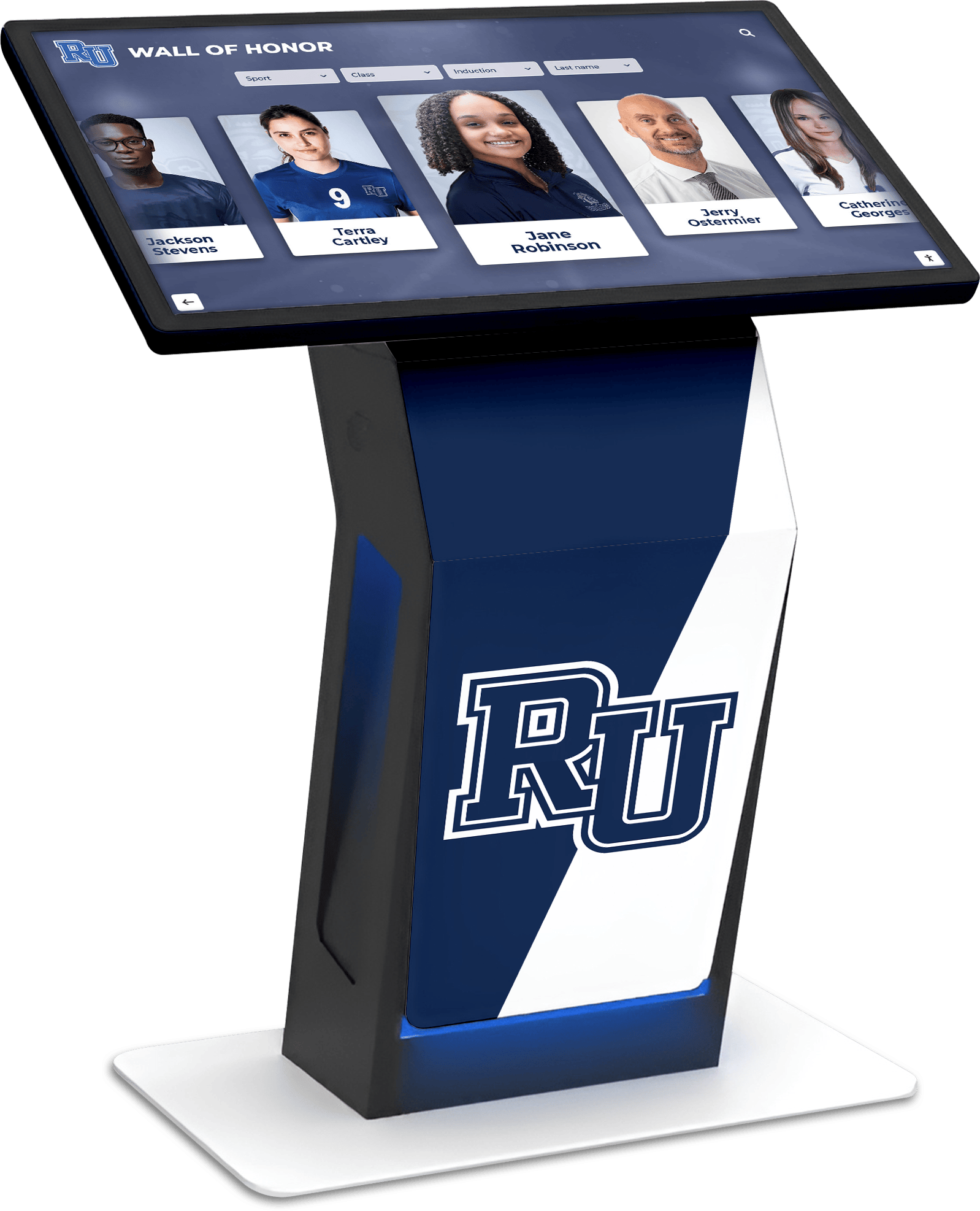
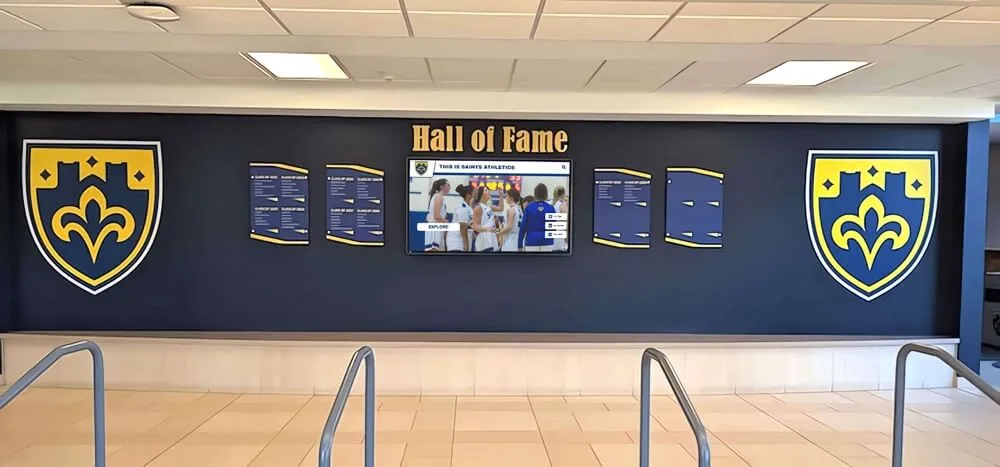
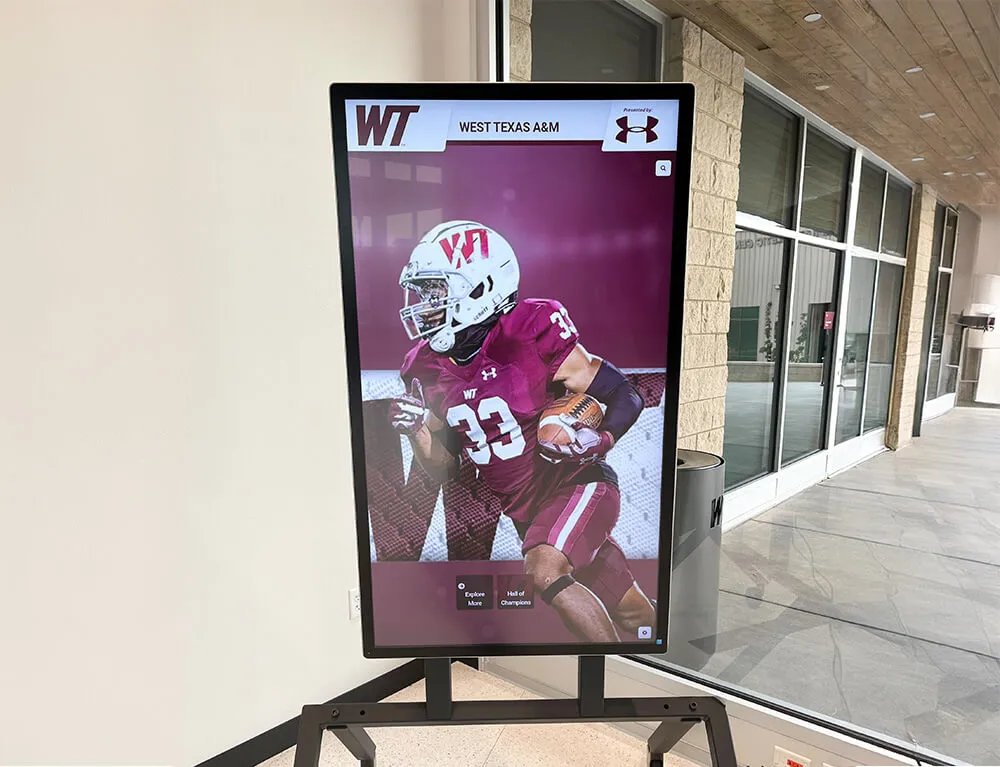
Dedicated recognition kiosks create focal points in high-traffic hallway areas
Implementation Planning: Bringing Hallway Decor Ideas to Life
Transforming school hallway spaces requires systematic planning ensuring designs meet educational objectives, remain maintainable, and work within budget constraints.
Step 1: Assess Current Hallway Conditions
Begin with comprehensive evaluation of existing hallway spaces including traffic patterns identifying high-visibility areas versus less-used corridors, existing conditions of walls, floors, and ceilings, current decor inventory cataloging what already exists, lighting quality and opportunities for improvement, available display surfaces and mounting options, technical infrastructure for digital displays if planned, and accessibility compliance ensuring all students can engage with displays.
Walk hallways during different times photographing spaces from student perspectives, noting what catches attention and what goes unnoticed. Involve students, staff, and families in assessment gathering diverse perspectives on current strengths and improvement opportunities.
Step 2: Define Clear Objectives and Priorities
Establish specific goals for hallway improvements including recognition of specific achievement types and student populations, communication of particular school values or initiatives, enhancement of school spirit and community identity, improvement of wayfinding and navigation, creation of extended learning opportunities, addressing of specific climate or culture challenges, and celebration of school history and traditions.
Written objectives enable evaluation of whether design proposals actually address identified needs versus simply looking attractive. When budget constraints require phasing, clear priorities guide decisions about what to tackle first.
Step 3: Develop Design Concepts and Standards
Create design guidelines ensuring cohesive hallway aesthetics including color palettes reflecting school branding, typography standards maintaining readability and professionalism, display system specifications providing consistency across locations, content standards establishing quality expectations, maintenance protocols keeping hallways fresh and current, accessibility requirements ensuring universal design, and budget parameters guiding decision-making.
Consider engaging professional designers for institutions undergoing major renovations, but many schools successfully develop compelling hallway environments through internal committees combining administrator input, teacher perspectives, student voices, facility manager practical expertise, and community member skills in design or project management.
Step 4: Source Materials and Solutions
Research and evaluate specific products, vendors, and approaches including paint, graphics, and physical display systems, digital display hardware and software platforms, lighting solutions and installation requirements, furniture and seating elements if included, interactive elements and technology components, professional installation services versus internal capacity, and ongoing maintenance and content management support.
For digital recognition and display solutions, platforms like Rocket Alumni Solutions provide comprehensive systems specifically designed for educational environments, combining hardware, software, content management, and ongoing support in unified solutions.
Learn about various school awards ceremony planning approaches that can inform hallway recognition display design.
Step 5: Create Implementation Timeline
Develop realistic schedules accounting for budget availability spreading projects across fiscal years if needed, school calendar timing work during breaks when possible, construction and installation requirements, content development time for initial displays, staff training for systems requiring ongoing management, and phased approaches beginning with highest-priority or highest-visibility areas.
Plan for quick wins delivering visible improvements early building momentum and support for continued work on remaining spaces.
Step 6: Launch and Maintain
Execute plans with attention to professional installation meeting building codes and manufacturer specifications, quality content creation establishing strong first impressions, clear communication announcing improvements to school community, recognition of contributors acknowledging those who made improvements possible, and establishment of maintenance routines keeping hallways fresh.
Schedule regular walkthroughs identifying needed updates, worn elements requiring attention, and opportunities for ongoing enhancement as resources permit.
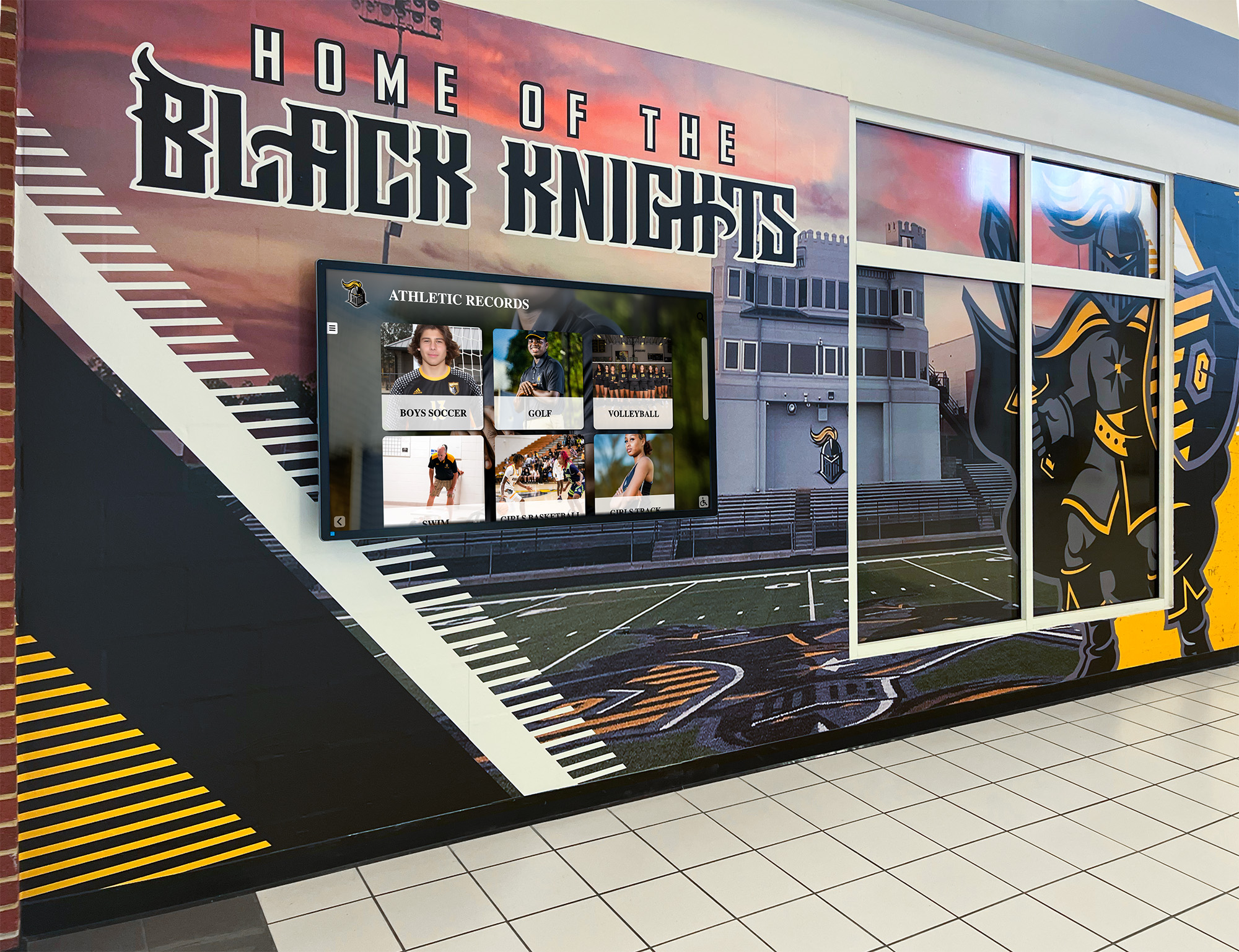
Well-maintained hallway environments demonstrate institutional pride and attention to detail
Budget Considerations for School Hallway Improvements
Understanding typical costs enables realistic planning and creative approaches to funding hallway enhancements.
Low-Budget Hallway Improvements ($500-$5,000)
Significant hallway improvements don’t require major capital investments. Budget-friendly options include paint in school colors creating visual interest ($500-$2,000 for materials and labor), vinyl wall graphics and decals ($200-$1,500 depending on size and quantity), bulletin board upgrades with professional frames and backing ($300-$1,000), improved lighting fixtures in key areas ($500-$2,000), student artwork display systems ($200-$800), printed banners celebrating achievements ($100-$500), and organizational systems for existing displays improving presentation ($200-$1,000).
Many effective hallway improvements prioritize reorganization and refreshment of existing elements rather than requiring expensive new installations.
Mid-Range Hallway Projects ($5,000-$25,000)
Moderate investments enable more comprehensive improvements including professional murals by local artists ($2,000-$10,000 depending on size and complexity), large-format printed wall coverings and graphics ($3,000-$8,000), upgraded trophy cases and display systems ($2,000-$8,000), non-interactive digital signage displays ($3,000-$10,000 including hardware and basic software), improved hallway lighting throughout zones ($5,000-$15,000), coordinated paint, graphics, and signage packages ($5,000-$15,000), and professional design services creating comprehensive plans ($2,000-$5,000).
Mid-range budgets typically enable transformation of specific hallway zones or implementation of signature elements creating strong visual impact.
Major Hallway Renovations ($25,000-$100,000+)
Comprehensive hallway transformations involve significant investment including interactive touchscreen recognition displays ($10,000-$30,000 per display including software), complete hallway repainting and refinishing throughout facilities ($15,000-$50,000 depending on building size), professional mural programs with multiple installations ($10,000-$40,000), comprehensive digital display networks with content management ($30,000-$80,000), architectural modifications to spaces ($20,000-$100,000+), and complete lighting system upgrades ($25,000-$75,000).
Major renovations typically occur during facility upgrades or bond-funded improvement projects enabling comprehensive transformation rather than incremental changes.
Creative Funding Strategies
Schools employ diverse approaches to fund hallway improvements including bond referendums and capital campaigns designating funds for facility improvements, alumni fundraising appealing to graduate desire to beautify their school, corporate sponsorships from local businesses supporting education, parent organization contributions from PTAs and booster clubs, grant applications to foundations supporting educational facilities, donor naming opportunities for significant displays or hallway zones, memorial gifts honoring community members, and phased implementation spreading costs across multiple budget years.
Discover how digital recognition walls can honor school renovation donors while creating attractive hallway features.
Common School Hallway Design Challenges and Solutions
Understanding typical obstacles helps schools plan proactively and implement more successful improvements.
Challenge: Limited Budget for Major Changes
Most schools face budget constraints limiting hallway improvement scope.
Solutions: Prioritize highest-impact, lowest-cost improvements first demonstrating value, implement in phases as resources become available, leverage volunteers including students, parents, and community members with relevant skills, seek donated materials and professional services, focus on organization and refreshment of existing elements before adding new installations, and use paint strategically creating major visual impact at modest cost.
Challenge: Maintaining Fresh, Current Content
Static displays quickly become stale and invisible to students who pass them daily.
Solutions: Establish regular rotation schedules for changeable content, leverage digital displays enabling instant remote updates, assign specific staff responsibility for different display areas, involve students in content creation and updates, create content libraries with pre-approved elements, plan themed displays aligned with school calendar (homecoming, holidays, recognition periods), and conduct regular walkthroughs identifying tired elements needing refresh.
Challenge: Balancing Multiple Interests and Priorities
Different departments, grade levels, and stakeholder groups have competing visions for hallway use.
Solutions: Establish representative planning committees ensuring diverse input, create zoned approaches with different hallways serving different purposes, develop clear criteria for display space allocation, ensure equitable representation of all student activities and achievements, communicate decision-making processes transparently, and plan periodic reassessment allowing priorities to evolve.
Challenge: Physical Limitations of Spaces
Existing architectural features constrain design possibilities.
Solutions: Work with building characteristics rather than fighting them, leverage vertical space when hallways are narrow, use creative lighting to address problematic features, consider movable elements versus permanent installations, consult facilities professionals about structural possibilities and limitations, and view constraints as creative challenges prompting innovative solutions.
Learn about approaches for showcasing athletic achievements digitally in hallway contexts.
School Hallway Decor for Different Educational Levels
Age-appropriate design ensures hallway environments resonate with students while serving developmental needs.
Elementary School Hallway Design
Younger students benefit from bright, engaging environments with lower-mounted displays accessible to small children, high-contrast colors and clear visual organization, character education themes teaching social-emotional skills, literacy promotion through storybook themes and author features, achievement celebration appropriate for developmental levels, wayfinding using pictures and symbols alongside text, and durable materials withstanding active young children.
Create magical, nurturing environments that make school feel welcoming while reinforcing learning objectives and positive behavior.
Middle School Hallway Design
Adolescent students respond to environments that balance increased maturity with continued engagement through age-appropriate content and imagery avoiding childish elements, student voice platforms enabling self-expression, achievement recognition across diverse domains beyond academics, growth mindset messaging supporting this transitional period, subject-specific themes connecting to curriculum interests, social-emotional learning support addressing developmental challenges, and flexible elements accommodating rapid developmental changes.
Recognize the unique needs of this age group seeking both independence and belonging.
High School Hallway Design
Secondary students benefit from sophisticated environments preparing them for post-graduation success including college and career readiness prominent messaging, senior class legacy areas celebrating graduating students, academic excellence and achievement focus, alumni success stories providing inspiration and connection, student leadership and voice platforms, professional aesthetics reflecting student maturity, and comprehensive recognition systems supporting college applications and scholarship opportunities.
Create environments that respect student maturity while continuing to inspire and guide them toward futures.
Conclusion: Transforming School Hallways Into Inspiring Environments
School hallway spaces represent some of the most underutilized square footage in educational facilities. Every student passes through these corridors multiple times daily, creating thousands of opportunities for positive environmental influence. Yet many schools treat hallways as purely functional transition zones, missing chances to inspire, educate, recognize, and build community.
Thoughtful school hallway decor transforms overlooked spaces into dynamic environments that celebrate student achievements across all domains, reinforce school values and identity, extend learning beyond classroom walls, create positive school climate and culture, connect students to institutional history and tradition, and make time at school more enjoyable and meaningful.
The strategies explored in this guide provide comprehensive frameworks for hallway improvements that balance educational objectives with practical constraints including working within realistic budgets and timelines, creating systems that remain maintainable long-term, ensuring designs remain flexible as needs evolve, incorporating student and staff voices authentically, celebrating diverse achievements and perspectives equitably, and leveraging both traditional and innovative approaches.
Transform Your School Hallways
Discover how digital recognition displays can help you celebrate student achievements, build school spirit, and create inspiring hallway environments where every accomplishment receives the visibility it deserves. Rocket Alumni Solutions provides comprehensive platforms designed specifically for educational institutions, combining beautiful displays with easy content management.
Explore Hallway Display SolutionsGetting Started With Hallway Improvements
Schools at any stage can begin improving hallway environments by assessing current spaces identifying strengths and opportunities, defining clear objectives for what hallways should accomplish, involving diverse stakeholders ensuring broad perspective and buy-in, starting with achievable improvements demonstrating value and building momentum, creating sustainable systems that remain fresh without excessive burden, and planning iterative enhancements improving spaces over time as resources permit.
The perfect time to begin is now. Your school hallways already exist—students pass through them every day regardless of what those spaces look like. Each day that passes with uninspiring, generic hallways represents missed opportunities to inspire students, celebrate achievements, and strengthen school community.
The Impact of Inspiring Hallway Environments
When students walk hallways that celebrate their achievements and those of peers, they develop stronger motivation and higher aspirations. When they encounter school values and educational content throughout transition spaces, learning extends beyond classroom walls. When they see their diverse talents and contributions recognized prominently, they feel valued and connected to school community.
These environmental influences accumulate across thousands of hallway passes throughout school years, shaping attitudes, behaviors, and relationships with educational institutions. Students who attend schools with inspiring, well-designed hallway environments develop stronger school pride, remain more engaged in learning, achieve at higher levels, and maintain deeper connections to their schools even after graduation.
Your school hallways deserve the same thoughtful attention devoted to classrooms and educational programming. With strategic planning, creative thinking, and commitment to continuous improvement, you can transform every corridor into an inspiring learning environment where students truly want to be.
Ready to begin? Explore recognition display options, gather stakeholder input, assess your spaces, and take the first steps toward hallways that celebrate achievement, inspire excellence, and create the positive educational environment every student deserves.