School trophy cases have long served as proud showcases of athletic achievement, academic excellence, and institutional legacy. These displays tell the story of championship seasons, record-breaking performances, and the student-athletes who brought glory to their schools. Yet as programs grow and achievements multiply, many schools face a familiar challenge: trophy cases that have run out of space, aging displays that no longer reflect program excellence, or recognition systems that fail to engage modern students and visitors.
The question facing athletic directors, principals, and booster clubs isn’t whether to celebrate achievement—it’s how to honor both historical legacy and current excellence in ways that inspire students, engage visitors, and adapt as programs continue to build winning traditions. Traditional glass trophy cases offer timeless elegance but come with inherent limitations: fixed capacity that forces difficult decisions about what to display, static recognition that can’t easily be updated, and space constraints that often leave recent achievements in storage rather than on prominent display.
This comprehensive guide explores school trophy case ideas ranging from traditional display approaches to innovative digital showcases that solve space limitations while creating more engaging recognition experiences. Whether you’re renovating existing trophy displays, designing recognition for a new facility, or exploring alternatives to overcrowded cases, these strategies will help you honor athletic achievement appropriately while building the school pride that defines championship cultures.

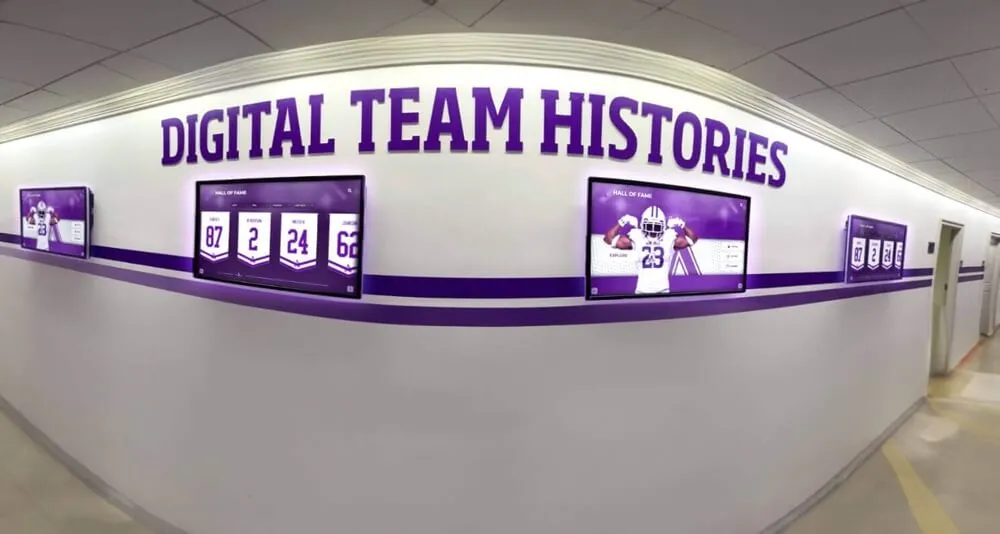
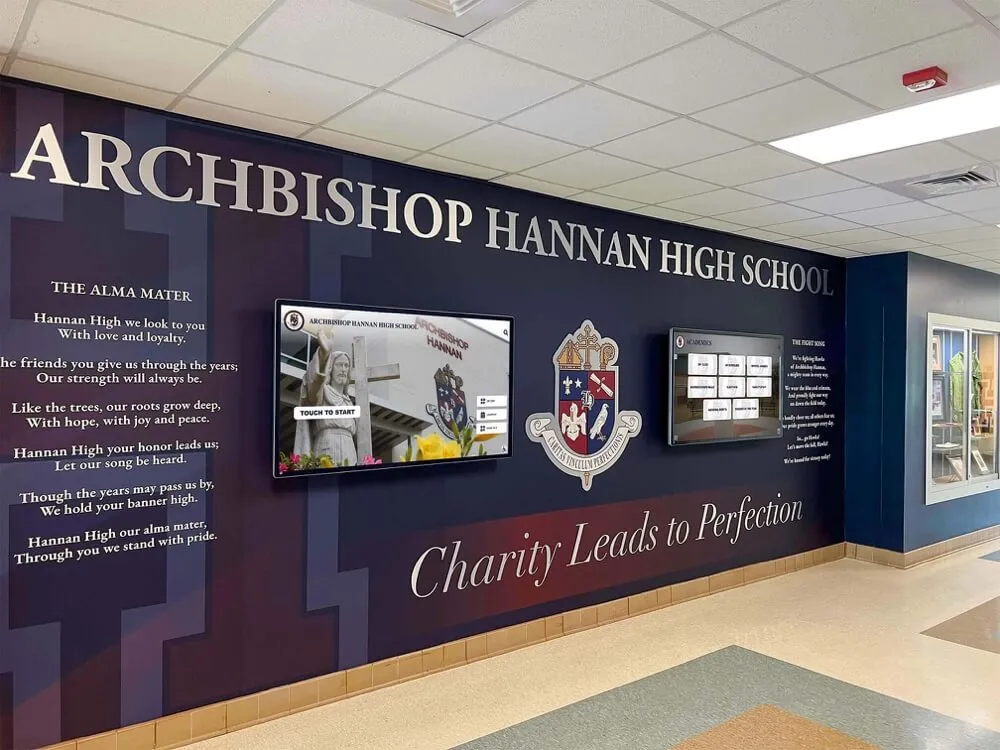
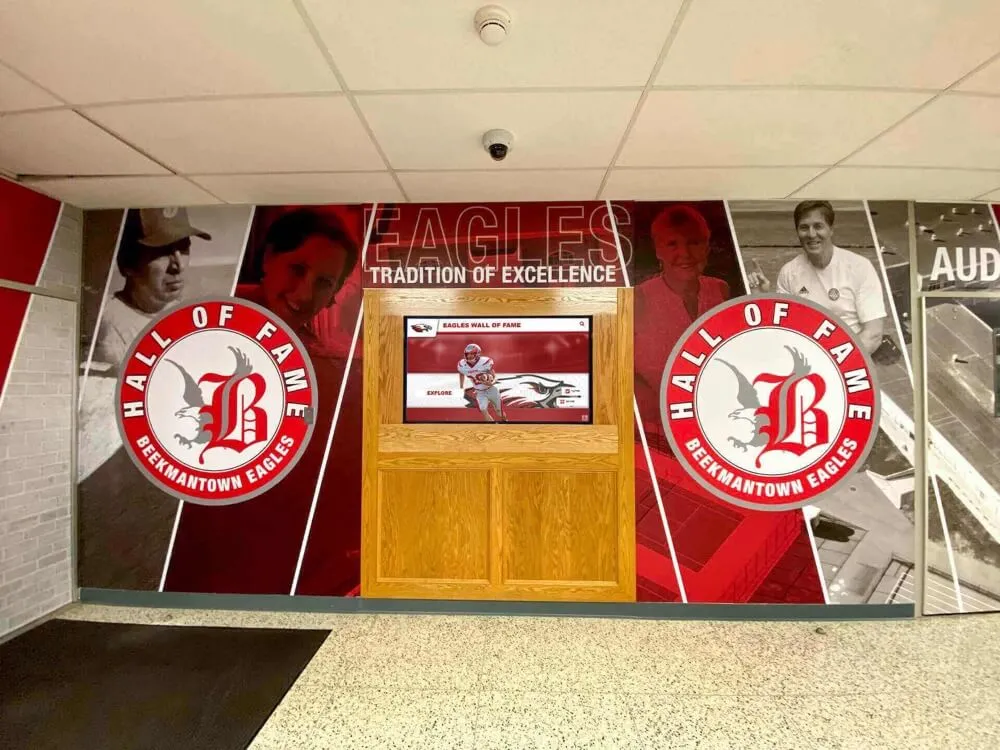
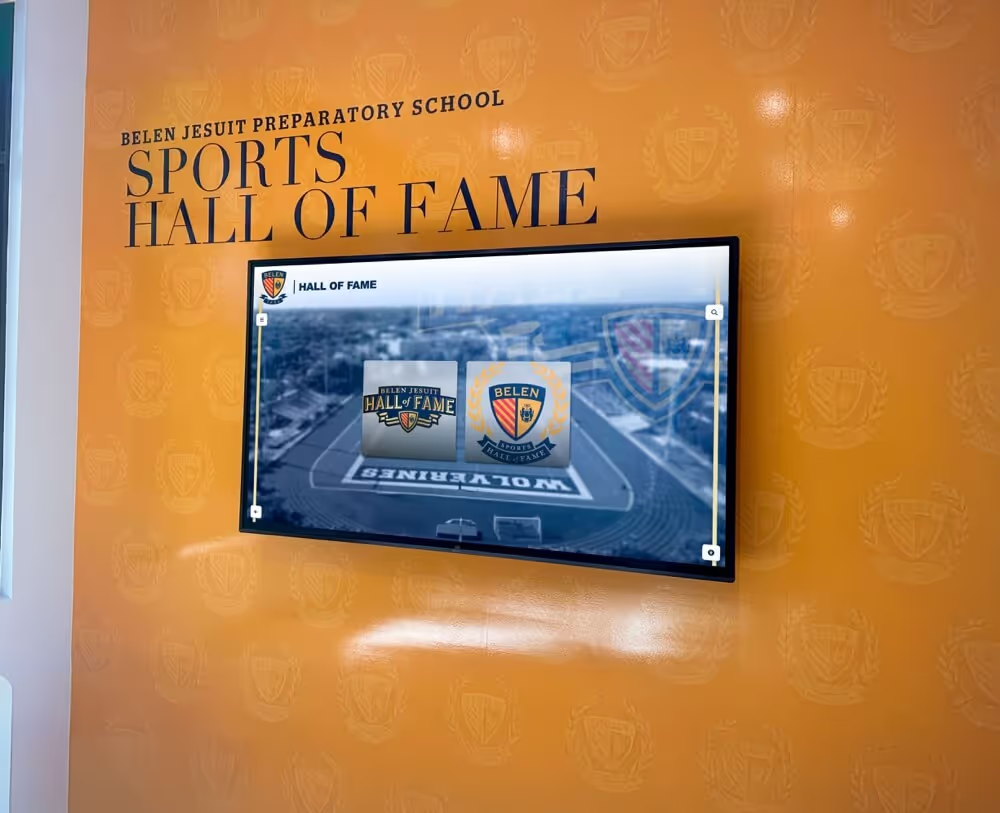
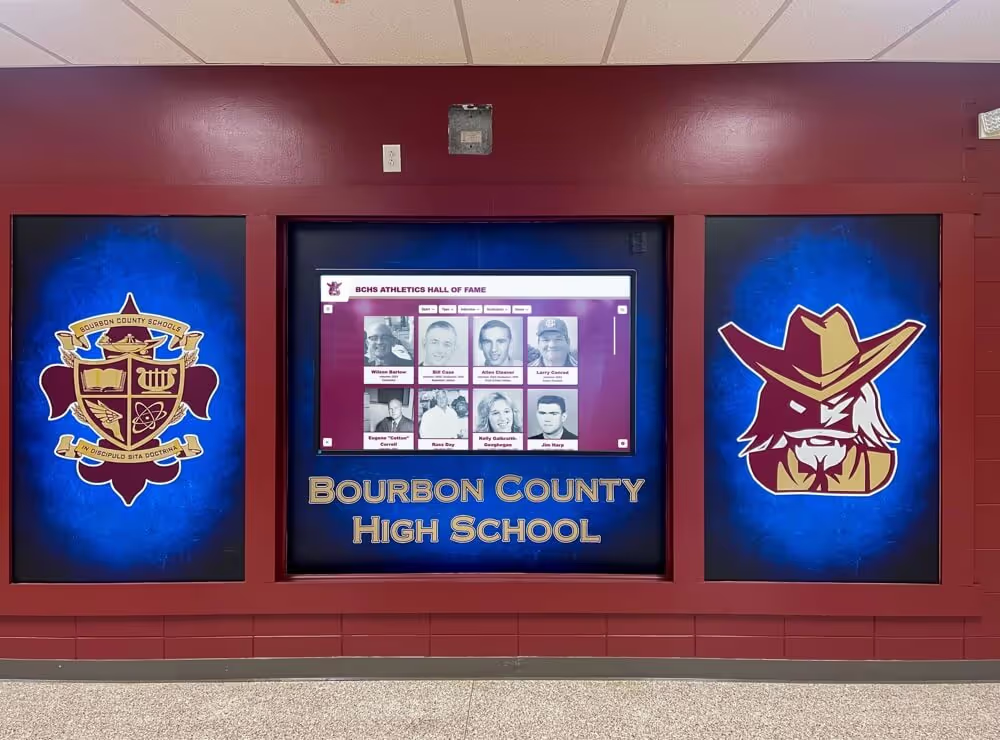
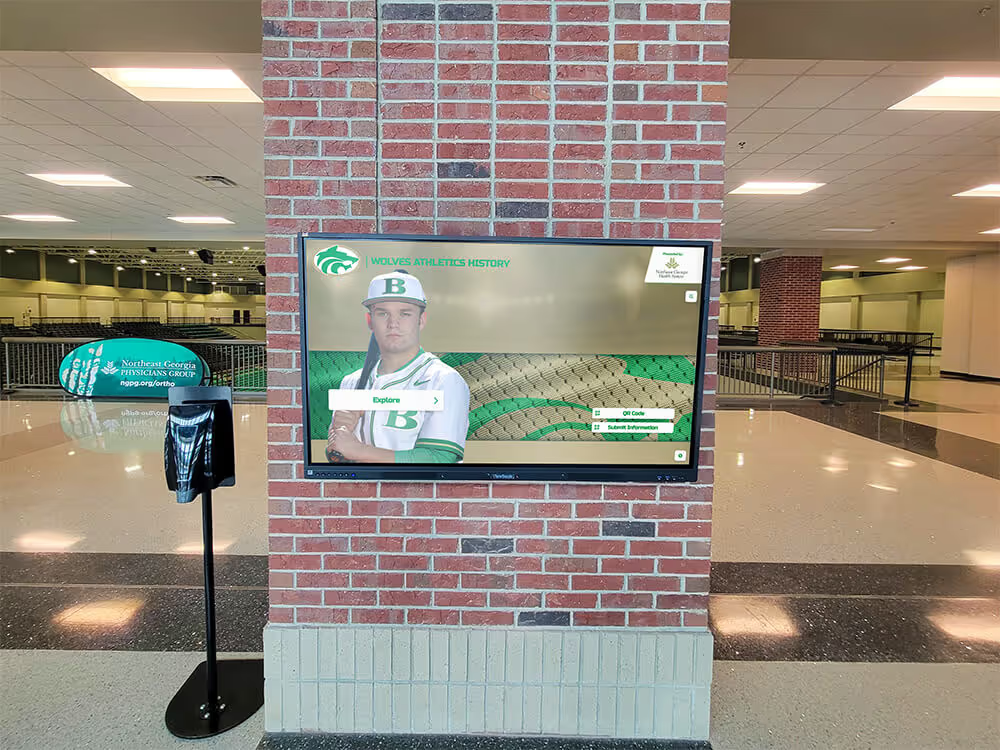
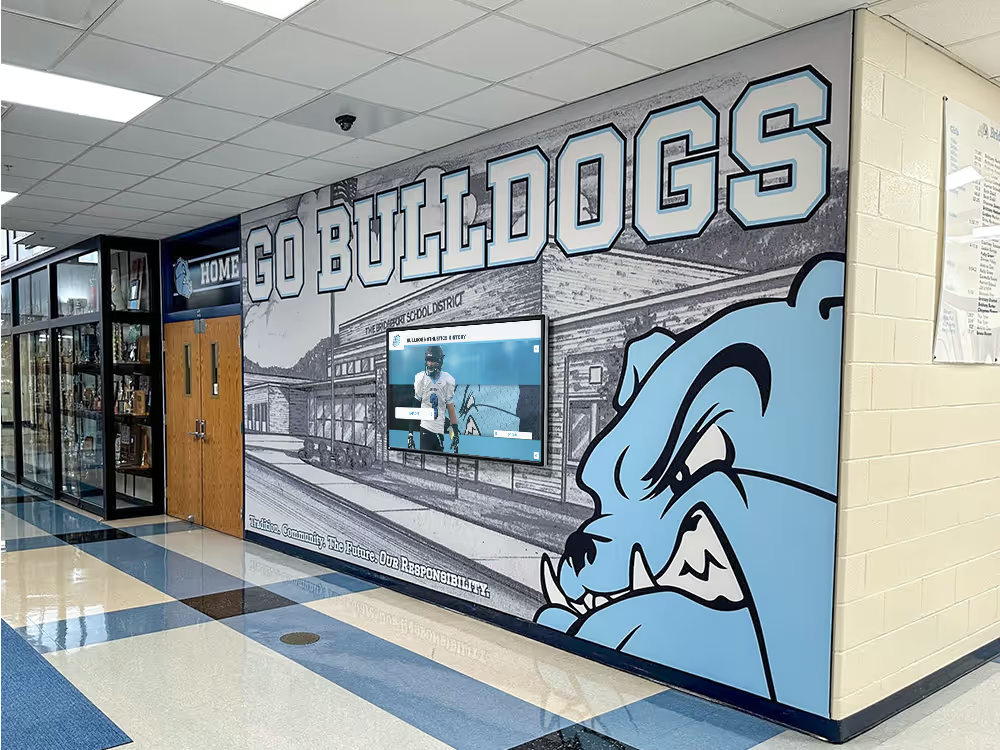
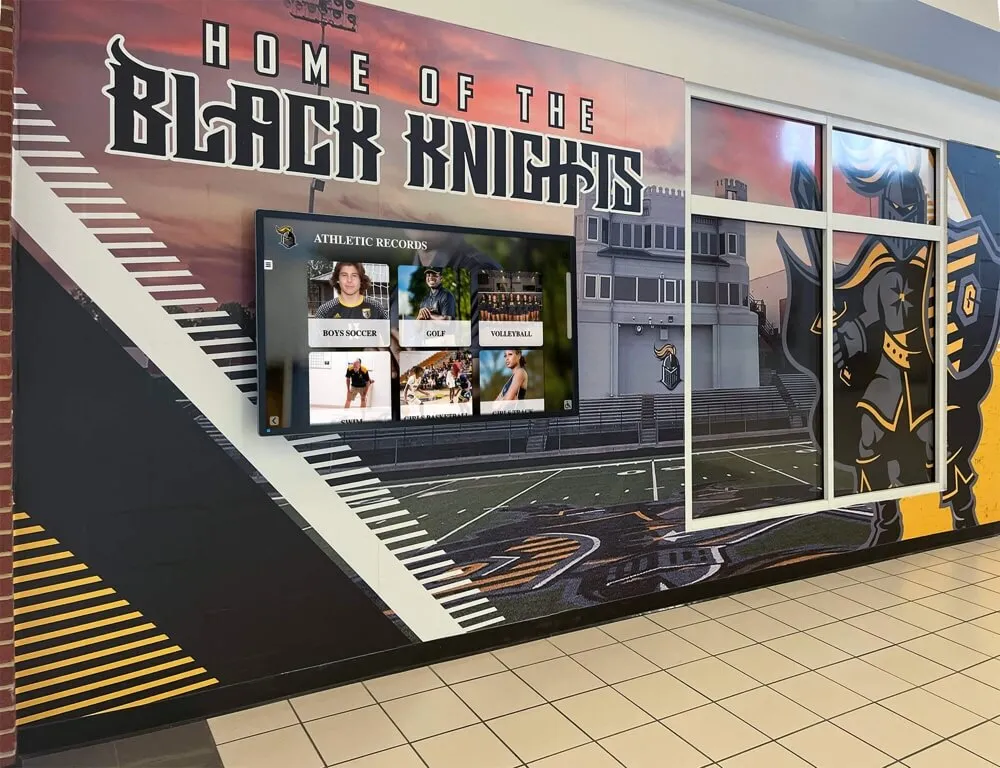
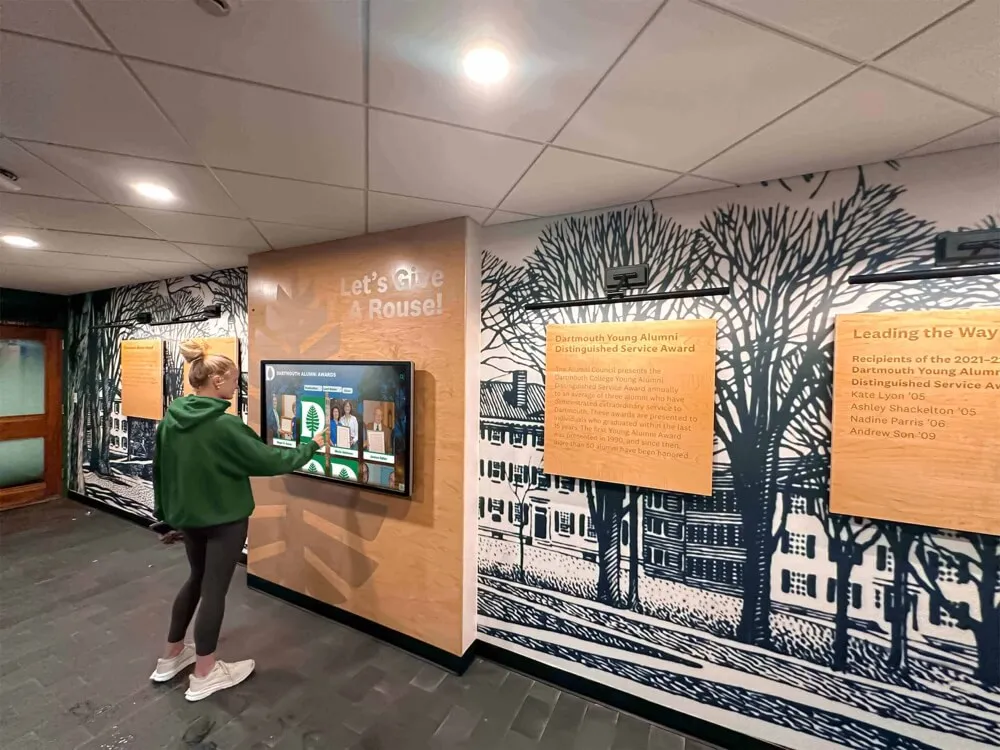
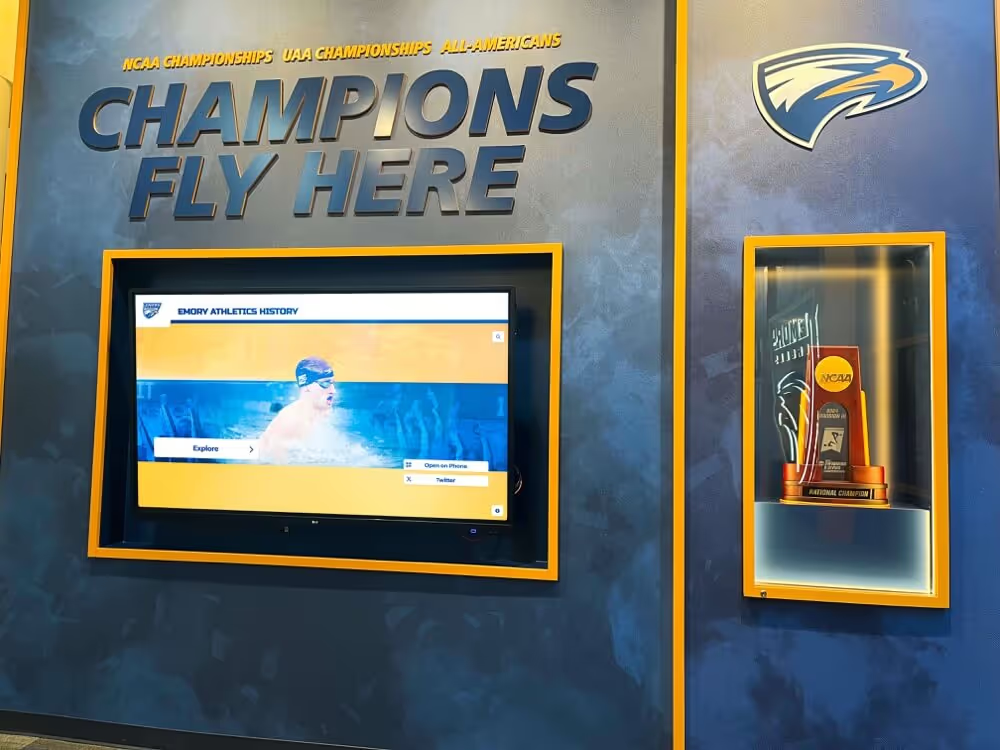
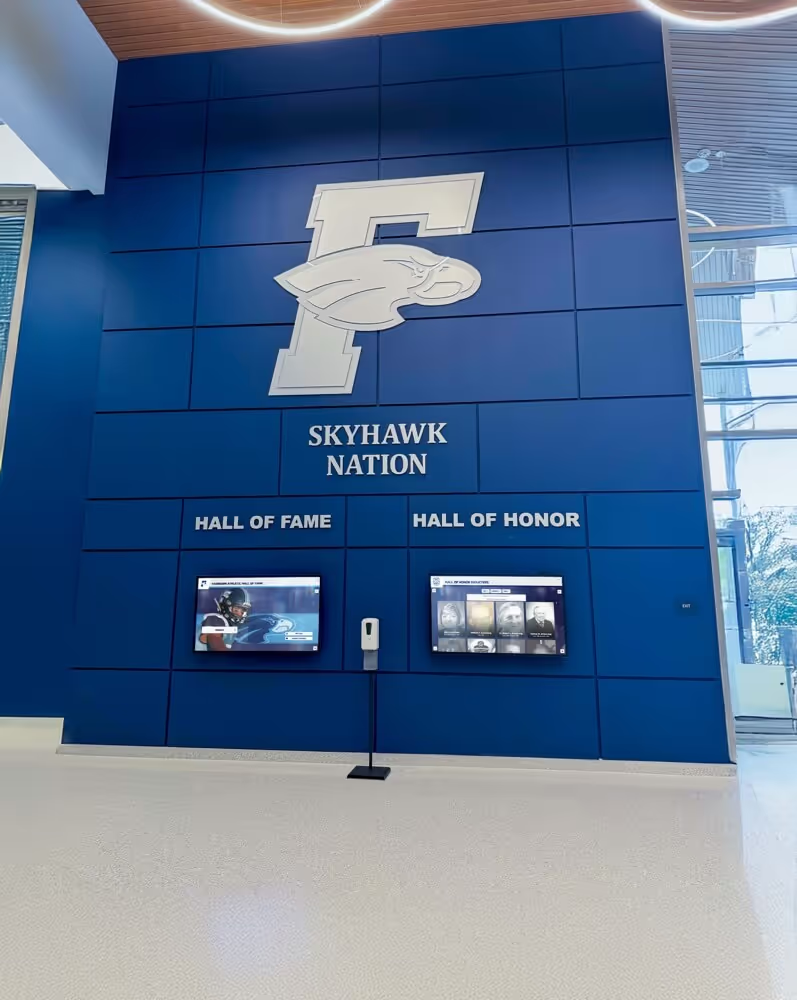
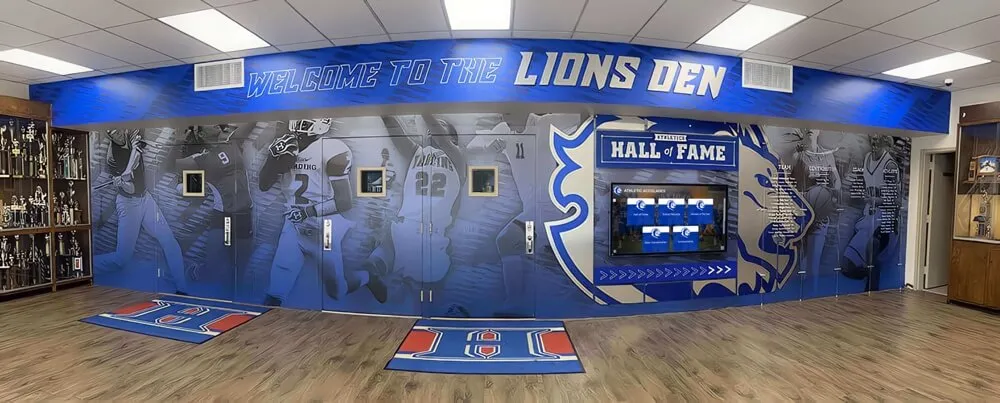
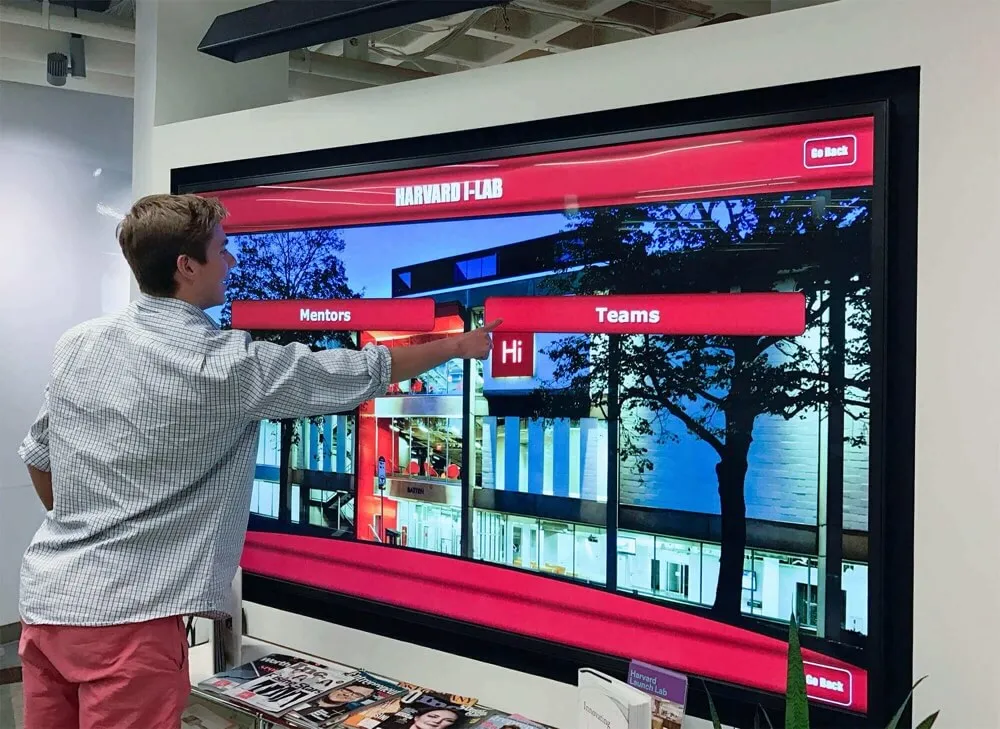
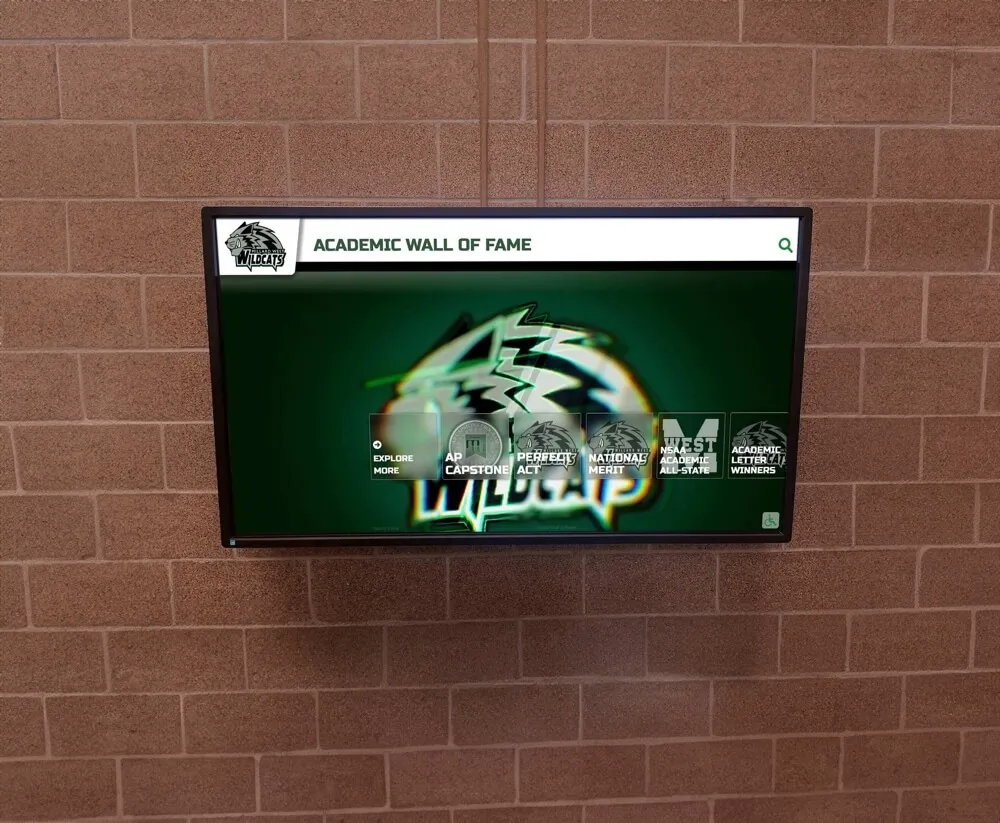
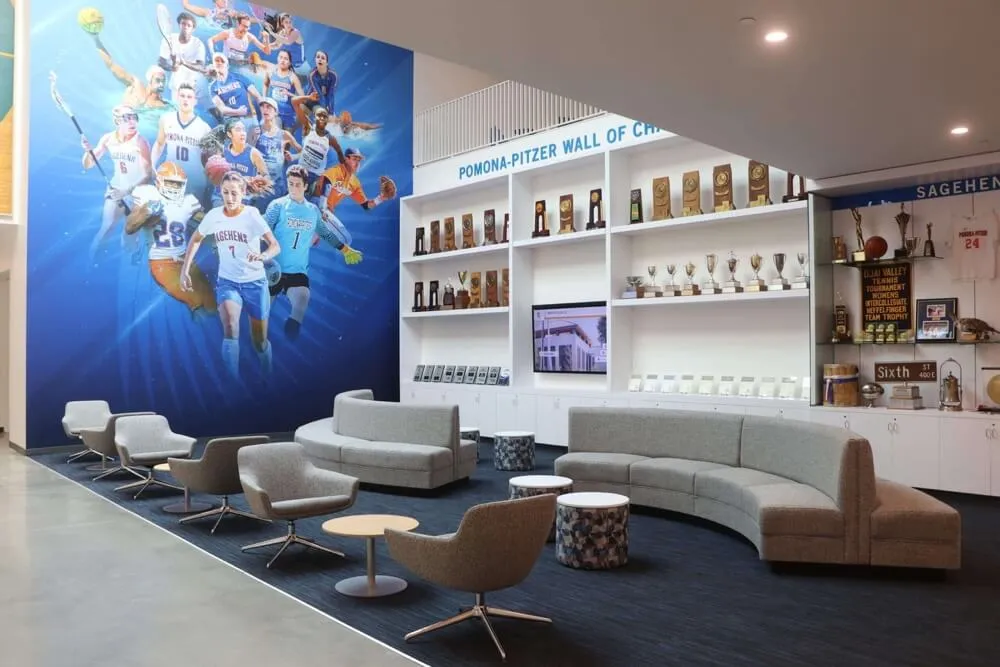
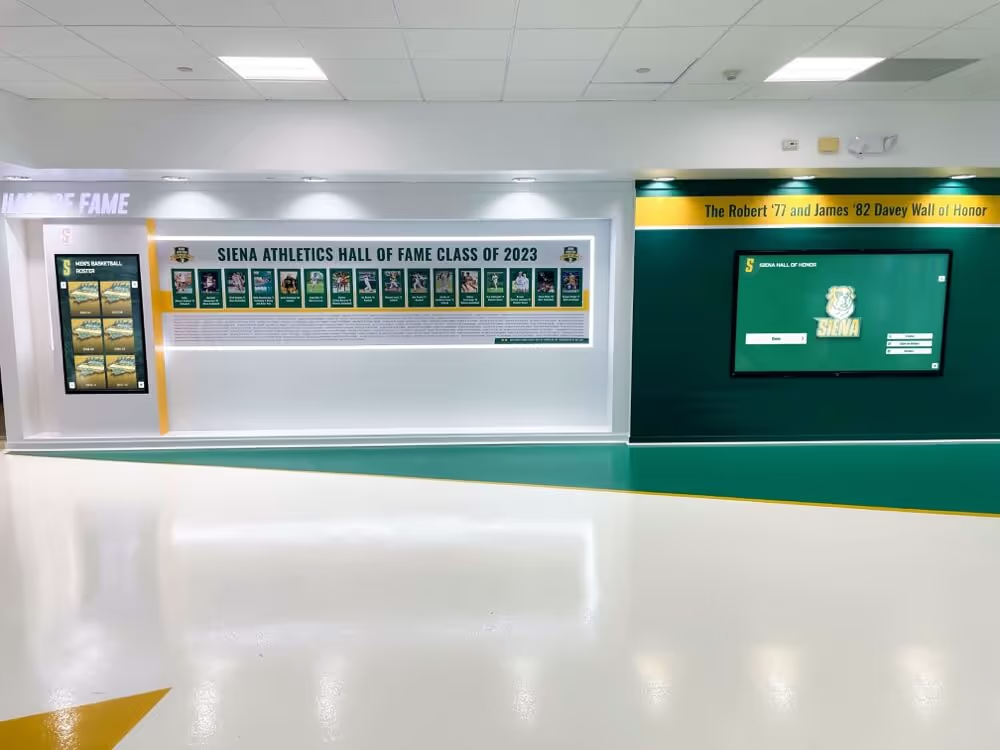
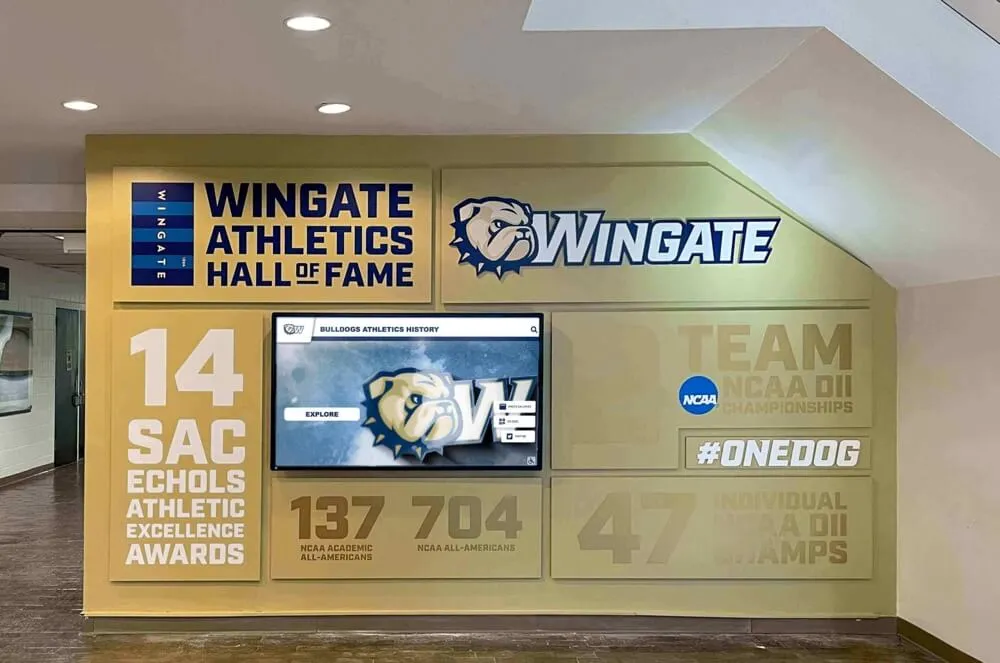
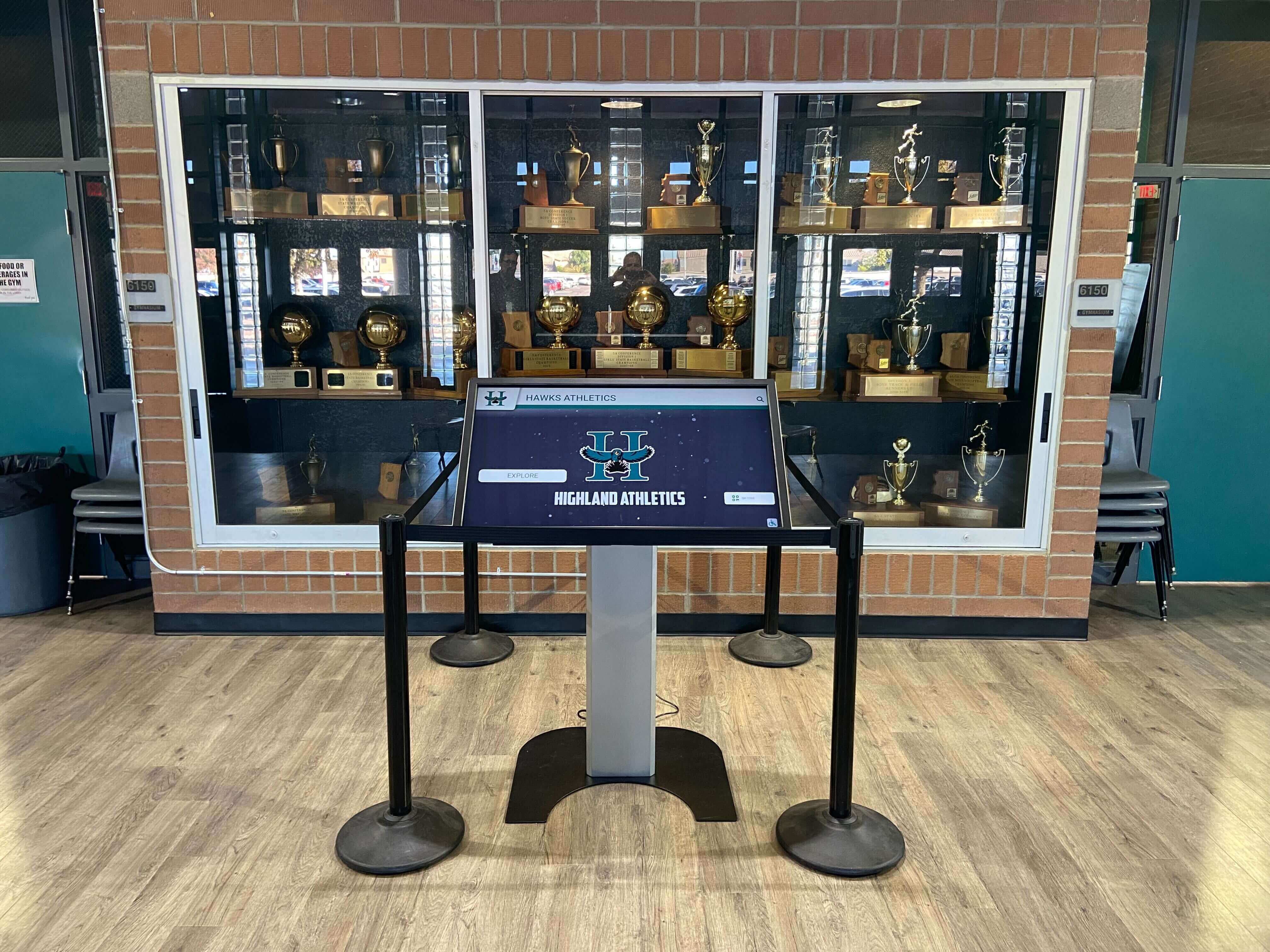
Modern trophy case designs integrate traditional physical trophies with digital displays, honoring legacy while creating space for ongoing recognition
Understanding Trophy Case Challenges: Why Schools Need Better Solutions
Before exploring specific trophy case ideas, it’s important to understand the common challenges schools face with traditional recognition displays—challenges that inform which solutions work best for different contexts.
The Space Limitation Problem
Most schools discover that athletic success creates a recognition capacity problem within just a few years:
Trophy Accumulation Outpaces Display Space
Successful athletic programs generate continuous recognition needs through championship trophies and team awards, individual athlete honors and plaques, retired jerseys recognizing exceptional careers, commemorative items from milestone events, and historical artifacts preserving program heritage. A single successful season across multiple sports can generate 10-20 physical items requiring display space, while established programs may have accumulated hundreds of trophies, plaques, and recognition items spanning decades.
Traditional trophy cases with fixed shelving can typically display 30-50 significant items before appearing cluttered. When programs exceed this capacity, schools face difficult decisions: remove historical items to make room for recent achievements, rotate displays periodically (leaving worthy recognition in storage), expand into additional cases (if space and budget allow), or maintain overcrowded displays that diminish visual impact.
Championship Trophies Require Premium Space
State championship trophies, conference titles, and major tournament awards represent peak achievements that deserve prominent display. However, these large trophies consume significant shelf space—a single championship trophy may occupy the space where 3-4 smaller awards could fit. As championship collections grow, they can dominate entire trophy cases, leaving less prominent space for individual achievement recognition, team awards, or historical items that also merit visibility.
Schools with strong athletic traditions may accumulate dozens of championship trophies across multiple sports and decades, creating impossible space management challenges when every trophy deserves prominent display but physical capacity remains fixed.

Championship trophies and major awards require prominent display space that honors achievement significance
Recognition Currency and Relevance Challenges
Beyond space limitations, traditional trophy cases face engagement and relevance issues:
Historical vs. Current Achievement Balance
Schools must balance honoring historical legacy with celebrating current student success. Trophy cases dominated by achievements from 20-30 years ago—while historically significant—may not resonate with current students who feel their accomplishments receive less prominent recognition than predecessors. Conversely, emphasizing only recent achievements risks disrespecting the alumni and historical teams whose success built program traditions.
Finding appropriate balance proves difficult when physical space constraints force zero-sum decisions between historical preservation and current recognition.
Limited Storytelling Capability
Traditional trophy cases display physical objects with minimal context. A visitor might see a state championship trophy but lack information about the team that won it, the season’s memorable moments, individual standout performances, or what made that championship special. Nameplate plaques provide basic information—sport, year, achievement—but can’t convey the complete stories behind trophies that represent hundreds of hours of dedication, sacrifice, and teamwork.
This storytelling limitation means trophy cases preserve artifacts without fully communicating the achievement narratives that inspire future student-athletes and build program culture.
Engagement and Interaction Gaps
Static trophy case displays create passive viewing experiences. Visitors walk past cases, glance at trophies, and continue onward without deep engagement. Students searching for specific achievements—a family member’s recognition, their team’s championship, or records in their sport—have no efficient way to locate information within cases displaying dozens or hundreds of items. This limited interactivity reduces trophy case impact, transforming what could be inspiring recognition experiences into background décor that receives minimal attention.
Maintenance and Update Challenges
Practical maintenance issues affect trophy case effectiveness over time:
Physical Access and Security
Many trophy cases feature locked glass doors requiring key access for any additions or changes. This security protects valuable trophies but creates friction for updates—athletic directors must coordinate with facilities staff, track down keys, and physically access cases to make changes. Consequently, updates often get delayed, leaving recent achievements awaiting display for weeks or months rather than receiving timely recognition.
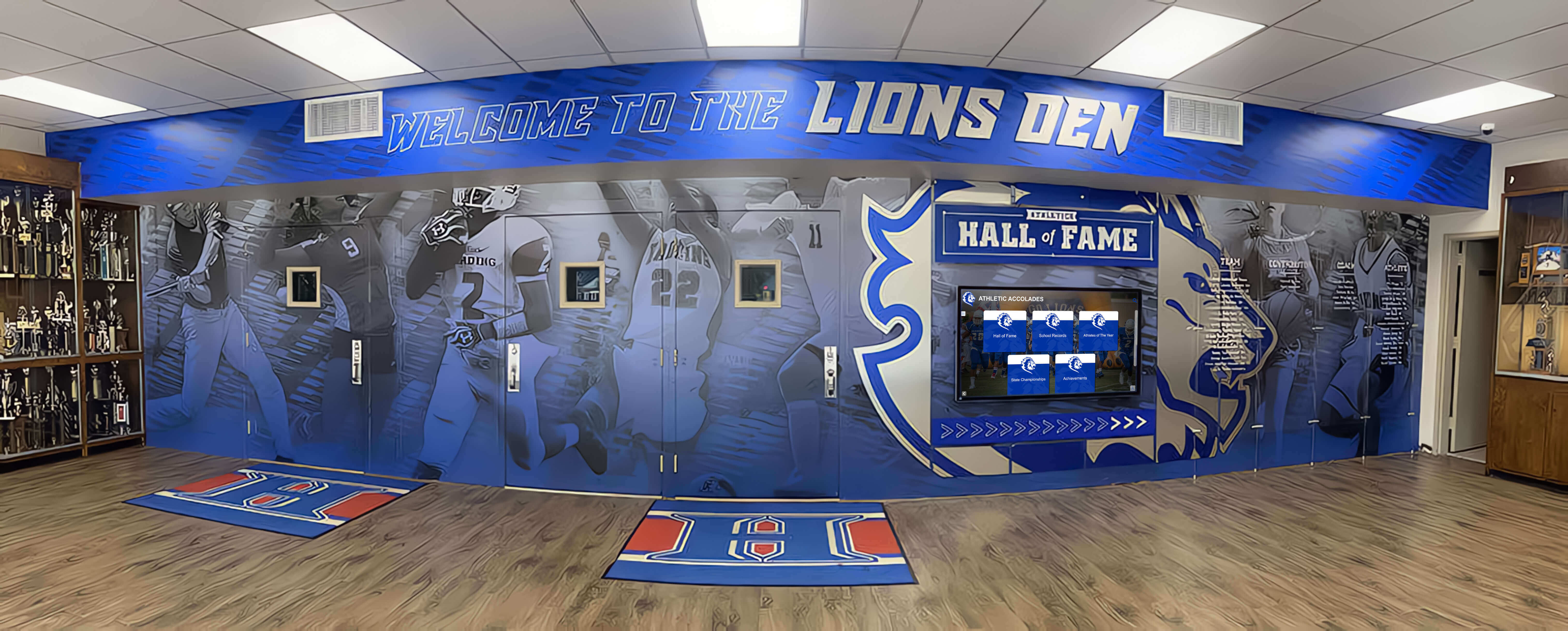
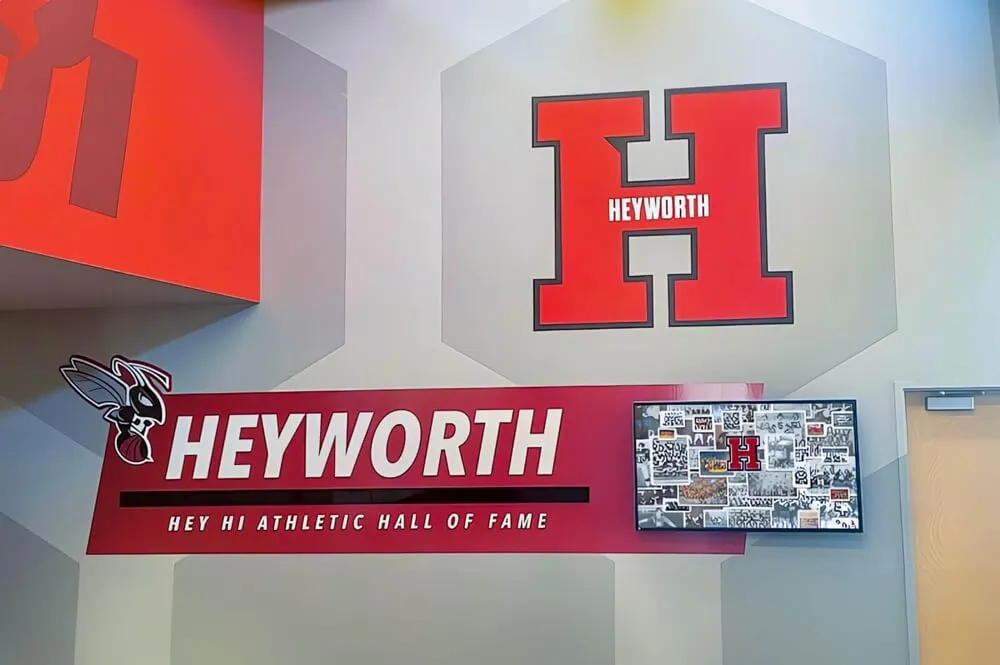
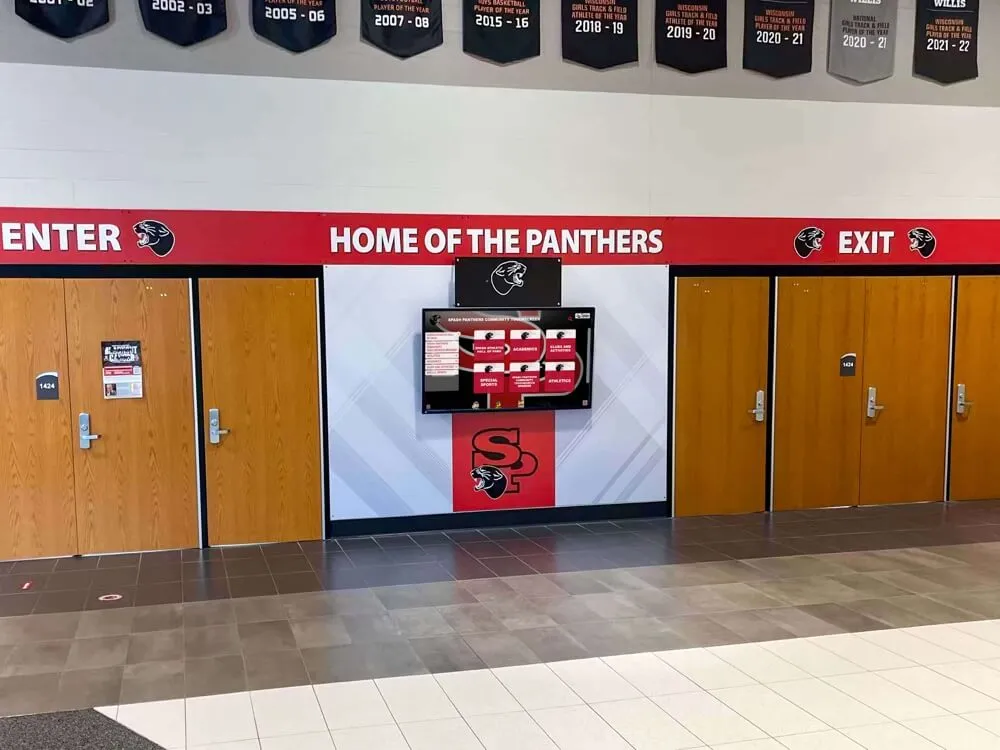
Comprehensive recognition environments combine trophy cases with broader design elements celebrating school identity
Deterioration and Cleaning Requirements
Trophies accumulate dust, plaques fade, and display materials deteriorate over time. Glass shelving collects smudges and requires regular cleaning. Nameplates yellow and become illegible. Fabric backgrounds fade. Maintaining trophy case appearance demands ongoing custodial attention that competes with numerous other facility maintenance priorities.
Neglected trophy cases communicate that schools don’t value the achievements they’re supposed to honor, undermining recognition purpose through poor presentation.
Traditional Trophy Case Ideas: Maximizing Physical Display Impact
For schools committed to traditional physical trophy displays, thoughtful design strategies maximize impact while managing space constraints effectively.
Strategic Trophy Organization and Hierarchy
How trophies are organized dramatically affects visual impact and storytelling effectiveness:
Tiered Display by Achievement Level
Organize trophies by achievement significance rather than chronologically or by sport. Reserve premium display positions—eye level, central placement, featured lighting—for the most significant accomplishments: state championships, national qualifications, and conference titles. Position team awards, tournament trophies, and participation recognition at secondary levels. This hierarchical approach immediately communicates achievement significance to viewers while ensuring the most important trophies receive appropriate prominence.
Sport-Specific Sections
Dedicate trophy case sections to individual sports, creating focused recognition areas where students and supporters can find all achievements for specific programs. This organization helps visitors navigate displays efficiently while enabling coaches and athletes to locate their teams’ recognition easily. Sport-specific sections also allow for supplementary content like record boards, team photographs, or historical program information that provides context beyond trophies alone.
Championship Spotlighting
Design special display features for championship trophies that set them apart from standard awards. This might include elevated platforms or pedestals, specialized lighting drawing attention, custom backgrounds in school colors, descriptive plaques providing championship context, or surrounding displays featuring team photos and roster information. Championship spotlighting ensures these peak achievements receive the distinctive recognition they deserve while creating visual interest that draws viewers into deeper engagement with displays.
Learn more about creating comprehensive state championship celebrations that honor team success appropriately.
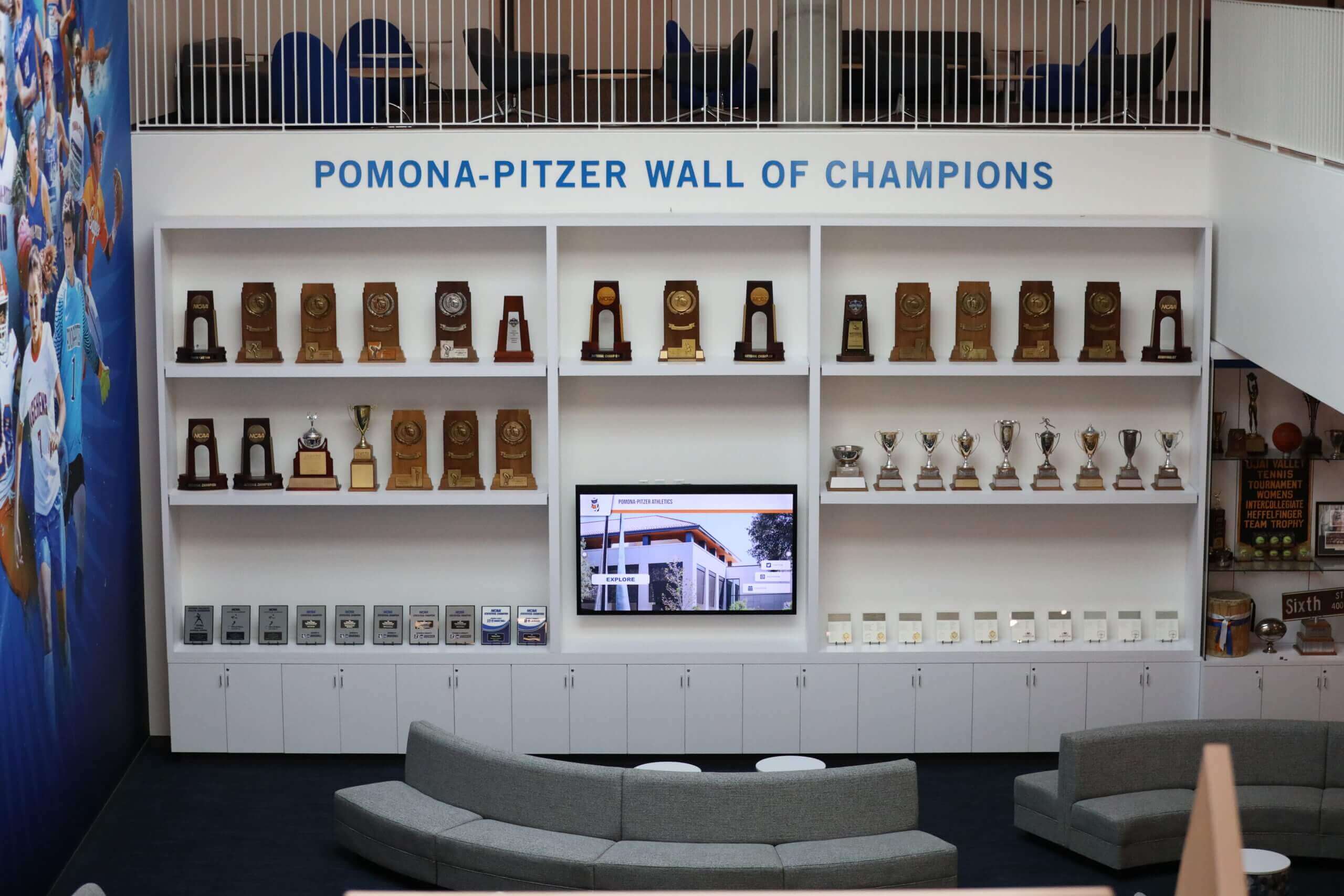
Trophy display spaces can integrate comfortable seating that invites extended engagement with recognition content
Creative Display Enhancements
Beyond basic trophy arrangement, design elements elevate traditional cases from simple storage to compelling recognition experiences:
Lighting Design
Professional lighting transforms trophy case impact dramatically. LED strip lighting along shelving edges illuminates trophies while creating visual drama. Focused spotlights highlight championship trophies or featured awards. Color-changing LED systems can cycle through school colors or provide sport-specific lighting during relevant seasons. Motion-activated lighting that engages when viewers approach conserves energy while creating interactive elements that capture attention.
Quality lighting ensures trophies remain visible and appealing even in hallways with poor natural light, prevents glare that obscures trophies behind reflective glass, and creates the visual prominence that important recognition deserves.
Custom Backgrounds and Branding
Replace generic neutral trophy case backgrounds with custom designs that reinforce school identity and create visual interest through school colors and mascot imagery, vinyl graphics featuring team mottos or championship years, textured materials like wood paneling or fabric, dimensional elements creating depth, and thematic designs connecting to specific sports or achievement categories.
Custom backgrounds transform trophy cases from simple glass boxes into branded recognition installations that strengthen school identity while providing context that makes individual trophies more meaningful.
Multimedia Integration with Traditional Cases
Even within traditional trophy case frameworks, schools can integrate modern elements that enhance storytelling through small digital screens displaying rotating championship photos, QR codes linking to detailed achievement information online, NFC tags enabling smartphone interactions, or audio systems providing ambient sound or triggered narration. These hybrid approaches preserve the tangible appeal of physical trophies while addressing storytelling limitations through supplementary digital content.
Retired Jersey Display Ideas
Retired jerseys represent the highest individual honor athletic programs bestow, warranting special display consideration:
Framed Jersey Presentations
Professional framing elevates retired jersey displays through museum-quality shadow boxes protecting jerseys from dust and deterioration, custom matting in school colors with engraved nameplates, background materials showcasing team logos or photos, UV-protective glass preventing fabric fading, and integrated lighting within frames ensuring visibility.
Framed jersey displays can be mounted on walls adjacent to trophy cases, creating comprehensive recognition environments that honor both team and individual excellence.
Suspended Jersey Displays
Some schools suspend retired jerseys from ceiling mounts or specialized display systems that showcase jerseys as three-dimensional objects rather than flat presentations. This approach creates visual drama while providing 360-degree visibility. Suspended jersey displays work particularly well in gymnasiums, field houses, or athletic facility lobbies with adequate ceiling height and sight lines.
Explore creative approaches to basketball senior night recognition that honor student-athletes appropriately throughout their careers.
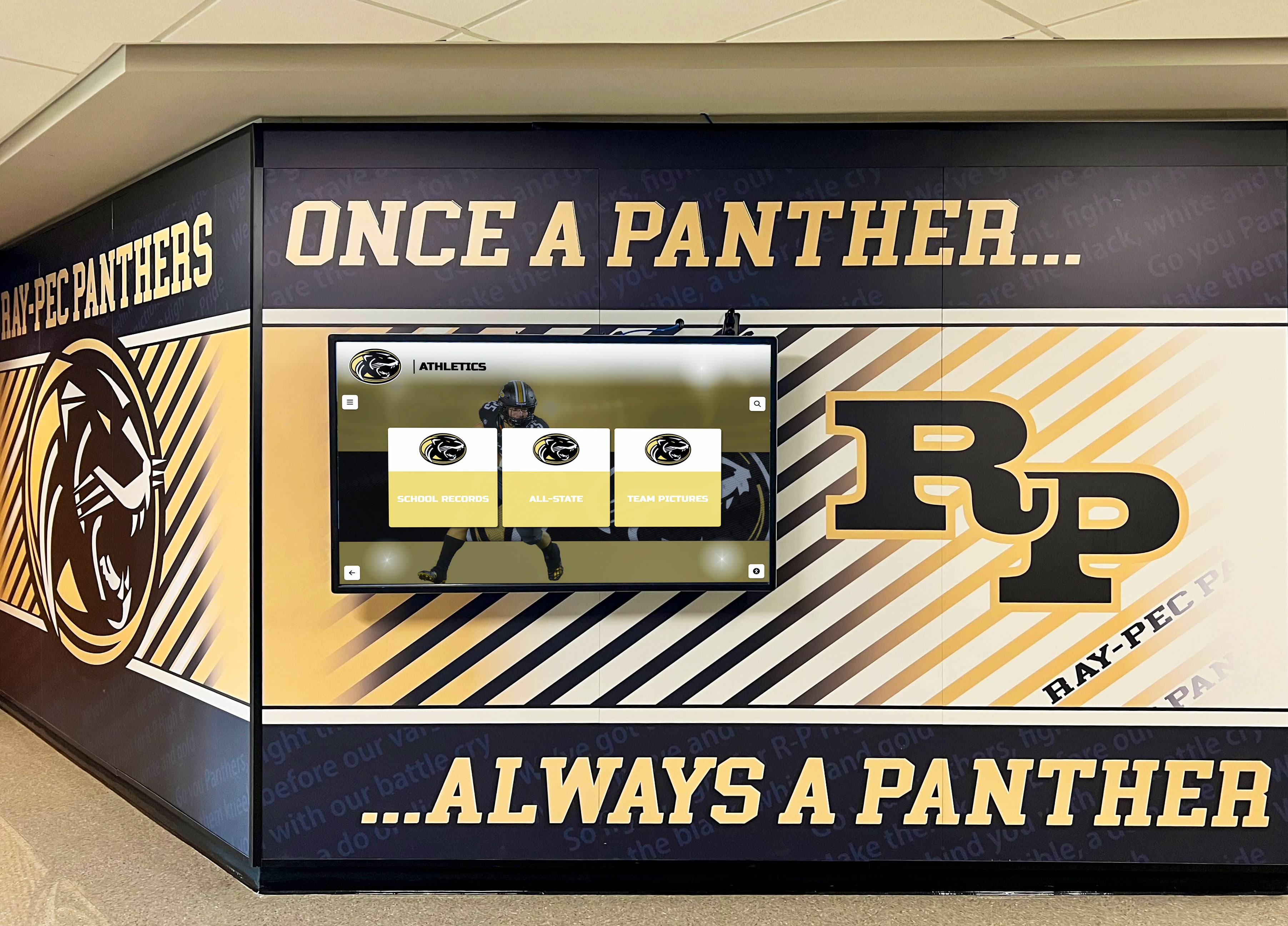
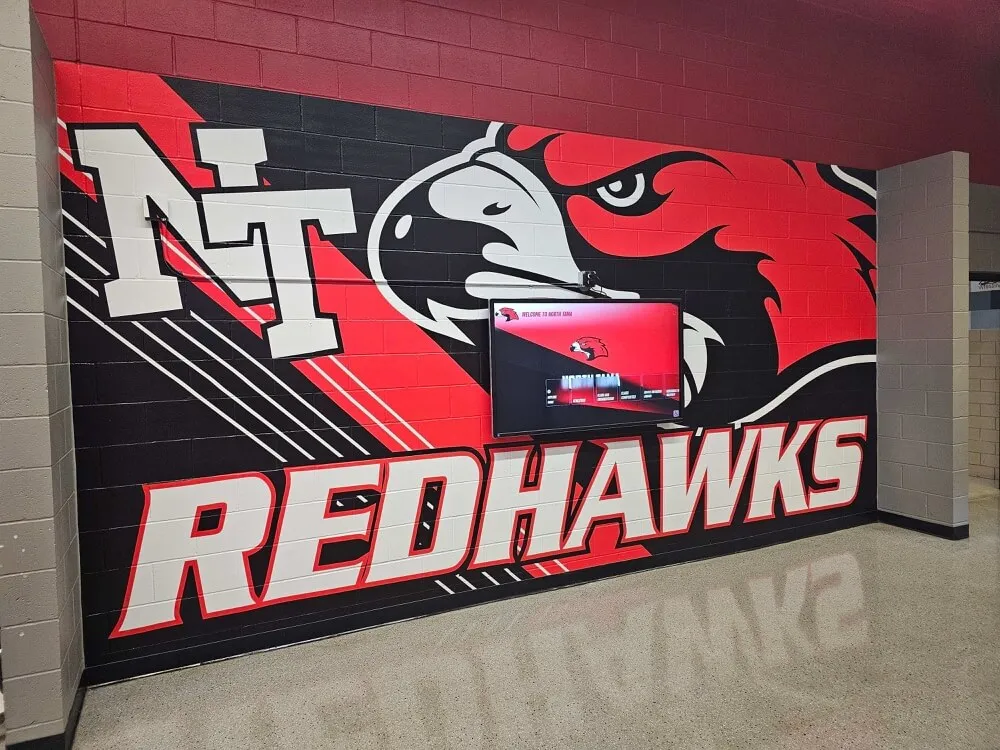
Wall-mounted displays combined with branded murals create immersive recognition environments that celebrate school pride
Modern Trophy Case Alternatives: Expanding Recognition Capacity
When traditional trophy cases reach capacity or fail to meet current needs, schools have numerous alternatives that expand recognition while often reducing long-term costs and maintenance.
Digital Trophy Case Solutions
Digital displays represent the most comprehensive solution to traditional trophy case limitations, offering unlimited recognition capacity and enhanced engagement:
Interactive Touchscreen Trophy Cases
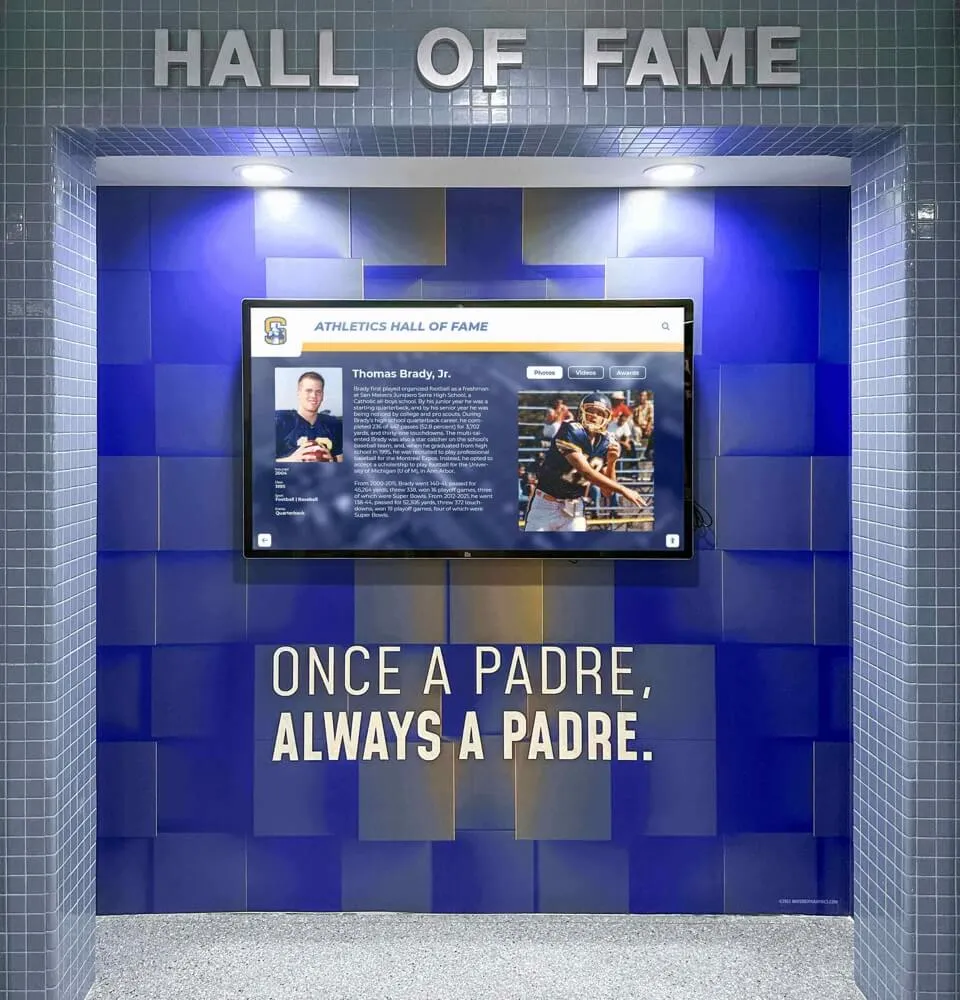
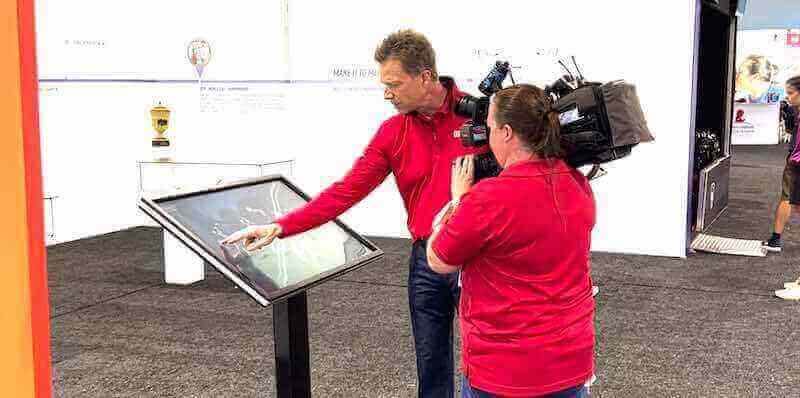
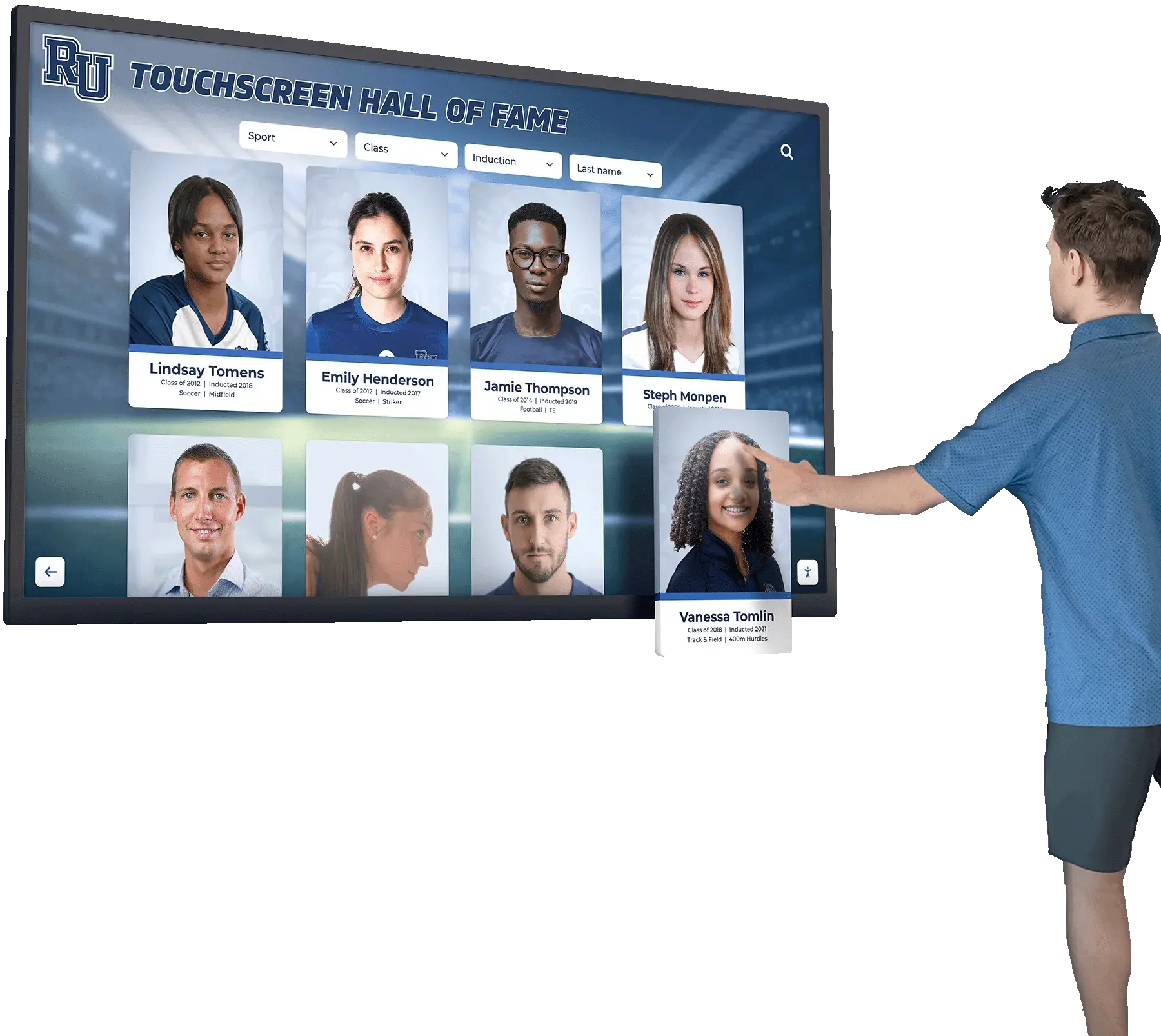
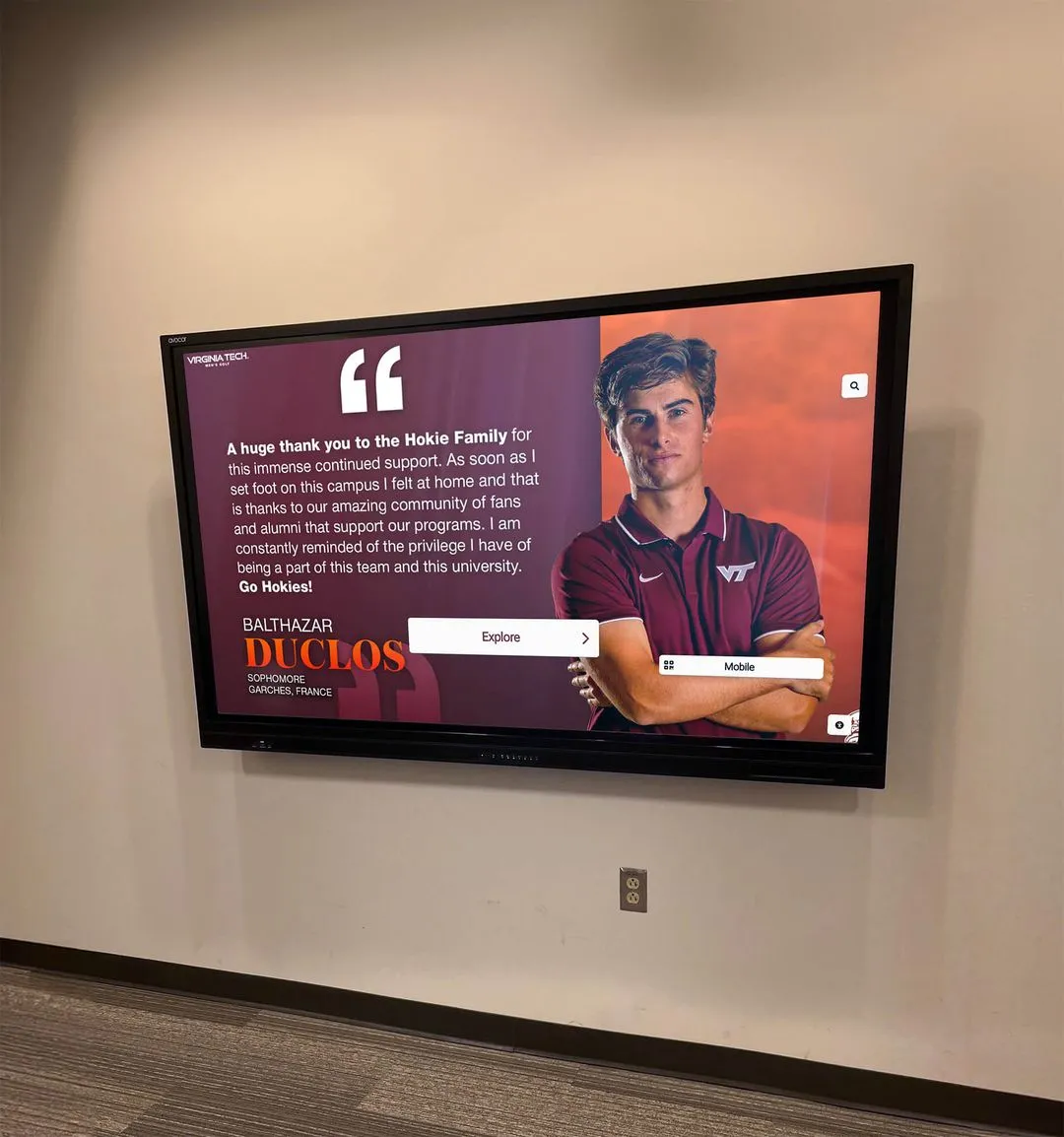
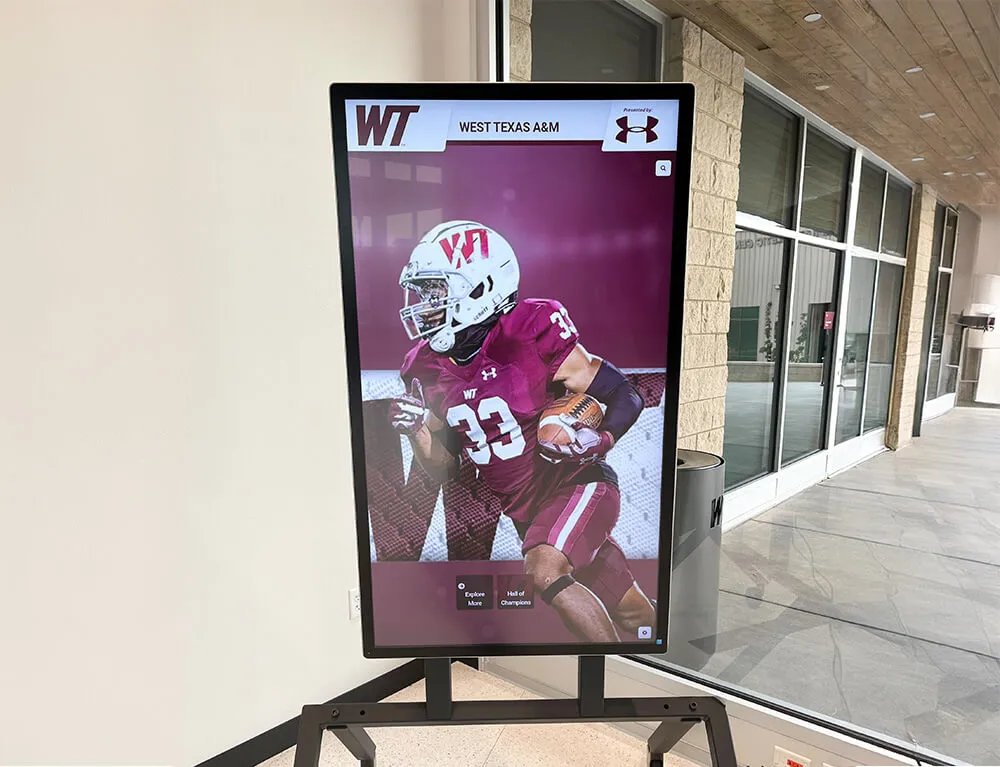
Purpose-built touchscreen kiosks function as “digital trophy cases” that overcome physical space limitations through unlimited digital storage capacity for thousands of achievements, searchable databases enabling visitors to find specific teams or athletes, multimedia content including photos, videos, and detailed narratives, real-time updates allowing immediate recognition of new achievements, and dynamic displays that can be refreshed seasonally or themed around current sports.
Digital trophy cases eliminate the zero-sum space allocation problem—adding new recognition doesn’t require removing historical content, ensuring comprehensive archives that honor all achievement levels across program history. Solutions like Rocket Alumni Solutions provide complete digital recognition systems designed specifically for schools, combining commercial-grade touchscreen hardware with intuitive content management that athletic directors and staff can update without technical expertise.
Benefits of Digital Trophy Case Systems
Schools implementing digital recognition report transformative improvements over traditional cases:
- Unlimited Capacity: Display every achievement without space constraints, honoring all recognition levels from team awards to championship trophies
- Enhanced Storytelling: Include team photos, season recaps, individual athlete highlights, game footage, and detailed context that physical trophies can’t convey
- Easy Updates: Add new achievements in minutes through cloud-based management rather than physical case access requiring facility coordination
- Searchability: Visitors can quickly find specific teams, years, sports, or individual athletes rather than scanning crowded cases
- Cost-Effectiveness: Eliminate recurring engraving costs and physical display expansion expenses while gaining recognition capacity that scales indefinitely
- Engagement Analytics: Understand what recognition content resonates most with visitors through usage data informing future recognition strategies
Learn more about implementing comprehensive digital trophy case touchscreen awards systems in school environments.
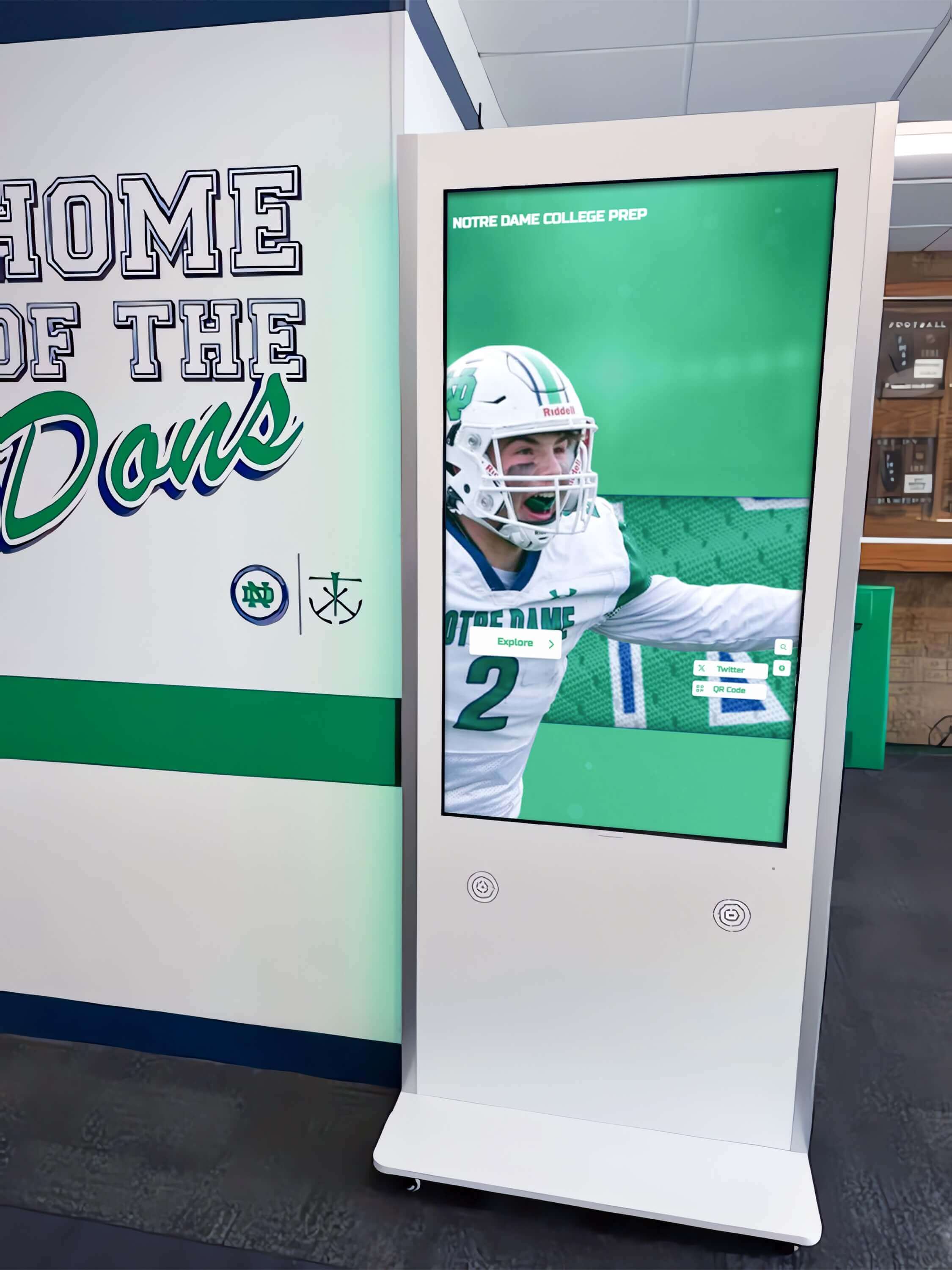
Interactive kiosks create engaging exploration experiences while solving space limitations of traditional trophy cases
Integration with Physical Trophies
Digital trophy cases don’t require eliminating physical trophies entirely. Many schools implement hybrid approaches where the most significant championship trophies remain in traditional physical displays while comprehensive digital systems provide the recognition capacity needed for team awards, individual honors, historical archives, and detailed storytelling that physical displays can’t accommodate.
This hybrid approach preserves the tangible appeal and tradition of physical championship trophies while leveraging digital advantages for comprehensive recognition that honors all achievement levels appropriately.
Wall-Mounted Recognition Systems
When floor space is limited but wall space is available, wall-mounted recognition provides alternatives to traditional floor-standing trophy cases:
Digital Wall Displays
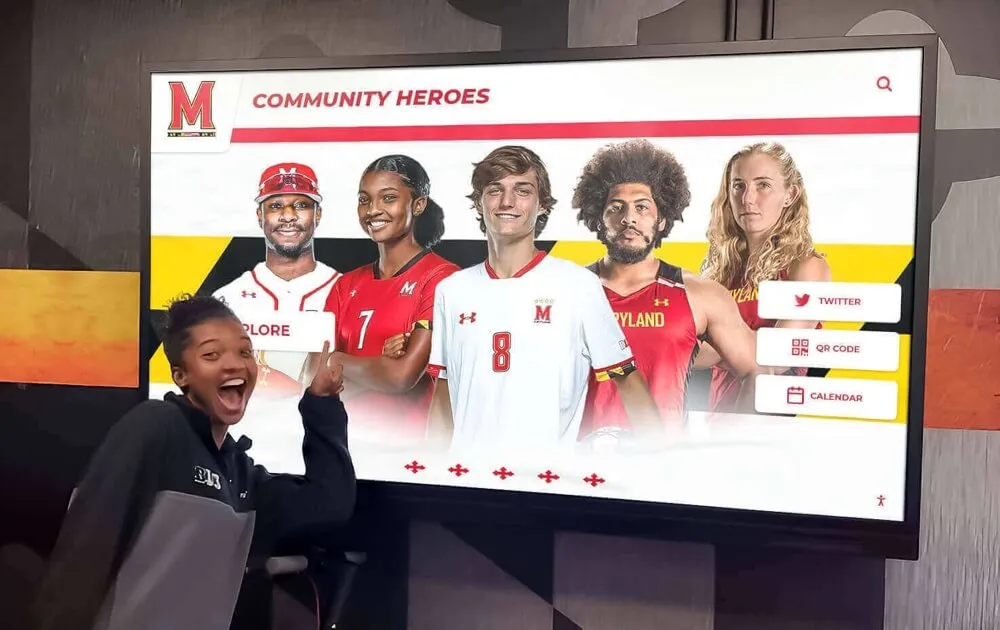
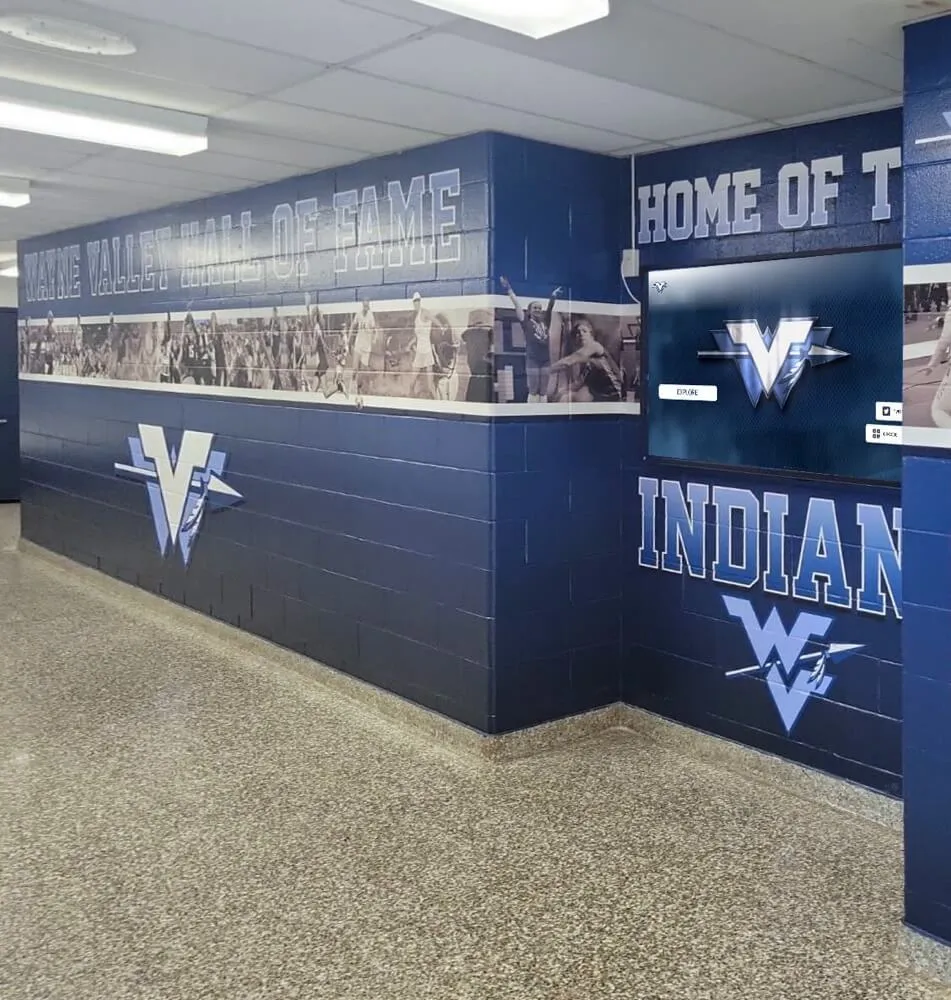
Large-format touchscreen displays mounted on gymnasium walls, athletic corridor walls, or facility lobby areas create impressive recognition installations. These displays can showcase rotating achievement content, championship celebrations, athlete profiles, record boards, and historical program information without consuming floor space needed for circulation or other purposes.
Wall-mounted digital displays work particularly well in gymnasiums where they provide engaging content during games and events while serving daily recognition functions during regular school operations.
Modular Physical Display Systems
Wall-mounted shelving systems with specialized trophy holders, lighting, and display features provide alternatives to traditional floor-standing cases. These modular systems offer flexibility—schools can expand displays vertically or horizontally as recognition needs grow—while maintaining more organized, intentional appearance than improvised wall shelving.
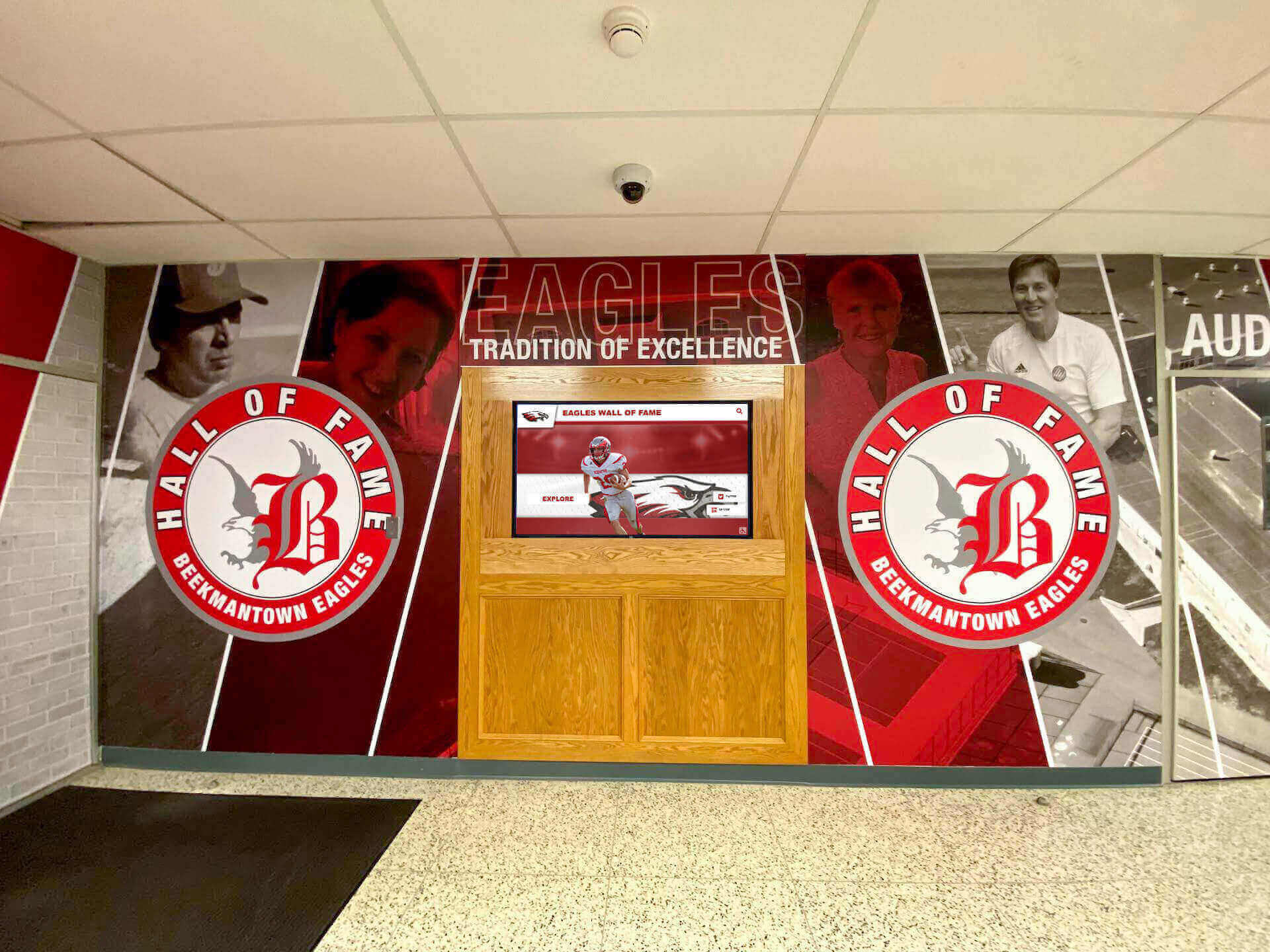
Comprehensive recognition murals integrate physical and digital elements celebrating school athletic tradition
Recognition Rooms and Dedicated Athletic Spaces
Schools with adequate facility space can create dedicated recognition environments that far exceed trophy case capacity:
Athletic Hall of Fame Rooms
Purpose-designed recognition rooms provide immersive environments celebrating athletic program history and achievement. These spaces might include trophy displays along multiple walls, framed team photographs spanning program history, retired jersey collections, record boards and statistical achievements, interactive digital displays providing comprehensive athlete and team profiles, and historical artifacts preserving program heritage.
Recognition rooms transform trophy display from hallway fixtures into destination spaces where students, alumni, and visitors can spend meaningful time exploring program history and connecting with athletic traditions. Discover approaches to creating impactful athletic building digital touchscreen team records displays.
Lobby and Entrance Recognition Installations
Athletic facility lobbies offer premium real estate for comprehensive recognition installations combining physical trophies, retired jerseys, championship banners, large-format graphics, digital displays, and branded design elements. These entrance installations create immediate impressions that communicate program excellence while serving as gathering spaces before and after events where recognition content generates conversation and strengthens community connections.
Record Boards and Statistical Recognition
Beyond trophies celebrating team success, statistical record boards honor individual excellence while creating aspirational targets:
Traditional Printed Record Boards
Permanent or semi-permanent record boards displaying school and program records provide recognition for individual standout performances. These boards typically showcase records by sport including career statistical leaders, single-season achievements, single-game performances, relay or team records, and historical progression showing how records evolved over decades.
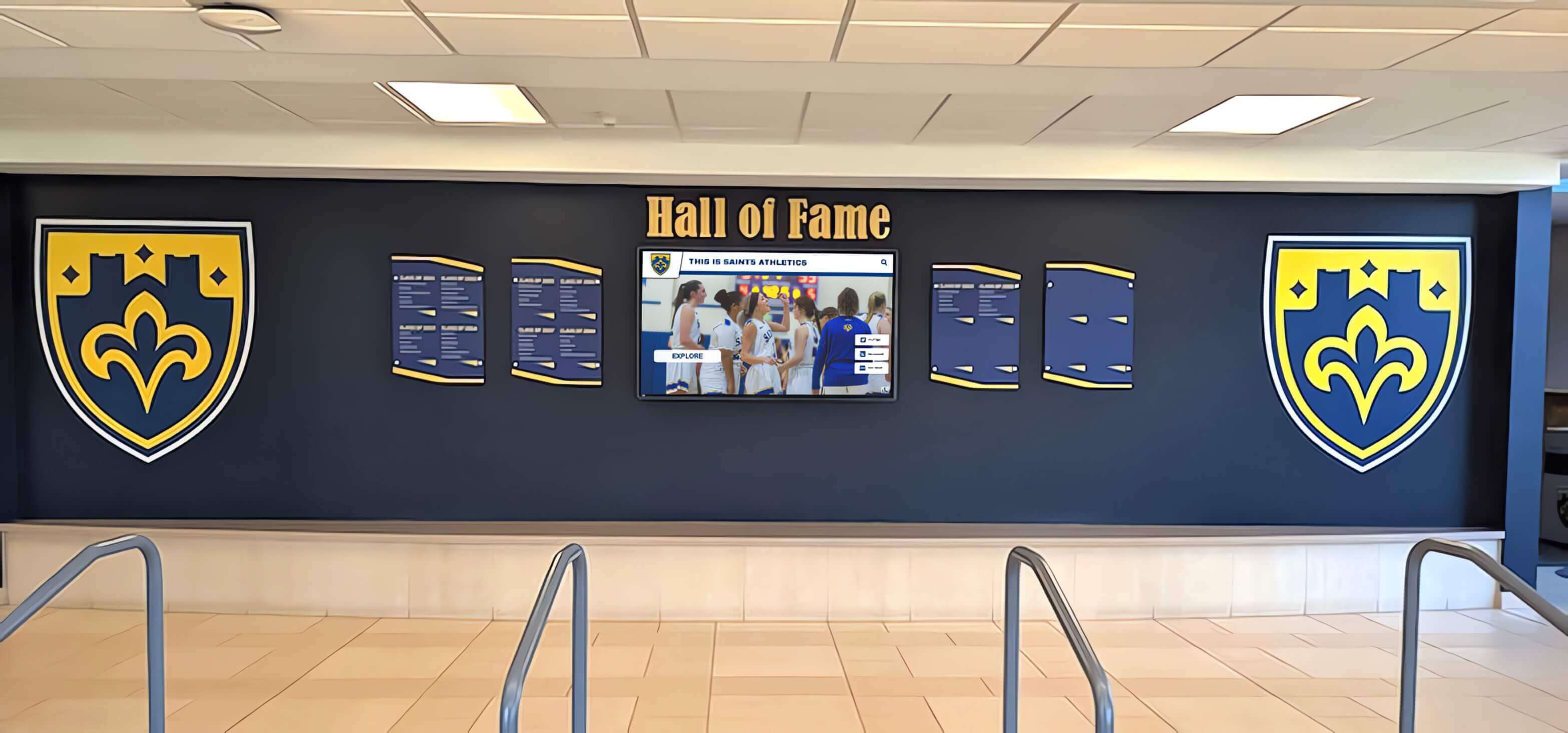
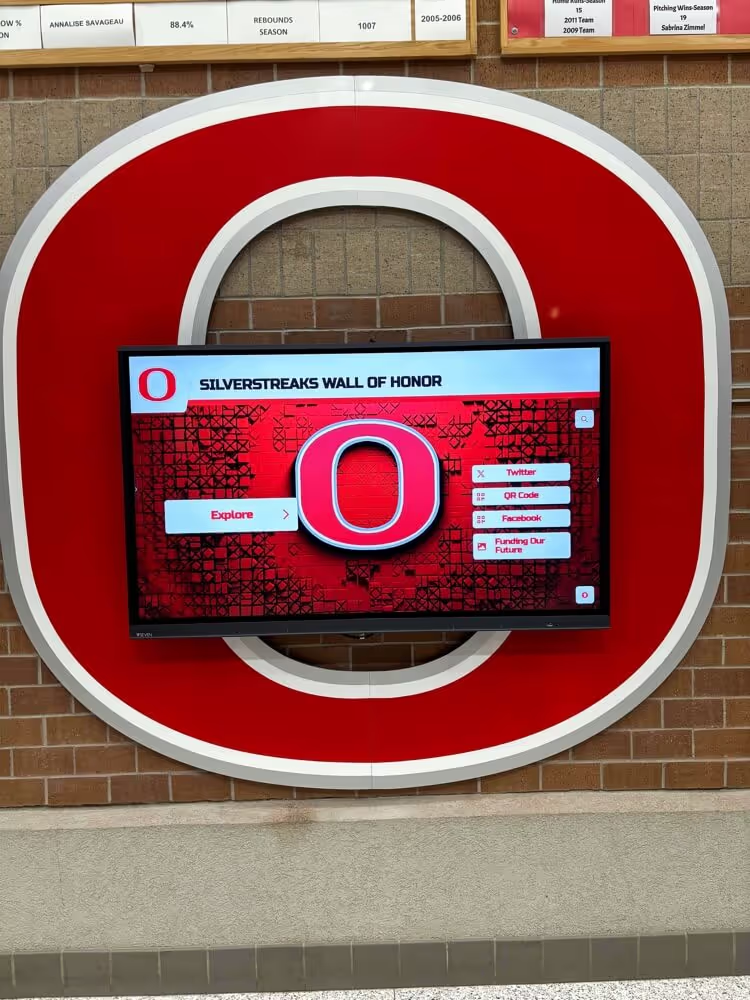
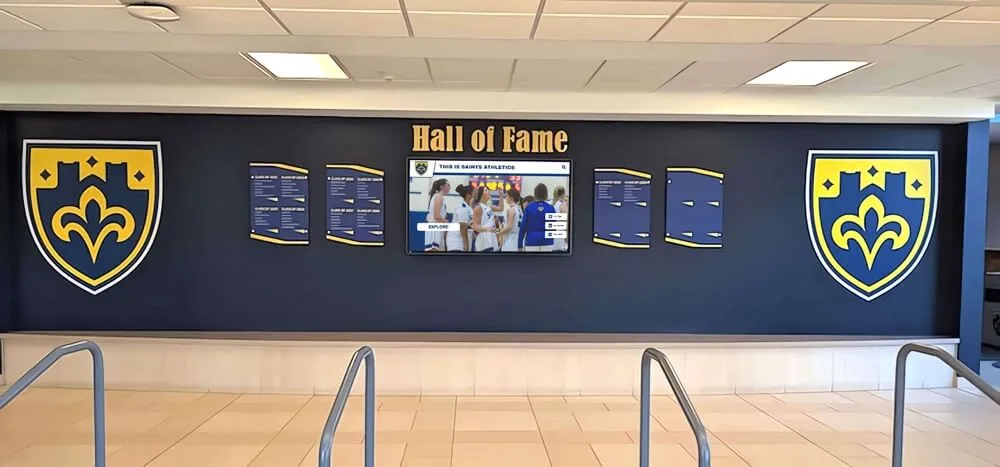
Shield-based recognition walls honor individual and team achievements while incorporating modern display technology
Digital Record Board Systems
Digital record displays provide significant advantages over printed boards including automatic updating as records fall, detailed athlete profiles for record holders, filtering by sport, gender, time period, or record category, comparison features showing current season statistics against records, and historical context explaining the significance of particularly impressive records.
Digital record boards also solve the common problem of outdated printed boards displaying records that have since been broken but weren’t updated due to the expense and difficulty of re-producing physical displays.
Designing Comprehensive Recognition Environments
The most effective school recognition extends beyond isolated trophy cases to create comprehensive environments celebrating achievement across multiple formats and locations.
Multi-Location Recognition Strategy
Strategic recognition placement ensures visibility and impact:
Main Building Lobby Recognition
School entrance lobbies provide high-visibility locations where recognition reaches the broadest audiences including prospective families on tours, community members attending events, students passing through daily, and visitors conducting school business. Lobby recognition should emphasize the most significant achievements—championship trophies, state titles, major awards—while providing clear navigation to more comprehensive recognition in specialized locations.
Athletic Facility Recognition
Gymnasiums, field houses, and athletic buildings warrant dedicated recognition installations serving athletes, coaches, and sports-focused visitors. Athletic facility recognition can be more comprehensive and sport-specific, including detailed team histories, athlete profiles, coaching recognition, and season-by-season documentation that would overwhelm general-purpose lobby displays but appropriately serves athletic community members seeking deeper program information.
Sport-Specific Recognition Locations
Consider recognition displays in relevant locations like swimming record boards in natatorium lobbies, wrestling achievement displays near wrestling rooms, track and field records at stadium entrances, or performing arts recognition in auditorium lobbies. These targeted installations honor specific programs while creating recognition opportunities in specialized spaces that don’t compete for limited prime lobby real estate.
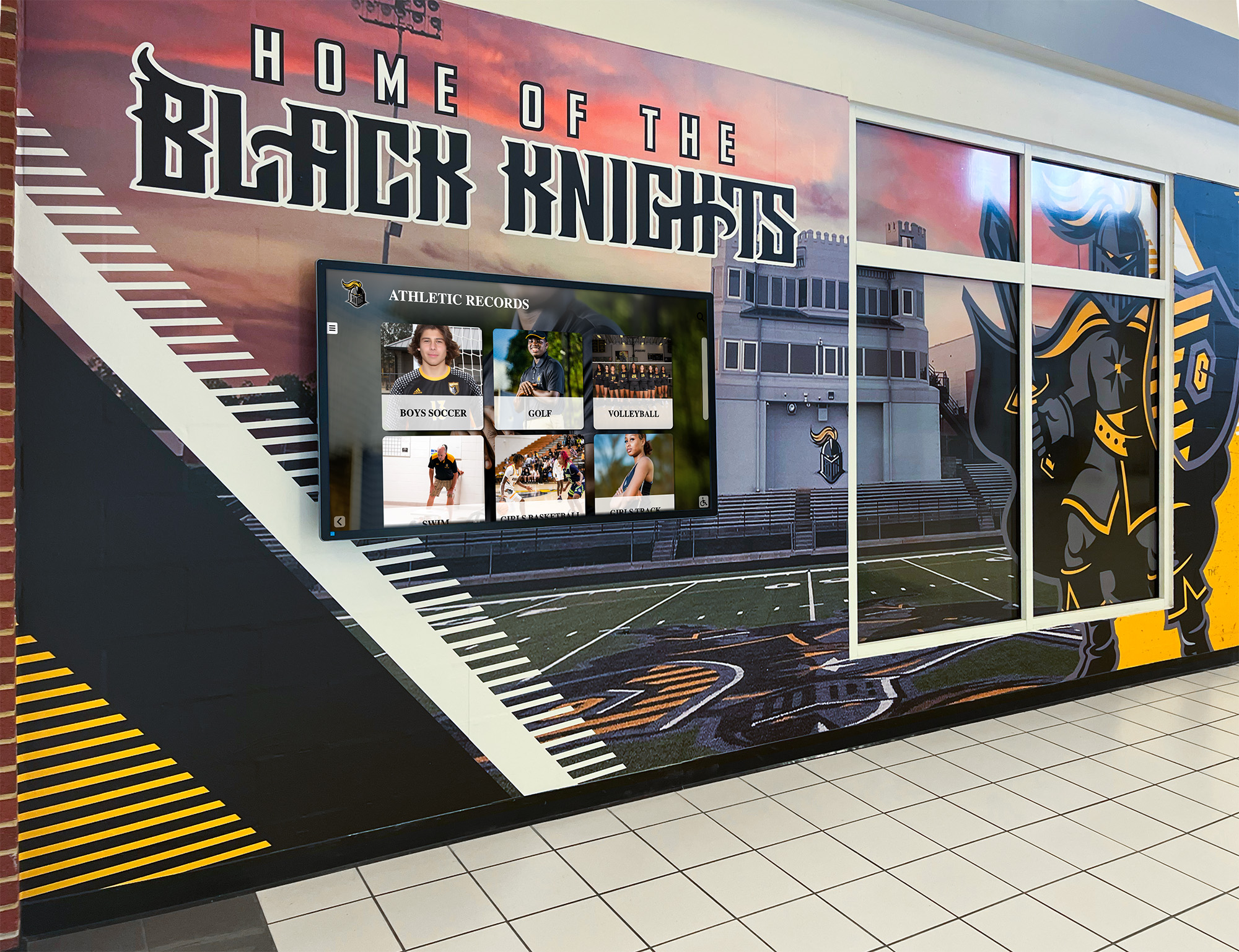
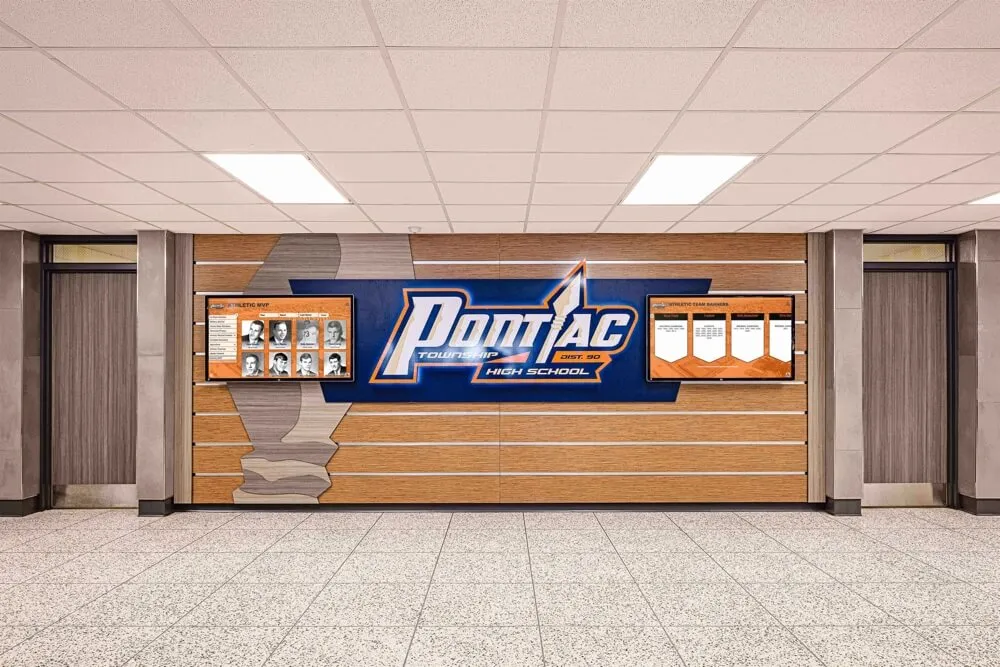
Hallway recognition installations transform circulation spaces into daily celebration of athletic excellence
Integrating Digital and Physical Recognition
Hybrid approaches leveraging both traditional and digital recognition create comprehensive systems greater than either approach alone:
Physical Trophies with Digital Context
Maintain traditional trophy case displays for major championships while positioning adjacent digital displays that provide the context and storytelling physical trophies lack. Visitors can view the actual championship trophy while accessing digital content featuring team photos, season highlights, roster information, game footage, and championship game recaps through nearby touchscreens.
This integration preserves trophy tradition while solving storytelling limitations, creating richer recognition experiences than either format provides independently.
QR Codes Linking Physical to Digital
Even when comprehensive digital systems aren’t feasible, simple QR codes placed near physical trophy displays can link to online content providing additional information. Schools can create web pages or digital documents featuring detailed achievement information, then place QR codes on trophy case nameplates enabling smartphone users to access expanded content instantly.
Seasonal Content Rotation
Digital displays enable content strategies impossible with static physical cases. Schools can feature in-season sports prominently, rotating recognition content to match the athletic calendar. During basketball season, digital displays can highlight basketball championships, current team rosters, and historical program achievements, then shift focus to baseball and softball as seasons transition. This seasonal rotation keeps recognition current and relevant while maintaining engagement throughout the year.
Donor Recognition Integration
Athletic facilities and recognition installations often receive support from booster clubs, donors, and sponsors whose contributions merit acknowledgment:
Naming Rights and Major Donor Recognition
Trophy cases, recognition rooms, and digital displays themselves can honor major donors whose gifts funded facility improvements, equipment purchases, or program enhancements. Naming plaques, donor recognition displays, or digital content acknowledging support ensure contributors receive appropriate visibility while demonstrating to prospective donors that philanthropic support receives genuine acknowledgment.
Learn about comprehensive booster club donor recognition displays that celebrate athletic program supporters.
Sponsor Recognition in Digital Displays
Digital recognition systems can include appropriate sponsor acknowledgment for businesses and organizations supporting athletic programs. Rotating sponsor displays or sponsor sections within digital recognition content provide visibility that traditional trophy cases can’t offer, creating recognition opportunities that may help schools secure ongoing support from community businesses invested in athletic program success.
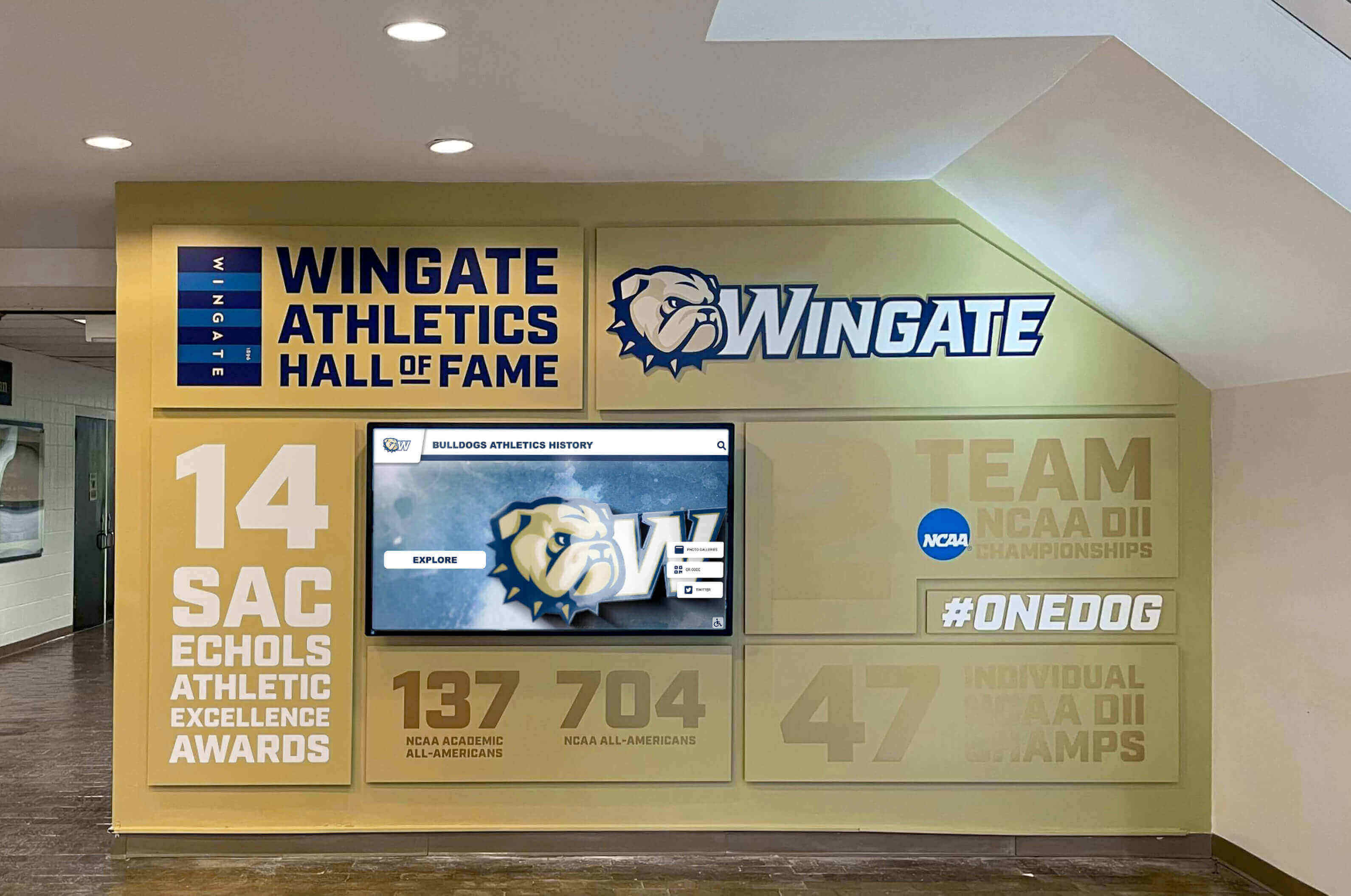
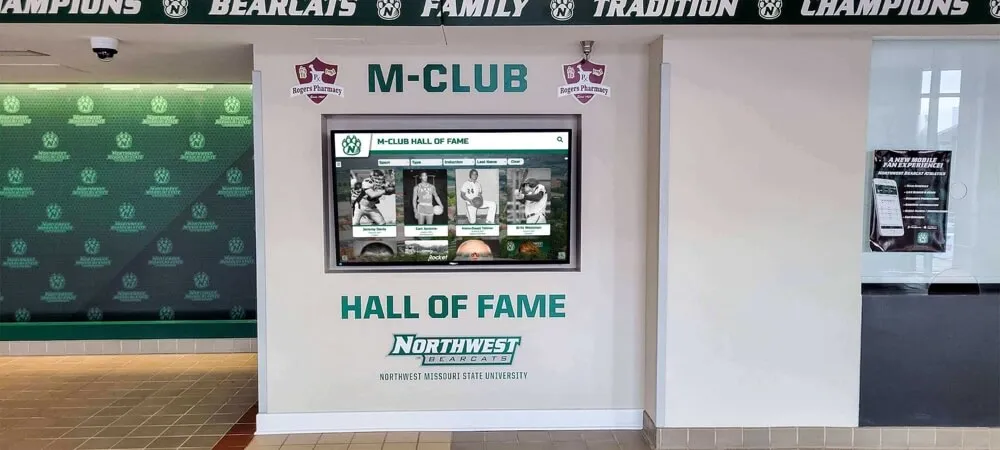
Professional athletic hall of fame installations create destination recognition spaces honoring program excellence
Implementation: Planning and Executing Trophy Case Projects
Successful trophy case projects—whether traditional renovations or digital installations—require systematic planning and execution.
Assessment and Planning Phase
Begin trophy case projects with comprehensive evaluation:
Current State Analysis
Document existing recognition including trophy inventory and achievement documentation, current display capacity and utilization, physical condition of cases and displays, recognition gaps or unrepresented achievements, and stakeholder feedback about current systems. This baseline assessment clarifies what’s working, what needs improvement, and what opportunities exist for enhanced recognition.
Needs and Objectives Definition
Establish clear project goals including recognition capacity requirements, budget parameters and constraints, timeline expectations, stakeholder priorities from athletic directors, coaches, and administrators, and success criteria defining what effective recognition achieves. Clear objectives prevent scope creep while ensuring investments address genuine needs rather than implementing solutions searching for problems.
Space and Location Planning
Evaluate available spaces for recognition including traffic patterns and visibility analysis, physical dimensions and mounting requirements, electrical and network infrastructure needs, accessibility considerations for diverse visitors, and integration with existing architectural elements. Thoughtful space planning prevents the common mistake of installing recognition displays in locations with poor visibility or awkward access that undermines investment value.
Technology Selection and Vendor Evaluation
For schools considering digital recognition solutions, systematic evaluation ensures appropriate technology selection:
Digital Display Considerations
Key factors include commercial-grade touchscreen quality designed for continuous public use, screen size appropriate for viewing distance and content, content management platform ease of use for non-technical staff, customization flexibility matching school branding and needs, integration capabilities with existing systems or websites, and technical support and warranty coverage.
Solutions like Rocket Alumni Solutions provide turnkey digital recognition systems specifically designed for schools, offering purpose-built platforms that address athletic recognition needs comprehensively while including installation, training, and ongoing support that generic digital signage systems don’t provide.
Budget and Total Cost of Ownership
Evaluate both initial investment and ongoing costs including hardware and installation expenses, software licensing or subscription fees, content development support and design services, training for administrators who will manage systems, and long-term maintenance, support, and eventual replacement costs.
Digital recognition systems typically achieve cost parity with traditional trophy case expansion within 3-5 years when accounting for the value of unlimited capacity, eliminated engraving costs, and administrative efficiency gains from easy content updates versus physical display management.
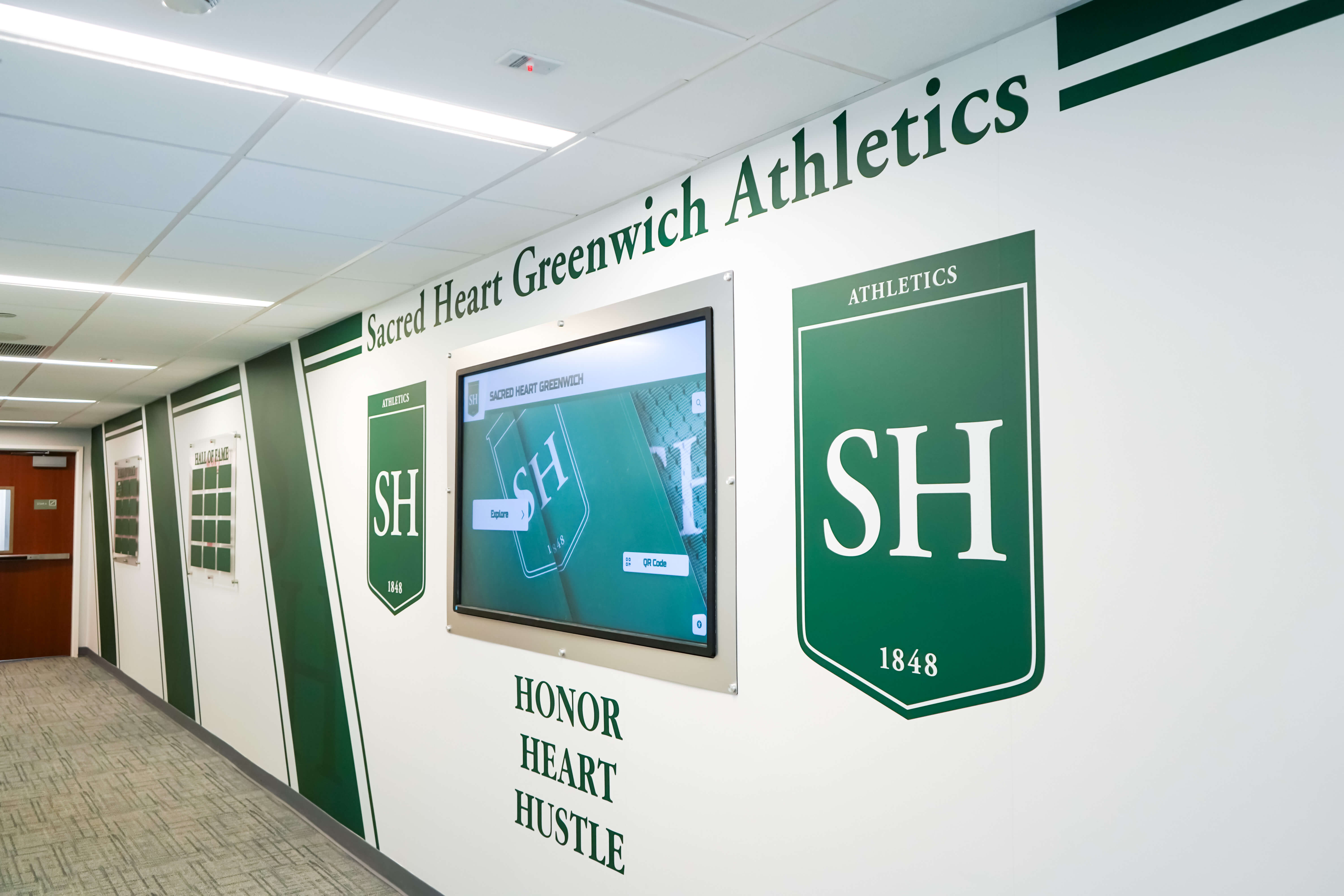
Shield-based recognition systems provide elegant traditional aesthetics while enabling scalable achievement displays
Content Development and Historical Documentation
Successful recognition requires comprehensive content that honors achievements appropriately:
Historical Achievement Documentation
Compile complete achievement records including championship trophies and team awards, individual athlete honors and recognitions, coaching milestones and achievements, program statistical records, historical photographs and memorabilia, and significant program milestones or legacy moments. This historical documentation ensures comprehensive recognition that honors program heritage while providing archival content for digital systems or enhanced traditional displays.
Biographical and Context Information
Beyond basic achievement listings, develop enriched content including athlete and coach biographical profiles, season narratives and championship stories, individual achievement context and significance, record progression showing historical evolution, and testimonial content from coaches, athletes, or community members. Rich contextual content transforms recognition from simple trophy display into meaningful storytelling that inspires current students while honoring past achievement.
Photography and Multimedia Content
Visual content elevates recognition significantly through professional team and individual photographs, action photography capturing competitive moments, championship celebration documentation, facility and program historical photos, and video content featuring interviews, game footage, or celebrations. Quality visual content makes recognition engaging and memorable while providing material that digital displays can leverage for dynamic, rotating presentations.
Explore strategies for creating comprehensive wrestling awards displays that honor individual and team achievement effectively.
Installation and Launch
Professional implementation ensures recognition displays function effectively from day one:
Physical Installation Standards
Quality installation includes secure mounting meeting safety and accessibility standards, professional electrical and network connectivity, appropriate lighting ensuring visibility and visual appeal, integration with architectural elements and finishes, and quality assurance testing before official launch.
Content Population and Organization
Launch recognition displays with comprehensive initial content including all significant historical achievements, current season recognition, well-organized information architecture enabling easy navigation, and consistent design standards across all recognition elements. Launching with complete, professional content establishes credibility while demonstrating the recognition system’s full potential.
Training and Handoff
Ensure sustainable recognition management through comprehensive administrator training on content updates, documented procedures for routine maintenance and content management, established protocols for adding new achievements, backup and disaster recovery procedures, and technical support contact information and escalation processes.
Proper training prevents recognition systems from becoming dependent on specific individuals while ensuring content remains current as staff responsibilities change over time.
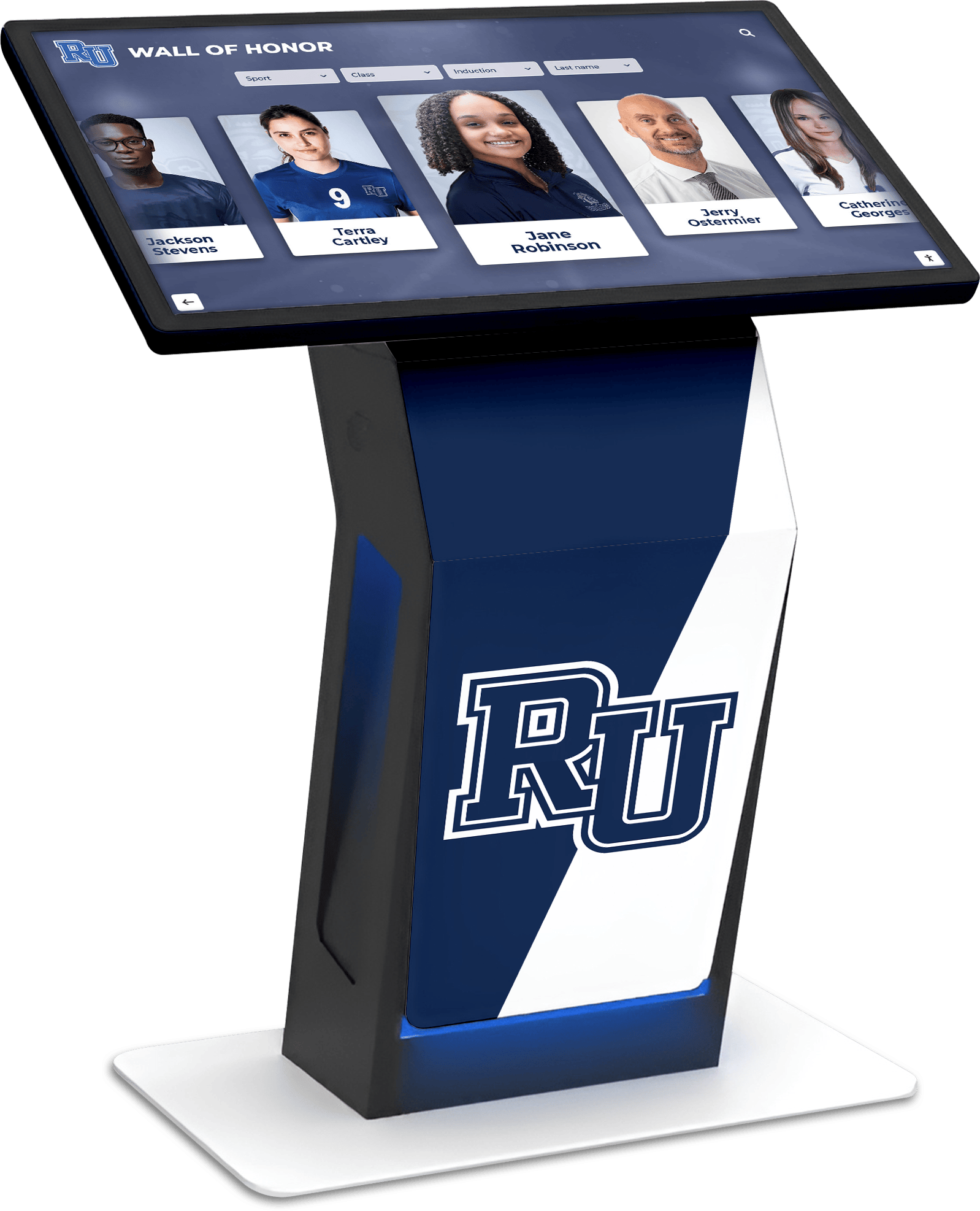
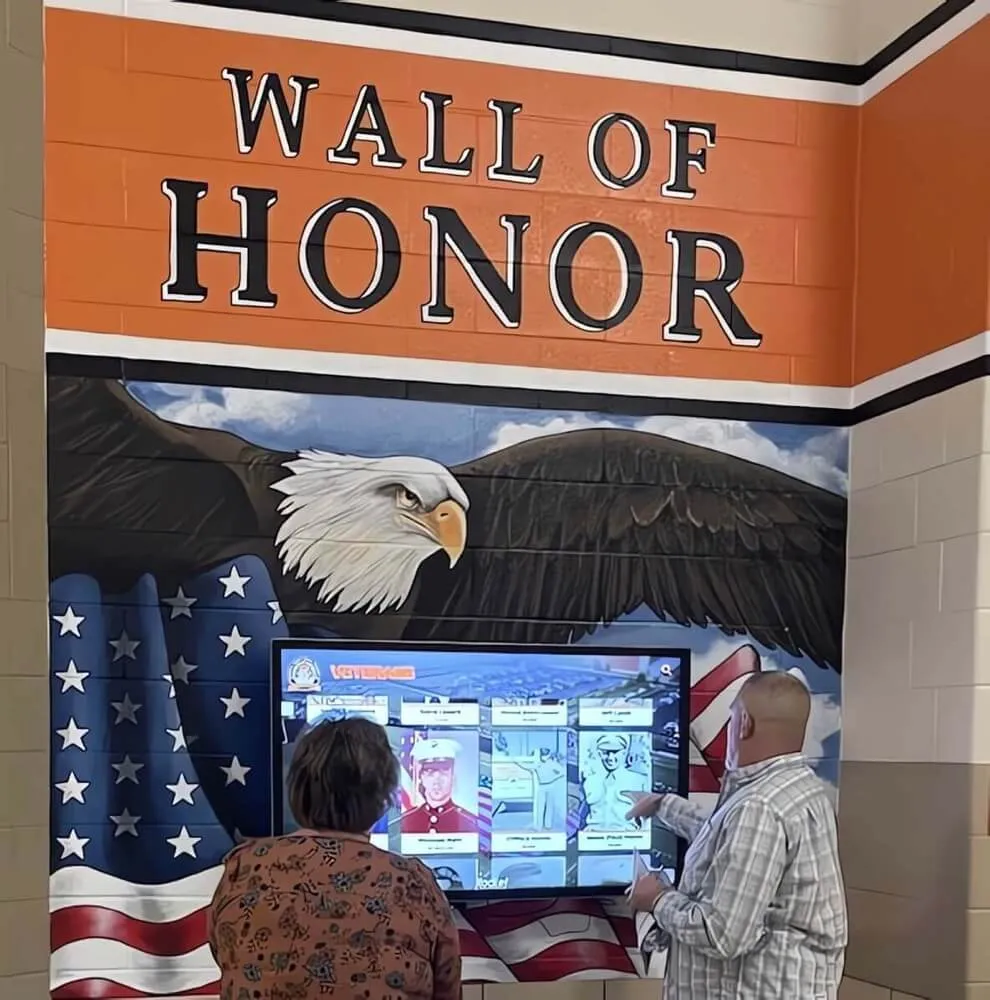
Purpose-built touchscreen kiosks provide intuitive recognition exploration for visitors of all ages
Best Practices for Trophy Case and Recognition Management
Effective recognition requires ongoing stewardship beyond initial installation:
Content Currency and Update Protocols
Establish systematic processes ensuring recognition remains current:
Timely Achievement Recognition
Add new achievements to recognition displays promptly through end-of-season update cycles following championship tournaments, mid-season recognition for major milestones or records, quarterly comprehensive reviews ensuring nothing overlooked, and coordinated updates across multiple recognition locations. Timely updates demonstrate that achievement recognition matters rather than treating displays as afterthoughts that get addressed sporadically when convenient.
Historical Content Enhancement
Continuously improve recognition comprehensiveness through oral history collection from alumni athletes and coaches, historical research documenting undocumented achievements, photograph digitization and archiving, legacy content development about significant program moments, and periodic content refreshes updating design while maintaining information integrity.
Accuracy and Quality Control
Implement verification processes ensuring recognition quality including fact-checking achievement details and statistics, name spelling and formatting verification, date and year accuracy confirmation, photograph accuracy and proper attribution, and consistent formatting across all recognition elements.
Errors in recognition content disrespect honorees while undermining credibility—systematic quality control prevents these preventable mistakes.
Physical Maintenance Standards
For traditional trophy cases, maintenance preserves professional appearance:
Regular Cleaning Schedules
Establish routine maintenance including glass and surface cleaning preventing dust accumulation, trophy polishing maintaining appearance, interior lighting inspection and bulb replacement, lock and hardware maintenance ensuring security and access, and periodic deep cleaning addressing accumulated grime.
Damage and Deterioration Response
Address maintenance issues promptly through cracked glass or damaged case repair, faded or deteriorated nameplate replacement, lighting failure resolution, structural stability verification, and cleaning or restoration of deteriorating trophies or memorabilia.
Engagement and Promotion Strategies
Maximize recognition impact through active promotion and engagement:
Event Integration
Leverage recognition displays during school events including facility tours for prospective families, alumni reunions and homecoming celebrations, athletic awards ceremonies and banquets, community open houses and special events, and donor recognition events honoring athletic program supporters. Event integration creates opportunities to showcase recognition investments while providing natural contexts to explain achievement significance to audiences who may not regularly view displays.
Social Media and Communications
Amplify recognition reach through social media posts featuring highlighted achievements, website integration linking to digital recognition content, newsletter features celebrating recent additions, press releases for significant recognition updates, and digital sharing encouraging athletes and families to promote their own recognition.
Digital recognition systems particularly enable social media integration by providing shareable content like individual athlete profile links that honorees can distribute through their networks, extending recognition visibility beyond physical school locations.
Discover approaches to showcasing high school awards and student recognition that celebrate diverse achievement types.
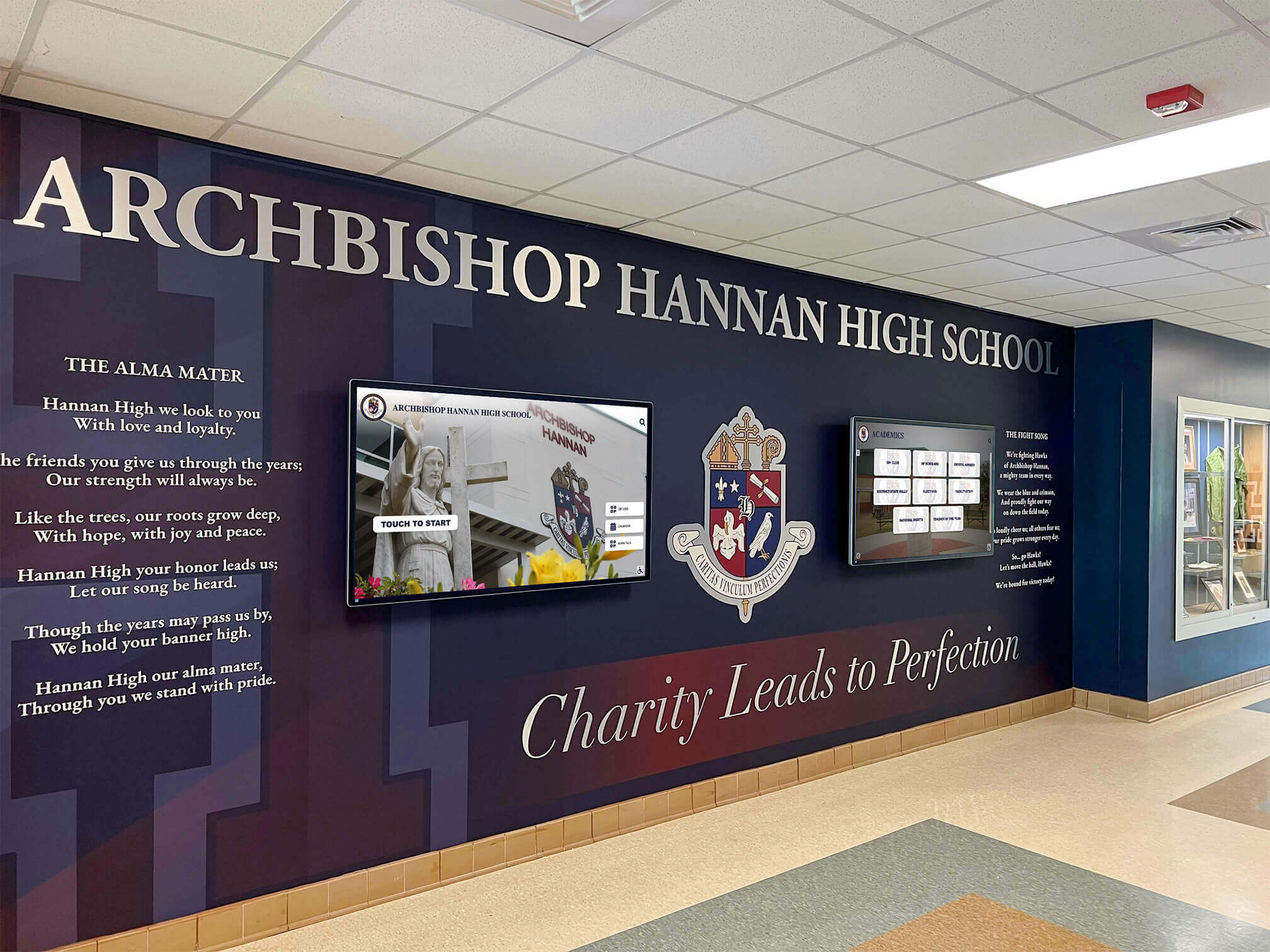
Comprehensive recognition environments integrate school identity, tradition, and modern display technology
Cost Considerations and Budget Planning
Understanding trophy case investment requirements helps schools make informed decisions:
Traditional Trophy Case Costs
Physical trophy display investments vary significantly:
New Trophy Case Installation
Expect costs including trophy case units ($2,000-$8,000 per case depending on size and quality), custom built-in installations ($5,000-$20,000+ for comprehensive systems), interior lighting and electrical work ($500-$2,000), installation labor and mounting ($500-$1,500), and initial trophy arrangement and nameplate creation ($500-$2,000).
Trophy Case Renovation
Updating existing cases typically costs less than new installation through interior refinishing and new backgrounds ($1,000-$3,000), lighting upgrades to LED systems ($300-$1,000), glass replacement if damaged or worn ($500-$2,000), hardware and lock replacement ($200-$500), and content reorganization and new nameplates ($500-$1,500).
Ongoing Maintenance Costs
Annual traditional trophy case expenses include cleaning supplies and custodial time ($200-$500 annually), nameplate creation for new achievements ($50-$150 per nameplate), lighting bulb replacement ($100-$300 annually), and periodic deep cleaning or refinishing ($500-$1,000 every 5-7 years).
Digital Trophy Case Investment
Digital recognition systems involve different cost structures:
Initial Implementation Costs
Comprehensive digital trophy case installations typically include commercial-grade touchscreen displays ($3,000-$8,000 depending on size), content management platform setup and customization ($2,000-$5,000), initial content development and design ($2,500-$8,000 depending on depth), professional installation and configuration ($1,000-$2,500), and staff training and documentation ($500-$1,500).
Total initial investment for quality digital recognition systems typically ranges $10,000-$25,000 depending on display size, content depth, and customization level. While this exceeds single trophy case costs, digital systems provide recognition capacity equivalent to 10-15 traditional trophy cases while including features physical displays cannot match.
Ongoing Digital System Costs
Annual expenses for digital recognition include content management platform subscription ($800-$2,500 annually), content updates and enhancements (internal staff time or professional services), extended warranty or service agreements ($300-$1,000 annually), and occasional hardware maintenance or replacement (budgeted over 7-10 year equipment lifespan).
Digital systems eliminate recurring costs associated with physical trophy expansion, engraving, and physical display updates—savings that typically offset subscription costs within 3-5 years for active athletic programs that would otherwise require continuous trophy case expansion.
Learn about touchscreen kiosk solutions designed specifically for schools and organizations.
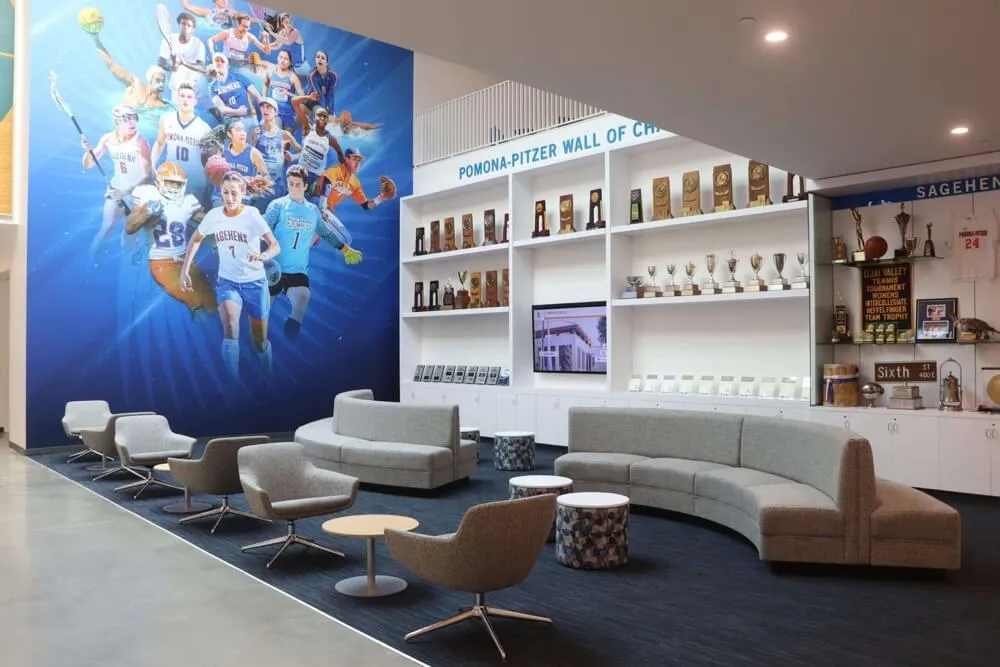
Recognition spaces that integrate comfortable viewing areas encourage extended engagement with achievement displays
Return on Investment Considerations
Trophy case and recognition investments provide value beyond immediate display function:
School Pride and Culture Benefits
Visible recognition of athletic achievement strengthens school identity through enhanced program prestige and reputation, increased student pride and engagement, stronger community connections and traditions, improved recruiting for athletic programs, and elevated facilities supporting fundraising and development. While difficult to quantify precisely, these cultural benefits justify recognition investments as strategic institutional priorities rather than mere aesthetic enhancements.
Administrative Efficiency Gains
Digital recognition systems particularly provide operational value through eliminated manual trophy case access and arrangement time, reduced administrative burden of physical display management, decreased engraving and nameplate ordering requirements, simplified content updates enabling timely recognition, and centralized management reducing coordination complexity. These efficiency improvements free athletic directors and staff to focus on program development rather than recognition logistics.
Recruitment and Development Impact
Quality recognition contributes to program development through enhanced facility appeal during prospect visits, visible tradition demonstrating program excellence, tangible goals inspiring current athlete achievement, alumni engagement supporting program financially and culturally, and community pride encouraging booster club support. Coaches consistently report that recognition displays influence recruiting discussions by providing concrete evidence of program tradition and institutional commitment to celebrating athletic success.
Future-Proofing Recognition: Planning for Long-Term Success
Effective trophy case and recognition systems should serve schools for decades with appropriate planning:
Scalability and Expansion Planning
Design recognition systems that accommodate future growth:
Modular Physical Display Approaches
When implementing traditional trophy cases, consider modular systems that enable future expansion through consistent design standards enabling matching additions, vertical or horizontal expansion capability, flexible shelving supporting reorganization, and compatible lighting and hardware for seamless integration. Modular approaches prevent the common scenario where initial trophy cases prove inadequate within 5-10 years, requiring complete replacement rather than cost-effective expansion.
Digital System Growth Capacity
Digital recognition platforms should offer unlimited content growth without capacity constraints, content management tools enabling easy additions, design flexibility supporting evolving needs, integration capabilities connecting to future systems, and platform development roadmaps ensuring ongoing improvement. Purpose-built school recognition platforms typically provide better long-term value than generic digital signage systems adapted for trophy display, as specialized providers continuously enhance features based on school-specific needs.
Technology Refresh Planning
Digital systems require eventual hardware refresh:
Expected Equipment Lifespans
Commercial-grade touchscreen displays typically operate reliably for 7-10 years with proper maintenance before requiring replacement. Cloud-based content management platforms provide indefinite service with subscription model, protecting against software obsolescence. Schools should budget for equipment refresh cycles ensuring displays maintain professional appearance and functionality rather than running equipment until complete failure necessitates emergency replacement.
Content Migration and Preservation
Ensure recognition content remains accessible during technology transitions through regular content backups and archiving, platform-independent content formats, documented migration procedures, and vendor selection favoring providers with established longevity rather than startups whose platforms may not survive long-term.
Maintaining Recognition Traditions While Embracing Innovation
Balance honoring tradition with adopting beneficial innovations:
Preserving Physical Trophy Tradition
Even when implementing comprehensive digital recognition, many schools maintain physical display of the most significant championship trophies, honoring tradition while leveraging digital advantages for comprehensive recognition that physical space can’t accommodate. This balanced approach respects stakeholders who value tangible trophy tradition while solving practical capacity limitations through digital systems.
Gradual Transition Strategies
Schools uncertain about digital recognition can implement phased approaches through pilot digital displays in specific locations, hybrid systems combining physical and digital recognition, focused digital implementations for specific purposes like record boards, and gradual expansion based on stakeholder feedback and demonstrated value. Incremental implementation reduces risk while providing evidence that informs broader decisions about recognition system direction.
Explore comprehensive guides to digital hall of fame buying for school environments.
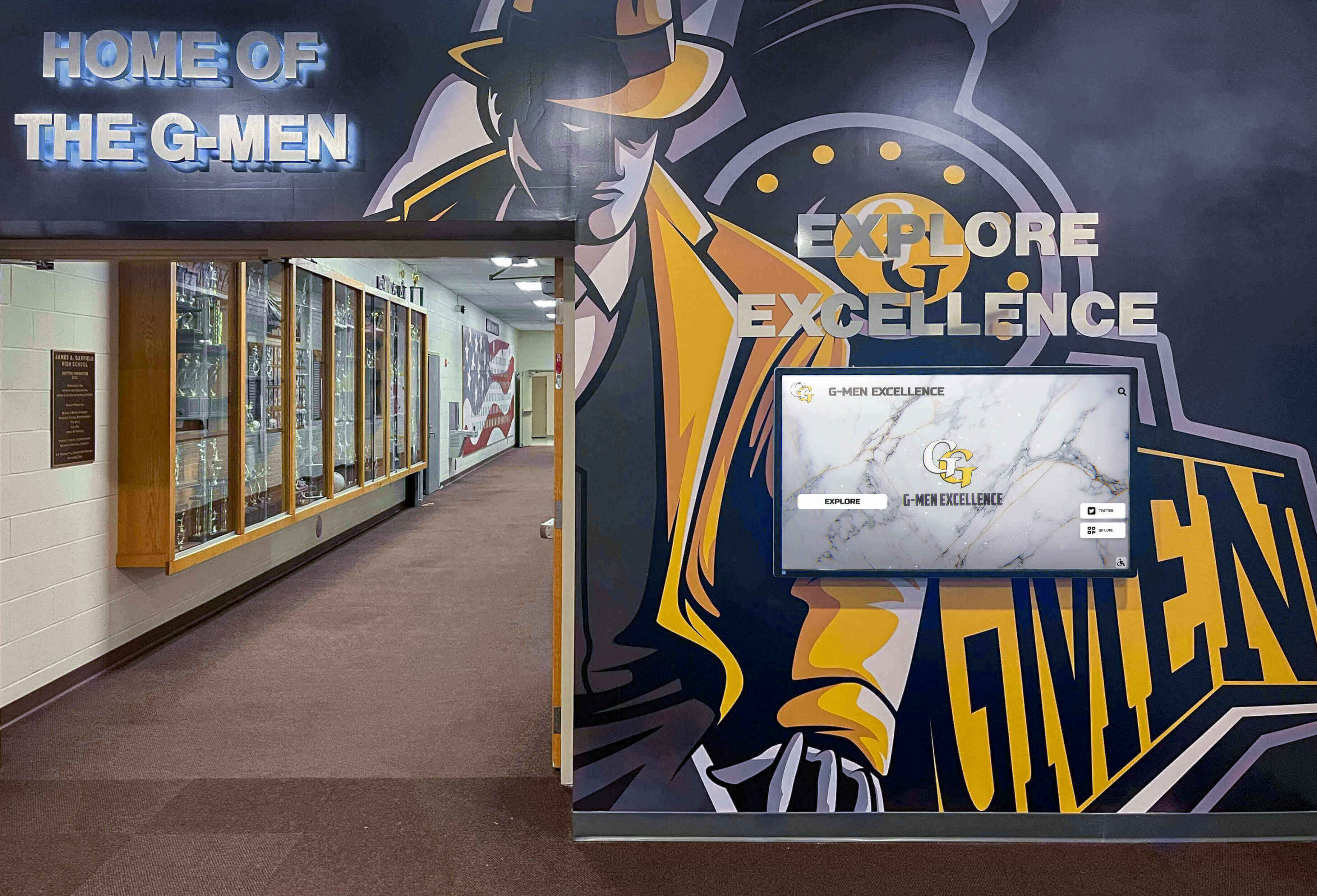
Integrated recognition combines digital displays with traditional trophy cases, honoring heritage while expanding capacity
Taking Action: Next Steps for Your School Trophy Case Project
Schools ready to enhance athletic recognition can begin with concrete planning steps:
Immediate Assessment Actions
Conduct Recognition Audit
Document current recognition comprehensively including trophy inventory and condition assessment, available display space and capacity evaluation, achievement gaps or unrepresented accomplishments, stakeholder feedback from coaches, athletes, and administrators, and facility constraints or opportunities. This baseline understanding clarifies current state while identifying specific improvement opportunities.
Define Project Scope and Objectives
Establish clear goals including recognition capacity requirements (how many years of growth to accommodate), budget parameters and funding sources, timeline expectations and constraints, stakeholder priorities from athletic department leadership, and success criteria defining what improved recognition achieves. Clear objectives focus planning efforts while preventing undefined projects that expand beyond manageable scope.
Explore Solution Options
Research recognition approaches matching your needs including traditional trophy case renovation or expansion, hybrid approaches combining physical and digital elements, comprehensive digital recognition systems, or specialized solutions for specific challenges like retired jersey displays or record boards. Understanding available options ensures informed decisions rather than defaulting to familiar approaches that may not best serve current needs.
Vendor and Partner Selection
For Traditional Trophy Case Projects
Consult with specialized trophy case manufacturers and installation contractors, facility design professionals with school experience, local or regional suppliers serving educational markets, and peer schools that recently completed similar projects. Request references and facility tours viewing completed installations before committing to specific vendors or approaches.
For Digital Recognition Systems
Evaluate providers specializing in educational recognition including demonstration of platforms and content management tools, examples of school installations, understanding of athletic recognition needs, comprehensive services including installation, content development, and training, and long-term support and platform development commitment.
Rocket Alumni Solutions specializes in comprehensive digital recognition systems for schools, providing turnkey solutions that address athletic trophy case challenges while offering unlimited recognition capacity, intuitive content management, and full implementation support from hardware installation through content development and staff training.
Funding and Budget Development
Potential Funding Sources
Trophy case and recognition projects can be funded through athletic booster club fundraising and donations, facility improvement budget allocations, donor naming opportunities for recognition installations, corporate or business sponsorships, capital campaign project components, and parent or alumni association contributions. Recognition projects often attract support from stakeholders invested in athletic program success who appreciate tangible facility enhancements celebrating achievement.
Grant Writing and Institutional Funding
Position recognition projects as strategic investments supporting school pride, student recognition, facility enhancement, community engagement, and program development objectives. Frame projects as addressing operational challenges like overcrowded displays while providing solutions that serve institutional missions comprehensively. Well-articulated proposals that demonstrate how recognition investments strengthen programs beyond aesthetics improve funding approval prospects.
Learn about creating impactful student recognition award displays that honor diverse achievements.
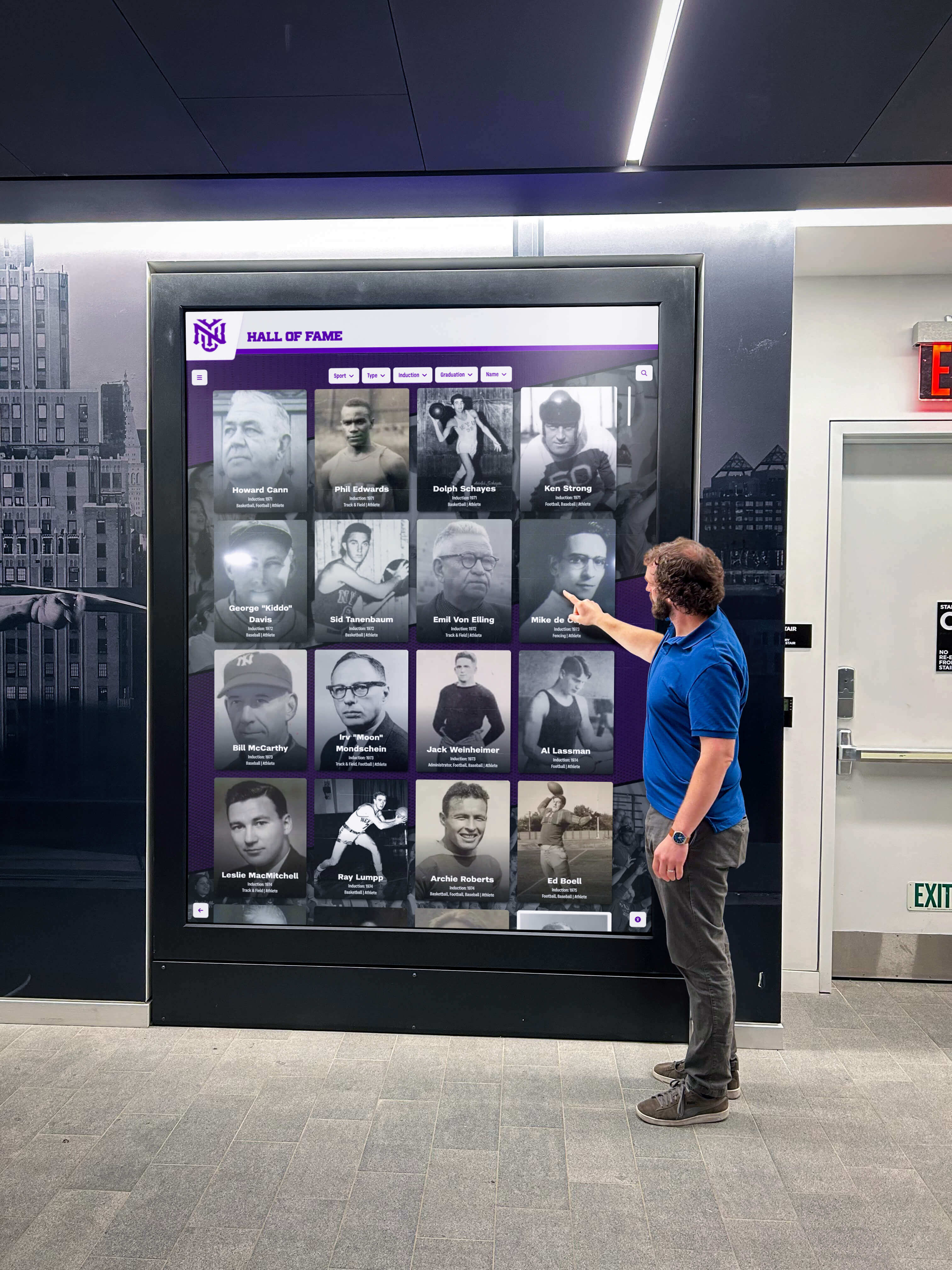
Interactive digital displays create engaging recognition experiences that visitors of all ages can explore independently
Conclusion: Building Recognition Systems That Honor Achievement and Inspire Excellence
School trophy cases serve missions far more significant than simply storing hardware—they preserve institutional memory, honor student dedication and achievement, inspire current athletes to pursue excellence, strengthen community pride and tradition, and communicate that achievement matters enough to warrant permanent recognition. As athletic programs grow and achievements multiply, schools must ensure recognition systems honor both historical legacy and current success appropriately while remaining sustainable and engaging for generations to come.
The strategies explored in this guide provide frameworks for school trophy case projects ranging from traditional display enhancement to innovative digital solutions addressing capacity constraints while creating more engaging recognition experiences. Whether renovating existing trophy cases, expanding recognition through additional physical displays, or implementing comprehensive digital systems that eliminate space limitations entirely, thoughtful planning and execution ensure recognition honors athletic achievement with the prominence it deserves.
The right approach for your school depends on factors including current trophy case condition and capacity, athletic program scope and recognition needs, facility space and architectural constraints, budget availability and funding sources, stakeholder preferences between traditional and innovative approaches, and long-term vision for athletic recognition and facility development. By systematically evaluating these factors, schools can design recognition solutions matching their unique contexts while serving student-athletes who dedicate countless hours to bringing glory to their schools through competitive excellence.
Transform Your Athletic Recognition Program
Discover how modern digital recognition solutions can help you celebrate every achievement, eliminate space constraints, and create engaging experiences that honor your athletic tradition for generations to come.
Explore Digital Trophy Case SolutionsRemember that the most effective recognition systems balance respecting tradition with embracing innovation, maintain accessibility ensuring all visitors can engage with displays regardless of physical ability, provide comprehensive content honoring achievements at all levels, remain sustainable through staff transitions and budget fluctuations, and create experiences that inspire current students to pursue the excellence that merits inclusion alongside the champions who preceded them.
Your student-athletes’ achievements represent thousands of hours of dedication, discipline, and determination. They deserve recognition systems that honor those commitments appropriately—not just during brief award ceremony moments, but through permanent displays that celebrate their contributions to school tradition for decades to come. Whether through traditional trophy cases that preserve the tangible appeal of championship hardware or digital showcases that provide unlimited recognition capacity and enhanced storytelling, schools can create recognition systems worthy of the athletic excellence they celebrate while building the pride and tradition that define championship programs.
Ready to explore trophy case solutions for your school? Consider touchscreen displays for high school gyms that create comprehensive recognition environments, or learn about strategies for showcasing athletic achievements that inspire students and strengthen school culture. Your commitment to honoring student-athlete achievement through quality recognition creates lasting impact that extends far beyond trophy displays themselves, building traditions and pride that serve your school community for generations.