School Trophy Display Cabinet Design: Layouts That Show Off Your Legacy
Walking past a well-designed school trophy display cabinet should stop students in their tracks. These displays serve as physical proof that excellence lives within your hallways, that championships get won on your fields, and that current students belong to a legacy worth continuing. Yet too many schools undermine this potential by treating trophy cabinets as afterthoughts—cramming awards into whatever space remains available, organizing displays by convenience rather than impact, and creating cluttered showcases that overwhelm rather than inspire.
The difference between trophy cases that get ignored and displays that command attention lies in thoughtful design. Effective cabinet layouts create visual hierarchy highlighting your most significant achievements, organize awards into narratives that tell your program’s story, balance density with breathing room so individual trophies shine, and maintain flexibility for future additions as teams continue building legacy.
This comprehensive guide explores school trophy display cabinet design strategies that transform storage solutions into celebration destinations, examining layout approaches that showcase athletic excellence, preserve institutional history, and inspire the next generation of champions through recognition displays worthy of the achievements they honor.
Well-designed trophy displays accomplish multiple strategic objectives simultaneously: they celebrate past achievements preserving program history, inspire current students by demonstrating excellence standards, engage alumni connecting them to institutional legacy, communicate school values and priorities to visitors, and create pride building school spirit across stakeholder groups.

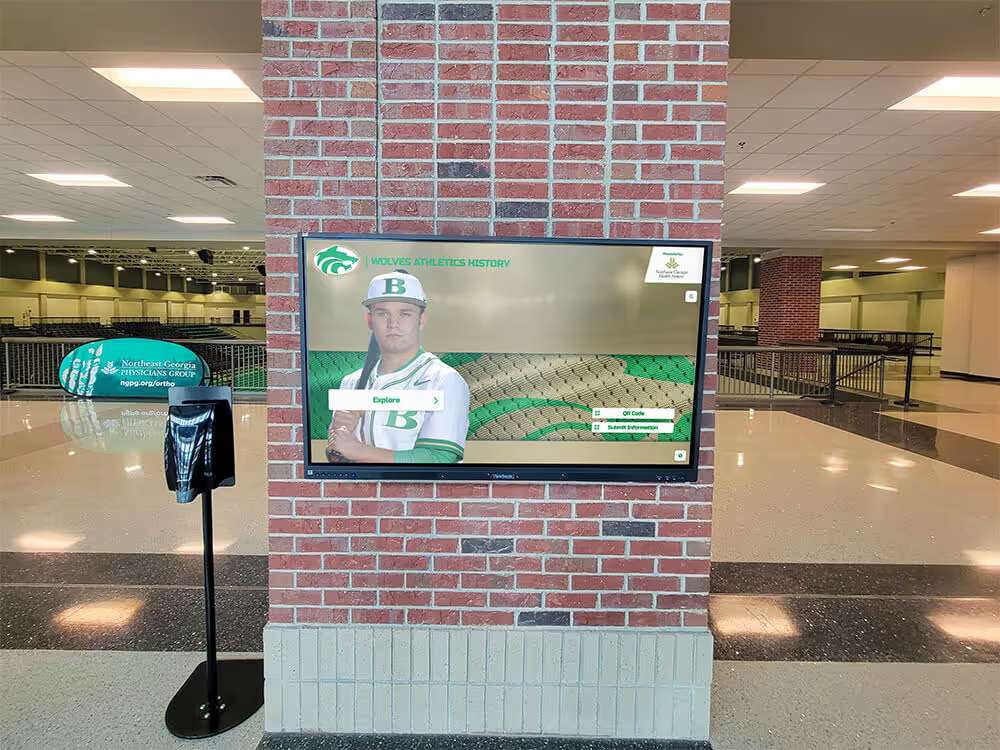
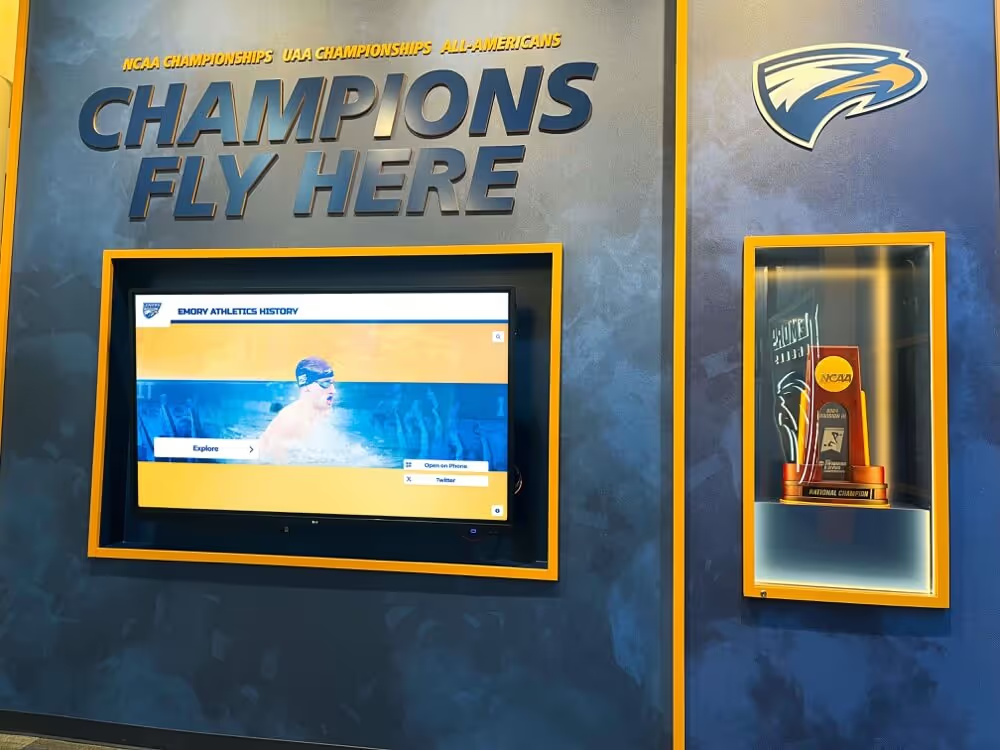
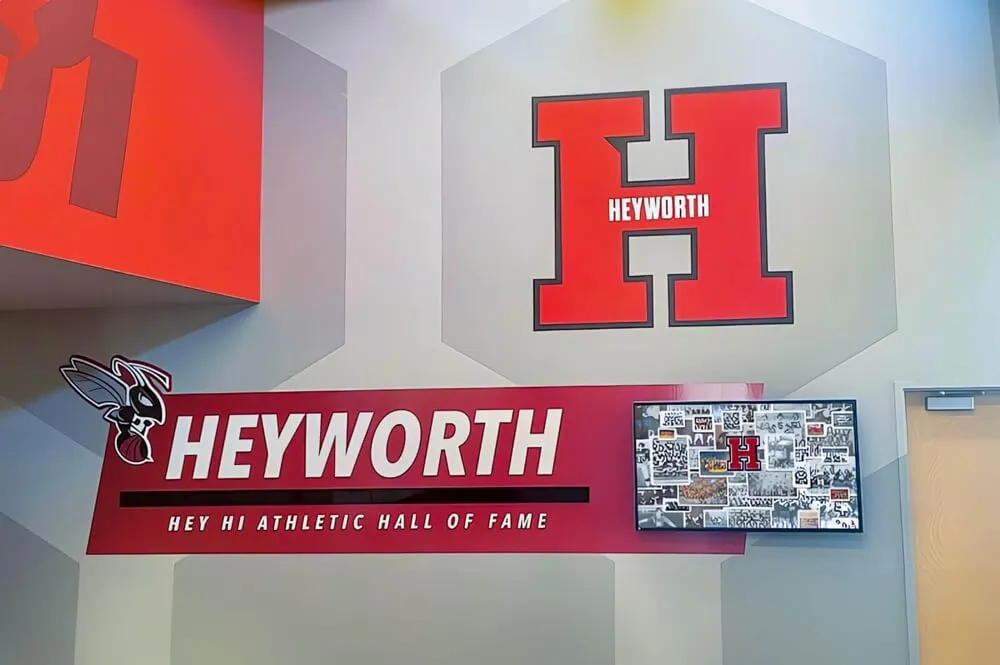
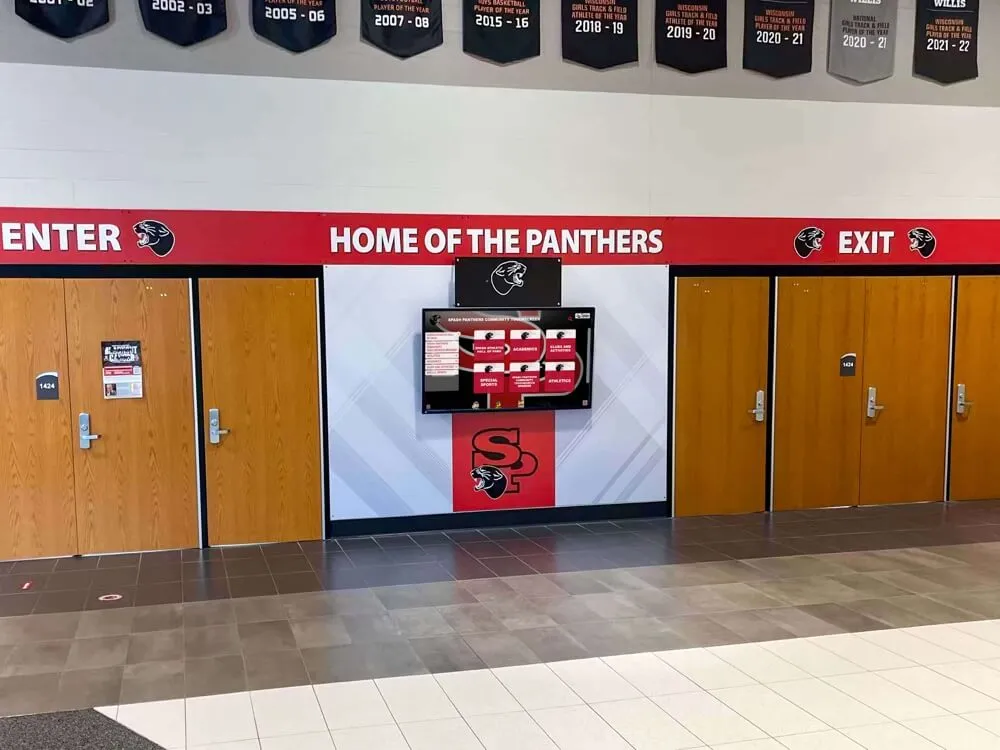
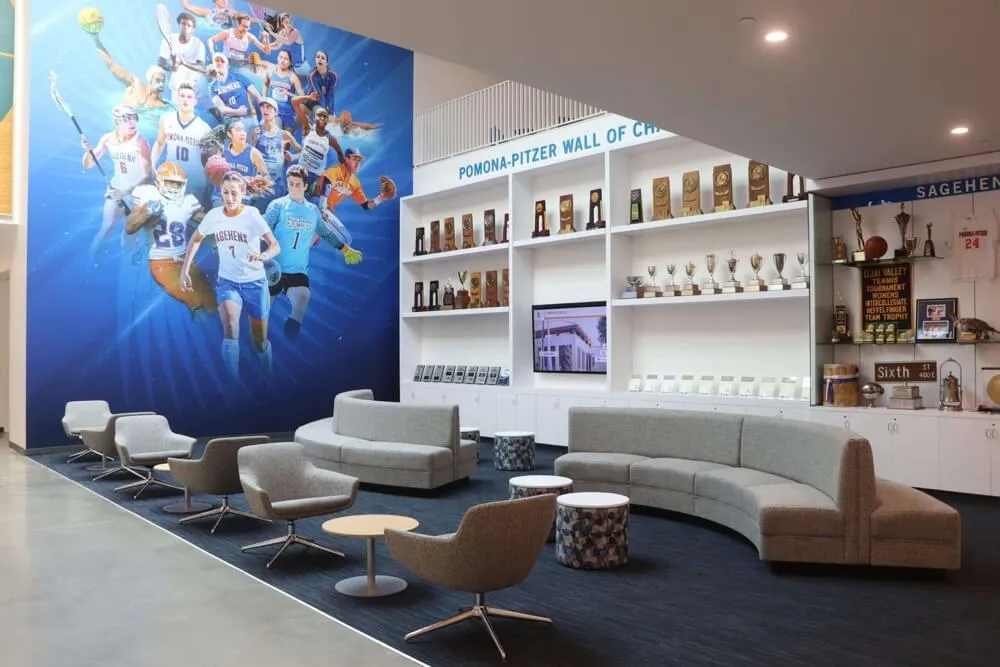
Thoughtfully designed trophy displays create inspiring spaces that celebrate athletic excellence and program heritage
Why Trophy Display Cabinet Design Matters for School Recognition
Understanding how design decisions impact recognition effectiveness helps schools maximize the value their trophy displays deliver to multiple audiences.
Design Influences What Students See and Remember
Students walk past trophy cases hundreds of times throughout school years. These repeated exposures shape perceptions about what your institution values, which achievements warrant celebration, and whether athletic excellence represents realistic possibilities or distant abstractions available only to others.
Effective trophy cabinet design creates memorable impressions through visual clarity ensuring awards remain visible rather than crowded, organizational logic helping students understand achievement pathways, prominent placement of recent accomplishments demonstrating current excellence, historical context connecting present teams to program legacy, and accessible height positioning awards at student eye level rather than forcing upward viewing.
When students can clearly see trophies, understand what teams won them, and recognize achievement as attainable rather than abstract, displays transform from background decoration into motivation inspiring participation and excellence pursuit.
Layout Communicates Institutional Values and Priorities
Every design choice sends messages about what your school celebrates and how you honor achievement. Cabinet layouts reveal values through space allocation showing which sports receive prominence, recency emphasis balancing recent versus historical achievements, individual versus team recognition demonstrating collective celebration priorities, diversity representation showcasing breadth across programs and activities, and maintenance quality communicating respect for honored achievements.
Schools wanting to emphasize athletic program breadth should allocate comparable space across sports rather than dedicating majority display to revenue sports. Institutions prioritizing tradition might feature historical championships prominently while those emphasizing current excellence highlight recent accomplishments.
Aligning trophy cabinet design with actual institutional values creates authentic recognition that resonates with school communities rather than sending conflicting messages through design choices contradicting stated priorities.
Well-Designed Cases Become Destination Attractions
Exceptional trophy displays transcend passive decoration to become destinations where students congregate, alumni revisit during campus visits, and prospective families explore during tours.
Creating destination-worthy displays requires design elements including adequate surrounding space allowing groups to gather, interactive components enabling discovery and exploration, comfortable viewing positions with appropriate sight lines, integrated seating or gathering areas encouraging extended engagement, and complementary design elements connecting displays to surrounding architecture.
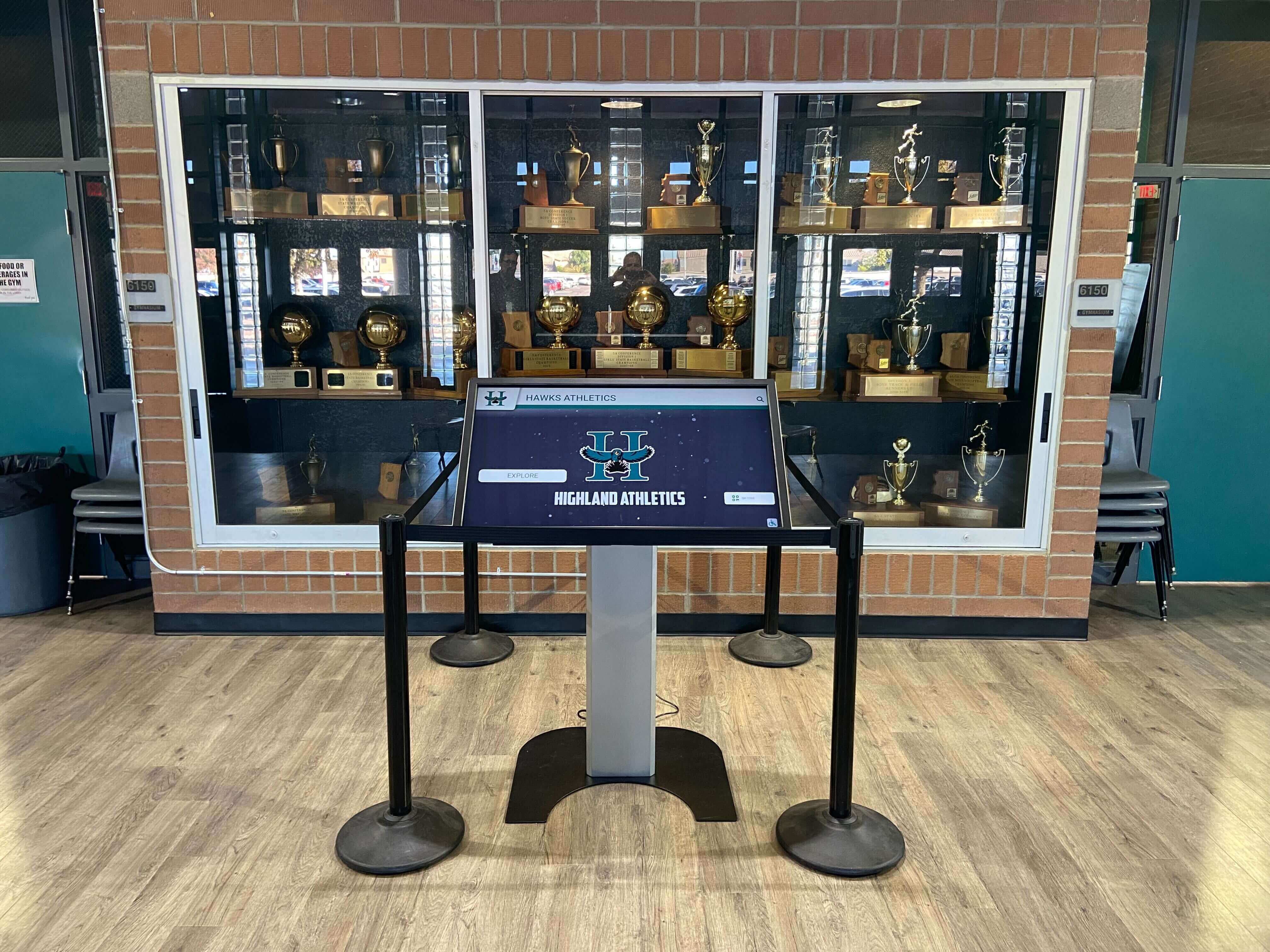
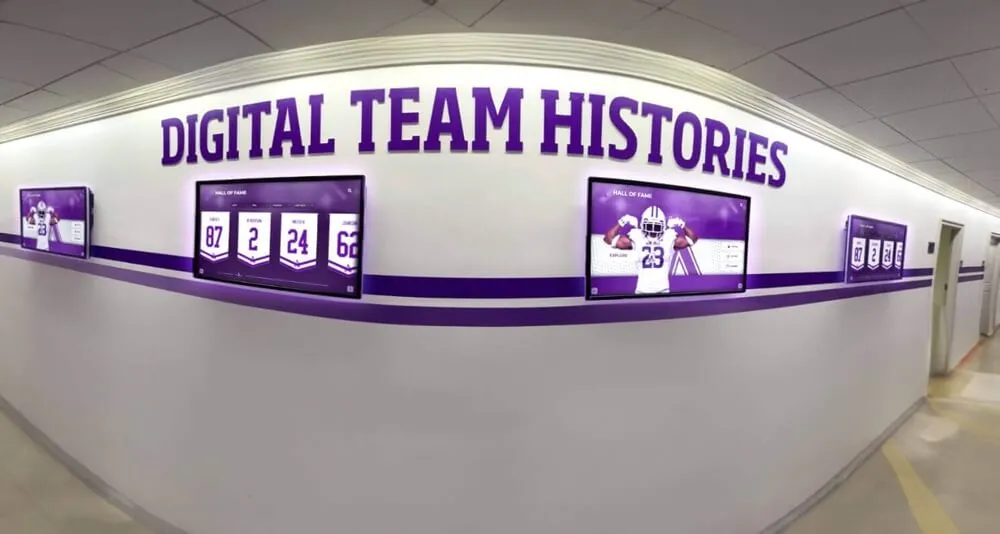
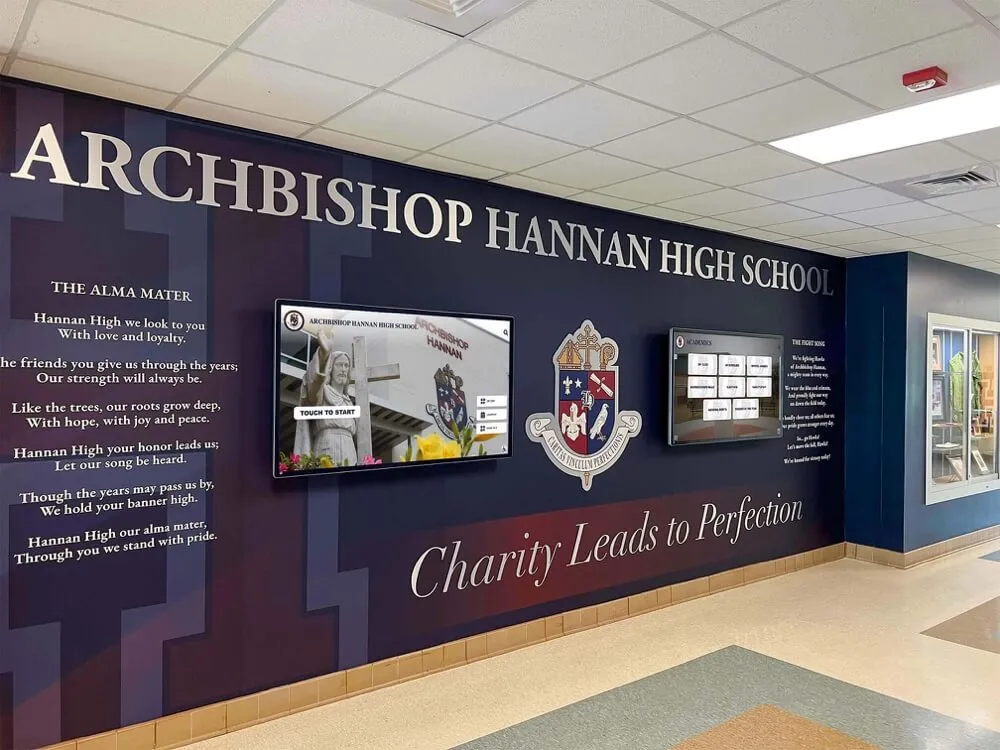
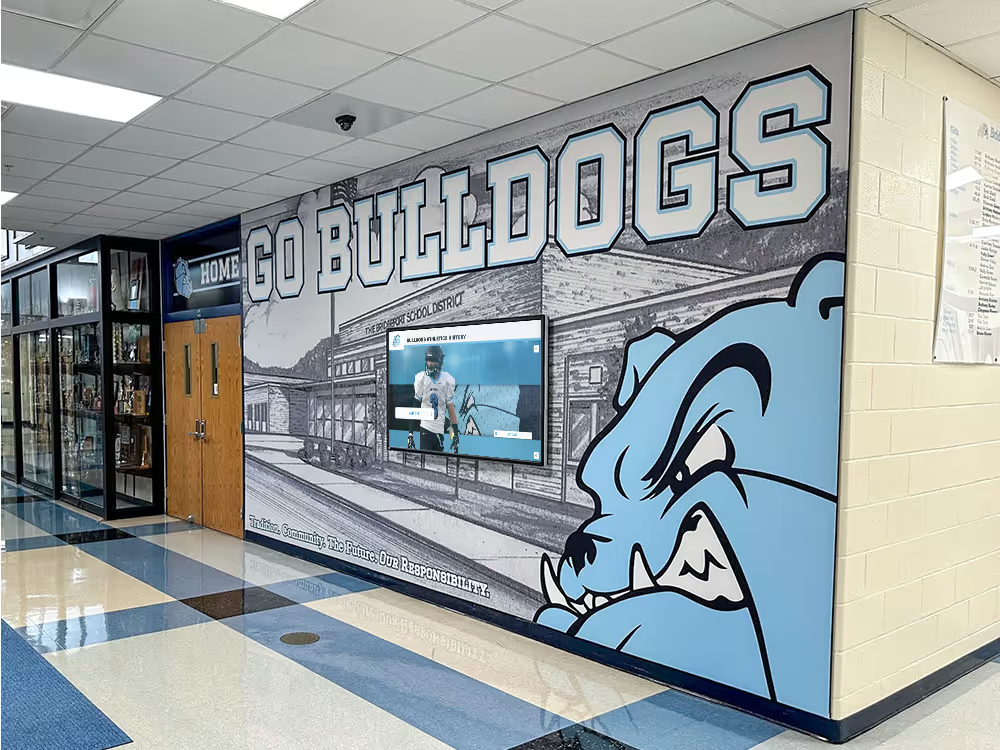
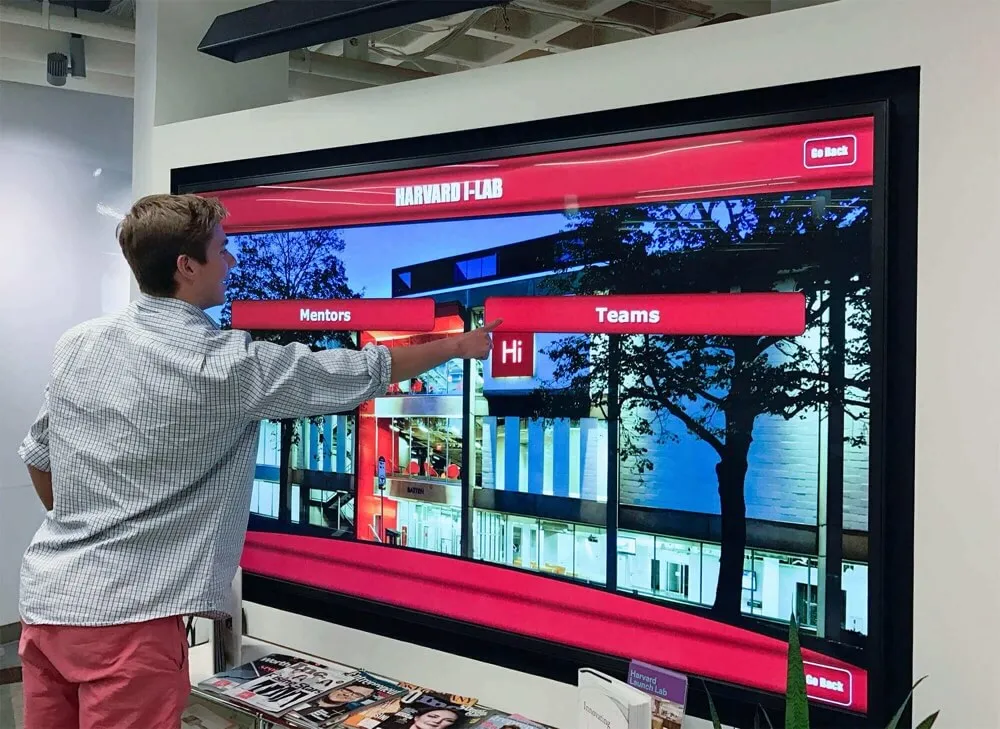
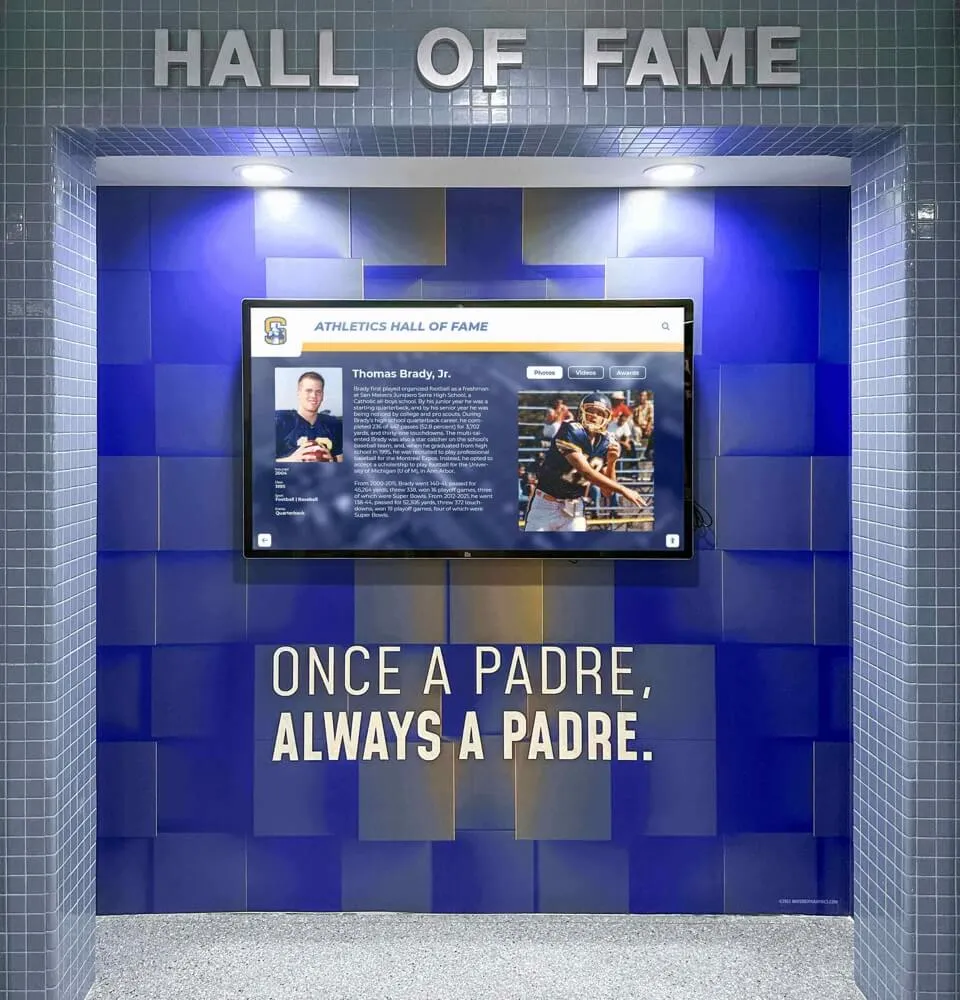
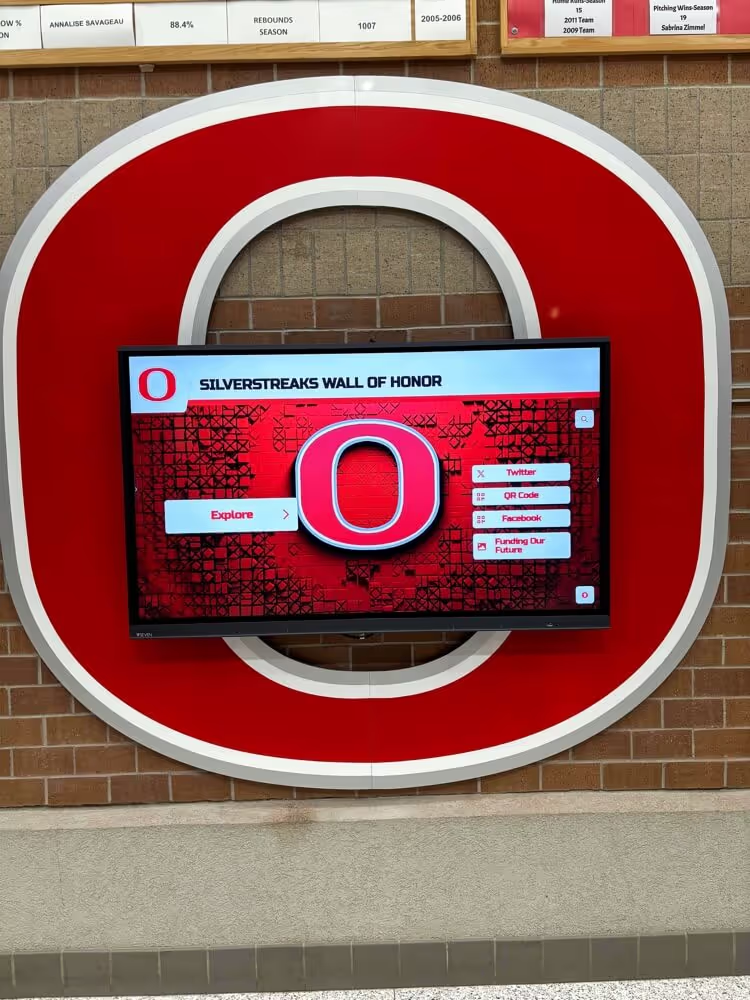
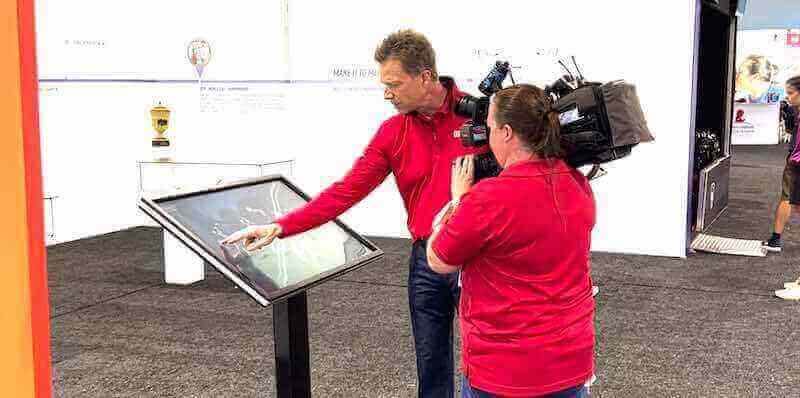
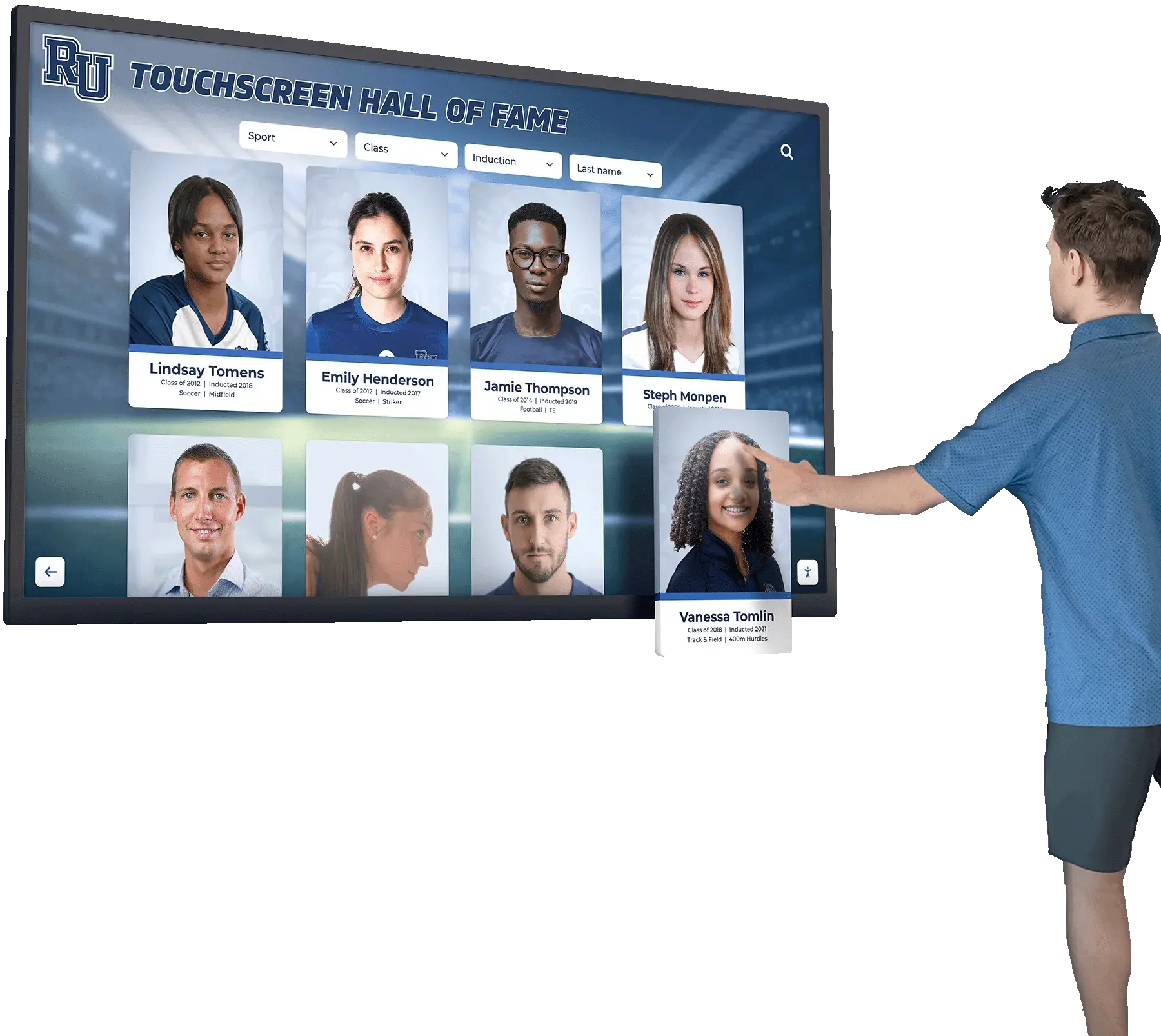
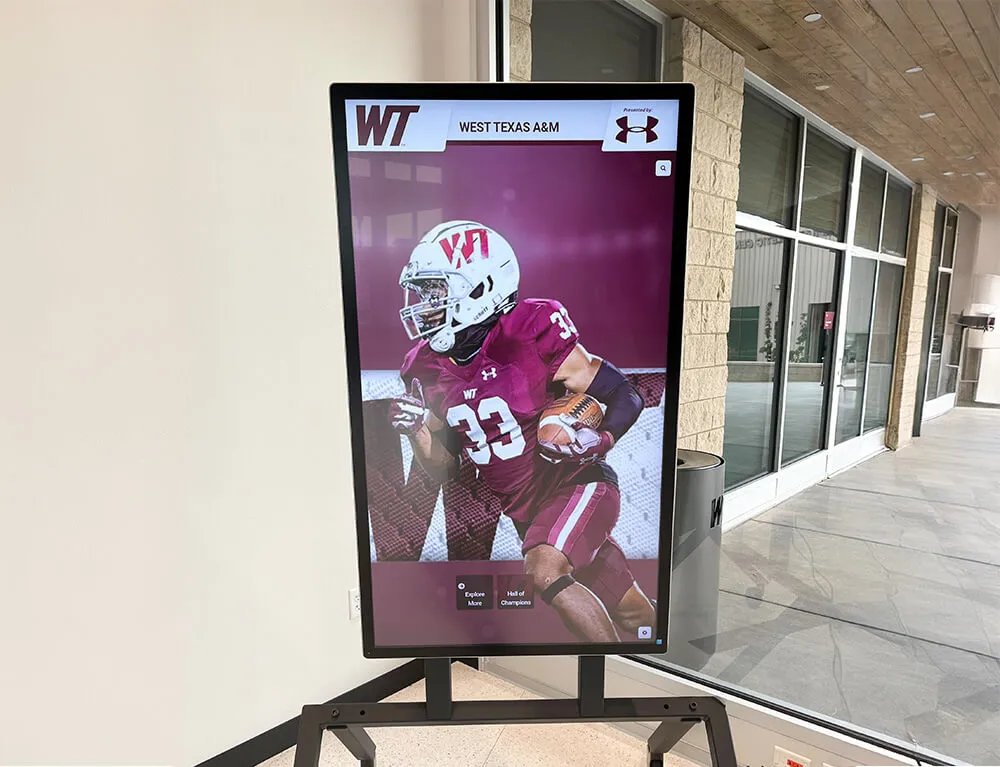
Interactive elements enhance traditional trophy cases by enabling deeper exploration of team histories and achievements
Schools seeking to maximize recognition impact through award ceremony planning should coordinate display design with recognition event strategies for comprehensive celebration approaches.
Essential Layout Principles for Effective Trophy Cabinet Design
Certain design fundamentals create successful displays regardless of available space, budget constraints, or specific trophy collections being showcased.
Create Clear Visual Hierarchy Through Tiered Organization
Not all trophies carry equal significance. State championships represent different achievement levels than conference wins. First-place finishes deserve distinction from participation awards. Effective cabinet layouts acknowledge these differences through visual hierarchy guiding viewer attention toward most significant accomplishments first.
Vertical Tiering Approaches
Position your most prestigious trophies at primary viewing height between 48-60 inches from floor level where they receive immediate attention. This premium real estate should showcase state championships, national qualifications, and other peak achievements representing program pinnacles.
Secondary accomplishments including conference championships, tournament wins, and regional recognitions occupy upper shelving between 60-75 inches, still clearly visible but positioned above primary focal points. Tertiary awards such as participation trophies, individual recognitions, and regular season championships can fill lower shelving between 30-48 inches.
This vertical organization creates natural scanning patterns allowing viewers to grasp achievement hierarchy quickly while ensuring all awards receive appropriate recognition based on significance.
Front-to-Back Depth Positioning
When cabinet depth allows multiple trophy rows, position larger or more significant awards toward the front with smaller or less significant pieces behind. This layered approach maximizes visibility for important recognitions while accommodating comprehensive collections within limited footprint.
Avoid creating hidden back rows where trophies become invisible—use risers, platforms, or stepped shelving ensuring all awards remain at least partially visible from primary viewing angles.
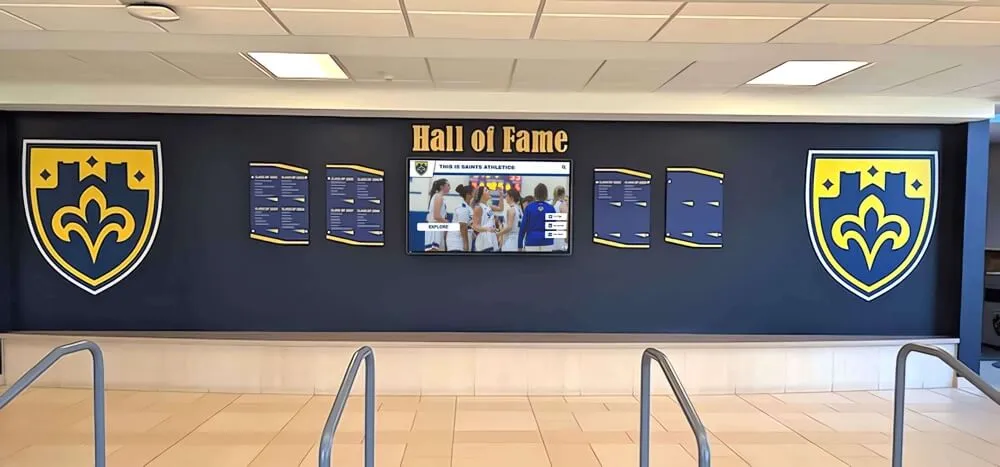
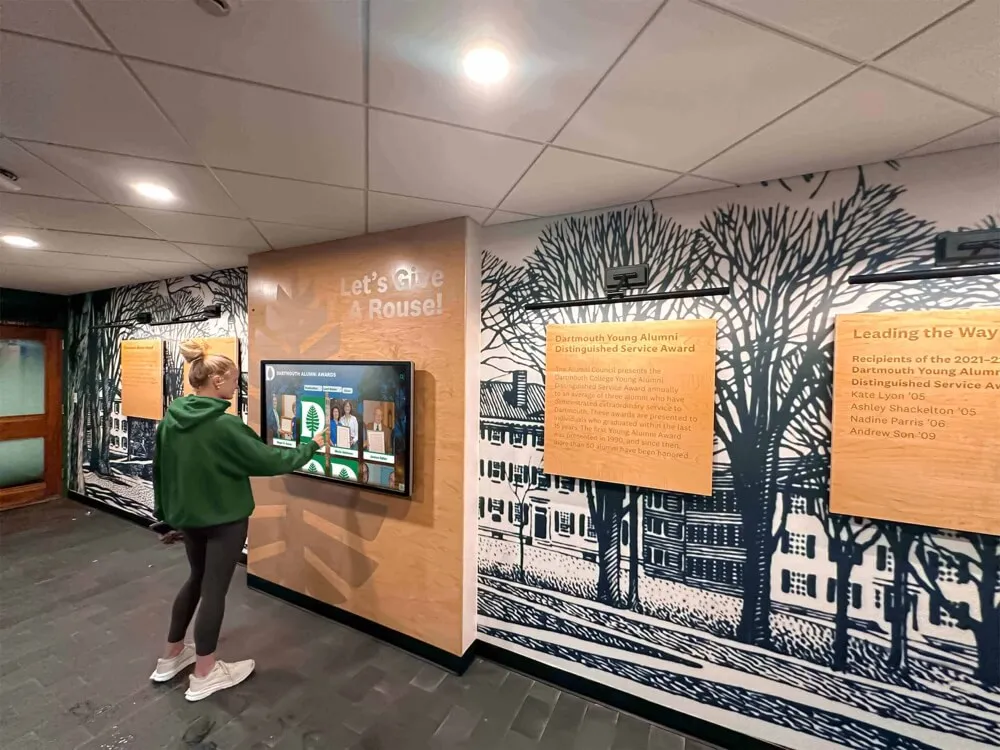
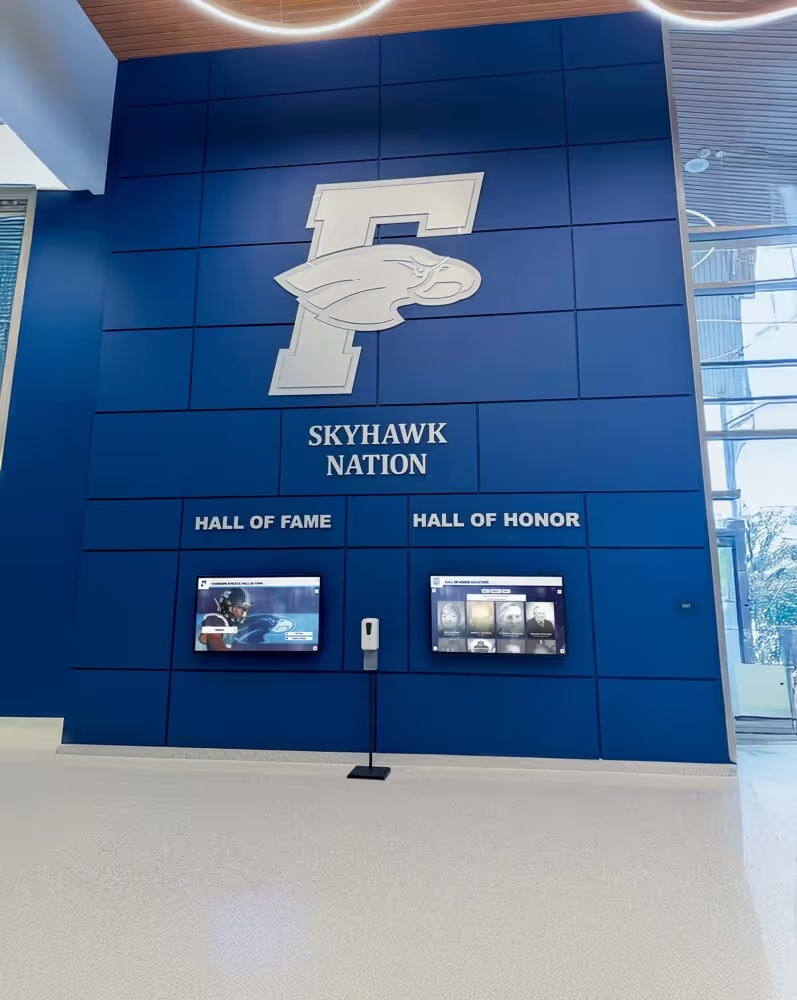
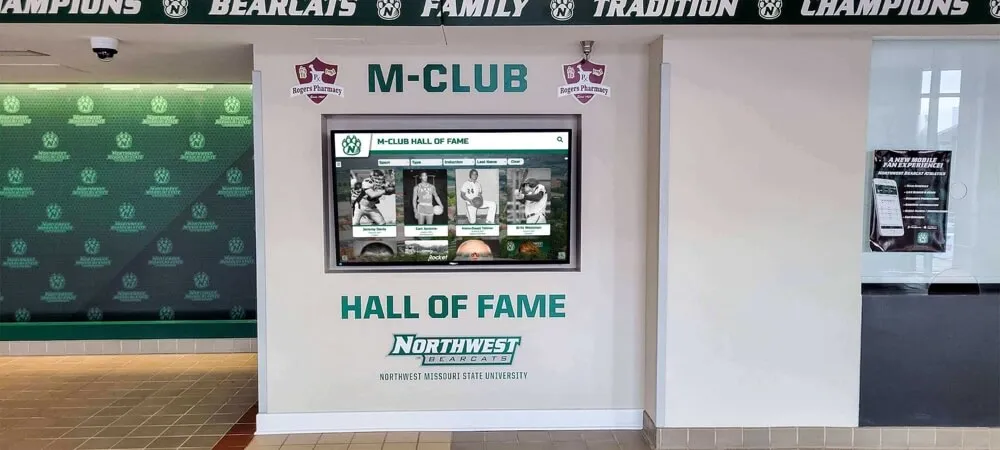
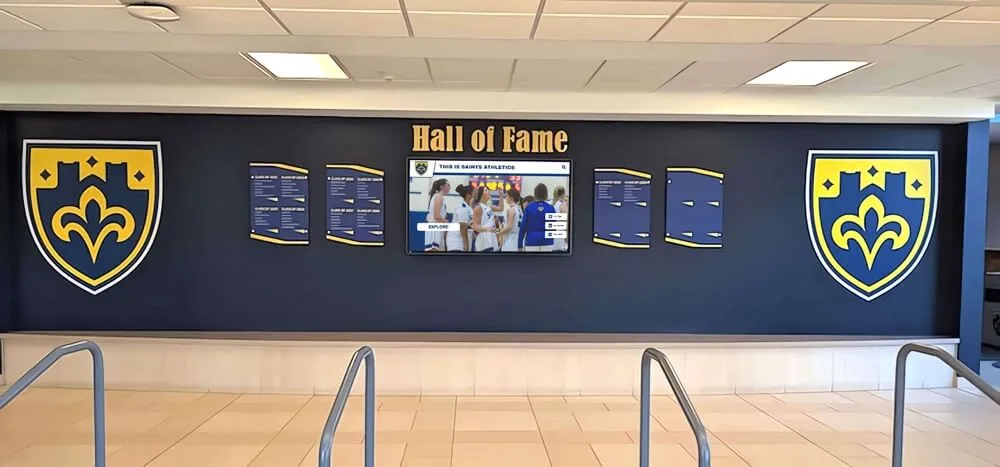
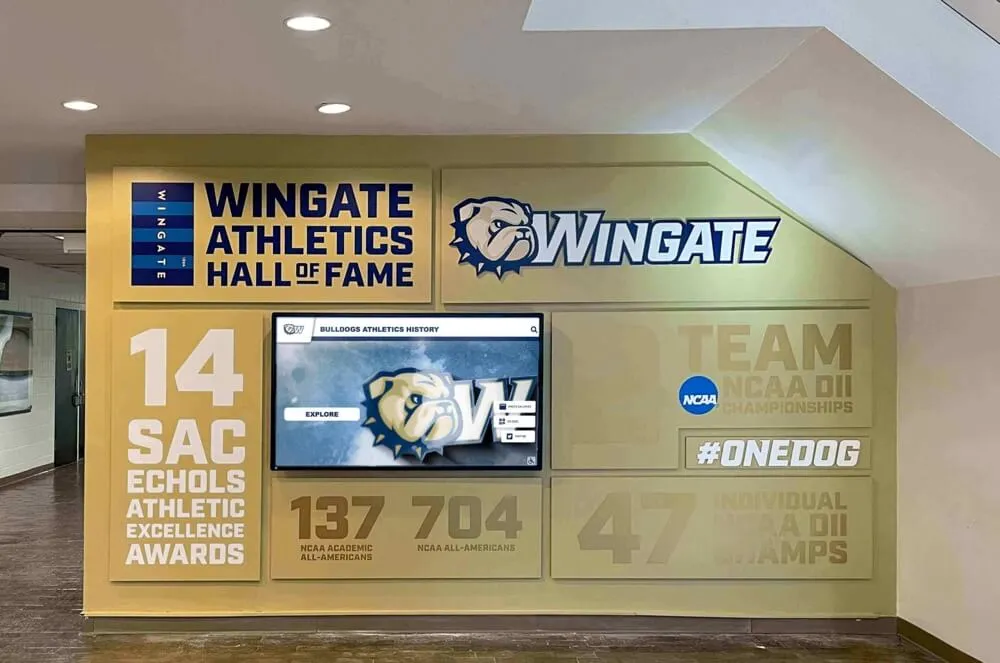
Combining traditional trophy displays with digital elements creates comprehensive recognition showcasing both historical and current achievements
Balance Density and Negative Space
Common trophy display mistakes involve either overcrowding cases with every available award creating visual chaos or leaving excessive empty space suggesting insufficient achievement. Finding the appropriate balance requires strategic density management.
The 60-70 Percent Rule
Aim to fill approximately 60-70 percent of available display space, leaving 30-40 percent as negative space between awards. This ratio provides sufficient breathing room allowing individual trophies to stand out while avoiding sparse appearance suggesting limited accomplishment.
Negative space serves functional purposes including providing visual rest points preventing viewer fatigue, creating grouping separation distinguishing different award categories, allowing light penetration ensuring interior visibility, and accommodating future additions without immediate overcrowding.
When collections exceed available space at appropriate density ratios, consider rotating displays seasonally, archiving older awards in alternate locations, or expanding to additional cabinet installations rather than cramming awards into insufficient space.
Strategic Grouping with Separation
Organize trophies into logical groups with clear visual separation between categories. Groups might organize by sport, season, achievement type, or chronology depending on your collection and institutional priorities.
Create separation through variable shelf heights dividing categories, horizontal dividers or backing material color changes, strategic negative space gaps between groupings, and subtle lighting variations highlighting different sections.
This organized grouping helps viewers navigate collections logically while understanding relationships between awards rather than confronting undifferentiated trophy collections lacking coherent organization.
Design for Accessibility and Universal Viewing
Trophy displays should accommodate diverse viewer heights, mobility capabilities, and viewing angles ensuring all students, visitors, and community members can appreciate showcased achievements.
Height Considerations for Different Audiences
Elementary students typically view comfortably between 36-50 inches, middle school students between 42-58 inches, high school students and adults between 48-66 inches, and wheelchair users between 30-54 inches depending on specific positioning.
Design comprehensive displays spanning these ranges ensures all audiences can access and appreciate recognition. Position visually striking elements and championship trophies within the overlapping 48-54 inch range accessible to broadest audience, with supporting content distributed above and below.
Viewing Angle and Glare Management
Cabinet glass creates reflection challenges, particularly when positioned opposite windows or under direct lighting. Minimize viewing difficulties through strategic cabinet orientation angled slightly rather than perfectly perpendicular to primary traffic flow, anti-reflective glass or acrylic reducing surface glare, controlled lighting from above or sides rather than directly opposite viewing positions, and matte background materials absorbing rather than reflecting light.
Test viewing angles during design phases by photographing proposed locations at different times and assessing reflection interference before finalizing installations.
Schools implementing comprehensive academic recognition programs alongside athletic honors should coordinate trophy cabinet design with broader recognition strategies.
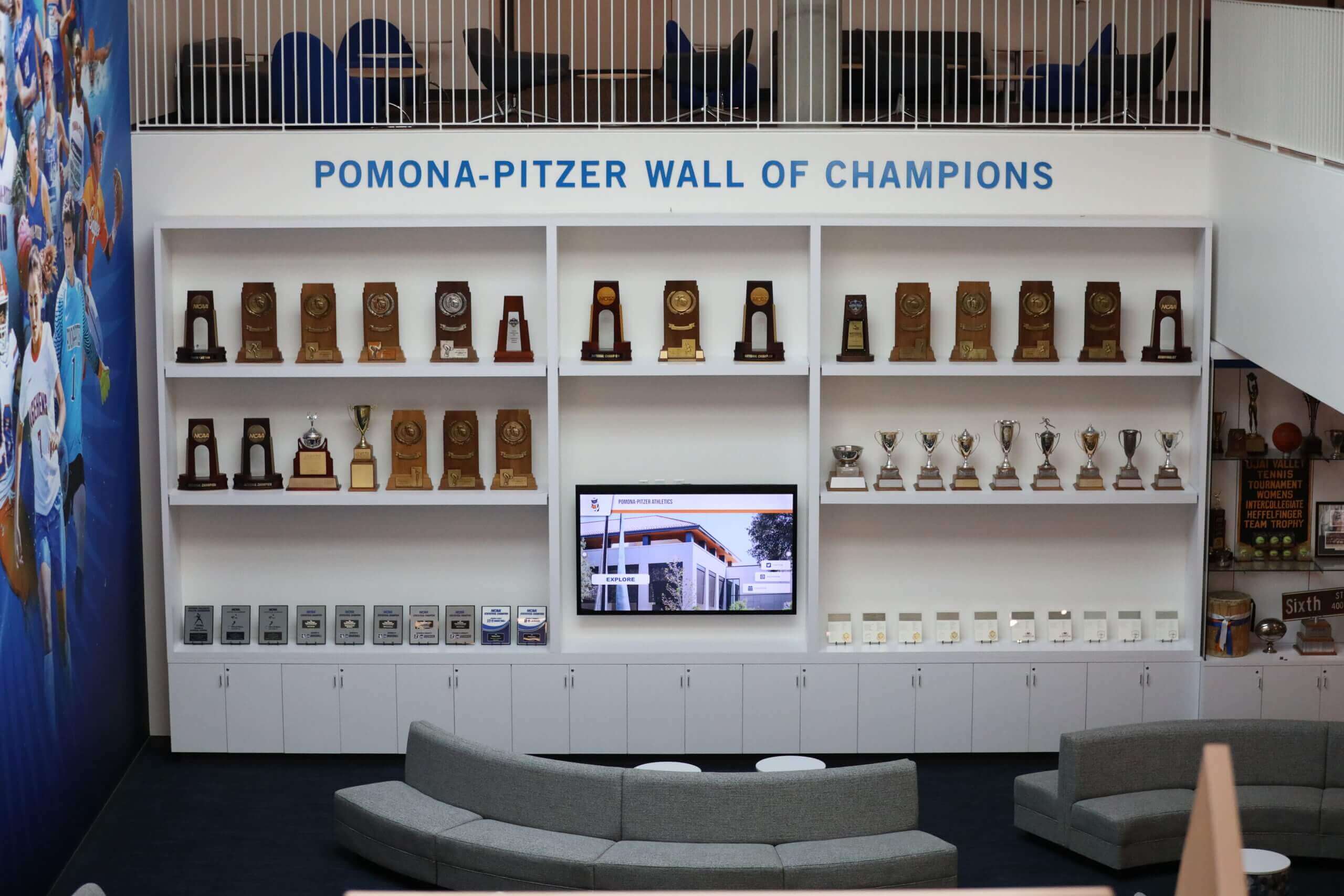
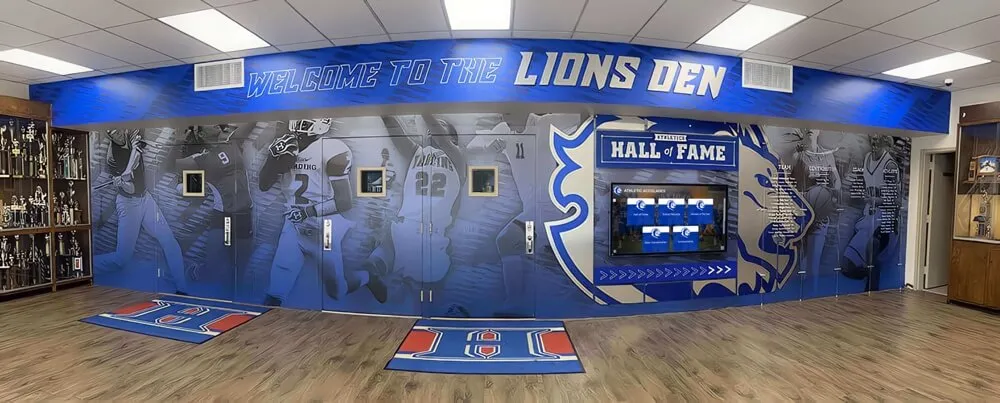
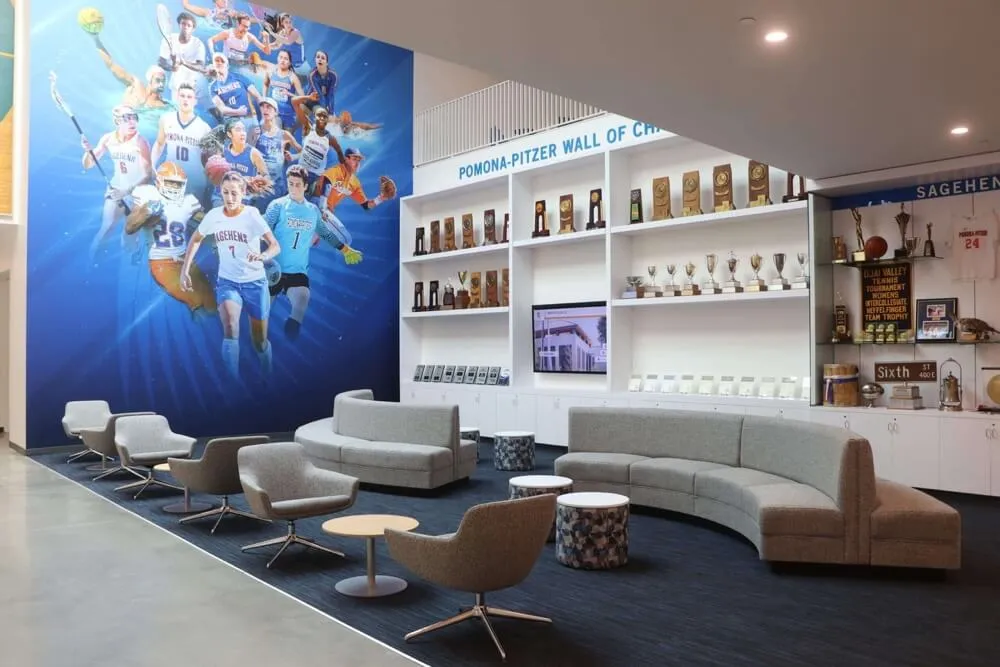
Dedicated trophy lounges create immersive recognition environments where students can appreciate program achievements in detail
Popular Cabinet Layout Approaches for Different School Needs
Various organizational frameworks serve different institutional priorities, collection characteristics, and available display spaces.
Chronological Timeline Layouts
Timeline approaches organize awards by year or era, creating historical narratives documenting program evolution over time.
Linear Progression Design
Arrange trophies from left to right or top to bottom in chronological sequence, allowing viewers to trace program history from founding through present day. This approach works particularly well for programs with long histories wanting to emphasize legacy and tradition.
Timeline layouts effectively communicate sustained excellence across multiple eras, highlight specific periods of exceptional achievement within broader histories, demonstrate program growth showing increasing accomplishment over time, and connect current students to alumni who competed decades earlier.
Consider adding decade markers, championship year callouts, or coaching era indicators helping viewers navigate chronological progressions without reading every individual trophy label.
Era-Based Segmentation
Rather than strict chronological ordering, organize awards into distinct eras defined by significant program milestones, coaching tenures, facility improvements, or achievement peaks. This approach creates narrative chapters within broader program stories.
Era segmentation allows highlighting particular periods deserving special attention while providing organizational structure accommodating varying trophy quantities from different periods without creating unbalanced chronological displays.
Sport-by-Sport Categorical Organization
Categorical layouts dedicate specific cabinet sections to individual sports, creating program-specific showcases within comprehensive athletic recognition.
Dedicated Sport Sections
Allocate distinct cabinet areas to each athletic program, organizing all trophies from that sport together regardless of year or achievement type. This approach serves schools wanting to celebrate individual program identities while maintaining comprehensive athletic recognition.
Sport-by-sport organization benefits programs with particularly successful sports deserving featured recognition, schools wanting to ensure all programs receive comparable display prominence, and institutions where different sports maintain distinct supporter communities appreciating dedicated showcases.
Within each sport section, sub-organize by achievement type, championship level, or chronology maintaining logical flow while keeping all related awards together.
Seasonal Grouping Alternative
An alternative categorical approach groups fall, winter, and spring sports together, organizing displays by athletic calendar rather than individual sport. This method aligns with how students and families experience athletic years while creating natural rotation opportunities for seasonal display updates.
Seasonal grouping works well for schools with limited year-round display space wanting to rotate featured content, institutions emphasizing multi-sport participation across seasons, and programs where seasonal championships provide natural organizational milestones.
Discover additional recognition approaches through high school awards ceremony ideas that complement trophy display strategies.
Achievement-Level Hierarchical Layouts
Organization by accomplishment significance creates pyramid structures emphasizing championship excellence while accommodating supporting awards.
Pinnacle Achievement Focus
Reserve premium cabinet space for ultimate accomplishments including state championships, national qualifications, major tournament victories, and record-breaking performances. These pinnacle achievements occupy central positions with maximum visibility and supporting design emphasis through enhanced lighting, prominent labeling, or isolated display positions.
Surround pinnacle awards with supporting achievement tiers including conference championships, regional recognitions, and tournament placements, creating visual hierarchy communicating accomplishment levels while showcasing comprehensive program success.
This approach serves competitive programs with clear achievement hierarchies, schools wanting to inspire championship pursuit through prominent display, and institutions where state championships represent defining program moments deserving special recognition.
Balanced Multi-Level Recognition
Rather than extreme pyramid concentration, create more balanced distributions acknowledging that sustained conference success, consistent tournament appearances, and accumulated team and individual honors collectively build program prestige even without state championships.
Balanced approaches allocate comparable space across achievement levels while maintaining modest hierarchy through positioning and prominence variations. This method acknowledges diverse success measures while avoiding trophy displays that appear empty or unsuccessful when ultimate championships remain elusive.
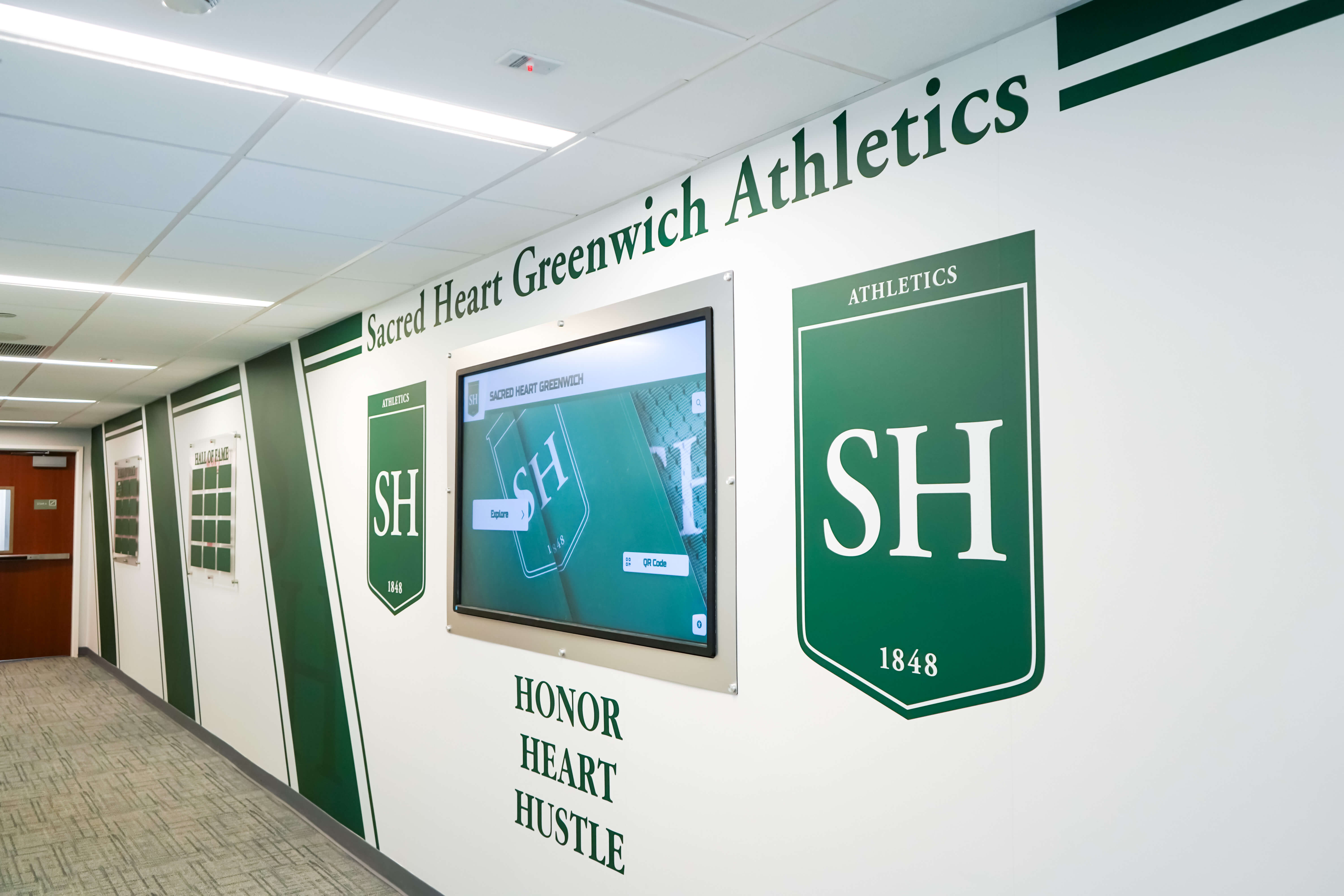
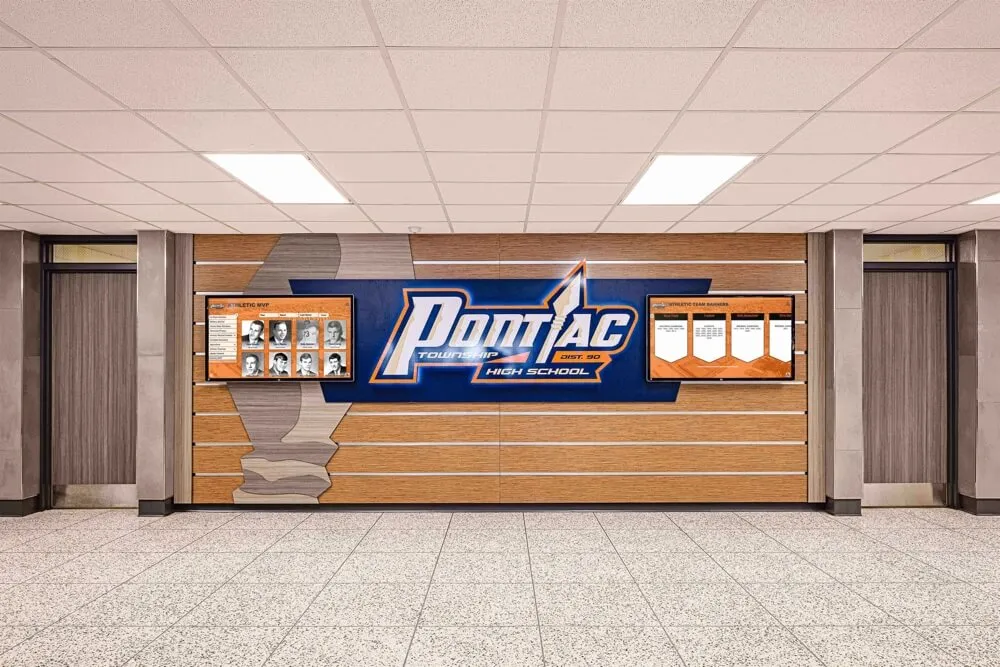
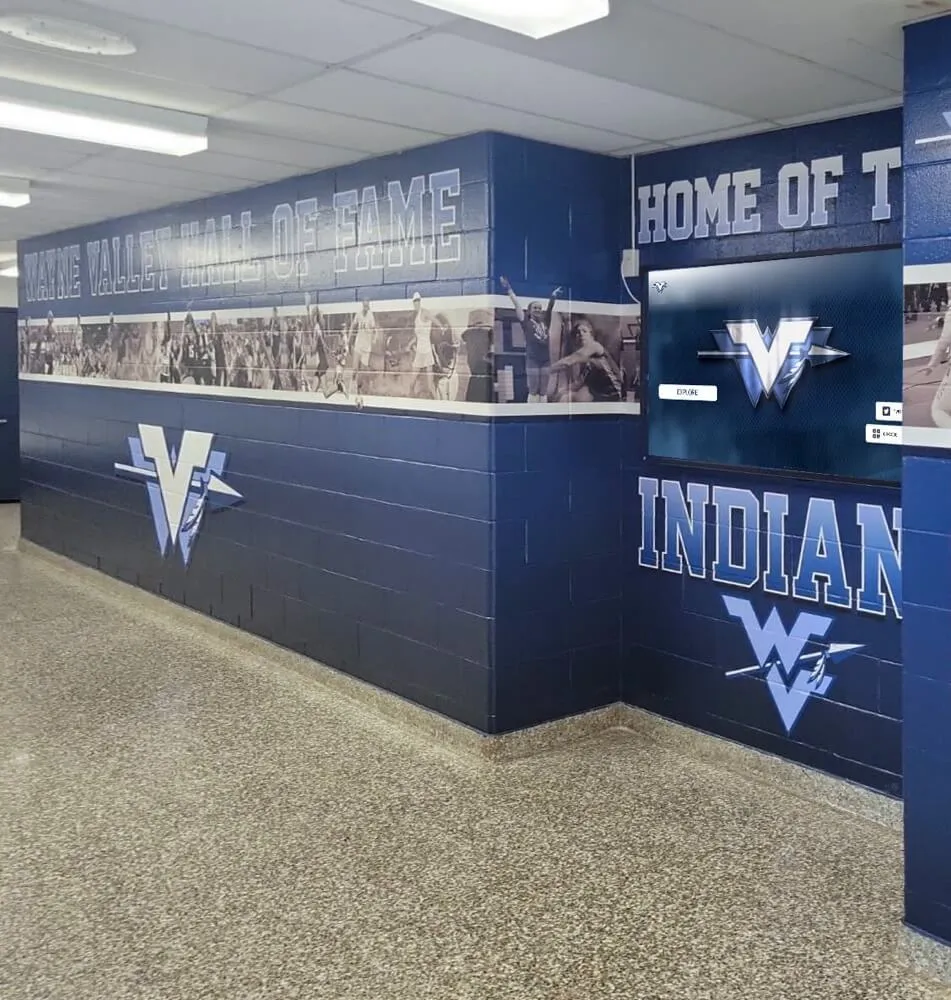
Hallway displays integrate recognition into daily student experiences, creating constant reminders of program excellence and school legacy
Enhancing Traditional Cabinets with Modern Recognition Elements
Contemporary trophy display design increasingly combines traditional physical awards with digital recognition technology creating comprehensive celebration experiences.
Integrating Digital Displays with Physical Trophies
Digital screens complement trophy cabinets by providing context, additional information, and dynamic content that static displays cannot deliver.
Contextual Championship Documentation
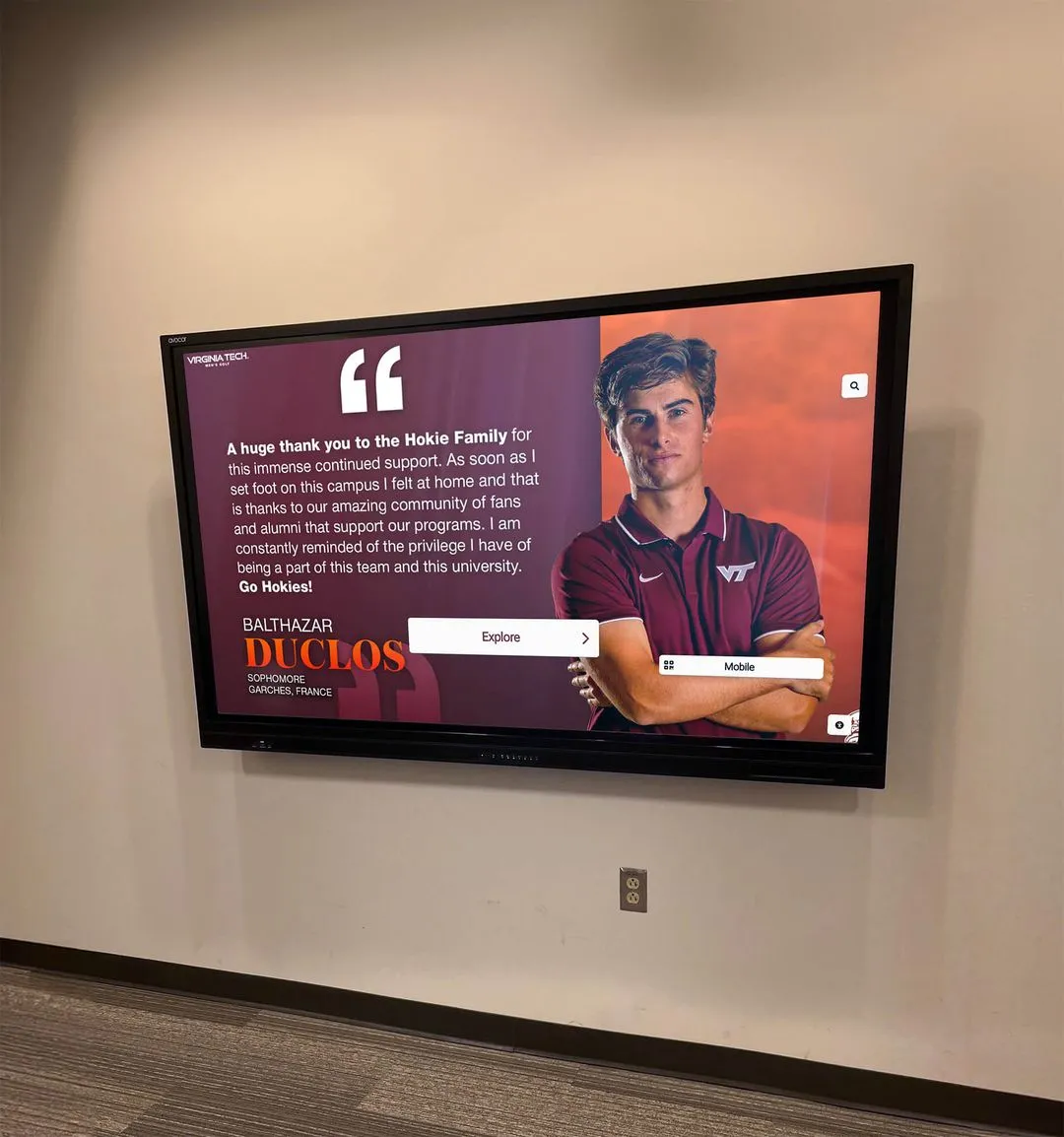
Position digital displays adjacent to trophy cases showing championship game footage and highlights, season recap slideshows documenting tournament runs, team photos and roster information, coaching commentary explaining achievement significance, and historical program timelines connecting current to past success.
This multimedia context transforms trophy cases from silent award displays into storytelling platforms explaining what championships meant, how teams achieved success, and who contributed to honored accomplishments.
Schools exploring comprehensive digital recognition should review digital hall of fame software options designed specifically for educational environments.
Interactive Exploration Capabilities
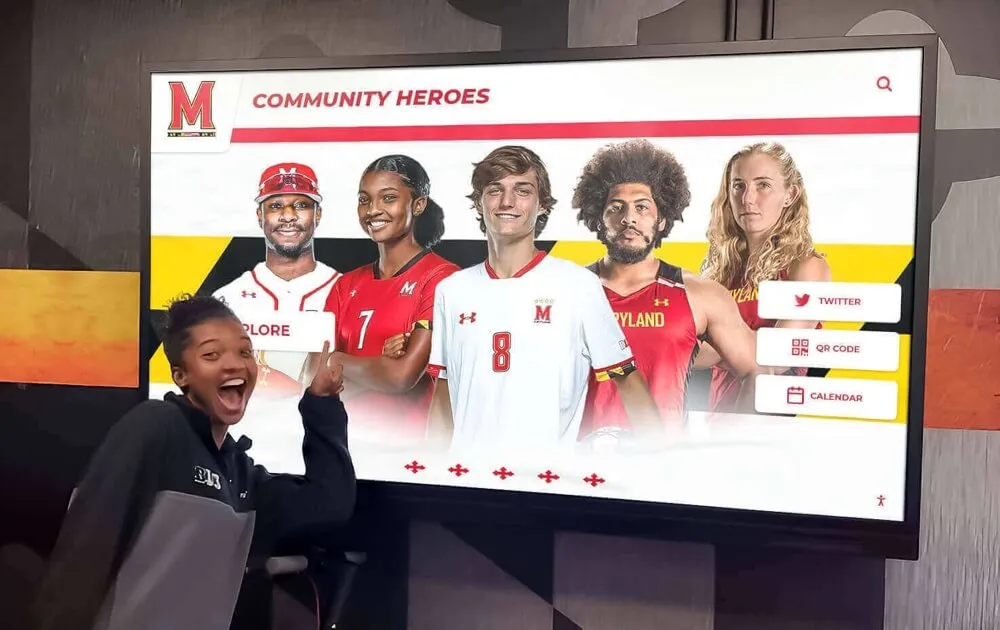
Touchscreen kiosks integrated with or positioned near trophy displays enable deeper engagement through searchable athlete and team databases, statistical archives documenting program records, video interviews with championship participants, comparative tools showing achievement across different eras, and shareable content allowing students to distribute accomplishments through social networks.
Interactive elements engage students who might otherwise pass displays without stopping while accommodating information depth that physical labels cannot provide within limited space.
Combining Recognition Modalities for Comprehensive Display
The most effective recognition strategies leverage both traditional trophy displays and modern digital platforms, capitalizing on each approach’s unique strengths.
Physical trophies provide tangible proof of achievement, create impressive visual impact through accumulated awards, offer permanence suggesting lasting institutional legacy, and deliver immediate recognition without requiring technology interaction.
Digital displays accommodate unlimited recognition capacity, update instantly as new achievements occur, provide rich multimedia storytelling capabilities, and extend recognition beyond physical facility boundaries.

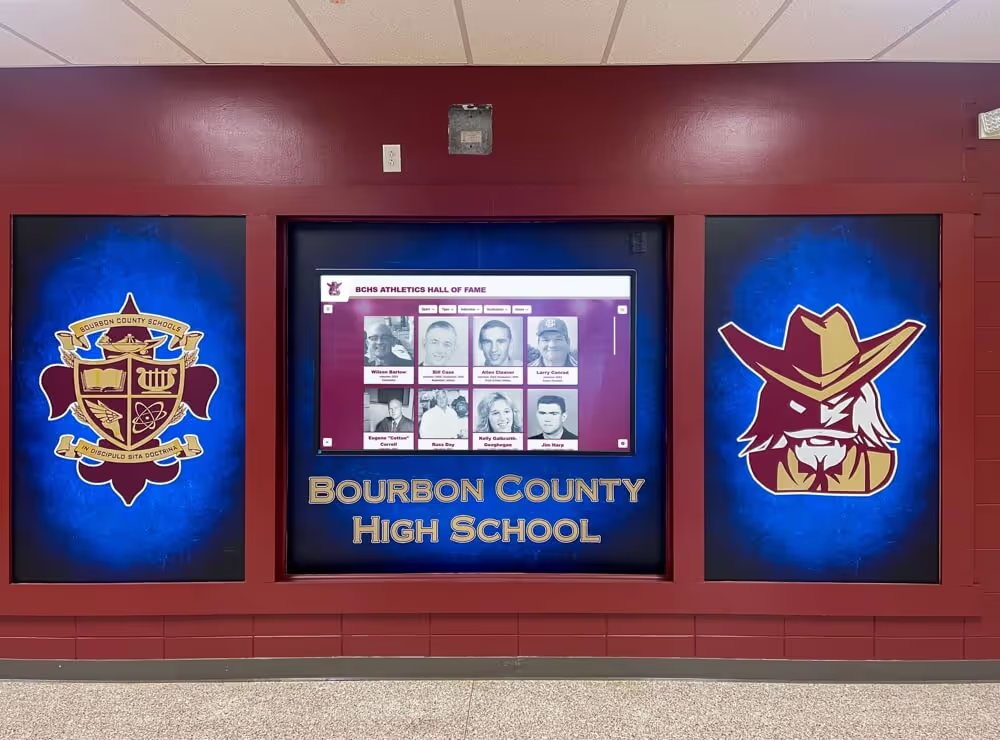
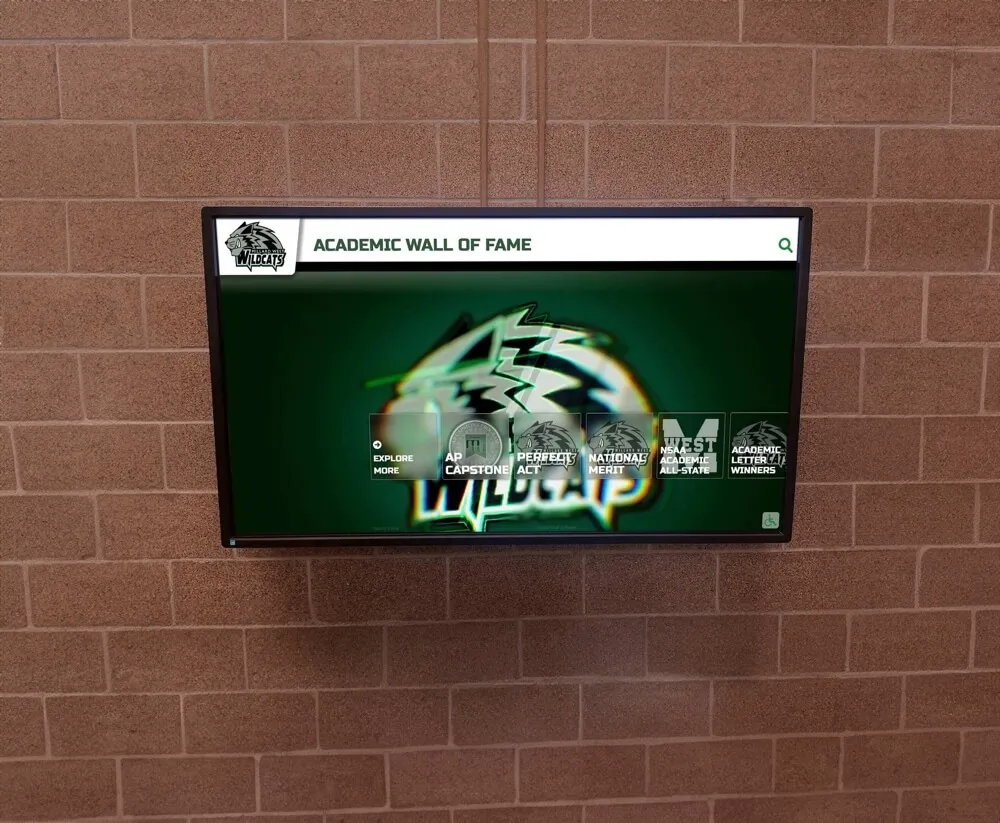
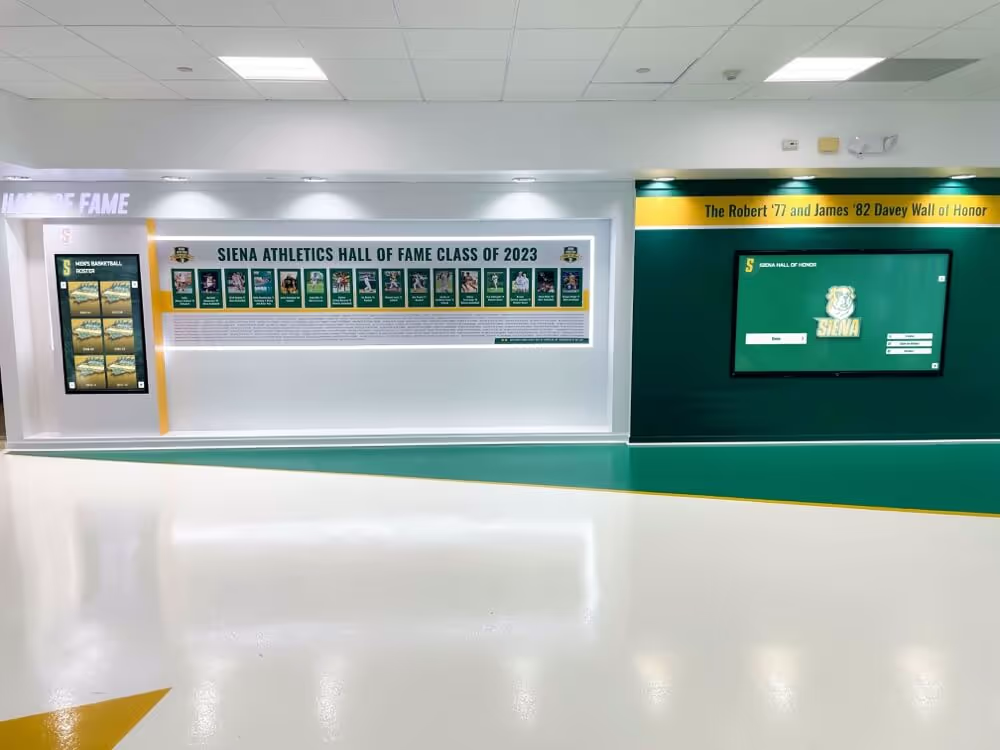
Combining physical trophies with digital recognition creates comprehensive displays leveraging traditional and modern celebration approaches
Combining both approaches creates recognition experiences honoring tradition through maintained trophy displays while embracing technology enabling expanded storytelling, greater accessibility, and unlimited growth capacity as programs continue achieving.
Learn about digital signage content strategies that complement trophy display installations with dynamic recognition content.
Practical Design Considerations for Cabinet Implementation
Beyond organizational strategy, successful trophy display projects require attention to practical installation and maintenance factors.
Lighting Design for Maximum Visual Impact
Proper illumination transforms trophy displays from shadowy cabinets into brilliant showcases emphasizing award details and creating dramatic visual interest.
Layered Lighting Approaches
Effective cabinet lighting combines multiple illumination sources including overhead ambient lighting providing general visibility, focused accent lighting highlighting specific trophies or sections, interior shelf lighting ensuring depth visibility beyond glass reflections, and base uplighting creating dramatic effects for featured awards.
LED systems offer energy efficiency, minimal heat generation preventing damage, adjustable color temperature matching surrounding architecture, and longevity reducing maintenance requirements.
Position lighting to minimize glare on cabinet glass and trophy surfaces while ensuring sufficient illumination for comfortable viewing from primary traffic flow angles.
Security and Protection Elements
Trophy collections represent significant institutional investment deserving protection against theft, vandalism, and accidental damage.
Physical Security Features
Install sturdy locking mechanisms on all accessible cabinet panels, use tempered or laminated glass resistant to breaking, secure cabinets firmly to wall structures preventing tip-over, consider alarm integration for high-value collections, and position valuable awards beyond reach through closed display sections.
Balance security requirements with maintenance accessibility ensuring authorized staff can add new awards, clean displays, and make adjustments without excessive difficulty.
Environmental Protection
Protect trophies from deterioration through humidity control preventing tarnish and corrosion, UV-filtering glass or acrylic reducing sun damage, temperature stability avoiding expansion and contraction damage, and adequate air circulation preventing moisture accumulation.
Regular cleaning schedules maintain display quality while providing opportunities to inspect for damage, verify award positioning, and address maintenance needs before they compromise display effectiveness.
Planning for Growth and Future Additions
Successful programs continue winning championships, requiring trophy display designs accommodating future achievements without constant renovation.
Built-In Expansion Capacity
Design initial installations with intentional space reserved for future awards, modular shelving allowing reconfiguration as collections grow, adjustable components supporting various trophy sizes and types, and adjacent wall space enabling cabinet expansion when needed.
Planning for growth prevents premature overcrowding while allowing trophy displays to evolve alongside program success without requiring complete redesign every few years.
Rotation and Archive Strategies
As collections outgrow available display space, implement rotation programs moving older awards to archive storage or alternate locations, seasonal displays featuring sport-specific content during active seasons, decade-based showcases periodically highlighting different program eras, and traveling displays bringing recognition to different campus locations.
Rotation maintains fresh display appeal while ensuring the most relevant achievements receive prominent ongoing recognition without permanently removing honored awards from institutional collections.
Consider ADA accessibility requirements when planning trophy cabinet installations to ensure all students and visitors can appreciate displayed achievements.
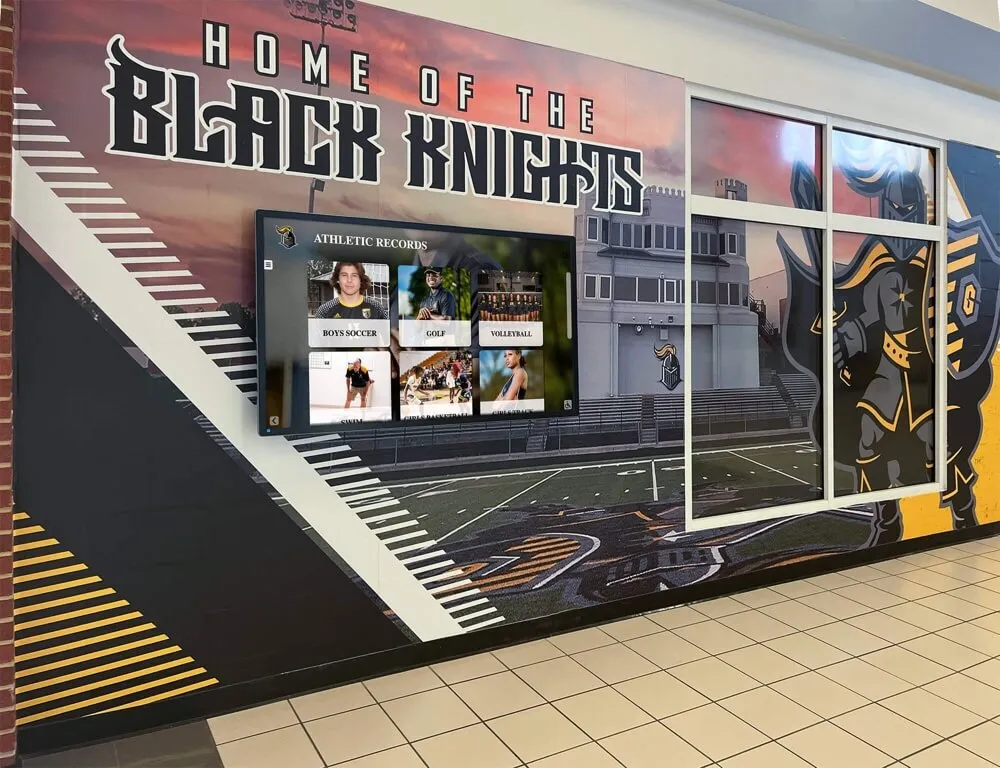
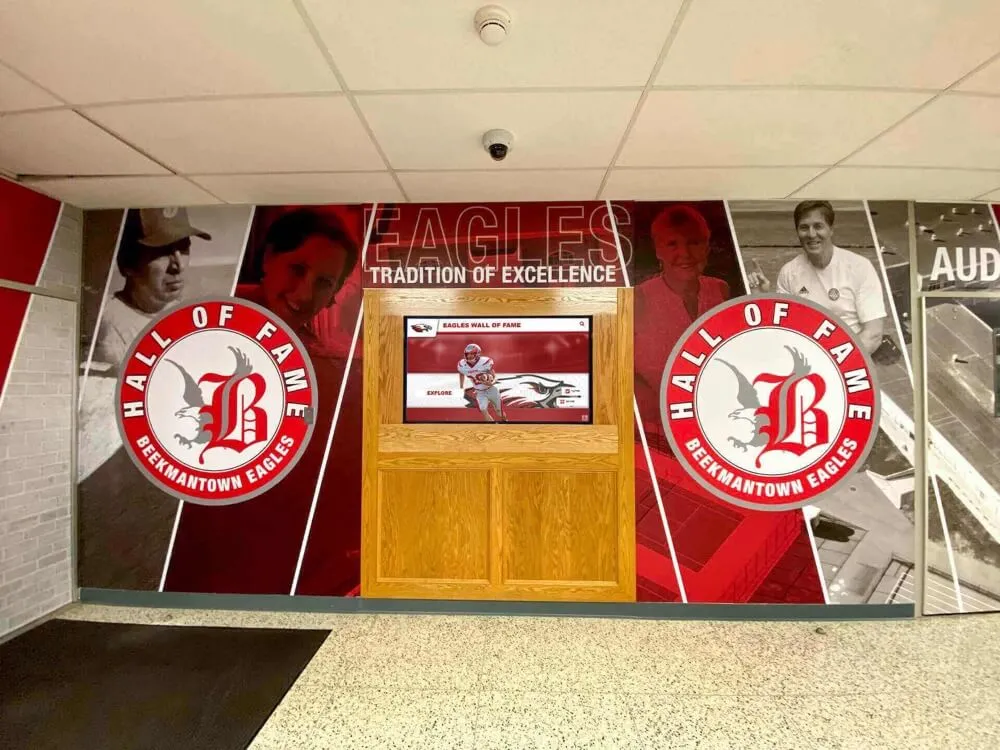
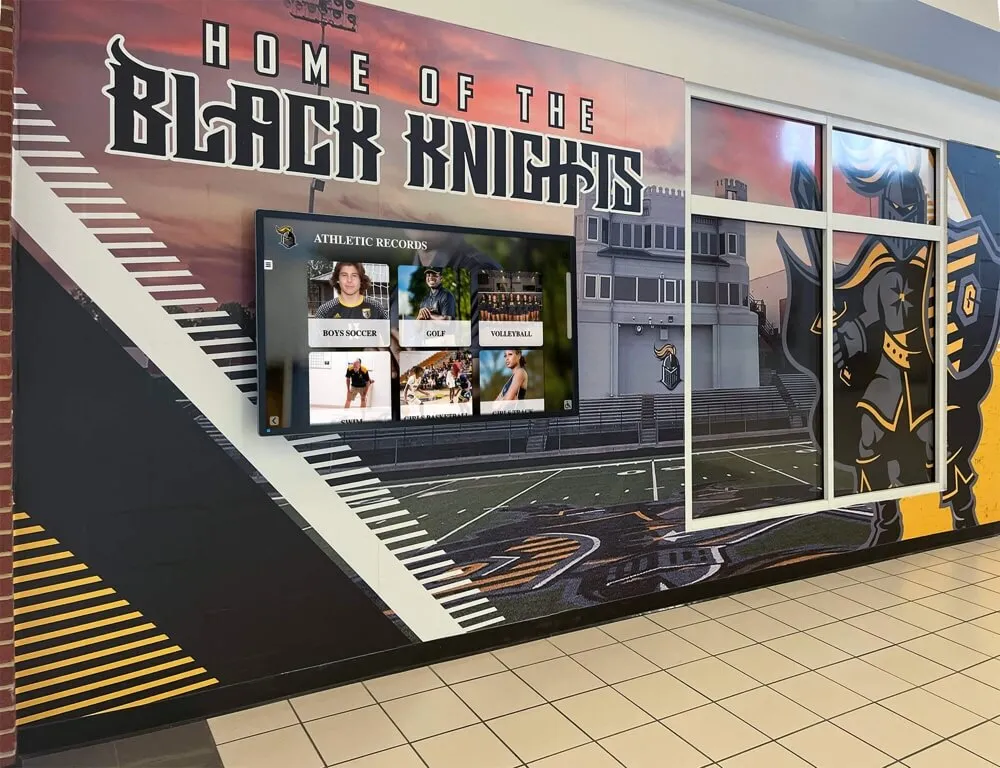
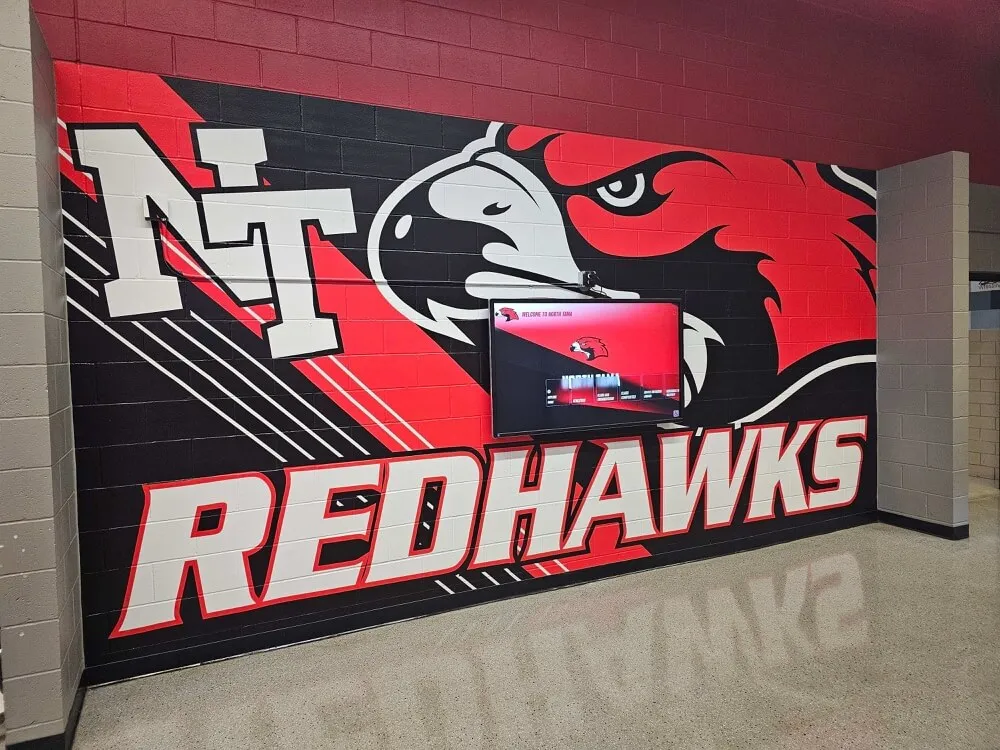
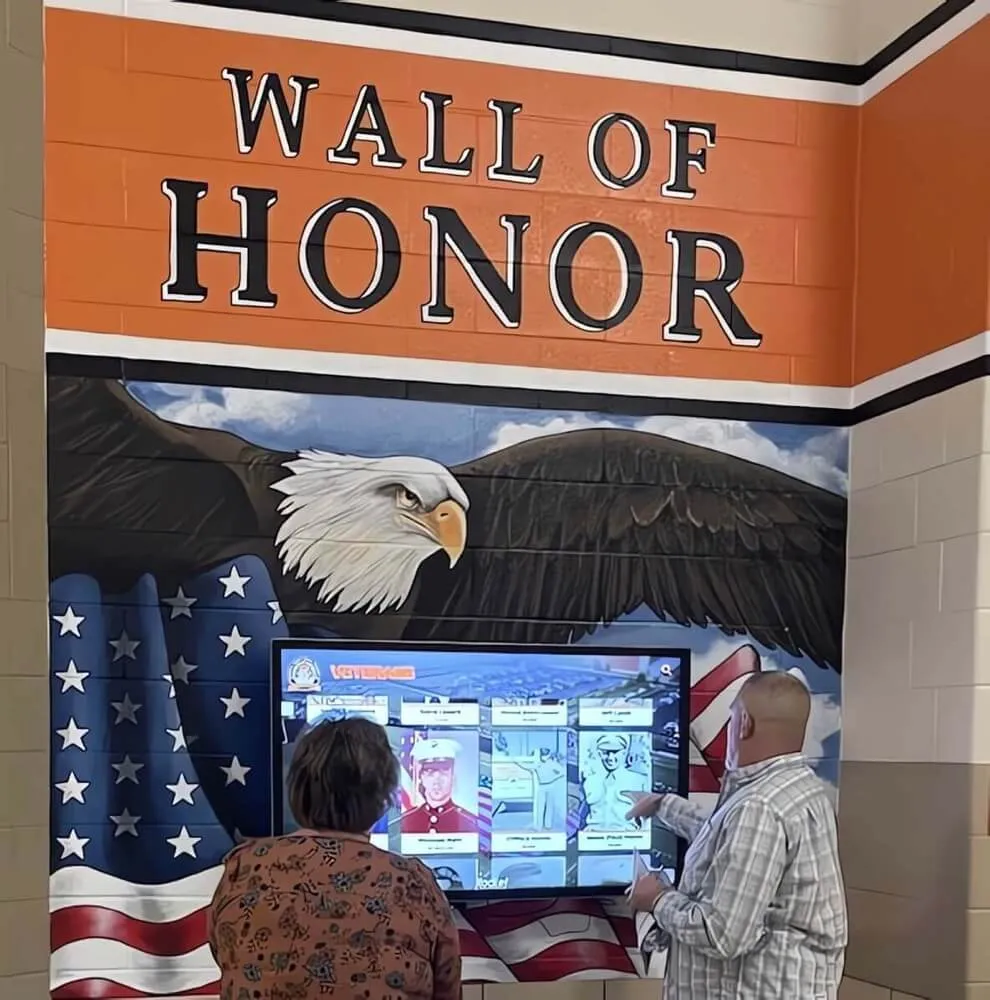
Integrated hallway displays combine murals, records, and trophy recognition creating immersive school spirit environments
Common Trophy Display Design Mistakes to Avoid
Learning from frequent cabinet design errors helps schools create more effective recognition displays from initial implementation.
Overcrowding Cabinets Beyond Effective Capacity
The temptation to display every award often creates cluttered showcases where individual trophies disappear into undifferentiated masses. Overcrowded displays prevent viewers from appreciating specific achievements, create maintenance challenges limiting cleaning effectiveness, suggest disorganization contradicting excellence celebration, and eliminate flexibility for future additions.
Resist the impulse to cram all available awards into limited space. Instead, be selective about featured content, maintain appropriate density ratios, and develop rotation or archive strategies for comprehensive collections exceeding effective display capacity.
Neglecting Proper Labeling and Context
Trophies without adequate labeling become mysterious objects that viewers cannot interpret. Effective displays include clear labels identifying sport or activity, achievement type and level, year or season earned, team or individual recipients, and championship or tournament specifics.
Position labels consistently where viewers naturally look, use readable fonts and adequate text sizes, maintain labels over time replacing faded or damaged identifiers, and consider supplementary context explaining particularly significant achievements.
Without proper labeling, even impressive trophy collections lose much of their communication power and inspiration potential.
Ignoring Maintenance and Long-Term Care
Trophy displays require ongoing maintenance preserving their appearance and functionality. Common maintenance failures include allowing dust accumulation obscuring awards, neglecting bulb replacement creating dark sections, permitting glass smudges reducing visibility, leaving damaged trophies creating neglected appearance, and failing to update content as new achievements occur.
Establish regular maintenance schedules including monthly cleaning protocols, quarterly deep cleaning and inspection, annual trophy condition assessment, and prompt new award additions following championship wins.
Well-maintained displays communicate respect for honored achievements while poorly maintained cases suggest indifference contradicting recognition intentions.
Prioritizing Convenience Over Strategic Visibility
Positioning trophy cabinets based solely on available wall space rather than strategic visibility opportunities wastes recognition impact. Effective placement requires high-traffic locations ensuring regular student exposure, prominent sight lines visible from distance, adequate surrounding space allowing comfortable viewing, appropriate lighting supporting visibility, and thematic coherence with surrounding spaces.
A strategically placed modest display generates greater recognition impact than an elaborate cabinet hidden in low-traffic locations where few students encounter it regularly.
Explore how alumni wall design strategies can inform comprehensive recognition planning spanning athletic and broader institutional achievements.
Creating Trophy Displays That Inspire Future Champions
The ultimate measure of trophy display effectiveness lies not in design sophistication but in how displays influence students encountering them. Successful cabinets inspire athletic participation by demonstrating that championships represent achievable goals, motivate excellence pursuit through visible proof that hard work earns recognition, build program pride connecting students to institutional legacy, create aspiration showing what dedication can accomplish, and preserve history ensuring achievements live beyond championship moments.
When designed thoughtfully with attention to layout hierarchy, appropriate density, strategic organization, and comprehensive accessibility, school trophy display cabinets transcend simple award storage to become powerful recognition platforms that celebrate past excellence while inspiring the next generation of student-athletes to build upon the legacies these displays preserve.
Whether planning new trophy cabinet installations, renovating existing displays, or exploring how modern digital recognition can complement traditional approaches, successful school trophy display cabinet design begins with understanding that these installations serve strategic recognition purposes worthy of careful planning, appropriate investment, and ongoing maintenance ensuring displays continue inspiring students for years to come.
Transform Your School’s Recognition Strategy
Ready to create trophy displays that truly inspire your students? Rocket Alumni Solutions specializes in modern recognition platforms combining traditional trophy showcases with interactive digital displays that tell complete achievement stories. Our touchscreen walls of fame, digital donor recognition systems, and comprehensive athletic celebration platforms help schools honor excellence while building lasting legacy.
Discover how Rocket Alumni Solutions can transform your school’s recognition displays