When the final buzzer sounds on a school athletic season, coaches file post-season evaluations, athletes settle back into the regular school schedule, and athletic directors wrap up gear inventories. Amid all of that closing activity, one group rarely gets the structured attention they deserve: the local businesses and community donors who made the season financially possible. Sponsor recognition after the season is not just a courtesy—it is the single most powerful variable in whether those same sponsors sign on again next year.
A well-designed sponsor recognition display is the centerpiece of that post-season effort. Whether it takes the form of a dedicated lobby wall, a digital touchscreen profile, a permanent plaque, or a rotating digital panel that persists through the off-season and into the next campaign, the display tells sponsors something no email can: your contribution is permanently woven into this program’s story.

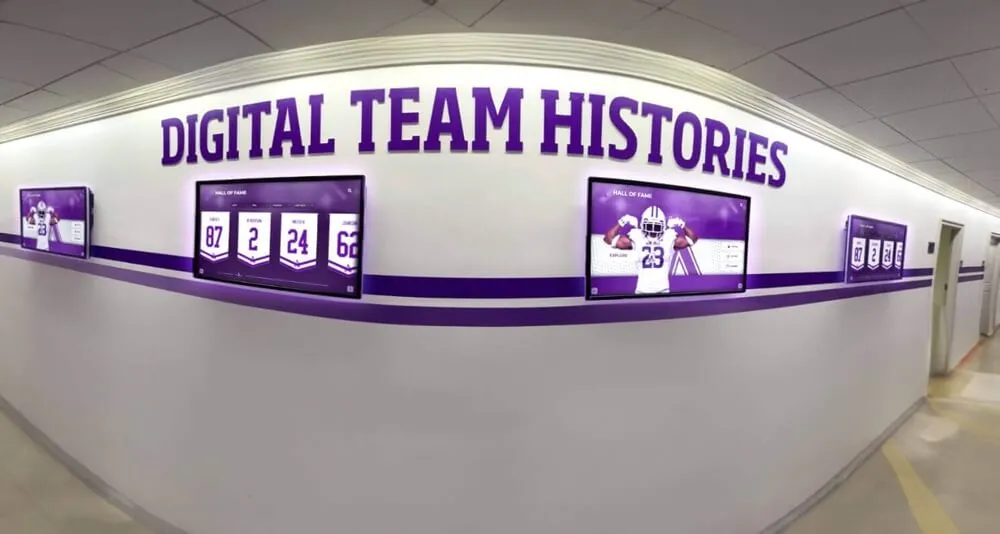
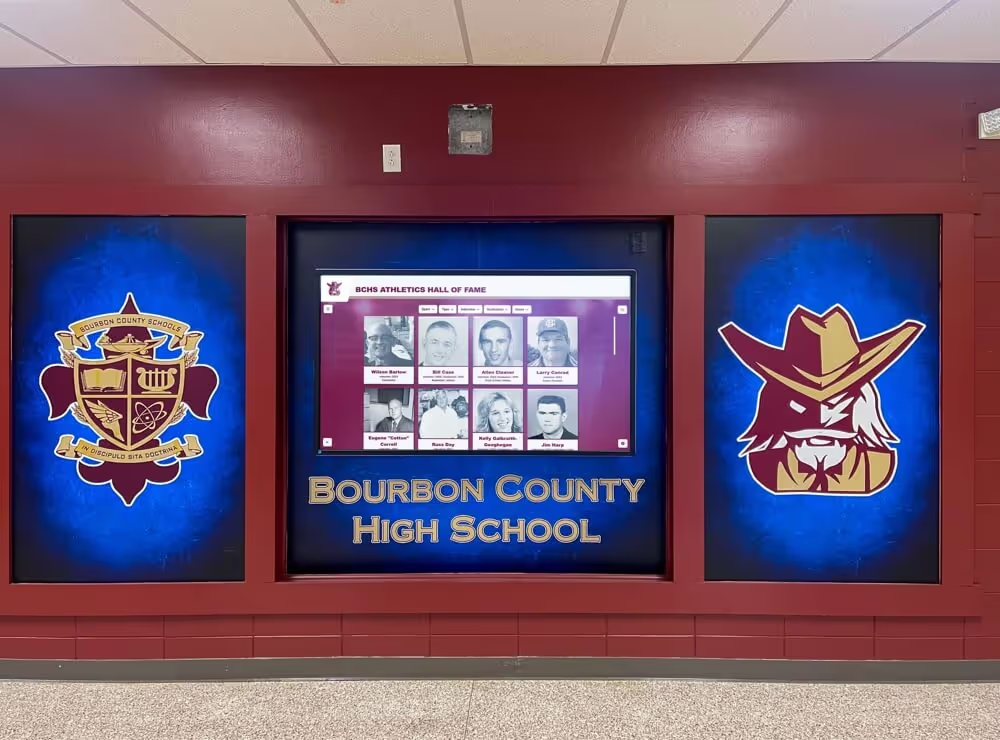
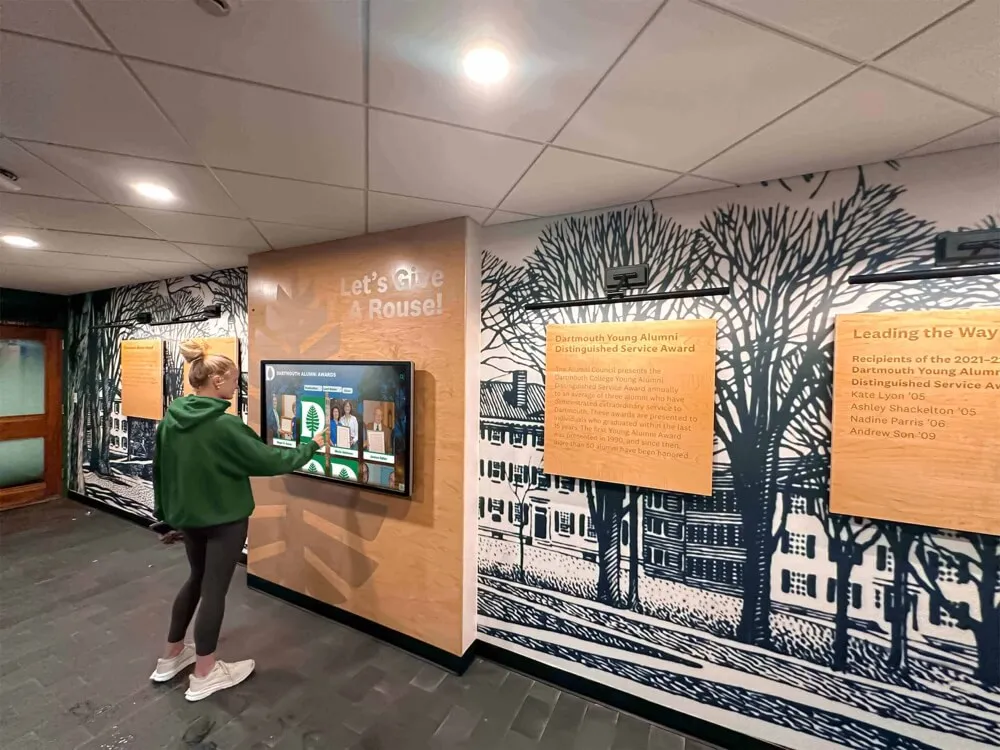
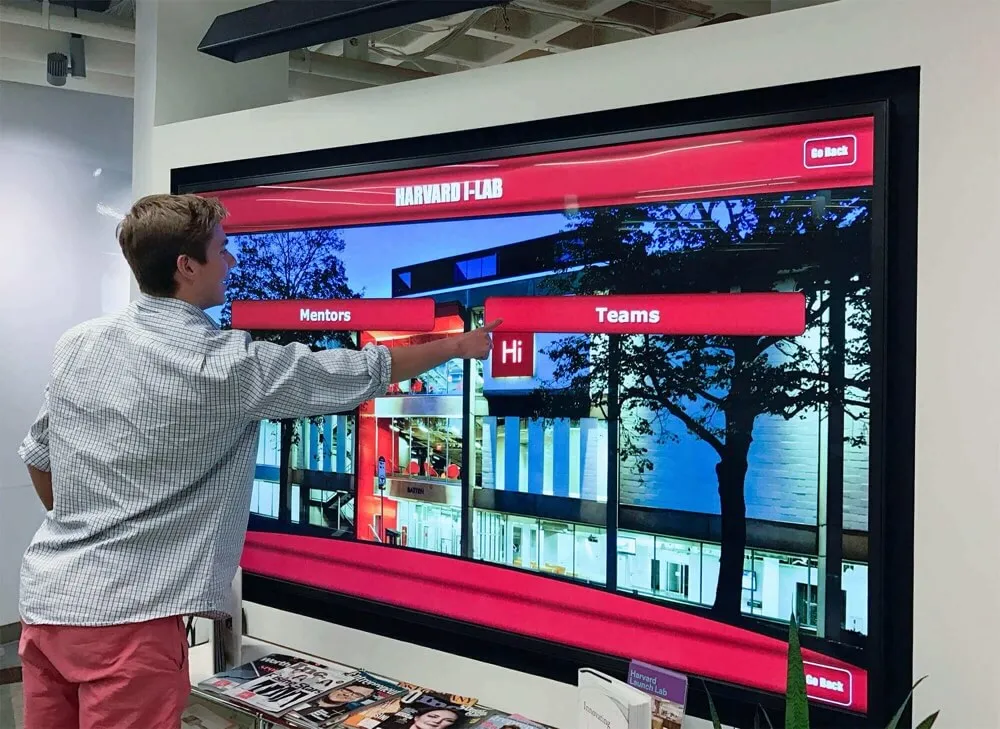
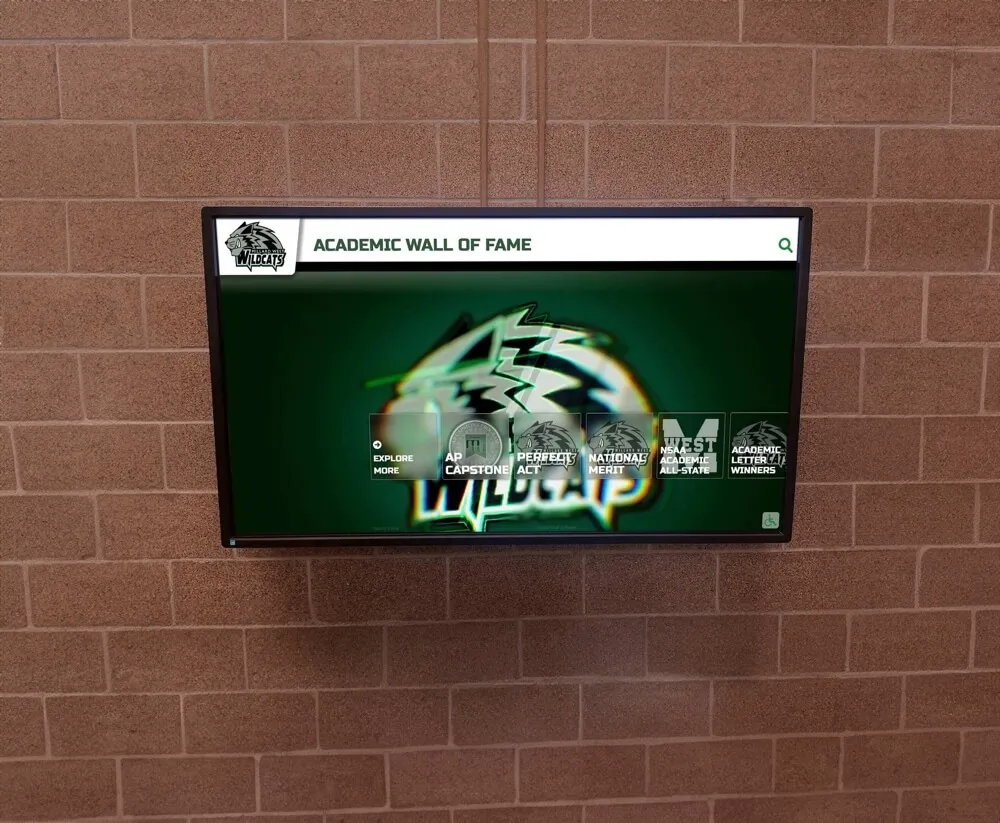
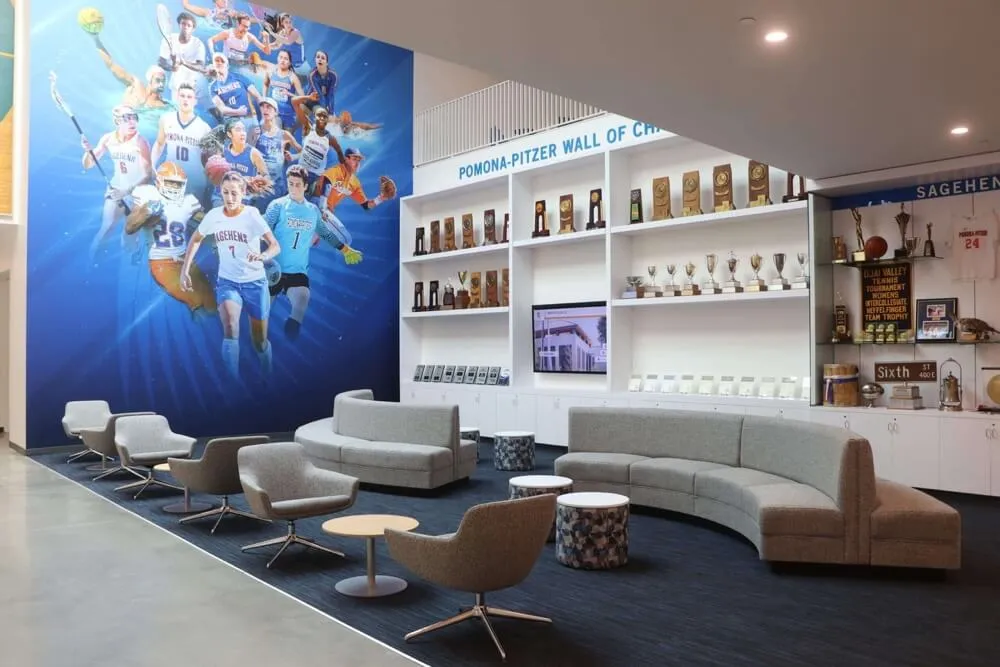
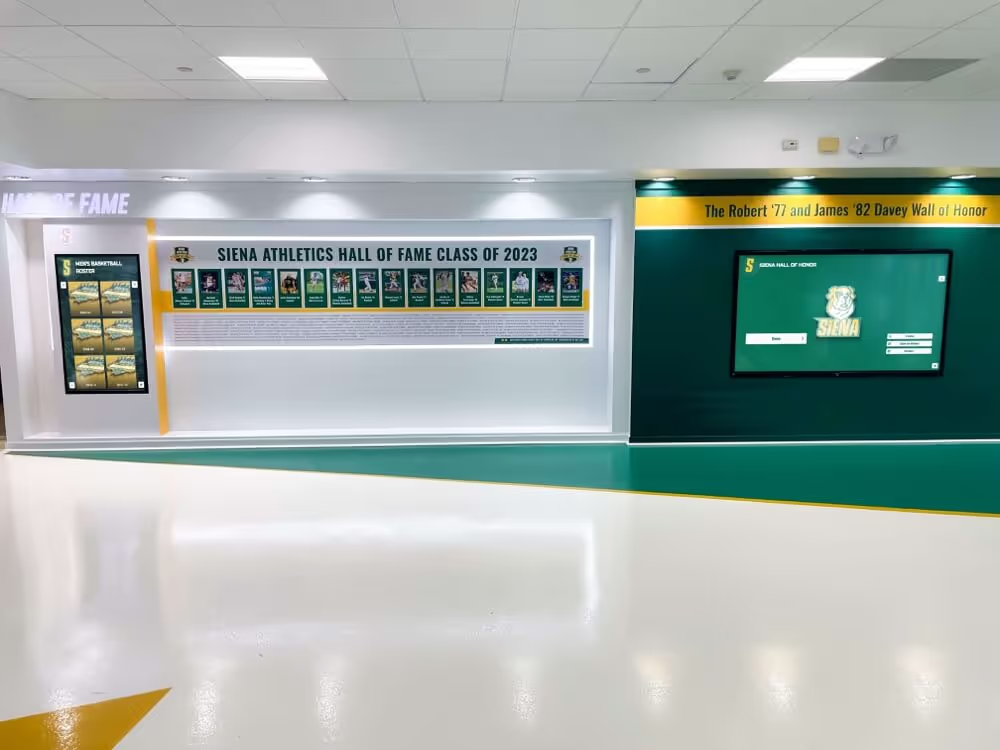
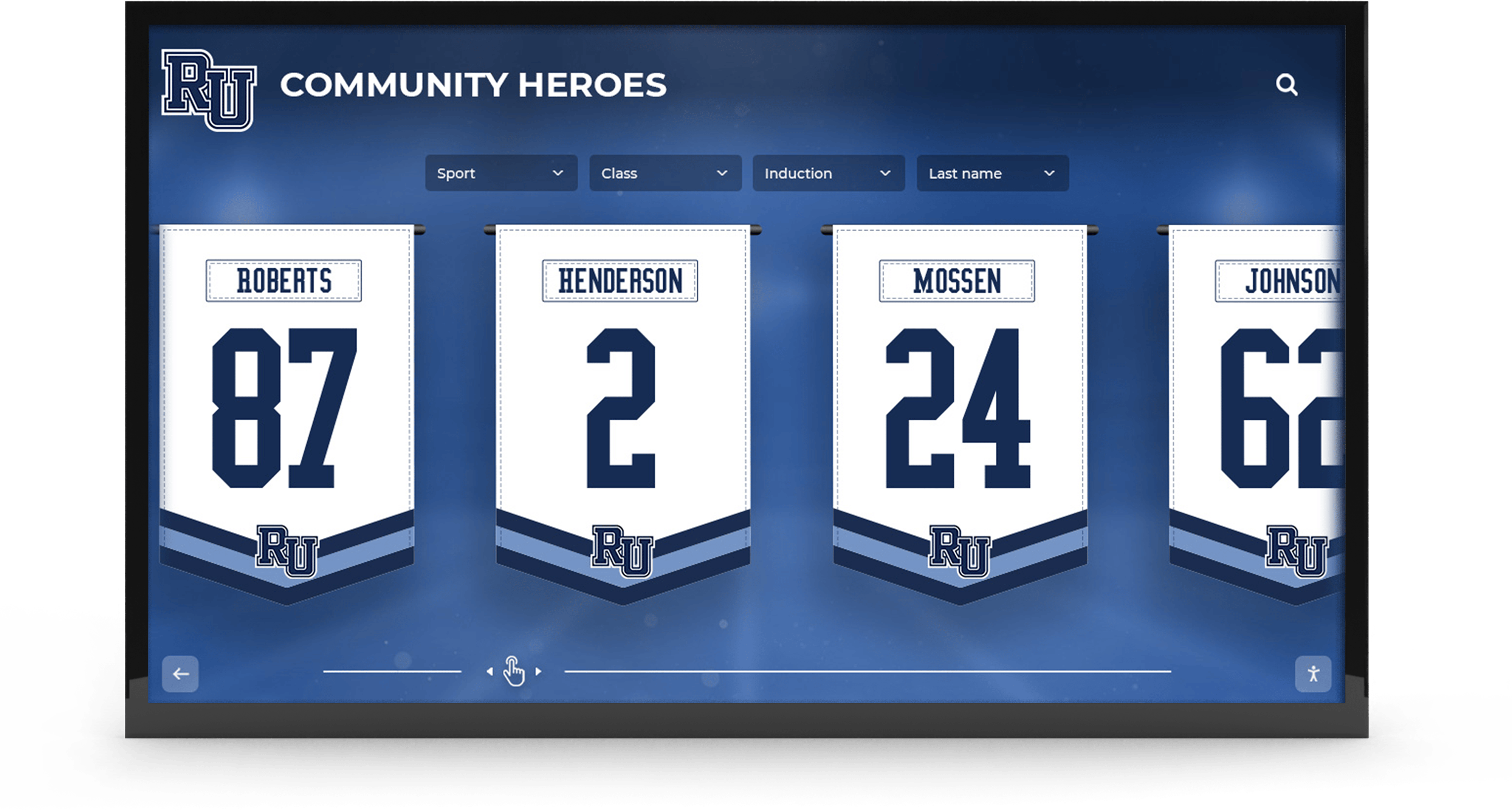
Lobby recognition displays give sponsors visible, permanent placement alongside the athletes and achievements that make the program worth supporting
Why Post-Season Is the Most Important Moment for Sponsor Stewardship
Most athletic programs treat sponsor recognition as a pre-season logistics task: hang the banners before the first home game, insert the logo into the printed program, and move on to coaching priorities. That approach handles the event-time visibility sponsors expect, but it misses the relationship window that matters most—the weeks immediately following the season.
Post-season stewardship works for three connected reasons:
The emotional context is at its peak. Athletic seasons create shared experiences that carry genuine meaning. Championship runs, senior nights, and hard-fought rivalries all happen between your first and final game. When a sponsor receives acknowledgment after the season that ties their support to those specific moments—“Your sponsorship helped fund the equipment our wrestlers used during their first regional title run”—it resonates in a way that a pre-season thank-you letter cannot.
The renewal conversation is still months away. Reaching out immediately post-season, before renewal packages are issued, removes the transactional pressure from the relationship. Sponsors who hear from you only when it is time to write another check quickly learn to associate your contact with an ask rather than a partnership.
Display permanence drives multi-year commitment. Sponsors who see their name added to a physical or digital recognition display that will persist beyond a single season have concrete evidence that their contribution has lasting value. Reviewing sports season recap documentation can help programs frame each season’s sponsor contributions in the context of longer institutional history—exactly the narrative that justifies permanent display placement.
The Post-Season Sponsor Recognition Workflow
The following five-step workflow gives athletic programs a repeatable process for moving from season close to display installation within 30–45 days of the final game.
Step 1: Compile the Full Sponsor Record
Within one week of the season ending, gather a complete accounting of every sponsor from that season. This is not only financial donors—it includes in-kind contributors, booster club business members, and community partners who provided goods or services. For each sponsor, document:
- Business name and primary contact
- Contribution amount or in-kind value
- Recognition tier (if your program uses tiered sponsorship levels)
- What recognition deliverables they were promised
- What was actually delivered versus what remains outstanding
This audit closes the loop on any recognition gaps and gives you a complete picture of who deserves what acknowledgment on your display. Programs that skip this step often leave lower-tier sponsors off displays or, worse, include sponsors whose involvement ended.
Step 2: Draft the Display Content
Decide how sponsors will appear on your recognition display before you contact them for a post-season update. Common display content for each sponsor entry includes:
- Business name (legal name, not an abbreviation—confirm this with the sponsor)
- Logo (for digital or printed formats)
- Sponsorship tier or recognition level
- Years of continuous support (“Community Partner Since 2019”)
- Optional: one-sentence community connection
The “years of continuous support” field is underused and highly effective. A sponsor who has supported your program for six consecutive seasons will have a fundamentally different reaction to seeing “Partner Since 2019” than to seeing a plain logo identical to a first-year sponsor’s entry. That tenure acknowledgment is free to include and worth significantly more than its production cost.
Step 3: Create or Update the Physical Display
Physical sponsor recognition displays range from simple printed panels in a lobby to engraved plaques, vinyl banners, and permanent dimensional signage. The format appropriate for your program depends on sponsor count, facility traffic, and budget. Reviewing donor recognition wall plaques provides format comparisons that apply equally to sponsor recognition in athletic contexts.
For post-season updates to existing displays:
- Engraved or printed panels: Add new sponsors and update returning sponsors’ tenure language. Remove sponsors who did not renew.
- Vinyl recognition boards: Reprint the full sponsor panel annually if significant changes occurred; add individual name strips if the board format accommodates them.
- Framed recognition boards: Print a new roster insert for the current season rather than replacing the entire frame.
Physical displays work best when they are housed in high-traffic athletic spaces—gymnasium lobbies, hallway entrances near locker rooms, and concourses adjacent to trophy cases and sports memorabilia display cases. These placements ensure that sponsors, their employees, and their families see the recognition during any school visit—not only during games.
Step 4: Deploy Digital Recognition Updates
Digital recognition displays—touchscreen walls of fame, digital lobby screens, and interactive kiosks—update in minutes rather than days. Post-season is the ideal time to refresh sponsor content across digital systems because:
- You have accurate records from Step 1
- Sponsors are reaching their annual decision window
- Updated digital content serves as immediate proof-of-recognition you can screenshot and send
For programs with digital recognition platforms, post-season digital updates should include:
- Adding new sponsors who joined mid-season or for the first time
- Updating tenure data for returning sponsors
- Removing sponsors who explicitly did not renew
- Uploading any new logos sponsors provided during the season
- Adding season-specific context (“2025–2026 Season Partner”) if your platform supports it
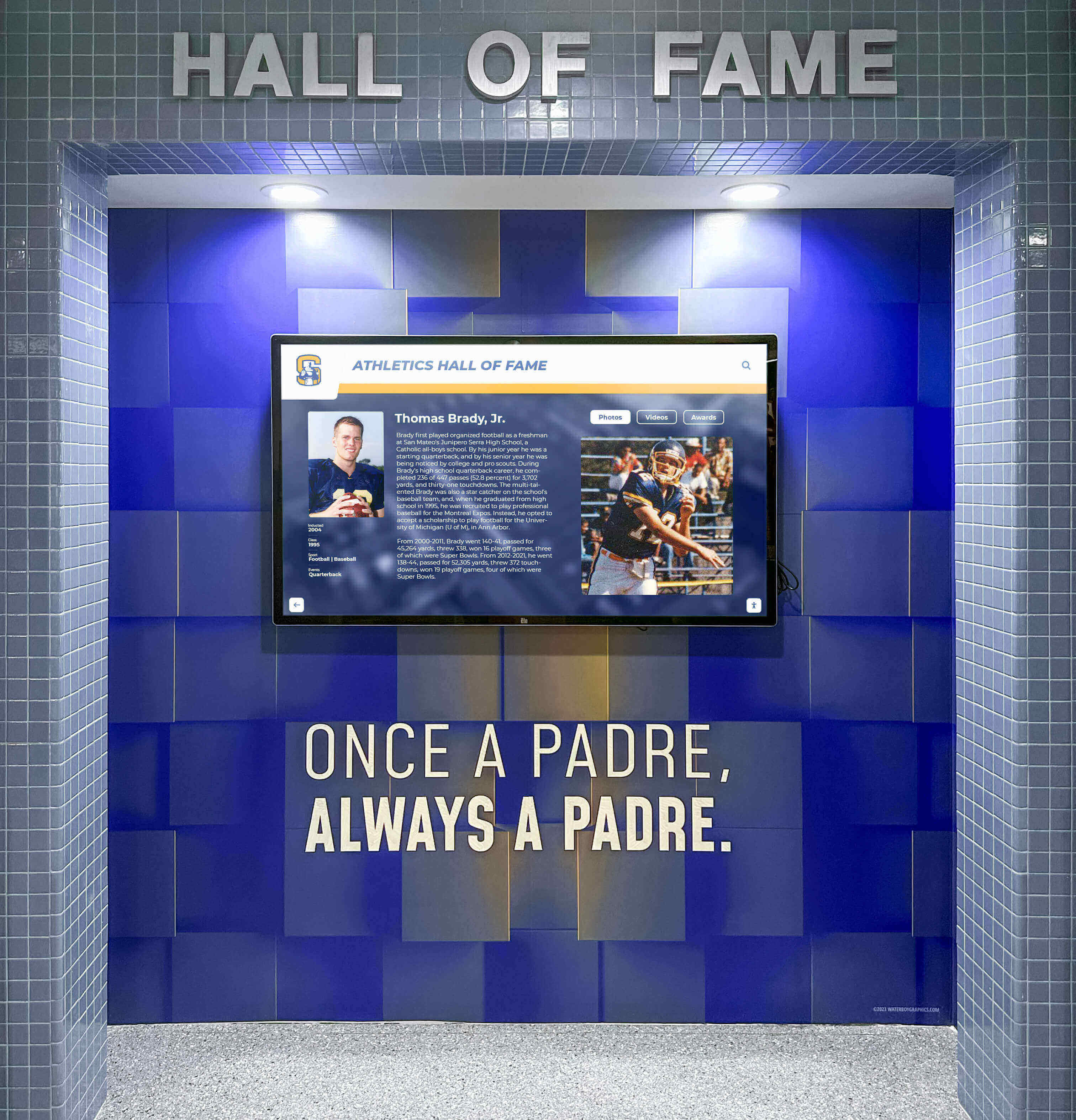
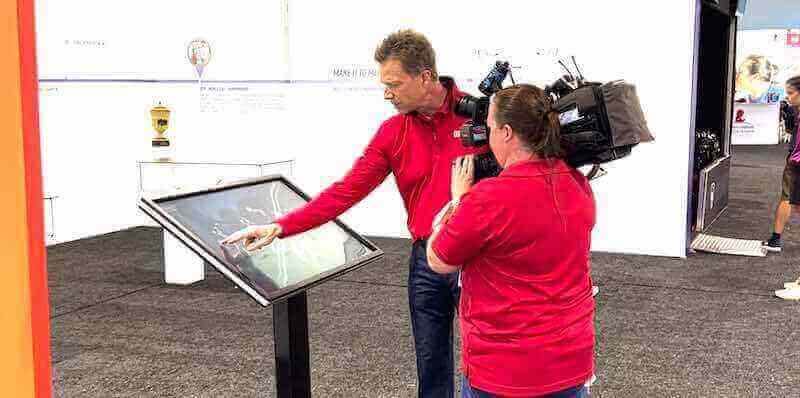
Digital recognition displays update in minutes via remote content management, making post-season sponsor roster changes practical rather than expensive
Step 5: Deliver the Post-Season Sponsor Communication
Once your display is updated, send each sponsor a personalized post-season communication that:
- Thanks them by name for their specific contribution
- Includes a photo or screenshot of their recognition display placement
- References at least one concrete outcome from the season (“Your support helped fund travel for our cross country team’s first state appearance since 2017”)
- Notes their continued recognition on the display during the off-season and into next year’s program
This communication serves two purposes simultaneously: it fulfills a recognition obligation and plants the early seed for renewal without making the ask. Sponsors who receive photo documentation of their display placement are significantly more likely to maintain that placement in subsequent seasons.
Types of Sponsor Recognition Displays: Format and Use Case Examples
The following table maps recognition display formats to their primary function, typical placement, and best use case in an athletic program context.
| Display Format | Typical Placement | Audience | Best For |
|---|---|---|---|
| Digital lobby screen (rotation) | Athletic lobby entrance | All daily building traffic | Multi-sponsor programs; rotating equity across tiers |
| Touchscreen kiosk with sponsor profile | Lobby or hallway kiosk | Students, families, visiting officials | Premium-tier sponsors; interactive experience |
| Engraved plaque panel | Concourse wall or lobby feature | Event attendees and daily visitors | Multi-year sponsors; named facility areas |
| Printed recognition board | Trophy case area or hallway | Students and families | Annual sponsor rosters; budget-conscious programs |
| Digital wall of fame integration | Athletic hall of fame display | Visitors to the recognition environment | Programs combining achievement and sponsor recognition |
| Vinyl banner (refreshed annually) | Gym wall or facility entrance | Event attendees | Seasonal or entry-level sponsors |
| Named facility section | Weight room, court, field entrance | Athletes and coaches daily | Presenting or title sponsor; multi-year commitments |
| Digital record board section | Athletic record display | Students and visitors | Sponsors of specific sports or records |
The most durable sponsor relationships tend to form around permanent or semi-permanent display formats—plaques, digital profiles, and integrated recognition walls—rather than seasonal vinyl. When a sponsor’s name is embedded in the physical environment of your athletic spaces, the school’s commitment to that relationship is visible year-round, not only during games.
Building a Sponsor Recognition Display That Outlasts the Season
The most common structural failure in athletic sponsor recognition is treating the display as an event-time asset rather than a year-round institutional feature. A recognition display that is only visible during the season has roughly half the impression value—and significantly less renewal power—than one that is visible every school day.
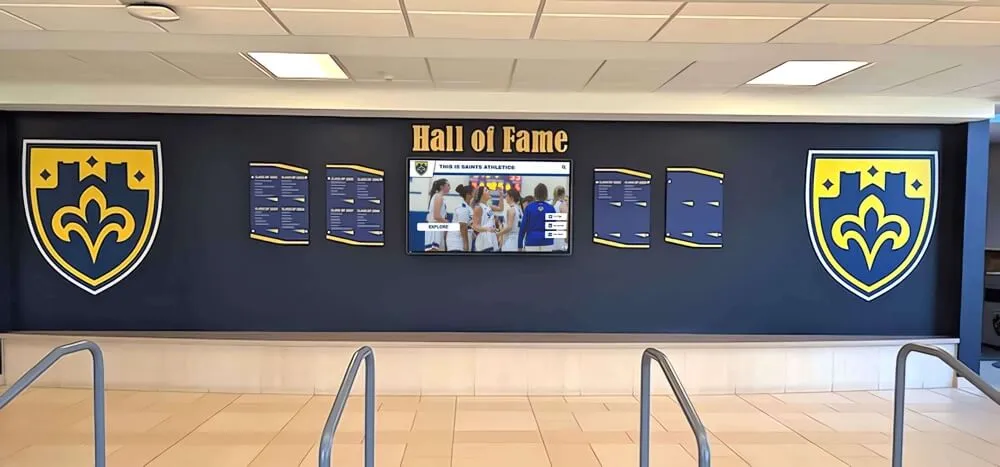
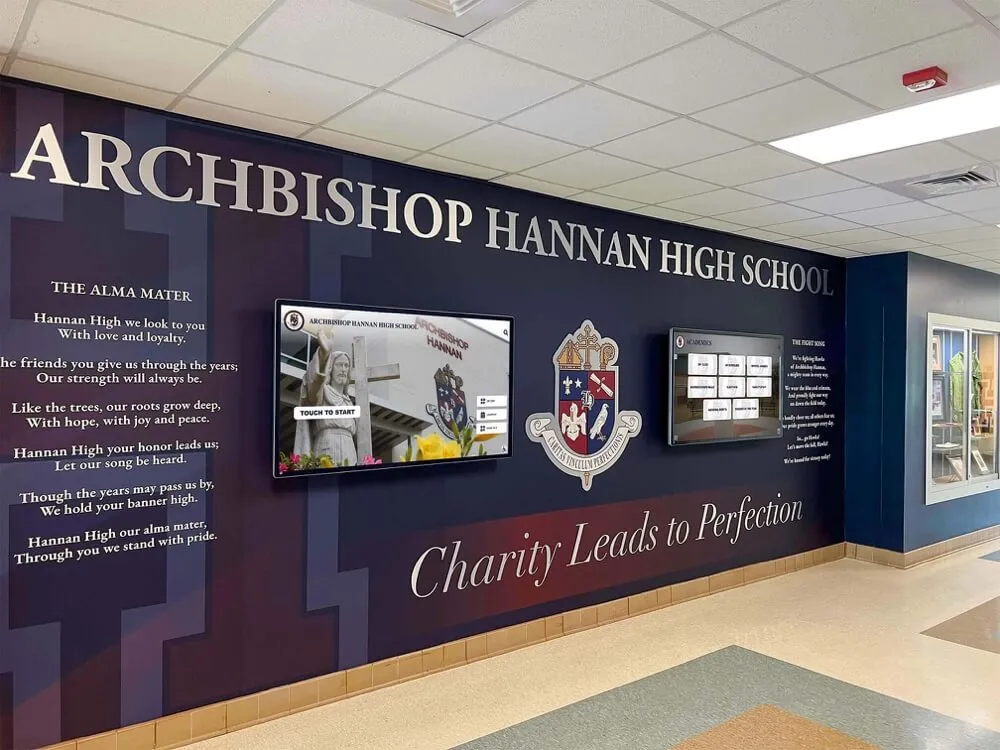
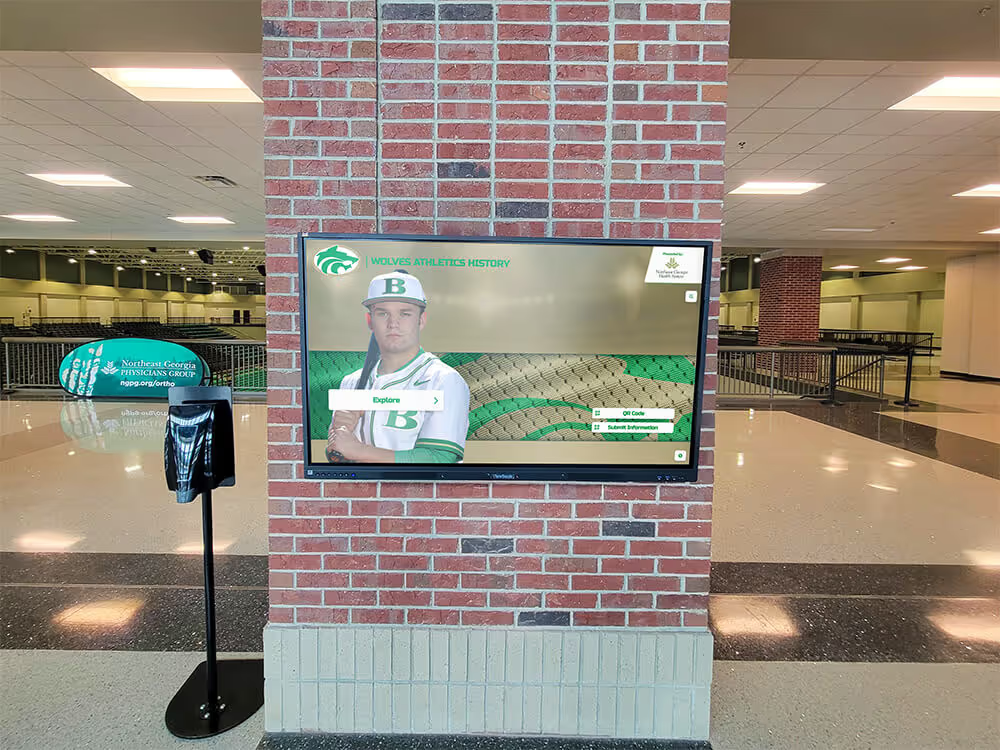
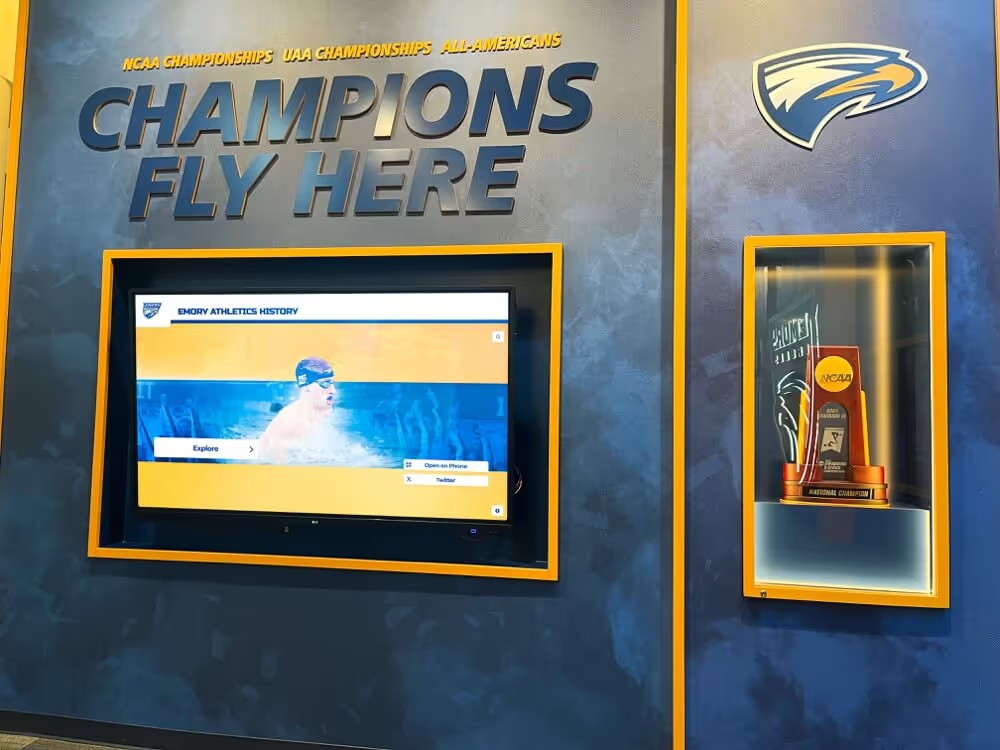
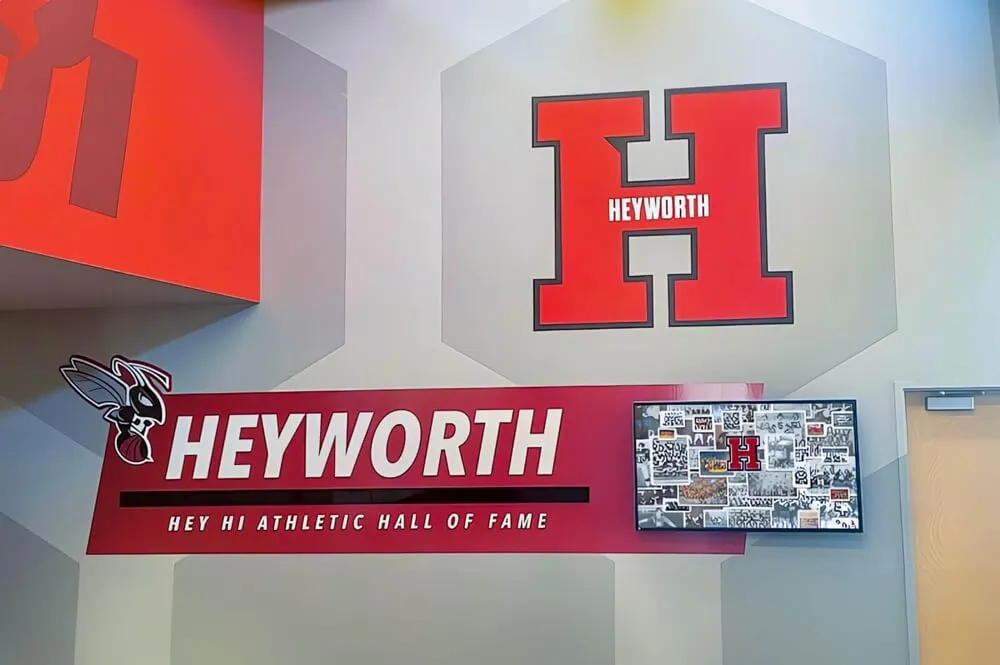
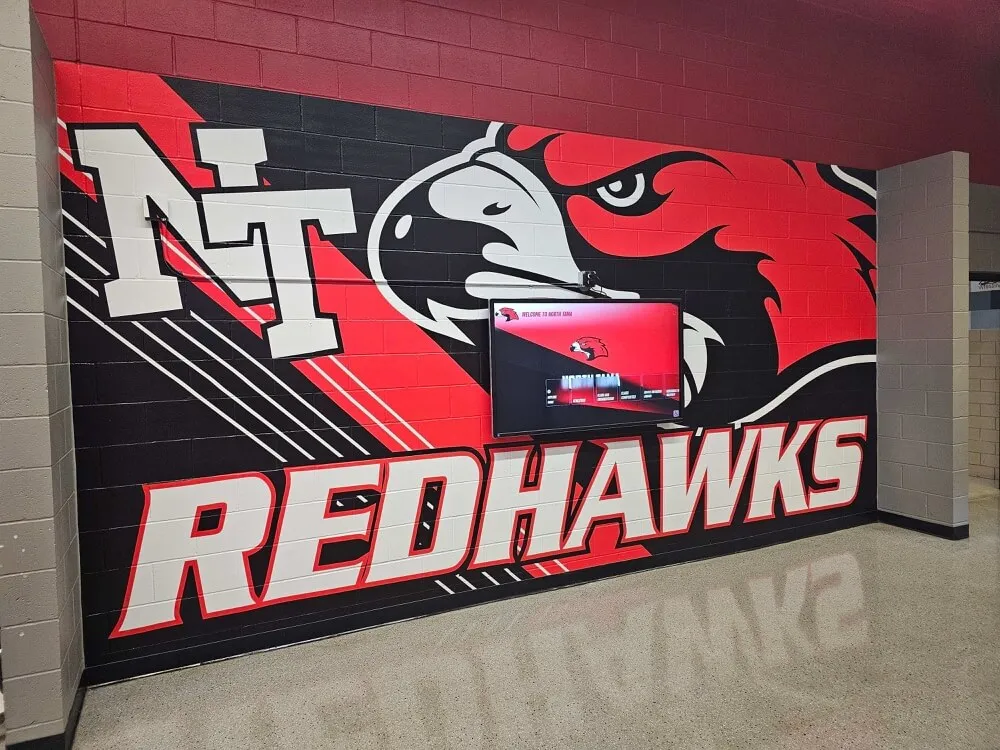
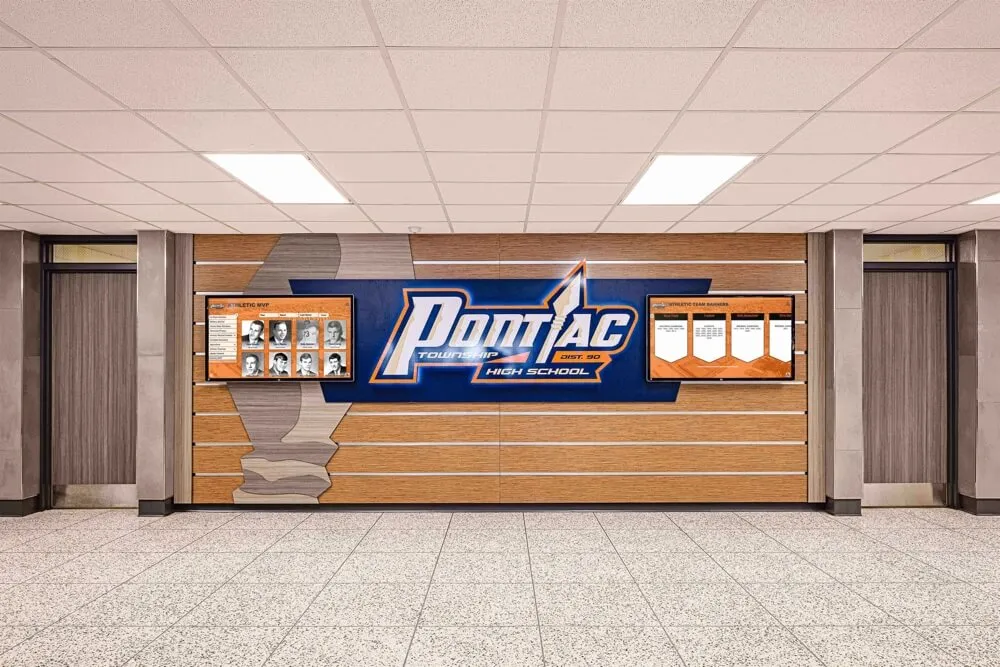
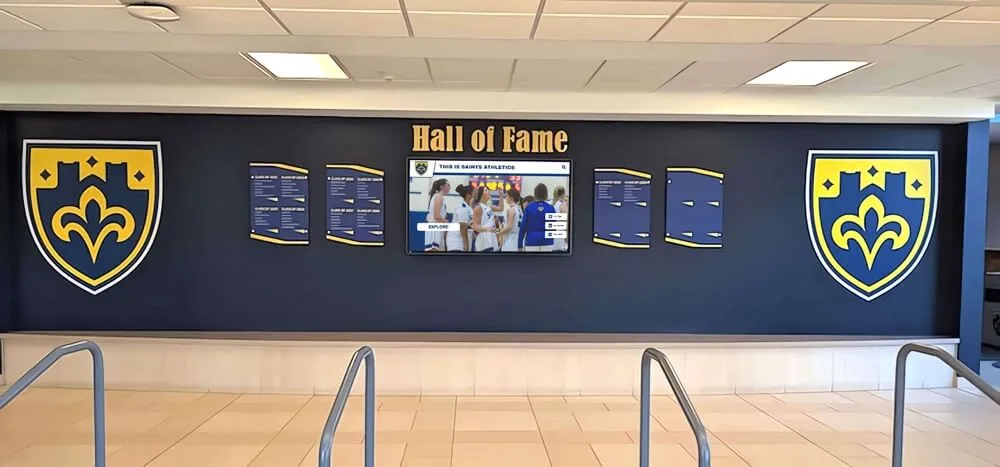
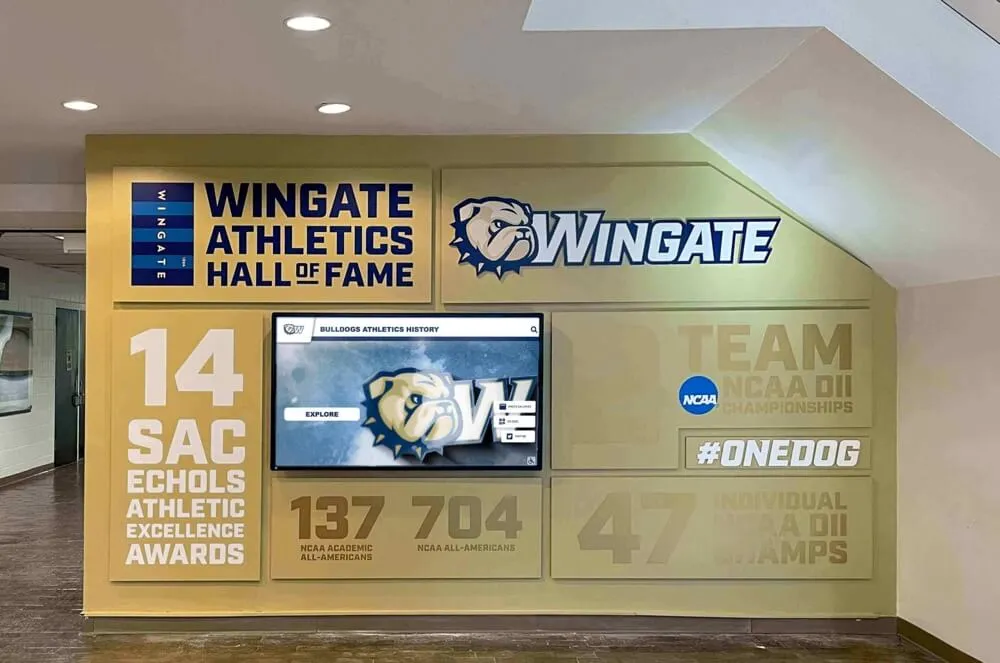
Recognition walls that integrate permanent physical elements with digital screens give sponsors visible placement throughout the school year, not just on game nights
Year-Round Visibility Through Digital Rotation
Schools with lobby screens, hallway digital displays, or touchscreen kiosk systems can keep sponsor recognition visible throughout the off-season by maintaining sponsor profiles in the content rotation between seasons. This is particularly effective for programs whose facilities host summer camps, community events, and recreation leagues—audiences who visit outside the athletic calendar entirely.
For student awards and recognition categories that live within the same display environment, the integration is natural: sponsor acknowledgment shares the same institutional space as athletic achievement, academic honors, and community recognition. When a parent attends a summer awards ceremony and sees a local business featured in the same recognition environment as student athletes, the association between that business and community investment is reinforced without any additional effort.
Connecting Sponsor Recognition to the Athletic Hall of Fame Environment
The most powerful context for sponsor recognition displays is the athletic hall of fame environment. When a sponsor’s name or profile appears in the same space that honors the school’s greatest athletes, longest championship streaks, and most memorable seasons, the sponsor becomes part of the program’s permanent historical narrative—not a transactional logo in a printed program.
Championship display installations in academic and athletic contexts illustrate how achievement recognition and supporter acknowledgment can coexist in a unified visual environment. The same principle applies to athletic sponsor recognition: the most effective displays connect sponsor names to outcomes—seasons won, milestones reached, programs funded—rather than presenting sponsors as a separate category from the athletic achievement content.
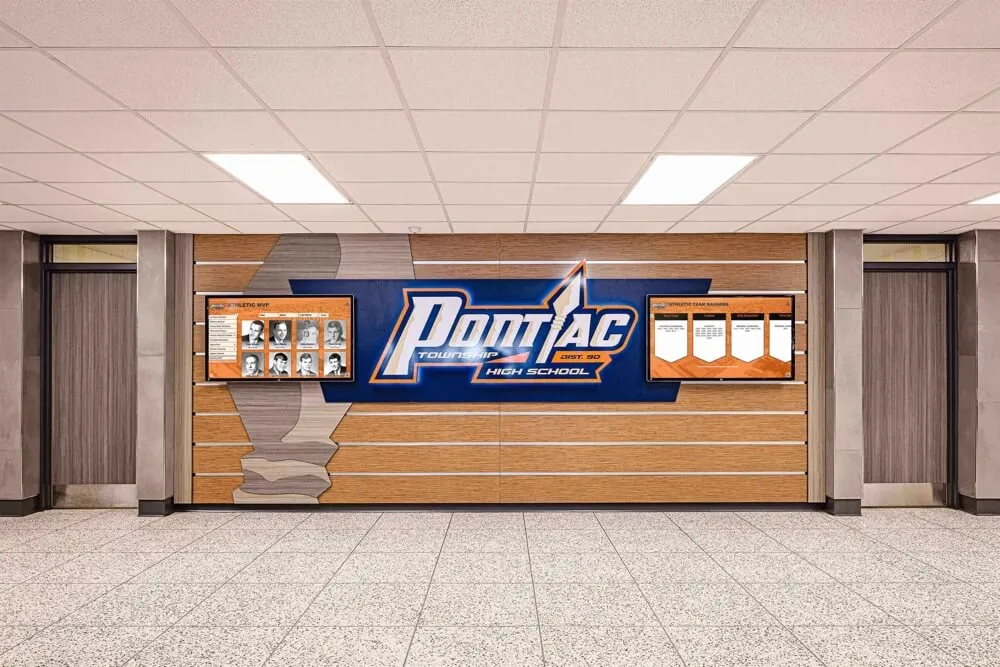
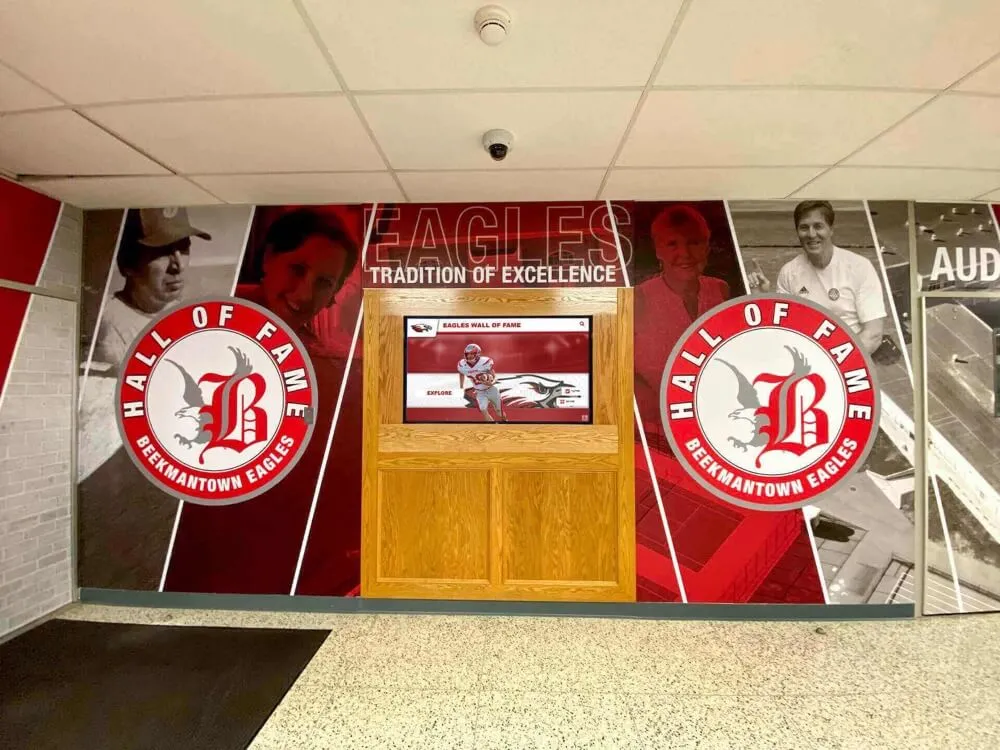
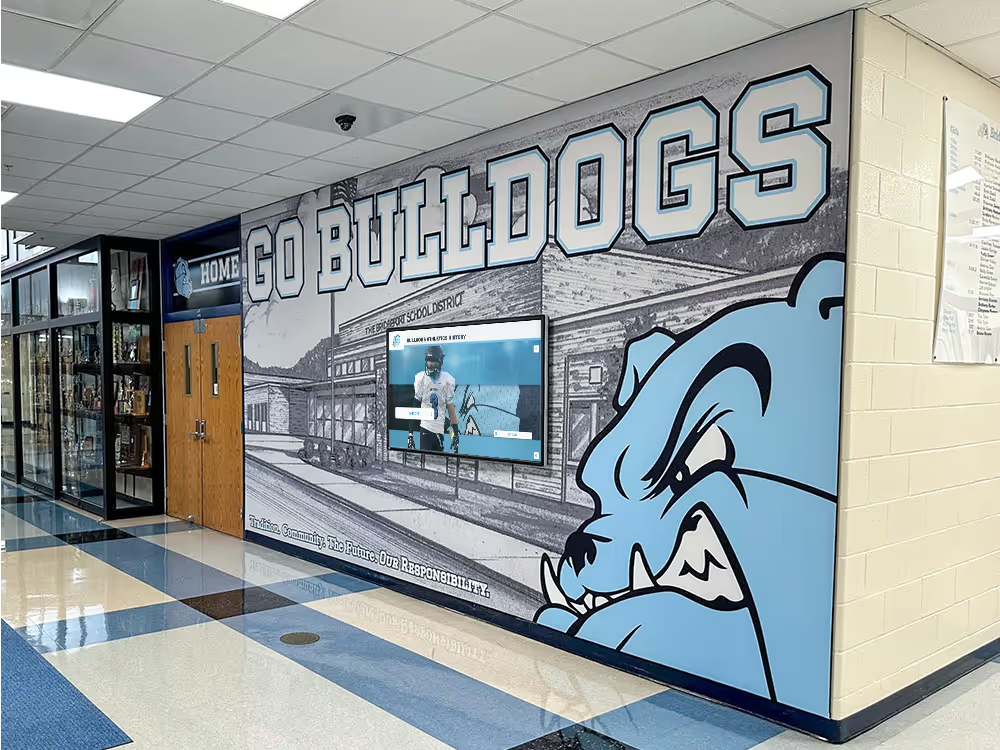
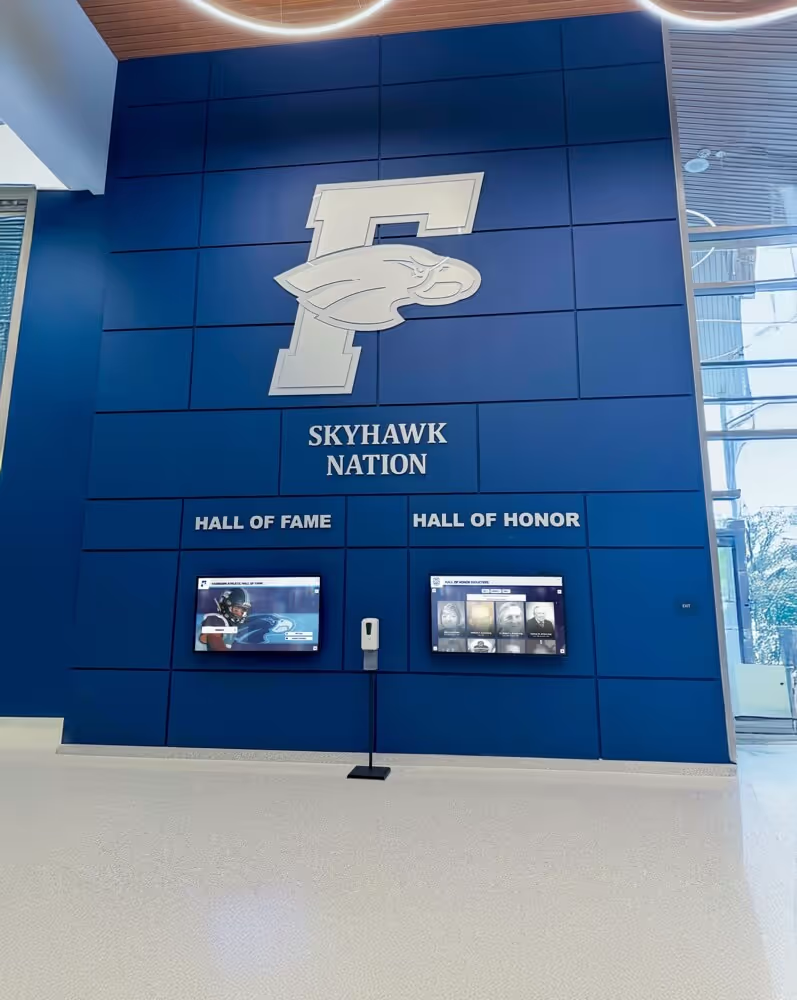
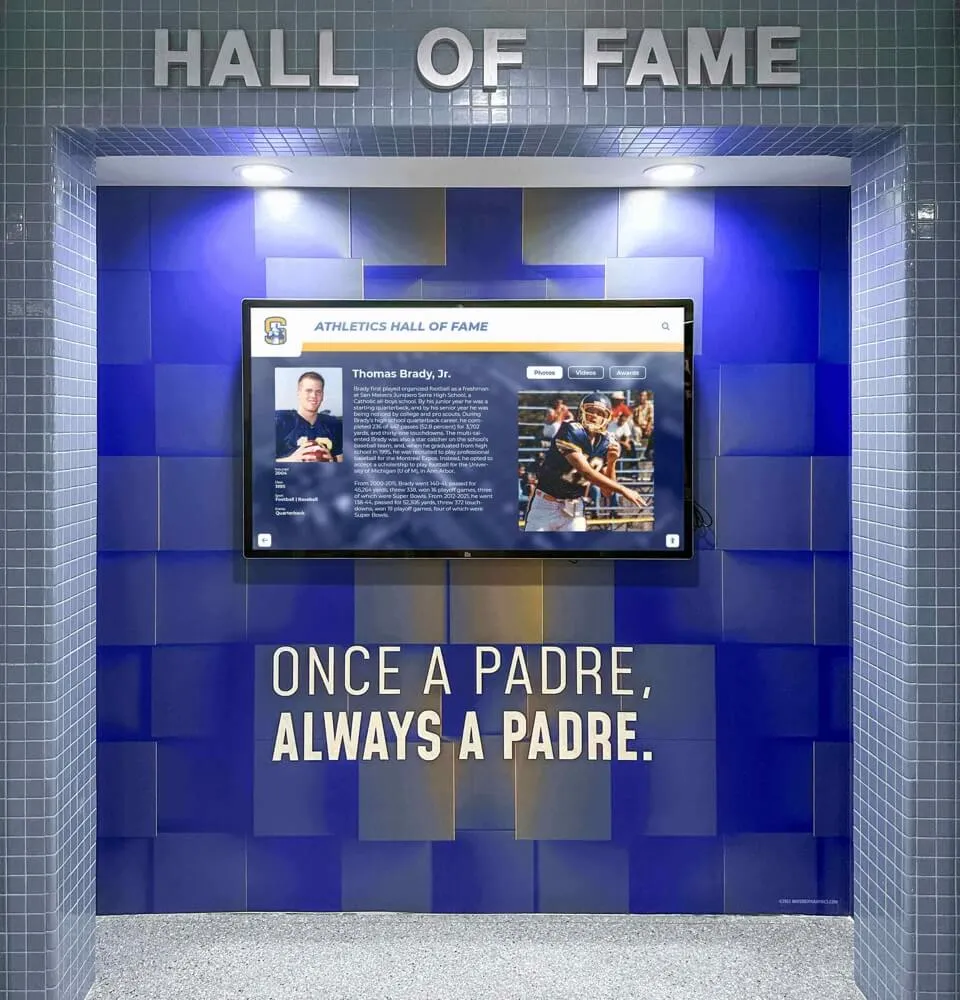
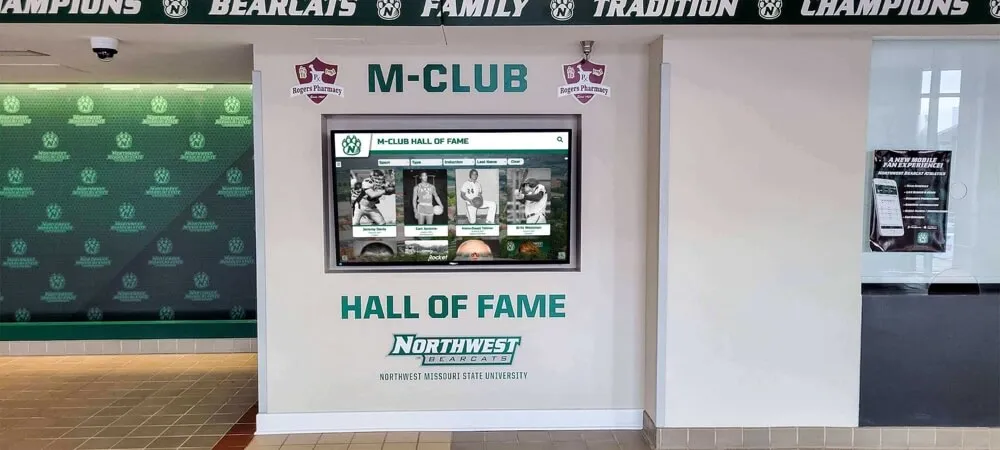
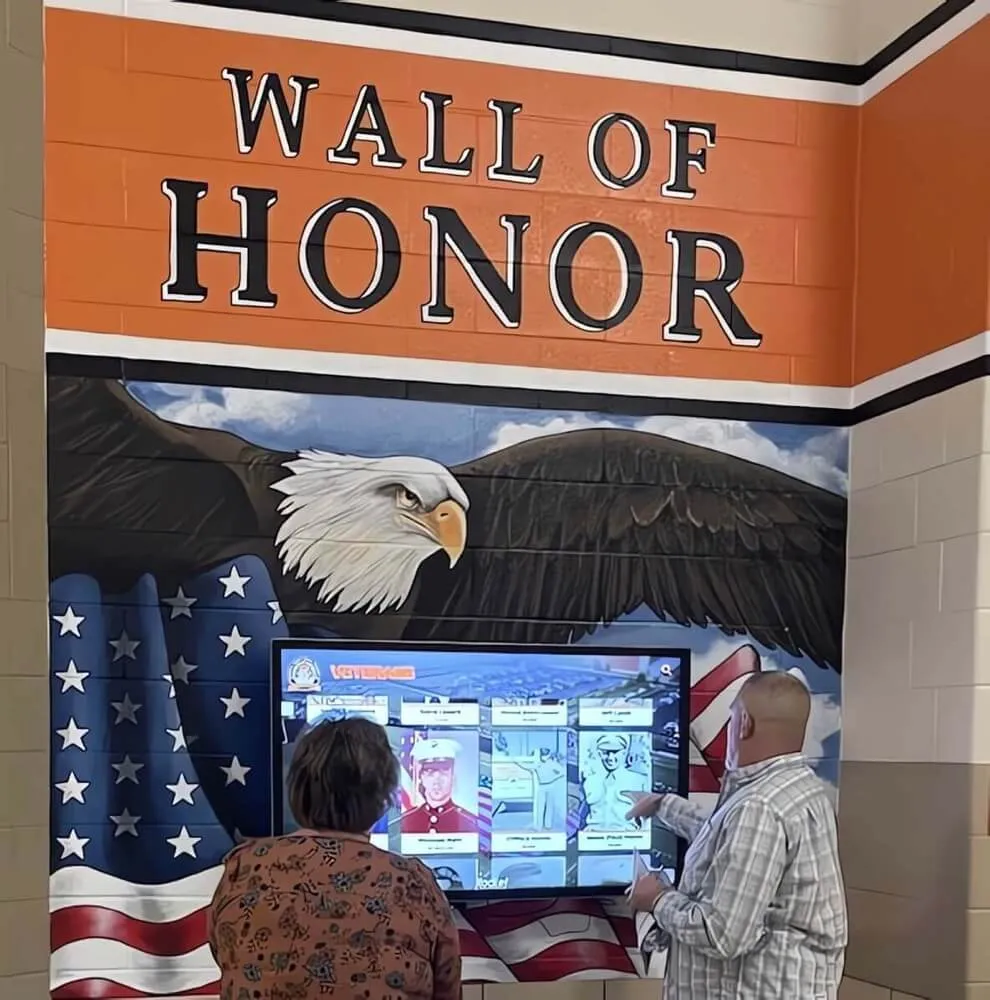
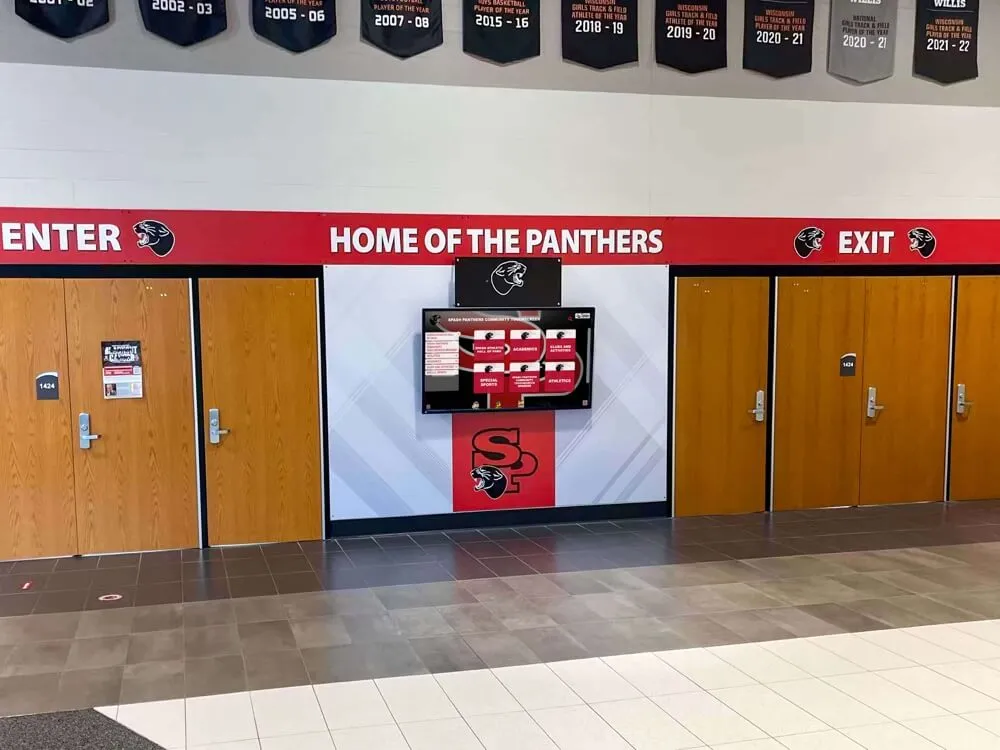
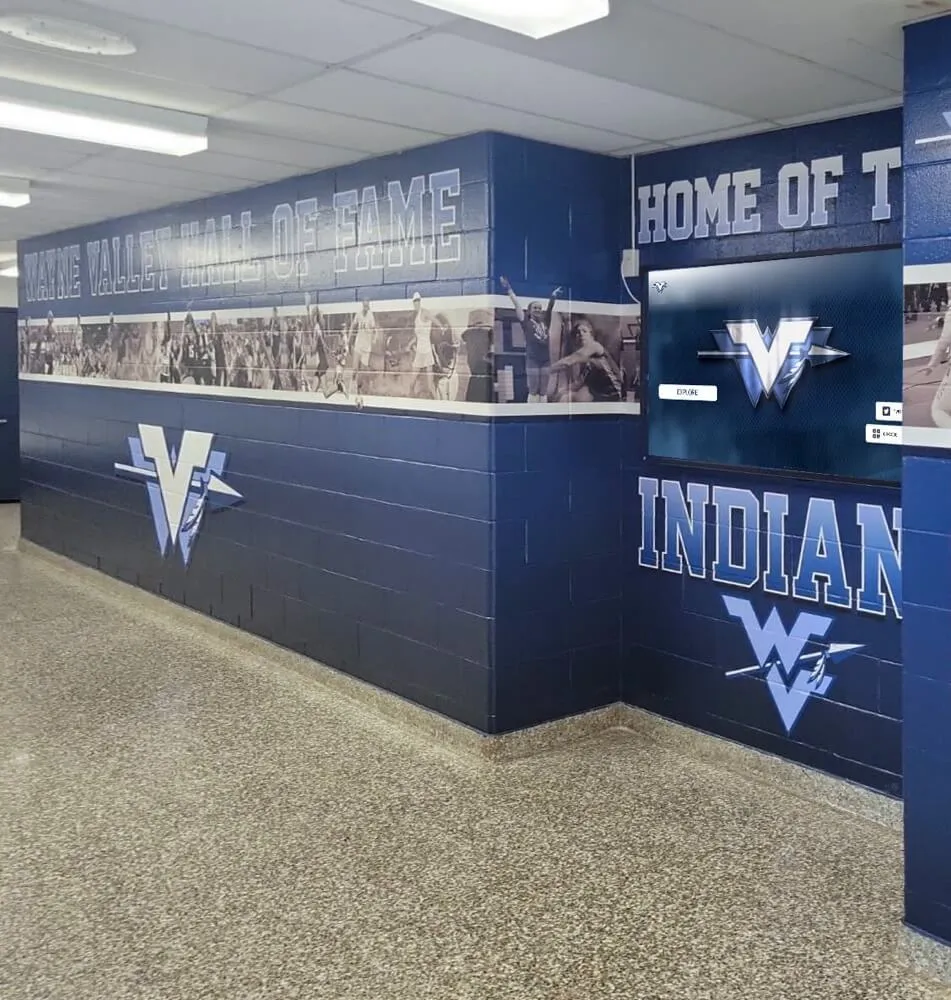
Permanent athletic honor walls in school hallways generate daily sponsor impressions among students and faculty—far more than event-only banner placements
Build a Sponsor Recognition Display That Works Year-Round
Rocket Alumni Solutions installs interactive touchscreen walls and digital lobby displays where sponsor profiles appear alongside athletic records, hall of fame content, and team histories in a single unified system—updated remotely, no reprint required.
Request a DemoPermanent Plaques vs. Digital Displays: Choosing the Right Format
Athletic programs rarely need to choose exclusively between physical and digital sponsor recognition displays—they are complementary formats that serve different functions. Understanding where each format excels helps programs allocate recognition budgets effectively.
Physical plaques and engraved panels communicate permanence and institutional weight. A sponsor whose name is engraved on a wall panel in your gymnasium lobby receives recognition that cannot be deleted with an accidental button press. Physical formats work best for:
- Named facility areas (courts, weight rooms, field designations)
- Multi-year legacy recognition where permanence signals tenure value
- Environments without reliable digital infrastructure
- Sponsors whose business identity is closely tied to physical community presence
Reviewing gym signage and display planning provides useful context for how different surface types and placements affect the perceived durability of physical recognition in athletic facilities.
Digital displays communicate flexibility, scale, and modernity. A single digital screen can rotate through every sponsor in a fair, equity-based sequence; can present multimedia sponsor profiles that a plaque cannot; and can be updated the same day a sponsor rebrands, renews, or is added mid-season. Digital formats work best for:
- Programs with more than 8–10 sponsors where physical displays become visually cluttered
- Sponsor tiers where interactive profile depth adds value to the sponsorship package
- Facilities that already have lobby or hallway screen infrastructure
- Programs wanting to offer proof-of-display screenshots to sponsors remotely
For programs exploring how broader recognition infrastructure—alumni events, donor acknowledgment, and sponsor stewardship—can share the same digital platform, reviewing alumni event engagement ideas illustrates how digital recognition systems scale beyond athletic sponsorship into broader institutional stewardship.
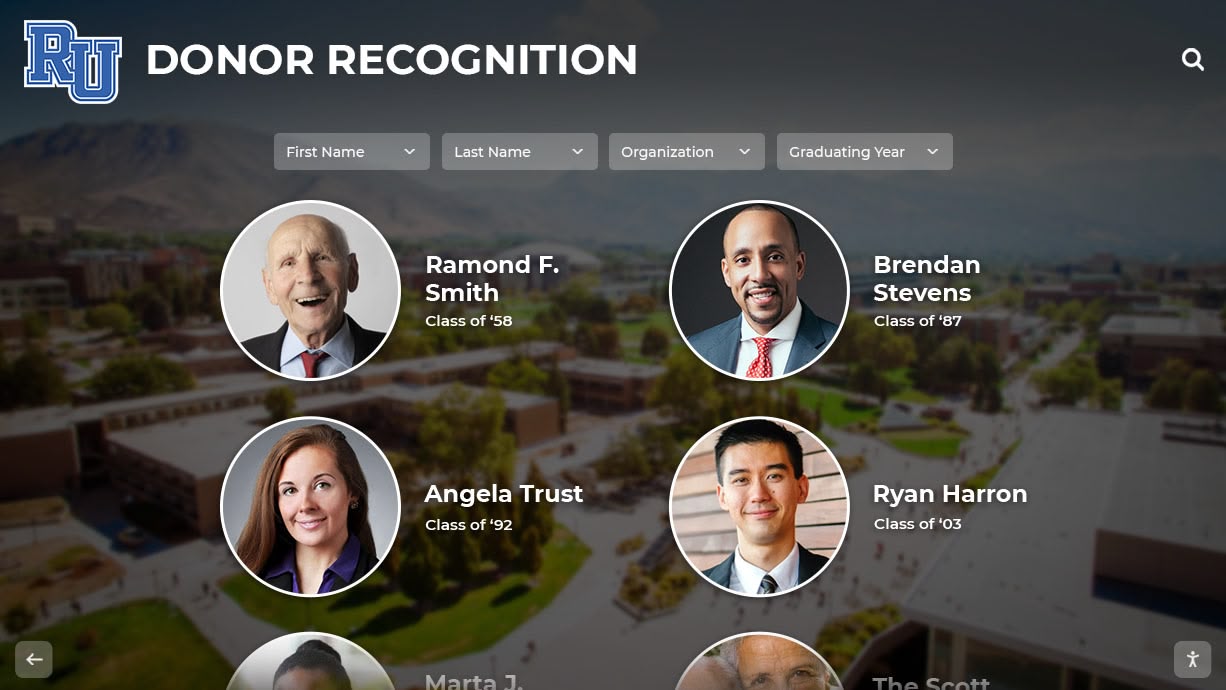
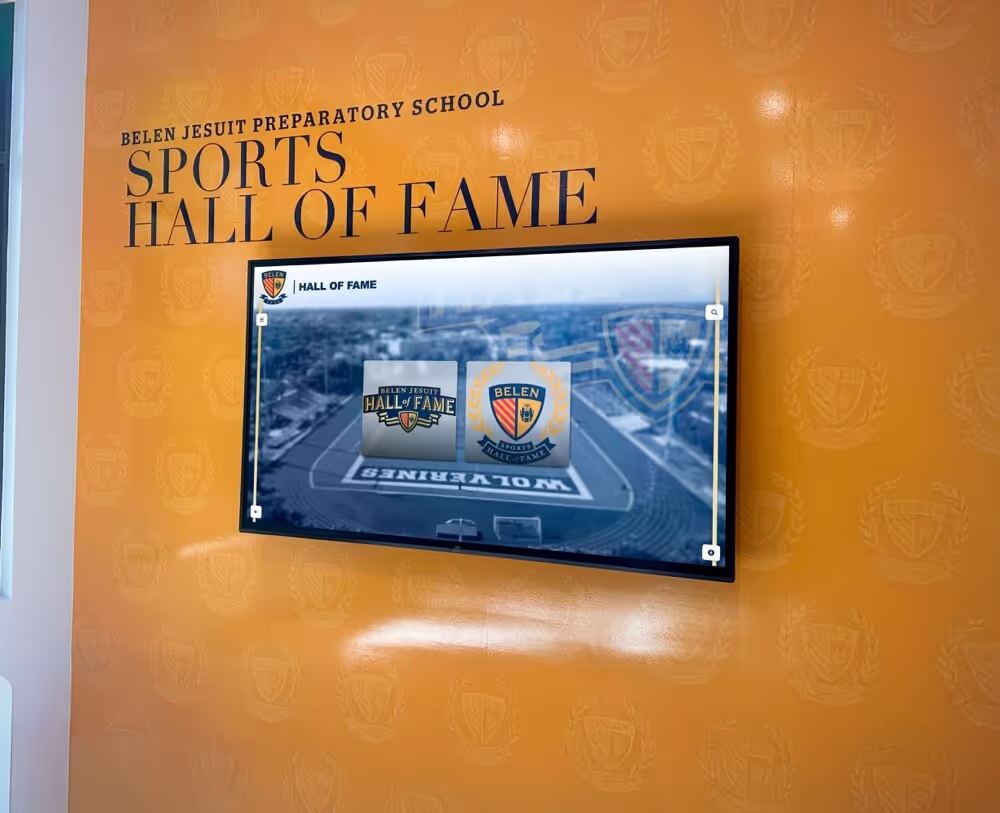
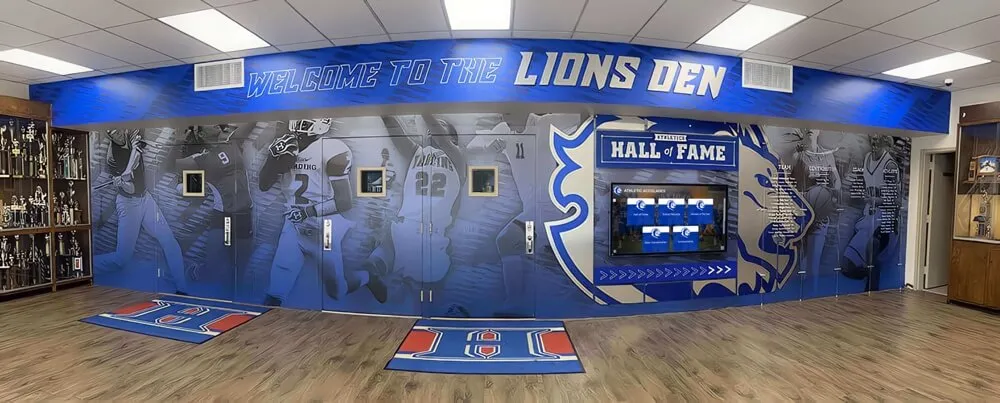
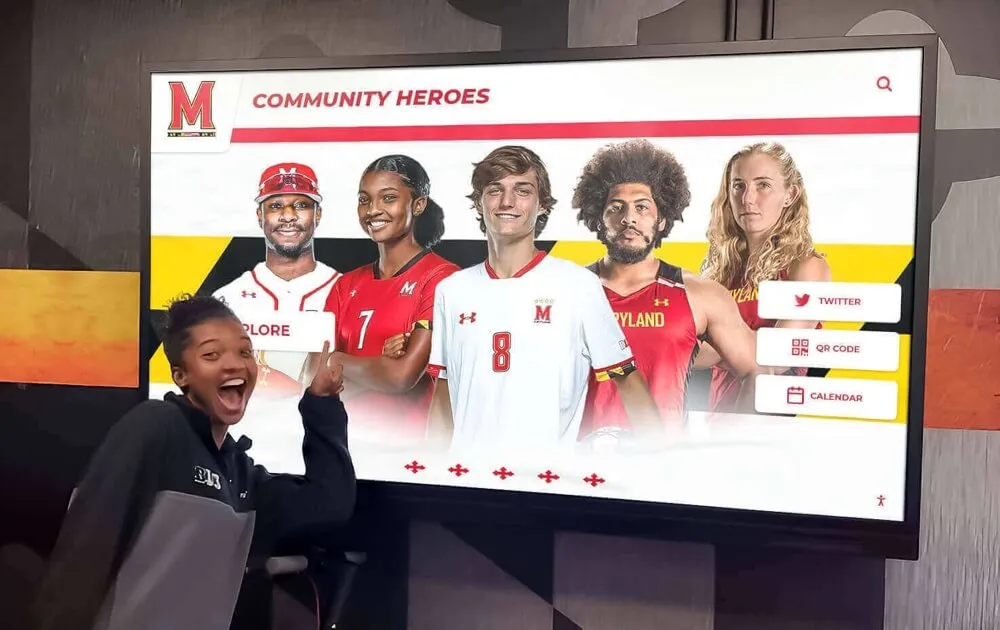
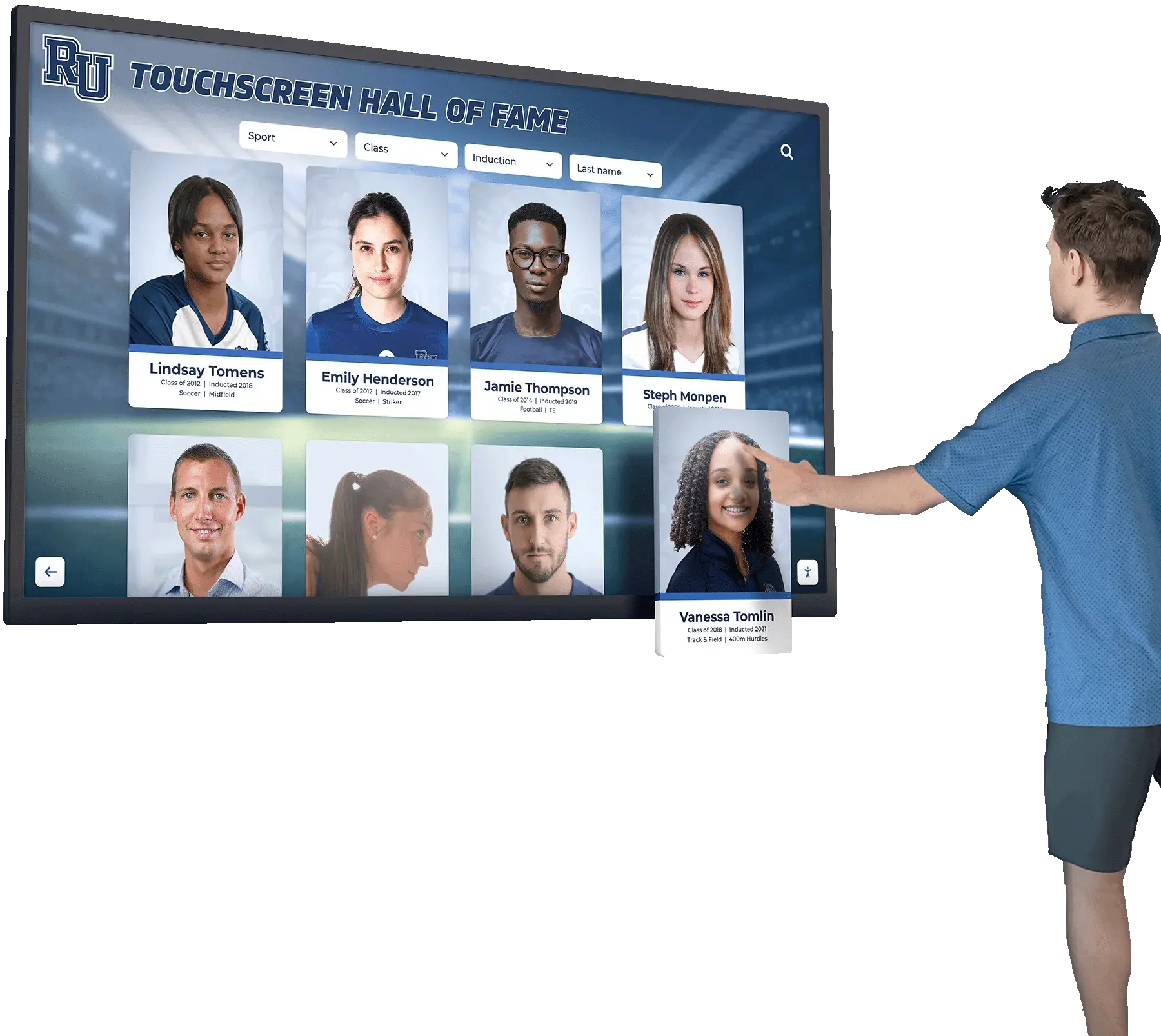
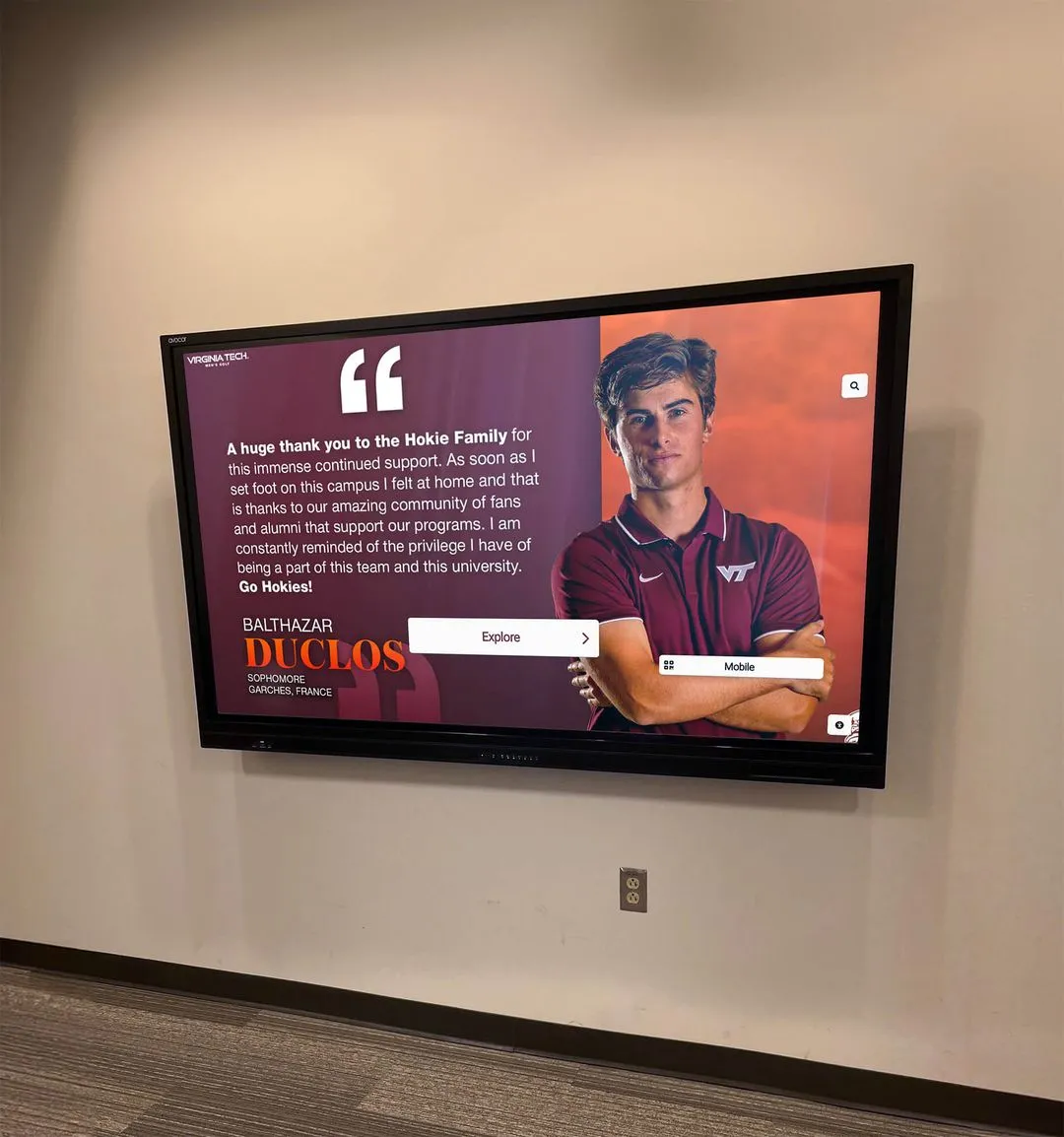
Portrait-style sponsor and donor recognition displays create personal, visible acknowledgment that builds the relationship beyond a logo on a banner
Post-Season Sponsor Recognition Display Checklist
Use this checklist in the two to four weeks following your season’s final event.
Records and Content
- Compile complete sponsor roster with contact details and tier designations
- Verify all promised recognition deliverables were fulfilled during the season
- Document any recognition gaps to address in post-season communication
- Collect updated logos from any sponsors who rebranded during the season
Physical Display Updates
- Audit all existing physical signage for accuracy—remove sponsors who did not participate this season
- Add new sponsors to lobby panels, recognition boards, or hallway displays
- Update tenure language for returning sponsors (“Partner Since [Year]”)
- Photograph all updated physical placements for post-season sponsor communication
Digital Display Updates
- Log in to recognition platform and update sponsor profiles
- Add new sponsors; remove or archive non-renewing sponsors
- Confirm sponsor logos are current (not outdated versions)
- Take screenshots of active digital sponsor displays for documentation
Sponsor Communication
- Send personalized post-season thank-you to each sponsor with photo/screenshot
- Reference a specific season outcome connected to the sponsor’s contribution
- Confirm ongoing display visibility through the off-season and into next season
- Note when renewal conversations will begin (no ask in this communication)
Frequently Asked Questions About Sponsor Recognition Displays
When in the post-season should we update sponsor recognition displays?
Within 30 days of the final game is the practical target for most programs. Physical display updates may take longer depending on fabrication lead times—plan for 3–6 weeks from season close for engraved or printed panels. Digital display updates can happen the same week the season ends and should not be delayed.
Should sponsors from every tier appear on the recognition display?
Yes, but format and prominence should scale with tier. Title and presenting sponsors warrant dedicated panels, larger digital profiles, and named placement. Mid-tier sponsors appear on shared multi-sponsor boards or in standard digital rotation. Entry-level supporters receive program-level listing. The display communicates that everyone who contributed is seen; placement prominence reflects the scale of that contribution.
What do sponsors do with post-season recognition photos?
Many local businesses use them internally to demonstrate community investment to employees, their own clients, or parent companies. Some use them in their own marketing materials. Providing clean, well-framed photos of sponsor displays—rather than informal snapshots—makes these uses possible and positions your program as a professional partner.
How do we handle a sponsor who did not renew?
Remove them from active displays promptly. A display showing a business that closed, relocated, or chose not to renew this season signals to active sponsors that the school does not maintain accurate records. For sponsors who invested in named facility areas under multi-year agreements, consult your naming rights policy before removing recognition—the agreement terms govern removal timing.
Can a sponsor recognition display include non-financial supporters?
Absolutely. In-kind sponsors—businesses that donated equipment, services, meals, or facilities—are legitimate contributors and belong on recognition displays. Distinguish their contribution type if clarity is helpful (“Equipment Partner” or “Official Meal Sponsor”) without diminishing the acknowledgment.
Recognition Displays as a Retention Strategy, Not a Closing Task
The schools with the highest sponsor renewal rates are not necessarily the ones with the largest displays or the most expensive materials. They are the ones whose programs communicate to sponsors that recognition is a living commitment—maintained through the off-season, updated accurately after each season, and presented in an environment that reflects the same institutional pride that attracts sponsors in the first place.
A sponsor recognition display is the most durable piece of that commitment. Unlike a thank-you email or an event verbal acknowledgment, a display persists through the entire year. Every student who walks past the lobby panel, every parent who waits during a practice, and every visiting official who tours the facility sees evidence that this program values its community partners. That ongoing visibility is the foundation on which renewable sponsorship relationships are built.
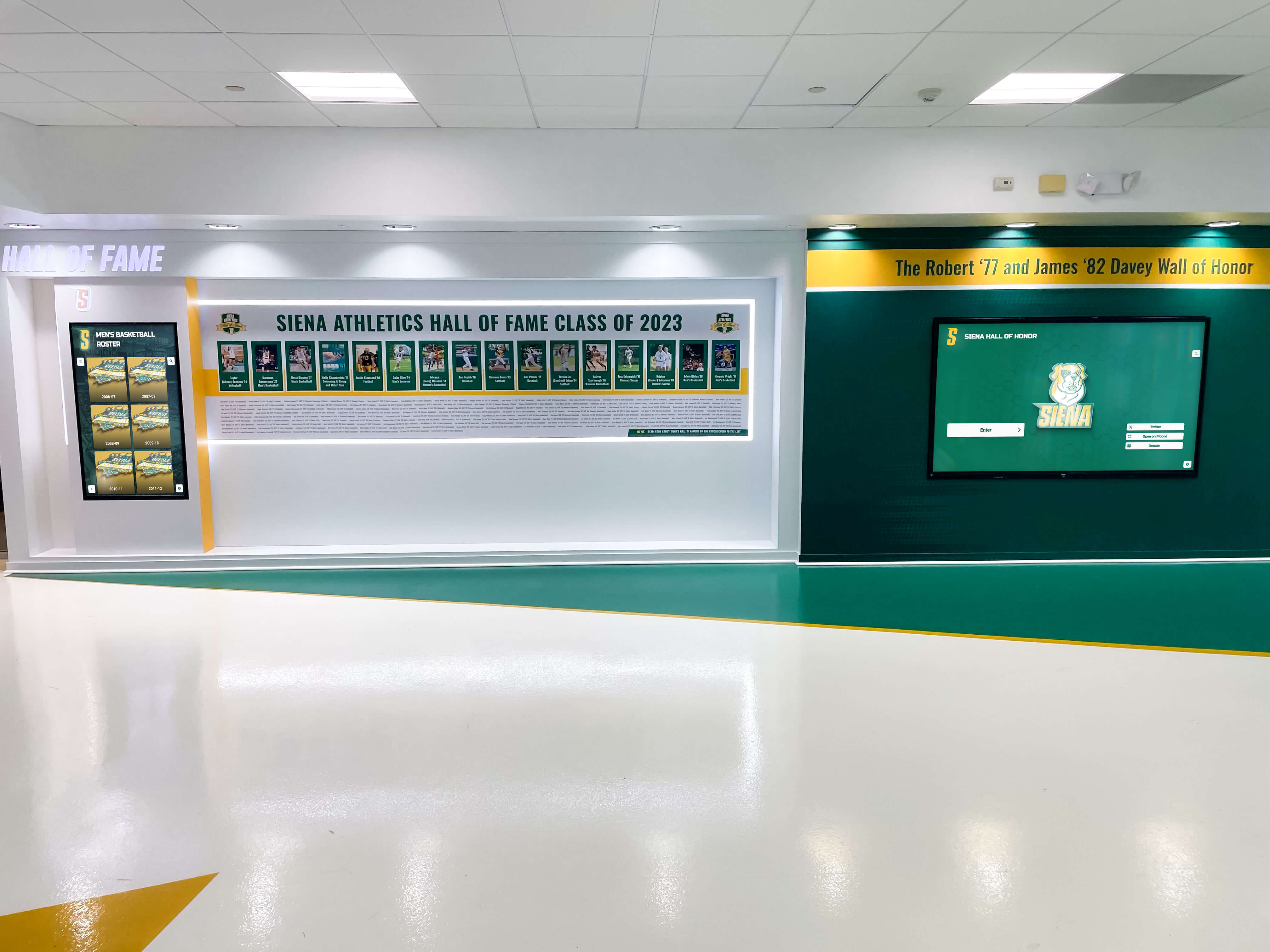
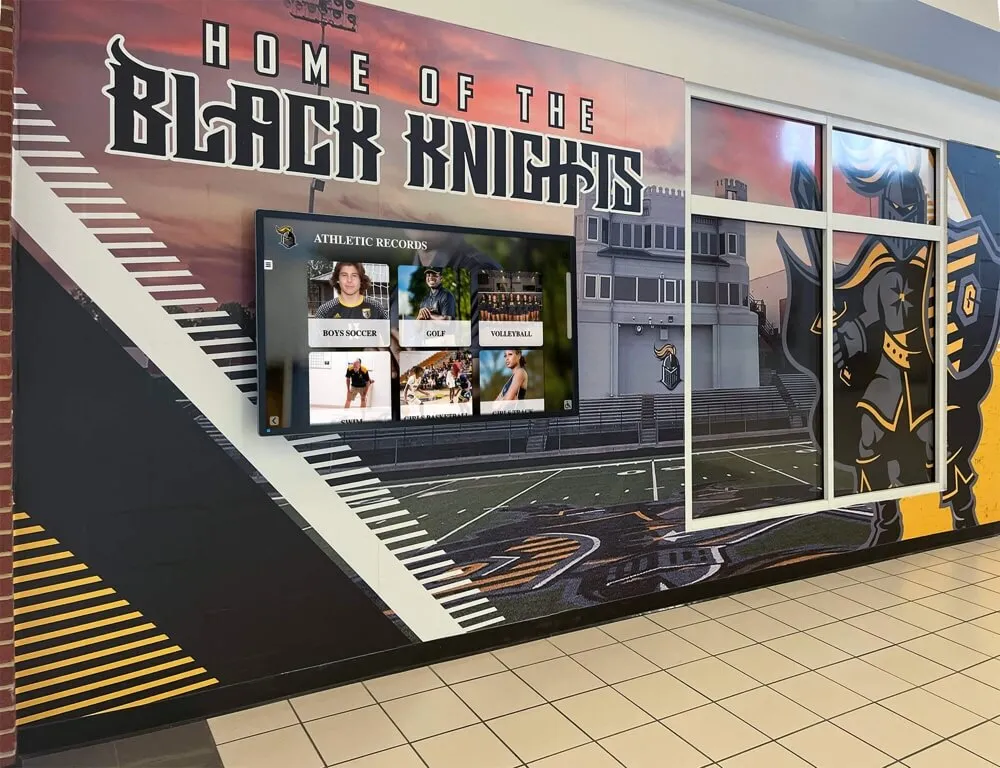
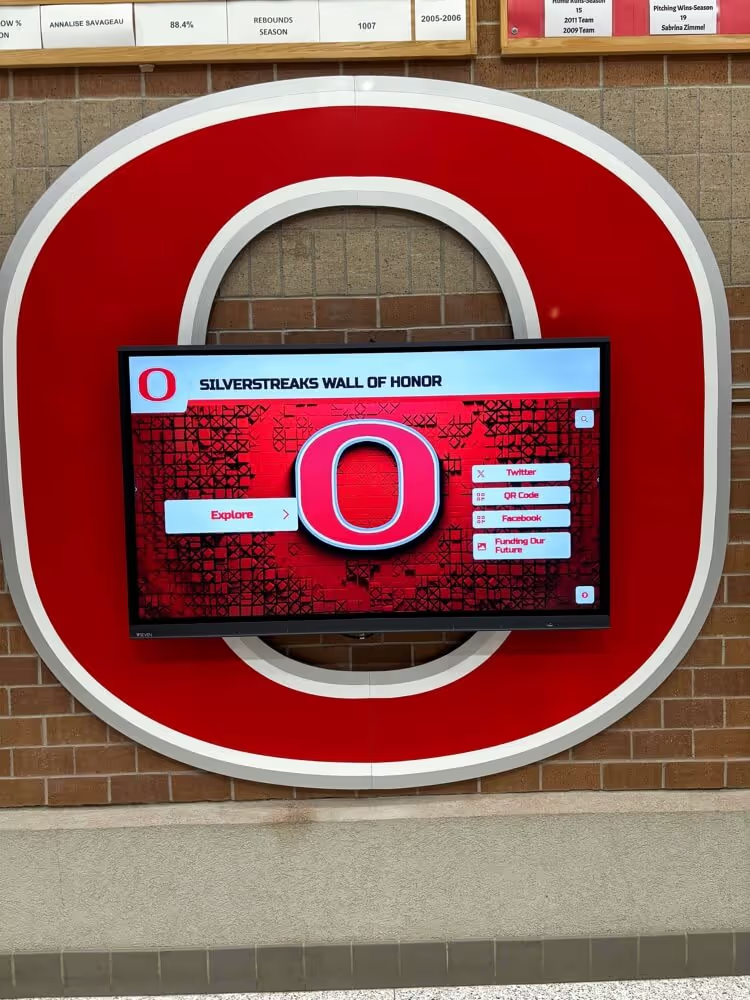
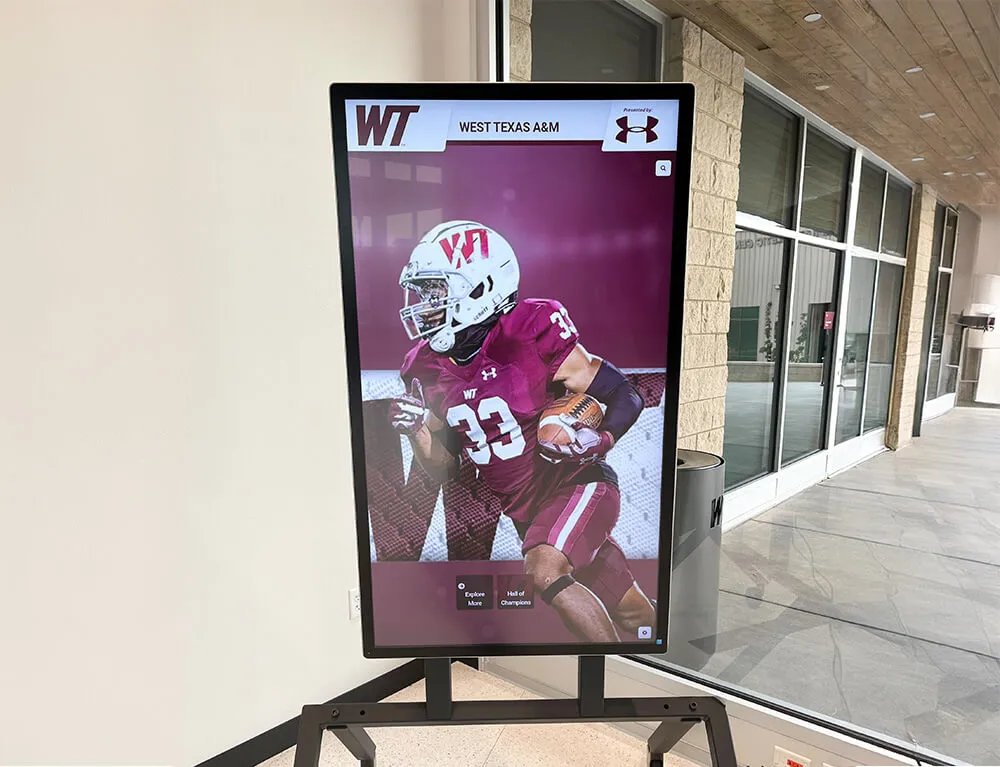
Recognition environments that reflect institutional pride and careful maintenance communicate to sponsors that their contribution is honored with the same seriousness as the program's athletic achievements
Programs building or upgrading sponsor recognition displays can approach the process in phases: start with accurate, well-maintained physical placements in high-traffic athletic spaces, then layer in digital rotation and interactive profile capabilities as infrastructure and budget allow. Each phase adds impression volume and relationship depth. No single format is required—but some form of permanent, visible, accurately maintained recognition display is non-negotiable for any program that wants sponsors to return.
How Rocket Alumni Solutions Supports Sponsor Recognition Displays
Rocket Alumni Solutions builds the digital infrastructure that makes year-round sponsor recognition practical for school athletic programs. Their interactive touchscreen walls, digital lobby kiosks, and unified recognition display platforms are designed to hold sponsor profiles, donor acknowledgment, athletic records, hall of fame content, and team histories in a single managed system.
For athletic directors who want to offer sponsors more than a seasonal banner—a permanent digital profile, daily rotation on a lobby screen, integration within the school’s athletic hall of fame environment—Rocket’s remote content management makes post-season updates straightforward. Updating a sponsor’s logo, adding a new partner, or refreshing tenure language takes minutes rather than a fabrication order.
Give Your Sponsors Recognition That Lasts All Year
See how Rocket Alumni Solutions integrates sponsor recognition displays with athletic records, hall of fame inductees, and digital trophy cases in a single touchscreen system built for school athletics.
Request a Demo