Sponsor recognition signage is any physical or digital display that publicly acknowledges a business or organization that has contributed financial support to a school athletic program, event, or facility. It can take the form of a vinyl banner stretched above a gymnasium entrance, a permanent engraved panel in a field house lobby, a rotating digital display behind a scorer’s table, or an interactive touchscreen kiosk that lets visitors explore each sponsor’s profile in depth.
The format matters less than the strategy behind it. Schools that build effective sponsor recognition programs understand that signage is not simply a thank-you gesture—it is the primary mechanism through which sponsors measure the value of their investment. When sponsors cannot clearly see their name in a facility or at an event, renewals stall and program revenue shrinks. When signage is well-placed, durable, and professionally designed, sponsor relationships deepen and multi-year commitments become easier to secure.
This guide covers the major formats of sponsor recognition signage used in school athletic environments, how to choose placements that generate year-round impressions, design standards that keep facilities looking intentional rather than cluttered, and how digital recognition platforms are changing what schools can offer their community partners.
Sponsor recognition signage exists at the intersection of facilities management, fundraising, and community relations. Done well, it makes sponsors feel genuinely valued, gives your athletic spaces a professional identity, and creates a visible return on investment that supports renewal conversations every season.

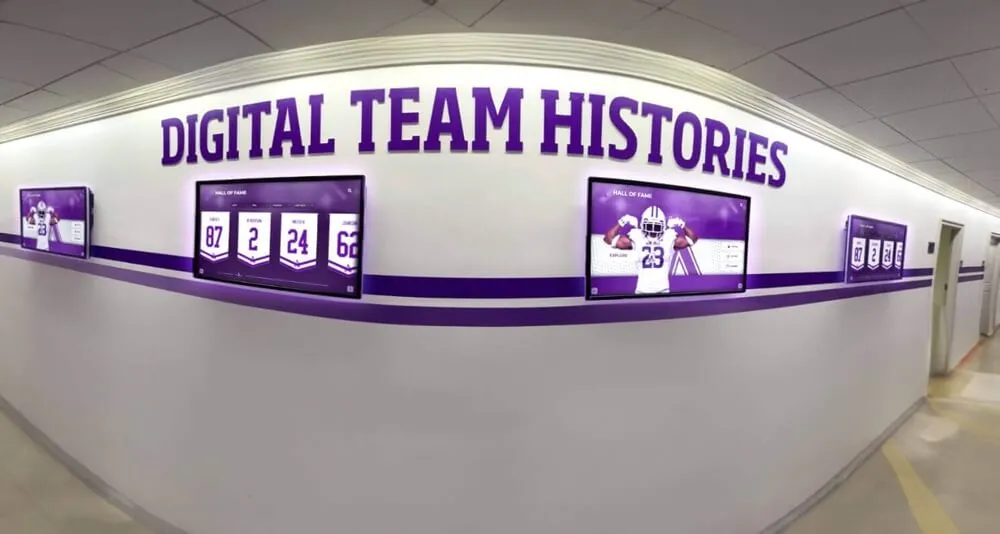
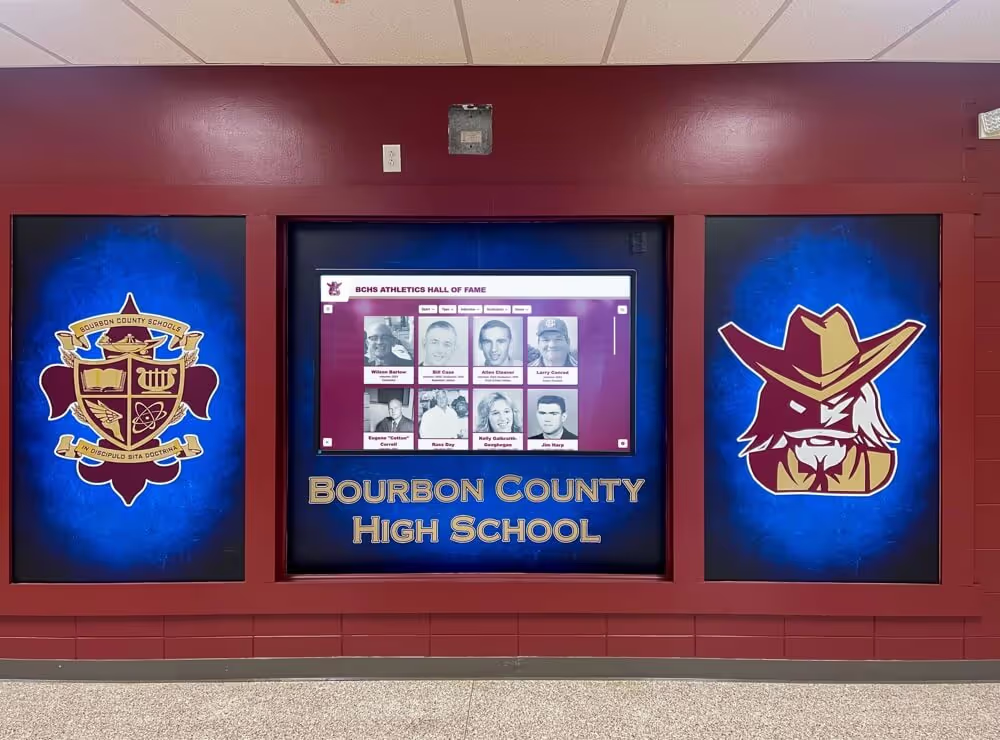
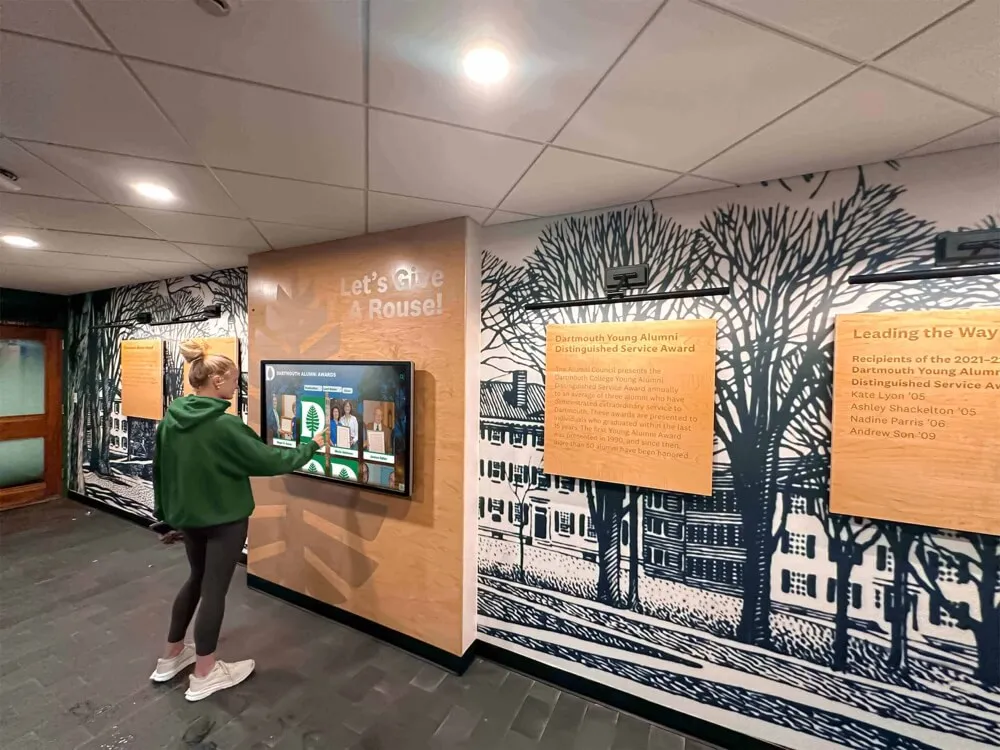
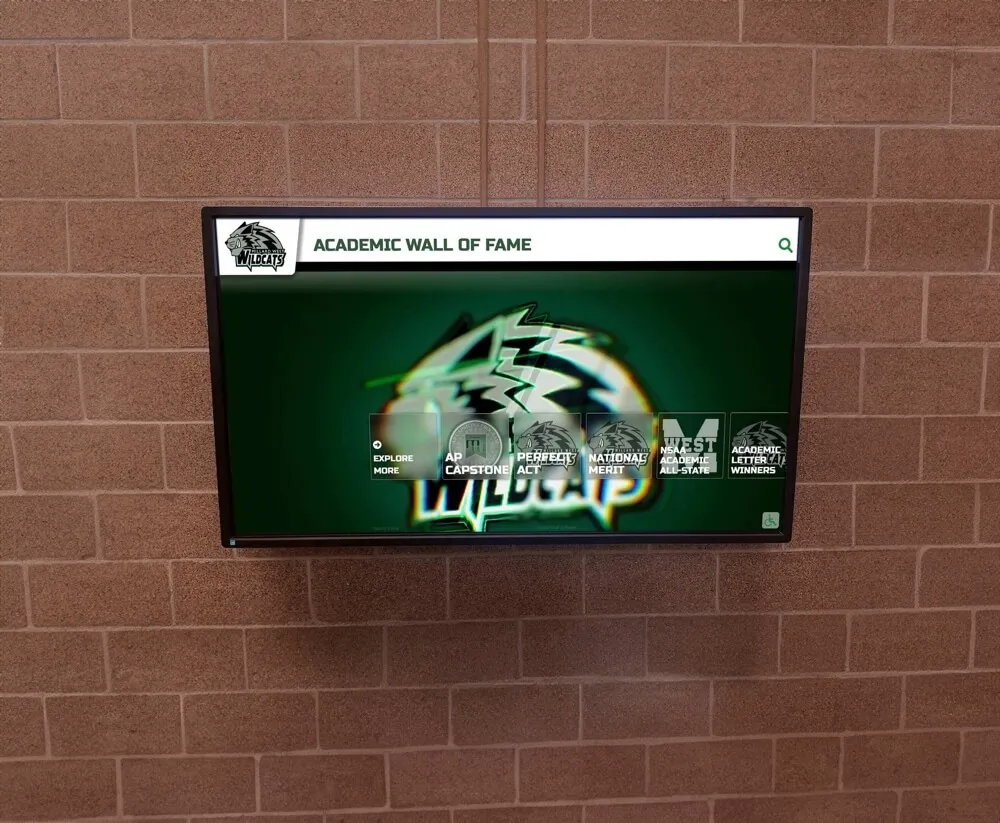
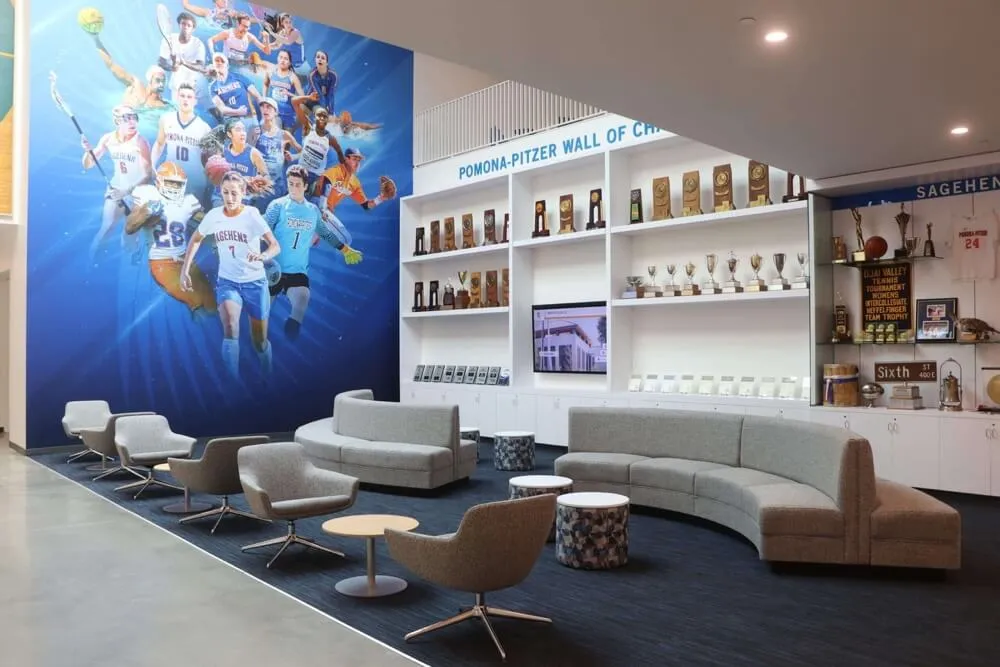
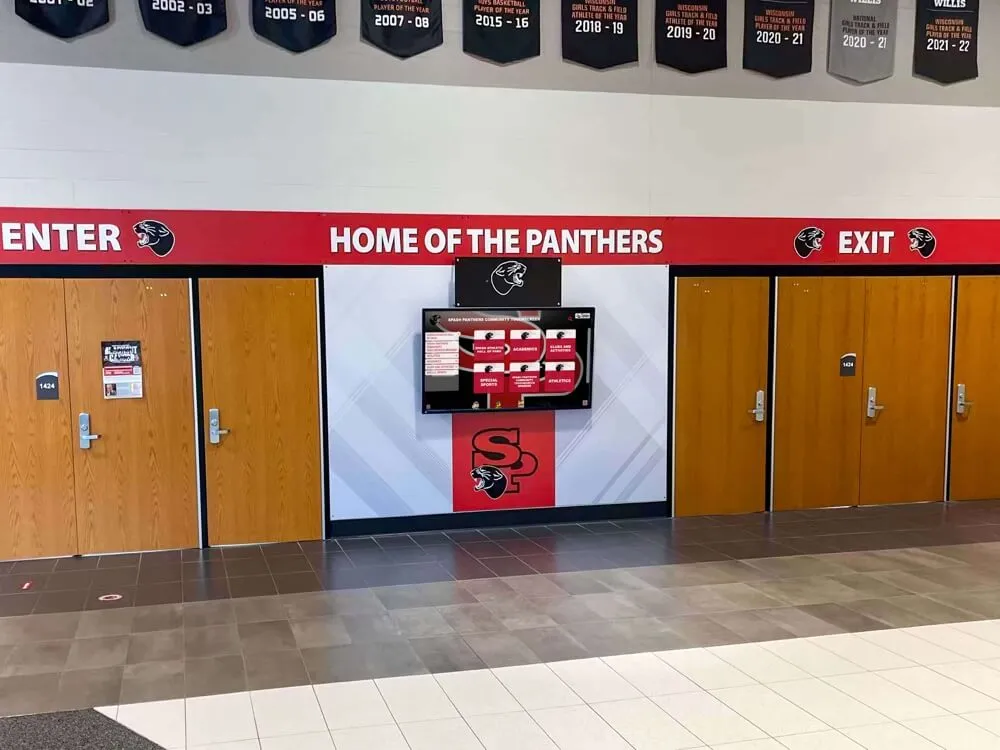
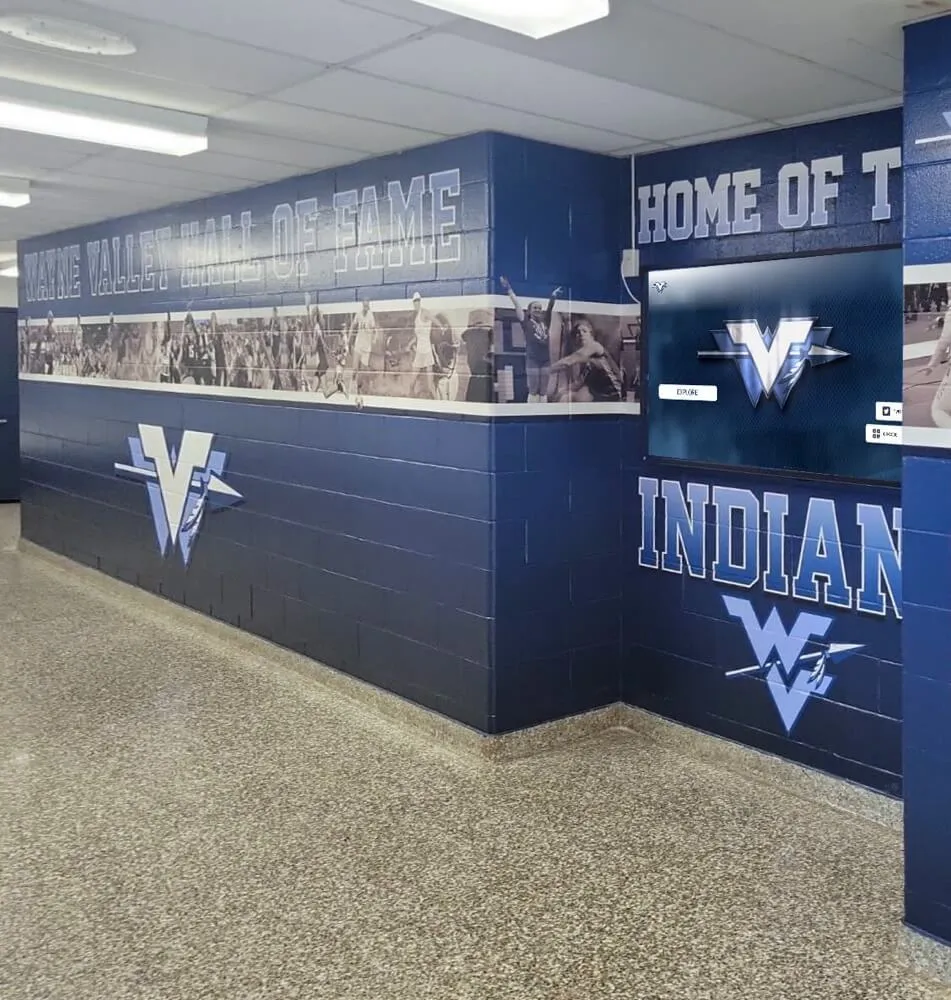
Effective sponsor recognition signage integrates seamlessly with a school's athletic identity rather than competing with it
What Counts as Sponsor Recognition Signage?
Sponsor recognition signage encompasses every format in which a school publicly displays a sponsor’s name, logo, or profile in connection with its athletic program. The category is broader than most advancement teams initially consider.
Physical signage formats:
- Vinyl or mesh banners hung in gymnasiums, arenas, or on fences
- Permanent aluminum, acrylic, or dimensional letter panels in lobbies and concourses
- Engraved or laser-cut plaques mounted near named facility areas
- Printed signs in programs, scorebooks, and event publications
- Scoreboard sponsor panels (static or rotating)
- Field-level and courtside banner stands at events
- Fence wraps and outfield signs at baseball and softball facilities
- Outdoor monument signs at stadium and facility entrances
Digital signage formats:
- LED scoreboards with integrated sponsor panels
- Digital display screens in lobbies, hallways, and concourses
- Touchscreen kiosks with interactive sponsor profile pages
- Video board advertisements at larger athletic facilities
- Rotating digital sponsor carousels on static display systems
- Sponsor recognition sections within digital hall of fame platforms
Each format serves a different function in the recognition ecosystem. Physical signage delivers permanent, high-visibility presence at a specific location. Digital signage offers flexibility—logos and content can be updated without reprinting costs—and enables rotation that gives multiple sponsors prominent placement across a single display.
Why Sponsor Recognition Signage Strategy Matters for Schools
Most school athletic programs begin their sponsorship recognition with good intentions and end up with visual complexity that underserves every sponsor. When 15 vinyl banners compete for wall space in a gymnasium, banner blindness sets in: visitors stop registering individual sponsors, and the recognition that sponsors paid for fails to deliver.
Recognition signage works best when it is selective, prominent, and clearly attributed. A single well-placed sponsor panel in a high-traffic lobby generates more genuine impressions than six banners clustered in a corner. The schools with the strongest sponsor retention rates are those whose facilities communicate pride and intentionality—where every recognition element looks like it belongs.
This logic applies directly to how you design, place, and maintain sponsor recognition across your athletic spaces.
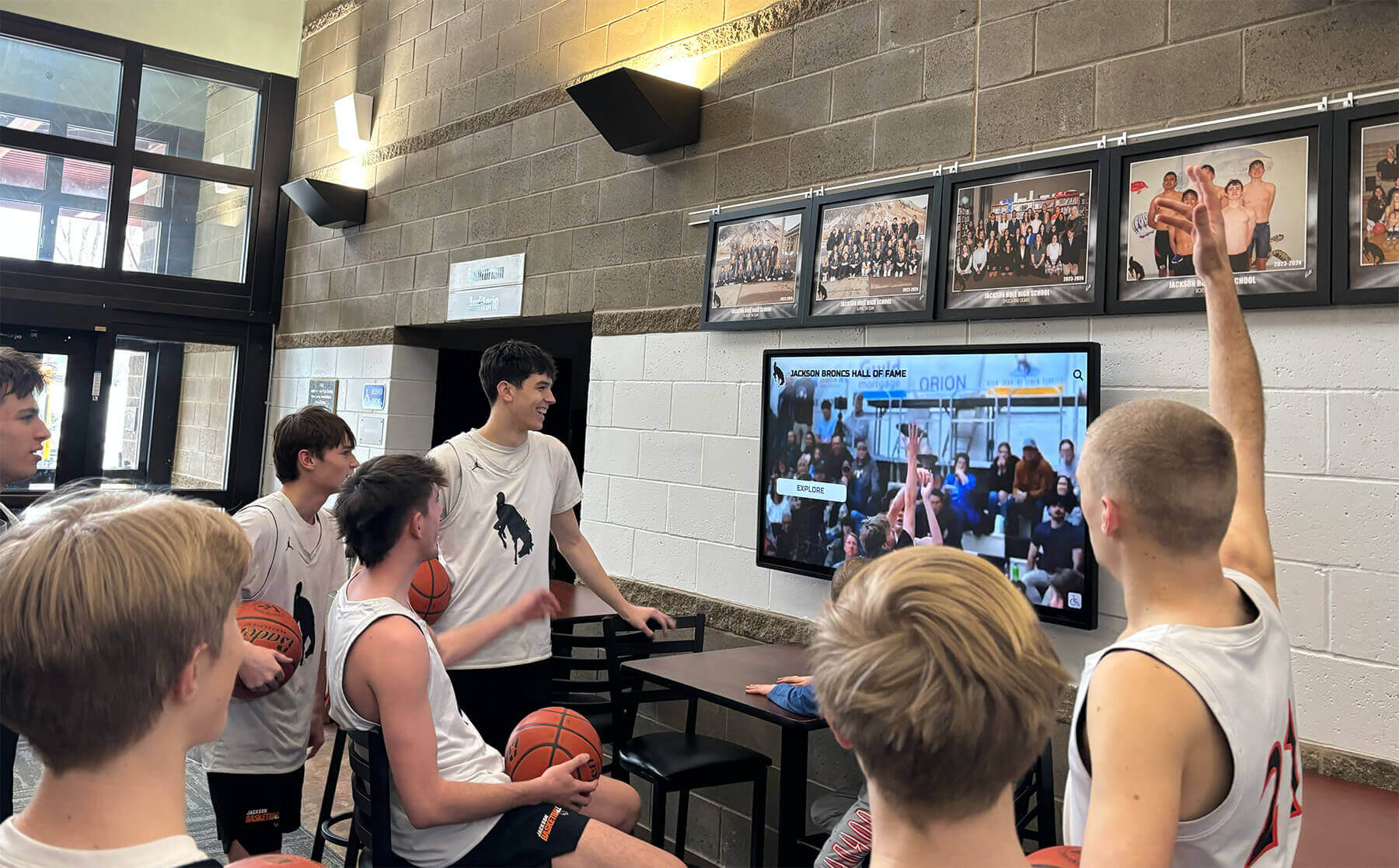
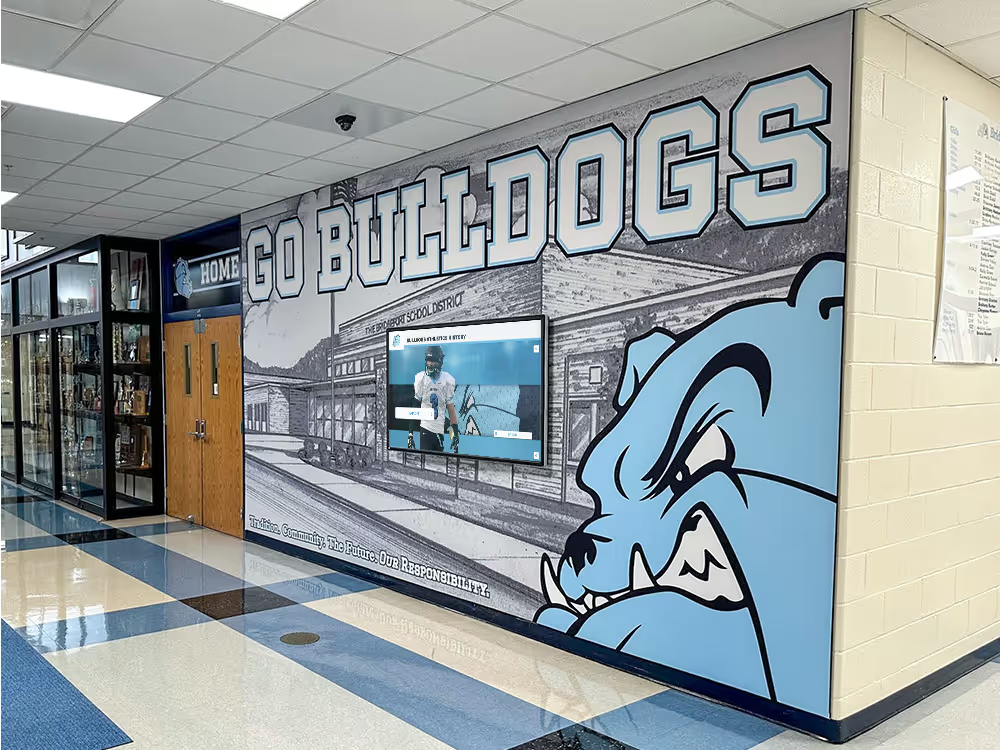
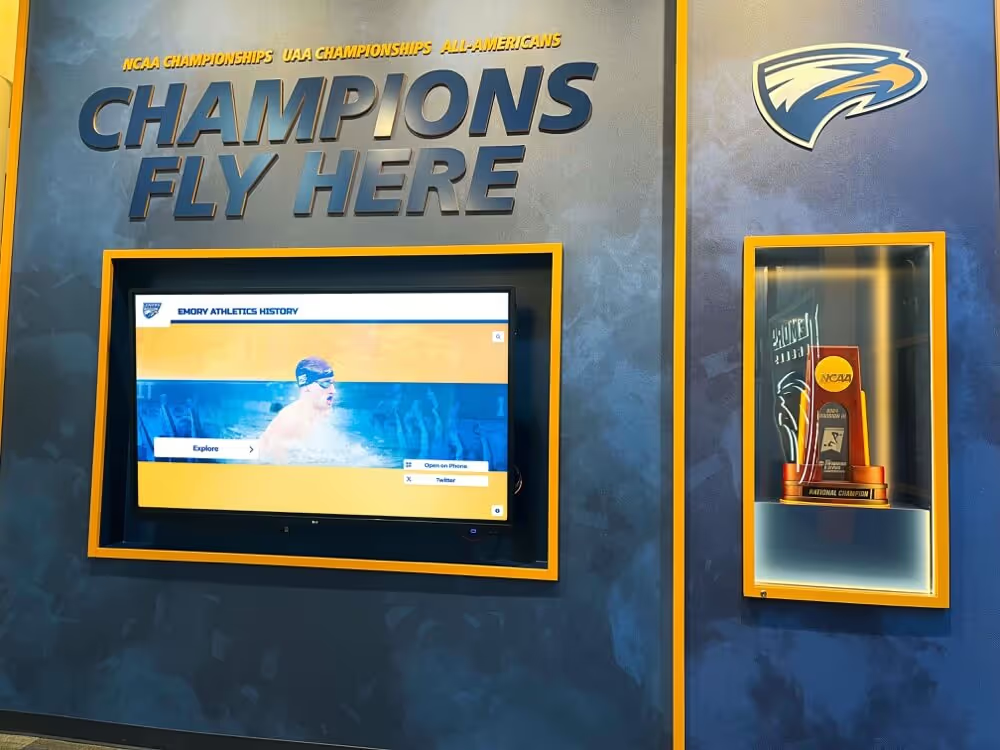
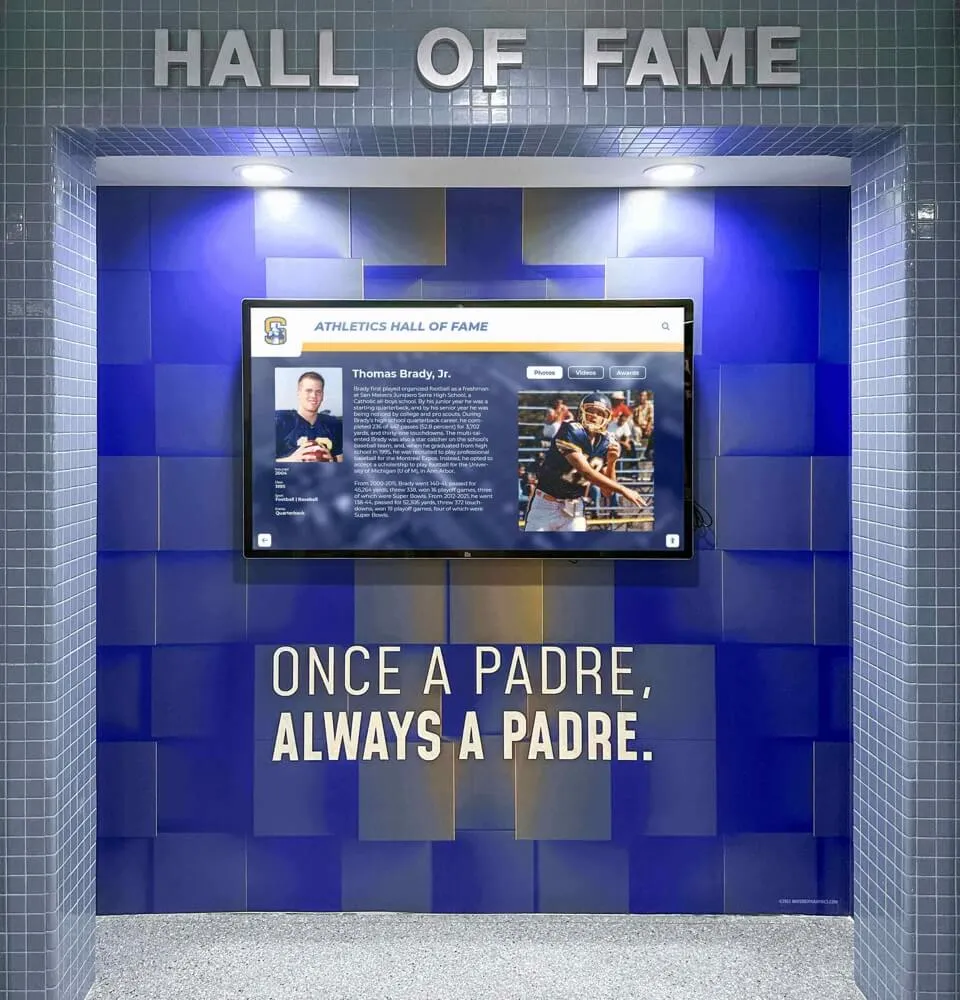
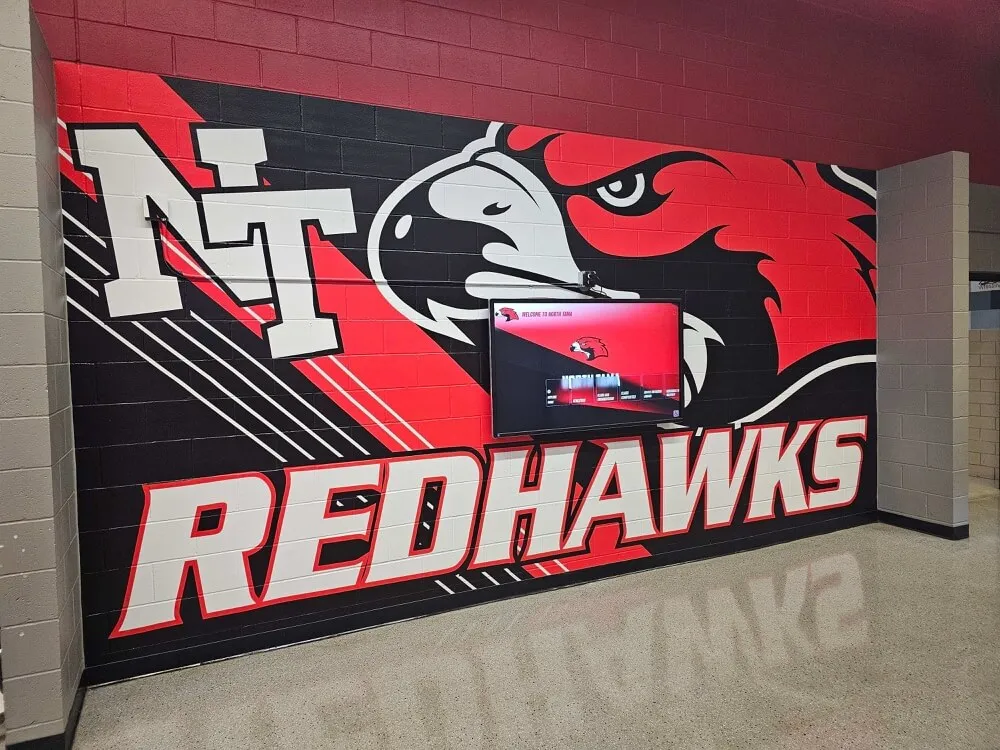
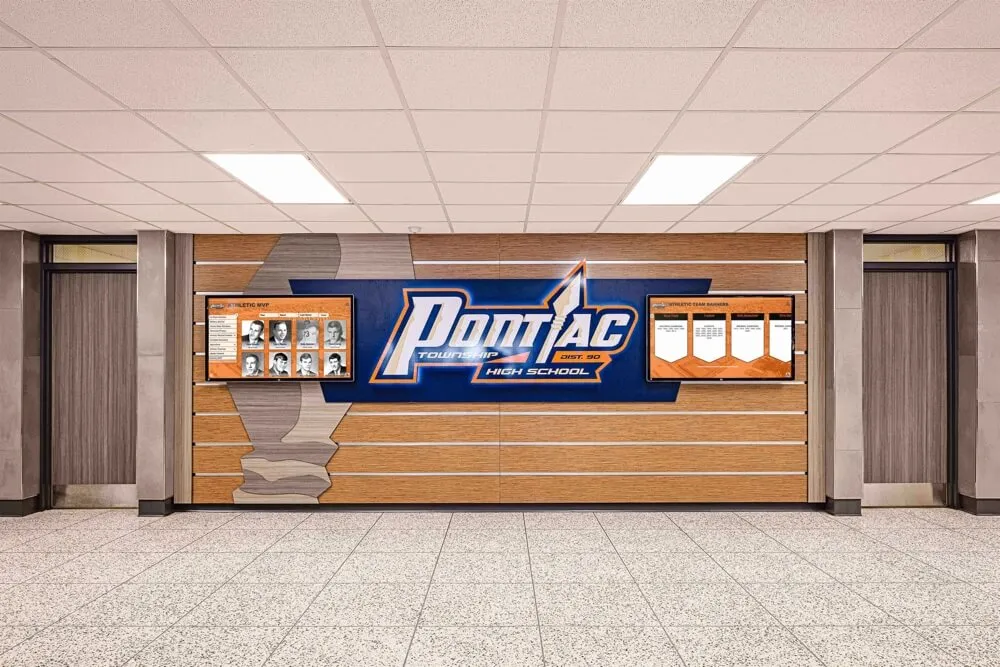
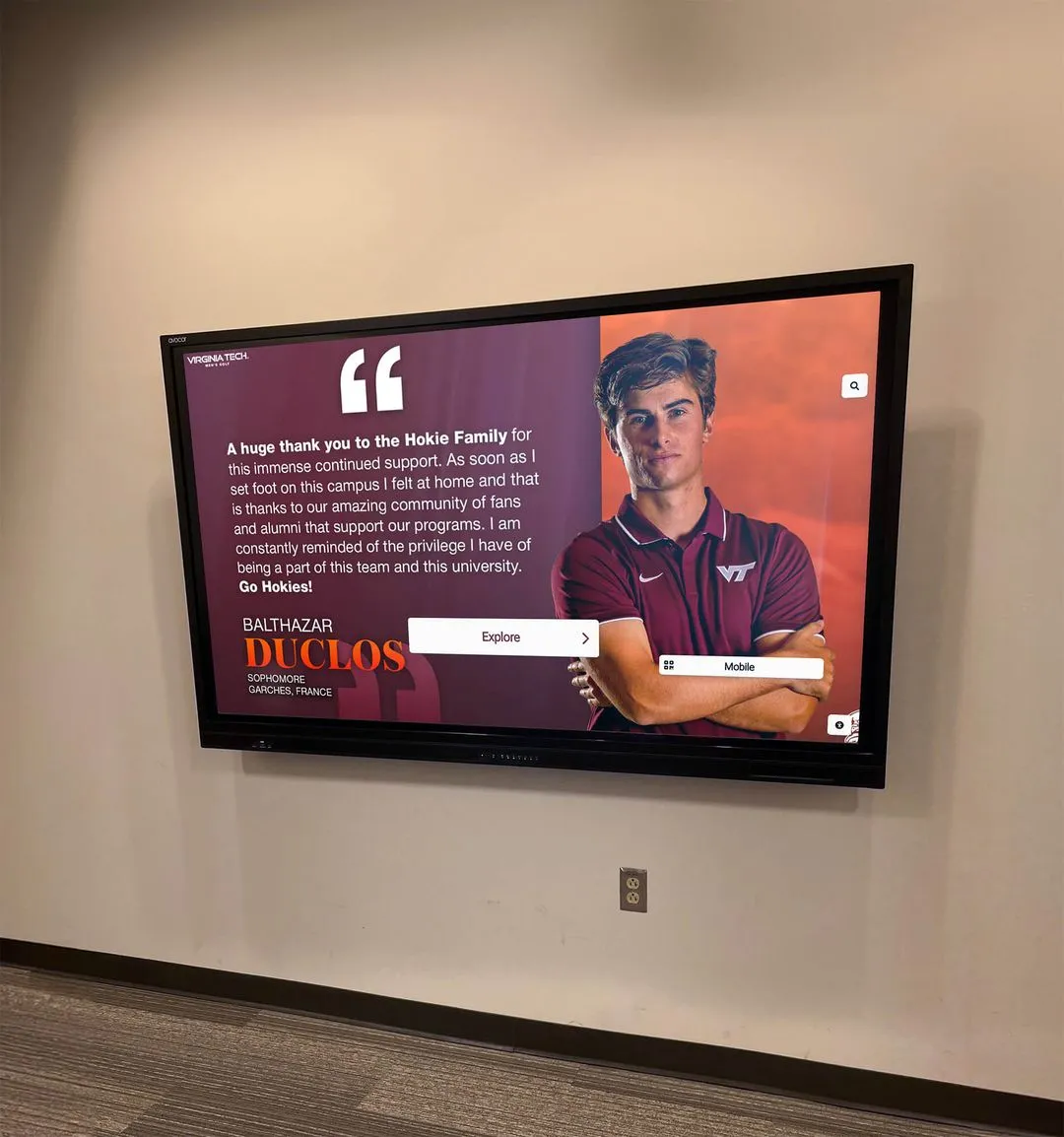
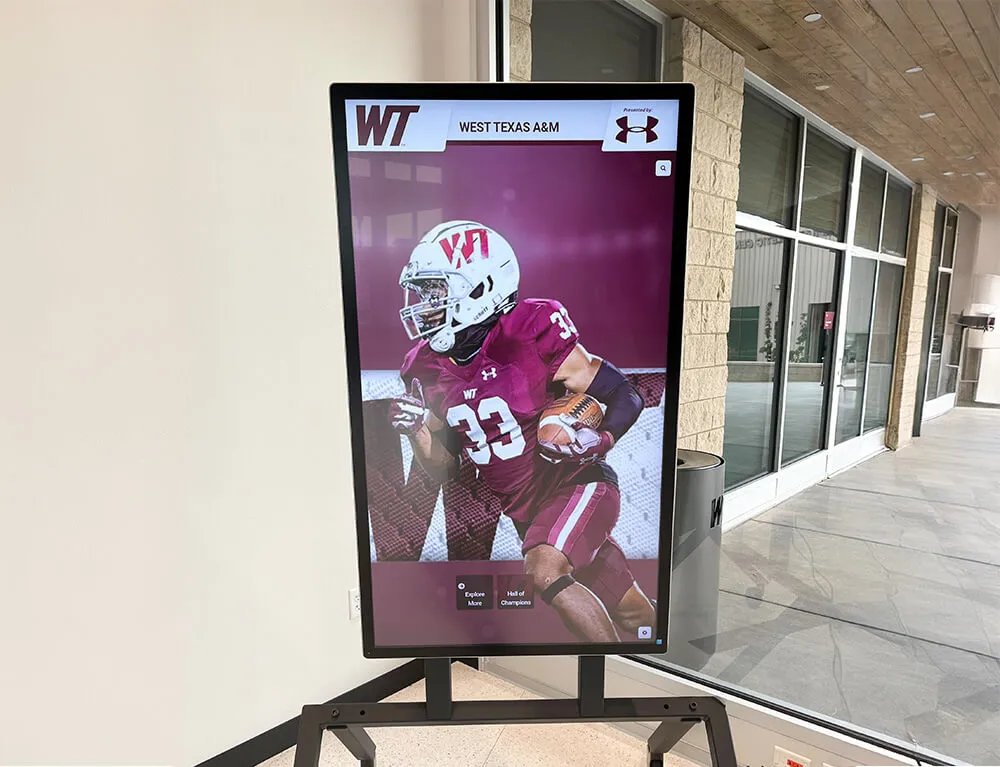
Student-facing lobby screens generate sponsor impressions throughout the school year, not only on game nights
Types of Sponsor Recognition Signage: Examples and Use Cases
Vinyl and Mesh Banners
Vinyl banners remain the most common form of athletic sponsor recognition at the K-12 level because of their low entry cost and easy installation. They work best when:
- Limited in number — a small set of well-placed banners is more impactful than a full wall of competing logos
- Sized for the space — oversized banners in small gyms feel overwhelming; undersized banners in large arenas fail to register
- Regularly refreshed — banners that are sun-faded, torn, or showing outdated sponsor logos undermine the professionalism they are meant to communicate
- Positioned near scoreboard or entry — high-traffic sightlines above scorer’s tables, near facility entrances, or adjacent to scoreboards deliver more impressions than end-wall placement
Vinyl banners are appropriate for entry-level or seasonal sponsorship packages. For sponsors expecting durable, year-round recognition, vinyl alone is insufficient.
Permanent Indoor Signage
Permanent signage—engraved panels, dimensional letters, backlit acrylic signs, and framed recognition displays—signals institutional commitment in a way that vinyl cannot. These formats work well in:
- Athletic lobby entrances — prominent display at the primary entry point to your gymnasium or field house
- Hallways leading to athletic areas — visible to students and visitors during the school day, not only during events
- Named facility areas — court names, weight room dedications, and field designations for presenting or title sponsors
- Concourse recognition walls — multi-sponsor panels that organize recognition by tier in a single cohesive display
Permanent signage carries a higher upfront cost but eliminates the recurring expense of replacement banners. It also signals to sponsors that their recognition has permanence—a consideration that matters when asking for multi-year commitments.
Digital Screens and Display Systems
Digital sponsor recognition displays have become the standard at well-resourced school athletic programs because they solve three problems simultaneously: visual clutter, content flexibility, and sponsor equity.
A single digital screen in an athletic lobby can rotate through sponsor logos, present dedicated sponsor spotlight pages, show athletic achievement content alongside recognition messages, and be updated remotely when a sponsor rebrands or renews. No reprint order. No installation crew. No outdated logos hanging on walls.
For schools exploring digital hall of fame tools for athletics programs, integrated platforms that handle both achievement recognition and sponsor acknowledgment in a single system are worth prioritizing over disconnected solutions.
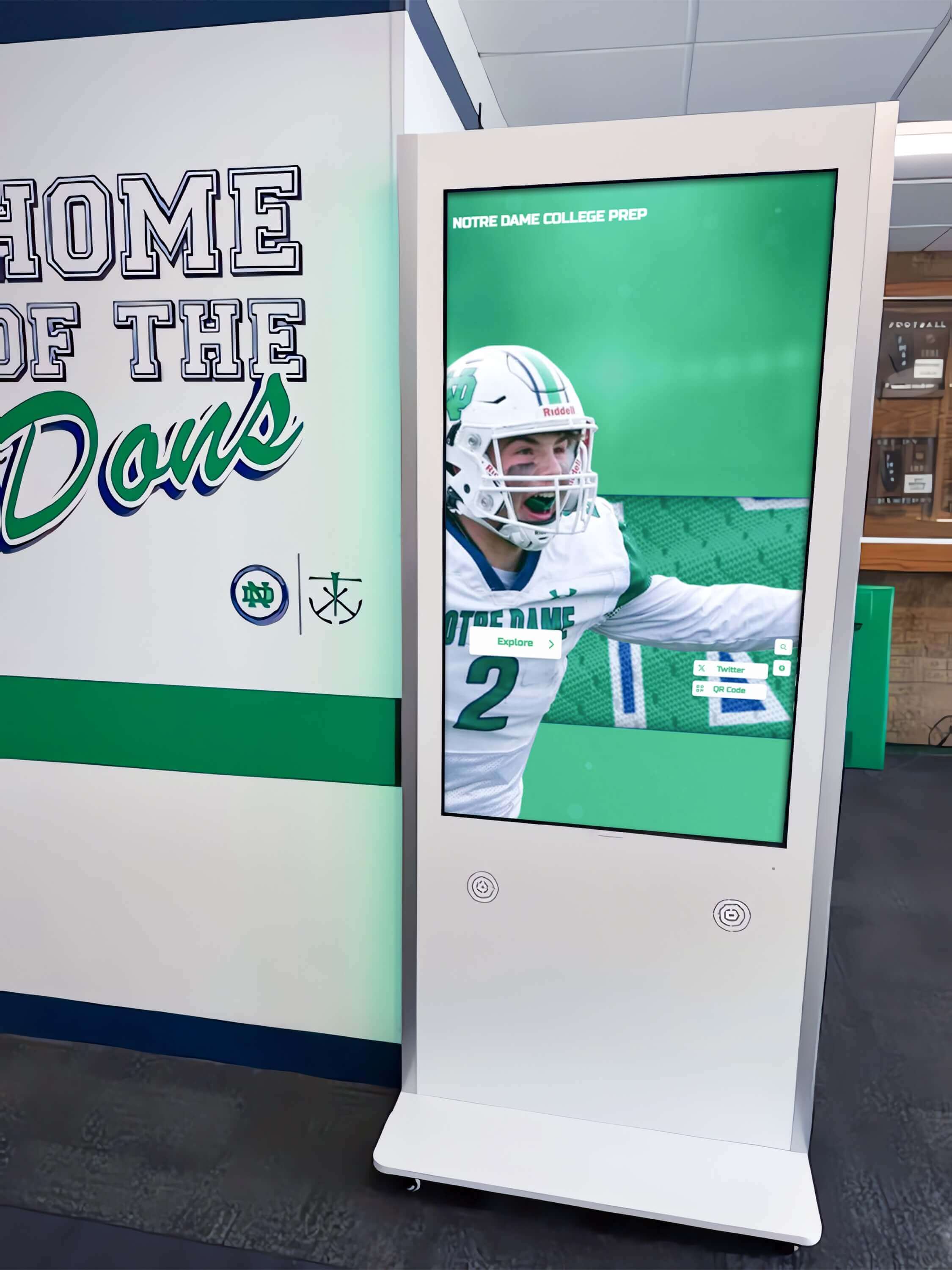
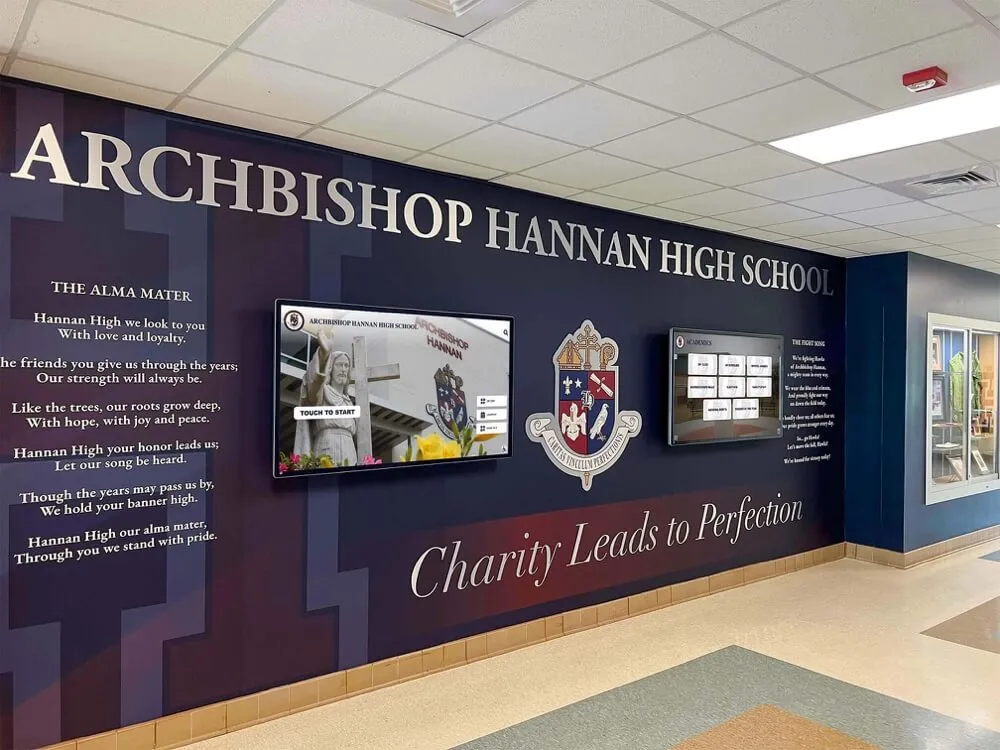
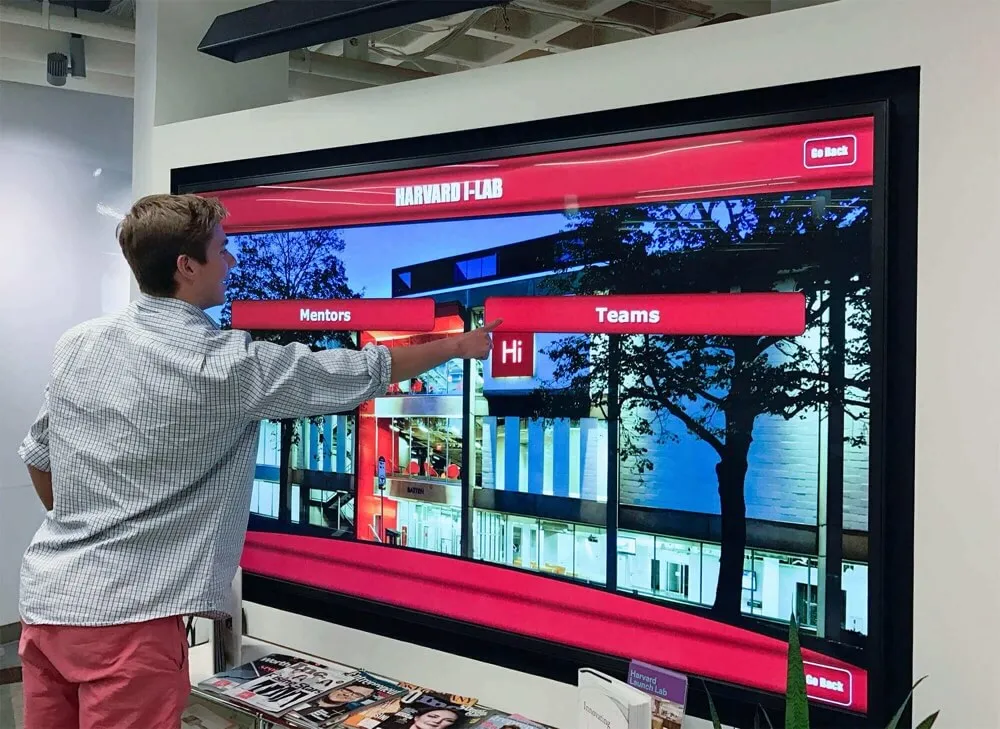
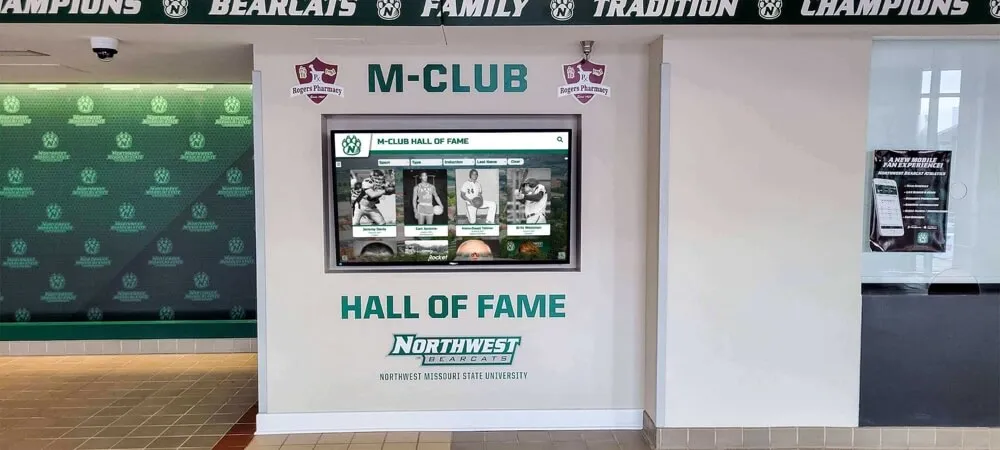
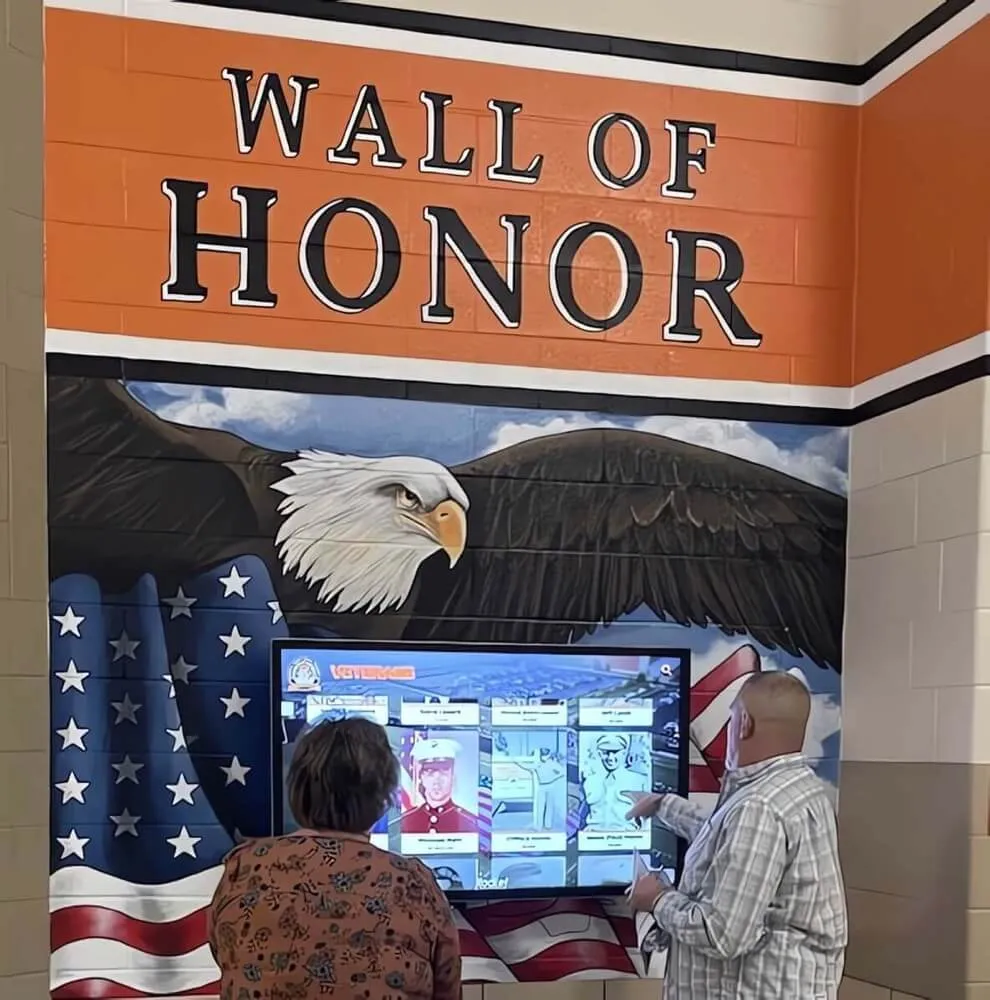
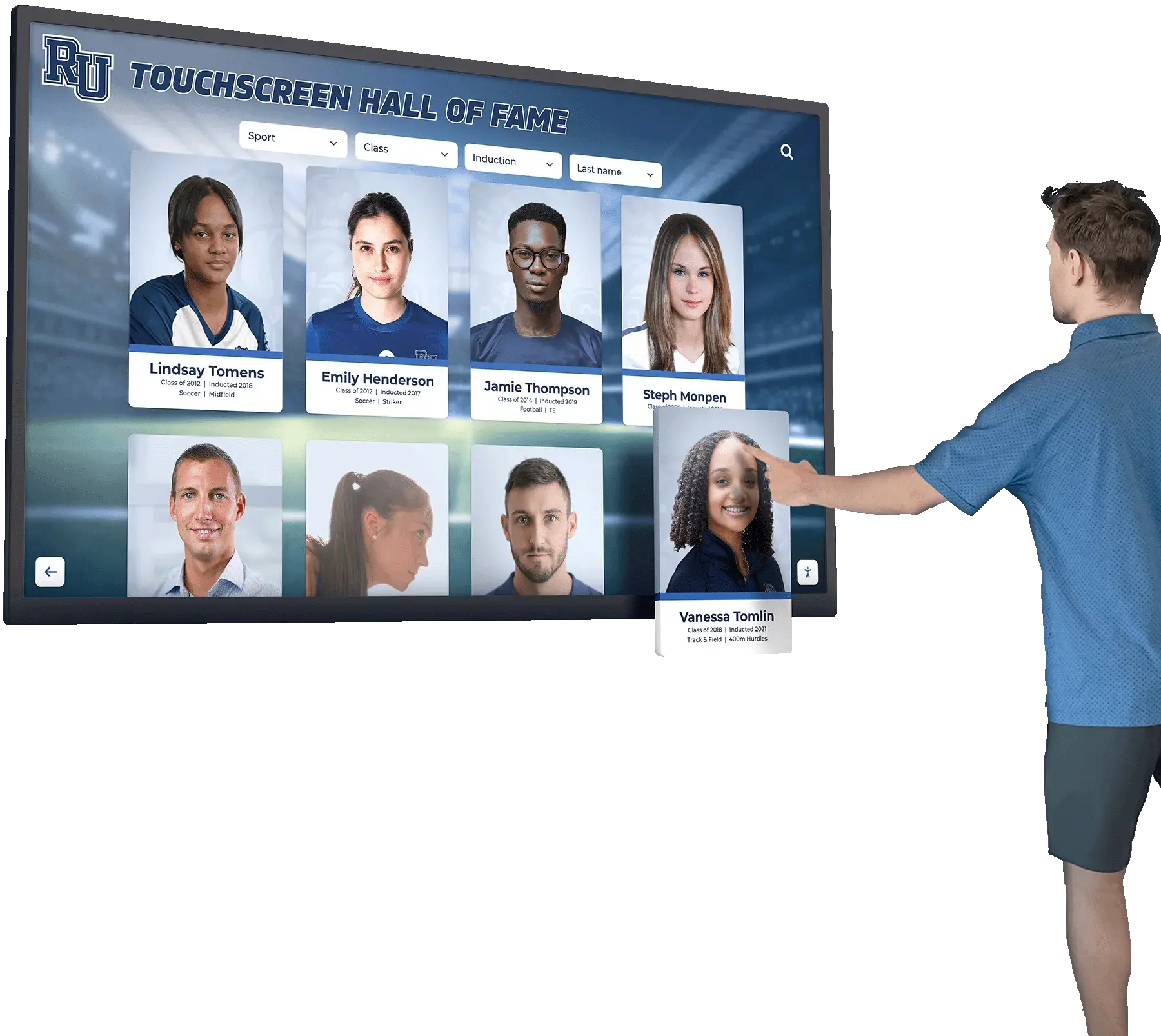
Interactive touchscreen kiosks turn passive sponsor logos into browsable profiles that visitors engage with during natural waiting moments
Touchscreen Kiosks with Sponsor Profiles
At the premium tier of sponsor recognition signage, interactive touchscreen kiosks allow schools to offer something no vinyl banner can: a dedicated sponsor profile page that visitors can navigate on their own.
A well-designed touchscreen sponsor profile might include:
- Sponsor’s logo and business name
- Brief description of their services or community role
- Contact information or website link
- Photos or video (if the sponsor provides them)
- A “Sponsoring [School Name] Athletics Since [Year]” acknowledgment that emphasizes the longevity of the partnership
This format is particularly effective in lobbies where parents wait during practices, tournaments, and open gym sessions—audiences who have idle time and genuine local business interest. Touchscreen kiosks used by programs recognized for innovative hall of fame and recognition tools consistently demonstrate that interactive engagement generates stronger sponsor satisfaction than static signage alone.
Outdoor Signage and Stadium Displays
Athletic programs with outdoor stadiums, tracks, or multi-sport complexes have additional sponsor recognition signage opportunities that extend beyond the gymnasium:
- Fence wraps and outfield signs at baseball, softball, and soccer facilities
- Scoreboard sponsor panels integrated into LED or traditional scoreboards
- Stadium entrance monuments that list presenting sponsors alongside school branding
- Concession stand and press box panels visible to event crowds
- Field banner stands at events that travel (tournaments, invitationals, away competitions where you’re hosting)
Outdoor signage weathers differently than indoor. Mesh banners perform better than solid vinyl in wind-exposed locations. Permanent aluminum or aluminum composite (Dibond) panels hold up to outdoor conditions and maintain legibility longer than printed graphics on lesser substrates.
Sponsor Recognition Signage Placement Guide
Where signage is placed determines how many genuine impressions it generates. High-impression placements are those that draw eyes during natural traffic patterns—not placements that are technically visible but functionally ignored.
Highest-impact placements:
- Lobby entry and exit paths — every visitor passes through; no sightline competition
- Scoreboard adjacency — eyes naturally travel to the scoreboard during games
- Concourse and hallway walls — student-facing exposure during the school day
- Restroom concourse areas — high dwell time during events
- Team benches and sidelines — visible in photos, video, and broadcast
Moderate-impact placements:
- Gymnasium upper walls (non-scoreboard end) — visible but peripheral during gameplay
- Locker room entries — athlete-facing, appropriate for athletic brand partners
- Press box and broadcast positions — appear in media coverage of events
- Parking lot and facility approaches — visible during arrival and departure
Lower-impact placements:
- Storage area corridors — low traffic outside maintenance staff
- End walls blocked by equipment during events — obscured when in use
- Interior stairwells — low traffic unless building lacks elevator

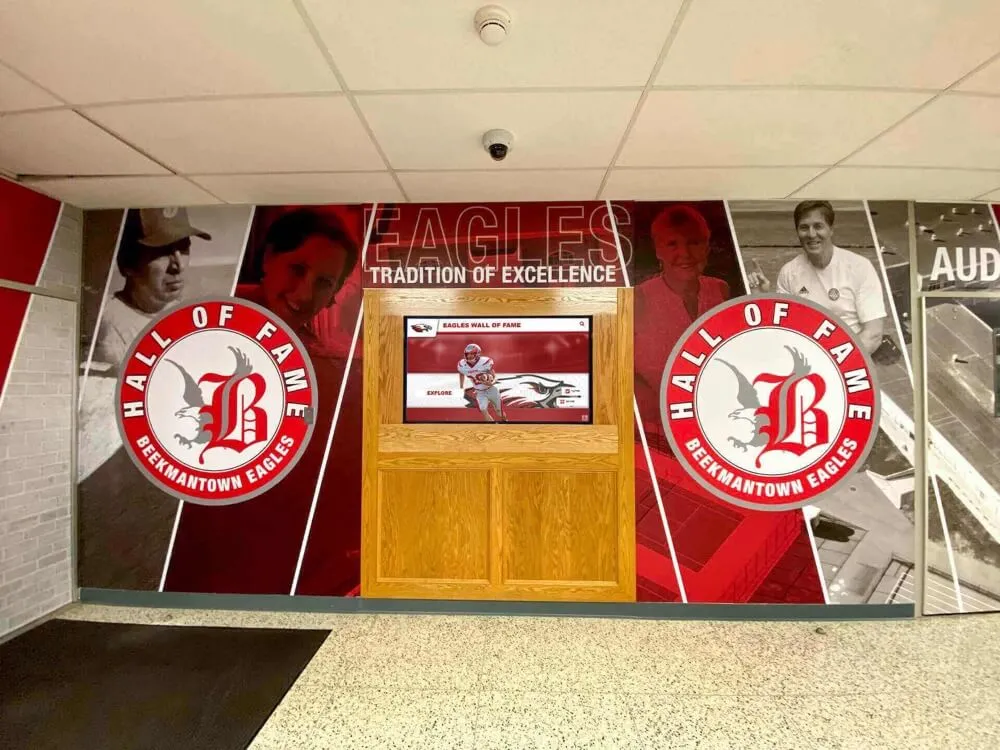
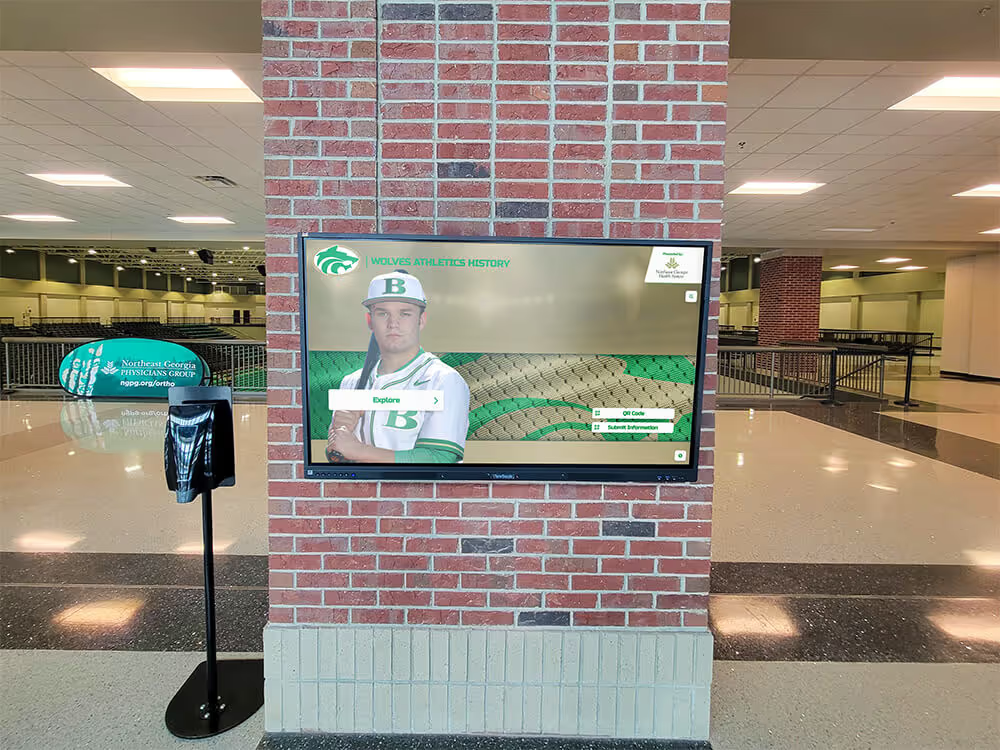
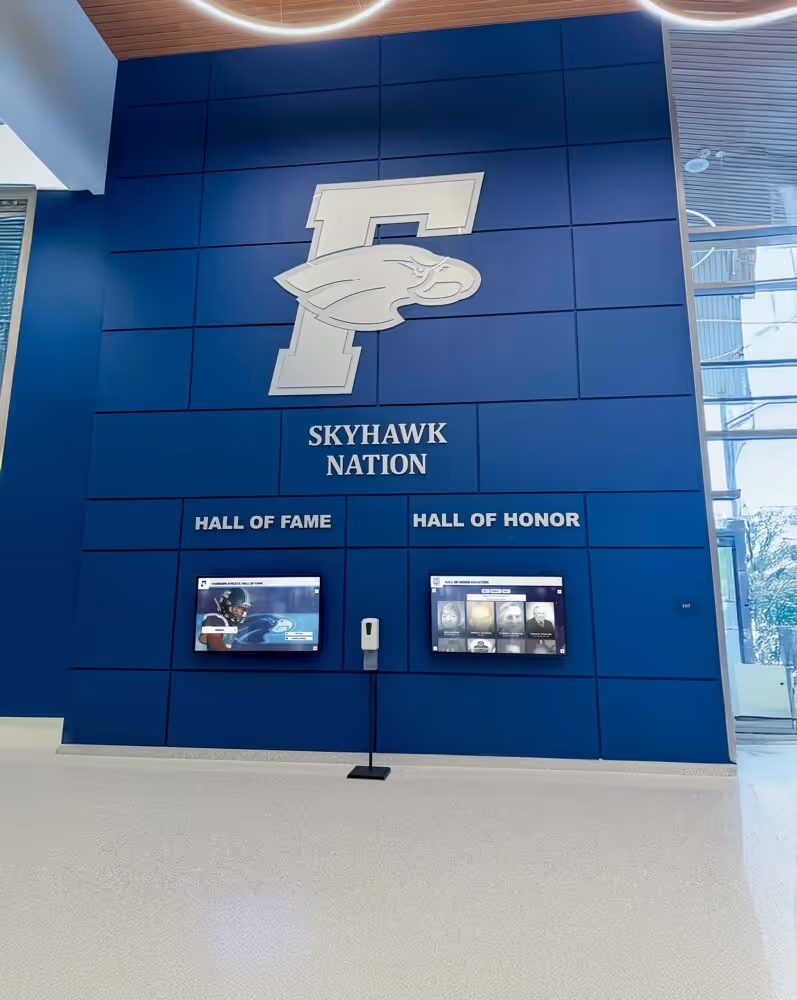
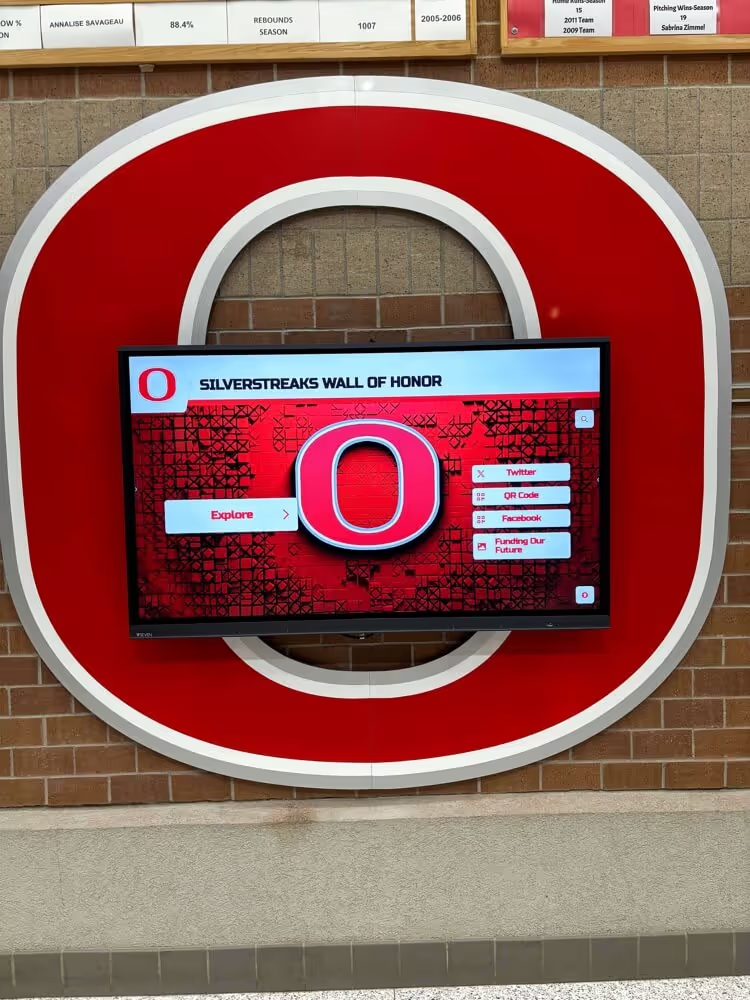
Lobby digital displays placed at primary entry points generate the highest year-round sponsor impressions of any athletic signage placement
Sponsor Recognition Signage Design Standards
Sponsor recognition signage that looks like an afterthought does not retain sponsors. Design standards protect the visual integrity of your athletic spaces while ensuring that sponsors receive recognition that reflects well on their investment.
Logo Handling
Sponsors provide logos in varying formats and quality levels. Establish these standards before your first installation:
- Require vector files (EPS, SVG, or AI) for any signage larger than 24 inches — rasterized logos pixelate at scale
- Establish minimum size requirements — logos too small to read at intended viewing distance defeat the recognition purpose
- Maintain consistent spacing between logos on multi-sponsor panels — uneven spacing reads as disorganized
- Honor sponsors’ brand standards — do not alter logo colors, proportions, or clear space requirements
Color and Background Consistency
Multi-sponsor panels look strongest when background treatments are consistent. Mixing sponsors with different background colors (some on white, some on black, some on transparent) creates visual chaos. Set a single background standard for each panel type and apply it uniformly.
For digital displays, use a consistent branded template for sponsor screens so that every sponsor appears in a context that reinforces your school’s identity. Sponsor recognition that is visually indistinguishable from the surrounding athletic brand reads as intentional and prestigious rather than tacked-on.
Typography and Attribution
Recognition signage benefits from clear attribution language. “Thank You to Our Sponsors” is adequate. “Proud Community Partners of [School] Athletics” is stronger. For presenting or named sponsorships, explicit language matters: “The [Business Name] Athletic Complex” or “[Sport] Season Presented by [Business Name]” creates the clear naming association sponsors are paying for.
Avoid abbreviating sponsor names without permission. A business called “Riverside Family Dental” should not appear as “Riverside Dental” or “RFD” on your signage.
Digital vs. Physical Sponsor Recognition Signage: When to Use Each
Most effective programs use both formats in complementary roles rather than choosing one exclusively.
| Situation | Physical Signage | Digital Signage |
|---|---|---|
| Entry-level sponsorships with limited budgets | Banner or shared panel | Rotating digital carousel |
| Named or presenting sponsorships | Permanent dimensional signage | Dedicated digital spotlight page |
| Seasonal recognition (sport-specific) | Sport-specific banner or program ad | Seasonal digital content rotation |
| Multi-year recognition commitments | Permanent engraved panel | Persistent digital profile with update capability |
| Sponsor rebrand or logo update | Reprint required (cost and delay) | Remote update with no cost |
| High sponsor count (10+ sponsors) | Visual clutter risk | Rotation solves equity problem |
| Interactive sponsor profiles | Not possible | Touchscreen kiosk enables |
The economics shift as programs grow. A program with three sponsors can manage individual banners effectively. A program with 20 sponsors needs a system that maintains visual clarity—and digital rotation is the most practical solution at that scale.
For schools evaluating digital recognition platforms, reviewing comprehensive digital hall of fame display systems that include sponsor recognition modules alongside achievement content helps narrow the field to platforms built for athletic contexts.
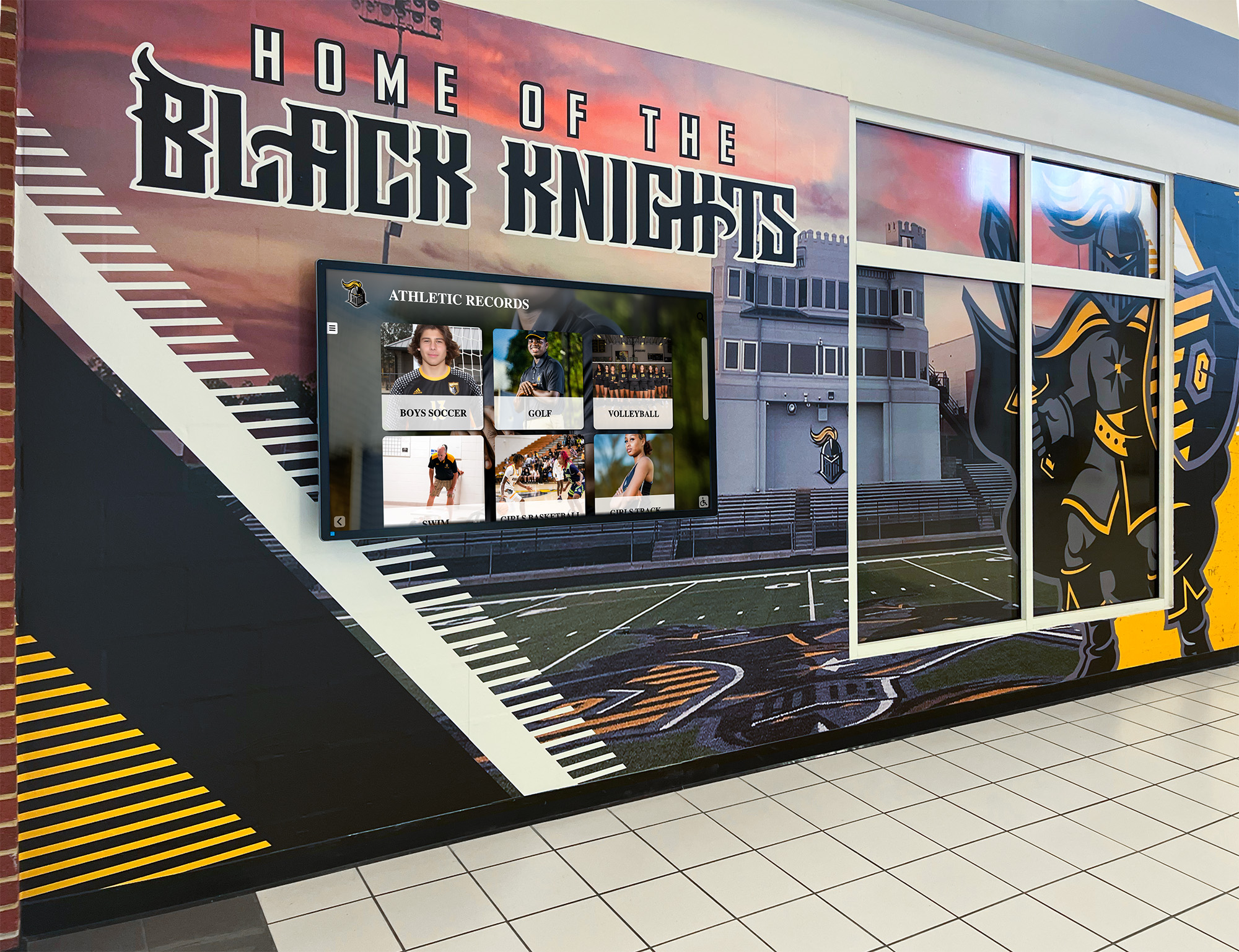
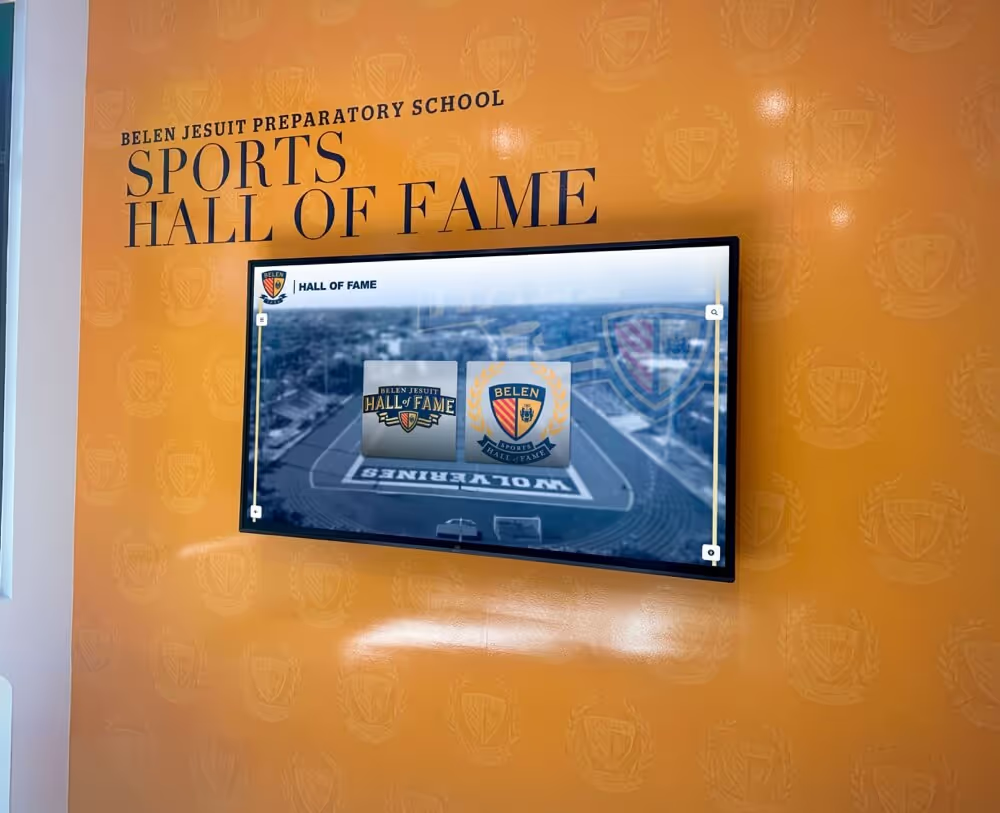
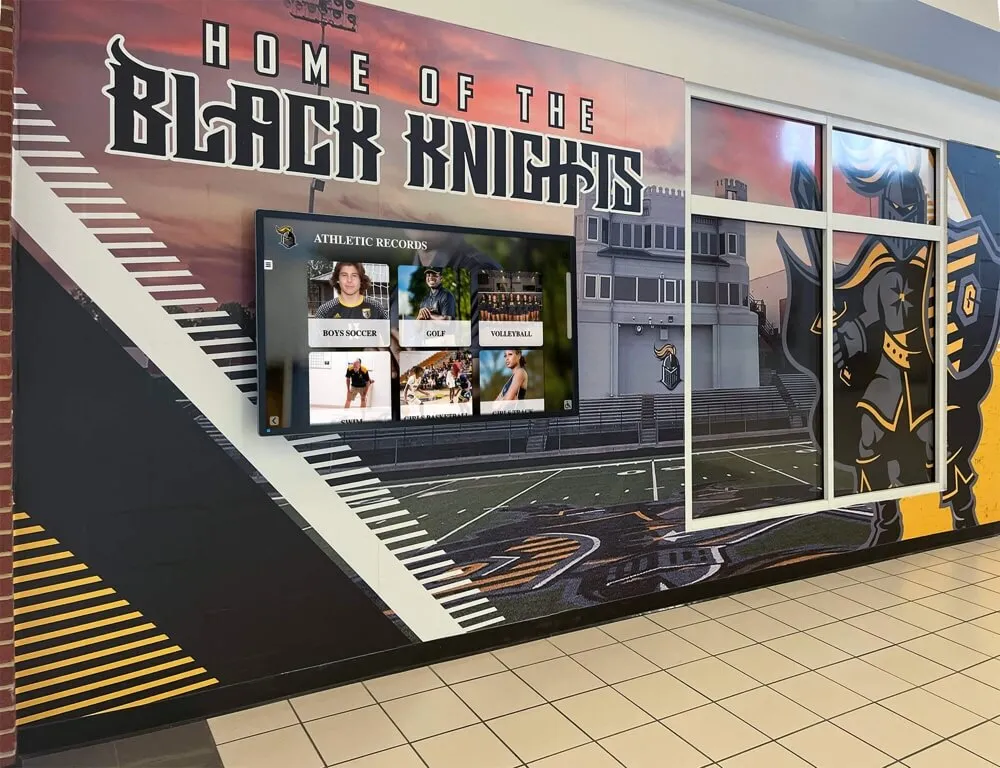
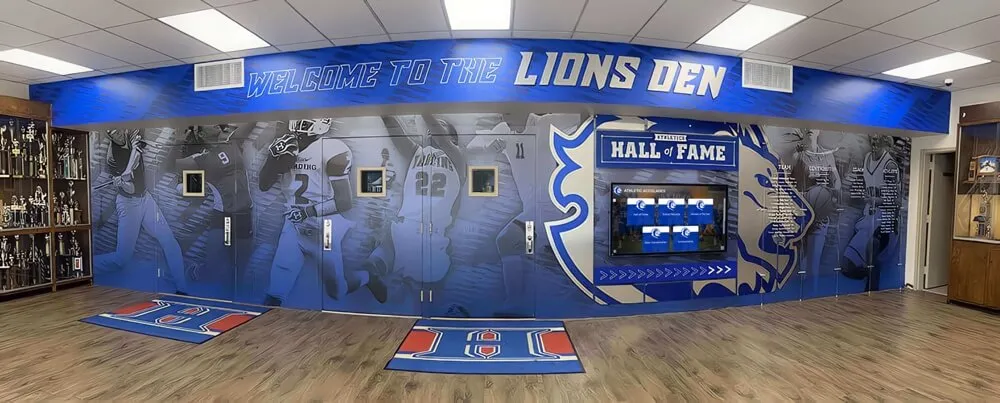
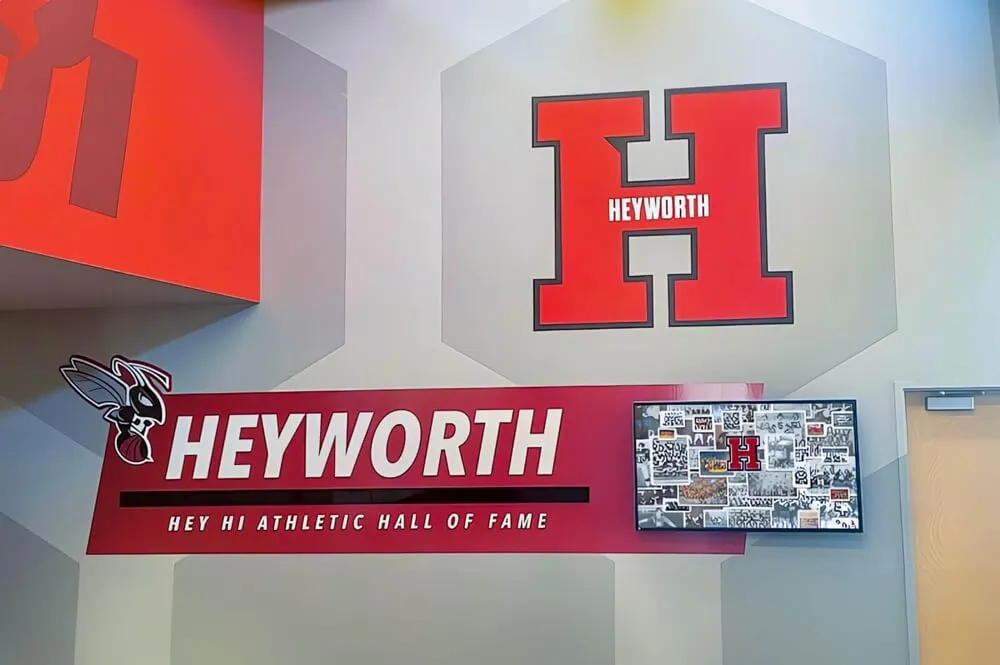
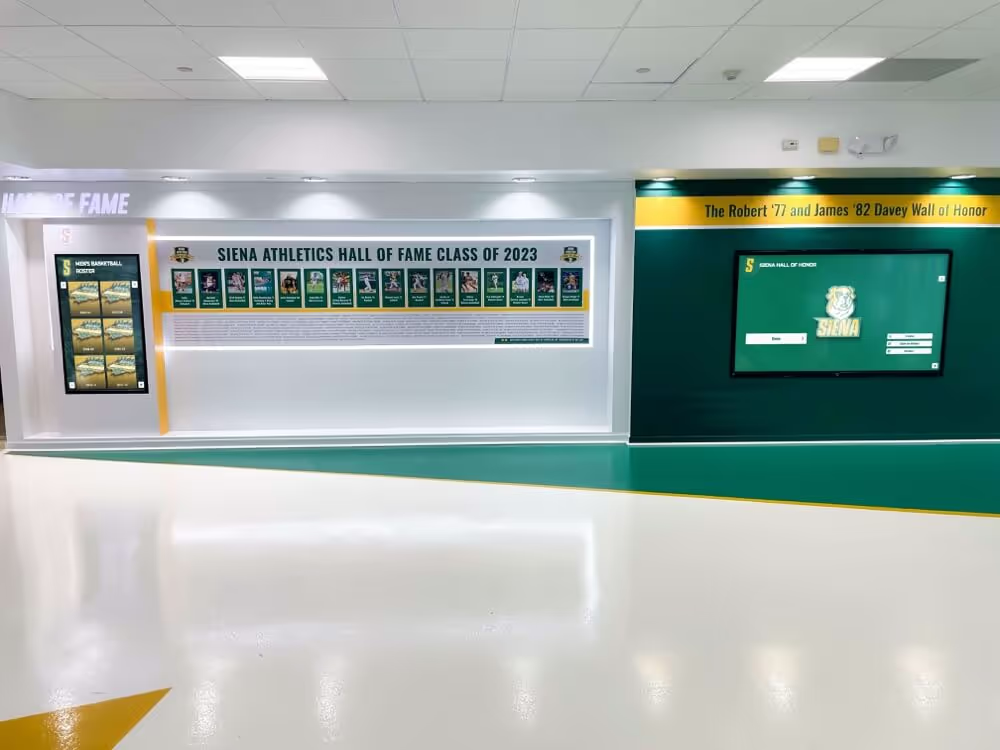
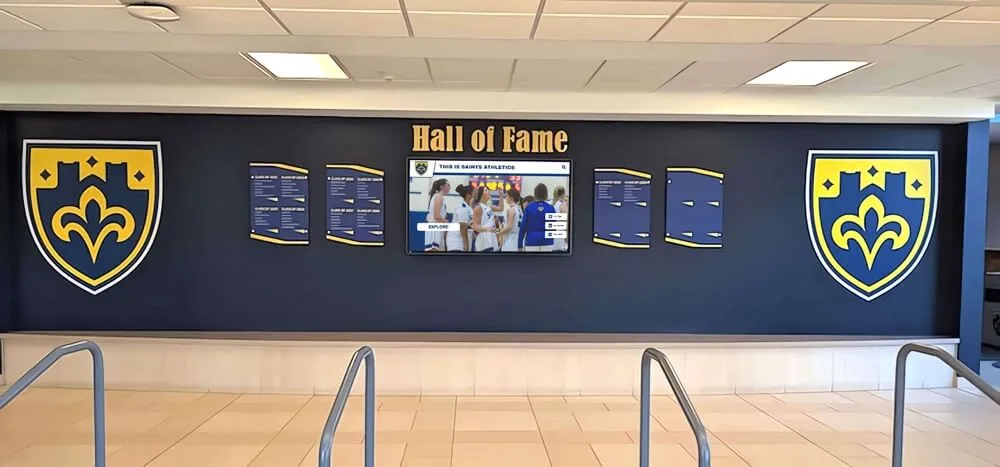
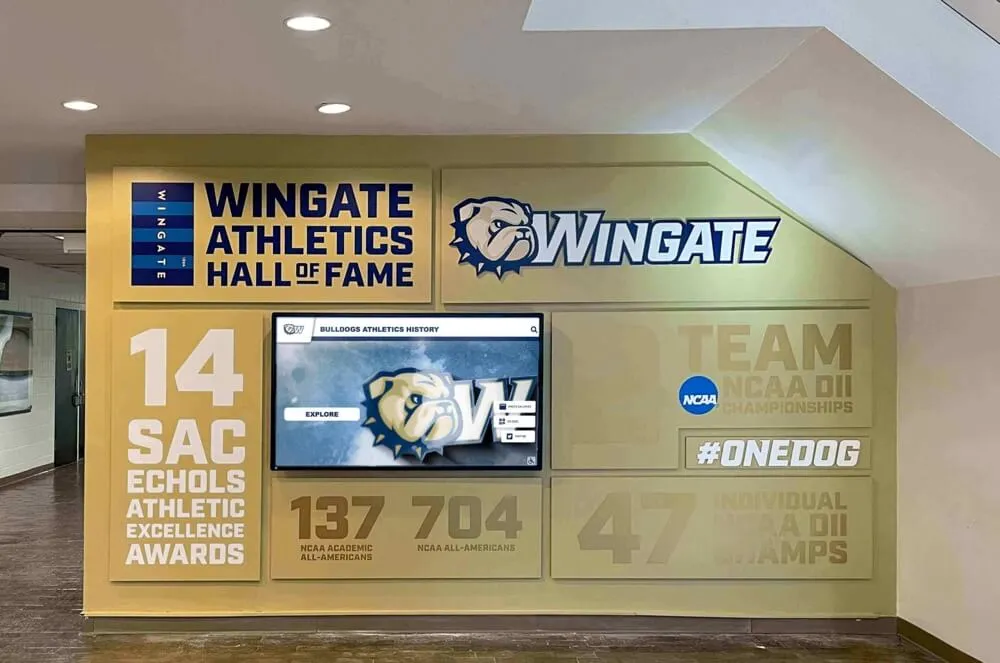
Athletic signage environments that blend achievement recognition with sponsor acknowledgment elevate both elements
Event Sponsor Recognition Signage
Athletic events—tournaments, invitationals, championship meets, senior nights—create concentrated recognition opportunities that differ from permanent facility signage. Event-specific sponsor recognition signage requires its own planning.
Pre-Event Signage Planning
For hosted tournaments and invitationals, event-specific signage should be treated as a deliverable in the event budget and planning timeline, not an afterthought. Key considerations:
- Event-branded sponsor panels that identify presenting or title sponsors by event name
- Banner stands positioned at registration tables, warm-up areas, and entry points
- Program or bracket recognition that places sponsor logos alongside event schedules
- PA announcements coordinated with digital display sponsor appearances at breaks
- Photography and video position — ensure banner stands appear in natural photo positions (behind podiums, near award tables, at court-side positions where team photos are taken)
For ideas on youth sports award programs and recognition events that create natural sponsor visibility moments, reviewing event-specific award structures helps identify where recognition signage integrates most effectively.
Post-Event Recognition Continuity
Event sponsor recognition should not end when the event does. Sponsors whose names appeared at a single tournament deserve follow-through in the year-round recognition ecosystem. Best practice:
- Send sponsors a photo from the event that includes their signage in the frame
- Include event sponsor names in your digital display rotation following the event
- Reference event sponsorships in season-end athletic reports and donor communications
This continuity demonstrates that your program treats sponsor recognition as an ongoing commitment rather than a transactional exchange.
Ready to take your athletic sponsor recognition beyond the banner?
Rocket Alumni Solutions works with school athletic programs to design and install digital recognition systems that handle sponsor acknowledgment, athletic achievement, hall of fame content, and donor recognition on a single platform. Remote content updates mean sponsor logos stay current without reprinting, and touchscreen kiosk options allow you to offer interactive sponsor profiles to top-tier partners.
Explore Rocket Alumni Solutions for athletic sponsor recognition signage
Sponsor Recognition Signage Checklist for Schools
Use this checklist when planning a new sponsor recognition signage program or auditing an existing one.
Facilities Audit
- Walk every high-traffic zone in your athletic facility and document current signage
- Identify placements with high impression potential that are currently unused
- Note any existing signage that is faded, damaged, or showing outdated sponsor logos
- Confirm that current signage accurately reflects active sponsorships (remove inactive sponsors immediately)
Format Selection
- Determine total sponsor count — programs with 10+ sponsors benefit from digital rotation
- Match signage format to recognition tier (banner = entry; permanent/digital = premium)
- Plan for outdoor signage separately with appropriate substrate materials
- Identify whether touchscreen kiosk capability is needed for presenting sponsor profiles
Design and Production
- Collect vector logo files from all sponsors before production begins
- Establish a consistent background and color treatment for multi-sponsor panels
- Confirm sponsor name spelling and attribution language with each sponsor
- Set a proofing workflow that requires sponsor sign-off before installation
Installation and Placement
- Install lobby and entry point signage before first home event of the season
- Verify that scoreboard-adjacent banners do not obstruct sightlines
- Position event banner stands to appear in natural photography positions
- Test digital display rotation timing and logo sizing on actual hardware before public display
Maintenance and Renewal
- Schedule an annual signage audit to identify faded, damaged, or outdated elements
- Establish a process for updating digital sponsor content when sponsors rebrand
- Build signage replacement or update costs into sponsorship renewal pricing
- Photograph sponsor signage at events and share images with sponsors as recognition documentation
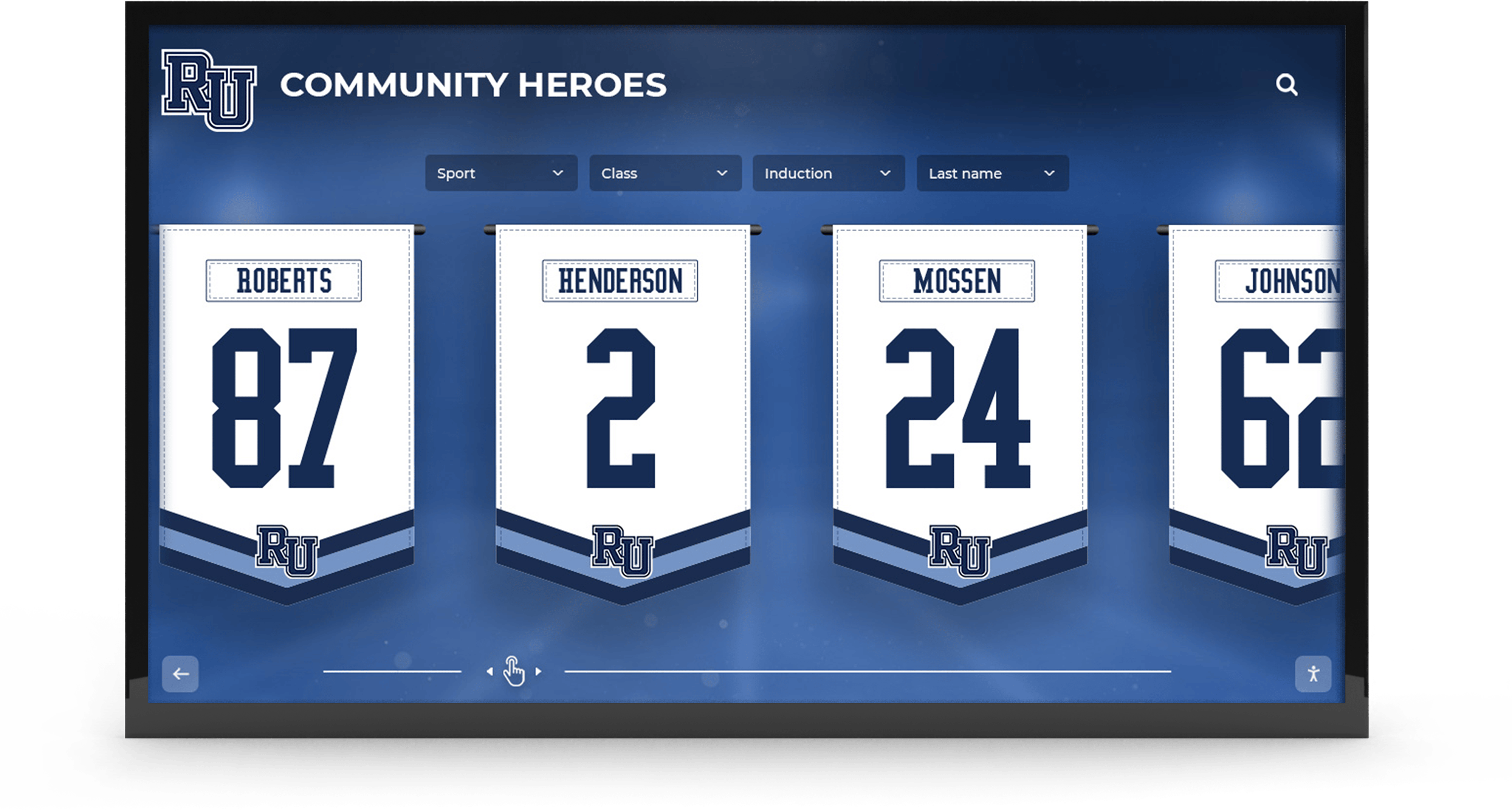
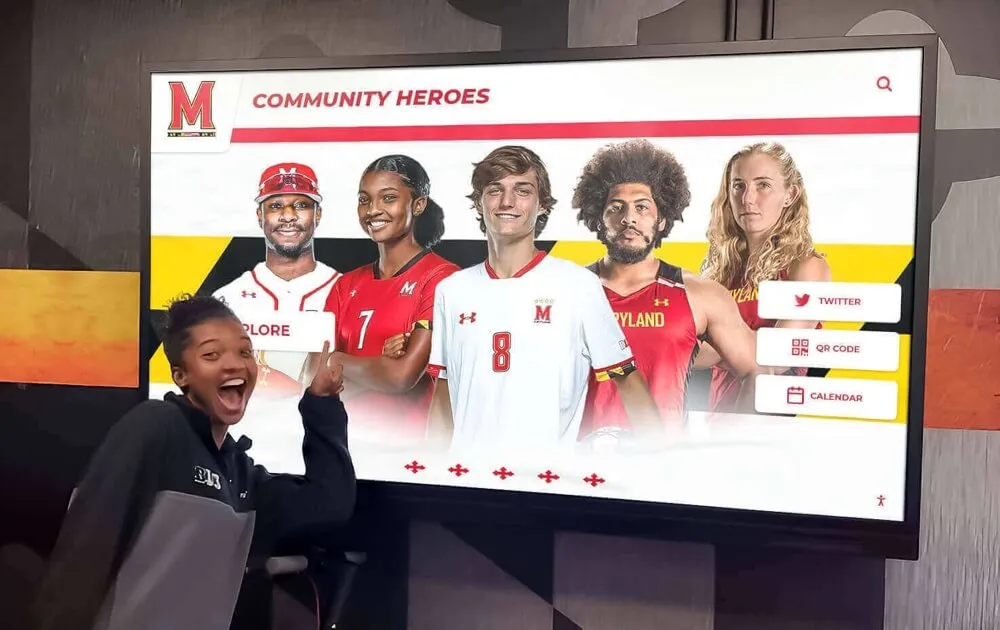
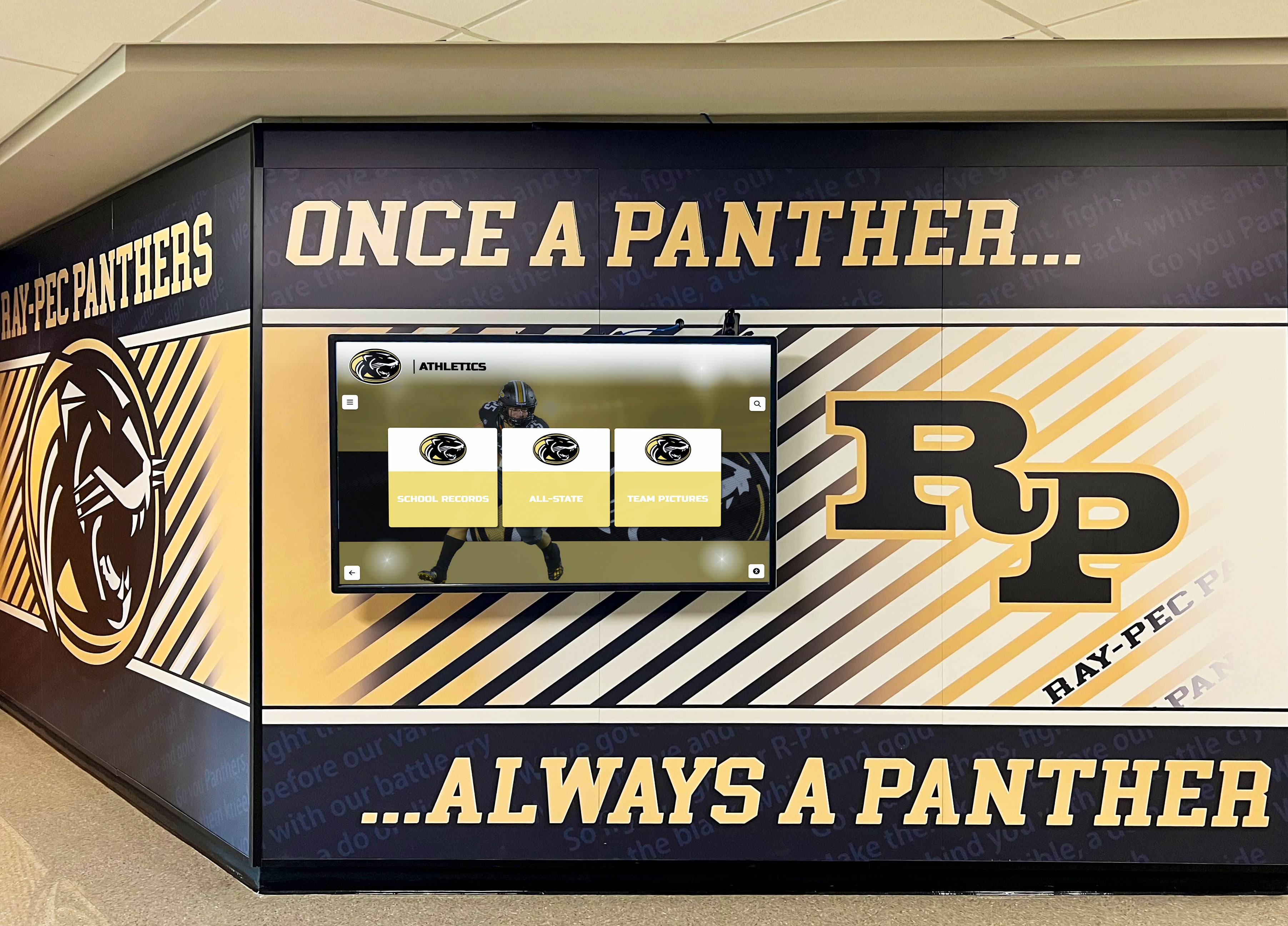
Coordinated digital recognition systems give sponsors meaningful placement alongside athlete and community recognition content
Connecting Sponsor Signage to the Broader Recognition Ecosystem
Sponsor recognition signage does not exist in isolation. The most effective athletic recognition environments weave sponsor acknowledgment into the same spaces that celebrate student-athlete achievement, honor alumni, and display program history. When sponsors appear alongside state champions, record holders, and hall of fame inductees, their association with the program carries more weight than a standalone logo panel.
Schools building integrated athletic recognition environments—where sponsor displays, digital record boards, hall of fame content, and donor acknowledgment share a unified visual framework—report stronger sponsor satisfaction and higher renewal rates than programs that treat each recognition type separately.
Platforms designed for this integrated approach, like those reviewed in hall of fame tool comparisons for athletics programs, are worth evaluating before investing in standalone signage solutions that may require replacement when a full recognition platform is eventually added.
For schools building out full recognition programs that include youth sports awards alongside sponsor recognition, structured award program ideas help identify natural integration points where sponsor visibility aligns with athlete recognition moments.
Sponsor recognition signage, at its best, is not decoration—it is evidence that your school values its community partners enough to make that relationship visible. The schools with the strongest sponsorship programs are not the ones with the most banners. They are the ones whose facilities communicate, clearly and professionally, that sponsors are part of something worth supporting.
Build Sponsor Recognition Signage That Retains Partners Year After Year
Rocket Alumni Solutions helps school athletic programs move beyond vinyl banners to integrated digital recognition systems that keep sponsor content current, deliver year-round impressions, and give top sponsors the interactive profiles and premium placement they need to justify multi-year commitments.
See how Rocket Alumni Solutions supports sponsor recognition signage for school athletics