Walk into any Friday night football game and a printed program is waiting at the gate. Local businesses have purchased a quarter-page ad, a half-page ad, or the back cover. Families flip through looking for the roster. By halftime, the program is tucked under a seat. By the end of the night, most copies are in the recycling bin.
That single-night arc is a problem for schools that rely on program advertising as a meaningful piece of their sponsorship offer, and it is a frustration for businesses that paid for recognition without much clarity about what it delivered. This guide works through real sports program ad examples, explains what belongs in each format, and shows how schools can connect game-day program advertising to year-round recognition that sponsors actually value.

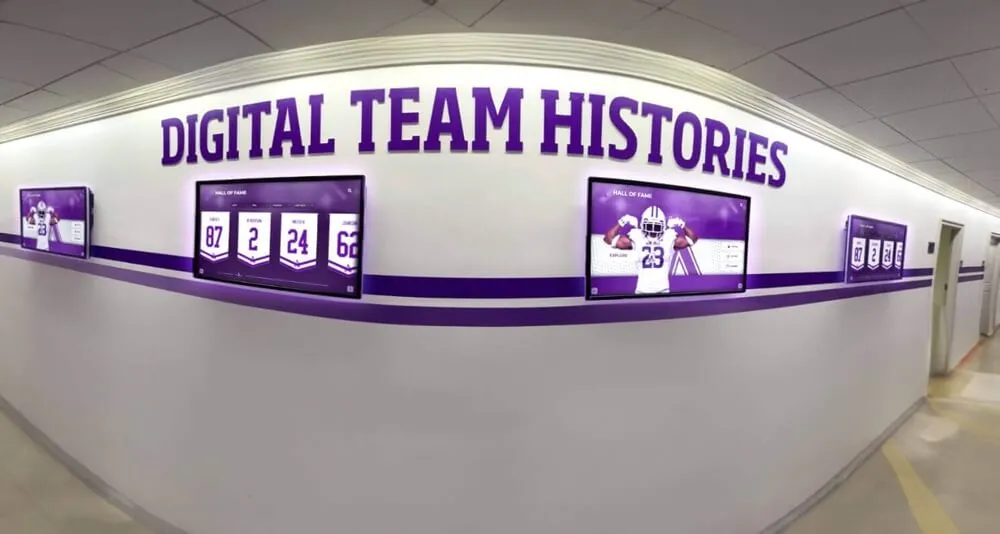
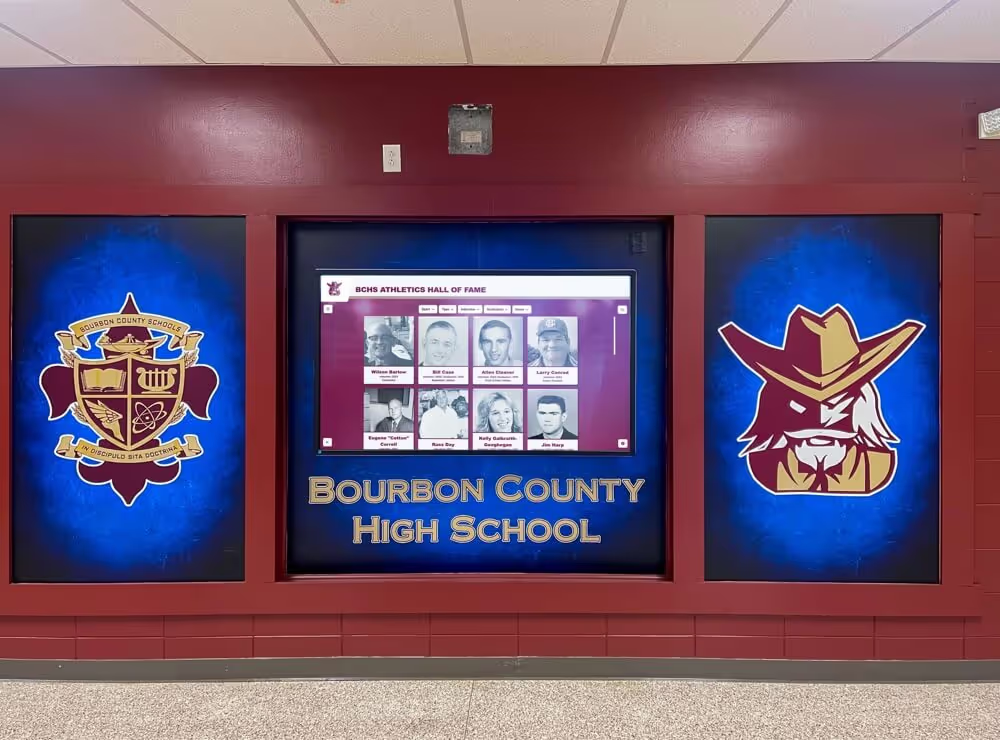
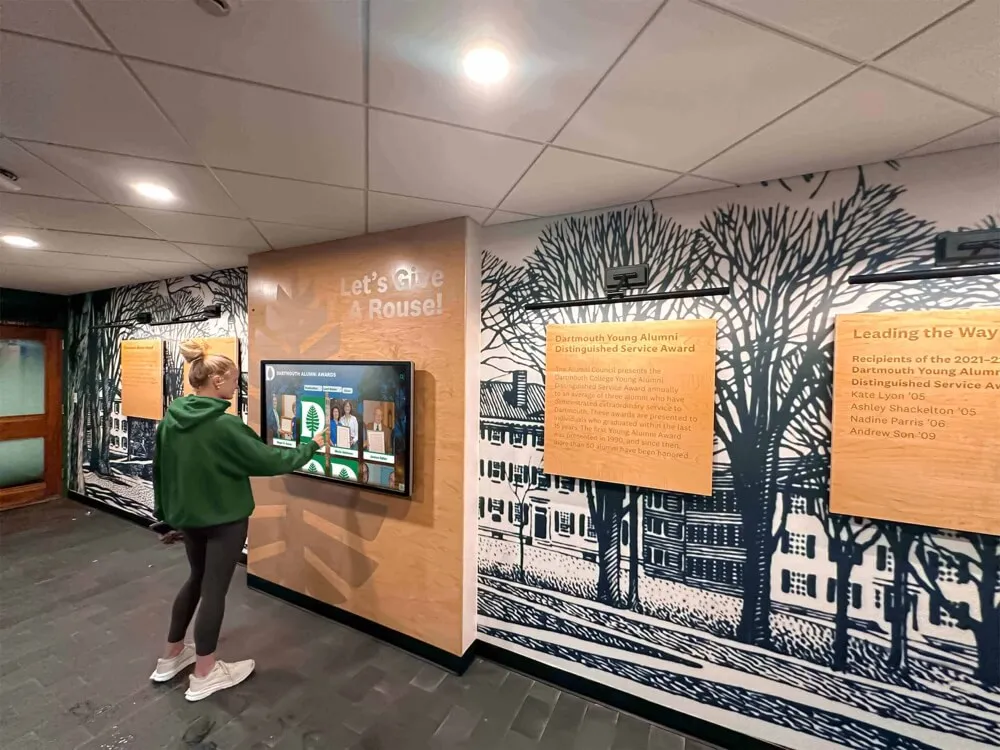
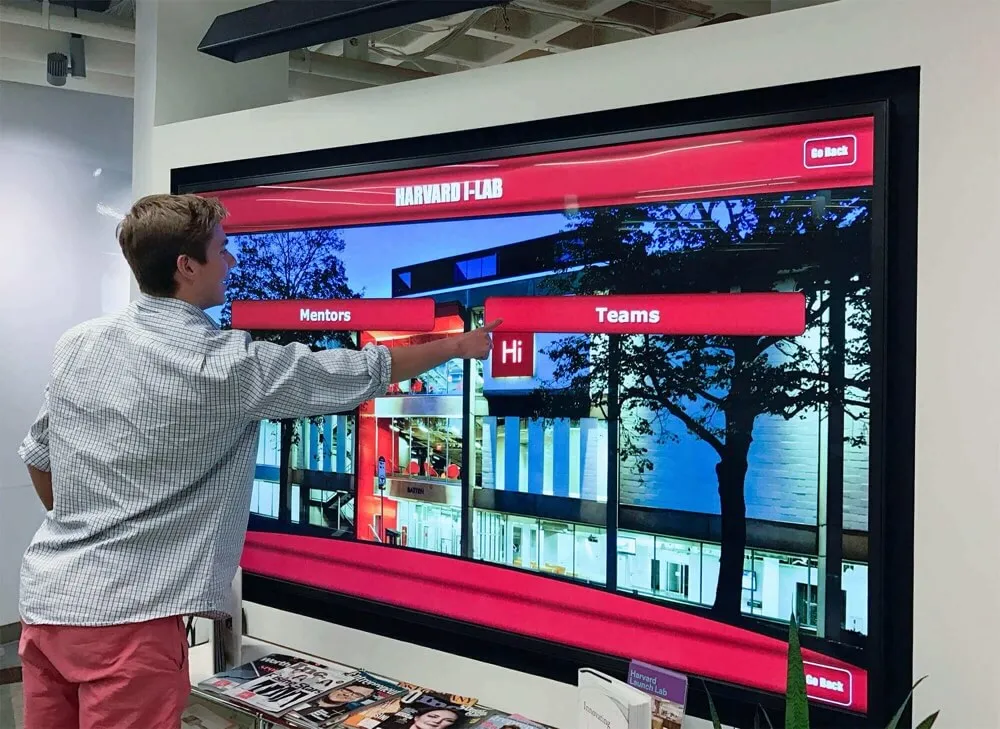
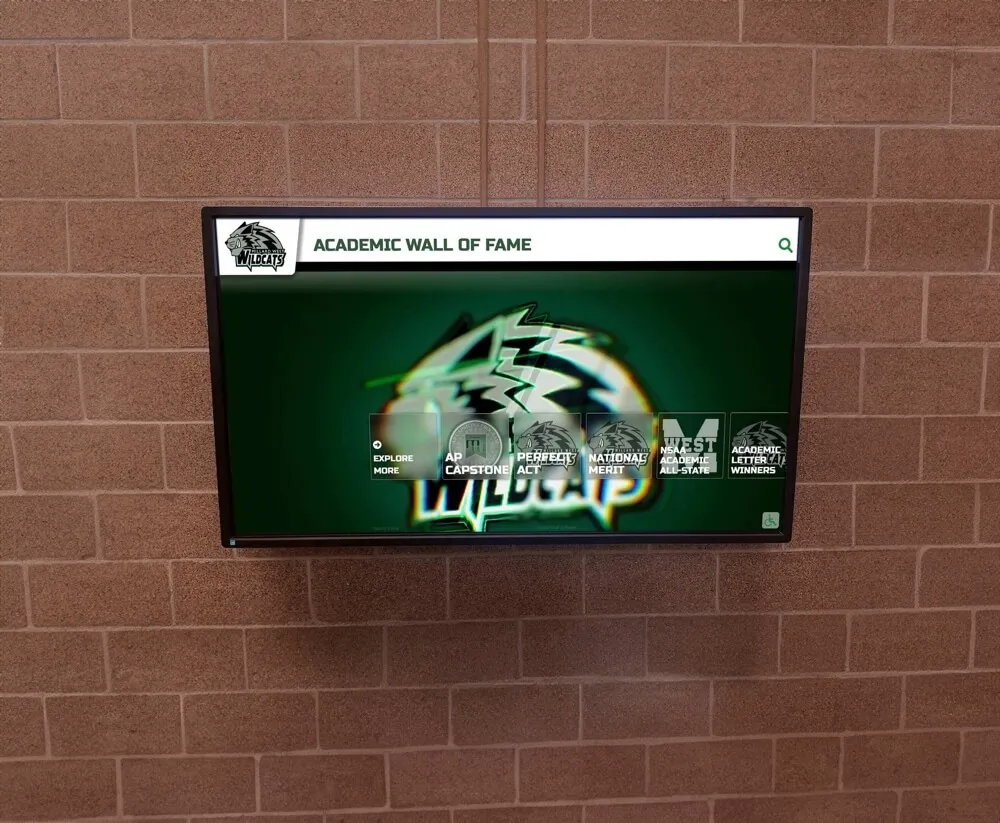
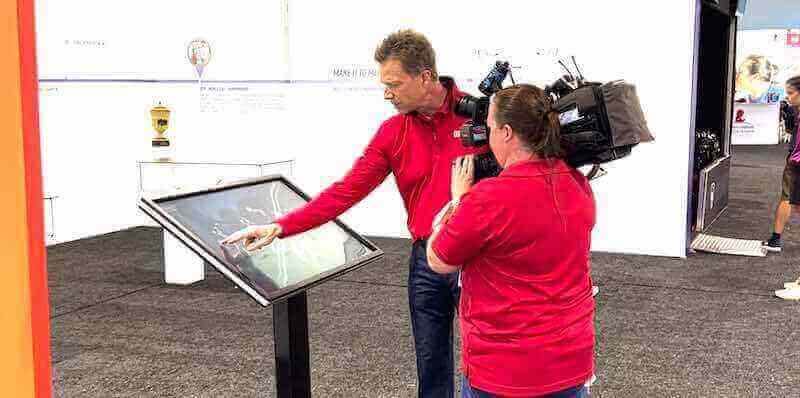
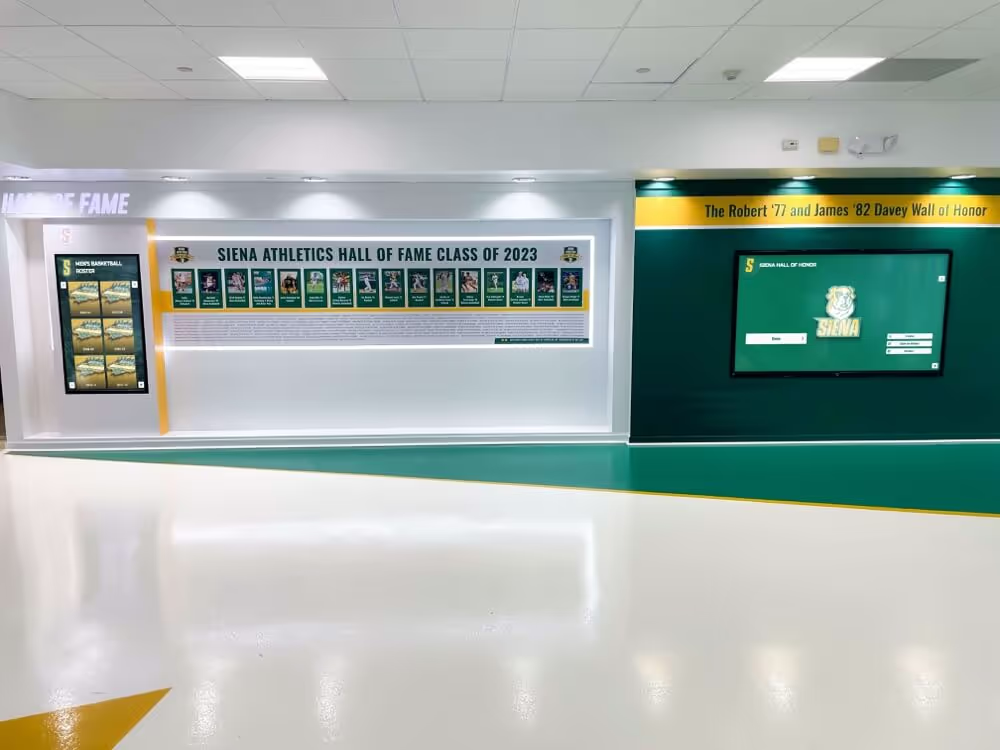
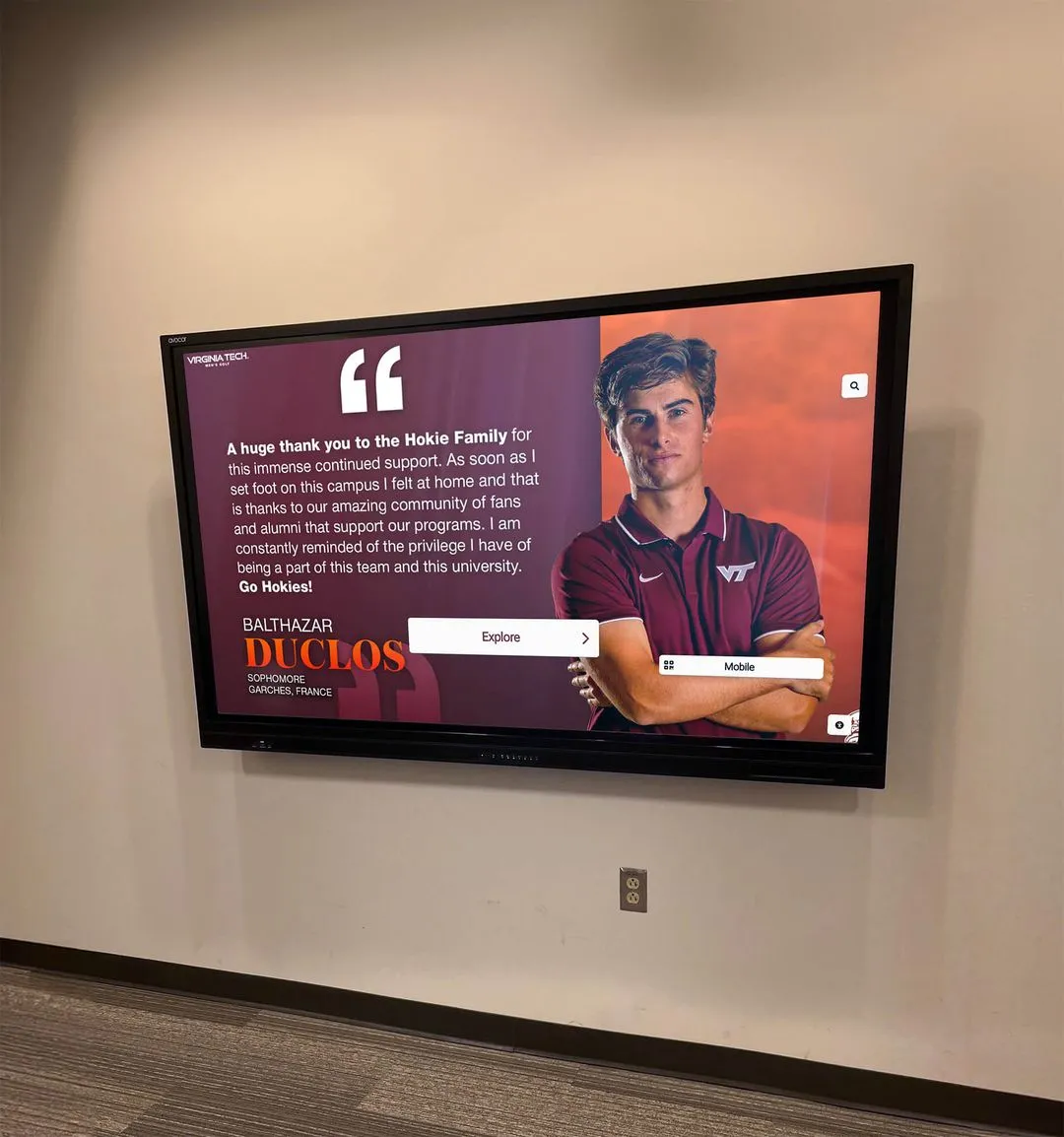
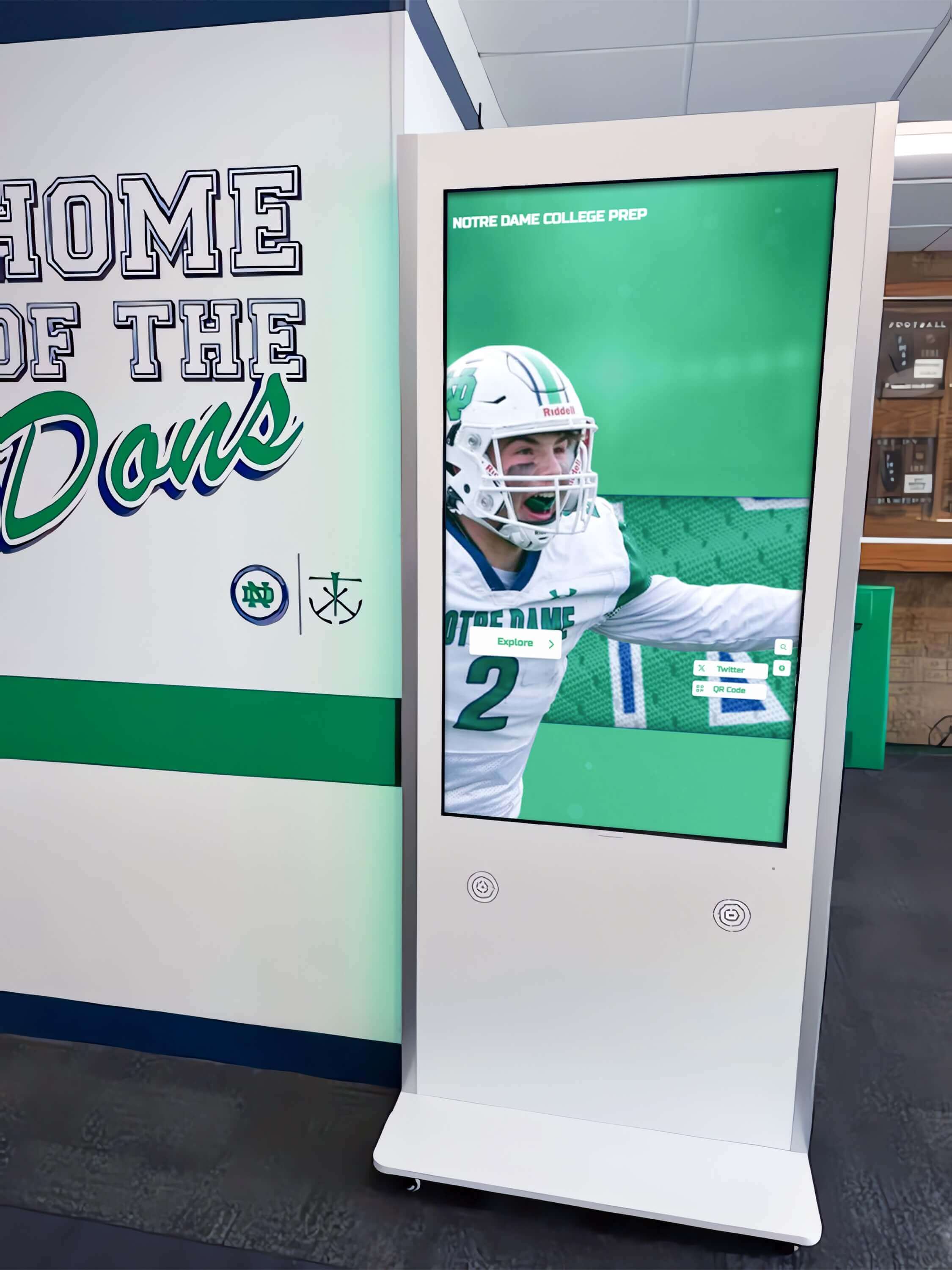
Year-round athletic recognition displays extend sponsor visibility far beyond what a single game-day program can offer
What Is a Sports Program Ad?
A sports program ad is a paid advertisement placed inside a printed or digital game-day program produced for a school, recreational league, or community athletic event. It is distinct from a facility banner, a scoreboard panel, or a named sponsorship—it is event-specific, typically tied to a season or a single event, and its audience is the crowd attending that specific game or competition.
Program ads have served athletic fundraising for decades. A well-designed game-day program template helps schools organize roster information, schedules, and sponsor acknowledgment in a single document that represents the program’s identity to the home crowd, visiting teams, and community members in attendance.
The challenge is that most program ads stop there. When the game ends, the recognition ends. Schools that understand this limitation and build systems to extend it are the ones that retain sponsors at higher rates.
Sports Program Ad Examples by Format
Full-Page Back Cover
The premium placement in any sports program is the back cover. It faces outward when the program is folded and closed, making it the most passively visible position. A full-page back cover works best for a title or presenting sponsor—the business that has the largest investment and should receive the most prominent treatment.
What to include:
- Large-format logo (center or upper-center position)
- Company tagline in prominent secondary typography
- “Official [Sport] Sponsor of [School Name]” attribution line
- Website URL and one additional contact method (phone, address, or social handle)
- One sentence connecting the business to the school community (“Serving [Town Name] families for over 20 years”)
The back cover should feel like a finished advertisement, not a logo drop. Sponsors who receive this placement have often invested at the highest tier of a school’s sponsorship package, and the design should reflect that.
Full-Page Interior
A full-page interior ad carries slightly less passive visibility than the back cover but allows more design flexibility. This is a good fit for sponsors who want to tell a story—an extended tagline, a brief service description, or a community message.
What to include:
- Logo at the top (sponsors should not have to search for their own name)
- Service description or mission statement in two to three short lines
- Year the business began supporting the school (“Proud Wildcat Sponsor Since 2014”)
- Contact information formatted for mobile: a phone number people can call from their seat, a website URL, and a QR code if the print vendor supports it
Full-page interior ads that include a QR code give schools something to report at renewal time: scan data. Even a rough scan count during a tournament weekend is more tangible than “we put your logo in the program.”
Half-Page Ad
The half-page format is the most common sports program ad at the high school level because it balances cost and visibility. Sponsors at a mid-tier investment level typically receive this placement, often alongside another half-page ad on the same spread.
What to include:
- Logo prominently sized for the reduced format (half-page logos must be large enough to read across a bleacher row)
- Short tagline or category identifier (“Your Local Plumbing & HVAC Experts”)
- Single contact method (website URL or phone number—not both if space is limited)
- Optional: sponsor’s years of support in small type below the logo
The biggest mistake in half-page sports program ads is trying to include too much. When a smaller format is compressed with six lines of contact information, the logo disappears and the message blurs. Choose the single most important action you want a reader to take and make that the focus.
Quarter-Page and Business-Card Ads
Entry-level program ad spots typically run quarter-page or business-card size. These are appropriate for small local businesses at a community-supporter tier and for organizations that want acknowledgment without a large print budget.
What to include:
- Logo or business name (large, bold, legible at small size)
- One-line category tag (“Family Dentistry”)
- One contact method, preferably a website or phone number
At this size, design is everything. A quarter-page ad that is 40% white space with a bold logo and a single phone number outperforms a quarter-page ad crowded with contact details, social handles, a tagline, and a photo. Work with sponsors to simplify their message before submitting to the printer.
Team-Page Sponsor Recognition
Some schools offer a hybrid format: a dedicated page for each sport featuring the team roster, coaching staff, and a single team sponsor. This format creates an organic association between the business and a specific program—“Sponsored by [Business Name]” appears directly alongside the names of the athletes that sponsor is supporting.
Team-page recognition works especially well when the sponsor has a natural connection to the sport (a physical therapy clinic sponsoring the cross country team, an automotive shop sponsoring the drivers’ ed and auto shop booster program) or when the sponsor is a family directly represented on the roster.
What to Include in Every Sports Program Ad
Regardless of format, there are five elements that every sports program ad should contain.
1. The sponsor’s name in readable type This sounds obvious, but program ads frequently fail because the logo is small, low-resolution, or reproduced at a color that disappears against the program’s background. Require sponsors to submit vector artwork (EPS, SVG, or high-resolution PNG at minimum 300 dpi) and test it against your program’s background before committing to a print run.
2. Tier or recognition level Including the sponsorship tier (“Gold Sponsor,” “Presenting Sponsor,” “Community Supporter”) in small type below the logo gives context to the reader and incentivizes sponsors at lower tiers to consider upgrading. It also makes it clear to families which businesses are making the most significant investments in the program.
3. A connection to the school The phrase “Proud Supporter of [School Name] Athletics” is elementary, but it matters. Without it, a program ad reads as generic advertising rather than community partnership. The more specific the connection—“Supporting Panthers Wrestling Since 2011”—the more meaningful it feels to the audience.
4. One primary contact method The most useful contact method for a local business is whatever is easiest for a parent to act on during the event: a phone number they can call from the stands, a website URL they can type on their phone, or a QR code they can scan immediately. Pick one and make it prominent.
5. A brief human touch One sentence that gives the sponsor a human presence in the program—“Owned and operated by the Torres family, supporters of Eagle athletics for seven seasons”—is worth more in community trust than three lines of service bullets. Local businesses often have genuine relationships with the school community; program ads are an opportunity to surface that.
Sports Program Ad Examples by Business Type
Local Restaurants and Food Businesses
Food sponsors often connect naturally to athletic events because families are thinking about the post-game meal. A full-page interior ad from a local restaurant works well with:
- Menu highlight image (if the printer supports photography—confirm before promising)
- “Show this ad for 10% off after home games” offers, which create measurable ROI
- Hours and address formatted as a simple map reference (“On Main Street, two blocks from the gymnasium”)
Ideas for football awards and how recognition connects community sponsors to specific team achievements illustrate how sponsor acknowledgment integrates naturally with athletic milestones—the same principle applies to program ads.
Medical and Dental Practices
Healthcare providers frequently sponsor school athletics because the audience includes exactly the families they serve. Dental offices, physical therapy clinics, and pediatric practices do well with:
- Professional headshot of the physician or owner (humanizes the business)
- “Welcome [School Name] athletes and families” welcome language
- A short line about accepted insurance or payment plans (a genuine question families have)
Financial Services and Insurance
Banks, credit unions, and insurance agencies often want to appear community-oriented without producing overtly sales-forward advertising. A strong sports program ad for a financial institution focuses on:
- “Invested in our community” messaging (aligned with sponsor tier)
- Logo alongside the school’s mascot in a co-branded lockup (request this from the school’s graphic design staff)
- A reference to a financial literacy or scholarship program if the business has one
Home Services and Contractors
HVAC, plumbing, landscaping, and general contracting businesses reach their target market at athletic events because homeowners attend. The most effective program ads for this category are direct:
- Clear service category (“HVAC Service & Installation”)
- Emergency contact number in bold type
- “Proud to keep [School Name] running—ask us about your home too” bridging language
Real Estate Professionals
Real estate agents and brokers who sponsor athletic programs are often selling the community itself. Their program ads perform best with:
- Professional photo alongside a simple tagline (“Your Neighbors in Real Estate”)
- Recent sale price or market update (a single stat, current as of the season)
- Phone number and a QR code linking to current listings
The Problem That Every Sports Program Ad Has
A well-designed, well-placed sports program ad can do real work for a sponsor on game night. The problem is that game night ends. Programs get tossed. Season-specific recognition disappears when the season does.
For schools managing athletic sponsorships as a serious revenue stream, this is not a graphic design problem—it is a structural one. If the program ad is the only thing a sponsor receives, they are paying for access to the audience of a single event. The schools that consistently retain sponsors and grow sponsorship revenue are those that build recognition structures that extend beyond the program.
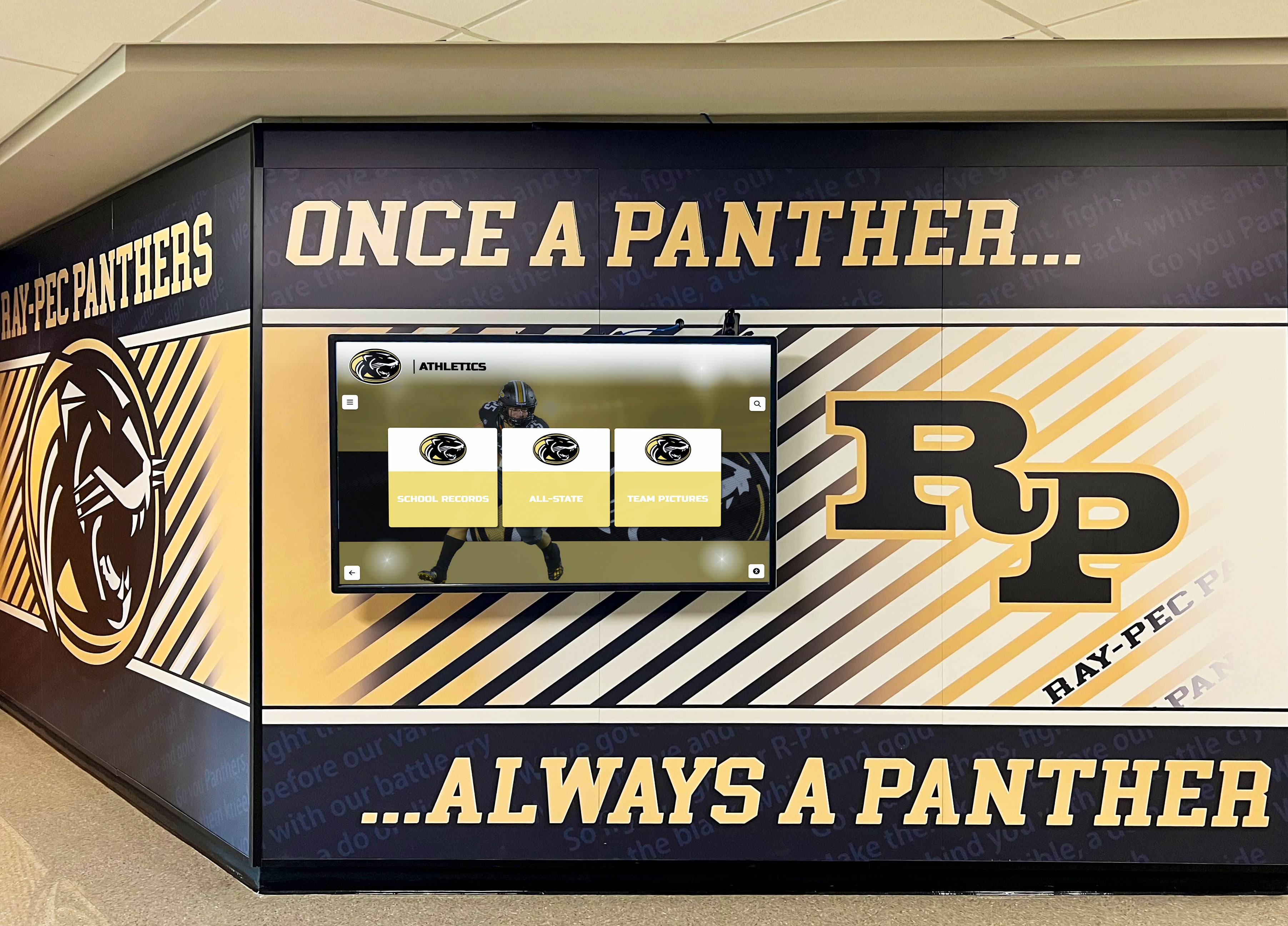
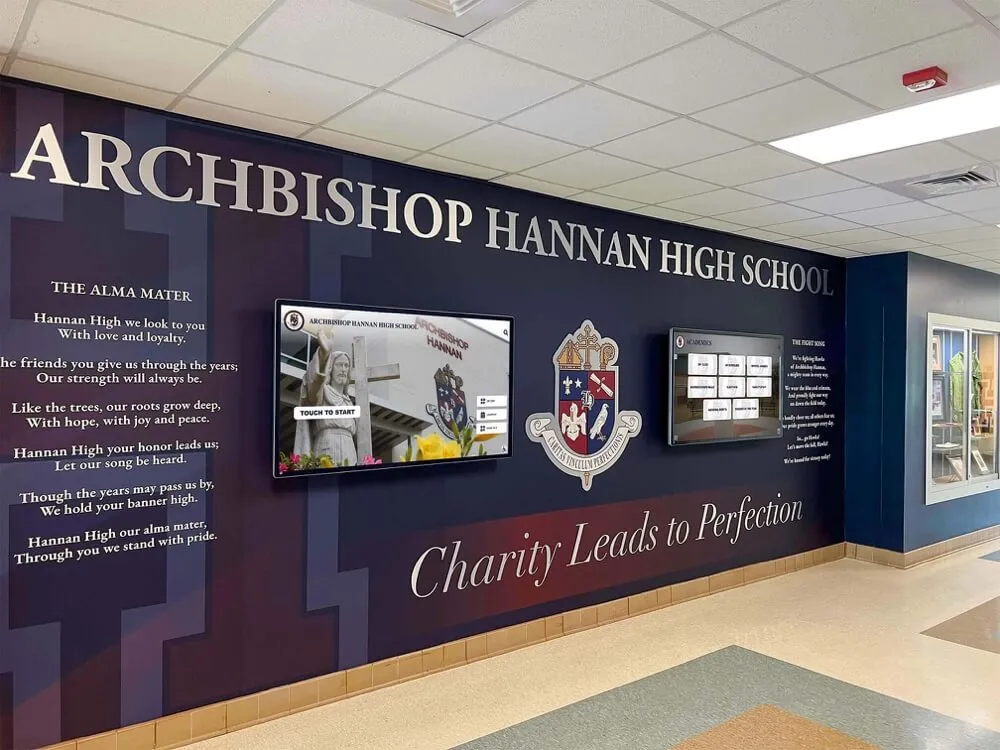
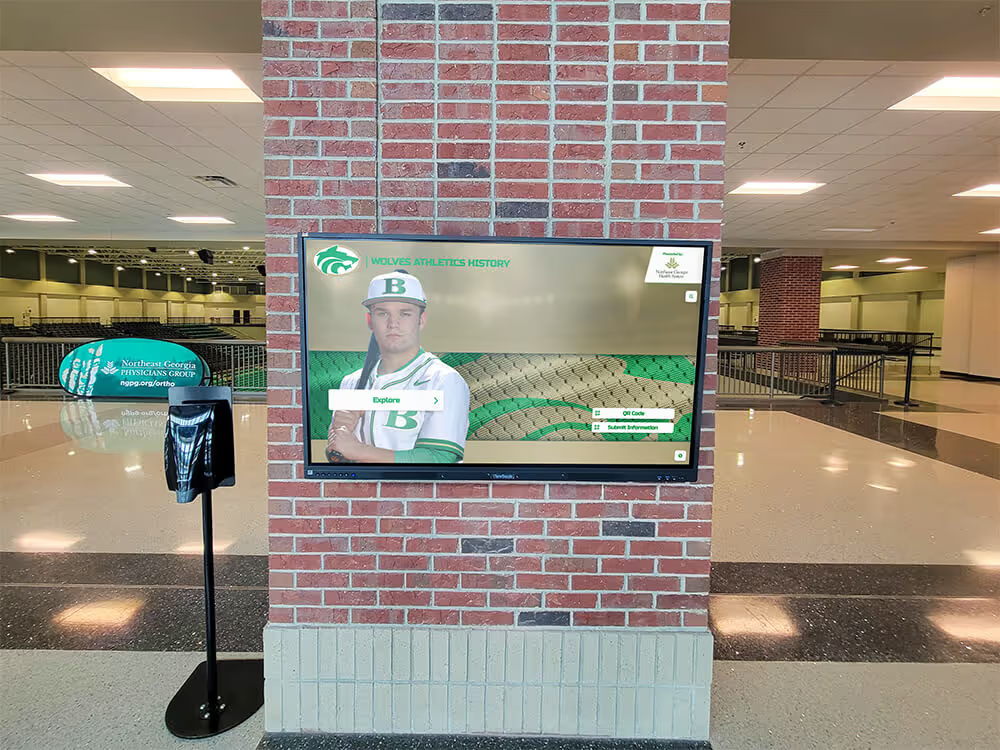
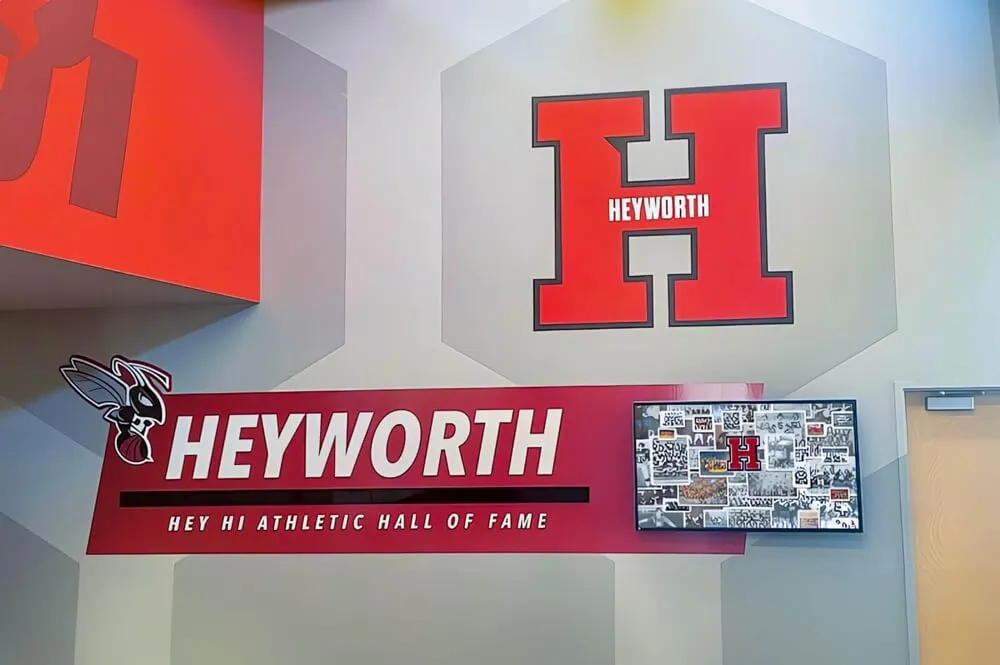
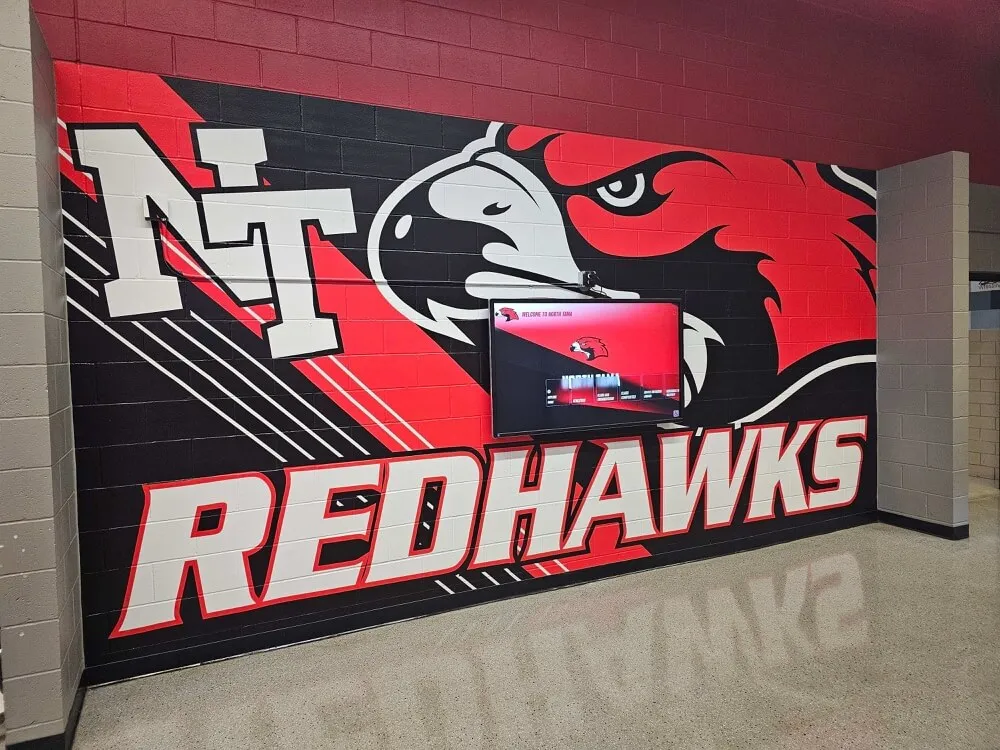
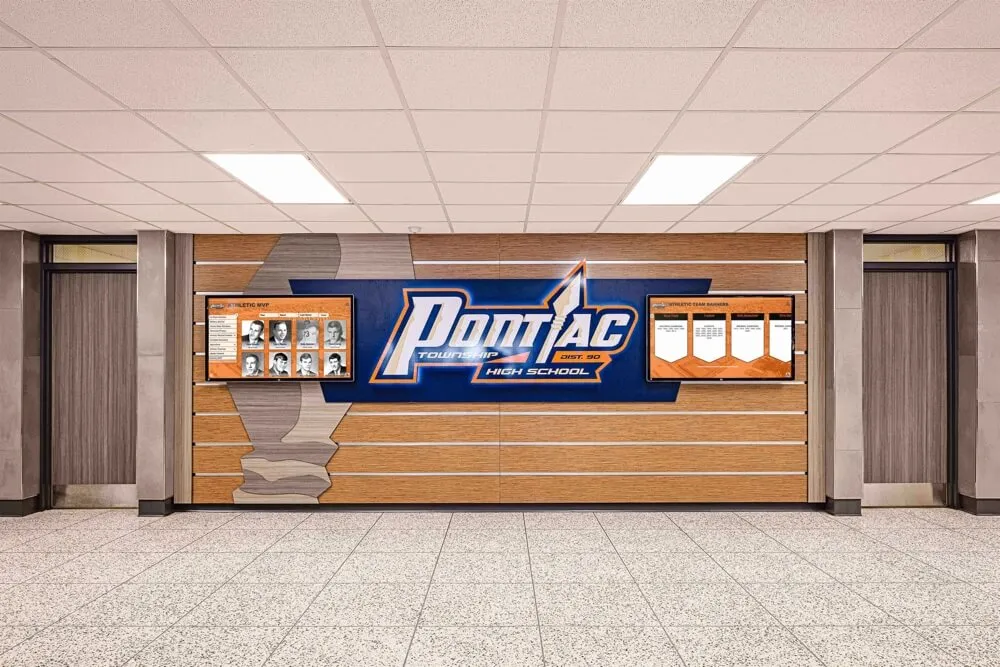
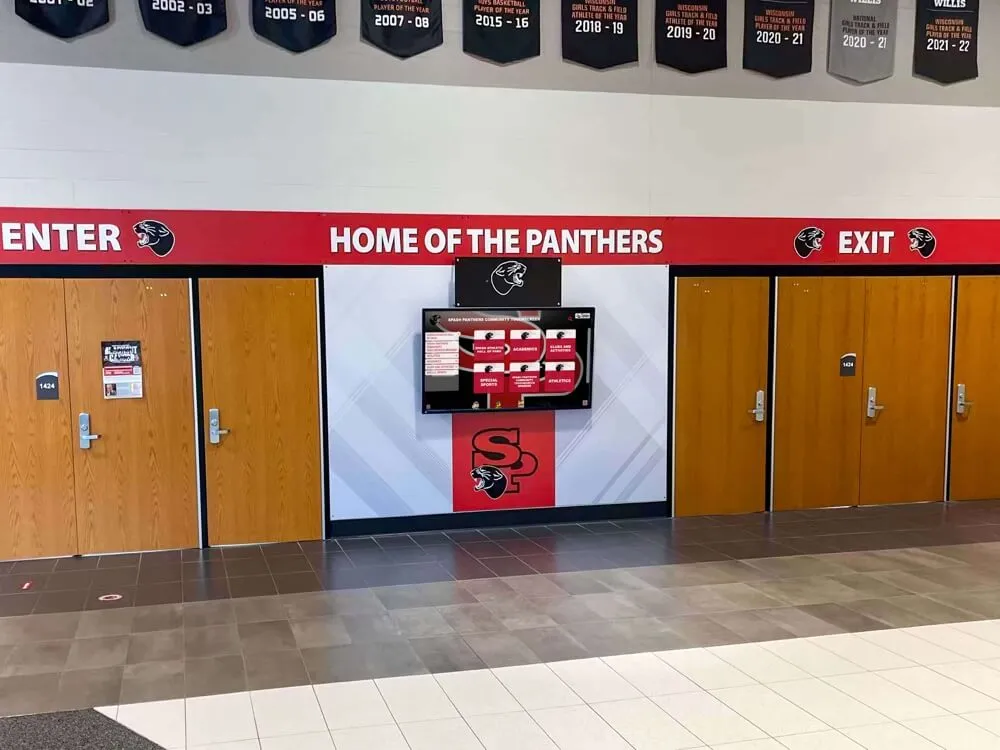
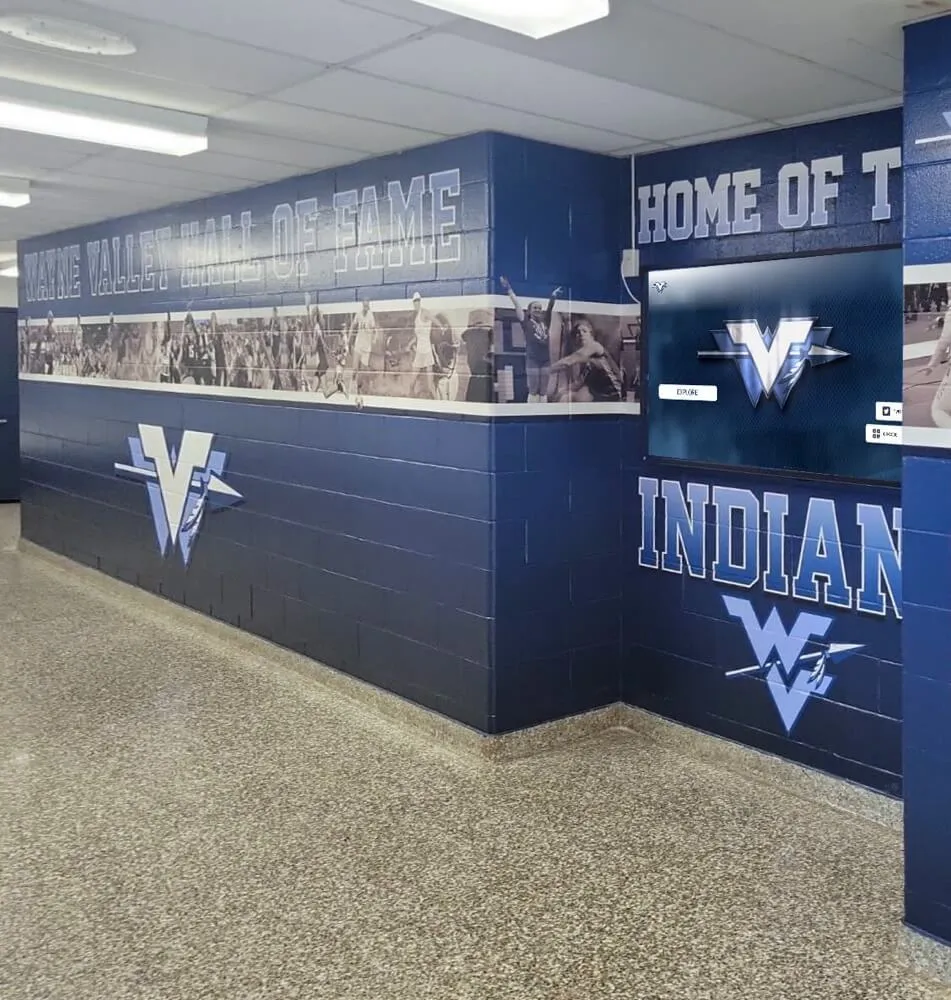
Permanent athletic hallway displays give sponsors visibility every school day, not only during game-night events
How to Extend Sponsor Recognition Beyond the Program
1. Digital Display Rotation in Athletic Hallways
Schools with digital screens in their gymnasium lobbies, athletic hallways, or locker room corridors can rotate sponsor content through the same system that shows athletic records, team histories, and hall of fame content. A sponsor who buys a program ad can receive a digital screen placement as a value-add that extends their recognition to:
- Every student who walks through the hallway on school days
- Families waiting in the lobby during practices
- Visiting teams and officials attending away events hosted at the facility
- Community members who use the gymnasium for non-athletic events
This is not a major technical lift. Most digital display platforms allow remote content uploads, meaning the same logo and tagline from the program ad can be formatted for a screen and uploaded in minutes. The sponsor receives daily impressions that the program ad alone could never deliver.
2. Archived Program Collections
Some schools maintain physical or digital archives of athletic programs going back decades. A sponsor who appears in an archived program is part of the historical record of the school’s athletic identity—a completely different kind of permanence than a season-specific banner.
For schools actively building historical archives, reviewing program archiving practices that preserve athletic history helps establish what a professionally organized collection can look like. Sponsors who participate in this history are often more willing to renew because their investment feels cumulative rather than transactional.
3. Hall of Fame Integration
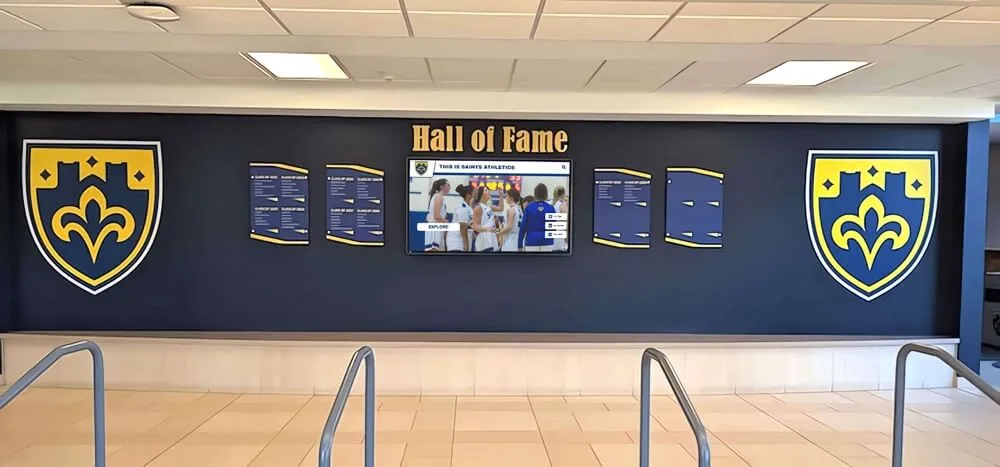
Athletic programs with a hall of fame—whether physical, digital, or both—can reference long-term sponsors in the same environment that honors inducted athletes. A digital hall of fame platform can include a “Community Partners” section that lists businesses by years of support, tier level, and contribution type.
When a sponsor’s logo appears alongside a wall that celebrates 30-year all-time record holders and state championship teams, the association is powerful. The sponsor is not just advertising—they are part of the program’s legacy. Building comprehensive athletic recognition programs that integrate sponsors into the same framework as athletes creates this effect deliberately.
4. Season-End Recognition Events
Athletic banquets and awards nights are natural checkpoints for sponsor acknowledgment that extends what the program ad started. Schools that list program ad sponsors in the awards program, acknowledge them during the ceremony, or seat sponsor representatives at banquet tables create a season-long recognition arc.
Football team award ideas for high school season-end recognition and season-end banquet program structures for track and field both illustrate how recognition events become natural culmination points for sponsor acknowledgment that reinforces the game-day program.
5. Social Media and Website Integration
Sponsor logos from program ads can reappear throughout the season in social media content without additional cost to the school:
- Post-game acknowledgment posts that tag sponsors (“Thanks to [Business Name] for supporting tonight’s game”)
- Midseason “thank you to our sponsors” posts using a branded graphic that incorporates program ad logos
- Season-end sponsor appreciation content shared with the school community
Many local businesses prioritize social media reach over print visibility. When a school offers social amplification as part of a program ad package, the perceived value of the ad increases substantially.
Making the Case for Year-Round Recognition Alongside Program Ads
The schools with the most sustainable sponsor programs offer program ads as one element of a broader recognition package rather than as a standalone product. A recognition package might include:
- A full-page program ad (event-specific visibility)
- A digital display placement in the athletic lobby (daily, year-round impressions)
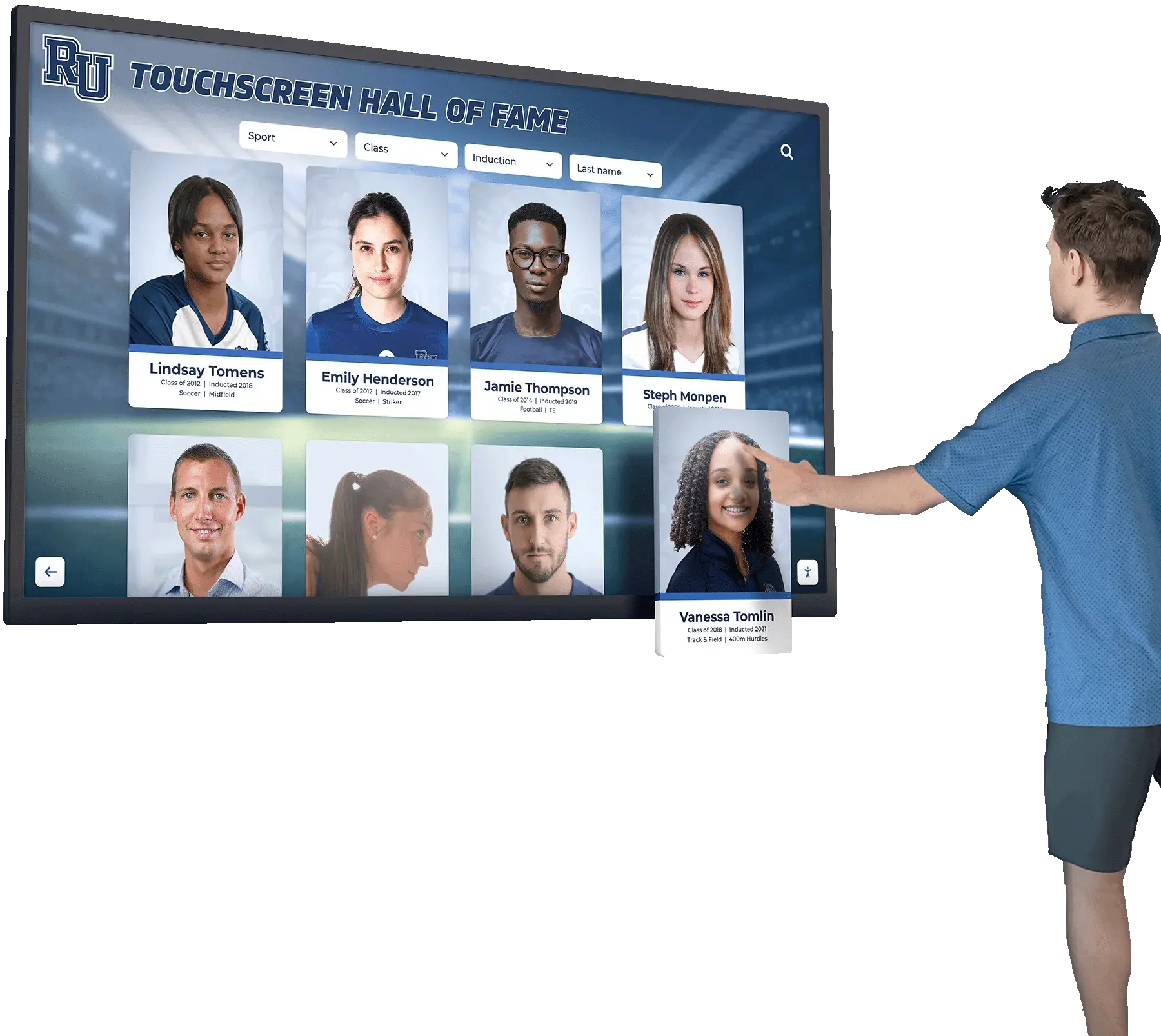
- A sponsor profile on the school’s digital hall of fame or recognition touchscreen (interactive, searchable)
- Name acknowledgment in the athletic newsletter or website (online visibility)
- A dedicated line in the season-end banquet program (ceremonial recognition)
At renewal time, this package is much easier to defend than a single program ad. The sponsor can see their recognition across multiple touchpoints rather than asking whether anyone read their quarter-page ad in the fourth-quarter program.
For schools building this kind of integrated recognition program, reviewing award categories for sports banquets that go beyond MVP and high school sports award categories across thirty dimensions helps identify where sponsor acknowledgment naturally integrates with athlete recognition at specific events.
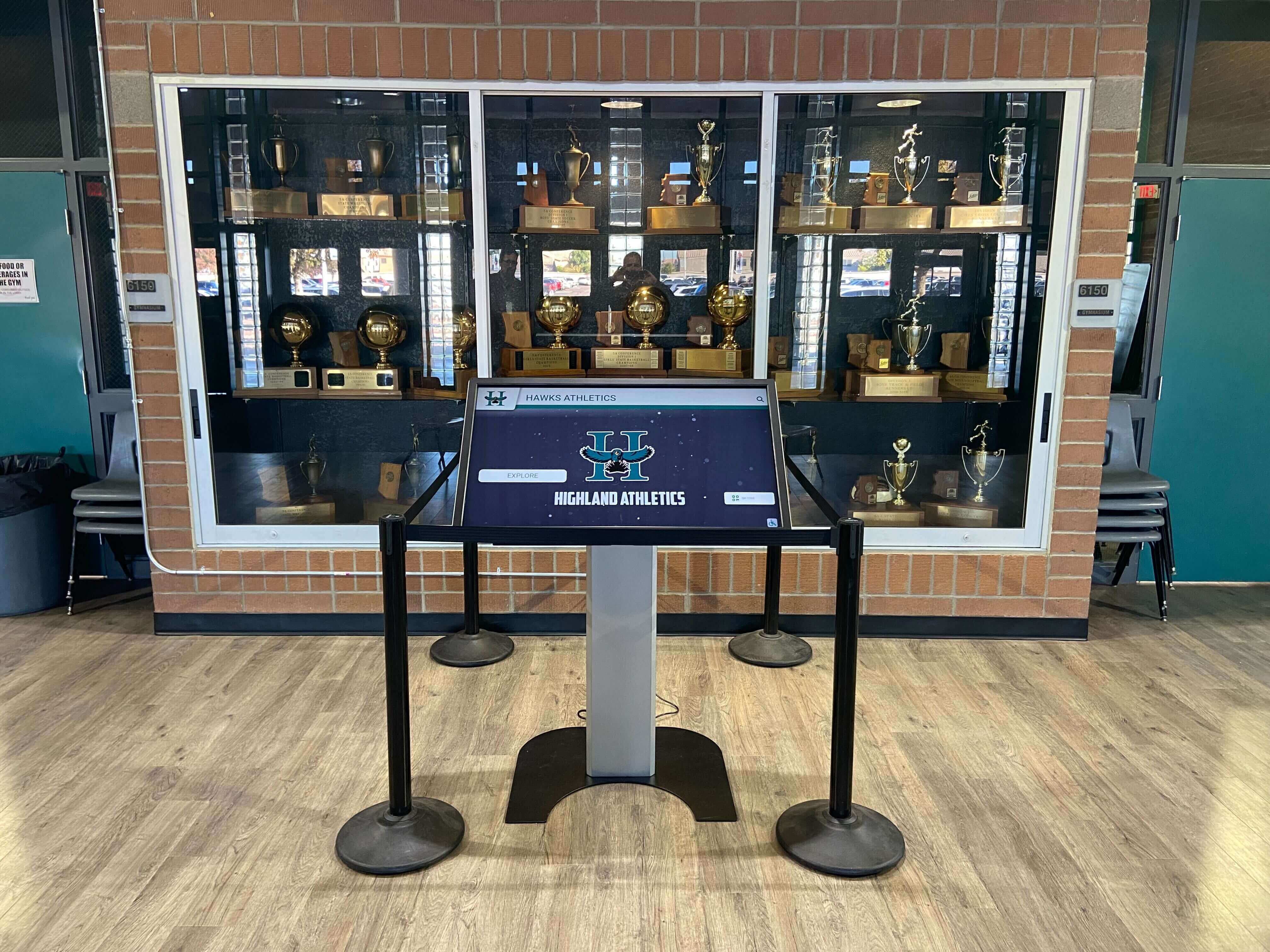
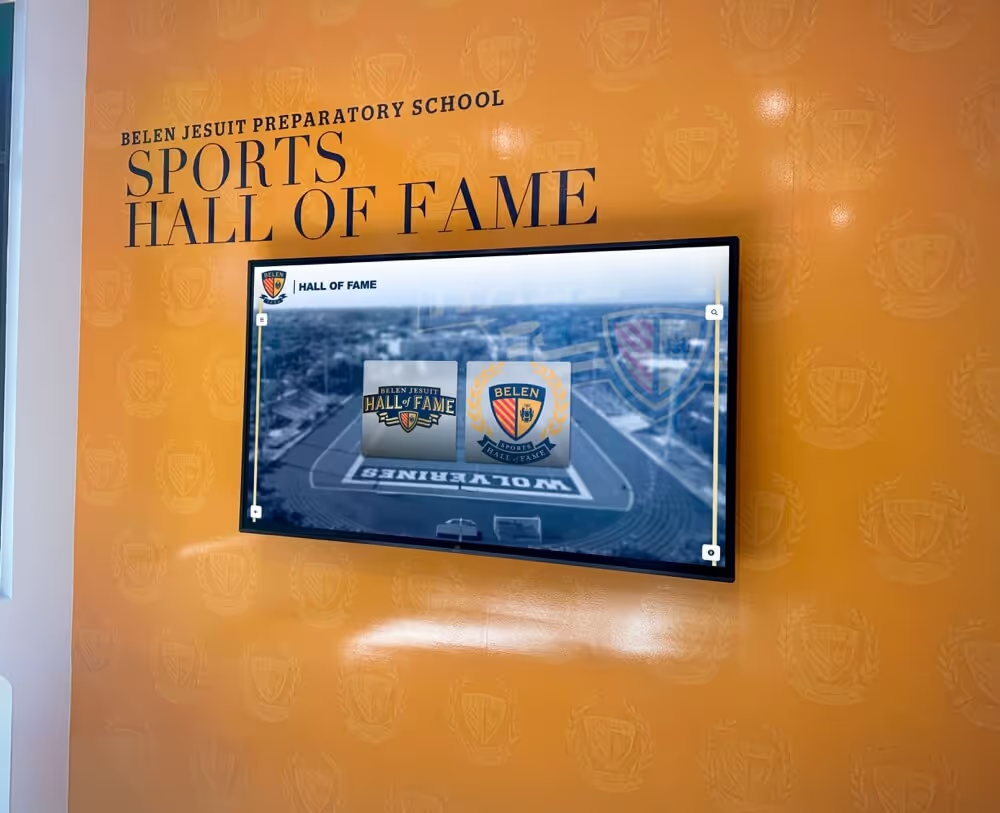
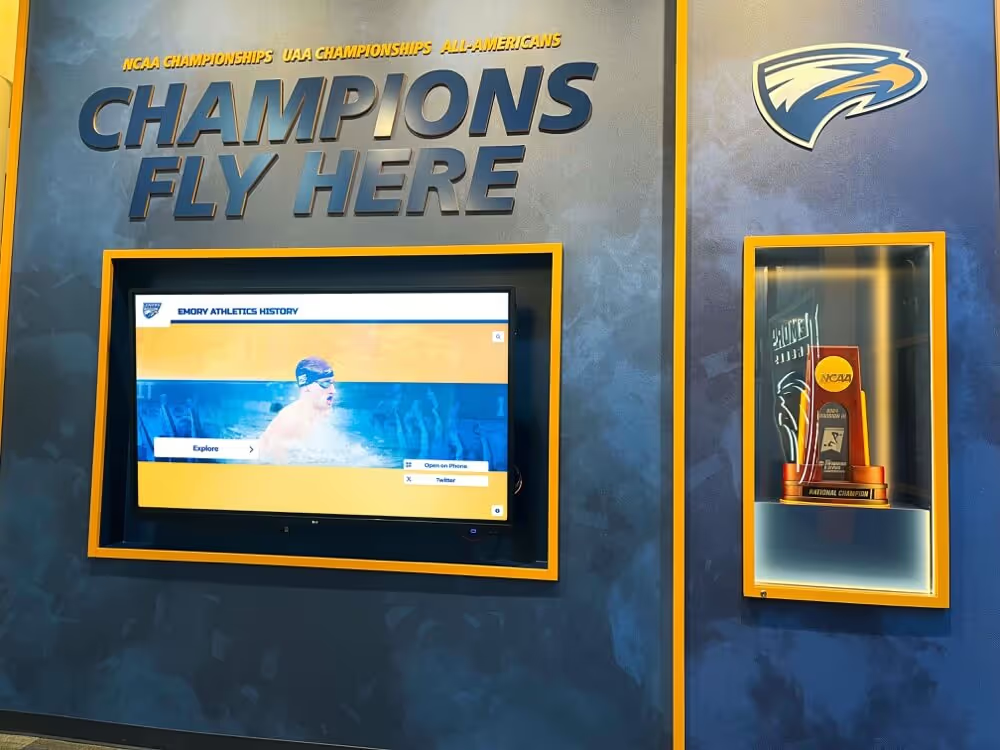
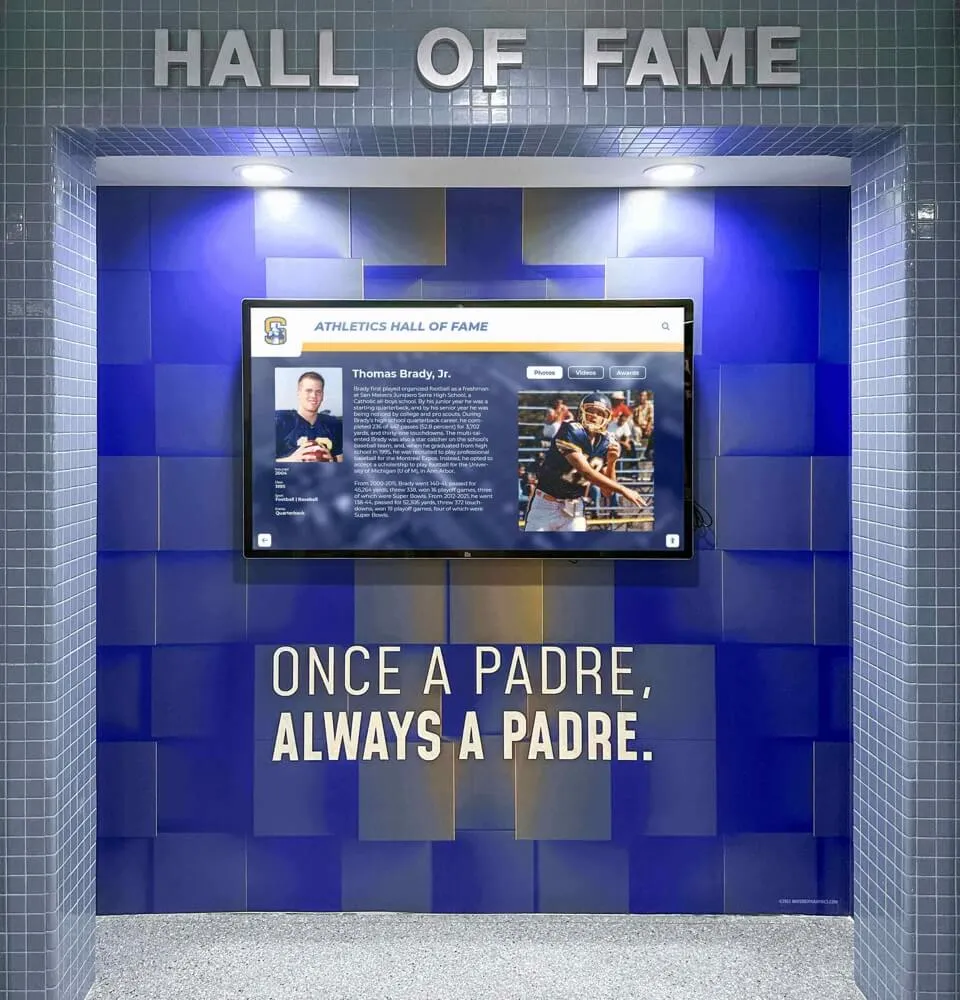
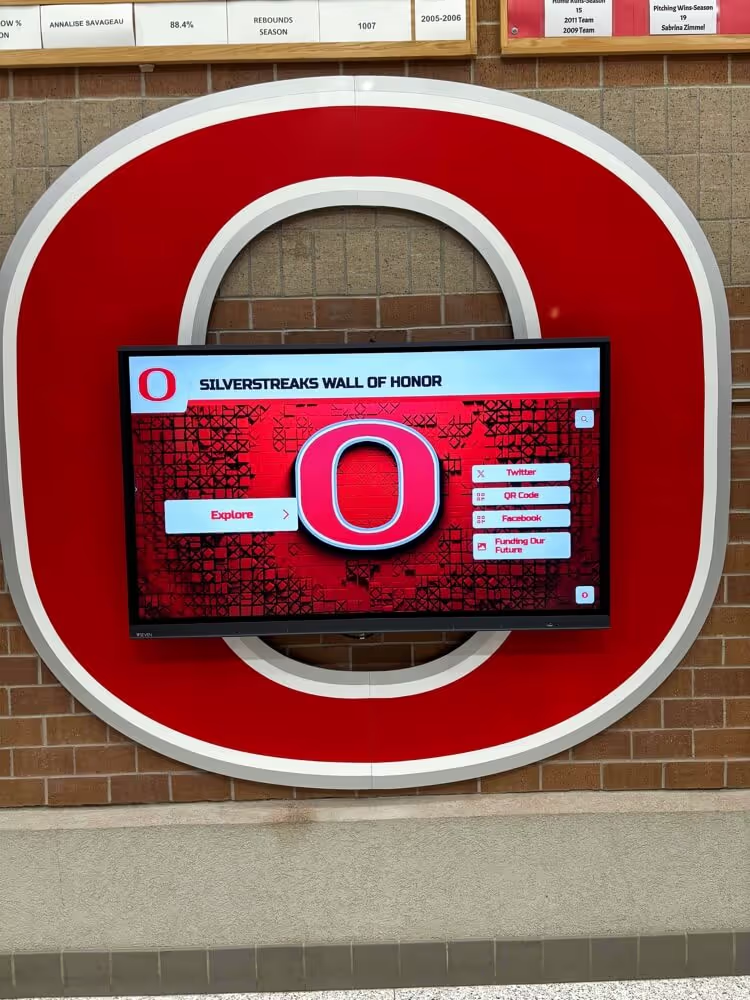
Touchscreen kiosks inside trophy cases let schools offer interactive sponsor profiles alongside athletic history in a single display
Sports Program Ad Examples: What Schools Are Getting Right
Tiered Ad Packages With Explicit Position Guarantees
The strongest sports program ad programs guarantee specific positions at each tier and communicate those guarantees clearly in the sponsorship agreement. A school that can tell a sponsor “your ad will appear on the back cover, and only one ad will occupy that position all season” is selling clarity. Unclear packages lead to sponsor disappointment when a promised placement is not where they expected.
Program Ads Paired with Digital Highlights
Some schools have begun pairing their printed programs with a digital version that is emailed to season ticket holders or posted to the school’s athletics website. A QR code inside the printed program links to the digital version, extending the program’s life beyond the single-game event. Sponsors in the digital version receive impressions long after the physical program was recycled.
Community Partner Features That Go Beyond the Ad
A few schools have replaced traditional program ad slots with “community partner features”—editorial-style blurbs written by the school about each sponsor that appear alongside the sponsor’s logo. These features, which require sign-off from the sponsor but are written in the school’s voice, read as endorsements rather than advertisements. The effect on sponsor retention is significant.
Game-day spirit identity and school recognition strategies explore how game-day environments can deepen community connection—the same principle applies when program advertising is framed as community partnership rather than transactional ad placement.
Golf and Multi-Sport Programs with Consistent Sponsor Presence
Multi-sport programs that offer sponsor presence across the entire athletic calendar—football program ads in the fall, basketball program ads in the winter, golf program ads in the spring—create a year-round touchpoint rhythm that individual event ads cannot achieve. Golf program recognition ideas for athletic awards illustrate how sponsor acknowledgment integrates naturally into golf-specific event programming, and the same approach scales across sports.
Frequently Asked Questions About Sports Program Ads
What size ad should a small business buy in a school athletic program?
For a small local business on a limited budget, a quarter-page or half-page ad at a prominent position (inside front cover, facing the roster page, or back inside cover) delivers better value than a full-page interior placement buried in the middle of the program. Position matters more than size. If the budget allows only one element, negotiate for a high-traffic page rather than a larger size on a low-traffic interior spread.
How much should a school charge for a sports program ad?
Pricing varies significantly by school size, program reputation, and market. A general framework: back cover should command two to three times the price of a standard full-page interior, which should command one and a half to two times the price of a half-page. Entry-level business-card or quarter-page ads should be priced accessibly enough that a local sole proprietor can participate. Schools that attach digital display placements to higher-tier program packages justify premium pricing with extended reach.
Can a sports program ad include a coupon or offer?
Yes, and it is often the most effective element of a program ad because it creates a measurable connection between the ad and business activity. Clear terms and a short redemption window (“Present this program at checkout before December 31”) make the offer practical for both the business and the school families who use it.
How should schools handle program ads for sponsors who do not renew?
Remove them from the next season’s program immediately. Outdated sponsor recognition—whether in a printed program, on a vinyl banner, or on a digital display—signals to active sponsors that the school does not maintain its recognition commitments carefully. A sponsor who sees their predecessor’s logo still hanging in the gym while they are being solicited for renewal will notice.
What is the best way to attract new sports program advertisers?
The single most effective tool is a sample packet from a recent season: the actual program with sponsor ads visible, photos of the event where the program was distributed, and an approximate attendance count. Local business owners respond to concrete evidence of audience reach far more than abstract pitch decks. Pair the sample with a straightforward price sheet showing available formats, positions, and any digital add-ons.
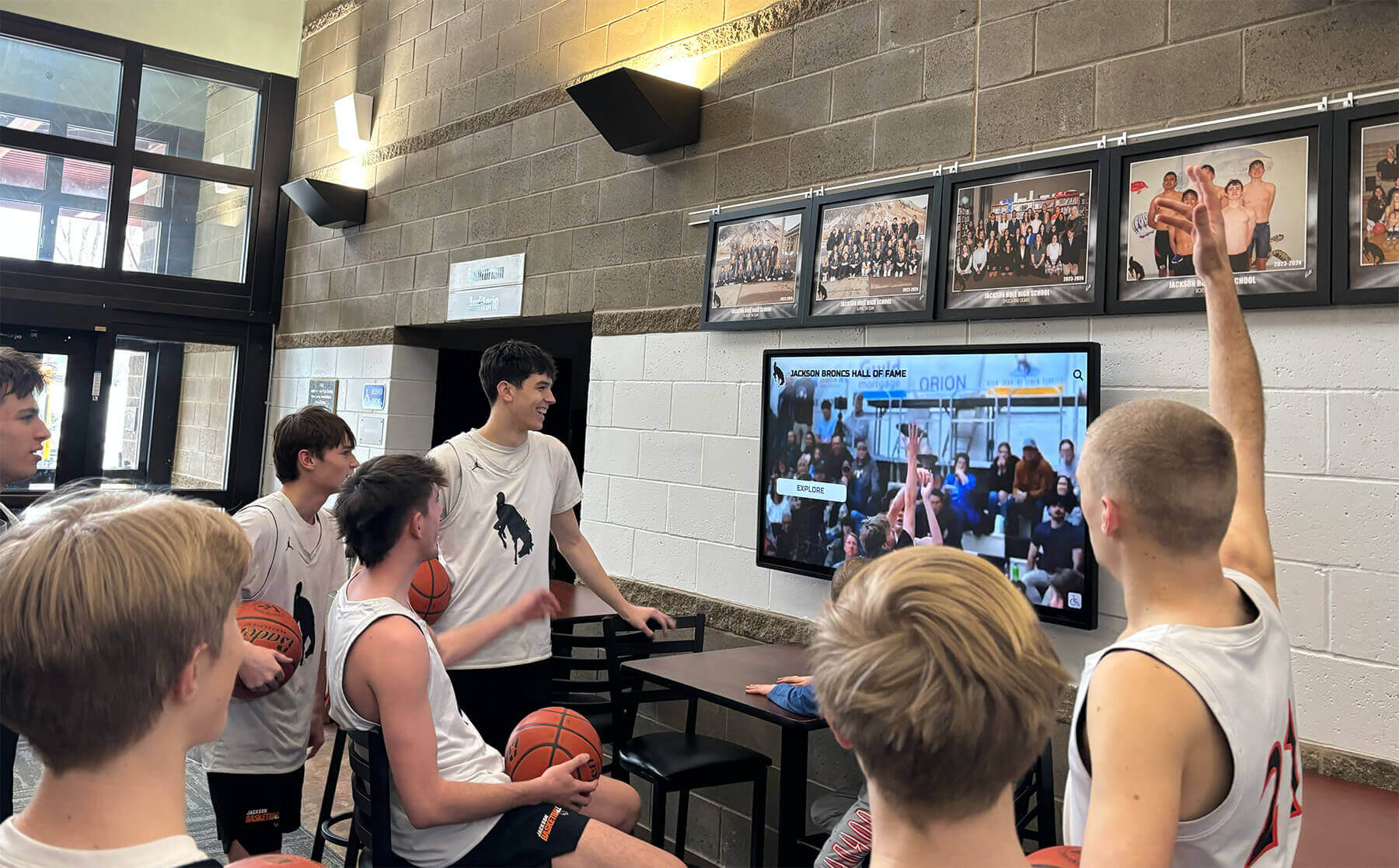
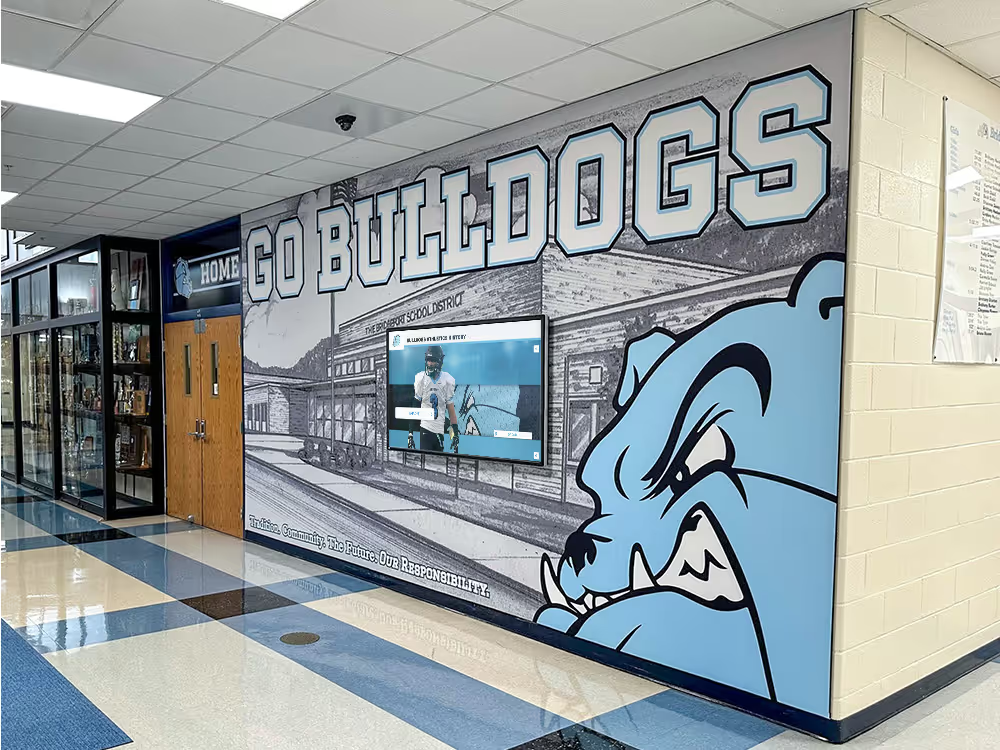
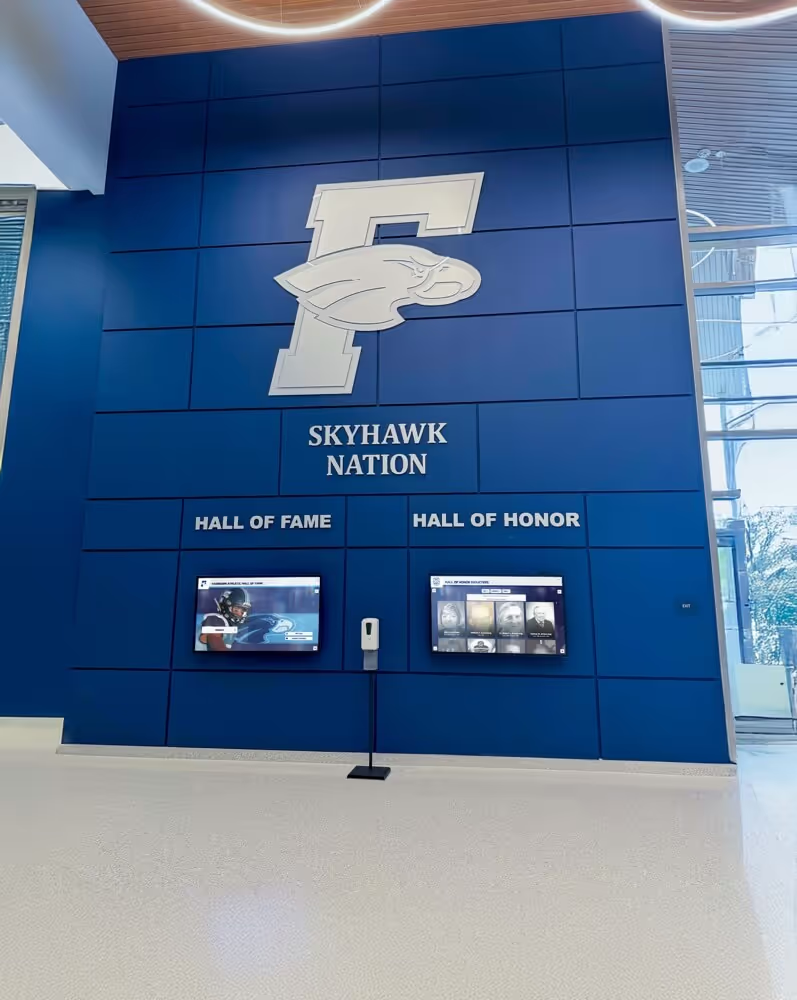
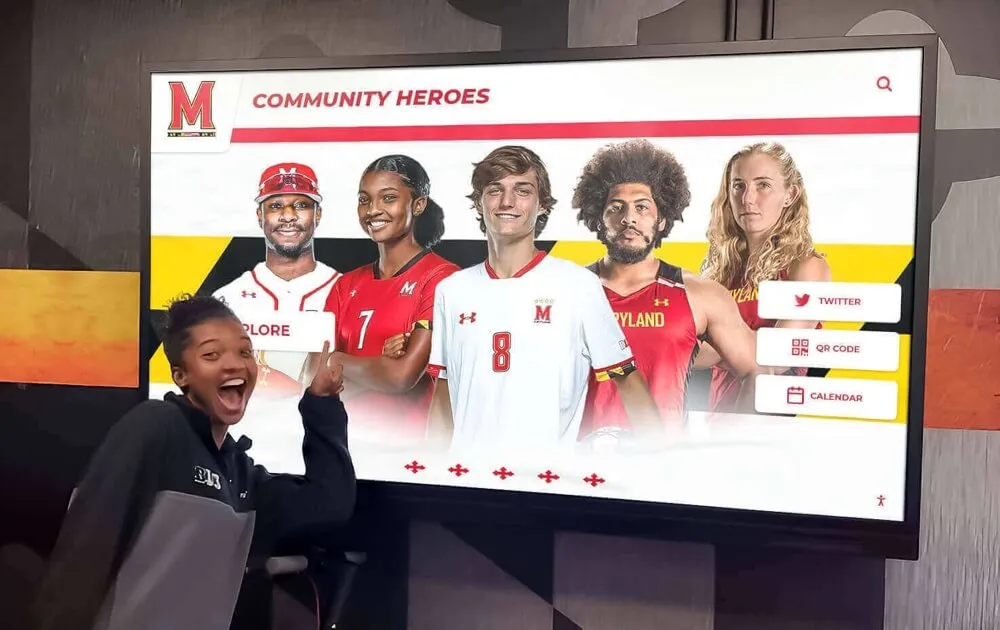
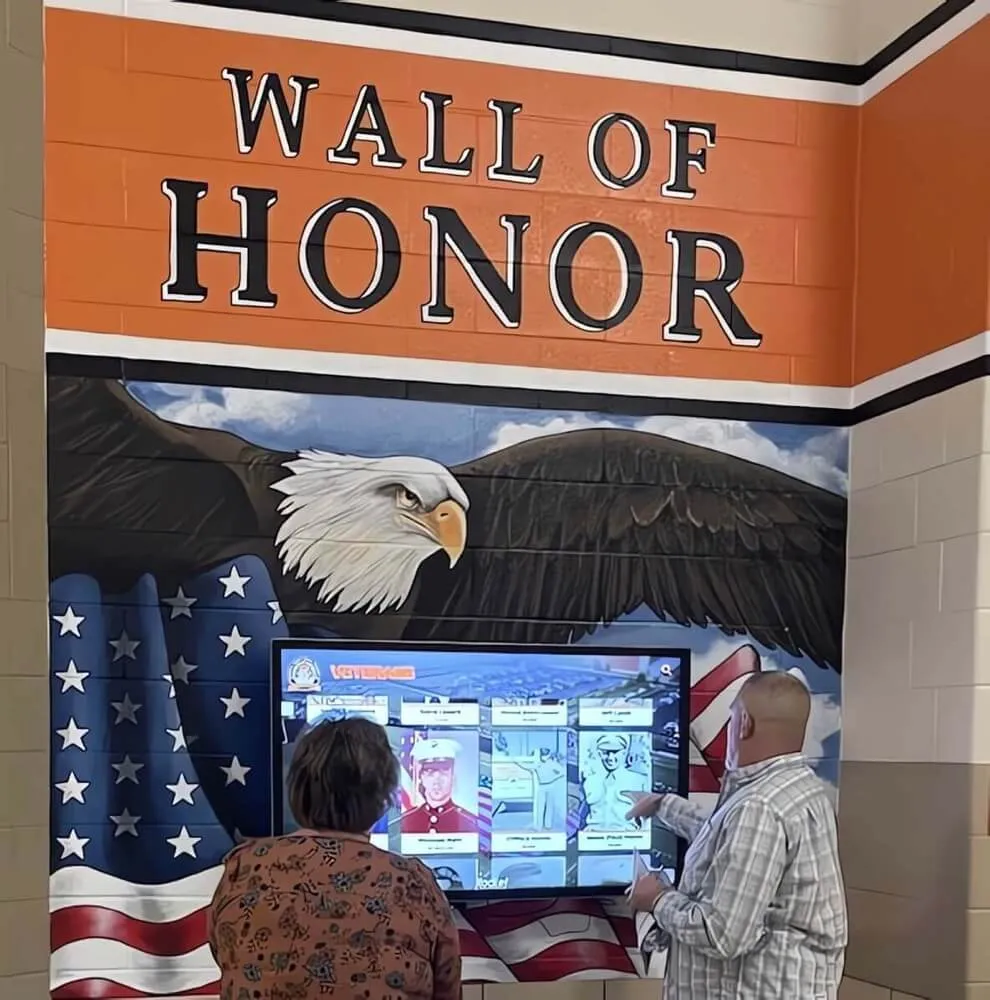
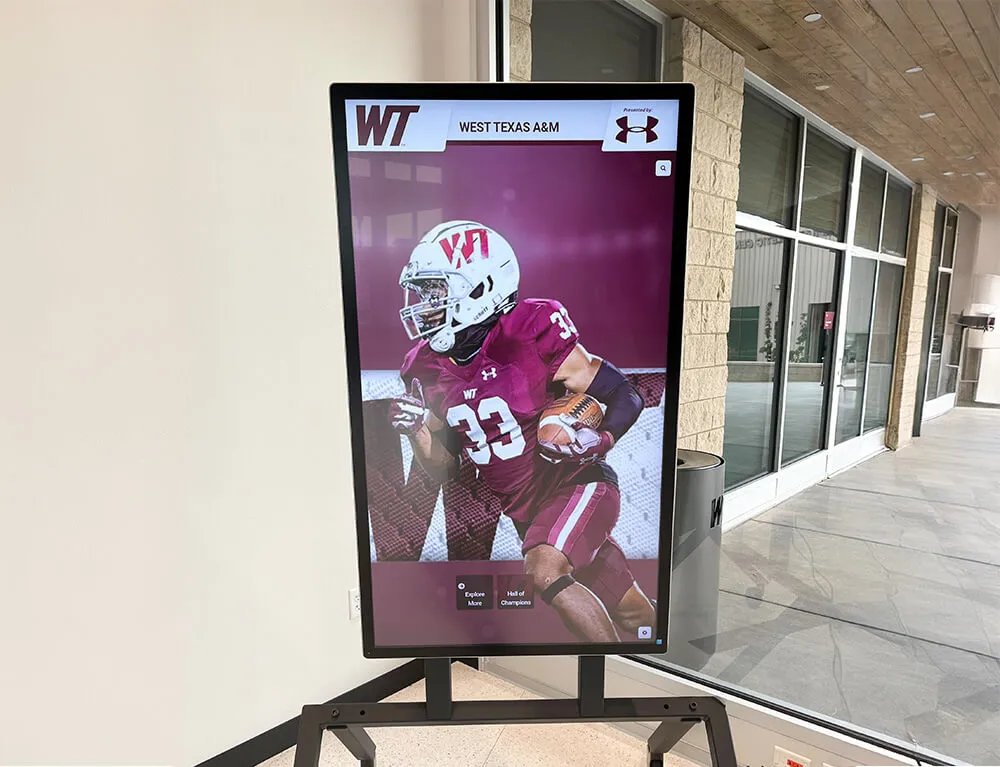
Digital lobby displays engage students and families throughout the year, far beyond game-night attendance
From Program Ad to Permanent Recognition
A sports program ad is a starting point, not a destination. The businesses that support school athletics deserve recognition that is durable, visible, and proportional to the relationships they have built with the school community—relationships that, in many cases, span more than a decade.
The schools that make that recognition happen are building recognition environments: athletic hallways with digital displays, lobby touchscreens that include sponsor profiles alongside athletic records, season-end award ceremonies that acknowledge community partners by name. Program ads feed into that environment, but they do not define it.
Fantasy league and community award ideas that build year-round recognition culture and season-end athletic recognition frameworks both show that recognition is most effective when it is consistent across a calendar, not isolated to a single event.
The program ad is the invitation. The year-round recognition ecosystem is what keeps sponsors coming back.
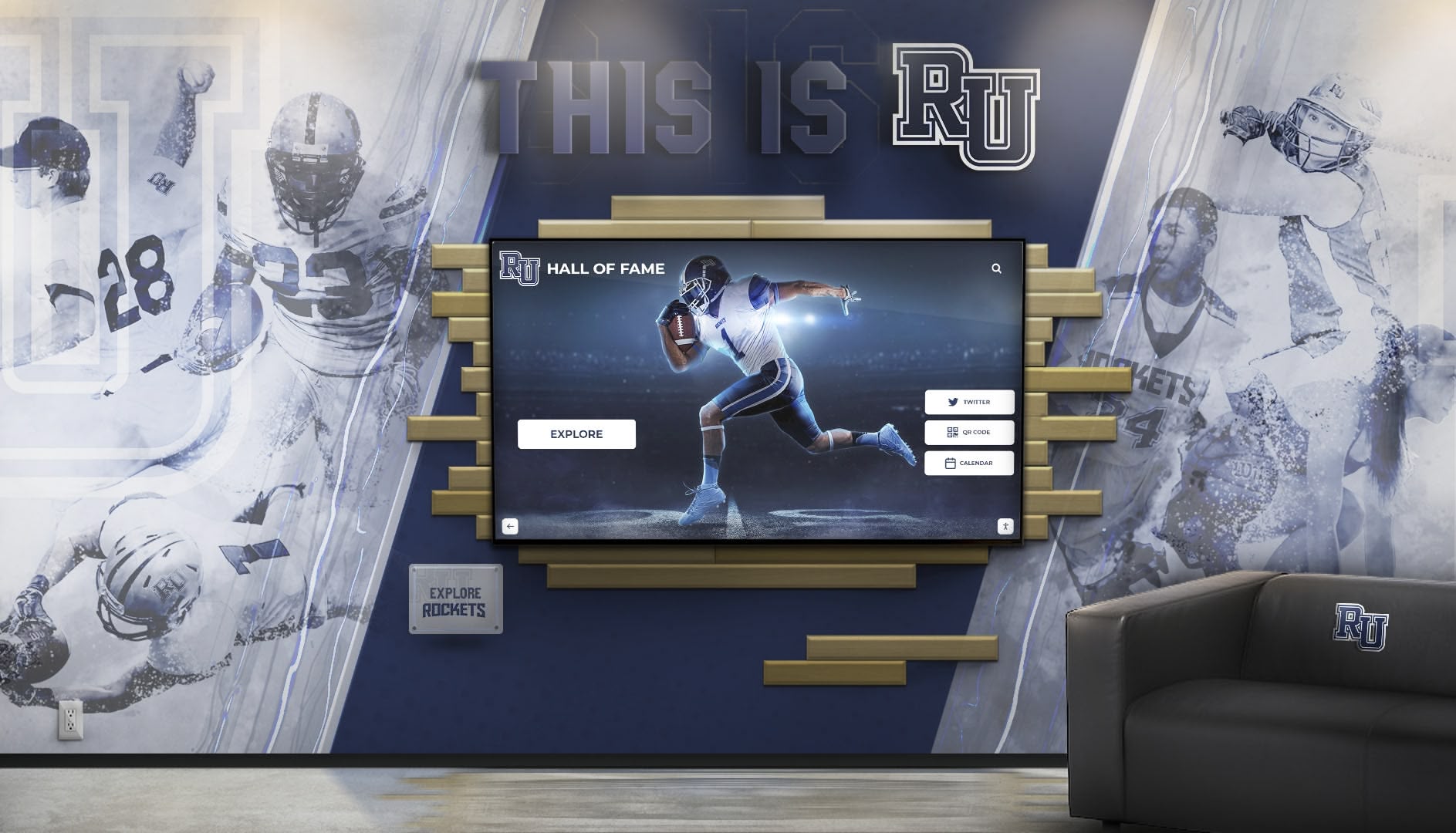
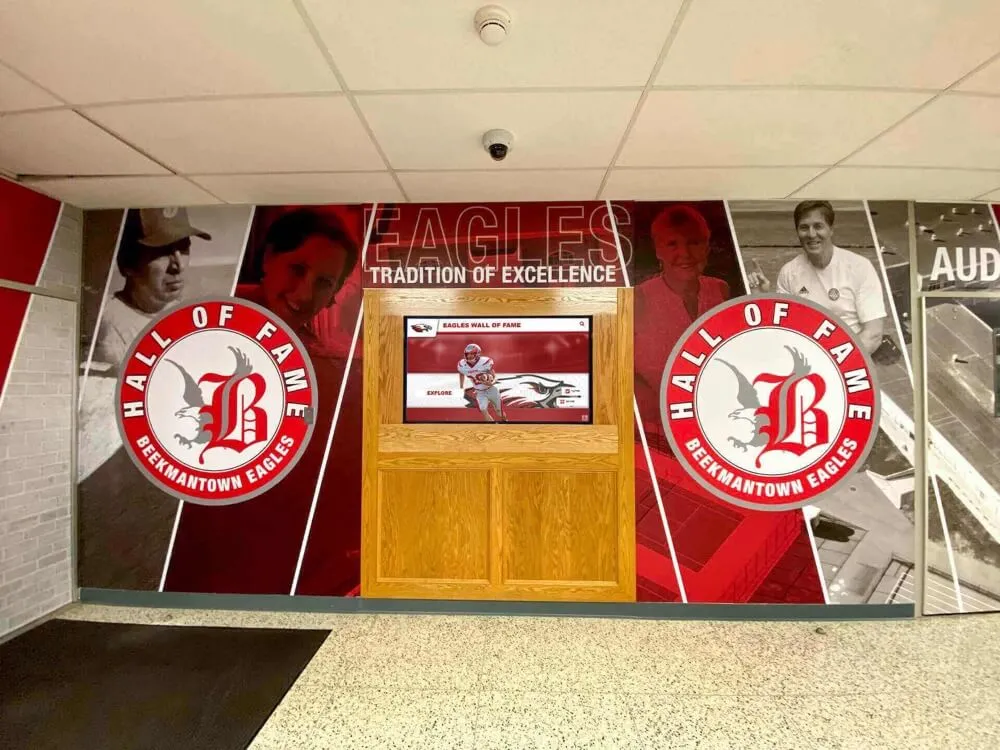
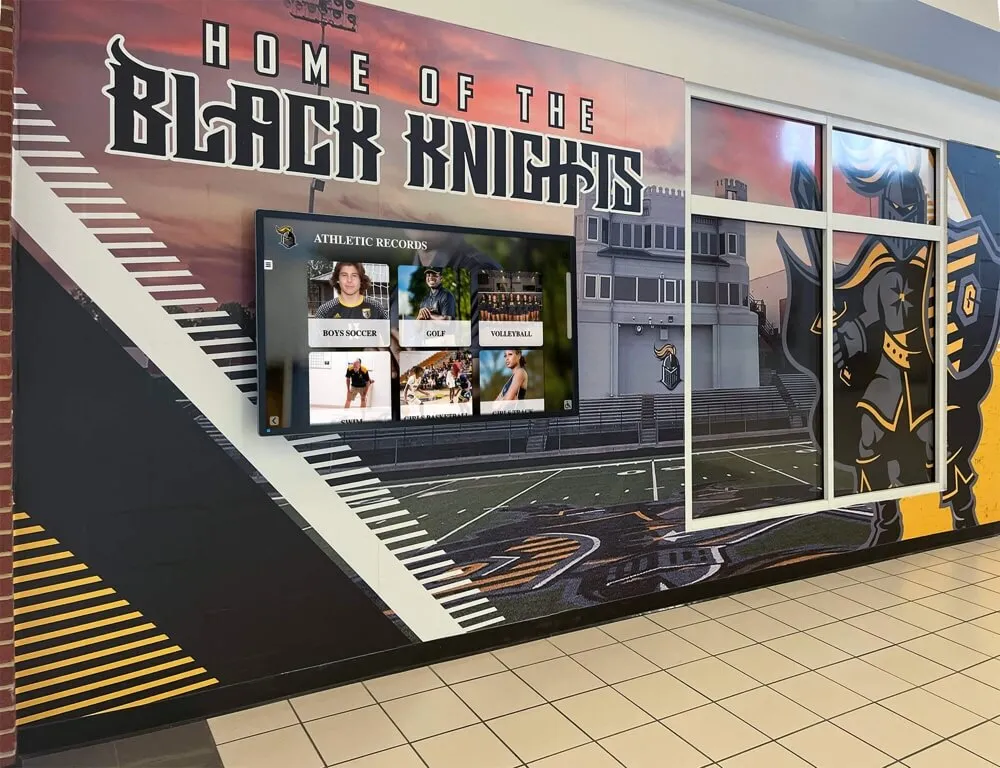
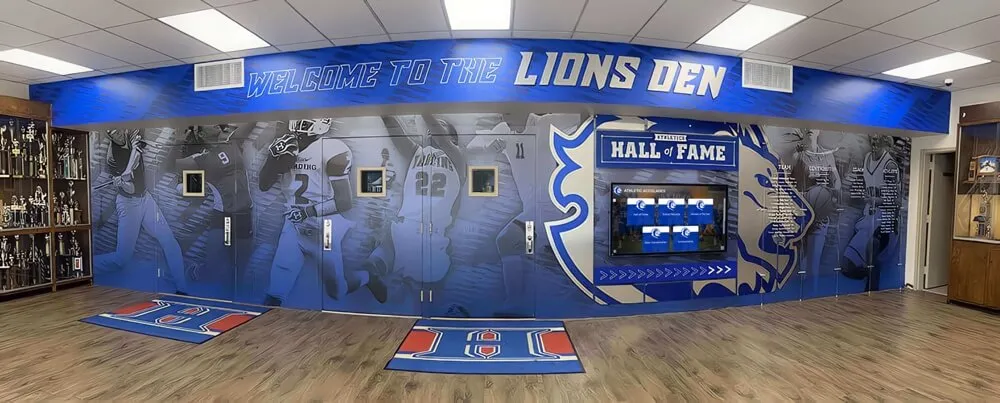
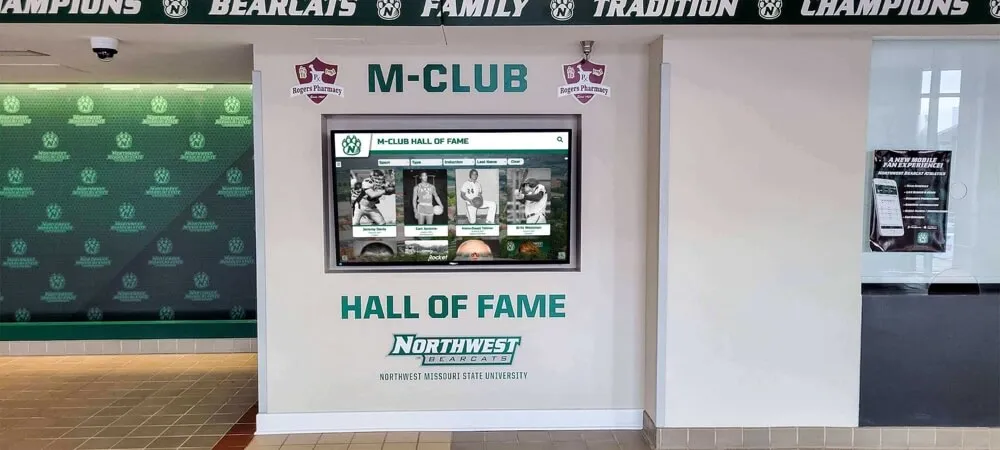
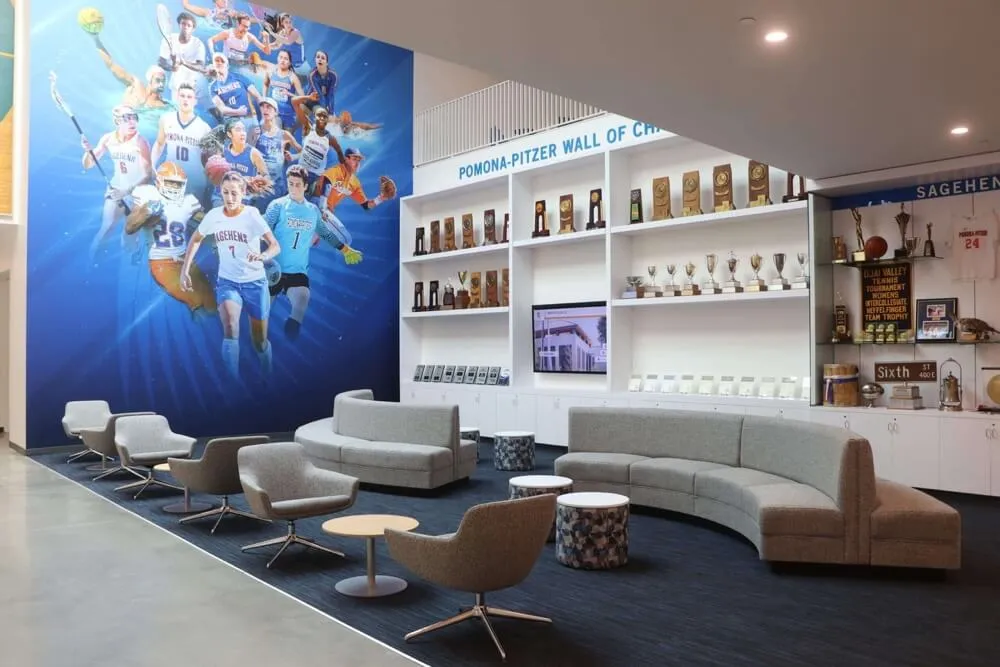
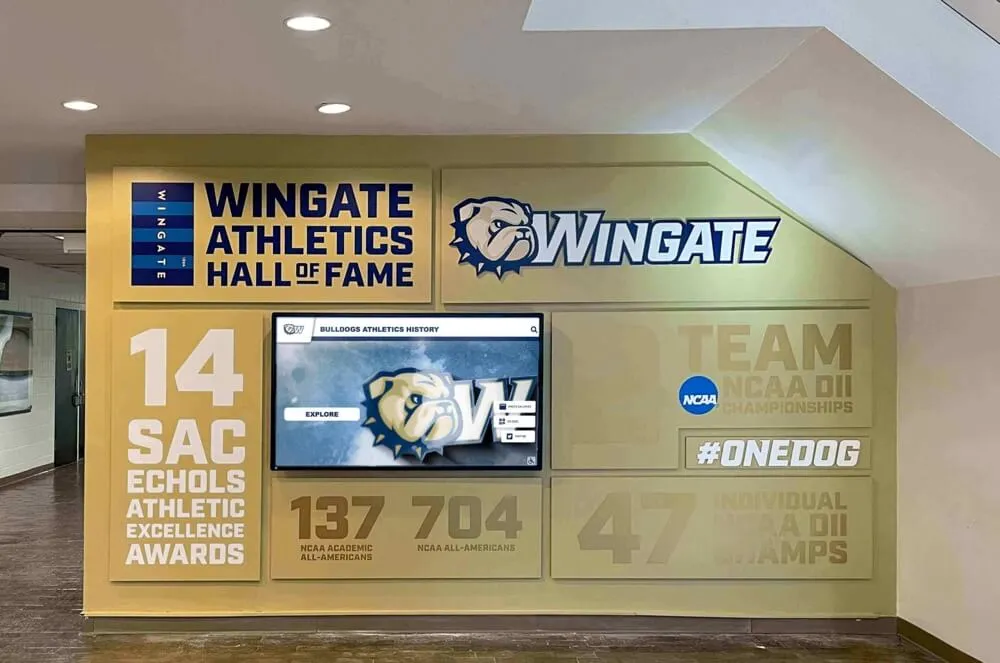
Hall of fame lobbies that combine interactive touchscreens with athletic murals give sponsors permanent placement within a school's proudest recognition environment
How Rocket Alumni Solutions Supports Sports Program Sponsor Recognition
Rocket Alumni Solutions builds the digital infrastructure that makes year-round sponsor recognition possible alongside athletic achievement displays. Their interactive touchscreen walls of fame, digital trophy cases, and recognition displays are designed to hold sponsor profiles, donor acknowledgment, athletic records, hall of fame inductees, and team histories in a single unified system.
For athletic directors who want to offer sponsors more than a single-season program ad—a permanent digital profile, rotation on a lobby screen, integration with the school’s hall of fame environment—Rocket’s platform handles the technical side with remote content management, so updating a sponsor’s logo or profile takes minutes rather than a reprint order.
The platform is also built for the long view: recognition content added today becomes part of the school’s historical record, giving sponsors not just current-season visibility but a lasting presence in the program’s story.
Give Your Sponsors Recognition That Outlasts the Program
See how Rocket Alumni Solutions integrates sponsor recognition with athletic records, hall of fame displays, and digital trophy cases in a single touchscreen system built for school athletics.
Request a Demo