When you’re working toward college graduation, understanding summa cum laude vs magna cum laude distinctions becomes increasingly important as these prestigious Latin honors represent different levels of exceptional academic achievement. These designations appear on your diploma, transcript, and academic record, signaling to future employers, graduate programs, and professional networks the caliber of your undergraduate performance. Yet many students approach graduation without fully understanding what separates these honor levels, how institutions calculate eligibility, or how recognition impacts future opportunities.
Both summa cum laude and magna cum laude represent outstanding academic accomplishment worthy of celebration and recognition. The distinction between them, however, reflects measurable differences in academic performance—typically manifested through grade point average thresholds, class ranking percentiles, or comprehensive examination results. Understanding these differences helps students set appropriate academic goals while enabling institutions to implement fair, meaningful recognition systems that appropriately honor diverse levels of scholarly excellence.
This comprehensive guide explores the specific differences between summa cum laude and magna cum laude honors, examines how various institutions calculate and award these distinctions, analyzes their impact on career prospects and graduate school admissions, and discusses how modern recognition systems celebrate these achievements through permanent, visible displays that honor academic excellence alongside athletic and other accomplishments.
Academic honors represent more than ceremonial traditions—they provide concrete differentiation in competitive job markets and graduate program admissions while validating years of sustained scholarly effort. Whether you’re pursuing these honors yourself, advising students working toward them, or administering recognition programs celebrating academic achievement, understanding the nuanced distinctions between honor levels ensures appropriate goal-setting, fair recognition, and meaningful celebration.

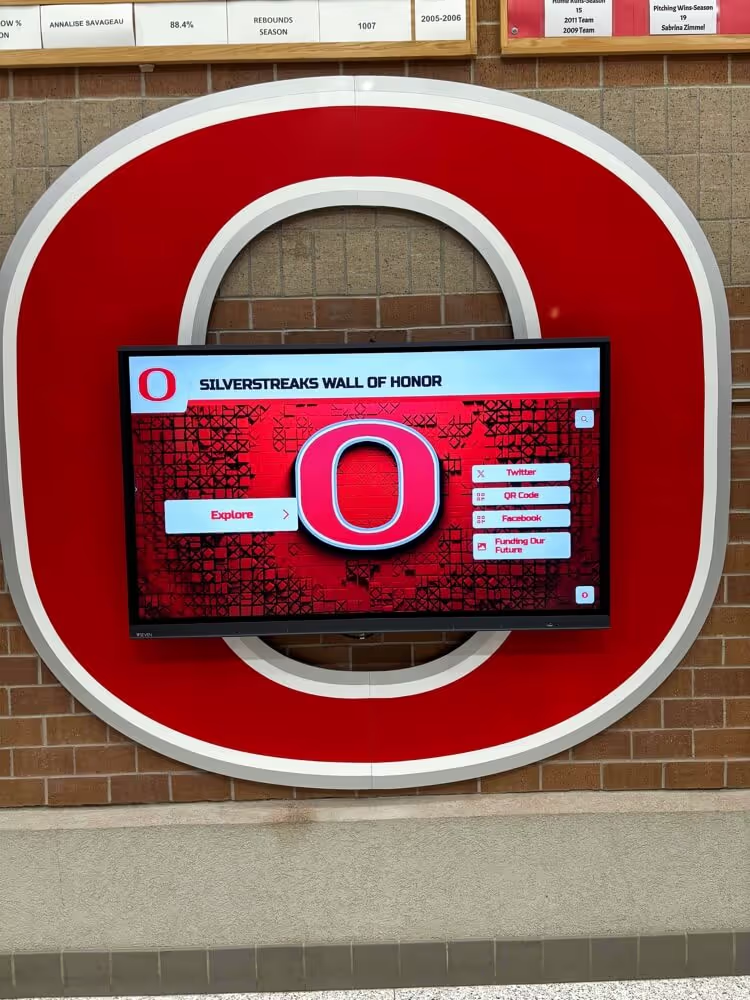
Modern recognition displays celebrate academic honors including summa cum laude and magna cum laude achievements throughout the institution
Understanding Latin Honors: A Historical Foundation
Before examining specific differences between summa cum laude and magna cum laude, understanding the broader Latin honors system provides essential context for how these distinctions function within academic recognition frameworks.
The Three-Tier Latin Honors System
Most American colleges and universities that award Latin honors use a three-tier recognition structure originating from European academic traditions:
Cum Laude (“With Honors”)
- The foundational Latin honor designation
- Recognizes strong academic performance above standard graduation requirements
- Typically requires GPA thresholds between 3.5-3.7 depending on institution
- Often represents approximately top 20-30% of graduating class
- Signals consistent academic achievement across undergraduate career
Magna Cum Laude (“With Great Honors”)
- The second-highest Latin honor designation
- Recognizes exceptional academic excellence
- Typically requires GPA thresholds between 3.7-3.85 depending on institution
- Usually represents approximately top 10-15% of graduating class
- Demonstrates sustained high-level academic performance across coursework
Summa Cum Laude (“With Highest Honors”)
- The highest Latin honor designation
- Recognizes the most exceptional academic achievement
- Typically requires GPA thresholds above 3.85-4.0 depending on institution
- Generally represents approximately top 1-5% of graduating class
- Represents pinnacle academic accomplishment during undergraduate career
This tiered structure ensures recognition opportunities exist for students demonstrating various levels of excellence while preserving meaningful distinction between achievement levels.
Schools implementing comprehensive academic recognition programs celebrate Latin honors alongside diverse scholarly achievements creating cultures of intellectual excellence.
Historical Origins and Evolution
European Academic Traditions
Latin honors originated in European universities during medieval and Renaissance periods when Latin served as the universal language of higher education. These designations provided standardized ways to recognize graduating students across institutions and national boundaries.
American Adoption and Adaptation
American colleges began adopting Latin honors during the 18th and 19th centuries as universities formalized graduation requirements and recognition systems. Harvard College began using the system in 1869, with other prestigious institutions following throughout subsequent decades.
Modern Variations
Contemporary American institutions implement Latin honors with considerable variation. Some schools use fixed GPA thresholds while others employ class ranking percentiles. Certain institutions require comprehensive examinations or thesis projects beyond GPA requirements, while others rely exclusively on academic averages across coursework.
This variation means understanding Latin honors requires examining specific institutional policies rather than assuming universal standards apply across all schools.

Individual recognition profiles celebrate specific honors including summa cum laude and magna cum laude achievements
Summa Cum Laude vs Magna Cum Laude: Key Differences
The fundamental distinction between these two prestigious honors involves the level of academic excellence required for eligibility, though specific criteria vary significantly across institutions.
GPA Requirements and Thresholds
Typical GPA Ranges
While institutions establish their own specific requirements, general patterns exist across American higher education:
Magna Cum Laude Typical Requirements:
- GPA threshold: 3.70-3.85 (on 4.0 scale)
- Represents high academic achievement with predominantly A grades
- Allows occasional B grades while maintaining overall excellence
- Requires consistent strong performance across undergraduate career
- Demonstrates mastery of subject matter with exceptional understanding
Summa Cum Laude Typical Requirements:
- GPA threshold: 3.85-4.0 (on 4.0 scale)
- Represents the highest possible academic achievement
- Requires nearly perfect or perfect academic record
- Often necessitates straight A grades across most or all coursework
- Demonstrates extraordinary mastery and scholarly capability
The specific GPA gap between magna cum laude and summa cum laude eligibility typically ranges from 0.10 to 0.20 grade points—seemingly small numerical differences representing significant distinctions in academic consistency and excellence.
Institutional Variation Examples
Real institutions demonstrate considerable policy diversity:
- Some universities set summa cum laude at exactly 4.0, making it achievable only through perfect academic records
- Other schools use 3.9 or 3.85 thresholds, making summa cum laude highly selective but not requiring perfection
- Certain institutions calculate honors based on departmental or major GPA rather than overall GPA, potentially creating multiple honor designations (general honors plus departmental honors)
Students should consult their specific institution’s academic policies published in course catalogs or registrar documentation for precise requirements.
Class Ranking and Percentile Methods
Alternative Calculation Approaches
Many institutions use class ranking percentiles rather than fixed GPA thresholds, ensuring consistent honor distribution regardless of grade inflation or deflation trends:
Magna Cum Laude Percentile Approach:
- Typically top 10-15% of graduating class
- Calculated after final grades submitted for graduating students
- Adjusts automatically for grade distribution variations across different graduation years
- Ensures recognition remains selective and meaningful
Summa Cum Laude Percentile Approach:
- Typically top 1-5% of graduating class
- Represents the highest-performing graduates
- Creates extremely selective honor designation
- Maintains prestige regardless of class size or GPA distributions
Advantages and Disadvantages
Percentile methods ensure consistent honor distribution but introduce uncertainty—students cannot know definitively whether they qualify until final class rankings compile after all grades submit. Fixed GPA methods provide clear targets enabling strategic academic planning but risk honor inflation when grading standards shift over time.
Exploring comprehensive approaches to recognizing academic achievement helps institutions balance multiple recognition pathways beyond Latin honors alone.
Additional Requirements Beyond GPA
Comprehensive Examinations
Some institutions, particularly prestigious liberal arts colleges and universities, require comprehensive examinations demonstrating mastery beyond course grades:
- Written examinations covering major field breadth
- Oral defense examinations before faculty committees
- Research thesis or capstone project with minimum quality standards
- Holistic evaluation considering academic record plus examination performance
Schools using comprehensive examination requirements often reserve summa cum laude exclusively for students demonstrating both exceptional GPA plus outstanding examination results, creating multi-dimensional assessment of academic excellence.

Interactive displays enable students and visitors to explore academic honors achievements across graduation years
Credit Hour Requirements
Most institutions require minimum credit hours earned at the degree-granting institution for Latin honors eligibility:
- Typical minimum: 60 semester hours (two years) at institution awarding degree
- Prevents transfer students from achieving honors based predominantly on coursework elsewhere
- Ensures sufficient institutional assessment of student academic capabilities
- May disadvantage transfer students despite strong overall academic records
Course Difficulty Considerations
Some institutions weight honors calculations based on course rigor:
- Advanced placement, honors, or graduate courses receive weighted credit
- Encourages students to pursue challenging coursework rather than maintaining high GPAs through easier course selection
- Creates fairness issues when course availability varies across majors
- Reflects philosophy that honors should recognize intellectual challenge engagement not just grade achievement
How Different Institution Types Award Latin Honors
Understanding variation across institution types helps contextualize how summa cum laude and magna cum laude designations function in different academic environments.
Ivy League and Prestigious Universities
Harvard University Approach
Harvard employs unique Latin honors determination combining multiple factors:
- Comprehensive examinations in major field required
- Overall GPA considered but not sole determining factor
- Faculty committees evaluate student work holistically
- Summa cum laude reserved for truly exceptional scholarly achievement
- Percentage receiving summa cum laude typically 3-5% of graduating class
This multi-dimensional approach distinguishes Harvard’s system from simpler GPA-threshold methods while making honors more subjectively determined.
Stanford University System
Stanford uses fixed GPA thresholds with departmental variation:
- Magna cum laude: Top 10% of graduating class
- Summa cum laude: Top 2% of graduating class
- Based on GPA in major field specifically
- Minimum overall GPA requirements also apply
- Creates dual assessment of departmental excellence plus general academic achievement
Yale and Princeton Approaches
Both institutions use departmental distinction in major combined with overall academic record:
- Departmental honors based on senior thesis, comprehensive exams, or capstone projects
- Overall Latin honors determined separately from departmental distinction
- Creates multiple honor pathways recognizing different achievement dimensions
Programs celebrating diverse academic accomplishments can explore academic honor roll recognition strategies applicable across various achievement levels.

Purpose-built recognition kiosks provide comprehensive platforms for celebrating Latin honors recipients
Liberal Arts Colleges
Small College Honor Systems
Selective liberal arts colleges often implement rigorous multi-component honor systems:
Williams College Example:
- Highest honors (summa cum laude): Comprehensive examination results rated “highest honors” plus cumulative GPA above 3.85
- High honors (magna cum laude): Comprehensive examination results rated “high honors” plus cumulative GPA above 3.70
- Combines objective GPA measures with subjective faculty evaluation through examinations
Swarthmore College Approach:
- External examiners evaluate senior work and examinations
- Honors determined primarily through external evaluation process
- Latin honors reflect intellectual achievement beyond simple grade accumulation
- Creates distinctive assessment emphasizing depth of scholarly engagement
These approaches reflect liberal arts philosophy emphasizing comprehensive understanding over discrete course performance while creating honor systems more difficult to achieve than simple GPA thresholds.
State Universities and Large Public Institutions
High-Volume Graduation Contexts
Large state universities typically implement clearer, more standardized Latin honors policies facilitating administration across thousands of graduates:
University of Michigan System:
- Magna cum laude: Top 10% of graduating class within school or college
- Summa cum laude: Top 3% of graduating class within school or college
- Calculated separately for each school (engineering, business, liberal arts, etc.)
- Clear percentile method enabling consistent determination
University of California Approach:
- Fixed GPA thresholds varying slightly by campus
- Magna cum laude: Typically 3.75-3.85 GPA threshold
- Summa cum laude: Typically 3.90-4.0 GPA threshold
- Clear standards published enabling student planning
- No comprehensive examinations required beyond coursework
Large institutions favor transparent, objective criteria minimizing administrative burden while providing fair, consistent honor determination.
Professional Schools and Specialized Programs
Variation Across Professional Education
Law schools, medical schools, business schools, and other professional programs implement distinct honor systems:
Law School Honors:
- Order of the Coif recognizes top 10% based on grades
- Latin honors less commonly used than law review or Order of the Coif membership
- Professional credential emphasis exceeds graduation honor focus
Medical School Recognition:
- Alpha Omega Alpha honor society recognizes top students
- Graduation honors vary widely across medical schools
- Clinical performance evaluation components beyond grades
- Professional licensing emphasis reduces honor designation importance
MBA Program Distinctions:
- High honors, honors designations common rather than Latin terms
- Based on course grades plus specialization project quality
- Professional accomplishment often outweighs academic honor significance
Understanding how institutions recognize scholarly excellence helps schools create comprehensive academic recognition frameworks celebrating diverse pathways to achievement.
Career and Graduate School Implications
Understanding how summa cum laude versus magna cum laude distinctions influence post-graduation opportunities helps students appreciate the practical significance beyond ceremonial recognition.
Impact on Job Applications and Hiring
Resume Presentation
Both summa cum laude and magna cum laude merit prominent resume placement:
Education Section Formatting:
Bachelor of Science in Economics, Summa Cum Laude
University of Michigan, May 2026
GPA: 3.95/4.0
Employer Perception Differences
Research on employer attitudes suggests:
Summa Cum Laude Recognition:
- Signals exceptional intelligence, work ethic, and consistency
- Creates strongest differentiation in highly competitive candidate pools
- Particularly valued for positions requiring analytical rigor or technical expertise
- Demonstrates sustained excellence across four-year period
Magna Cum Laude Recognition:
- Signals strong academic performance and intellectual capability
- Differentiates candidates from those without honors
- Demonstrates consistent excellence though not perfect academic record
- Valued across professional fields as indicator of capability
Practical Career Impact:
- Most significant for first jobs post-graduation when work experience limited
- Diminishes in importance as professional experience accumulates
- Remains relevant for careers where continued learning central (academia, research, medicine, law)
- Creates positive impressions but rarely serves as sole hiring determinant
Graduate School Admissions Considerations
Academic Program Competitiveness
Latin honors influence graduate admissions with varying significance:
Highly Selective PhD Programs:
- Summa cum laude can strengthen applications to top programs
- Combined with research experience, strong recommendations, and GRE scores
- Signals academic preparation for doctoral-level work
- Particularly relevant for programs admitting small cohorts (5-10 students)
Professional Schools (Law, Medicine, Business):
- Latin honors considered alongside standardized test scores, leadership, experience
- Magna cum laude sufficiently demonstrates academic capability for most programs
- Summa cum laude creates marginal additional advantage
- Professional potential and interpersonal skills often weigh more heavily

Comprehensive alumni recognition systems document academic honors across multiple graduating classes
Fellowship and Scholarship Applications
Competitive post-graduate fellowships often explicitly consider Latin honors:
- Rhodes, Marshall, Fulbright scholarships attract predominately summa cum laude or magna cum laude recipients
- National Science Foundation Graduate Research Fellowship applicants typically demonstrate exceptional undergraduate achievement
- Academic honors signal intellectual capability supplementing research experience and recommendations
Cumulative Academic Record Importance
Graduate admissions committees examine complete transcripts not just GPA summaries:
- Course rigor across undergraduate career
- Performance trends (improvement over time versus declining performance)
- Subject-specific excellence in intended graduate field
- Latin honors provide convenient summary but comprehensive record assessment occurs regardless
Institutions celebrating academic achievement create environments where excellence becomes normalized through comprehensive recognition systems honoring diverse accomplishments.
Professional Credential Significance
Lifetime Credential Value
Unlike many achievements with time-limited relevance, Latin honors remain permanent credentials:
- Appear on official transcripts indefinitely
- Listed in alumni directories and professional biographies
- Appropriate to include in professional bios throughout career
- Signal intellectual capability regardless of years since graduation
Field-Specific Importance Variations
Certain professional fields weight academic honors more heavily:
Academia and Research: Latin honors particularly relevant for those pursuing academic careers where scholarly credentials central to professional identity and advancement.
Law and Medicine: Professional performance and reputation eclipse undergraduate honors relatively quickly, though honors demonstrate foundational capability.
Business and Entrepreneurship: Professional accomplishments typically outweigh academic honors though intellectual capability signals remain valued.
Education: Teachers and administrators with Latin honors sometimes reference achievements demonstrating academic credibility, particularly in educational leadership roles.
Strategies for Achieving These Honors
For students aspiring to graduate magna cum laude or summa cum laude, understanding strategic approaches maximizes success likelihood.
Academic Planning From Day One
First-Year Foundation
Latin honors require cumulative excellence making early academic performance critical:
Course Selection Strategy:
- Balance challenging courses building strong foundation with realistic workload management
- Avoid overwhelming first semester when adjustment to college rigor occurs
- Build strong fundamental skills in writing, quantitative reasoning, critical thinking
- Establish effective study habits and time management early
GPA Protection:
- Every course contributes to cumulative GPA calculation
- First-year grades particularly important because many subsequent semesters required to overcome early deficits
- Pass/fail options (where available) can protect GPA in exploratory courses outside comfort zones
Institutional Policy Understanding:
- Learn specific Latin honors requirements at your institution
- Understand whether weighted or unweighted GPA used
- Clarify which courses count toward honors calculation
- Identify any comprehensive examination or thesis requirements
Schools implementing strong academic recognition programs create environments where students receive consistent encouragement pursuing excellence.
Course Selection and Major Decisions
Major Field Considerations
Latin honors eligibility sometimes varies based on major selection:
Major Difficulty Factors:
- STEM fields typically demonstrate lower average GPAs than humanities and social sciences
- Professional programs (engineering, nursing, architecture) often have more rigorous grading standards
- Consider whether pursuing major where achieving high GPA more challenging worth potential honor implications
Strategic Course Selection:
- Balance intrinsic intellectual interest with practical GPA management
- Take courses with professors known for fair, clear grading standards
- Avoid unnecessarily difficult courses outside major requirements when honors pursuit important
- Consider whether graduate schools in intended field emphasize major GPA versus overall GPA
Ethical Considerations:
- Authentic intellectual engagement matters more than grade optimization alone
- Choosing easier path to honors may compromise educational value and skill development
- Graduate programs and employers eventually evaluate actual capabilities not just GPA numbers

University recognition systems celebrate academic honors as part of comprehensive alumni achievement documentation
Academic Support and Resource Utilization
Maximizing Available Resources
Successful students pursuing Latin honors actively seek academic support:
Faculty Relationships:
- Attend office hours building relationships with professors
- Seek feedback on assignments before submission when permitted
- Ask questions during class demonstrating engagement
- Request study strategies and additional resources when struggling
Academic Support Services:
- Writing centers provide feedback strengthening papers
- Tutoring services offer subject-specific assistance
- Study groups facilitate collaborative learning and concept reinforcement
- Academic advisors help navigate course selection and policy questions
Time Management and Organization:
- Maintain organized systems tracking assignments, deadlines, exam dates
- Allocate sufficient study time for each course based on difficulty
- Start major assignments early allowing revision before submission
- Balance academic commitments with necessary rest and stress management
Maintaining Perspective and Balance
Avoiding Perfectionism Pitfalls
Pursuing summa cum laude or magna cum laude honors shouldn’t compromise overall wellbeing:
Realistic Assessment:
- Understand that even magna cum laude represents exceptional achievement
- Recognize that learning and skill development matter more than decimal point GPA differences
- Accept that occasional B grades don’t preclude honor eligibility at most institutions
- Maintain perspective that professional success depends on diverse factors beyond undergraduate GPA
Comprehensive Excellence:
- Pursue meaningful extracurricular involvement and leadership
- Develop practical skills through internships and research experiences
- Build strong relationships with peers, faculty, mentors
- Maintain physical and mental health through balanced lifestyle
Graduate programs and employers value well-rounded individuals with strong academic records plus diverse capabilities, not narrowly focused grade optimizers lacking broader development.
How Institutions Celebrate and Recognize Latin Honors
Understanding how schools publicly recognize summa cum laude and magna cum laude recipients helps institutions design meaningful celebration programs while informing students about recognition they’ll receive.
Commencement Recognition
Graduation Ceremony Distinctions
Most institutions provide visible recognition during commencement exercises:
Honor Cords and Regalia:
- Gold honor cords for summa cum laude recipients (some institutions use different colors)
- Different cord colors distinguish between cum laude, magna cum laude, and summa cum laude
- Visual distinction visible to ceremony attendees
- Creates tangible recognition moment families can photograph and celebrate
Verbal Recognition:
- Names announced with honor designation during diploma conferral
- Some institutions recognize all Latin honors graduates by asking them to stand
- Larger universities may recognize only summa cum laude during ceremony due to time constraints
- Creates public acknowledgment of achievement before academic community
Printed Program Recognition:
- Graduation programs list honors recipients with degree designations
- Creates permanent printed record of achievement
- Enables family members and friends to identify graduating students receiving honors
Comprehensive commencement recognition ensures graduating students receive appropriate public acknowledgment culminating undergraduate careers.
Permanent Recognition Through Digital Displays
Modern Recognition Systems
Forward-thinking institutions implement comprehensive recognition platforms celebrating academic honors alongside athletic and other achievements:
Interactive Digital Displays
Solutions like Rocket Alumni Solutions enable institutions to create permanent, searchable archives of academic honor recipients:
Unlimited Recognition Capacity:
- Digital systems accommodate every summa cum laude and magna cum laude recipient throughout institutional history
- No physical space constraints limiting who receives recognition
- Comprehensive archives preserving institutional academic tradition
- Future students can explore honor recipient lists across decades
Rich Individual Profiles:
- Student photographs in academic setting
- Honor level achieved (summa cum laude, magna cum laude, cum laude)
- Graduation year and major field
- Additional academic achievements and extracurricular leadership
- Post-graduation updates showing graduate school or professional accomplishments
- Personal statements about academic journeys or study strategies
Interactive Exploration Features:
- Search functionality enabling visitors to find specific students
- Filter by honor level, graduation year, or major field
- Statistics showing honor distribution across graduating classes
- Visual displays showing academic excellence tradition
These comprehensive platforms solve traditional plaque limitations where physical space constraints eventually force institutions to choose whose achievements receive visibility.

Touchscreen interfaces make exploring academic honors engaging and accessible for students, families, and visitors
Strategic Display Placement
Effective recognition requires strategic location selection:
High-Traffic Academic Spaces:
- Libraries and study areas where academic focus natural
- Building entrances and main hallways ensuring visibility
- Registrar office areas where academic records centralized
- Alumni centers connecting past and present student achievement
Academic Building Displays:
- Departmental displays recognizing major-specific honor recipients
- Classroom building locations emphasizing intellectual achievement importance
- Campus welcome centers visible during tours for prospective students
Web-Based Recognition Extensions:
- Online platforms enabling alumni worldwide to view honor recipients
- Mobile-optimized displays ensuring smartphone accessibility
- Social sharing capabilities allowing graduates to celebrate achievements
- Integration with institutional websites and alumni networks
Discover how institutions implement comprehensive digital recognition systems celebrating diverse achievements including academic honors, athletics, arts, and community service.
Academic Recognition Events and Programs
Beyond Commencement Celebration
Comprehensive recognition extends throughout academic year:
Honors Convocations:
- Special ceremonies exclusively recognizing academic achievement
- Intimate settings enabling more personal recognition than large graduation ceremonies
- Family invitation creating dedicated celebration of academic excellence
- Faculty participation demonstrating institutional commitment to scholarship
Dean’s List and Honor Roll Programs:
- Semester-based recognition for strong academic performance
- Publicly announced through institutional communications
- Creates motivation throughout undergraduate career toward Latin honors
- Provides intermediate achievement recognition before graduation
Academic Awards Banquets:
- Departmental recognition events celebrating major-specific excellence
- Subject-specific awards complementing Latin honors
- Faculty interaction and mentorship recognition
- Networking with accomplished alumni and community members
Honor Society Inductions:
- Phi Beta Kappa and disciplinary honor societies recognize academic excellence
- Complementary recognition systems honoring cumulative achievement
- Lifetime membership creating ongoing community connection
- Distinguished speaker events and intellectual programming
Special Circumstances and Policy Considerations
Institutions must address various special situations affecting Latin honors determination.
Transfer Student Honors Eligibility
Credit Hour Requirements
Most institutions require minimum credit hours earned at degree-granting institution:
Typical Policies:
- 60 semester credits (two years) at institution awarding degree
- Ensures sufficient institutional assessment of academic performance
- Prevents students transferring after achieving high GPAs elsewhere from automatically qualifying for honors
- Creates fairness concerns for transfer students with strong overall records
Combined GPA Calculations:
- Some schools calculate Latin honors using combined GPA from all institutions
- Others use only GPA earned at degree-granting institution
- Policies vary significantly requiring individual institutional review
Transfer Student Challenges:
- Course equivalency decisions may affect GPA calculations
- Institutional grading standard variations complicate fair assessment
- Transfer students sometimes disadvantaged despite strong academic records
Double Major and Multiple Degree Considerations
Latin Honors Across Multiple Programs
Students completing multiple majors or degrees face unique situations:
Single Latin Honors Designation:
- Most institutions award single overall Latin honors based on cumulative GPA
- Applies to all majors/degrees earned simultaneously
- Simplifies administration while recognizing overall academic achievement
Program-Specific Honors:
- Some schools award departmental honors separately from general Latin honors
- Creates possibility of graduating summa cum laude in major while magna cum laude overall (or vice versa)
- Honors which major field performance specifically while acknowledging cumulative record
Study Abroad and Transfer Credit Impact
International Coursework Considerations
Study abroad programs complicate Latin honors calculations:
Grade Transfer Policies:
- Institutions vary on whether study abroad grades count toward GPA
- Some schools accept credit but not grades from international institutions
- Others incorporate international grades into cumulative GPA
- Creates uncertainty for students studying abroad about honors implications
Strategic Planning:
- Students pursuing Latin honors should understand institutional policies before studying abroad
- Course selection at international institutions may require careful GPA management
- Some students postpone study abroad until securing necessary GPA thresholds
Programs celebrating diverse academic experiences can explore how recognizing international education complements traditional honors recognition.
Institutional Policy Design for Fair, Meaningful Honors
Colleges and universities regularly evaluate Latin honors policies ensuring fair, meaningful recognition while maintaining standards that preserve honor prestige.
GPA Thresholds vs. Percentile Rankings
Competing Policy Approaches
Institutions face fundamental choice between fixed and relative standards:
Fixed GPA Threshold Advantages:
- Clear standards enabling student planning and goal-setting
- Consistent across different graduation cohorts
- Reflects absolute academic achievement levels
- Easier to communicate and administer
Fixed GPA Threshold Disadvantages:
- Vulnerable to grade inflation over time
- May recognize increasing percentages of students if grading standards shift
- Doesn’t adjust for institutional or cohort-specific grade distributions
Percentile Ranking Advantages:
- Maintains consistent honor distribution percentages
- Adjusts automatically for grade inflation or deflation
- Ensures honors remain selective regardless of grading trends
- Creates relative assessment comparing student to peers
Percentile Ranking Disadvantages:
- Creates uncertainty preventing students from knowing eligibility until final calculations
- Competition among students potentially discouraging collaboration
- May penalize individuals in particularly strong graduating classes
- Less transparent than fixed thresholds
Balancing Rigor with Achievability
Maintaining Honor Prestige
Institutions must ensure Latin honors remain meaningful distinctions:
Appropriate Selectivity:
- Summa cum laude should represent exceptional achievement (typically 1-5% of graduates)
- Magna cum laude should recognize strong excellence (typically 5-15% of graduates)
- Combined Latin honors (including cum laude) typically shouldn’t exceed 30-40% of graduating class
Periodic Policy Review:
- Regular examination of what percentage actually receiving each honor level
- Adjustment of thresholds or percentiles when distributions shift significantly
- Consideration of grade inflation trends when evaluating standards
- Stakeholder input from faculty, students, alumni about honor significance
Grade Inflation Considerations:
- Monitor average GPA trends over time
- Evaluate whether increasing honor percentages reflect genuine improvement or grade inflation
- Consider whether standards require adjustment maintaining honor selectivity
Schools can explore how comprehensive approaches to celebrating student achievement create multiple recognition pathways beyond single honor designation.
Interdisciplinary and Non-Traditional Student Considerations
Ensuring Equitable Access
Modern Latin honors policies should address diverse educational pathways:
Part-Time Student Eligibility:
- Latin honors policies traditionally designed for traditional full-time students
- Part-time students completing degrees over extended periods deserve equitable consideration
- Policies should specify whether honors available to all degree-earners regardless of enrollment patterns
Non-Traditional Age Students:
- Adult learners returning to education after career experience
- Should receive equitable honors consideration without discrimination
- Work experience and life learning shouldn’t disqualify from academic recognition
Online and Hybrid Program Students:
- Growth of distance education raises questions about honors eligibility
- Policies should clarify whether delivery modality affects honors consideration
- Academic rigor should matter more than physical campus presence
Conclusion: Recognizing Excellence Through Meaningful Distinctions
Both summa cum laude and magna cum laude represent exceptional academic achievement worthy of celebration, recognition, and pride. While summa cum laude designates the highest possible honor reserved for truly extraordinary scholarly accomplishment, magna cum laude recognizes outstanding excellence demonstrating sustained intellectual capability and dedication. Understanding the specific distinctions—typically manifested through GPA thresholds of approximately 0.10-0.20 grade points or class ranking differences between top 5% versus top 15%—helps students set appropriate goals while enabling institutions to implement fair recognition systems honoring diverse achievement levels.
These Latin honors carry practical significance extending beyond ceremonial tradition. They strengthen resumes and graduate school applications, signal intellectual capability to employers and admissions committees, and create permanent credentials marking undergraduate excellence throughout professional careers. The impact proves most significant for recent graduates when academic credentials constitute primary differentiation, though honors retain meaning as lifetime achievements demonstrating foundational intellectual capability.
Transform Your Academic Recognition Program
Discover how modern digital recognition platforms can help your institution celebrate summa cum laude, magna cum laude, and all academic honors through comprehensive displays creating permanent, searchable archives preserving institutional excellence for generations.
Explore Recognition SolutionsFor institutions, designing fair Latin honors policies requires balancing multiple considerations—maintaining selectivity preserving honor prestige while ensuring accessibility for students demonstrating genuine excellence, establishing clear standards enabling student planning while adjusting for grade inflation trends, and recognizing traditional full-time students alongside diverse populations including transfer students, part-time learners, and non-traditional age students pursuing degrees through various pathways.
Modern recognition systems enable institutions to celebrate Latin honors recipients through permanent digital displays overcoming traditional plaque limitations. Interactive touchscreen platforms can showcase every summa cum laude and magna cum laude graduate throughout institutional history with rich profiles including photos, academic achievements, and post-graduation accomplishments. These comprehensive systems create engaging exploration experiences for current students, families, and visitors while preserving institutional academic tradition without physical space constraints limiting whose achievements receive visibility.
Whether you’re pursuing these prestigious honors yourself, advising students working toward academic excellence, or administering institutional recognition programs celebrating scholarly achievement, understanding the nuanced distinctions between summa cum laude and magna cum laude ensures appropriate goal-setting, fair recognition policies, and meaningful celebration of the intellectual dedication these honors represent. Academic excellence deserves recognition equal to accomplishments in any domain—through thoughtful policies, visible celebration, and modern recognition technology, institutions can honor every level of scholarly achievement while inspiring future generations toward intellectual excellence.
Ready to enhance your institution’s academic recognition programs? Explore comprehensive approaches to celebrating academic milestones, discover strategies for honoring scholarly excellence, or learn about comprehensive recognition systems celebrating achievement across academics, athletics, arts, and community service.