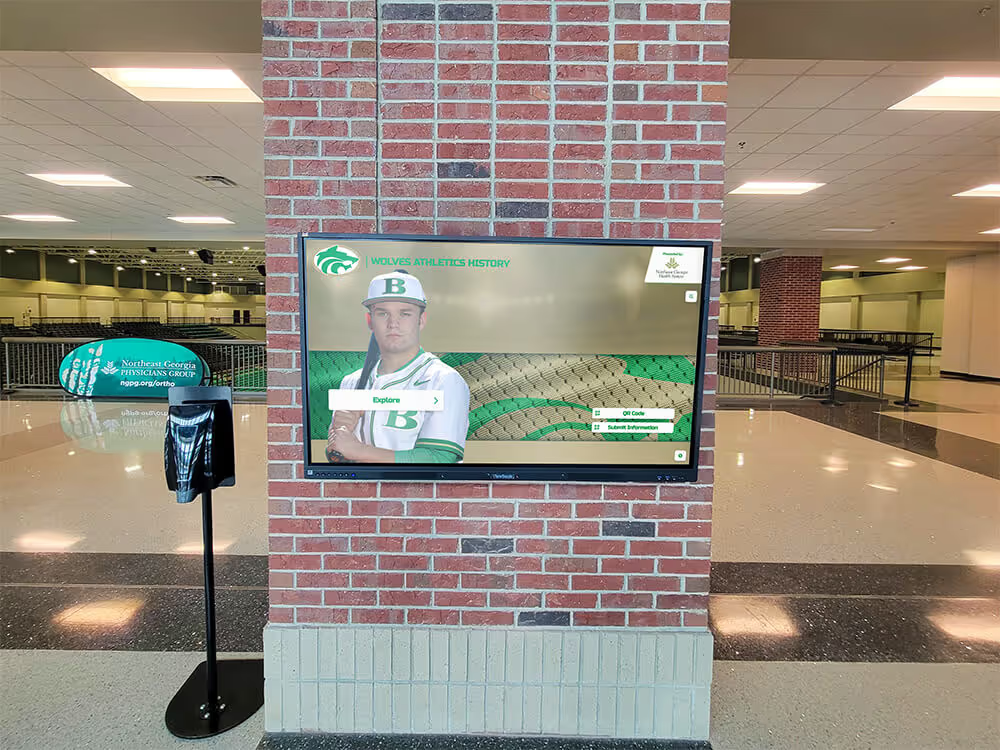
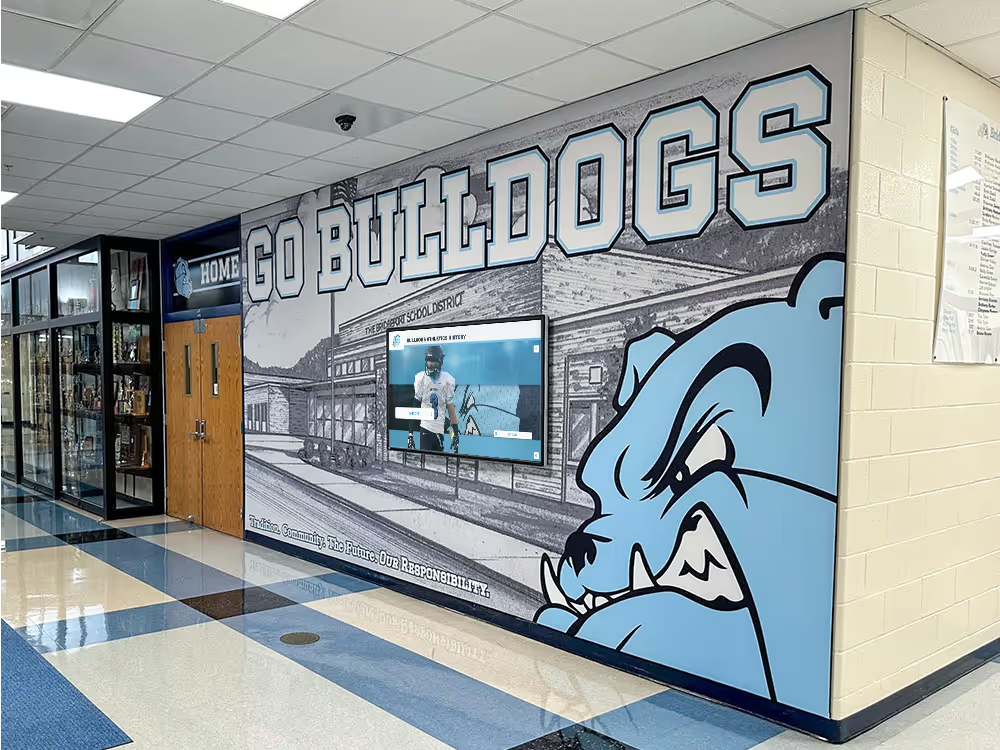
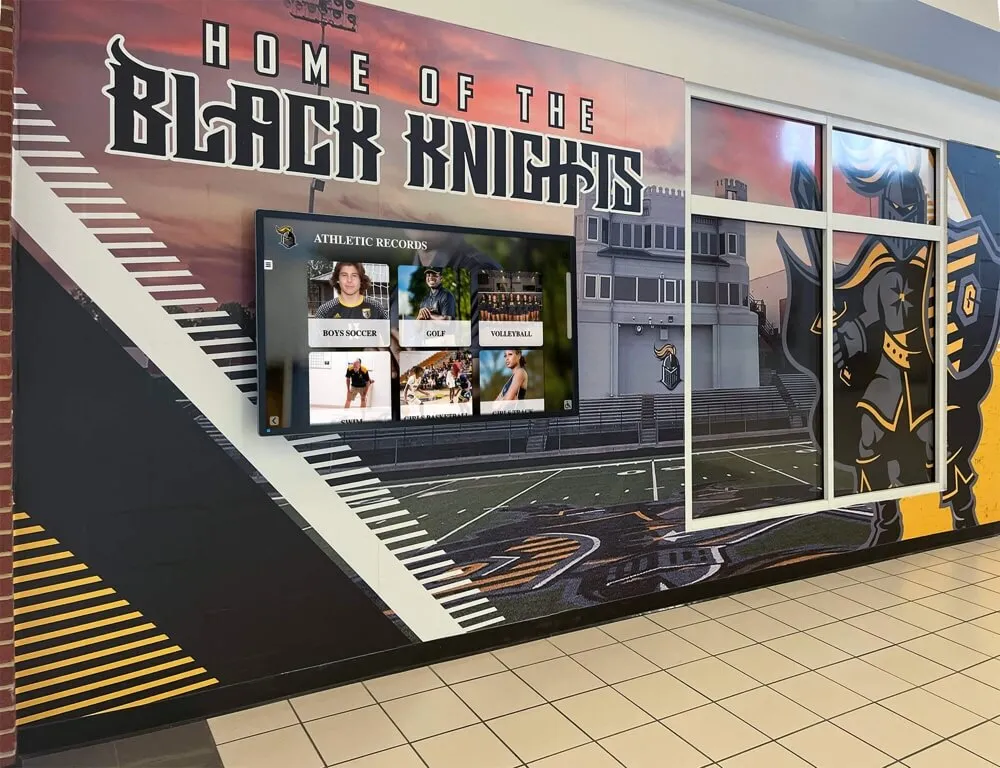
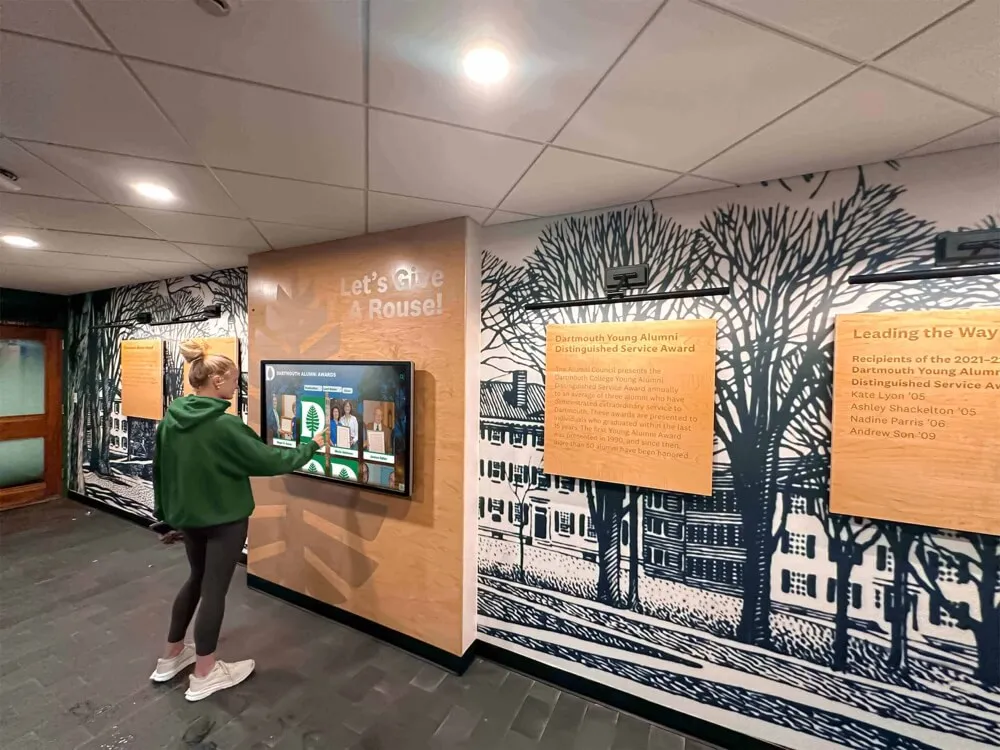
Digital swim team plaque displays are revolutionizing how schools, universities, clubs, and aquatic centers recognize swimming achievements in 2026. Unlike traditional brass plaques and painted record boards that become outdated within seasons, require expensive re-engraving, and offer limited capacity, modern digital recognition systems provide unlimited athlete profiles, instant record updates, engaging multimedia content, and interactive exploration that transforms swimmer acknowledgment from static name listings into compelling celebration experiences.
Yet many aquatic programs struggle with swim team recognition that adequately celebrates achievements and motivates continued excellence. Traditional plaque walls fill up within years, painted pool deck boards fade and require costly maintenance, engraved records become outdated immediately after championship meets, and static displays fail to communicate the excitement and dedication behind each achievement. Meanwhile, dedicated swimmers whose early morning practices and competitive commitment drive program success receive acknowledgment that feels impersonal and fleeting compared to the visible, engaging recognition other sports often receive.
This comprehensive guide explores how digital plaque display solutions solve these challenges while honoring swimmers across all events and eras, strengthening team culture, inspiring future achievement, and creating aquatic facilities where swimming excellence becomes celebrated and visible throughout your community.
Effective swim team recognition in 2026 requires more than adding names to physical plaques. Programs that excel at swimmer acknowledgment create dynamic, engaging recognition systems that showcase records across multiple pool configurations, celebrate individual and relay achievements comprehensively, accommodate unlimited seasons of swimmers, and remain flexible as records fall and rosters change. Digital display solutions like Rocket Alumni Solutions make this level of comprehensive recognition achievable for aquatic programs of all sizes and competition levels.

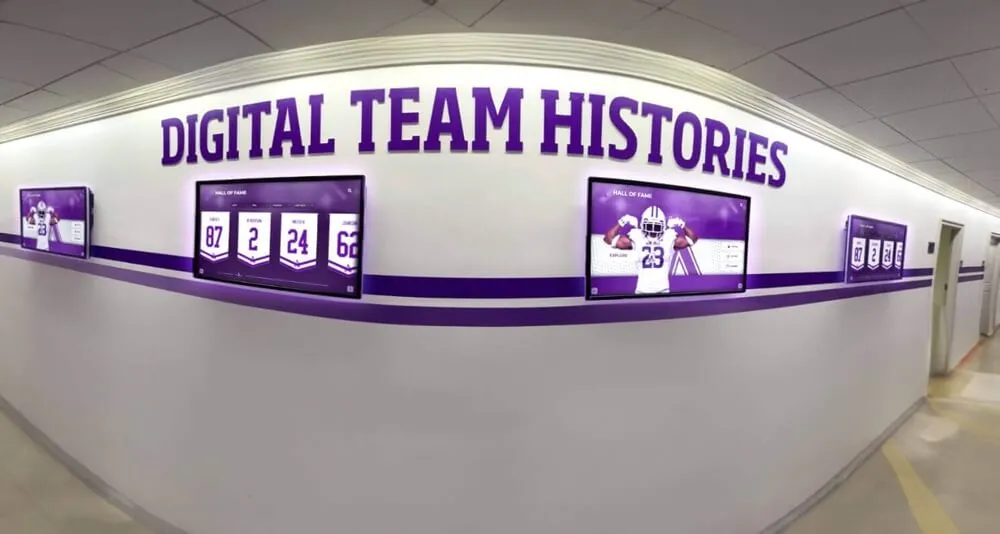
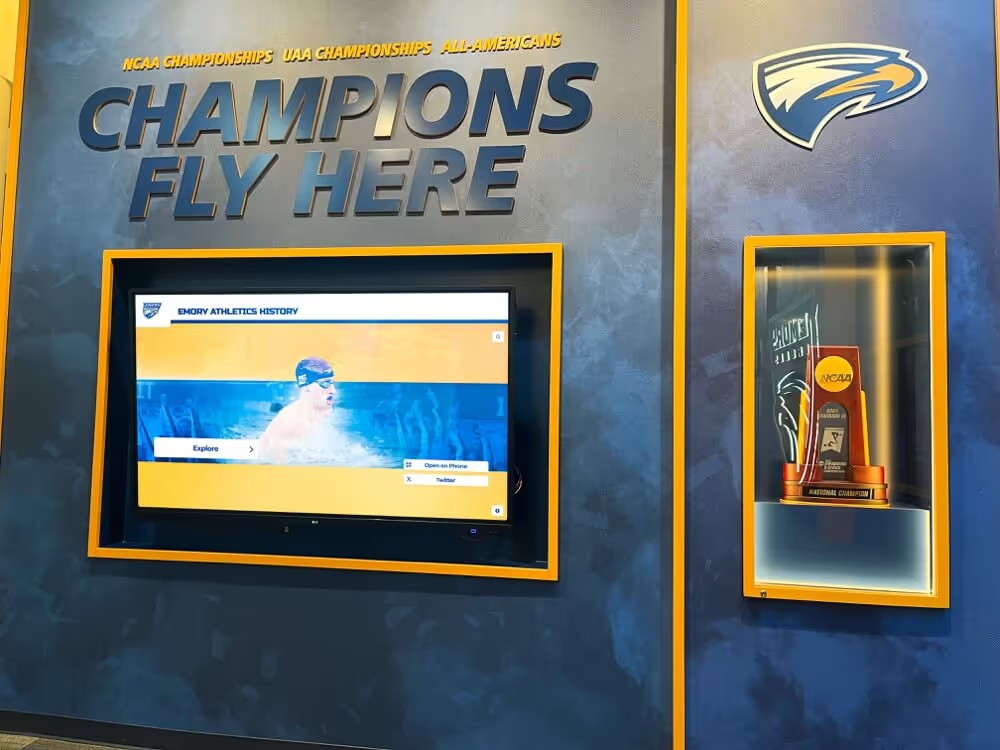
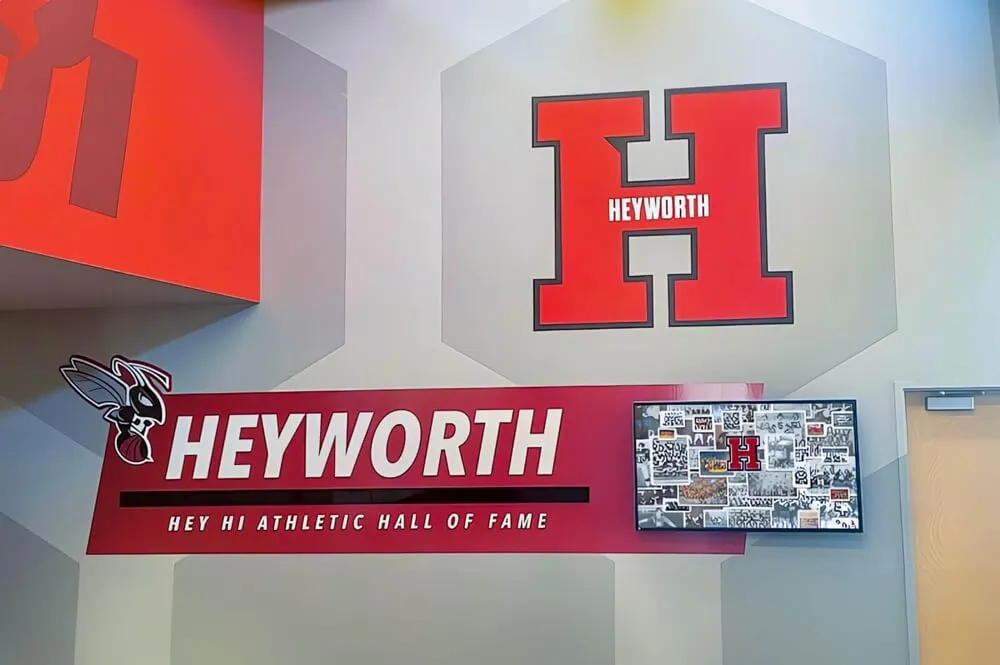
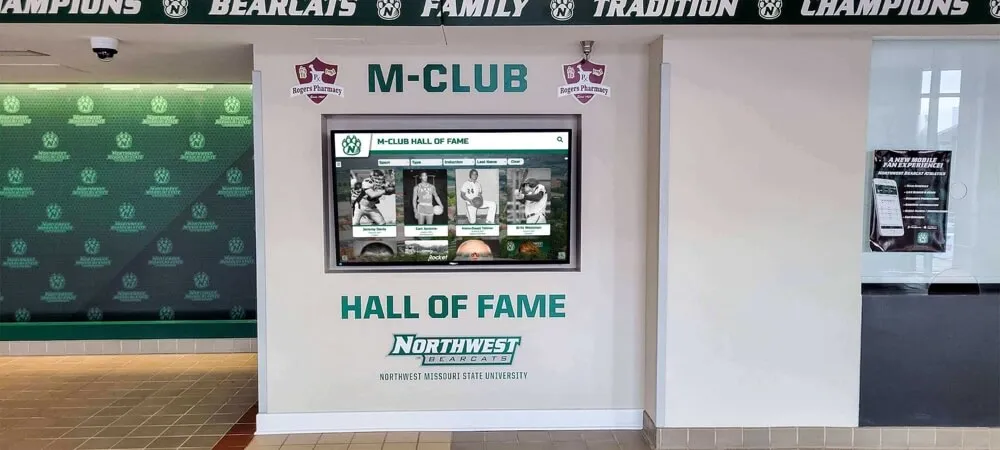
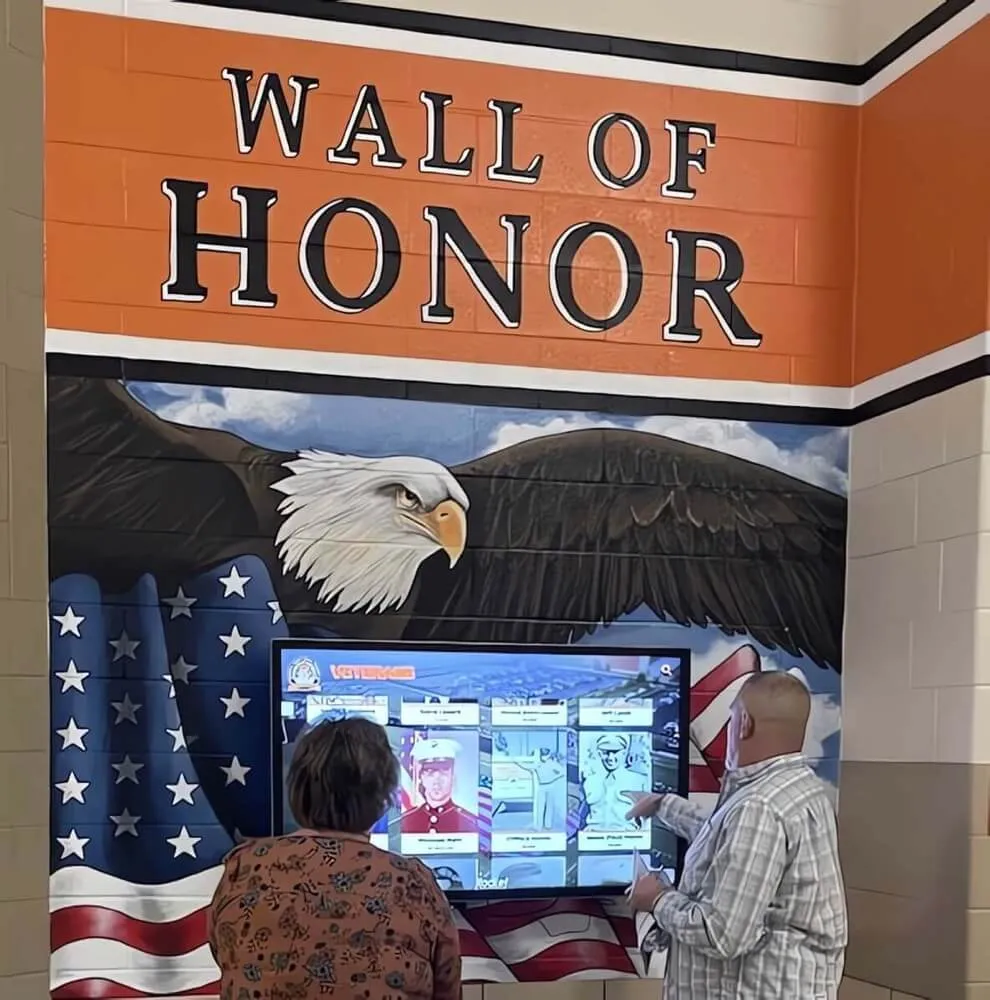
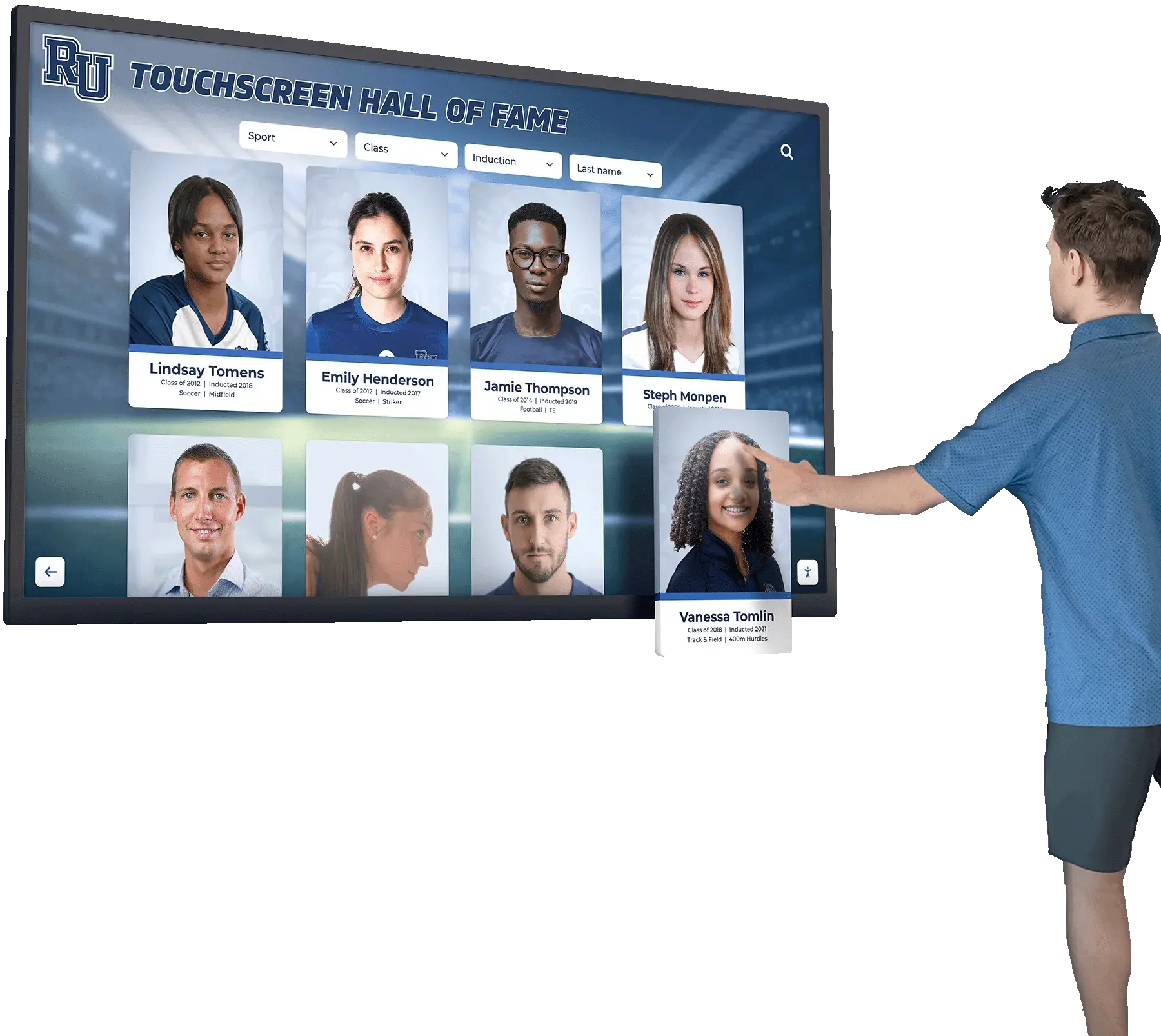
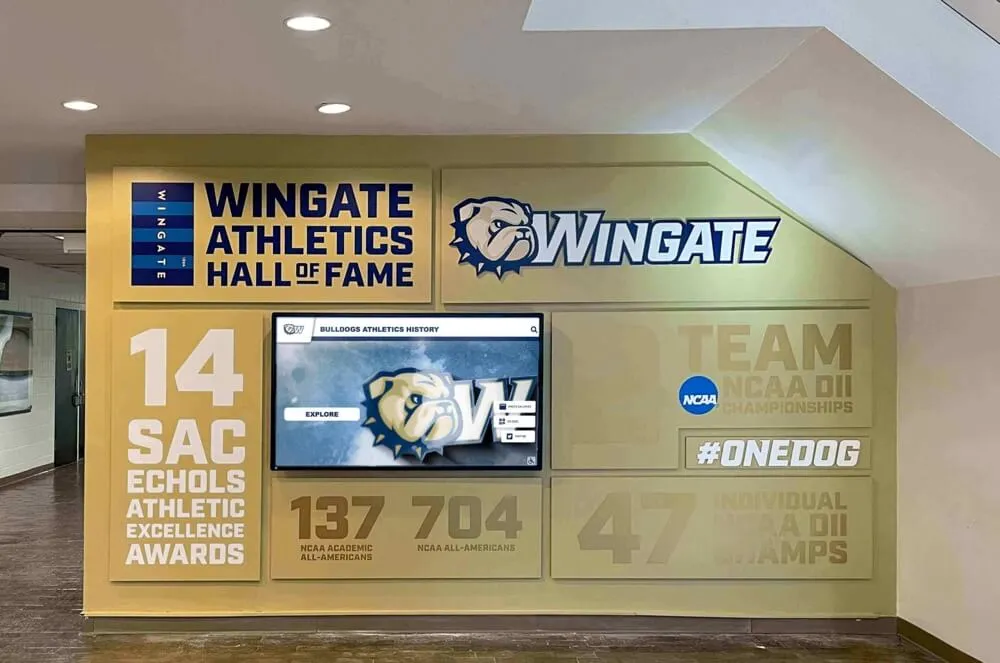
Modern recognition displays celebrate swimming achievements with professional presentation that honors individual and team excellence
Understanding Traditional Swim Team Plaque Challenges
Before exploring digital solutions, understanding limitations of conventional swim team recognition helps programs make informed decisions about modernizing celebration systems.
The Problems with Traditional Swimming Plaques
Most aquatic facilities rely on recognition approaches that create significant challenges over time:
Physical Space Constraints
Traditional plaque walls accommodate only 50-150 swimmers before running out of space. Swimming programs generating 5-15 new school records annually quickly exhaust available wall space, forcing difficult decisions about which achievements warrant permanent recognition. Many programs face impossible choices between honoring current swimmers or preserving historical achievements, creating recognition gaps that undervalue contributions across different eras.
Expensive Update Requirements
Engraved brass plaques typically cost $75-$300 per plate depending on size and complexity. When swimmers break records or teams add new qualifiers for state championships, all-conference selections, or program milestones, facilities must order new engravings, wait weeks for completion, and pay installation costs. For competitive programs with active rosters, these recurring expenses accumulate rapidly—commonly $1,500-$5,000 annually just maintaining current recognition.
According to aquatic facility management research, the recurring engraving costs for traditional swim team plaques often exceed digital system subscription costs within 3-4 years, after which the savings compound significantly.
Pool Environment Deterioration
Natatorium environments present unique challenges for recognition displays:
High Humidity Effects: Constant moisture causes brass plaques to tarnish, requires regular polishing maintenance, creates corrosion over time, and eventually necessitates complete replacement.
Chemical Exposure: Chlorine and other pool chemicals accelerate deterioration, discolor materials, and damage mounting systems.
Temperature Fluctuations: Heating cycles and seasonal changes cause expansion and contraction, loosen mounting hardware, and warp display materials.
Painted Record Boards: Traditional painted displays on pool decks fade rapidly from UV exposure and chemical contact, require repainting every 1-3 years costing $2,000-$8,000, become outdated immediately when records break, and offer no flexibility for different pool configurations or age group divisions.
Learn about comprehensive approaches to athletic building digital touchscreen team records that overcome traditional recognition limitations.
Limited Information Display
Traditional plaques provide only basic information:
- Swimmer name and graduation year
- Event and time achieved
- Date record was set
- Perhaps team or conference designation
This minimal information fails to capture the full context of achievements—training dedication, race strategy, breakthrough moments, relay contributions, or progression over seasons. Swimmers receive acknowledgment that feels impersonal and disconnected from the journey behind each accomplishment.
Inflexibility for Program Changes
Swimming programs evolve continuously:
- Pool renovations change course configurations (25-yard to 25-meter, short course to long course)
- Conference realignments affect championship structures
- Age group divisions adjust as programs grow
- State association rules modify qualifying standards
- Co-ed programs may separate boys’ and girls’ records
Traditional plaques offer no flexibility accommodating these changes without complete replacement, creating outdated recognition that confuses current swimmers and visitors about which records apply to current pool configurations.

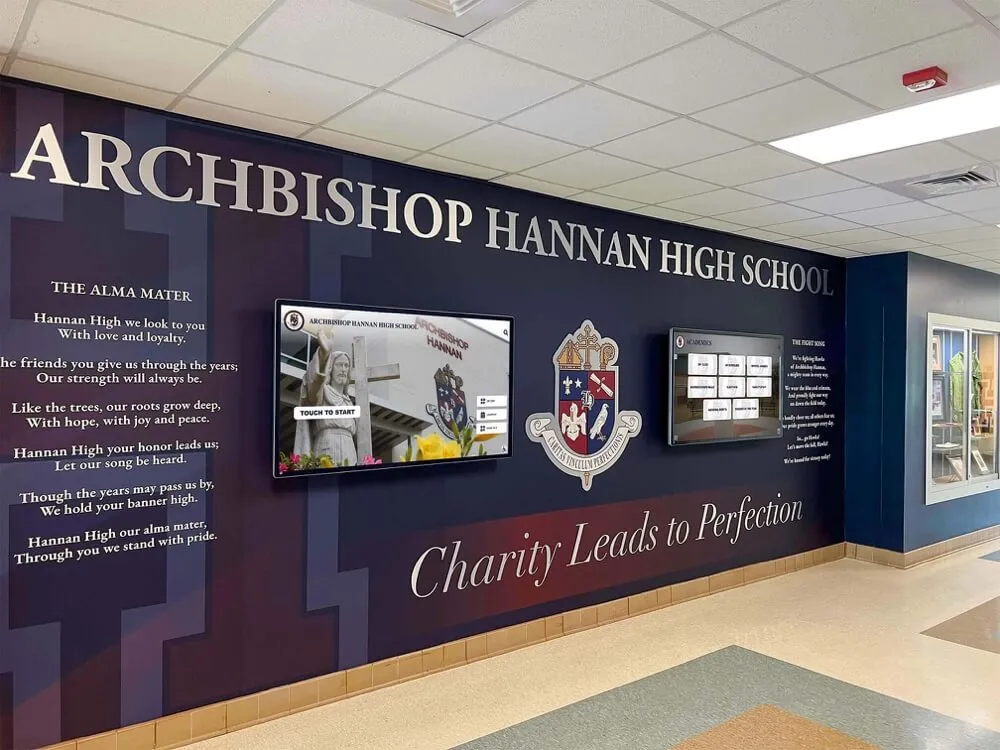
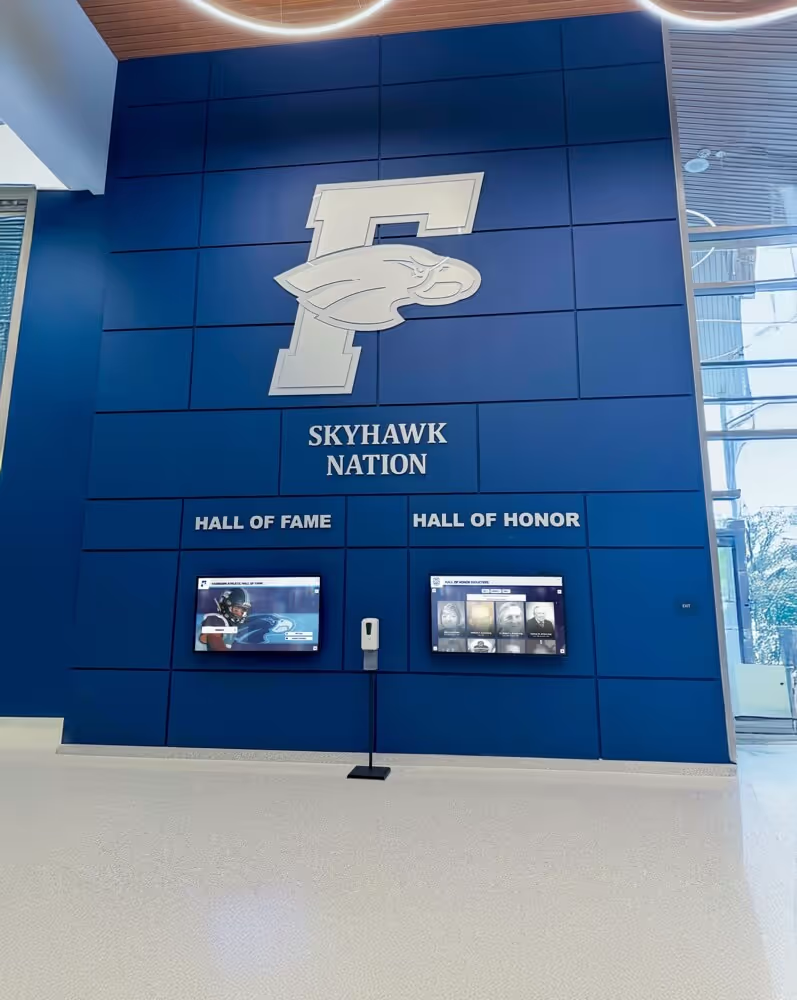
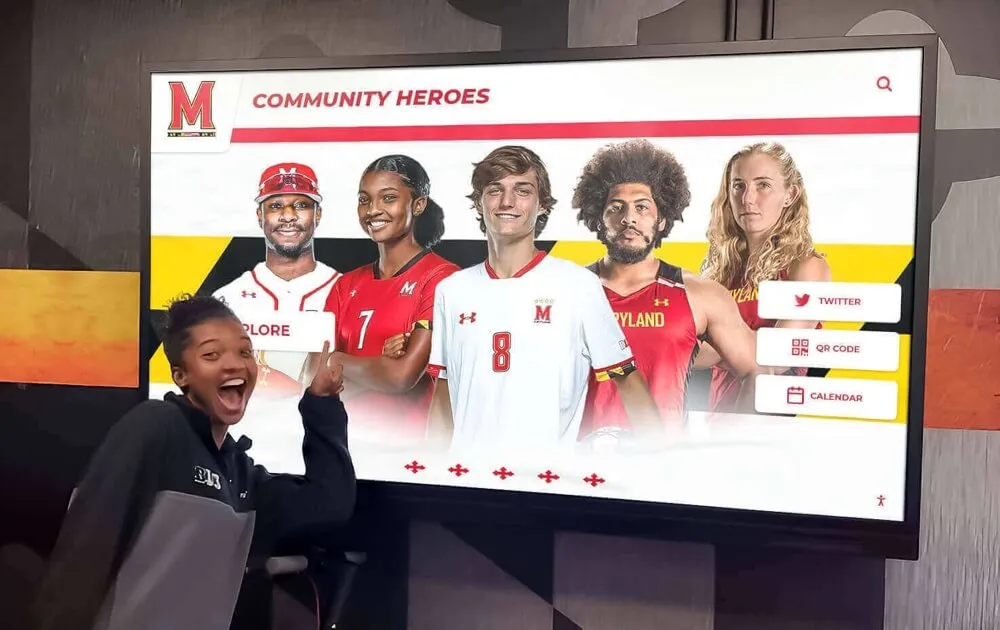
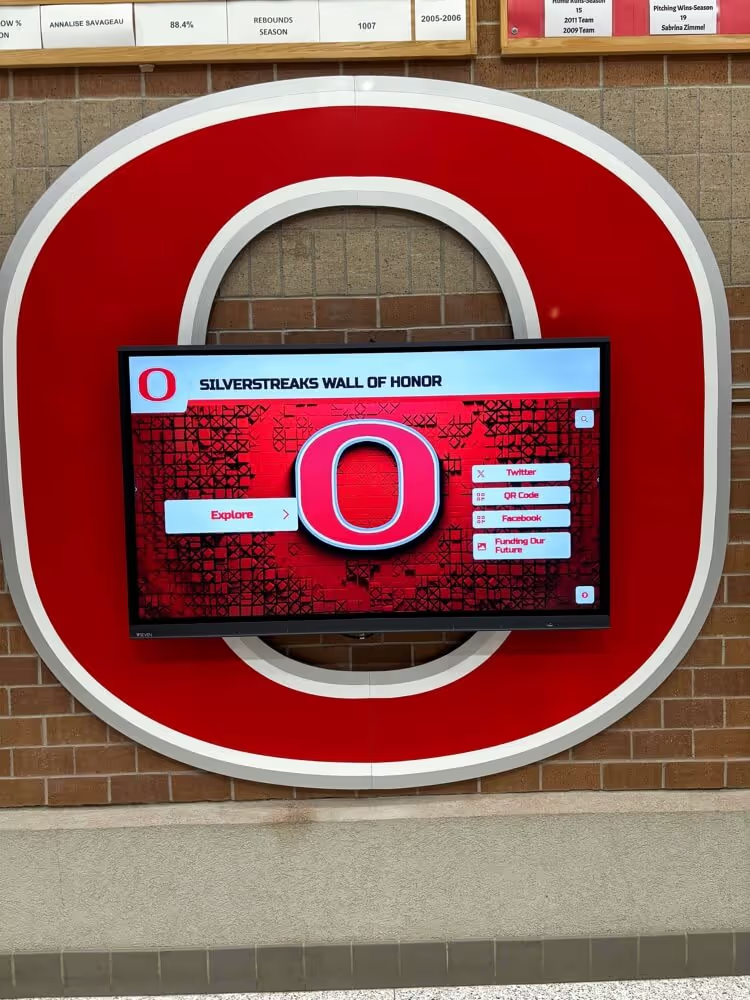
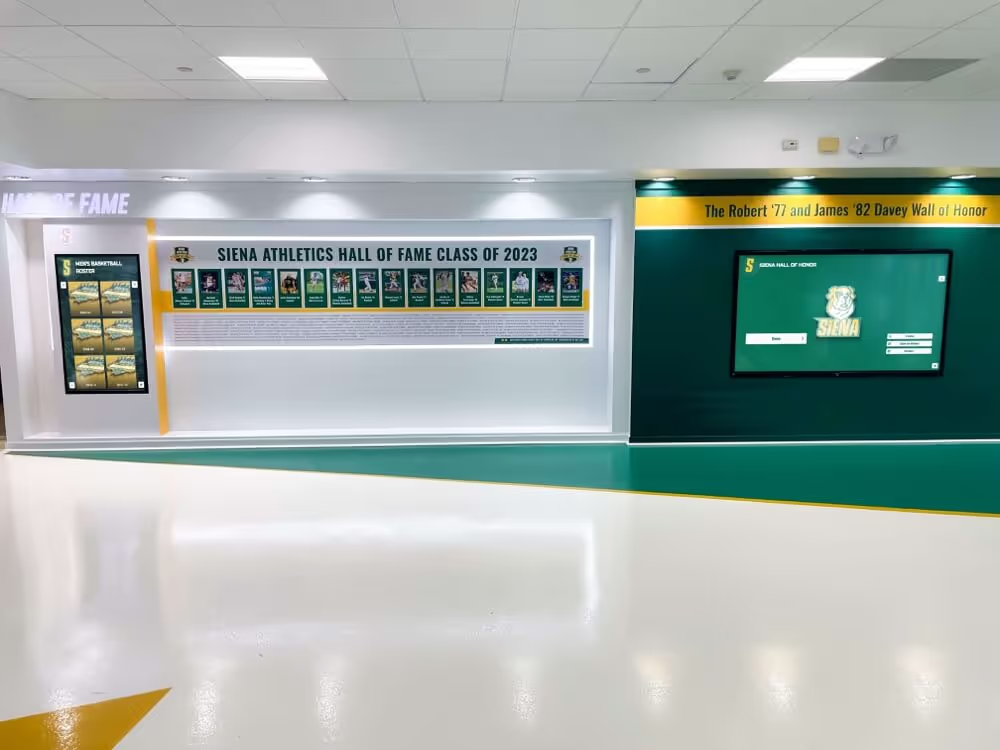
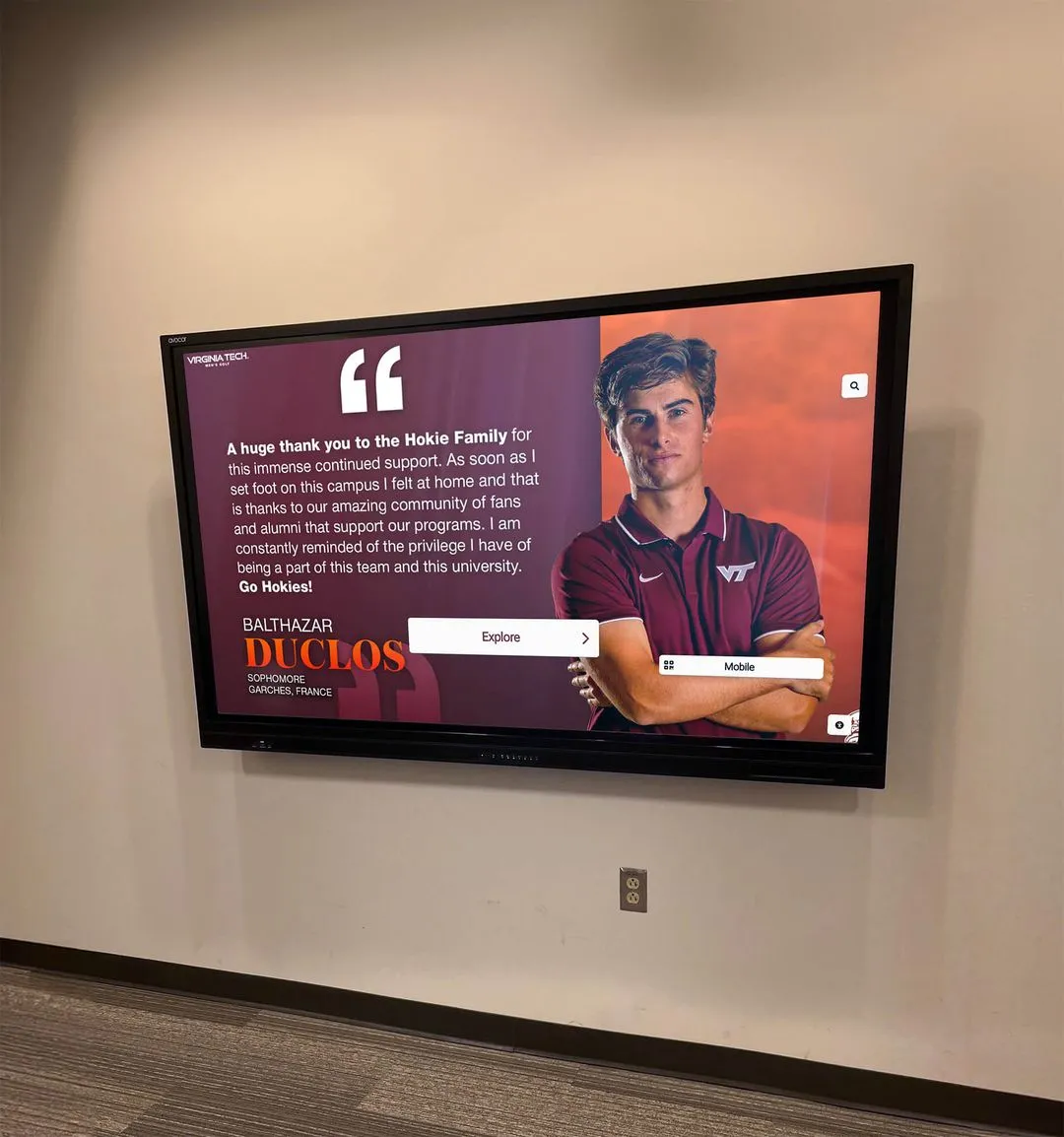
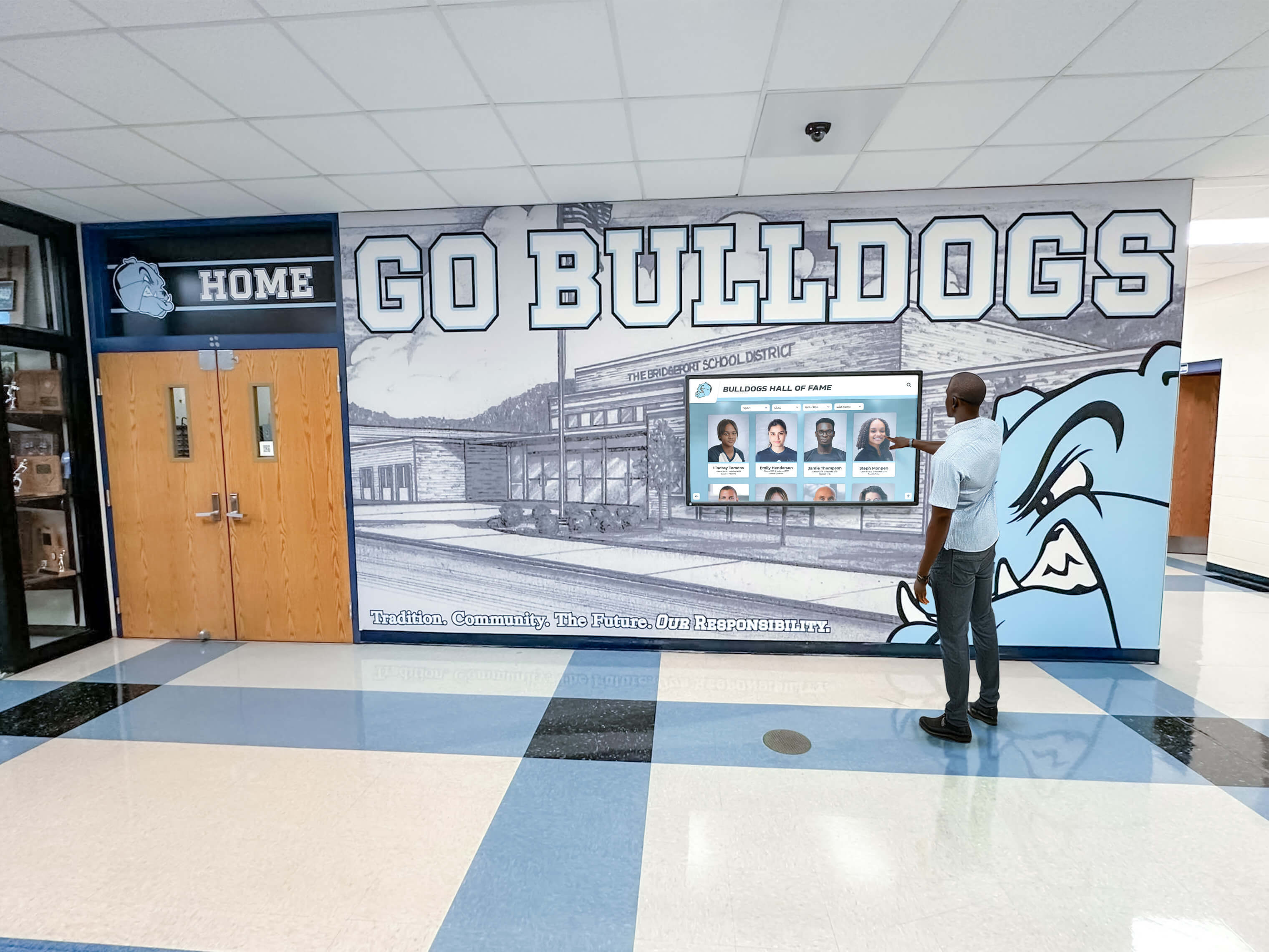
Digital displays integrate seamlessly into athletic facilities while providing unlimited recognition capacity
The Digital Recognition Solution for Swimming Programs
Modern digital plaque display systems overcome every traditional limitation through technology designed specifically for comprehensive swim team celebration.
Unlimited Recognition Capacity
A single touchscreen display accommodates thousands of swimmer profiles across unlimited seasons, events, and achievement categories. Digital systems showcase every school record holder throughout history, all-state and all-conference selections across decades, relay teams from every championship era, sectional and state qualifiers across all events, team captains and leadership recognition, and special achievement milestones like 100-win careers or Olympic Trial qualifiers—all without physical space constraints forcing difficult decisions about whose accomplishments receive acknowledgment.
Pool-Specific Configuration Management
Digital displays elegantly handle complex record-keeping requirements unique to aquatic programs:
Multiple Pool Configurations: Separate record displays for 25-yard short course, 25-meter short course, 50-meter long course, and different facility configurations throughout program history.
Age Group and Division Organization: Distinct records for varsity, junior varsity, age group divisions (8 & Under, 9-10, 11-12, 13-14, 15-18), boys’ and girls’ programs, and combined or separate team structures.
Event Category Organization: Comprehensive coverage of individual events, relay teams, individual medley combinations, diving programs, and combined swimming/diving achievements.
Historical Context Preservation: Clear designation showing which records apply to current pool configuration versus historical facilities, ensuring swimmers understand what times they’re chasing while honoring all achievements appropriately.
This organizational capability enables swimming-specific recognition impossible with traditional plaques limited by physical space and static categorization.
Real-Time Record Updates
Cloud-based content management enables instant recognition updates from any internet-connected device:
- Add new record holders within minutes of championship finals
- Update qualifying lists immediately after conference meets
- Correct errors instantly without expensive re-engraving
- Schedule recognition to publish at team banquets or season celebrations
- Refresh content regularly maintaining engagement and excitement
According to aquatic coaching associations, programs implementing digital recognition report that swimmers check displays daily during seasons to track records and achievements, creating engagement impossible with static plaques reviewed occasionally at best.
Explore effective digital record board approaches for comprehensive athletic achievement celebration.
Rich Multimedia Storytelling
Digital displays transform swim team recognition from name lists to compelling achievement celebration:
Race Video Integration: Embed championship race footage showing record-breaking performances, relay exchanges, and finish touches capturing achievement moments.
Photo Galleries: Showcase training dedication, team celebration, podium moments, and season highlights connecting records to real people and experiences.
Performance Analytics: Display split time progressions, season-best improvements, and comparative analysis showing how records were achieved.
Swimmer Profiles: Include biographical information, other sports participation, academic achievements, college commitments, personal statements about goals and training, and coach testimonials about dedication.
Historical Context: Connect current achievements to program legacy through decade-by-decade record progressions, era comparisons, and legendary swimmer features.
This storytelling capability creates meaningful recognition that celebrates not just times achieved but the dedication, training, and perseverance behind every accomplishment.
Key Features of Effective Digital Swim Team Displays
Understanding essential capabilities helps aquatic programs select recognition solutions meeting current needs while remaining flexible for future growth.
Interactive Navigation and Search Functionality
User-friendly interfaces make exploring swim team recognition intuitive for athletes, families, and visitors:
Comprehensive Search Tools
- Swimmer name search enabling instant profile access
- Event-specific filtering (freestyle, backstroke, butterfly, breaststroke, IM, relays, diving)
- Pool configuration selection (25Y, 25M, 50M, various facility eras)
- Year range filtering showing specific seasons or decades
- Team category selection (varsity, JV, age group, boys, girls, combined)
- Record type filtering (school records, conference records, state qualifiers, all-state selections)
Intuitive Touch Navigation
Effective systems feature simple swipe gestures familiar from smartphones, clear visual hierarchy emphasizing current records and recent achievements, consistent design patterns reducing learning curves, featured content highlighting priority recognition, and random swimmer showcases ensuring all achievers receive visibility beyond search-based discovery.
Split Time Analysis Display
For distance events, digital displays can show detailed split time breakdowns, lap-by-lap pace analysis, negative split patterns, and race strategy visualization helping swimmers and coaches understand how records were achieved while providing training insights.
Pool Deck Integration and Visibility
Strategic display placement maximizes recognition impact:
Primary Display Locations
Pool Deck Visibility: Large displays visible from starting blocks, spectator seating, and training areas keep records front-of-mind during practices and competitions.
Lobby and Entrance Areas: Welcome visitors with comprehensive achievement celebration demonstrating program excellence.
Team Areas and Locker Rooms: Motivational displays in athlete spaces inspire swimmers chasing records.
Weight Room and Dryland Training: Recognition in conditioning areas connects strength work to pool performance.
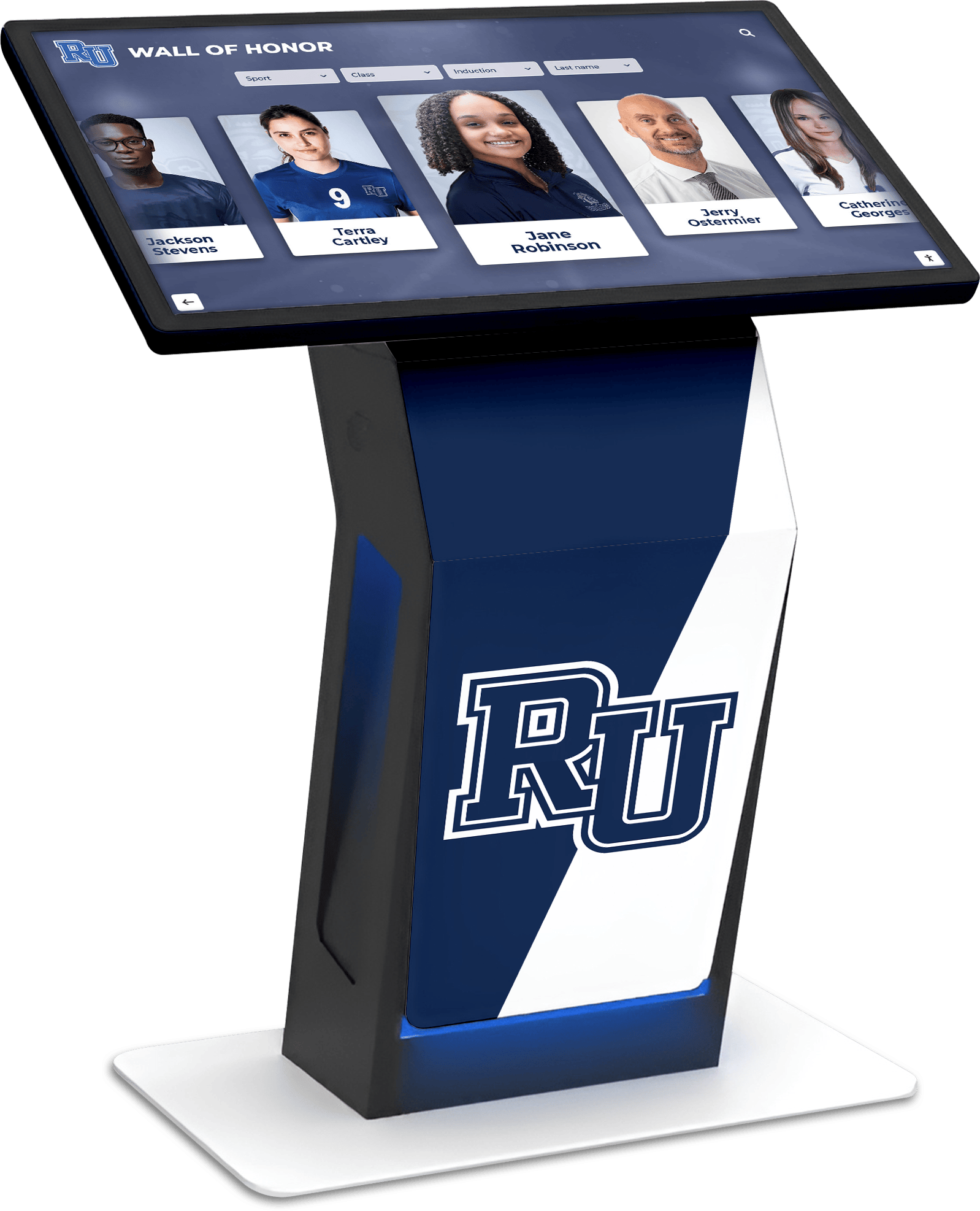
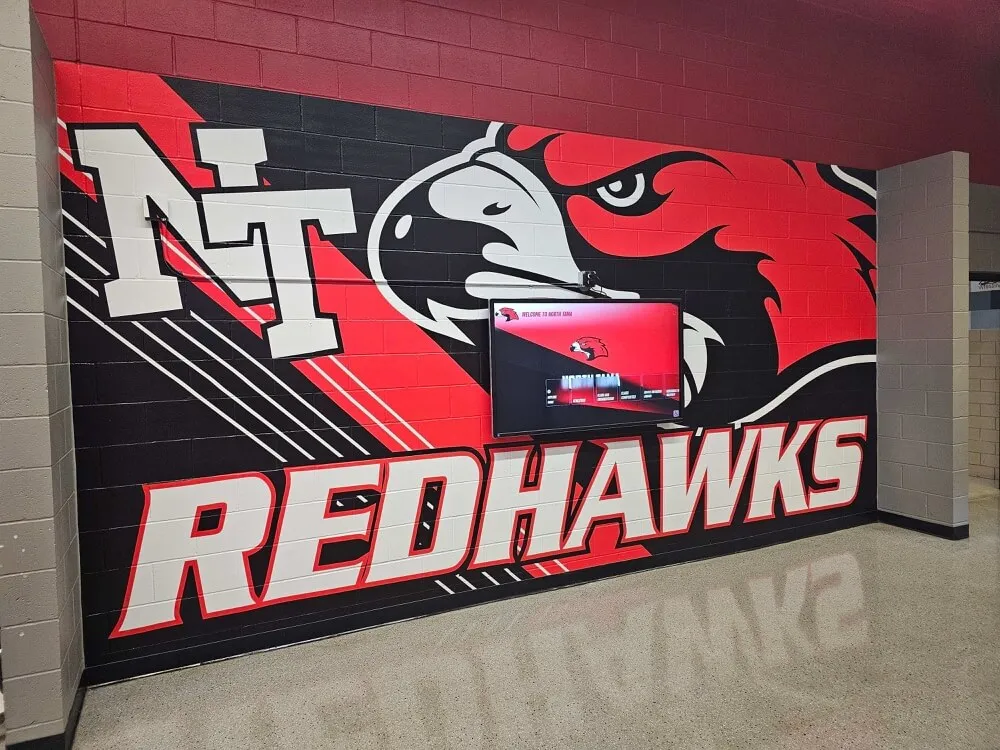
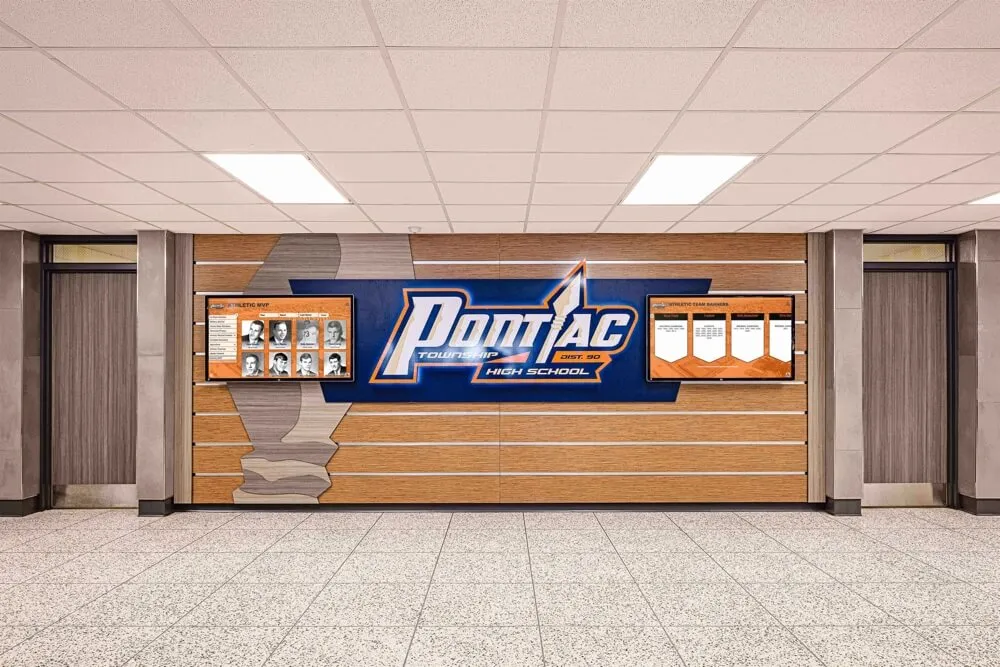
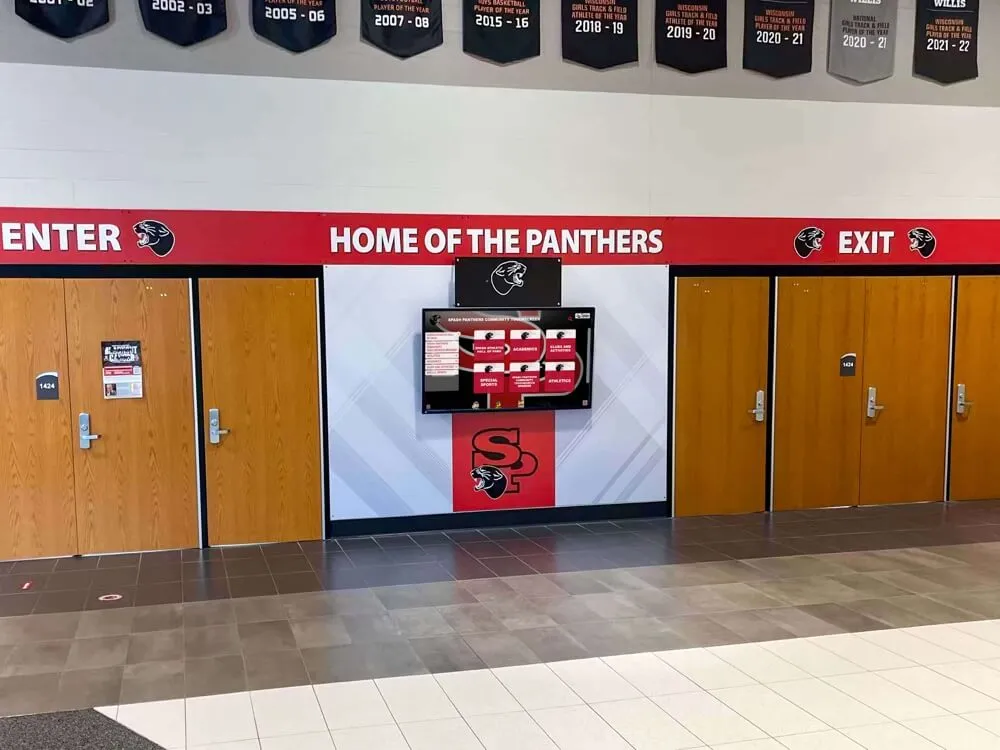
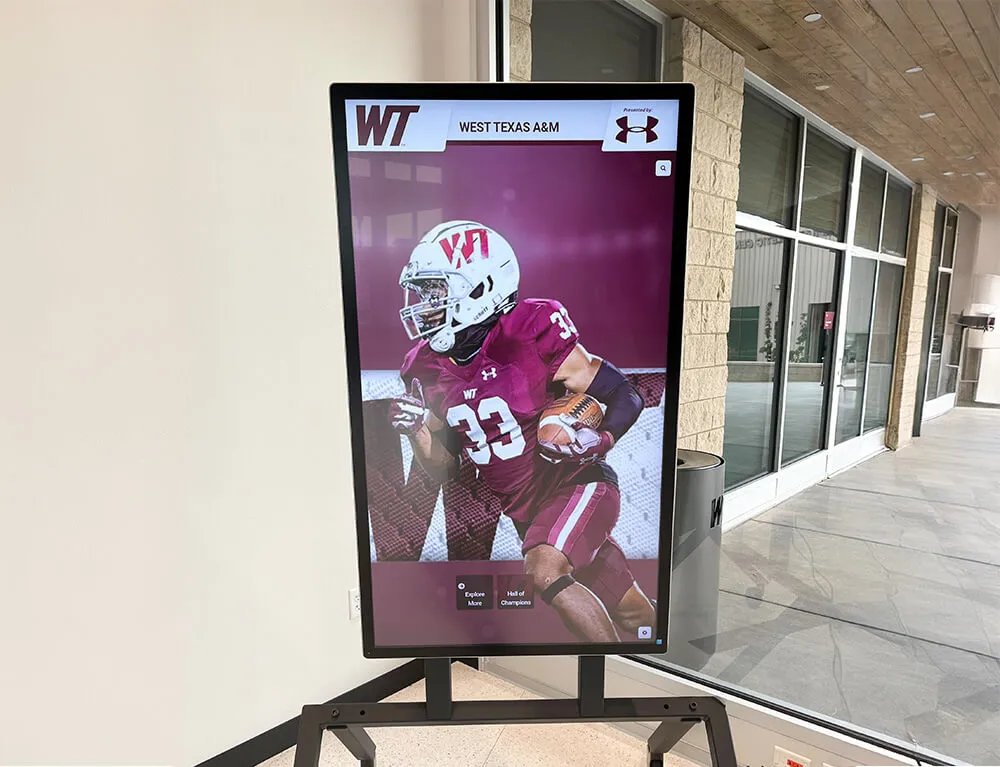
Freestanding kiosks provide versatile placement options for swim team recognition
Environmental Considerations for Pool Areas
When installing digital displays in natatorium environments, consider protective measures including commercial-grade displays rated for high-humidity environments, protective enclosures preventing moisture infiltration, adequate ventilation preventing condensation buildup, strategic positioning away from direct chemical exposure, and regular maintenance protocols ensuring reliable operation.
Many programs install primary interactive displays in climate-controlled lobby areas while using secondary viewing screens in more challenging pool deck environments.
Cloud-Based Content Management Systems
Intuitive administrative platforms simplify recognition maintenance:
User-Friendly Administration
Coaches and athletic staff should manage swimmer recognition without technical expertise through dashboards requiring no coding knowledge, bulk import tools for entire season rosters or record updates, drag-and-drop content organization, role-based permissions enabling appropriate staff access, automated backups protecting information, and preview functionality showing changes before publication.
Flexible Content Organization
Digital systems accommodate swimming-specific recognition structures including hierarchical event organization matching standard competition formats, relay team management showing all four swimmers plus alternates, dual record systems for different pool configurations, historical record archives preserving previous pool records, achievement category organization (records, all-conference, all-state, qualifiers), and coach and team leadership recognition.
Integration with Timing Systems
Advanced implementations can connect with swimming timing systems and meet management software, enabling automatic record identification when times exceed current marks, streamlined data transfer from meet results to recognition displays, real-time championship qualification tracking, and historical performance database integration.
Learn about comprehensive touchscreen software solutions designed for athletic recognition management.
Season and Meet Management
Organize recognition by season including current year highlights featuring recent achievements prominently, championship meet recap sections celebrating conference and state performances, season-best displays showing top performances even if not records, improvement tracking recognizing significant time drops, and historical season archives preserving team achievement across decades.
Implementing Digital Swim Team Recognition Systems
Successful implementation requires thoughtful planning ensuring recognition serves program goals effectively.
Needs Assessment and Planning
Begin with comprehensive evaluation establishing clear requirements:
Current Recognition Audit
- Inventory existing plaque walls, painted boards, and recognition approaches
- Identify coverage gaps and achievements not currently recognized
- Evaluate swimmer and family satisfaction with current acknowledgment
- Assess physical spaces available for digital displays
- Review technology infrastructure and connectivity
- Analyze budget availability for initial investment and ongoing costs
Stakeholder Input Gathering
Engage key constituencies including head coach perspectives on swimmer motivation and program culture, assistant coach and assistant input on operational feasibility, athletic director considerations regarding budget and facilities, booster club and parent perspectives on family engagement, current swimmer feedback on recognition preferences, and facility manager technical requirements.
Comprehensive stakeholder engagement ensures recognition systems align with diverse program needs while maintaining broad support.
Recognition Philosophy Development
Establish principles governing swimmer recognition:
- Commitment to honoring achievements across all eras equitably
- Balance between individual and team accomplishment celebration
- Standards for which achievements warrant recognition (school records, conference honors, state qualifiers, participation milestones)
- Historical preservation ensuring past swimmers remain acknowledged
- Privacy considerations respecting swimmer preferences
Clear policies prevent inconsistent decisions creating perceived inequities or approaches conflicting with program values.
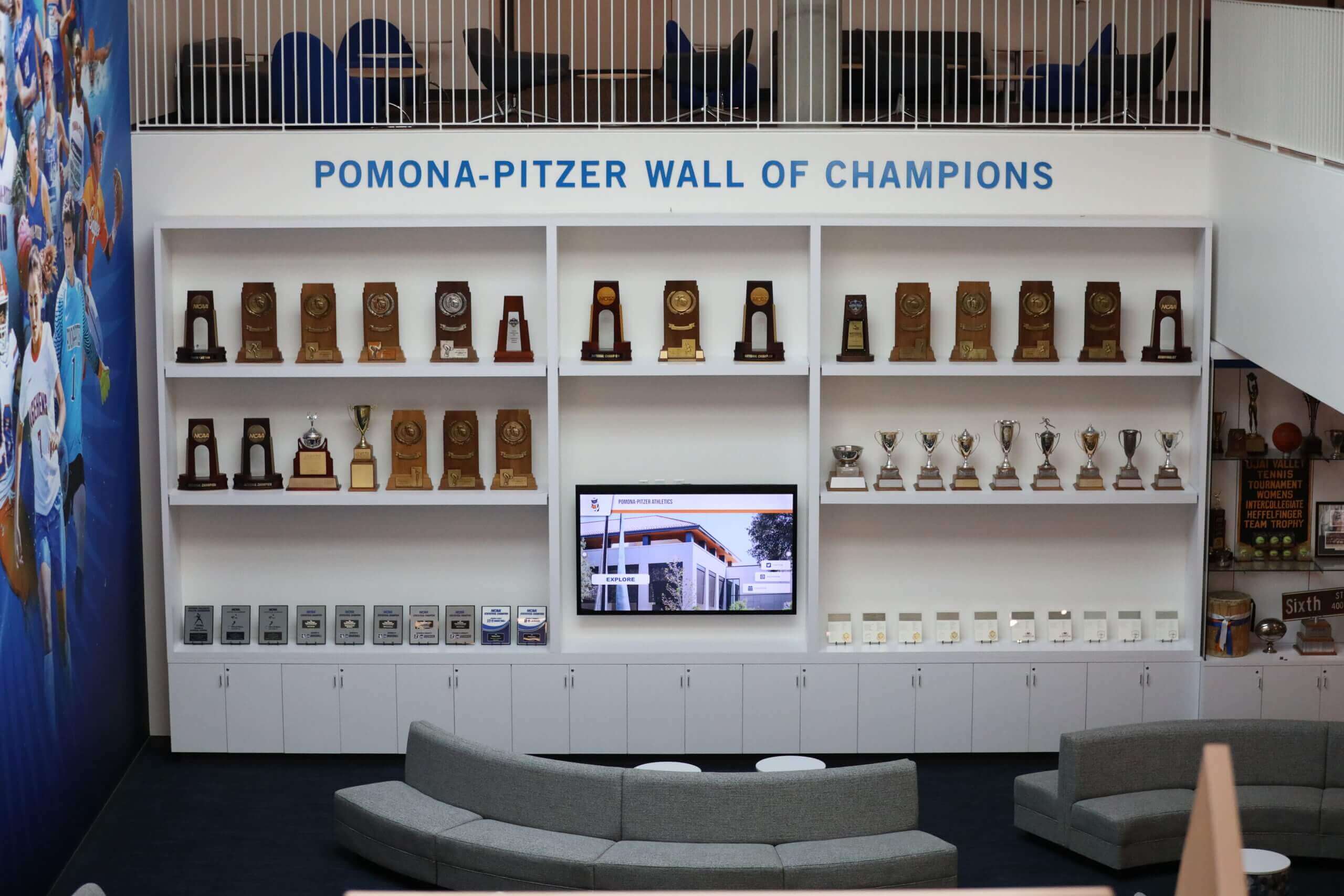
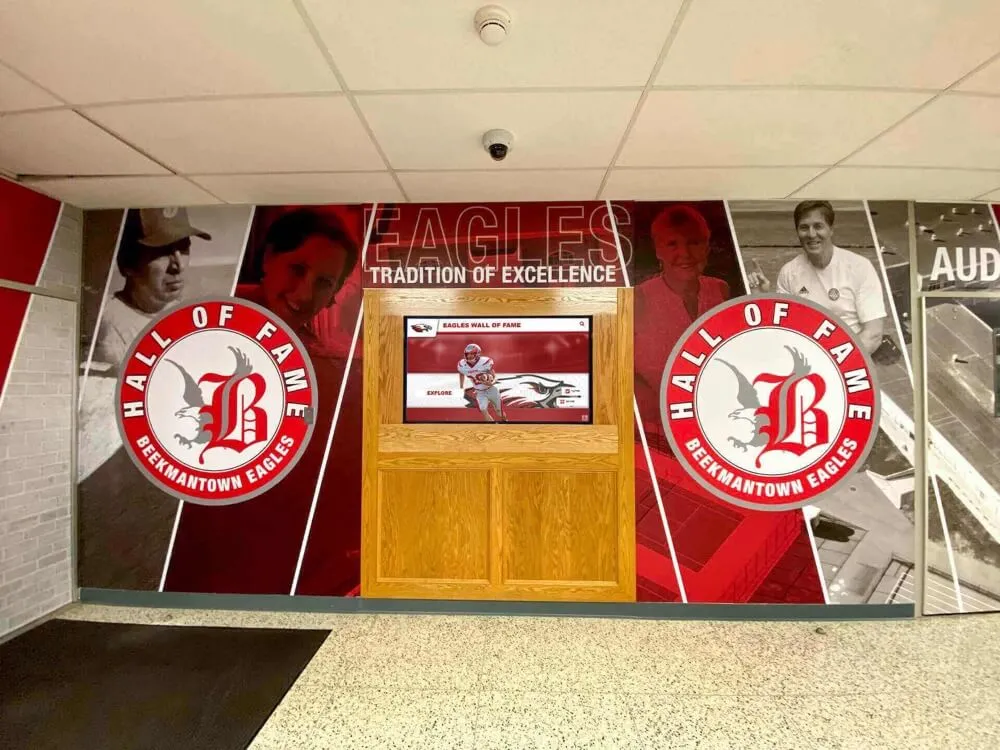
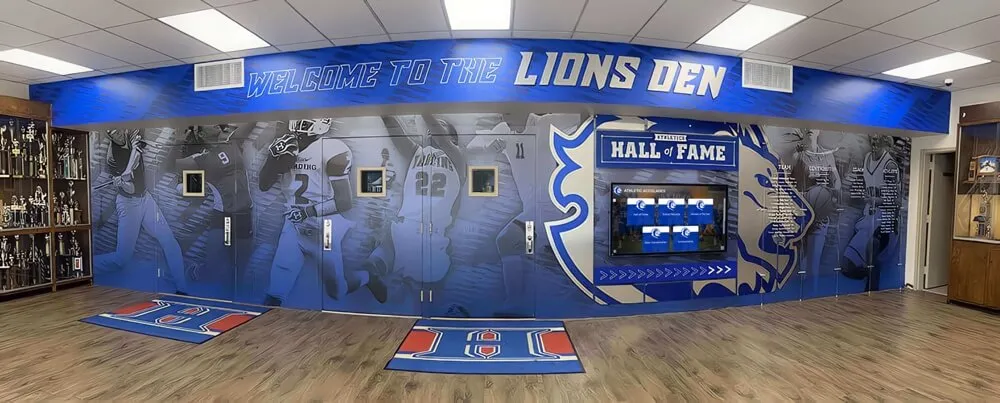
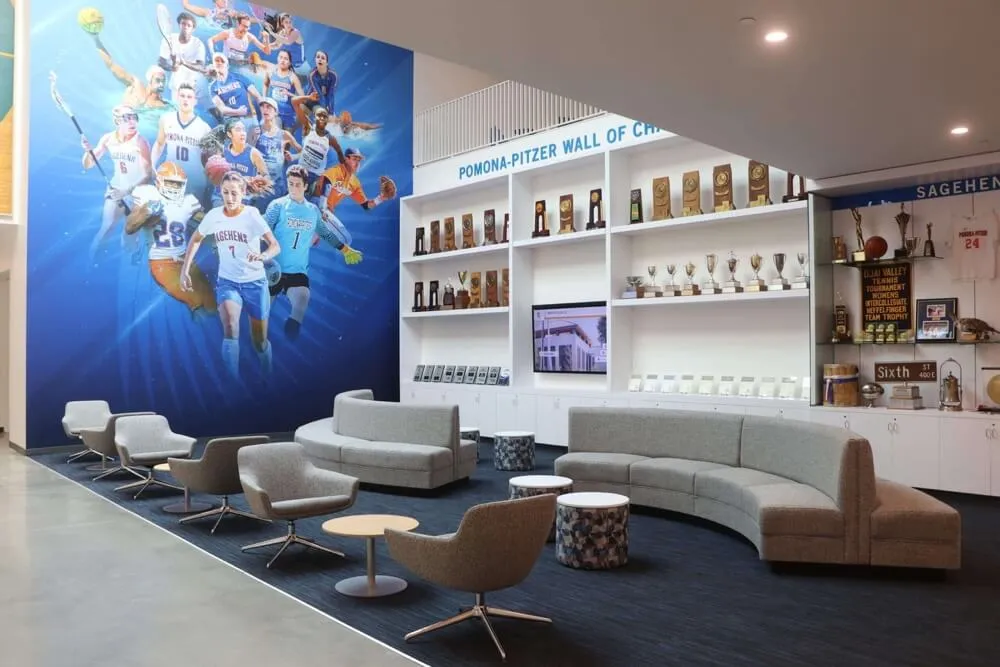
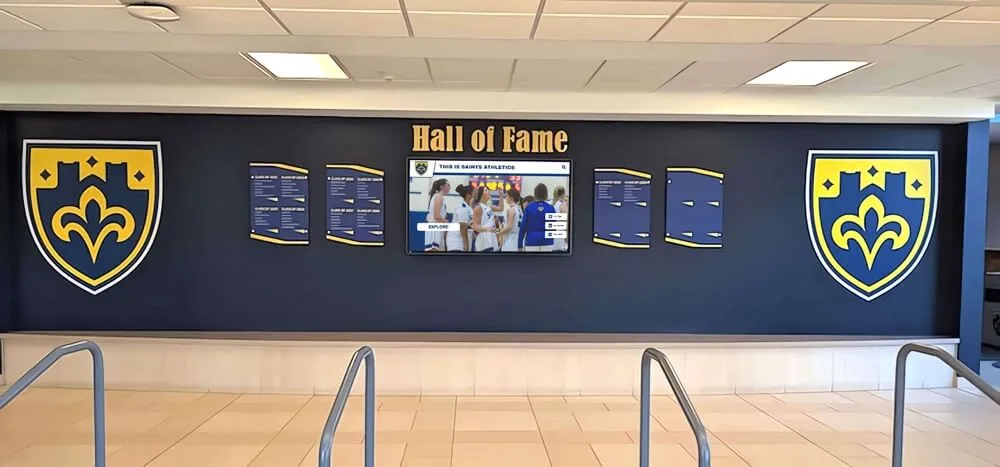
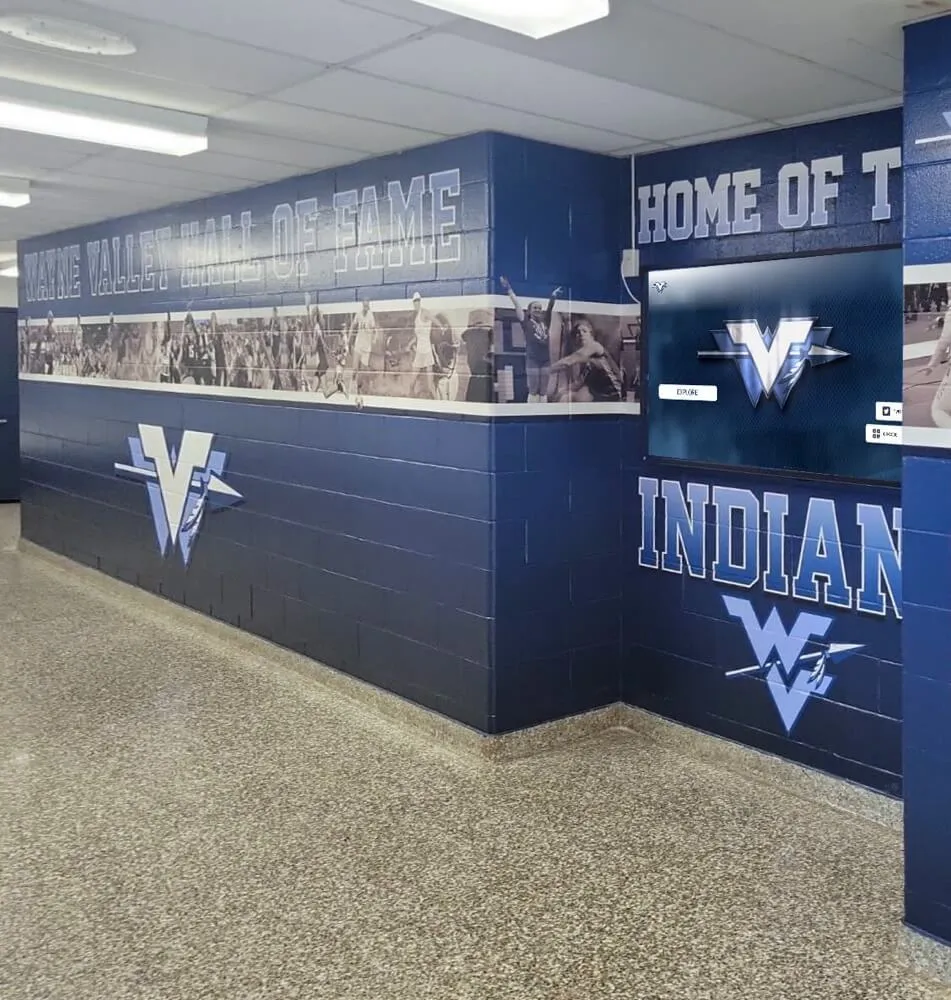
Strategic planning ensures recognition spaces become destinations that celebrate team excellence
Technology Selection and System Design
Choosing appropriate solutions requires careful evaluation:
Hardware Considerations
Display Size and Resolution: Select screens appropriate for viewing distance and space. Pool deck visibility typically requires 55-75" displays, while lobby areas may accommodate 42-55" screens or larger video wall configurations.
Touchscreen Quality: Commercial-grade capacitive touch technology ensuring responsive interaction even with chlorinated hands or humid conditions.
Environmental Rating: Look for displays rated for high-humidity environments (IP ratings indicating moisture resistance) when installing near pool decks.
Mounting Options: Wall-mounted displays, freestanding kiosks, or integrated video walls depending on facility architecture and traffic patterns.
Connectivity Requirements: Hardwired Ethernet connections preferred for reliability, robust WiFi as backup, and adequate power infrastructure.
Software Platform Evaluation
Assess content management capabilities including swimming-specific organization accommodating events, relays, and pool configurations, intuitive administrative interfaces requiring minimal coaching staff technical expertise, robust import tools working with standard meet management software, customization options reflecting team branding and colors, multimedia support for videos, photos, and diverse content, and security features protecting swimmer information appropriately.
Display Duration and Lifecycle
Commercial-grade digital displays typically operate reliably for 7-10 years before requiring replacement. Quality systems should include extended warranty options, replacement component availability, planned upgrade pathways as technology improves, and vendor long-term viability ensuring continued support.
Explore digital trophy case systems that complement swim team recognition for comprehensive athletic celebration.
Content Development and Data Migration
Comprehensive content preparation ensures polished implementation:
Historical Record Research
Many programs lack complete digital records of swimming achievements. Implementation requires researching old meet programs and results, reviewing championship meet documentation, interviewing longtime coaches about historical records, examining yearbooks and team photos, and verifying records through state association databases when available.
This research creates opportunities to discover and celebrate forgotten achievements while building comprehensive archives.
Swimmer Profile Information
Determine what information to include for each recognized swimmer:
Essential Elements: Full name, graduation year or age group, event and time achieved, date and meet where record was set, pool configuration.
Enhanced Content: Swimmer photos in competition or team settings, other events competed in, relay team contributions, personal best progressions, college commitments and recruiting, coach quotes about dedication, personal statements about goals and training.
Privacy and Permissions
Always respect swimmer and family preferences through explicit consent for enhanced profiles beyond basic records, clear communication about public display visibility, easy processes for updating preferences, and options for recognition without personal photos or detailed information.
Programs should never display information swimmers haven’t approved, maintaining trust essential for team culture.
Initial Content Organization
Structure recognition logically including current school records prominently featured, recent season highlights and achievements, championship team celebrations, decade-by-decade historical archives, all-time top 10 performances by event, and special achievement milestones (100-win swimmers, state champions, Olympic Trial qualifiers).
Thoughtful organization helps visitors navigate content intuitively while ensuring all eras receive appropriate visibility.
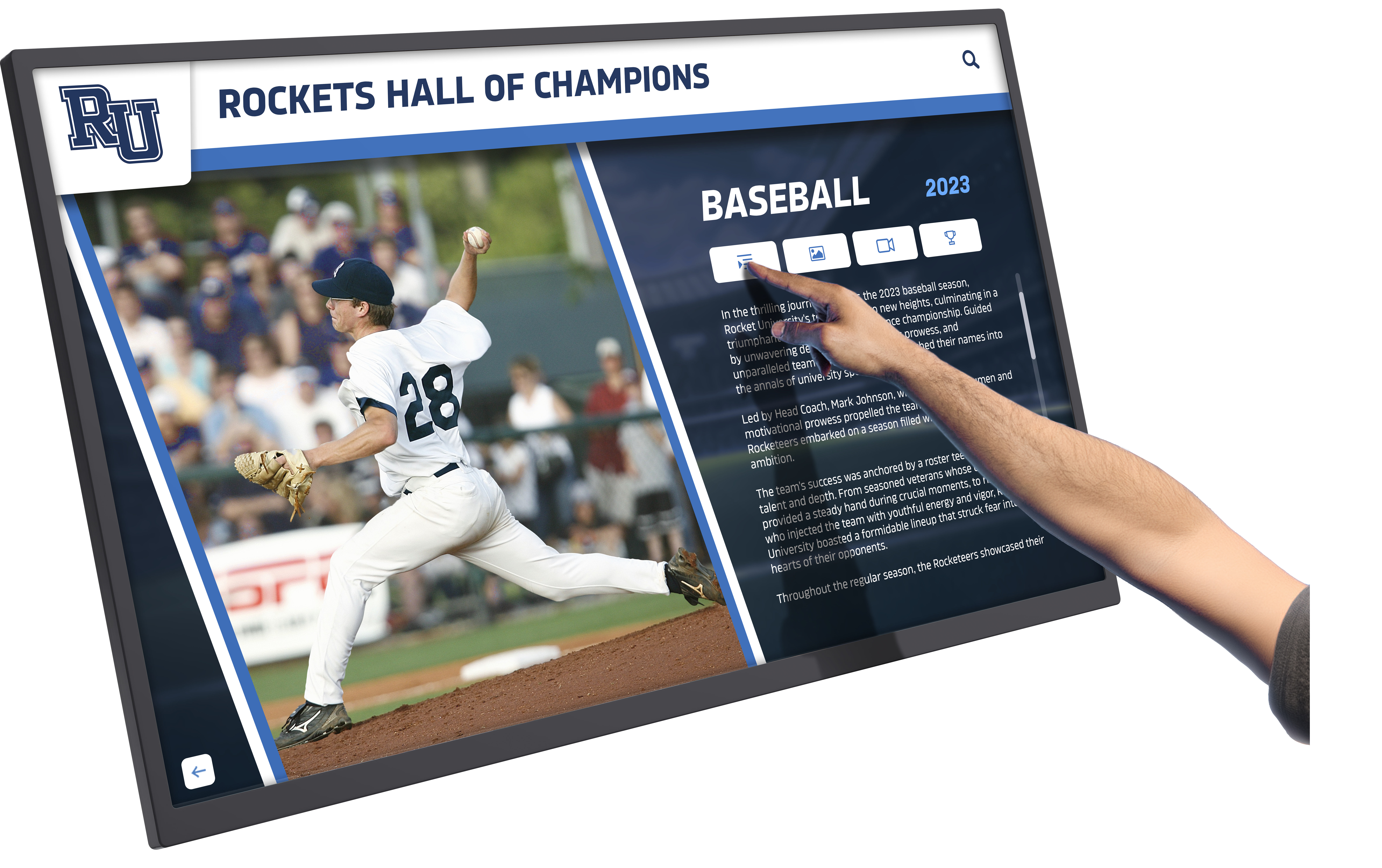
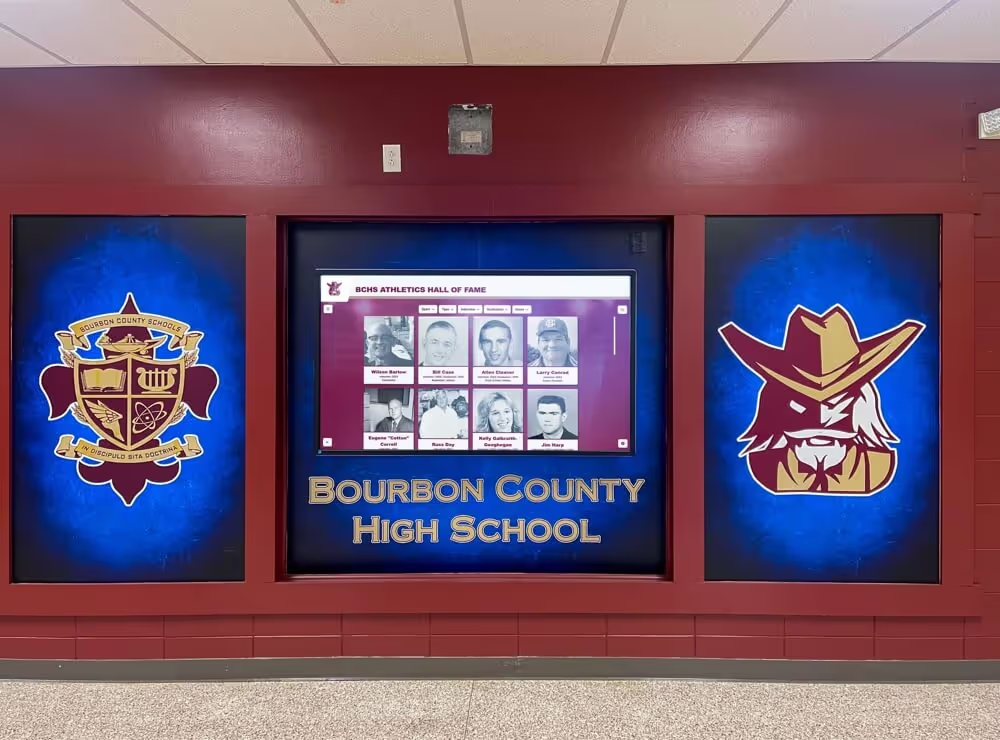
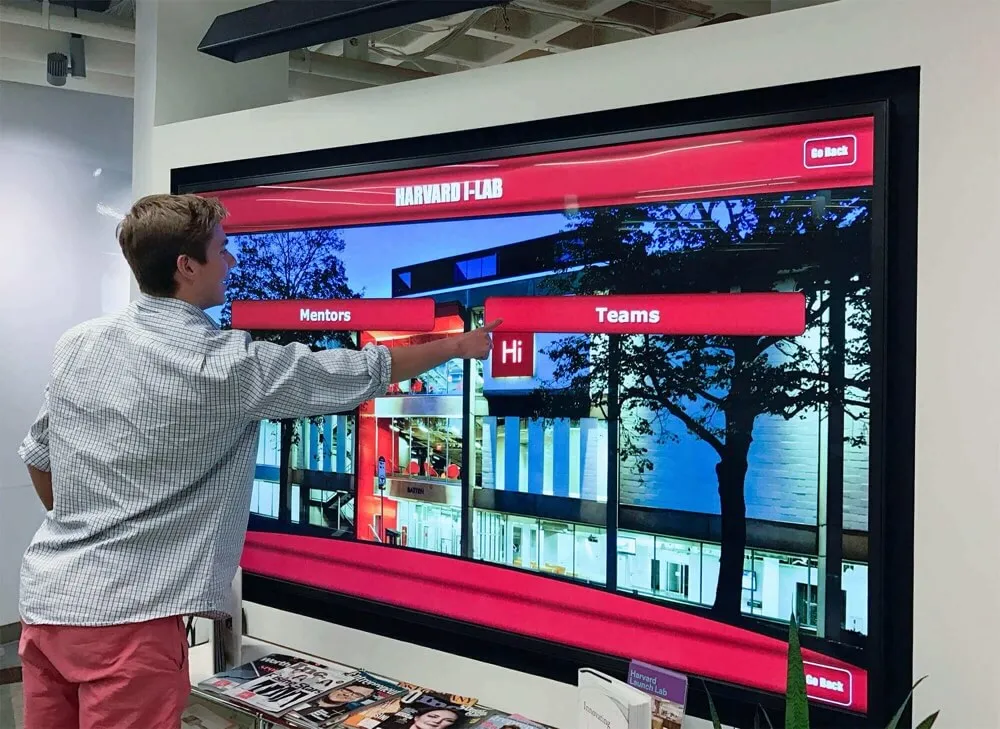
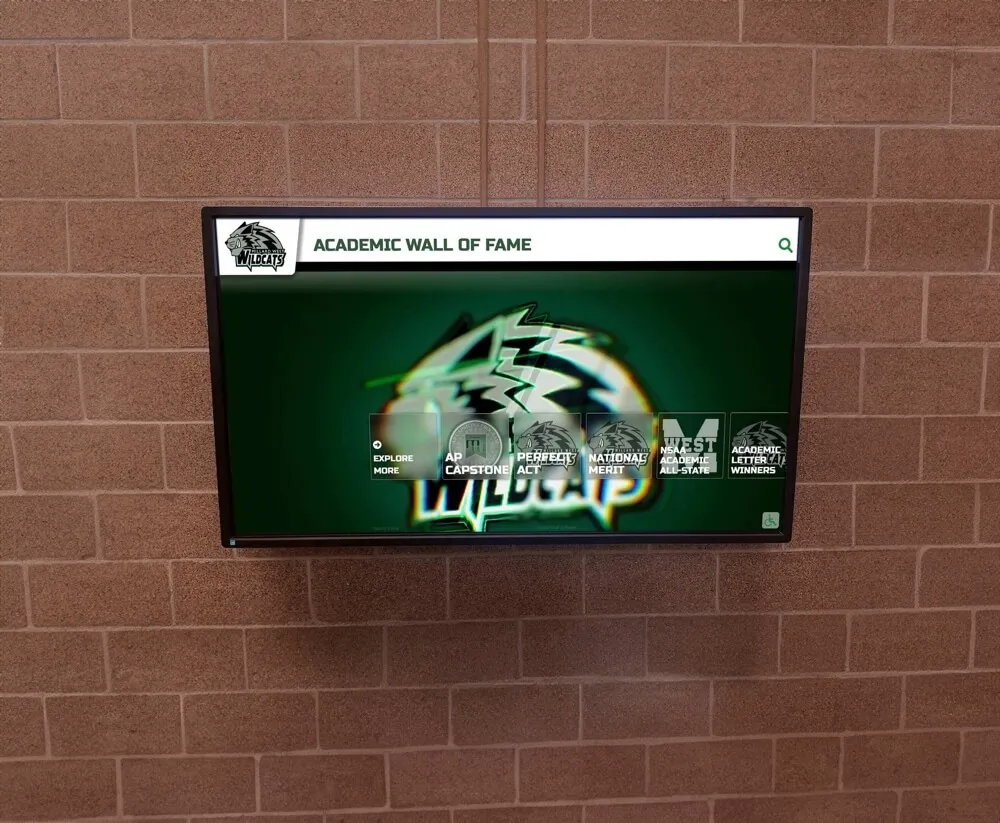
Intuitive touchscreen interfaces make exploring swim team achievements engaging for all visitors
Cost Analysis: Investment in Digital Swim Recognition
Understanding comprehensive costs enables informed decisions and appropriate budget allocation.
Initial Investment Components
Digital swim team display costs vary based on system scope and customization:
Hardware Expenses
- Commercial-grade touchscreen displays: $2,500-$9,000 depending on size and environmental rating
- Media players or dedicated computers: $600-$2,500
- Protective enclosures for pool environments: $1,000-$3,000 when required
- Mounting hardware and installation: $500-$2,500
- Freestanding kiosks when preferred: $3,500-$9,000
- Network infrastructure upgrades if needed: $500-$2,000
Software and Platform Costs
- Rocket Alumni Solutions platform setup: $1,500-$6,000
- Swimming-specific customization and templates: $2,000-$5,000
- Initial content creation and historical data entry: $2,000-$8,000 depending on program history depth
- Training and onboarding for coaching staff: $500-$1,500
- Integration with timing systems if applicable: $1,500-$4,000
Professional Services
- Display installation and mounting: $800-$2,500
- Electrical work and network connectivity: $500-$2,500
- Content design and template development: $1,500-$4,000
- Project management and coordination: $1,000-$2,500
Total Initial Investment Range
Most aquatic programs invest $12,000-$40,000 for comprehensive digital swim team recognition implementation, with variation based on display size and quantity, number of installation locations, historical content depth and research requirements, environmental protection needs for pool deck areas, and professional services utilized.
This investment typically equals or moderately exceeds traditional plaque wall costs while providing significantly enhanced capabilities and long-term cost advantages.
Ongoing Operational Costs
Annual expenses ensure continued effectiveness:
Subscription and Platform Fees
- Rocket Alumni Solutions annual subscription: $800-$3,500 depending on features
- Cloud hosting and content storage typically included
- Software updates and platform improvements included
- Technical support and customer service access
Maintenance and Support
- Extended warranty or service contracts: $400-$1,200 annually
- Display cleaning and physical maintenance: minimal in climate-controlled areas
- Periodic professional servicing and calibration: $300-$800 annually
- Replacement components as needed over lifespan
Content Updates and Enhancements
- Coaching staff time for routine updates: 2-4 hours monthly during season
- Professional photography for swimmer profiles: $500-$2,000 annually
- Race videography and multimedia content: $1,000-$3,000 annually for championship coverage
- Design services for major content refreshes: $500-$1,500 annually
Annual Ongoing Cost Range
Expect $2,500-$9,000 in annual operating costs depending on content update frequency and multimedia investment. These costs remain relatively consistent regardless of how many new records are set or swimmers are added—a key advantage over traditional plaques requiring $75-$300 per engraving for every update.
Learn about water polo record board solutions that demonstrate cost-effective approaches for aquatic sports.
Return on Investment Considerations
Digital swim recognition provides measurable value beyond simple cost comparisons:
Cost Comparison to Traditional Approaches
Traditional brass plaque walls cost $5,000-$25,000 for initial installation with capacity for just 50-150 swimmers. Each subsequent addition costs $75-$300 for engraving plus $50-$100 installation, totaling $125-$400 per swimmer. Competitive programs adding 10-25 new recognitions annually spend $1,250-$10,000 per year on updates alone.
Painted pool deck record boards cost $3,000-$8,000 initially but require complete repainting every 2-3 years at similar costs. Over 10 years, traditional approaches commonly exceed $20,000-$40,000 in total investment while digital systems cost $20,000-$45,000 including all hardware, software, and content—with unlimited capacity and far superior functionality.
Swimmer Motivation and Retention
Programs report that visible, engaging record displays significantly impact athlete motivation through clear goal-setting showing swimmers exactly what times to chase, daily visibility keeping records front-of-mind during training, peer inspiration as teammates achieve recognition, program pride building team identity, and family engagement strengthening support networks.
Improved retention—even a 5-10% reduction in mid-season dropouts or year-to-year continuity losses—substantially impacts program health and reduces constant replacement of departing swimmers.
Recruiting and Program Reputation
Prominent achievement recognition enhances recruiting through facility tours showcasing program excellence, prospective swimmer family impressions demonstrating commitment to recognition, social media content highlighting achievements extending program visibility, and community perception building reputation beyond immediate participant families.
Strong programs report that professional recognition displays factor meaningfully in recruiting conversations, particularly with families evaluating multiple programs.
Best Practices for Swim Team Digital Recognition Content
Thoughtful content strategy maximizes recognition effectiveness and swimmer engagement.
Record Organization and Display Hierarchy
Clear structure helps visitors navigate swim-specific complexity:
Event Organization Systems
Most programs organize records following standard competition structures:
Individual Events by Stroke and Distance
- Freestyle: 50, 100, 200, 500, 1000, 1650 (or meters equivalents)
- Backstroke: 50, 100, 200
- Breaststroke: 50, 100, 200
- Butterfly: 50, 100, 200
- Individual Medley: 200, 400
Relay Events
- Freestyle Relays: 200, 400, 800
- Medley Relays: 200, 400
- Mixed/Co-ed Relays when applicable
Diving Programs
- 1-Meter Diving
- 3-Meter Diving when applicable
Pool Configuration Designation
Clearly mark records by pool type:
- 25-Yard Short Course (SCY) - most common for US high schools
- 25-Meter Short Course (SCM) - international short course
- 50-Meter Long Course (LCM) - Olympic and summer championship standard
- Historical facility configurations no longer in use
Visual distinction through color coding, icons, or clear labeling prevents confusion about which records apply to current pool.
Intuitive organization enables easy exploration of swim team records and achievements
Swimmer Profile Content Strategy
Individual athlete pages create meaningful recognition:
Essential Profile Elements
- Full swimmer name and preferred nickname
- Graduation year or current age group
- Record event, time, and date achieved
- Pool configuration and facility location
- Meet and competition level (league championships, sectionals, state)
- Previous record holder creating historical connection
Enhanced Profile Content
When swimmers consent, profiles can include professional action photography from competitions, training dedication photos, team photo participation, progression charts showing improvement across seasons, relay contributions beyond individual records, academic achievements and honors, college commitments and recruiting, coach testimonials about work ethic and leadership, and personal statements about goals and training philosophy.
Historical Swimmer Features
For legendary swimmers from past decades, enhanced profiles might include career achievement summaries, multiple records held, state and national recognition, college swimming careers, post-graduation athletic involvement, current profession and location when appropriate, and reflection quotes about program impact.
These historical connections help current swimmers understand program legacy while honoring contributions across all eras equitably.
Relay Team Recognition Strategy
Relay events require specialized recognition approaches:
All Four Swimmers Equally Prominent
Relay recognition must acknowledge all contributors equally—displaying names in swimming order (backstroke, breaststroke, butterfly, freestyle for medleys), individual split times showing each swimmer’s contribution, alternates who competed in preliminaries, and coaches who built the relay combination.
Relay Evolution Stories
Championship relay teams often reflect years of development. Enhanced relay features might show progression across seasons as the relay improved, individual swimmer development preparing for relay roles, strategic combination decisions by coaches, and championship race footage capturing relay exchanges and finishes.
Mixed and Co-ed Relay Celebration
Programs with combined teams should prominently celebrate co-ed relay achievements, demonstrating how boys and girls work together in these unique events building program unity.
Explore effective approaches for track and field digital displays that translate well to swimming relay recognition.
Championship and Team Achievement Features
Beyond individual records, celebrate collective success:
Conference and League Championships
Create dedicated sections for team championships including championship year and final standings, individual event winners, relay championship teams, point scorers and their contributions, coaching staff leadership, and team photos capturing celebration.
State and National Qualification
Many swimmers achieve state meet qualification or national consideration without setting school records. Recognize these accomplishments through qualifier lists by year and event, state meet placers and scoring swimmers, All-America recognition when achieved, and national ranking achievement.
Milestone Achievements
Celebrate special accomplishments including 100-win swimmers across all events, team captains and leadership positions, Olympic Trial qualifiers, record progression showing how marks improved over decades, and undefeated season swimmers when applicable.
Training and Dedication Features
Consider including content celebrating the work behind achievements such as total yards logged in training seasons, early morning practice dedication, strength and conditioning progression, nutrition and recovery commitment, and academic excellence alongside athletic achievement.
This holistic recognition celebrates not just times achieved but the complete swimmer development your program facilitates.
Specialized Applications: Digital Recognition Across Aquatic Programs
Different program types have unique recognition needs and opportunities.
High School Swimming Programs
Secondary school aquatic teams benefit from comprehensive recognition:
Facility Integration
High school pools typically feature displays in natatorium lobbies and entrances, pool deck areas visible during practices, athletic hallways connecting to broader school recognition, locker room areas for team motivation, and weight room spaces connecting strength work to performance.
Content Specific to High Schools
- Four-year career achievement tracking for varsity swimmers
- JV and freshman team recognition beyond varsity-only focus
- Academic All-American and scholar-athlete honors
- College commitment and recruiting celebration
- Senior leader and captain recognition
- State association honors and all-conference selections
Multi-Sport Athlete Integration
Many high school swimmers compete in multiple sports. Recognition can connect to comprehensive athletic recognition programs celebrating well-rounded achievement.
Club and Year-Round Programs
USA Swimming clubs have distinct recognition opportunities:
Age Group Progression Display
Club programs track swimmers across many years and age groups. Recognition systems should showcase swimmer progression from 8&U through senior development, time standard achievement (BB, A, AA, AAA, AAAA), Junior Olympics and Futures qualification, time improvement percentages across seasons, and National Age Group Top 16 recognition.
Meet Type Organization
Club swimmers compete in diverse meet formats requiring recognition for long course summer season records, short course yards winter season records, short course meters when applicable, championship meet qualification (Zones, Sectionals, Futures, Junior Nationals, National Championships), and Olympic Trial participation.
Learn about comprehensive JUCO athletics recognition systems applicable to club program organization.
College and University Aquatic Programs
Collegiate swimming presents unique recognition complexity:
NCAA Division-Specific Content
University programs should celebrate division championship participation, conference championship performances, NCAA All-American recognition, academic All-American honors, Olympic Trial participation and qualification, and US National Team representation.
Recruitment and Roster Management
College programs can use recognition to support recruiting through prospective student-athlete tour engagement, highlight reels of championship performances, academic achievement alongside athletic excellence, alumni career progression features, and professional and Olympic swimmer connections.
Recreation and Community Aquatic Centers
Public facilities serve diverse constituencies:
Community Program Recognition
Recreation centers might celebrate learn-to-swim program graduates, summer league championship teams, masters swimming records and achievements, water fitness program milestones, and community swim meet participation.
Inclusive Achievement Celebration
Community programs often emphasize participation and personal achievement over pure competitive results, recognizing participation milestones, personal best improvements, returning participants across decades, volunteer coaches and officials, and family multi-generational involvement.
This inclusive approach makes aquatic facilities welcoming community gathering spaces rather than exclusive competitive environments.
Advanced Features and Future Innovations
Understanding emerging capabilities helps programs plan for continued effectiveness.
Live Meet Integration and Real-Time Updates
Advanced systems increasingly connect directly to competition:
Automatic Record Detection
Integration with timing systems can identify potential records during competitions, automatically flag new school records as they occur, update displays in real-time during championship meets, and generate instant social media content celebrating new records.
Live Result Displays
During home meets, digital recognition displays can temporarily show live meet results, heat and lane assignments, current scores and standings, and upcoming event schedules—transforming recognition systems into dynamic meet information hubs.
Championship Countdown Features
Leading up to championship meets, displays can highlight swimmers to watch, qualifying time standards needed, historical championship performances, and current season best times creating excitement and motivation.
Video Analysis and Technique Features
Emerging recognition systems integrate performance analysis:
Race Video Libraries
Digital platforms can maintain comprehensive video archives of championship races, record-breaking performances, technique exemplar footage, and race strategy demonstrations helping current swimmers learn from past excellence.
Split Time Visualization
Advanced displays might show graphical split time analysis, pace comparison across lanes, turn and underwaters timing data, and finish technique breakdown helping swimmers and coaches understand how fast times are achieved.
Stroke Technique Features
Educational content within recognition displays can showcase proper technique from elite swimmers, drill progressions for improvement, training philosophy from successful coaches, and sport science insights about swimming performance.
Learn about comprehensive digital storytelling approaches for athletic programs applicable to swimming recognition.
Social and Community Connection
Digital recognition increasingly facilitates community building:
Alumni Connection Features
Graduated swimmers can access recognition from anywhere through web-based platforms, maintain profile updates with college swimming careers and post-graduation life, mentor current swimmers chasing their records, and participate in virtual alumni meets and reunions.
Social Sharing Integration
Current swimmers can share their recognition achievements on personal social media, celebrate teammates’ accomplishments, and build program visibility through digital word-of-mouth extending recognition reach exponentially.
Family Engagement Tools
Parents and family members might access recognition displays remotely from any location, receive notifications when swimmers achieve recognition milestones, and share accomplishments with extended family networks.
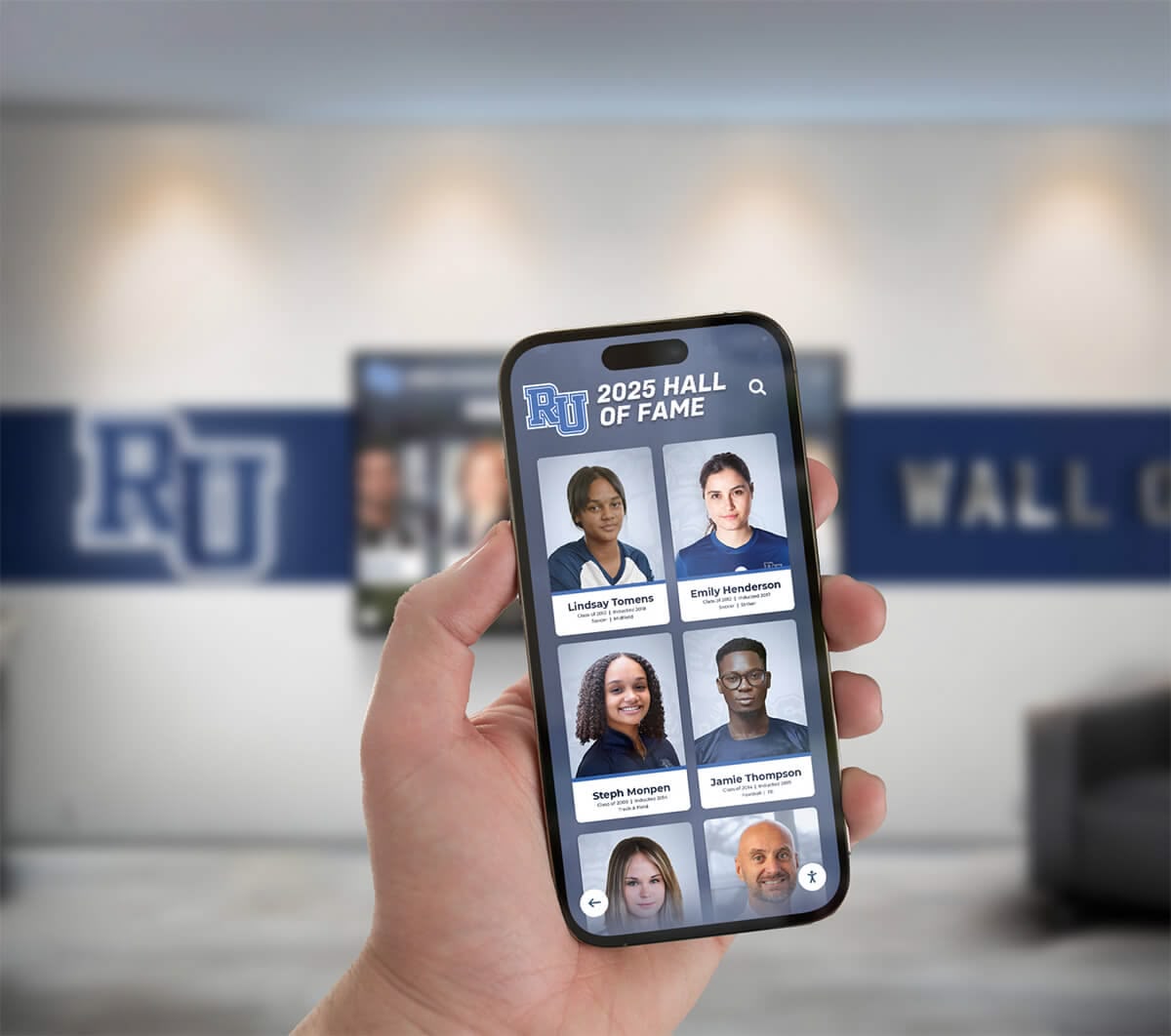
Web and mobile integration extends swim team recognition reach far beyond physical facility locations
Overcoming Implementation Challenges
Understanding common obstacles helps programs avoid problems:
Historical Data Challenges
Challenge: Incomplete Historical Records
Many programs lack comprehensive records of past achievements, with gaps in meet results, missing swimmer information, or uncertainty about exact times and dates.
Solution: Phased Implementation with Research
Begin with recent, well-documented swimmers and records, phase historical research over months or years, engage longtime coaches and alumni to fill gaps, acknowledge when exact information is uncertain, and celebrate what is known while continuing to research incomplete records.
Historical research itself creates valuable program connections as alumni share memories and information.
Stakeholder Resistance
Challenge: Preference for Traditional Recognition
Some coaches, administrators, or community members prefer familiar brass plaques over digital alternatives.
Solution: Education and Hybrid Approaches
Demonstrate digital advantages through examples from peer programs, implement hybrid systems maintaining small traditional plaque sections for major records alongside comprehensive digital recognition, pilot digital displays in limited applications building confidence, and involve skeptical stakeholders in planning to address specific concerns.
Many programs find that initial skeptics become enthusiastic advocates after experiencing digital systems’ capabilities and ease of use.
Budget Limitations
Challenge: Funding Constraints for Implementation
Schools and clubs often face tight athletic budgets limiting recognition investments.
Solution: Creative Funding and Incremental Implementation
Seek booster club funding specifically for recognition projects, identify donors interested in funding recognition as gifts, explore sponsor partnerships with local businesses, phase implementation starting with single displays, and document cost savings versus traditional engraving accumulation over time.
Demonstrating that digital systems become cost-effective within 3-5 years helps secure initial funding commitments.
Technical Support and Maintenance
Challenge: Limited Technical Capacity
Coaching staff may lack technical confidence to manage digital systems.
Solution: User-Friendly Platforms and Vendor Support
Select platforms like Rocket Alumni Solutions designed for non-technical sports administrators, invest in thorough initial training, maintain clear documentation for reference, establish vendor support relationships for complex issues, and cross-train multiple staff members ensuring continuity.
Quality vendors understand that coaching staff focus on swimmers, not technology, and design systems accordingly.
Learn about effective training approaches for digital recognition ensuring sustainable program management.
Conclusion: Transforming Swim Team Recognition for Excellence and Motivation
Digital swim team plaque displays represent far more than technological upgrades to traditional engraving—they enable fundamental transformation in how aquatic programs honor swimmers, preserve achievements, build team culture, and create facilities where swimming excellence becomes celebrated and visible throughout communities. When programs implement digital recognition strategically, they create systems that acknowledge every achievement appropriately across all eras, tell compelling stories about dedication behind each record, remain flexible as pool configurations and program structures evolve, and strengthen the swimmer motivation essential for continued excellence.
The strategies explored in this guide provide comprehensive frameworks for digital swim recognition implementation that balances multiple objectives including honoring all swimmers from 8&U age groupers to Olympic Trial qualifiers, managing complex record-keeping across pool configurations and competition formats, creating engaging experiences that inspire current swimmers, maintaining sustainability through intuitive management, and building recognition systems serving programs for decades as technology continues improving.
Transform Your Swim Team Recognition Program
Discover how digital plaque display solutions can help you celebrate every swimmer, showcase program excellence, and build thriving team culture that motivates athletes to pursue competitive success.
Explore Recognition SolutionsStrategic Implementation Pathway
Aquatic programs considering digital swim recognition should begin with comprehensive assessment establishing clear needs, engage stakeholders including coaches, swimmers, families, and administrators, evaluate technology solutions aligning capabilities with swimming-specific requirements, develop realistic budgets accounting for all costs and comparing to traditional ongoing expenses, plan phased implementation coordinating with season schedules, create sustainable management protocols ensuring long-term effectiveness, and commit to ongoing optimization improving recognition as programs evolve.
This systematic approach prevents common implementation problems while ensuring digital recognition achieves intended goals of enhanced swimmer motivation and strengthened team culture.
The Recognition Investment Imperative
Swimming programs face constant challenges maintaining swimmer engagement across demanding training schedules, early morning practices, and competitive pressure. Recognition represents strategic investment in swimmer motivation and team culture that significantly impacts program health and competitive success. When every achievement—not just school records but conference qualifiers, personal bests, relay contributions, and leadership—receives appropriate acknowledgment, programs build inclusive cultures where all swimmers feel valued regardless of whether they’re breaking records or contributing to team scoring in other meaningful ways.
Digital plaque displays enable comprehensive, engaging recognition impossible with space-constrained traditional approaches limited to honoring a select few swimmers. When recognition becomes unlimited and every contribution receives acknowledgment, programs strengthen the team cohesion and individual motivation essential for sustained excellence.
Technology as Program Enabler
Modern digital recognition technology exists to strengthen aquatic programs, not create additional administrative burden. The most effective implementations position technology as tool serving swimmer motivation and program culture rather than complex systems requiring constant technical management. Solutions like Rocket Alumni Solutions provide comprehensive platforms combining powerful swimming-specific capabilities with user-friendly administration enabling coaching staff to focus on athlete development rather than technology management.
Your swimmers’ dedication—countless early morning practices, sacrificed weekends at competitions, and relentless pursuit of improvement—deserves recognition that honors their achievements appropriately, demonstrates program commitment to swimmer celebration, creates lasting legacy preserving their contributions, and inspires future swimmers to pursue the excellence that swimming develops. With thoughtful planning, appropriate technology, and sustained commitment, you can create digital swim team recognition systems that transform acknowledgment from occasional plaque updates into strategic culture-building essential for long-term program success.
Ready to explore digital recognition for your aquatic program? Learn more about digital record board solutions or discover how interactive touchscreen displays celebrate athletic achievements and inspire continued excellence across all competitive sports including swimming.