Running a school athletics program without a reliable fundraising strategy is like fielding a team without a playbook. Equipment breaks, travel budgets tighten, and facility improvements get deferred year after year. The programs that stay ahead are not necessarily the ones with the deepest community pockets—they are the ones that match the right team fundraiser ideas to their audience, execute on recognition, and build the kind of campaign momentum that makes donors and sponsors want to come back next season.
This guide organizes team fundraiser ideas for school athletics by campaign type, then walks through the recognition and display strategy that turns a single fundraising cycle into a multi-year relationship. The numbered idea list at the top is designed for quick reference; the sponsor recognition checklist and campaign milestone display sections that follow are where programs close the gap between raising money and retaining the people who make that possible.

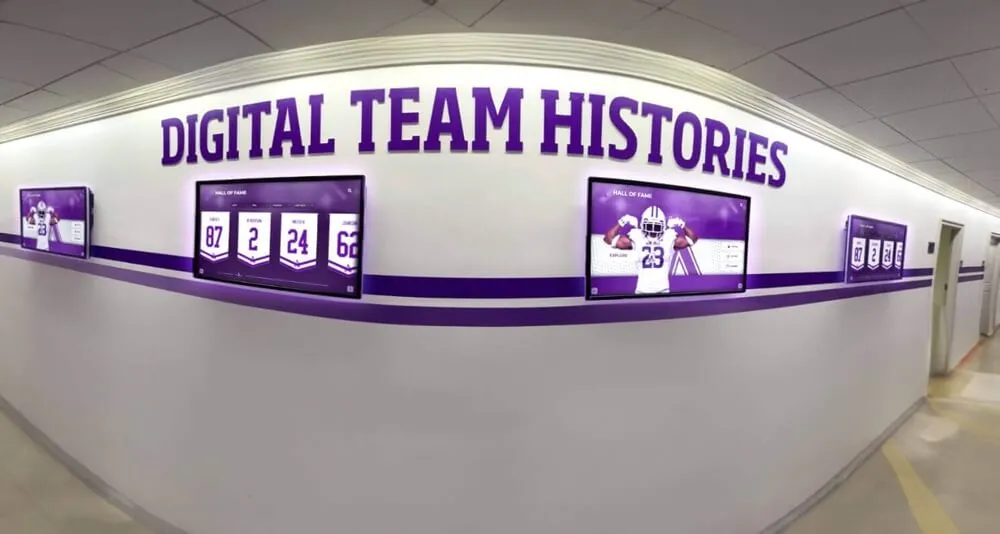
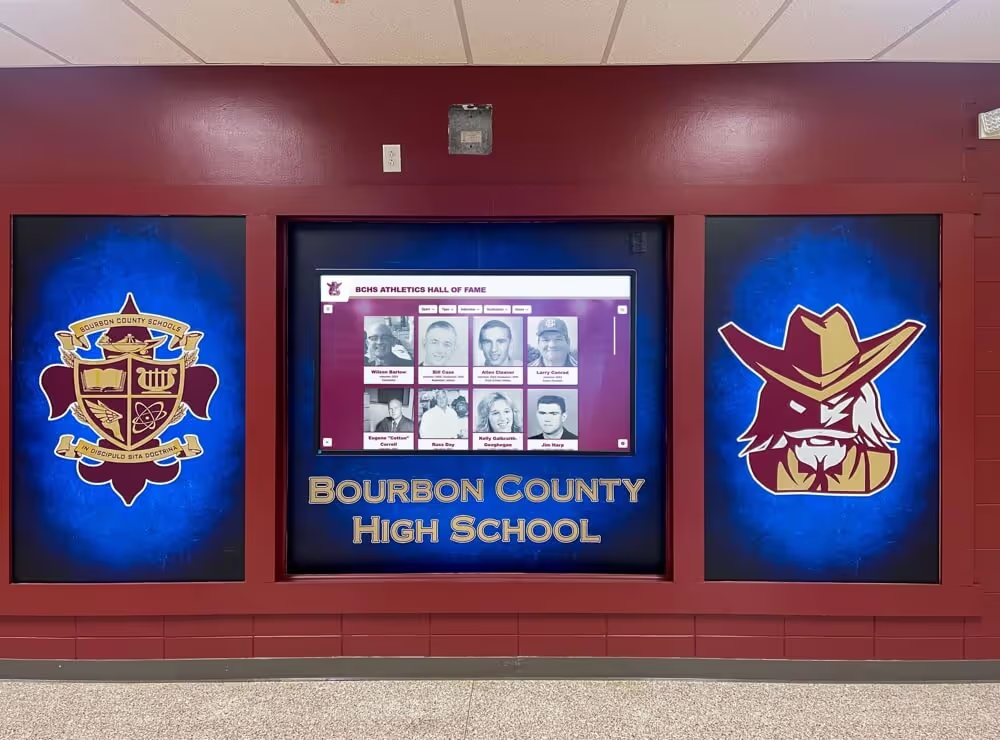
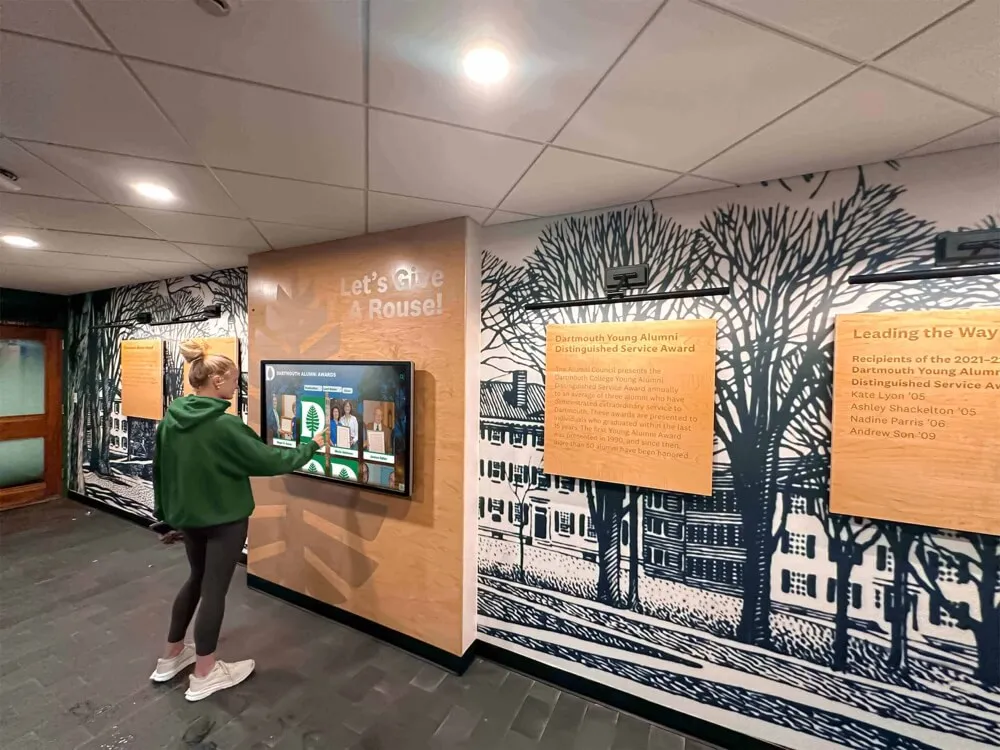
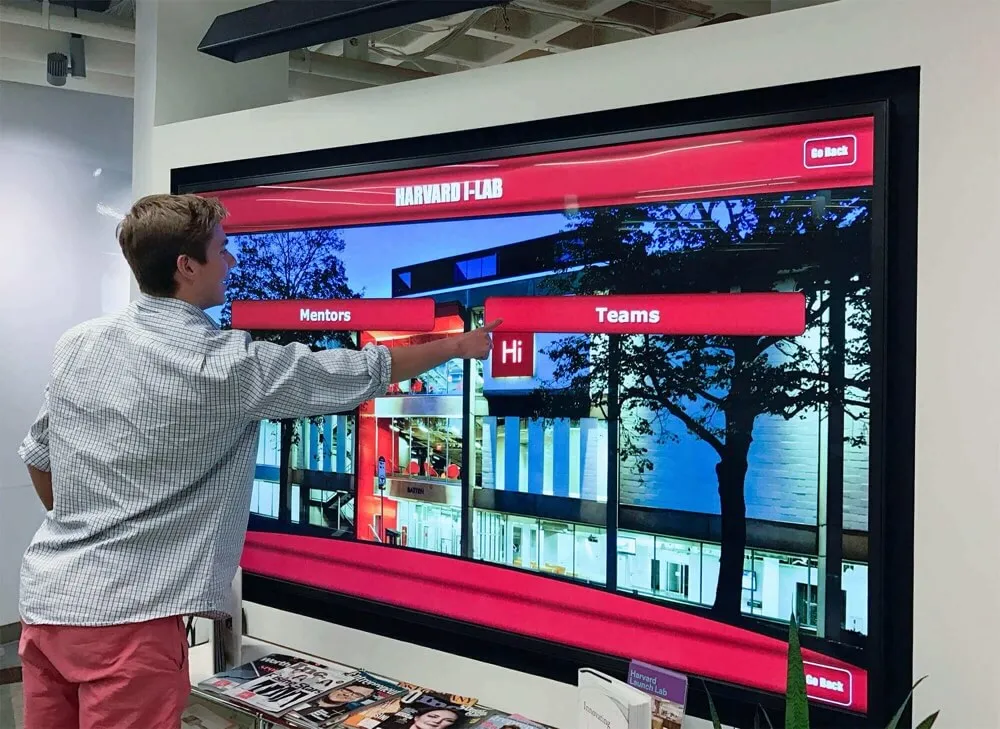
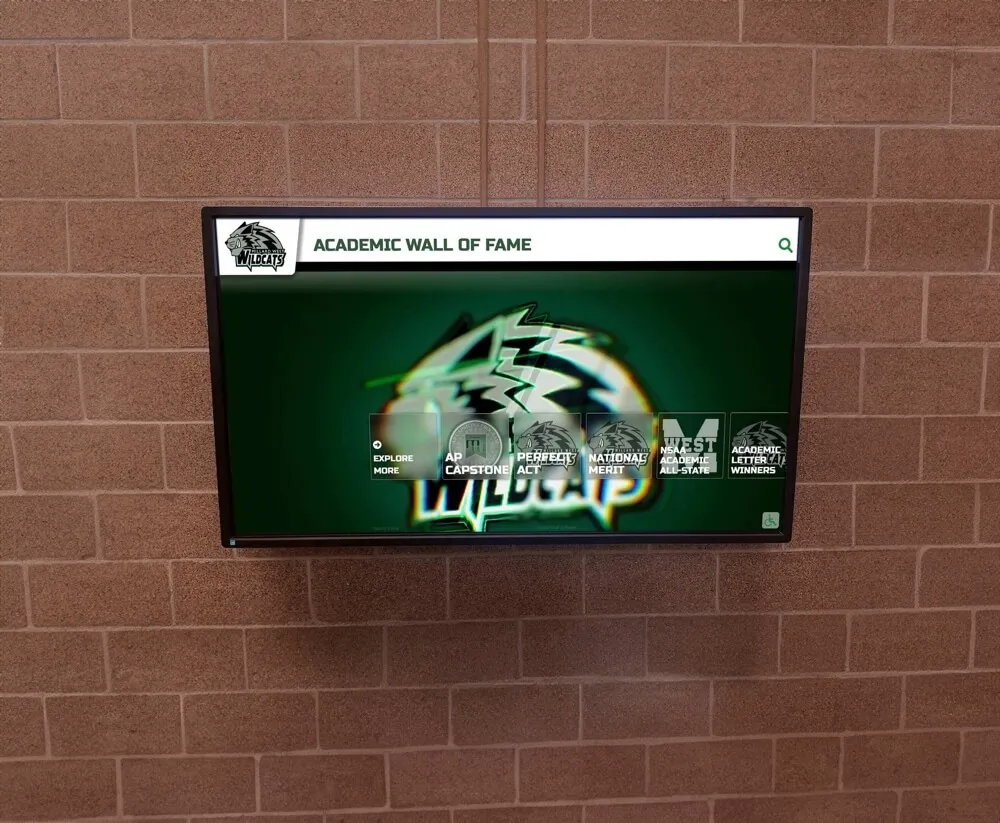
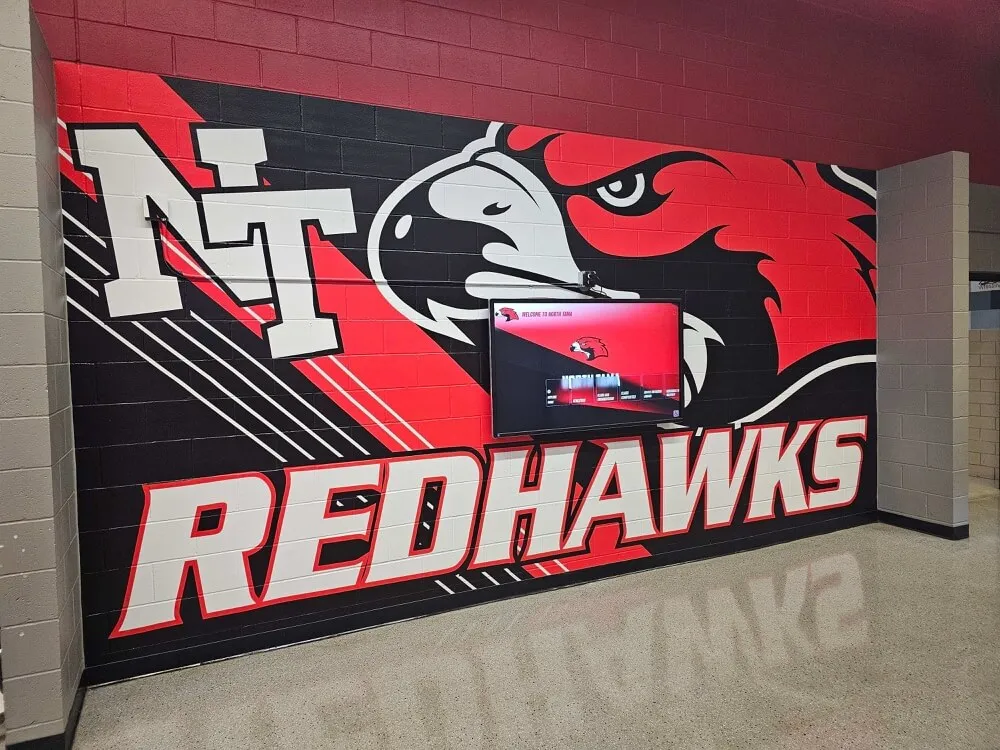
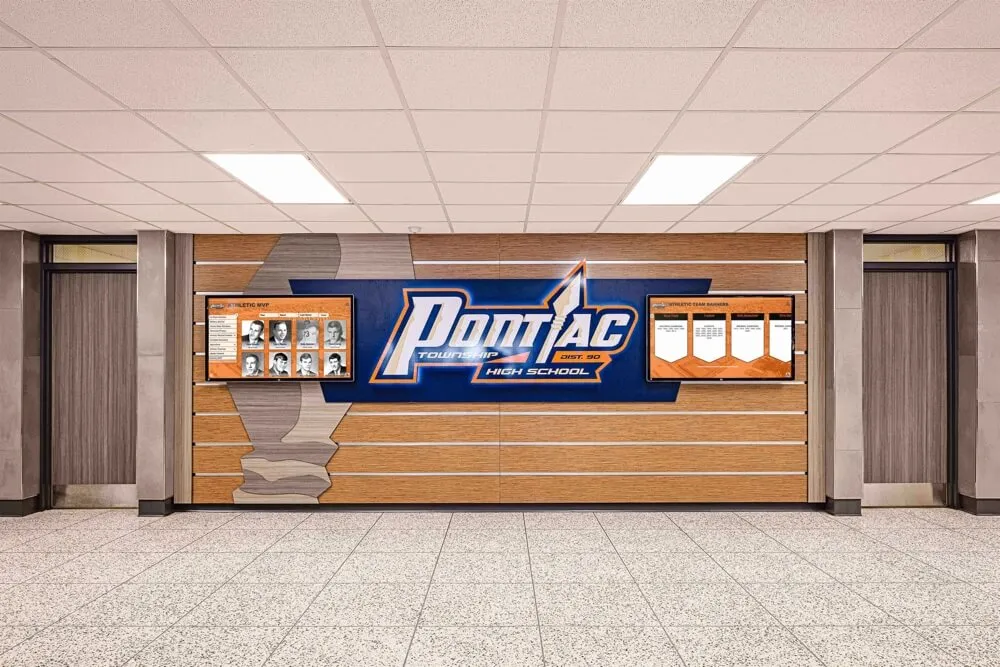
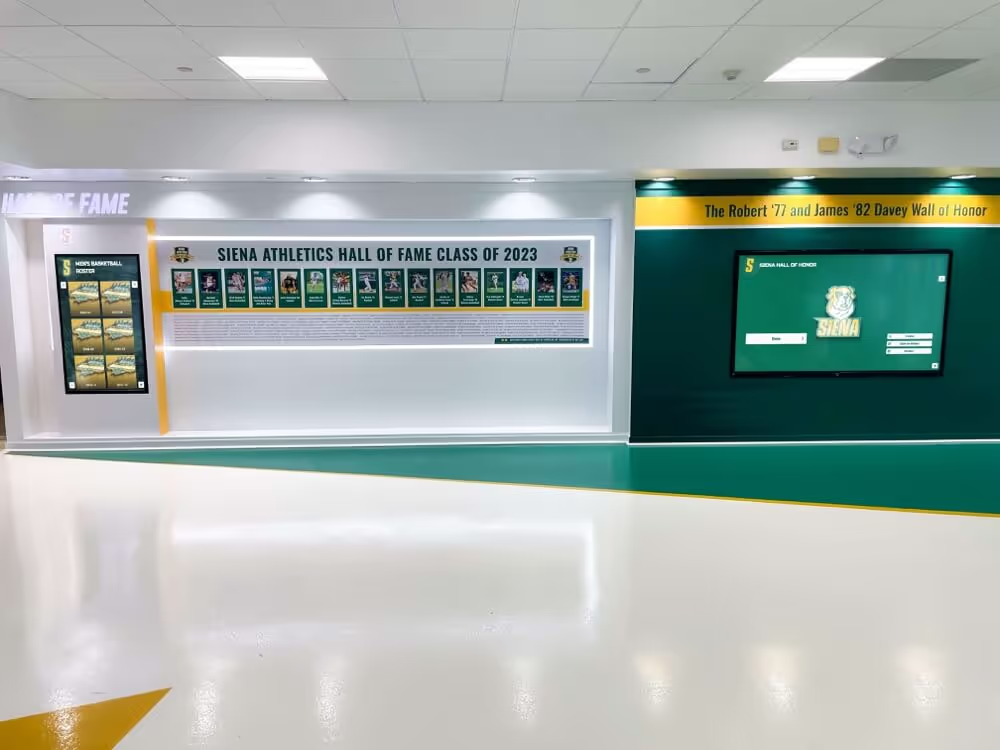
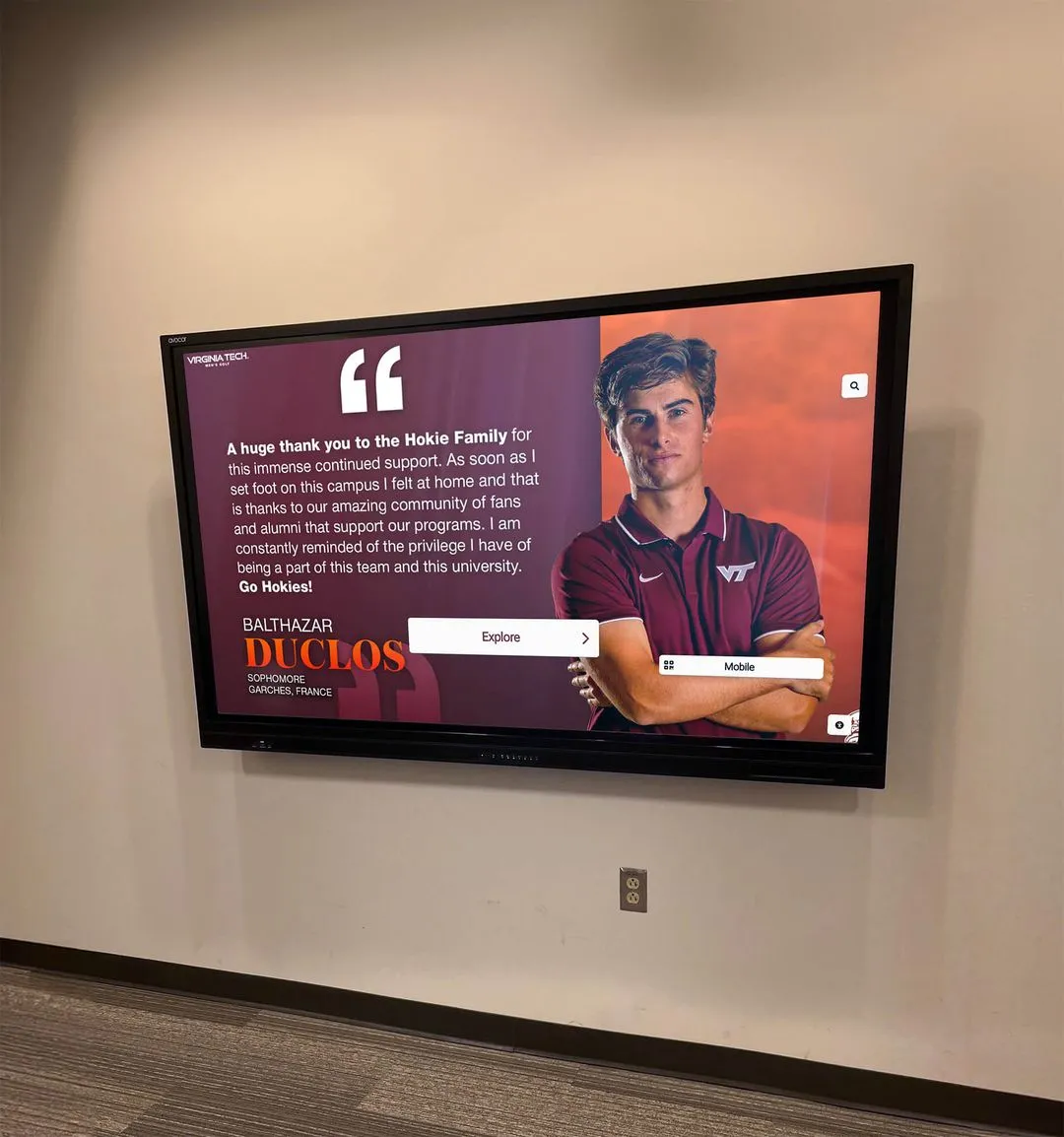
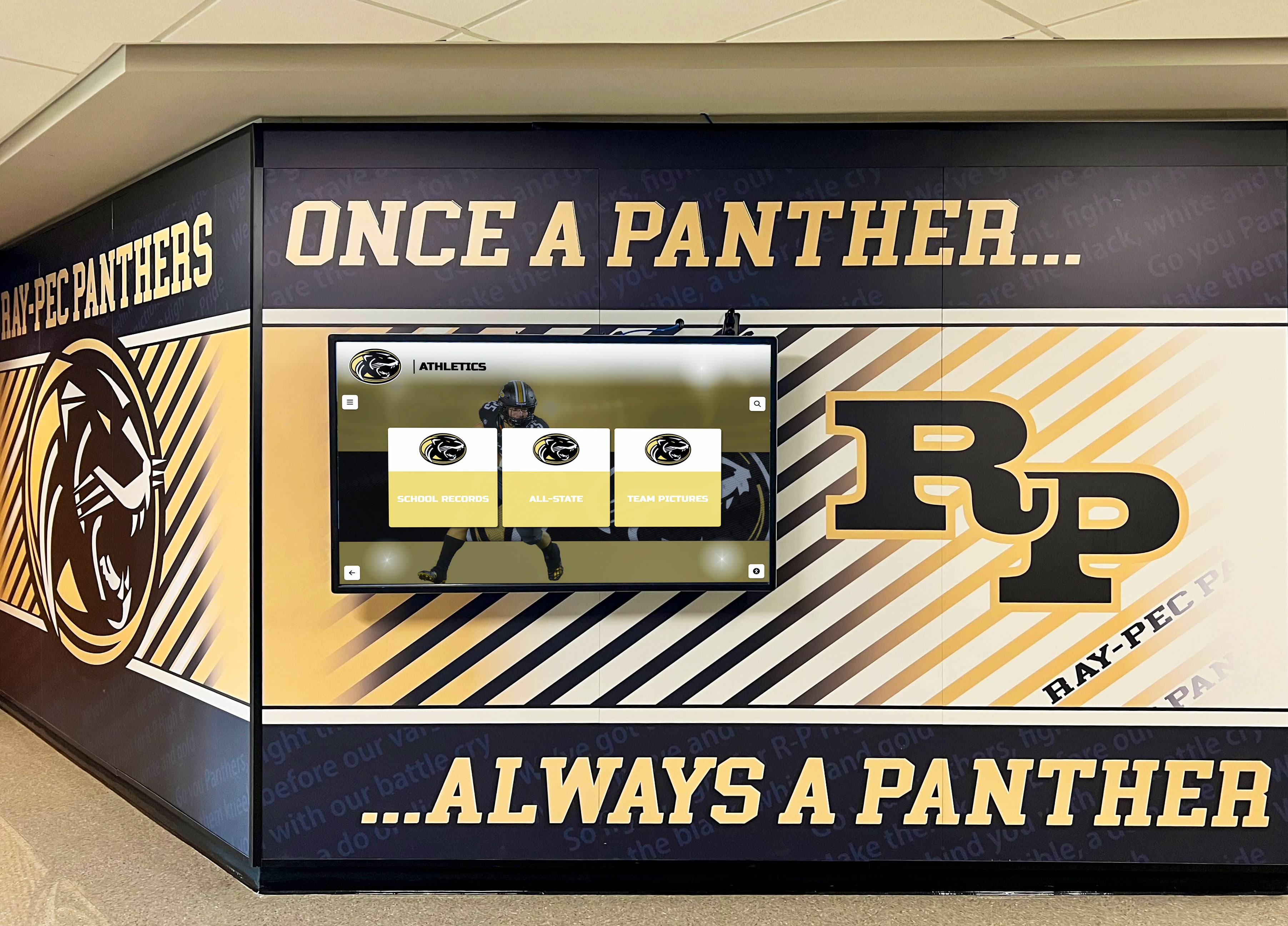
Athletic hallways that combine permanent murals with digital display systems give every fundraising campaign a visible, lasting home for recognition
15 Team Fundraiser Ideas for School Athletics
These ideas are organized from broad audience to targeted donor segment. Mixing two or three across categories gives a program revenue diversity without over-relying on a single event format.
- End-of-Season Banquet with Ticket Sales and Silent Auction — Combines athlete recognition with revenue from ticket sales, program book ads, and donated auction items. A well-organized banquet can generate $10,000–$40,000 for programs with 200+ attendees.
- Alumni Game or Alumni Night — Brings former athletes back for a scrimmage or dedicated recognition night. Admission revenue plus concessions targets a demographic that often out-gives current parents once reconnected to the program.
- Golf Tournament — A scramble format targeting local business leaders and boosters. Hole sponsorships, skills competitions, and a post-round reception stack multiple revenue streams into one event.
- Fun Run or 5K — Pledge-based participation paired with registration fees. Accessible to the full school community, generates social media content, and builds an annual tradition families add to their calendars.
- Trivia Night — Team entry fees, sponsorship of individual rounds, and beverage or raffle revenue. Works well in shoulder months between major sports seasons.
- Concession Stand at Home Events — One of the highest-margin recurring revenue sources available to a booster club. Rights to multiple sports maximize annual yield without requiring major event planning.
- Crowdfunding Campaign with a Milestone Display — A public online campaign with a visual thermometer or milestone graphic updated as goals are reached. Digital milestone displays in the athletic lobby extend the campaign beyond email inboxes.
- Spirit Wear and Merchandise Sale — School-branded apparel sold in person and online. Pre-order models eliminate inventory risk; online storefronts allow alumni and extended community to participate.
- Car Wash with Donation Jar — Low startup cost, high community goodwill. Donation-based pricing consistently outperforms flat fees when student-athletes are the visible beneficiaries.
- Corporate Matching Campaign — Partner with local and regional employers who match employee donations. Matching campaigns can double effective yield from a segment of donors who might otherwise cap their giving.
- Pledge-Per-Performance Campaign — Donors pledge a dollar amount per point scored, per win, or per mile run by a named athlete. Creates emotional investment in game outcomes that persists through a full season.
- Athletic Hall of Fame Induction Fundraiser — Pair a hall of fame class announcement with a formal induction dinner. Inductee families, former teammates, and alumni often give at meaningful levels to honor their connection to the honoree.
- Name a Seat or Recognition Tile Campaign — Facility improvement campaigns where donors fund a seat, tile, or nameplate in a renovated space. The permanent recognition deliverable drives giving above typical event-level amounts.
- Sponsor Appreciation Night or Family Open House — An event specifically acknowledging active sponsors with a behind-the-scenes facility tour, athlete introductions, and recognition ceremony. Retention event, not acquisition—but the ROI on keeping an existing sponsor is far higher than acquiring a new one.
- Online Auction or Bid-on-an-Experience Campaign — Virtual auction for sports experiences: sideline passes, a day of training with coaches, named scholarships. No physical venue required and accessible to out-of-town alumni.
Creative athletic booster club fundraising ideas with execution details provide additional context for structuring these campaigns around the specific donor segments available to a high school or collegiate athletics program.
Matching the Right Fundraiser to Your Program’s Audience
Not every team fundraiser idea works equally well for every program. Audience size, geography, alumni engagement, and the presence or absence of a strong booster club infrastructure all shape what is realistic. The most common mistake is adopting a format that works somewhere else without accounting for local conditions.
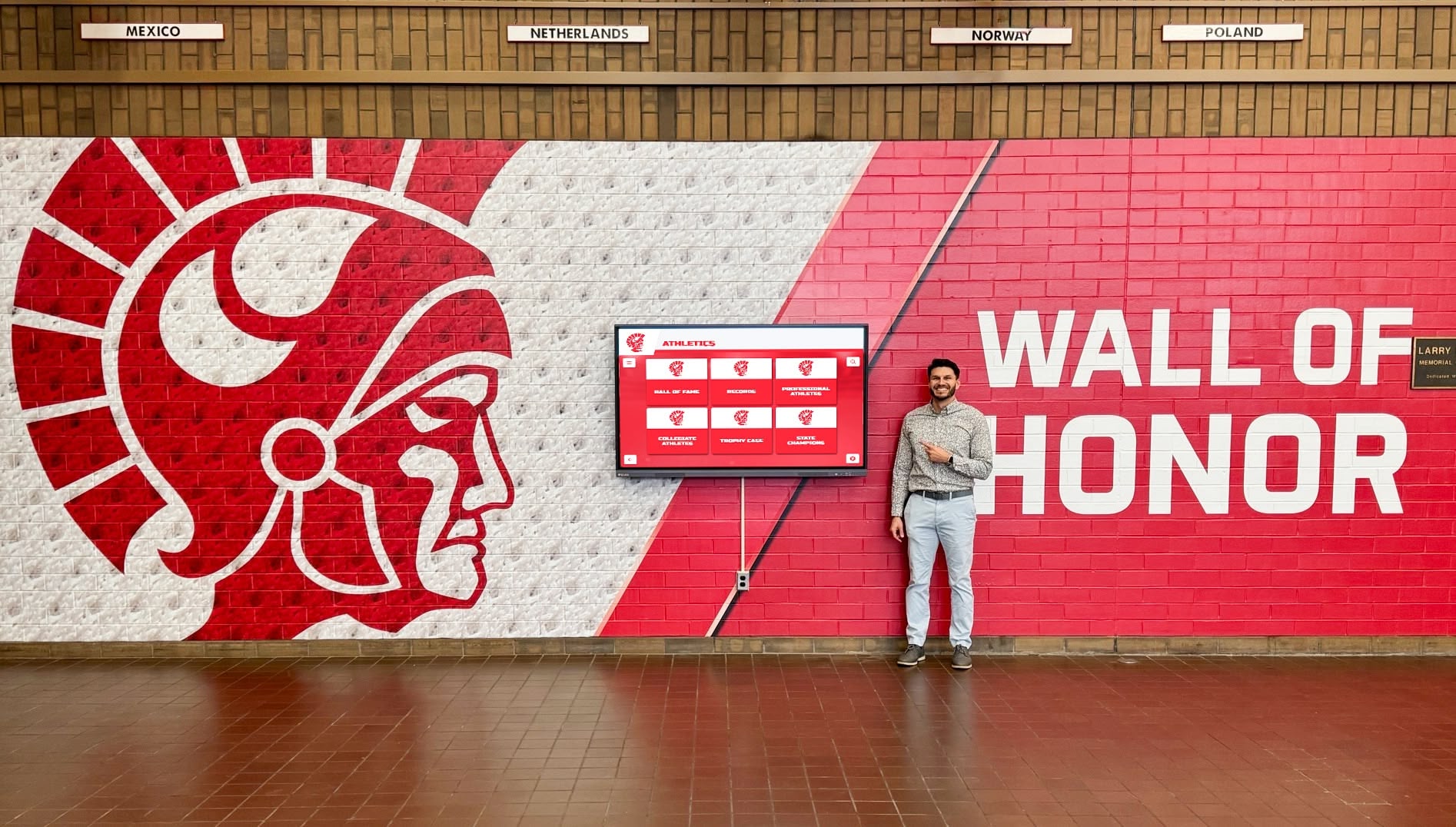
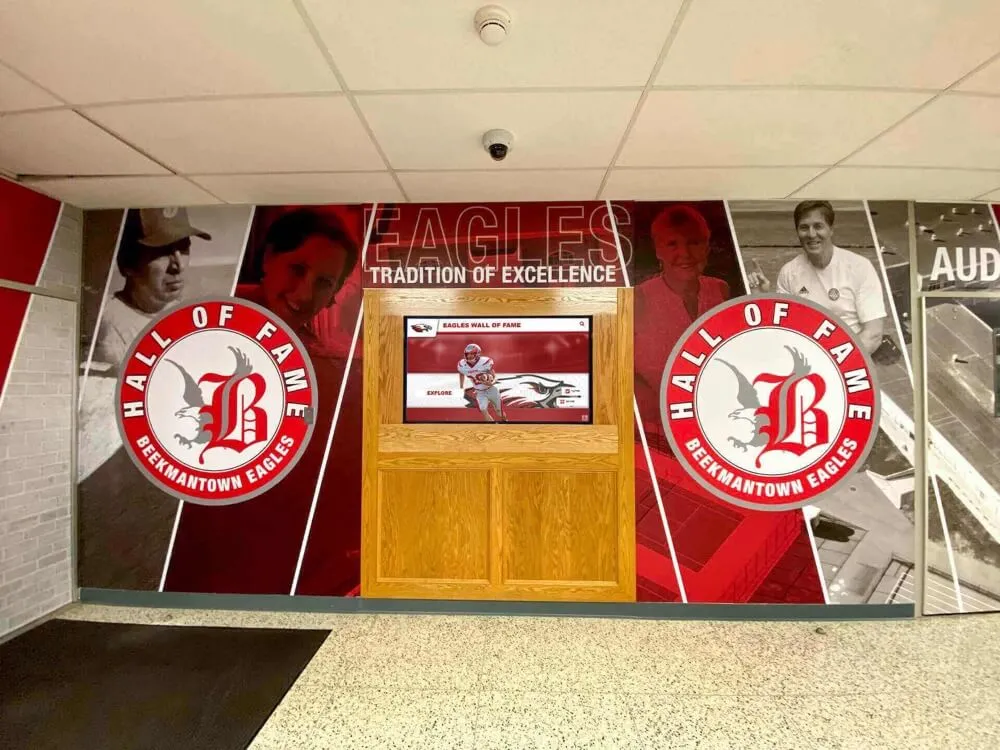
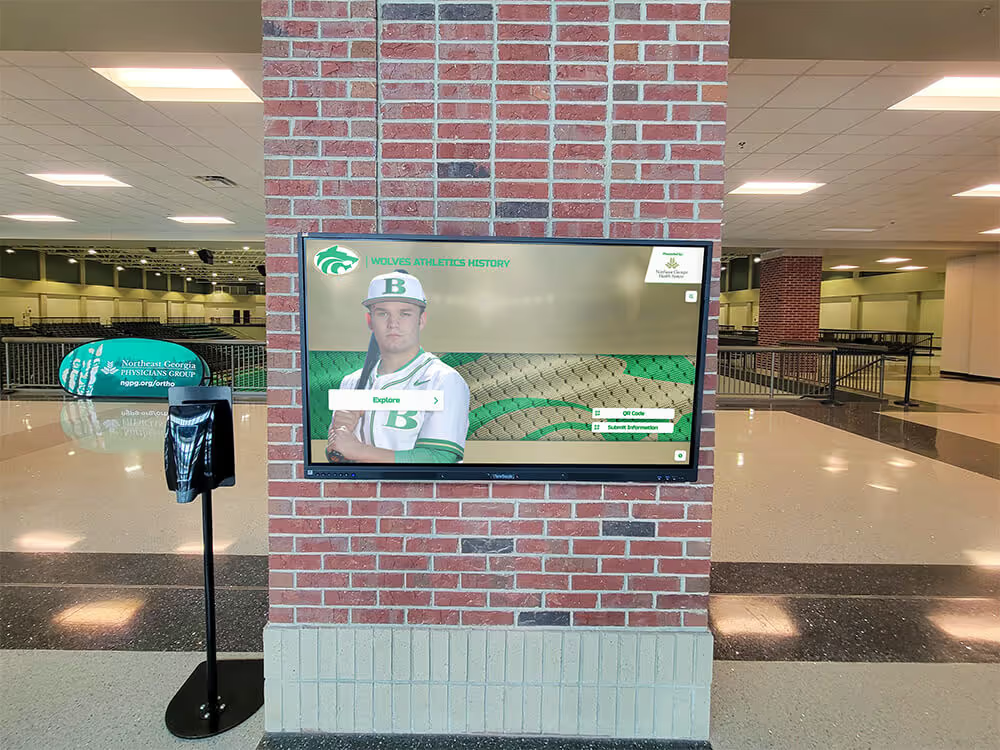
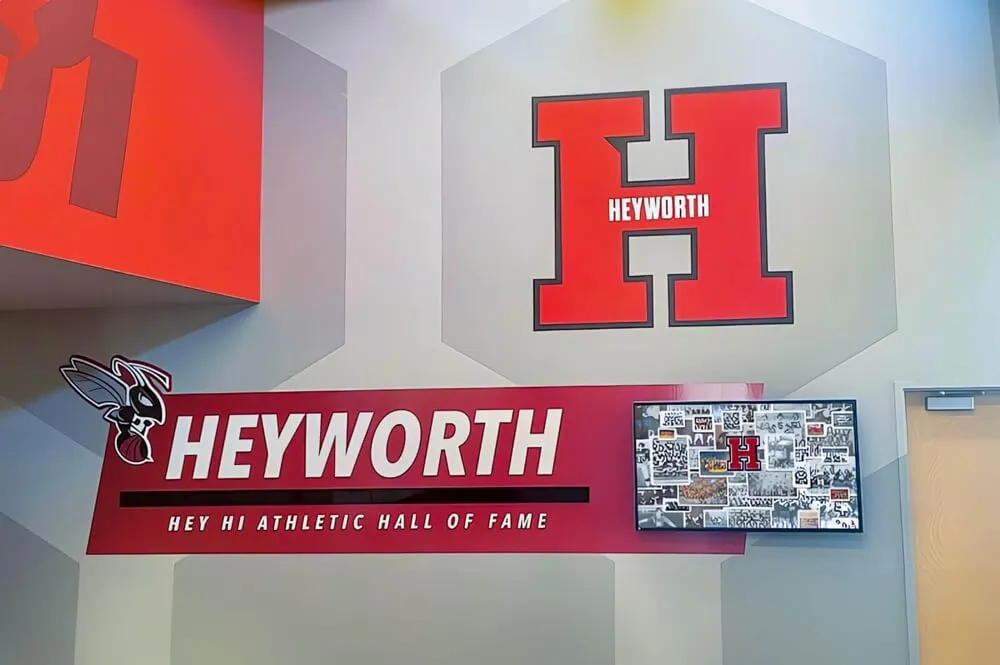
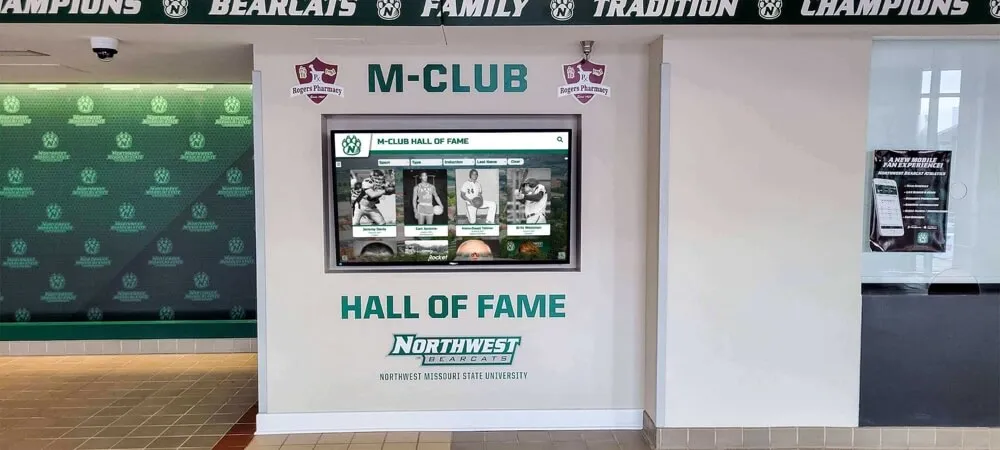
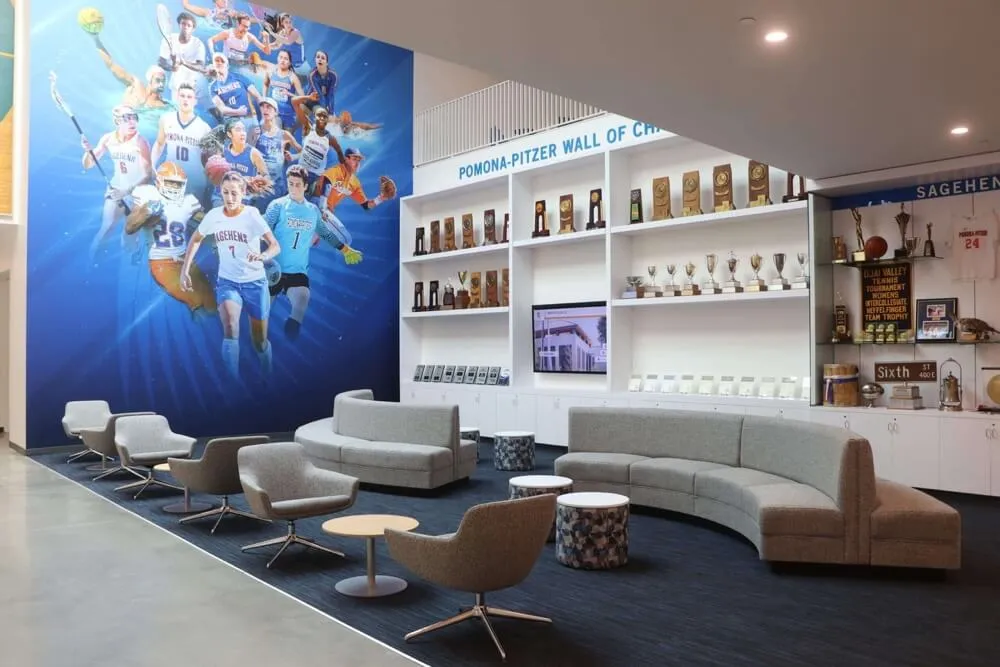
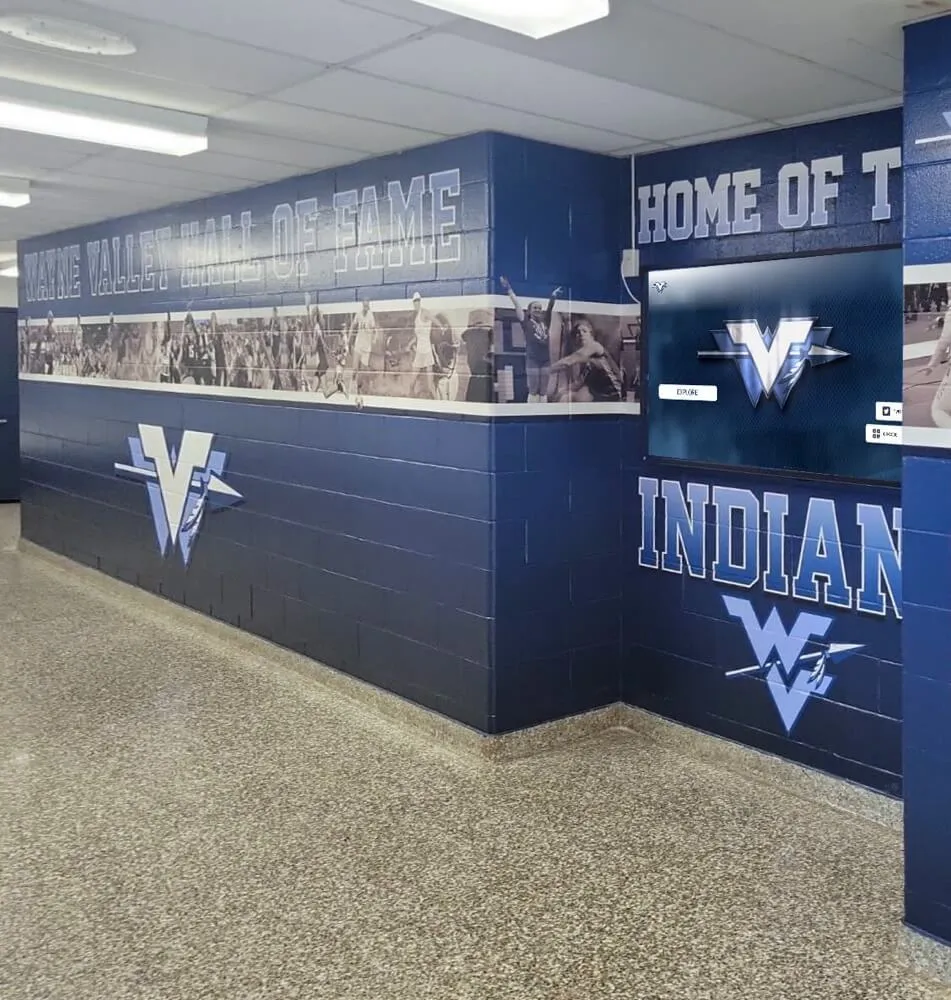
Recognition walls funded through team fundraising campaigns give donors a permanent, visible home in the athletic environment they helped build
Events vs. Campaigns vs. Products
The three major formats for school athletic fundraising each have a different operational profile:
Events (banquets, golf tournaments, alumni games) deliver concentrated revenue in a single day or weekend. They require significant volunteer coordination and planning time but create memorable experiences that reinforce community bonds. Best for programs with an active parent volunteer base and a strong community event culture.
Campaigns (crowdfunding, pledge-per-performance, corporate matching) generate revenue across a defined window—often 3–6 weeks—and can be managed with far fewer volunteers. They rely heavily on digital communication and social media reach. Best for programs with email lists, alumni networks, and social following that can amplify the ask.
Products (spirit wear, concessions, merchandise) generate recurring, lower-intensity revenue without a defined event or campaign window. They require upfront investment in inventory or platform setup but can produce consistent income once established. Best for programs that want revenue without sustained volunteer spikes.
Most athletic programs benefit from a mix across all three. A flagship event plus one rolling campaign plus one product line gives a program three separate revenue streams while distributing volunteer labor across the year rather than concentrating it in a single sprint.
Proven booster club fundraising strategies organized by campaign type go deeper on structuring the annual fundraising calendar so no single format bears the full burden.
Sponsor Recognition During a Team Fundraising Campaign
Corporate and business sponsors are often the highest-yield donors in a school athletic fundraising campaign—and the most likely to disappear if their recognition expectations are not met. The relationship between a sponsor and a school athletic program is not a pure transaction. Sponsors are betting on the association: their brand next to winning student-athletes in a community they care about. When that association is poorly acknowledged, the bet does not feel worth repeating.
Recognition during an active fundraising campaign should happen at three levels:
Pre-Campaign Acknowledgment
Before the campaign launches publicly, sponsors at title and presenting tiers should receive personal outreach confirming their recognition placements. This might include:
- A preview of where their logo or name will appear in campaign materials
- Confirmation of which game-day or event recognition slots are reserved for them
- A named contact at the athletic department who will send them updates
This outreach sets the expectation that the school manages these relationships deliberately. It also gives sponsors a reason to promote the campaign to their own networks—a multiplier that increases reach without additional cost to the program.
In-Campaign Visibility
During the fundraising window, sponsors should appear wherever campaign communications go. A few practical placements:
- Campaign landing page: Sponsor logos displayed alongside the fundraising goal and progress bar
- Email updates: Sponsor acknowledgment in the footer or as a brief “thanks to our partners” section
- Social media: At least one dedicated sponsor acknowledgment post per major sponsor tier during the campaign
- Physical signage: If the campaign involves events, sponsor banners and signage at those events should be confirmed before the day
Athletic booster club fundraising ideas that connect sponsor visibility to campaign structure include guidance on where sponsor placements fit within different campaign formats and what schools can realistically promise at each tier level.
Campaign Milestone Triggers
One of the most effective recognition strategies is tying sponsor acknowledgment to campaign milestones. When the campaign hits 25%, 50%, 75%, and 100% of its goal, that is a natural moment to:
- Thank the sponsors whose support made reaching that milestone possible
- Feature a specific sponsor in a milestone update email or social post
- Trigger the activation of a recognition placement (such as adding a sponsor profile to a digital lobby display when the goal is reached)
Milestone-triggered recognition transforms a sponsor from a passive funder into a visible participant in the campaign’s success. That repositioning matters when the renewal conversation comes around.
Campaign Milestone Displays: Making Progress Visible
A campaign that no one can see is a campaign that struggles to build momentum. Milestone displays—whether digital, physical, or both—serve two simultaneous functions: they motivate additional giving by showing progress toward a goal, and they acknowledge contributors in real time.
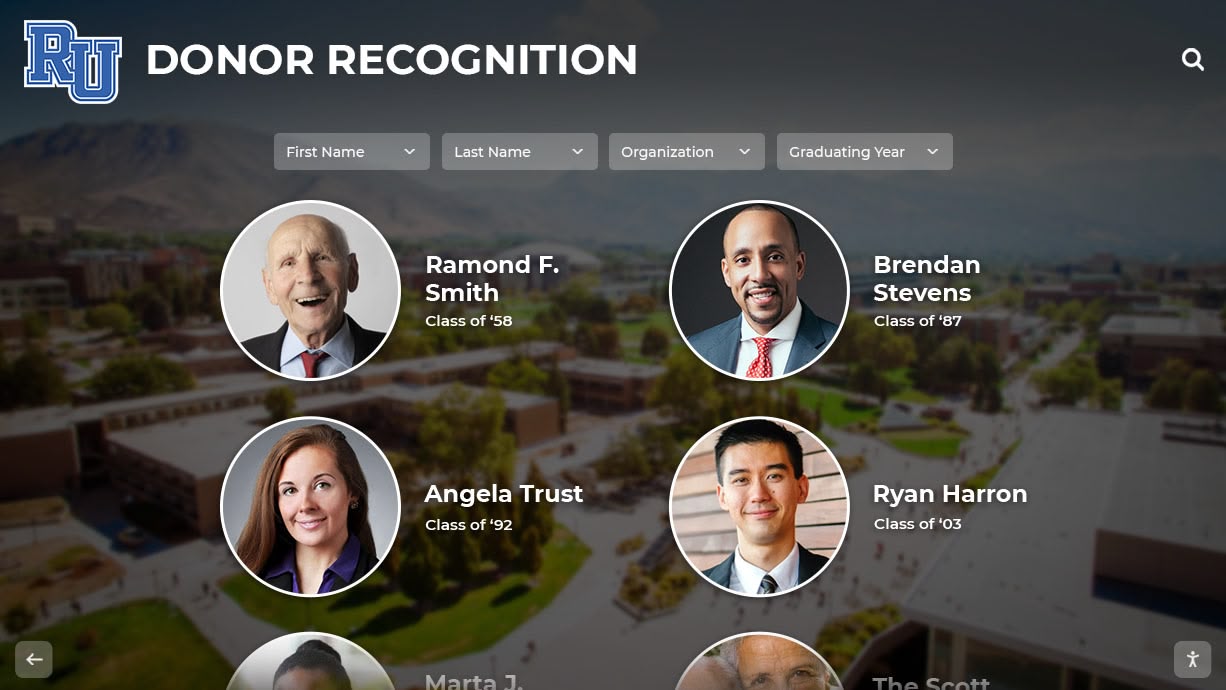
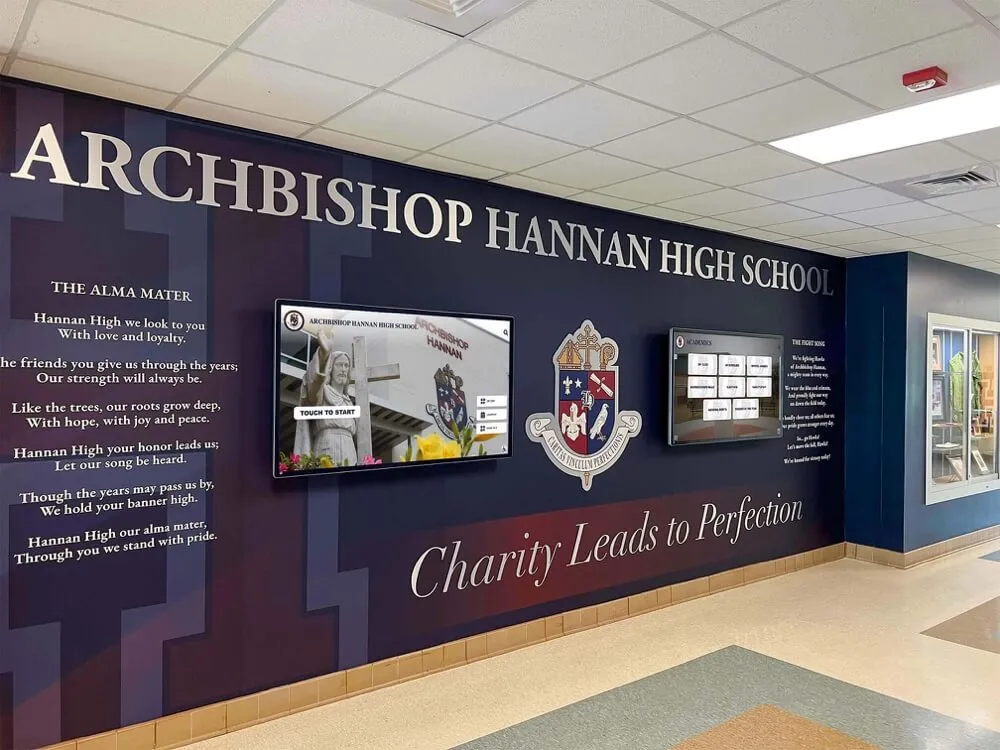
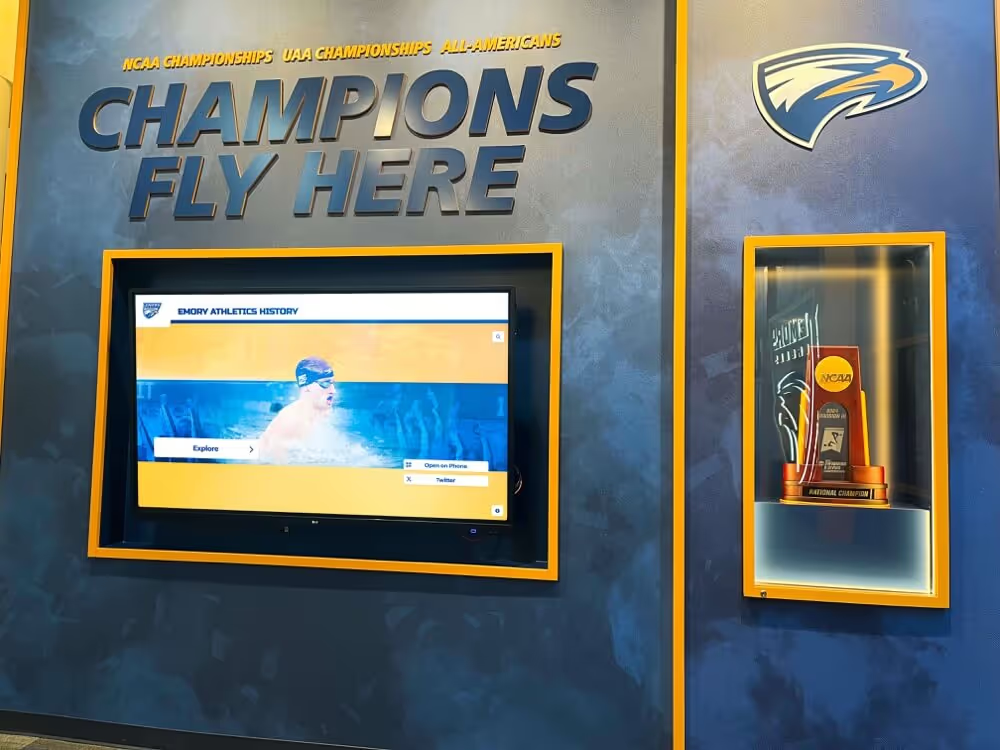
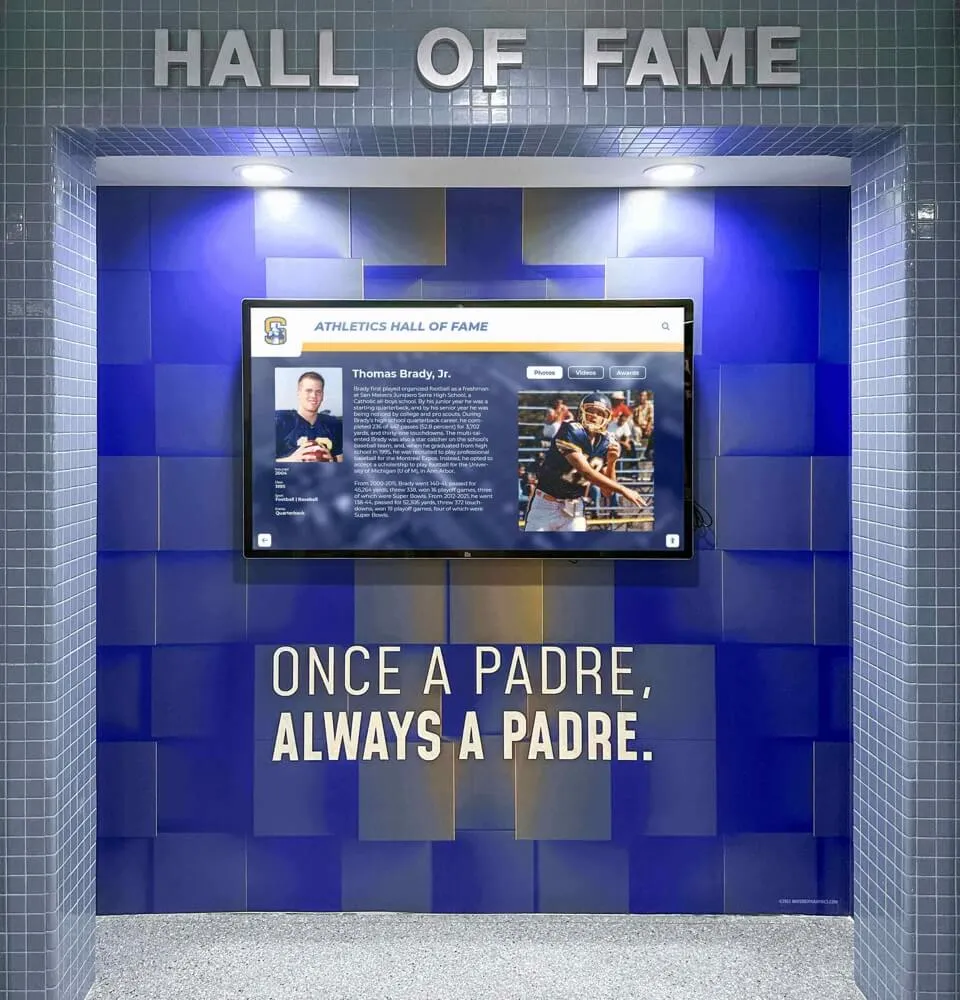
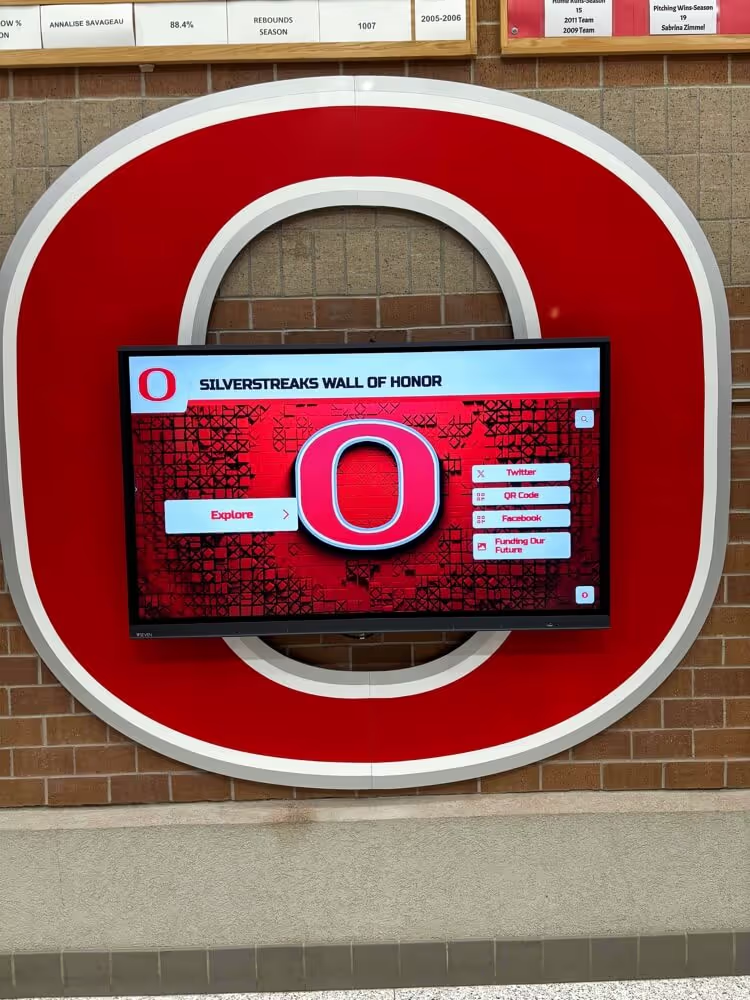
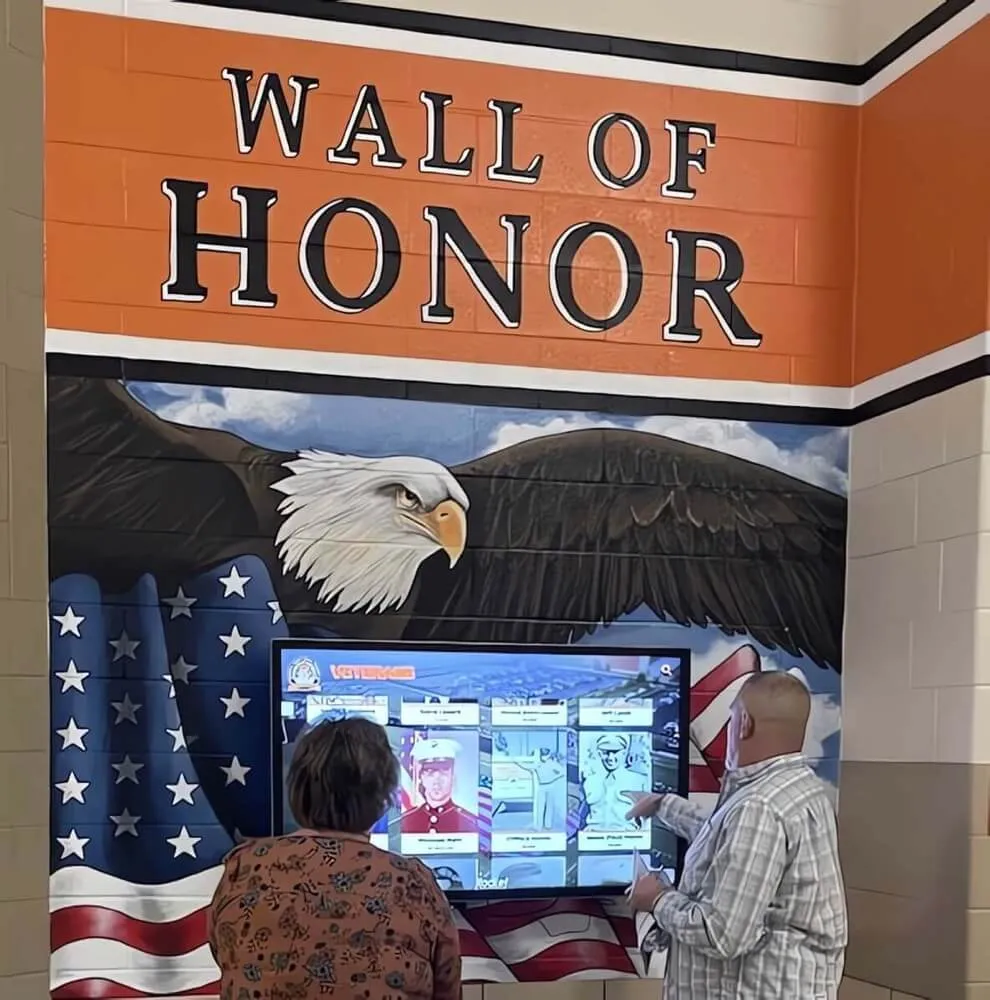
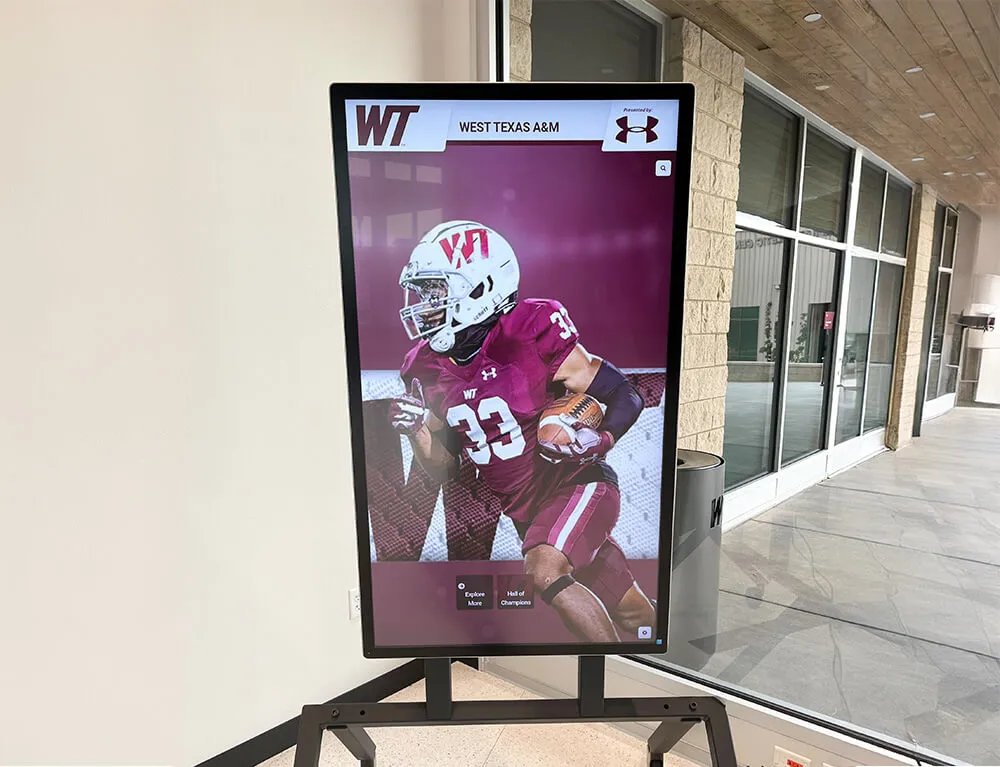
Donor recognition integrated into campus environments gives contributors daily visibility in a space that reflects the program they supported
Physical Milestone Boards
A physical campaign progress board—often a large thermometer or goal graphic—placed in the athletic lobby or main school hallway does three things that a purely digital campaign cannot:
- It is visible to every student, faculty member, and visitor who passes through the space, including people who never open a campaign email
- It signals institutional commitment to the goal in a way that a web page does not
- It creates natural conversation starters between students, parents, and coaches about the campaign’s status
Physical boards work best for campaigns tied to specific facility or equipment goals where the outcome is tangible—“new scoreboard by fall,” “renovated weight room by spring.” They pair well with a named donor wall component where contributors at or above a threshold see their name or business listed on the board as the campaign progresses.
Digital Campaign Displays
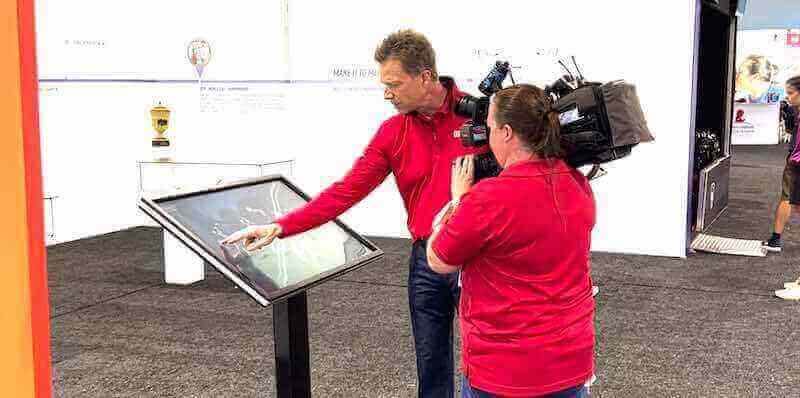
Digital lobby screens and interactive touchscreen systems extend the campaign’s visibility into the school environment without the manual update burden of a physical board. A digital display system can:
- Update the progress indicator in real time as donations come in
- Rotate sponsor and donor acknowledgment throughout the campaign window
- Show campaign-specific content (team photos, goal descriptions, video messages from coaches or athletes) alongside the progress bar
- Transition smoothly from campaign mode to recognition mode once the goal is reached, displaying a permanent donor roster
Team recognition ideas for celebrating athletic achievement and community support illustrate how digital display systems bridge the gap between fundraising campaigns and the long-term recognition infrastructure that retains donors and sponsors.
See How Campaign Milestones Become Permanent Recognition
Rocket Alumni Solutions builds interactive touchscreen systems that display campaign progress, honor donors and sponsors, and transition seamlessly into a permanent recognition wall once the campaign closes.
Request a DemoPost-Campaign Stewardship: What Happens After the Goal Is Reached
Most school athletic fundraising guides stop at the campaign. The stewardship phase—what happens after the goal is reached—is where programs either cement a long-term donor relationship or quietly lose it before the next campaign launches.
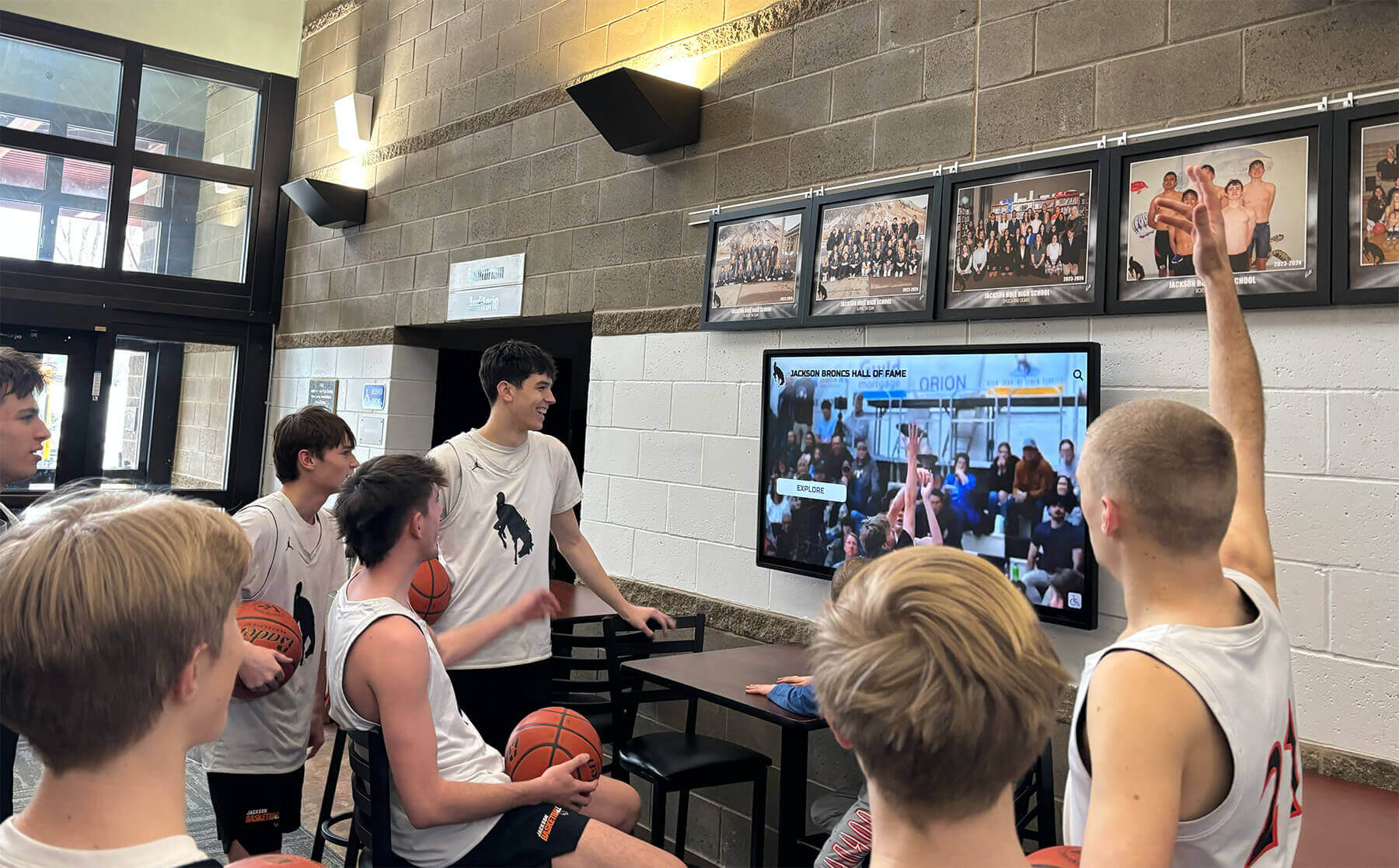
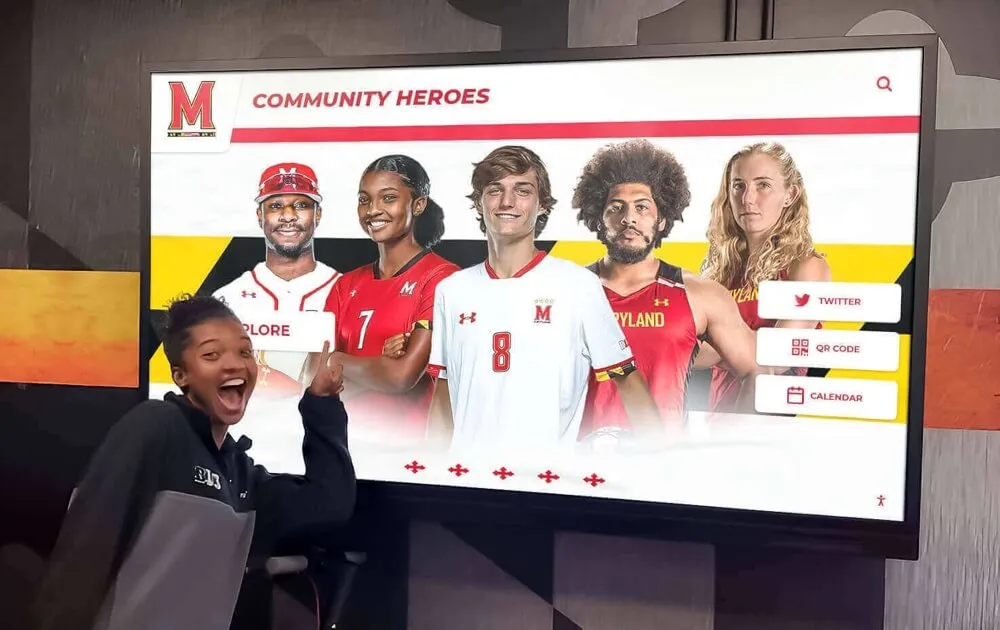
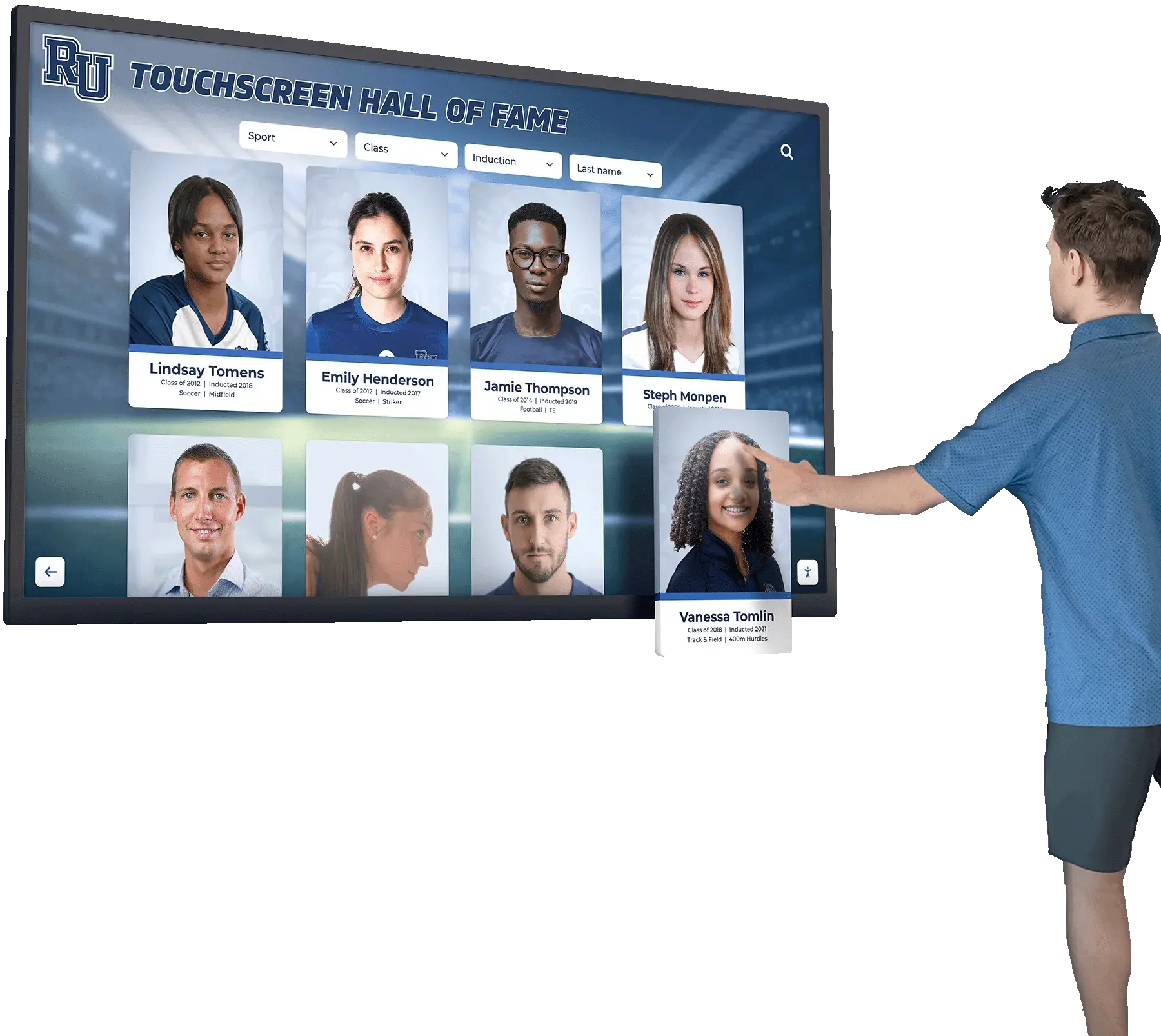
Digital lobby systems keep donors and sponsors engaged with the program year-round—not just during active fundraising windows
The Post-Campaign Recognition Window
The 30-day period after a campaign closes is when most donor communication drops to zero. That is precisely when it should increase. Donors and sponsors who gave during the campaign are at their highest emotional engagement with the program. A few targeted actions during this window lock in the relationship for the following year:
1. Goal confirmation message: Within a week of closing, send a brief update confirming the goal was reached (or exceeded), naming the collective effort, and specifying what the funds will accomplish. Be concrete: not “we raised money for equipment” but “we purchased new varsity uniforms and a portable scoreboard that will debut this fall.”
2. Impact photo or video: When the equipment arrives, the facility opens, or the scholarship is awarded, send a brief photo or short video to every donor and sponsor who contributed. This closes the loop from ask to outcome and makes the giving feel consequential.
3. Recognition placement confirmation: Sponsors and major donors should receive confirmation that their recognition placement is active—a photo of their name on the lobby display, a screenshot of their digital profile, or a photograph of their banner in the gym.
4. Next-cycle preview: A brief note in late summer previewing the upcoming season’s goals and the role sponsors will play plants the seed for renewal well before the formal ask.
Athletic banquet decoration and recognition ideas that create memorable post-season experiences show how end-of-season recognition events serve as a natural stewardship touchpoint that connects campaign donors to the program’s broader community.
Building a Stewardship Calendar
Stewardship is easier to sustain when it is scheduled rather than ad hoc. A basic stewardship calendar for a program running one major campaign per year might look like this:
| Month | Stewardship Action |
|---|---|
| August | Season preview + recognition placement confirmation sent to all active sponsors |
| September–November | Midseason photo or update sent to title and presenting sponsors |
| December | End-of-season summary with attendance, team results, and campaign impact |
| January–February | Renewal outreach begins with tenure acknowledgment for multi-year sponsors |
| April–May | Major fundraising campaign window with milestone acknowledgment |
| June | Post-campaign impact update + recognition placement photo sent |
Programs that execute all six touchpoints renew sponsors at meaningfully higher rates than those that communicate only during the campaign window and at renewal.
Sponsor Recognition Follow-Up Checklist
The following checklist is organized by campaign phase. Use it to assign ownership and ensure no recognition obligation is missed across the campaign lifecycle.
Pre-Campaign
- Confirm all sponsor logos and materials are current (not from a prior season)
- Deliver preview of campaign materials showing sponsor placement to title/presenting tier
- Assign a named athletic department contact for each sponsor
- Confirm all physical placements (banners, lobby signage) are installed and photographed
During Campaign
- Sponsor logos appear on campaign landing page and email templates
- Dedicated social acknowledgment post scheduled for each major sponsor tier
- Milestone-triggered sponsor acknowledgment messages drafted and ready
- Verbal acknowledgment scripted for any in-person events during campaign window
Post-Campaign (Within 30 Days)
- Goal confirmation message sent to all donors and sponsors
- Digital recognition placements updated to include campaign donors
- Recognition placement photo or screenshot sent to each sponsor
- Impact update scheduled for when funded items are received or installed
Annual Stewardship
- Midseason update sent with team performance context
- Year-end summary prepared with attendance, results, and campaign metrics
- Renewal outreach personalized to include tenure language for multi-year sponsors
- Physical recognition placements audited for accuracy before the new season
Booster club fundraising ideas with integrated recognition structures provide additional frameworks for ensuring sponsor recognition obligations are treated as campaign deliverables, not post-event afterthoughts.
Using Athletic Spaces to Support Recognition Year-Round
The physical environment of a school’s athletic facilities is one of the most underutilized assets in a fundraising and stewardship strategy. A hallway that displays championship banners, trophy cases, and a hall of fame wall is telling visitors something about the program’s culture and its commitment to honoring contributors. When that environment also includes a dedicated sponsor recognition section—or a digital system where donor and sponsor profiles appear alongside athlete records—it transforms a corridor into a year-round acknowledgment space.
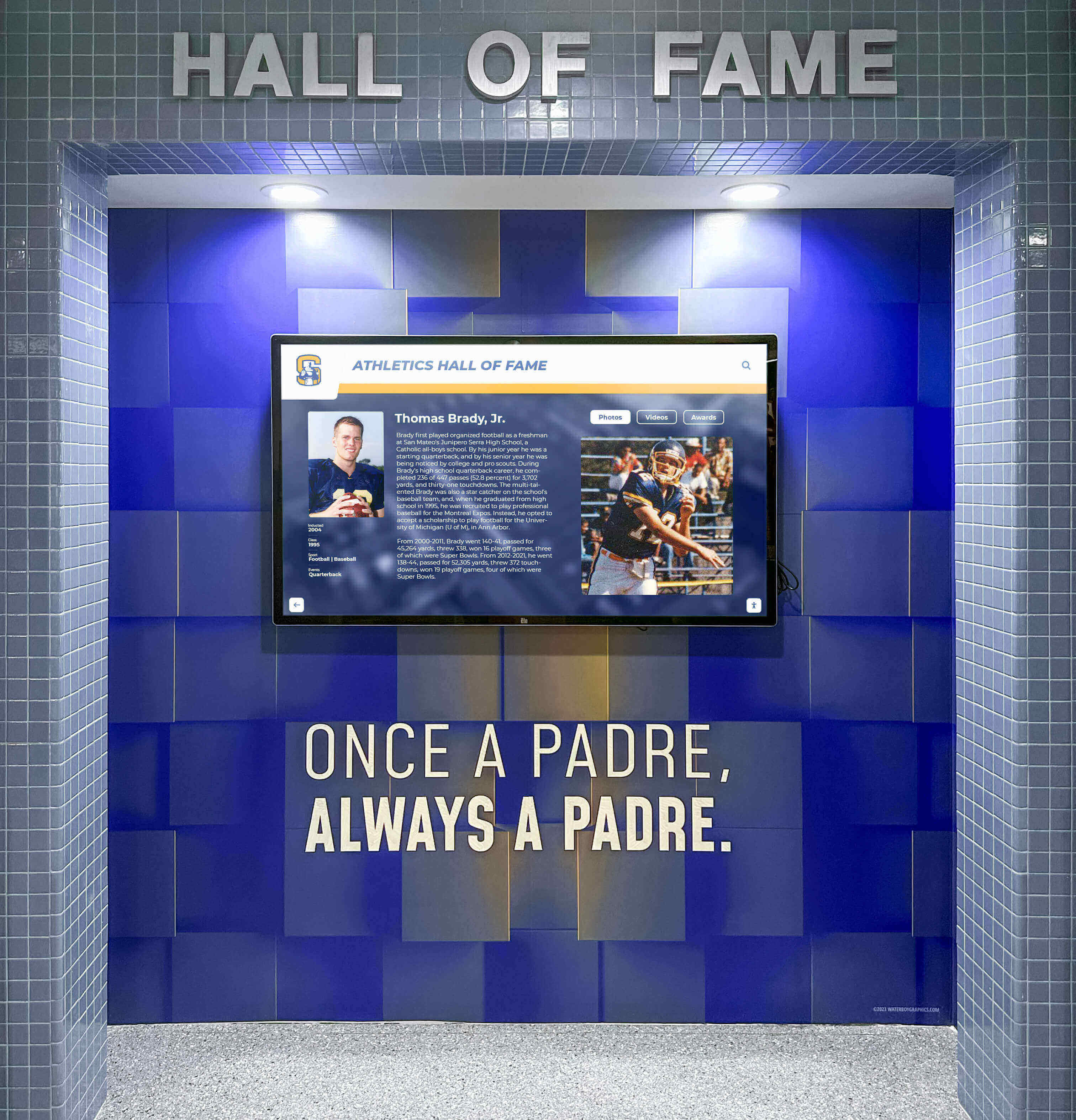
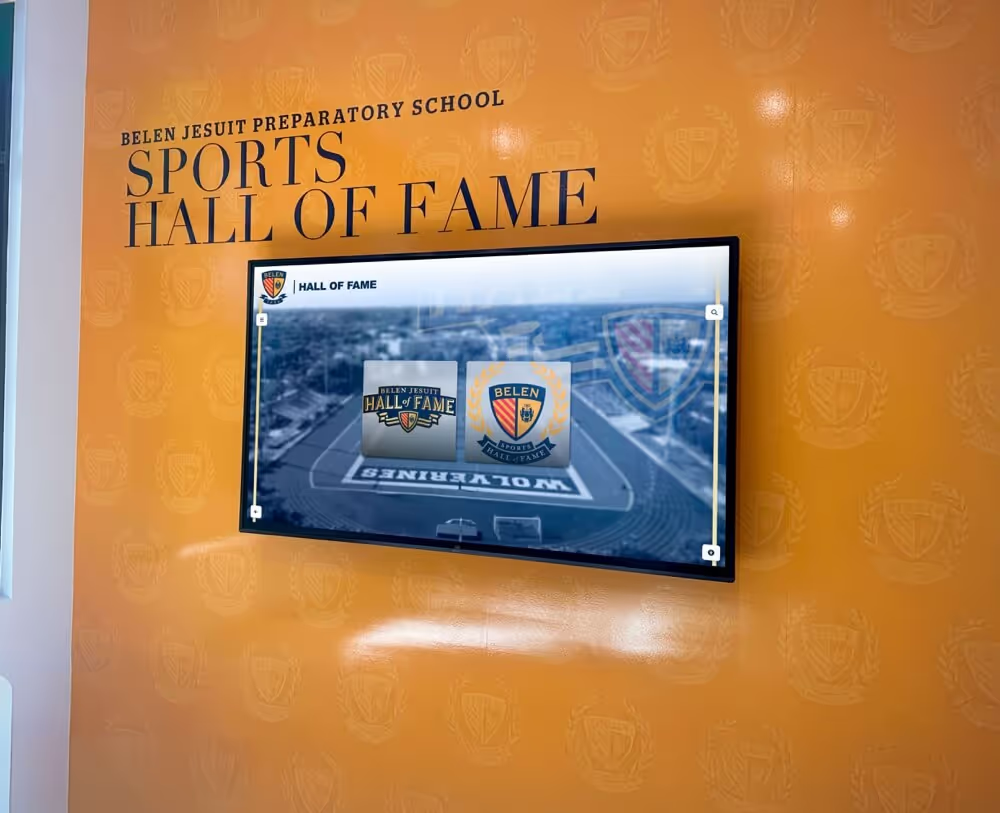
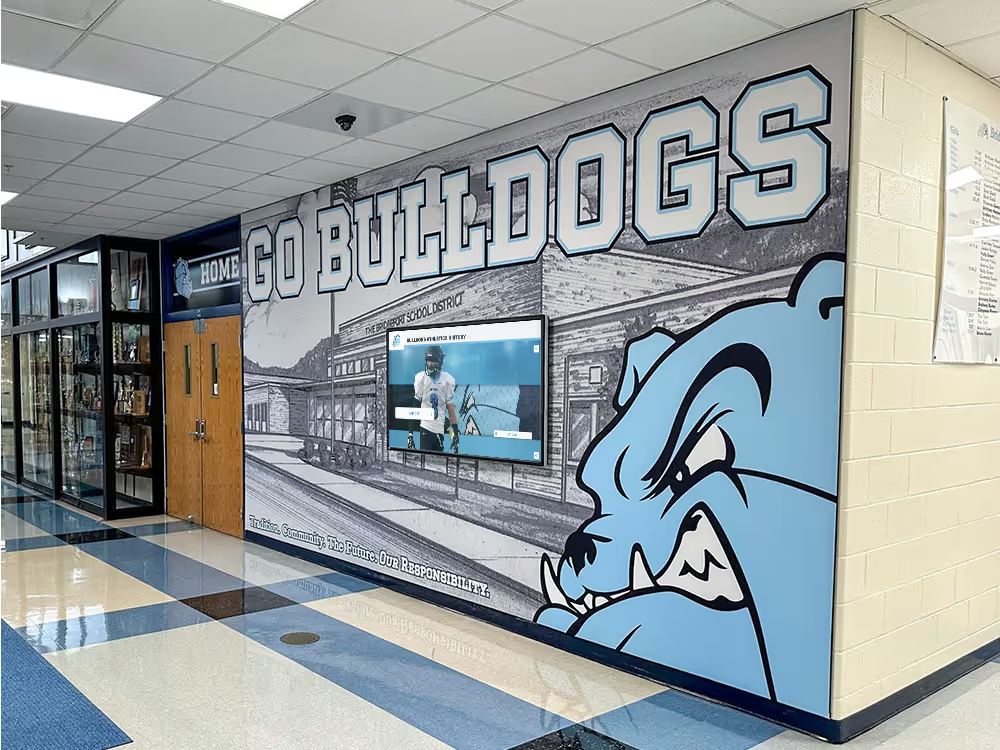
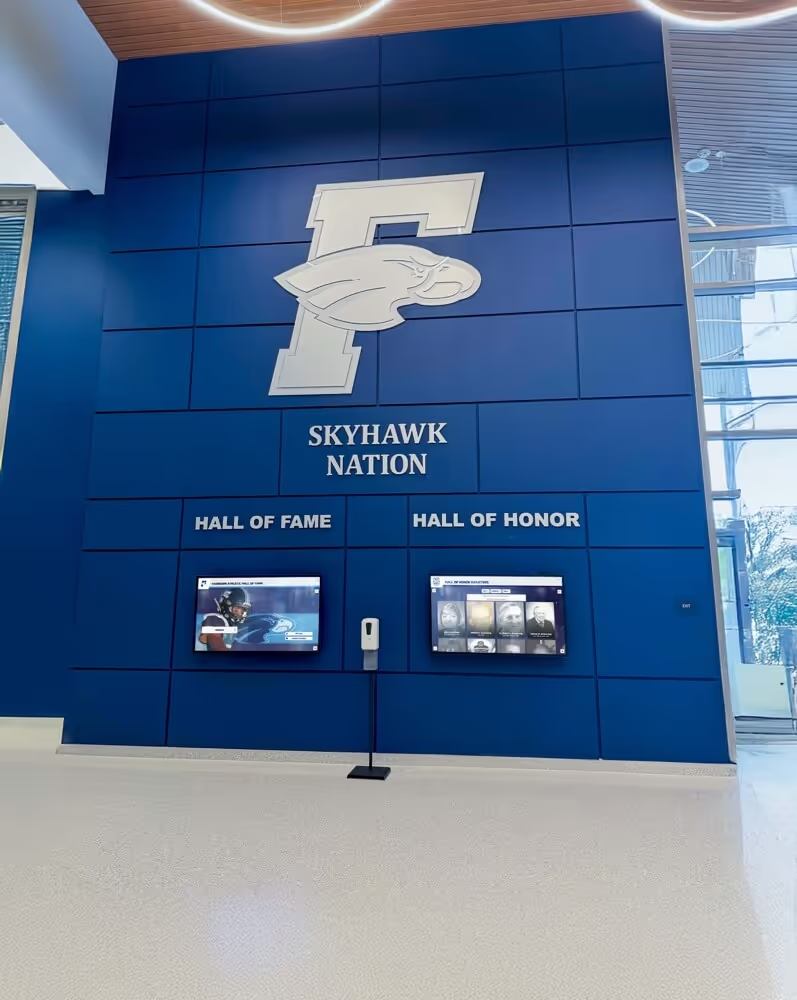
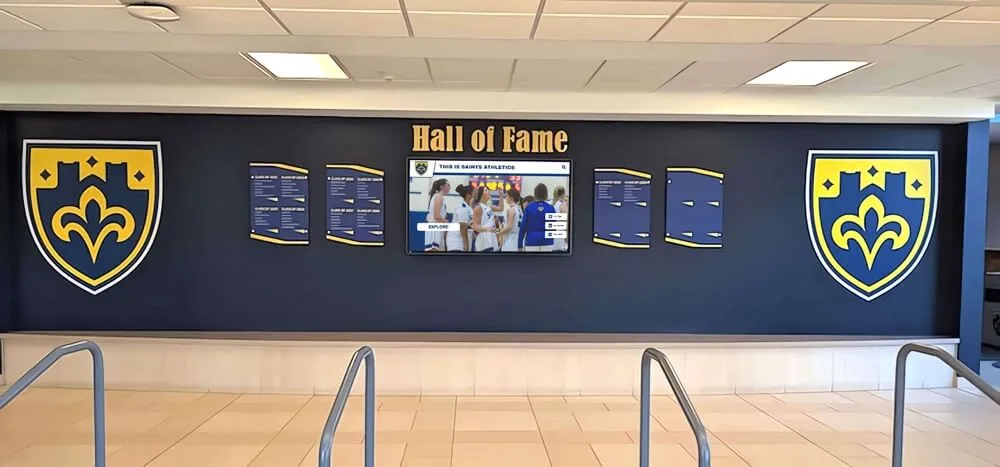
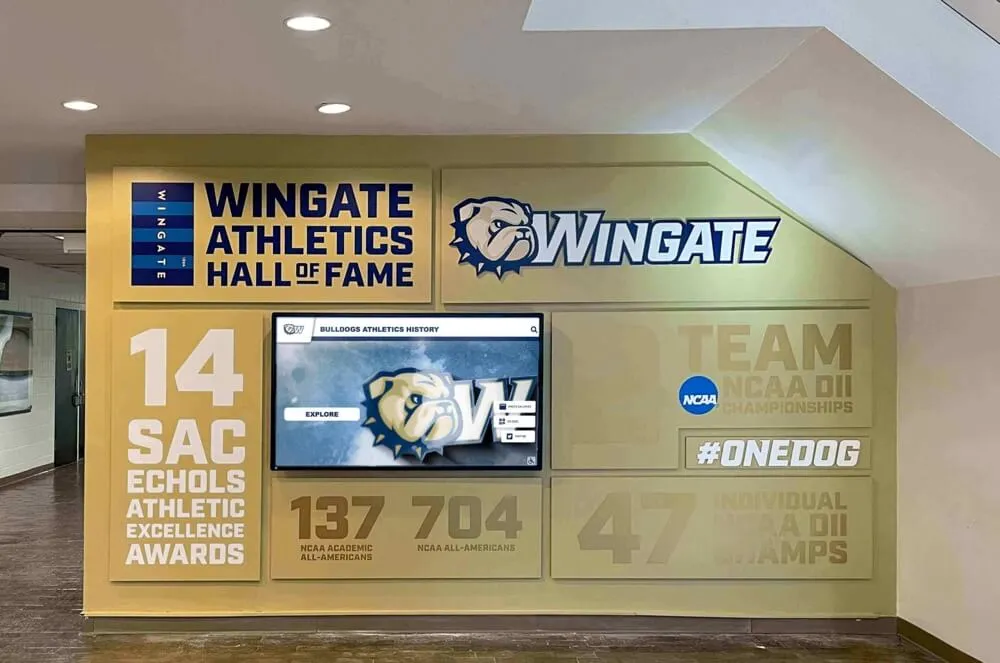
Athletic facilities with integrated digital recognition give sponsors and donors daily visibility in the environment their investment helped sustain
Programs that connect their fundraising campaigns to their physical recognition environments see stronger renewal rates because the connection between giving and visibility is concrete. A sponsor who sees their name on a lobby display during a Tuesday afternoon practice—not just on game night—experiences the value of their investment in a way that a once-a-year program ad cannot replicate.
Athletic team room design ideas that connect recognition, recruiting, and community culture show how the physical design of athletic spaces can be built around recognition as a structural principle, not an add-on.
Booster club fundraising ideas organized by how they integrate with physical and digital recognition infrastructure offer additional frameworks for schools building recognition environments that serve both the fundraising and the stewardship mission.
Frequently Asked Questions About Team Fundraiser Ideas for School Athletics
What are the most effective team fundraiser ideas for a program just starting out?
Start with the formats that have the lowest startup cost and the most forgiving learning curve. A fun run or 5K with a pledge component requires minimal infrastructure and can be organized in 6–8 weeks. A concession stand operation at home events generates consistent revenue without a separate event. These two formats together give a new program a recurring revenue baseline before adding higher-complexity events like golf tournaments or auctions.
How do we get local businesses to sponsor team fundraising campaigns?
Start with businesses that already have visible connections to the school community—parents of current athletes, businesses that hire graduates, local institutions with longstanding community ties. Lead with specificity: tell them exactly where their name will appear, how many people will see it, and what the funds will support. A $500 sponsorship that comes with a gym banner, a program ad, and a digital lobby rotation slot is a clearer value proposition than a generic “partner with us” ask.
How many fundraisers should a school athletic program run each year?
Most programs benefit from two or three distinct fundraising initiatives per year rather than a continuous series of small asks. Over-fundraising creates donor fatigue and volunteer burnout. A flagship event, one rolling campaign, and one product-based revenue stream (concessions or merchandise) gives a program three separate revenue channels while keeping the ask cadence manageable.
What is the best way to recognize donors after a campaign closes?
The highest-impact recognition actions are the most specific: a photograph of the funded equipment in use, a named acknowledgment at a public event, and a permanent digital or physical placement in the athletic facility. Generic thank-you emails perform far worse than targeted impact updates that connect the donor’s specific contribution to a visible outcome.
How do digital displays support a school fundraising campaign?
Digital lobby and hallway displays extend campaign visibility into the school’s physical environment, reaching visitors, students, and faculty who never open a campaign email. During an active campaign, they can display progress toward the goal, sponsor acknowledgment, and campaign-specific content. After the campaign closes, the same system transitions to permanent donor and sponsor recognition, giving contributors ongoing visibility in the space their investment supported.
Building Team Fundraiser Ideas Into a Recognition System
The most durable athletic fundraising programs are built on a recognition architecture that treats every donor, sponsor, and contributor as someone whose relationship with the program can grow over time. Team fundraiser ideas are the entry point. Sponsor recognition, campaign milestone displays, and post-event stewardship are what convert that entry into a long-term partnership.
The checklist, the stewardship calendar, and the display strategies in this guide are tools for building that architecture without requiring a large staff or a significant technology investment. Start with the recognition habits—personal outreach, milestone acknowledgments, impact updates—and layer in the physical and digital display infrastructure as budget and facility conditions allow.
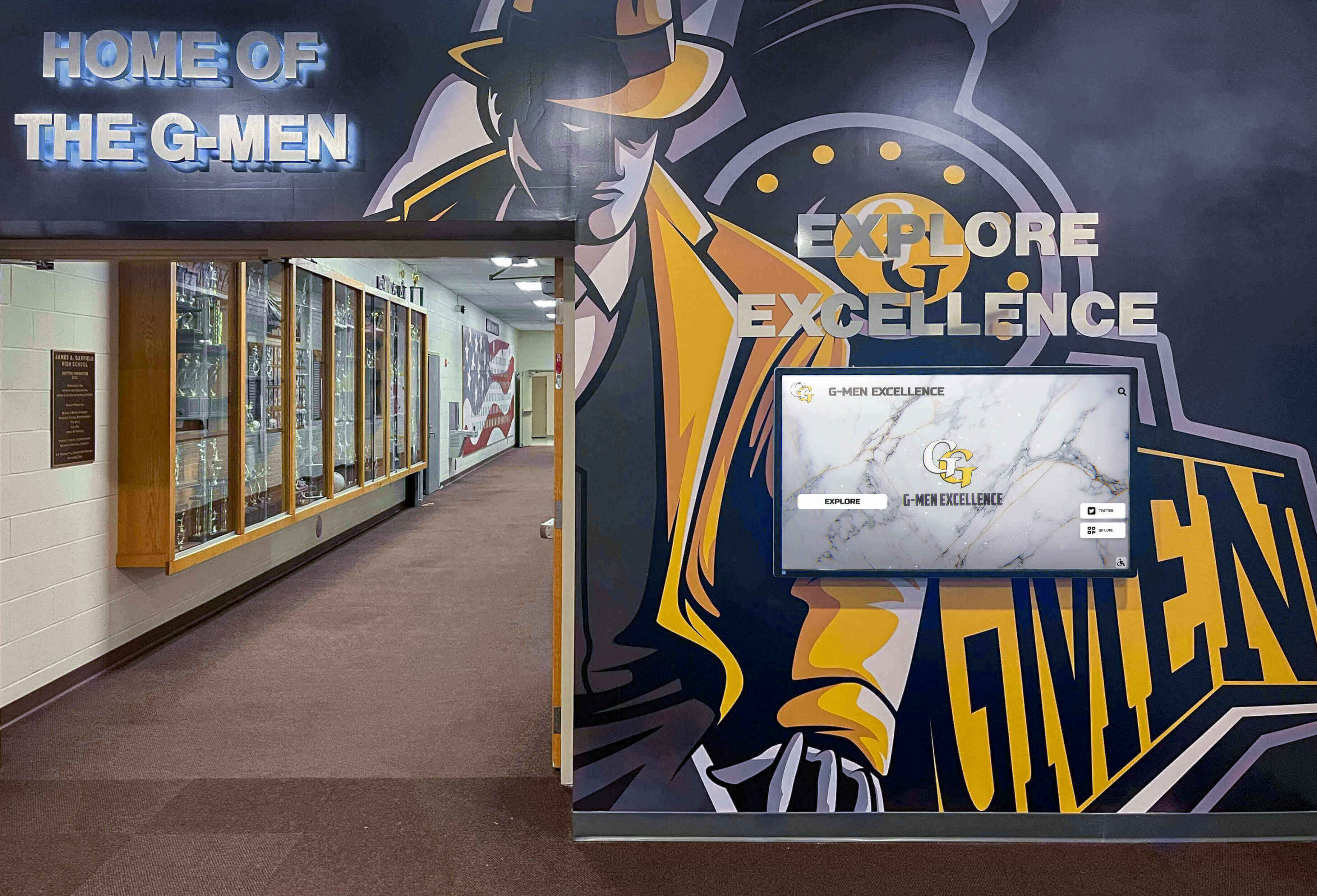
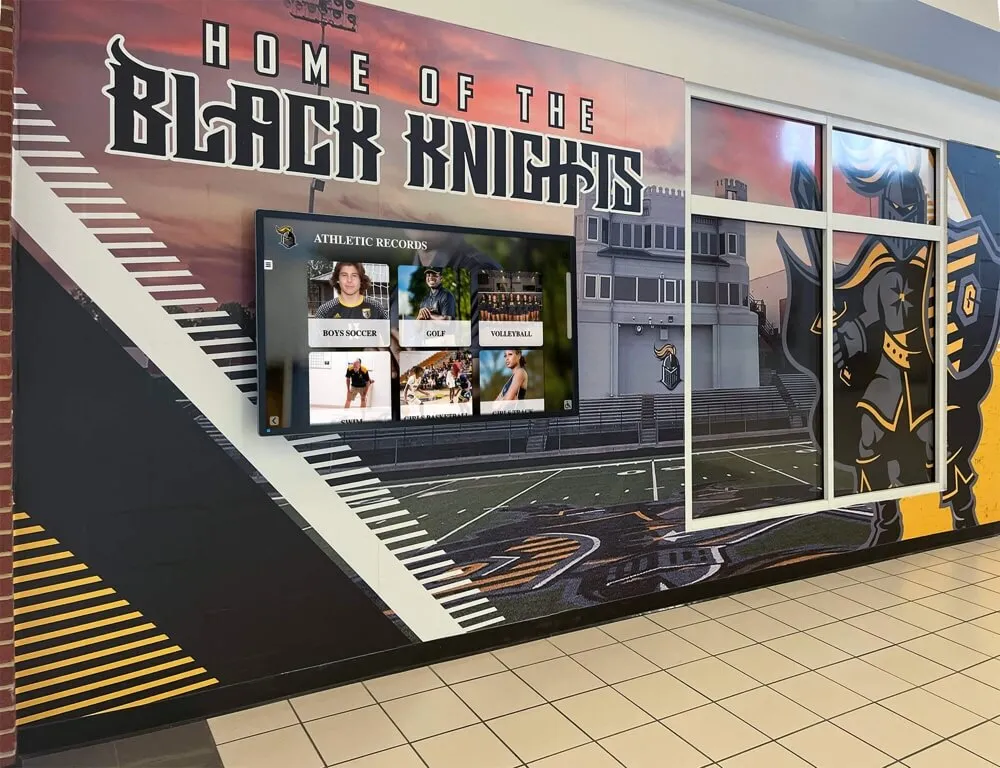
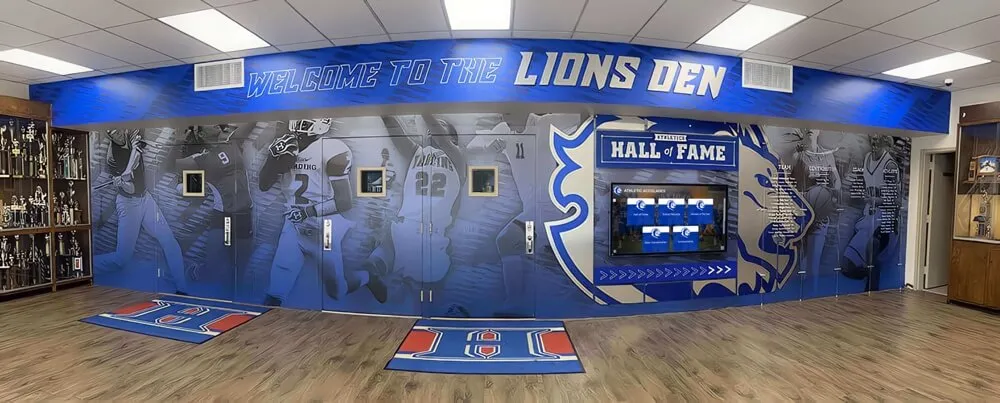
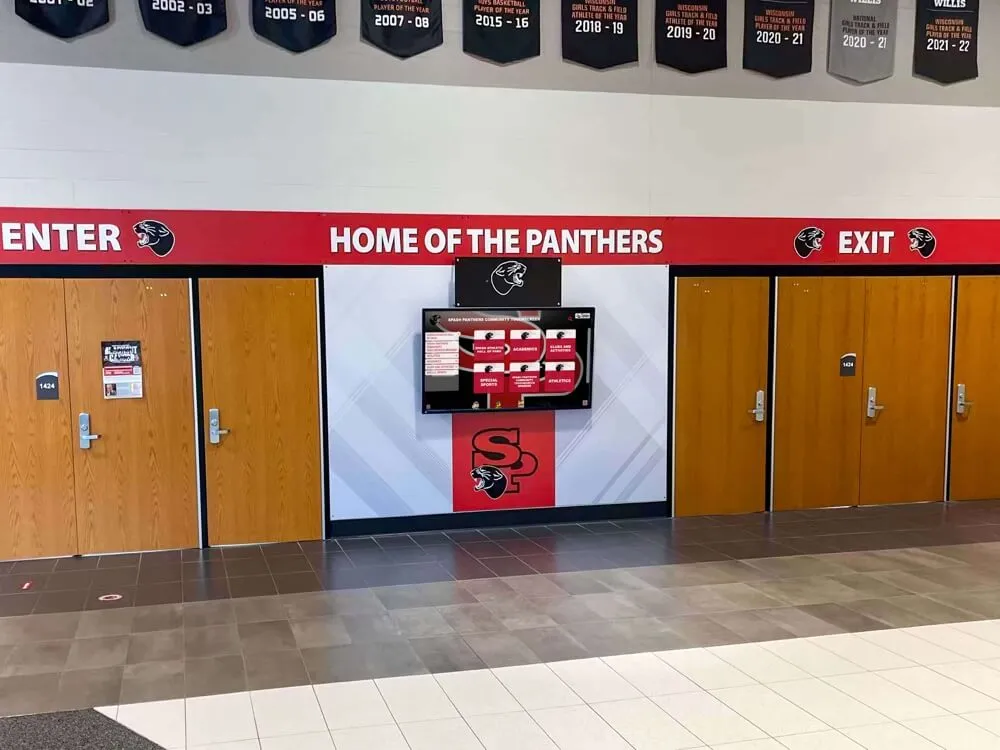
Athletic hallways that combine murals, digital screens, and trophy cases create the kind of recognition environment that makes sponsors and donors proud to be associated with the program
The programs that do this well are not necessarily the ones with the largest budgets—they are the ones where a sponsor can walk into the building on any Tuesday in October and find their name in a place that matters. That is the recognition standard that team fundraising campaigns should be designed to deliver, and it is the standard that keeps sponsors coming back year after season.
How Rocket Alumni Solutions Supports School Athletic Fundraising and Recognition
Rocket Alumni Solutions builds the digital recognition infrastructure that connects school athletic fundraising to permanent acknowledgment. Their interactive touchscreen walls of fame, digital lobby kiosks, and campaign display systems are designed to show sponsor profiles, donor acknowledgment, campaign progress, and athletic records in a single unified environment.
For athletic directors who want to offer sponsors more than a single-season program ad—a permanent digital profile, daily rotation on a lobby screen, campaign milestone visibility, and integration with the school’s hall of fame environment—Rocket’s platform handles the technical side with remote content management. A sponsor profile can be updated in minutes; a campaign milestone display can go live without new hardware.
Give Your Fundraising Campaign a Recognition System That Lasts
See how Rocket Alumni Solutions integrates campaign milestone displays, sponsor recognition, and athletic hall of fame content into a single touchscreen system built for school athletics programs.
Request a Demo