Standing before classmates, families, and faculty to deliver a valedictorian speech represents one of the most significant moments in a student’s academic journey. This honor—earned through years of dedication, intellectual achievement, and sustained excellence—culminates in the responsibility to articulate the collective experience, wisdom, and aspirations of an entire graduating class. Yet the blank page can feel daunting: How do you balance personal reflection with universal themes? What tone strikes the right chord between celebration and gravitas? How do you create a speech that resonates years after graduation day?
The best valedictorian speeches transcend simple academic achievement celebration to become memorable messages that capture a moment in time, honor the journey that brought everyone together, and inspire audiences to embrace future possibilities. Whether you’re a valedictorian beginning your speech-writing process or an educator supporting students in this important task, understanding what makes graduation speeches compelling helps transform this ceremonial obligation into a meaningful communication opportunity.
This comprehensive guide provides valedictorian speech examples, practical writing strategies, delivery techniques, and recognition approaches that ensure this pinnacle academic honor receives the celebration it deserves—both on graduation day and through permanent recognition systems that preserve excellence for future generations.

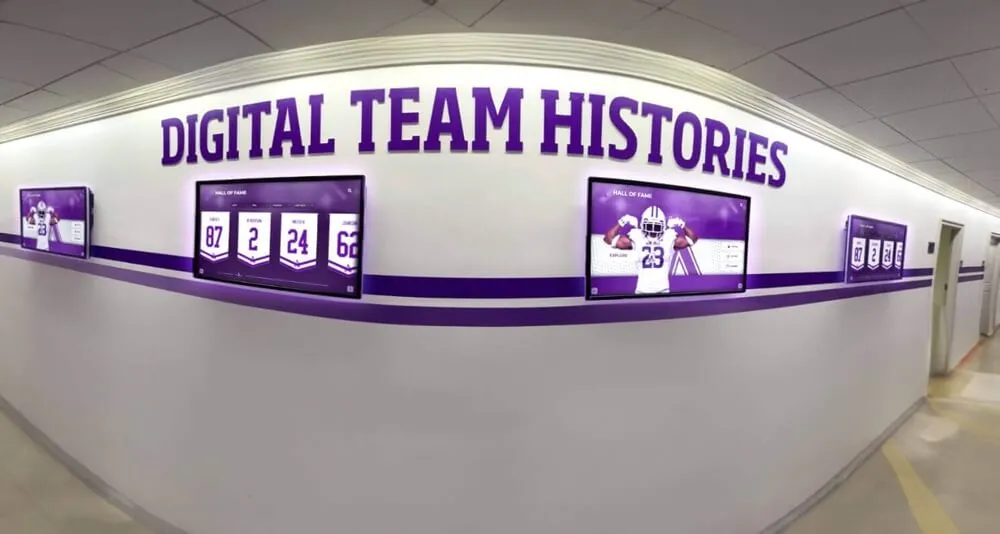
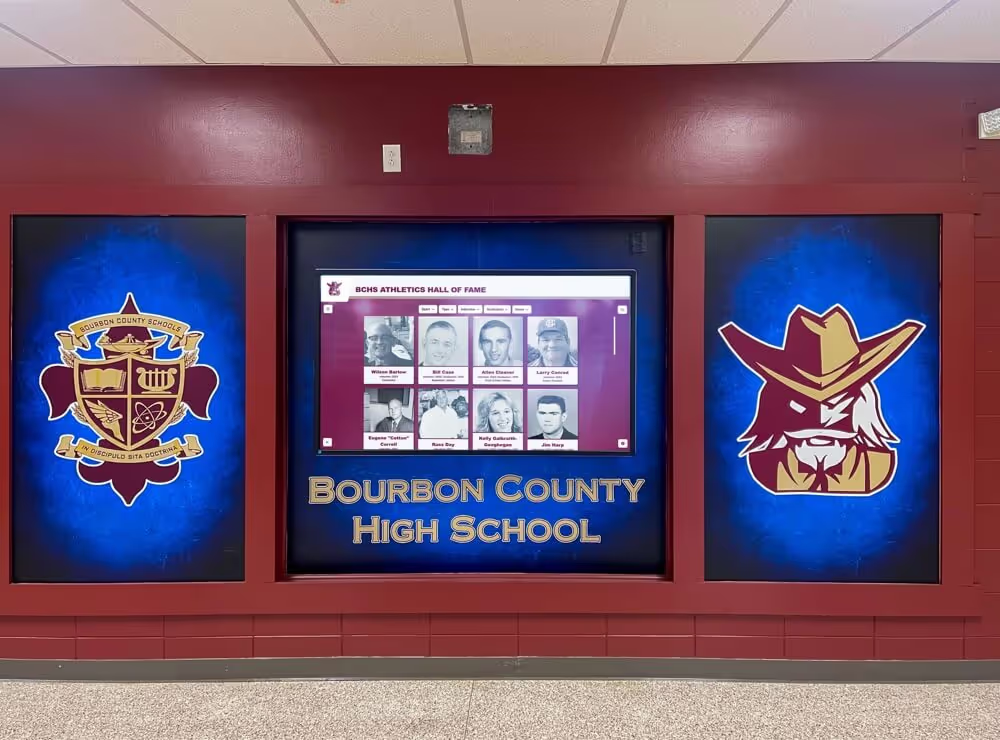
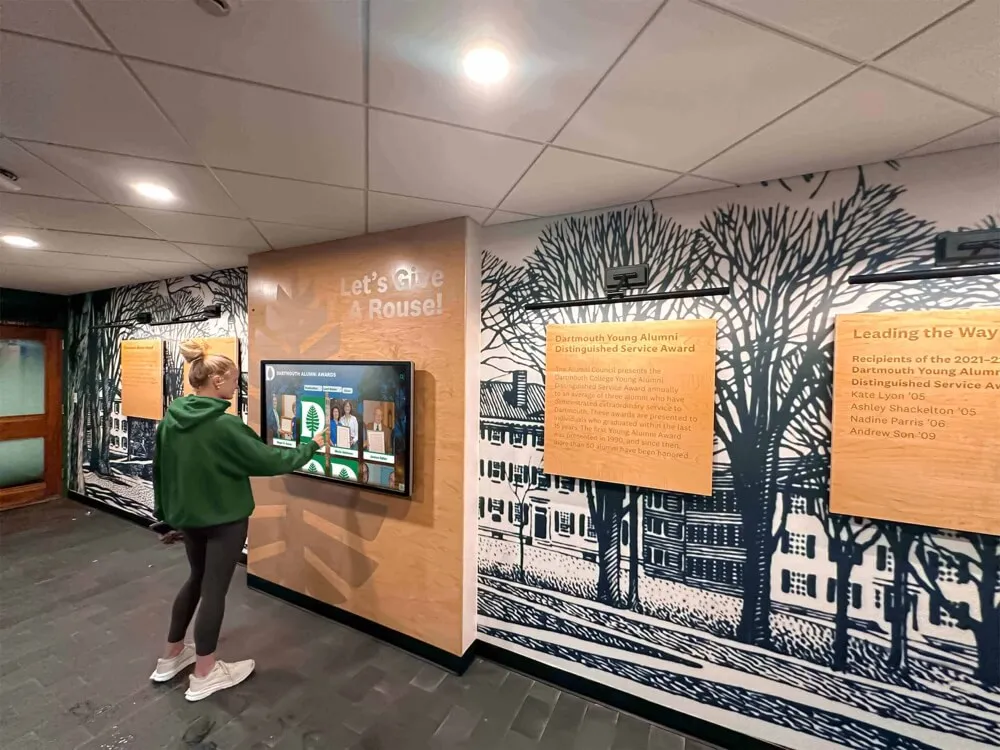
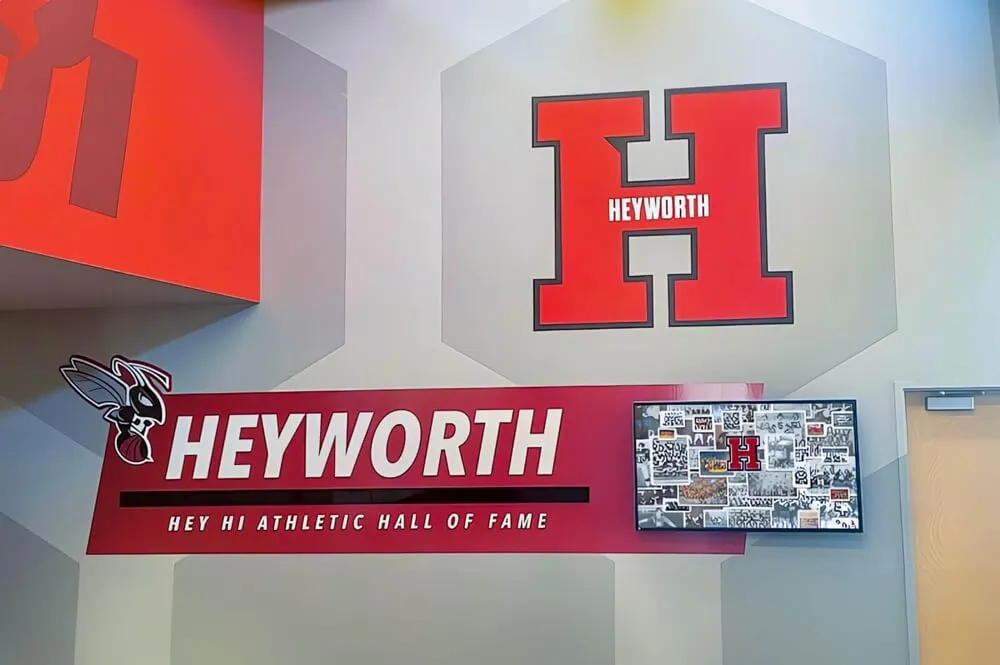
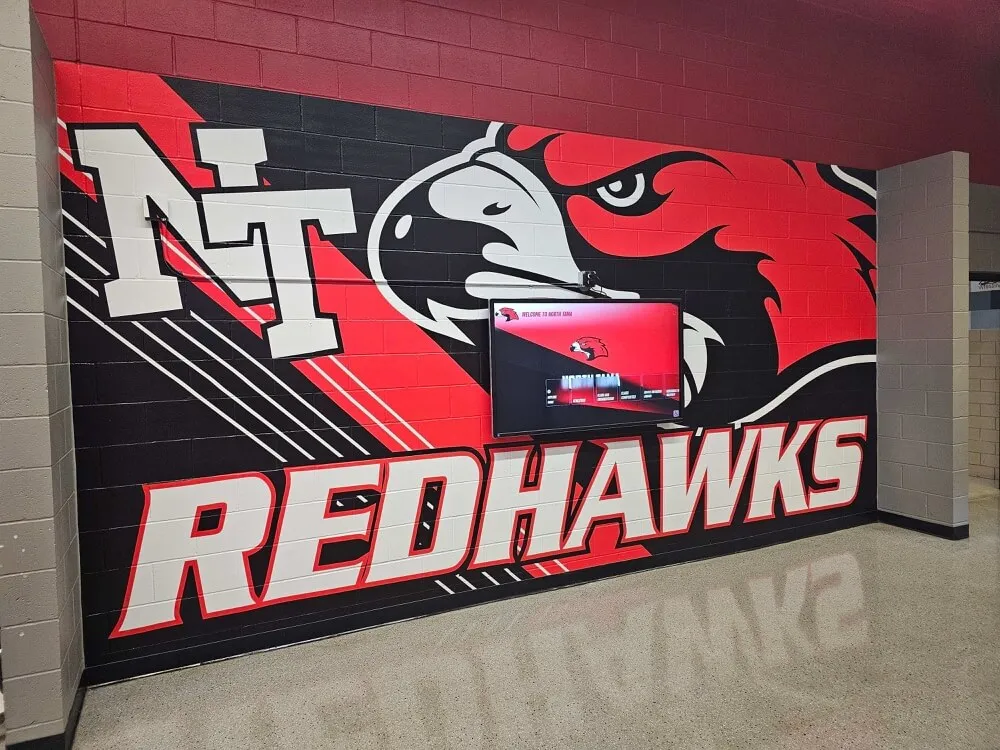
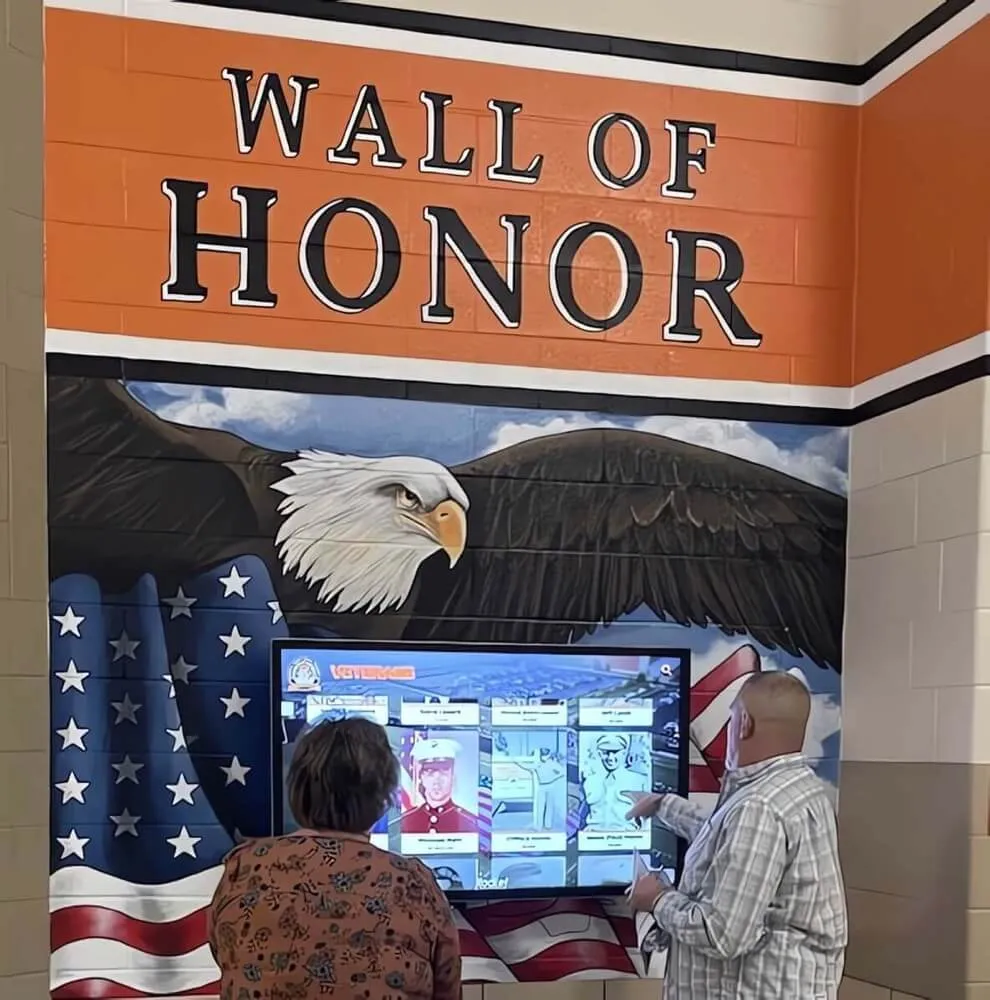
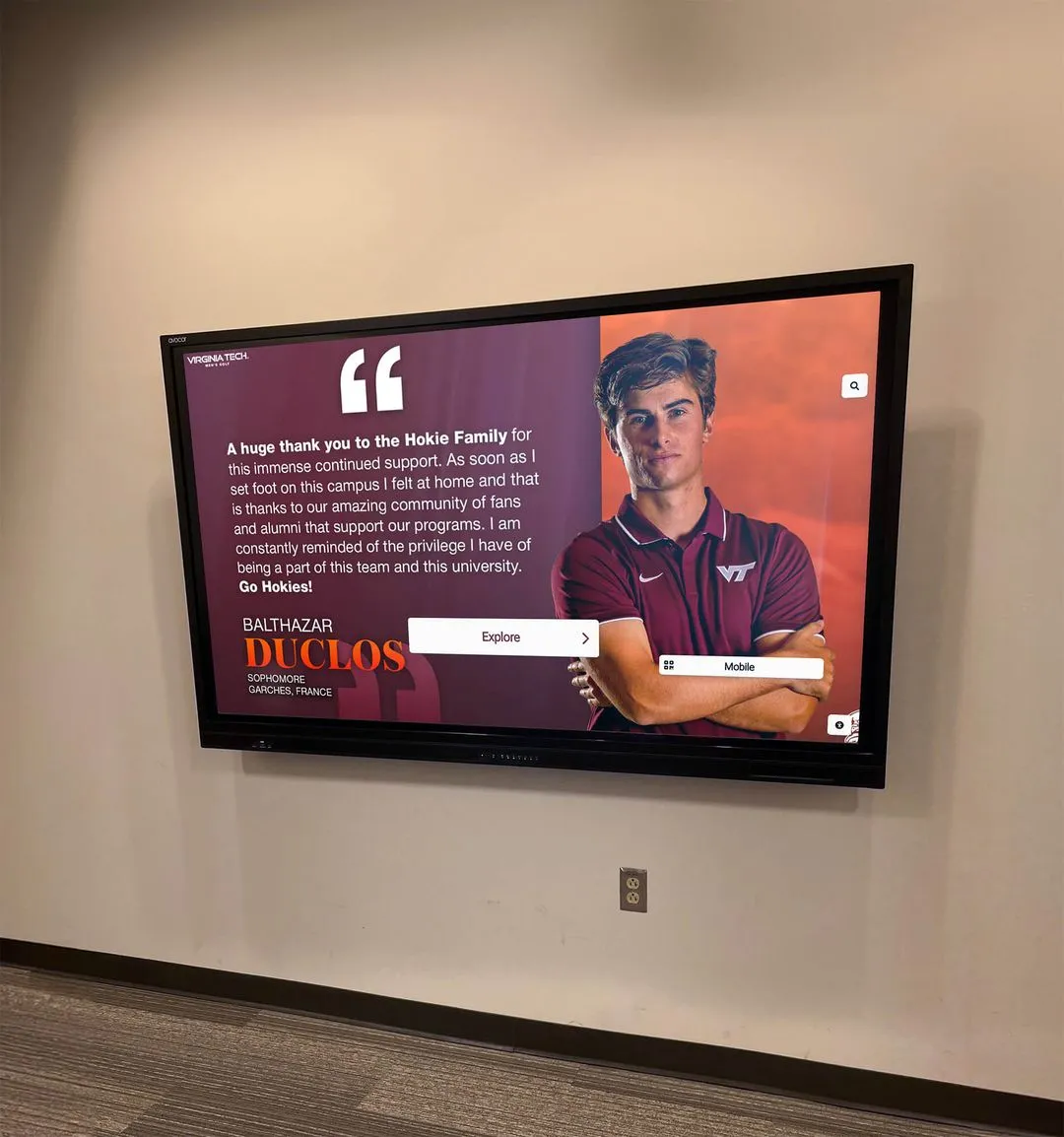
Recognition displays create lasting celebration of academic excellence, preserving valedictorian achievements alongside graduation day speeches
Understanding the Valedictorian Speech Purpose and Audience
Before examining specific speech examples, understanding the unique context and expectations surrounding valedictorian speeches helps speakers craft messages that fulfill this ceremonial moment’s purpose.
The Valedictorian’s Unique Platform
Unlike other graduation speakers addressing students from outside their experience, valedictorians speak both as members of the graduating class and representatives of collective achievement:
Peer Authority and Shared Experience
Valedictorians earned their platform through demonstrated academic excellence, creating natural authority when reflecting on the educational journey. Fellow graduates recognize the speaker navigated the same challenges, experienced the same teachers, and participated in the same formative moments—creating authenticity impossible for outside speakers to replicate.
Representative Voice, Not Individual Authority
Despite individual achievement, effective valedictorian speeches balance personal perspective with representative voice. The speech should capture broader class experience rather than simply cataloging the speaker’s personal accomplishments or offering advice implying superiority over classmates.
Multi-Generational Audience Considerations
Valedictorian speeches address remarkably diverse audiences simultaneously: fellow graduates seeking validation and inspiration, parents and family members celebrating their students’ achievements, faculty and staff reflecting on their educational impact, and community members witnessing the next generation’s emergence. Effective speeches acknowledge these multiple perspectives.
Core Speech Objectives
Successful valedictorian speeches accomplish several essential goals:
Capture the Collective Journey
Reflect authentically on shared experiences spanning years of education—the challenges overcome, lessons learned, relationships formed, and growth achieved together as a class.
Honor Those Who Supported Success
Acknowledge teachers, administrators, support staff, parents, and community members whose contributions enabled academic achievement.
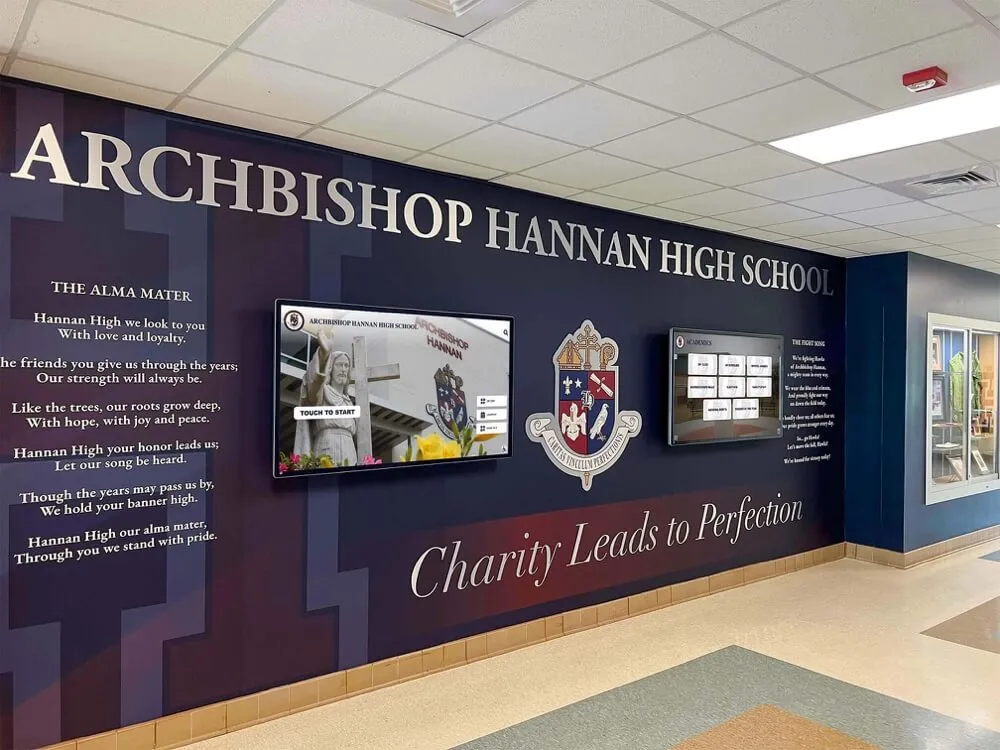
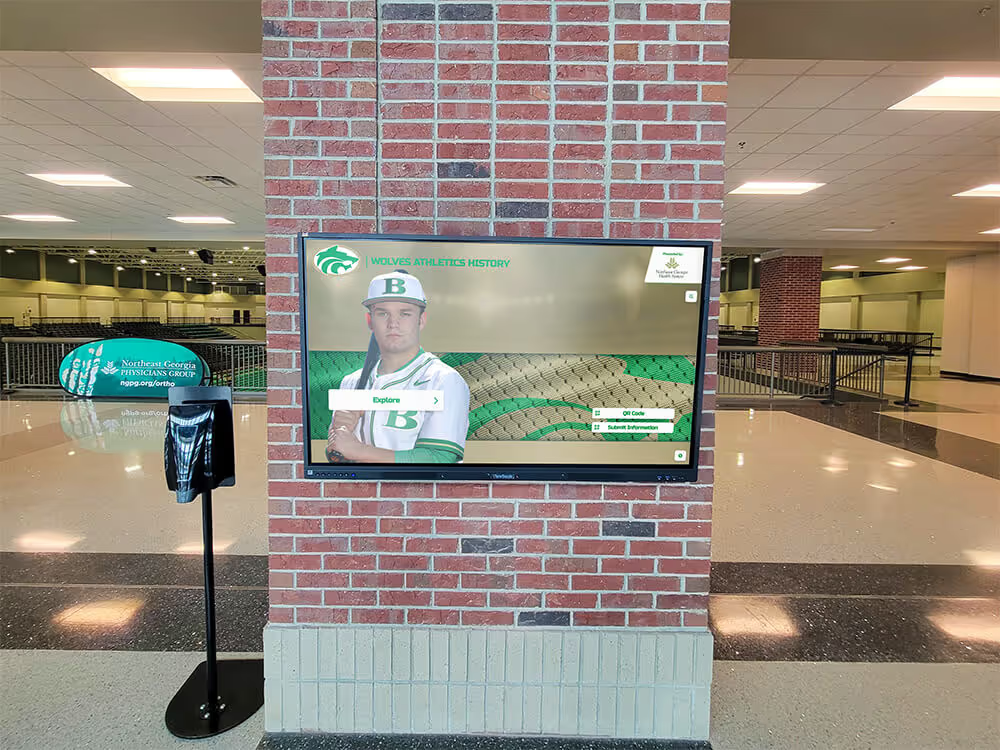
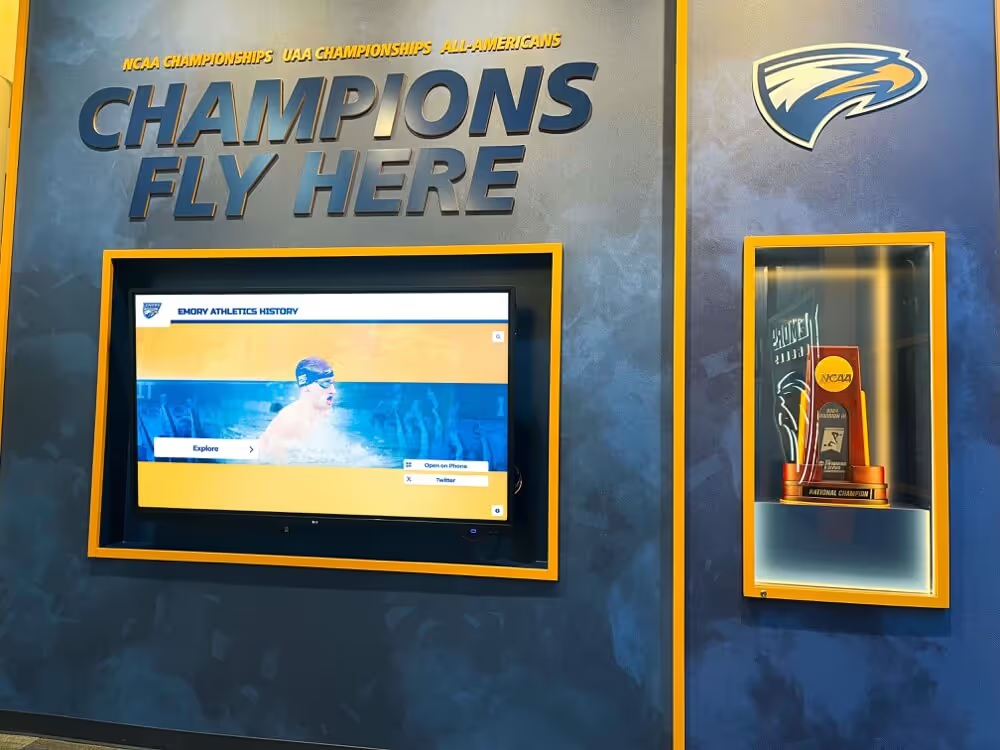
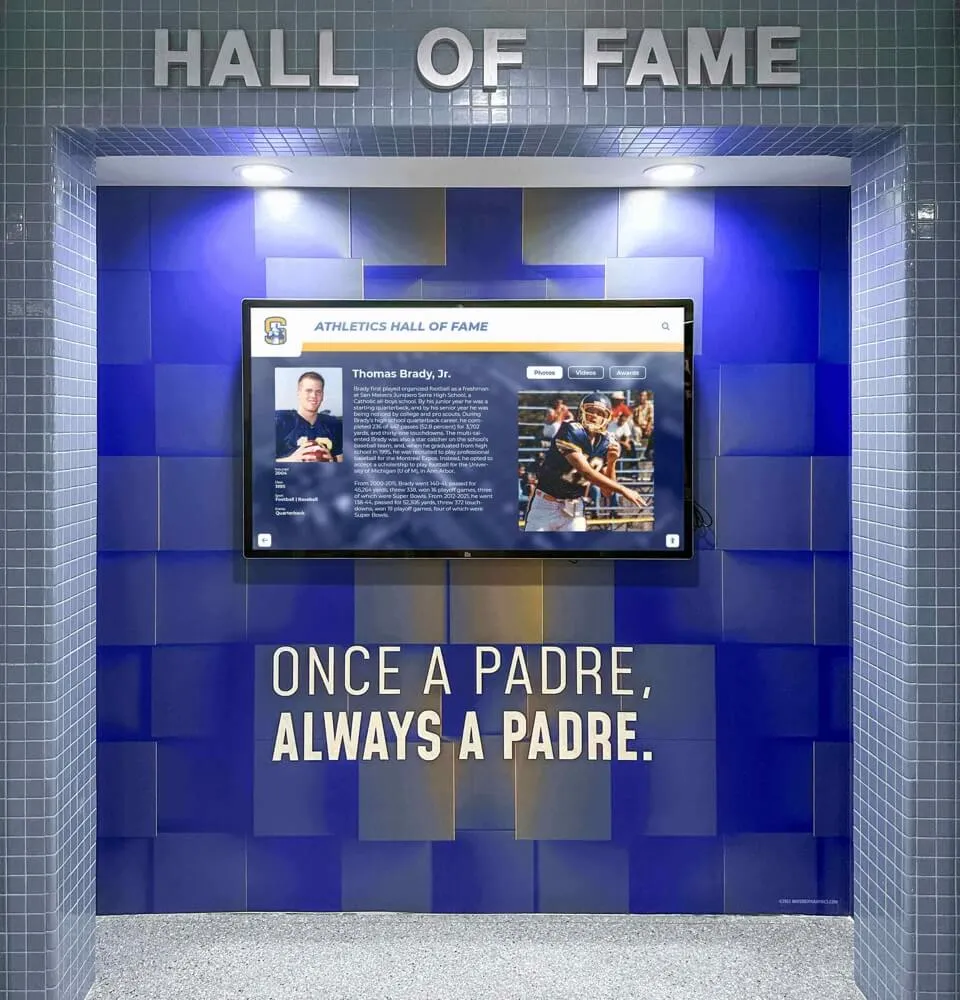
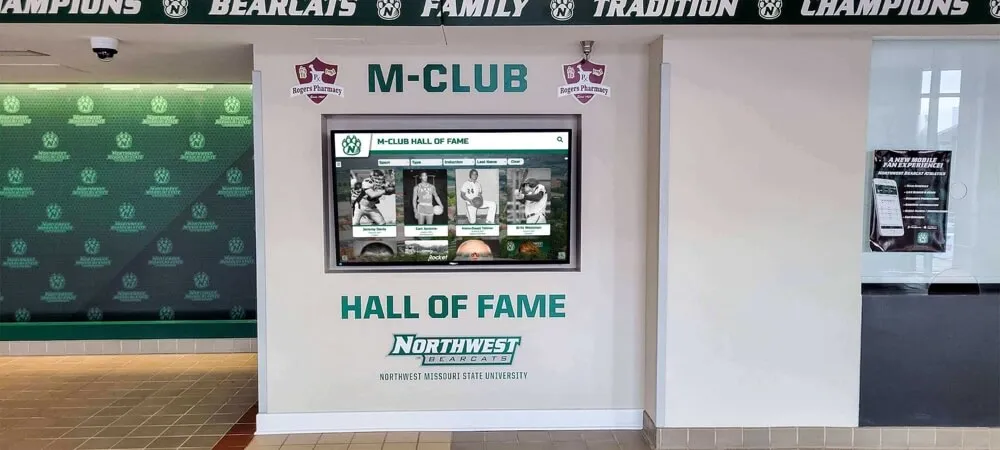
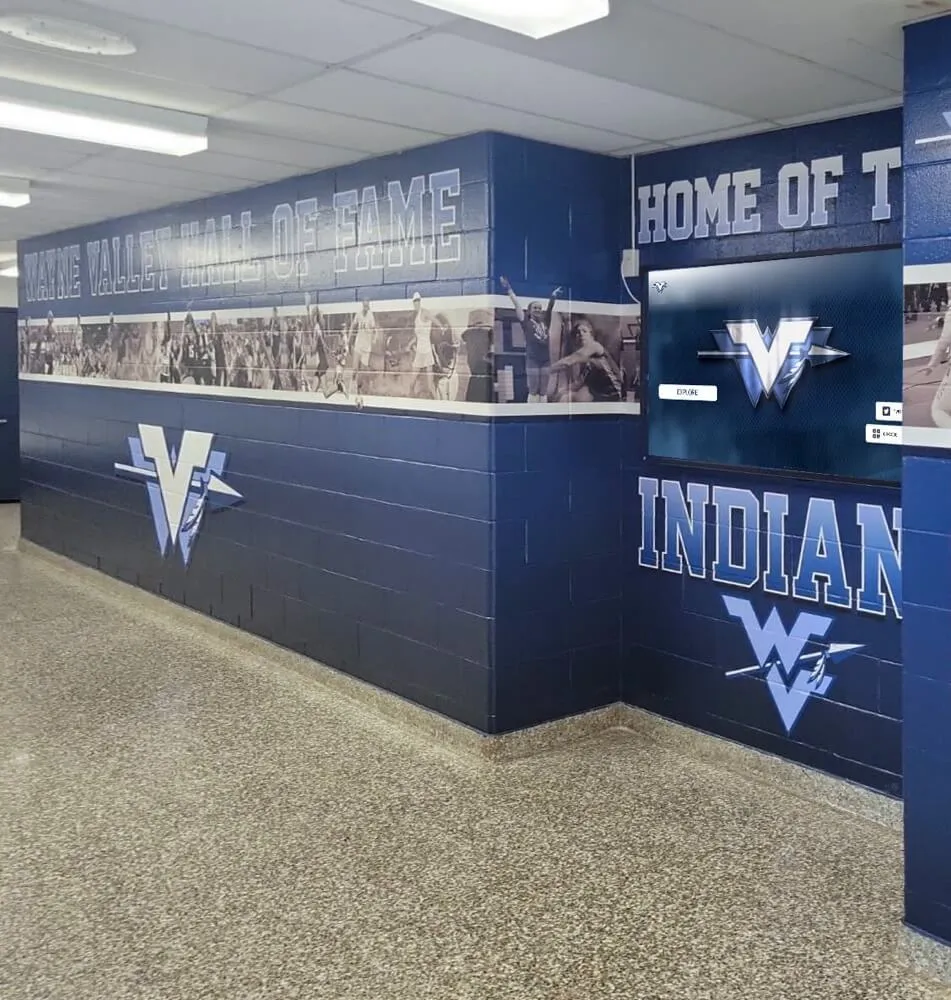
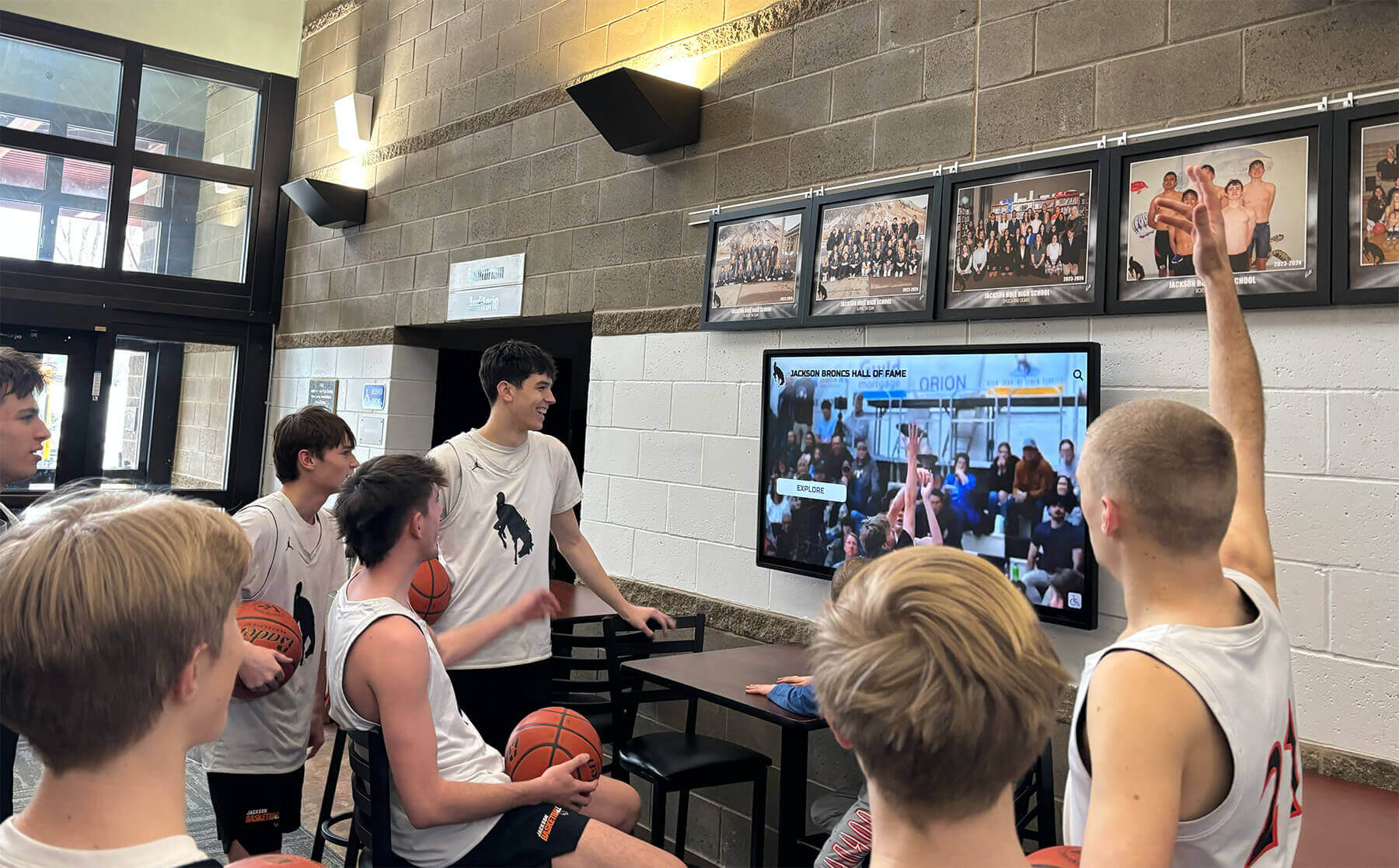
Recognition spaces honor academic excellence, providing visible celebration of valedictorian achievements
Bridge Past, Present, and Future
Connect the educational foundation just completed with future possibilities ahead, helping graduates transition from students to alumni while maintaining connection to their shared institutional experience.
Inspire Without Preaching
Offer perspective and encouragement that motivates without condescension—recognizing classmates as equals embarking on futures together rather than positioning the speaker as uniquely qualified to dispense wisdom.
Create Memorable Moment
Craft a speech that resonates beyond graduation day—becoming part of class memory and institutional tradition rather than forgettable ceremonial obligation.
Understanding these objectives focuses speech development on essential purposes rather than superficial elements or clichéd graduation advice.
Valedictorian Speech Structure and Framework
Effective speeches follow proven structural approaches that create natural flow while maintaining audience engagement throughout delivery.
Classic Three-Act Speech Structure
The most enduring valedictorian speeches follow narrative arc patterns audiences intuitively understand:
Act One: Looking Back (Past)
Open by establishing connection with shared experience including memorable moments from the graduating class’s journey, acknowledging challenges the class overcame together, and honoring the foundation built through years of education. This backward-looking section validates the collective experience and establishes speaker credibility through demonstrated understanding of classmates’ shared journey.
Act Two: Being Present (Present)
Transition to reflection on current moment including recognition of achievement and what graduation represents, acknowledgment of those who made success possible, and celebration of relationships and community formed through education. This present-focused section creates emotional resonance by acknowledging the significance of the immediate moment.
Act Three: Moving Forward (Future)
Conclude by looking ahead with optimism including encouragement about possibilities ahead, reflection on how education prepared graduates for next chapters, and articulation of hopes or aspirations for the class’s collective future. This forward-looking section provides inspirational closure while maintaining realistic optimism.
This temporal structure creates natural progression audiences follow easily while providing clear framework for organizing speech content.
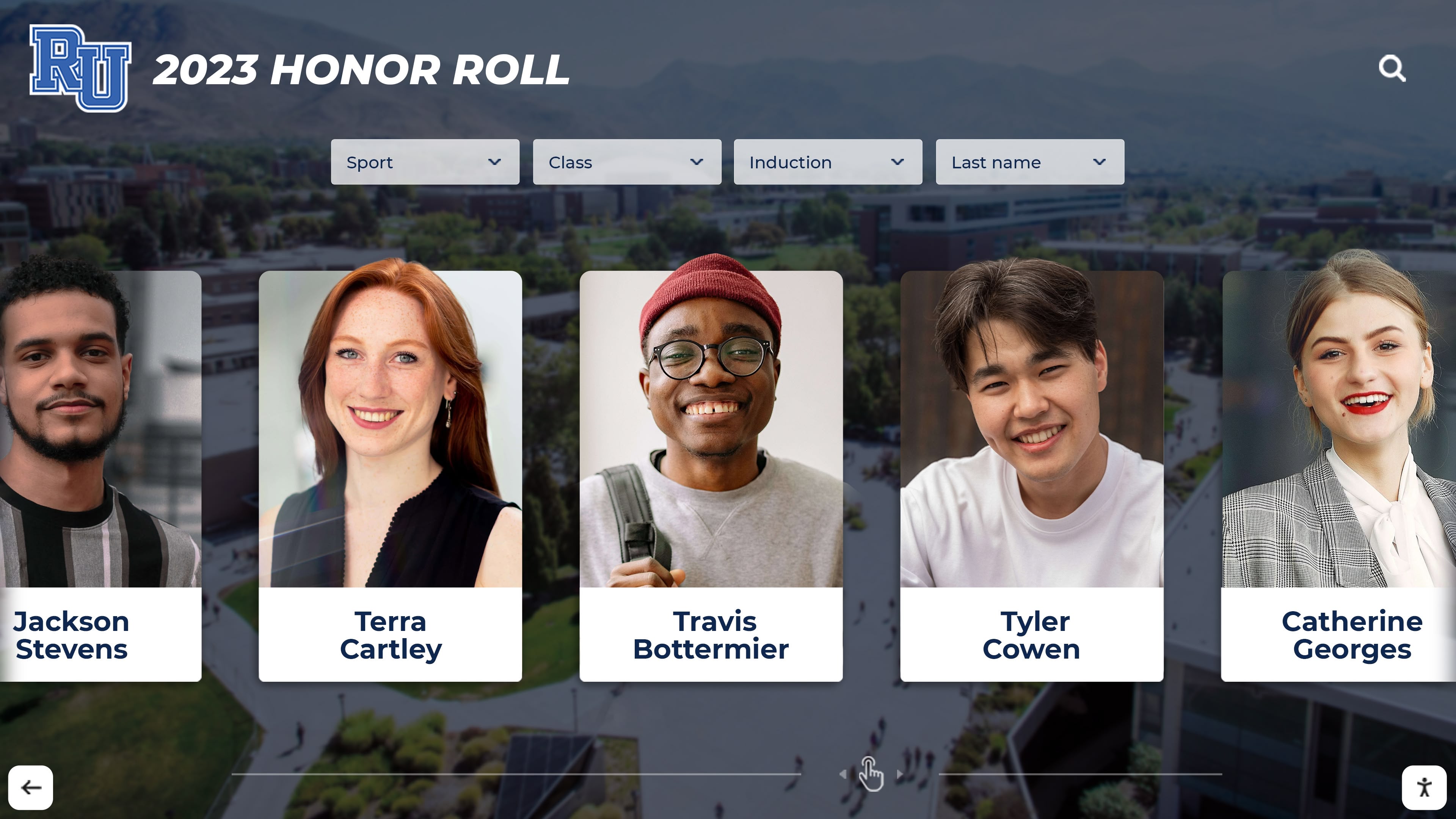
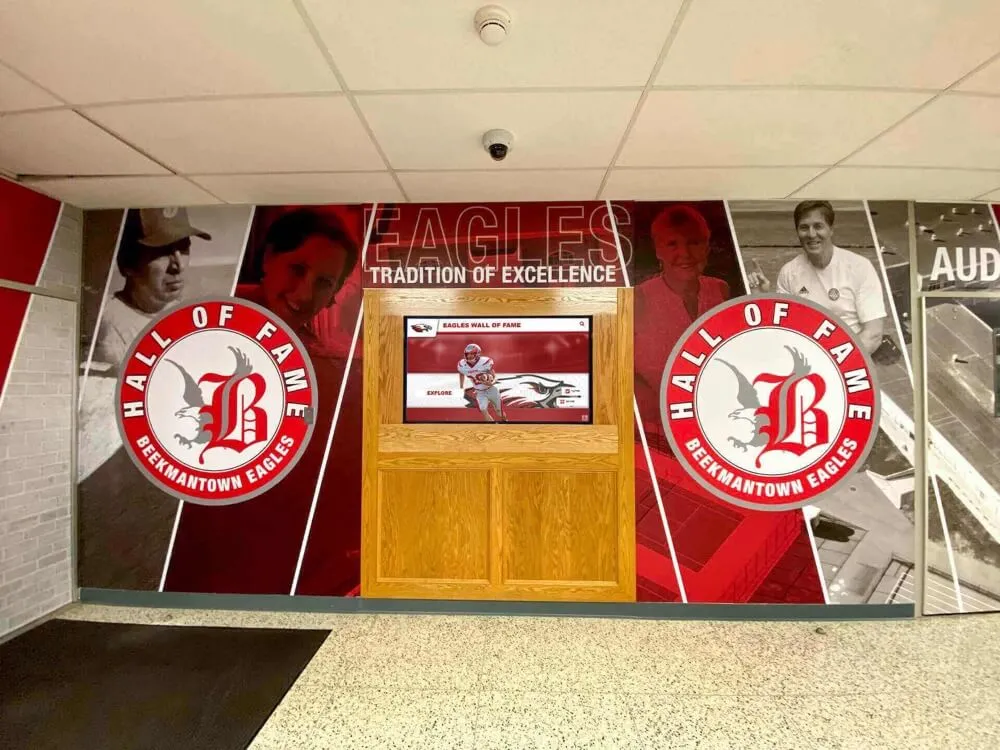
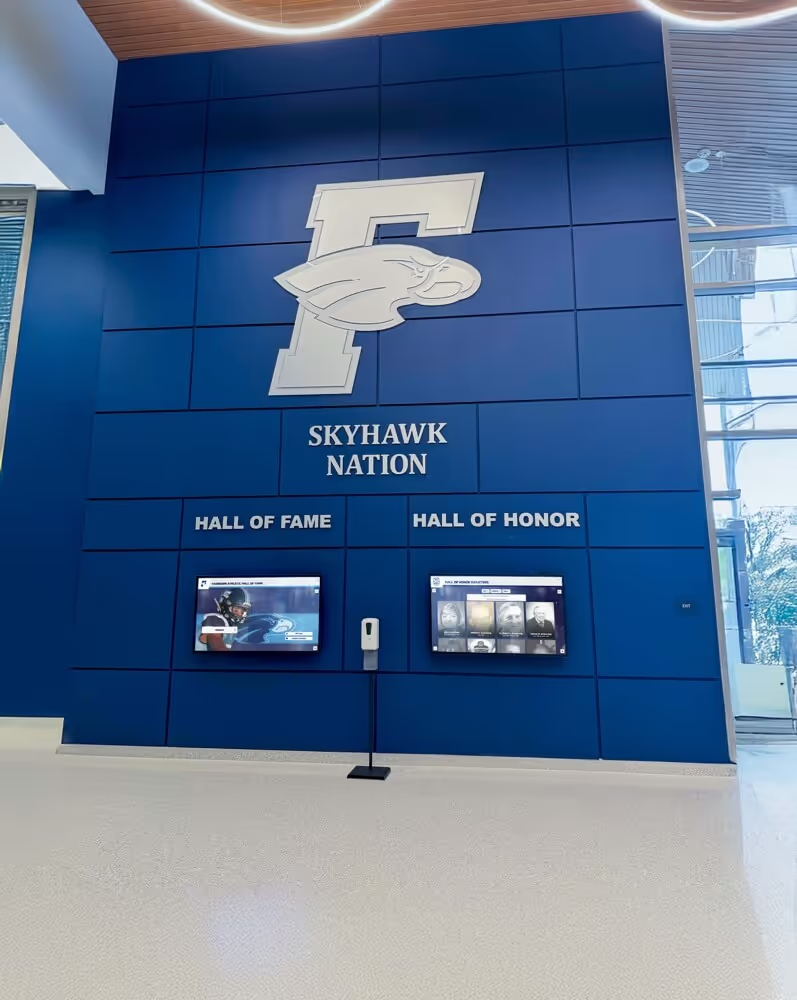
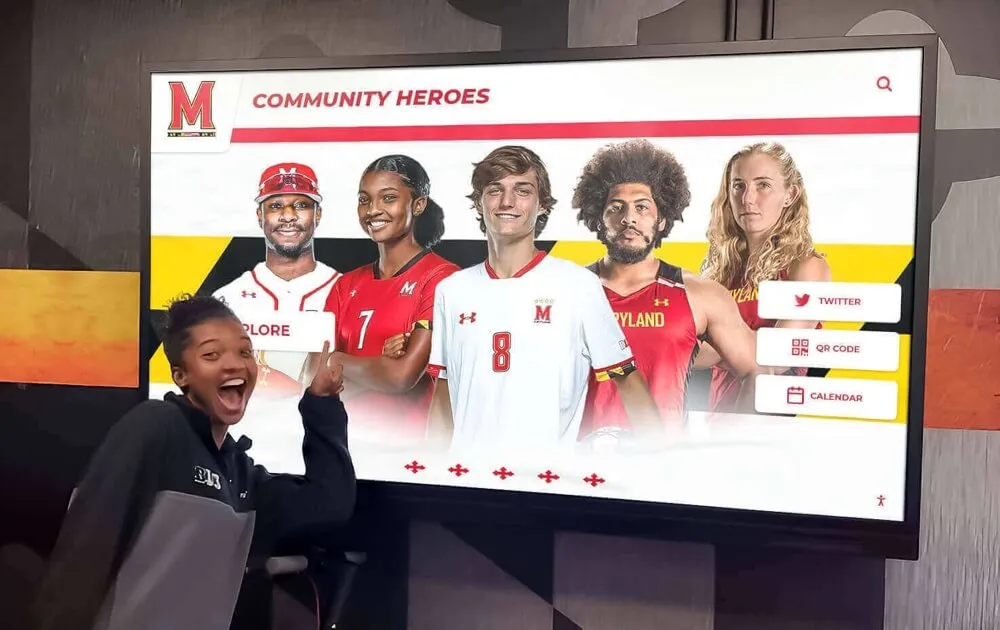
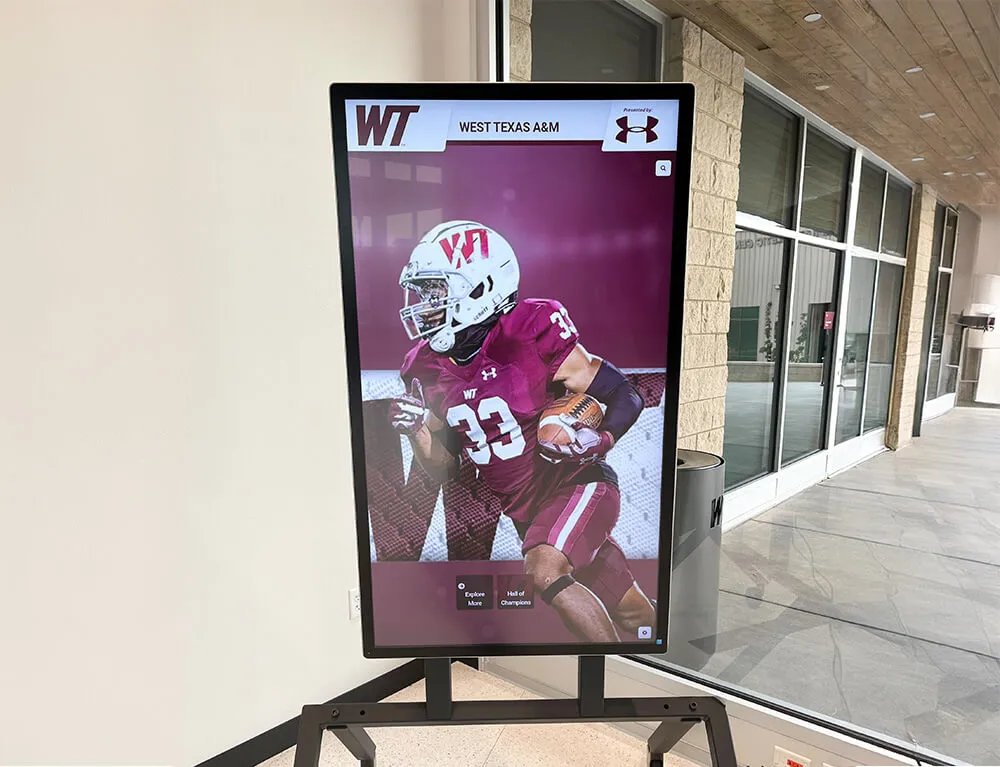
Digital displays enable detailed recognition of individual achievement, preserving valedictorian profiles alongside speech content
Alternative Structural Approaches
Beyond chronological structure, effective speeches use various organizational frameworks:
Thematic Organization
Build speech around central theme or metaphor that provides cohesive thread including life as journey, education as foundation, graduates as chapters in continuing story, or institutional values as guiding principles. Thematic approaches create memorable coherence while avoiding predictable chronological progression.
Lesson-Based Structure
Organize around key lessons learned during educational journey including three to five major insights gained through school experience, concrete examples illustrating each lesson, and application of lessons to future challenges graduates will face. This pedagogical approach leverages the educational setting while providing practical value.
Question-Driven Framework
Structure speech around addressing meaningful questions including “What will we remember?”, “Who shaped us?”, “What did we learn?”, and “Where do we go from here?” Question-based organization creates natural curiosity while providing clear segmentation between speech sections.
Storytelling Approach
Use extended narrative or series of connected stories to convey larger messages including personal anecdote illustrating broader themes, shared class experiences that defined the graduation journey, or metaphorical story providing insight applicable to graduates’ futures. Narrative structure maintains engagement through story’s inherent interest.
The key is selecting organizational approach that feels authentic to your communication style while serving speech objectives effectively.
Valedictorian Speech Examples and Analysis
Examining successful valedictorian speeches reveals effective techniques, themes, and approaches speakers can adapt to their own contexts.
Example 1: The Shared Journey Speech
This approach emphasizes collective experience over individual achievement:
Opening:
“Four years ago, we walked through these doors as strangers—nervous freshmen trying to find classrooms, figure out locker combinations, and navigate social dynamics we didn’t fully understand. Today, we leave as something more: a class that learned together, struggled together, celebrated together, and grew together through experiences that forever connected us.”
Body:
“We remember the late nights studying for exams we were convinced would determine our entire futures—then realizing there would always be another test, another challenge, another opportunity to prove ourselves. We experienced the joy of finally understanding concepts that initially seemed impossible, thanks to teachers who refused to let us give up and classmates who studied alongside us until everyone succeeded.
We faced disappointments when we didn’t make teams, didn’t earn roles, didn’t achieve recognition we sought—then discovered that setbacks taught us resilience more valuable than any easy success could provide. And we celebrated victories both large and small, learning that acknowledging others’ accomplishments creates community rather than competition.
To the teachers who saw potential even when we doubted ourselves, to the staff who supported us daily in countless unnoticed ways, to our families who believed in us through every challenge—thank you. You invested in our future, and we carry that investment forward.”
Conclusion:
“As we leave here today, we take with us more than knowledge from textbooks or skills from classrooms. We carry relationships that shaped who we’ve become, experiences that taught us how to navigate challenges, and confidence that we can face whatever comes next—not because we’re extraordinary individuals, but because we learned together that ordinary people accomplishing extraordinary things happens when we support each other through the journey. Congratulations, Class of 2026.”
Why This Works:
This speech prioritizes collective experience, uses inclusive language (“we” rather than “I”), acknowledges both success and failure as learning opportunities, and expresses gratitude authentically. It avoids preaching while providing meaningful reflection.
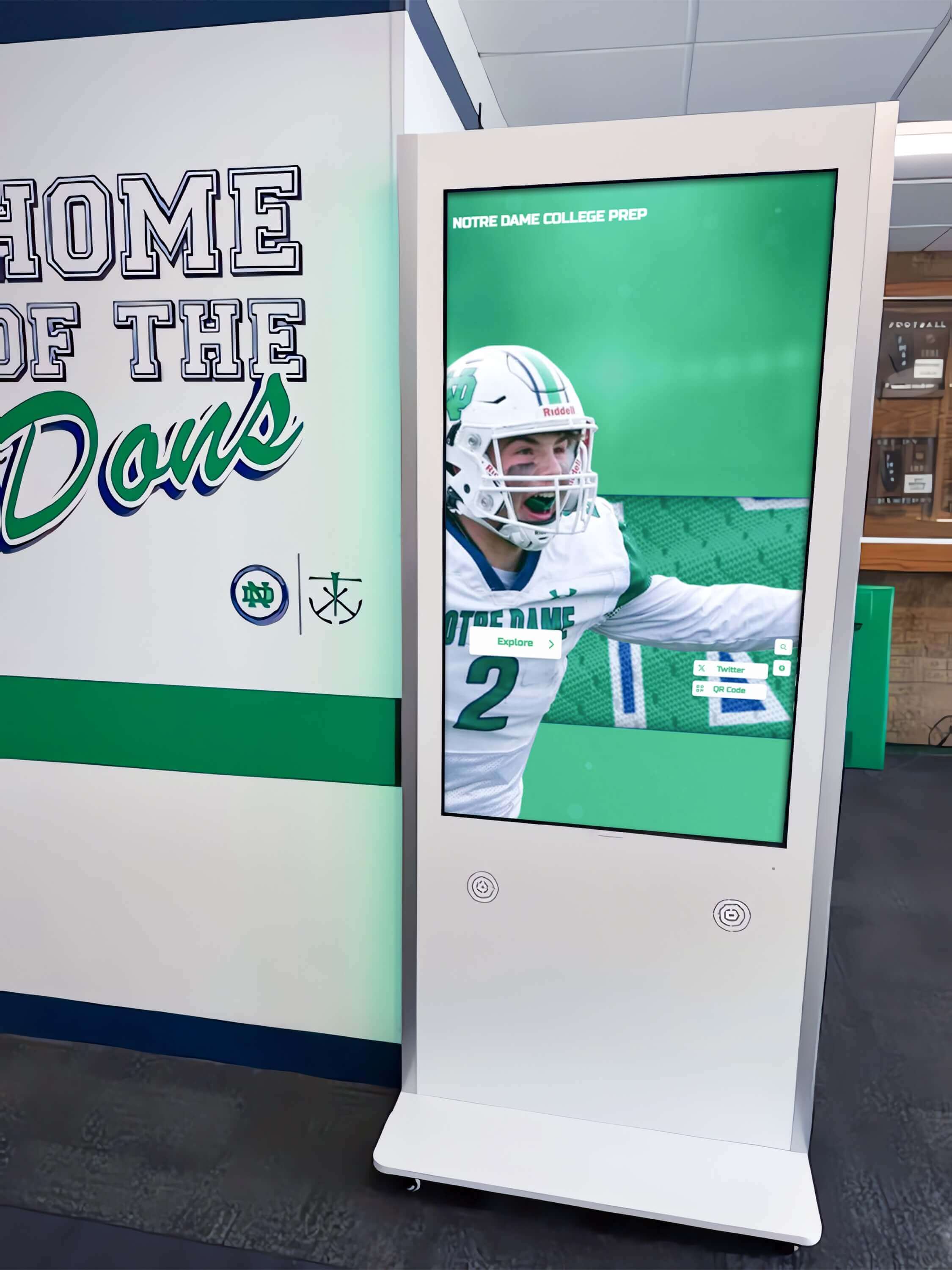
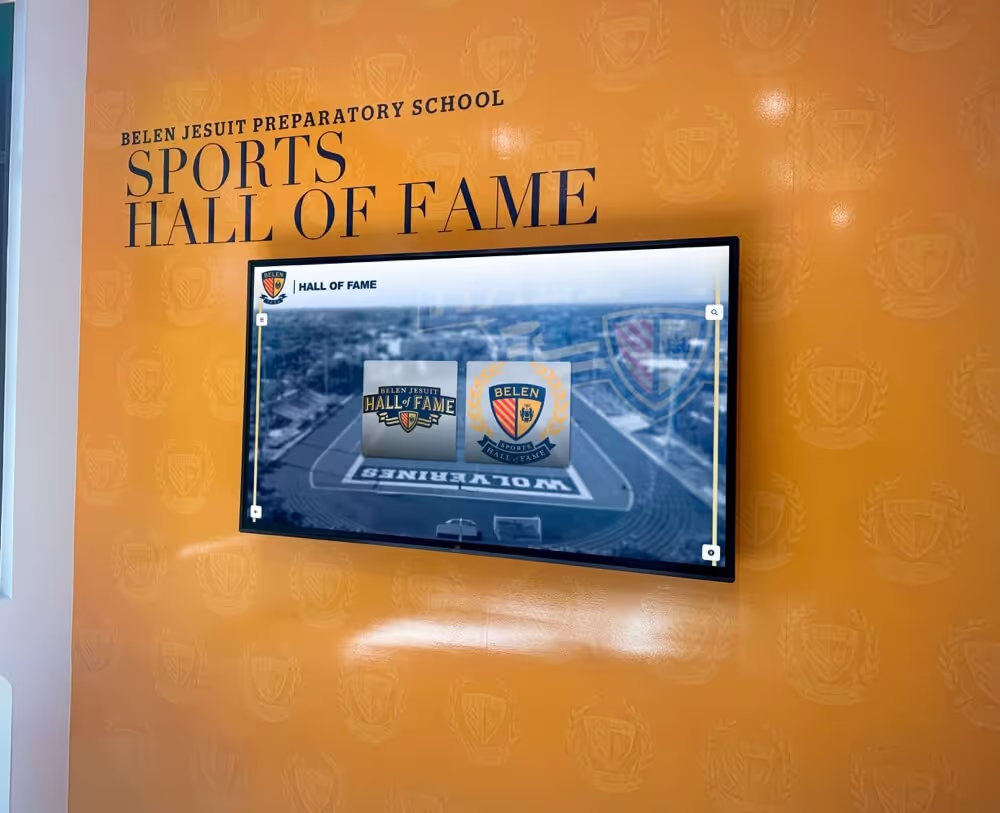
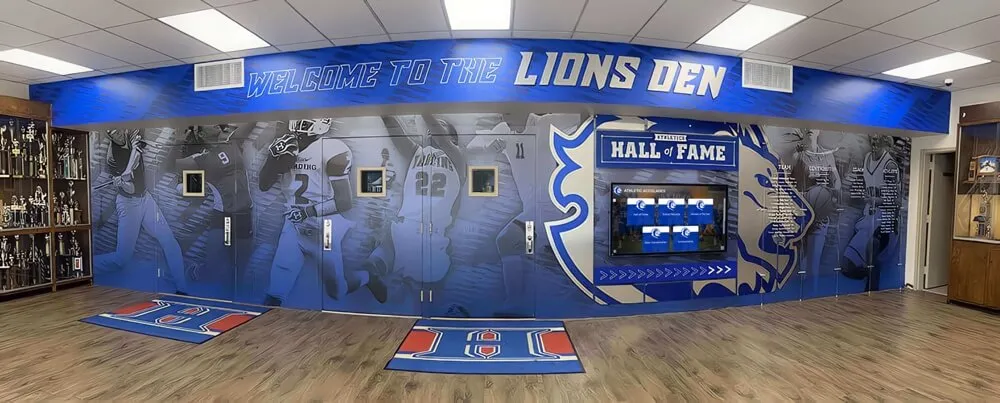
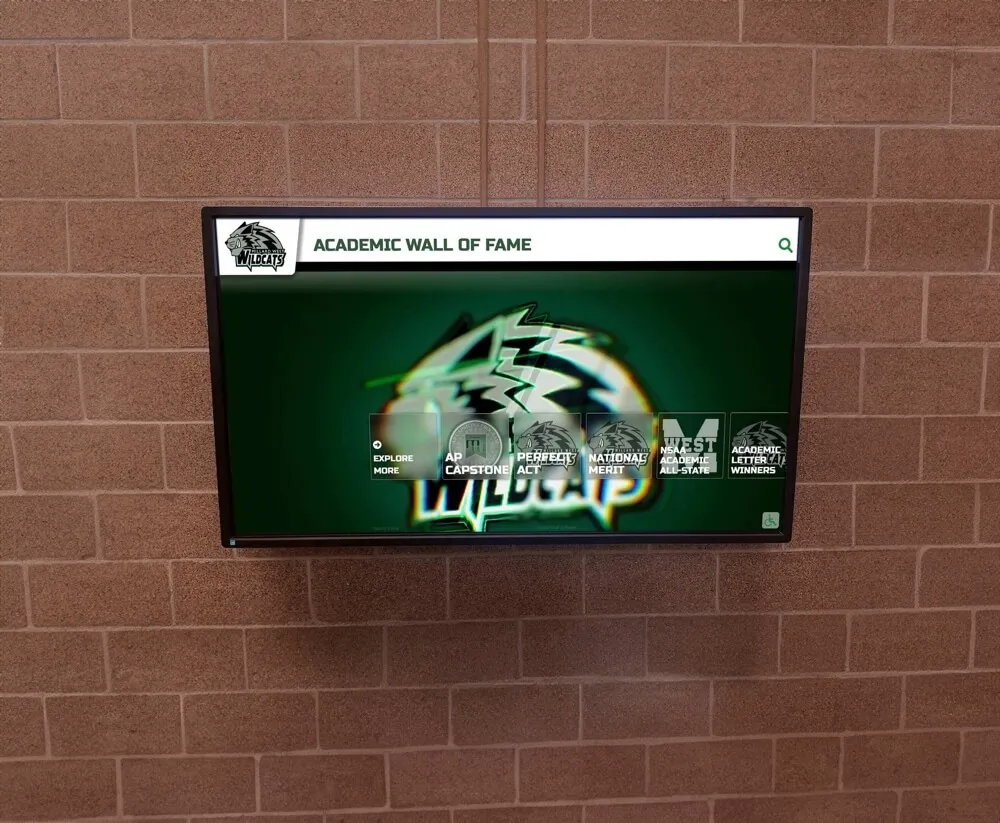
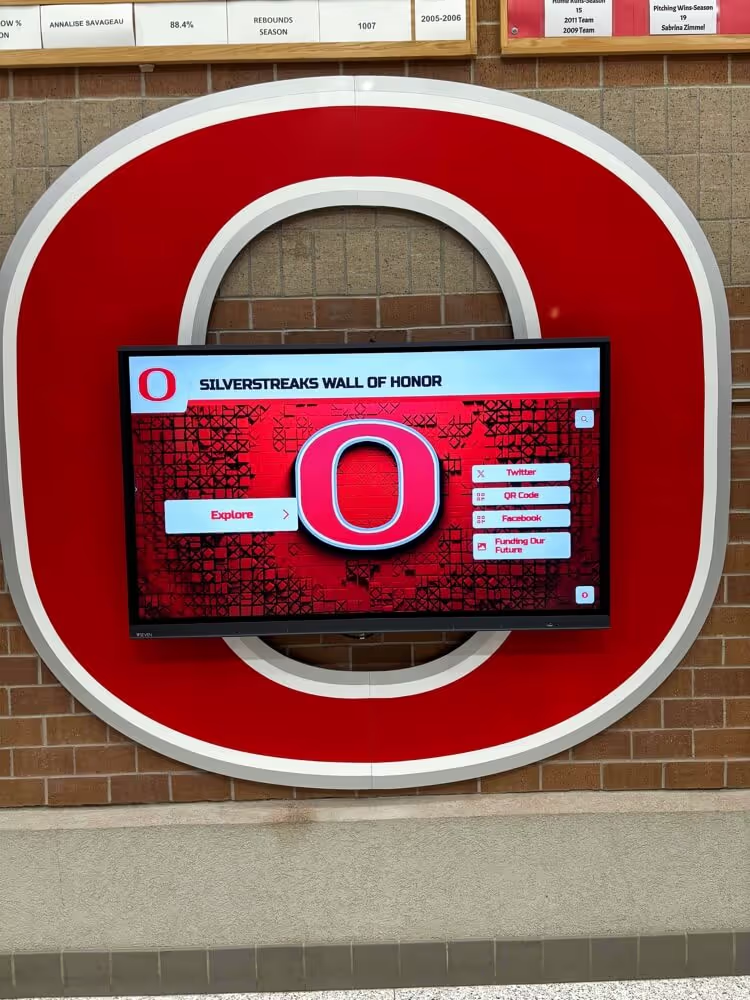
Recognition kiosks provide year-round visibility for academic excellence, celebrating valedictorian achievements beyond graduation day
Example 2: The Lessons Learned Speech
This structure organizes around key insights gained through education:
Opening:
“Our time here taught us countless lessons—mathematical formulas, historical dates, scientific principles, literary analysis. But the most valuable education came from lessons no syllabus could capture, insights we gained simply by living through these years together.”
Body (Three Lessons):
“First, we learned that asking for help demonstrates strength, not weakness. The smartest among us succeeded not because they never struggled, but because they sought support when challenges exceeded their individual capacity—from teachers during office hours, from peers during study groups, from counselors when pressures felt overwhelming. The world ahead values collaboration, not isolated achievement.
Second, we discovered that failure provides better education than easy success ever could. The classes we barely passed taught us more than subjects we mastered effortlessly. The tryouts we didn’t make, the applications we didn’t receive, the disappointments we faced—these moments taught resilience, adaptability, and persistence that comfortable success never develops. Our setbacks became setups for growth.
Third, we learned that who we become matters more than what we accomplish. The classmates we admire most aren’t necessarily those with highest GPAs or most impressive achievements, but rather those who treated others with kindness, maintained integrity under pressure, and uplifted others rather than competing destructively. Character outlasts credentials.”
Conclusion:
“These lessons prepare us for lives ahead more thoroughly than any academic subject could alone. As we accept our diplomas today, we graduate not just with knowledge, but with wisdom earned through experience. The world awaits—not perfect people, but growing people ready to apply lessons learned together to challenges we can’t yet imagine.”
Why This Works:
This speech provides concrete value beyond ceremonial reflection, balances academic content with life lessons, and acknowledges both success and failure as educational. The three-lesson structure creates clear organization and memorable framework.
Example 3: The Gratitude-Focused Speech
This approach centers acknowledgment of those who enabled success:
Opening:
“Valedictorian is singular honor, but the truth behind every individual achievement is plural: we succeed because others invested in us, believed in us, challenged us, and supported us. Today I speak not to take credit, but to share it—acknowledging the countless contributions that enabled all of us to reach this moment.”
Body:
“To our teachers: You saw potential we didn’t recognize in ourselves. You invested extra time when simple answers would have been easier. You challenged us to think deeper, work harder, and reach further than we believed possible. You didn’t just transfer information—you transformed minds and opened possibilities we couldn’t have imagined alone.
To our parents and families: You sacrificed for our education in ways both visible and invisible. You attended events, helped with homework, provided encouragement during struggles, and celebrated our successes as if they were your own. You believed in our future when we questioned our present. You gave us foundations on which to build.
To our classmates: You made this journey worthwhile. You studied alongside us through late nights and early mornings. You celebrated our victories and supported us through defeats. You created community where competition could have divided us. You taught us that success feels hollow without friends to share it with.”
Conclusion:
“As we accept our diplomas today, we acknowledge a truth: we didn’t earn this alone. Generations invested in our education—teachers who chose profession over profit, parents who prioritized our future, communities that funded our schools, and countless others who believed education matters. We graduate not just as individuals, but as products of collective investment. Our responsibility now is paying forward what others gave us—supporting future generations the way we were supported. Thank you to everyone who made today possible.”
Why This Works:
This speech honors achievement without arrogance, creates emotional connection through authentic gratitude, and acknowledges systemic support beyond individual effort. It recognizes the communal nature of educational success.
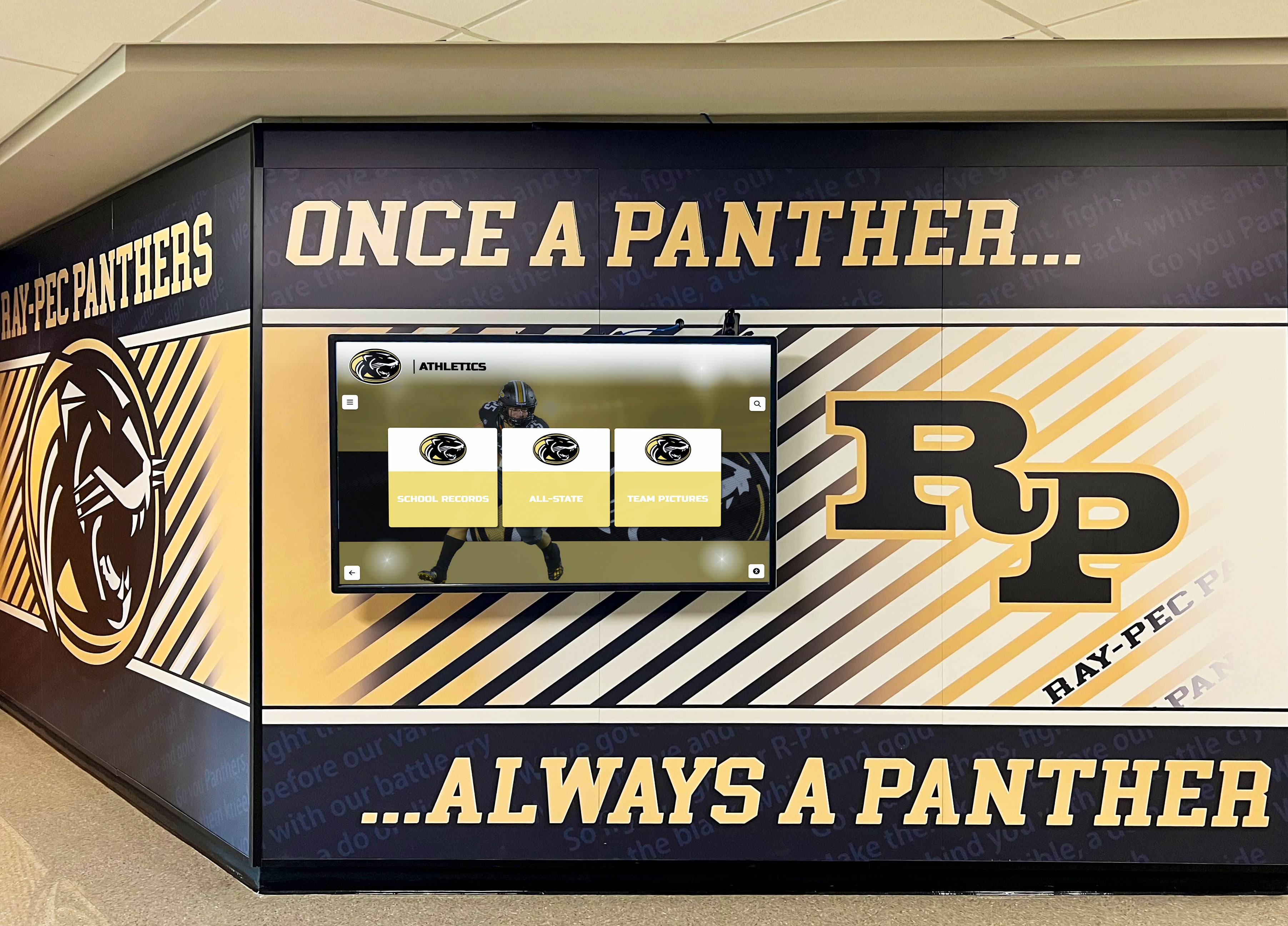
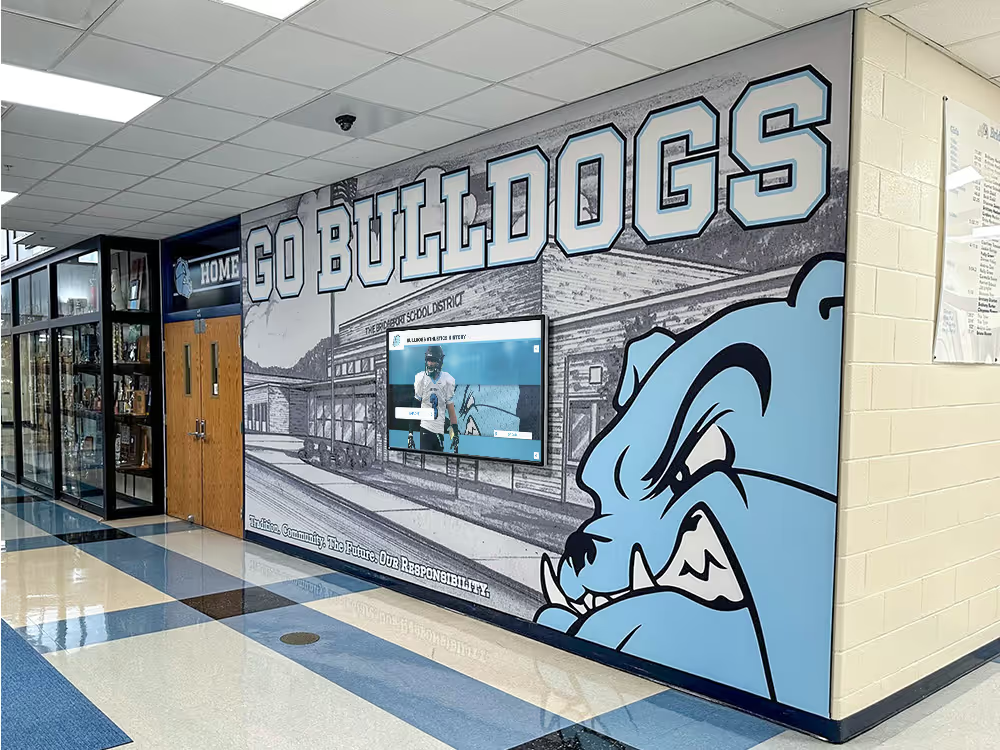
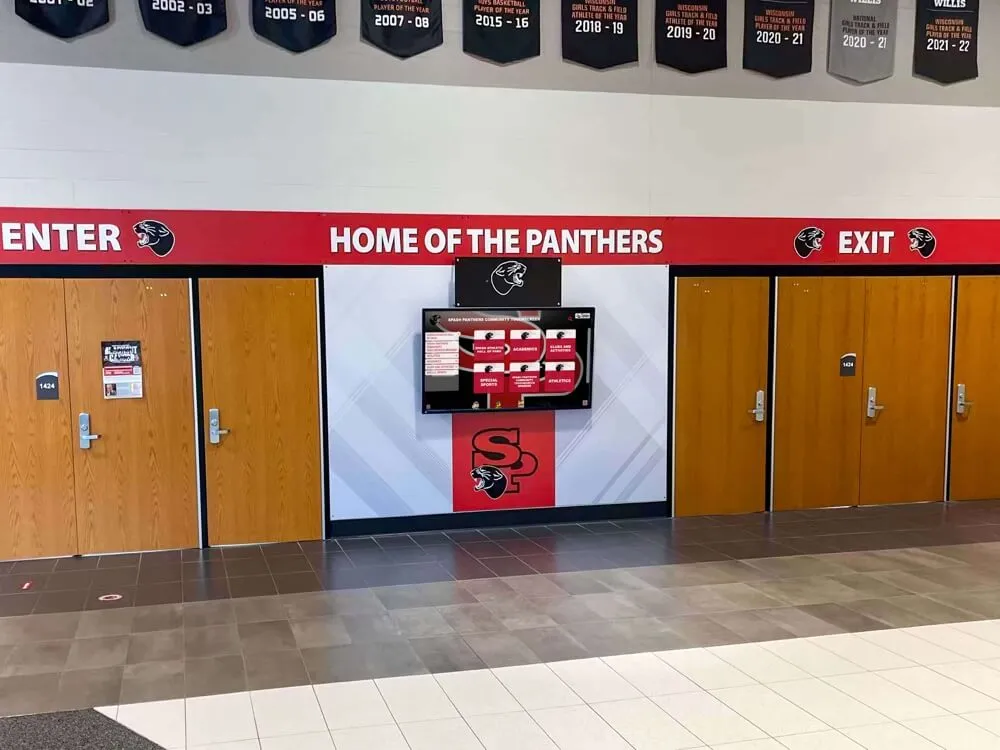
Strategic hallway placement ensures valedictorian recognition receives visibility throughout campus, inspiring future students toward academic excellence
Essential Writing Tips for Valedictorian Speeches
Beyond structural frameworks and examples, specific writing techniques improve speech quality and impact.
Start With Authentic Reflection
Avoid Generic Graduation Advice
The internet overflows with generic graduation speech platitudes about following dreams, believing in yourself, and changing the world. These clichés lack impact because they lack specificity. Instead, ground your speech in authentic observation about your actual educational experience, specific memories that define your class’s journey, and honest reflection on what graduation actually means rather than what graduation speeches traditionally say.
Find Your Genuine Voice
Write in your natural speaking voice rather than adopting artificial formality you think valedictorian speeches require. Audiences connect with authenticity, not performance. If humor comes naturally to you, incorporate it. If you communicate through stories, use narrative. If you process through analysis, structure ideas logically. The most memorable speeches feel like genuine expressions of real people, not performances of idealized speakers.
Test the “So What?” Question
For every point in your speech, ask: “So what? Why does this matter?” If you can’t articulate clear significance, reconsider including that content. Effective speeches make explicit why observations matter rather than assuming audiences will infer importance.
Balance Personal and Universal
Use “I” Strategically, “We” Predominantly
While speeches necessarily reflect personal perspective, predominantly use inclusive language (“we,” “us,” “our”) rather than centering yourself (“I,” “me,” “my”). Strategic first-person moments sharing specific experiences can illustrate broader points, but speeches that feel like speakers talking about themselves rather than speaking for their class miss the representative purpose of valedictorian platform.
Personal Anecdotes as Illustrations
Personal stories work best as illustrations of broader themes rather than speech subjects themselves. Structure: “I remember [specific personal moment], and I suspect many of us experienced similar [broader theme illustrated by the anecdote].” This acknowledges personal perspective while connecting to universal experience.
Find Shared Experience
Identify moments, challenges, or experiences that most classmates can relate to, including shared traditions or rituals unique to your school, common academic challenges, universally remembered teachers or moments, and collective responses to significant events during school years. These shared references create connection between speaker and audience.
Learn more about recognizing academic excellence through comprehensive recognition programs that celebrate diverse student achievements.
Write for the Ear, Not the Eye
Use Conversational Language
Speeches function as oral communication, not written essays. Use shorter sentences, active voice, concrete language, and natural phrasing that feels comfortable when spoken aloud. Complex sentence structures that work in written form often confuse listeners who can’t reread for clarity.
Read Aloud During Writing
Compose with your actual voice—literally speaking passages as you write rather than silently typing. This reveals awkward phrasing, unnatural rhythms, and overly complex constructions that work visually but fail audibly.
Create Verbal Signposts
Help audiences follow your progression through explicit transitions including “First,” “Additionally,” “Looking back,” “Moving forward,” and “Finally.” Listeners can’t see paragraph breaks or section headers that orient written communication, so verbal signposting prevents audience disorientation.
Vary Sentence Structure and Length
Monotonous sentence patterns lull audiences into passive listening. Vary between longer, complex sentences providing detail and shorter, punchy sentences creating emphasis. Strategic repetition of key phrases creates memorable rhetorical rhythm.
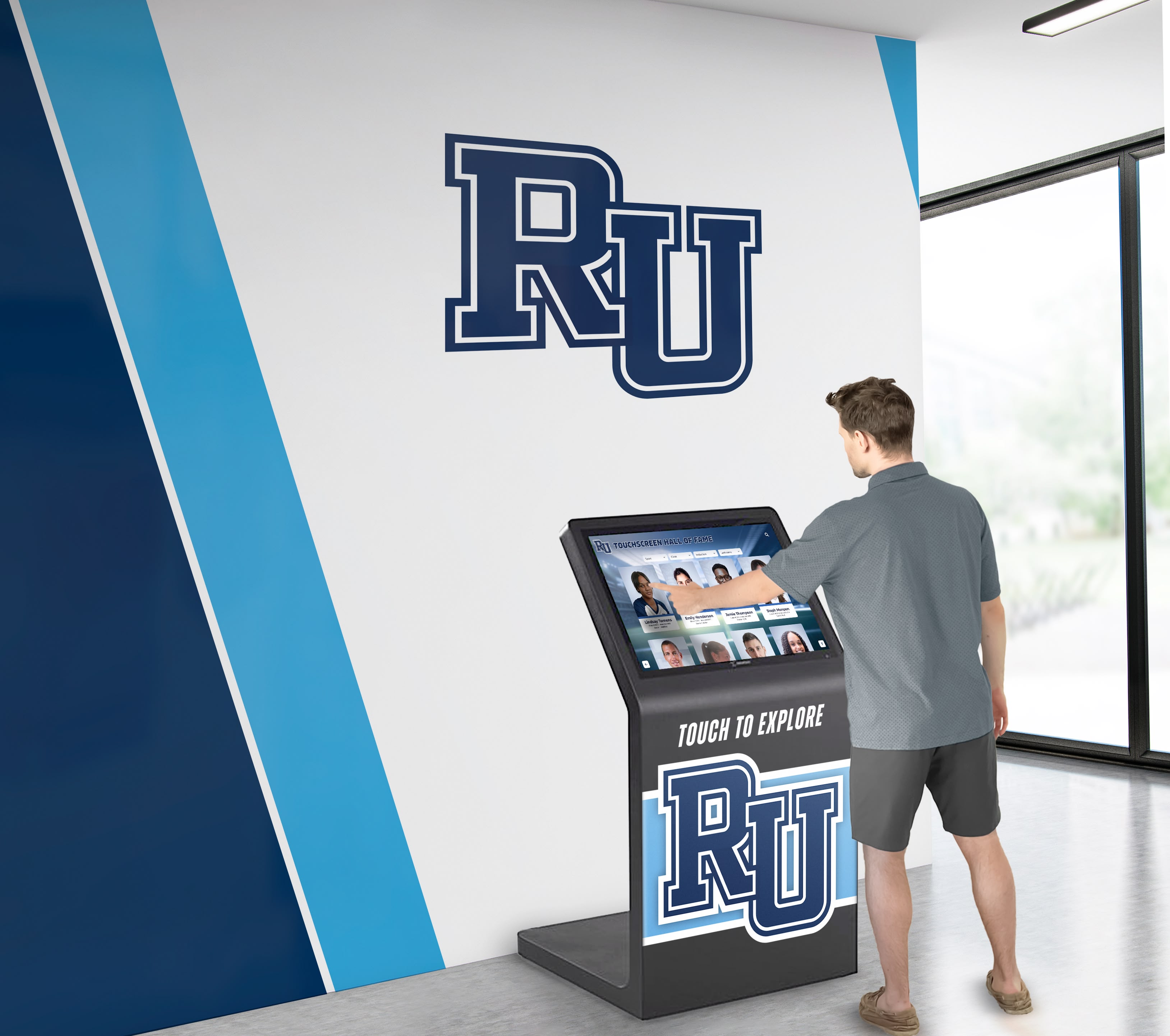
Interactive recognition kiosks enable detailed exploration of valedictorian achievements, preserving both speech content and academic records
Master Specific Elements
Opening Lines Matter Immensely
Your first sentences determine whether audiences engage immediately or tune out. Effective openings include thought-provoking questions that create curiosity, surprising statements that challenge expectations, vivid imagery that creates immediate mental pictures, personal anecdotes that establish connection, or direct acknowledgment of the moment’s significance.
Avoid generic openings like “Webster’s Dictionary defines graduation as…” or “Today marks an important milestone” that signal predictable content ahead.
Create Memorable Closings
Conclusions should provide satisfying resolution while inspiring audiences forward. Effective techniques include callback to opening themes creating circular structure, powerful challenge or call to action, hopeful vision of collective future, or final expression of gratitude and optimism.
End decisively rather than trailing off. Your final sentence should clearly signal conclusion, prompting applause rather than confused silence as audiences wonder if you’re finished.
Handle Humor Carefully
Appropriate humor creates connection and prevents excessive solemnity, but graduation speech comedy requires careful judgment. Safe humor typically involves gentle self-deprecation, shared experiences classmates recognize, or lighthearted observations about school traditions. Avoid humor at others’ expense, inside jokes excluding most audiences, or controversial topics.
Test humor with trusted advisors before including it. If there’s doubt about whether something’s appropriate, err toward exclusion.
Edit Ruthlessly
Write Long, Then Cut
Initial drafts should explore ideas fully without word count concerns. Then edit aggressively—cutting tangents, tightening language, and eliminating redundancy. Most valedictorian speeches should run 8-12 minutes maximum (roughly 1,000-1,500 words), requiring ruthless editing to fit within appropriate length.
Eliminate Clichés
Remove predictable graduation speech language including “the real world,” “follow your dreams,” “believe in yourself,” “make a difference,” and “change the world.” These phrases communicate nothing specific and signal unoriginal thinking. Replace clichés with concrete observations and specific language that reflects actual rather than generic experience.
Seek Honest Feedback
Share drafts with people who will provide genuine critique rather than automatic praise, including classmates representing different perspectives, teachers familiar with graduation speech conventions, family members representing older generation viewpoints, and anyone skilled in public speaking or writing.
Specifically request: “What parts lose your attention?” “What feels clichéd or generic?” “What points confuse you?” “What resonates most powerfully?” Honest critique improves speeches immeasurably.
Speech Delivery Techniques and Preparation
Even brilliantly written speeches fail without effective delivery. Preparation and performance techniques ensure your message reaches audiences as intended.
Practice Extensively
Practice Aloud, Not Silently
Reading silently provides false confidence. Only verbal practice reveals pronunciation challenges, breathing difficulties, awkward phrasing, and timing issues. Practice aloud repeatedly—minimally 10-15 complete run-throughs before delivery day.
Record and Review
Video yourself delivering the speech, then watch critically. Note verbal fillers (“um,” “like,” “you know”), physical mannerisms, pacing problems, and moments where you lose energy. Audio recordings also reveal vocal patterns and help refine delivery.
Practice in Actual Environment
If possible, practice in the actual ceremony venue or similar space. Large rooms with audiences create different acoustic and psychological experiences than bedroom practice. Rehearse with microphone if you’ll use one during actual delivery.
Time Yourself
Confirm your speech fits within allowed time limits. Nerves typically accelerate delivery, so practice pace should feel slightly slower than comfortable. If your practiced speech runs 9 minutes, actual delivery might hit 7-8 minutes.
Explore how schools celebrate excellence through academic recognition displays that preserve valedictorian achievements permanently.
Master Physical Delivery
Manage Nervous Energy
Nearly everyone experiences speech anxiety. Channel nervous energy productively through deep breathing before speaking, progressive muscle relaxation, confident posture, and remembering that some nervousness enhances performance by increasing focus and energy.
Make Appropriate Eye Contact
Don’t read continuously from notes with head down. Instead, make eye contact with different audience sections, holding gaze briefly before moving to another area. This creates connection and engagement.
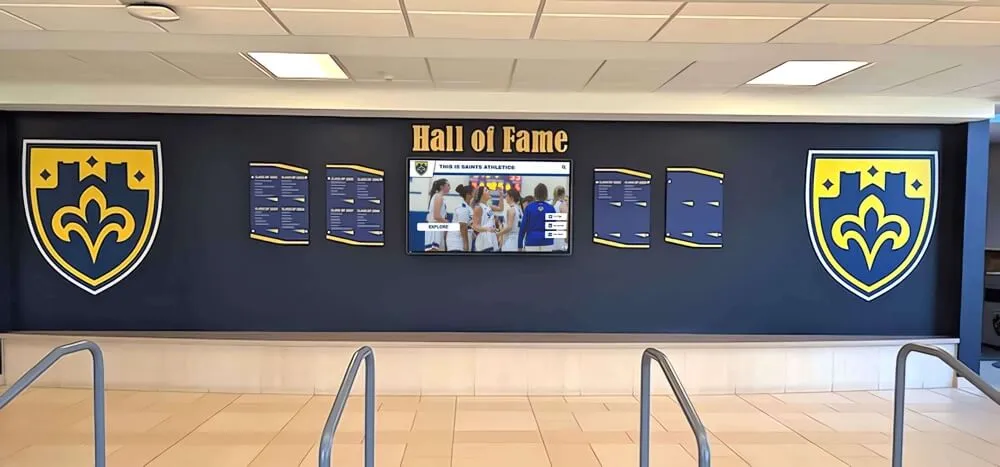
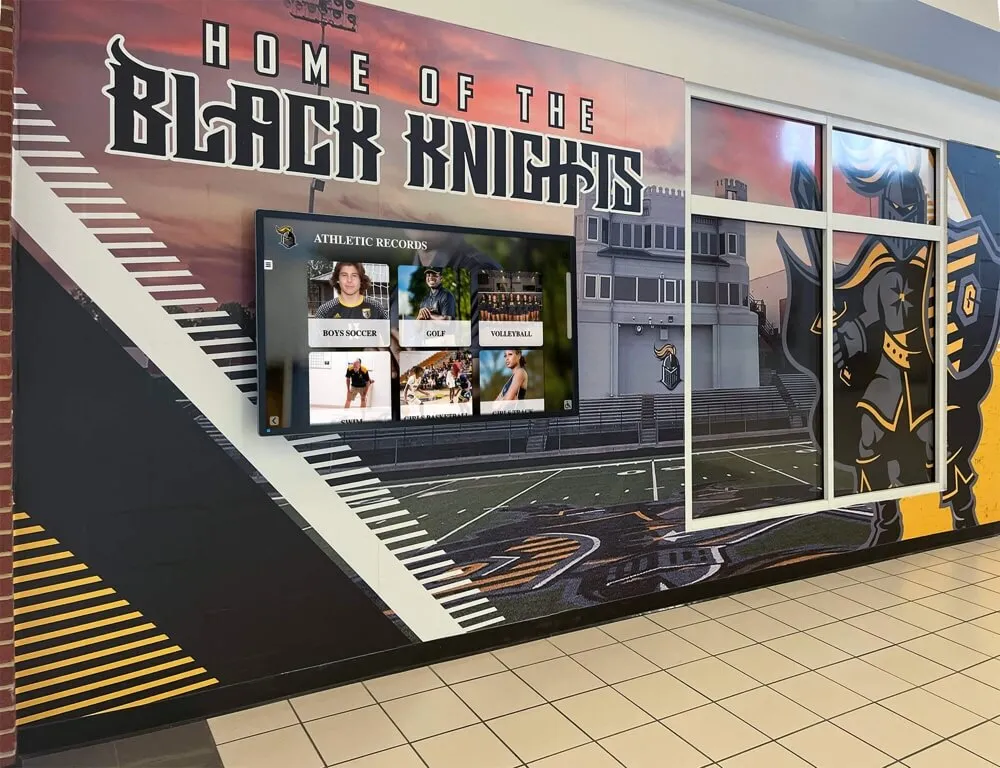
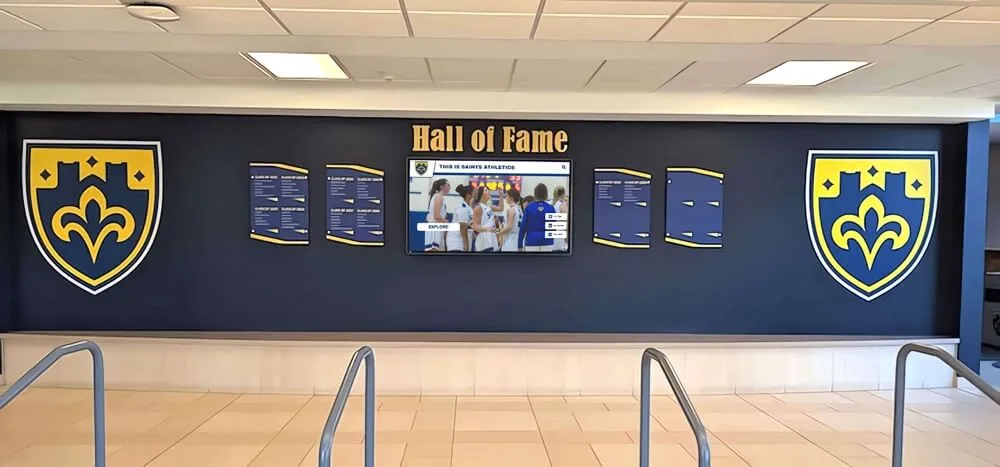
Integrated recognition walls combine traditional displays with modern digital screens, honoring valedictorian excellence alongside broader academic achievements
Use Strategic Pausing
Silence creates emphasis and allows audiences to process important points. Pause briefly after key statements, between major sections, and when transitioning between ideas. New speakers often fear silence and rush through content—resist this impulse.
Control Vocal Variety
Monotone delivery loses audiences regardless of content quality. Vary volume for emphasis, adjust pace to match content (faster for excitement, slower for gravitas), modulate pitch to avoid monotony, and articulate clearly, especially when microphones amplify any mumbling.
Manage Notes Effectively
Memorizing speeches entirely often backfires when nerves blank memory. Instead, use brief notes or notecards with key phrases and transitions, practice enough that notes serve as reminders rather than scripts, hold notes at comfortable reading height rather than on podium, and mark emphasis or pause reminders directly on notes.
Handle Technical Elements
Master Microphone Usage
If using a microphone, understand its type and requirements. Handheld microphones need consistent mouth distance (2-4 inches). Podium microphones require you to stay relatively stationary. Lavalier microphones clip to clothing and allow natural movement but still pick up paper rustling and clothing noise.
Work With Visual Elements
If incorporating slides or videos, coordinate technical elements smoothly including advancing slides at appropriate moments, knowing how to pause or restart if technical issues arise, and maintaining audience connection rather than reading from screen.
Prepare Contingency Plans
Technology fails. Microphones malfunction. PowerPoint crashes. Have backup plans including paper copy of full speech in case you lose place, ability to deliver effectively if technical elements fail, and calm response to unexpected disruptions.
Themes and Topics for Valedictorian Speeches
While every speech should reflect unique experiences, certain themes resonate across graduation contexts.
Resilience and Overcoming Challenges
Acknowledge obstacles the graduating class faced together—whether pandemic disruptions, personal struggles, academic challenges, or social difficulties. Frame resilience not as individual heroism but collective persistence. This theme resonates because every graduate faced difficulties; acknowledging this validates shared experience.
Growth and Transformation
Reflect on how education transformed students from who they were entering school to who they’ve become graduating. Emphasize not just knowledge gained but perspectives broadened, maturity developed, and character formed. Growth themes celebrate learning as holistic development beyond academics alone.
Community and Connection
Honor relationships formed through shared educational experience including friendships that will outlast graduation, mentorship from teachers and staff, support from families, and sense of belonging within school community. Community themes acknowledge that education happens in context of human relationships.
Gratitude and Acknowledgment
Center appreciation for those who enabled success including teachers who invested beyond job requirements, parents who sacrificed for children’s education, staff who supported daily operations, and community members who funded schools and valued education. Gratitude themes demonstrate humility and perspective.
Future Possibilities and Optimism
Look forward with realistic hope about graduates’ potential to create meaningful lives and positive impact. Balance inspiring vision with acknowledgment of uncertainties and challenges ahead. Future-focused themes provide optimistic closure while respecting that graduates enter uncertain world.
Legacy and Paying Forward
Reflect on what the graduating class received from previous generations and responsibility to continue that legacy by supporting those who follow. Legacy themes connect graduates to larger continuum of educational tradition and social progress.
Lessons Beyond Curriculum
Explore valuable insights gained through educational experience that textbooks couldn’t teach—lessons about collaboration, failure, perseverance, empathy, or self-understanding. Meta-educational themes validate that schooling accomplished more than just academic knowledge transfer.
The most effective speeches combine multiple themes rather than pursuing single topic throughout. Weaving themes together creates complexity and depth while maintaining coherent message.
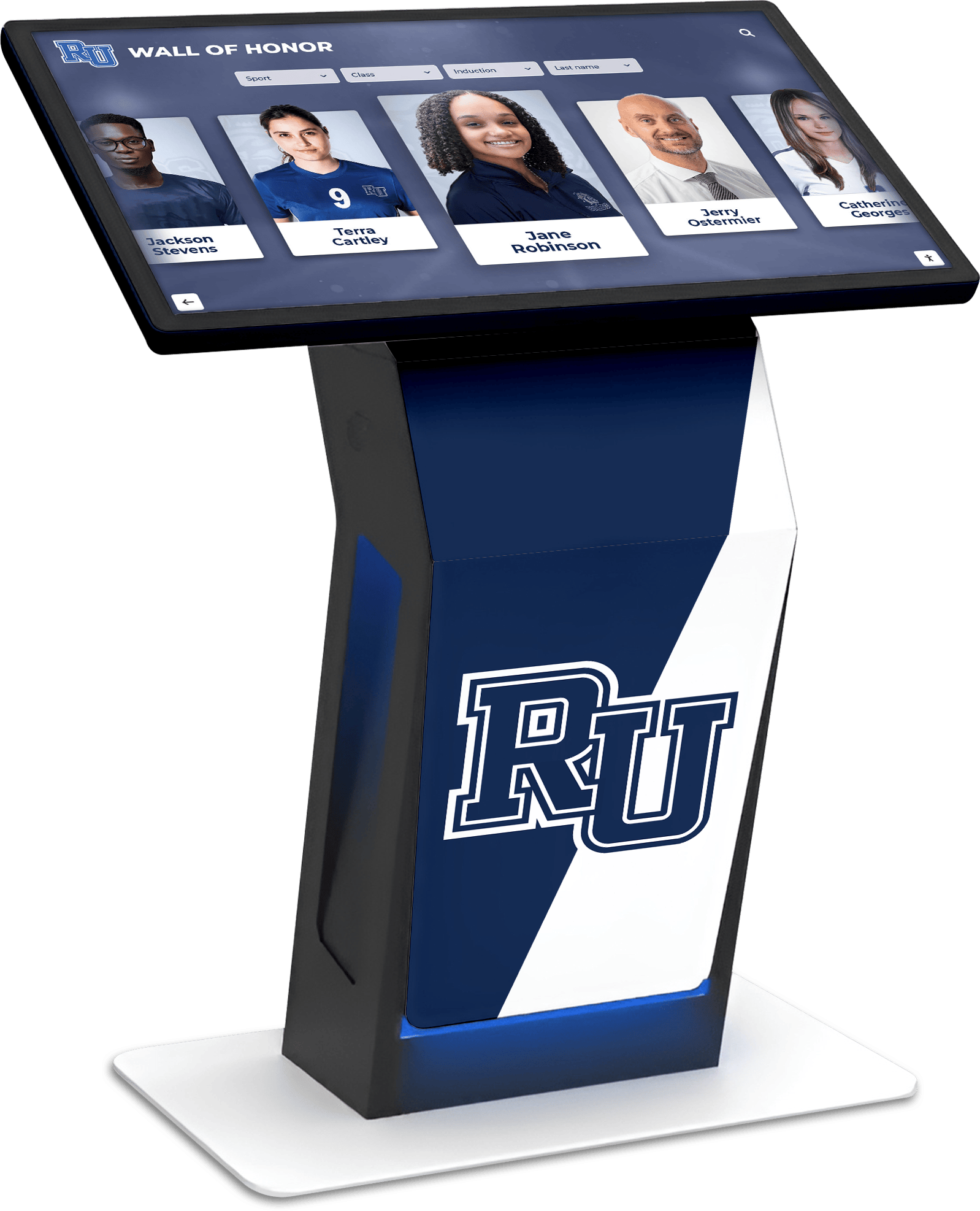
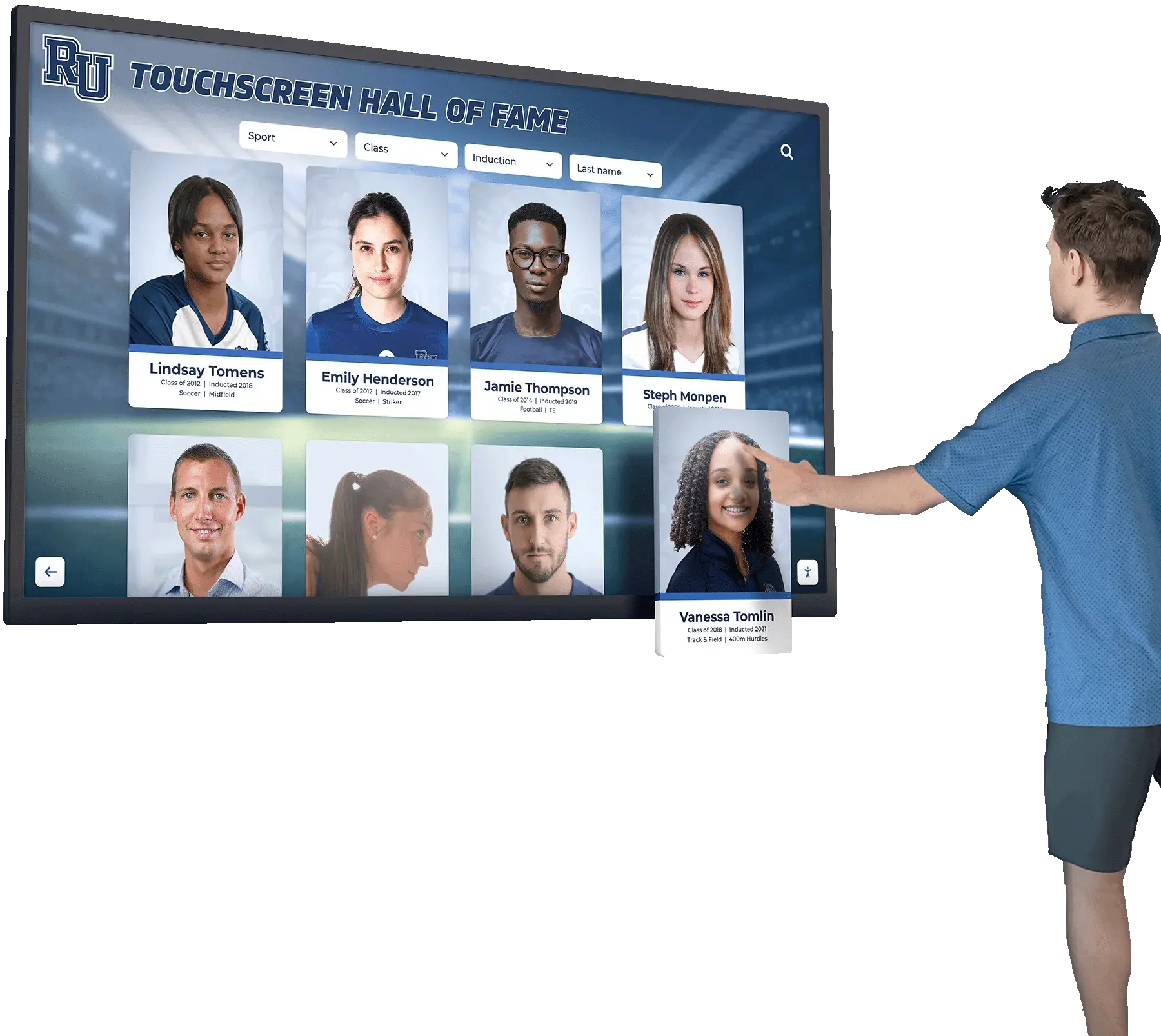
Modern recognition systems integrate touchscreen displays with comprehensive content management, preserving valedictorian speeches and achievements for future generations
Recognizing Valedictorians Beyond Graduation Day
While graduation ceremonies provide immediate recognition, permanent systems extend celebration of academic excellence beyond single events.
The Limitations of Ceremony-Only Recognition
Traditional valedictorian recognition faces inherent constraints:
Ephemeral Visibility
Graduation day recognition exists only during ceremony itself. After processionals conclude and audiences depart, valedictorian achievement visibility largely disappears. Only ceremony attendees experience the speech and recognition, excluding extended family, future students, and broader community.
Limited Context Preservation
Programs list valedictorian names but rarely preserve speech content, achievement details, or context making the honor significant. Most ceremony information disappears after events conclude, leaving minimal permanent record of pinnacle academic achievement.
Restricted Inspirational Impact
Current students pursuing academic excellence lack visible examples of previous valedictorians who achieved at highest levels. Without accessible models demonstrating that excellence receives recognition, motivation diminishes compared to schools where academic achievement receives permanent, prominent visibility.
Digital Recognition Systems for Academic Excellence
Modern recognition platforms designed for educational institutions address these limitations while amplifying valedictorian celebration:
Comprehensive Achievement Archives
Digital systems preserve complete information about every valedictorian extending across decades including full biographical profiles with photos, detailed academic achievement records, graduation speech text or video, post-graduation accomplishments and current location, and connections enabling future networking and mentorship.
This comprehensive archiving creates institutional memory impossible to maintain through traditional static displays with limited physical space.
Rich Multimedia Content
Digital recognition overcomes information constraints of printed programs through high-resolution photography and videography, recorded graduation speeches accessible indefinitely, achievement timelines showing academic trajectory, personal statements and reflections, and connections to related content like other award recipients or class histories.
Learn more about celebrating academic excellence through systematic recognition programs that honor diverse achievements.
Interactive Exploration Capabilities
Touchscreen interfaces enable intuitive discovery including search functionality finding specific valedictorians, browsing by graduation year or decade, filtering by post-graduation accomplishments, viewing statistical comparisons across graduating classes, and discovering featured profiles highlighting exceptional achievements.
Web-Based Access Extension
Online platforms extend recognition beyond physical campus including families sharing valedictorian profiles with extended relatives, prospective students researching school’s academic culture, community members exploring institutional excellence, and alumni reconnecting with their cohort’s valedictorian decades later.
Simple Content Administration
Cloud-based management platforms allow staff to maintain recognition content without requiring technical expertise including uploading valedictorian information immediately after ceremonies, adding speech transcripts or video recordings, scheduling content updates for anniversary celebrations, and managing multiple displays from centralized dashboards.
Solutions like Rocket Alumni Solutions specialize in digital recognition displays specifically designed for educational institutions. These comprehensive systems combine professional touchscreen hardware installation in high-visibility locations, intuitive content management platforms requiring no technical expertise, engaging user interfaces encouraging community exploration, and ongoing support ensuring sustainable recognition programs.
Schools implementing digital valedictorian recognition report significant benefits including enhanced student motivation toward academic excellence, improved family engagement with accessible achievement information, stronger alumni connections through preserved historical records, and elevated institutional culture through visible celebration of intellectual achievement.
Integration With Broader Academic Recognition
Valedictorian recognition works most effectively when integrated into comprehensive celebration systems rather than existing in isolation:
Multi-Level Academic Excellence
Digital platforms showcase recognition across achievement spectrum including valedictorians and salutatorians, National Merit Scholars and AP Scholars, honor roll and academic achievement awards, subject-specific excellence recognition, and improvement and growth acknowledgment.
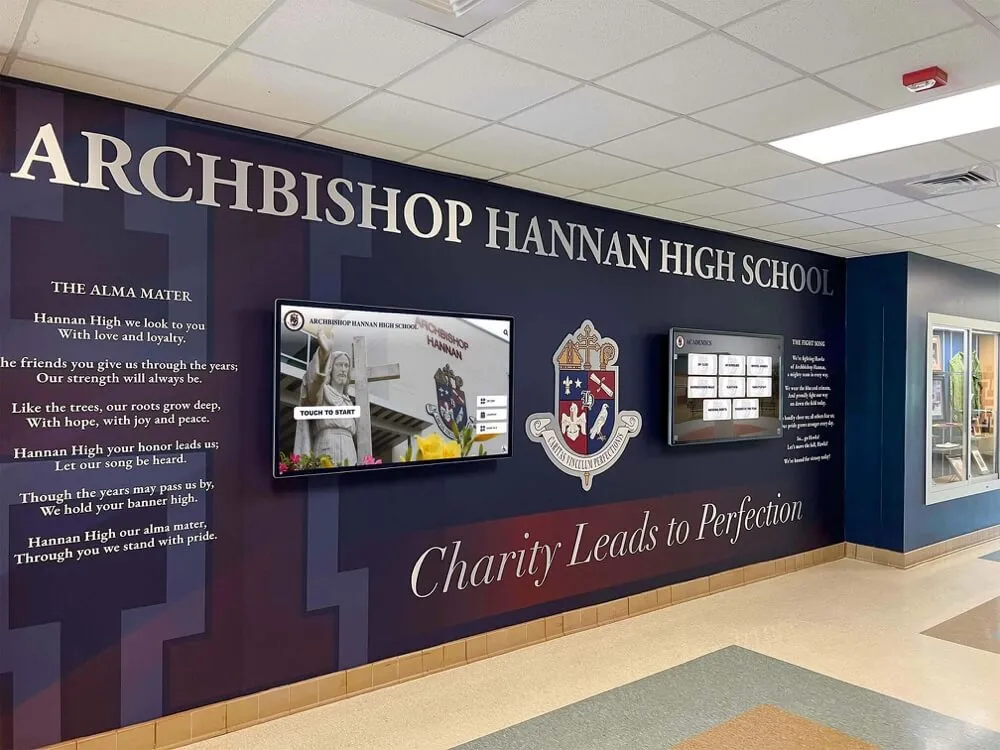
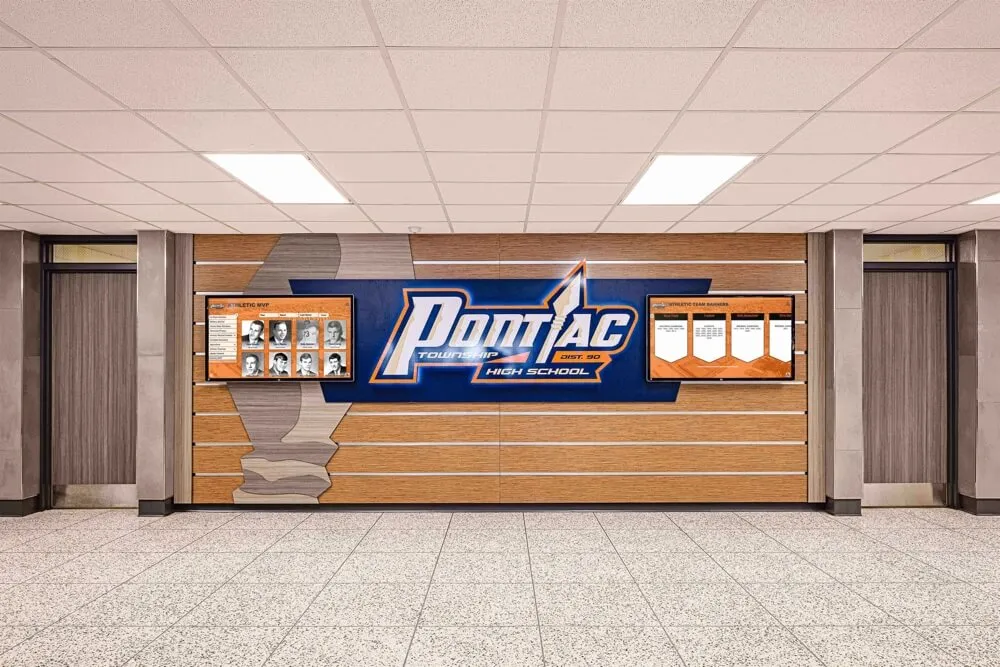
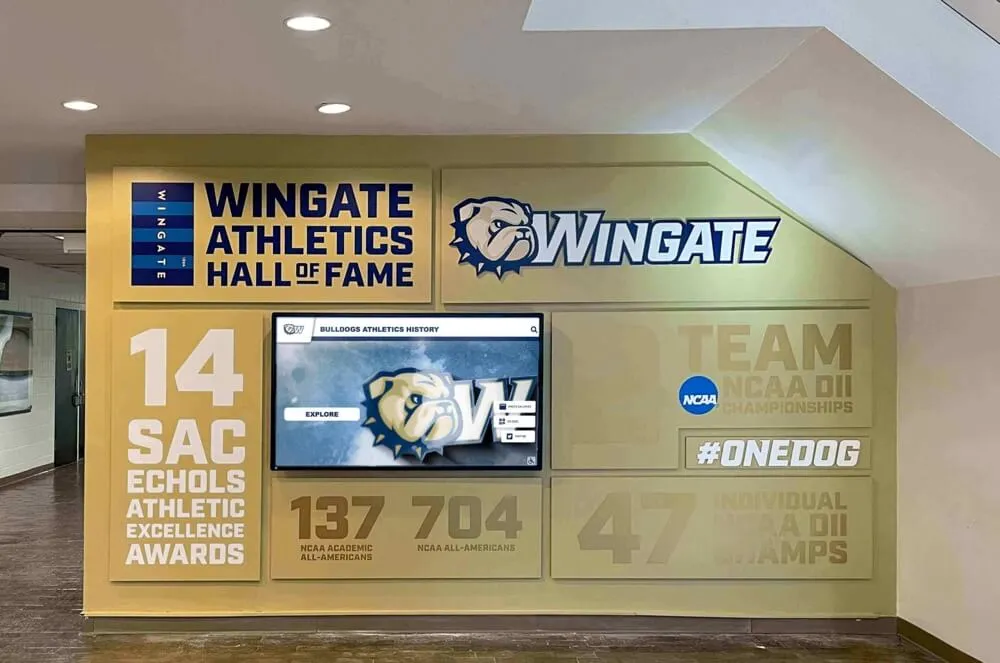
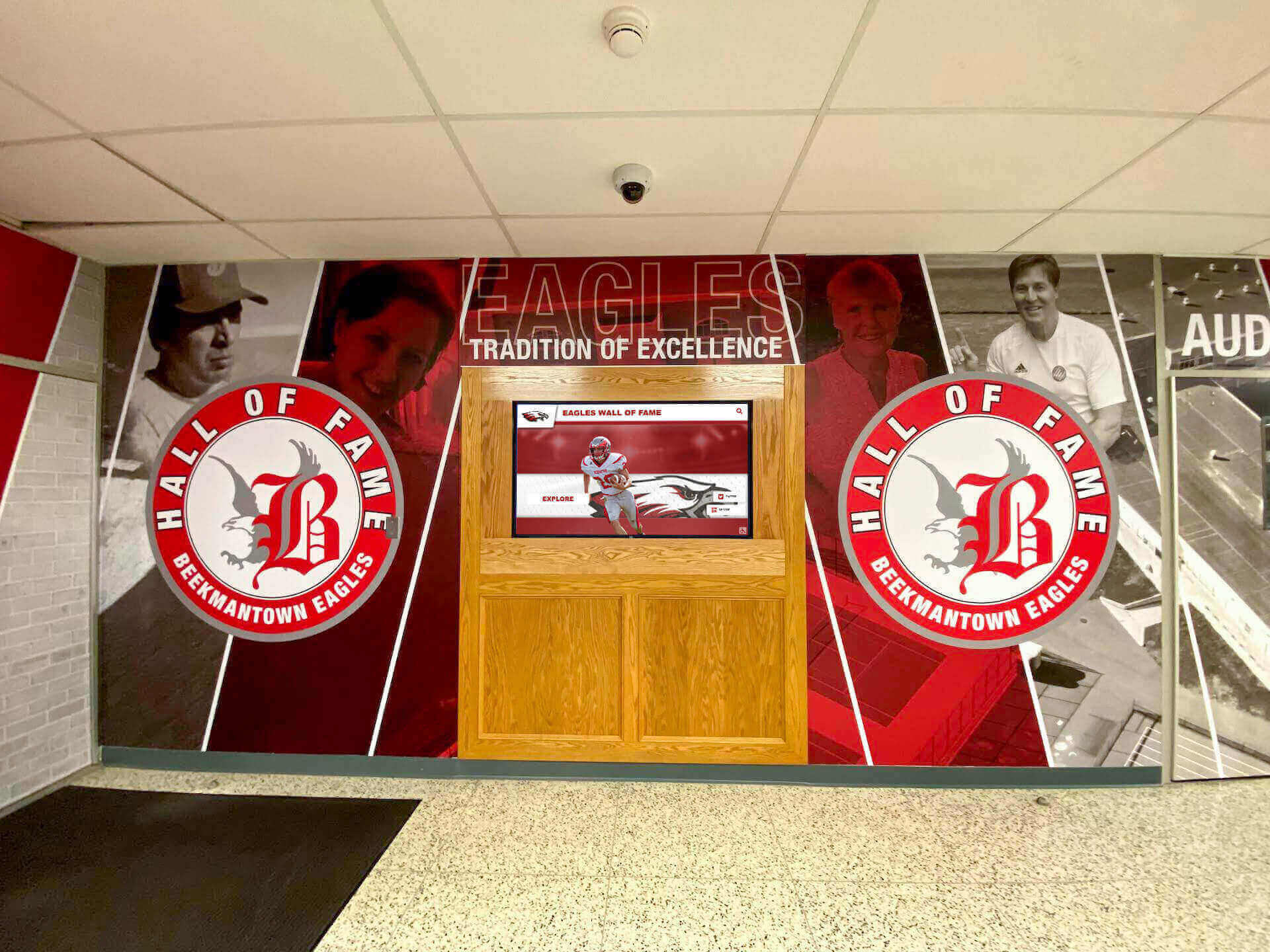
Strategic recognition installations combine architectural elements with modern technology, creating impressive celebration of academic excellence
This comprehensive approach demonstrates that schools value and celebrate achievement throughout the academic spectrum, not just pinnacle honors.
Historical Context and Tradition
Connect current valedictorians with institutional history by showcasing decades of academic excellence, featuring distinguished alumni whose valedictorian foundation launched exceptional careers, preserving speech excerpts creating literary tradition, and creating timelines showing institutional academic evolution.
This historical connection reinforces that valedictorian achievement represents continuation of excellence tradition rather than isolated accomplishment.
Cross-Domain Achievement Integration
Recognize that many valedictorians also achieved in other domains including athletic excellence and team leadership, artistic accomplishments and creative achievement, service contributions and community engagement, and leadership roles in student government or organizations.
Integrated recognition systems celebrate complete students rather than segmenting accomplishments artificially.
Supporting Students Writing Valedictorian Speeches
Educators, administrators, and mentors can provide valuable guidance supporting valedictorians in speech preparation.
Start Early and Allow Iteration
Begin Process Months Before Graduation
Don’t wait until weeks before graduation to address speech preparation. Ideally, begin conversations 2-3 months before ceremony date, allowing time for reflection, drafting, revision, practice, and refinement. Rushed speeches rarely achieve their potential.
Provide Structure Without Dictating Content
Offer frameworks, examples, and guidelines while respecting student voice and perspective. The goal is supporting expression, not imposing institutional messaging or sanitizing genuine student perspective into approved corporate communication.
Encourage Multiple Drafts
First drafts almost never represent final form. Build in expectation for multiple revisions, feedback cycles, and continuous improvement. Help students understand that rewriting demonstrates professionalism and commitment to quality, not initial inadequacy.
Offer Constructive Feedback
Balance Affirmation With Improvement Suggestions
Acknowledge what works well in drafts before identifying areas needing enhancement. Students already feel pressure; purely critical feedback increases anxiety without improving results.
Identify Specific Issues With Concrete Solutions
Rather than vague criticism like “this section needs work,” provide specific guidance: “This paragraph feels abstract—can you illustrate with concrete example?” or “This transition feels abrupt—what connecting thought bridges these ideas?”
Test Against Speech Objectives
Evaluate drafts against core purposes: Does this capture collective experience? Does this acknowledge those who enabled success? Does this balance personal and representative voice? Does this inspire without preaching? Objective criteria focus feedback productively.
Address Common Challenges
Overcome Impostor Syndrome
Many valedictorians feel undeserving of their honor, believing others worked equally hard or dismissing their achievement as luck or natural ability rather than earned accomplishment. Address this directly: intellectual achievement matters and deserves celebration. Valedictorian recognition honors sustained excellence, not superiority over classmates.
Navigate Peer Relationships
Some students worry that prominent valedictorian recognition might damage peer relationships or appear arrogant. Help them understand they can accept honor graciously while maintaining humility—acknowledging achievement doesn’t require downplaying it or apologizing for success.
Manage Family Pressures
Occasionally, family members have strong opinions about what valedictorian speeches should contain. Support students in respectfully maintaining their authentic voice while acknowledging family input. The speech belongs to the student as class representative, not to parents vicariously experiencing graduation.
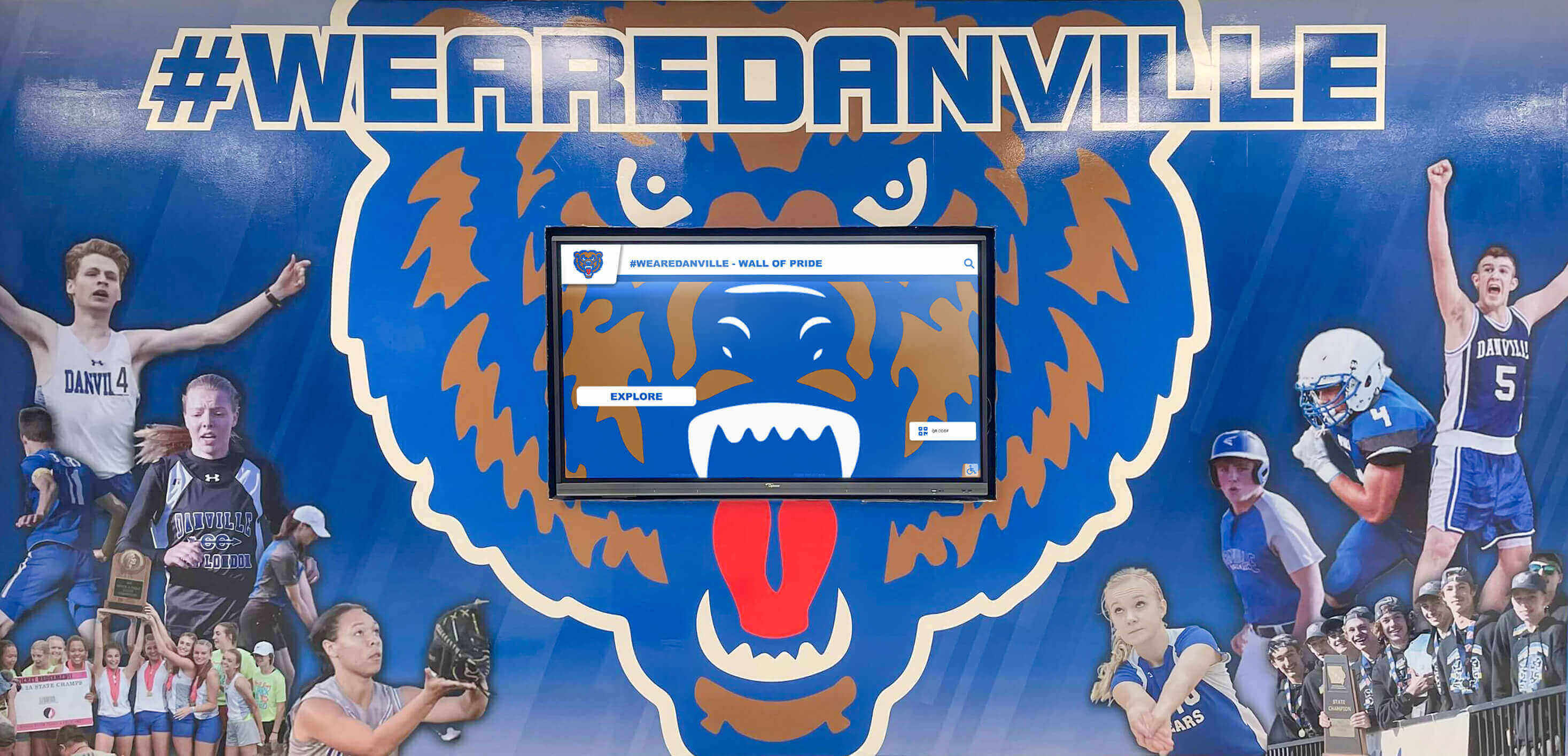
Recognition displays integrated with school branding create cohesive celebration spaces honoring all forms of excellence including academic achievement
Common Valedictorian Speech Mistakes to Avoid
Understanding frequent pitfalls helps speakers navigate potential problems.
Content Mistakes
Making Speech About Yourself
The valedictorian platform is representative honor, not opportunity for personal achievement celebration or autobiography. Speeches focused predominantly on speaker’s individual journey, accomplishments, or wisdom alienate classmates who feel talked about rather than represented.
Offering Unsolicited Life Advice
Graduates are peers, not audiences requiring instruction. Speeches structured as advice-giving—“You should,” “Remember to,” “Don’t forget to”—feel condescending. Classmates want shared reflection and inspiration, not lectures.
Relying on Clichés
Generic graduation speech language signals unoriginal thinking and disengages audiences who’ve heard identical messages countless times. Audiences crave authentic reflection on actual shared experience, not recycled platitudes about dreams, journeys, and futures.
Including Inside Jokes
References only small friend groups understand exclude the broader audience and waste valuable ceremony time. Speeches should create inclusive connection, not demonstrate speaker’s social connections.
Being Excessively Serious or Inappropriately Casual
Graduation represents significant milestone deserving appropriate gravitas, but excessive formality feels disconnected from actual student experience. Conversely, treating ceremony as comedy opportunity or maintaining overly casual tone undercuts significance. Balance celebration with appropriate ceremony respect.
Delivery Mistakes
Reading Verbatim With No Eye Contact
Burying face in notes and reading without looking up destroys connection with audience and makes even excellent content ineffective. Use notes as guides, not scripts to read.
Speaking Too Quickly
Nervousness accelerates speech delivery, making content difficult to follow and creating impression of rushing through obligation rather than savoring moment. Conscious pacing ensures audience comprehension.
Failing to Project
Even with microphones, speaking at conversational volume makes content difficult to hear, particularly in large venues. Speak with energy and volume appropriate for audience size and venue acoustics.
Inappropriate Humor
Jokes at others’ expense, controversial topics, or humor requiring explanation all fail. When uncertain whether humor is appropriate, exclude it. Graduate with dignity rather than questionable laugh attempts.
Preparation Mistakes
Starting Too Late
Beginning speech preparation weeks before graduation leaves insufficient time for reflection, revision, and practice. Early starts enable thoughtful development producing significantly better results.
Skipping Practice
Even naturally gifted speakers need practice translating written content into effective verbal delivery. Assuming you’ll deliver effectively without practice virtually guarantees underperformance compared to potential.
Ignoring Time Limits
Excessively long speeches lose audience attention and demonstrate disrespect for ceremony schedule and subsequent speakers. Respect time allocations by editing to fit.
Conclusion: Crafting Your Memorable Valedictorian Speech
Delivering a valedictorian speech represents remarkable privilege earned through years of academic dedication, intellectual achievement, and sustained excellence. This platform provides opportunity to articulate your class’s collective journey, honor those who enabled success, and inspire fellow graduates as they transition from students to alumni embarking on futures together.
The most memorable valedictorian speeches avoid generic graduation advice and clichéd platitudes, instead offering authentic reflection on actual shared experiences that defined your class’s unique journey. They balance personal perspective with representative voice, acknowledging individual observations while speaking for broader collective experience. They honor achievement without arrogance, celebrate success while acknowledging challenges, and inspire without preaching.
Crafting effective speeches requires thoughtful preparation spanning content development, writing refinement, and delivery practice. The frameworks, examples, techniques, and guidance explored throughout this comprehensive guide provide foundation for creating speeches resonating beyond graduation day—becoming part of class memory and institutional tradition rather than forgettable ceremonial obligation.
Celebrate Academic Excellence Permanently
Discover how modern digital recognition solutions preserve valedictorian achievements and speeches beyond graduation day, creating lasting inspiration for future students.
Explore Recognition SolutionsBeyond graduation ceremony itself, consider how your valedictorian achievement receives permanent recognition inspiring future students toward academic excellence. Traditional ceremony-only acknowledgment disappears after audiences depart, but modern recognition systems preserve speeches, profiles, and achievements indefinitely through interactive displays and web-based platforms accessible to entire school community.
Schools implementing comprehensive recognition programs report that visible celebration of academic achievement motivates current students while honoring excellence tradition spanning decades. Digital recognition displays in high-visibility locations demonstrate that intellectual accomplishment receives celebration equal to athletic achievement, creating cultures where academic excellence becomes aspirational throughout student populations.
Whether you’re a valedictorian beginning speech preparation, an educator supporting students through this process, or an administrator considering how your institution recognizes academic excellence, remember that meaningful recognition extends beyond single ceremonial moments. Excellence deserves celebration capturing both immediate achievement and sustained impact inspiring generations of future students.
Your valedictorian speech represents culmination of remarkable academic journey—honor that achievement by crafting message worthy of the moment, delivering it effectively, and ensuring permanent recognition preserves excellence beyond graduation day. Congratulations on your outstanding accomplishment, and best wishes for impactful speech delivery celebrating not just individual success but collective journey of everyone graduating alongside you.
Ready to begin? Review the speech examples and writing frameworks provided throughout this guide, start drafting early allowing time for revision and refinement, practice extensively until delivery feels natural and confident, and explore how institutions can recognize academic excellence through comprehensive digital recognition programs preserving valedictorian achievements for future generations.