The term “All-American athlete” represents one of the highest honors in competitive sports, yet many students, parents, and even coaches don’t fully understand what this prestigious designation means or how student-athletes earn it. For schools seeking to properly celebrate these exceptional individuals, understanding All-American status is essential to creating meaningful recognition that inspires current and future athletes.
An All-American athlete has earned selection to an elite team recognizing the nation’s best performers in their sport. Unlike conference or state-level honors, All-American status transcends regional boundaries to identify athletes who compete at national championship levels. These selections carry significant weight for college recruiting, athletic scholarships, and permanent recognition within school athletic programs.
This comprehensive guide explores what defines an All-American athlete across different sports and competitive levels, the various selection criteria and programs, how high school and college athletes earn this distinction, and why schools should permanently recognize these achievements through modern athletic hall of fame displays that celebrate excellence for generations.

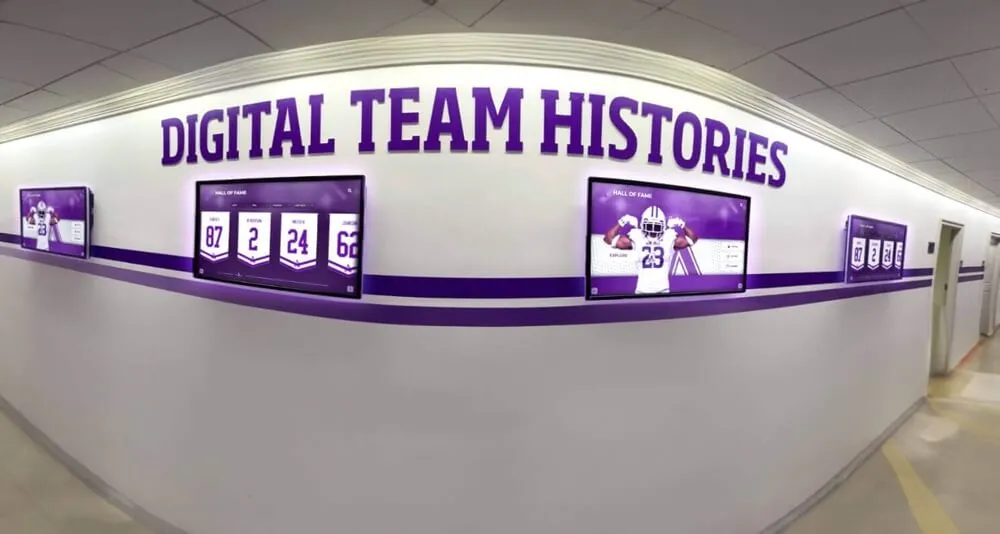
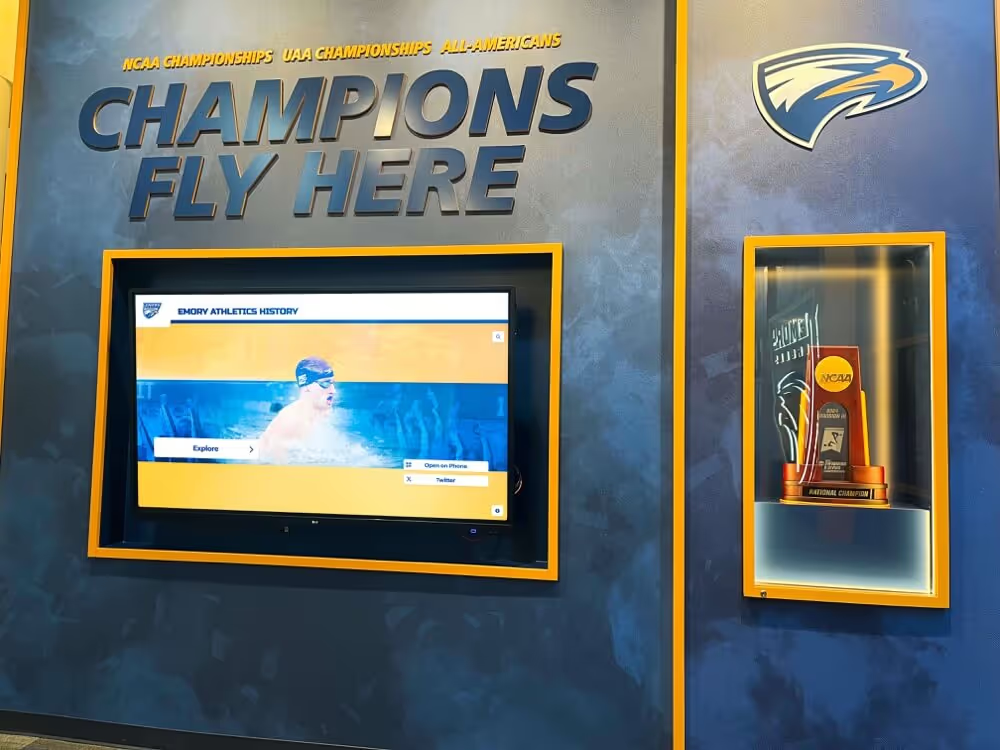
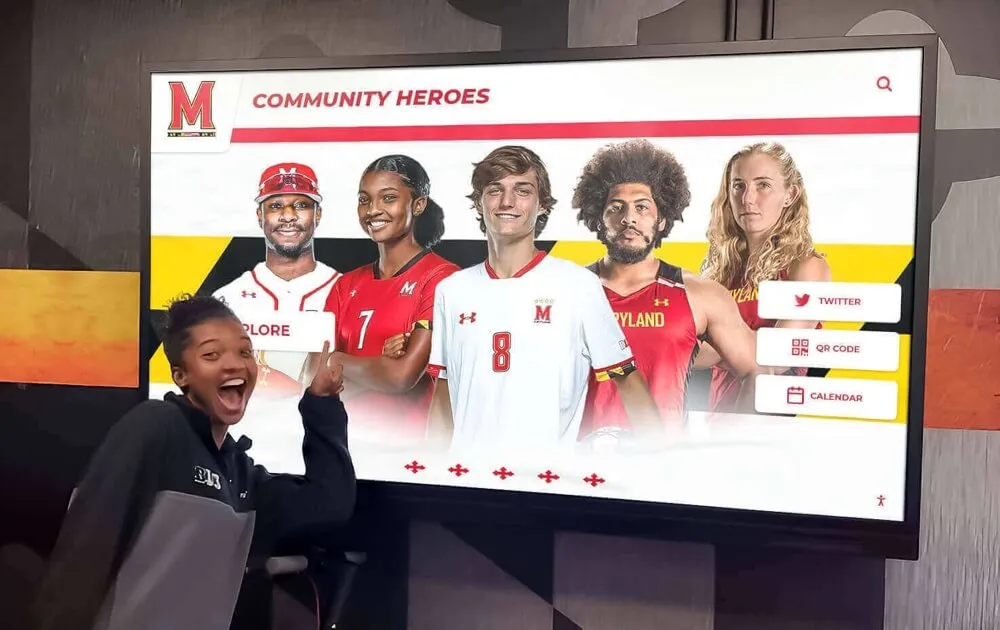
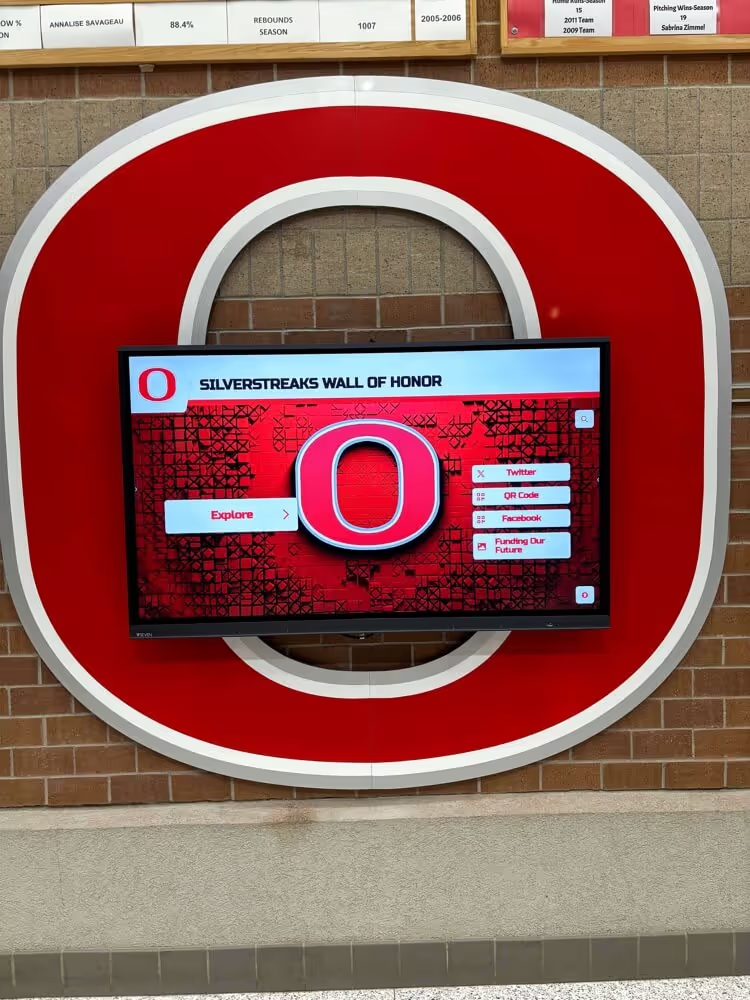
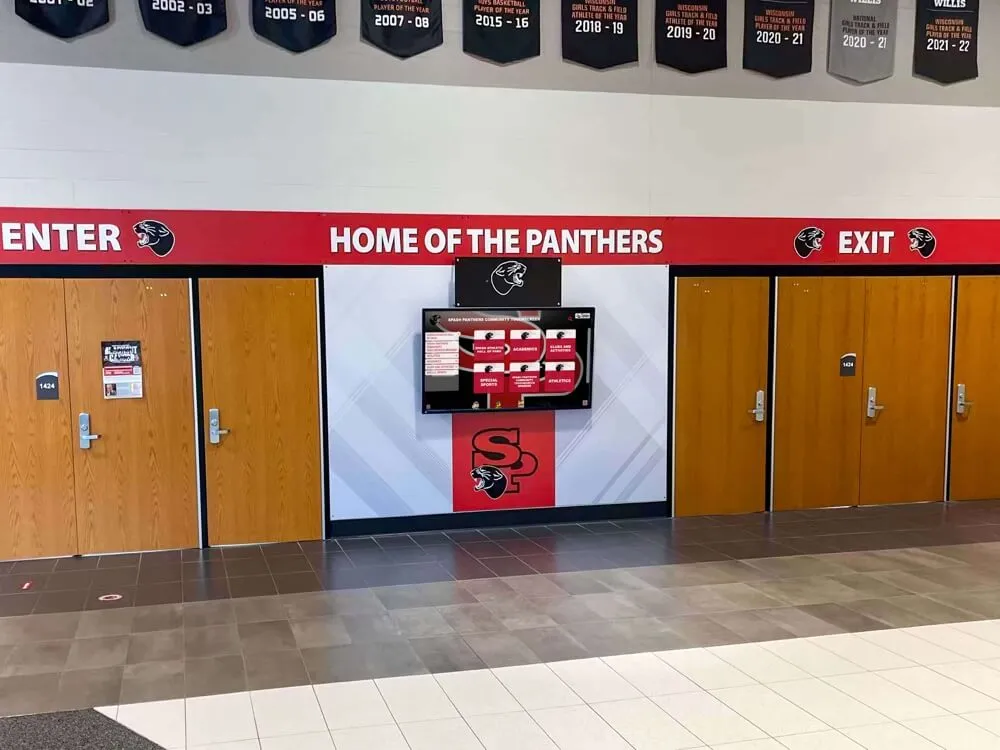
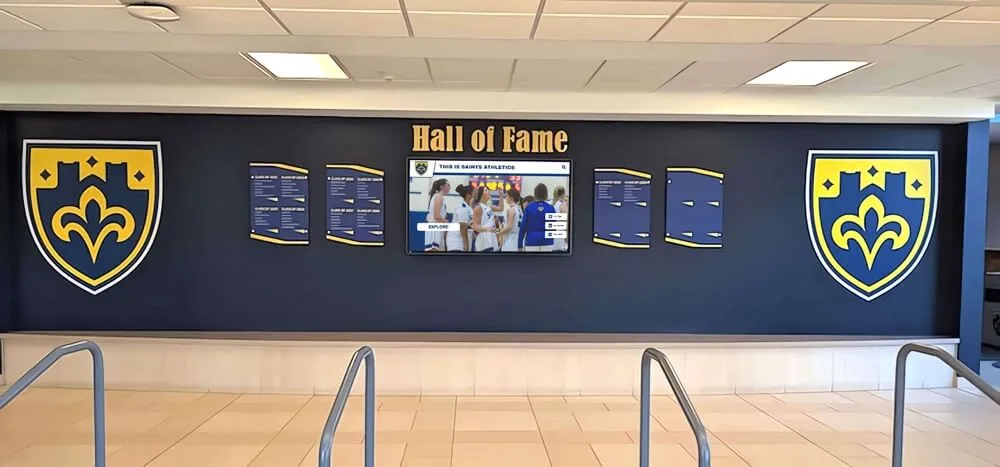
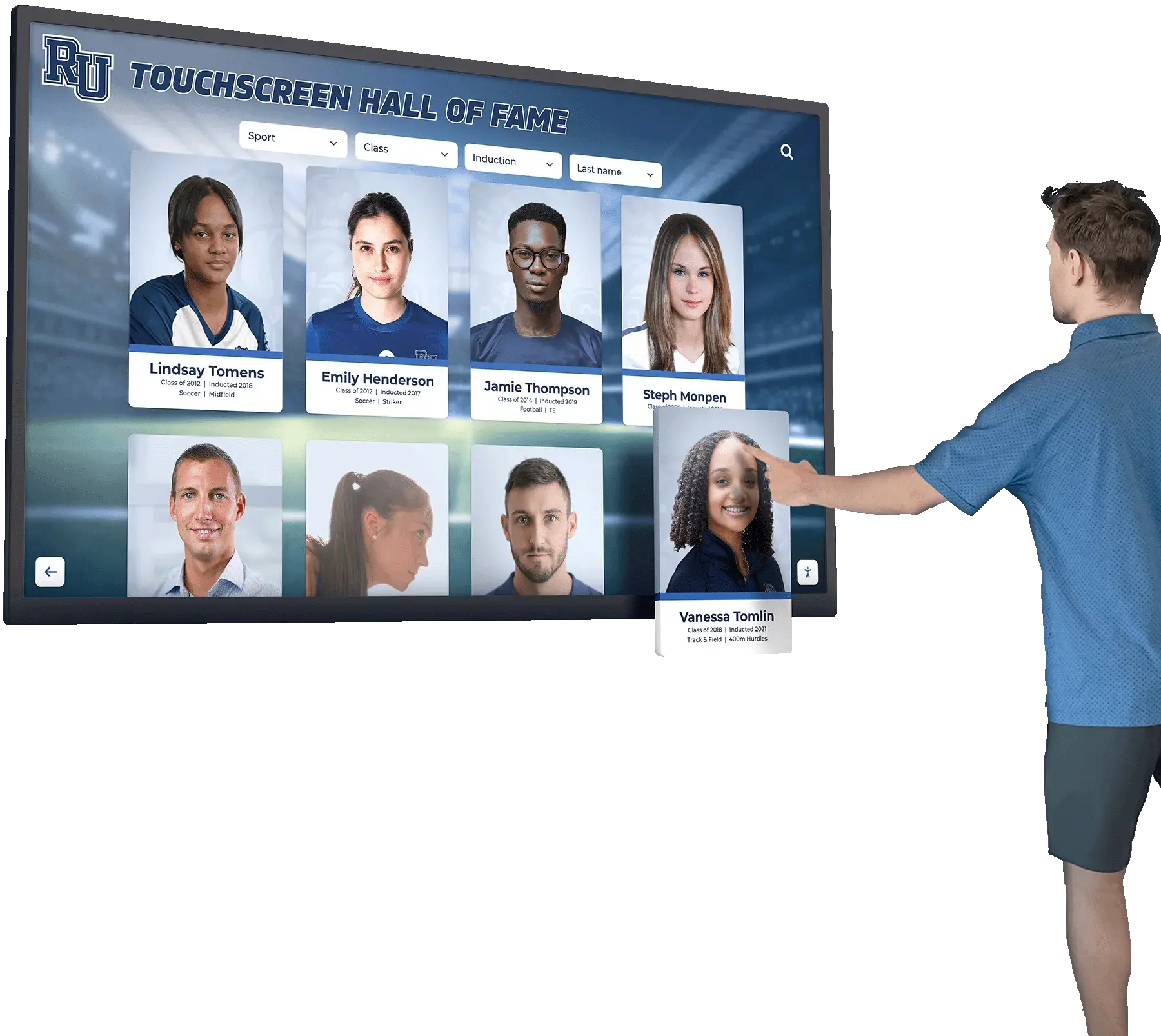
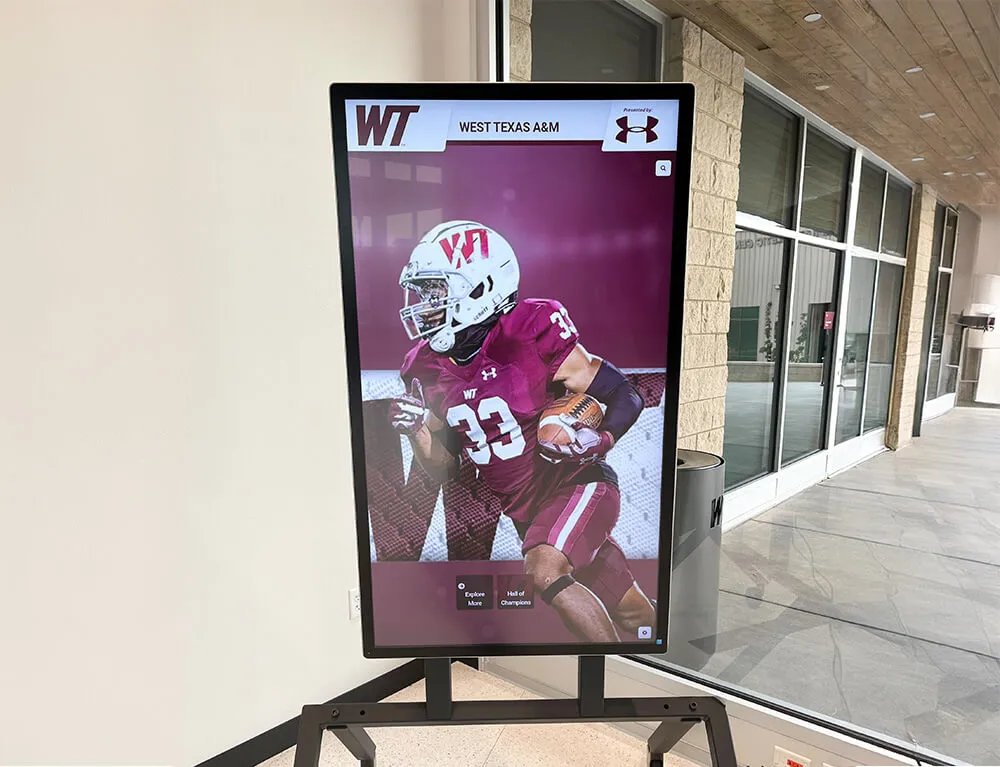
Modern recognition displays enable schools to permanently honor All-American athletes with rich profiles showcasing their exceptional achievements
Understanding All-American Athletic Status
Before exploring the specific programs and selection criteria, understanding what All-American status fundamentally represents helps contextualize why this honor matters so significantly in the athletic world.
The Definition and Significance of All-American
An All-American athlete is a student-athlete selected to a prestigious national team that recognizes the country’s best performers in a particular sport during a given season. These selections represent the pinnacle of athletic achievement at both high school and collegiate levels, identifying individuals who demonstrated exceptional skill, performance, leadership, and competitive success against the nation’s best competition.
The term “All-American” originated in the late 1800s when Caspar Whitney, a sportswriter for The Week’s Sport, began selecting the best college football players nationwide for an honorary team. This concept quickly expanded across sports and competitive levels, establishing All-American status as the gold standard for athletic excellence.
Today, All-American designations carry profound significance because they represent national-level recognition transcending local or regional achievement, objective selection criteria typically involving statistics and competitive results, validation by respected organizations with established credibility in specific sports, permanent status that remains part of an athlete’s legacy indefinitely, and tangible benefits including scholarship opportunities, recruitment visibility, and career advantages.
For schools, having athletes earn All-American status demonstrates program quality, validates coaching effectiveness, and provides lasting institutional pride that deserves prominent celebration.
Different Levels of All-American Recognition
All-American programs exist across multiple competitive levels, each with distinct selection processes and criteria appropriate to the level of competition.
High School All-American Programs
Multiple organizations recognize outstanding high school athletes as All-Americans, though criteria and selection processes vary significantly. The most recognized high school All-American programs include Under Armour All-American Games (football, basketball, volleyball, lacrosse, and soccer), McDonald’s All-American Game (basketball), U.S. Army All-American Bowl (football), MaxPreps All-American Teams across numerous sports, National High School Coaches Association (NHSCA) All-Americans, and sport-specific national organizations like USA Wrestling and USA Track & Field.
High school All-American selections typically consider statistical performance, team success and championships, competition level and strength of schedule, coach and media nominations, combine performance or showcase events, and occasionally direct selection committee evaluation.
These recognitions carry tremendous weight for college recruiting, as they identify athletes competing at elite levels against top national competition. Learn more about creating a collegiate experience that develops high school athletes toward All-American potential.
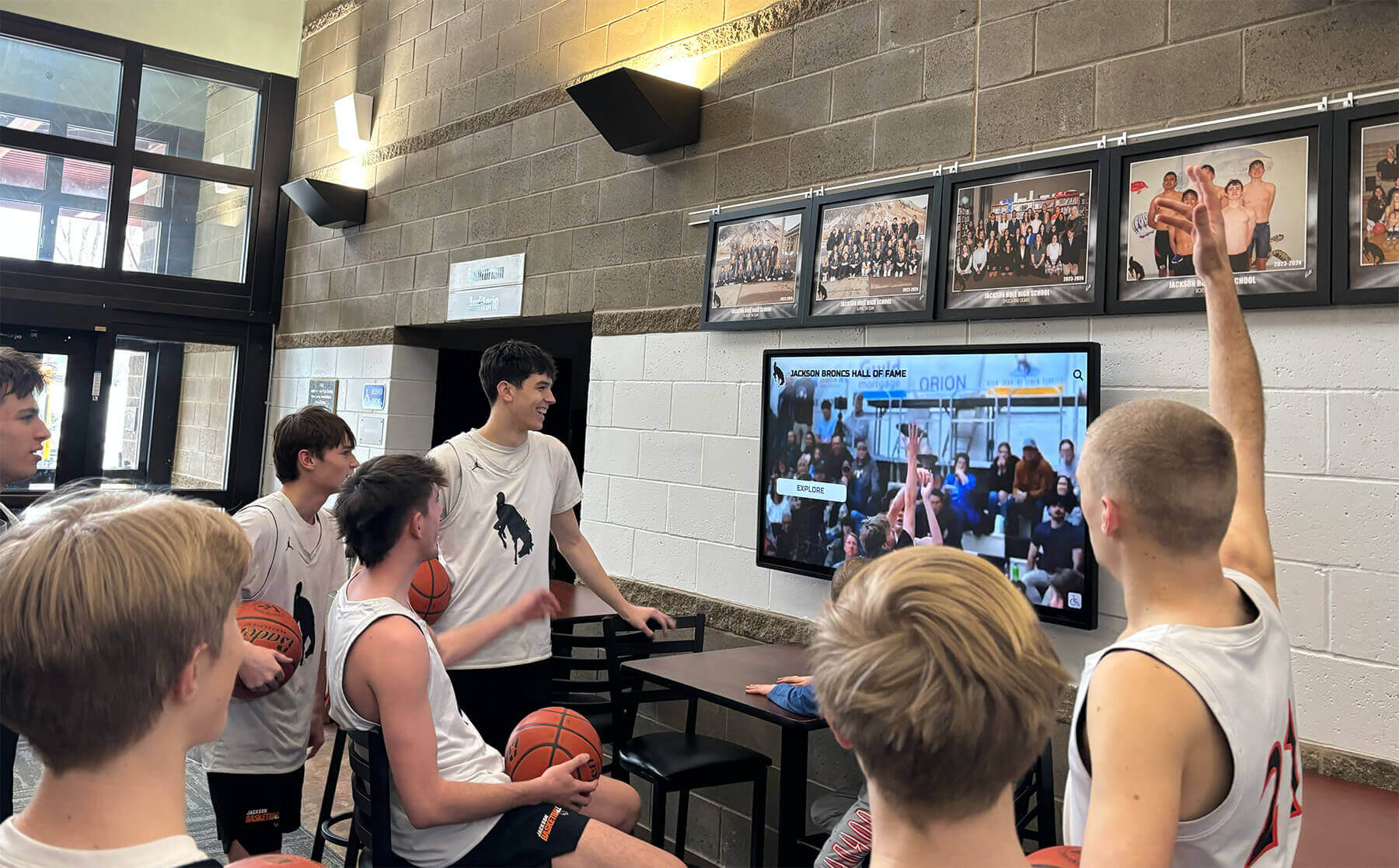
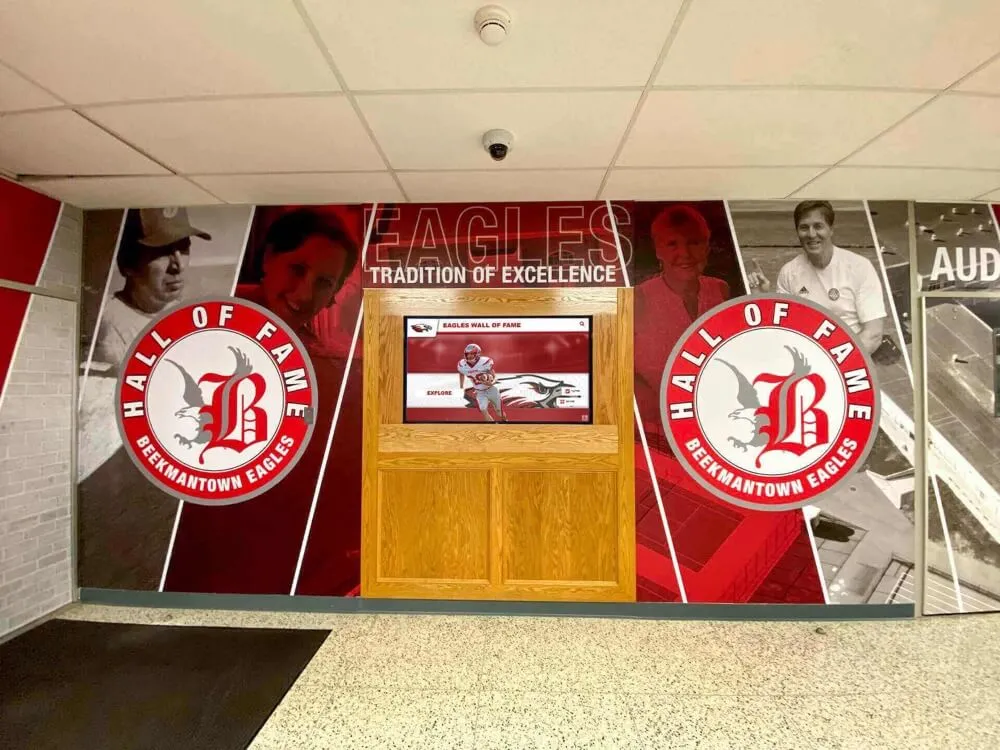
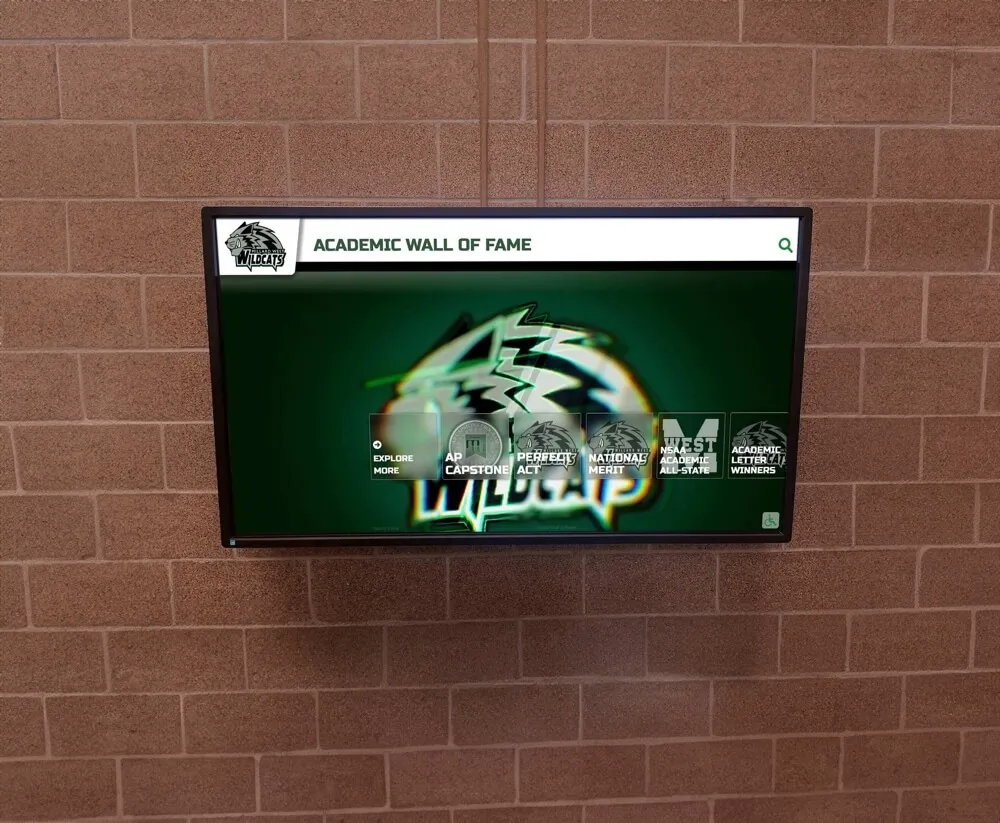
Visible recognition of All-American achievements inspires younger athletes to pursue excellence while celebrating program history
College All-American Programs
Collegiate All-American designations are more standardized and universally recognized than high school selections. The primary organizations include College Sports Communicators (formerly CoSIDA) across all NCAA sports, American Football Coaches Association (AFCA) for football, Associated Press (AP) for major sports, United States Track & Field and Cross Country Coaches Association (USTFCCCA), American Volleyball Coaches Association (AVCA), and dozens of sport-specific coaching associations with established All-American programs.
College All-American teams often feature First Team, Second Team, and Third Team designations, with First Team representing the absolute elite performers nationally. Some sports also distinguish between Consensus All-Americans (athletes selected to multiple All-American teams in the same season) and Unanimous All-Americans (selected to every major All-American team for their sport).
Academic All-American Programs
Beyond athletic performance, Academic All-American programs recognize student-athletes who excel in both competition and the classroom. The College Sports Communicators Academic All-America program is the most prestigious, requiring student-athletes to maintain at least a 3.5 GPA while competing at the varsity level and demonstrating significant athletic contribution.
Academic All-American status recognizes the complete student-athlete ideal, celebrating individuals who refuse to sacrifice academic excellence for athletic achievement or vice versa. Schools should recognize these honors alongside athletic All-Americans through comprehensive academic recognition programs that demonstrate institutional values.
Why All-American Status Matters
Understanding why All-American designation carries such significance helps schools appreciate the importance of permanent, prominent recognition for athletes who achieve this honor.
College Recruiting and Scholarship Impact
For high school athletes, All-American status dramatically increases college recruiting visibility and scholarship opportunities. College coaches actively seek athletes competing at national levels, and All-American recognition provides third-party validation of an athlete’s abilities. This can translate to increased scholarship offers, recruitment from higher-tier programs, and enhanced negotiating position for athletic financial aid.
Professional Athletic Opportunities
For college athletes aspiring to professional careers, All-American credentials enhance draft prospects and professional contract opportunities. Professional scouts and general managers view All-American selections as evidence that athletes consistently performed against elite competition, a crucial indicator of professional potential.
Lifelong Personal Achievement
Beyond athletic career benefits, All-American status represents permanent personal achievement that athletes carry throughout their lives. This recognition appears in professional biographies, LinkedIn profiles, job applications, and personal accomplishments that define their character and competitive excellence.
For schools, prominently recognizing All-Americans demonstrates that athletic excellence receives appropriate celebration, creating aspirational targets that motivate current athletes while preserving institutional tradition.

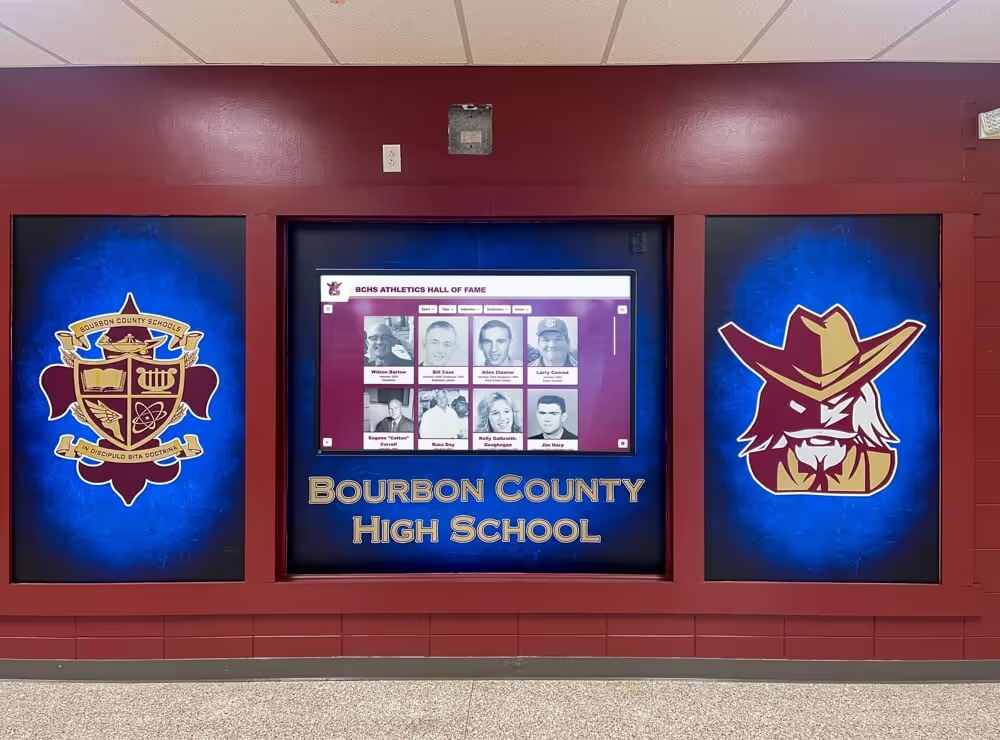
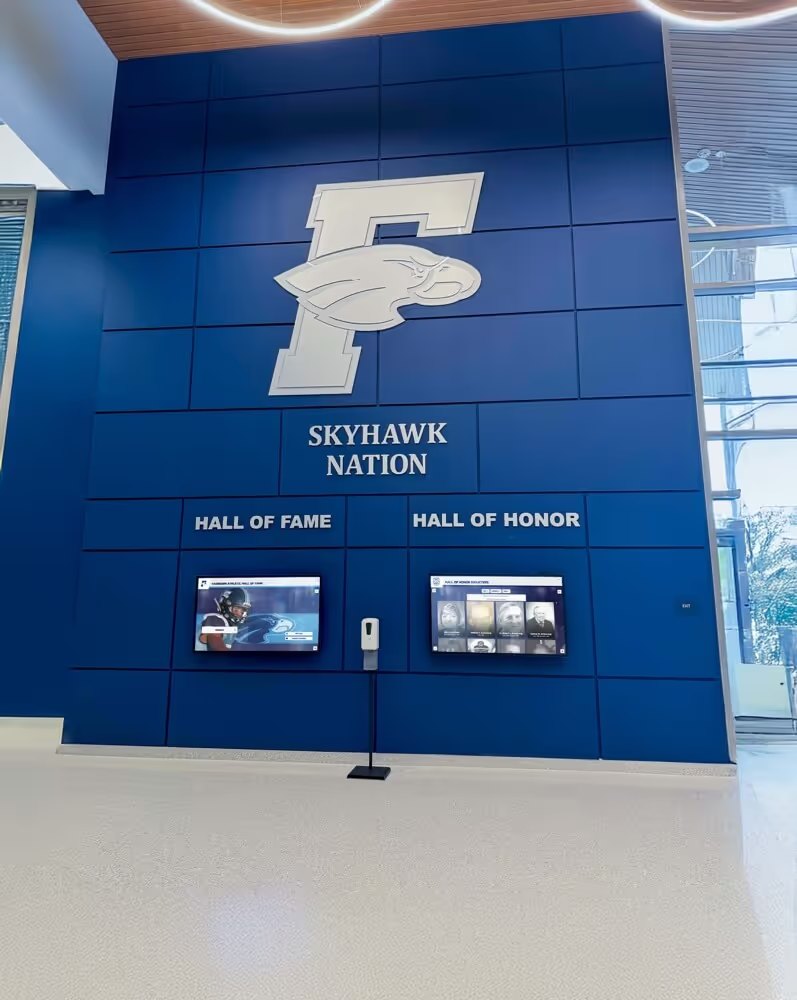
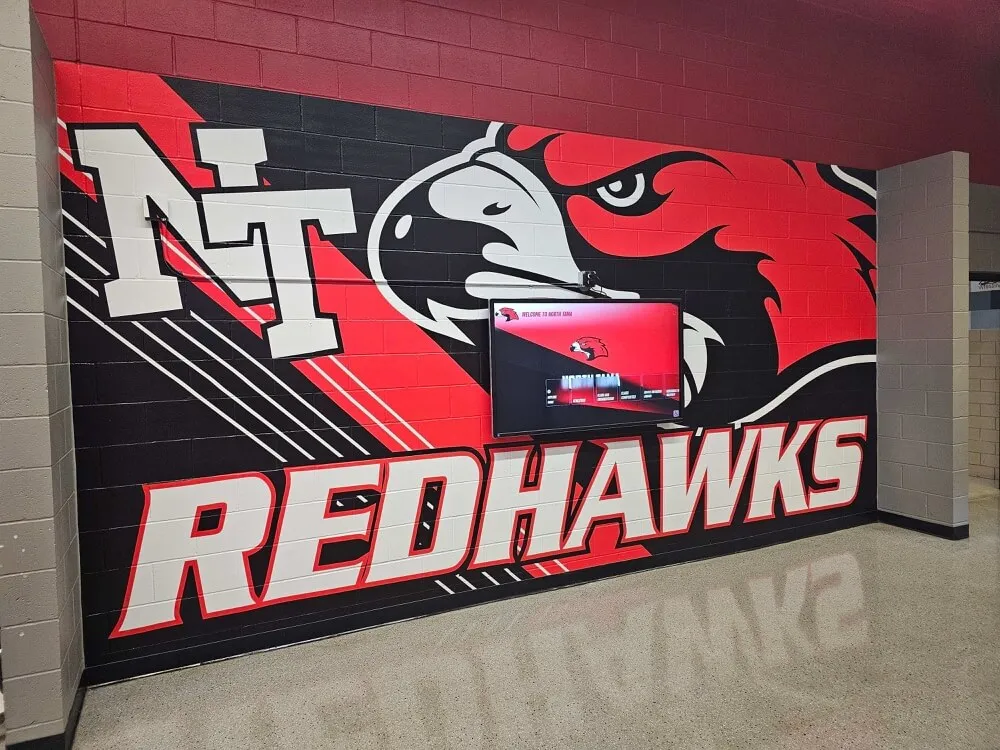
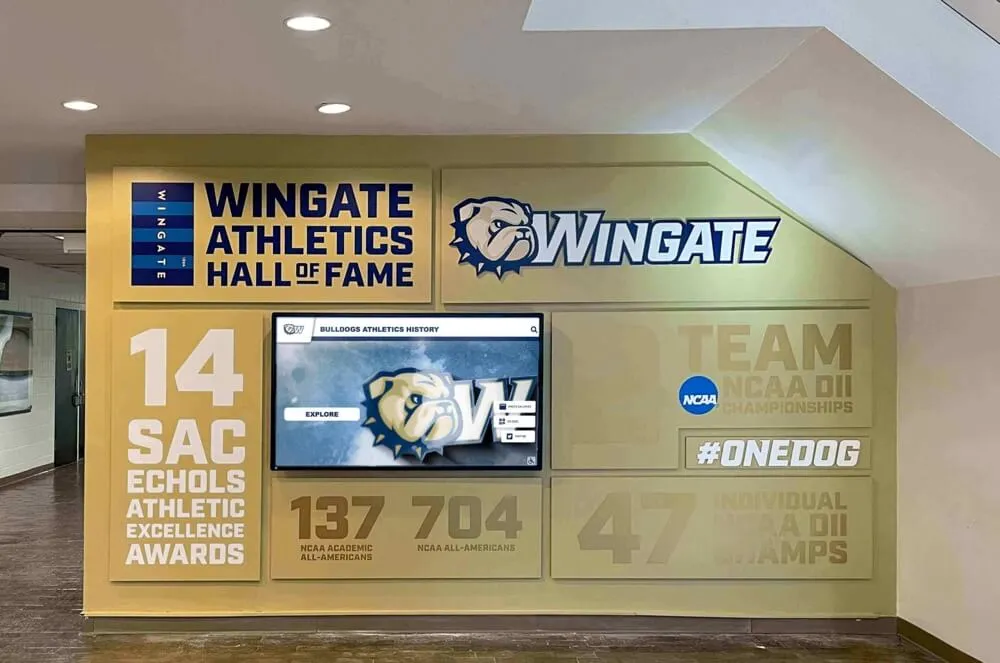
Dedicated athletic recognition spaces showcase All-American achievements as the pinnacle of competitive excellence
How Athletes Earn All-American Status
The pathways to All-American recognition vary significantly by sport, competitive level, and selecting organization. Understanding these processes helps athletes, coaches, and schools navigate the selection landscape.
High School All-American Selection Processes
High school All-American selections lack the standardization found at collegiate levels, with various organizations employing different methodologies.
Nomination-Based Selection Systems
Many high school All-American programs rely on coach nominations combined with statistical verification. Coaches submit athlete nominations highlighting statistical accomplishments, championship achievements, awards and honors received, competition level and strength of schedule, and personal character and citizenship. Selection committees then evaluate nominees using standardized criteria, often incorporating statistical databases, film review, and comparative analysis against other nominees nationwide.
For example, MaxPreps All-American teams combine statistical analysis from their comprehensive high school sports database with editorial judgment from experienced sportswriters, creating data-informed selections that identify statistically dominant performers.
Showcase and All-Star Game Selection
Prestigious All-American games like the McDonald’s All-American Game (basketball) and U.S. Army All-American Bowl (football) employ different selection approaches. These programs typically involve year-long evaluation of top prospects, attendance at national tournaments and showcase events, consultation with recruiting services and scouting networks, direct evaluation by selection committees, and invitation-only participation in the actual All-American game.
Athletes selected for these events earn All-American status through invitation, with selection representing recognition as one of the nation’s absolute elite performers. These games typically feature the top 20-30 athletes nationally in their sport and graduating class.
Sport-Specific Federation Recognition
In individual sports like wrestling, track and field, swimming, and cross country, national governing bodies often determine All-American status based on national championship performance. For instance, wrestlers who place in the top eight at national championship tournaments typically earn All-American recognition, with clear, objective criteria based on tournament results.
This performance-based approach removes subjective selection elements, allowing any athlete who achieves the defined standard to earn All-American status regardless of nominations or selections.
College All-American Selection Processes
Collegiate All-American selections follow more standardized processes established by respected organizations with long histories of recognizing athletic excellence.
Team Sport All-American Selection
For team sports like football, basketball, volleyball, and soccer, All-American teams are typically selected by coaches’ associations, media organizations, and analytics services. The process generally includes regular-season statistical compilation and performance tracking, conference awards and All-Conference team selections, postseason recognition and championship performance, voting by coaches, media members, or both, and publication of First Team, Second Team, and Third Team selections.
The College Sports Communicators (formerly CoSIDA) All-America program, for example, divides the country into districts, with district selections advancing to national voting. Sports information directors nominate athletes from their institutions, district committees select district teams, and national committees select All-America teams from district honorees.
Individual Sport All-American Criteria
Individual sports often employ more objective criteria for All-American recognition. In NCAA Track & Field and Cross Country, the USTFCCCA awards All-American honors to athletes who finish in the top 40 at NCAA Championship meets (top 8 earn First Team honors). In swimming and diving, NCAA Championship finalists typically earn All-American recognition.
These performance-based systems create clear targets for athletes to pursue, with All-American status awarded based on achievement rather than subjective selection.
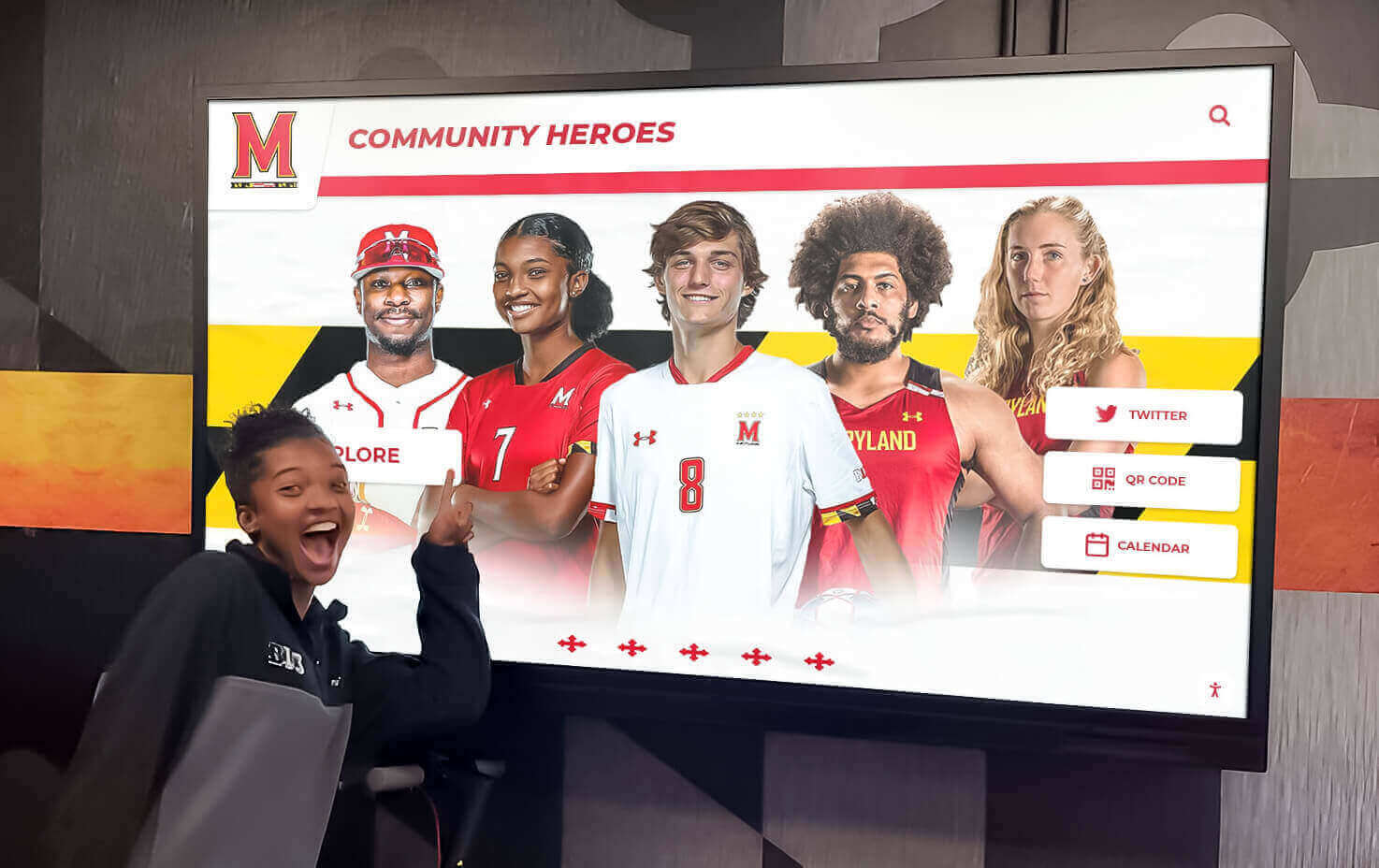
Clear recognition of All-American standards helps current athletes understand achievement benchmarks while celebrating program excellence
Academic All-American Selection Process
Academic All-American programs combine athletic participation with academic excellence. The College Sports Communicators (CSC) Academic All-America program requires student-athletes to be at least a sophomore academically, maintain a cumulative GPA of 3.5 or higher, be a varsity letterwinner or starter, and be nominated by their institution’s sports information director.
The selection process involves institutional nomination with academic verification, district committee evaluation and district team selection, national voting to determine national Academic All-Americans, and First Team, Second Team, and Third Team designations based on academic and athletic achievement balance.
This recognition celebrates the complete student-athlete, acknowledging that true excellence encompasses both classroom and competitive performance.
Key Factors in All-American Selection
Regardless of specific program or sport, certain factors consistently influence All-American selection decisions.
Statistical Excellence and Performance Metrics
Objective statistics form the foundation of most All-American selections. Leading national statistical categories, consistency across entire season rather than isolated performances, performance against ranked opponents and elite competition, and contribution to team success and championships all significantly influence selection.
In team sports, comprehensive statistical profiles—not just scoring stats but also defensive metrics, efficiency ratings, and advanced analytics—increasingly inform selection decisions.
Team Success and Championship Achievement
Individual excellence matters, but athletes whose teams achieve championship success often receive favorable consideration in All-American voting. Athletes from national championship teams, conference championship teams, or programs making deep tournament runs demonstrate ability to elevate team performance, not just compile personal statistics.
Selection committees recognize that truly elite athletes make their teams better, with success reflected in team achievement as much as individual statistics.
Competition Level and Strength of Schedule
Athletes competing against consistently strong competition receive additional weight in All-American consideration. Performing against top-ranked opponents, competing in strong conferences or leagues, and excelling in postseason competition against elite teams all enhance All-American credentials.
This recognizes that statistical production against weak competition doesn’t demonstrate the same elite status as similar statistics against nationally ranked opponents.
Coaching Reputation and Program Visibility
While ideally All-American selections should be purely merit-based, practical reality includes that athletes from high-profile programs with media coverage and strong coaching reputations sometimes receive additional consideration. This underscores the importance of coaches actively advocating for their athletes through nomination processes and media engagement.
Schools can support their athletes’ All-American aspirations through comprehensive end-of-year recognition programs that build athlete profiles and highlight achievements to selection committees.
All-American Programs by Sport
Different sports feature distinct All-American programs with unique selection criteria, selection bodies, and recognition traditions.
Football All-American Programs
Football features multiple prestigious All-American teams at both high school and college levels.
High School Football All-Americans
The most recognized high school football All-American honors include the U.S. Army All-American Bowl selection (top 90 senior football players invited to participate in nationally televised game), Under Armour All-America Game participants, Polynesian Bowl All-Americans, All-American Bowl, and MaxPreps All-American teams across multiple classifications.
These selections typically occur during an athlete’s senior year, based on junior and senior season performance, and carry tremendous weight for college recruiting and scholarship offers.
College Football All-Americans
College football All-American teams are selected by numerous organizations including the American Football Coaches Association (AFCA), Associated Press (AP), Football Writers Association of America (FWAA), Sporting News, Walter Camp Foundation, and several media outlets. Athletes selected to multiple First Teams earn Consensus All-American status, while those selected to every major First Team become Unanimous All-Americans, the highest possible individual honor in college football.
The College Football Playoff era has increased emphasis on All-American selections, with these honors significantly influencing Heisman Trophy voting and NFL Draft positioning.
Basketball All-American Programs
Basketball All-American recognition spans from middle school showcase teams through professional leagues, with high school and college programs carrying the most significance.
High School Basketball All-Americans
The McDonald’s All-American Game represents the most prestigious high school basketball honor, inviting the top 24 senior boys and 24 senior girls nationally to participate in showcase games televised on ESPN. Jordan Brand Classic, Nike Hoop Summit, and Under Armour Elite 24 provide additional All-American opportunities, while MaxPreps, USA Today, and various recruiting services publish All-American team lists.
Selection for these prestigious games virtually guarantees scholarship offers from elite college programs, making All-American status transformative for recruiting prospects.
College Basketball All-Americans
College basketball features multiple All-American teams selected by Associated Press, United States Basketball Writers Association (USBWA), Sporting News, National Association of Basketball Coaches (NABC), and other organizations. The NABC All-American teams date back to 1957 and represent coaches’ perspectives on the nation’s best players, while media organizations provide alternative perspectives often influenced by statistical production and highlight performances.
Consensus and Unanimous All-Americans are determined by selection to multiple First Teams, with this honor often correlating strongly with NBA Draft positioning and professional career success.

Comprehensive athlete profiles bring All-American achievements to life through statistics, photos, and career highlights
Track and Field All-Americans
Track and field employs the most objective All-American criteria, with championship meet performance determining recognition.
NCAA Track and Field All-Americans
The United States Track & Field and Cross Country Coaches Association (USTFCCCA) awards All-American honors to athletes who finish in the top 40 at NCAA Indoor Championships, NCAA Outdoor Championships, or NCAA Cross Country Championships. The top 8 finishers in each event earn First Team All-American honors, while places 9-40 receive Second Team recognition.
Relay team members who finish in the top 8 also earn All-American recognition, with many athletes achieving multiple All-American honors across different events and championships within a single academic year.
This objective system means every athlete knows exactly what performance standard they must achieve to earn All-American status—finish high enough at the national championship meet.
Swimming and Diving All-Americans
Similar to track and field, swimming and diving use objective championship meet performance criteria.
NCAA Swimming and Diving All-Americans
The College Swimming and Diving Coaches Association of America (CSCAA) recognizes All-Americans based on NCAA Championship meet performance. Athletes who place in the top 8 in individual events earn Honorable Mention All-American status, top 16 finishers receive All-American recognition, and athletes who make championship finals (top 8) or score points for their team achieve the highest All-American distinction.
Relay participants from top-8 relay teams also earn All-American recognition, allowing some swimmers to achieve multiple All-American honors in a single championship meet.
Baseball and Softball All-Americans
College baseball and softball feature multiple All-American teams selected by different organizations.
Baseball All-Americans
The American Baseball Coaches Association (ABCA), Collegiate Baseball Newspaper, Baseball America, and College Sports Communicators all select All-American teams. Position-specific recognition (pitchers, catchers, infielders, outfielders, designated hitter) ensures athletes at every position receive appropriate consideration.
High school baseball All-Americans are recognized through Perfect Game All-American Classic, Under Armour All-America Baseball Game, and various media organization selections, with participation in showcase events carrying significant recruiting weight.
Softball All-Americans
The National Fastpitch Coaches Association (NFCA) selects softball All-American teams, while College Sports Communicators provides additional recognition. Similar to baseball, position-specific selections ensure balanced recognition across all defensive positions and specialized roles.
High school softball All-Americans are recognized through USA Softball All-American teams based on national championship tournament performance, PGF (Premier Girls Fastpitch) All-American selections, and media organization teams.
Other Sports All-American Programs
Virtually every sport offers All-American recognition at college levels, including wrestling (All-Americans determined by NCAA Championship placement), soccer (selected by United Soccer Coaches and College Sports Communicators), volleyball (American Volleyball Coaches Association selections), lacrosse (United States Intercollegiate Lacrosse Association honors), tennis (Intercollegiate Tennis Association All-Americans), golf (Golf Coaches Association of America and Ping All-America Scholar recognition), and gymnastics (selected based on NCAA Championship results and season performance).
Schools should recognize All-American achievements across all sports equally, demonstrating that athletic excellence in any sport receives appropriate celebration. Modern digital recognition platforms enable schools to showcase All-Americans from every sport with equal prominence and detail.
Celebrating All-American Athletes at Your School
Schools that have students earn All-American honors should create permanent, prominent recognition that celebrates these exceptional achievements while inspiring future athletes.
The Importance of Recognizing All-American Athletes
All-American recognition represents the pinnacle of athletic achievement and deserves celebration proportional to its significance.
Motivating Current and Future Athletes
When schools prominently display All-American achievements, current athletes see concrete examples of what’s possible through dedication, training, and competitive excellence. This visible recognition creates aspirational targets, normalizes elite achievement as attainable within your program, demonstrates the pathway from current athlete to All-American, preserves institutional athletic tradition and standards, and builds program pride that elevates every participant’s experience.
Research shows that visible recognition of elite achievement significantly increases athlete motivation and commitment to training, as athletes develop clear mental images of accomplishments they aspire to match.
Validating Program Quality
All-American athletes reflect positively on coaching staff, athletic programs, facilities, and institutional support systems. When schools celebrate All-Americans prominently, they demonstrate coaching effectiveness and program quality, attract stronger athletes through reputation enhancement, strengthen community support and booster engagement, provide tangible evidence for facility funding and program investment, and build institutional pride that extends beyond athletics.
This recognition validates that your athletic programs operate at elite levels, producing athletes who compete successfully at national standards.

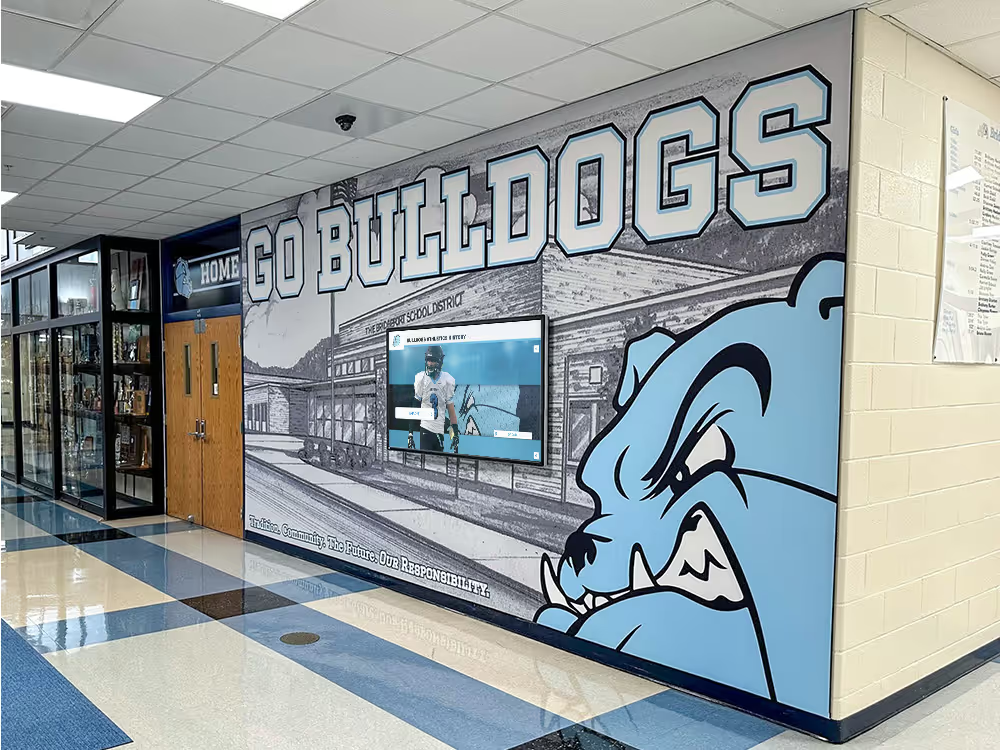
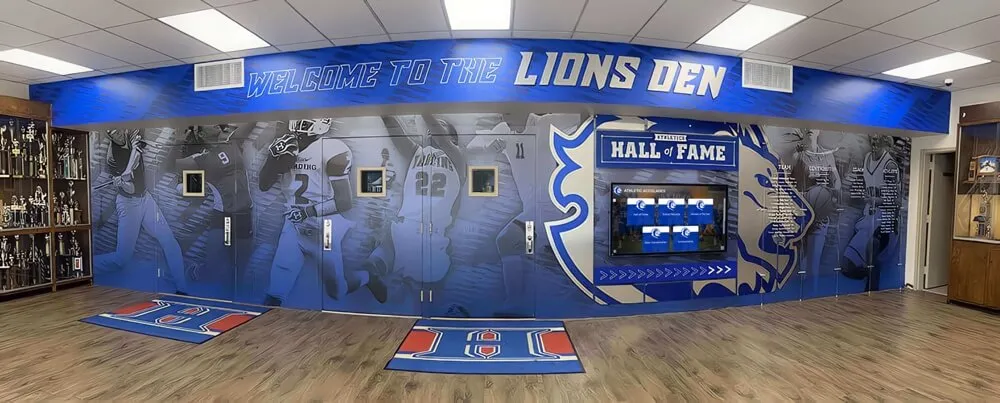
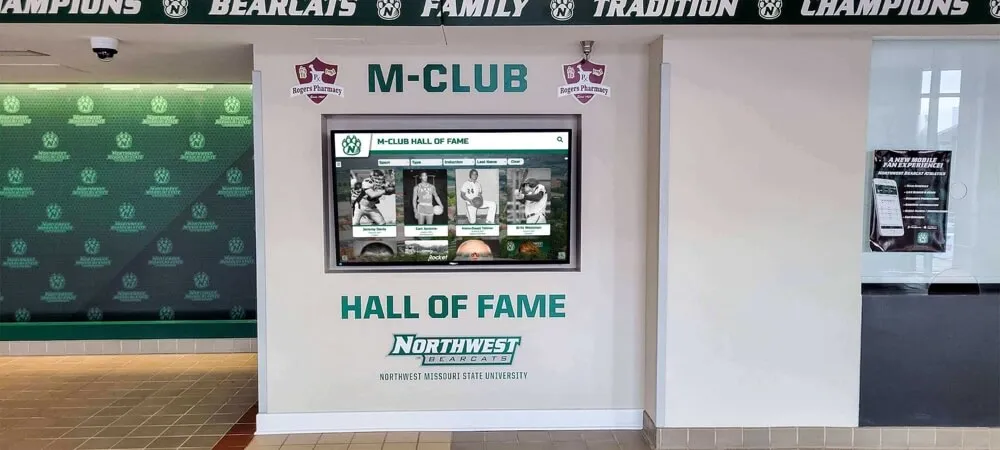
Dedicated hall of fame spaces create impressive recognition environments celebrating All-American achievements
Recruiting Advantage
For high schools recruiting athletes from youth programs or colleges recruiting athletes from high schools, All-American representation provides powerful recruiting tools. Prospective athletes and their families see evidence that your program develops elite talent, competing at national levels rather than just local or regional competitions.
During facility tours and recruiting visits, prominent All-American displays demonstrate program credibility more effectively than any recruiting pitch or promotional materials.
Traditional All-American Recognition Approaches
Many schools have recognized All-American athletes through conventional methods, though these approaches face significant limitations.
Physical Plaques and Banners
Traditional recognition typically involves engraved plaques mounted in athletic facilities, championship banners hanging in gymnasiums, trophy case sections dedicated to All-Americans, framed certificates displayed in hallways, and composite photos of All-American athletes by sport or year.
While these physical displays provide permanent recognition, they face inherent constraints including limited space preventing comprehensive historical recognition, static presentation lacking engagement or interactivity, maintenance challenges requiring regular updates, minimal information capacity beyond names and years, and difficulty accommodating growing lists as programs produce more All-Americans.
Schools with long athletic traditions often face difficult decisions about which All-Americans to display when space becomes limited, forcing removal of historical recognition to accommodate recent achievements.
Season-End Awards Ceremonies
Most schools recognize All-American athletes during end-of-year sports banquets or awards assemblies. While these ceremonies provide important public celebration, recognition impact typically ends when the ceremony concludes, with limited lasting visibility beyond the event.
Combining ceremony recognition with permanent displays ensures All-American achievements receive both immediate celebration and lasting commemoration. Learn more about effective sports end-of-year awards programs that properly honor All-American athletes.
Modern Digital Recognition Solutions
Digital recognition platforms address traditional limitations while providing enhanced capabilities that make All-American celebration more comprehensive, engaging, and sustainable.
Unlimited Recognition Capacity
Unlike physical displays with inherent space constraints, digital platforms like Rocket Alumni Solutions enable schools to recognize every All-American in program history without space limitations. This comprehensive approach ensures no All-American ever gets removed to accommodate newer athletes, preserves complete institutional tradition across decades, honors athletes from all sports equally regardless of program size, and creates permanent digital archives surviving facility renovations or relocations.
Digital systems transform recognition from a space-management challenge into a comprehensive historical celebration of every athlete who achieved All-American status.
Rich, Engaging Athlete Profiles
Beyond simply listing names and years, digital platforms enable schools to create comprehensive All-American profiles featuring professional athlete photography and action shots, detailed statistical achievements and records, championship accomplishments and awards, personal statements about their athletic journey, post-graduation updates about continued athletics, academic achievements, or professional careers, and video highlights showcasing their competitive excellence.
These rich profiles transform recognition from simple acknowledgment into inspiring stories that engage viewers and provide role models for current athletes.
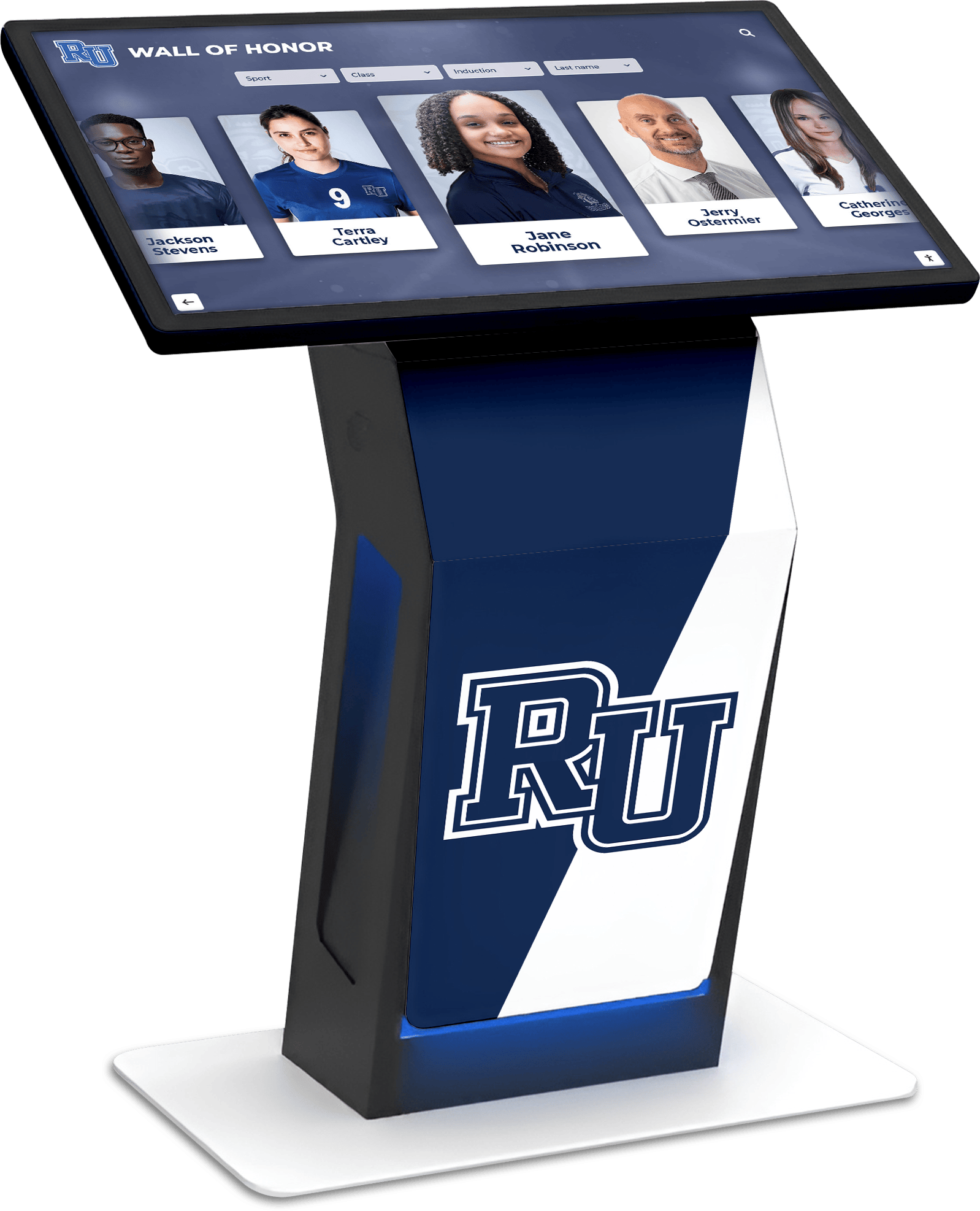
Modern kiosks provide flexible placement options in athletic facilities, lobbies, or training areas
Interactive Exploration Features
Digital touchscreen displays create engaging experiences impossible with static plaques. Users can search for specific athletes by name, filter All-Americans by sport or year, compare statistics and achievements across eras, watch video highlights and interviews, and share profiles through social media or email.
This interactivity encourages exploration beyond passive viewing, with visitors spending significantly more time engaging with digital recognition than traditional plaques they walk past without detailed examination.
Web Accessibility and Extended Reach
Digital recognition extends beyond physical school facilities through mobile-responsive web platforms accessible globally, individual athlete profile URLs that athletes can share, integration with school athletic department websites, social media connectivity enabling organic reach extension, and alumni access regardless of geographic location.
This extended accessibility proves particularly valuable for alumni, families, and college recruiters who can explore All-American achievements remotely rather than requiring campus visits to view recognition.
Simple Content Management and Updates
Maintaining All-American recognition becomes dramatically simpler with digital platforms through cloud-based content management requiring no technical expertise, remote updates from any internet-connected device, template-based profile creation ensuring consistent presentation, bulk import capabilities for historical data entry, and scheduled publishing coordinating with award ceremonies or announcements.
Athletic directors and coaches report that digital platforms reduce administrative time spent maintaining recognition by 80-90% compared to traditional physical displays requiring engraving, mounting, and physical updates.
Solutions like Rocket Alumni Solutions provide purpose-built platforms specifically designed for educational athletic recognition, combining ease of use with powerful features that make comprehensive All-American celebration sustainable for schools of any size.
Creating Comprehensive All-American Recognition Programs
Effective All-American recognition requires systematic approaches that ensure consistency, completeness, and appropriate celebration.
Establishing Recognition Standards
Schools should define clear standards for All-American recognition including which All-American programs and organizations to recognize, whether to distinguish between First Team, Second Team, and Third Team, how to recognize Academic All-Americans alongside athletic honors, whether to include high school All-Americans earned before college, and what information to include in each All-American profile.
These documented standards ensure consistent recognition across different sports, years, and coaching staff changes.
Historical Research and Completeness
Many schools have produced All-American athletes throughout decades who never received proper recognition due to limited historical documentation. Creating comprehensive recognition requires systematic research including review of yearbooks, media guides, and athletic publications, interviews with coaches, athletes, and sports information directors, verification through All-American program records and archives, newspaper archive searches documenting achievements, and outreach to alumni networks to identify overlooked All-Americans.
This historical work creates complete recognition honoring your school’s full All-American tradition rather than only recent achievements.
Annual Update Processes
Sustainable All-American recognition requires systematic annual processes for adding new honorees including coordination with coaches to identify athletes earning All-American status, verification of All-American selection through official announcements, collection of athlete photos, statistics, and biographical information, profile creation following established templates and standards, public announcement and celebration coordination, and display updates within appropriate timeframes after selection.
Building these processes into athletic department annual calendars ensures new All-Americans receive timely recognition without administrative burden or last-minute scrambling.

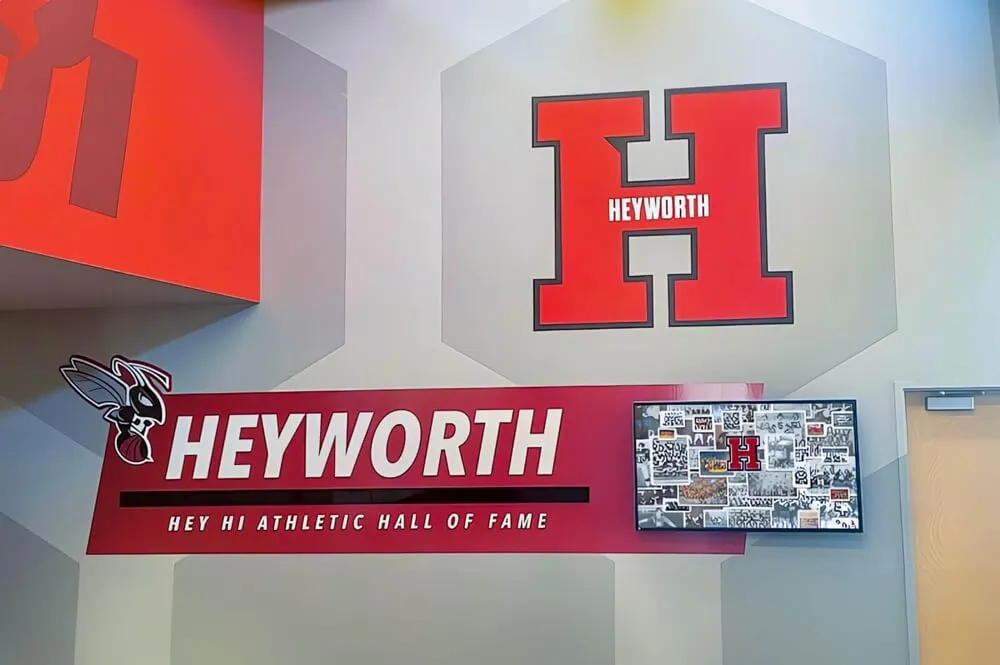
Combined recognition environments featuring digital displays and traditional elements create impressive celebration spaces
Integration with Broader Athletic Recognition
All-American recognition should integrate with comprehensive athletic recognition programs celebrating diverse achievements.
Hall of Fame Inductee Criteria
Many schools include All-American status as a criterion for athletic hall of fame induction, either as automatic qualification or as a significant factor in selection. This integration ensures All-Americans eventually receive the highest institutional athletic honor while maintaining distinctions between seasonal All-American recognition and career-spanning hall of fame induction.
Multi-Year Achievement Tracking
Some athletes earn multiple All-American honors across several seasons or in multiple events. Recognition systems should clearly display cumulative achievements, showing progression from first All-American honor through subsequent selections and differentiating between single-time and multiple-time All-Americans.
Team and Individual Balance
All-American recognition naturally focuses on individual achievement, but schools should also celebrate team accomplishments that enabled individual success. Connecting All-American athletes to championship teams, record-breaking seasons, and program milestones provides context while maintaining appropriate individual recognition.
Comprehensive athletic recognition systems balance individual honors like All-American status with team achievements and program history.
All-American Athletes and Academic Excellence
While athletic All-American status celebrates competitive excellence, Academic All-American programs recognize the complete student-athlete who excels in both athletics and academics.
Understanding Academic All-American Programs
Academic All-American recognition adds an essential dimension to athletic achievement by celebrating intellectual excellence alongside competitive success.
College Sports Communicators Academic All-America
The most prestigious Academic All-American program, administered by College Sports Communicators (formerly CoSIDA), recognizes college student-athletes who maintain at least a 3.5 cumulative GPA while competing at varsity levels. This program spans all NCAA sports across Divisions I, II, and III, with First Team, Second Team, and Third Team selections in each sport.
Academic All-American selection requires nomination by the institution’s sports information director, verification of academic standing and athletic participation, district committee evaluation and district team selection, and national voting to determine national Academic All-Americans.
This rigorous process ensures Academic All-Americans truly represent the student-athlete ideal, refusing to sacrifice academic achievement for athletic success.
Conference Academic All-American Programs
Beyond national programs, many athletic conferences recognize Academic All-Americans based on conference-specific criteria. These programs typically require GPA thresholds between 3.0-3.5, varsity letter status, and minimum competitive participation standards.
While less prestigious than national Academic All-American status, conference academic recognition deserves celebration as evidence of balanced commitment to academics and athletics.
High School Academic All-American Recognition
High school Academic All-American programs vary by state and organization, but typically recognize student-athletes who maintain high GPA standards while earning all-conference or all-state athletic honors. These selections celebrate high school students demonstrating that academic and athletic excellence are compatible rather than competing priorities.
Schools should recognize high school Academic All-Americans through academic recognition programs that honor intellectual achievement alongside athletic accomplishments.
Why Academic All-American Status Matters
Academic All-American recognition carries unique significance that extends beyond athletic performance.
Career and Graduate School Advantages
While athletic All-American status primarily benefits athletic careers, Academic All-American recognition enhances opportunities beyond athletics including graduate school applications and academic fellowships, professional career opportunities valuing demonstrated excellence, Rhodes Scholar, Marshall Scholar, and similar prestigious nomination opportunities, and validation of time management, dedication, and intellectual capacity.
For student-athletes whose athletic careers end after college, Academic All-American status provides credentials that matter throughout professional careers in ways that athletic honors alone may not.
Complete Student-Athlete Recognition
Academic All-American status validates the student-athlete ideal that educational institutions claim to value. Schools that prominently recognize Academic All-Americans alongside athletic honors demonstrate genuine commitment to balanced development, not simply lip service to academic priorities.
This balanced recognition creates healthier athletic cultures where academic performance receives celebration proportional to its importance in student-athletes’ complete development.
Recruiting and Institutional Reputation
Schools producing Academic All-Americans demonstrate that athletes can thrive academically while competing at elite athletic levels. This reputation attracts recruits and families prioritizing education, enhances institutional academic reputation beyond athletics, supports NCAA academic progress rate (APR) compliance and goals, and validates academic support programs and institutional commitment.
Prominent Academic All-American recognition should appear alongside athletic All-Americans in hall of fame displays, showing that your institution celebrates excellence across all dimensions of student-athlete development.

Comprehensive profiles celebrate both academic and athletic accomplishments of All-American student-athletes
Supporting Student-Athletes in Pursuing All-American Status
Schools and coaches can actively support athletes in their pursuit of All-American recognition through systematic approaches to development, documentation, and advocacy.
Athletic Development and Training
Earning All-American status requires exceptional performance against national-level competition, which demands comprehensive athletic development.
Strength and Conditioning Programs
Elite athletes require systematic strength, speed, and conditioning development tailored to their sport’s specific demands. Schools supporting All-American aspirations provide access to quality strength coaches, periodized training programs peaking for championships, sport-specific conditioning protocols, injury prevention and recovery resources, and nutrition guidance supporting optimal performance.
Athletes competing at All-American levels typically train year-round with specific development goals, not just during competitive seasons.
Competition Exposure and Scheduling
Athletes develop All-American potential by competing against elite opponents consistently. Schools can support this through scheduling against strong opponents and ranked teams, participating in high-level tournaments and invitationals, attending national showcases and championship events, and providing opportunities to compete with club teams or summer programs facing national competition.
Competition against weak opponents may produce impressive statistics, but All-American selection committees value performance against elite competition much more heavily.
Technical Skill Development
Position-specific skills, sport-specific techniques, and competitive strategy require dedicated instruction from expert coaches. Schools support All-American development through hiring qualified coaches with expertise in specific sports, providing access to position coaches or specialized instruction, utilizing video analysis for technical improvement, and creating training environments that challenge athletes to continuous improvement.
Athletes reaching All-American levels typically demonstrate technical mastery that distinguishes them from good athletes who rely primarily on physical attributes.
Documentation and Advocacy
Even when athletes perform at All-American levels, they may not receive recognition without proper documentation and advocacy.
Comprehensive Statistics and Records
Maintaining detailed, accurate statistics throughout seasons provides evidence for All-American selection. This includes game-by-game statistical documentation, advanced metrics and efficiency calculations, performance against ranked opponents specifically highlighted, and season-long trend analysis showing consistency.
Sports information directors play crucial roles in compiling and presenting this statistical evidence to support All-American nominations.
Highlight Video and Film
Video evidence increasingly influences All-American selections, particularly in sports where subjective evaluation supplements statistical analysis. Quality highlight films feature multiple plays demonstrating various skills, performance against strong opponents and in critical games, technical excellence and proper form, and competitive situations showing mental toughness.
Professional highlight production makes viewing appealing for selection committees evaluating numerous candidates.
Nomination Management
Coaches and athletic directors should actively manage All-American nomination processes including tracking nomination deadlines across different organizations, completing nominations thoroughly with supporting documentation, following up with selection committees when appropriate, coordinating with conference offices for conference nominations, and engaging with media members who vote on certain All-American teams.
Passive approaches rarely result in All-American recognition—active advocacy significantly increases athletes’ chances of earning recognition they deserve.
Media Relations and Publicity
Increasing athlete visibility through media coverage can influence All-American selection. Schools can support this through regular press releases highlighting athlete achievements, media day events giving reporters athlete access, social media highlighting featuring top performers, coordination with local media for feature stories, and submission of athletes for national award watchlists.
Higher-profile athletes often receive favorable consideration in All-American voting when their achievements match less-visible competitors.
Learn about comprehensive senior recognition programs that celebrate athlete development and achievements including All-American status.
Conclusion: Celebrating All-American Excellence
All-American athlete status represents the pinnacle of competitive excellence in sports, recognizing student-athletes who perform at national championship levels against the country’s best competition. Whether earned through statistical dominance, championship meet performance, or selection by prestigious organizations, All-American honors validate years of dedication, training, sacrifice, and commitment to athletic excellence.
For schools fortunate enough to have students earn All-American recognition, appropriate celebration is essential. These athletes deserve permanent, prominent recognition proportional to their exceptional achievements—not just ceremonial acknowledgment that fades from memory after brief celebration. Modern digital recognition solutions enable schools to create comprehensive, engaging All-American displays that preserve complete institutional athletic tradition, inspire current athletes by showing what’s achievable, provide rich storytelling beyond simple name listings, and extend recognition beyond physical facilities to reach alumni globally.
Celebrate Your All-American Athletes With Lasting Recognition
Discover how modern digital recognition solutions can help your school permanently honor every All-American athlete with engaging displays that inspire current students while preserving your complete athletic tradition.
Explore Recognition SolutionsWhether you’re a high school celebrating first All-American in program history or a university with dozens of All-Americans across multiple sports, thoughtful recognition ensures these achievements receive the permanent celebration they deserve. All-American status represents more than individual accomplishment—it validates coaching excellence, demonstrates program quality, and provides aspirational targets that elevate every athlete’s experience by showing what’s possible through dedication and competitive excellence.
By understanding what All-American status means, how athletes earn this distinction, and why comprehensive recognition matters, schools can create athletic recognition programs that appropriately honor their elite athletes while inspiring the next generation to pursue similar excellence. Every All-American athlete has a story worth telling—ensure your recognition displays tell those stories compellingly for generations to come.
Ready to create lasting recognition? Explore comprehensive digital athletic recognition systems, discover trophy display solutions, or learn about state championship recognition approaches that complement All-American celebration in comprehensive athletic halls of fame.