Organizations face a common challenge when honoring supporters and celebrating achievements: traditional recognition methods run out of space. Brass plaques fill walls within years. Trophy cases overflow. Donor walls reach capacity, forcing difficult decisions about whose names appear and whose contributions get omitted. Each new addition requires expensive engraving, weeks of lead time, and physical reinstallation. Updates become costly administrative burdens rather than celebratory moments.
Meanwhile, supporter expectations have evolved. Today’s donors and stakeholders expect engaging, accessible recognition that tells complete stories rather than simple name listings. They want to see the impact their contributions create, explore historical achievements, and share their honored recognition with family and networks. Static brass plaques mounted in hallways accessible only during facility hours no longer meet these expectations.
Digital halls of fame solve these challenges by replacing space-constrained physical recognition with interactive touchscreen displays that accommodate unlimited honorees, update instantly through cloud-based management, and create engaging multimedia experiences that celebrate donors, athletes, alumni, and community members through modern recognition platforms accessible both on-site and online.
This comprehensive guide explains what digital halls of fame are, how they work, why organizations implement them, and how solutions like Rocket Alumni Solutions transform donor recognition and achievement celebration through purpose-built interactive displays designed specifically for schools, universities, athletic programs, and nonprofit organizations.
Whether your organization struggles with overcrowded donor walls, seeks to enhance athletic achievement recognition, or wants to preserve institutional history through engaging digital archives, understanding digital hall of fame capabilities helps you make informed decisions about modernizing recognition programs while honoring commitments to supporters and stakeholders.

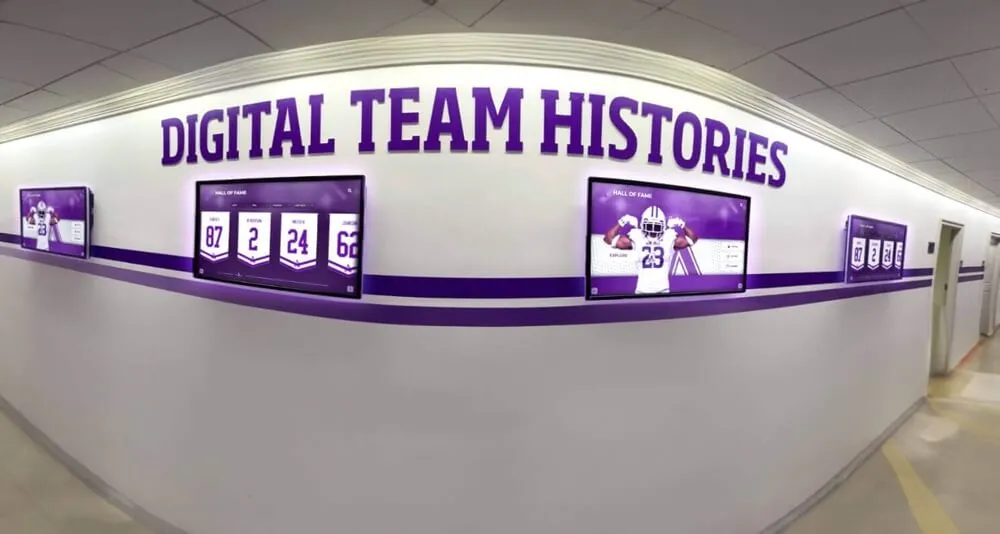
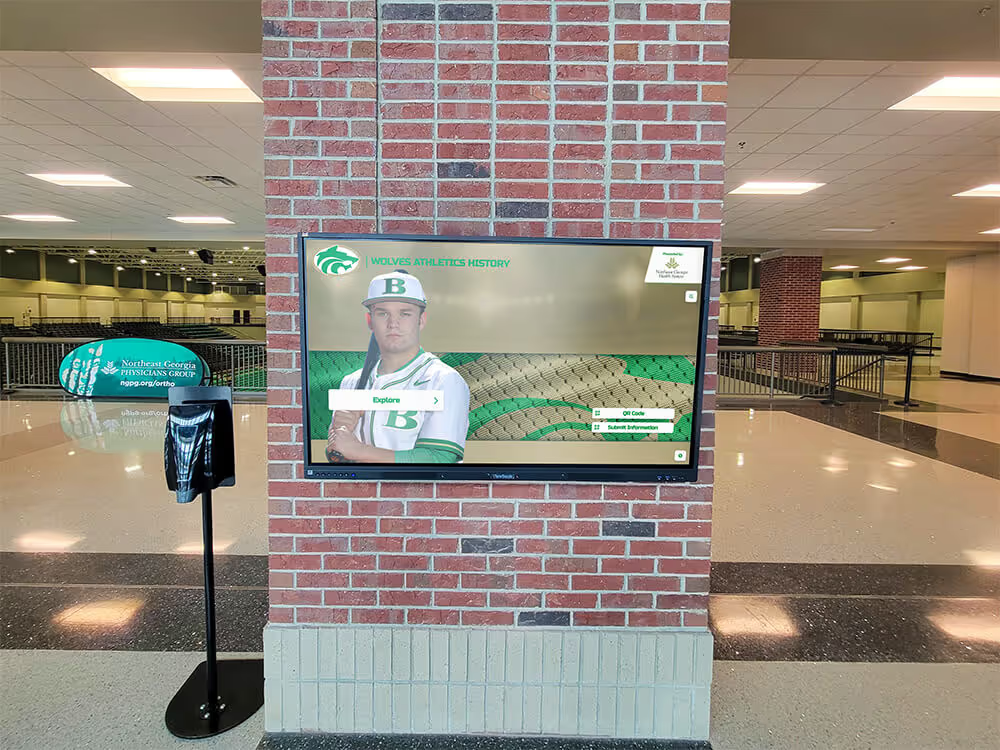
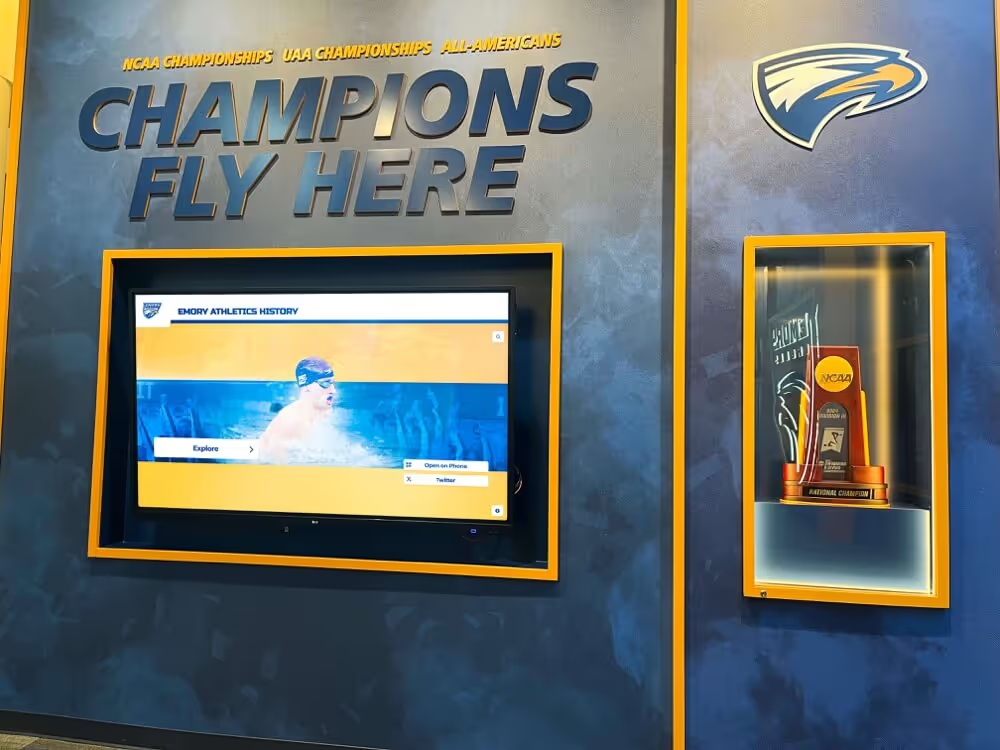
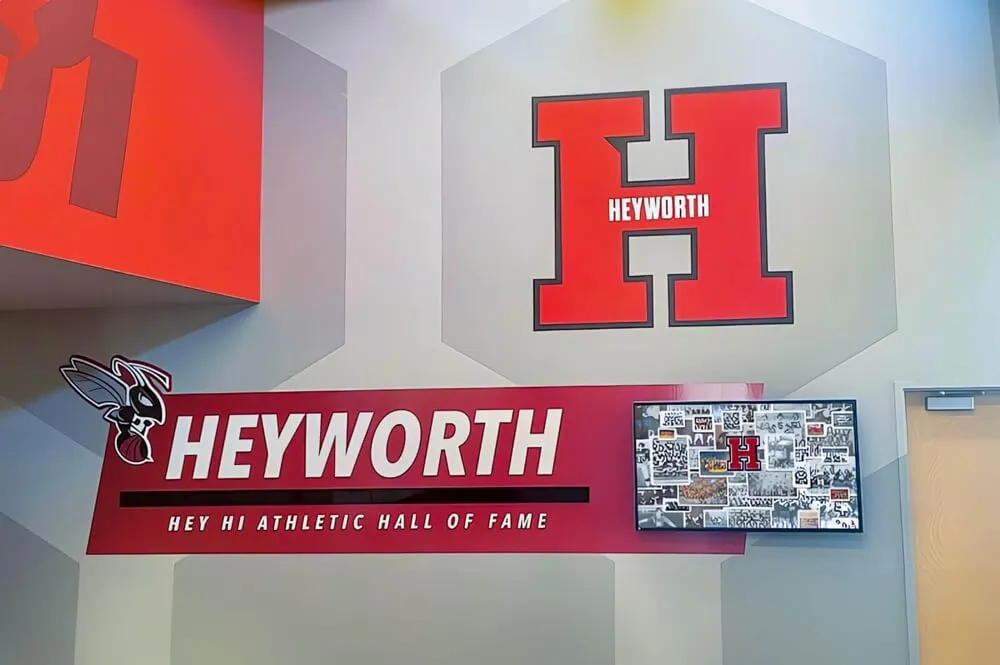
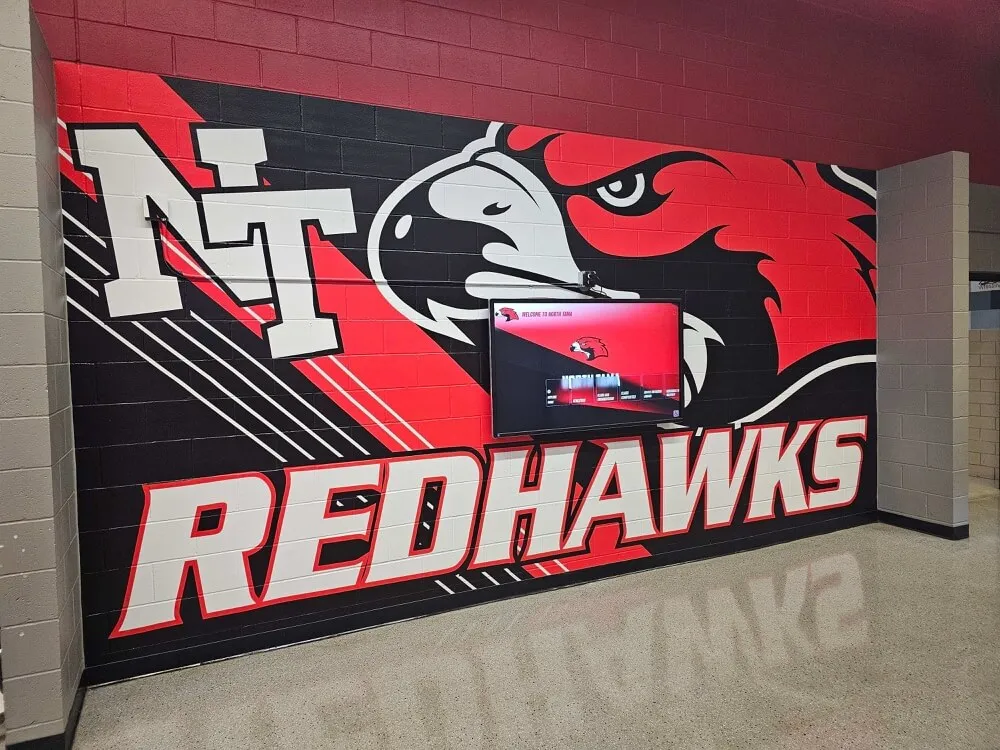
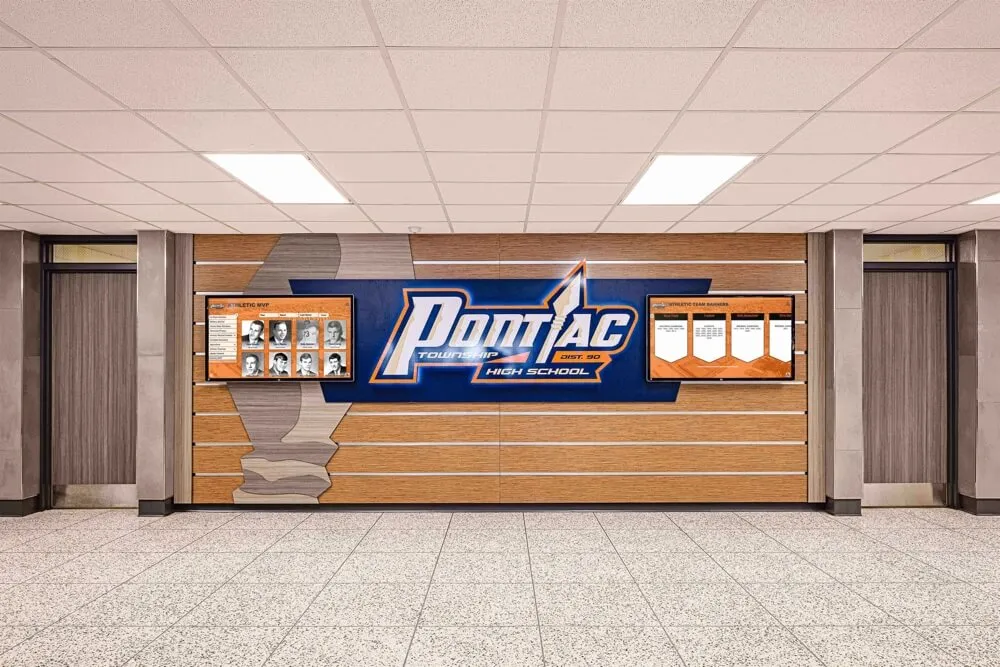
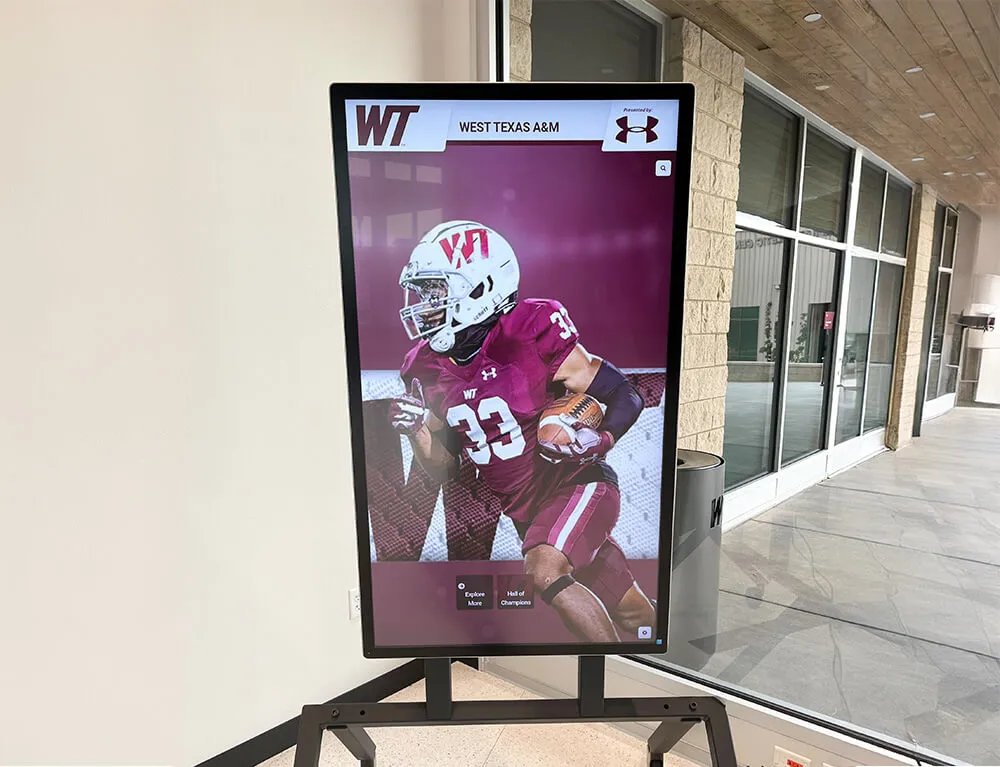
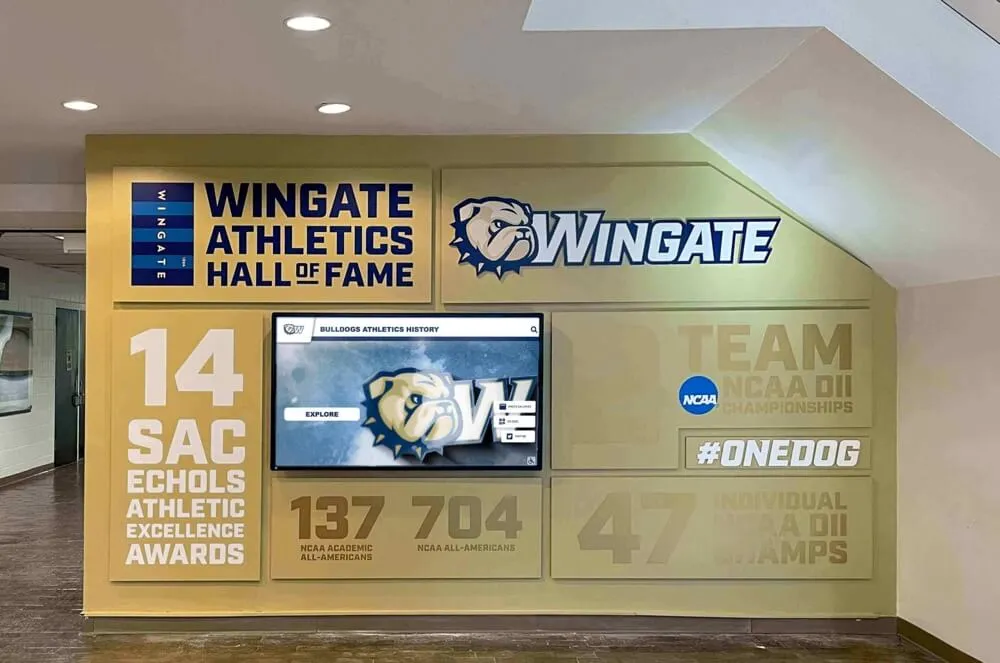
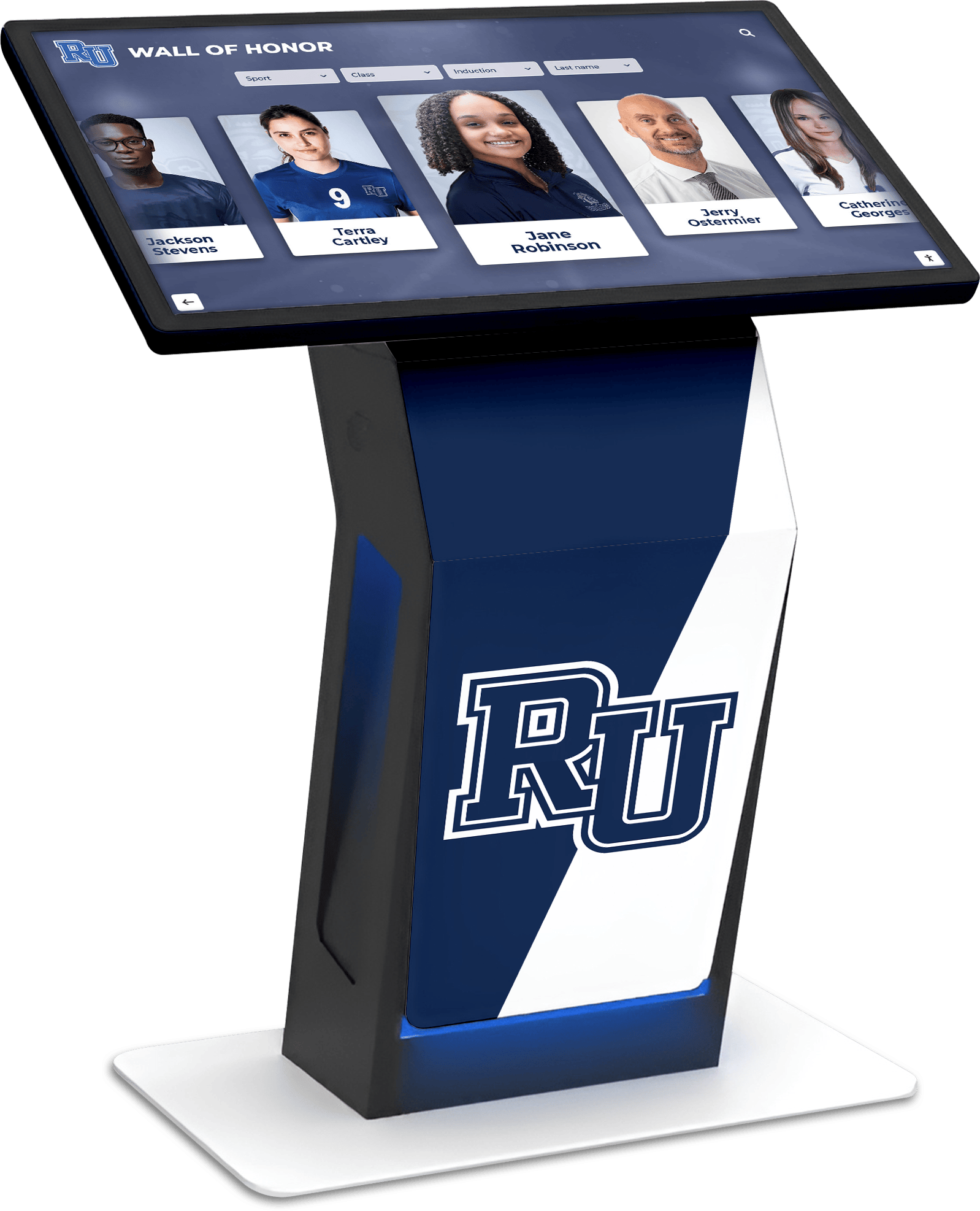
Digital hall of fame displays provide interactive recognition experiences that engage visitors while honoring unlimited contributors and achievements
Understanding Digital Halls of Fame: Definition and Core Components
Digital halls of fame represent a fundamental shift from traditional recognition methods to technology-enabled celebration platforms that overcome physical limitations while enhancing visitor engagement.
What Digital Halls of Fame Are
A digital hall of fame is an interactive recognition system combining touchscreen display hardware with cloud-based content management software to showcase and celebrate donors, athletes, alumni, employees, or any group deserving institutional recognition. Unlike traditional physical plaques or trophy cases with fixed capacity, digital systems accommodate unlimited honorees through searchable databases, rich multimedia profiles, and dynamic content that updates instantly without physical modification.
At their core, digital halls of fame consist of three essential components working together to create comprehensive recognition experiences:
Commercial-Grade Touchscreen Displays
Physical hardware provides the visitor-facing interface through which people explore recognition content. Commercial touchscreen displays designed for continuous public use typically range from 43 to 75 inches, mounted either on walls or integrated into freestanding kiosks. These displays feature durable glass surfaces withstanding daily touch interaction, high-resolution screens ensuring readability, and computing systems powerful enough to deliver smooth multimedia experiences.
Unlike consumer televisions or computer monitors, commercial displays are engineered for 16+ hours of daily operation in public environments where numerous visitors interact throughout the day. This reliability ensures recognition displays remain functional year after year without frequent hardware replacement.
Cloud-Based Content Management Platforms
Backend software systems enable organizations to create, organize, and publish recognition content to touchscreen displays. Modern platforms provide web-based interfaces allowing authorized staff to manage content from any internet-connected device without technical expertise. Administrators can add new honorees, upload photos and videos, organize content into categories, and update information instantly with changes appearing immediately on physical displays.
Cloud architecture eliminates the need for on-site servers while ensuring content remains synchronized across multiple displays if organizations install recognition systems in various locations. This accessibility proves particularly valuable when volunteer leadership transitions or staff members need to manage recognition remotely.
Interactive Recognition Content
The digital profiles, multimedia assets, and information architecture that bring recognition to life comprise the third essential component. Content includes individual profiles for each honoree, photographs and biographical information, achievement summaries and impact narratives, video testimonials and historical documentation, searchable indexes enabling quick discovery, and categorization systems organizing recognition by type, year, or campaign.
Quality content transforms digital halls of fame from simple electronic name listings into engaging storytelling platforms that honor contributors meaningfully while preserving institutional history comprehensively.
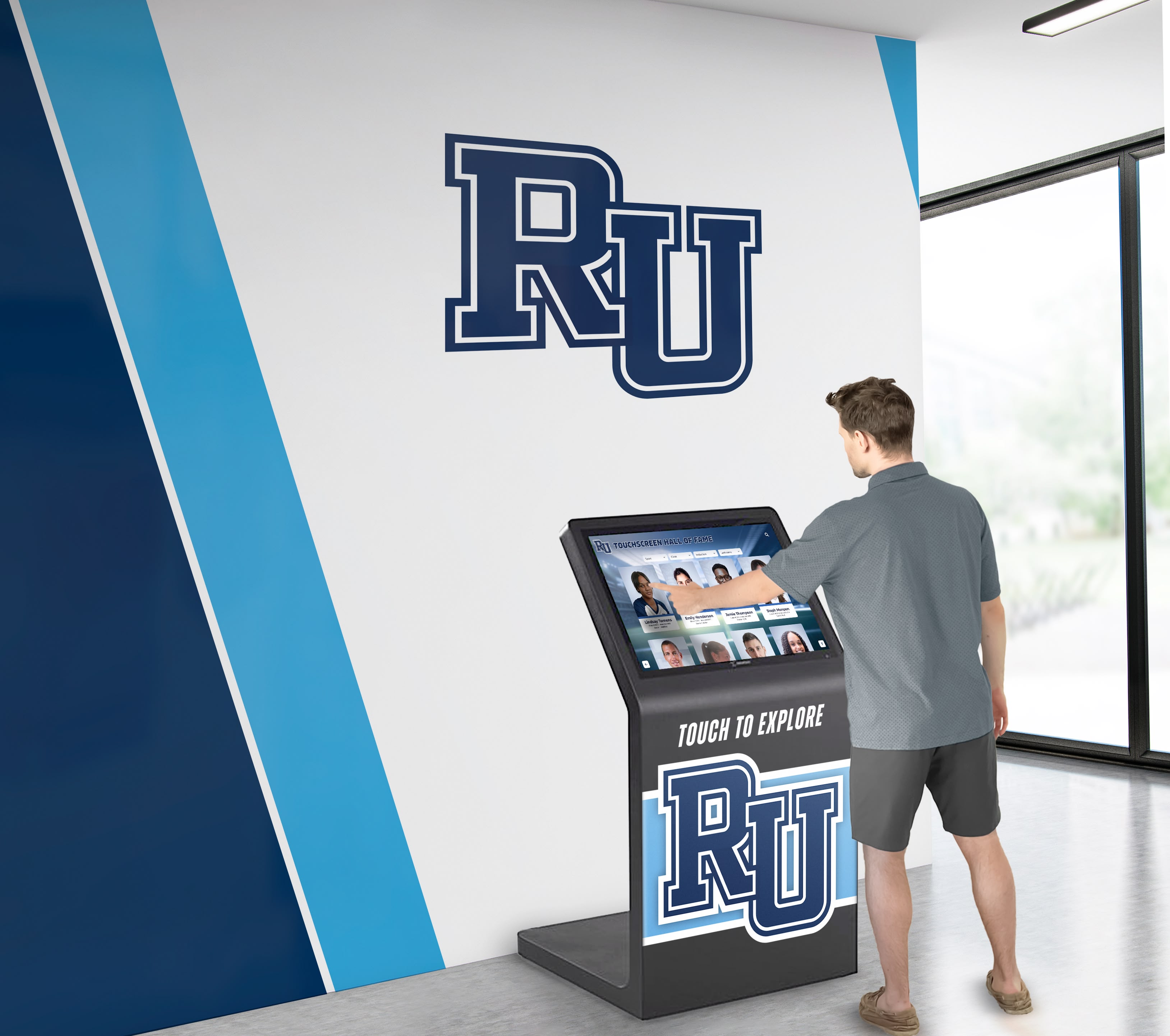
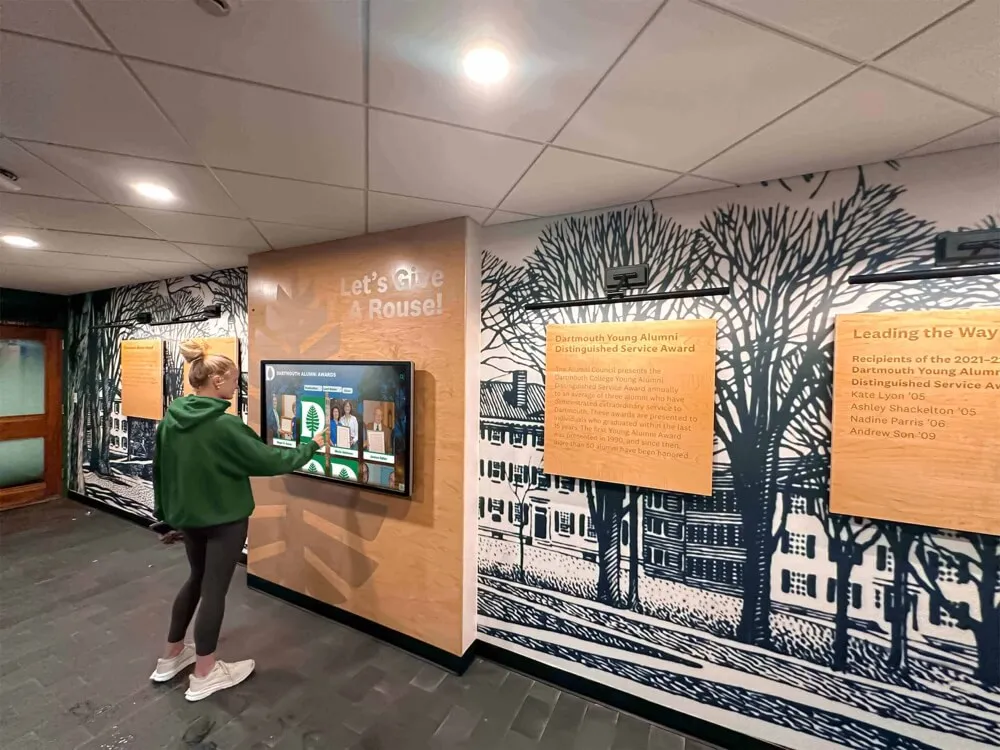
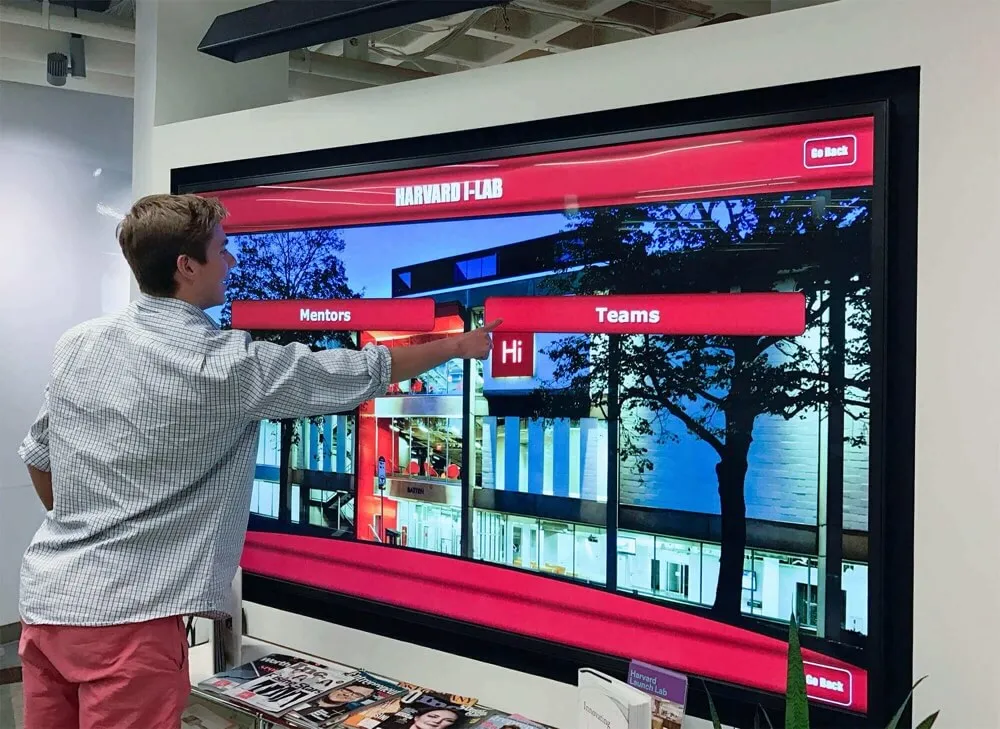
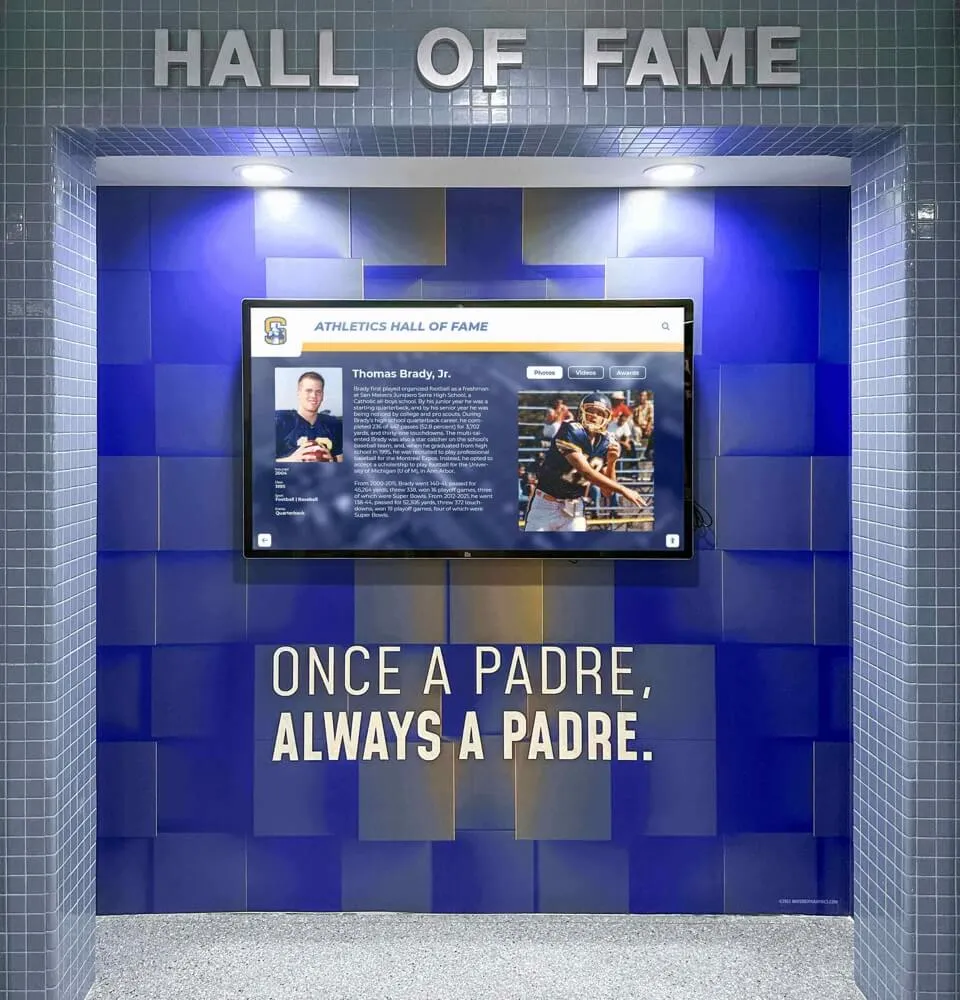
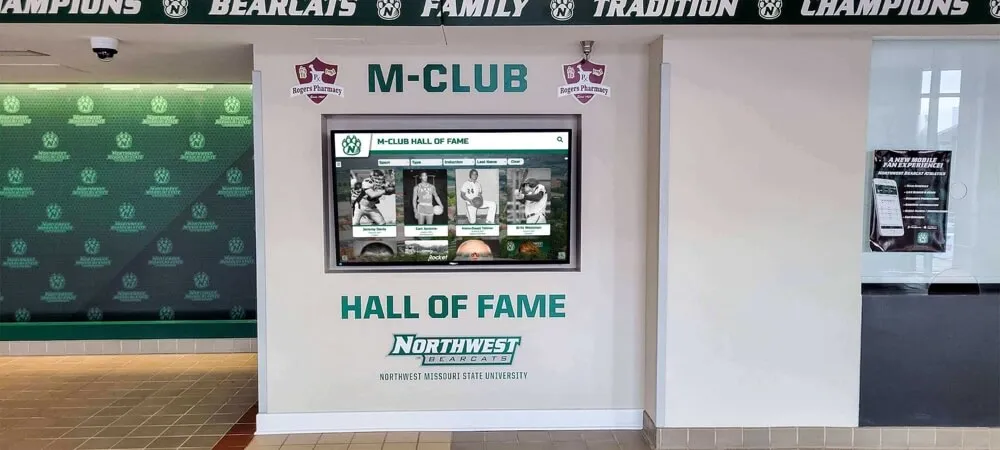
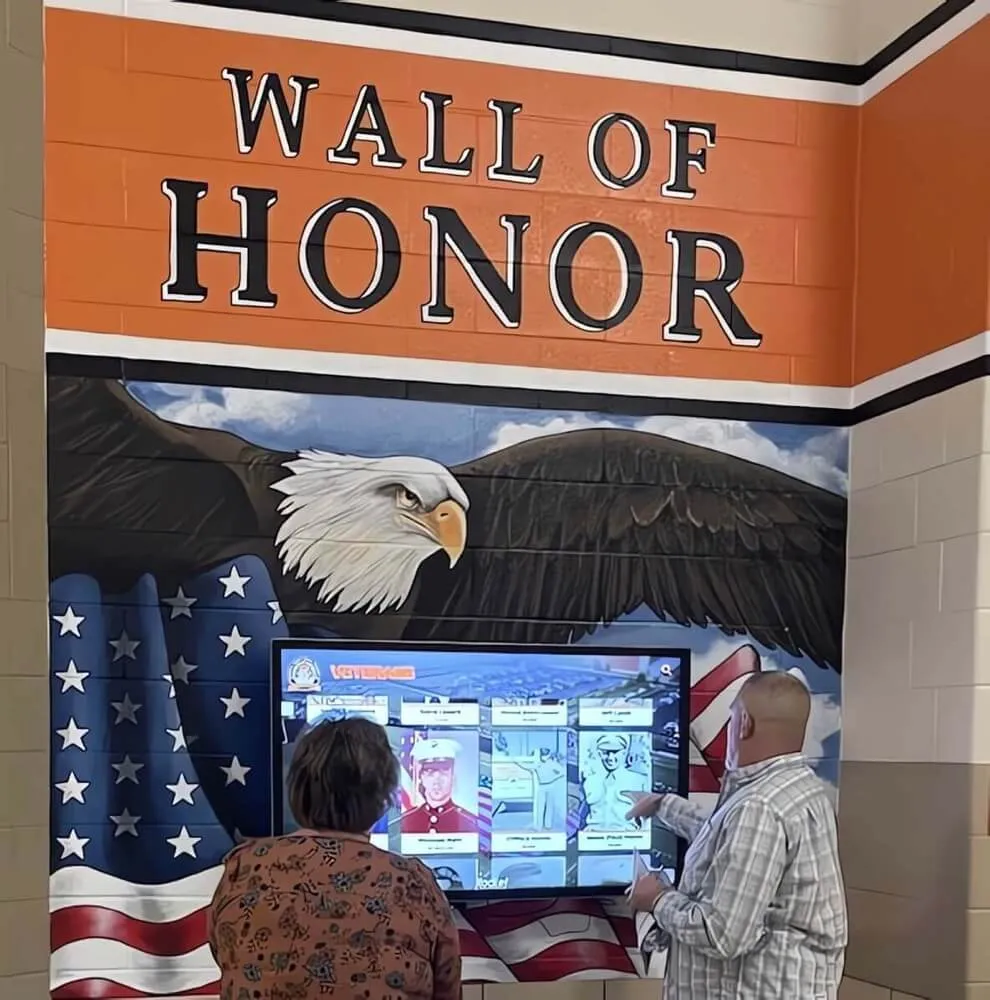
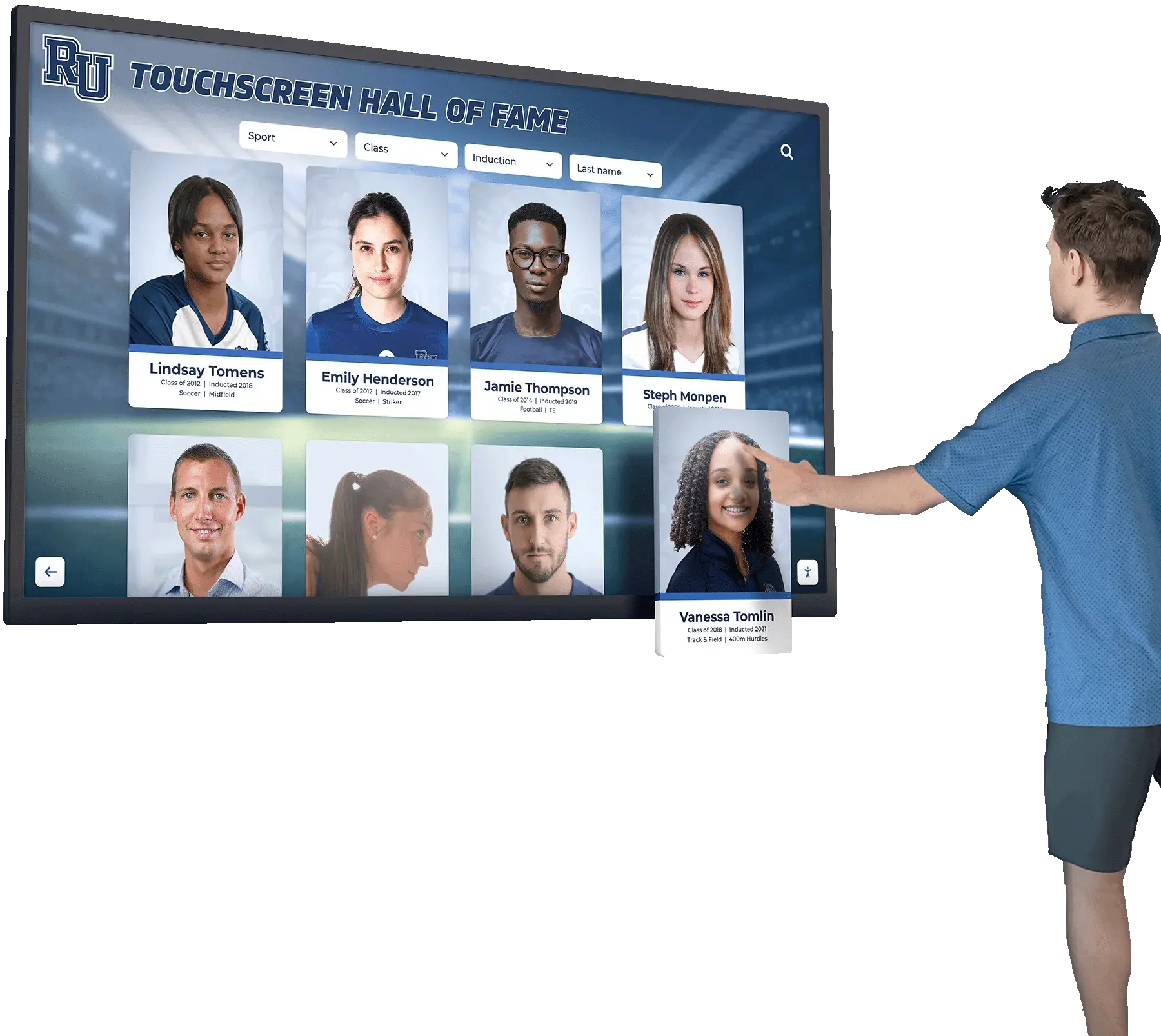
Intuitive touchscreen interfaces enable visitors to independently explore recognition content and discover specific honorees
How Digital Halls of Fame Differ from Traditional Recognition
Understanding key differences between digital and traditional recognition helps organizations evaluate whether modern approaches align with their stewardship goals and institutional needs.
Capacity and Scalability
Traditional donor walls and trophy cases face absolute physical limits. A typical brass plaque wall accommodates 50-200 names before running out of space. Adding capacity requires expanding to new wall sections, removing historical recognition, or redesigning entire installations at significant expense. These constraints force organizations to make difficult decisions about whose contributions warrant visible recognition.
Digital halls of fame eliminate capacity constraints entirely. Single touchscreen displays showcase unlimited honorees through scrollable lists, searchable databases, and organized categories. Organizations can recognize every donor regardless of gift size, celebrate all championship teams rather than only recent winners, and preserve complete institutional histories without ever running out of space.
This unlimited capacity fundamentally changes recognition philosophy from selective showcase highlighting only top contributors to comprehensive inclusion honoring every supporter appropriately regardless of giving level or achievement magnitude.
Update Speed and Flexibility
Adding names to traditional brass donor walls requires weeks of lead time for engraving services, hundreds or thousands of dollars per addition, physical removal and reinstallation of modified plaques, and facility access for installation work. This cumbersome process often creates months-long gaps between gift receipt and public recognition, diminishing acknowledgment impact.
Digital recognition updates instantly through cloud-based management platforms. Authorized staff can add new donors within minutes of receiving gifts, correct errors immediately without reinstallation costs, reorganize content as recognition programs evolve, and schedule updates to appear on specific dates coordinating with campaigns or events.
According to nonprofit technology research, organizations implementing digital recognition report 90% reduction in time spent maintaining donor acknowledgment compared to traditional physical systems requiring manual updates.
Content Richness and Storytelling Capability
Brass plaques communicate minimal information: typically names, giving levels, and perhaps years. This limited format provides basic acknowledgment without explaining what inspired contributions, documenting impact achieved, or connecting donors to institutional mission beyond transactional recognition.
Digital profiles enable comprehensive storytelling through high-resolution photographs personalizing recognition, biographical narratives explaining donor connections to institutions, video testimonials sharing motivations in donors’ own voices, impact documentation showing what contributions accomplished, historical timelines connecting current support to institutional legacy, and family stories honoring multi-generational philanthropy.
This rich content creates emotional connections that inspire continued engagement while providing meaningful recognition honoring not just what donors gave but why they support institutional missions.

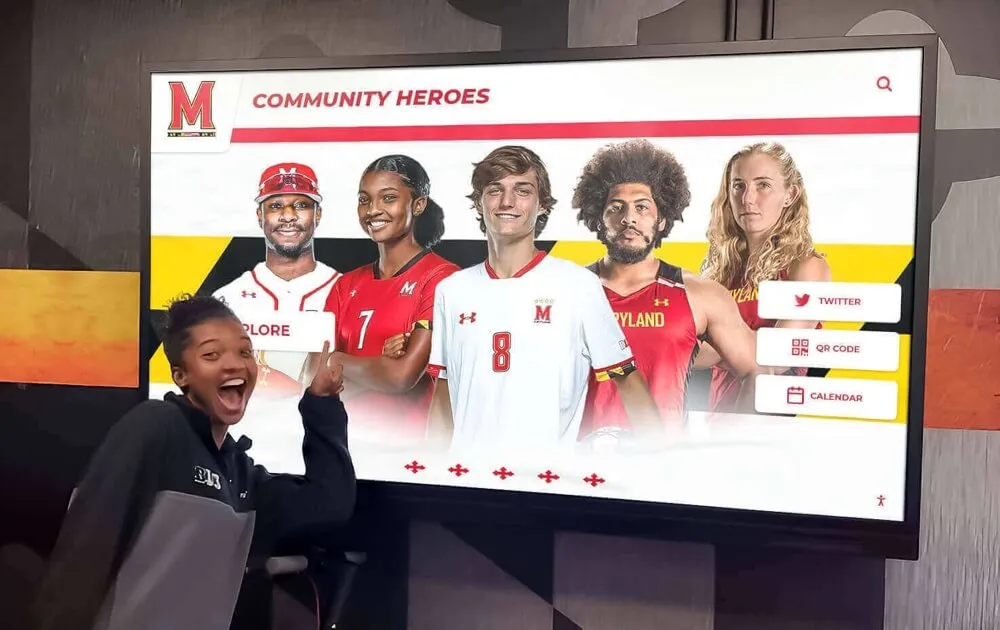
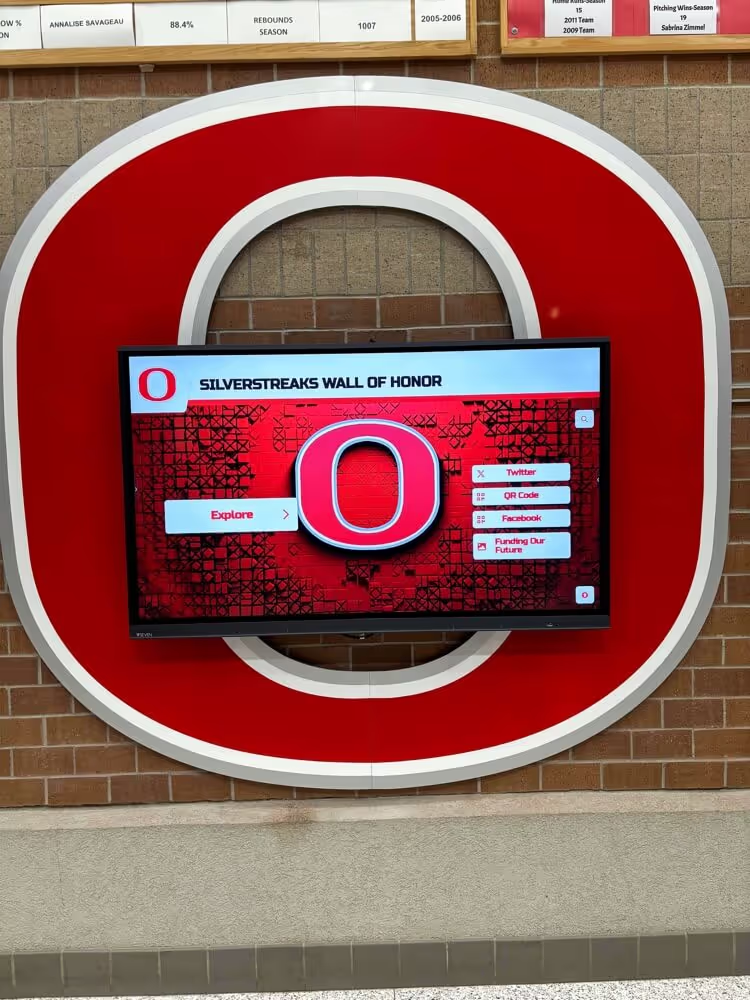
Interactive selection enables visitors to explore detailed profiles, view statistics, and discover achievement stories
Accessibility and Reach
Traditional recognition remains confined to physical locations accessible only during facility hours. Distant alumni, remote donors, and community members unable to visit campus never experience the recognition their contributions earned. This limited accessibility reduces acknowledgment impact while preventing supporters from sharing their honored recognition with family and professional networks.
Modern digital halls of fame extend recognition globally through web-based companion displays accessible from any device, mobile-responsive interfaces ensuring smartphone access, shareable profile links donors can distribute to personal networks, social media integration amplifying recognition visibility, and 24/7 availability versus limited facility access.
This expanded reach transforms recognition from location-bound acknowledgment to globally accessible celebration that donors can experience and share regardless of geographic distance from physical installations.
Primary Applications: Who Uses Digital Halls of Fame and Why
Organizations across sectors implement digital recognition for diverse purposes requiring different content approaches and strategic frameworks.
Donor Recognition and Stewardship
The most common application celebrates philanthropic support across all giving levels while supporting ongoing fundraising priorities.
Capital Campaign Donor Walls
Organizations conducting major fundraising initiatives implement digital recognition to showcase campaign participation through comprehensive donor listings organized by recognition tiers, real-time campaign progress visualization showing momentum, impact documentation demonstrating what contributions will achieve, naming rights recognition for facilities and endowments, and flexible acknowledgment accommodating pledge fulfillment over multiple years.
Digital platforms enable campaign progress displays that traditional static walls cannot provide, creating urgency through live fundraising thermometers showing advancement toward goals while celebrating community participation inspiring additional giving.
Annual Giving Society Recognition
Sustained supporters who contribute year after year deserve ongoing acknowledgment beyond one-time recognition. Digital halls of fame honor annual donors through giving society rosters updated each year, multi-year contribution tracking showing commitment duration, cumulative giving totals demonstrating lifetime support, upgrade recognition celebrating increased giving levels, and historical donor lists preserving recognition even after active giving concludes.
This flexible approach accommodates natural giving pattern changes as donor circumstances evolve while maintaining permanent acknowledgment honoring total philanthropic partnership rather than only current-year contributions.
Discover comprehensive approaches to donor recognition displays that celebrate sustained support across multiple years.
Major Gift and Transformational Donor Recognition
Significant contributions warranting premium acknowledgment receive enhanced recognition through comprehensive multimedia profiles with photos and testimonials, video interviews explaining what inspired major gifts, detailed impact narratives documenting transformation gifts enabled, facility naming recognition and historical context, and family legacy preservation honoring multi-generational support.
Digital platforms provide the storytelling capacity major donors deserve while maintaining appropriate recognition hierarchy distinguishing transformational gifts from annual support through profile prominence, content depth, and featured placement.
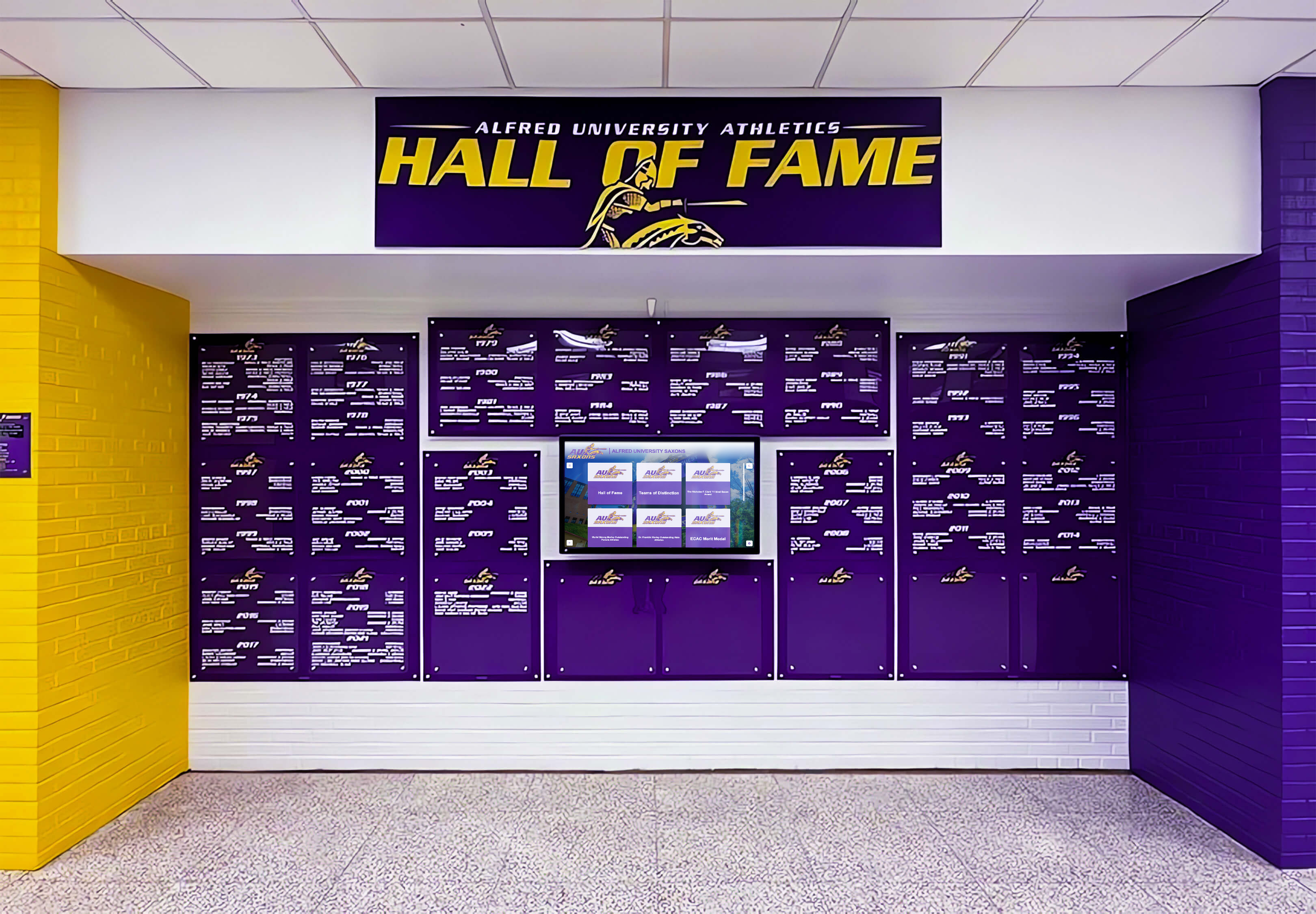
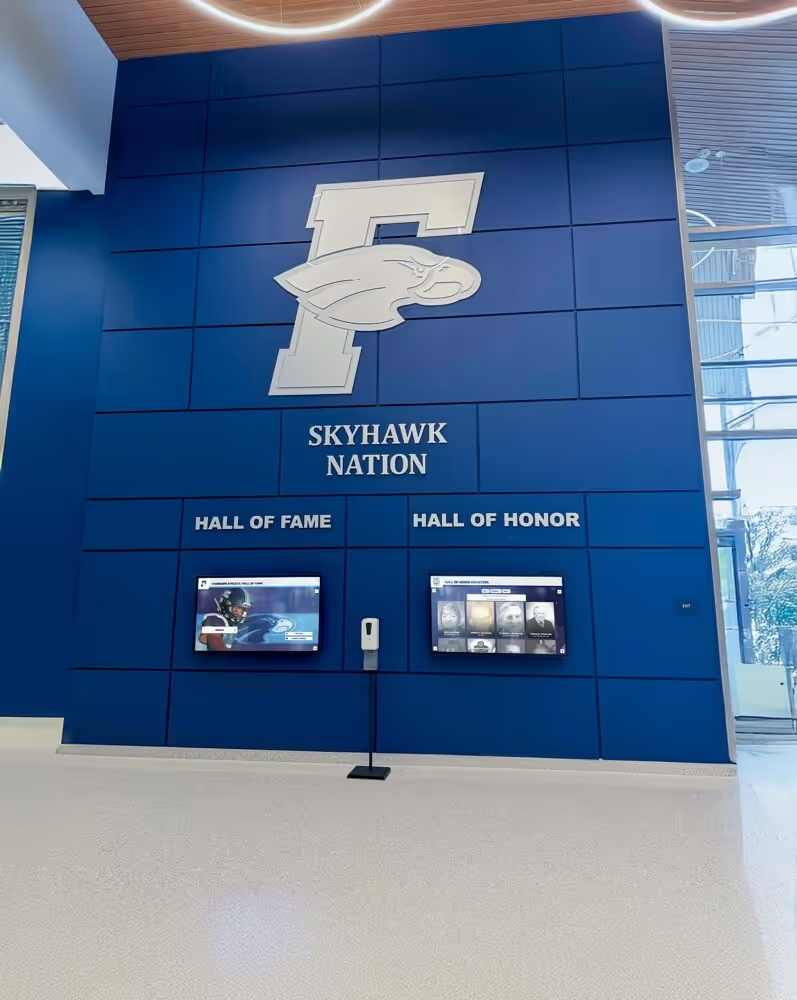
Educational institutions implement digital halls of fame to celebrate donor support while preserving athletic and institutional achievement
Athletic Achievement and Hall of Fame Induction
Schools, universities, and sports organizations implement digital recognition to celebrate competitive excellence and preserve program history.
Hall of Fame Inductee Recognition
Formal athletic halls of fame require systematic recognition for individuals earning this highest honor through detailed career statistics and achievement summaries, championship contributions and team success context, professional and life accomplishments beyond athletics, induction ceremony documentation and celebration photos, and coaching testimonials contextualizing achievements within program history.
Digital platforms accommodate comprehensive inductee profiles that traditional trophy cases cannot provide while enabling searchable databases helping visitors discover specific athletes, explore statistical leaders, or compare achievements across different eras.
Learn about digital hall of fame implementation strategies for athletic recognition programs.
Championship Team Documentation
Beyond individual honors, comprehensive athletic recognition preserves team achievements through season rosters and coaching staff listings, complete game-by-game results and statistics, postseason tournament documentation and bracket advancement, championship celebration photos and video highlights, and team award winners and statistical leaders.
This systematic documentation ensures championship seasons receive permanent recognition while individual athletes appear within team success contexts rather than only through individual statistics.
Individual Milestone Celebration
Athletic excellence includes diverse achievements beyond hall of fame induction deserving systematic recognition through 1,000-point scorers, state record holders, career victory totals, all-state and all-conference selections, academic honors and scholar-athlete recognition, and school record progression showing how standards evolved.
Digital halls of fame accommodate unlimited milestone achievers without space constraints forcing prioritization decisions about whose achievements warrant permanent recognition versus temporary acknowledgment.
Institutional Legacy and Alumni Recognition
Beyond donors and athletes, digital halls of fame preserve broader organizational narratives and celebrate diverse excellence.
Distinguished Alumni Recognition
Educational institutions honor accomplished graduates through professional achievement summaries and career milestones, community service and leadership contributions, institutional connection narratives explaining formative experiences, current updates maintaining relevance as careers evolve, and networking enablement connecting current students with distinguished alumni.
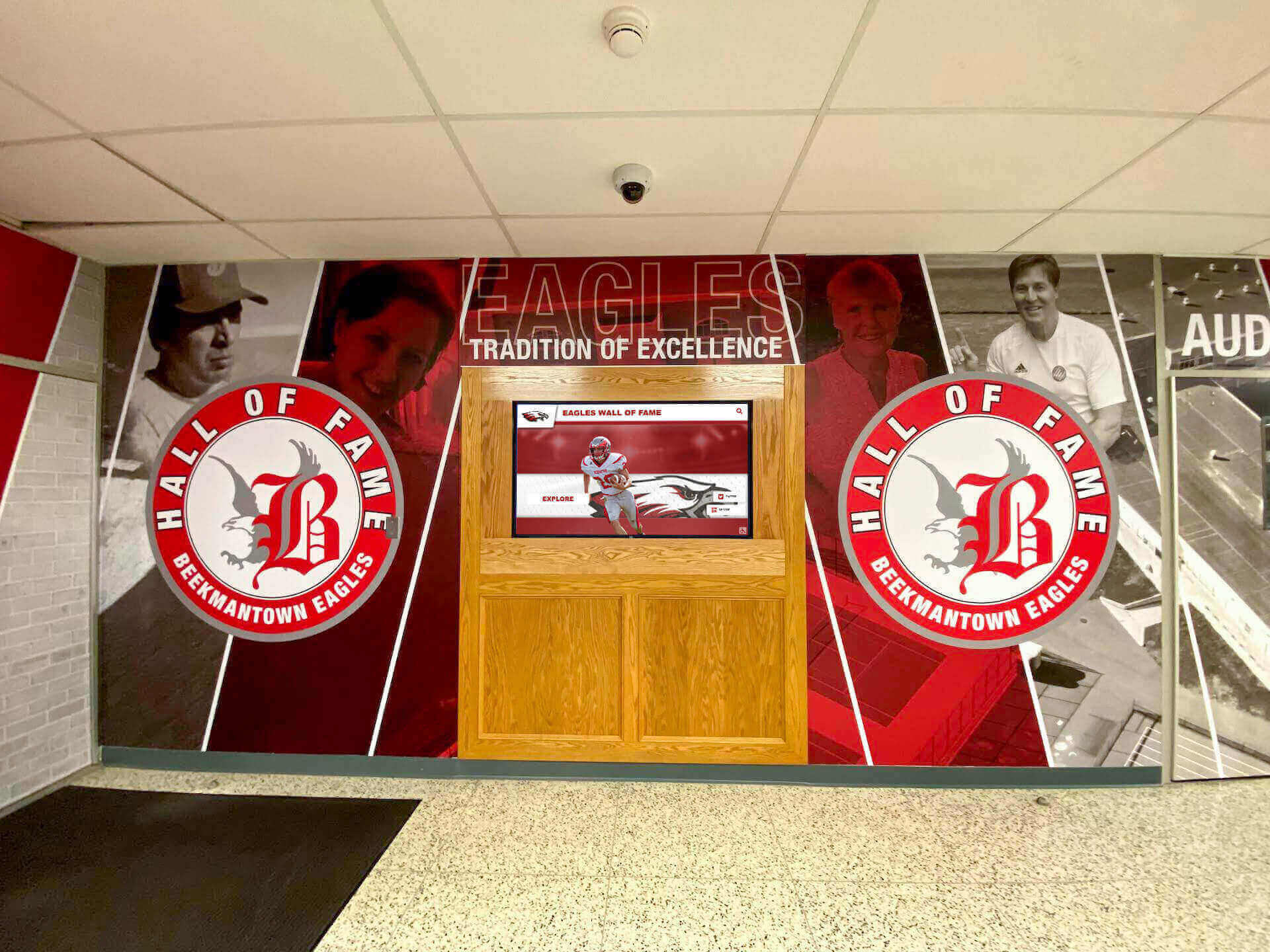
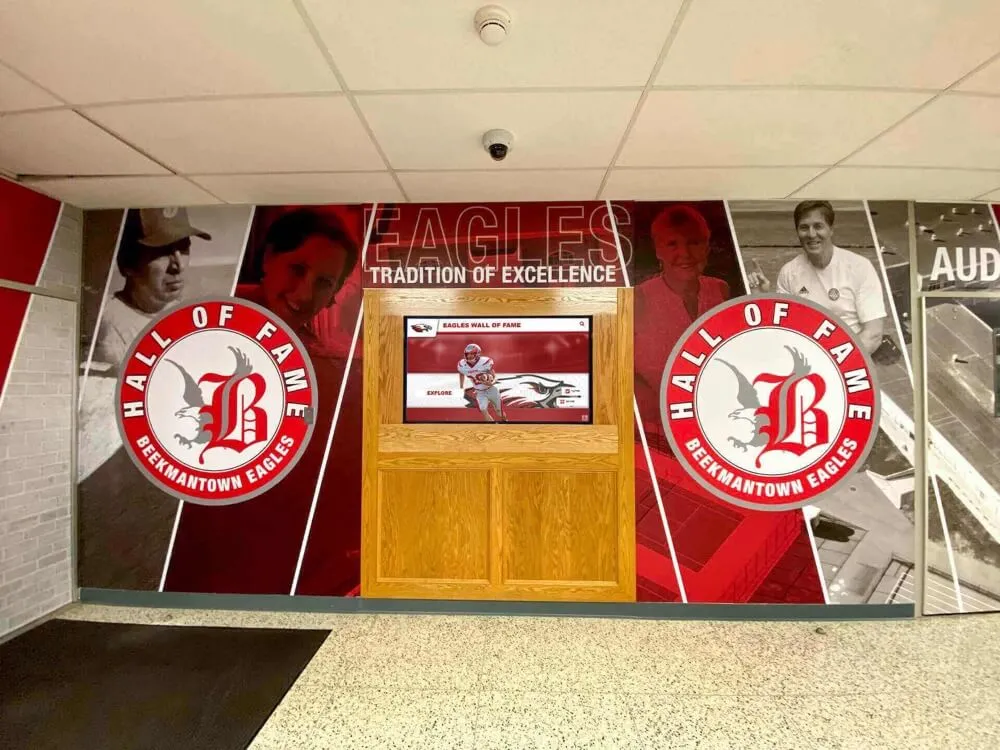
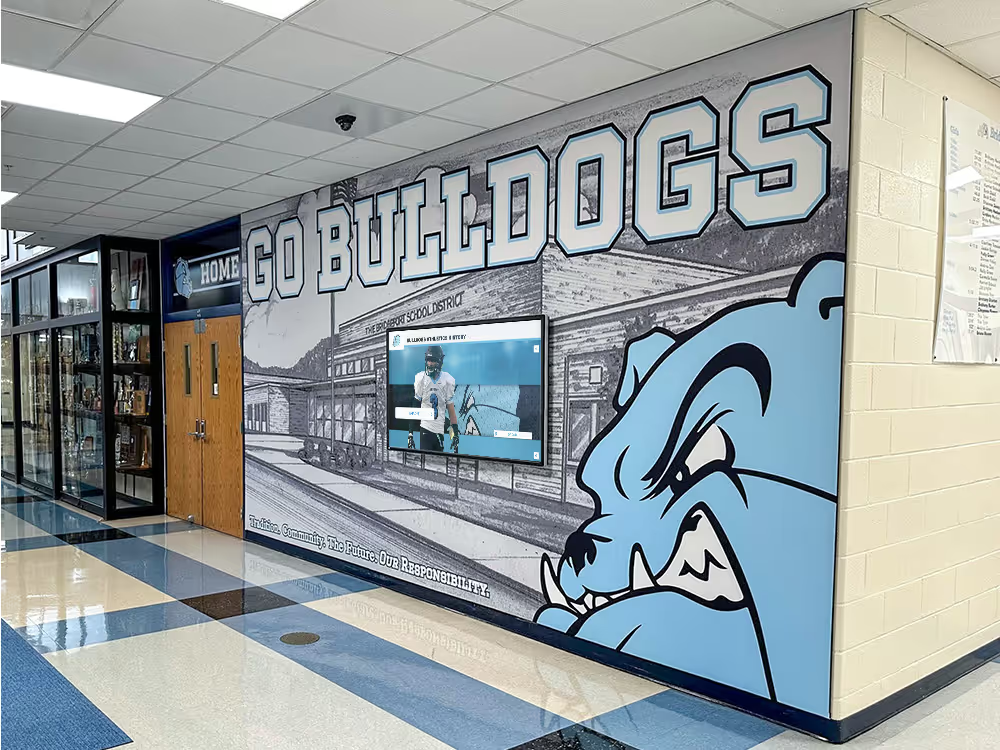
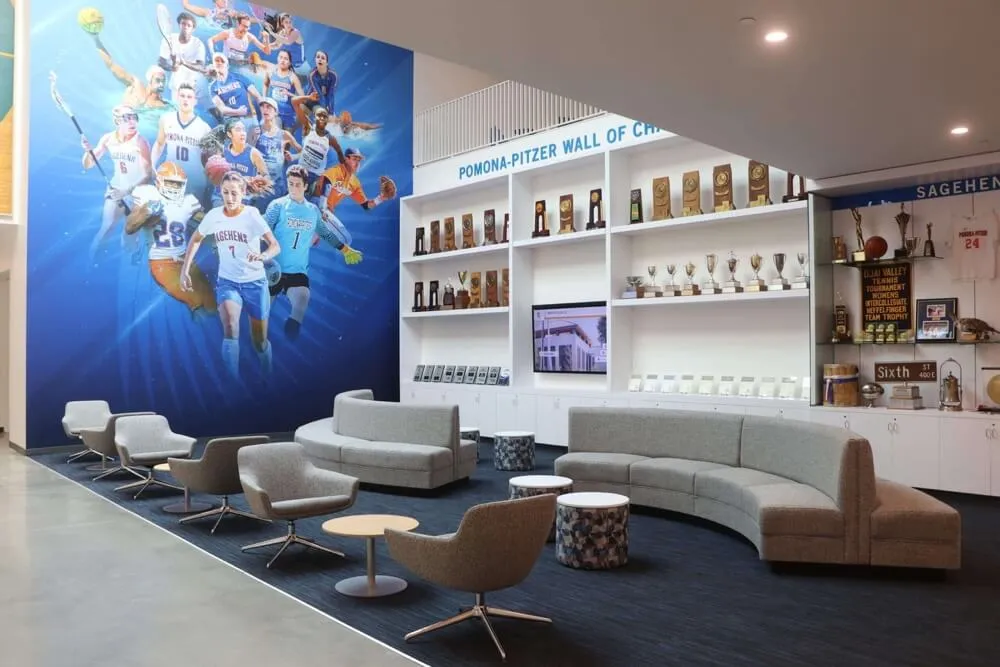
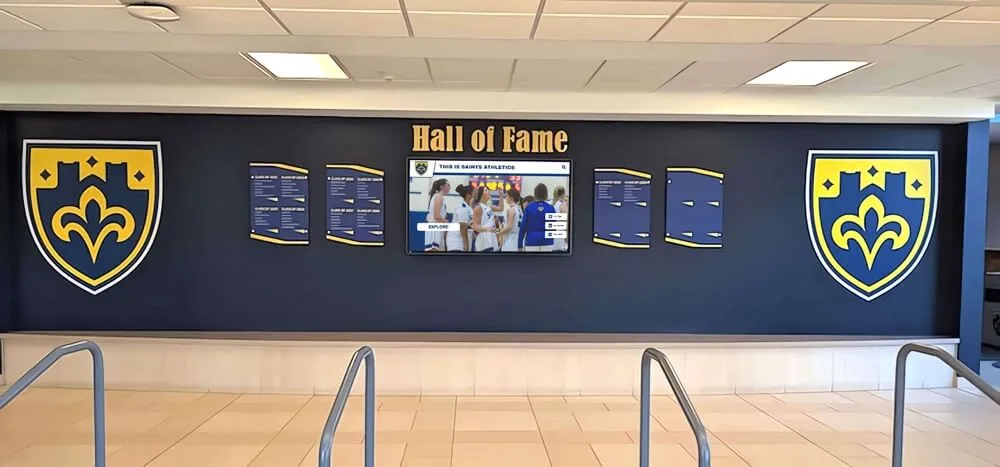
Integrated recognition installations combine digital displays with branded environments creating memorable celebration spaces
Historical Timeline and Institutional Milestones
Organizations preserve institutional evolution through chronological documentation of founding and development, facility construction and campus expansion, leadership transitions and administrative milestones, program launches and academic developments, and community partnership evolution.
These historical narratives strengthen institutional identity while helping current community members understand traditions and legacies they’re continuing through their own participation and support.
Explore how digital tools bring institutional history to life through engaging interactive experiences.
Employee and Faculty Recognition
Beyond external supporters, organizations honor internal community members through service milestone recognition for long-tenured employees, teaching excellence and innovation awards, research achievements and publications, leadership contributions and administrative service, and retirement celebration and legacy preservation.
This comprehensive approach creates recognition cultures where excellence receives systematic acknowledgment regardless of whether contributions come from donors, athletes, faculty, or community partners.
Key Benefits: Why Organizations Implement Digital Halls of Fame
Understanding advantages motivates recognition program modernization while justifying investments in technology infrastructure.
Unlimited Recognition Capacity Eliminates Difficult Prioritization
The most immediate benefit addresses the fundamental limitation traditional recognition faces: space constraints forcing organizations to choose whose contributions receive visible acknowledgment.
Traditional donor walls fill completely within 5-7 years for organizations with active fundraising programs. Once capacity is reached, adding new donors requires expensive wall expansion, redesign of existing installations, or removal of historical recognition—all problematic options creating either significant expense or difficult decisions about whose names disappear to make room for new supporters.
Digital halls of fame eliminate these constraints entirely through database architectures accommodating unlimited honorees, searchable interfaces enabling quick discovery regardless of database size, organized categorization maintaining structure as recognition grows, and consistent user experiences whether showcasing 100 or 10,000 individuals.
This unlimited capacity enables comprehensive inclusion honoring every contributor appropriately rather than creating artificial hierarchies where only top donors receive recognition while smaller but equally committed supporters go unacknowledged because physical space ran out.
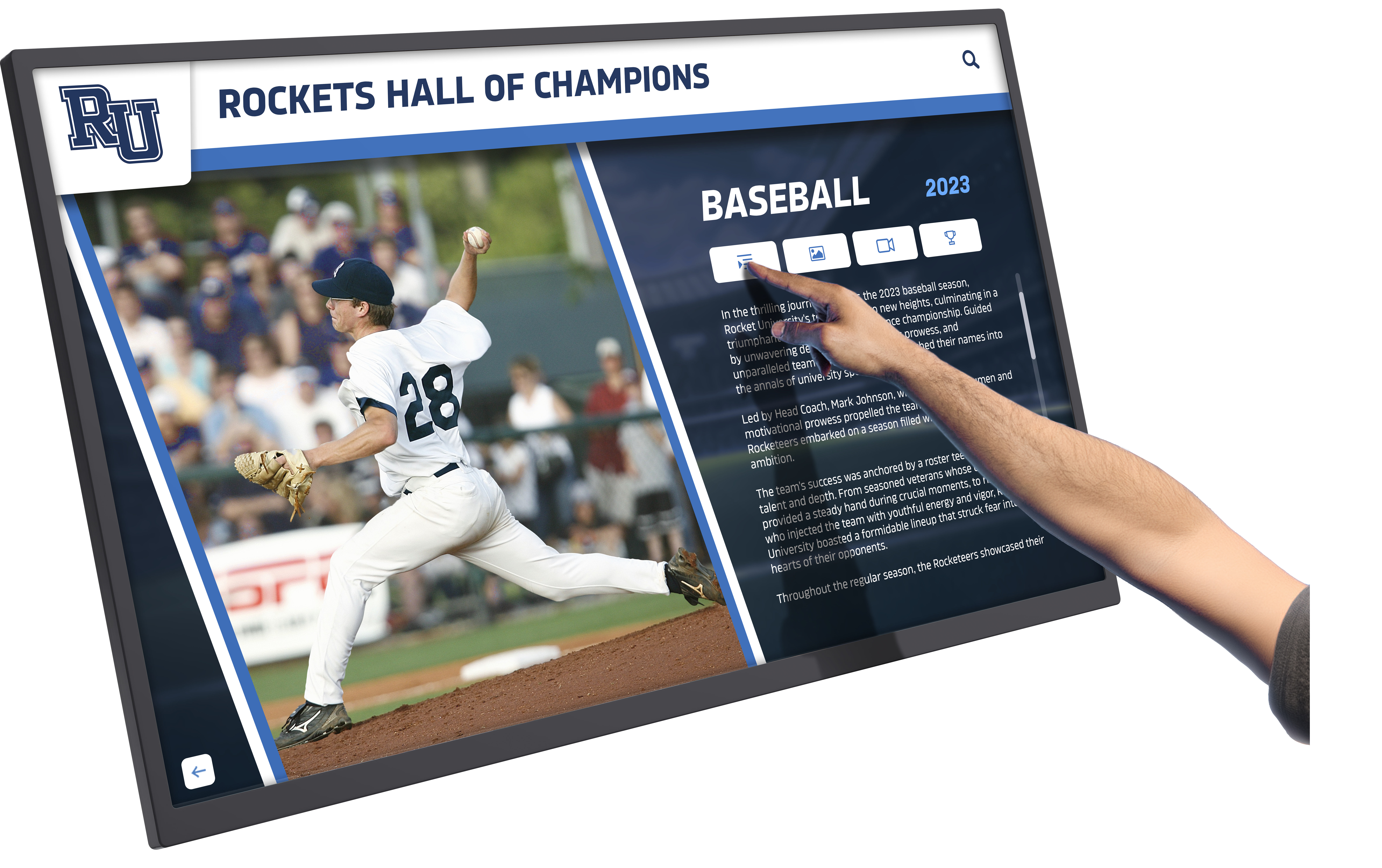
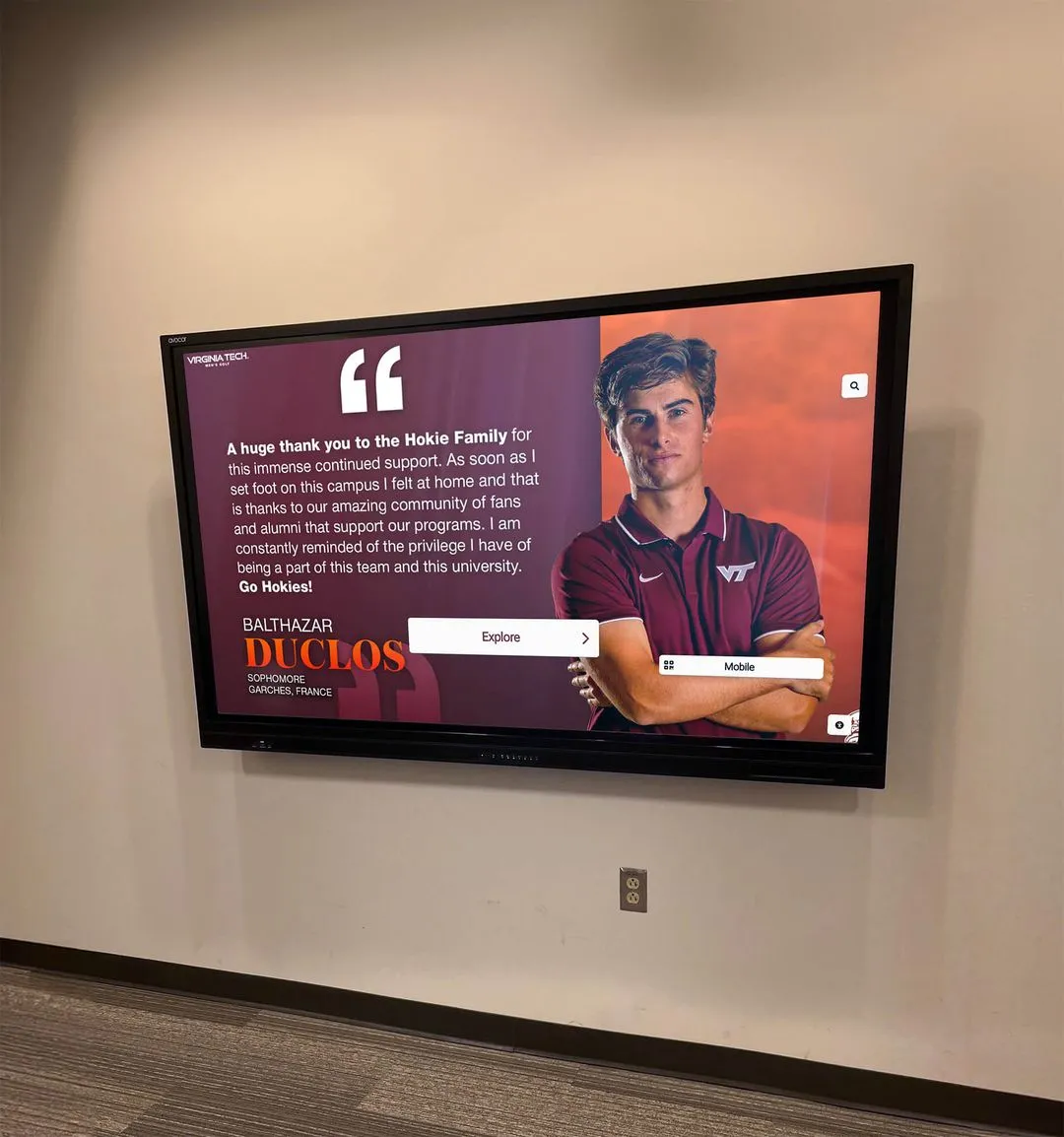
Detailed multimedia profiles celebrate individual achievements through photos, statistics, and biographical narratives
Real-Time Updates Provide Timely Acknowledgment
Traditional recognition processes create frustrating delays between gift receipt and public acknowledgment, diminishing appreciation impact while creating administrative burden for development staff managing physical engraving.
Brass plaque additions typically require 4-8 weeks from order placement to installation completion, cost $500-$2,000 per addition depending on size and complexity, necessitate removal and reinstallation of modified plaques, and require facility access for installation work potentially disrupting operations.
Digital recognition updates occur within minutes through cloud-based management platforms enabling immediate donor addition following gift receipt, error corrections without reinstallation costs, content refreshes maintaining relevance and accuracy, and scheduled publishing coordinating recognition with campaigns or events.
According to fundraising best practices, donor acknowledgment should occur within 48-72 hours of gift receipt to maximize stewardship impact and demonstrate appreciation promptness. Digital recognition enables timely acknowledgment that traditional systems cannot match.
Rich Multimedia Storytelling Creates Meaningful Connections
Brass plaques communicate minimal information creating transactional acknowledgment without explaining motivations, documenting impact, or connecting donors to missions they support beyond financial contribution amounts.
Digital profiles enable comprehensive recognition through professional portrait photography personalizing acknowledgment, biographical narratives explaining institutional connections, video testimonials sharing motivations in honorees’ own voices, impact documentation showing what contributions achieved, historical context connecting current support to institutional legacy, and family stories preserving multi-generational traditions.
This rich storytelling creates emotional resonance that simple name listings cannot achieve while providing meaningful recognition honoring complete individuals rather than reducing supporters to dollar amounts or achievement statistics.
Research from nonprofit engagement platforms indicates that donors receiving rich multimedia recognition demonstrate 25% higher retention rates compared to those receiving only basic acknowledgment, demonstrating measurable stewardship value beyond intangible appreciation benefits.
Global Accessibility Extends Recognition Reach
Traditional physical recognition remains confined to facility locations accessible only during operating hours, limiting who can experience the acknowledgment their contributions or achievements earned.
Modern digital halls of fame extend recognition worldwide through web-based displays accessible from any internet-connected device, mobile-responsive interfaces ensuring smartphone and tablet compatibility, shareable profile URLs donors can distribute to personal networks, social media integration amplifying recognition visibility, and 24/7 availability versus limited facility access.
This expanded reach proves particularly valuable for educational institutions with geographically dispersed alumni communities, nonprofits serving national constituencies, and organizations whose supporters live far from physical facilities. Digital accessibility ensures every supporter can experience and share their recognition regardless of location or ability to visit physical installations.
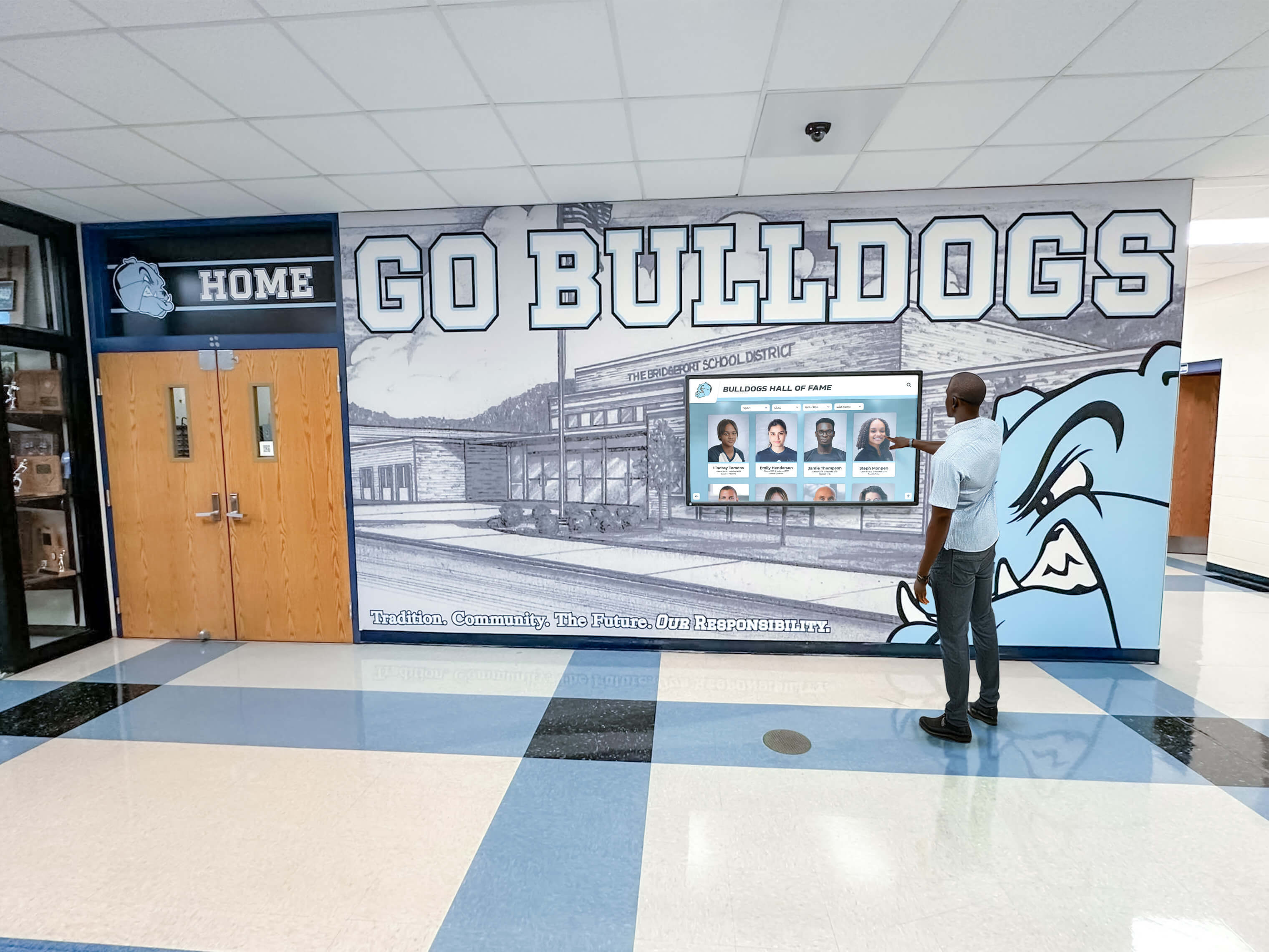
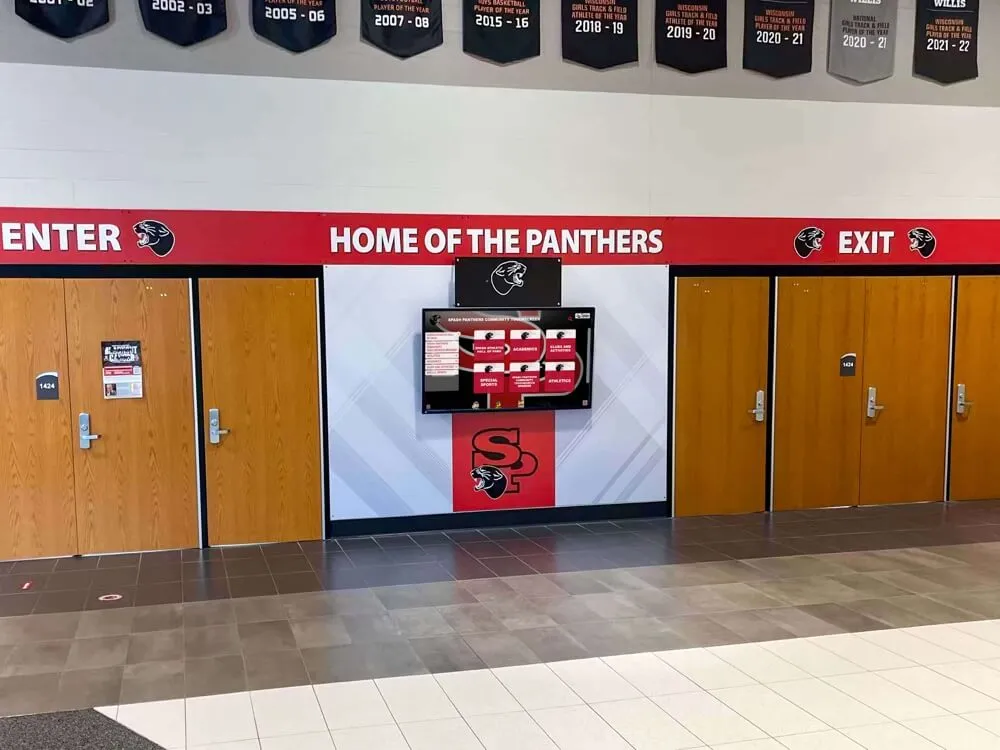
Strategic placement in high-traffic areas ensures recognition displays achieve maximum visibility and visitor engagement
Cost Effectiveness Over Time Despite Initial Investment
While digital hall of fame implementation requires upfront investment in hardware and software platforms, long-term costs favor digital approaches compared to ongoing expenses maintaining traditional recognition.
Traditional brass donor walls typically cost $10,000-$50,000 for initial installation depending on size and design complexity. However, each subsequent update costs $500-$2,000 per addition. Organizations with active fundraising adding 20 new donors annually face $10,000-$40,000 in annual engraving costs—expenses that compound indefinitely as recognition programs grow.
Digital halls of fame require $15,000-$35,000 for comprehensive initial implementation including commercial displays, content management platforms, professional installation, and initial content development. Ongoing costs typically total $2,000-$5,000 annually for software subscriptions, technical support, and periodic content refreshes—but these costs remain consistent regardless of how many new honorees are added.
Organizations report cost parity between digital and traditional approaches within 3-5 years, after which savings compound substantially. Over 10-year periods, digital recognition typically costs 40-60% less than traditional systems requiring continuous engraving expenses.
How Digital Halls of Fame Work: Technology and Implementation
Understanding technical components and implementation processes helps organizations evaluate requirements and plan deployments effectively.
Hardware Components and Display Configurations
Physical infrastructure creates the visitor-facing interface through which recognition content becomes accessible.
Commercial Touchscreen Displays
Purpose-built displays designed for public environments provide reliable operation through commercial-grade LCD panels rated for continuous operation, capacitive touch technology supporting multi-finger gestures, anti-glare glass reducing reflection in bright environments, 4K resolution ensuring crisp text readability, and integrated computing systems powering interactive experiences.
Display sizes typically range from 43 inches for intimate settings to 75 inches for large lobbies, with selection depending on viewing distances, spatial constraints, and expected visitor patterns. Portrait orientation suits tall narrow wall spaces while landscape mounting works better in wide areas.
Mounting Options and Installation Methods
Organizations can implement digital halls of fame through various physical configurations including wall-mounted displays integrated into existing recognition walls, freestanding kiosks providing self-contained recognition stations, multi-display installations creating comprehensive recognition environments, and hybrid systems combining digital displays with traditional physical elements.
Freestanding kiosks work well in open lobbies and atriums where wall space is limited, while wall-mounted installations integrate more seamlessly into existing architectural contexts. Professional audiovisual installation ensures proper mounting, cable management, and accessibility compliance.
Computing Infrastructure and Connectivity
Digital displays require adequate computing power and network connectivity through dedicated media players or integrated computers, wired ethernet connections providing reliable data transfer, wireless connectivity backup where wired connections prove impractical, adequate bandwidth supporting video content and high-resolution imagery, and remote management capabilities enabling off-site updates and troubleshooting.
Infrastructure adequacy determines long-term reliability—underpowered computing or unreliable connectivity creates frustrating user experiences and complicates content management.
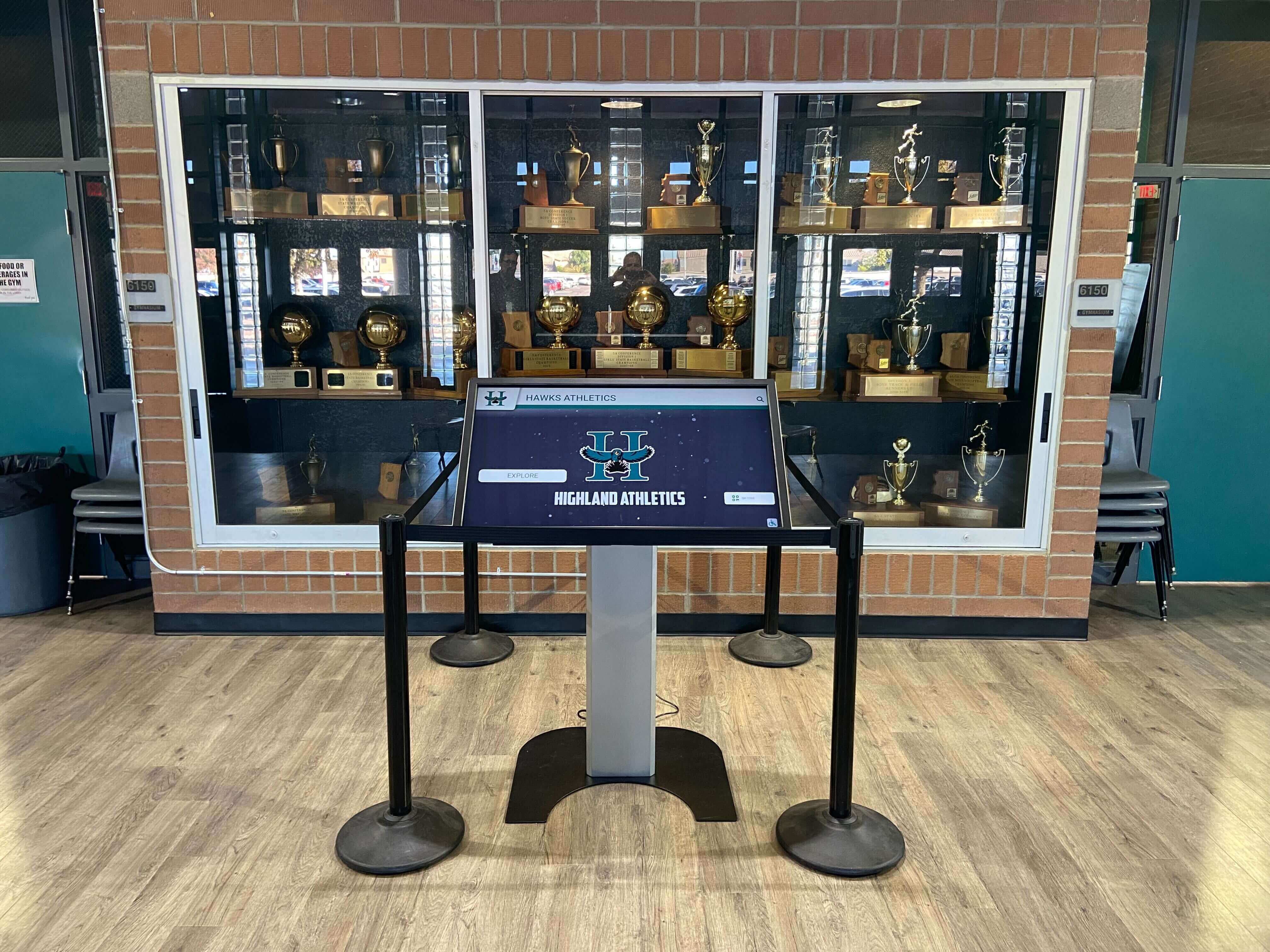
Integrated installations combine digital recognition with existing trophy cases creating comprehensive celebration spaces
Cloud-Based Content Management Platforms
Backend software systems enable organizations to create, organize, and publish recognition content efficiently.
Administrative Interfaces and User Experience
Modern platforms provide intuitive content management through web-based dashboards accessible from any device, drag-and-drop content builders requiring no technical expertise, bulk import tools handling historical data efficiently, role-based permissions enabling appropriate staff access, and preview functionality showing changes before publication.
Solutions like Rocket Alumni Solutions provide purpose-built platforms designed specifically for educational and nonprofit recognition contexts, offering recognition-specific features that generic digital signage software lacks.
Content Organization and Structure
Effective platforms enable flexible recognition organization through hierarchical categorization by recognition type, year-based organization showing historical progression, giving level segmentation for donor recognition, achievement milestone grouping for athletic displays, and custom taxonomies matching institutional needs.
Well-structured organization ensures visitors can discover specific honorees quickly while browsing broader categories exploring complete recognition programs.
Publishing Workflows and Update Processes
Sustainable management requires efficient content workflows through standardized templates ensuring consistent recognition formats, scheduled publishing coordinating recognition with events, approval processes ensuring appropriate review, revision tracking documenting content changes, and automated backups protecting against data loss.
These workflow features transform content management from technical challenges into straightforward administrative tasks achievable by development or advancement staff without specialized training.
Web Integration and Mobile Access
Modern recognition extends beyond physical displays to online accessibility expanding reach and engagement.
Companion Web Displays
Digital halls of fame should offer web-accessible versions through responsive design ensuring cross-device compatibility, searchable interfaces matching physical display functionality, direct linking enabling profile sharing, website embedding integrating recognition into institutional web presence, and synchronized content maintaining consistency between physical and web displays.
Web accessibility proves particularly valuable for institutions with large, geographically distributed constituent communities unable to visit physical facilities regularly but deserving recognition access.
Social Media Integration and Sharing
Enable recognition amplification through shareable profile URLs with social media meta tags, embedded share buttons encouraging distribution, celebration post generation for institutional accounts, hashtag strategies connecting recognition to broader campaigns, and engagement tracking measuring sharing and reach.
Social amplification extends recognition visibility far beyond physical display locations while enabling donors and honorees to celebrate their recognition with personal and professional networks.
Discover how mobile hall of fame companions extend recognition accessibility through smartphone applications.
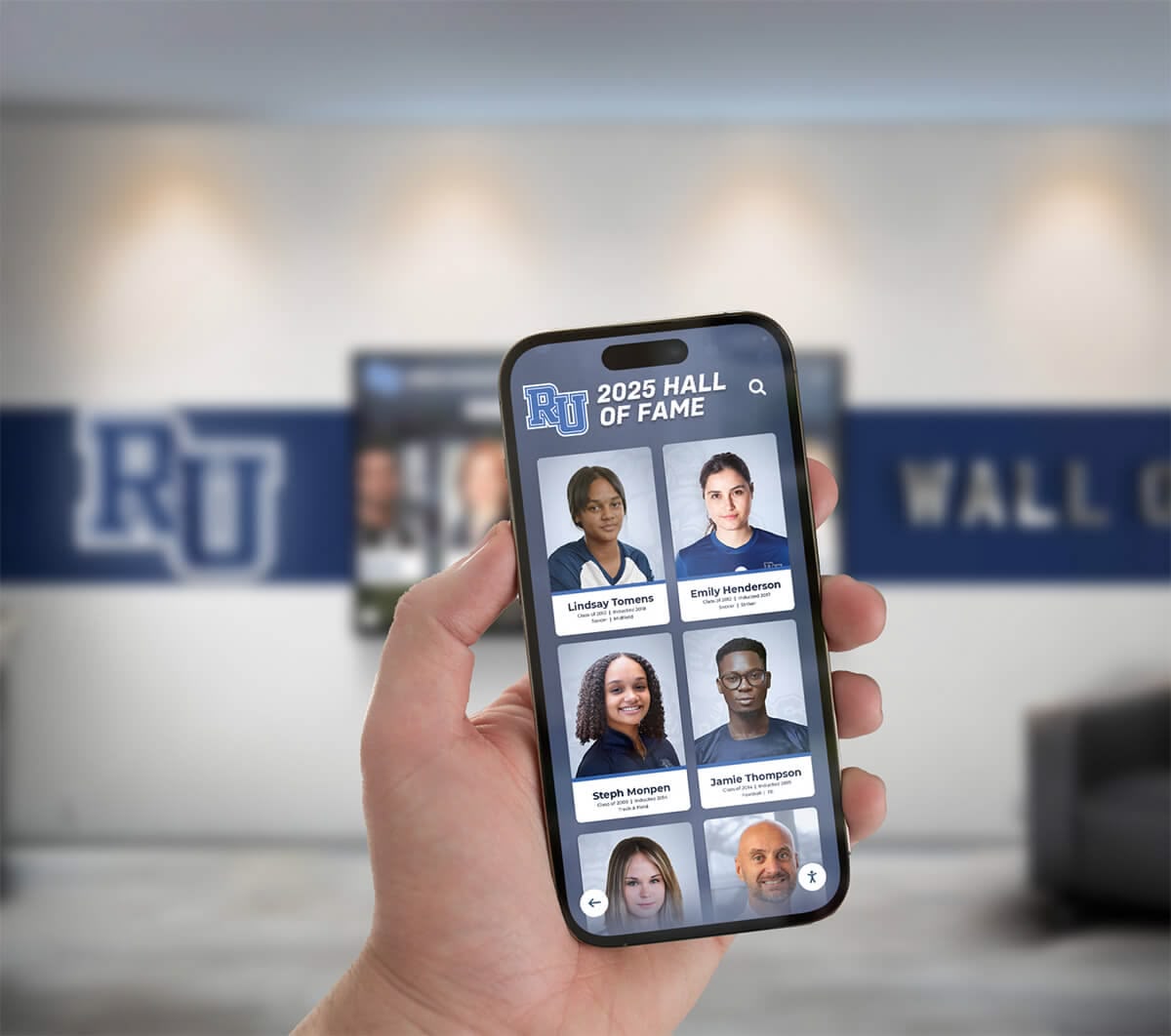
Mobile applications extend digital hall of fame access beyond physical installations enabling anywhere exploration
Implementation Considerations: Planning Digital Recognition Deployments
Successful implementations require thoughtful planning addressing technical, spatial, content, and organizational factors.
Needs Assessment and Goal Definition
Begin with comprehensive evaluation establishing clear objectives and requirements.
Recognition Program Inventory
Document current approaches through existing donor wall and recognition system audit, capacity constraints and growth projections, update frequency requirements and administrative burden, stakeholder satisfaction with current acknowledgment, and identified gaps or improvement opportunities.
This baseline assessment reveals specific problems digital recognition should solve while ensuring technology selection addresses actual needs rather than implementing generic solutions.
Stakeholder Engagement and Input
Gather perspectives from key constituencies including development staff managing donor stewardship, executive leadership defining institutional priorities, major donors expressing recognition preferences, facilities teams assessing installation feasibility, and IT departments evaluating technical requirements.
Comprehensive stakeholder engagement ensures recognition systems align with diverse organizational needs while maintaining broad support throughout implementation.
Success Criteria and Measurement Plans
Define what effective recognition achieves through donor satisfaction and retention targets, visitor engagement metrics and usage goals, administrative efficiency improvements, fundraising impact indicators, and cost comparison benchmarks versus traditional approaches.
Clear success criteria enable objective evaluation while justifying investments through measurable outcomes beyond intangible appreciation benefits.
Location Selection and Spatial Planning
Strategic placement significantly impacts recognition effectiveness and visitor engagement.
High-Visibility Location Identification
Prioritize placement in high-traffic areas through main lobbies and building entrances, student gathering spaces and common areas, athletic facility concourses and spectator entrances, development office reception areas, and alumni center locations.
Poor placement undermines recognition effectiveness regardless of content quality—displays tucked into low-traffic corners fail to serve stewardship goals or inspire prospective supporters through visible community acknowledgment.
Accessibility and Interaction Design
Ensure inclusive access through ADA-compliant mounting heights for wheelchair users, adequate clearance enabling comfortable touchscreen interaction, appropriate lighting minimizing screen glare, comfortable viewing environments with ambient noise control, and integration with existing architectural elements.
Physical accessibility proves essential for serving diverse visitor populations while meeting legal requirements for public accommodation.
Discover best practices for touchscreen display design that maximize user engagement.
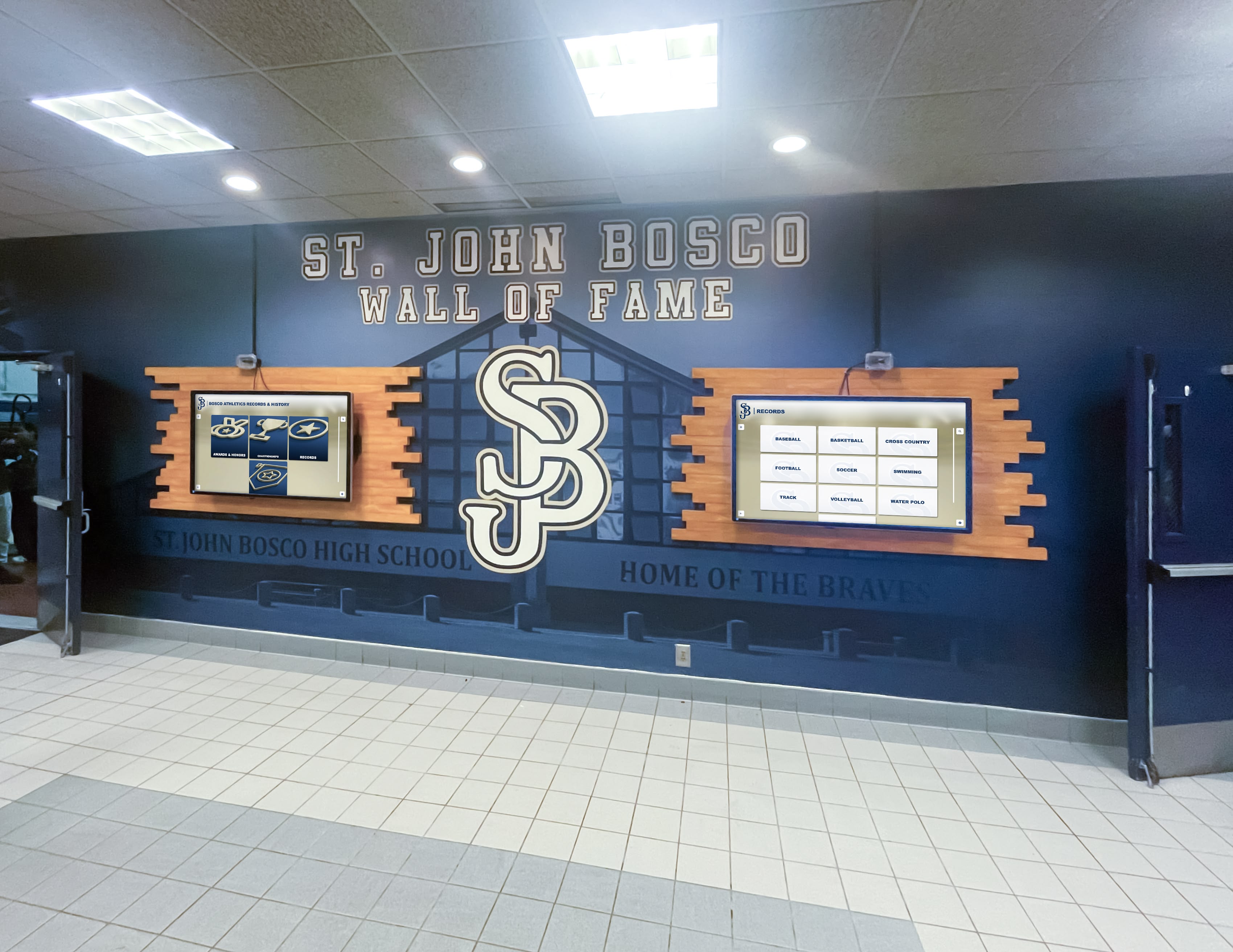
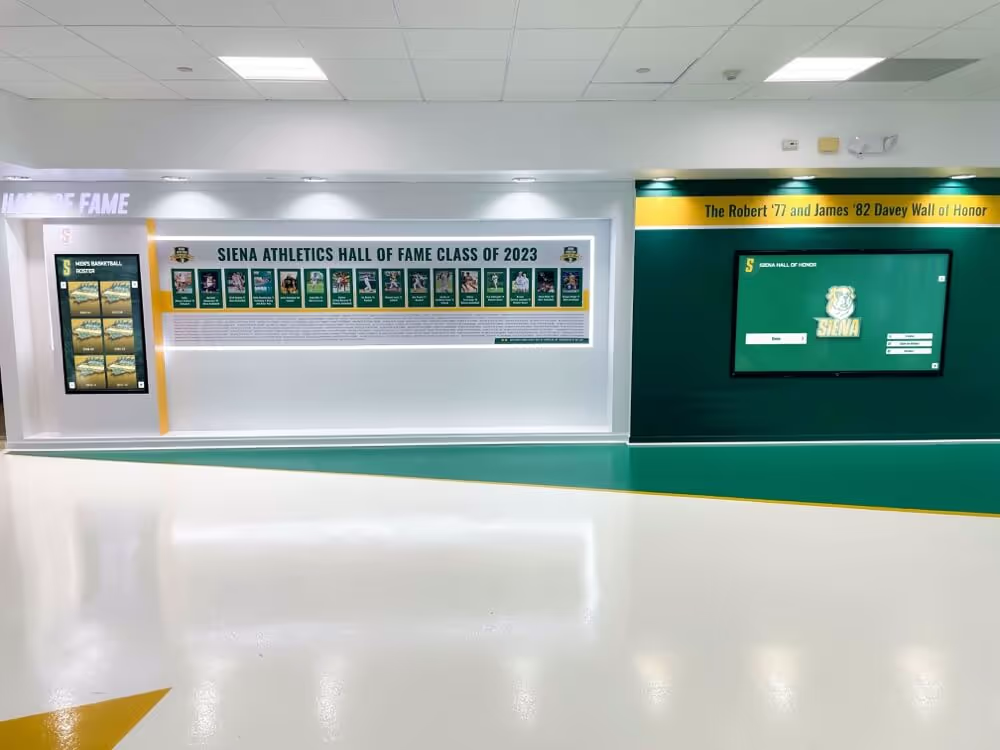
Multi-display installations create comprehensive recognition environments celebrating diverse achievements within coordinated designs
Content Development and Migration
Recognition quality depends on thoughtful content creation and historical data preparation.
Historical Data Compilation
Gather existing recognition information through donor database exports and giving history, athletic achievement records and statistics, historical documents and institutional archives, photography and multimedia asset collection, and biographical information from existing recognition.
Complete historical data ensures comprehensive recognition from launch rather than starting with empty systems that populate gradually over time.
Content Standards and Style Guidelines
Establish consistent recognition formats through profile templates defining structure and elements, writing guidelines maintaining appropriate tone, photography standards ensuring visual consistency, biographical information depth appropriate to recognition levels, and review processes ensuring accuracy and professionalism.
Standardized approaches create cohesive recognition experiences while simplifying ongoing content creation as new honorees are added.
Professional Content Creation Services
Many organizations leverage implementation support through professional profile writing matching stylistic standards, historical research filling information gaps, photography services capturing quality portraits, videography for testimonials and impact stories, and design services ensuring visual polish.
Professional content creation ensures recognition quality worthy of supporter commitment while reducing internal staff burden during already-resource-intensive implementation periods.
Training and Change Management
Successful deployments require preparing staff and stakeholders for recognition program transitions.
Administrative Training and Onboarding
Ensure staff competence through content management platform training, update workflow documentation, troubleshooting guidance for common issues, ongoing support resources and vendor contacts, and cross-training ensuring continuity through staff transitions.
Adequate training builds staff confidence managing recognition independently rather than remaining dependent on vendor support for routine content updates.
Stakeholder Communication and Expectations
Inform constituencies about recognition changes through donor communications explaining new systems, unveiling events celebrating launches, usage instructions helping visitors explore displays, web access promotion extending reach, and feedback mechanisms gathering improvement suggestions.
Thoughtful communication demonstrates respect for stakeholders while managing expectations about what new recognition provides and how supporters can engage with enhanced stewardship tools.
Best Practices: Maximizing Digital Hall of Fame Effectiveness
Strategic approaches ensure recognition programs achieve intended stewardship and engagement goals.
Content Quality and Storytelling Excellence
Recognition impact depends on compelling narratives honoring contributors meaningfully.
Rich Multimedia Integration
Move beyond basic name listings through high-resolution portrait photography, biographical narratives explaining motivations and connections, video testimonials in honorees’ own voices, impact documentation showing what contributions achieved, historical context connecting current support to institutional legacy, and family stories preserving multi-generational traditions.
Comprehensive profiles create emotional connections that simple acknowledgment cannot achieve while providing recognition worthy of supporter commitment.
Regular Content Refreshes
Maintain engagement through periodic profile updates as circumstances evolve, seasonal content highlighting relevant recognition, campaign-specific features during active fundraising, milestone celebrations as goals are reached, and historical spotlights featuring archival recognition.
Dynamic content ensures recognition remains engaging rather than becoming static displays receiving minimal attention after initial launch excitement fades.
Learn about designing compelling digital hall of fame layouts that maximize visitor engagement.
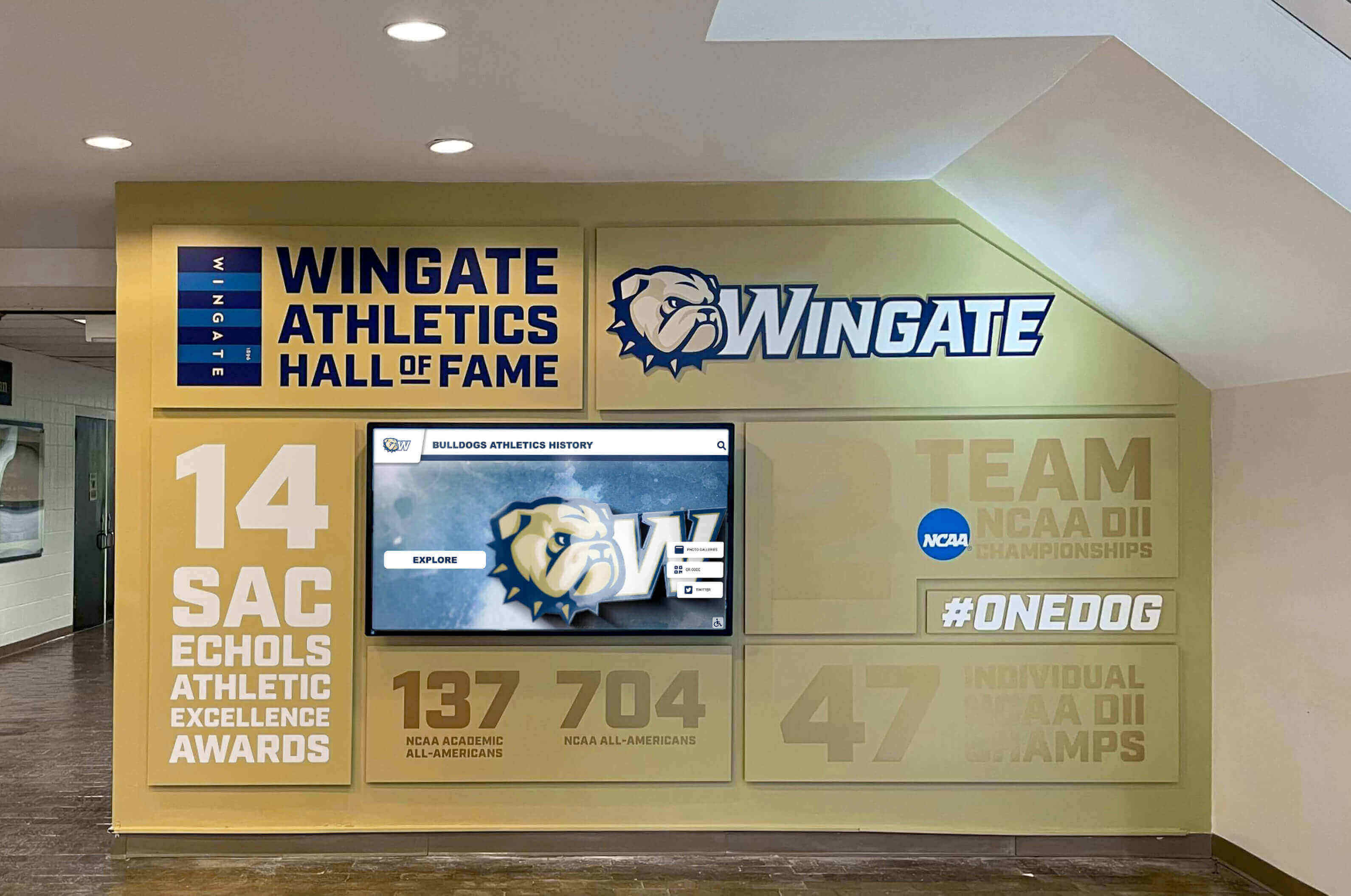
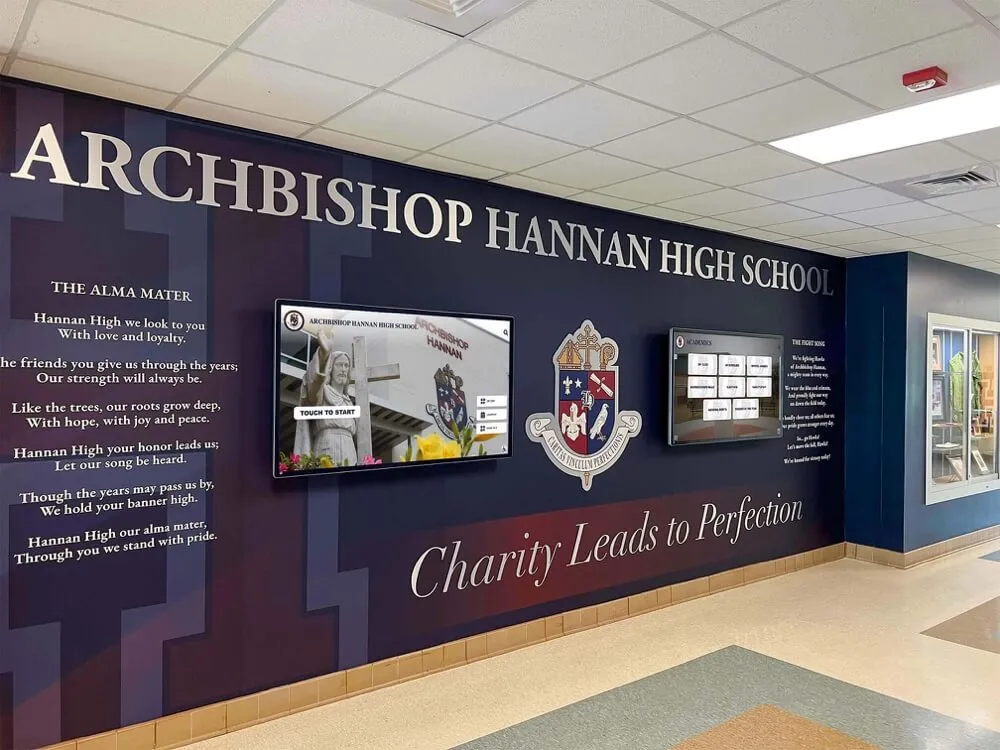
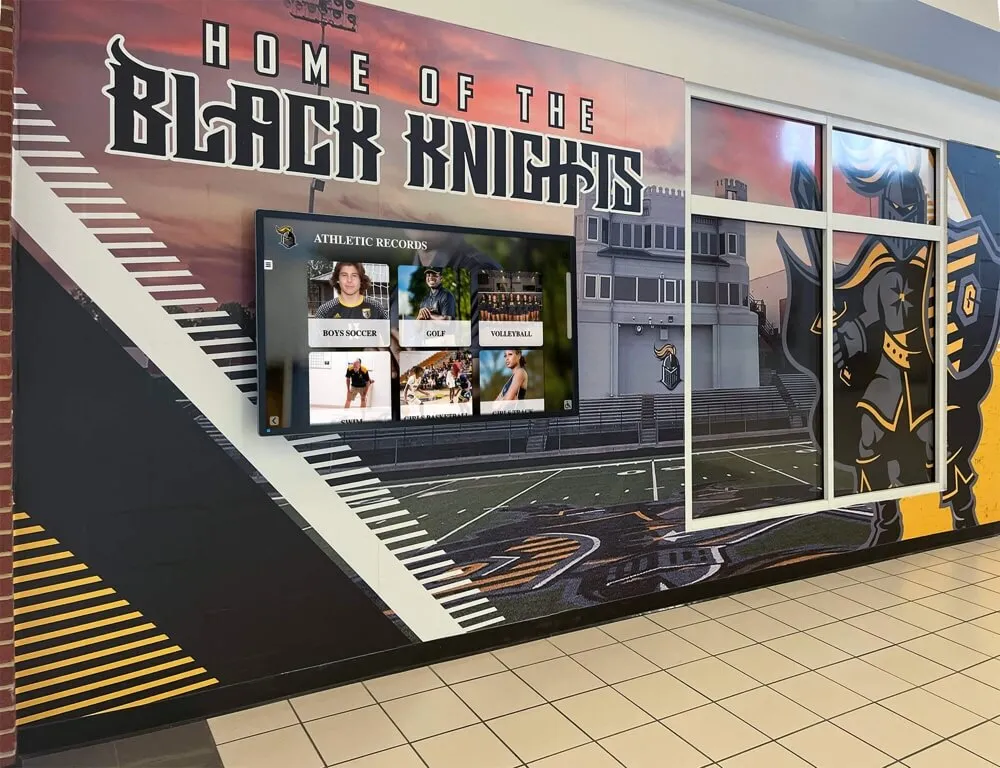
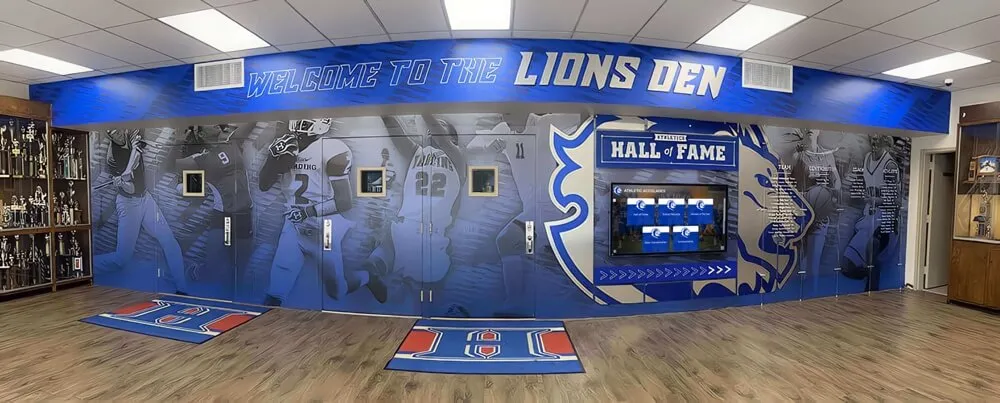
Professional design integrates institutional branding with recognition content creating cohesive celebration environments
User Experience and Interface Design
Intuitive navigation ensures visitors can explore recognition successfully regardless of technical comfort.
Simple, Clear Navigation Patterns
Enable effortless exploration through consistent interface elements across all screens, clear labeling explaining functions and options, minimal text entry reducing typing barriers, prominent search functionality enabling quick discovery, and obvious home/back buttons supporting navigation recovery.
Overcomplicated interfaces that seem intuitive to technical staff often prove frustrating to visitors less comfortable with digital technology—simplicity serves broader audiences more effectively.
Accessibility Features and Accommodations
Support diverse visitor needs through high-contrast viewing modes for visual accessibility, adjustable text sizing for readability preferences, multilingual support when serving diverse communities, screen reader compatibility for assistive technology, and audio descriptions explaining visual content.
Inclusive design ensures recognition serves all visitors rather than privileging those with typical vision, mobility, and technical familiarity.
Promotion and Awareness Building
Recognition effectiveness depends on stakeholders knowing displays exist and understanding how to engage with them.
Launch Events and Ceremonial Unveiling
Create celebratory introduction through donor appreciation events featuring display unveiling, guided tours demonstrating interactive features, speeches from beneficiaries and leadership, media coverage amplifying visibility, and documentation through photography and video.
Formal launches demonstrate organizational commitment to recognition while providing natural opportunities to discuss ongoing fundraising priorities with gathered supporter communities.
Ongoing Marketing and Communication
Maintain awareness through periodic email updates highlighting recognition, social media posts celebrating new additions, website promotion featuring recognition access, facility signage directing visitors to displays, and recognition mentions during campus tours and events.
Sustained promotion keeps recognition top-of-mind while ensuring constituencies know how to access both physical displays and web-based companions.
Common Questions About Digital Halls of Fame
Organizations considering recognition modernization typically have similar questions about functionality, costs, and implementation.
How much do digital halls of fame cost?
Comprehensive digital hall of fame implementation typically costs $15,000-$35,000 for initial deployment including commercial-grade touchscreen displays ($3,000-$10,000), content management platform setup ($2,000-$8,000), professional installation services ($1,000-$3,000), initial content development ($3,000-$8,000), and training and onboarding ($1,000-$3,000).
Ongoing costs average $2,000-$5,000 annually for software subscriptions, technical support, and periodic content refreshes. While initial investment may equal or exceed traditional donor walls, digital systems achieve cost parity within 3-5 years and prove substantially less expensive long-term by eliminating recurring engraving expenses.
Can digital recognition accommodate anonymous donors?
Yes, modern content management platforms provide flexible privacy controls allowing anonymous recognition options excluding personal details, selective disclosure enabling donors to choose what information appears, opt-out provisions removing recognition upon request, and progressive reveal features where initial anonymity can transition to attribution as donor comfort increases.
Respecting donor privacy preferences builds trust essential for ongoing relationships while ensuring recognition programs honor individual autonomy about personal information disclosure.
How long does implementation take?
Typical digital hall of fame deployments require 12-16 weeks from initial planning through launch including needs assessment and goal definition (2-3 weeks), vendor selection and system design (3-4 weeks), content development and historical data migration (4-6 weeks), hardware installation and configuration (1-2 weeks), and training and launch preparation (1-2 weeks).
Timeline length depends primarily on historical content scope—organizations recognizing 100 historical donors require less preparation time than those showcasing 1,000 honorees requiring comprehensive profile development.
What happens if technology fails or displays malfunction?
Reputable digital hall of fame providers offer comprehensive support including technical support contracts with defined response times, warranty coverage for hardware failures, remote troubleshooting capabilities, preventive maintenance programs, and loaner equipment or replacement protocols minimizing downtime.
Commercial-grade displays engineered for continuous public use demonstrate significantly higher reliability than consumer equipment, with typical operational lifespans exceeding 50,000 hours before requiring component replacement.
Can digital halls of fame integrate with existing donor management systems?
Modern platforms provide integration capabilities connecting recognition to broader institutional systems through donor database synchronization ensuring accuracy, online giving platform integration enabling immediate recognition, email marketing system connections for acknowledgment automation, and financial system coordination simplifying gift processing.
Integration reduces duplicate data entry while ensuring consistent donor information across all systems and communications, improving both efficiency and accuracy despite volunteer leadership transitions creating organizational knowledge gaps.
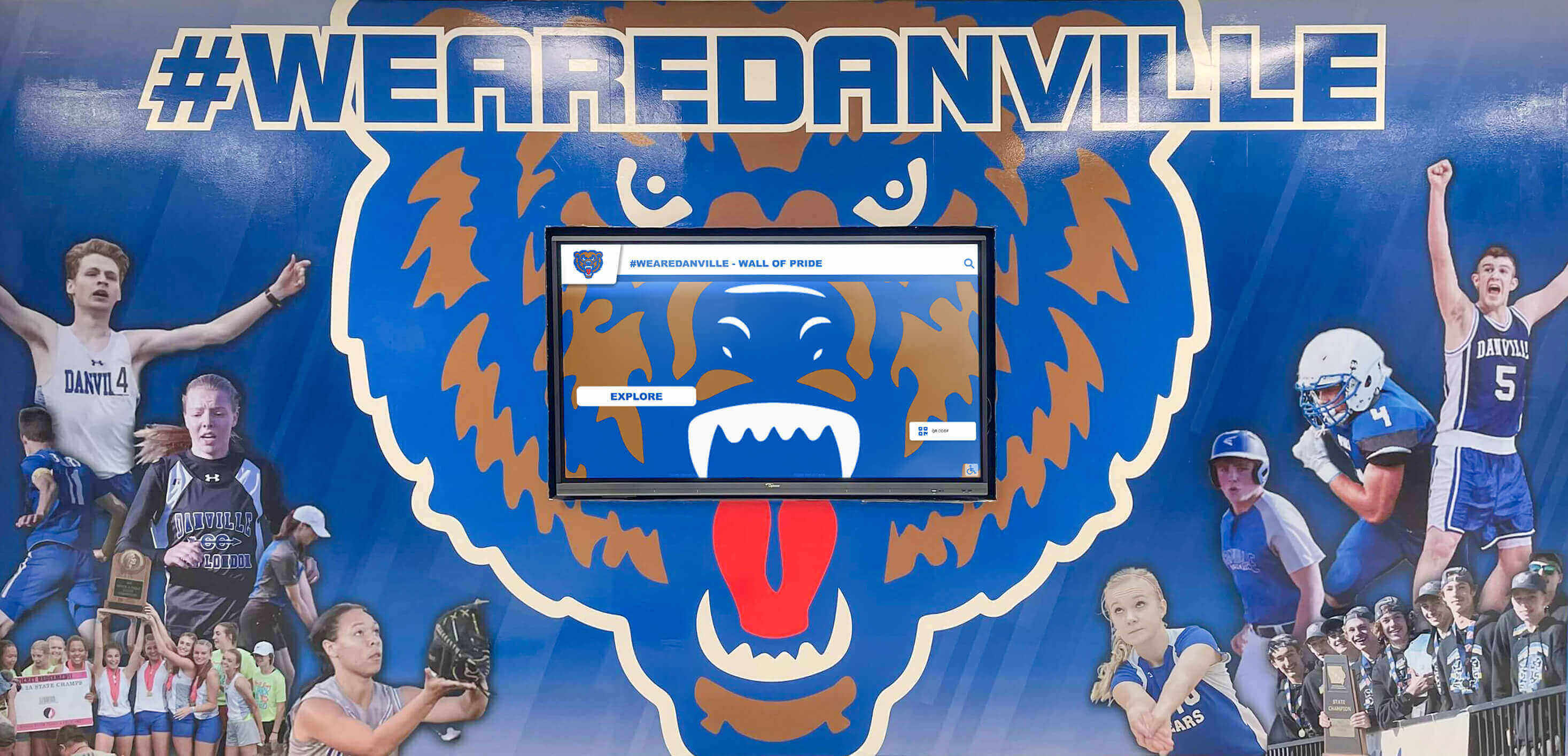
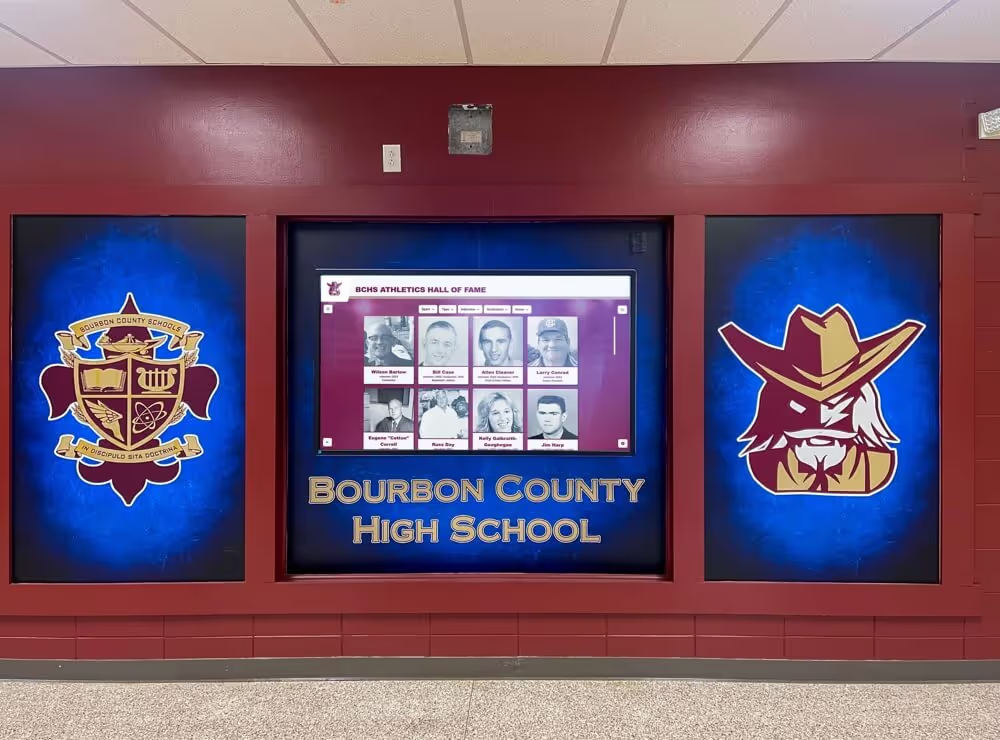
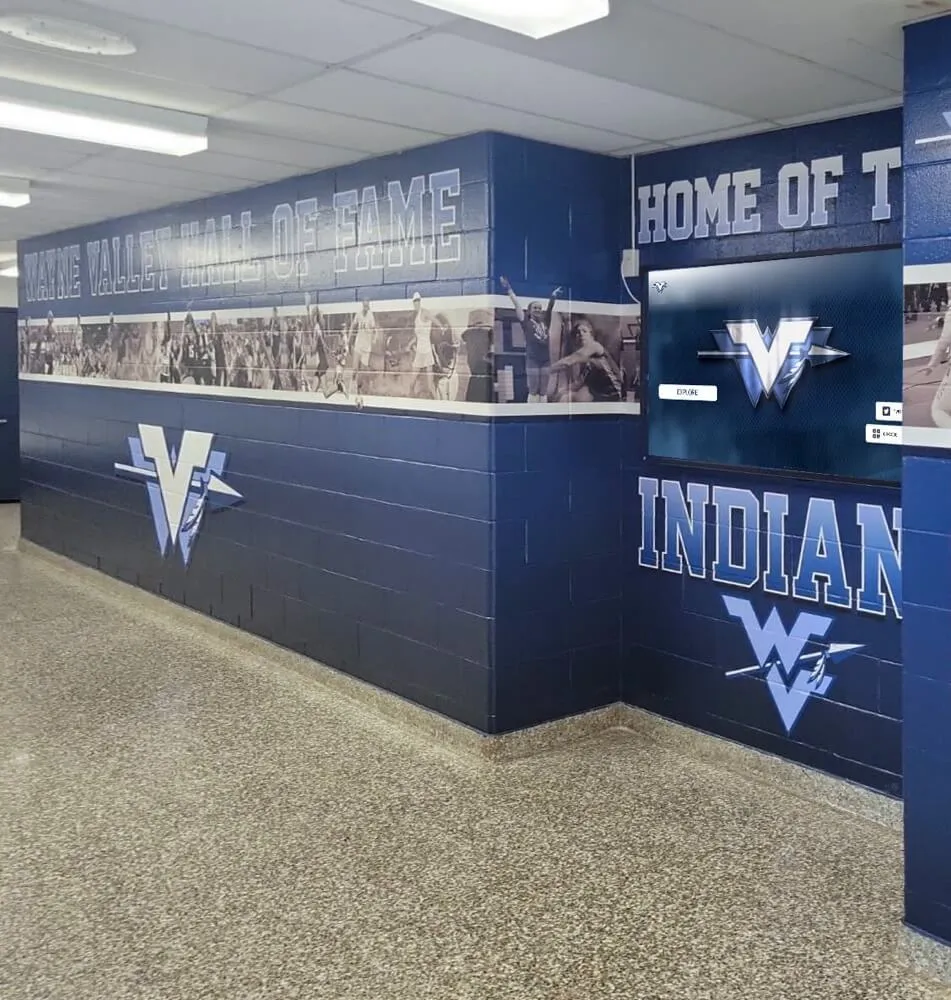
Integrated designs combine digital displays with existing architectural elements and institutional branding
Conclusion: Transforming Recognition Through Digital Innovation
Digital halls of fame represent fundamental advances in how organizations honor supporters, celebrate achievements, and preserve institutional legacy. By eliminating physical space constraints forcing impossible prioritization decisions, enabling rich multimedia storytelling bringing recognition to life, providing interactive features transforming passive viewing into active exploration, and extending recognition reach to global audiences regardless of physical location, modern recognition displays serve stewardship goals that traditional approaches cannot achieve.
Organizations struggling with overcrowded donor walls, seeking to enhance athletic achievement celebration, or wanting to preserve institutional history through engaging archives should explore how digital hall of fame solutions transform recognition from static acknowledgment into dynamic celebration platforms that engage stakeholders while honoring commitments to supporters.
Strategic Implementation Pathway
Successful digital recognition begins with comprehensive needs assessment establishing clear objectives, stakeholder engagement ensuring recognition programs reflect community values, realistic budget development accounting for implementation and ongoing costs, thoughtful location selection maximizing visibility and access, quality content development worthy of supporter commitment, and sustainable management protocols ensuring long-term effectiveness.
This systematic approach prevents common implementation problems while ensuring digital recognition achieves intended stewardship goals and fundraising support objectives.
The Recognition Investment Imperative
With donor retention rates continuing to challenge nonprofits and educational institutions, recognition represents investment in supporter relationships dramatically affecting organizational sustainability. According to research, recognized donors demonstrate significantly higher retention rates compared to unacknowledged supporters, making systematic acknowledgment essential for financial stability.
Digital halls of fame enable comprehensive, engaging recognition previously impossible with space-constrained traditional approaches. When every contribution receives appropriate acknowledgment—not just major gifts fitting on limited physical walls—organizations build inclusive cultures where all generosity receives valued appreciation and supporters at every level feel genuinely honored.
Technology as Mission Enabler
Modern digital recognition technology exists to strengthen organizational missions, not compete with them. The most effective implementations position technology as tools serving donor relationships and mission advancement rather than ends in themselves. Solutions like Rocket Alumni Solutions provide comprehensive platforms combining functionality with user-friendly administration, enabling organizations to focus on supporter stewardship rather than technical management.
Your donors and stakeholders deserve recognition honoring their contributions appropriately, demonstrating the impact they’re creating, strengthening their connections to your mission, and inspiring their continued support. With thoughtful planning, appropriate technology, and sustained commitment, you can create digital hall of fame systems transforming appreciation from obligatory acknowledgment into relationship building essential for long-term organizational success.
Ready to explore how digital halls of fame can transform your recognition program? Discover modern solutions designed specifically for donor recognition, athletic achievement celebration, and institutional legacy preservation. Talk to our team to learn how interactive recognition displays can help you honor every supporter while building sustainable stewardship systems that strengthen your mission for years to come.