Model United Nations—better known as Model UN or MUN—is one of the most transformative academic experiences available to middle school, high school, and college students worldwide. At its core, Model UN asks students to step into the shoes of diplomats representing United Nations member states, debating real-world issues, building coalitions, and drafting resolutions that propose solutions to global challenges.
But Model UN is far more than an academic exercise. Every year, hundreds of thousands of students across the globe compete at conferences ranging from small local invitationals to prestigious events at Harvard, Georgetown, and the United Nations headquarters in New York. They earn awards that rival any academic honor—and those accomplishments deserve recognition that lasts far beyond the conference itself.
This comprehensive guide explains what Model UN is, how conferences work, what awards students can earn, and how schools can meaningfully honor their MUN achievers alongside every other form of student excellence.
Whether you are a student preparing for your first conference, an advisor building a school program, or an administrator looking to understand what your students are accomplishing, this guide covers everything you need to know about Model United Nations.

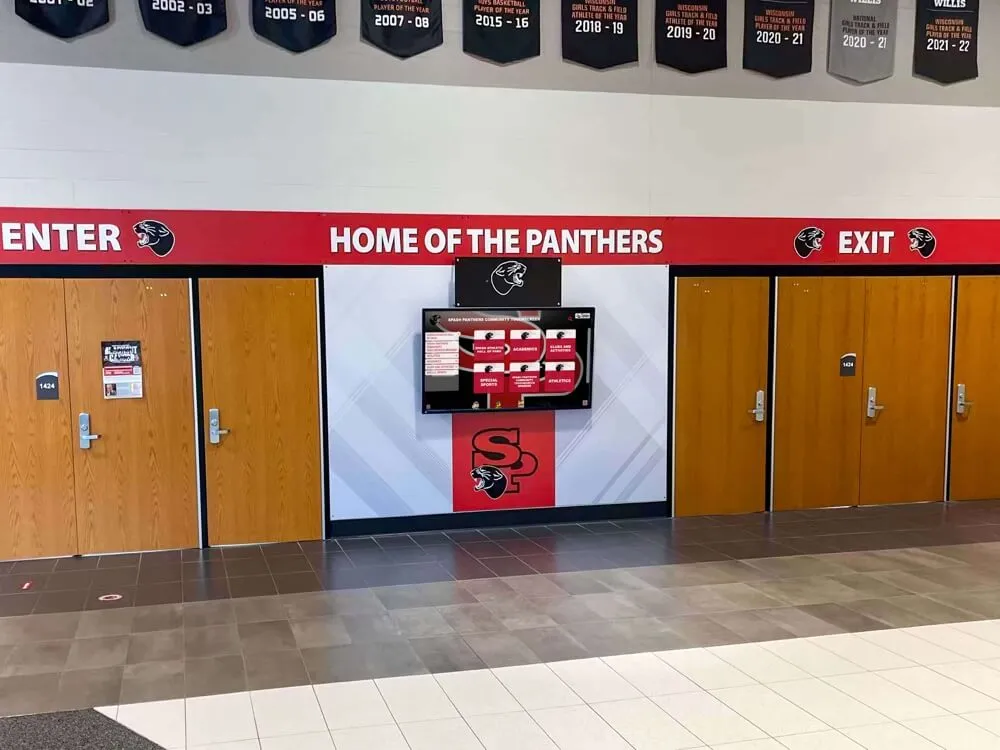
Schools that systematically recognize academic competition achievements—including Model UN honors—build cultures where intellectual excellence is celebrated alongside athletic success
What Is Model UN?
Model United Nations is an educational simulation of the United Nations in which student participants—called delegates—research, debate, and craft diplomatic solutions to international issues. Each delegate represents a specific country (or occasionally a non-governmental organization, international body, or historical bloc) assigned to a particular committee that mirrors a real UN organ or specialized agency.
The Core Premise
In Model UN, the real world’s geopolitical complexity is compressed into a structured academic competition. Delegates must:
- Research their assigned country’s foreign policy positions and national interests
- Write formal position papers articulating their country’s stance on committee topics
- Debate committee issues using formal parliamentary procedure
- Build alliances and negotiate compromises with other delegates
- Draft and pass working papers and resolutions that propose solutions to committee problems
The experience simultaneously develops research skills, public speaking, persuasive writing, coalition building, and global awareness—a combination that college admissions offices, scholarship committees, and employers consistently rank among the most valuable extracurricular experiences a student can pursue.
Who Participates in Model UN?
Model UN programs exist at every educational level:
- Middle school programs: Introductory conferences emphasizing foundational skills and simplified procedure
- High school programs: The largest segment, with thousands of school-based MUN clubs competing nationally and internationally
- College and university programs: Hosting conferences and competing at prestigious national and international events
- International participants: Students from more than 130 countries participate in global MUN circuits each year
The United Nations Association–USA estimates that Model UN engages hundreds of thousands of students annually across conferences on every continent. The activity has existed in various forms since the 1920s—predating the UN’s founding in 1945—and continues to grow as schools recognize its academic and professional development value.
How Model UN Conferences Work
Understanding conference structure helps both participants and program advisors make the most of the Model UN experience.
Committee Structure
Every Model UN conference is organized around committees—the primary deliberative bodies where delegates spend most of their conference time. Common committee types include:
General Assembly Committees The six main GA committees address specific issue areas:
- GA1 (First Committee): Disarmament and International Security
- GA2 (Second Committee): Economic and Financial
- GA3 (Third Committee): Social, Humanitarian, and Cultural
- GA4 (Fourth Committee): Special Political and Decolonization
- GA5 (Fifth Committee): Administrative and Budgetary
- GA6 (Sixth Committee): Legal
Specialized Agencies and Councils Many conferences also feature simulations of:
- The UN Security Council (often reserved for experienced delegates)
- The UN Environment Programme (UNEP)
- The World Health Organization (WHO)
- The Human Rights Council (HRC)
- International economic and financial bodies
Crisis Committees Advanced conferences frequently include dynamic crisis committees where delegates respond to evolving scenarios in real time—requiring faster thinking and more creative diplomacy than standard GA-style committees.
The Role of the Dais
Every committee is run by a dais—a panel of student leaders typically consisting of:
- Chair: Leads debate, recognizes speakers, and rules on procedural motions
- Vice-Chair(s): Assists the Chair and helps with administrative tasks
- Director: Some conferences add a Director for specialized committees
Dais members at prestigious conferences like Harvard’s HMUN or Georgetown’s NAIMUN are themselves highly accomplished MUN students, often selected through competitive applications months before the conference begins.
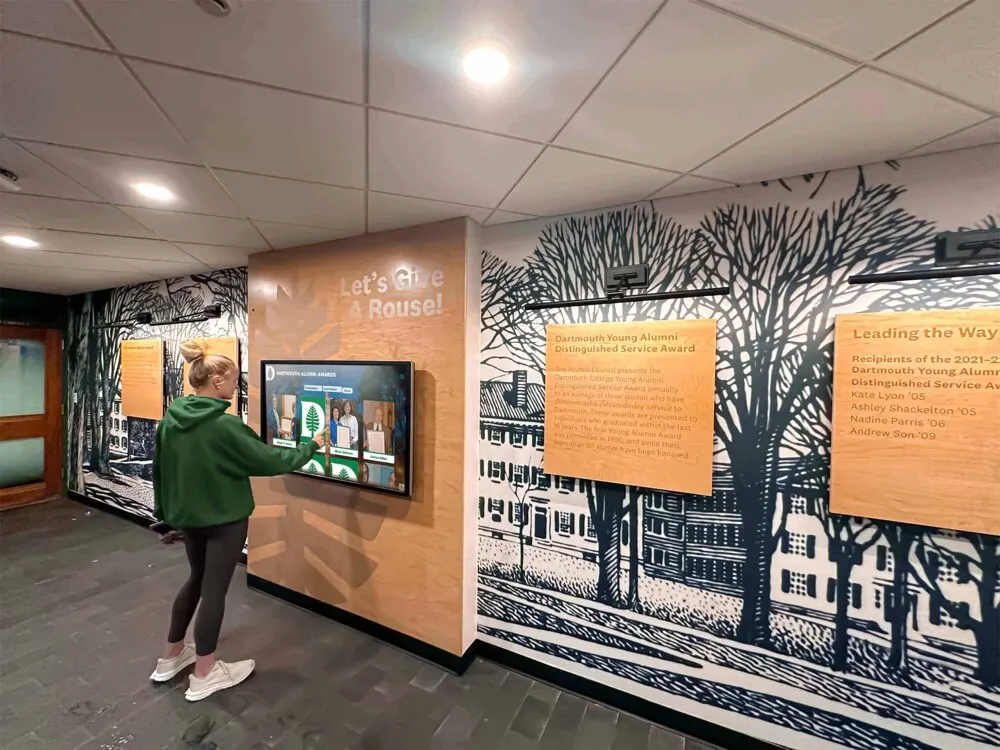
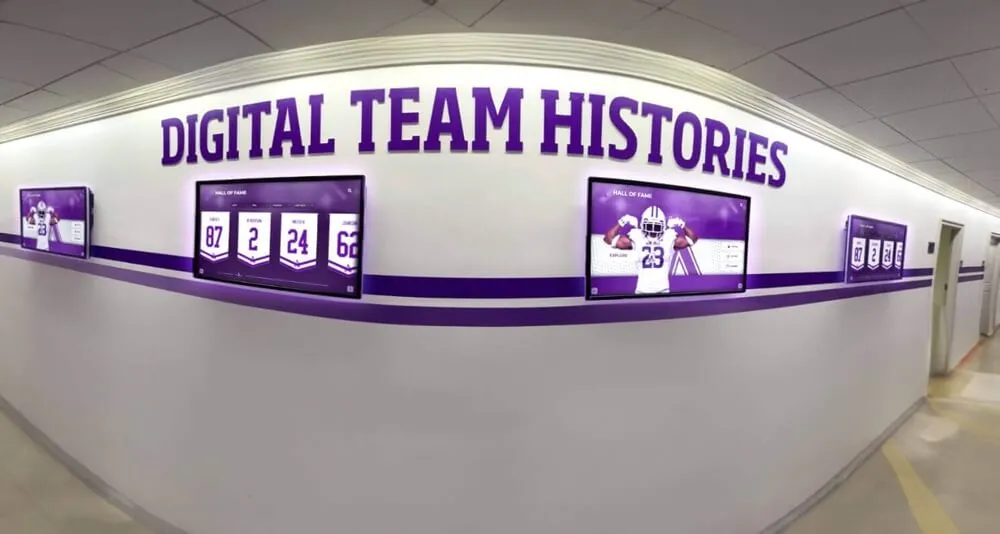
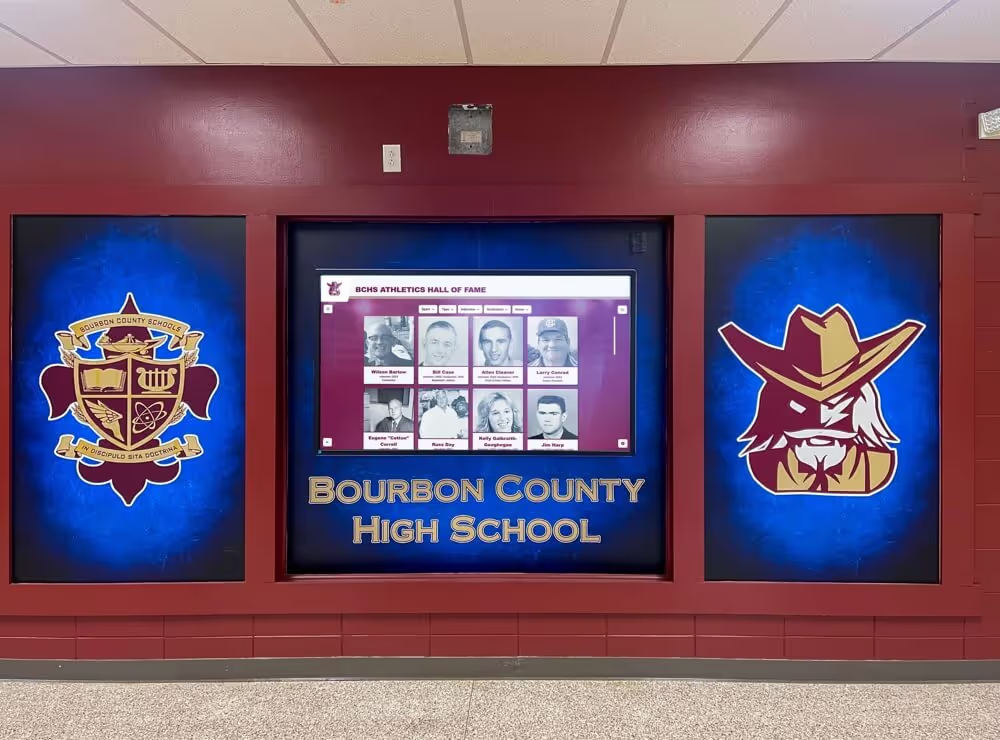
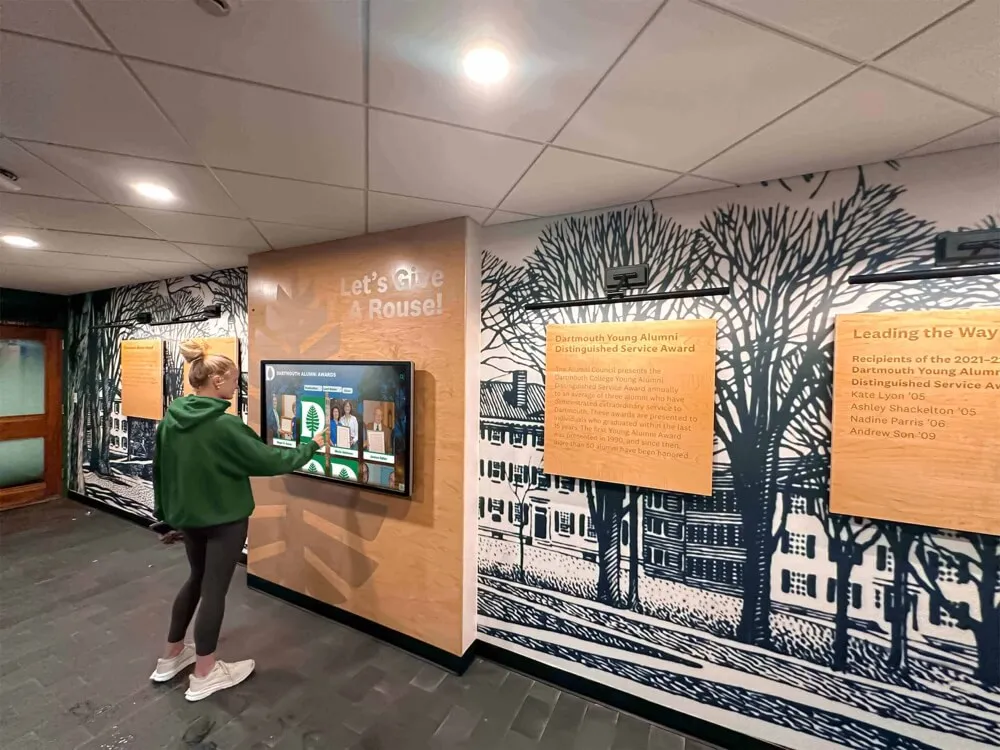
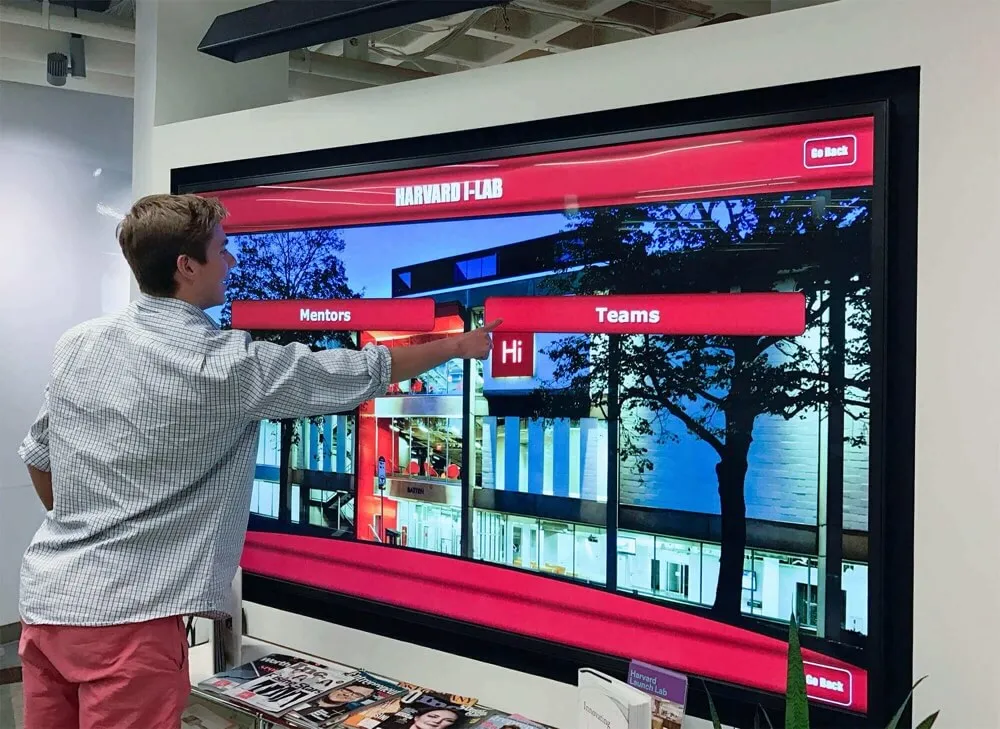
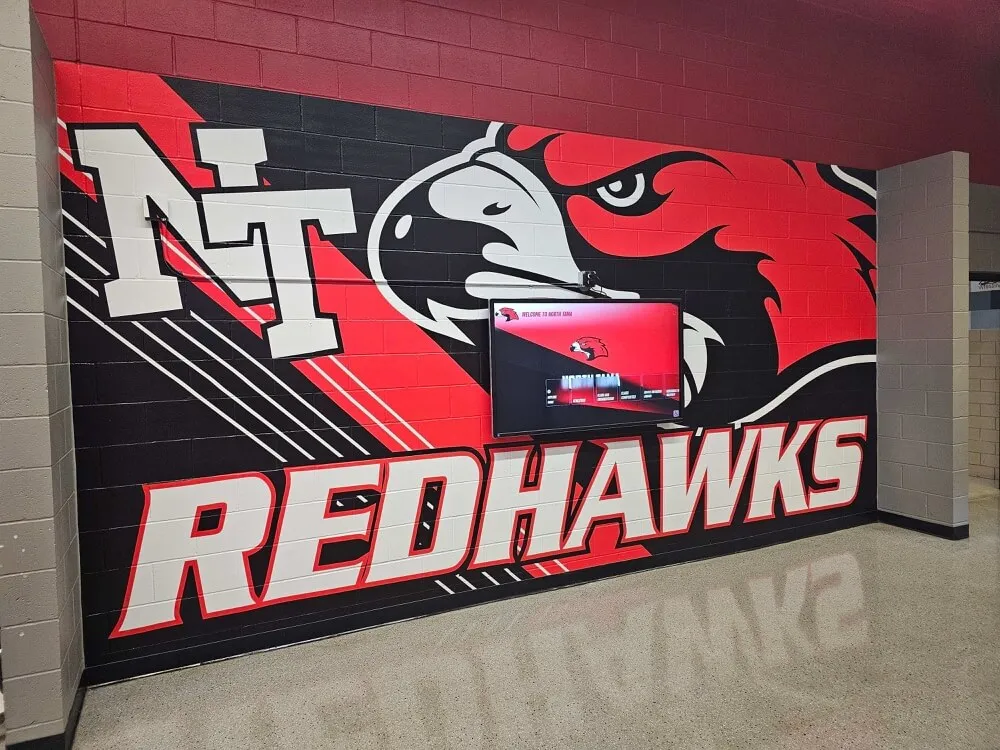
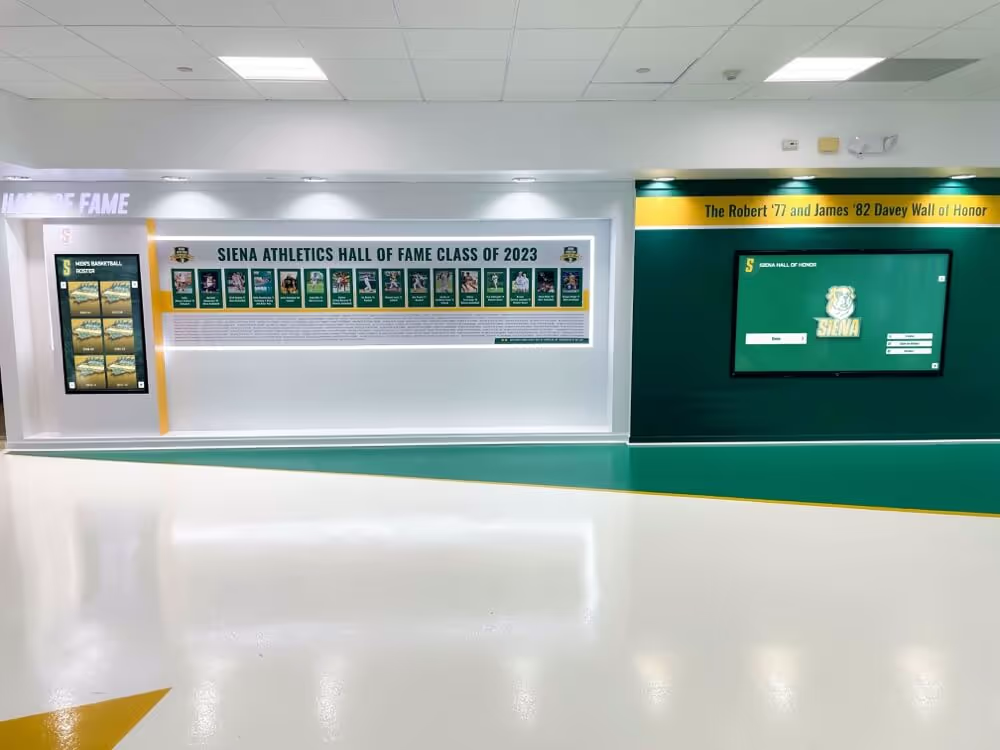
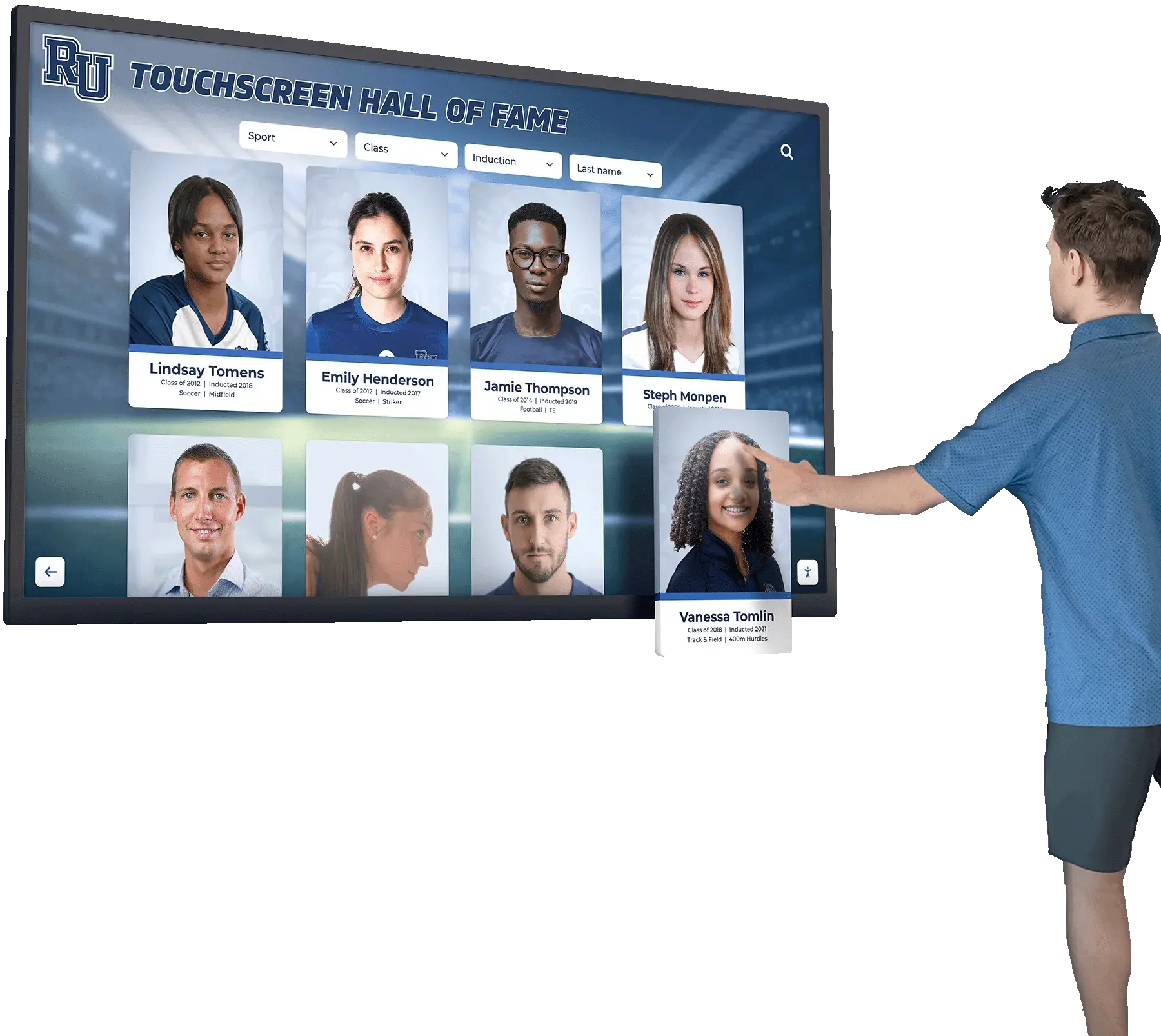
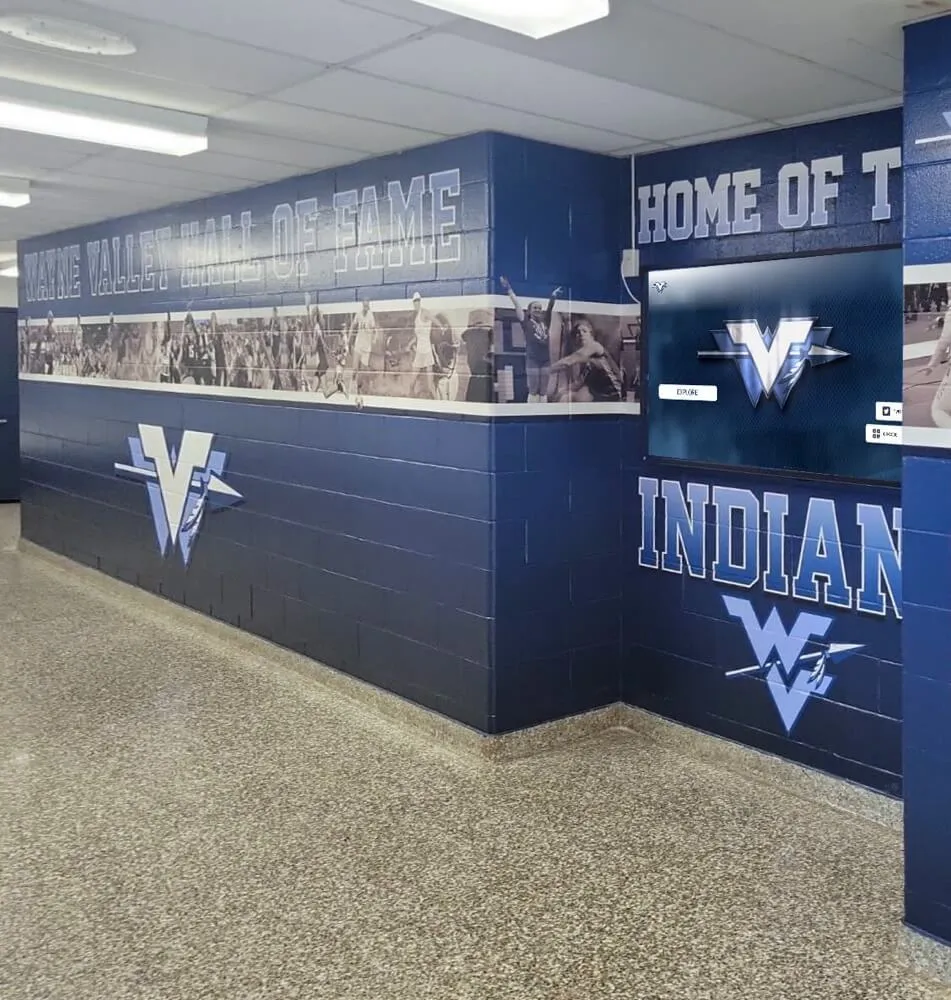
Universities hosting major Model UN conferences use interactive displays to help delegates navigate program resources and explore the experience
The Flow of Committee Debate
A typical Model UN committee session follows structured parliamentary procedure:
- Roll Call: Delegates mark themselves present or present and voting
- Setting the Agenda: Delegates vote on which topic to address first
- General Speakers List (GSL): Formal speeches where delegates present national positions
- Moderated Caucuses: Structured discussion with timed speaking segments on specific sub-topics
- Unmoderated Caucuses: Informal periods where delegates network, negotiate, and write working papers
- Working Papers: Draft resolutions debated and refined before formal voting
- Draft Resolutions: Finalized documents voted upon to become official committee resolutions
The ability to navigate these procedural elements—while advancing your country’s positions and building consensus—is what separates exceptional delegates from average participants.
Position Papers
One of the most academically rigorous components of Model UN is the position paper—a formal policy document written before the conference begins. Position papers typically include:
- The country’s history with the committee topic
- The country’s current policy positions and national interests
- Analysis of the problem from the country’s diplomatic perspective
- Proposed solutions the country would support
- Reference to relevant UN resolutions, treaties, and international law
Many conferences require submitted position papers for delegates to be eligible for awards. The skills involved—research synthesis, policy analysis, formal academic writing—transfer directly to college coursework and professional environments. Strong position papers earn their own recognition category entirely separate from committee performance awards.
Major Model UN Conferences
The Model UN landscape includes conferences at every scale, from local invitationals to massive international events.
Prestigious High School Conferences
HMUN (Harvard Model United Nations) One of the oldest and most prestigious high school MUN conferences in the world, HMUN hosts approximately 3,500 delegates each January in Boston. Acceptance is competitive, with school delegations applying months in advance.
NAIMUN (National American Invitational Model United Nations) Hosted by Georgetown University, NAIMUN is among the largest high school conferences in the United States, drawing thousands of delegates each February.
BMUN (Berkeley Model United Nations) Hosted at UC Berkeley, BMUN has operated for more than 70 years, making it one of the longest-running MUN conferences in existence.
THIMUN (The Hague International Model United Nations) The international flagship conference of the THIMUN Foundation, held in The Hague, Netherlands, draws delegates from countries across the globe each year.
College-Level Conferences
NMUN (National Model United Nations) Run by the National Collegiate Conference Association, NMUN is one of the largest MUN conferences in the world, held annually in New York City near the actual UN headquarters. College teams of two to twelve delegates compete over five days across committees mirroring real UN bodies.
Regional circuits exist in virtually every state and internationally, giving students at all levels competitive pathways appropriate to their experience and resources.
Model UN Awards: A Complete Guide
Award recognition is central to the Model UN experience. Unlike many academic competitions, MUN awards are given at the committee level—each committee’s dais evaluates delegates independently, and multiple awards are distributed across every committee at a conference.

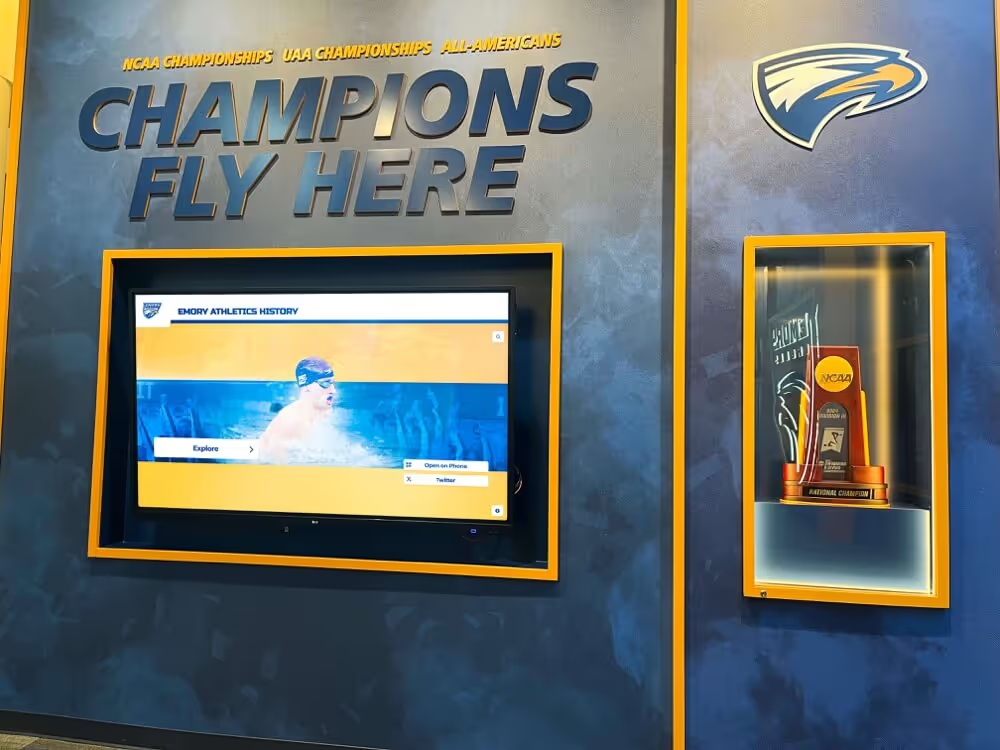
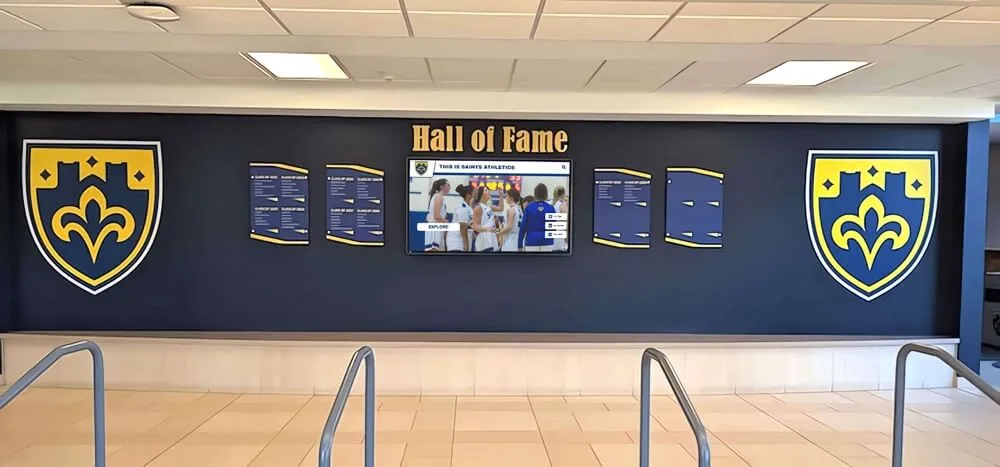
Just as individual athletic achievements deserve permanent recognition, Model UN awards represent significant accomplishments worthy of lasting institutional display
The Standard Award Hierarchy
While conference-specific naming conventions vary, most MUN conferences follow a consistent award hierarchy:
Best Delegate The highest award a delegate can receive in a committee. Best Delegate recognition goes to the delegate who most effectively represented their country, demonstrated command of parliamentary procedure, showed leadership in coalition building, and contributed substantively to committee outcomes. Most committees award one Best Delegate, though very large committees may recognize two.
Outstanding Delegate The second-tier award, Outstanding Delegate recognizes delegates who demonstrated excellent performance but fell just short of the top honor. Outstanding Delegate awards typically go to one or two delegates per committee depending on conference size and policy.
Honorable Mention A third tier of recognition acknowledging strong overall performance. Honorable Mention awards go to delegates who contributed meaningfully to committee work, showed competent parliamentary procedure use, and represented their country effectively—even without reaching the Outstanding Delegate threshold.
Verbal Commendation Some conferences award Verbal Commendations to delegates who showed specific strengths—such as strong opening speeches, effective caucus leadership, or excellent resolution drafting—even if they did not reach the Honorable Mention tier.
Best Position Paper Separate from committee performance awards, the Best Position Paper award recognizes academic writing excellence submitted before the conference. This award specifically honors research depth, analytical quality, and policy reasoning—skills that mirror college-level academic work closely.
Best Small Delegation / Best Large Delegation Conference-level awards given to schools whose delegates collectively performed at the highest level across all committees. These team awards recognize program-wide excellence and are highly coveted by established MUN programs.
Award Rates and Selectivity
Understanding award selectivity helps appreciate what these honors represent:
- Best Delegate typically goes to one or two delegates per committee regardless of committee size
- In a committee of 80 delegates, a Best Delegate award represents the top 1–2.5% of participants
- Outstanding Delegate awards typically recognize the top 3–7% of a committee
- Honorable Mention awards reach approximately the top 10–15% of a committee
When aggregated across an entire conference of 2,000+ delegates, Best Delegate awards go to fewer than 2% of all participants—making these honors legitimately competitive academic achievements comparable to qualifying for a state academic championship. For context on how schools define and celebrate top academic honors, see this guide to the highest academic awards in high school.
What Judges Look For
Dais members evaluating delegates for awards consider multiple dimensions:
Committee Participation
- Quality and frequency of speeches on the General Speakers List
- Effectiveness in moderated caucus discussions
- Leadership demonstrated in unmoderated caucuses
- Ability to advance committee work through negotiation
Diplomatic Skills
- Building coalitions across blocs and competing country interests
- Compromise and negotiation effectiveness
- Maintaining country position while finding common ground
- Relationship building with other delegates
Resolution Quality
- Contribution to working paper drafting and refinement
- Strength of operative and preambulatory clauses
- Alignment between country position and proposed solutions
- Realism and diplomatic feasibility of resolution content
Parliamentary Mastery
- Comfort with formal procedure and motions
- Strategic use of procedural tools
- Graceful handling of points and questions
- Time management and committee pacing awareness
Skills Model UN Develops
Beyond the competitive awards, Model UN builds a constellation of skills that serve students throughout their academic and professional lives.
Communication and Public Speaking Students who participate in multiple MUN conferences develop measurable gains in extemporaneous speaking, persuasive argumentation, and confidence in formal settings—skills that carry directly into college seminars, job interviews, and professional presentations.
Research and Analysis Position paper preparation requires synthesizing complex international policy material, distinguishing credible sources, and presenting analysis clearly. These skills map directly onto AP coursework, college research papers, and graduate-level academic expectations.
Collaborative Diplomacy Finding compromise among competing interests is genuinely difficult, and Model UN provides structured practice for students willing to engage seriously with the process. The ability to build coalitions under time pressure is increasingly recognized as a core professional competency.
Global Awareness Researching a country’s history, culture, economic situation, and foreign policy priorities builds a level of international literacy uncommon among secondary students—and increasingly valued by universities and employers alike.
For schools building comprehensive recognition programs, these skills make Model UN achievements worth celebrating alongside athletic, artistic, and traditional academic accomplishments. Schools looking to structure academic achievement awards for high school students benefit from frameworks that honor the full range of competitive accomplishment—including Model UN, debate, and other intellectual pursuits.
Starting a Model UN Program
For advisors and school administrators interested in launching a MUN club or team, the process is more accessible than many assume.
Finding Conferences to Attend
Most regions have established MUN conferences at multiple levels:
- Beginner conferences designed for first-year participants with simplified procedure and supportive judging
- Intermediate conferences for students with one or two years of experience
- Advanced conferences like HMUN or NAIMUN for experienced delegates seeking elite competition
The United Nations Association–USA maintains conference directories, and most conference websites list registration timelines starting three to six months before the event.
Building Your Club
Successful school Model UN programs typically:
- Meet weekly for research, procedure practice, and position paper development
- Have an advisor with MUN experience or one willing to learn alongside students
- Participate in at least two to three conferences per year across different competitive levels
- Build traditions around recognizing achievements both internally and school-wide
For inspiration on structured recognition programs for academic clubs, see how schools create student leadership award ideas that honor leadership contributions across every type of program—frameworks that apply directly to recognizing Model UN delegates for their conference roles and achievements.
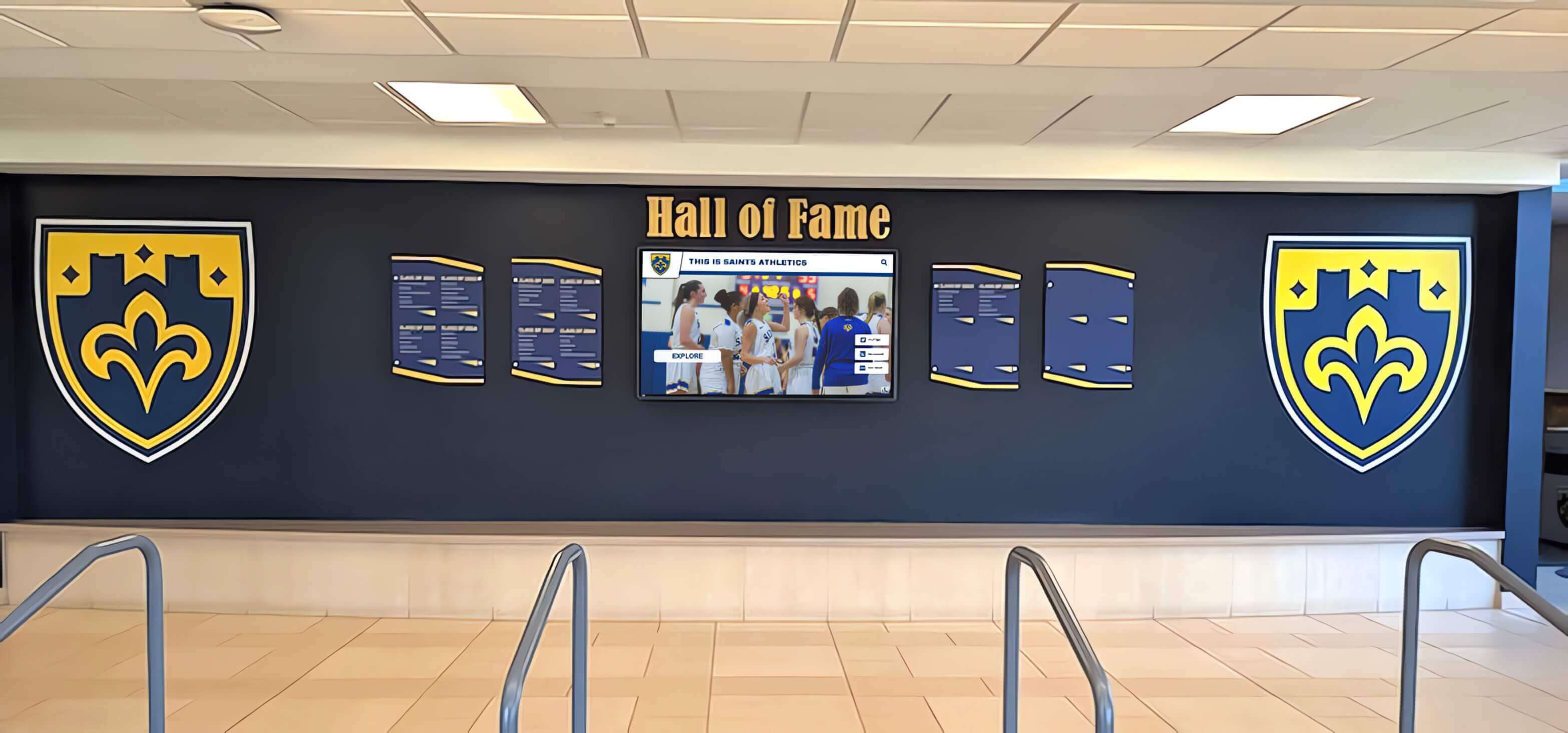
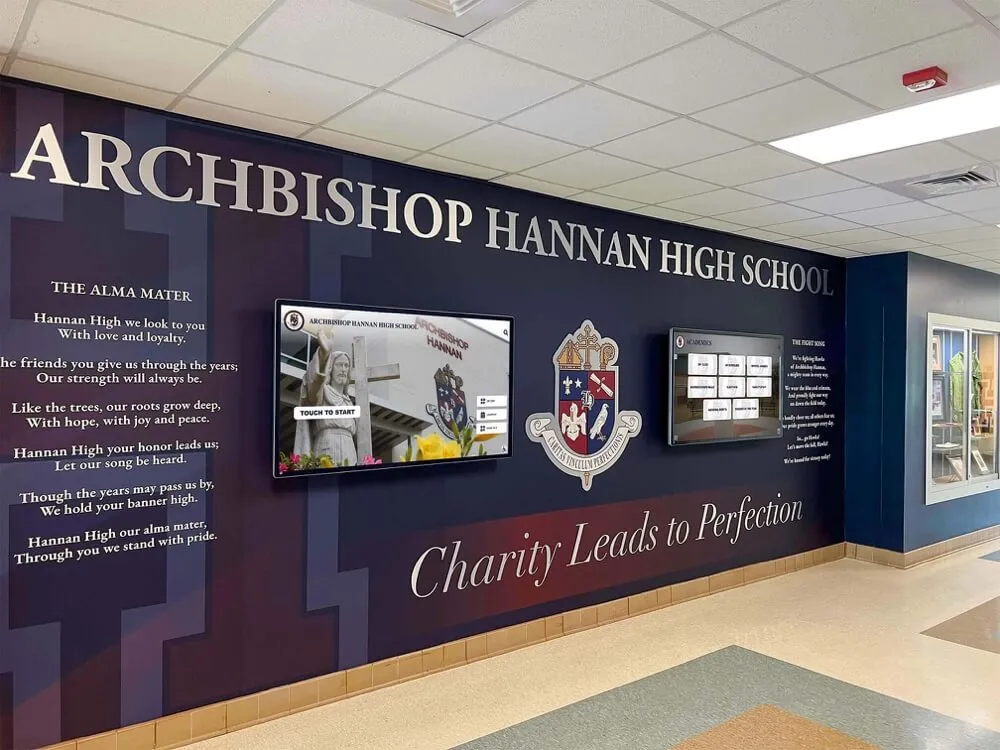
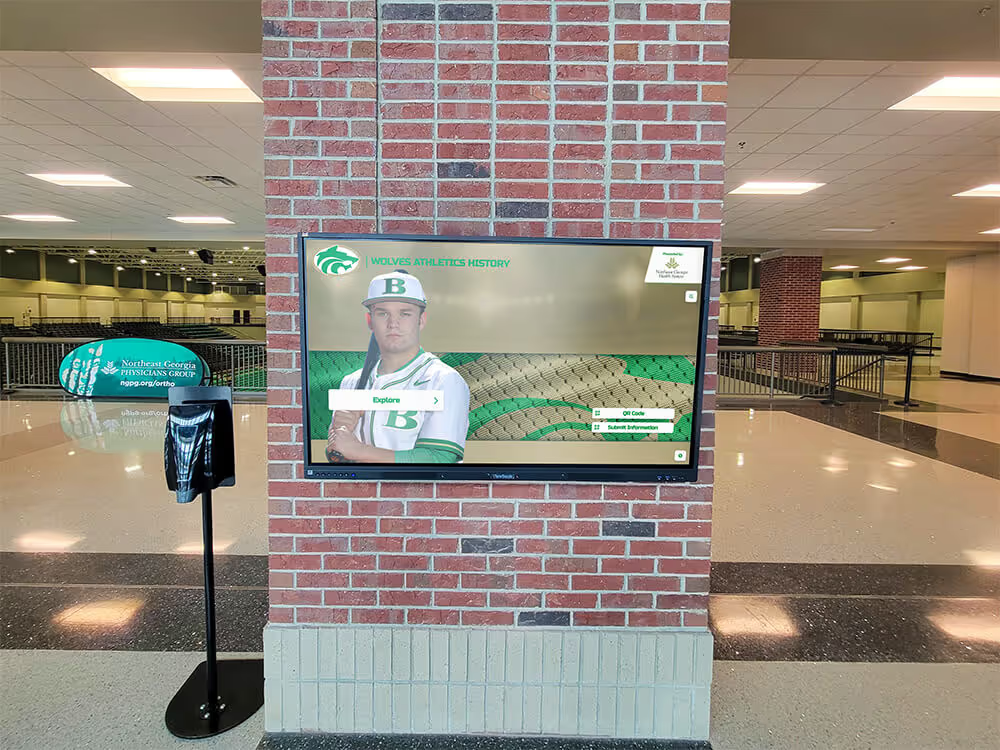
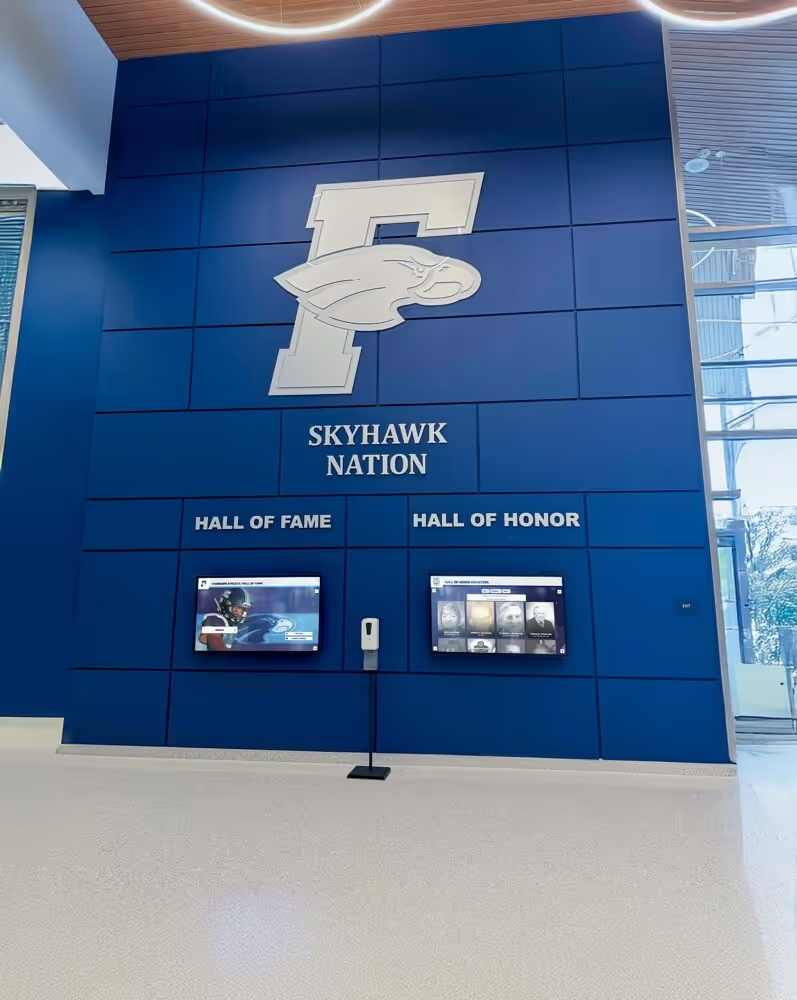
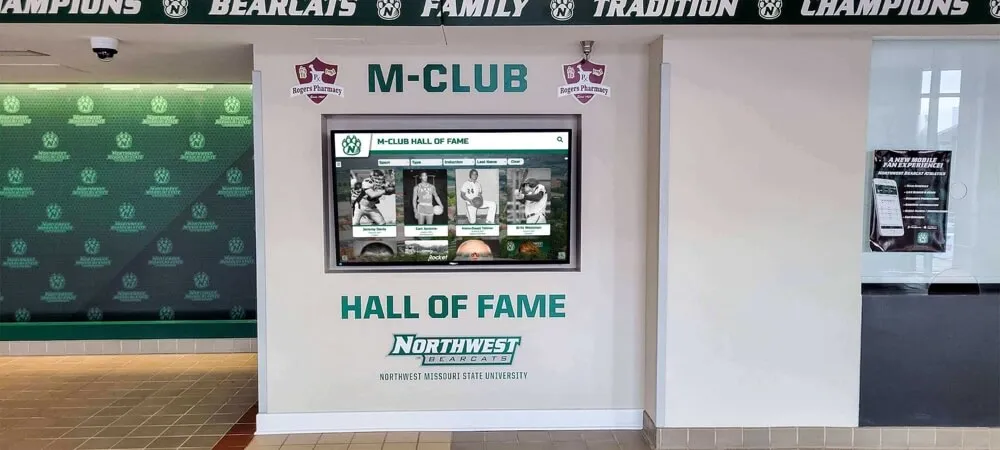
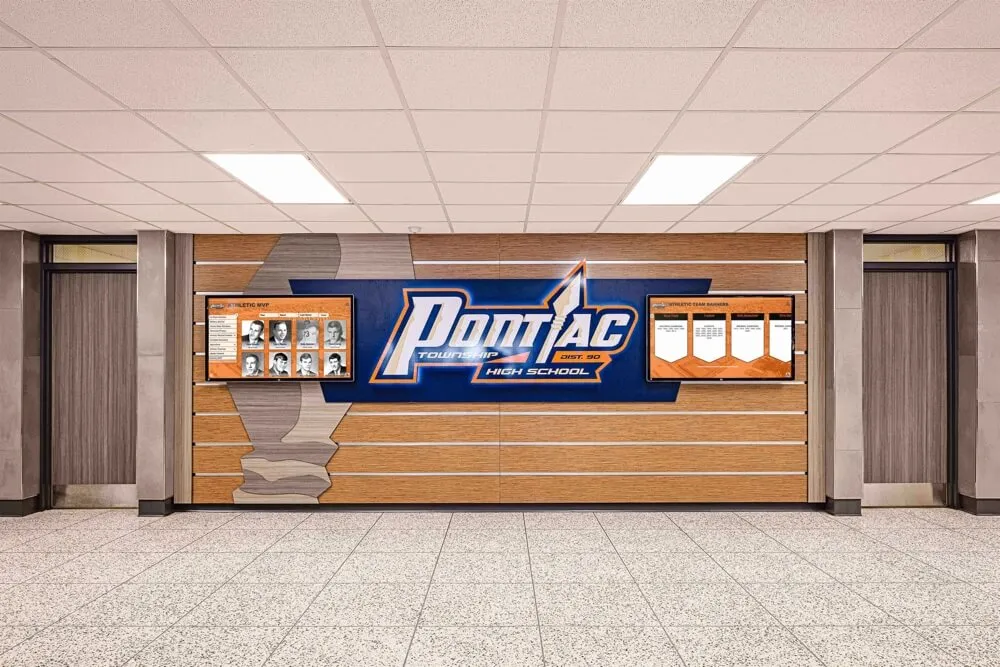
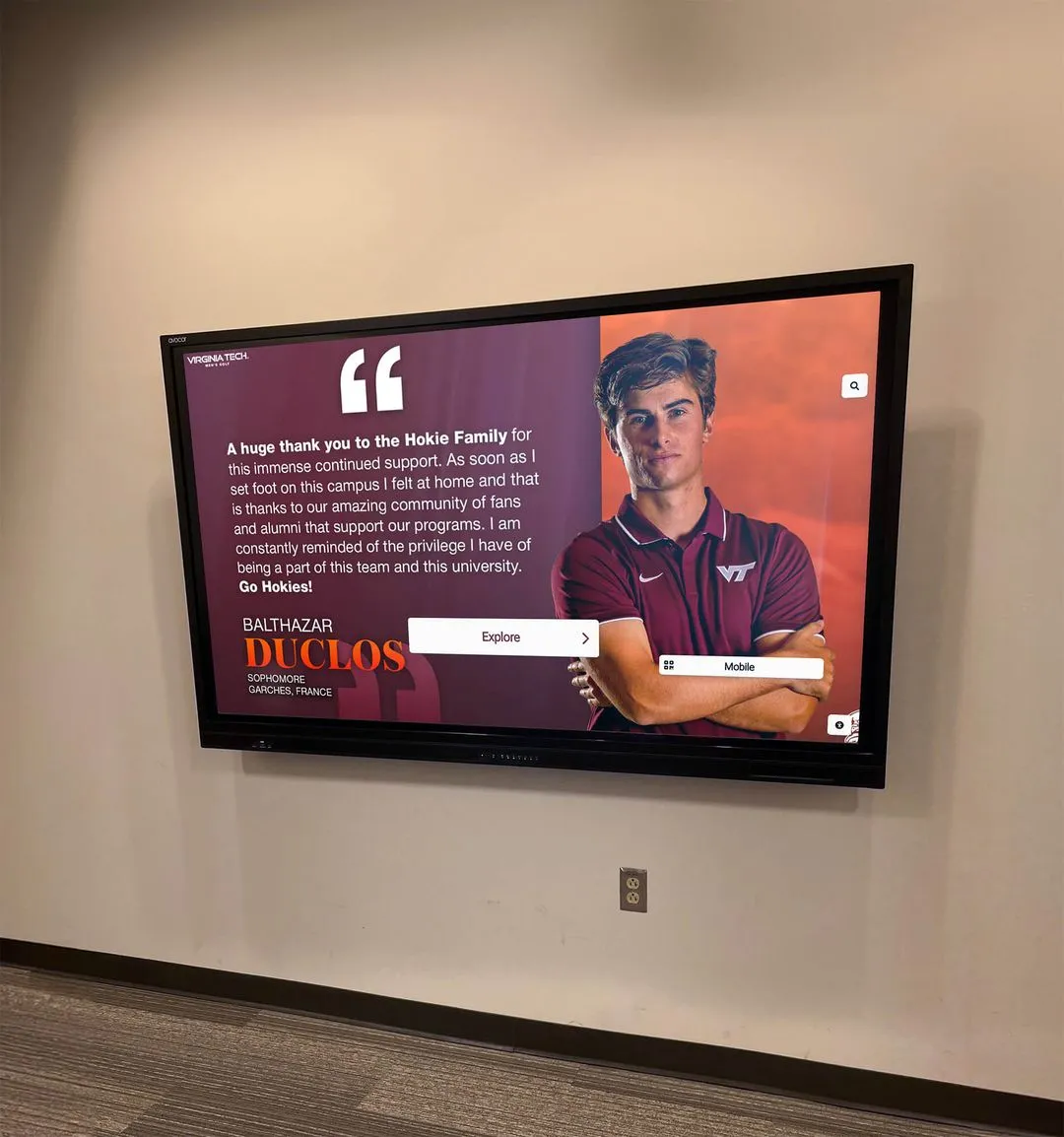
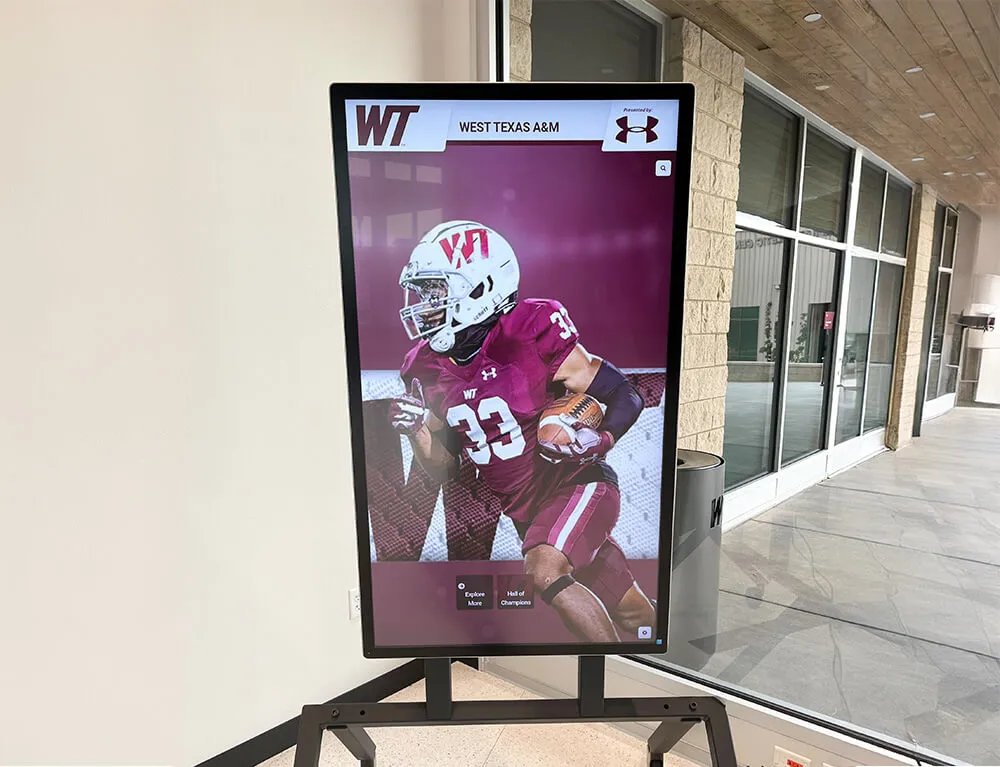
Interactive displays create year-round visibility for academic competition achievements, keeping accomplishments visible and celebrated long after the conference ends
How Schools Can Recognize Model UN Excellence
Here is where many schools fall short: athletic championships are celebrated loudly and visibly, while academically rigorous achievements like Best Delegate awards get a mention in a newsletter and then disappear into a forgotten certificate folder at home.
Model UN achievements represent genuine competitive excellence. A Best Delegate award at HMUN or NAIMUN is the academic equivalent of a state athletic championship. Schools that recognize this create cultures where intellectual achievement holds the same institutional status as athletic success.
Traditional Recognition Approaches
Most schools currently recognize Model UN achievement through:
- Club advisor announcements at school meetings
- Mentions in school newsletters or social media posts
- Physical award certificates and gavels stored at home
- Brief recognition at academic awards ceremonies
- Entries on college applications and resumes
These approaches are better than nothing, but they share a critical limitation: they are ephemeral. The achievement disappears from institutional memory as soon as the immediate celebration ends. Alumni who earned significant honors have no lasting place in the school’s recognition landscape.
The Case for Permanent Digital Recognition
Schools are increasingly addressing this gap by including Model UN achievements alongside debate, chess, robotics, and other academic competitions in permanent digital recognition systems that remain visible and accessible to the entire school community year-round.
A well-designed digital recognition wall for academic achievement can:
- Display all conference awards by student, year, and conference name
- Show position paper award recipients alongside committee performance award winners
- Recognize Best Delegation team achievements representing program-wide excellence
- Archive historical achievements so recognition persists across graduating classes
- Update dynamically as new conference results arrive each season
For a deeper look at how schools approach showcasing student achievement across all disciplines, digital displays are fast becoming the preferred tool for making academic competition results as visible as any trophy case.
Designing Inclusive Model UN Recognition
Effective Model UN recognition programs consider all levels of achievement:
Award-Level Recognition
- Best Delegate recipients at each conference attended
- Outstanding Delegate honorees by committee and conference
- Honorable Mention recipients
- Best Position Paper award winners
- Best Delegation team honors
Participation Recognition
- Conference participation logged by year
- Leadership roles on student dais panels
- Club officer positions and founding contributions
- Multi-year program participation milestones
Program-Level Recognition
- Year-by-year program growth and competitive trajectory
- Total delegate participation over program history
- Alumni who advanced through the program
- Advisor and coach recognition
- Institutional relationships with major conferences
These multiple recognition pathways ensure every student who contributes to the program receives appropriate acknowledgment—not just top award winners from high-profile conferences.
Explore how a comprehensive hall of honor recognition guide can help schools structure layered recognition tiers—an approach that works equally well for Model UN, academic competitions, and traditional athletic programs.
Making Model UN Recognition Last
The students who earn Best Delegate at Harvard Model United Nations or Outstanding Delegate at NAIMUN have accomplished something genuinely significant. Years later, those alumni should be able to show where their name appears on their school’s recognition wall—not search through boxes of certificates stored in closets.
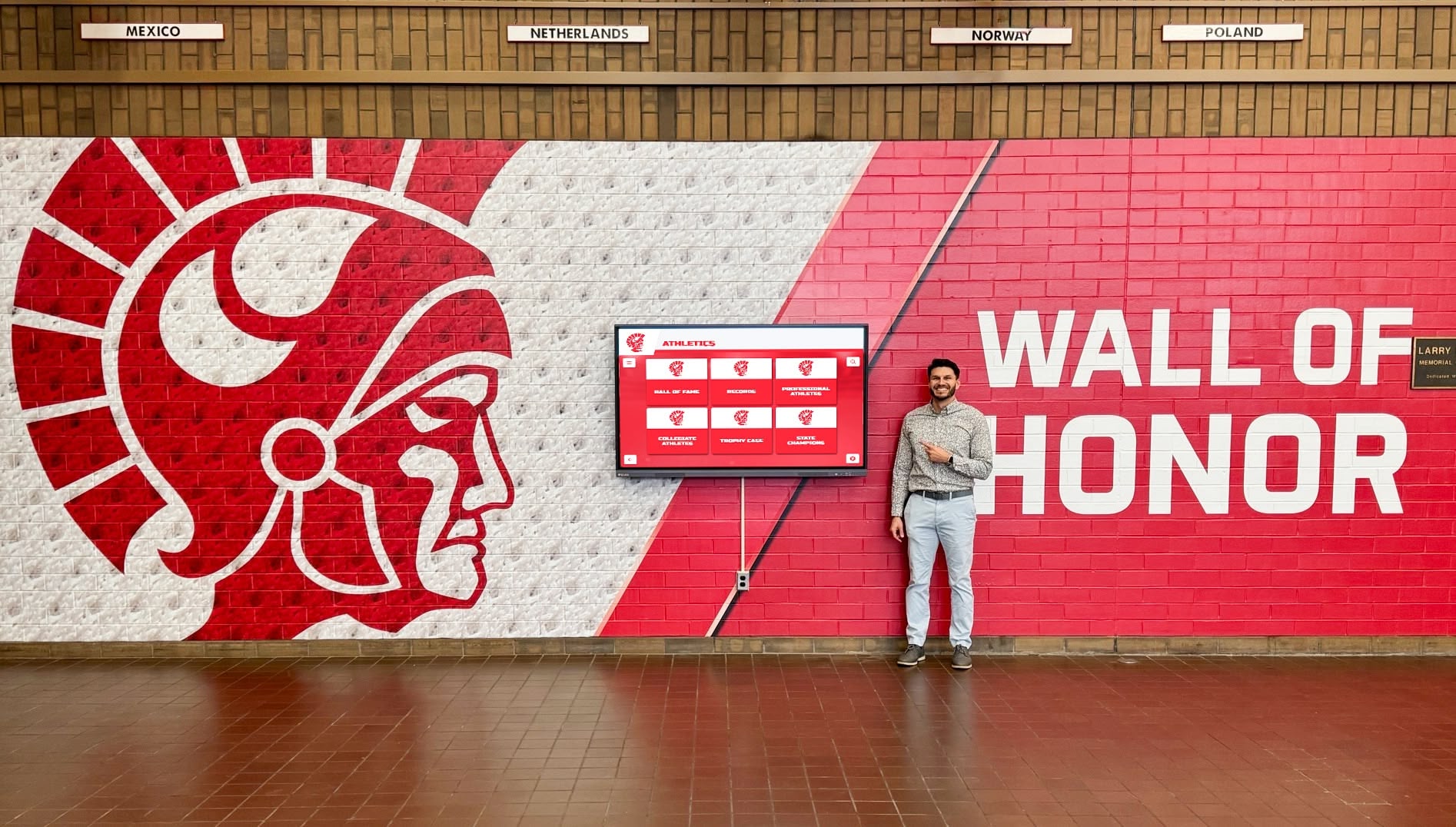
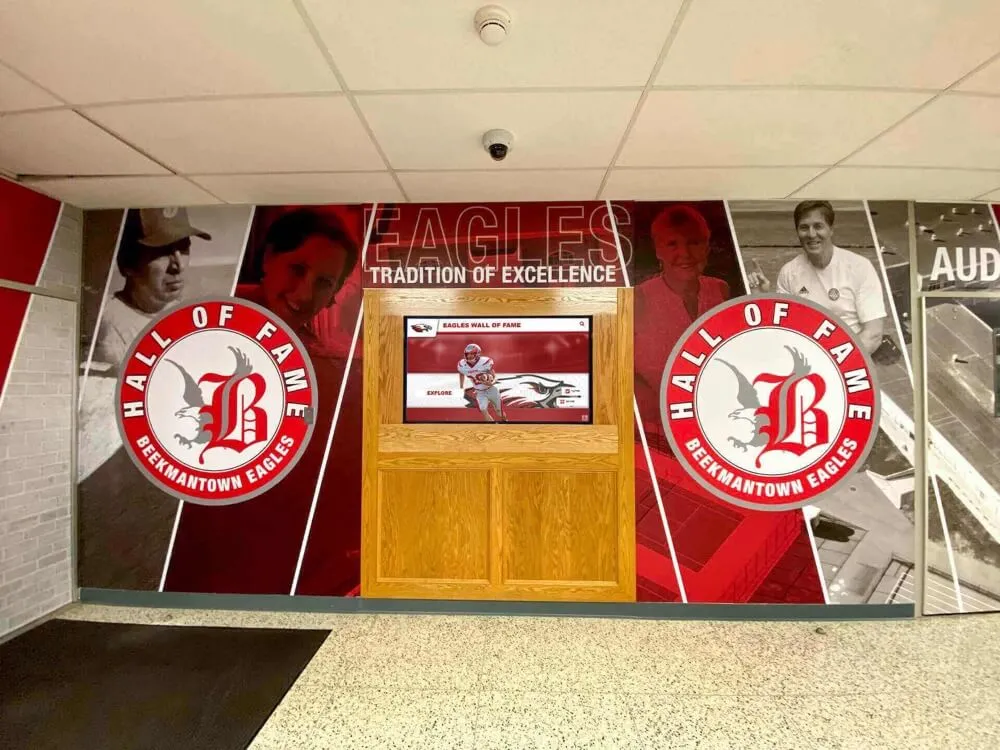
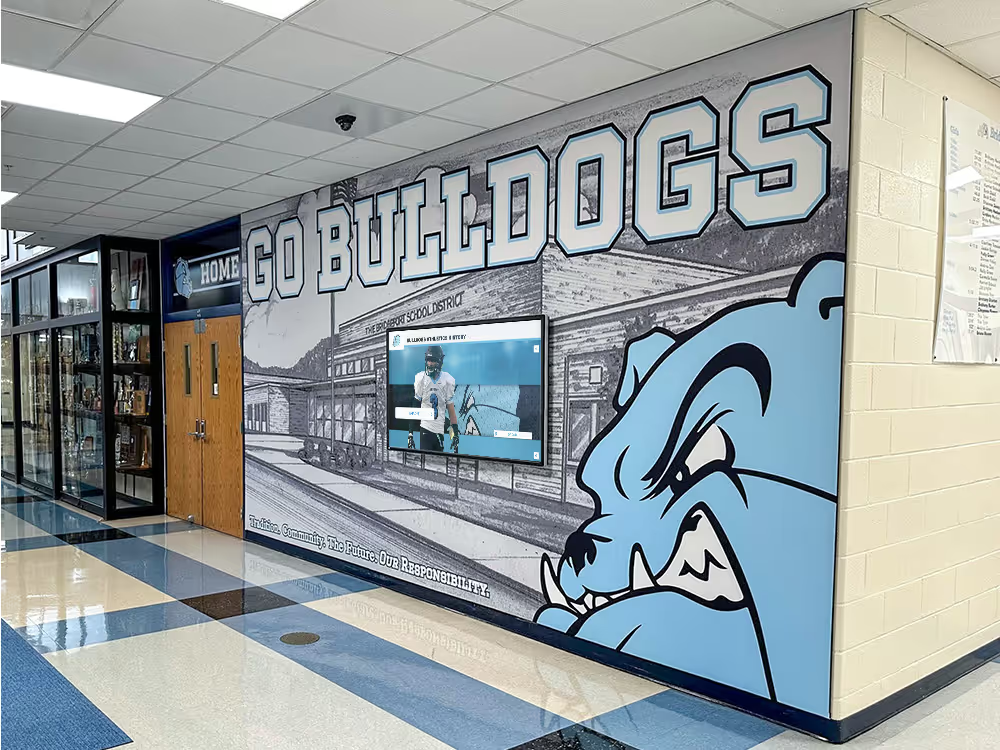
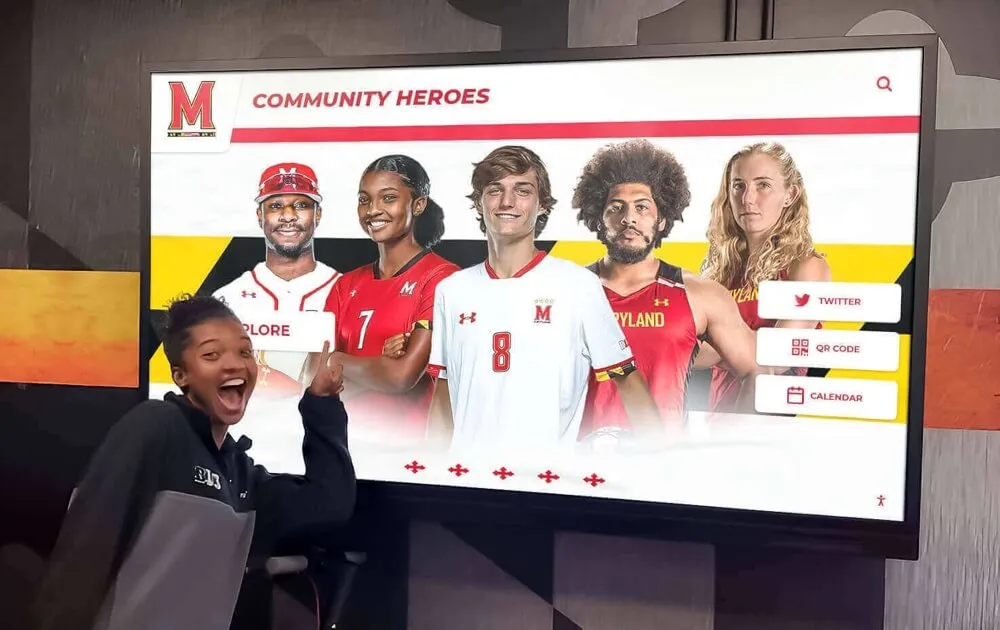
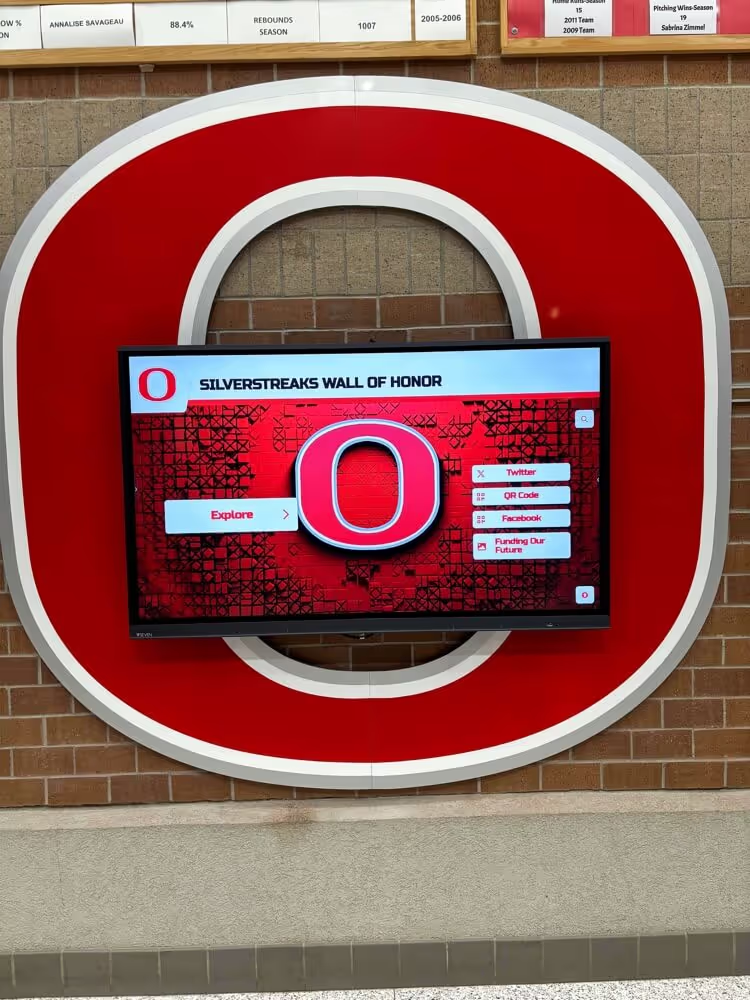
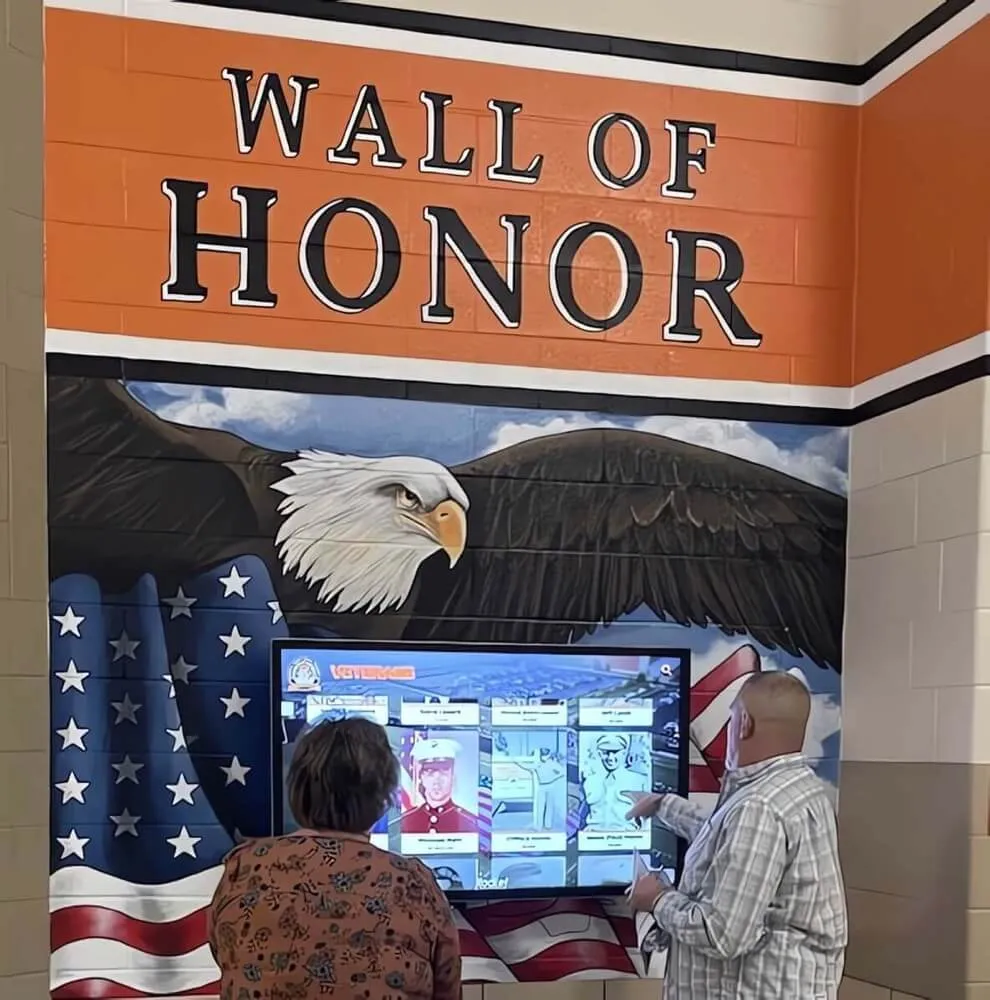
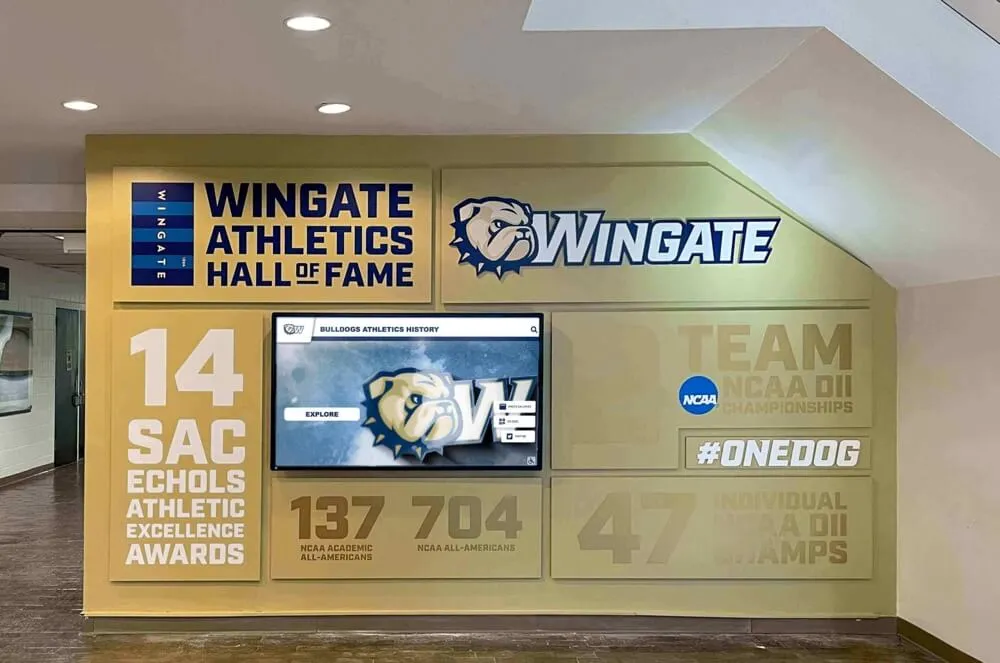
Digital recognition displays create permanent, accessible archives of student achievement that honor graduates long after they leave campus
Digital Recognition Wall Implementation
Rocket Alumni Solutions provides schools and universities with interactive touchscreen recognition walls that house Model UN achievements alongside athletic, artistic, and traditional academic honors. Unlike physical plaques that fill up and become costly to update, digital displays:
- Scale infinitely as new classes earn recognition each year
- Support rich media including photos, videos, and conference documentation
- Allow families and visitors to browse achievements interactively
- Update remotely as new conference results arrive throughout the season
- Remain ADA-compliant and accessible to all community members
Academic competition recognition programs benefit from the same systematic approach that has made athletic hall of fame programs successful for decades. When deciding between traditional and modern formats, the guide to school display cases: traditional vs. modern recognition offers a clear framework for understanding why digital systems outperform physical cases for programs that grow every year.
For schools building comprehensive recognition environments, explore hall of fame wall ideas for designing displays that celebrate achievements across all program types—including academic competitions that deserve the same institutional permanence as athletic honors.
See how interactive school display and achievement history software creates searchable, living archives of student accomplishment—giving Model UN award recipients the same historical visibility that championship sports teams have always enjoyed.
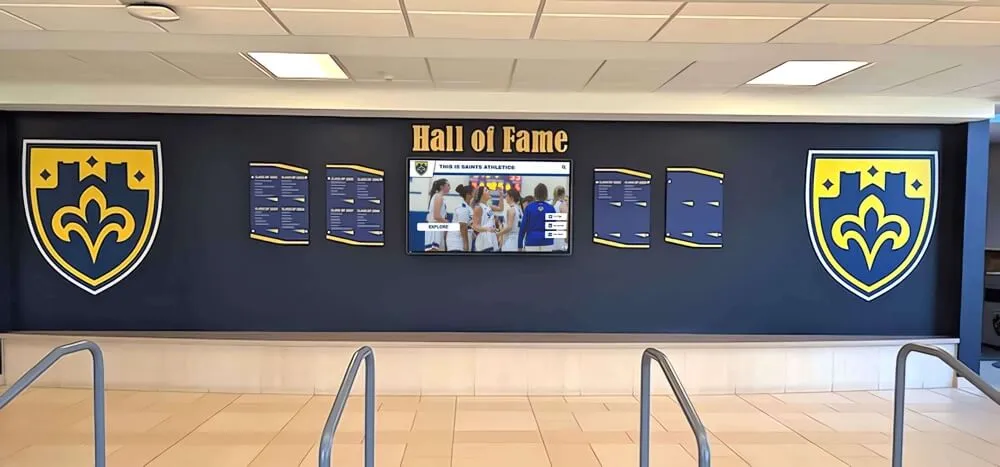
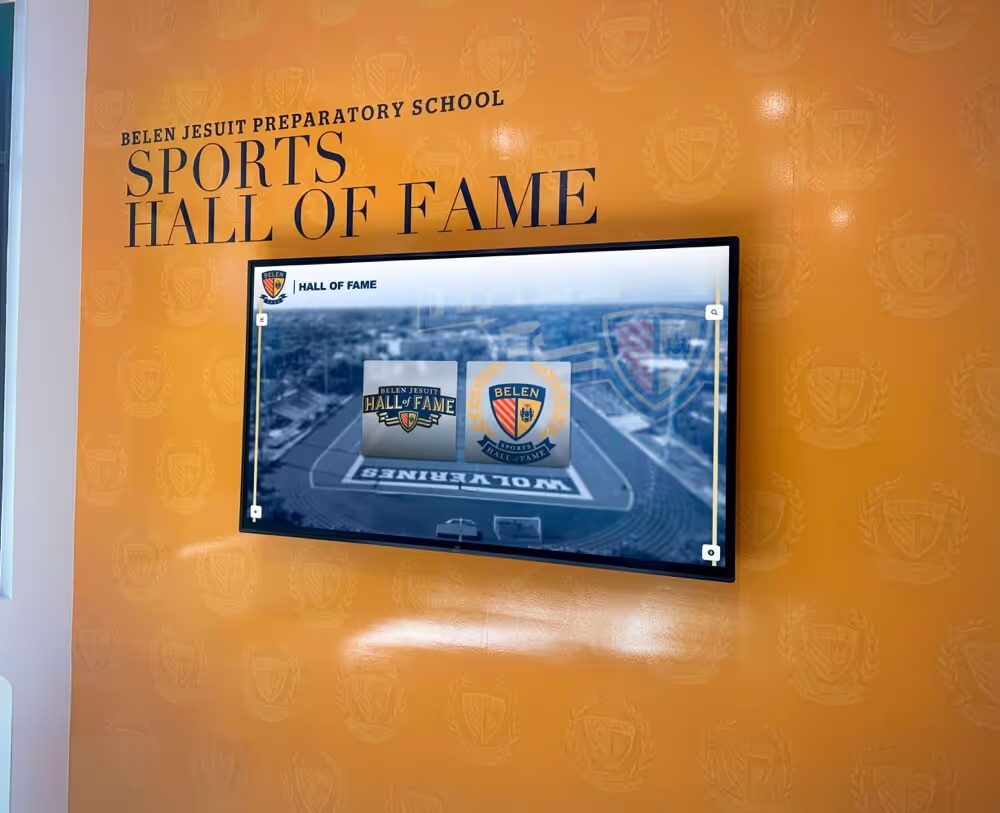
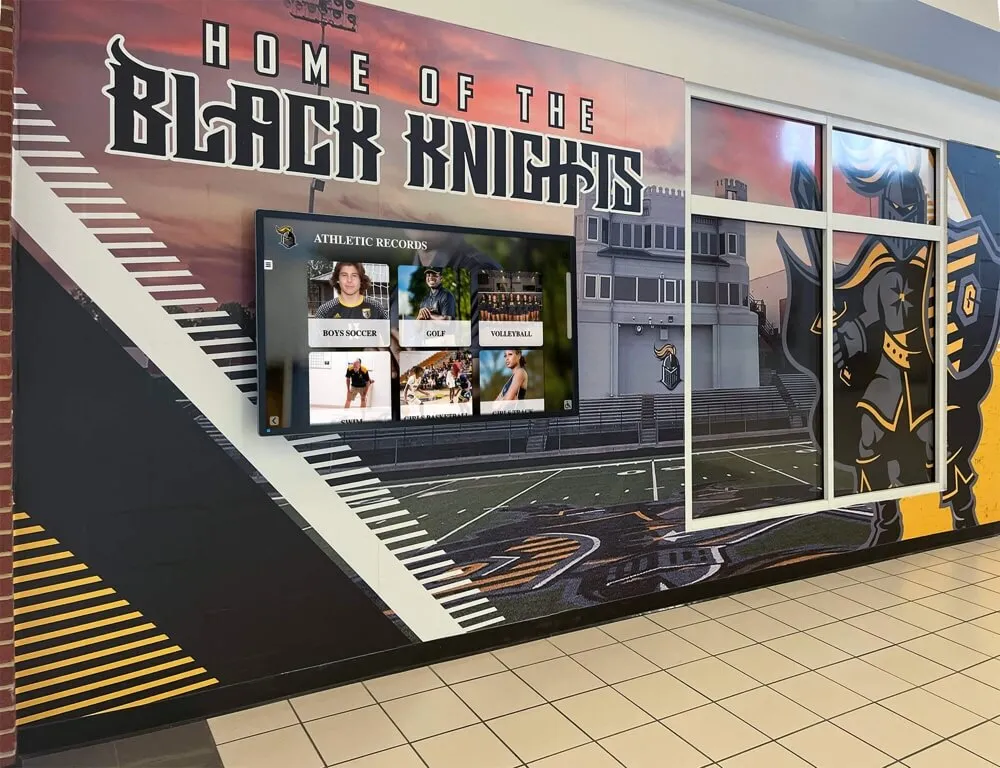
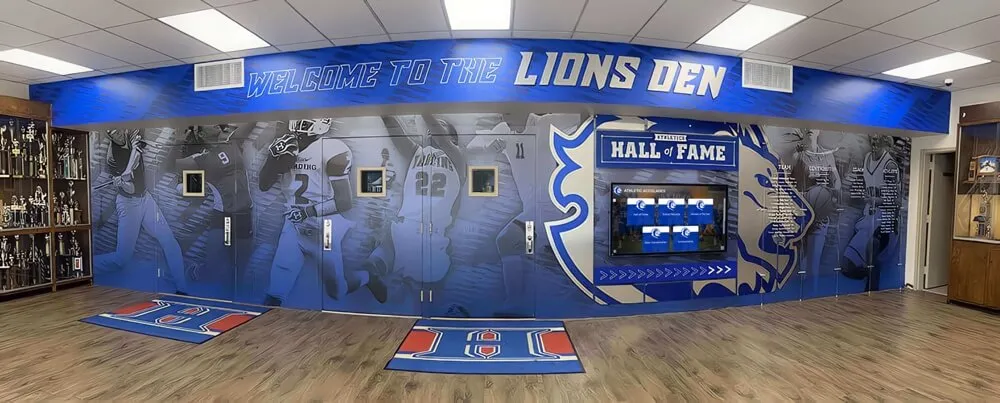
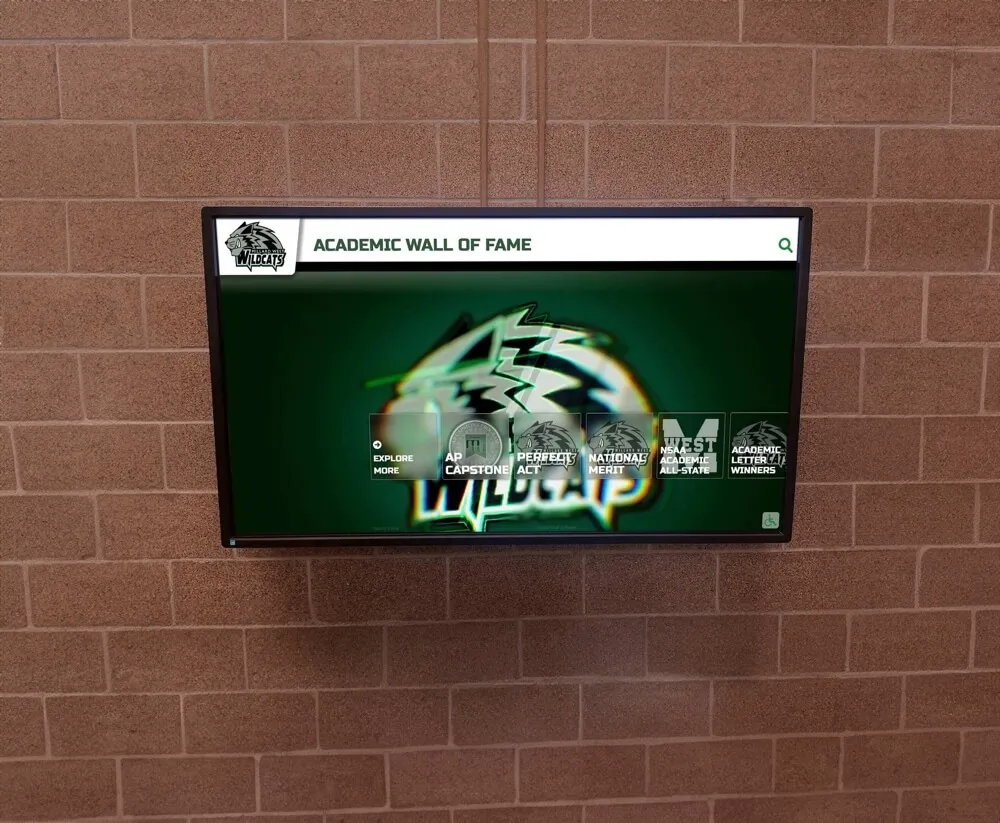
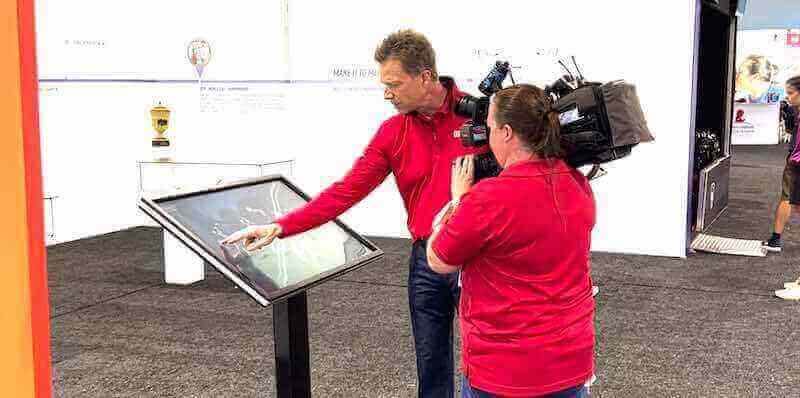
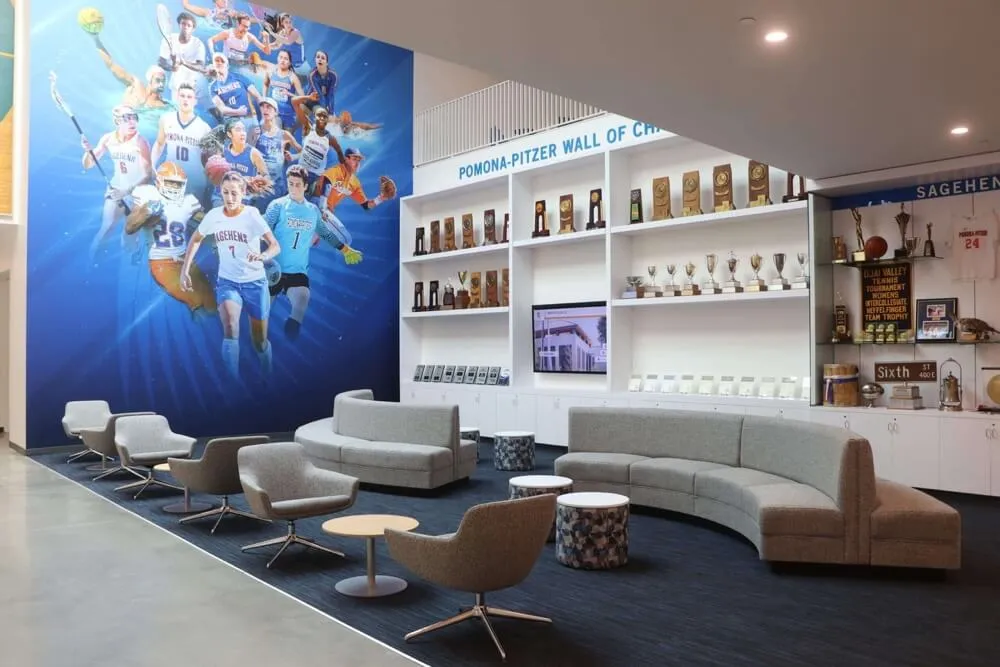
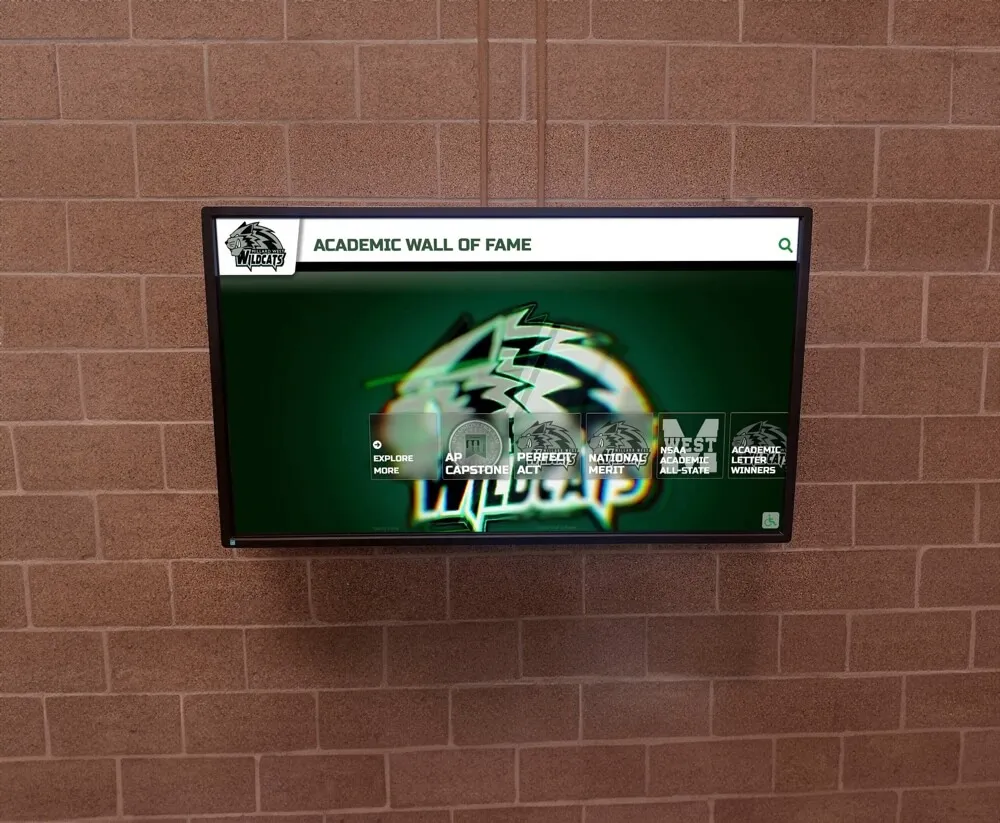
Comprehensive recognition environments that combine physical elements with digital displays honor academic competition achievements alongside every other form of student excellence
Frequently Asked Questions About Model UN
What does Model UN stand for? Model UN stands for Model United Nations. The word “model” refers to the simulated, educational nature of the experience—students model the structure, procedures, and diplomatic processes of the real United Nations.
Is Model UN only for high school students? No. While high school programs are the most numerous, Model UN programs exist at the middle school and college levels as well. Many college students who participated in high school MUN continue at major conferences like NMUN in New York City.
How long do Model UN conferences last? Conference lengths vary significantly. Local invitationals may run for a single day. Regional conferences typically run two days. Major conferences like HMUN and NAIMUN run three to four days. The largest college conference, NMUN, spans five full days.
What is the difference between Best Delegate and Outstanding Delegate? Best Delegate is the highest committee award, typically given to one delegate per committee. Outstanding Delegate is the second-tier award given to one or two additional delegates per committee who demonstrated excellent but slightly lower overall performance across all judging criteria.
Can you win a Model UN award as a first-year delegate? Yes, though competition varies by conference. Many beginner-level conferences are specifically designed to give newer delegates competitive pathways, and Honorable Mention awards recognize strong performance without requiring the experience level needed for top honors.
How do schools recognize Model UN awards? Recognition practices vary widely. Schools with strong programs include MUN awards in academic honors assemblies, school newsletters, and permanent recognition displays. The most forward-thinking schools incorporate MUN achievements into their digital recognition walls alongside athletic and traditional academic honors.
What makes a strong Model UN position paper? Strong position papers demonstrate thorough research, clear articulation of national policy positions, and specific actionable policy proposals. They cite relevant UN resolutions and international law, avoid generic statements applicable to any country, and present a coherent diplomatic narrative from the assigned country’s perspective.
Is Model UN good for college applications? Model UN is highly valued by college admissions officers because it demonstrates research skills, public speaking, global awareness, and intellectual engagement with complex material. Awards at prestigious conferences like HMUN or NAIMUN carry particular weight as evidence of competitive academic achievement.
What is a working paper in Model UN? A working paper is a draft document delegates collaboratively write during unmoderated caucuses that proposes solutions to the committee’s topic. Working papers are informally debated and refined before being formally introduced as draft resolutions that the full committee votes on.
What is a bloc in Model UN? A bloc is an informal coalition of delegates from countries with similar positions on committee topics. Blocs collaborate during unmoderated caucuses to draft working papers, coordinate speaking strategy, and build the majority support needed to pass resolutions.
Conclusion
Model UN is one of the most comprehensive academic experiences available to secondary and college students—simultaneously developing research, public speaking, writing, negotiation, and global awareness through structured competitive practice. The awards students earn, from Best Delegate to Best Position Paper, represent genuine achievement deserving recognition commensurate with the effort and skill involved.
For schools and universities, the challenge is ensuring that MUN accomplishments receive the same institutional visibility that athletic achievements enjoy. When a student spends months preparing a position paper, travels to Boston or New York to compete, and returns with a Best Delegate award, that achievement deserves permanent recognition—not just a certificate stored away at home.
Building comprehensive recognition programs that honor the full range of student excellence—including Model UN alongside athletics, arts, and traditional academics—creates school cultures where intellectual achievement is valued, visible, and genuinely celebrated throughout the year.
Honor Your Model UN Achievers with Permanent Digital Recognition
Discover how modern digital recognition walls can celebrate every Best Delegate, Outstanding Delegate, and Position Paper award your students earn—creating lasting recognition that honors intellectual excellence as visibly as any athletic trophy.
Explore Recognition Solutions