High school football players and their families anxiously track one of the most important dates in the college recruiting calendar: early signing day for college football. This December deadline marks when the majority of Division I and II football recruits officially commit to their chosen universities by signing National Letters of Intent. For athletic directors, coaches, and school administrators, understanding these dates and planning appropriate recognition becomes essential to celebrating student-athletes’ achievements while inspiring younger players working toward their own college opportunities.
The early signing period has transformed college football recruiting since its introduction, shifting the majority of commitments from the traditional February signing day to December. Schools hosting signing day ceremonies during this period create special moments for athletes, families, and communities—but the challenge lies in preserving these achievements beyond temporary paper banners and fleeting social media posts. Effective recognition honors student-athletes appropriately while serving as powerful recruiting tools demonstrating program success to prospective athletes and their families.
This comprehensive guide answers when early signing day for college football occurs, explains what the period means for student-athletes and programs, and explores how schools create lasting recognition that celebrates these milestone commitments while building stronger athletic cultures.

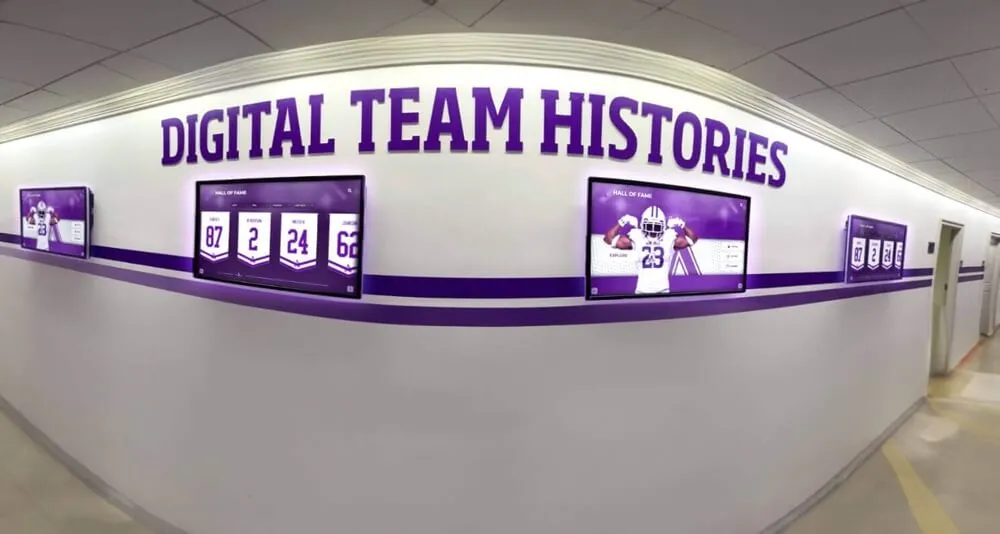
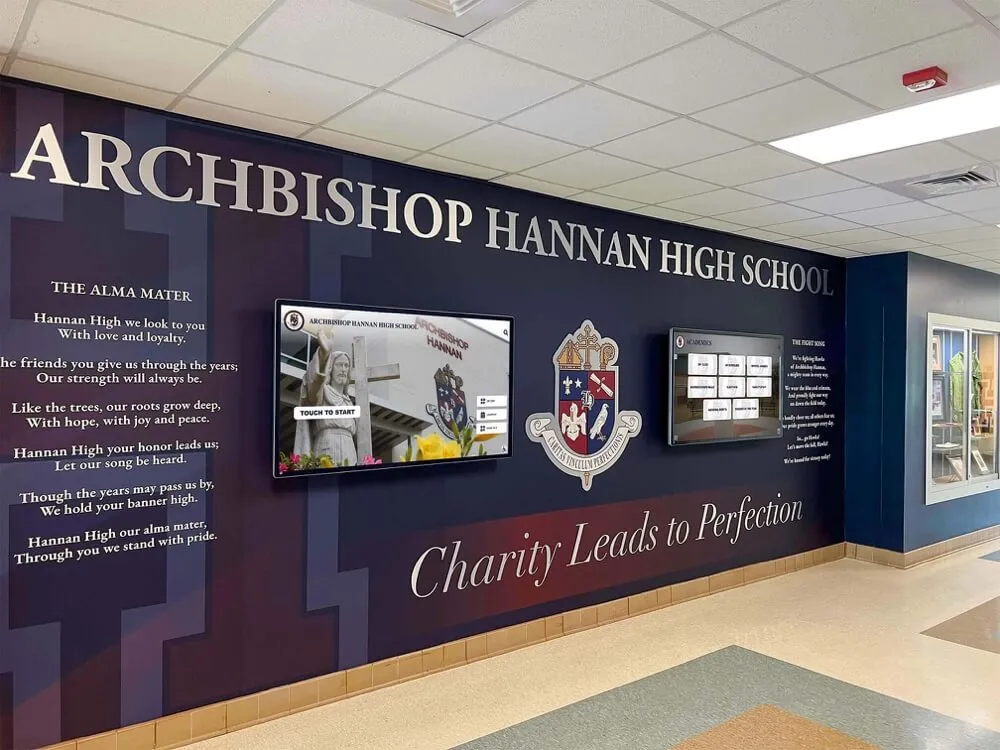
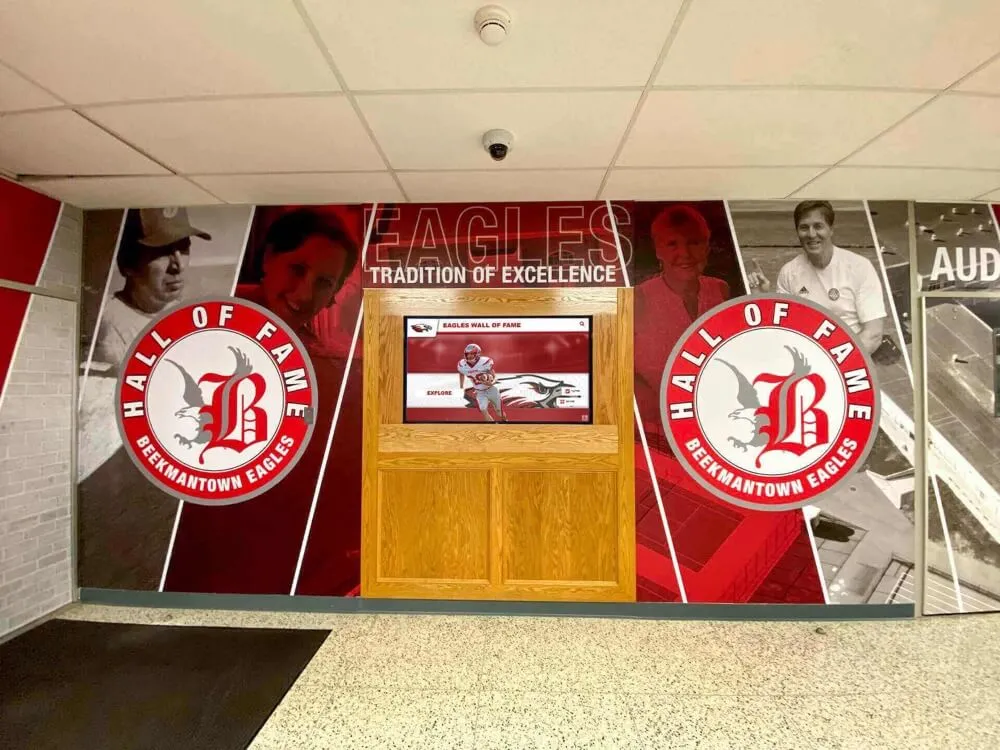
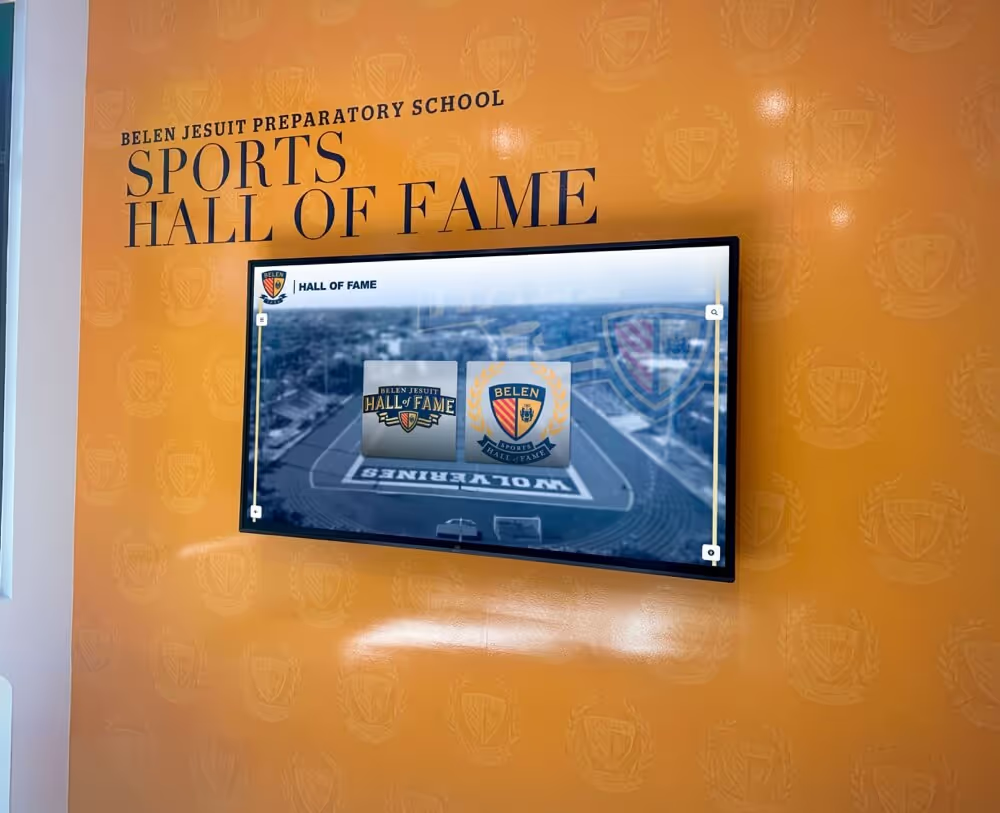
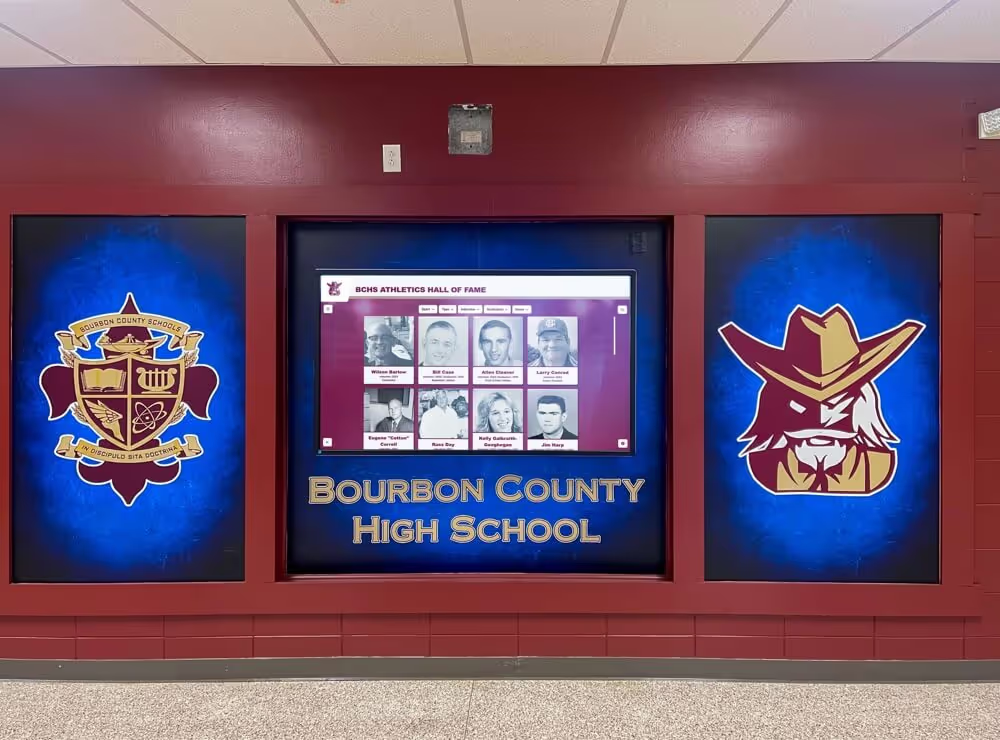
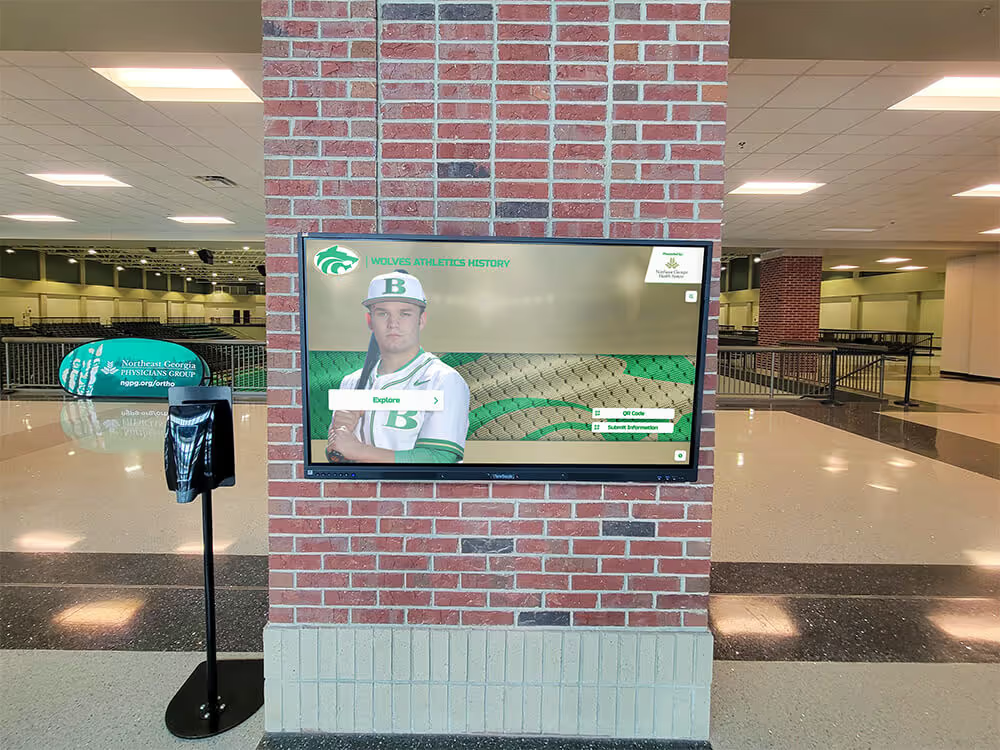
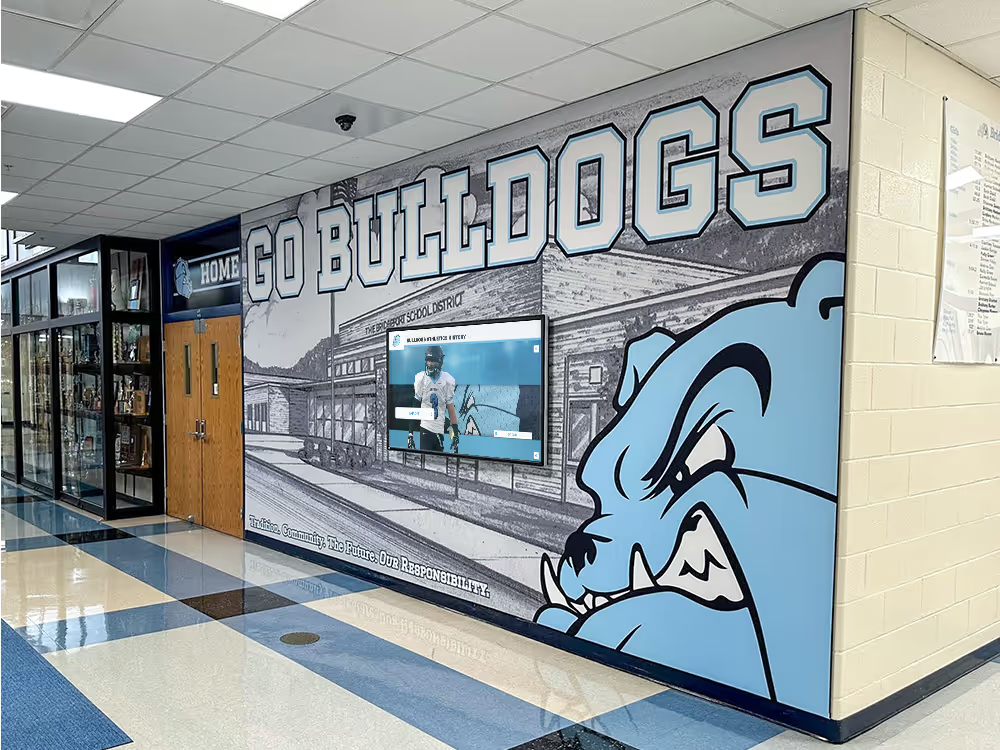
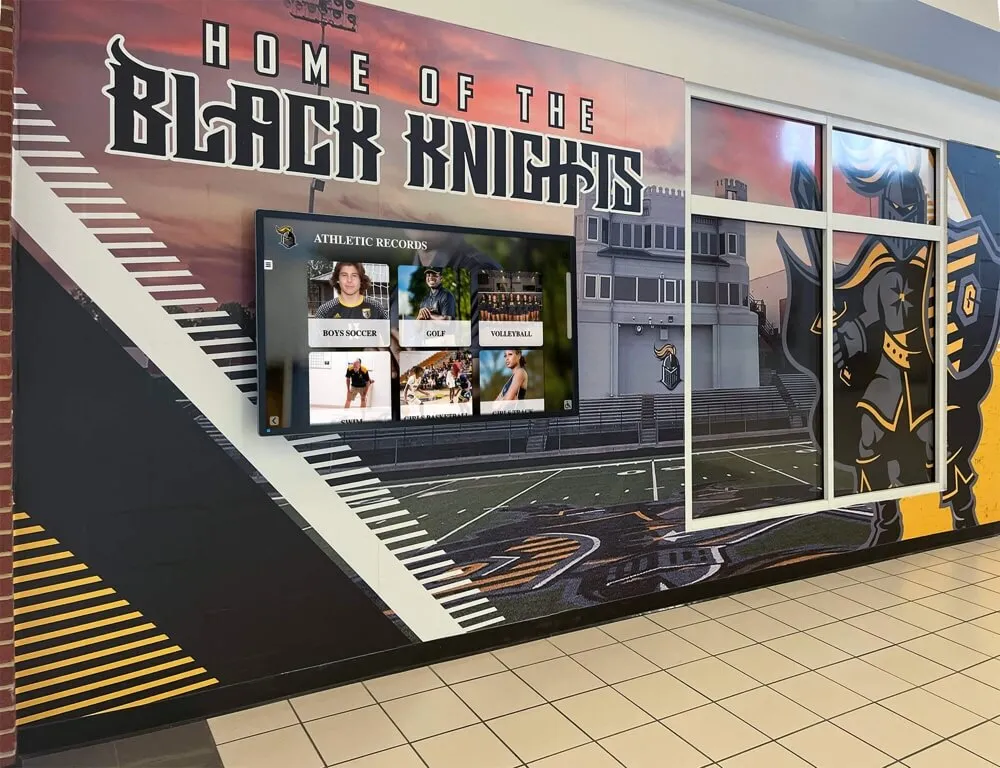
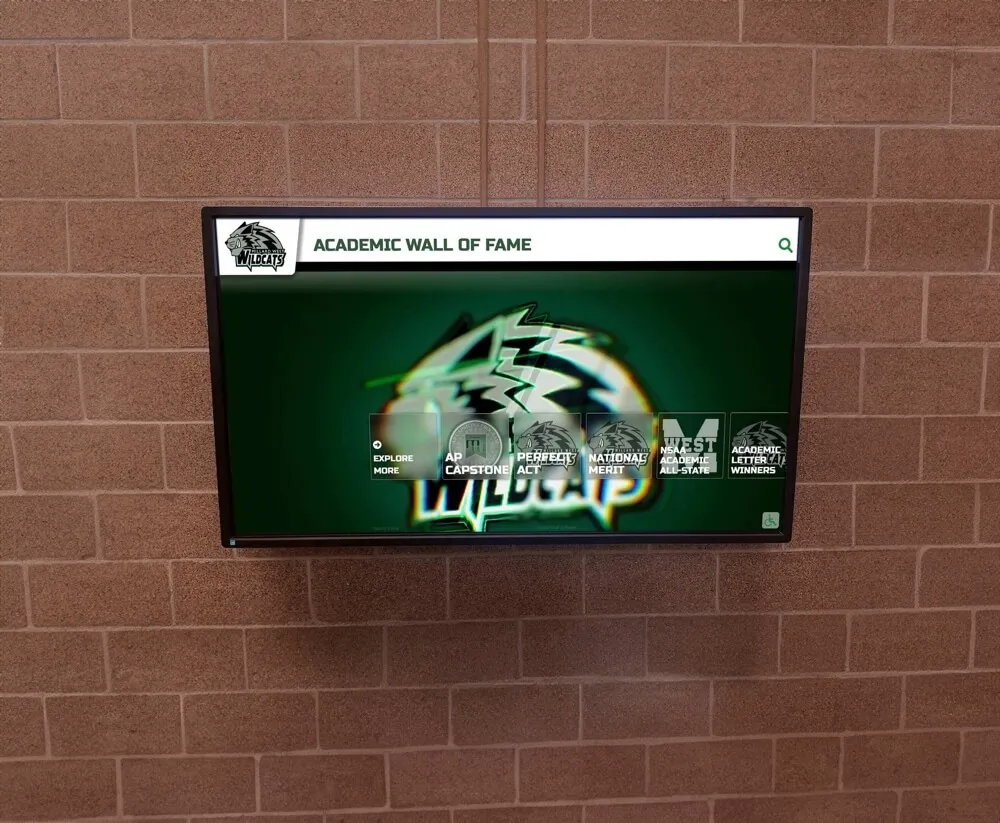
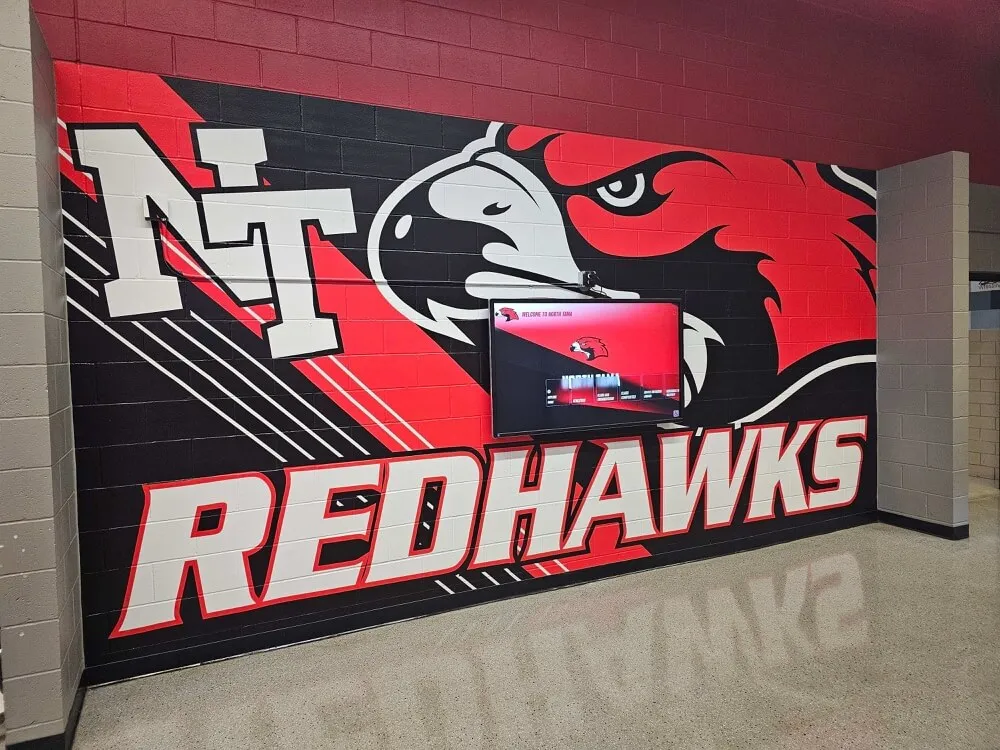
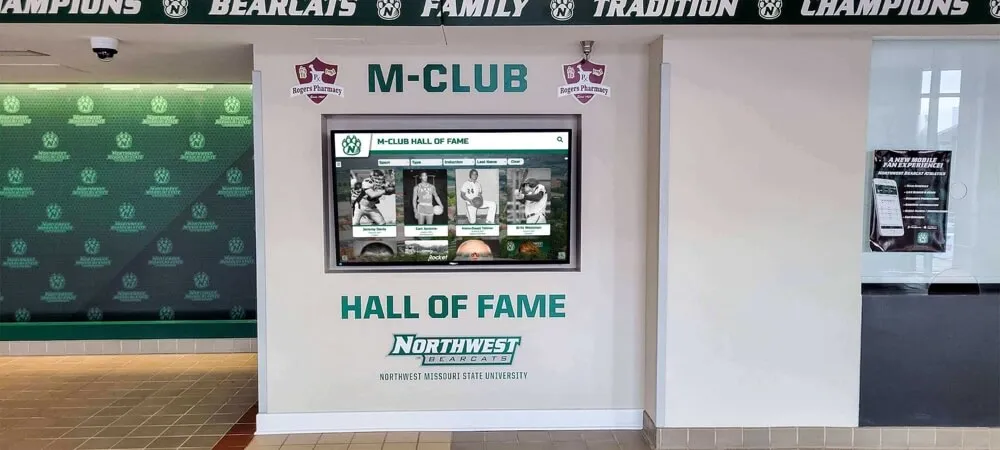
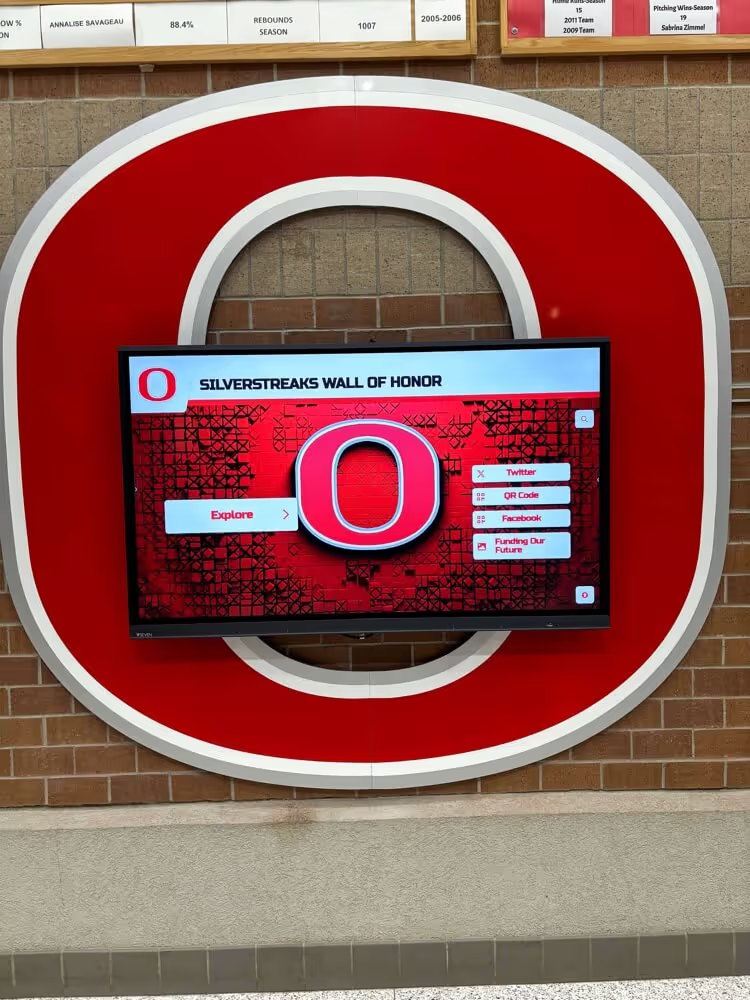
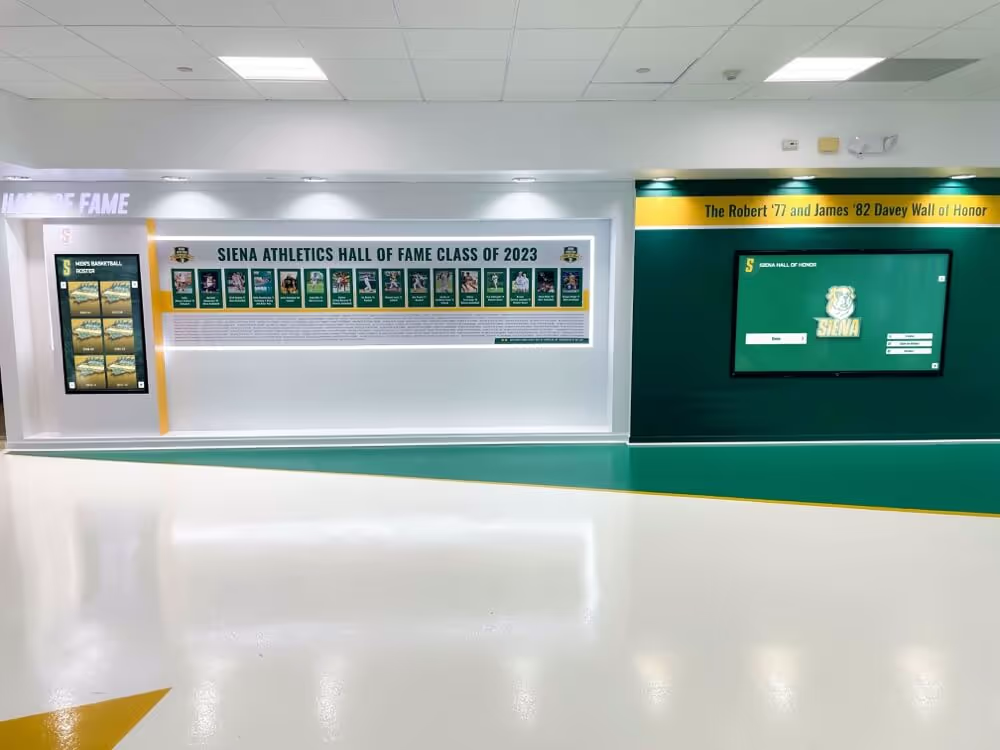
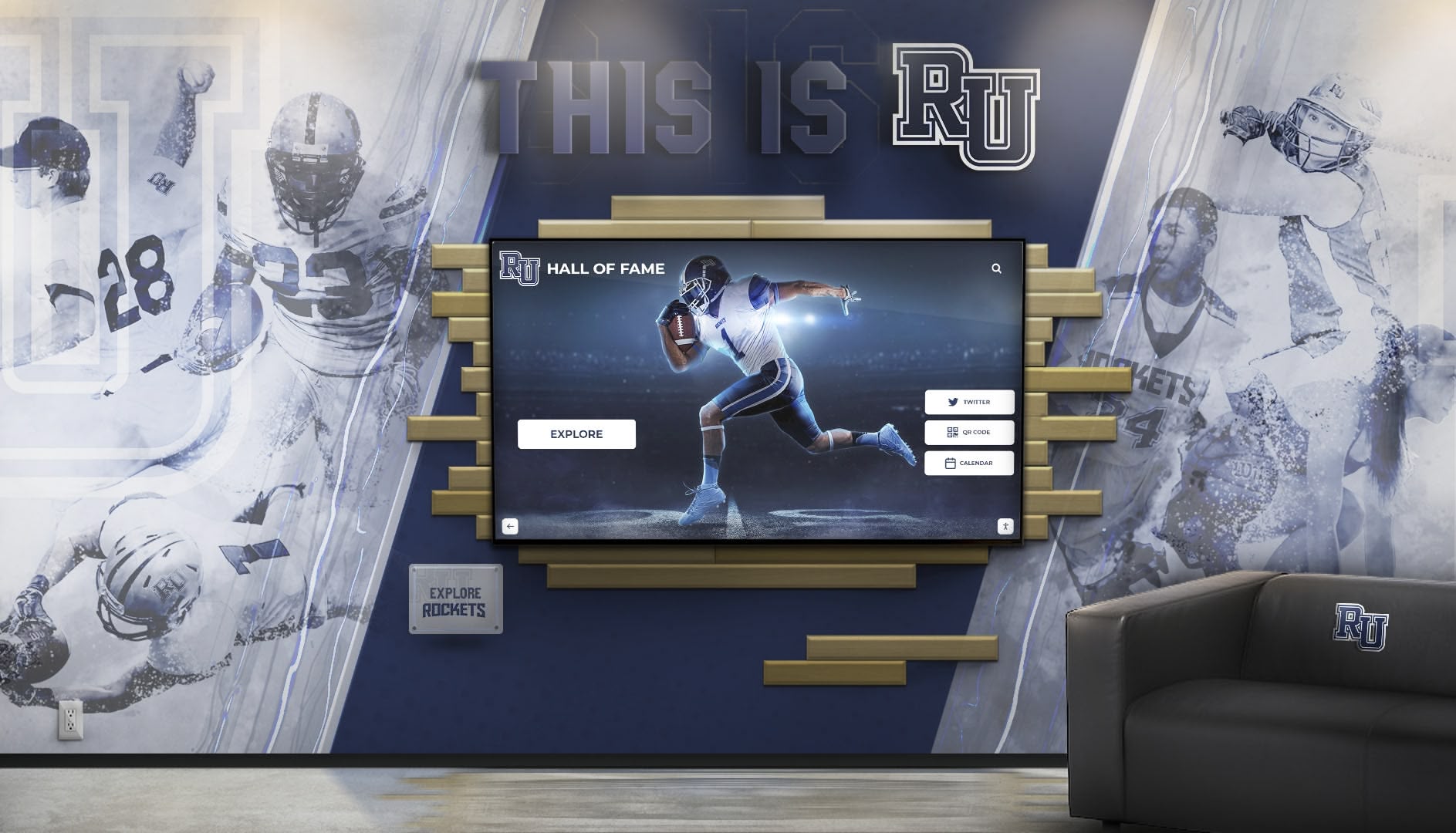
Modern recognition displays transform signing day celebrations into permanent showcases honoring college football commitments year-round
Early Signing Day for College Football: Key Dates
Understanding the college football signing calendar helps schools, families, and student-athletes plan for these important commitment milestones.
When Is Early Signing Day for College Football?
The early signing period for college football occurs annually in mid-December, typically beginning the third Wednesday of the month and lasting three days.
2026 Early Signing Period:
- Dates: December 16-18, 2026 (Wednesday through Friday)
- Duration: Three-day signing window
- Applicable Sports: Football (FBS and FCS programs)
- Divisions: NCAA Division I and Division II
During these three days, high school football players who have verbally committed to colleges can officially sign their National Letters of Intent, making their commitments binding. The period creates a concentrated celebration window when schools nationwide host signing ceremonies honoring their football commits.
Regular Signing Period for Football
Beyond the December early period, college football maintains a traditional signing period:
2026 Regular Signing Period:
- Begins: First Wednesday in February 2026 (February 4, 2026)
- Duration: Extends through April 1, 2026
- Purpose: Accommodates later commits and recruiting changes
While the early signing period now captures approximately 85-90% of Football Bowl Subdivision (FBS) commitments, the February period remains important for athletes still evaluating options, transfers, and situation changes occurring between December and February.
Schools like those implementing digital recognition displays for college commitments benefit from systems accommodating both signing periods rather than limiting celebration to single events.

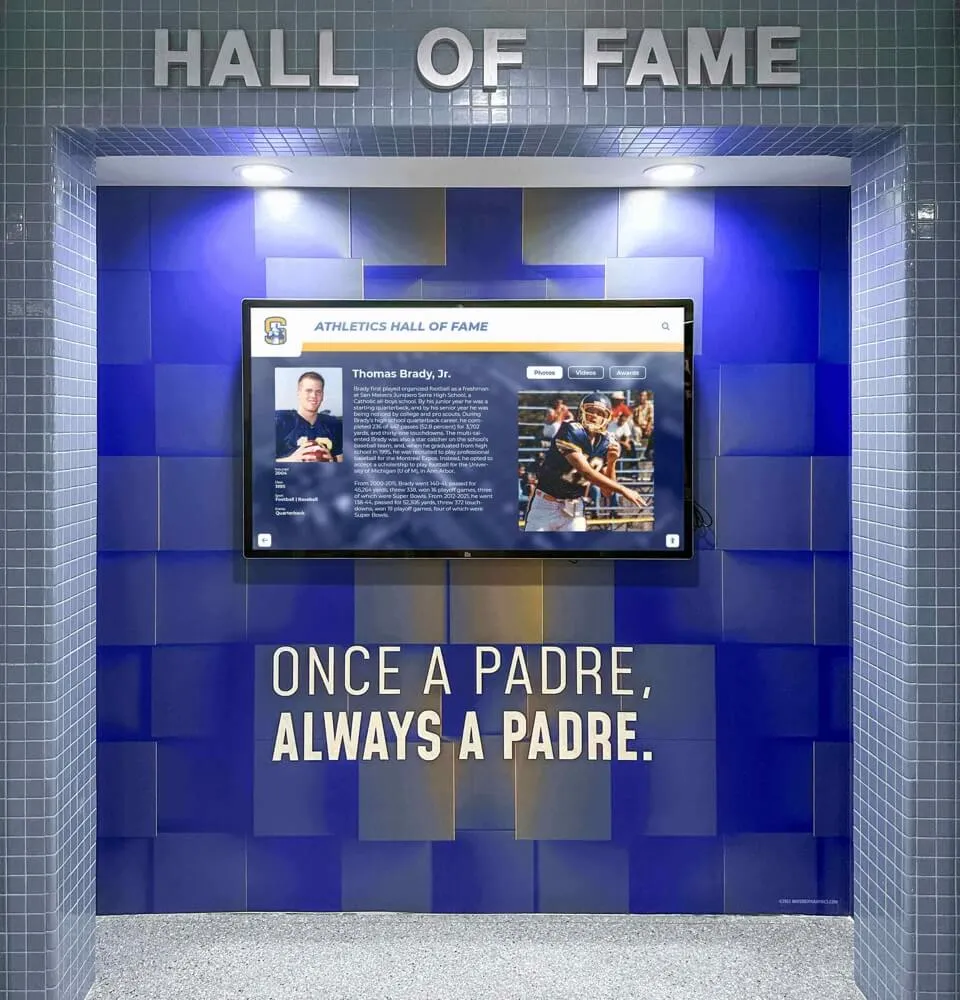
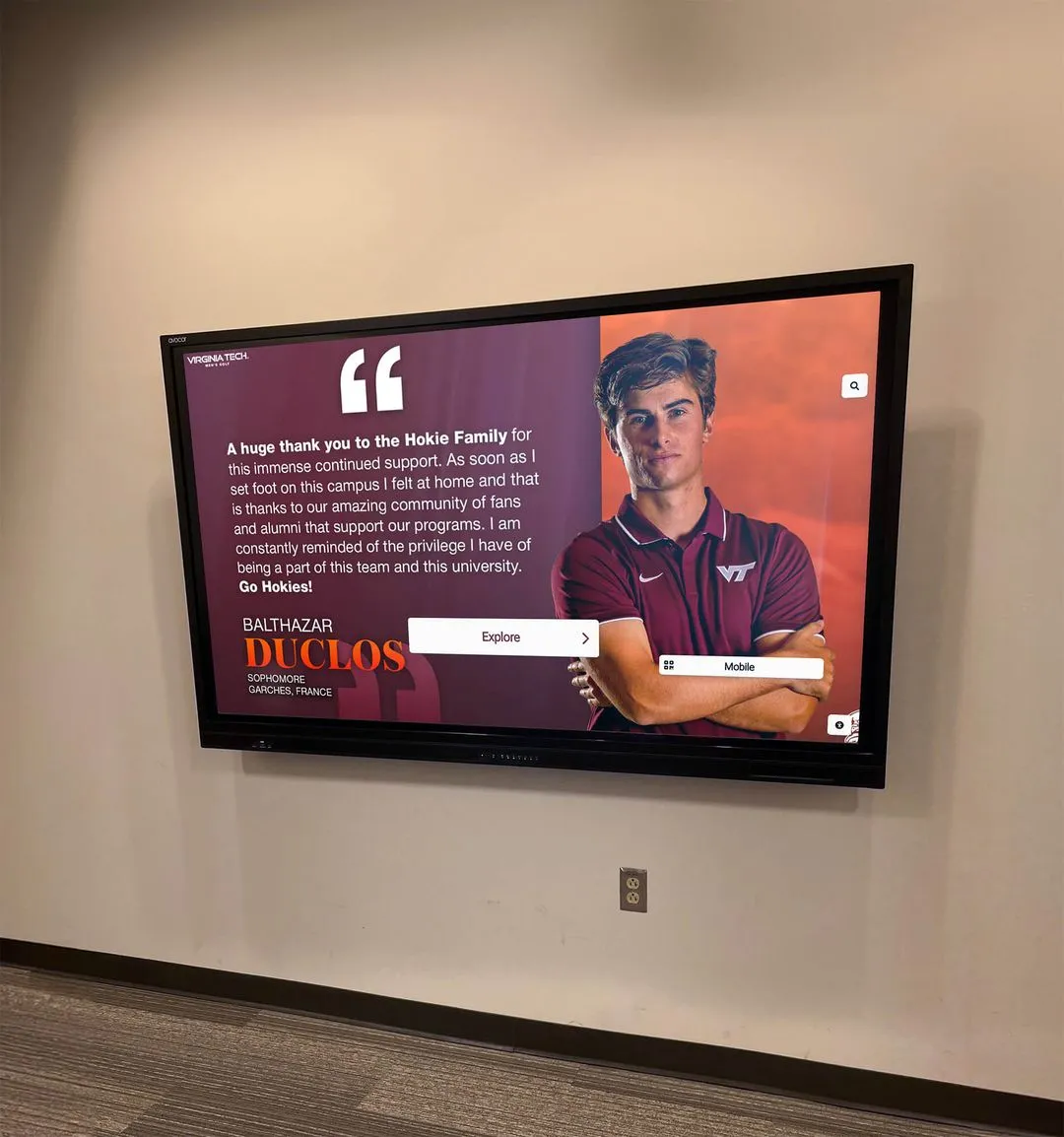
Individual athlete profiles celebrate specific accomplishments while connecting student-athletes to program legacy
Signing Periods for Other Sports
College football’s unique calendar differs from other NCAA sports:
Non-Football Sports Signing Periods:
- Early Period: Mid-November (typically lasting one week)
- Regular Period: April through August
- Applies to: Basketball, soccer, baseball, softball, volleyball, and other NCAA sports
Many schools coordinate recognition ceremonies honoring all sports’ commitments together, celebrating diverse athletic achievements while acknowledging the different timelines various sports follow. Understanding national signing day for all sports helps athletic departments plan inclusive celebrations.
What Early Signing Day Means for Student-Athletes
Beyond calendar dates, early signing day represents a significant milestone with practical and emotional importance for college-bound football players.
Making Commitments Official and Binding
The National Letter of Intent (NLI) transforms verbal commitments into binding agreements:
Legal Commitment
- Verbal commitments are non-binding promises
- Signing the NLI creates official commitment to attend the university
- Athletes agree to attend the institution for one academic year
- Universities agree to provide athletic financial aid for one year
Recruiting Conclusion
- Once signed, athletes must cease recruiting activities
- Other college programs must stop recruiting the athlete
- Athletes gain certainty about their college destination
- Families can end the often-stressful recruiting process
This finality brings relief to many student-athletes and families who have navigated months or years of recruiting conversations, official visits, and decision-making pressure.
Early Signing Day Advantages
Many athletes choose to sign during the December early period rather than waiting for February:
Certainty and Peace of Mind
- Finalize college decision before senior season ends
- Reduce recruiting stress during senior year academic focus
- Avoid pressure from other programs continuing recruitment
- Enjoy remainder of high school career with college plans settled
Senior Year Focus
- Concentrate on academics and maintaining eligibility
- Fully engage in final high school football season memories
- Participate in senior activities without recruiting distractions
- Prepare mentally and physically for college transition
Relationship Building
- Begin connecting with future college teammates who also signed early
- Start communication with college coaching staff about summer preparation
- Plan campus visits and housing arrangements with extended timeline
- Engage with academic advisors about course selection and major planning
For schools, the early period’s concentration of signings creates natural opportunities for meaningful celebration ceremonies that honor multiple athletes simultaneously.
Financial Aid Formalization
Signing National Letters of Intent confirms athletic scholarship commitments:
Scholarship Documentation
- Financial aid amounts specified in NLI paperwork
- One-year renewable scholarships typical in Division I football
- Multi-year scholarship guarantees increasingly common
- Academic scholarships in addition to athletic aid documented
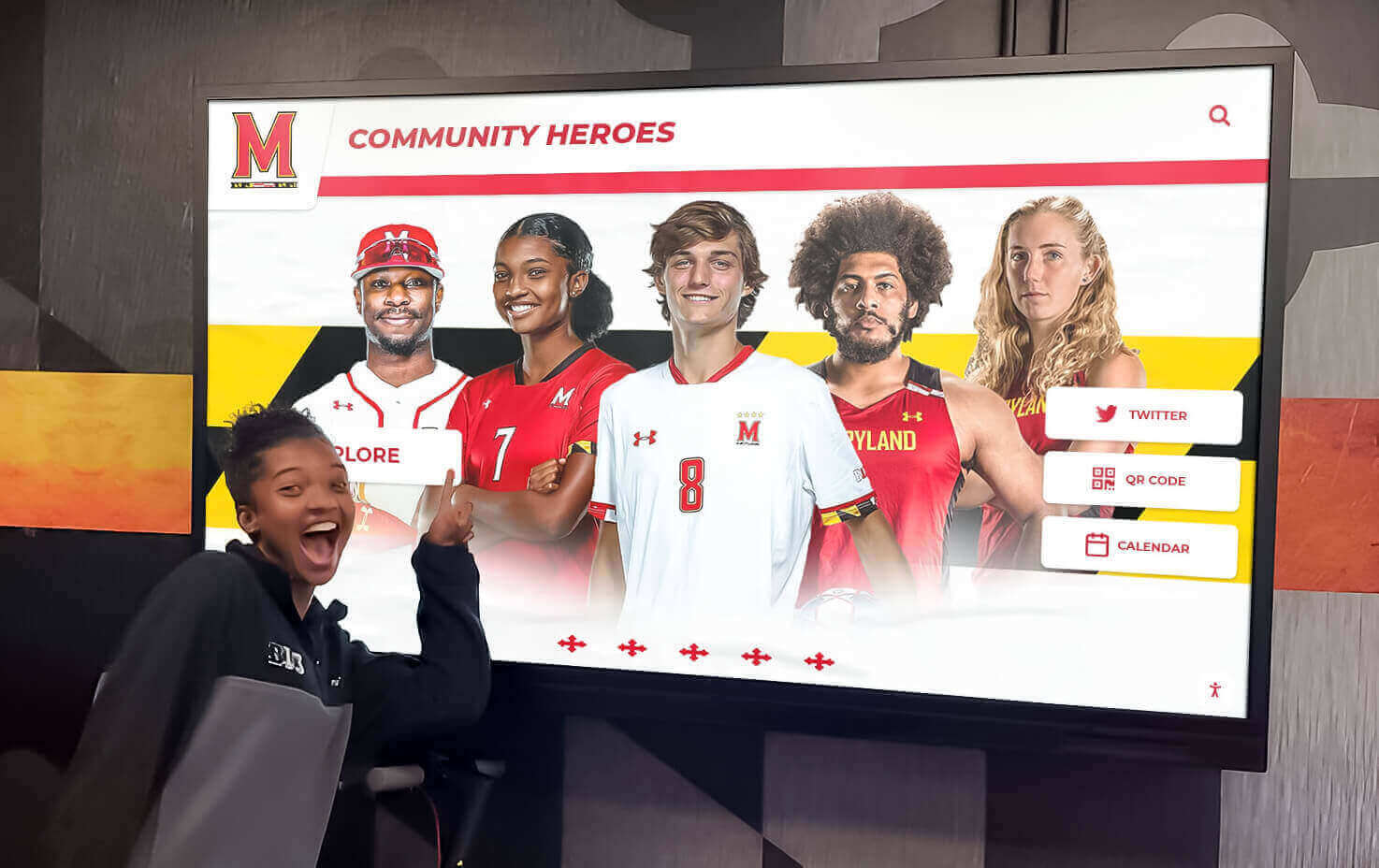
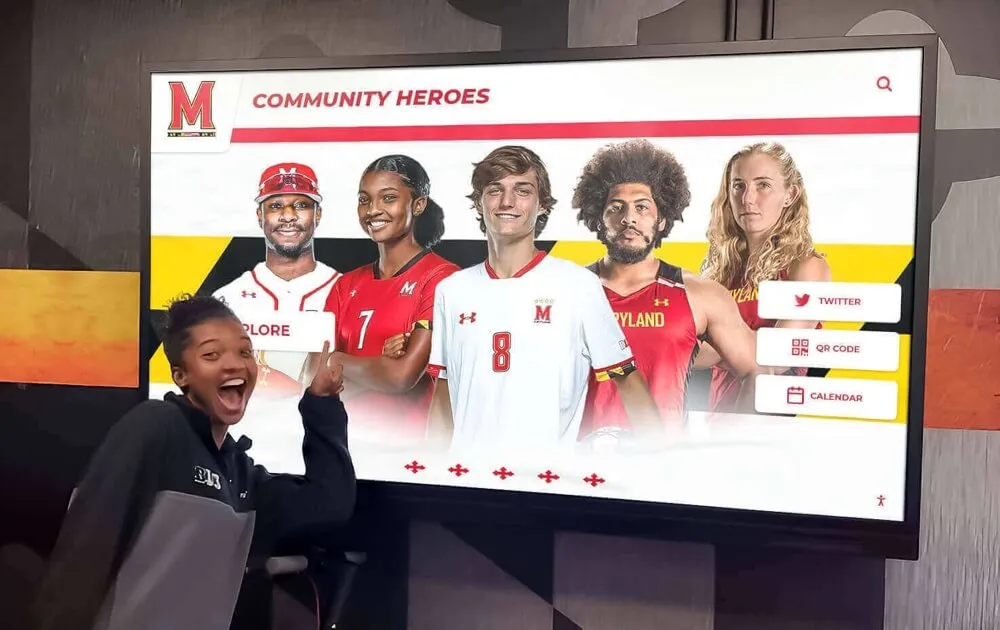
Accessible recognition displays inspire underclassmen by showcasing clear pathways to college opportunities
Division-Specific Considerations
- Division I FBS programs can offer full scholarships covering all costs
- Division II programs have scholarship limits affecting individual awards
- Division III schools do not offer athletic scholarships but may provide academic aid
- NAIA programs follow different scholarship structures
Understanding these details helps families make informed decisions during the commitment and signing process, considerations that schools can acknowledge when creating comprehensive athlete profiles in recognition systems.
Planning Memorable Early Signing Day Ceremonies
High school athletic departments create meaningful ceremonies celebrating student-athletes and their achievements.
Ceremony Timing and Logistics
Successful signing day events require thoughtful planning:
Scheduling Considerations
- Coordinate with school calendar avoiding conflicts with exams or major events
- Schedule during school hours for student body engagement or evenings for family attendance
- Consider athletes’ class schedules and academic commitments
- Align with college program preferences for announcement timing
- Plan far enough ahead for media notification and family arrangements
Venue Selection
- School cafeteria or commons area for accessibility
- Athletic facility with football atmosphere and context
- Gymnasium accommodating larger audiences
- Library or media center providing professional setting
- Consider space for signing tables, seating, and media equipment
Essential Elements
- Individual signing tables with chairs for athletes and families
- College logos, banners, or merchandise for photos
- Microphone and audio system for remarks and introductions
- Video display equipment for highlight reels or presentations
- Photography and videography coverage capturing the moments
- Refreshments and reception area for post-ceremony celebration
These logistical foundations create professional environments worthy of the significant commitments being celebrated.

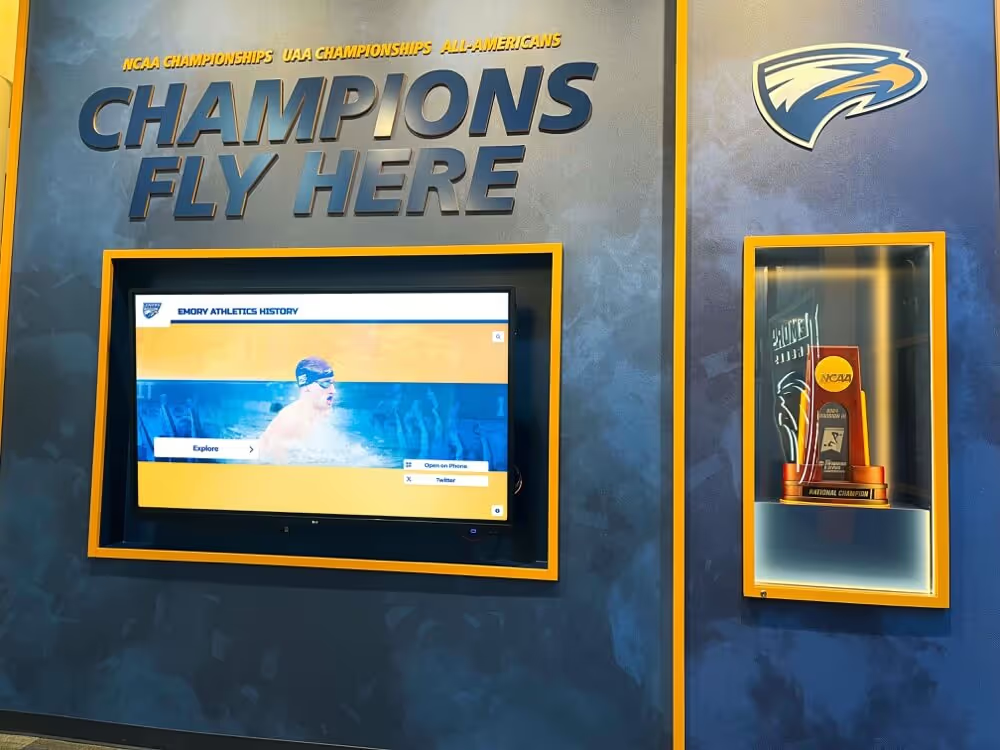
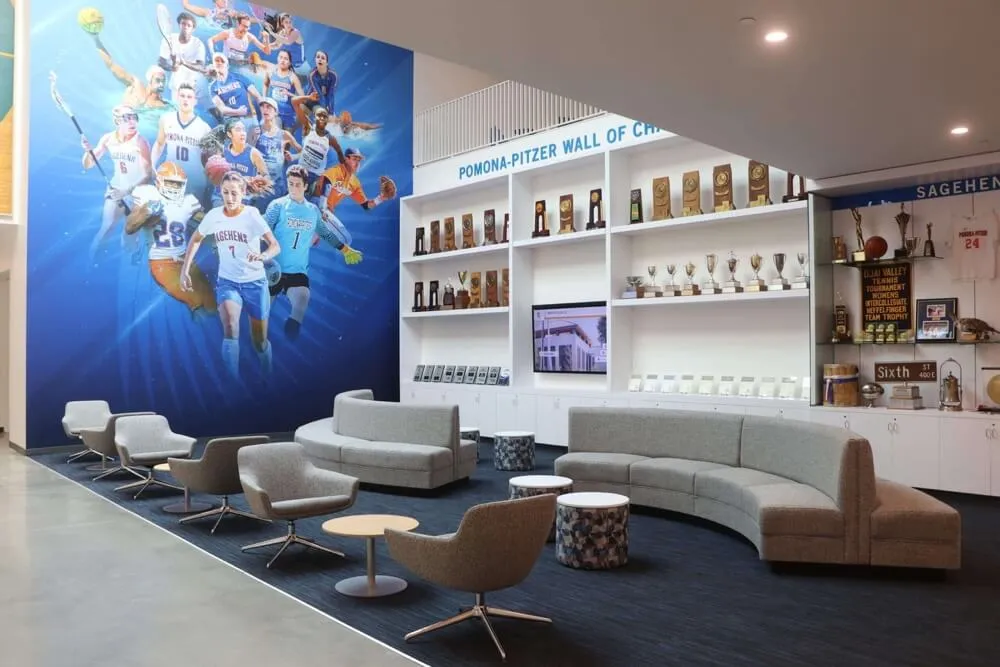
Championship recognition creates context connecting individual signings to broader program excellence traditions
Ceremony Program and Content
Thoughtful ceremony structure balances celebration with efficiency:
Opening Remarks
- Welcome from athletic director or principal
- Context about significance of early signing day for football
- Recognition of families, coaches, and support systems
- Overview of ceremony format and individual athlete recognition
Individual Athlete Recognition
- Introduction with biographical information and achievements
- Career highlight video or photo slideshow when possible
- Coach testimonials describing contributions and character
- Athlete personal statement about college choice and gratitude
- Formal signing of National Letter of Intent paperwork
- Family participation in signing photos
- Presentation of commemorative gift or recognition item
Closing Elements
- Group photo of all signing athletes
- Administrator remarks congratulating athletes and program
- Information about permanent recognition in school displays
- Reception invitation for informal celebration
Balancing formal recognition with personal touches creates ceremonies that feel both professional and meaningful to participating families.
Capturing Content for Permanent Recognition
Ceremony planning should include documentation supporting ongoing recognition:
Professional Photography
- Individual portrait photos of each athlete in uniform
- Signing moment photos with families at tables
- Group photos of all signing athletes together
- Coach and athlete interaction photos during ceremony
- Candid celebration moments throughout the event
Video Documentation
- Full ceremony recording for historical preservation
- Individual athlete highlight reels showcasing career accomplishments
- Interview snippets with athletes about college choices
- Coach testimonial videos celebrating each athlete
- B-roll footage of ceremony atmosphere and celebration
This content becomes invaluable when creating comprehensive digital recognition profiles that honor achievements beyond the ceremony day itself. Schools implementing digital display systems for athletic recognition leverage ceremony content in permanent installations accessible year-round.
Creating Lasting Recognition Beyond Ceremony Day
While signing ceremonies create important moments, effective recognition extends celebration through permanent displays inspiring future generations.
The Challenge with Traditional Recognition
Conventional signing day recognition faces inherent limitations:
Temporary Visibility
- Paper posters deteriorate and are removed within weeks
- Bulletin board space accommodates limited athletes and information
- Social media posts quickly disappear into feeds
- Hallway displays compete with other programming needs
- Physical materials require storage or eventual disposal
Limited Information Capacity
- Space constraints restrict details to basics: name, college, sport
- No room for career statistics, achievements, or personal stories
- Static formats cannot showcase video highlights or multimedia content
- Difficult to present complete athletic journey meaningfully
Accessibility Constraints
- Recognition visible only to those physically present in school
- Underclassmen have limited engagement with past signings
- Alumni returning to campus see only current year’s temporary displays
- College coaches recruiting future athletes see limited program history
- Families cannot easily share recognition with extended networks
These limitations mean that within months of early signing day, the visible celebration disappears and achievements become accessible only through archived yearbooks rather than prominent daily inspiration.

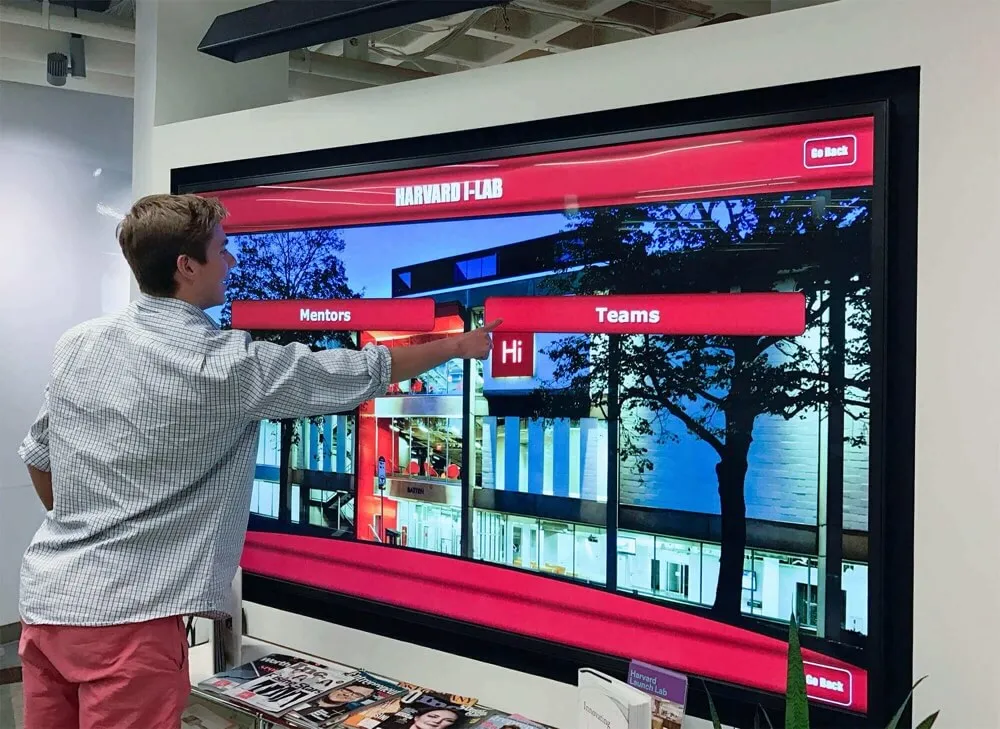
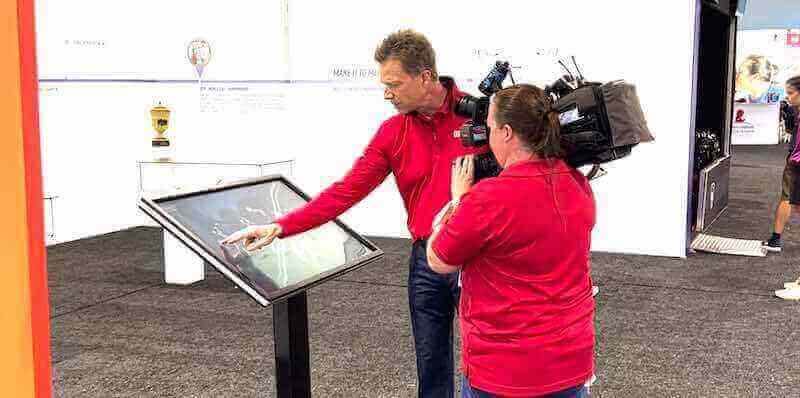
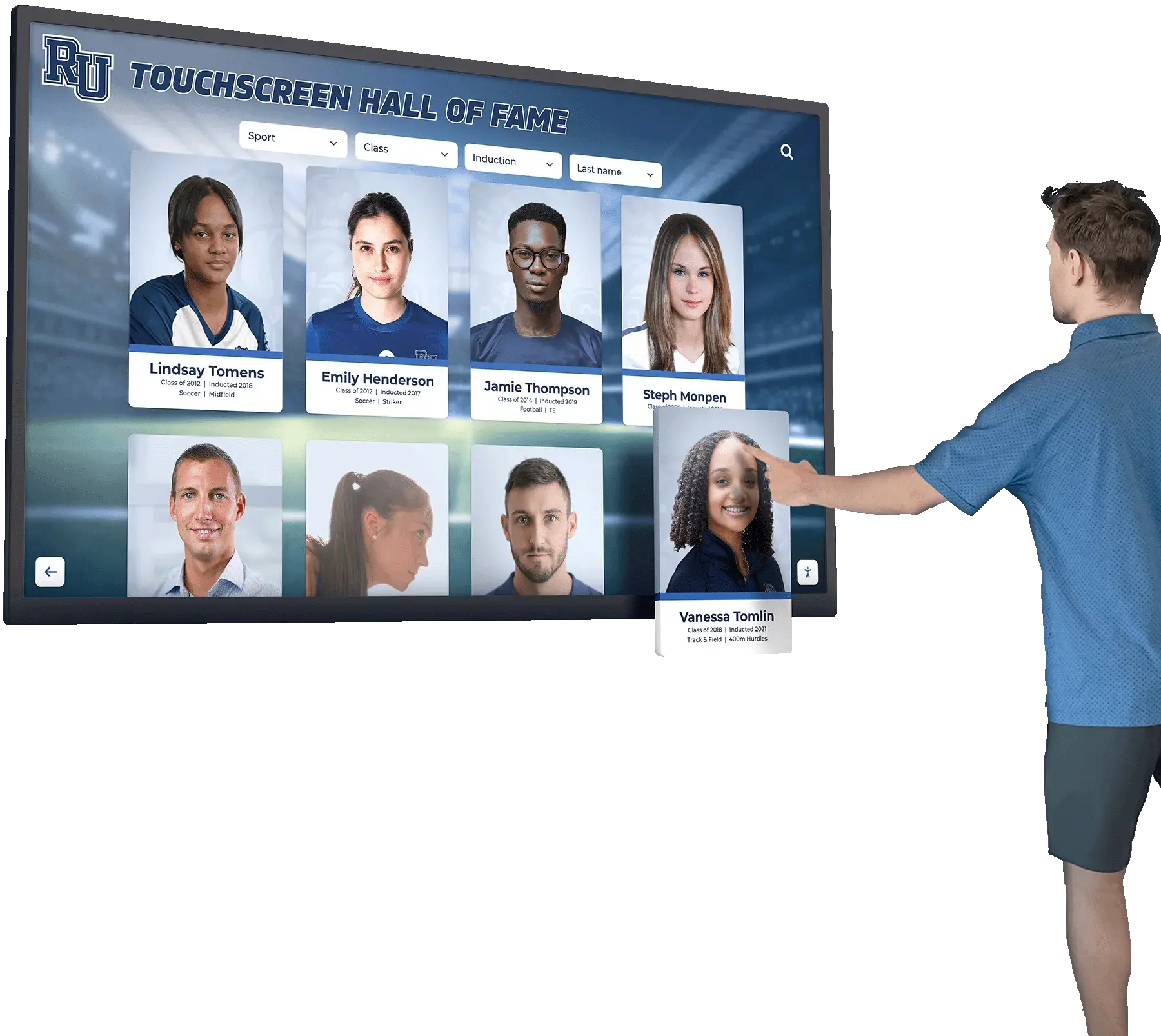
Interactive displays enable detailed exploration of athlete profiles, career statistics, and memorable achievements
Digital Recognition Display Advantages
Modern digital systems eliminate space constraints while providing organizational capabilities impossible with traditional approaches:
Unlimited Capacity
- Display current year’s signings prominently on home screens
- Maintain complete archives of all previous years’ commitments
- No need to remove past athletes to accommodate new signings
- Equal visibility for all sports and all athletes
- Permanent preservation without physical storage requirements
Rich Content Presentation
- Professional photos and action shots from athletic careers
- Complete statistics and achievement details
- Video highlight reels embedded in athlete profiles
- Personal statements about college choices and aspirations
- Coach testimonials and recognition messages
- Academic honors and achievements alongside athletic accomplishments
Intelligent Organization
- Search by athlete name, sport, college, or graduation year
- Filter by athletic division, conference, or college type
- Browse historically by year or decade
- Discover athletes attending specific colleges or universities
- Track program trends in college placement and recruiting
Year-Round Accessibility
- Interactive displays in school lobbies, athletic facilities, and hallways
- Web-based access enabling exploration from any device
- Mobile-friendly interfaces for smartphone viewing
- Social sharing capabilities for individual athlete profiles
- Remote access for alumni and extended families
Solutions like Rocket Alumni Solutions provide comprehensive platforms designed specifically for athletic recognition, enabling schools to transform one-time ceremonies into permanent showcases that inspire current and future athletes.
Implementing Digital Recognition Systems
Schools successfully implementing digital signing day recognition follow strategic approaches:
Content Development
- Comprehensive athlete profiles including biographical details, statistics, and achievements
- High-quality photography from athletic careers and signing ceremonies
- Video content showcasing career highlights and memorable moments
- Personal statements and quotes about college choices
- Academic achievement information demonstrating student-athlete balance
Strategic Placement
- High-traffic school entrances visible to all students and visitors
- Athletic facility lobbies where teams and families gather
- Hallways connecting to gymnasiums and competition areas
- College counseling centers discussing post-secondary pathways
- Alumni gathering spaces connecting past and present
Sustainable Management
- Cloud-based platforms enabling easy updates from any device
- Template-based systems ensuring consistent professional presentation
- Role-based access for coaches, athletic staff, and administrators
- Scheduled publishing for embargo management before announcements
- Minimal technical expertise required for ongoing maintenance
This systematic approach creates recognition infrastructure serving programs for many years while adapting as new commitments occur and historical archives expand.
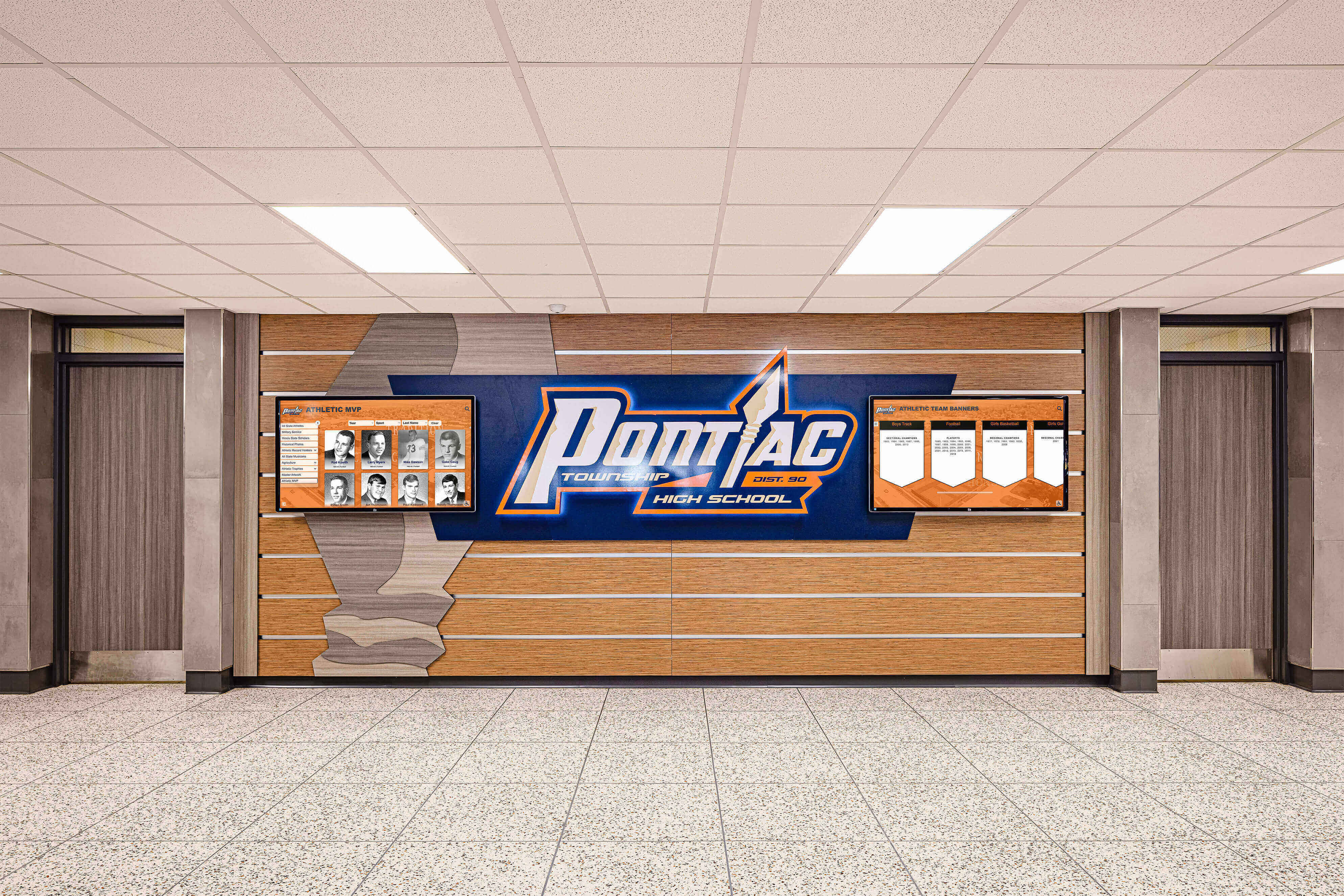
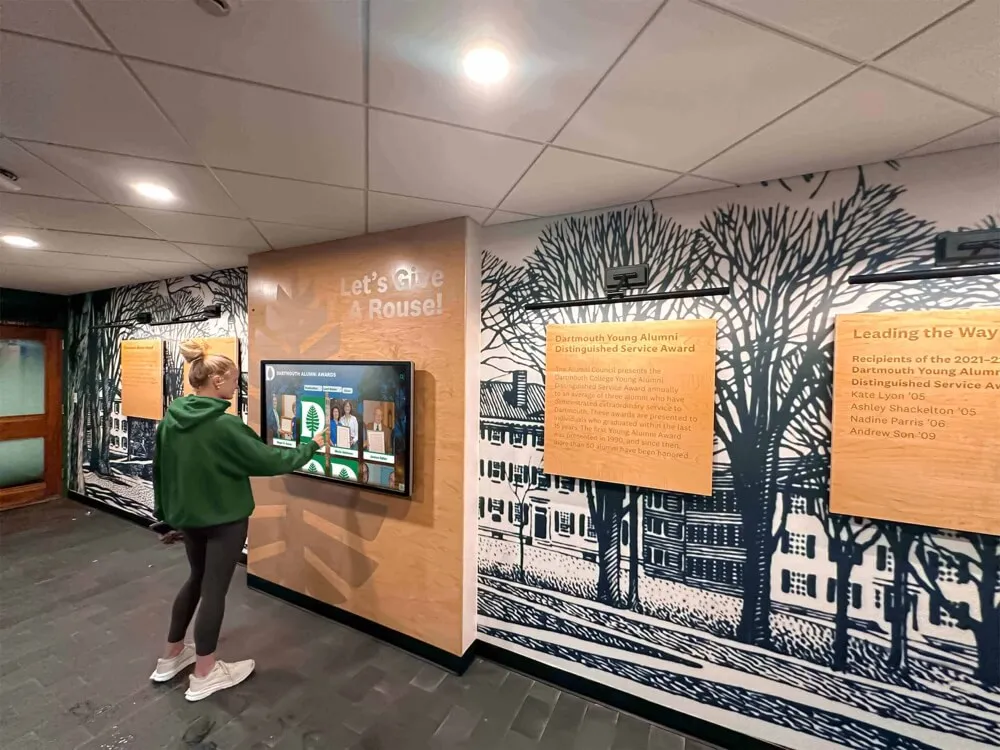
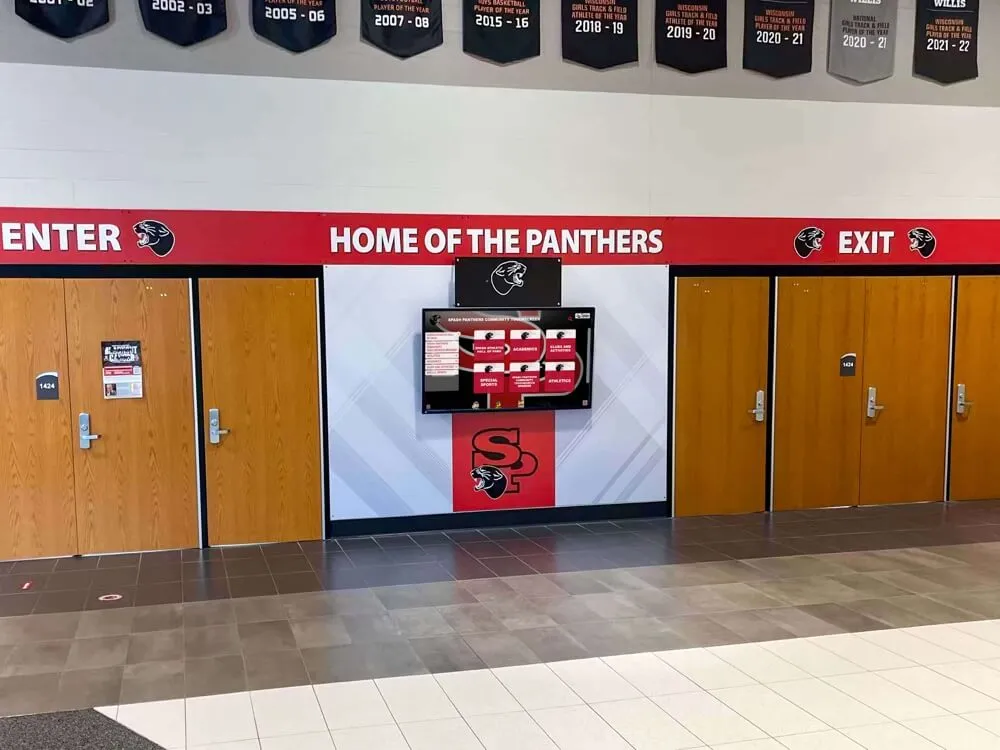
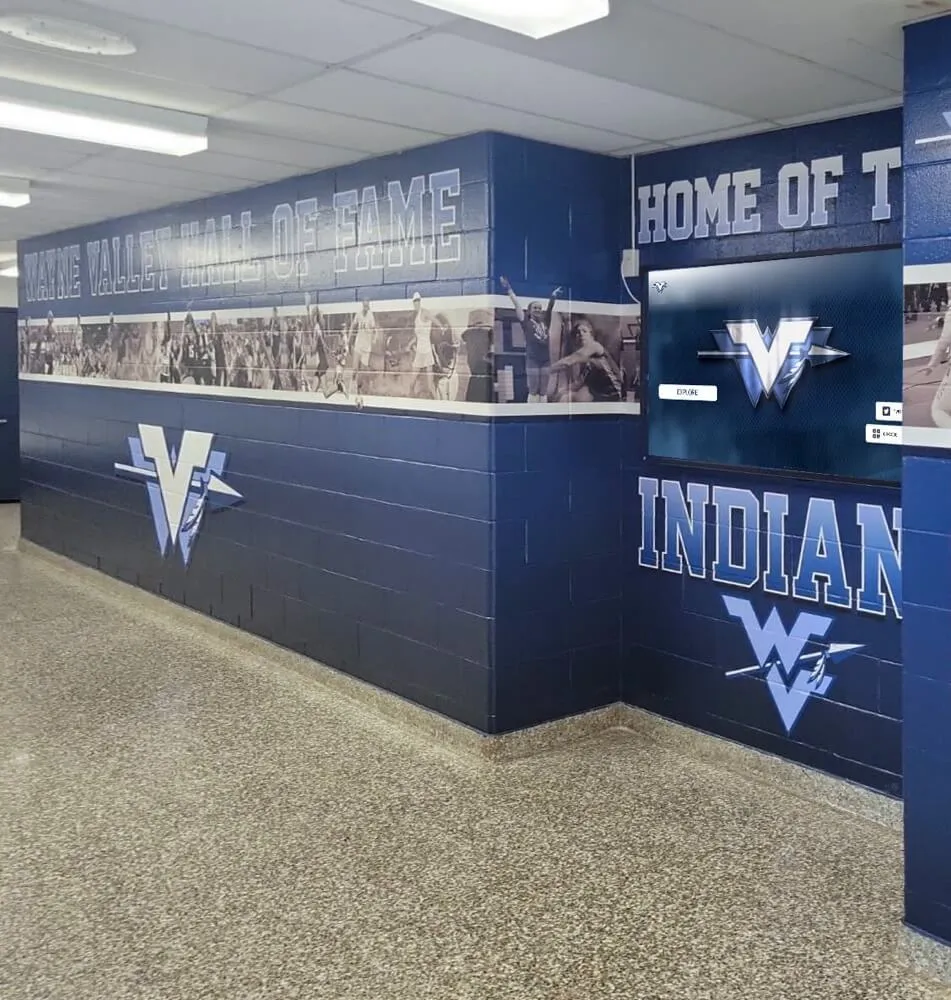
Strategic hallway placement ensures athletic achievements receive visibility equal to academic and artistic accomplishments
The Value of Signing Day Recognition for Athletic Programs
Comprehensive recognition delivers strategic benefits extending far beyond ceremonial celebration.
Recruiting Impact
College commitment displays become powerful tools in recruiting future athletes:
Prospect Visit Impression
- Visual demonstration of program’s track record advancing athletes to college level
- Interactive exploration enabling recruits to filter by specific positions or colleges
- Statistical credibility showing percentage of athletes continuing to college
- Success stories inspiring confidence in coaching quality and development
- Parent reassurance about legitimate college opportunity pathways
Competitive Differentiation
- Professional recognition demonstrates program seriousness and investment
- Distinguishes program from competitors lacking comparable displays
- Creates memorable impressions during facility tours and recruiting visits
- Provides tangible evidence supporting recruiting conversations and claims
- Builds program reputation attracting higher-quality athletes
Coaches consistently report that prominent signing recognition becomes conversation starting points during recruiting meetings, helping attract committed athletes seeking programs with proven college placement records.
Current Athlete Motivation
Underclassmen benefit tremendously from visible college commitment examples:
Goal-Setting and Inspiration
- Freshman football players see specific college pathways teammates achieved
- Realistic understanding of what college recruitment requires
- Timeline awareness helping athletes plan recruiting engagement
- Role models from similar backgrounds demonstrating achievable goals
- Academic and athletic standards becoming clear priorities
Program Culture Development
- Expectation culture where college football becomes realistic aspiration
- Pride in program’s college placement history and tradition
- Connection between current effort and future opportunities
- Understanding that multiple paths exist across divisions and programs
- Recognition that both athletic and academic excellence matter
Schools with prominent commitment recognition report increased participation in off-season training programs, academic support services, and strength and conditioning as underclassmen actively pursue college opportunities modeled by older teammates. Understanding team leadership and culture building helps programs develop environments where college athletics becomes expected rather than exceptional.
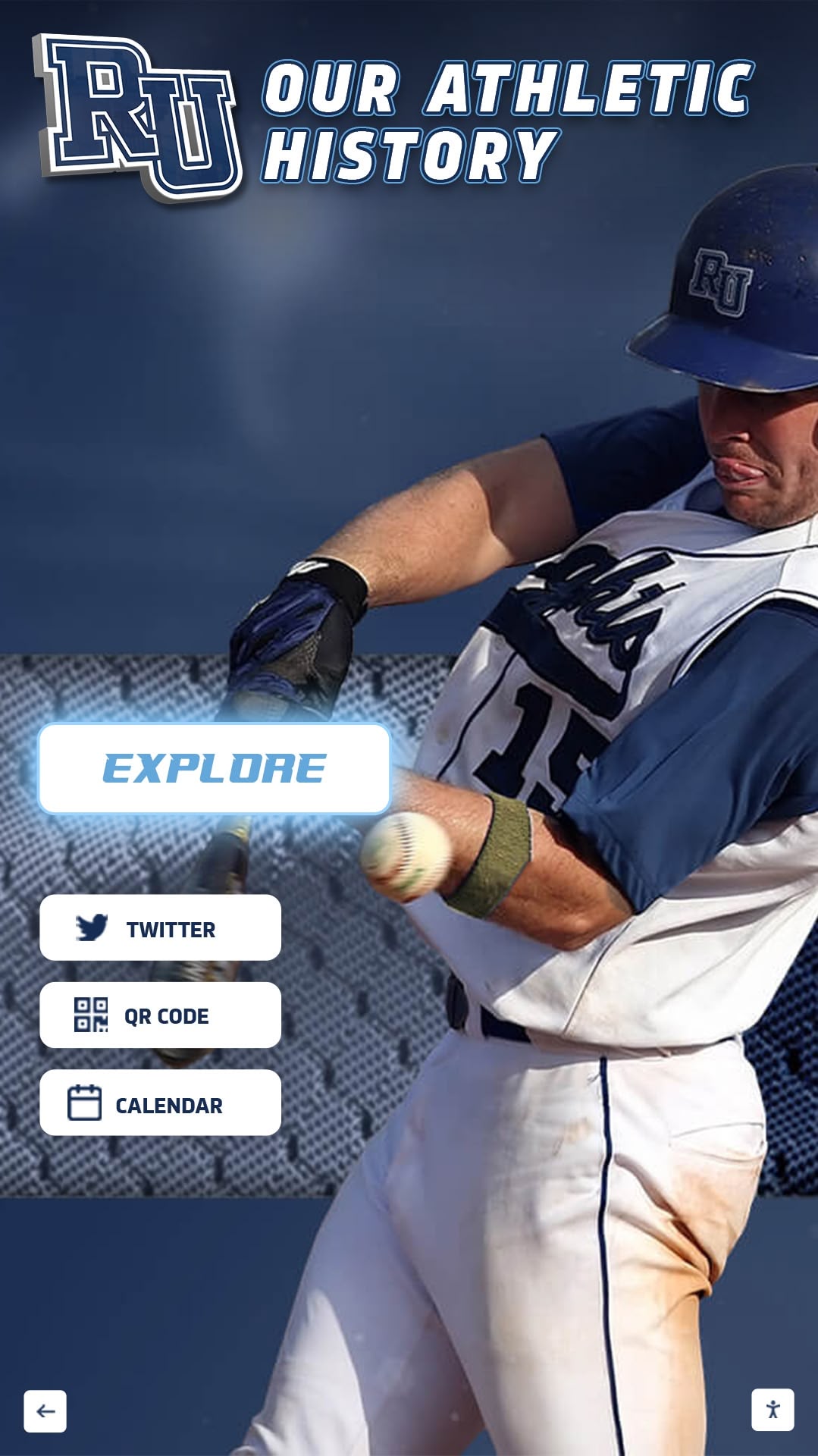
Action photography captures athletic excellence while connecting individual achievements to program identity
Community Engagement and Pride
Recognition extends impact beyond current team members:
Alumni Connection
- Returning alumni explore current athletes following their college paths
- Multi-generational family athletic connections become visible
- Former players see program’s continued success advancing athletes
- Online access allows alumni nationwide to stay engaged with program
- Reunion events feature interactive exploration of commitment history
Community Support
- Local businesses and sponsors see return on program support investment
- Media coverage references displays when reporting on signings and athletics
- Youth football programs in feeder systems develop college athletic aspirations
- Real estate and community development leaders showcase program excellence
- Parent organizations understand program quality and value
Strong community engagement often translates to enhanced fundraising for program needs, broader attendance at games and events, and sustained support during challenging seasons when visible commitment history demonstrates long-term program quality.
Demonstrating Student-Athlete Balance
Effective recognition connects athletic achievement with academic success:
Holistic Recognition
- Academic honors and achievements featured prominently in profiles
- College major information showing diverse intellectual interests
- Academic scholarship acknowledgment alongside athletic financial aid
- Honor roll and academic recognition integration with athletic profiles
- Post-athletic career aspirations and professional goals highlighted
This balanced approach positions student-athletes as students first, reinforcing that academic excellence enables athletic opportunities while preparing for successful futures extending beyond football careers. Schools can explore comprehensive academic recognition programs that complement athletic celebration.
Frequently Asked Questions About Early Signing Day
Common questions about college football’s early signing period and recognition:
Can athletes sign before the December early period?
No. NCAA rules prohibit signing National Letters of Intent before the official early signing period begins. While athletes can verbally commit at any time, the formal binding signature can only occur during designated signing periods. This protects student-athletes from pressure to make rushed decisions and ensures adequate time for official visits and family consultation.
What happens if an athlete doesn’t sign during early period?
Athletes who don’t sign in December can sign during the February regular signing period or any time until August of their enrollment year. Reasons for waiting include continuing evaluation of options, academic transcript completion, recruiting situation changes, or personal preference for additional time. Waiting doesn’t negatively impact college opportunities, though some competitive positions may fill during the early period.
How should schools recognize Division III football commitments?
Division III schools don’t use National Letters of Intent since they don’t offer athletic scholarships. However, these commitments deserve equal celebration acknowledging the academic-athletic balance Division III represents. Schools should hold ceremonies and create recognition displays honoring D-III commitments with identical presentation quality, emphasizing academic excellence alongside athletic opportunity. Understanding different division recognition approaches ensures inclusive celebration.
Do JUCO football commitments count as college signings?
Yes. Junior college football commitments represent legitimate college opportunities and pathways to four-year programs. Many successful college and professional players began at junior colleges, developing skills while pursuing academic progress. Schools should celebrate JUCO commitments equally, acknowledging the strategic pathway these represent for many student-athletes whose circumstances make junior college the appropriate first step.
How do schools handle signing day for transfer portal athletes?
College athletes entering the transfer portal follow different timelines than high school recruits. Many schools choose to recognize former athletes’ transfer destinations with updates in digital profiles noting their continued college careers. This demonstrates ongoing support while maintaining focus on current high school student-athletes making their initial college commitments during traditional signing periods.
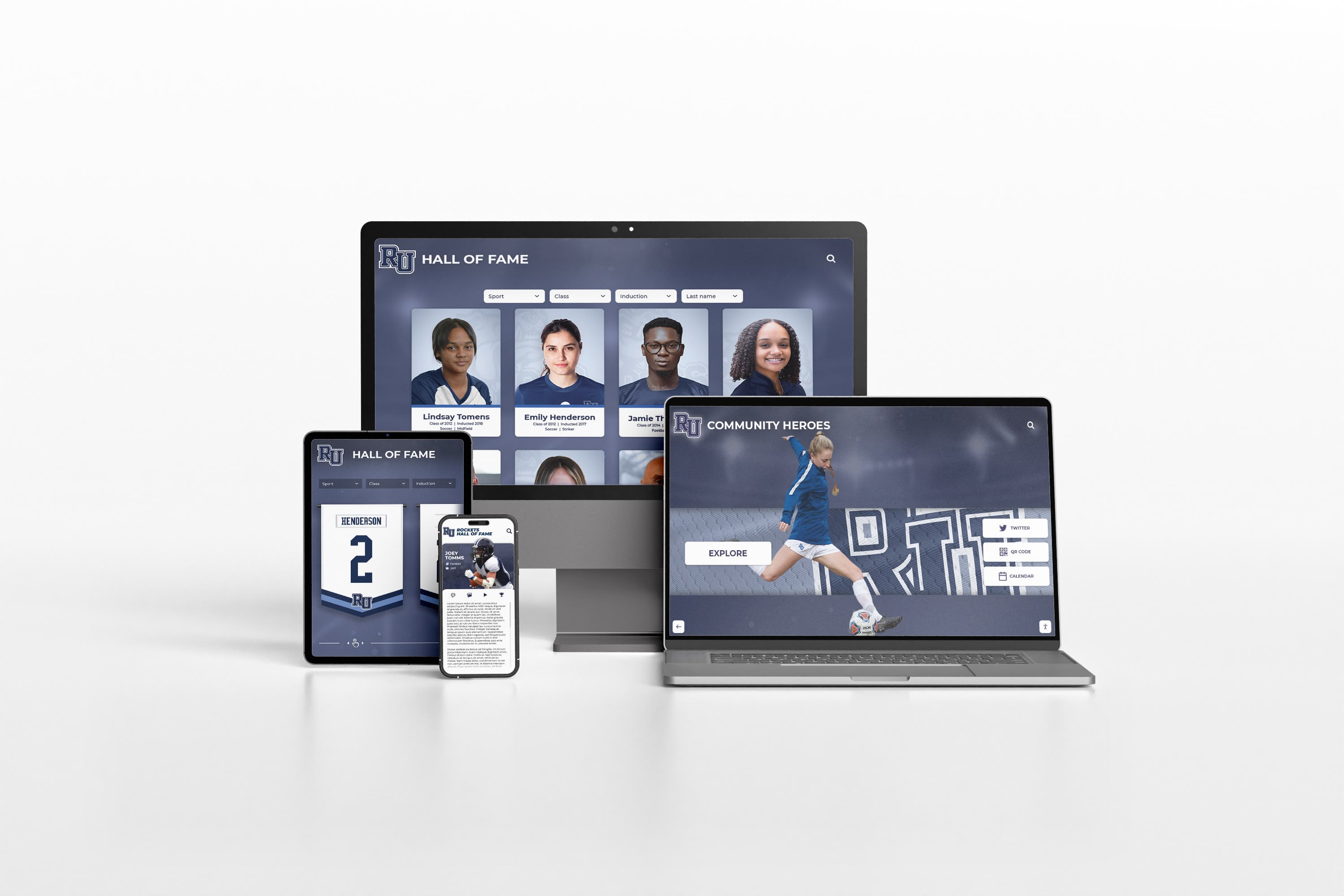
Mobile-responsive platforms enable recognition access across all devices, making achievements easily shareable
Best Practices for Signing Day Recognition Programs
Schools with effective signing day recognition share common approaches maximizing impact and sustainability:
Start with Quality Over Quantity
Focus on Excellence
- Invest in professional photography creating consistent, impressive athlete profiles
- Develop comprehensive content including statistics, achievements, and personal stories
- Create high-quality ceremony experiences worthy of the commitments being celebrated
- Build systems designed for long-term sustainability rather than one-time efforts
- Prioritize meaningful recognition depth over superficial breadth
Beginning with quality foundations ensures recognition commands respect and engagement rather than appearing as afterthought additions to busy hallways.
Ensure Inclusive Recognition Across All Sports
Equitable Celebration
- Football signings receive appropriate emphasis without overshadowing other sports
- All divisions (D-I, D-II, D-III, NAIA, JUCO) honored equally
- Walk-on and preferred walk-on opportunities celebrated alongside scholarships
- Smaller sports athletes featured with identical profile quality
- Gender equity maintained across male and female athletic programs
This inclusive approach creates program-wide culture where all college athletic commitments receive deserved recognition, strengthening entire athletic departments rather than just high-profile sports.
Integrate with Broader Athletic Recognition
Comprehensive Systems
- Connect signing recognition with team championship celebrations
- Link to individual athletic awards and honors programs
- Integrate with hall of fame recognition honoring program legends
- Coordinate with academic achievement displays
- Create unified recognition infrastructure serving multiple purposes
Rather than isolated signing displays, integrated systems provide context connecting individual commitments to broader program excellence and tradition.
Build Historical Archives Systematically
Long-Term Development
- Begin with current year excellence establishing quality standards
- Add previous years systematically working backward through available records
- Accept that archive completion occurs over multiple years
- Engage alumni for information about historical signings
- Use available yearbooks, media guides, and program records
Most successful programs don’t attempt comprehensive historical completion before launching—they begin with current excellence while gradually building archives that grow more valuable with each passing year.
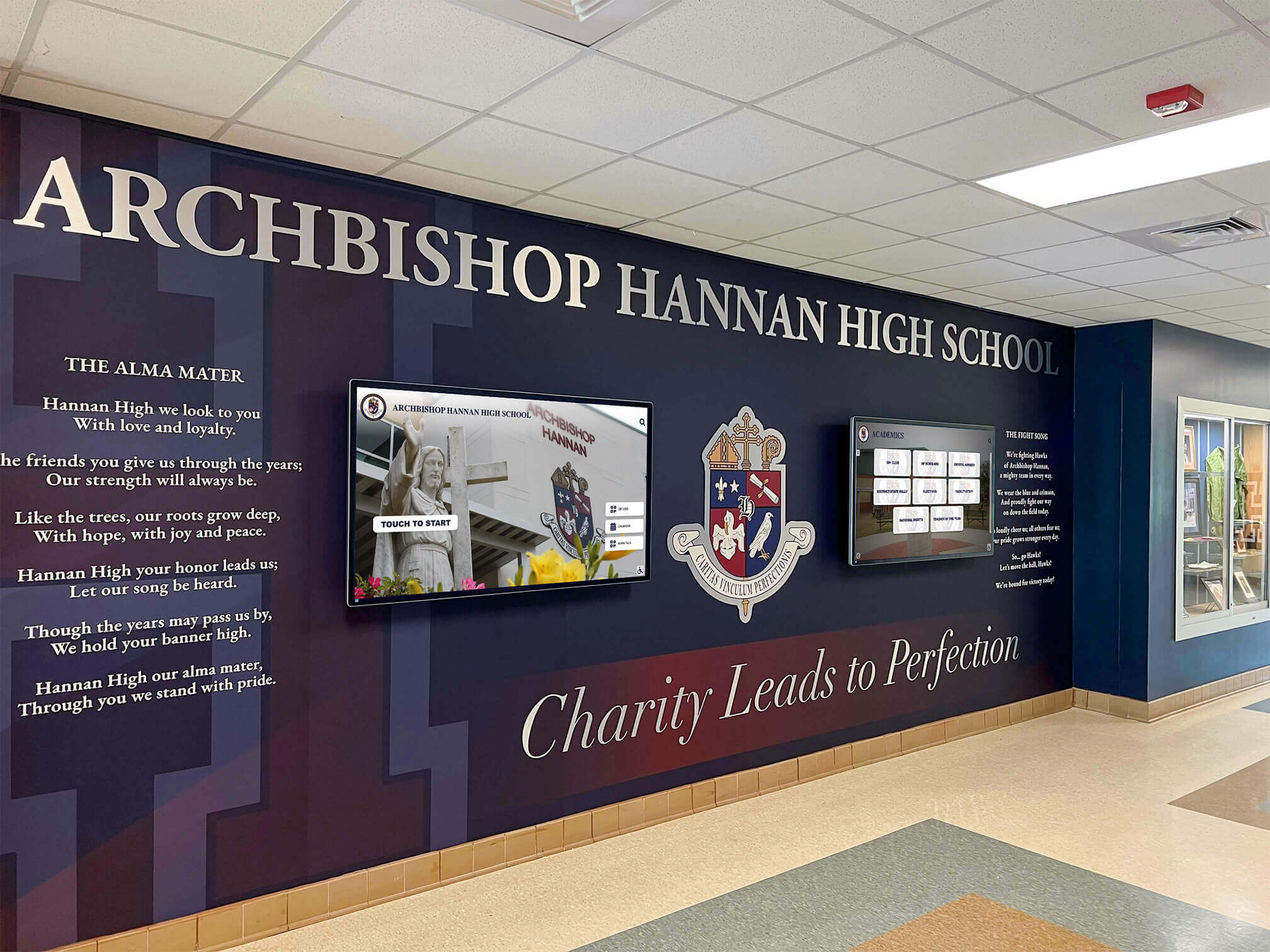
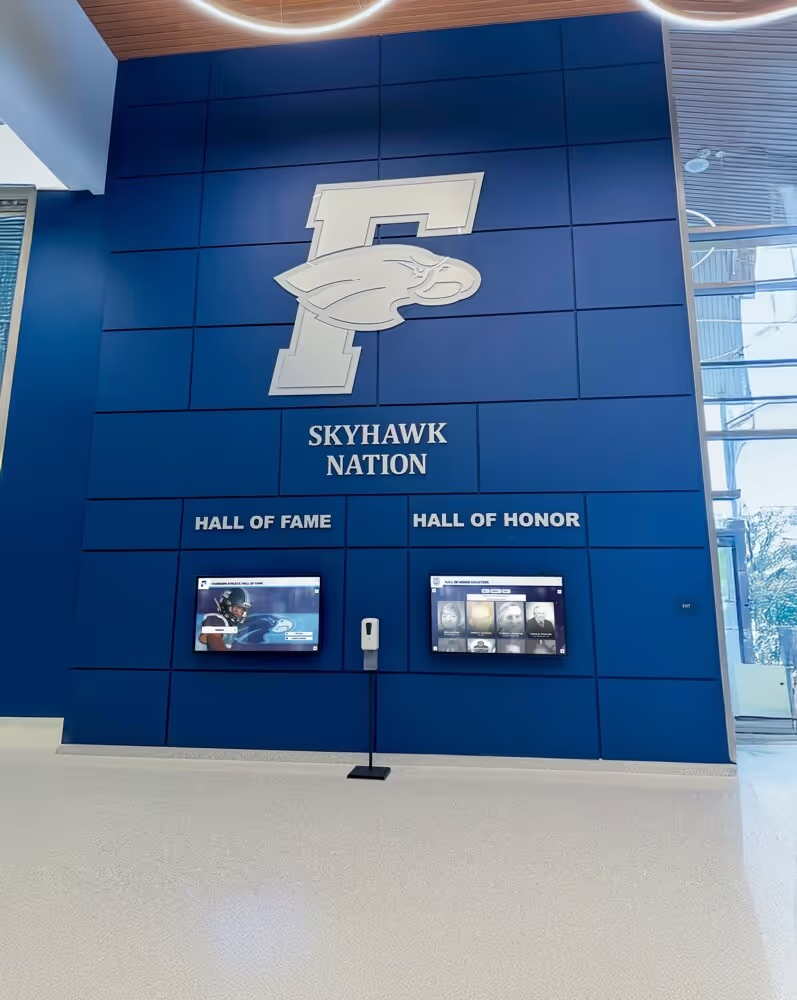
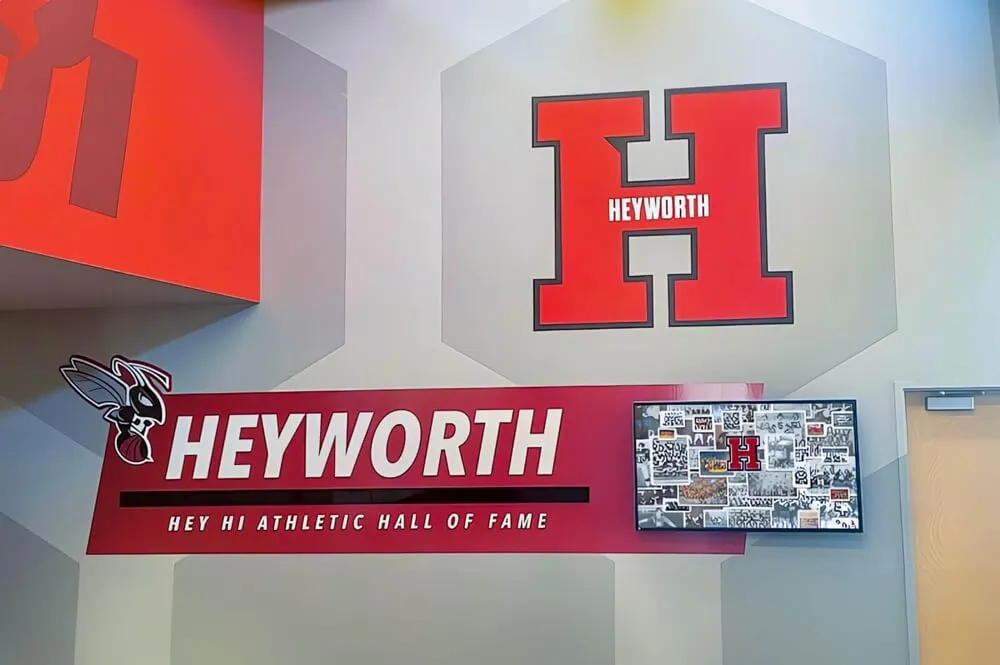
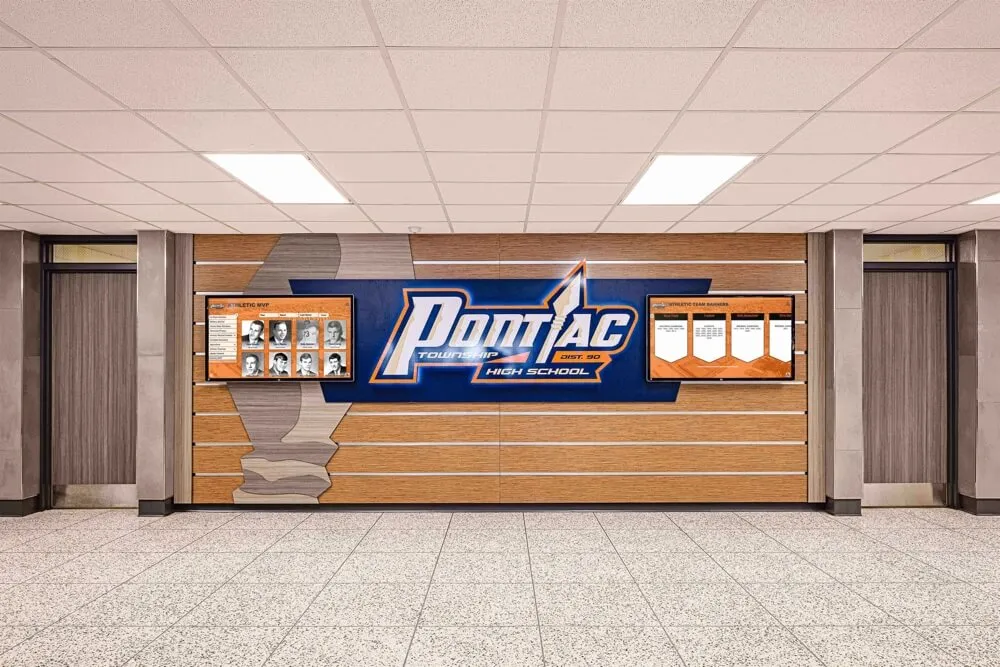
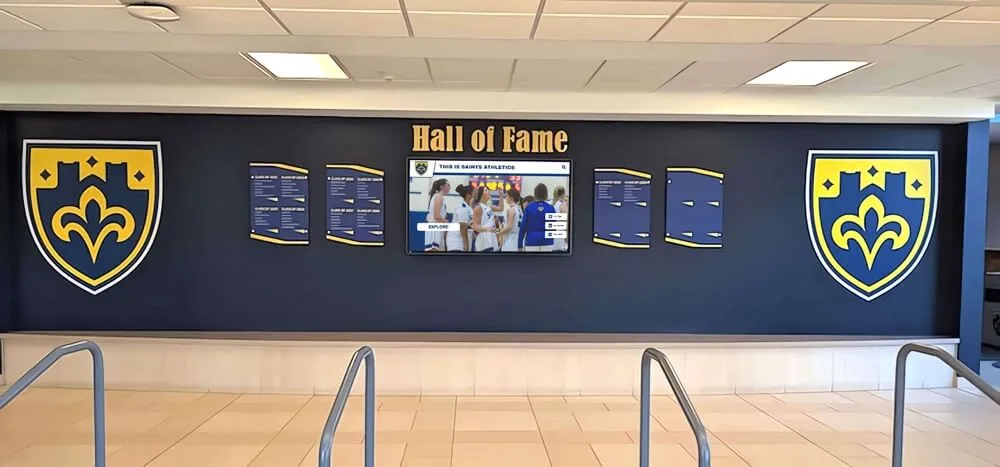
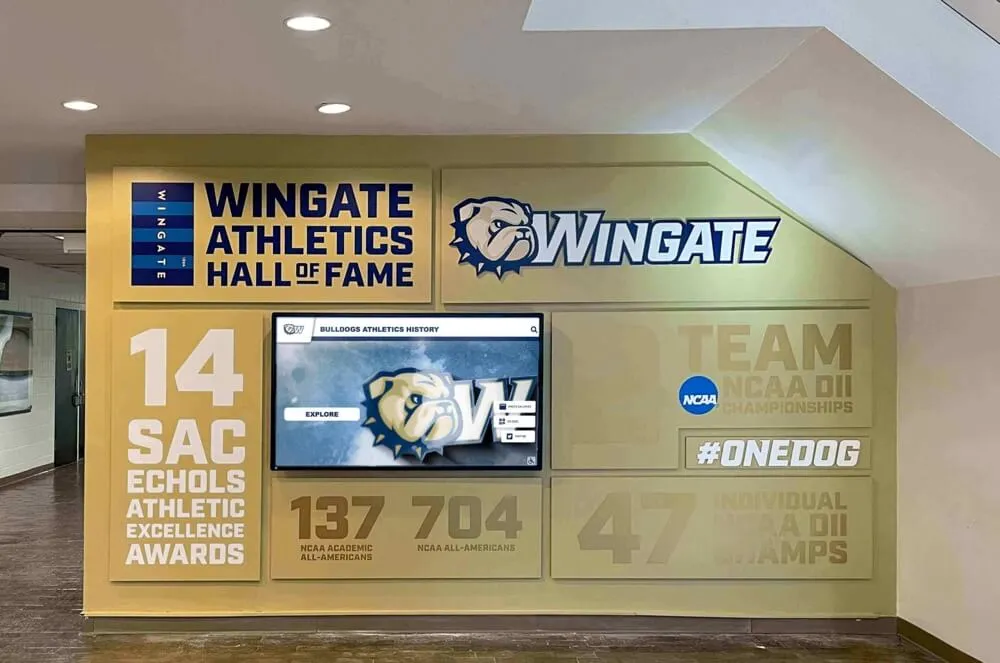
Integrated recognition combines digital displays with architectural elements creating impressive installations
Maintain Sustainable Update Processes
Ongoing Management
- Assign clear responsibilities for content creation and updates
- Establish workflows for gathering athlete information
- Create templates standardizing profile development
- Schedule regular updates as new commitments occur
- Conduct periodic audits ensuring accuracy and completeness
Recognition systems fail when they become stale due to lack of updates. Successful programs treat recognition as ongoing process rather than one-time project, establishing sustainable practices functioning for many years.
Technology Solutions for Signing Day Recognition
Modern platforms enable comprehensive recognition previously impossible with traditional approaches.
Cloud-Based Content Management
Professional recognition systems provide:
Administrative Features
- Intuitive interfaces requiring no technical expertise
- Template-based layouts ensuring consistent professional appearance
- Bulk import tools for efficiently adding historical data
- Scheduled publishing enabling embargo management
- Role-based permissions for appropriate access control
Display Flexibility
- Multiple screen support from single content platform
- Wall-mounted, freestanding, and web-based display options
- Automatic content scaling across different screen sizes
- Mobile-responsive design for smartphone and tablet access
- Integration with school websites and existing systems
Content Capabilities
- High-resolution photo galleries and albums
- Video embedding and multimedia integration
- Rich text formatting for detailed descriptions
- Custom fields capturing sport-specific information
- Social sharing features for individual profiles
These capabilities transform recognition from static posters to dynamic showcases that engage viewers and enable meaningful exploration.
Interactive Touchscreen Experiences
Physical displays in schools provide engaging interfaces:
User Experience Features
- Touch-based navigation intuitive for all ages
- Search functionality enabling quick athlete location
- Filter options by sport, year, college, or division
- Visual appeal attracting spontaneous exploration
- Accessibility compliance ensuring inclusive access
Strategic Hardware Options
- Wall-mounted displays integrating with existing architecture
- Freestanding kiosks providing flexible placement
- Large-format screens for passive viewing in gathering spaces
- Commercial-grade durability for high-traffic school environments
- Professional installation and ongoing technical support
Solutions like Rocket Alumni Solutions combine professional hardware with sophisticated software platforms designed specifically for school athletic recognition needs, providing turnkey systems that coaches and administrators can manage without technical expertise.
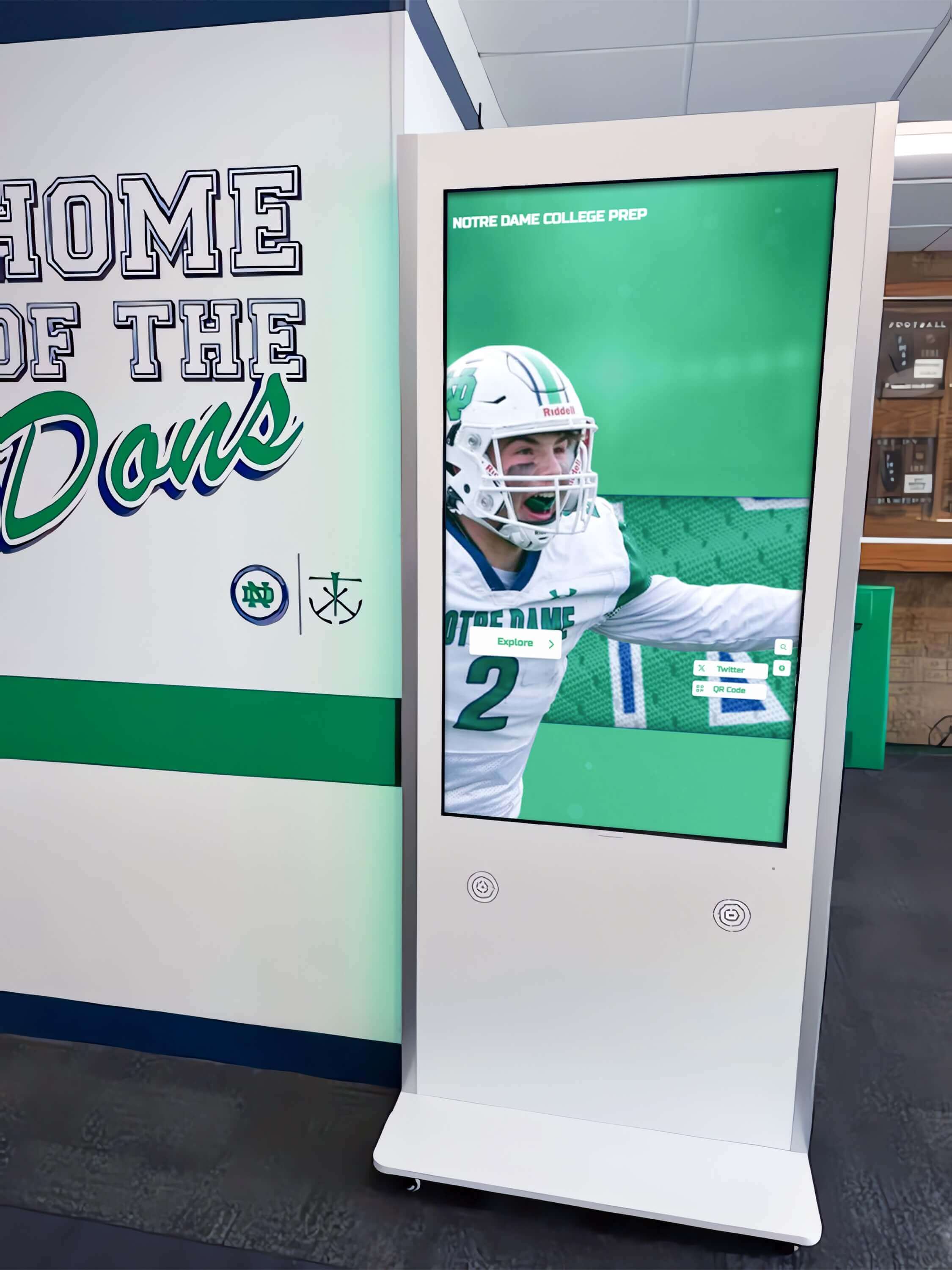
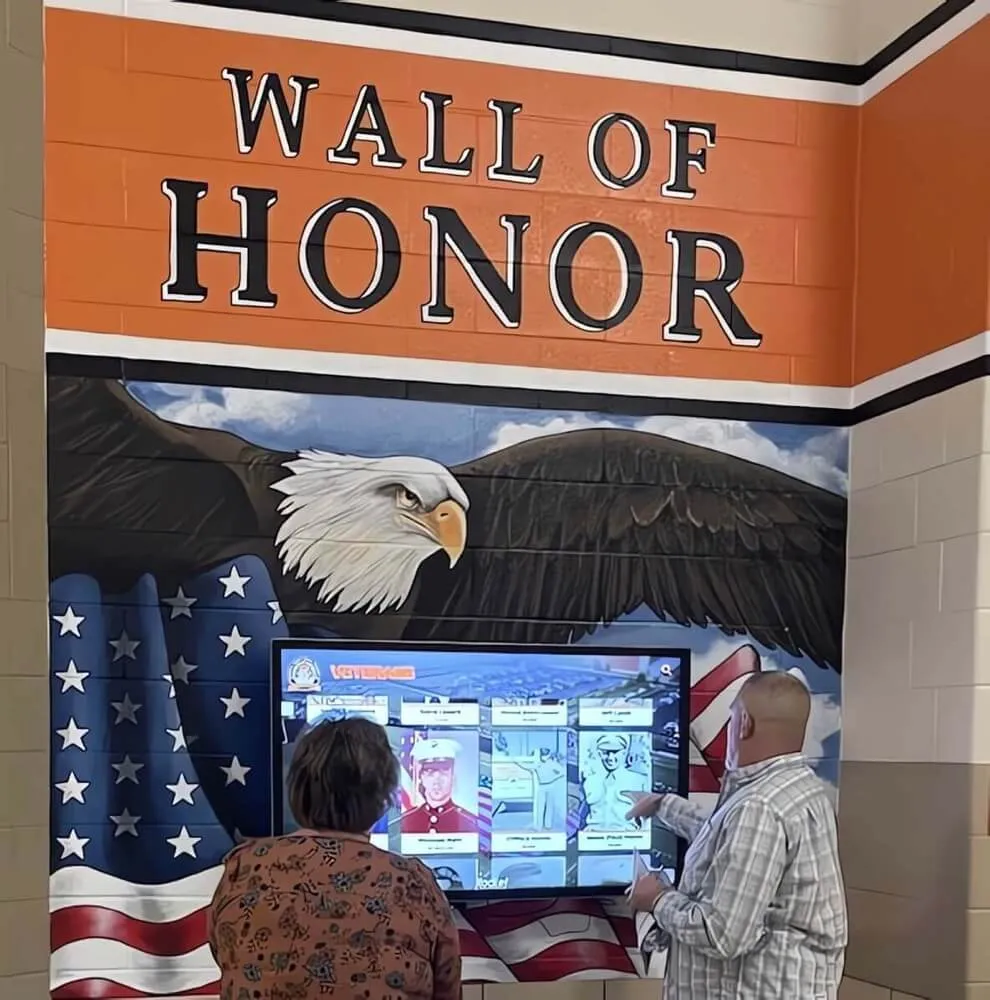
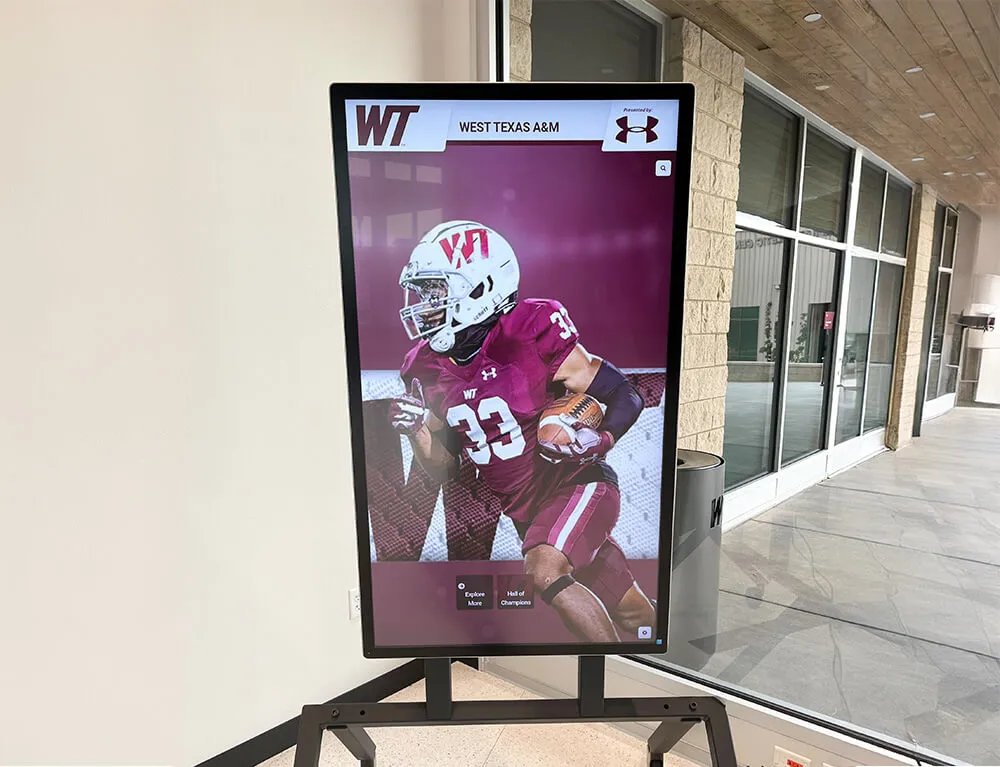
Freestanding kiosks provide prominent recognition while enabling flexible placement in various school spaces
Mobile and Web Access
Beyond physical displays, modern systems provide universal access:
Remote Engagement
- Web-based exploration from any internet-connected device
- Mobile apps or mobile-responsive websites
- Social sharing enabling families to share athlete profiles
- Alumni access from anywhere in the world
- Recruiting showcase for college coaches evaluating programs
Content Distribution
- Automatic posting to social media platforms
- Email announcements with athlete profile links
- QR code integration connecting physical and digital recognition
- Export capabilities for printed materials when needed
- Analytics tracking engagement and usage patterns
This multi-platform approach ensures recognition reaches diverse audiences through their preferred access methods while maintaining centralized content management from single system.
Taking Action: Implementing Enhanced Signing Day Recognition
Ready to transform how your school celebrates early signing day for college football and other athletic commitments?
Immediate Steps
Assess Current Recognition
- Document existing signing day ceremonies and practices
- Evaluate permanent recognition displays and their limitations
- Identify what works well and what improvement opportunities exist
- Gather feedback from coaches, athletes, families, and administrators
- Define goals for enhanced recognition aligned with program values
Plan December 2026 Early Signing Period
- Calendar ceremony date coordinating with December 16-18 signing window
- Begin content preparation for expected football signings
- Arrange professional photography and videography coverage
- Prepare ceremony logistics and family communications
- Consider how to preserve ceremony content for permanent recognition
Near-Term Planning
Explore Digital Recognition Options
- Research platforms designed specifically for athletic recognition
- Request demonstrations from providers like Rocket Alumni Solutions
- Compare features, pricing, and implementation approaches
- Check references from similar schools with existing systems
- Develop budget proposals and funding strategies
Develop Content Strategy
- Define athlete profile information fields and standards
- Plan photo and video content collection processes
- Determine historical archive priorities and phasing
- Establish quality standards and presentation guidelines
- Assign responsibilities for content creation and management
Long-Term Recognition Strategy
Build Comprehensive System
- Implement digital recognition displays in strategic locations
- Develop historical archives systematically over multiple years
- Integrate signing recognition with broader athletic celebration
- Create sustainable update processes and workflows
- Expand capabilities as programs grow and technology evolves
Measure Impact
- Track recruiting impact through coach reports and athlete feedback
- Monitor community engagement with recognition displays
- Assess underclassmen motivation and goal-setting changes
- Evaluate ceremony attendance and family satisfaction
- Document program culture development and expectations evolution
Treating recognition as long-term program investment rather than one-time expense ensures sustained value and continuous improvement aligned with program growth.
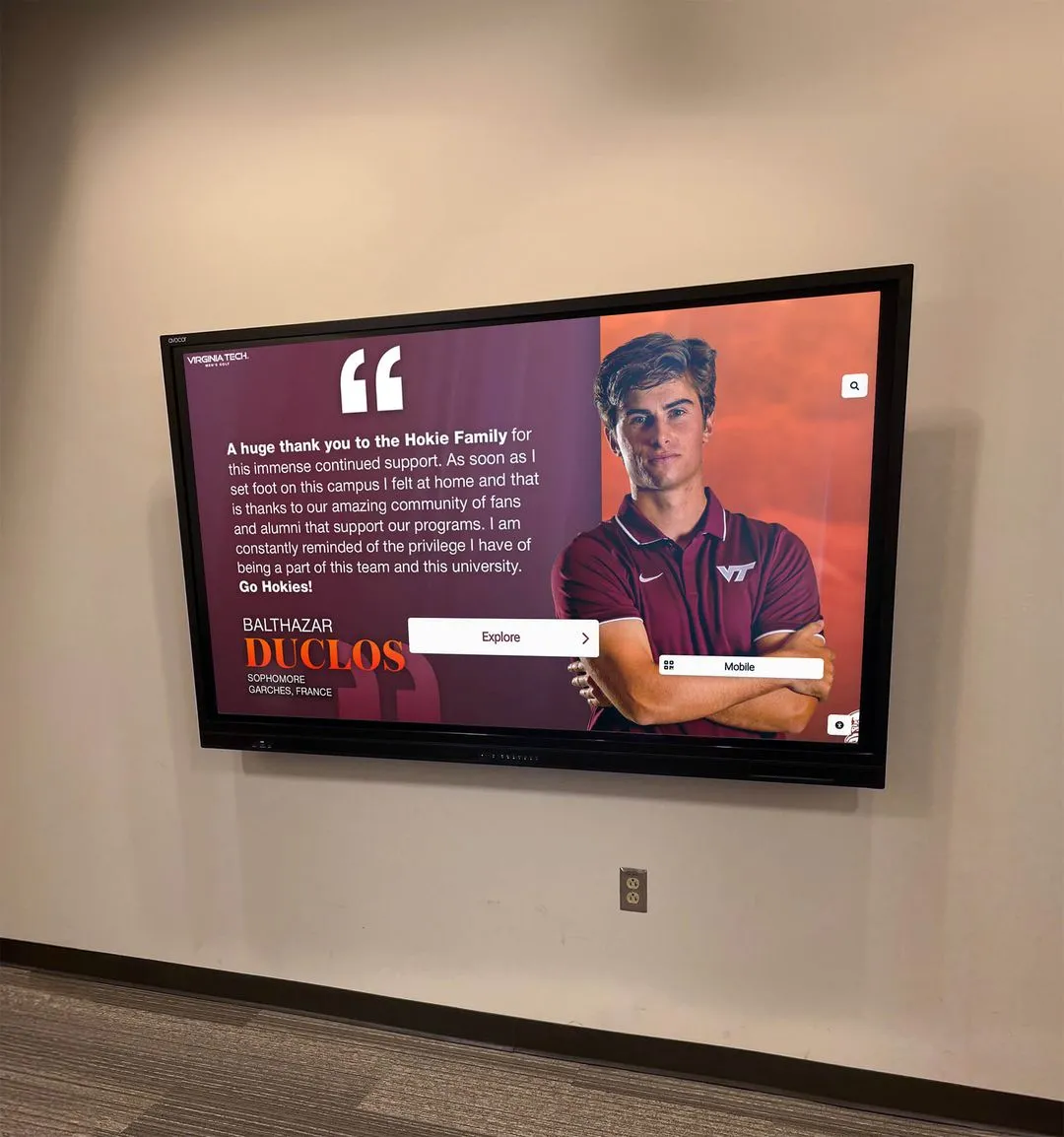
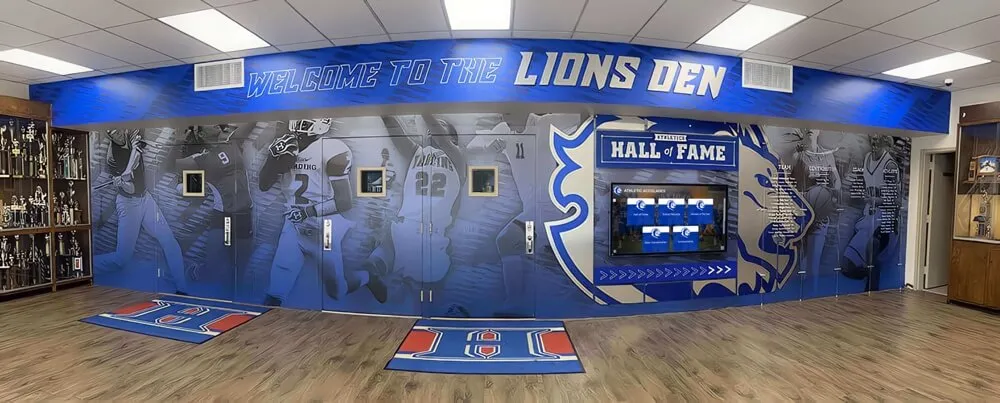
Professional recognition installations demonstrate program commitment to honoring athletic excellence and achievement
Conclusion: Celebrating College Football Commitments with Lasting Impact
Early signing day for college football, occurring in mid-December, represents one of the most significant moments in a student-athlete’s journey—the formal commitment to continue academic and athletic careers at the collegiate level. These achievements deserve recognition matching their importance, extending far beyond temporary paper posters and single-day ceremonies into permanent celebration that inspires current athletes while demonstrating program excellence to recruits, families, and communities.
When schools implement comprehensive signing day recognition through enhanced ceremonies, professional content capture, and permanent digital displays, they transform momentary celebrations into lasting inspiration benefiting entire programs. College coaches recruiting future athletes see demonstrated track records of advancing players to the next level. Freshman and sophomore players explore specific pathways showing achievable college opportunities. Families feel pride that their student-athletes’ commitments receive professional recognition worthy of years of dedication. Alumni returning to campus discover connections between their college paths and current students following similar journeys.
The strategies explored in this guide provide frameworks for celebrating early signing day appropriately while building recognition infrastructure serving programs for many years. From understanding signing period dates and planning meaningful ceremonies to implementing digital displays enabling rich storytelling and unlimited capacity, these approaches ensure every commitment receives celebration honoring the achievement while inspiring the next generation of college-bound athletes.
Your football players’ commitments to compete at the college level represent extraordinary accomplishments resulting from years of training, academic dedication, and personal sacrifice. They deserve recognition extending beyond ceremony days into permanent celebration accessible to your entire community year-round. Whether starting with ceremony enhancements and improved content capture or implementing comprehensive digital recognition displays throughout your campus, the investment in signing day recognition delivers returns through recruiting advantages, program culture development, and community engagement far exceeding the initial costs.
Ready to transform how your school celebrates college football commitments and other athletic signings? Explore how Rocket Alumni Solutions enables schools to create professional recognition displays honoring every commitment while providing the flexibility to grow as programs develop and historical archives expand—building permanent showcases rather than temporary celebrations that disappear when seasons end.